America needs to apologise to Hiroshima and Nagasaki
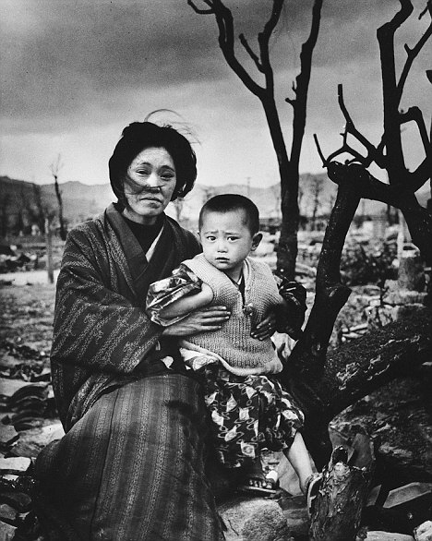 Apparently, in the minds of most Americans America can do no wrong. An act that would be perceived as profoundly immoral if any other nation were behind it, is seen as being quite acceptable and even laudable when it is America that sits in the driver’s seat. No matter how grossly immoral a particular action may be, when America is the actor that action is somehow magically transformed in light of America’s perceived exceptional greatness into something good, wholesome, and even holy — certainly nothing deserving of an apology.
I can think of no better example of this than America’s 1945 atomic bombing of the two high-density civilian population centers of Hiroshima and Nagasaki..
 America’s Nuclear Madness: Terrorism With A Vengeance (Part I) OpEd, By Robert Quinn, 12 Aug 13, ” The most effective way to destroy people is to deny and obliterate their own understanding of their history. — George Orwell
I tremble for my country when I reflect that God is just; that his justice cannot sleep forever. — Thomas Jefferson
This month marks the 68 th anniversary of the 1945 U.S. atomic bombing of the Japanese cities of Hiroshima and Nagasaki………..right-wing media made much of a Wikileaks-released diplomatic cable claiming to tell of plans President Obama had to apologize for America’s 1945 atomic bombing of Hiroshima and Nagasaki during his 2009 visit to Japan. Investors Business Daily castigated Obama for his alleged plans to “apologize” to Japan “for defending freedom” and “for winning with devastating finality the war Japan started.”The National Review Online, Rush Limbaugh, The Drudge Report, and Fox News, among other right-wing media outlets, followed Investor Business Daily’s lead, claiming that the only reason Obama’s planned apology failed to materialize is that Japan had the good sense to disapprove of the plan.
The White House denied that there ever was any plans to apologize to Japan for America’s WW II atomic decimation of Hiroshima and Nagasaki, and the Wikileaks cable bears this out. Following a meeting with Japan’s Vice Foreign Minister, the U.S. Ambassador to Japan cabled Secretary of State Clinton expressing Japan’s concern that a visit by Obama to Hiroshima, coming on the heels of Obama’s previously expressed commitment to a world free of nuclear weapons, would fuel speculation, particularly among anti-nuclear groups, whether an Obama apology might be in the offing. Japan worried that such speculation would play into the hands of these anti-nuclear groups, providing them with greater visibility and a stronger voice in their efforts to garner increasing public support for their anti-nuclear agenda. The diplomatic cable was sent, then, not to ward off a planned Obama apology as Obama’s detractors have claimed, but rather to ward off any speculation that such an apology might be in the works, and that an Obama visit to Hiroshima might serve to provoke. To this end, Japan’s foreign ministry recommended that both governments do what they can to keep all such speculation to a minimum, and that this could be accomplished by having Tokyo be the primary focus of Obama’s 2009 visit. End of story.
What if Obama actually did have plans to apologize to Japan on behalf of America for its atomic incineration of two Japanese high-density civilian population centers? What of it? What exactly is the crime in this? Might it just be that such an apology is in order, and long overdue? The media has given no consideration to this at all. Instead, the entire focus has been on whether Obama is guilty or not of having had plans to apologize for America. The right-wing conservative media assumed Obama’s guilt, the left-leaning liberal media came to his defense, and the mainstream media, where it wasn’t following the right wing’s deceptive lead, reported on the controversy. The important issue in all of this — the moral justification, or lack thereof, of America’s atomic bombing of Japan — was entirely ignored.
Is Apologizing When You’ve Said Or Done Something Detestable Un-American? Continue reading
So who’s lying about nuclear waste to Nevada?
 Mystery memos fuel battle between Nevada, DOE over nuclear waste Fox News,By Barnini Chakraborty August 12, 2013 WASHINGTON – U.S. Energy Secretary Ernest Moniz plans to meet with Nevada’s governor on Tuesday to discuss an escalating dispute between the state and the federal government over where to dump hundreds of canisters of radioactive waste, FoxNews.com has learned.
Tensions have risen in recent weeks over who should be forced to keep the nuclear material. The federal government says Nevada signed off on a series of memos agreeing to take it, but Nevada Gov. Brian Sandoval says those talks never happened — and says his state shouldn’t have to shoulder the burden of burying toxic waste in its backyard.
“The state of Nevada is not aware of any signed memos between the state and DOE regarding the approval of the material in question,” Mac Bybee, the governor’s communication director, told FoxNews.com.
Both Sandoval’s office and the Department of Energy confirmed that Moniz and the governor will meet on Tuesday.
Bybee says his office hasn’t located any memo from any state-level agency that has had contact with the Energy Department regarding the security, transportation or disposal of nuclear material.
That’s a problem because Moniz testified under oath during a July 30 Senate hearing to their existence. Continue reading
Confusing nuclear data: Agencywide Documents Access and Management System (ADAMS).
Nuclear Energy Activist Toolkit #12: Finding Stuff in ADAMS Dave Lochbaum, director, Nuclear Safety Project August 13, 2013 In November 1999, the NRC discontinued providing information to local public document rooms near nuclear plants around the country in favor of an online electronic library it calls the Agencywide Documents Access and Management System (ADAMS).
Finding records in ADAMS is wicked easy.
Finding records one actually wants in ADAMS is often just wicked.
One can search by key word or phrase or date or docket and literally get up to 1,000 hits (ADAMS will only return 1,000 hits even when 1,000,000 records match the search criterion. This makes it easier for you to find the record of interest among the 1,000 hits – unless, of course, that record is among the hits not returned.)
To make finding stuff even “easier,” records can be viewed in ADAMS by folders for the day they were added to the electronic library. The very descriptive information provided for each record make it extremely easy to zero right in on stuff of particular interest.,,,,,,,
the absolute easiest way to find a record in ADAMS is to have a hard copy in your hand before you start searching. If so, read the hard copy and save yourself the wasted time and undue agony trying to find it in ADAMS even when equipped with its date, subject, addressee, etc.
Even for immortals, life is just too short to become an ADAMS aficionado.
There are times when the federal government should not award contracts to the lowest bidder. Like when it seeks an online document library that is not “electronic keep away.”
The UCS Nuclear Energy Activist Toolkit (NEAT) is a series of post intended to help citizens understand nuclear technology and the Nuclear Regulatory Commission’s processes for overseeing nuclear plant safety.
Few barriers between Nevada and nation’s nuclear waste
….That view was not unanimous in the 2-1 decision. Judge Merrick B. Garland wrote a dissent scoffing at the assumed import of the decision, chiding that an order to send $11 million would do more than “order the commission to spend part of those funds unpacking its boxes, and the remainder packing them up again.”….
Published Tuesday, Aug. 13, 2013
The pressure on Nevada lawmakers to see a new nuclear waste disposal act through Congress this session just skyrocketed.
The U.S. Court of Appeals in Washington, D.C., decided Tuesday that the Nuclear Regulatory Commission must continue reviewing plans for a nuclear waste dump at Yucca Mountain until they have zero funds to continue.
That leaves only two barriers to Nevada getting dumped with the nation’s nuclear waste: Sen. Harry Reid’s ability to block funding – which depends entirely on Democrats keeping a majority in the Senate – or a scientific determination that Yucca Mountain is unfit.
Neither is as sure a thing as a law that simply designates a new destination for nuclear waste.
But it may take a small miracle to get such legislation passed.
“We’re not going to get any laws passed to change this,” Reid told reporters during a summit on clean energy in Las Vegas on Tuesday, blaming Tea Party opposition for stymieing any positive momentum toward siting a new repository.
In fact, the problem runs far deeper than that.
Last month, Congress began considering a bill to site new temporary and permanent repositories to store spent nuclear fuel by a consent-based process. Such a process, which would rely on the host community agreeing to the project, won tentative approval of members of the Nevada delegation, including Sen. Dean Heller, who got a whole lot more vocal about his support for the legislation immediately after the appeals court decision.
“Today’s decision serves as yet another example of why Yucca Mountain needs to be taken off the table once and for all,” Nevada Sen. Dean Heller said in a statement released after the ruling. “Instead of continuing to try to force Yucca Mountain on the people of Nevada, my colleagues should focus on moving toward a new process that will allow for consent-based siting.”
But last month, lawmakers in the House of Representatives also overwhelmingly rejected amendments presented by Rep. Joe Heck, R-Nev., to divert money appropriated for the Yucca Mountain licensing process by a vote of 335 to 81.
Votes like that – which occur on an annual basis – make it clear that support for Yucca is strong in both the Republican and Democratic parties.
Nuclear Regulatory Commission’s false safety assumptions
 Nuclear Regulatory Commission Is Using Obviously Faulty Models to Pretend Crumbling Nuclear Reactors Are Safe By Washington’s Blog Global Research, August 12, 2013 Ignoring Basic Engineering Science Puts Us All At Risk
Faulty assumptions by America’s financial regulators led to the 2008 crash … and many other disastrous results.
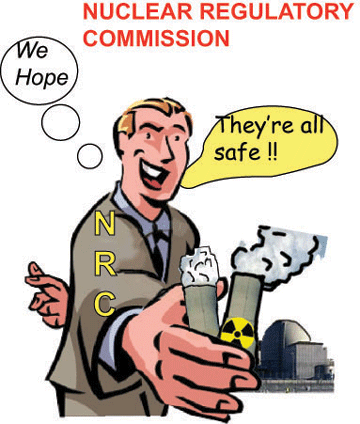
Similarly, America’s main nuclear regulator – the Nuclear Regulatory Commission – made numerous assumptions before Fukushima that turned out to be totally false. For example, the NRC wrongly assumed: Continue reading
America’s official lies about the reasons for atomic bombing of Japanese cities



Regardless of the number of American lives Truman claims to have saved, the vast majority of Americans accept the official story as gospel. The indoctrinating media and sixty-eight years of propagandistic history texts from grammar school through high school did its job well. But, except for the fact of the bombs having been dropped, the official story is a lie. Not merely mistaken, but a lie.
In terms of moral justification, the official story no doubt provides a great deal of comfort to a great many Americans. Unfortunately, all indications are that this moral centerpiece of the official story just isn’t true. The truth, as it turns out, is so barbaric that it’s almost inconceivable..
America’s Nuclear Madness: Terrorism With A Vengeance (Part I) By Robert Quinn“ OpEdNews 8/11/2013 “………..The Official Story
Sixty-eight years ago, August 6, 1945, the United States dropped the first atomic bomb to ever be used in warfare on the civilian population of Hiroshima, Japan. Three days later a second atomic bomb was dropped on the civilian population of Nagasaki, Japan. All toll, nearly a quarter of a million civilian men, woman, children, and babies lost their lives in those blasts. Of those who survived the blasts, many were maimed for life and many more would later die slow, painful deaths due to radiation poisoning and various forms of cancer.
In Hiroshima, a city with a population of 290,000, the initial death count by the end of August 1945 was estimated at 100,000. By the end of 1950 the estimated death toll had risen, according to some estimates, to 200,000. In Nagasaki, a city with a population of 240,000, including 400 prisoners of war, it’s estimated that some 70,000 were killed by the initial blast, with 140,000 dead within the next five years.
The official story at the time was that Hiroshima and Nagasaki were military targets whose destruction was necessary to bring the war to an end. This was a lie. The American public was also told that leaflets were dropped warning the inhabitants of these cities of the impending destruction and that they should leave. This, too, was a lie. The official story tells of President Truman’s decision to go nuclear on Japan as a necessary last resort designed to hasten a Japanese surrender, thereby saving American soldiers the horrors of a ground invasion of the Japanese mainland. As we will see, this, too, was a lie.
The official story claims that dropping the bombs saved the lives of many thousands of American soldiers which otherwise most certainly would have been lost. In October 1945, two months after the bombs were dropped, Truman wrote in his diary: Continue reading
Nevada’s secret nuclear radiation guinea pigs

 “Nuclear Guinea Pigs”: Deadly Experiments and Contaminated Reality By Greg Guma Global Research, August 11, 2013 Half a century ago, on the spurious grounds that extreme sacrifices were required in the battle to prevent a communist takeover of the world, the US government decided to use the citizens of Nevada as nuclear guinea pigs.
Although atomic testing was pursued there for several years in the 1950s, notification would have alarmed area residents. As a result, they weren’t even advised to go indoors. Yet, according to declassified documents, some scientists studying the genetic effects of radiation at the time were already concerned about the health risks of fallout.
For most of those committed to the US nuclear program, the need to keep this type of research secret was a no-brainer. After all, if the public realized that the technology used to bomb Hiroshima and Nagasaki had led to experiments at home, early nuclear research – not to mention weapons deployment – might have met stronger opposition. The government badly wanted its nukes, and the scientists yearned to unlock the secrets of human mutation. Thus, an unholy alliance was struck. Continue reading
No military need for atomic bombing of Hiroshima and Nagasaki
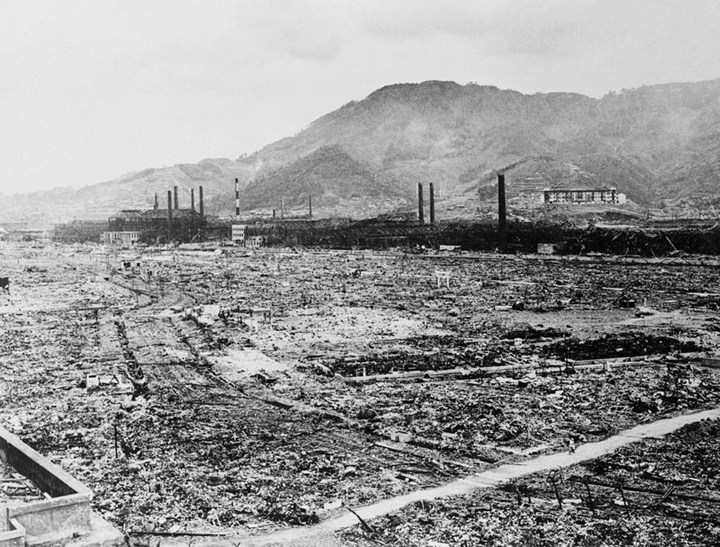 America’s Nuclear Madness: Terrorism With A Vengeance (Part I) By Robert Quinn” OpEdNews 8/11/2013 “………….Japan Had Already Been Defeated Prior To Dropping the Bombs After the war had ended, the U.S. Strategic Bombing Survey (a board consisting of more than 1,000 individuals, both military and civilian), was tasked by U.S. Secretary of War Henry Stimson with the examination and analysis of U.S. involvement in WW II. The Survey concluded in 1946 that “Japan would have surrendered even if the atomic bombs had not been dropped, even if Russia had not entered the war, and even if no invasion had been planned or contemplated.”
But it was not only with the advantage of hindsight that this conclusion was reached. General Eisenhower (Supreme Commander of allied forces in Europe) and General MacArthur (Supreme Commander of the U.S. Army in the Pacific) came to the same conclusion before the bombs were ever dropped. I don’t think there’s any question that both General Eisenhower and General MacArthur would have done whatever was necessary to spare their troops the horrors of a ground invasion. But the fact is that neither of them believed that a ground invasion of mainland Japan was necessary. Continue reading
Entergy’s finances being probed by Nuclear Regulatory Commission
 NRC to probe Entergy’s nuclear plant finances Rutland Herald, By Susan Smallheer
Deb Katz, executive director of the Citizens Awareness Network, said Saturday that the NRC accepting the petition for review was a major accomplishment for the groups. She said she hoped the NRC would get answers to many people’s questions about Entergy’s financial status.
Katz made her remarks during the “Flotilla 2013” rally and protest Saturday on the banks of the Connecticut River, directly across from the Vermont Yankee plant in Vernon, Vt. Entergy, the corporate parent of Vermont Yankee, announced last month it was laying off 800 employees out of its workforce of 15,000 nationwide. The cuts translate to a 4.6 percent staff cut at Yankee, which will lose 30 employees out of a total of 650.
Earlier in the year, the company announced it had been forced to write down the value of Vermont Yankee from $517 million to $162 million due to ongoing financial problems.
The NRC announced late last week that it was accepting the petition and would delve into Entergy’s finances. Continue reading
Massachusetts town saves money while leading on renewable energy
 A Town Saves Money with Renewable Energy Engineering.com, Tom Lombardo posted on August 11, 2013 Scituate is the first town in Massachusetts to power all of its government services using only renewable energy. All municipal services – including water, sewer, municipal buildings, and streetlights – will soon be powered by the sun and the wind. The town expects to save over $400,000 per year in electricity costs and the best part is that they didn’t have to buy the solar panels or wind turbine.
Too good to be true? Here’s the deal. Private investors purchased and installed the equipment on municipal land, so those companies paid for and own the equipment. In exchange, the town agreed to purchase its electrical power from the owners at a rate that’s about 40% lower than what they’d be paying the utility. These agreements are becoming more common in the residential market, as consumers want to lower their electricity costs but can’t afford a large initial investment. This is the first time I’ve heard of a municipality doing it.
 First, Use Less Energy

The first step in saving money on energy is not to generate your own, but to use less. Once you make yourself more efficient, then you consider ways to generate power. Several years ago the town of Scituate formed a committee to investigate clean energy. They sent out requests for proposals (RFPs) on energy efficiency and renewable energy production. After an electric load analysis, they found ways to use less electricity by replacing lighting fixtures, transformers, and other electrical equipment with more efficient models. A heating/cooling energy audit determined that they could also save energy through improvements in insulation, replacing oil-burning furnaces with gas-burning furnaces, etc. They invested almost $6M to upgrade this equipment based on the promise of energy savings over the next eighteen years.
 Next, Generate Energy

After improving their efficiency, they hired a consulting firm to do a wind site analysis. In addition to taking wind measurements at various locations over a 12-month period, they also considered logistical factors such as proximity to transmission lines. In spring of 2012, a 1.5 megawatt wind turbine was installed. Over its first year, the turbine generated 3.2 million kWh. At an electric rate of $0.143/kWh – the utility rate in that area – that’s almost half a million dollars worth of energy that the town received; they paid less than $300k for that energy. ……..
Use the Grid for “Virtual Storage”
Through a net-metering agreement with the utility, any excess energy that the town generates is sold to the grid at retail rates. When demand exceeds generating capacity, they buy power from the grid. In effect, the grid is acting as a free storage medium for excess energy…….
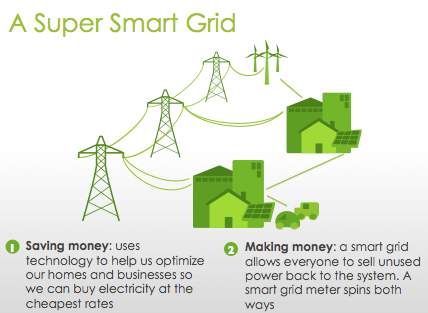
Reduce Government Spending and Boost Business
Disregarding the optional purchases to improve energy efficiency, the town of Scituate reduced its electric rate by 40% with virtually no investment on its part. In addition, the projects created jobs, gave a boost to a burgeoning industry, and produced science/technology/engineering/math (STEM) lessons for schools. Will other municipalities follow suit? I hope so. http://www.engineering.com/ElectronicsDesign/ElectronicsDesignArticles/ArticleID/6125/A-Town-Saves-Money-with-Renewable-Energy.aspx
Heat pollution of Connecticut River from Vermont Yankee Nuclear Power Plant
 NRC to probe Entergy’s nuclear plant finances Rutland Herald, By Susan Smallheer Staff Writer | August 11,2013 HINSDALE, N.H. ”……….Saturday’s protest was designed to bring public attention to the fact that Vermont Yankee daily dumps 200 million gallons of “hot” water into the Connecticut River to save money by not running its cooling towers.
Dr. Andrew Larkin, a retired internist from Northampton, Mass., said the Connecticut River was 10 degrees warmer near the plant’s discharge than other spots in the river he tested.
“The heated water coming from the reactor confused us, but still we persisted,” Schakman said, adding that only one in 10 shad get past all the dams on the Connecticut River, “only to be cooked by the reactor.” “We have lost so many, now we are down to a few, but still we persist,” he said.
This is the second year that the SAGE Alliance, a coalition of antinuclear groups, has organized the flotilla to focus public attention on the water discharge. About two dozen kayaks and canoes took to the water, with an equal number of people on shore to protest the daily discharge of warm water. Some people wrote messages to Entergy on cedar shingles and set them floating on the river.
“No nuclear accidents. All it takes is one,” wrote Elo-Mai Noormets of Westminster, Vt.
“Peace and health to this river,” wrote Leslie Sullivan Sachs of Brattleboro, Vt. http://rutlandherald.com/article/20130811/THISJUSTIN/708119973
Escalating costs at Nuclear Plant Vogtle as Public Service Commission dilly dallies
 State defers showdown on Ga. nuclear plant costs News Tribune, : August 11, 2013 By RAY HENRY — Associated Press ATLANTA — A debate over the rising cost of building a first-of-its-kind nuclear plant in Georgia will be pushed far into the future.
Regulators at the Public Service Commission were facing a legal dilemma ever since Southern Co. subsidiary Georgia Power asked in February to raise its construction budget for building two more nuclear reactors at Plant Vogtle by $737 million to $6.85 billion. That request raised expectations that PSC staffers would seek this month to block the utility from passing along some of its costs to customers, but that didn’t happen. Instead, Southern Co. and Georgia utility officials recently reached a preliminary deal that would postpone a major budget debate until at least January 2018, when the first reactor is projected to come online.
A glimmer of the state’s strategy emerged Friday in a report filed by nuclear engineer William Jacobs Jr. and PSC analyst Steven Roetger. Their report lays out the reasons why regulators could try to force the utility to absorb losses because of construction mishaps, but it stops short of recommending that regulators reject any spending now…….
Former Commissioner Robert Baker, who has represented a consumer watchdog group critical of the utility’s spending, said regulators should object to spending now, not wait years into the future. Baker said he believes the preliminary agreement might delay a major review until 2020.
“The new commission in 2020 that looks at this is not going to have the institutional memory, have gone through the entire process up to that time,” he said. “They’re not going to want to second guess what happened seven years ago or eight years ago.” http://www.thenewstribune.com/2013/08/11/2725340/state-defers-showdown-on-ga-nuclear.html
Big energy utilities move to stomp out home solar power
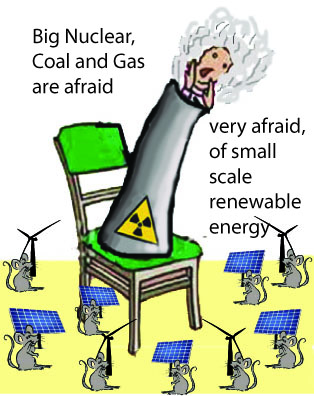 Renewables: A rising power. Ft.com By Pilita Clark, Environment Correspondent, 8 Aug 13……… “People think solar PV is only possible with subsidies and that is totally wrong,” says Karl Kuhlmann, the chief executive. “We’re happy that the industry is moving into an unsubsidised phase. It makes it simpler, better and totally independent from politicians.”
This is not quite true. The impact of cheap Chinese solar panels on western solar-panel makers has stirred political tensions, with trade rows over the threat of punitive tariffs erupting in the US and Europe…….
The more immediate threat to the nascent unsubsidised solar industry may be closer to home. In the US last month, Arizona’s largest utility, APS, asked regulators to look at imposing fees on people installing new rooftop solar systems to help pay for the cost of a grid they still use “essentially for free”.
“As the number of customers installing solar goes up, it drives rates even higher for non-solar customers, making the problem more difficult to solve,” it said in a statement. Utilities in other US states want similar action, infuriating solar companies.
Another outcry has broken out in Spain, the EU’s third-largest solar market after Germany and Italy, where the government last month also produced a proposal to impose new charges on rooftop solar owners.
“It’s really crazy,” says Mr Jornet. “They want me to pay for the electricity I take from my own solar panels. It’s amazing.”…….
Regulators still have to decide if the utilities will get their way. What does seem certain, however, is that the surge in solar power is changing energy markets in ways we have only begun to understand……http://www.ft.com/intl/cms/s/0/a41d86b4-ff9c-11e2-a244-00144feab7de.html#axzz2bb20LPZl
When the nuclear industry buys Florida politicians, they stay bought

Give a big “thanks” to former legislators Hasner, Constantine and all those others in Tallahassee who (knowingly or otherwise) signed off on one of Florida’s Big Loser Laws.
Who gets credit for nuclear advance fee law, one of worst in state history? Tampa Bay Times, Robert Trigaux, Times Business Columnist 9 Aug 13
“………. who is responsible for this evil 2006 law passed by the Florida Legislature? They’re talking about the measure that let big power companies charge customers years in advance for high-priced nuclear power plants that may or may not ever be built. That law authorized companies to keep the money charged in advance — even if the project is canceled.
Who sponsored and voted for such a measure that ranks among the worst Florida laws approved by a Legislature too familiar with corruption and the fine art of favoring hefty campaign contributors first, and citizens last? Gary West of St. Petersburg speaks for many readers in his recent letter published in the Tampa Bay Times: “Wouldn’t it only be an honest move to refund that money to those of us who have been hustled and this piece of rotten legislation repealed? Well, no. Not according to elected officials both past and present.
“You have to admire this trait in the average Florida politician,” West writes. “When they’re bought, they stay bought.”……. Continue reading
Nuclear Waste Administration Act of 2013 a step towards USA action
 Finally, there is a glimmer of hope that – more than 30 years after the Nuclear Waste Policy Act passed, and 15 years after the feds guaranteed they’d start accepting the waste – paralysis and dithering might give way to action
The new bill would:
essentially yank all responsibility from the Department of Energy (which spent about $10 billion on moribund Yucca Mountain) and would create a new organization solely devoted to solving the nuclear waste storage and disposal problem (as was recommended by the president’s Blue Ribbon
Commission, and is widely hailed as a solid idea by Republicans and Democrats alike).
develop the aforementioned “consensual process” for figuring out where to actually put nuclear waste by engaging with willing, rather than unwilling, communities, thus hoping to avoid the gridlock that resulted from 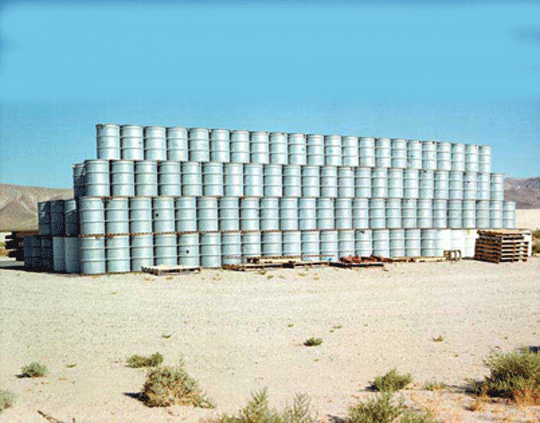 Nevada’s rabid opposition to deep, permanent geologic storage at Yucca Mountain.
emphasize getting the ball rolling for short-term storage first, and for permanent disposal second. This means pushing the new agency to start accepting waste as soon as possible at an “interim storage” site or sites, while it wrestles with the more thorny issue of where to put a permanent, deep geologic repository (or repositories).
End of paralysis on nuclear waste disposal? Orange County Register, August 9th, 2013, by By TERI SFORZA At this very moment, the vast majority of America’s highly radioactive nuclear waste – and San Onofre’s as well — is cooling in steel-lined concrete pools filled with water, which “are essentially loaded guns aimed at neighboring communities,” a scientist testified at a Congressional hearing last week.
“Unlike the reactor cores, the spent fuel pools are not protected by redundant emergency makeup and cooling systems and/or housed within robust containment structures having reinforced . “Thus, large amounts of radioactive material – which under the (Nuclear Waste Policy Act of 1982) should be stored within a federal repository designed to safely and securely isolate it from the environment for at least 10,000 years – instead remains at the reactor sites.” Continue reading
1 This Month
Tell Congress: Prevent Nuclear Catastrophe in Iran

Tell Congress: Prevent Nuclear Catastrophe in Iran

Read the Public Inquiry Report, the Commissioners’ report, Surrendering Australia: The AUKUS Deception is available to download for free at aukuspublicinquiry.com. Or just watch the replay of the National Press Club Luncheon.


Shut down the radiation-damaged Heysham nuclear reactors now
To see nuclear-related stories in greater depth and intensity – go to https://nuclearinformation.wordpress.com

Say No to NASA’s Reckless Nuclear Reactor on the Moon
Say No to NASA’s Reckless Nuclear Reactor on the Moon
-
Archives
- November 2026 (246)
- October 2026 (302)
- September 2026 (339)
- August 2026 (330)
- July 2026 (355)
- June 2026 (287)
- May 2026 (306)
- April 2026 (356)
- March 2026 (251)
- February 2026 (267)
- January 2026 (308)
- December 2025 (358)
-
Categories
- 1
- 1 NUCLEAR ISSUES
- business and costs
- climate change
- culture and arts
- ENERGY
- environment
- health
- history
- indigenous issues
- Legal
- marketing of nuclear
- media
- opposition to nuclear
- PERSONAL STORIES
- politics
- politics international
- Religion and ethics
- safety
- secrets,lies and civil liberties
- spinbuster
- technology
- Uranium
- wastes
- weapons and war
- Women
- 2 WORLD
- ACTION
- AFRICA
- Atrocities
- AUSTRALIA
- Christina's notes
- Christina's themes
- culture and arts
- Events
- Fuk 2022
- Fuk 2023
- Fukushima 2017
- Fukushima 2018
- fukushima 2019
- Fukushima 2020
- Fukushima 2021
- general
- global warming
- Humour (God we need it)
- Nuclear
- RARE EARTHS
- Reference
- resources – print
- Resources -audiovicual
- Weekly Newsletter
- World
- World Nuclear
- YouTube
-
RSS
Entries RSS
Comments RSS

