Saskatechewan embroiled in dangerous nuclear politics
 AUDIO: Saskatchewan’s Nuclear Addiction Contaminates Both Politics and the People http://www.globalresearch.ca/saskatchewans-nuclear-addiction-contaminates-both-politics-and-the-people/5355042?utm_source=rss&utm_medium=rss&utm_campaign=saskatchewans-nuclear-addiction-contaminates-both-politics-and-the-peopleGlobal Research News Hour Episode 42 By Michael Welch Global Research, November 07, 2013
Saskatoon is the headquarters of Cameco. Formed from the merger of two Crown Corporations in 1988, and ultimitely privatized in 2002, Cameco is one of the world’s largest Uranium producers accounting for 14% of overall world production.[3][4]
Saskatoon is also the headquarters of Areva Resources Canada Inc, a uranium mining, milling, and exploration company.[5]
To say that the nuclear sector in Saskatchewan has influence would be an understatement. For government officials, the nuclear industry represents a significant economic lever involving not only mining, but fueling of future tar sands projects.
Concerns however have arisen about the ways in which the sector is skewing initiatives in the public interest.
In a 2012 article for Briarpatch Magazine, D’Arcy Hande presented his research outlining how the nuclear industry, the government, and the University of Saskatchewan have all colluded to ensure the continued expansion and protection of uranium development in the face of public disapproval. Hande outlines a climate of corporatism nullifying critical
appraisals of Saskatchewan’s nuclear ambitions, and exposes conflicts of interest at the government and university level.
Hande spoke to the Global Research News Hour about how this collusion came about.
About 2 million spent nuclear fuel rods sit above ground at nuclear sites in Eastern Canada. The Nuclear Waste Management Organization (NWMO) has a plan to turn Northern Saskatchewan into a long-term repository for these nuclear wastes.
Three communities – Creighton, English River, and Pinehouse, after being subjected to bribes and intense lobbying, have signed on to this plan.
The Committee for Future Generations was formed in May of 2011 to monitor and resist this plan. One of its representatives, Candyce Paul, who lives in one of the affected communities spoke to us in Saskatoon about her concerns about the plan, the crackdown on dissenting voices, and the stakes both for her community, and for the wider region.
Partial Transcript of interview with Candyce Paul………
USA ramps up killing capabilities with new version of B61 nuclear bomb
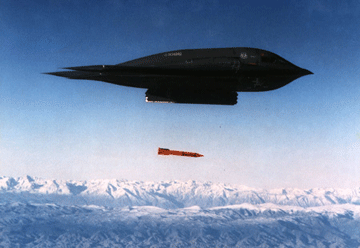 America’s Killing Machine: “Life Extension” of the B61-12 Nuclear Bomb By Hans M. Kristensen Global Research, November 07, 2013 With every official statement about the B61 nuclear bomb life-extension program, the capabilities of the new version (B61-12) appear to be increasing.
Previously, officials from the DOD, STRATCOM, and NNSA said the program is a consolidation of the B61-3, B61-4, B61-7, and B61-10 gravity bombs that would provide no additional military capabilities beyond those weapons.
This pledge echoed the 2010 Nuclear Posture Review, which states: “Life Extension Programs (LEPs)…will not support new military missions or provide for new military capabilities.”
Yet the addition of a guided tail kit will increase the accuracy of the B61-12 compared with the other weapons and provide new warfighting capabilities. The tail kit is necessary, officials say, for the 50-kilotons B61-12 (with a reused B61-4 warhead) to be able to hold at risk the same targets as the 360-kilotons B61-7 warhead. But in Europe, where the B61-7 has never been deployed, the guided tail kit will be a significant boost of the military capabilities – an improvement that doesn’t fit the promise of reducing the role of nuclear weapons.
More recently we also learned that the guided tail kit will provide the B61-12 with a “modest standoff capability,” something the current B61 versions don’t have.
And during yesterday’s hearing in the House Armed Services Committee’s Subcommittee on Strategic Forces, defense officials said the B61-12 would also replace the B61-11, a single-yield 400-kiloton nuclear earth-penetrating bomb introduced in 1997, and the B83-1, a strategic bomb with variable yields up to 1,200 kilotons.
If so, the military capabilities of the B61-12 will be able to cover the entire range of military targeting missions for gravity bombs, ranging from the lowest yield of the B61-4 (0.3 kilotons) to the 1,200-kiloton B83-1 as well as the nuclear earth-penetration mission of the B61-11.
That’s quite an achievement for a weapon that just a few years ago was described simply as a refurbishment of four old B61s. Now the B61-12 has become the all-in-one nuclear bomb on steroids, spanning the full spectrum of gravity bomb missions anywhere.
That has some pretty significant implications in Europe where the United States has never deployed bombs with the military capabilities of the B61-7, B61-11 and B83-1. And it opens up a portfolio of enhanced targeting options with less radioactive fallout – more useable nuclear strike scenarios. Not bad for a simple life-extension, but less clear why it is needed and how it fits U.S. and NATO promises to reduce the role of nuclear weapons and seek “bold reductions” in U.S. and Russian nuclear weapons in Europe.
The Magic Reduction Bomb
During yesterday’s hearing, the military and nuclear lab officials portrayed the B61-12 as key to future reductions and modifications of the nuclear stockpile………
To me, the willingness to trade all gravity bombs for the B61-12 is a tacit admission that most of the existing weapons are not needed but offered as sweeteners to “sell” the expensive program to Congress and the public.
Except for Representatives Loretta Sanchez and John Garamendi, none of the members that had shown up for the hearing asked any critical or difficult questions. Instead they appeared to invite the views that they knew the witnesses had anyway. There were no independent witnesses at the hearing, which appeared to be intended as a pushback against efforts in the Senate to scale back the B61-12 program.
There are no targets for the B61-12 that cannot be held at risk with ballistic or cruise missiles. And it is unlikely that there are any nuclear bombs deployed in Europe a decade from now. Instead, a basic gravity bomb capability on the B-2 and next-generation bomber could be achieved with a simpler and cheaper non-nuclear life-extension of the B61 as proposed by Senator Dianne Feinstein. http://www.globalresearch.ca/americas-killing-machine-life-extension-of-the-b61-12-nuclear-bomb/5357155
Uranium workers unhappy with safety arrangements
A Fridge Full of Uranium for Honeywell Employees, In These Times, BY MIKE ELK 7 Nov 13 On Monday, a Nuclear Regulatory Commission (NRC) team arrived at Honeywell’s Metropolis, Ill., uranium conversion plant to do a routine weeklong inspection. Recently, workers at the plant have alleged that the employee refrigerator in the control room of the main processing building has repeatedly tested positive for dangerous levels of uranium.
But because Honeywell will not allow a qualified union worker to accompany NRC representatives on their inspections if the workers are on layoff, the union claims that the company is putting them and the local community at risk.
During the last few years, the plant has faced problems with federal authorities over a series of safety issues. In March 2011, after an investigation by the Environmental Proection Agency (EPA), Honeywell pleaded guilty to one felony offense for knowingly storing hazardous radioactive waste without a permit in violation of the Resource Conservation and Recovery Act (RCRA)” and paid an $11.9 million fine to the federal government. Two months later, OSHA officially cited the company for 17 serious violations for the accidental release of toxic hydrogen fluoride (HF) gas directly into the atmosphere outside of the plant in December 2010.
Members of United Steel Workers Local 7-699, which represents workers at the Metropolis plant, claim that having a specifically designated worker present during inspections was the key to at least some of the company’s citations in 2011. The plant, workers say, is large and complex. Though inspectors are highly trained, they may miss small but crucial details during their visits. Union representatives, they say, can point out problems known to workers that regulatory officials may otherwise overlook.
So when workers found out that the union’s elected representative, USW Local 7-699 President Stephen Lech, would not be allowed to go on the NRC inspections because he is on what the union labels a “punitive” layoff, they were outraged. As union president, they say, Lech talks to more members of the union and has a more in-depth knowledge of safety issues than anyone else…….http://inthesetimes.com/working/entry/15848/honeywell_employees_west_texas_regulation_uranium_fridge/
The floating toxic Fukushima debris approachng USA
Texas-sized toxic ‘island’ of Japan tsunami waste approaching US http://voiceofrussia.com/news/2013_11_05/Texas-sized-toxic-island-of-Japan-tsunami-waste-approaching-US-2200/
A huge chunk of toxic debris from Japan’s 2011 tsunami is inevitably nearing the US West coast. Currently 1,700 miles away, between Hawaii and California, the “isle of junk” is worth million tons, while another million is still wandering in the Pacific.
In case the floating junkyard, dubbed by Fox News as the “toxic monster,” reunites with the rest of the rubble, its weight might reach five million tons while the area might exceed that of the States. That’s according to the report released last week by the US Department of Commerce’s National Oceanic and Atmospheric Administration, as the NOAA was trying to predict exactly the point at which the junkyard would reach land.
The “toxic monster” consists of items swept into the ocean by the tsunami – boats, houses, devices, consumer goods.
The data indicates that the movement of the debris is wildly unpredictable, as experts expect the bulk of the rubbish washing-up at any spot of the West coast of either US or Canada in the next several years.
Some of the debris may have already crossed the Pacific, as reports claim Japanese fishing vessels to have been washed up to Canadian shores as early as winter of 2011. In this case, the level of toxic junk already on the US beaches is probably high.
According to the Japanese Ministry of Environment, the tsunami left around five million tons of rubbish on the coast of Japan, but only 30% floated out into the wider Pacific. The rest, the Ministry claims, sunk to the ocean floor around Japan.
Nuclear power – the costly ‘renaissance’ that went awfully wrong
 “The fundamental problem was the renaissance was always economically unsound,” Bradford said. “There was never a point in time at which private investors were prepared to back new nuclear. There were just too many things that could go wrong.”
“The problem with using nuclear as an answer to climate change is it’s so much more expensive than other potential answers,” Bradford said. “It’s like building palaces to solve a housing shortage, or using caviar to solve world hunger.”
The ‘nuclear renaissance:’ What went wrong? By Matt Smith, CNN 6 Nov 13“…….Not long ago, nuclear energy seemed poised to start a much-touted renaissance in the United States. Buoyed by forecasts of increased demand, utilities were gearing up to start building the first new reactors since the 1970s. Concerns about the emissions from carbon-rich fossil fuels blamed for global warming started to offset public fears about safety that had lingered since the Three Mile Island accident in 1979. But since then, the industry has seen a dramatic reversal of fortune. And while some environmentalists, now argue that nuclear power is needed to head off climate change, the market has become a hostile place. Continue reading
The multi $billion cost of USA “modernising” its nuclear weaponry
 US to spend billions ‘modernizing’ nuclear arsenal By AFP | 6 Nov, 2013, WASHINGTON: The United States plans to spend billions to upgrade a decades-oldatomic bomb designed to stop a Soviet invasion of Europe, as part of a controversial project to modernize its nuclear arsenal.
Some lawmakers and experts dismiss the effort as a colossal waste of money that could derail arms control talks with Russia. ……. Some members of Congress are wary of the price tag, as the estimated cost for modernizing the B61 bomb keeps rising, from an initial $4 billion to $8.1 billion. And a Pentagon panel has projected the cost could reach $10 to $12 billion.
“The case against the B61 life extension is simple: it is unaffordable, unworkable and unnecessary,” said Kingston Reif of the Bulletin of the Atomic Scientists.
For skeptics, the project looks overly ambitious at a time of budget austerity, when the Air Force is already planning major spending on the new F-35 fighter jet, a new long-range bomber and a new cruise missile.
The cost of the program is coming under particular scrutiny because Obama himself is pushing to scrap tactical weapons in Europe, prompting criticism that the whole undertaking is unneccessary.
“To me, it doesn’t make a lot of sense to spend billions of dollars to extend the life of weapons that the president has already said he wants to get rid of,” said Tom Collina, director of research at the Arms Control Association.
In an editorial, the New York Times denounced the effort as a “Faustian bargain” Obama made with Senate Republicans in 2010, promising modernization of the nuclear arsenal to secure approval of the New Start arms reduction agreement with Russia. Obama has touted fresh arms control negotiations with Russia as a priority but making improvements to the B61 bomb could undermine prospects for any deal with Moscow, Collina and other experts said.
“Certainly, if the United States puts upgraded B61 bombs that are more accurate in Europe, Russia will probably have a response,” Collina said.
“I don’t know what that would be, but it certainly won’t be very positive.” http://economictimes.indiatimes.com/news/politics-and-nation/us-to-spend-billions-modernizing-nuclear-arsenal/articleshow/25333663.cms
Fukushima radiation could rise to Cold War levels in Alaska’s waters
Scientists in Alaska Warn About Spread of Fukushima Radiation Intellihub, By JG Vibes | November 4, 2013 Scientists say Fukushima radiation has reached Alaska ALASKA ) — For years the mainstream media looked the other way as Fukushima has been irradiating the planet, but there have been clear indications that this nuclear disaster is already having an effect, even on the other end of the world.
This week it was reported that scientists in Alaska are raising concerns about the possibility of Fukushima radiation contaminating the local food supply.
Douglas Dasher, a researcher at the University of Alaska Fairbanks, says radiation levels in Alaskan waters could reach Cold War levels.
“The levels they are projecting in some of the models are in the ballpark of what they saw in the North Pacific in the 1960s,” he told CBC……. Throughout the whole entire meltdown process TEPCO and the Japanese government have downplayed the environmental impact of the Fukushima disaster………All parties involved behind the scenes are remaining completely silent, although the Fukushima Nuclear Accident Independent Investigation Commission (NAIIC) has already concluded that the nuclear disaster at Fukushima was “a profoundly man-made disaster that could and should have been foreseen and prevented.”[3]
In contrast to the official reports coming from the government and the power company, test after test has shown that the meltdown has had a significant impact on the surrounding area.
It was reported last year that irradiated fish captured near the inoperative nuclear plant showed 25,800 becquerels of caesium per kilo, which is actually 258 times the level determined ‘safe’ by the government. http://intellihub.com/2013/11/04/scientists-in-alaska-warn-about-spread-of-fukushima-radiation/
Fukushima debris floating between Hawaii and California
1 million tons of Fukushima debris floating near US West Coast? Rt.com November 06, 2013 Over a million tons of Fukushima debris could be just 1,700 miles off the American coast, floating between Hawaii and California, according to research by a US government agency.
The National Oceanic and Atmospheric Administration (NOAA) recently updated its report on the movement of the Japanese debris, generated by the March 2011 tsunami, which killed 16,000 people and led to the Fukushima nuclear power plant meltdown.
Seventy percent of an estimated 5 million tons of debris sank near the coast of Japan, according to the Ministry of Environment. The rest presumably floated out into the Pacific.
While there are no accurate estimates as to where the post-tsunami junk has traveled so far, the NOAA has come up with a computer model of the debris movement, which gives an idea of where its highest concentration could be found.
That area is crosshatched at the NOAA model below (graphic) and resembles an island quite near the US shore……The agency has stressed its research is just computer simulation, adding that “observations of the area with satellites have not shown any debris.”
Despite the fact the tsunami debris is scattered and does not form a solid mass, the researchers still believe it’s a serious matter to keep an eye on. …….concerns such as radiation, meanwhile, have been downplayed. ….http://rt.com/usa/fukushima-debris-island-texas-266/
Uranium miner at Grand Canyon halting, due to poor uranium market
Work for uranium mine near Grand Canyon hits pause Arizona Daily Star, 7 Nov 13 The Associated Press FLAGSTAFF — A uranium mining company that was sinking a shaft for a mine south of Grand Canyon National Park has put the work on hold, citing market conditions and the expense of litigation. Energy Fuels Resources Inc. said the operation will be on standby until December 2014 or until a ruling is issued in a federal case challenging the U.S. Forest Service’s decision to allow development of the Canyon Mine near Tusayan. The company had planned to start extracting 83,000 tons of ore to produce 1.6 million pounds of processed uranium, or yellow cake, in 2015 but now will have to re-evaluate the timeframe….
….Prices for uranium have dropped to the mid-$30s per pound on the spot market, among the lowest in the past five years. http://azstarnet.com/ap/state/work-for-uranium-mine-near-grand-canyon-hits-pause/article_643f8e19-f2a1-565e-ad6b-7acb0ac2a625.html
New York Attorney General slams NRC nuclear waste environmental assessment
 NY Attorney General faults NRC for relying on “unsubstantiated hope” http://www.fierceenergy.com/story/ny-attorney-general-faults-nrc-relying-unsubstantiated-hope/2013-11-05 By Barbara Vergetis Lundin
New York Attorney General Eric T. Schneiderman is calling upon the Nuclear Regulatory Commission (NRC) to strengthen its proposed assessment of the environmental, public health and safety risks of storing highly radioactive nuclear wastes on-site at more than 100 reactors around the country for 60 or more years after the reactors are closed. The Attorney General’s testimony was delivered by Assistant Attorneys General Janice Dean at a public meeting held by the NRC on the proposed Waste Confidence Draft Generic Environmental Impact Statement (DGEIS).
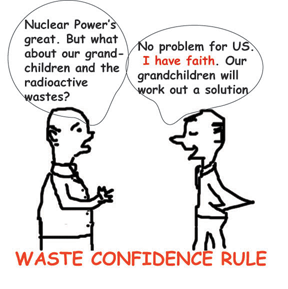 The DGEIS was prepared by the NRC in response to Attorney General Schneiderman’s successful court challenge to the commission’s Temporary Storage Rule in which the NRC had found, without conducting necessary studies, that no significant safety or environmental impacts will result from long-term, on-site storage of radioactive waste at nuclear power plants.
In 2012, a federal circuit court agreed with Attorney General Schneiderman that federal law requires the NRC to complete a thorough analysis of the public health, safety and environmental hazards such storage would pose before allowing the long-term storage of nuclear waste in communities. In reaching its decision, the court found that the spent nuclear fuel stored on-site at nuclear power plants “poses a dangerous, long-term health and environmental risk.”
In his court challenge to the NRC’s Temporary Storage Rule, the Attorney General argued that full compliance with the National Environmental Policy Act requires the commission to conduct a rigorous analysis of the potential for environmental, health and safety impacts from long-term, on-site radioactive waste storage. Continue reading
For USA help, Japan must first sign up to free USA nuclear equipment providers from accident liabilty
 U.S. Says Japan Signing Liability Pact Would Aid Nuclear Cleanup Bloomberg, By Jacob Adelman – Nov 3, 2013 Japan will receive international help with the cleanup at the Fukushima atomic station once it
 joins an existing treaty that defines liability for accidents at nuclear plants, U.S. Energy Secretary Ernest Moniz said.
The treaty, known as the Convention on Supplementary Compensation for Nuclear Damage,assigns accident liability to plant operators rather than equipment and technology vendors,Moniz said in a Nov. 2 interview in Tokyo. Continue reading
Fukushima clean-up an “unprecedented challenge” says shocked USA Energy Secretary Moniz
 US Energy Secretary “shocked” and “stunned” after being at Fukushima plant — “Unprecedented” and “daunting” task ahead for Japan — America has “direct interest” in Tepco doing things safely (VIDEO) http://enenews.com/energy-secretary-shocked-stunned-after-being-fukushima-plant-unprecedented-daunting-task-ahead-japan-america-direct-interest-tepco-doing-safely-video
Statement from U.S. Secretary of Energy Ernest Moniz Regarding Fukushima, Nov. 1, 2013 “On Friday, I made my first visit to the Fukushima Daiichi Nuclear Power Station. It is stunning that one can see firsthand the destructive force of the tsunami even more than two and a half years after the tragic events.[…] TEPCO President Hirose, and his dedicated staff […] face a dauntingtask in the cleanup and decommissioning of Fukushima Daiichi, one that will take decades and is being carried out under very challenging conditions. The TEPCO workforce is facing unprecedented challenges and is clearly focused on devising and implementing solutions. […] It appears that spent nuclear fuel will begin to be removed from Unit 4 as scheduled in mid-November. […] As Japan continues […] the cleanup at the Fukushima site […] the United States stands ready to continue assisting our partners in this daunting yet indispensable task […]“
NHK WORLD, (removed from Internet) Oct. 31, 2013: Ernest Moniz […] in his speech in Tokyo on Thursday […] said the success of the cleanup of areas around the Fukushima plant and decommissioning of reactors have global significance. Moniz said the US has a direct interest in seeing the next steps are done efficiently and safely.
Fukushima to Remove Tritium, IAEA To Send “Help” Update 11/2/13
AP, Nov. 2, 2013: In a speech Thursday in Tokyo, [Moniz] said “the success of the cleanup also has global significance. So we all have a direct interest in seeing that the next steps are taken well, efficiently and safely.”
NHK,, Nov. 2, 2013: Ernest Moniz spoke to NHK on Saturday in Tokyo, one day after visiting the Fukushima Daiichi plant. Moniz said he was shocked to see the scale of the damage that remains more than 2 and half years after the tsunami disaster and the nuclear accident. He said he also sensed how difficult work at the plant is with workers required to wear full face masks and other protective gear.
Watch the NHK interview here (removed from Internet
Fukushima radiation reaching Alaskan coast, but it’s not being measured
 Radiation from Japan nuclear plant arrives on Alaska coast http://www.cbc.ca/news/canada/north/radiation-from-japan-nuclear-plant-arrives-on-alaska-coast-1.2335668 Scientists concerned about lack of monitoring plan CBC News Nov 02, 2013 Scientists at the University of Alaska are concerned about radiation leaking from Japan’s damaged Fukushima nuclear plant, and the lack of a monitoring plan.
Some radiation has arrived in northern Alaska and along the west coast. That’s raised concern over contamination of fish and wildlife. More may be heading toward coastal communities like Haines and Skagway.
Douglas Dasher, a researcher at the University of Alaska Fairbanks, says radiation levels in Alaskan waters could reach Cold War levels.”The levels they are projecting in some of the models are in the ballpark of what they saw in the North Pacific in the 1960s,” he said.
John Kelley, a professor emeritus at the University of Alaska Fairbanks, says he’s not sure contamination will reach dangerous levels for humans but says without better data, who will know? “The data they will need is not only past data but current data, and if no one is sampling anything then we won’t really know it, will we?
“The general concern was, is the food supply safe? And I don’t think anyone can really answer that definitively.” He says much of the monitoring is being done pro bono by universities, NGOs and state organizations.
Nuclear Regulatory Commission’s “Waste Confidence” rule is indeed a “con”
Of greatest concern are Limerick’s fuel pools, already packed beyond design capacity, and dangerously vulnerable to meltdowns with potential for unthinkable health and economic devastation. Limerick’s two fuel pools hold more than two and a half times the amount of fuel rod assemblies (6,200) than four fuel pools at Fukushima (2,400) and far more than other older U.S. nuclear plants like TMI and Oyster Creek. NRC can’t or won’t tell ACE why.
Shedding light on NRC’s nuke waste con game http://www.pottsmerc.com/opinion/20131101/op-ed-shedding-light-on-nrcs-nuke-waste-con-game 10/31/13,
Evan Brandt’s article on Oct. 5, “Gov’t Shutdown May Delay Relicensing of Limerick Nuke Plant”, explained that NRC’s 2012 court-ordered spent fuel study would be delayed by the 2013 government shutdown. Actually, the government shutdown shed light on NRC’s nuke waste con game.
There is NO safe solution for radioactive fuel rods that can remain radioactive for a million years (EPA). They’re among the deadliest materials on earth. Yet, NRC’s “Nuclear Waste Confidence” game makes unsubstantiated claims that high-level radioactive wastes can be stored safely, soundly, and securely, virtually forever. This applies to nuclear plant sites like Limerick and allows them to continue producing and piling up deadly radioactive wastes under the absurd pretense that there is a safe solution.

Unthinkable devastating health and economic consequences threaten our future whether stored in fuel pools, above ground casks, from reprocessing, or from dangerous transport to a central location. NRC’s assumptions are far-fetched and negligent, including that dry cask storage systems, structures, and components can and will be entirely replaced once per century. NRC fails to identify astronomical public costs or where funds would come from for expensive massive replacements forever. NRC irrationally assumes society is willing or able to pay such costs, even if replacement is possible.
It was insanity for NRC to even consider relicensing Limerick Nuclear Plant when there is no safe solution for its deadly radioactive wastes. Continue reading
How badly Hansford nuclear whistleblower was treated
 Shocking Treatment of US Nuclear Whisteblowers: Sent to office in basement with rat poison after warning of Fukushima-like explosion — Another given office in storage room with drums of radioactive waste and asbestos soon after having chemotherapy (VIDEO) http://enenews.com/shocking-treatment-of-us-nuclear-whisteblowers-sent-to-office-in-basement-with-rat-poison-after-warning-of-fukushima-like-explosion-another-given-office-in-storage-room-with-drums-of-radioactive-w
KING 5 News,, Nov. 1, 2013: Hanford whistleblower: ‘I was now the enemy’ […] [Dr. Walt] Tamosaitis determined that the mixers, as designed, would not be able to mix the waste sufficiently, posing a risk that heavy radioactive elements would collect at the bottom of the tanks and begin a nuclear chain reaction. The reaction, in turn, would generate large amounts of explosive hydrogen gas (a similar hydrogen build up at the Fukushima nuclear plant in Japan caused large explosions after the 2011 Tsunami damaged that facility). […] “The worst case scenario would be a criticality and trapping of hydrogen gas which could lead to a hydrogen explosion,” said Tamosaitis. […] URS moved Tamosaitis to another building where he was assigned to a makeshift office in the basement. He sat alone in a cramped space full of storage boxes, rat poison feeders and copy machines. He was not assigned any work and had no boss to report to. “The message was, ‘Don’t do what Walter did. Don’t raise issues. Shut up (and) do what we say,’” said Tamosaitis. […] The Defense Nuclear Facility Safety Board and the Government Accountability Office both issued reports highlighting Tamosaitis’ work. And in early 2012 Energy Secretary Steven Chu ordered a halt to WTP construction. Continue reading
1 This Month
Tell Congress: Prevent Nuclear Catastrophe in Iran

Tell Congress: Prevent Nuclear Catastrophe in Iran

Read the Public Inquiry Report, the Commissioners’ report, Surrendering Australia: The AUKUS Deception is available to download for free at aukuspublicinquiry.com. Or just watch the replay of the National Press Club Luncheon.


Shut down the radiation-damaged Heysham nuclear reactors now
To see nuclear-related stories in greater depth and intensity – go to https://nuclearinformation.wordpress.com

Say No to NASA’s Reckless Nuclear Reactor on the Moon
Say No to NASA’s Reckless Nuclear Reactor on the Moon
-
Archives
- November 2026 (246)
- October 2026 (302)
- September 2026 (339)
- August 2026 (330)
- July 2026 (355)
- June 2026 (287)
- May 2026 (306)
- April 2026 (356)
- March 2026 (251)
- February 2026 (267)
- January 2026 (308)
- December 2025 (358)
-
Categories
- 1
- 1 NUCLEAR ISSUES
- business and costs
- climate change
- culture and arts
- ENERGY
- environment
- health
- history
- indigenous issues
- Legal
- marketing of nuclear
- media
- opposition to nuclear
- PERSONAL STORIES
- politics
- politics international
- Religion and ethics
- safety
- secrets,lies and civil liberties
- spinbuster
- technology
- Uranium
- wastes
- weapons and war
- Women
- 2 WORLD
- ACTION
- AFRICA
- Atrocities
- AUSTRALIA
- Christina's notes
- Christina's themes
- culture and arts
- Events
- Fuk 2022
- Fuk 2023
- Fukushima 2017
- Fukushima 2018
- fukushima 2019
- Fukushima 2020
- Fukushima 2021
- general
- global warming
- Humour (God we need it)
- Nuclear
- RARE EARTHS
- Reference
- resources – print
- Resources -audiovicual
- Weekly Newsletter
- World
- World Nuclear
- YouTube
-
RSS
Entries RSS
Comments RSS

