In USA nuclear whistleblowers are at risk
 Nuclear Regulatory Commission Strips Whistleblower Protection by grtv 14 Nov 13, In sworn testimony in Monroe, Michigan, the NRC admitted that it has stripped whistleblower protection from the licensing of new nuclear power plants.
By flip-flopping on what it means to be an applicant, the whistleblowers who are truly looking to protect the public health and safety are having their lives and livelihoods jeopardized.
Fairewinds Chief Engineer Arnie Gundersen discusses what this means as utilities look for short cuts and cheaper ways to build new nukes.Arnie http://tv.globalresearch.ca/2013/11/nuclear-regulatory-commission-strips-whistleblower-protection?utm_source=rss&utm_medium=rss&utm_campaign=nuclear-regulatory-commission-strips-whistleblower-protection
Treasure Island, in San Franciso Bay, holds radiation danger
 San Francisco families could be at risk of radiation poisoning – report RT.com November 14, 2013 A small island in the heart of San Francisco Bay could be a major source of radiation and the young families that live there may be at risk of poisoning, a new report from the California Department of Health has concluded.
Treasure Island, a man-made landmass within view of the Golden Gate Bridge, is the former site of a US military base that is now home to renovated land areas, playgrounds, and apartment buildings. San Francisco lawmakers previously announced their intention to build an 8,000-unit tower there once the Navy formally cedes land rights.
Earlier this year, workers with the California Department of Public Health found radioactive shards in the ground on the western side of the island. One object was so radioactive that holding it for an hour would result in burns, hair loss, and other maladies, according to the Center for Investigative Reporting.
An internal memo written in September and unveiled this week admonished officials’ prior notice for implying that the area is known to be safe.“Further evaluation should be made of the probability of a member of the public, especially critical members of the population (for example, children) picking up a radioactive fragment and being exposed,” state health officials wrote, as quoted by the Center for Investigative Reporting.
“As of 2011, 575 radioactive shards had been found on Treasure Island,” the memo continued. “Regulators have speculated that the shards could have been buried for military practice using Geiger counters, which measure radiation. Earlier this year CDPH officials found radioactive shards buried in lawns near apartments on the island.” …..http://rt.com/usa/san-francisco-radiation-poisoning-report-744/
Mitsubishi cutting back on nuclear engineering staff
Mitsubishi cutting Charlotte nuclear engineering staff in half Charlotte Business Journal, John Downey 14 Nov 13 Mitsubishi Nuclear Energy Systems will lay off 48 people from its Charlotte Engineering Center by the end of the year, cutting the staff by roughly half.
The layoffs come as Mitsubishi has decided to slow its efforts to get Nuclear Regulatory Commission certification of its US-APWR reactor. That led the power companyLuminant to announce plans last week to suspend its effort to license two 1,700 megawatt Mitsubishi reactors at the Commanche nuclear plant in Texas.
In April, Dominion announced it was abandoning plans to build a Mitsubishi unit at its North Anna Nuclear Station…….. Mitsubishi had about 100 workers when it celebrated the grand opening of its center in Ballantyne in spring of 2012.
At that time, executives said the center could have as many as 150 workers by 2017. But the center never got above the 100 mark.
The state offered $4.1 million in incentives to bring the center here.http://www.bizjournals.com/charlotte/blog/power_city/2013/11/mitsubishi-cutting-charlotte-nuclear.html
How USA and France killed off nuclear agreement nearly made with Iran

 Western Backtrack on Uranium Enrichment Killed Iran Deal http://news.antiwar.com/2013/11/11/western-backtrack-on-uranium-enrichment-killed-iran-deal/US, France Sought to Change Deal at Last Minute by Jason Ditz, November 11, 2013 More details continue to emerge on the disagreements that prevented an expected weekend pact between the P5+1 and Iran, with a last minute side conversation between Secretary of State John Kerry and his French counterpart Laurent Fabius apparently keeping it from continuing. Fabius demanded last second changes to the draft agreement, including removing a clause guaranteeing Iran’s right to civilian uranium enrichment. Kerry reportedly endorsed that demand.
Iran has, under its safeguards agreement, every right to enrich uranium for civilian purposes, and has insisted they are willing to limit that enrichment, but not abandon the right outright.
That already put the talks on shaky ground, and Fabius followed it up with a demand that Iran abandon the under construction Arak reactor, which runs on unenriched uranium. Between the two demands this amounted to a de facto demand to surrender their entire civilian nuclear program, but the US and France continued to insist on only minor sanction relief. At that point though, the deal was dead and everyone just decided to meet again later this month.
For USA’s Nuclear Regulatory Commission, not all nuclear plants have equal safety standards
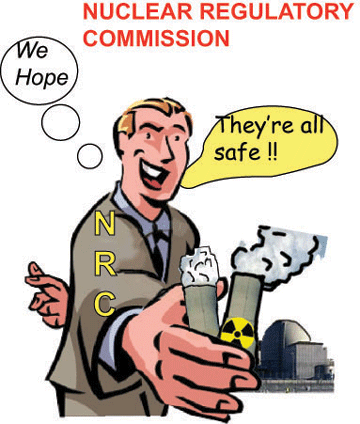 NRC fails to apply standard earthquake protocols to Diablo Canyon Nuclear Plant Cal Coast news. com, November 13, 2013 STATEMENT By UNION OF CONCERNED SCIENTISTS The Nuclear Regulatory Commission is not holding the Diablo Canyon nuclear plant in California to the same standards it requires of every other nuclear facility to address potential earthquake hazards, according to a report released today by the Union of Concerned Scientists. UCS prepared the report, “Seismic Shift: Diablo Canyon Literally and Figuratively on Shaky Ground,” for the Alliance for Nuclear Responsibility.
“This is a dangerous double standard,” said David Lochbaum, director of UCS’s Nuclear Safety Project and author of the report. “At other facilities, the NRC enforced its safety regulations and protected Americans from earthquake threats. Today, in the case of Diablo Canyon, the NRC is ignoring its regulations, unfairly exposing millions of Americans to undue risk.”
It is widely known that Diablo Canyon sits near earthquake fault lines. In late 2008, the plant’s owner, Pacific Gas & Electric (PG&E), informed the NRC about a previously unknown earthquake fault line running as close as 2,000 feet from Diablo Canyon’s two reactors that could cause more ground motion during an earthquake than the plant was designed to withstand. Since this new fault was discovered, the NRC has not demonstrated that the reactors meet agency safety regulations.
When similar concerns surfaced at nuclear facilities in California, Maine, New York, Pennsylvania and Virginia, the NRC did not allow the plants to continue to operate until the agency determined they met safety regulations. In particular, the NRC needed to be sure that a number of devices, including “shock absorbers” on piping and other components, would limit earthquake damage. In contrast, the NRC has allowed PG&E to continue to operate Diablo Canyon’s reactors despite this known threat……..
“Despite solid evidence that Diablo Canyon does not comply with federal safety requirements, the NRC continues to allow the plant to operate,” said Rochelle Becker, executive director of the Alliance for Nuclear Responsibility. “The NRC should enforce its safety regulations at Diablo Canyon.”
The Union of Concerned Scientists puts rigorous, independent science to work to solve our planet’s most pressing problems. Joining with citizens across the country, we combine technical analysis and effective advocacy to create innovative, practical solutions for a healthy, safe and sustainable future. For more information, go to www.ucsusa.org. http://calcoastnews.com/2013/11/nrc-fnrc-fails-apply-standard-earthquake-protocols-diablo-canyon-nuclear-plant/
Wikileaks reveals Trans Pacific Partnership’s secret deals to benefit big corporations, not the pub;ic
Australian Greens spokesman on communications and the digital economy Scott Ludlam said the treaty was ”hugely dangerous” and people should be ”deeply concerned about what is being negotiated”.
The full transcript of the leaked negotiating text can by found at www.wikileaks.org.
 Australians may pay the price in Trans-Pacific Partnership free trade agreement The Age, November 14, 2013 Philip Dorling A leaked draft of the Trans-Pacific Partnership deal looks to have worrying intentions.Australians could pay more for drugs and medicines, movies, computer games and software, and be placed under surveillance as part of a US-led crackdown on internet piracy, according to details of secret trade negotiations exposed by WikiLeaks.
 A leaked draft of a controversial chapter of the Trans-Pacific Partnership free trade agreement reveals the negotiating positions of 12 countries including Australia on copyright, patents and other intellectual property issues, with a heavy focus on enforcement measures against internet piracy.
Intellectual property experts are critical of the draft treaty, which they say would help the multinational movie and music industries, software companies and pharmaceutical manufacturers to maintain and increase prices by reinforcing the rights of copyright and patent owners, clamping down on online piracy, and raising obstacles to the introduction of generic drugs and medicines.
The leaked treaty text also reveals new US and Japanese proposals designed to enhance the ability of pharmaceutical manufacturers to extend and widen their patents on drugs and medicines……… Continue reading
San Francisco’s Treasure Island radiation threat
Radiation threat on Treasure Island, report says SF Gate, Matt Smith and Katharine Mieszkowski, Center for Investigative Reporting, Wednesday, November 13, 2013 Despite six years of Navy cleanup and San Francisco city government reassurances that Treasure Island is safe, children living there might be at risk of radiation poisoning, a newly released state health departmentmemo concludes.
Earlier this year, California Department of Public Health workers discovered radioactive shards buried in lawns near apartment buildings on the island’s western side. One small octagonal object was so radioactive that holding onto it for an hour could cause burns, hair loss and ulceration, according to the memo.
That area of the former military base is now home to a playground, landscaped recreation areas and apartments. The Navy is slated to turn over the land to the city, which plans to build an 8,000-unit high-rise development there…….
In a strongly worded internal memo, written in June and updated in September, state health officials warned that there was no guarantee the area was safe and said findings indicated there still might be dangerous radioactive waste in the ground where children could find it…….
How much is left?
Officials have no way of knowing how many shards remain on the island. But as of 2011, a total of 575 had been unearthed, according to internal health department e-mails.
The new memo again says tests have not been thorough enough to evaluate whether the apartment areas are safe.
Besides the warning about radioactive shards, the health department memo says soil just under the grass contained low concentrations of radium, making it possible that decorative shrubs in the area might have absorbed radioactive material…..http://www.sfgate.com/bayarea/article/Radiation-threat-on-Treasure-Island-report-says-4979641.php
Cotter uranium mill -closed, but still spilling radioactive water
Defunct Cañon City uranium mill discharges tainted water The Gazette, The Associated Press November 13, 2013 CANON CITY — A ruptured underground pipe discharged contaminated water from the defunct Cotter Corp. uranium mill near Cañon City.
The Denver Post reports that the contaminated water spill is the third in the last four years (http://bit.ly/HLG5jd).
The spill was reported Nov. 5. It was five to 10 times larger than previous discharges.
The Colorado Department of Public Health and Environment says the company reported 4,000 to 9,000 gallons of water tainted with uranium and molybdenum spilled onto the ground…… http://gazette.com/defunct-caon-city-uranium-mill-discharges-tainted-water/article/1509264
Utah deliberating on the dangers of hosting radioactive trash dump
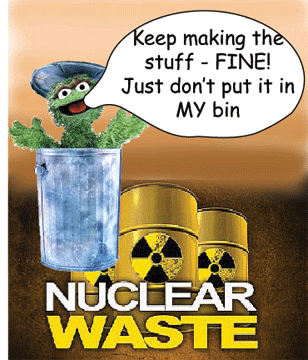 Utah weighing threats of storing depleted uranium — from meteor strikes to ants By Amy Joi O’Donoghue, Deseret News, Nov. 11 2013 SALT LAKE CITY — When figuring out if it is going to be safe to allow large quantities of depleted uranium to be buried in the desert 65 miles west of Salt Lake City, the state of Utah has to contemplate a long list of “what ifs” that could happen — and over a long, long period of time.
There are events like war, meteor strikes, volcanic activity, the return of large lakes like Lake Bonneville every 16,000 years and even, to some degree, the threat to stable disposal caused by burrowing ants.
EnergySolutions is proposing to dispose of 3,507 metric tons of depleted uranium at Clive, Tooele County, and it could be the nation’s repository of its inventory of 700,000 more tons of the radioactive waste, which is a byproduct of nuclear production material.
The state has to sign off on the disposal, requiring the company to complete a “performance assessment” that looks at how well its disposal site will weather all sorts of events and conditions……..
Even the federal regulators — the Nuclear Regulatory Commission — have yet to craft a rule on the storage of this brand of radioactive waste, leaving Utah to forge out on its own with building a framework that is protective of public health and the environment.
Depleted uranium falls within the radioactive levels Utah has established by law that it is willing to accept — low level radioactive waste — described as Class A. “Hotter” wastes such as B and C are prohibited.
The problem posed by the storage of depleted uranium stems from its increasing radioactivity — it continues to get “hotter” over time, peaking at 2.1 million years and staying at the level for billions of more years.
Utah regulators required EnergySolutions to come up with contingencies in its storage plans that document how its site would fare for a period of 10,000 years — and beyond that looking at “deep time” scenarios until it reaches peak radioactive levels.
The scenarios contemplate vulnerabilities to the public — from off-highway vehicle users who recreate nearby in Tooele County, military at the Utah Test and Training Range and the lone resident caretaker at the rest stop off I-80 at the Aragonite exit…..
The division will soon begin reviewing the assessment and is expected to make a decision next fall. http://www.deseretnews.com/article/865590390/Utah-weighing-threats-of-storing-depleted-uranium-2-from-meteor-strikes-to-ants.html
Mark Z. Jacobson’s plan for a renewable energy powered USA
If this seems too big to comprehend, let’s look at the state level. Jacobson has worked with research teams to develop plans for New York and California, and he hopes to do one for each state in the country.
The California plan aims for “all new energy powered with WWS by 2020, 80-85 percent of existing energy replaced by 2030, and 100 percent replaced by 2050.”
When it comes to New York, the biggest difference from California is a little less concentrated solar and much more offshore wind. This is their New York plan:……..

 We Have the Renewable Energy We Need to Power the World—So What’s Stopping Us?A leading researcher says we have enough wind and solar to power the world. Are we willing to do what’s necessary to transform our society Alter Net, Tara Lohan November 8, 2013 |The environment is one bad news story after another The Pacific Ocean is warming at a rate faster than anything seen in the last 10,000 years and we may have the warmest Arctic in the last 120,000 years. We’re told to brace for more and worse droughts, floods, heat waves, and storms. Coastal communities may disappear from rising seas, entire island nations are going under. If that all weren’t bad enough, there is a global wine shortage.
The bright side is that we aren’t being blindsided by an unknown enemy: Our relentless burning of fossil fuels is the big thing pushing us toward the brink. So it would figure that a solution to get us out of this mess would be pretty obvious.
That’s why it’s great that there are people like Mark Z. Jacobson, a professor of civil and environmental engineering at Stanford University. While it is one thing to say we want to stop burning fossil fuels, Jacobson (and a team of researchers) are telling us how to do it.
Jacobson was recently on the “David Letterman Show,” where he proclaimed that we have enough wind and solar to power the world…… Continue reading
Financial innovation will be the next big step in solar energy
 The Next Big Innovation in Renewable Energy Won’t Be Technological It will be financial. The Atlantic,TODD WOODY NOV 11 2013, Silicon Valley solar company SolarCity last week quietly did something that could revolutionize renewable energy in the United States. No, the company did not invent a radically more efficient or cheaper photovoltaic panel. Rather, it announced it plans to sell $54 million in asset-backed securities.
And that is a very big deal, even if the dollar amount of the notes on offer is rather small. That’s because the assets backing the securities are leases for some of the rooftop solar systems it has installed on homes across the country. Hundreds of millions of dollars in solar leases have been signed in the U.S. in recent years. If those leases can be bundled and sold to pension funds and other investors, “solar securitization” could open up a potentially huge new pool of capital that could be tapped to finance the expansion of renewable energy as federal and state tax breaks for renewable energy begin to expire. For homeowners and businesses, solar securitization could translate into cheaper electricity. A SolarCity spokesman declined to comment on the securities offering.
Much of the innovation responsible for the solar industry’s explosive growth has been financial rather than technological. Half the U.S.’s solar capacity, for instance, was installed just in 2012. Driving those sales was the ability of homeowners to avoid the five-figure cost of a photovoltaic system by leasing it for a monthly payment that often is lower than what they’d pay their local utility. Anywhere between 75 and 90 percent of all solar systems are now leased as a result……..HTTP://WWW.THEATLANTIC.COM/TECHNOLOGY/ARCHIVE/2013/11/THE-NEXT-BIG-INNOVATION-IN-RENEWABLE-ENERGY-WONT-BE-TECHNOLOGICAL/281345/
Department of Environmental Protection to focus on radiation involved in gas drillig
DEP Secretary: regulating radiation may be “next frontier” of drilling oversight http://stateimpact.npr.org/pennsylvania/2013/11/11/dep-secretary-regulating-radiation-may-be-next-frontier-of-drilling-oversight/ BY MARIE CUSICK 11 Nov 13 The state Department of Environmental Protection’s acting Secretary Chris Abruzzo says regulating the radioactive materials associated with gas drilling could be the “next frontier” of the agency’s oversight of the industry.
In an interview with the Scranton Times-Tribune, Abruzzo says the DEP is still in the midst of its year-long study into naturally occurring radioactive materials (NORM) and technologically enhanced material (TENORM).
“It will depend largely on what the results [of the study] show us,” Abruzzo told the newspaper. “It certainly has the potential to be the next frontier in terms of regulations coming out.” Although the DEP says it’s unlikely there is a threat to public health, concerns about radioactivity associated with oil and gas development persist.
A study published last month in the journal of Environmental Science and Technology found high levels of radiation and salinity in a creek near a drilling wastewater treatment facility in western Pennsylvania.
After submitting a lengthy criticism about the DEP’s radiation study, two organizations representing the state’s oil and gas industryannounced last week they will launch their own review of radioactive materials associated with their work.
USA slowly heading in right direction on renewable energy
We Have the Renewable Energy We Need to Power the World—So What’s Stopping Us?Alter Net, Tara Lohan November 8, 2013
“………The Biggest Hurdle Jacobson recently said on the “David Letterman Show,” “There is no technological or economic limitation to solving these problems; it’s a social and political issue, primarily.”……
The Washington Post published the results of a new Pew poll that found only Tea Partiers still cling to anti-science views about climate change; 25 percent of Tea Party Republicans believe in climate change, compared to 61 percent of non-Tea Party Republicans and 84 percent of Democrats.
Despite an outlier (yet vocal) conservative fringe, we’re slowly headed in the right direction. Time is of the essence. Can the change happen quickly enough?
“I think in some sectors it will naturally evolve very quickly like electric cars because they’re so efficient,” said Jacobson. “In other sectors, if we don’t push faster, then they’re just going to change really modestly or not fast enough. I’m pretty optimistic that once people understand what’s going on with the problems, in terms of climate, pollution, energy security, and once they understand there are technical solutions available and the economic solution is available, they will galvanize around those solutions.”
All the finger pointing can’t just be aimed at our elected officials—there has to be broad public support…….. Renewable projects should still be subject to environmental review, but barring that, it’s no longer acceptable to say that wind turbines or solar panels are too ugly to look at, especially by people who get electricity from coal, oil and gas yet share none of the burden of its extraction or burning.
When we talk about powering our future with renewable energy we have to understand that we’re still talking about impacts—but we have to weigh those against the impacts of continuing to power our world with ever more extreme methods of fossil fuel extraction.
This isn’t simply a matter of changing how we get energy. It means shifting the power dynamic in this country (and across the world), and literally putting power back in the hands of individual people and communities.
At this point, Mark Jacobson’s optimistic goal of 100 percent renewables by 2030 or even 2050 looks out of reach. But what if we aimed for 50 percent for starters, and focused our economy on resilience instead of endless growth? The right wing might kick and scream, but I doubt the world would come to an end. If we keep burning fossil fuels, however, our fate isn’t likely to be very pleasant http://www.alternet.org/environment/are-you-ready-100-percent-renewable-energy
USA nuclear plants likely to be shutting down in a ‘domino effect’
 6 Nuclear Plants That Could Be Next To Shut Down Forbes, 7 Nov 13 “…..“In the last year, U.S. utilities have closed or announced plans to close five nuclear reactors in addition to the canceled development plans,” according to Morningstar’s Utilities Outlook for November, “leading to speculation that prolonged low gas prices could drive more plant closures given the high maintenance capital investment requirements.”Below is a list of operating nuclear plants that Morningstar analysts believe are most exposed to the possibility of closure. The list does not include disabled plants, like Fort Calhoun in Nebraska, that are offline and may never reopen. And it does not include plants already scheduled for closure, like Exelon’s Oyster Creek plant in New Jersey.
1. Indian Point: Less than 50 miles north of Manhattan, the reactors at Entergy’s Indian Point Energy Center face a tough political fight for relicensing. One license has expired, and that reactor is operating under an allowance from the Nuclear Regulatory Commission. Another license is due to expire in 2015. New York Gov. Andrew Cuomo opposes relicensing. Outgoing New York Mayor Michael Bloomberg has defended the plant, based on the impact closure could have on New Yorkers’ electric bills. Mayor-elect Bill DeBlasio has called for a gradual decommissioning as alternative power sources come online, which isn’t how the process works. Ultimately, the decision rests not with local officials, but with the NRC.
2. Ginna Nuclear Generating Station: On the south shore of Lake Ontario near Rochester, NY, Ginna is a single-reactor plant that faces fresh competition from wind turbines, falling power prices, and, like Indian Point, a political climate hostile to nuclear reactors. “Upstate New York off-peak power prices have fallen to $32 per megawatt hour as of mid-2013 from $55/MWh in 2008,” according to Morningstar. Ginna is owned jointly by Exelon and Électricité de France.
3. James A. Fitzpatrick Nuclear Power Plant: Another plant on the south shore of Lake Ontario in New York, FitzPatrick faces the same challenges as Ginna, but it’s also an older boiling-water reactor that may need upgrades. “Fitzpatrick’s operating license expires in 2034, but its revenue-sharing agreement with the New York Power Authority expires in December 2014, and unfavorable contract renewal negotiations could lead Entergy to shut the plant.”
4. Three Mile Island: Most of the shale gas boom in America is happening in the Marcellus region of Western Pennsylvania, according to the Energy Information Agency, which means Exelon’s infamous Three Mile Island plant now has to compete with an abundance of gas never before seen in its lifetime. Several large, high-efficiency gas power plants are planned for the region.
5. Davis Besse Nuclear Power Station: FirstEnergy’s plant near Toledo is not far from the Marcellus Shale formation and all that cheap natural ga. After Indian Point, it’s the next power plant up for license renewal— in 2017. “We expect strong opposition from some parties,” says Morningstar. “It has a tarnished reputation after an extended outage in 2002-04 due to corrosion in the reactor vessel head and several smaller issues since then.”
6. Pilgrim Nuclear Generating Station: Entergy’s Pilgrim plant in Plymouth, Mass., just survived a contentious license renewal process and was granted a new lease on life through 2032. But it may not survive the energy economy in which it now must compete. “Entergy is not obligated to operate it for that long and could exit if power prices sink much further,” Morningstar says. The old boiling water reactor is more expensive to operate than newer designs.
Reactors recently closed or scheduled for closure:
- Vermont Yankee, Vermont
- San Onofre, California
- Kewaunee, Wisconsin
- Crystal River, Florida
- Oyster Creek, New Jersey….. http://www.forbes.com/sites/jeffmcmahon/2013/11/07/6-nuclear-plants-that-may-be-next-to-shut-down/
Temporary nuclear deal between USA and Iran
 US and Iran close to temporary nuclear deal SMH, November 7, 2013 Michael R. Gordon Geneva: On the eve of a new round of talks between world powers and Iran, a senior Obama administration official said on Wednesday that the United States was prepared to offer Iran limited relief from economic sanctions if Tehran agreed to halt its nuclear program and reversed part of it.
The official said that suspending Iran’s nuclear efforts, perhaps for six months, would give negotiators time to pursue a comprehensive agreement.
“Put simply, what we’re looking for now is a first phase, a first step, an initial understanding that stops Iran’s nuclear program from moving forward for the first time in decades and that potentially rolls part of it back,” the administration official told reporters on the condition of anonymity because of diplomatic concerns.
The official said that the details of such a step had already been discussed by international and Iranian officials and suggested that it might be agreed on as early as this week. It would likely include constraints on the level of Iran’s uranium enrichment, the country’s stockpiles of nuclear material and the abilities of its nuclear facilities, added the official, who declined to provide further details. It would also involve verification measures……….
The duration of Iran’s halt on nuclear activity under the agreement has not been finalised, but Western officials said that a six-month suspension was being considered.
The US official would not say specifically what sanctions might be eased but suggested that the degree of relief would depend on the constraints Iran was willing to accept.
1 This Month
Tell Congress: Prevent Nuclear Catastrophe in Iran

Tell Congress: Prevent Nuclear Catastrophe in Iran

Read the Public Inquiry Report, the Commissioners’ report, Surrendering Australia: The AUKUS Deception is available to download for free at aukuspublicinquiry.com. Or just watch the replay of the National Press Club Luncheon.


Shut down the radiation-damaged Heysham nuclear reactors now
To see nuclear-related stories in greater depth and intensity – go to https://nuclearinformation.wordpress.com

Say No to NASA’s Reckless Nuclear Reactor on the Moon
Say No to NASA’s Reckless Nuclear Reactor on the Moon
-
Archives
- November 2026 (246)
- October 2026 (302)
- September 2026 (339)
- August 2026 (330)
- July 2026 (355)
- June 2026 (287)
- May 2026 (306)
- April 2026 (356)
- March 2026 (251)
- February 2026 (267)
- January 2026 (308)
- December 2025 (358)
-
Categories
- 1
- 1 NUCLEAR ISSUES
- business and costs
- climate change
- culture and arts
- ENERGY
- environment
- health
- history
- indigenous issues
- Legal
- marketing of nuclear
- media
- opposition to nuclear
- PERSONAL STORIES
- politics
- politics international
- Religion and ethics
- safety
- secrets,lies and civil liberties
- spinbuster
- technology
- Uranium
- wastes
- weapons and war
- Women
- 2 WORLD
- ACTION
- AFRICA
- Atrocities
- AUSTRALIA
- Christina's notes
- Christina's themes
- culture and arts
- Events
- Fuk 2022
- Fuk 2023
- Fukushima 2017
- Fukushima 2018
- fukushima 2019
- Fukushima 2020
- Fukushima 2021
- general
- global warming
- Humour (God we need it)
- Nuclear
- RARE EARTHS
- Reference
- resources – print
- Resources -audiovicual
- Weekly Newsletter
- World
- World Nuclear
- YouTube
-
RSS
Entries RSS
Comments RSS

