Ukraine tensions cause stalling of U.S.-Russia nuclear deal
U.S.-Russia Nuclear Deal Stalls as Tensions Over Ukraine Rise NYT, By DAVID E. SANGER and WILLIAM J. BROADAUG. 2, 2014 WASHINGTON — The growing confrontation between Washington and Moscow over Ukraine has derailed a recent accord that promised one of the most expansive collaborations ever between the countries’ nuclear scientists, including reciprocal visits to atomic sites to work on projects ranging from energy to planetary defense.
It was only 11 months ago that the American energy secretary — Ernest J. Moniz, a former M.I.T. professor who has championed scientific programs that would bury the Cold War competitions between the United States andRussia — went to Vienna to sign the agreement, an indication of how recently the Obama administration believed it had a chance of building on a quarter-century of gradual integration of Russia with the West.
Handshakes and congratulations exchanged with Mr. Moniz’s Russian counterpart, Sergey V. Kirienko, sealed an arrangement that would let Russian scientists into, among other places, the heart of the American nuclear complex at Los Alamos National Laboratory in New Mexico, where the first atomic bomb was constructed 70 years ago, and a dozen sister laboratories devoted to the making of the American nuclear arsenal. In return, American scientists would be allowed deep into Russian nuclear facilities, including the birthplace of the Soviet bomb……
Today, the real-life accord is on ice. This year, the Energy Department canceled nuclear meetings, symposia and lab visits with Russia……http://www.nytimes.com/2014/08/03/world/europe/us-nuclear-deal-with-russia-fails-as-tensions-rise.html?_r=0
Upgrading USA nuclear power is costing $billions
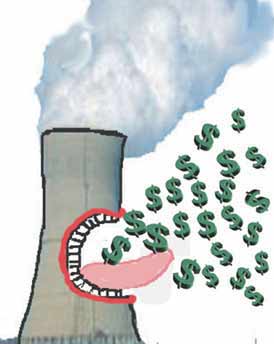 US nuclear industry spends billions on post-Fukushima upgrades Washington (Platts)–31Jul2014 The US nuclear power industry has so far spent about $3 billion taking actions and making plant modifications to address lessons learned from the 2011 Fukushima I accident in Japan, a utility official told the US Nuclear Regulatory Commission during a briefing Thursday.
NRC ordered US nuclear power plant operators in March 2012, almost exactly a year after the accident, to comply with new requirements designed to strengthen their ability to keep reactors and spent fuel cooled during severe external events, such as the earthquake and tsunami that hit the station in Japan………
Pete Sena, president and chief nuclear officer of FirstEnergy Nuclear Operating Company, told the commission during the briefing Thursday that since the March 2011 accident, in which three of six reactors at Fukushima suffered fuel damage and released radioactivity, FENOC has spent about $125 million to increase the safety margin of the four nuclear power reactors it operates.
If those figures are an accurate average cost for all 100 operating nuclear power reactors in the US, the industry has spent around $3 billion or more on post-Fukushima safety upgrades, Sena said.
Jim Scarola, executive director at NEI and co-chair of the industry’s Fukushima response steering committee, said during the briefing that the industry “does not look at this task as finished. It is a continuous improvement.” …….http://www.platts.com/latest-news/electric-power/washington/us-nuclear-industry-spends-billions-on-post-fukushima-21004195
Nuclear safety specialist fired from Los Alamos for pushing Obama’s Nuclear Agenda

 Fired From Los Alamos for Pushing Obama’s Nuclear Agenda, The Daily Beast, 31 July 14 The President says he wants to get rid of the world’s A-Bombs. But when an employee at the nation’s premier nuclear lab suggested the same thing, he got axed. By Douglas Birch, Center for Public Integrity

James E. Doyle’s ordeal with Washington began one morning in early February last year, when his supervisor stopped by his desk at Los Alamos National Laboratory and told him that senior managers wanted copies of all his publications.
The 55-year-old political scientist asked the reason for the request, and he eventually was told that someone at the House Armed Services Committee wanted to see the publications. But Doyle said officials refused to tell him who it was or why.
Later that day at the lab’s New Mexico campus, he said, two members of a Security Inquiries Team abruptly arrived with a special, silver-colored briefcase for secure documents, and pulled out an article he published a few days earlier on the website of a London nonprofit group.
They claimed that the article, an impassioned critique of the political theories undergirding the nuclear arms race and a defense of President Obama’s embrace of a nuclear weapons-free future, contained classified information.
The assertion astonished Doyle, since the laboratory’s security authorities had already reviewed the article and declared it unclassified. But it was the start of a series of events in which Doyle first had his pay docked and his security clearance withdrawn, and then eventually was fired.
He got that final news on July 8, a day after the Center for Public Integrity asked the Energy department’s National Nuclear Security Administration, which runs the nation’s nuclear labs, about the dispute over his article. “I was shocked,” he said, shortly afterward. “I am still shocked.”
Experts say Doyle’s treatment raises questions about the commitment of the nuclear weapons labs—which face increased competition for resources amid declining military interest in their key product—to intellectual independence in their workforce………..
Doyle, who holds a doctorate in international studies from the University of Virginia, has been at Los Alamos for the past 17 years. Before he joined the lab, he said, he wrote the Department of Energy’s strategic plan for keeping weapons-grade uranium and plutonium stored at hundreds of sites scattered across the former Soviet Union from falling into the wrong hands. He referred to this risky state of affairs as “the babushka-with-uranium-in-the-chicken-shed” problem.
As a nuclear safeguards and security specialist in the lab’s Nuclear Nonproliferation Division, which has 250 employees and an annual budget of about $185 million, Doyle has studied ways to verify reductions in United States and Russian nuclear weapons stockpiles beyond the current levels. He also edited a textbook, Nuclear Safeguards, Security and Nonproliferation: Achieving Security with Technology and Policy, which, he said, is used in three dozen universities in the U.S. and abroad. http://www.thedailybeast.com/articles/2014/07/31/fired-from-los-alamos-for-pushing-obama-s-nuclear-agenda.html#sthash.o3ZKvqHu.dpuf
Chem-Nuclear ordered by Court to protect groundwater from radiation

 Court urges Chem-Nuclear safety The Augusta Chronicle, By Sarita Chourey Morris News Service Thursday, July 31, 2014 COLUMBIA — The South Carolina Court of Appeals is ordering Chem-Nuclear to better protect the groundwater from contamination at the Barnwell County’s low-level radioactive waste disposal site. Under the order, the site operator and the S.C. Department of Health and Environmental Control have 90 days to turn in a plan to reach compliance.
The Sierra Club, represented by the South Carolina Environmental Law Project, had not asked for Chem-Nuclear’s license to be revoked, but rather that it improve waste-handling procedures at the 235-acre site near the town of Snelling.
In its ruling Wednesday, the three-person court said DHEC had not enforced the law on several parts of the regulation, and that the Administrative Law Court was wrong when it found Chem-Nuclear to be in compliance.
In one part of Wednesday’s decision, the court said the trenches at the site have no system to collect liquids that have drained or percolated through radioactive materials.
“DHEC and Chem-Nuclear argue Chem-Nuclear is justified in not having a … collection system due to ‘concerns regarding the radioactive exposure to workers handling and processing (it),’” wrote the court. “We fail to see how the danger of radioactive contamination to workers actually justifies releasing it into the groundwater without testing and remediation. Rather, it seems the danger to health and safety requires testing and remediation.”………
Tritium results from the manufacture of nuclear power, and is found in radioactive waste generated by nuclear power plants.
In 1999 a nearby church property was contaminated by radioactive material due to Chem-Nuclear’s disposal practice of pumping contaminated water out of a trench into lined ponds. ……. http://chronicle.augusta.com/latest-news/2014-07-31/court-urges-chem-nuclear-safety?v=1406837686
Obama cuts back on nuclear security, spends up big on nuclear weaponry
 Obama curbs nuclear security goals as bomb-building budget grows, http://news.yahoo.com/obama-curbs-nuclear-security-goals-005500310.html by Douglas Birch, 30 July 14 Since the start of his presidency, Barack Obama has been clear that one of his major goals was to secure nuclear weapons and materials, and as recently as March, at the Nuclear Security Summit in Holland, the president declared that “it is important for us not to relax but rather accelerate our efforts over the next two years.”
According to a new analysis of nuclear security spending by a bipartisan group at Harvard’s Kennedy School of Government, the administration in its proposed 2015 budget chose to cut nuclear nonproliferation programs in the Energy Department by $399 million while increasing spending on nuclear weapons by $534 million.
In addition, despite missing a self-imposed deadline of April 2013 for ensuring that nuclear materials were safe from terrorists across the globe, the White House at about the same time rejected a confidential Energy Department-sponsored plan to accelerate those efforts by 2016, the year Obama is slated to convene a fourth international summit on the issue.
The proposal, which appears in a May 2013 report obtained recently by the Center for Public Integrity, was intended to address the huge amount of unfinished work in the Obama administration’s nonproliferation plan.It said that more than two tons of portable, easily-weaponized uranium were still being held in scores of nuclear research reactors, while the world’s supply of another nuclear explosive, plutonium, was growing at a rate of about 740 bombs’ worth a year.
Despite progress, there remained enough nuclear explosive material in the hands of civilians to cobble together 40,000 atomic bombs.
40 $billion later America’s biggest nuclear waste site still leaking
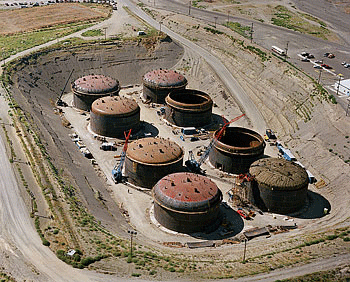 After $40 Billion, America’s Biggest Nuclear Dump Is Still Leaking by Charleston Voice 29 July 14, It’s cost $40 billion so far to clean up America’s biggest nuclear waste site—half the size of Rhode Island—and it’s going to take another 40 years and $100 billion to finish the job.
And delays keep piling up even though at least a third of the aging tanks storing 56 million gallons radioactive waste have leaked or are leaking, pouring some of the world’s most dangerous contaminants into the Columbia River.
Yet the treatment plant to create safe storage for all that waste—which will remain radioactive for hundreds of thousands of years—still isn’t built. It should have been finished three years ago. And the Environmental Protection Agency is skeptical that the plant’s current completion date of 2022 will be met.
Only Another 40 Years to Go The plant is a crucial part of a wider remediation job that’s decades from being done, according to Dennis Faulk, the EPA’s program manager for Hanford
“I think we have another 40 years to go,” Faulk told WhoWhatWhy. “And another $100 billion will be needed over that time.” It costs about $2 billion a year to keep cleaning.
The EPA oversees and enforces the cleanup efforts, which are carried out by the Department of Energy and the contractors it hires. Both Congress and the Department of Energy itself have given those efforts a failing grade.
The Department of Energy’s internal watchdog last year blamed the department and the contractor that’s building the plant, Bechtel National Inc., for the delays. The Department of Energy’s oversight lacked focus and Bechtel implemented scores of design changes without subjecting them to the required nuclear safety review, according to a report from the department’s Inspector General.
Congress’ Government Accountability Office was harsher. It recommended shutting down construction until the design work is completed safely, and said the Department of Energy was prematurely awarding millions in performance incentives to Bechtel. Meanwhile, Bechtel and another contractor are fighting whistleblower lawsuits from two former employees, and guess who’s paying for their legal fees? The Department of Energy is.
All of those complications are worsened by the fact that the search for waste keeps turning up surprises, like nearly 100 pieces of spent fuel found in Native American burial grounds. So as the Herculean task creeps forward, occasional new contamination findings like that add time to the clock, which means the projected completion dates are really only theoretical.
Hanford wasn’t built with an abundance of forethought. The job of making weapons-grade plutonium came first. Everything else, like planning for the waste and telling people about the release of radioactive materials, came second.
Most critical work on the plant has been shut down………..http://chasvoice.blogspot.com.au/2014/07/after-40-billion-americas-biggest.html
Nuclear industry must face up to chance of freaky disasters

|
Fukushima Study: Think About Unthinkable Disasters, SciTech Today,
|
July 28, 2014 |
According to a National Academy of Sciences report, the U.S. nuclear industry must think about earthquakes, floods, tsunamis, solar storms, multiple failures and situations that seem freakishly unusual. The 2011 Japanese Fukushima accident, caused by an earthquake and tsunami, should not have been a surprise, the report says. A U.S. science advisory report says Japan’s Fukushima nuclear accident offers a key lesson to the nation’s nuclear industry: Focus more on the highly unlikely but worst case scenarios.
That means thinking about earthquakes, floods, tsunamis, solar storms, multiple failures and situations that seem freakishly unusual, according to Thursday’s National Academy of Sciences report. Those kinds of things triggered the world’s three major nuclear accidents.
“We need to do a soul searching when it comes to the assumptions” of how to deal with worst case events, said University of Southern California engineering professor Najmedin Meshkati, the panel’s technical adviser. Engineers should “think about something that could happen once every, perhaps 1,000 years” but that’s not really part of their training or nature, he said.
You have to totally change your mode of thinking because complacency and hubris is the worst enemy to nuclear safety,” Meshkati said in an interview……..
David Lochbaum of the activist group Union of Concerned Scientists said the problem is that federal law financially protects the U.S. nuclear industry from accidents gives utilities little incentive to spend money on low-probability, high-consequence problems.……
Another issue the report raised was about how far radiation may go in a worst case accident.
The U.S. Nuclear Regulatory Commission orders plants to have emergency plans for a zone of 10 miles around a nuclear plant. But the academy study said Fukushima showed that “may prove inadequate” if a similar accident happened in the U.S. People nearly 19 miles away in Japan needed protectionfrom radiation. But the committee would not say what would be a good emergency zone. http://www.sci-tech-today.com/story.xhtml?story_id=130007CN9W8O
USA’s new nuclear power construction is not working out
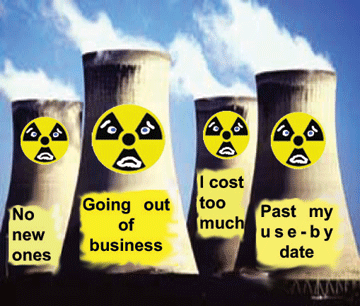 Promises of easier nuclear construction fall short, Tri City Herald, BY RAY HENRY Associated Press July 26, 2014 WAYNESBORO, GA. The U.S. nuclear industry has started building its first new plants in decades using prefabricated Lego-like blocks meant to save time and money and revive the once promising energy source.
So far, it’s not working.
Quality and cost problems have cropped up again, raising questions about whether nuclear power will ever be able to compete with other electricity sources. The first two reactors built after a 16-year lull, Southern Co.’s Vogtle plant in Georgia and SCANA Corp.’s VC Summer plant in South Carolina, are being assembled in large modules. Large chunks of the modules are built off-site, in an effort to improve quality and avoid the chronic cost overruns that all but killed the nuclear industry when the first wave of plants was being built in the 1960s and 1970s.
Analysts say engineers created designs that were hard or impossible to make, according to interviews and regulatory filings reviewed by The Associated Press. The factory in Louisiana that constructed the prefabricated sections struggled to meet strict quality rules. Utility companies got early warnings but proved unable to avoid the problems. Now the firms leading the project are phasing out the Louisiana factory for work on the biggest modules and contracting with new manufacturers………
Inspectors for the U.S. Nuclear Regulatory Commission halted their first review of the plant the following month, saying it was not ready for in-depth scrutiny. Follow-up inspections found more issues with the plant’s quality assurance programs. NRC officials proposed a $36,400 fine against The Shaw Group for firing a quality insurance supervisor elsewhere in its company who warned a potentially faulty part may have been shipped to a project in New Mexico. The fine was dropped after the company agreed to changes. The agency also said workers at the Lake Charles facility feared raising safety and quality concerns to their supervisors………http://www.tri-cityherald.com/2014/07/26/3079384/promises-of-easier-nuclear-construction.html?sp=/99/915/
Delaware residents to get iodine tablets just in case of nuclear [power accident
 Del. distributing radiation protection tablets http://newsok.com/del.-distributing-radiation-protection-tablets/article/feed/715584 July 26, 2014 MIDDLETOWN, Del. (AP) — Officials say they’ll be distributing free potassium iodide tablets to Delaware residents who live within 10 miles of the Salem/Hope Creek nuclear power plant in New Jersey.
If a radiation emergency were to occur, officials would inform the public through the use of emergency alert system radio stations. The information would include evacuation instructions as well as instructions on when to take the potassium iodide tablets.
Time that Nuclear Regulatory Commission paid more attention to external nuclear safety threats
 Nuclear Plants Should Focus on Risks Posed by External Events, Study Says NYT. By MATTHEW L. WALD JULY 24, 2014 Engineers at American nuclear plants have been much better at calculating the risk of an internal problem that would lead to an accident than they have at figuring the probability and consequences of accidents caused by events outside a plant, a report released Thursday by the National Academy of Science said.
Accidents that American reactors are designed to withstand, like a major pipe break, are “stylized” and do not reflect the bigger source of risk, which is external, according to the study. That conclusion is one of the major lessons from the Fukushima Daiichi nuclear accident in Japan in 2011, which began after an earthquake at sea caused a tsunami.
The Nuclear Regulatory Commission calculates which problems are most likely and most troublesome, and aims to find components or systems that should be improved. B. John Garrick, a nuclear engineering consultant and vice chairman of the two-year study, said that engineers had more experience calculating the probability of failure in a valve or a pipe than in predicting earthquakes or floods. Better predictions of such events were possible, he said.
The study, ordered by Congress after the triple meltdown at Fukushima Daiichi’s reactors, said that the Nuclear Regulatory Commission and the American nuclear industry should focus on the main sources of risk: accidents set off by “extreme external events,” like earthquakes or floods; multiple human or equipment failures; and “violations of operational protocols.”……….
In addition, the study said that safety officials should take into account the reduced capacity and maneuverability of outsiders to help a nuclear plant in trouble after a major earthquake or flood.
The United States should study costs not currently accounted for in making cost-benefit analyses about safety, like the expense of decontaminating areas distant from the plant, which the authors said was another lesson of Fukushima.
Psychological and social costs of evacuation or “sheltering in place,” meaning the confinement of people to homes, should also be considered, the study said, and so should decision-making about resettling people who had been evacuated because of the release of radioactive material.
And if two reactors at the same site had an accident at the same time, the study said that staffing might be inadequate for an event of long duration.
Congress also asked the academy to study the safety of spent-fuel storage,an area of concern since the Japanese accident. In the Fukushima accident, American officials became convinced — mistakenly — that water had drained or boiled from a pool of spent fuel and they urged Americans in Japan to stay 50 miles away. But the academy has not finished that part of its study.http://www.nytimes.com/2014/07/25/us/nuclear-plants-should-focus-on-risks-posed-by-external-events-study-says.html?_r=0
New Nuclear Waste Confidence Rule (same nonsense under a new name?)
the only sane thing is to stop making the stuff
Waste Confidence Final Rule Now Before the Commission http://public-blog.nrc-gateway.gov/2014/07/24/waste-confidence-final-rule-now-before-the-commission/ July 24, 2014 Andy Imboden Communications Branch Chief Waste Confidence Directorate

After thousands of public comments, dozens of meetings and hundreds of written pages, the NRC Commissioners are now deliberating the draft final rule and draft generic environmental impact statement on the continued storage of spent nuclear fuel – what used to be called “waste confidence.”
Under NRC procedures, and in support of our agency’s transparency and openness goals, we are making three documents including the draft final rule and environmental impact statement available – you can find them on the NRC’swaste confidence webpage:
- A staff paper, SECY-14-0072: Final Rule: Continued Storage of Spent Nuclear Fuel;
- A draft Federal Register notice on the final rule; and
- A draft NUREG-2157: Generic Environmental Impact Statement for Continued Storage of Spent Nuclear Fuel – Final Report (GEIS).
To be clear, the draft final rule and draft GEIS are not yet final and are not for public comment. NUREG-2157 includes a lengthy Appendix D that summarizes and responds to more than 33,000 written comments we received when the draft GEIS and proposed rule were published for comment last year. They are “draft final” documents because they need Commission approval before they become final agency action. The Commission may approve, modify, or disapprove them.
Some important points to remember: The final Continued Storage rule represents a generic finding on the environmental impacts of continued storage of spent nuclear fuel beyond the licensed operating life of a reactor. It does not license or approve any storage facility or any nuclear power reactors. The facilities are licensed – or licenses are renewed – based on site-specific application reviews.
The rule is to be used as a part of the overall environmental review for new reactor license applications, current reactor renewal applications, and spent fuel storage facility license reviews in these site-specific proceedings. The GEIS serves as the regulatory basis for the rule, and does not replace the staff’s comprehensive environmental review in individual licensing proceedings.
The name change from “waste confidence” to “continued storage” is just one way the new rule differs from previous versions, including the 2010 version that was struck down by the D.C. Circuit U.S. Appeals Court. (That ruling two years ago prompted the current rulemaking effort.) The name change and other changes are in part due to public comment, and are further explained in the staff paper and the Federal Register notice. The latter also includes an extensive question-and-answer section about the staff’s review and conclusions.
USA Senate report: nuclear materials vulnerable to theft
 U.S. Nuclear Material Vulnerable to Theft, Panel Fears http://blogs.rollcall.com/five-by-five/u-s-nuclear-material-vulnerable-to-theft-panel-fears/?dcz= By Tim Starks July 25, 2014 The Senate Appropriations Committee is perturbed at a whole host of things contributing to large quantities of nuclear and radiological materials — including in the United States — being “still unsecure and vulnerable to theft.”
That’s the word from John M. Donnelly, writing for CQ.com subscribers. He details how the panel, in its fiscal 2015 Energy-Water bill committee report, restores nuclear non-proliferation funding and chides the administration for abandoning a 2025 goal of securing 2,900 buildings, such at medical facilities and universities, where there is “little or no security.”
Also from the committee report, by this author for the Energy Xtra blog, is another nuclear-related buildings issue: the fact that the National Nuclear Security Administration is sitting on 450 unused facilities, and has a maintenance backlog that has made some of the buildings still being used dangerous.
USA’s nuclear power plants not prepared for big accidents
 Nuclear plants ill-prepared for worst-case scenarios, report says, LA Times, By MAYA SRIKRISHNAN, 25 JULY 14 THe current approaches for regulating nuclear plant safety in the U.S. are “clearly inadequate” for preventing meltdowns and “mitigating their consequences,” according to a report released Thursday.
U.S. safety regulations traditionally ensure that plants are designed to withstand ordinary equipment failures, power losses and the loss of ability to cool the reactor core — the part of a plant where the nuclear reactions take place. But this is not enough, according to the report by the National Academy of Sciences.
“To what extent are they proactive versus reactive?” said Najmedin Meshkati, an engineering professor at USC who worked on the report. “Complacency and hubris are the worst enemies to nuclear safety.”
The U.S. nuclear industry should prepare for unlikely, worst-case scenarios when designing, building and regulating plants, the report recommends.
The report said the accident at Fukushima — caused by an earthquake, which knocked out power, and a tsunami, which inundated the plant — should not have come as a surprise………..
Officials at the U.S. Nuclear Regulatory Commission said they were reviewing the report and would provide detailed comments later. http://www.latimes.com/nation/nationnow/la-na-nuclear-safety-20140724-story.html
Shut down Indian point nuclear plant for summer – say environmental regulators
 New York environment regulators seek summer shutdown at Indian Point Planet Ark, : 22-Jul-14 Scott DiSavino New York state environmental regulators are proposing shutting the giant Indian Point nuclear power plant to protect fish in the Hudson River during summer months, when demand for electricity for air-conditioning is greatest…………The DEC said in an email that the proposal, which will be discussed in a public meeting on Tuesday, is similar to what Consolidated Edison Inc did when it owned the reactors and is consistent with the practice of other facilities on the Hudson……
The DEC proposal is the latest salvo in a lengthy battle between Entergy Corp, which owns Indian Point and wants to keep the plant operating for another 20 years, and state environmental regulators, who are seeking to protect fish and other aquatic life.
Indian Point withdraws up to 2.5 billion gallons of water per day from the Hudson to cool equipment, and then discharges that water back into the river warmer than before.
Environmental groups and the DEC have long argued that Indian Point’s water intake system kills about a billion fish, fish eggs and larvae each year, and the plant should install cooling towers to reduce the use of river water by recycling it…….Before the NRC can grant new licenses, the state must approve water permits. http://planetark.org/enviro-news/item/71913
Washington opposition to transport of intensely radioactive liquid waste from Chalk River
 Chalk River nuclear shipments opposed in Washington, Ottawa Citizen, IAN MACLEOD July 25, 2014 A New York congressman says the proposed trucking of intensely radioactive liquid waste from Chalk River to the United States could cause a “mobile Chernobyl” in the event of a spill while crossing the border at Buffalo.
Representative Brian Higgins brought the issue to the floor of the House Thursday, calling on the Department of Energy to prepare an environmental impact statement (EIS) before the contentious shipments are allowed to proceed.
“An EIS provides a roadmap to make informed decisions on proposals and is especially warranted given the volatile substance and significant impact area involved in this case,” Higgins said in a statement.
“Without a comprehensive review and plan, they are setting us up for a mobile Chernobyl,” a reference to the 1986 nuclear accident in Ukraine.
The exact route of the proposed shipments is secret, but one of the most direct would cross the Peace Bridge linking Fort Erie, Ontario and Buffalo.
Higgins, a Democrat representing western New York State, also has written to Secretary of Energy Ernest Moniz warning that a major contamination on or near the bridge would have dire health and economic consequences. The Buffalo-Niagara region, “sits along two Great Lakes which represent the largest fresh water supply in the world and serves as the centre point of a 500-mile (800-kilometre) radius that includes approximately 55 per cent of the U.S. population and 62 per cent of the Canadian population.
“It is the responsibility of the Department of Energy and all relevant agencies involved in the process to thoroughly assess the safety of this action.”
The planned armed convoys of trucks are to haul specially-designed steel casks containing 23,000 litres of highly-radioactive liquid to the Savannah River Site nuclear complex in Aiken, South Carolina for down-blending into low-enriched uranium fuel feedstock for U.S. commercial power reactors.
Based on U.S. government documents, it would take at least 179 shipments to move the entire contents over the course of at least a few years. U.S. federal budgetary estimates suggest the shipments would begin next year. None would take place in winter.
If approved by regulators on both sides of the border, it would be the first time authorities have trucked highly-enriched uranium (HEU) in a liquid solution. That has prompted nuclear safety advocacy groups to sound the alarm for greater government scrutiny. They say the weapons-grade HEU should be denatured and the liquid waste disposed of in Canada………
A crucial consideration is understanding the liquid’s unique material characteristics. It is now securely stored in a fortified, in-ground tank at Chalk River and carefully monitored, mixed and warmed to prevent the HEU particles from solidifying and – in a worst-case scenario – potentially achieving a self-sustaining chain reaction of fissioning atoms called criticality.
The energy and heat from such a chain reaction could potentially rupture the tank, release the solution into the environment and endanger anyone nearby. http://ottawacitizen.com/news/national/chalk-river-nuclear-shipments-opposed-in-washington
1 This Month
Tell Congress: Prevent Nuclear Catastrophe in Iran

Tell Congress: Prevent Nuclear Catastrophe in Iran

Read the Public Inquiry Report, the Commissioners’ report, Surrendering Australia: The AUKUS Deception is available to download for free at aukuspublicinquiry.com. Or just watch the replay of the National Press Club Luncheon.


Shut down the radiation-damaged Heysham nuclear reactors now
To see nuclear-related stories in greater depth and intensity – go to https://nuclearinformation.wordpress.com

Say No to NASA’s Reckless Nuclear Reactor on the Moon
Say No to NASA’s Reckless Nuclear Reactor on the Moon
-
Archives
- November 2026 (238)
- October 2026 (302)
- September 2026 (339)
- August 2026 (330)
- July 2026 (355)
- June 2026 (287)
- May 2026 (306)
- April 2026 (356)
- March 2026 (251)
- February 2026 (267)
- January 2026 (308)
- December 2025 (358)
-
Categories
- 1
- 1 NUCLEAR ISSUES
- business and costs
- climate change
- culture and arts
- ENERGY
- environment
- health
- history
- indigenous issues
- Legal
- marketing of nuclear
- media
- opposition to nuclear
- PERSONAL STORIES
- politics
- politics international
- Religion and ethics
- safety
- secrets,lies and civil liberties
- spinbuster
- technology
- Uranium
- wastes
- weapons and war
- Women
- 2 WORLD
- ACTION
- AFRICA
- Atrocities
- AUSTRALIA
- Christina's notes
- Christina's themes
- culture and arts
- Events
- Fuk 2022
- Fuk 2023
- Fukushima 2017
- Fukushima 2018
- fukushima 2019
- Fukushima 2020
- Fukushima 2021
- general
- global warming
- Humour (God we need it)
- Nuclear
- RARE EARTHS
- Reference
- resources – print
- Resources -audiovicual
- Weekly Newsletter
- World
- World Nuclear
- YouTube
-
RSS
Entries RSS
Comments RSS

