Exposing the horrible effects of uranium mining on Navajo people
Uranium mining on Navajo Reservation: How we did this The Republic | azcentral.com August 10, 2014 Uranium mining for America’s Cold War nuclear arms buildup has proved a lasting scourge on the nation’s largest American Indian reservation, and one that the same government that demanded the ore has been slow to address.
As the last of the sickened Navajo miners are stricken with lung diseases, younger generations are coping with kidney disease and other ailments, wondering whether the radioactive wastes have also sickened them. Meanwhile, hundreds of abandoned mines remain hazards with a cleanup cost that will stretch into the billions of dollars. Photographer David Wallace first took an interest in the problem in 2010 while on assignment documenting solar-energy installations at off-the-grid homes on the Navajo Reservation. He heard of sick miners and residents, and in 2013 began contacting activists with Forgotten People, a Navajo social-justice group.
Later that year, Wallace began visiting the homes of a sick miner and some families who had long histories of exposure to uranium-contaminated water. In January 2014, environment reporter Brandon Loomis joined the project and the two made periodic daylong visits to homes and mines in the Cameron, Gray Mountain and Black Falls areas north of Flagstaff — a quadrant of the reservation that was heavily mined and remains hazardous to many residents……….
U.S. and Navajo officials say both momentum and funding are building to enable a thorough cleanup. At the current rate of progress, though, still more generations of Navajos will face threats from hundreds of abandoned mines in the decades to come.
David Wallace
Wallace is a two-time runner-up for the Arizona Press Club Photographer of the Year award and a two-time regional Emmy winner for his videos.
How to reach Wallace
Email: david.wallace@arizonarepublic.com.
Phone: 602-653-6228.
Twitter: @DavidWallce.
Brandon Loomis
Loomis is an environment reporter with more than two decades of experience covering land and water issues in the West. He joined The Arizona Republic in 2012 after similar assignments at newspapers in Alaska, Wyoming, Idaho and Utah, and is now on a nine-month fellowship with Marquette University.
How to reach Loomis
Email: brandon.loomis@arizonarepublic.com.
Twitter:@brandonloomis. http://www.azcentral.com/story/news/arizona/investigations/2014/08/06/uranium-mining-navajos-how-we-did-this/13681861/
A nuclear boondoggle exposed – Small Modular Reactors (SMRs)
Report: New Nuclear Power Technology Would Siphon Resources Away From Renewable Energy, PROGRESS ILLINOIS Ellyn Fortino Friday August 8th, 2014, “…….one nuclear financing expert argues in a new report that SMRs, which have yet to be built in the United States, would be no cheaper than their larger counterparts. Mark Cooper, a senior fellow for economic analysis at theInstitute for Energy and the Environment at the Vermont Law School, also warns that SMR development would suck up funding that could otherwise be used for what he says are more attractive energy options like wind and solar.
“Large reactors have never been economically competitive and there is no reason to believe that smaller reactors will fare any better,” Cooper said. “Giving nuclear power a central role in climate change policy would not only drain away resources from the more promising alternatives, it would undermine the effort to create the physical and institutional infrastructure needed to support the emerging electricity systems based on renewables, distributed generation and intensive system and demand management.”………
Although SMRs would be smaller in size, “creating an assembly line for SMR technology would require a massive financial commitment,” Cooper writes in his report, “The Economic Failure of Nuclear Power and the Development of a Low-Carbon Electricity Future: Why Small Modular Reactors Are Part of the Problem, Not the Solution.”

He projects it would cost between $72 billion and $90 billion by 2020 to fund the development of just two SMR designs and assembly lines.
The estimated price tag to invest in SMRs is roughly equivalent to 75 percent of the total projected investment in U.S. electricity generation over the same time period, the report noted. It is also “substantially more” than what is expected to be spent on renewables, Cooper said.
“This massive commitment reinforces the traditional concern that nuclear power will crowd out the alternatives,” he added.
SMRs themselves would also cost more, not less, than larger reactors, according to the report.
“The higher costs result from: lost economies of scale in containment structures, dedicated systems for control, management and emergency response, and the cost of licensing and security; operating costs between one-fifth and one-quarter higher; and decommissioning costs between two and three times as high,” Cooper noted.
SMRs are up against greater challenges than previous technologies because they are “a radical new technology that its advocates would like to have treated in a very different way with respect to safety and licensing,” Cooper explained.
“They would like to deploy lots of reactors close to population centers. That’s the way they can make their economics work,” he continued. “And they need to relax safety … They’ve asked for a number of changes in safety to try to drive down the cost, and even then they cannot compete on costs.”……
the industry’s hype around SMRs is now fizzling, Cooper explained. The “unproven” SMR technology has already experienced setbacks in the marketplace, he said, pointing to recent announcements from Babcock & Wilcox and Westinghouse Electric Co., another small-reactor industry leader developing a 225-megawatt SMR.
Babcock & Wilcox said last month that it is slowing the development of and funding for its mPower technology because the company cannot find major investors for the effort. Westinghouse — after being passed up twice by the DOE for SMR cost-sharing agreements — announced in February that it is shifting its attention away from small-reactor technology because it does not have a customer base for SMRs.
“They are cutting back for simple reasons: They can’t find customers. They can’t find investors,” Cooper said. “In a market economy like ours, that is a death knell, and so they have slashed their commitment to small modular reactors……….”http://progressillinois.com/quick-hits/content/2014/05/18/report-new-nuclear-power-technology-would-siphon-resources-away-renewa
Nuclear lobby wants EPA to promote its industry!
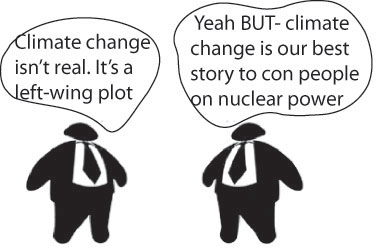 EPA rule not such a boon for nuclear after all — utilities Jean Chemnick, E&E reporter Greenwire: Friday, August 8, 2014 U.S. EPA’s greenhouse gas proposal for existing power plants doesn’t do enough to boost nuclear energy, advocates for the industry say.
Two months after EPA unveiled the proposal — and just over two months before the end of the public comment period — companies that have invested billions of dollars in the United States’ primary source of zero-carbon baseload energy say they are still reviewing the draft.
But while the industry has yet to reach a consensus position, some utilities say they are discouraged by the way the June 2 proposal treats new nuclear projects that are coming online or attempts to help existing facilities overcome the economic factors that threaten them with retirement. The agency has proposed tougher state carbon intensity targets for states that host nuclear in the hopes of encouraging them to provide incentives for the industry, but some advocates say it hasn’t rewarded states for past nuclear investment………
“We therefore propose that the emission reductions supported by retaining in operation six percent of each state’s historical nuclear capacity should be factored into the state goals for the respective states,” EPA states in the rule’s preamble. If states do not retain their nuclear fleets, they must make up that 6 percent zero-carbon energy through other measures, like new demand-side efficiency or renewable energy.
But utilities that have invested or are investing in nuclear facilities say that’s not enough……. the nuclear crediting mechanism needs to be improved to achieve EPA’s intended objective,” said Paul Adams, a spokesman for Exelon Corp., which operates the largest nuclear fleet in the nation. He called on EPA to finalize a rule that will “treat zero-carbon resources the same and ensure states do not double-count these resources.”……
But analysts say EPA faced a tough task when it came to deciding how the rule should treat nuclear energy. In contrast to wind and solar facilities, nuclear plants are so large, they say, that giving full credit for facilities that are already slated to come online could mean giving states like South Carolina a way to meet their targets without making any reductions elsewhere….http://www.eenews.net/stories/1060004265
The collapse of the Small Modular Nuclear Reactor hype – ominous for the nuclear industry
Report: New Nuclear Power Technology Would Siphon Resources Away From Renewable Energy, PROGRESS ILLINOIS Ellyn Fortino Friday August 8th, 2014 “………With the industry currently unable to garner enough customer and investor interest around SMRs, it is trying to save nuclear power by making a “desperate attempt to undermine the alternatives, which are succeeding,” Cooper added.
The nuclear energy industry “says, ‘Look, just get rid of their subsides. Gerry-rig the market so that we can stay in business. Avoid policies that will let (alternatives) stay in business … and then we’ll have a level playing field.’ But of course it doesn’t look anything like a level playing field,” he said.
Over the past 60 years, the nuclear energy industry has collected 10 times more subsidies than what renewables have received, Cooper said. Government funding for SMR research and development currently represents the smallest subsidy out of many received by the nuclear power industry, he added.
He said the U.S. nuclear energy industry is grappling with a “fundamental conflict.” After failing to bring online 90 percent of new reactors as part of a “nuclear renaissance” suggested by nuclear power advocates in the early 2000s, the hope was that SMR technology would rescue the industry. And since that has yet to happen, the industry is “now struggling to save the aging reactors… simply because they cannot compete against the alternatives available.”

“The death of the small modular reactor hype really is emblematic of the fundamental conflict that’s going on in the industry,” he said. “The near term will decide, not just the fate of nuclear power, but the fundamental approach that we take to addressing the challenge of climate change.”
Looking ahead, Cooper said he questions nuclear power’s place in the emerging “integrated, two-way electricity system based on decentralized alternatives.” In such a system, an “inflexible source of supply like nuclear does not have value,” he said, adding that nuclear power “becomes a burden on the flexible system rather than a benefit.”
Nuclear power, Cooper said, is not a smart “economic proposition” or “portfolio asset” for a low-carbon electricity future.
“And looking carefully at the urgency of dealing with climate change, it’s also the most costly, most risky approach to climate change,” he stressed. http://progressillinois.com/quick-hits/content/2014/05/18/report-new-nuclear-power-technology-would-siphon-resources-away-renewa
Toxicity of planned wastes raises anxiety about Lake Huron nuclear dump scheme
Lake Huron nuclear dump scheme in trouble Hamilton Spectator by Thomas Walkom 7 Aug 14, Ontario’s plan to bury nuclear waste beside Lake Huron is running into heavy weather.
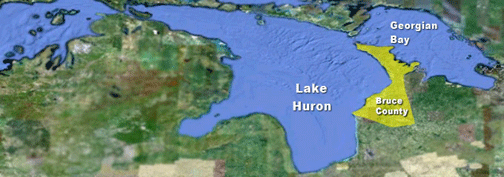
Ontario Power Generation, the Crown corporation behind the proposed dump site for low and intermediate level radioactive waste, has publicly acknowledged that its long-term safety plans are based, in part, on new technologies that have not yet been invented.
As the Star’s John Spears reported this week, that explanation hasn’t endeared itself to the small but politically important aboriginal communities near the proposed Kincardine dump site.
In a brief to the federal review panel that will eventually rule on the plan, the Saugeen Ojibway Nation reminds OPG of its assurance that no nuclear waste dump will be built without aboriginal consent
Will that consent be given? The first nation doesn’t say. But in its brief, it does express profound unease with what it calls OPG’s vague and open-ended scheme.
Plans for this so-called deep geological repository at Kincardine have been in the works since 2005.
Initially, the proposed dump was supposed to house waste such as the rubber gloves used by nuclear workers — items with relatively low levels of radioactivity.
Right now, nuclear waste from Ontario atomic power generating plants is stored on the surface.
But once federal hearings started last fall, OPG changed tack. It announced it wanted to double the size of the underground dump to roughly 400,000 cubic metres in order to accommodate waste that will be produced when the province’s existing nuclear plants are taken apart.
This so-called decommissioning waste, which includes components such as pressure tubes (but not nuclear fuel), will remain highly radioactive for thousands of years.
Critics cried foul. The three-member federal panel hearing the proposal ordered OPG to better explain how it would handle this more difficult waste.
It also told the Crown utility to look into why a similar U.S. nuclear waste facility near Carlsbad New Mexico — cited by dump proponents as a model — suffered two accidents in February……….http://www.thespec.com/opinion-story/4737032-lake-huron-nuclear-dump-scheme-in-trouble/
Secret Ontario meetings on nuclear waste plan broke the law
 Closed-door nuclear meetings broke the law in Bruce County The Star.com 7 Aug 14 Closed-door meetings to talk about a proposed nuclear waste site near Kincardine broke the Municipal Act, says an official investigator By: John Spears Business reporter,
Bruce County council violated the Municipal Act by holding a string of closed-door meetings to talk about a proposed nuclear waste site near Kincardine, an official investigator says……… it’s not certain what was said in the sessions held from 2009 to 2012, because no official minutes were taken.
Unofficial notes were taken at eight sessions, but there appears to be no record for as many as nine others.
Nor was public notice given that the meetings were being held.
The investigator’s report was commissioned by the county after a complaint by citizens’ groups.
The complaint arose over meetings of a body called the Community Consultation Advisory Group. It was made up of all the mayors in Bruce County, including the county warden.
The group was formed by Ontario Power Generation to talk about OPG’s plans for a low- and intermediate-level nuclear waste site near Kincardine.
The Nuclear Waste Management Organization — which is seeking a place to bury high-level nuclear waste — was also part of the sessions. Some were attended by members of the Canadian Nuclear Safety Commission.
Because the group included every mayor in Bruce County, Amberley Gavel said there was in effect a quorum of county council members at every meeting of the advisory group.
And since the nuclear waste issue had been a subject discussed at county council, the advisory group sessions were in effect council meetings, the report concludes.
The Municipal Act generally requires council meetings to be public. None of the permitted exceptions applied in this case. “Since there was no notice of these Council meetings given to the public in accordance with the County’s Procedure By-Law; no Clerk or designate was present to take minutes, nor were any taken; and the public was unaware of and in no case attended any of these meetings; nor was there any resolution to close them, they were clearly in contravention of the open meetings requirements of the Act,” the report concludes………
Former Brockton mayor Charlie Bagnato said he didn’t fully realize the meetings were closed to the public when he attended the sessions.
“When you get elected, you get a list of all the different committees there and you appoint people to different committees,” he said. “The thing was driven by OPG. I guess we just kind of kowtowed to whatever they had done in the past.”
But some residents of the area have said the closed meetings show the current process of choosing a nuclear waste is fatally flawed.
The task of evaluating the location of the proposed low- and intermediate-level waste site is in now in the hands of a federal panel.
Rod McLeod, a lawyer and former president of the Southampton Residents Association, argued in a submission to the panel when the secret meetings first came to light that the panel should ultimately abort its current process.
Both the nuclear regulators and the municipalities showed that they aren’t willing to participate fairly and transparently, he argued. http://www.thestar.com/business/2014/08/07/closeddoor_nuclear_meetings_broke_the_law_in_bruce_county.html
Massive, decaying, dangerous, weapons empire at Oak Ridge
Y-12: Poster child for a dysfunctional nuclear weapons complex Robert Alvarez, Bulletin of the Atomic Scientists 6 Aug 14 “……The United States halted production of new nuclear weapons in 1989, with the end of the Cold War. But the US nuclear weapons complex—composed of eight key facilities that have an annual budget exceeding $8 billion—has stumbled on, in the form of a massive, decaying empire that in many cases does its work poorly or dangerously, or both. The Y-12 National Security Complex is the poster child for much of what ails the weapons complex. Although Y-12 has not produced weapons for some 25 years, its annual budgets have increased by nearly 50 percent since 1997, to more than $1 billion a year.

For decades, the Energy Department—which manages the weapons complex through the National Nuclear Security Agency (NNSA)—has not been able to reconcile competing objectives at the 811-acre Y-12 site, whether they involve storage areas for HEU and other fissile materials, the restarting of old weapons facilities, environmental cleanup, the building of new weapons facilities, or the downsizing of the site. As a result, costs have significantly increased, and long-standing problems have continued, unresolved, for years that have run into decades. For every dollar spent to maintain and modernize the US nuclear weapons stockpile, nearly three dollars is spent “to provide the underlying infrastructure” for maintenance and modernization at Y-12.
Long-term secrecy and isolation have created a dangerous form of hoarding at Y-12; a panoply of severe hazards continues to build up, constantly awaiting ever more costly mitigation in the future. But the stark reality is that there are no more cans to kick down the road. Y-12 has inexorably caught up with its future. Its environmental and security problems are too threatening to leave unaddressed, and questions about its mission will have to be answered definitively in an age of budgetary austerity and relatively little need for new nuclear weapons…….
During its heyday, Y-12 produced some 1,000 CSAs per year. Now, its annual production capacity has dwindled to less than 100. Though the NNSA declares that Y-12 has multiple missions, including non-proliferation efforts that involve the downblending of HEU and the provision of fuel for the Navy’s nuclear-powered submarines, nearly 99 percent of its budget comes from funds dedicated to maintain the US nuclear weapons stockpile. More than anything, Y-12 serves to stockpile thousands of CSAs from discarded nuclear weapons, as well as depleted uranium, lithium, and other hazardous chemicals…….. the Government Accountability Office finds that “NNSA’s decision to retain many CSAs … poses significant challenges to Y-12’s ability to plan its disassembly workload.” Although exact numbers have been classified since the 1990s, there are likely several thousand excess CSAs, containing hundreds of tons of HEU, awaiting dismantlement at Y-12. ……
Around New Year’s Eve of 1996, a long-awaited vulnerability assessment of HEU storage at Energy Department sites was released. Y-12 had the most significant problems. Even though fires posed the greatest danger of radiation and chemical exposure to workers and the public, buildings, mostly constructed in the 1940’s, had deteriorated and had insufficient or non-existent fire-protection systems, despite the very real possibility of a truly catastrophic fire and resulting release of radiation. It wasn’t until 14 years later that a replacement facility for the aged wooden structure serving as the main HEU storage warehouse was opened; it cost five times the original construction estimate. That facility gained notoriety in August 2012, after nonviolent peace protestors, including an 84-year-old nun, penetrated its security barriers……..
From 1997 to 2006, there were 21 fires and explosions at Y-12 involving electrical equipment, glove boxes, pumps, waste containers, and nuclear and hazardous chemicals. Several resulted in worker injuries and destruction of property. ……….. In March 2014, a large portion of a concrete ceiling collapsedin a building that was once part of the weapons operation. It was a near miss: Foot-long concrete pieces bounced onto walkways and an area where welders had been working just a day before. …..
In April 2014, the NNSA released a “red team” report, led by the director of Oak Ridge National Laboratory, on the troubled UPF. The team’s most significant recommendation was to rethink a basic, “big-box” approach that would create a UPF to serve multiple functions in one structure. Instead, to hold the line at an estimated $6.5 billion for design and construction costs, the team recommended going back to the drawing board to effectively reduce the size and scope of the project. Meanwhile, in recognition of the growing hazards associated with a deteriorating infrastructure for storing “materials at risk,” the team recommended that greater emphasis should be given to safe consolidated storage of materials, deferred maintenance, and safety upgrading……….
Regardless of the wisdom of or need for an asteroid-protection program, the future of Y-12 should be focused on earthly realities: cleaning up the environment, decontamination and decommissioning of facilities, stabilizing nuclear and other hazardous materials, and the dismantlement of a large excess stockpile of weapons components. There is a very real need to replace the collapsing infrastructure at Y-12 with facilities that can accomplish these goals.
Protecting the planet from asteroids is a poor rationale for failing to deal with the environmental, safety, financial, and health challenges the Y-12 site poses to the people who live in the area, and to the country as a whole. http://thebulletin.org/y-12-poster-child-dysfunctional-nuclear-weapons-complex7361
The Future for Small Modular Nuclear Reactors s does not look promising
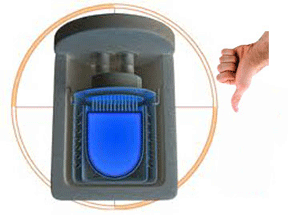 NuClear News August 14 “………The Future for SMRs does not look promising
Los Alamos officials have not silenced Jim Doyle’s thoughtful plea for debate about nuclear weapons
Los Alamos, Freedom of Speech, and Nuclear Disaster Lisbeth Gronlund, physicist & co-director, Global Security Union of Concerned Scientists August 4, 2014
As every high school student learns, the first amendment to the U.S. constitution guarantees the right to freedom of speech. That’s why government employees have the right to express their opinions as long as they make clear that their opinions do not represent those of their employer.
Apparently some folks at Los Alamos National Laboratory—one of the two labs that design and help maintain U.S. nuclear weapons—missed that day in class. Last year, Jim Doyle, then a nuclear security and non-proliferation specialist who had been at the Lab for 17 years, published an article in the journal Survival titled Why Eliminate Nuclear Weapons? Doyle included the requisite disclaimer: “The views presented in this article are the author’s own and do not represent those of the Los Alamos National Laboratory or the US government.” So far, so good.
But soon Los Alamos officials claimed the article contained classified information. Then they docked Doyle’s pay, took away his security clearance, and ultimately fired him. Not subtle.

The shameful tale of Los Alamos and Jim Doyle is thoroughly detailed in an article by Douglas Birch, an investigative journalist who works at the Center for Public Integrity. Among other things, Birch interviews several experts with security clearances who say that Doyle’s article contains nothing classified……..
An informed public debate about U.S. nuclear weapons policies is essential. That Los Alamos Lab officials went out of their way to stifle such debate is especially disturbing. Ironically, their actions have now brought Doyle’s article to the attention of a much larger group of people. http://blog.ucsusa.org/los-alamos-freedom-of-speech-nuclear-disaster-612
To help the nuclear industry, USA’s EPA to weaken radiation standards
 Green groups say EPA rules would weaken radiation standards The Hill, By Tim Devaney – 08/04/14 Green groups say the Environmental Protection Agency’s plan to weaken radiation standards at nuclear power plants would triple the likelihood of people in surrounding communities developing cancer.
The EPA said earlier this year it is considering new rules that green groups claim would actually weaken radiation standards, increasing public exposure by at least three times from the current level. The agency has not updated the standards since 1977. “The EPA admits that radiation is much more likely to cause cancer than was believed when the rule was originally written,” said Dan Hirsch, president of nuclear watchdog group Committee to Bridge the Gap. “So it’s perplexing that rather than tightening the rule, they’re proposing to weaken it further.”
The Committee to Bridge the Gap is one of about 70 environmental groups that sent EPA Administrator Gina McCarthy a letter over the weekend, asking her to reconsider the new rules as the public comment period closes and the agency enters the final stages of rule-making.
In addition to the environmental groups, more than 6,000 people have written to the EPA opposing the changes to the radiation standard, Hirsch said.
Under the EPA’s current standards, about one in every 500 people who are exposed to radiation develop cancer, but the new rules would increase the risk even more, Hirsch said.
“They’ve given a free pass to radiation,” Hirsch said……….
environmental groups speculate the Obama administration could be trying to replace coal production with nuclear energy, which they say is why the EPA is loosening radiation standards.
Environmental groups, however, express deep concerns about this plan.
“I would not say that nuclear is safer than coal, not at all,” Hirsch said.
“Choosing between coal and nuclear is a form of picking one’s poison, either carbon or plutonium,” he added. “But we believe that shouldn’t be the choice. The choice should be between dangerous pollutants and renewables, which are far safer.”
Renewable energies such as solar, wind and hydropower are all better replacements for coal than nuclear energy, Hirsch said. : http://thehill.com/regulation/214232-green-groups-say-epa-rules-would-weaken-radiation-standards#ixzz39gQFKYxi
Follow us: @thehill on Twitter | TheHill on Facebook
USA’s Nuclear – I mean – Environmental Protection Agency
Officially “Safe” RadiationBy William Boardman OpEd News 8/3/2014 More Radiation Exposure Won’t Hurt You, Says U.S. EPA
“Protection Standards for Nuclear Power Operations” means what?
The Environmental Protection Agency (EPA) of the United States is a full blown oxymoron when it comes to protecting U.S. residents from the danger of increased exposure to ionizing radiation. That’s the kind of radiation that comes from natural sources like Uranium and the sun, as well as unnatural sources like Uranium mines, nuclear weapons, and nuclear power plants (even when they haven’t melted down like Fukushima). The EPA is presently considering allowing everyone in the U.S. to be exposed to higher levels of ionizing radiation.
In 1977, the EPA established levels of radiation exposure “considered safe” for people by federal rule (in bureaucratese, “the regulation at 40 CFR part 190“). In the language of the rule, the 1977 safety standards were: “The standards [that] specify the levels below which normal operations of the uranium fuel cycle are determined to be environmentally acceptable.” In common parlance, this became the level “considered safe,” even though that’s very different from “environmentally acceptable.” “Acceptable by whom? The environment has no vote.
The phrase “considered safe” is key to the issue, since there is no “actually safe” level of radiation exposure. The planet was once naturally radioactive and lifeless. Life emerged only after Earth’s radiation levels decayed to the point where life became possible, in spite of a continuing level of natural “background radiation.” The reality is that there is no “safe” level of radiation exposure.
Is the EPA actually immersed in a protection racket?
The studied ambiguity of the proposal’s title — “Environmental Radiation Protection Standards for Nuclear Power Operations” — goes to the heart of the issue: who or what is really being protected, nuclear power operations?
Quite aware that it is perceived by some as placing the desires of the nuclear power industry above the safety needs of the population, the EPA begins its proposal for changing radiation limits with this defensive and apparently contradictory passage:
This Advance Notice of Proposed Rulemaking is being published to inform stakeholders, including federal and state entities, the nuclear industry, the public and any interested groups, that the Agency is reviewing the existing standards to determine how the regulation at 40 CFR part 190 should be updated and soliciting input on changes (if any) that should be made.
This action is not meant to be construed as an advocacy position either for or against nuclear power.
EPA wants to ensure that environmental protection standards are adequate for the foreseeable future for nuclear fuel cycle facilities. As far as the EPA is concerned, the uranium fuel cycle does not include Uranium mining, despite the serious environmental danger that process entails. Once the environmental and human degradation from Uranium mining has been done, the EPA begins regulating environmental protection from nuclear fuel cycle facilities, beginning with milling and ending with storage or reprocessing facilities for nuclear waste.
According to the agency itself, “EPA’s mission is to protect human health and the
environment. EPA sets limits on the amount of radiation that can be released into the environment.”
Radiation exposure is chronic, cumulative, and unhealthy
Given the pre-existing radiation load on the environment from natural sources, it’s not clear that there is any amount of radiation that can be released into the environment with safety. The EPA pretty much evades that question, since the straight forward answer for human health is: no amount. Besides, the semi-captured protection agency is just as much engaged in protecting economic health for certain industries as it is in protecting human health. This leads it to making formulations that manage to acknowledge human reality without actually supporting it:………
Lower radiation levels provide more environmental protection
Environmental organizations like the Nuclear Information and Resource Service (NIRS) are urging the EPA to lower radiation release standards, to “protect more, not less.” According to NIRS, regulation of nuclear power has a sorry history:……..
In 2005, the National Academy of Sciences addressed “safe” levels of radiation and concluded that there are none in any scientifically meaningful sense.
Humans are exposed to a basic, damaging level of ionizing radiation from multiple sources from gestation till death. This natural background radiation is at a relatively low level, but the risk from radiation is cumulative. Every additional exposure above background radiation adds to the risk. Some of these risks, like radiation treatment to ward off cancer, are widely accepted as reasonable trade-offs. The reasonableness of greater exposure from the nuclear fuel cycle and the uncontrolled growth of nuclear waste is not such an obviously beneficial trade-off. http://www.opednews.com/articles/Officially-Safe-Radiatio-by-William-Boardman-Cancer_Environment_People_Radiation-140803-863.html
USA’s unprecedented nuclear arsenal – the road to mass suicide
 Why We Must Disarm the U.S.’s Unprecedented Nuclear Arsenal http://time.com/3080077/why-we-must-disarm-the-u-s-s-unprecedented-nuclear-arsenal/ Elaine Scarry The potential for so vast a massacre has never before existed.
August 6 is the 69th anniversary of the day the United States dropped an atomic bomb on Hiroshima. The bombing of Nagasaki took place on August 9. An appropriate way to reflect on these events might be to contemplate our current nuclear arsenal and ask why it is being kept in place.The U.S. has by far the most powerful nuclear arsenal on Earth. Our 14 Ohio-class submarines together carry the equivalent of at least 56,000 Hiroshima blasts. These ships are not a remnant of the Cold War. Eight were made after the opening of the Berlin Wall during the presidencies of George H.W. Bush and Bill Clinton.
A fleet of 12 new Ohio-class submarines is currently undergoing design and construction: the first is scheduled for completion in 2021, the last in 2035. Also underway are a next-generation intercontinental ballistic missile and a next-generation heavy bomber, land-based and air-based delivery systems initiated by George W. Bush and continued by Barack Obama.
The country’s nuclear planners do not wait for a crisis to choose possible targets. Thousands of designated targets exist right now, often involving cities whose populations have no quarrel with us. Specific missiles have been assigned to each target city.
The U.S. citizenry cannot stop nuclear missiles once they are fired. Nor can we undo injuries—to humans, animals, plants and to the earth and sky themselves—once they are inflicted. Only by acting now— before they are fired and while the danger seems remote—can missiles be stopped and the injuries cancelled.
Polls conducted at the University of Maryland’s Center for International and Security Studies show that 73% of the U.S. population wants total elimination of nuclear weapons. But anonymous polls require no courage and carry no force. Making audible the population’s voice requires that people speak in their own voices and write their names, putting their opposition on record.
We have freedom over the ways we choose to express our opposition to these weapons. We have no freedom to determine what the stakes are or what happens if opposition fails.
Four factors make openly registering our opposition this summer and fall urgent:
1. Right now we have what we may never have again: a president who, in his Prague speech, put himself on record as saying nuclear weapons have to be eliminated. Furthermore, he acknowledged that because the U. S. is the only country to have used them, we are morally obligated to take the lead in eliminating them. So far Obama has failed to act. But if the U.S. population makes its will clear, he may act.
2. Next spring the Treaty on the Non-Proliferation of Nuclear Weapons will undergo its next five-year review at the United Nations. Article 6 requires that nuclear states give up their nuclear arms. Many of the treaty signers have expressed dismay and disgust with the failure of progress on Article 6. If by April 2015 the nuclear states have—after 45 years—still made little progress, the countries that have so far abstained from acquiring them may become convinced that a nuclear-free world is impossible. The dream of non-proliferation will end.
3. We have at present an ambassador to the United Nations, Samantha Power, who has written extensively about the moral horror of genocide inflicted on Armenians, Rwandans and others. She has criticized the United States for failing to act to stop genocide. Surely our citizenry can convince her that our own nuclear architecture is the genocide-ready instrument most in need of elimination.
4. The U.S. constitution makes Congress (through the requirement for a declaration of war) and the citizenry (through the second amendment) responsible for overseeing the country’s war making. A citizenry that turns its back on this responsibility is infantilized and marooned, severed from all governance. No one can take from us the authority over the country’s defense the constitution gives us; but if we do not act on it, it’s gone.
There are ways of honoring this responsibility that most of us might find too costly. Right now, Megan Rice, an 84-year old nun, is serving a three-year prison sentence for cutting through the security fences at the Oak Ridge, Tenn. nuclear facility. She and two companions set out in the middle of the night, crossing wilderness ground for several hours before they reached and broke through the fences. They risked not just prison sentences; they risked their lives.
The U.S. arsenal has taken away the right of self-defense from all creatures everywhere. Arrangements for so vast a massacre have never before existed on Earth. These arrangements must be unmade. They will not be unmade unless each of us steps forward and insists that it happen.
Elaine Scarry, who teaches at Harvard, is the author ofThermonuclear Monarchy: Choosing Between Democracy and Doom.
Callaway Nuclear Reactor – Radioactive Tritium, Cobalt 60 Found in Monitoring Well
“Groundwater doesn’t know boundaries,” Smith says. “So if the contamination happened on Ameren’s property, it could very well move off site.”…..http://stlouis.cbslocal.com/2014/08/04/radioactive-tritium-cobalt-60-found-in-monitoring-well-near-nuclear-reactor/
Fire risk at Waste Isolation Pilot Plant (WIPP)
 Lab Director: Expect radiation spikes coming from US nuclear facility — Gov’t pays for more air monitors to see impact on populated areas — DOE warns of ‘ignitability’ of 368 containers at site; “Significant fire risk” — Top Official: Material at WIPP “just disintegrated… got very hot, very quickly” (VIDEO) http://enenews.com/lab-director-radiation-spikes-expected-nuclear-facility-govt-pays-air-monitors-impact-populated-areas-doe-ignitability-368-containers-wipp-underground-significant-fire-risk-top-official-mater
Dept. of Energy – Carlsbad, NM Field Office (pdf), July 30, 2014: The purpose of this letter is to provide you [New Mexico Environmental Dept.] written notice that the Department of Energy [is] provisionally applying EPA Hazardous Waste Number (code) D001** for the characteristic of ignitability to some nitrate salt bearing waste containers that have been disposed at the WIPP facility. […] This affects up to 368 containers […] in the underground WIPP facility […] The Permittees plan to implement the [plan] to expedite closure of Panel 6 and Panel 7, Room 7 so that a potential release […] will not pose a threat to human health or the environment.
** “Significant fire risk due either to their low flash point, ability to self-combust and burn, or are able to combust or support combustion” –EPA hazardous waste specialist Daniel Stoehr
Reuters, July 26, 2014: A team of government investigators has turned its attention to Los Alamos in recent days […] to determine whether additional barrels are affected, said [New Mexico Senator Peter Wirth]. “We’re making progress in determining what happened. Now we are much more focused on the scope,” he said.
Minutes of the New Mexico Legislature (pdf), published June 26, 2014: In further explaining what occurred [at WIPP, NMED Secretary Ryan] Flynn said that the material holding the bags of magnesium oxide together that had been on top of the drums just disintegrated. By all indications, he added, the area got very hot very quickly […]
Carlsbad, NM Town Hall, July 24, 2014:
- 37:30 in – Question: Is Dr. Hardy saying that radiation from contaminated ventilation system will continue to be released to the environment periodically? Russell Hardy, director of the Carlsbad Environmental Monitoring & Research Center: That is Dr. Hardy’s assumption… we will probably see spikes at Station B, as contamination… makes its way out of the repository.
- 52:30 in – Hardy: We did receive additional funding from DOE to expand our ambient air sampling sites… very soon we will be deploying 3 additional ambient air sampling towers… one will be here in Carlsbad… we think those 3 additions will give us much better coverage in the future with respect to how this release — or the potential for future releases — may impact the area.
Liquid Fluoride Thorium Reactor (LFTR) simply too dangerous -that’s why it was stopped
 Perhaps these technical problems can be overcome, but why would anyone bother to try, knowing in advance that the MSR plant will be uneconomic due to huge construction costs and operating costs, plus will explode and rain radioactive molten salt when (not if) the steam generator tubes leak. There are serious reasons the US has not pursued development of the thorium MSR process.
Reports are, though, that China has started a development program for thorium MSR, using technical information and assistance from ORNL. One hopes that stout umbrellas can be issued to the Chinese population that will withstand the raining down of molten, radioactive fluoride salt when one of the reactors explodes.
The Truth About Nuclear Power – Part 28 Subtitle: Thorium MSR No Better Than Uranium Process, Sowell’s law blog July 20, 2014
1 This Month
Tell Congress: Prevent Nuclear Catastrophe in Iran

Tell Congress: Prevent Nuclear Catastrophe in Iran

Read the Public Inquiry Report, the Commissioners’ report, Surrendering Australia: The AUKUS Deception is available to download for free at aukuspublicinquiry.com. Or just watch the replay of the National Press Club Luncheon.


Shut down the radiation-damaged Heysham nuclear reactors now
To see nuclear-related stories in greater depth and intensity – go to https://nuclearinformation.wordpress.com

Say No to NASA’s Reckless Nuclear Reactor on the Moon
Say No to NASA’s Reckless Nuclear Reactor on the Moon
-
Archives
- November 2026 (238)
- October 2026 (302)
- September 2026 (339)
- August 2026 (330)
- July 2026 (355)
- June 2026 (287)
- May 2026 (306)
- April 2026 (356)
- March 2026 (251)
- February 2026 (267)
- January 2026 (308)
- December 2025 (358)
-
Categories
- 1
- 1 NUCLEAR ISSUES
- business and costs
- climate change
- culture and arts
- ENERGY
- environment
- health
- history
- indigenous issues
- Legal
- marketing of nuclear
- media
- opposition to nuclear
- PERSONAL STORIES
- politics
- politics international
- Religion and ethics
- safety
- secrets,lies and civil liberties
- spinbuster
- technology
- Uranium
- wastes
- weapons and war
- Women
- 2 WORLD
- ACTION
- AFRICA
- Atrocities
- AUSTRALIA
- Christina's notes
- Christina's themes
- culture and arts
- Events
- Fuk 2022
- Fuk 2023
- Fukushima 2017
- Fukushima 2018
- fukushima 2019
- Fukushima 2020
- Fukushima 2021
- general
- global warming
- Humour (God we need it)
- Nuclear
- RARE EARTHS
- Reference
- resources – print
- Resources -audiovicual
- Weekly Newsletter
- World
- World Nuclear
- YouTube
-
RSS
Entries RSS
Comments RSS

