Exelon Nuclear wants tax-payer to bail out its unprofitable Clinton Power Station, among others
 Illinois nuclear shutdown threatened Herald Review CLINTON 1 Feb 15, – Stopping a threatened economic meltdown of the Illinois nuclear power industry is now in the hands of state lawmakers.
Chicago-based Exelon Nuclear has said it will be forced to close its Clinton Power Station, along with shuttering similar plants in Ogle County and Rock Island, if the state doesn’t come up with policy changes to make the stations more profitable……..
Bill Stoermer, a senior site communications manager based at Exelon’s Quad Cities Generating Station, said the nuclear clock is ticking……
USA gets Europe to water down proposals for tougher nuclear power safety standards

 Nuclear safety push to be softened after U.S. objections BY SHADIA NASRALLA VIENNA Fri Jan 30, 2015 (Reuters) – The United States looks set to succeed in watering down a proposal for tougher legal standards aimed at boosting global nuclear safety, according to senior diplomats.
Diplomatic wrangling will come to a head at a 77-nation meeting in Vienna next month that threatens to expose divisions over required safety standards and the cost of meeting them, four years after the Fukushima disaster in Japan.
 Switzerland has put forward a proposal to amend the Convention on Nuclear Safety (CNS), arguing stricter standards could help avoid a repeat of Fukushima, where an earthquake and tsunami sparked triple nuclear meltdowns, forced more than 160,000 people to flee nearby towns and contaminated water, food and air.
“If the convention is already perfect, why did Fukushima happen?” said one senior diplomat involved in the matter.
But Russia and the United States have opposed such a change, the diplomats say. A reform of the CNS would increase industry costs, as existing nuclear plants, especially older ones, would have to be refitted. The United Nations atomic watchdog says there are 439 nuclear power reactors currently in operation globally, with 69 under construction.
Mark Hibbs, proliferation expert at the Carnegie Endowment think-tank, said those in favor of the amendment argue their opponents are motivated by protecting the nuclear industry and electric utility companies……..
“I think the United States government is afraid of any principle that would even suggest that current reactors need to be retrofitted to meet modern standards,” said Edwin Lyman of the Washington-based Union of Concerned Scientists.
“We have many plants (that face) hazards far greater than those they were originally designed to withstand decades ago… A declaration… would allow signatories to avoid even the obligation to discuss the matter in their reports.”…….. http://www.reuters.com/article/2015/01/30/us-nuclear-safety-idUSKBN0L31KO20150130
USA States consider helping nuclear industry, but it seems to be nuclear’s last dance
Analysis: Last tango for nuclear? Environmental health News, 30 Jan 15, “……..Those new nukes are falling behind schedule and soaring over budget, making an already-jittery Wall Street even more skeptical. On Thursday, the builders of two new reactors at Georgia’s Plant Vogtle disclosed additional delays and overruns, potentially making the project over a billion dollars in the hole and three years late. The demise of Yucca Mountain means there’s nowhere for the industry to permanently store its waste. And just when you thought it was safe to atomically boil the water, Fukushima provided the first nuclear mega- disaster since Chernobyl a quarter-century earlier, fairly or unfairly reviving public unease about nuclear energy’s safety in the U.S.
And it didn’t help when the longtime CEO of America’s biggest nuclear player stuck the financial fork in shortly after his retirement.
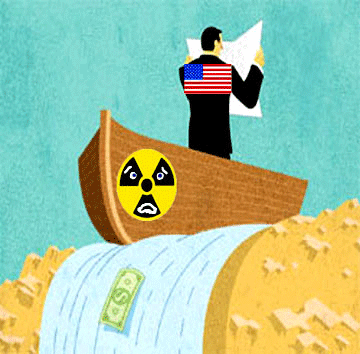
John Rowe, a longtime nuclear booster and former CEO of Exelon, the Chicago-based offspring of mergers between Commonwealth Edison of Illinois, Philadelphia’s PG&E, and Baltimore-based Constellation, oversaw 23 reactors. “I’m the nuclear guy,” Rowe told a gathering at the University of Chicago two weeks after his 2012 retirement. “And you won’t get better results with nuclear. It just isn’t economic, and it’s not economic within a foreseeable time frame.”
Rowe was commenting on plans for newly built reactors. But old ones, including up to six of Exelon’s fleet, may be on the block………. Continue reading
Financial problems escalate with delays in Nuclear Plant Vogtle
 Cost pressure intensifies for Georgia nuclear plant http://www.sltrib.com/home/2121839-155/cost-pressure-intensifies-for-georgia-nuclear By RAY HENRY The Associated Press Atlanta 31 Jan 15, • The delays and cost overruns are piling up for a new plant in Georgia that was supposed to prove nuclear energy can be built affordably.
Southern Co. announced this week the builders of Plant Vogtle expect construction will be delayed 18 months. That would bring the total project delays to roughly three years.
The firms designing and building the plant, Westinghouse Electric Co. and Chicago Bridge and Iron Co., want Southern Co. and its co-owners to pay roughly $1 billion for previous delays and snags.
Regulatory filings show the latest delay could cost Southern Co. an additional $720 million. The other co-owners have not yet disclosed their potential costs. Similar delays and costs have surfaced at an identical project in South Carolina.
Danger in even controlled fires at Rocky Flats where soil is contaminated with plutonium
 Plutonium fears hex planned prescribed fires at Rocky Flats wildlife refuge By Bruce Finley The Denver Post 29 Jan 15, The prescribed fires to restore overgrown forests and grasslands near homes in Colorado have hit a snag: plutonium and its perception at a former nuclear weapons site upwind of Denver.
West metro leaders are opposing a long-planned federal burn in March on 701 acres at Rocky Flats, once a Cold War bomb trigger factory, where plutonium contamination created an environmental disaster.
After a $7 billion cleanup, completed in 2005, Rocky Flats became a 4,000-acre national wildlife refuge, which still remains closed to the public.
Worried residents contend the controlled burn to improve grasslands for elk and raptors could have a deadly impact on people by releasing plutonium into the air……..http://www.denverpost.com/environment/ci_27415100/plutonium-fears-hex-planned-rx-fire-at-rocky
Oyster Creek nuclear power facility deteriorating: urgent safety need to close it
EDITORIAL: Time isn’t on Oyster Creek’s side AsburyPark January 29, 2015 To the surprise of no one, the Oyster Creek nuclear power plant in Lacey continues to deteriorate and the Nuclear Regulatory Commission continues to document the decline of the oldest nuclear power plant in the country. The NRC released a report this week that indicated the plant, which came online in 1969 and is set to close in 2019, had rectified problems that led to four unplanned shutdowns, or scrams, in a 10-month period between October 2013 and July. Joint failures, metal fatigue and leaks were among the problems causing the shutdowns.
As expected, a spokesperson for power plant owner Exelon said the shutdowns never posed any risk to the safety of the plant, its employees or the public.
What the public should be hearing from Exelon are its specific plans for decommissioning the reactor, its timetable for doing so, and what it intends to do with the property once the plant is shut down. And the industry’s lapdog, the NRC, must come up with specific decommissioning requirements — many of the details are left to the plan operators — and address the questions surrounding the disposal of the spent fuel rods and making the sites suitable for other purposes……..
What is absolutely certain is that the dangers posed by Oyster Creek will not vanish in 2019. It will pose a continuing threat to the environment and public safety well into the future. The sooner that Oyster Creek is dismantled and its spent fuel rods can be safely moved out of overcrowded pools and into dry casks the better.
Oyster Creek has moved into its dotage, when breakdowns become the new normal. It is beyond the stage where duct tape and gauze bandage are going to fix it.
Exelon, the NRC and the state Department of Environmental Protection all need to be forthcoming about the timetables, tasks and costs ahead, and move with all deliberate speed to close Oyster Creek and keep us safe. It is ready for whatever the scrapheap of reactors looks like. Time is not on the side of safety. http://www.app.com/story/opinion/editorials/2015/01/29/editorial-time-oyster-creeks-side/22517265/
More costs, another long delay for new nuclear facility in Georgia, USA
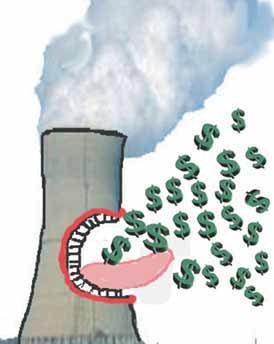 Builder Projects 18-Month Delay for Nuclear Plant in Georgia, abc news, ATLANTA — Jan 30, 2015,
The latest delay at Plant Vogtle is another setback for a project that was supposed to prove nuclear reactors could be built on time and without the cost overruns that financially strained utilities decades ago. Power companies are already shuttering existing nuclear plants because natural gas is so cheap by comparison…….http://abcnews.go.com/Business/wireStory/builder-projects-18-month-delay-nuclear-plant-georgia-28594816
Many a slip twixt the much touted USA-India deal and commercial reality
Hurdles Remain in Nuclear Deal, Indian Express By B B Singh 30th January 2015 For almost two weeks prior to president Barack Obama’s visit to India, the negotiators from both the countries had been burning the midnight oil to operationalise Indo-US nuclear cooperation but hurdles seem to be emerging one after another. The first and the most talked about hurdle arose from Section 17 (b) of the Civil Liability for Nuclear Damage Act 2010, giving the right of recourse to the operator of the nuclear installation if nuclear incident resulted as a consequence of an act of the supplier or his employee which includes supply of equipment or material with patent or latent defects or sub-standard services.
This provision was introduced to ensure that the suppliers took utmost care since they would be liable even for “latent” defects that may exhibit their appearance in their equipment later on after extended exposure to nuclear related stresses. This problem seems to have been solved by India’s proposal for an insurance cover of `1500 crore out of which 50 per cent would be government contribution and the remaining from a pool of insurance companies which are public sector units.
Oddly, it would mean victims compensating victims.
The next conflict has arisen in respect of Section 46 of the Act which provides that its provisions shall be in addition to and not in derogation of any other law for the time being in force. It further provides that nothing contained in this Act shall exempt the operator from any proceeding which might, apart from this Act, be instituted against such operator or the suppliers directly or through the operator. The victims of nuclear incidents are thus entitled to file tort suits for unlimited damages and even criminal proceedings against the operator as well as suppliers. ………….
The story does not end here. There is still some more to come. Under the Hyde Act, the US president is further required to submit to an appropriate Congressional committee any significant changes in the nuclear activities of India including construction of nuclear facilities, production of nuclear weapons or changes in nature and amount of fissile material produced and the purpose and operational status of any unsafeguarded new nuclear facility.
Still further under the Hyde Act, the US president shall have to inform the Congress an estimate of the amount of uranium mined and milled in India and amount of such uranium that has likely been used or allocated for weapons; the rate of production of nuclear devices and the material used therein. Some procedure will have to be worked out in the administrative arrangements to achieve this objective and procure such information on India’s non-civilian nuclear activities for information to the US Congress. In view of these requirements, the Indian negotiators are likely to face still tougher uphill tasks ahead.http://www.newindianexpress.com/columns/Hurdles-Remain-in-Nuclear-Deal/2015/01/30/article2643619.ece
Nuclear reactors endangered by climate change: winter storm causes shutdown of Pilgrim nuclear
Winter Storm Exposes Vulnerability of Nuclear Power Plants Shutdown of Pilgrim facility in Massachusetts fuels critics’ challenge.By Zahra Hirji, InsideClimate News 29 Jan 15 Two days after a major New England blizzard contributed to the shutdown of the Pilgrim Nuclear Power Station in Plymouth, Mass., the facility remains closed.
Due to climate change,more of the most extreme precipitation events, such as this recent snowfall, are expected to slam the area in the coming decades. Nuclear power critics cite the Pilgrim shutdown as proof the industry isn’t ready now—and won’t be any time soon…….The region’s first major nor’easter this winter, dubbed “Juno” by The Weather Channel, dumped up to 3 feet of snow in some places.
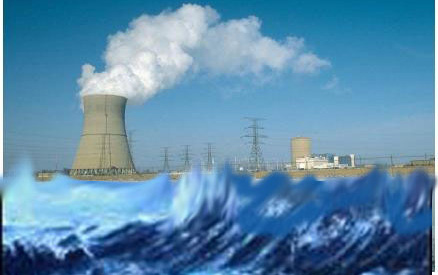 Parts of the Massachusetts coast were wracked by hurricane-force gusts (up to 78 miles per hour). The culmination of high tide and storm-related winds produced a 2-5-footstorm surge that contributed to coastal flooding……..
If the past is any indication, delays could continue for up to a week. That’s what happened in February 2013 when a major snowstorm caused the plant to lose power unexpectedly……………
Tim Judson, executive director of the anti-nuclear activist group Nuclear Information and Resource Service, told InsideClimate News that during emergency shutdowns—especially during extreme heat or cold—grid operators “are scrambling to find generators to make up the power.”……………http://insideclimatenews.org/news/20150129/winter-storm-exposes-vulnerability-nuclear-power-plants
Los Alamos scientist had plan to build nuclear weapons, and to bomb New York
 US nuclear scientist secretly taped by FBI claiming he could bomb New York , Guardian, 29 Jan 15 Los Alamos scientist Pedro Leonardo Mascheroni jailed for five years after also offering to build nuclear weapons for Venezuela A disgruntled, former Los Alamos National Laboratory scientist promised to build 40 nuclear weapons for Venezuela and design a bomb targeted for New York City in exchange for “money and power,” according to secret FBI recordings released Wednesday.
In the recordings, Pedro Leonardo Mascheroni tells an agent posing as a Venezuelan official that the bombs would prevent the United States from invading the oil-rich nation and brags to his wife that the passing of secrets would make him wealthy.
“I’m going to be the boss with money and power,” the naturalized US citizen from Argentina is heard saying. “I’m not an American anymore. This is it.”
Mascheroni said his New York bomb wouldn’t kill anyone but would disable the city’s electrical system and help Venezuela become a nuclear superpower. It was not known how realistic his New York bombing idea was.
But he suggested that once Venezuela obtained a bomb, the country should explode it “to let the world know what we’ve got,” according to the recordings….The US government did not allege Venezuela sought US secrets…..http://www.theguardian.com/us-news/2015/jan/29/us-nuclear-scientist-secretly-taped-by-fbi-claiming-he-could-bomb-new-york
India-USA nuclear deal very ‘up in the air’: no document signed
no specific document was signed
India is already generating more power from wind turbines alone than from nuclear power and has announced a solar target of 100 gigawatt by 2022. So it is perfectly coherent that the joint US-India declaration contains one paragraph on nuclear cooperation and eight on clean energy.
 Breakthrough in US-India civil nuclear deal ‘more symbolism than reality’, DW 29 Jan 15 The US and India announced a “breakthrough” in resolving a liability spat that has stalled the implementation of a civil nuclear deal. But Mycle Schneider tells DW this is more about geopolitics than industrial reality.
“…….Mycle Schneider, an independent international consultant on energy and nuclear policy, says in a DW interview that there is no real market for foreign nuclear companies in India, unless they bring their own funding, adding that the recent announcement is more about presenting both countries as equal partners than it is about the vision of a future blooming Indian nuclear export industry.
DW: What exactly does the new nuclear deal entail?
Mycle Schneider: Very little has so far been published about it. First of all, it is unclear whether there is even a “new nuclear deal.” Usually, when heads of state meet, the occasion is used to sign agreements. However, on this issue, the US-India joint statement only says President Obama and Prime Minister Modi welcomed the “understandings reached” on the issues of civil nuclear liability and “administrative arrangements for civil nuclear cooperation.”
Apparently, no specific document was signed. ………
Unlike all other aspirants for nuclear technology aid, India is not required anymore to put its entire fuel chain, facilities and materials, under comprehensive international control or so-called Full-Scope Safeguards. India has merely promised to separate its nuclear weapons related activities from the power sector……….
India law created liabilities for suppliers in the event of a nuclear accident. Are they not liable anymore?
The 2010 Civil Liability for Nuclear Damage Act has been voted by both houses of the Indian parliament. It remains in place as long as it has not been invalidated by a new vote. In that respect, absolutely nothing has changed from the situation prior to President Obama’s visit to India.
Considering the fact that the Act has not only been attacked by the nuclear industry side, but also from civil society representatives because it caps the liability of the nuclear operators to a ridiculously small sum of 240 million USD, reopening the parliamentary debate over this fragile compromise seems unlikely at this point. It also seems unlikely that the establishment of an insurance fund would fundamentally change the liability situation of nuclear suppliers.
What do India and the US expect to gain from this civil nuclear deal?
This is a typical example of announcement politics. Both governments are presenting the outcome of the US-India summit as a great success. But it is more an issue of symbolism and geopolitics than of industrial reality. The promise to continue to work together towards India’s “phased entry” into the Nuclear Suppliers Group as into three other international control regimes is more about presenting both countries as equal partners than it is about the vision of a future blooming Indian nuclear export industry.
Do you expect the Indian market to now become more appealing for US nuclear companies?
In reality, there is no real market for foreign nuclear companies in India, unless they bring their own funding. Under free market conditions it is not possible anymore to build a nuclear power plant anywhere in the world.
So if new reactors are built in India or elsewhere, the projects are highly subsidized, either by the government—the taxpayer—or the ratepayer. The Indian nuclear industry has painted a rosy picture of the nuclear future for decades and has delivered very little in comparison.
It is actually amazing to what extent overstretched projections of “hundreds of billions investment” are still being held up. Disconnected from reality, they are an effect of what Princeton University researcher M.V. Ramana has appropriately described as “The Power of Promise.”
India is already generating more power from wind turbines alone than from nuclear power and has announced a solar target of 100 gigawatt by 2022. So it is perfectly coherent that the joint US-India declaration contains one paragraph on nuclear cooperation and eight on clean energy.
Mycle Schneider is an independent international energy and nuclear policy consultant, based in Paris. He is the convening lead author of the annual World Nuclear Industry Status Report and a member of the Princeton University-based International Panel on Fissile Materials (IPFM). Schneider is a founding member and the spokesperson of the International Energy Advisory Council (IEAC).
The interview was conducted by Gabriel Domínguez. http://www.dw.de/breakthrough-in-us-india-civil-nuclear-deal-more-symbolism-than-reality/a-18221115
Pennsylvania Nuclear-Dump Cleanup Gets Complicated
 Nuclear-Dump Cleanup Gets Complicated – Federal Report on Pennsylvania Site Foresees Costlier Work WSJ By JOHN R. EMSHWILLER Jan. 29, 2015 The cleanup of a radioactive-waste dump in a small Pennsylvania town will likely be more complicated and potentially riskier than originally envisioned, and cost nearly 10 times as much, according to a revised federal plan.
Meanwhile, some officials, spurred by a citizen activist, are trying to determine whether all the waste in the area has been located………
Several decades ago, large amounts of radioactive waste were buried at the dump site by Nuclear Materials & Equipment Corp., or Numec, a local company that did atomic work for the federal government and other entities.
Numec was subsequently bought by Babcock & Wilcox Co. , an energy products and services provider. A B&W spokesman declined to comment.
The Corps, after years of planning, began excavating one of 10 known waste trenches at the site in the summer of 2011. Digging abruptly halted several weeks later and hasn’t resumed……….
Among the added costs are further measures to prevent a “nuclear criticality.” That can occur if enough fissionable materials, such as bomb-grade uranium or plutonium, are brought together to produce a chain reaction, said Robert Alvarez, a former Energy Department official. Such an event could produce dangerous quantities of radiation, he added.
The Corps document said officials now believe they might find more types of radioactive materials buried at the site than previously anticipated. Michael Helbling, the Corps’ project manager, said he couldn’t be more specific. “We want to be prepared for anything we find,” he said, adding that excavation is expected to resume in 2017 and take as long as 10 years to finish. http://www.wsj.com/articles/pennsylvania-nuclear-dump-cleanup-gets-more-complicated-1422558579
Global consequences from Fukushima-like nuclear disaster; Many nations at risk of ‘great exposure’
January 28th, 2015
Study: Global consequences from Fukushima-like nuclear disaster; Many nations at risk of ‘great exposure’ — Transport of hot particles to US was especially effective during worst releases after reactor explosions — Radioactivity confined ‘close to surface’ due to seasonal factors
T. Christoudias and Y. Proestos of The Cyprus Institute, J. Lelieveld of Max Planck Institute of Chemistry (Germany), Dec 12, 2014 (emphasis added):
- We estimate the contamination risks from the atmospheric dispersion of radionuclides released by severe nuclear power plant accidents… We present an overview of global risks… [These] risks exhibit seasonal variability, with the highest surface level concentrations of gaseous radionuclides in the Northern Hemisphere during winter [Fukushima crisis began with 10 days left in winter].
- The model setup was evaluated… using emission estimates from… Fukushima
- The risk posed from nuclear power plant accidents is not limited to the national or even regional level, but can assume global dimensions. Many nations may be subjected to great exposure after severe accidents.
- Our model shows increased surface-level concentrations throughout the Northern Hemisphere during the boreal winter months compared to the summer… Not only the expected risk magnitude is higher, but the geographical extent of the high concentrations of transported radionuclides is more pronounced towards the north… Horizontal advection [i.e. transfer] is more efficient in winter due to relatively stronger winds, and the concentrations are highest near the surface [and] surface level concentrations in the summer tend to be more localized in the emission region.
- Our results illustrate that accidents… could have significant trans-boundary consequences. The risk estimate [shows] increased surface level concentrations of gaseous radionuclides in the Northern Hemisphere during winter and a larger geographical extent towards the north and the east… This is related to the relatively shallow boundary layer in winter that confines the emitted radioactivity to the lowest part of the atmosphere close to the surface…It is the view of the authors that it is imperative to assess the risks from the atmospheric dispersion of radioactivity from potential NPP accidents [for] emergency response planning on national and international levels.
Source: http://www.mdpi.com/1996-1073/7/12/8338
JAMSTEC, Univ. of Tokyo, etc.: We show a numerical simulation for the long-range transport from the [Fukushima] plant to the US… Large-scale updraft [over] Japan from March 14 to 15 was found effective in lifting the particles [to the] jet stream that could carry the particles across the Pacific within 3 to 4 days [See study: On Mar. 15, Fukushima reactors emitted 100 quadrillion Bq of cesium into air — This one day was equal to total lifetime release from Chernobyl]… Some of the particles [had a] long-range atmospheric transport over — 10,000 km within 3 to 4 days… [R]adioactive materials were detected in that period over the east and west coasts of the U.S… In order for the particles to be transported with the jet stream, they must be lifted up from the surface boundary layer to the mid- or upper troposphere. Large-scale updraft was indeed observed… on March 14 through 15… [T]he westerlies in mid-March were thus particularly effective in the trans-Pacific transport of the radioactive materials…
Watch the numerical plume simulation here http://www.docin.com/p-773002550.html
USA persuades India to weaken its nuclear liability law – double standards here
Under pressure from GE and Westinghouse, the two American nuclear vendors hoping to sell billions of dollars worth of reactors to India, the Obama administration has demanded that Section 17(b) and Section 46 of the Indian liability law be deleted or amended.
Double standards? The irony is that American nuclear suppliers operate under a domestic liability regime that allows operators to sue them for recovery of damages in the event of an accident. That is how Metropolitan Edison, the operator of the Three Mile Island nuclear plant, sued Babcock Wilcox after the infamous 1979 accident.
 Why India should say no to US demand to dilute its nuclear liability law The Modi government should resist pressure from Barack Obama, who landed in New Delhi on Sunday morning, to change key provisions to favour foreign supplier of reactors. Siddharth Varadarajan Scroll.in 26 Jan 15
With the issue of nuclear liability emerging as an obstacle in the relationship between India and the US, the Modi government is under pressure to dilute the law in favour of foreign reactor suppliers. Without this, we are told, it will not be possible to operationalise the US-India nuclear agreement and provide the country with the electricity its people need.
In the event of a major nuclear accident in India, one which damages lives and property, what does the law say about how liability is to be apportioned? Continue reading
President Obama failed his commitment to reducing nuclear weapons

Over the next 30 years, the bill could add up to $1 trillion. Instead of spending less on nukes, we’re spending more – and a new nuclear arsenal comes at the expense of more important national security programs.
Missing a nuclear opportunity http://thehill.com/blogs/congress-blog/homeland-security/230565-missing-a-nuclear-opportunity 25 Jan 15 By Will Saetren In the State of the Union address, President Obama once again failed to rekindle his vision of a world free of nuclear weapons. This is inexcusable. The Cold War ended nearly 25 years ago, but the threat of nuclear annihilation remains. Preventing nuclear disaster is possible, but it requires a serious commitment from all of us – the government, private sector, and regular citizens. Continue reading
1 This Month
Tell Congress: Prevent Nuclear Catastrophe in Iran

Tell Congress: Prevent Nuclear Catastrophe in Iran

Read the Public Inquiry Report, the Commissioners’ report, Surrendering Australia: The AUKUS Deception is available to download for free at aukuspublicinquiry.com. Or just watch the replay of the National Press Club Luncheon.


Shut down the radiation-damaged Heysham nuclear reactors now
To see nuclear-related stories in greater depth and intensity – go to https://nuclearinformation.wordpress.com

Say No to NASA’s Reckless Nuclear Reactor on the Moon
Say No to NASA’s Reckless Nuclear Reactor on the Moon
-
Archives
- November 2026 (224)
- October 2026 (302)
- September 2026 (339)
- August 2026 (330)
- July 2026 (355)
- June 2026 (287)
- May 2026 (306)
- April 2026 (356)
- March 2026 (251)
- February 2026 (267)
- January 2026 (308)
- December 2025 (358)
-
Categories
- 1
- 1 NUCLEAR ISSUES
- business and costs
- climate change
- culture and arts
- ENERGY
- environment
- health
- history
- indigenous issues
- Legal
- marketing of nuclear
- media
- opposition to nuclear
- PERSONAL STORIES
- politics
- politics international
- Religion and ethics
- safety
- secrets,lies and civil liberties
- spinbuster
- technology
- Uranium
- wastes
- weapons and war
- Women
- 2 WORLD
- ACTION
- AFRICA
- Atrocities
- AUSTRALIA
- Christina's notes
- Christina's themes
- culture and arts
- Events
- Fuk 2022
- Fuk 2023
- Fukushima 2017
- Fukushima 2018
- fukushima 2019
- Fukushima 2020
- Fukushima 2021
- general
- global warming
- Humour (God we need it)
- Nuclear
- RARE EARTHS
- Reference
- resources – print
- Resources -audiovicual
- Weekly Newsletter
- World
- World Nuclear
- YouTube
-
RSS
Entries RSS
Comments RSS

