Examining Nuclear Regulatory Commission’s deceptive article about ending the cancer research
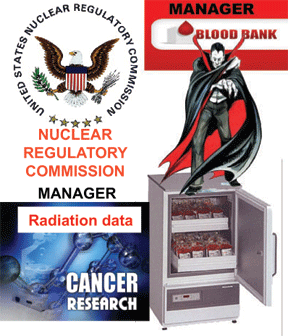 Examining the Reasons for Ending the Cancer Risk Study as given in article by USA’s Nuclear Regulatory Commission 6 Oct 15 Garry Morgan, U.S. Army Medical Department, Retired Director Health and Radiation Monitoring BEST/MATRR a local chapter of BREDL
http://www.matrr.org
One word describes this article – FALLACY. The Nuclear Regulatory Commission’s (NRC) mission to protect the public is compromised by politicians supported by Nuclear Special Interest Groups such as the NEI, Nuclear Energy Institute, applying pressure to decrease funding to the NRC. You are supporting the nuclear industry not the public. The NRC is not an agency which has separated itself from undue political and industry influences and pressures.
A report of radiological contamination and its health effects could have been completed with less expense than $8 million dollars, accurately. The nuclear industry and the United States Government has much to hide regarding the failures to protect the public at large and in communities surrounding all nuclear facilities – this includes the uranium mining communities, the fuel facility communities, the nuclear hazardous waste communities, nuclear weapons communities and all nuclear reactor facility communities.
The nuclear industry and the regulator does not report real time ionizing radiation from emission sources from any active nuclear facility; reporting is based on averages reported annually from nuclear facility locations. This type of reporting is skewered, and lacks scientific credibility due to not reporting emissions in a real time monitoring program with accurate radiological assessments from real time monitoring reports along with community resident health evaluations.
Non-profit institutional examination of nuclear emissions and community health is demonstrating an entirely different story from that which the nuclear industry and the NRC reports. When there is contradictory evidence disputing the nuclear industry and the NRC, the NEI hires nuclear industry paid persons to contradict any information assimilated from private non-profit sources, regardless if the information is actually an accurate compilation from government sources with professional data assimilation and analysis. Example – The Browns Ferry Report <http://best-matrr.org/pdfs/AL_BFN_Report_2013-final-dig2.pdf>http://best-matrr.org/pdfs/AL_BFN_Report_2013-final-dig2.pdf
The examination of dispersal of radiological contaminating materials in East Tennessee presents a horror story of cancer, declining health and radionuclide contamination of the environment of East Tennessee communities along the Tennessee River and its’ tributaries. The citizens of East Tennessee have become a sacrificial group since the beginnings of the nuclear age in 1945. Unfortunately, the Department of Energy (DOE) and the NRC are participants in this horror story of the atomic age, placing the money gained from atomic death industry before peoples health and welfare – shame on you. Shame on the NRC, DOE, and the many nuclear and nuclear defense industries for your continued deceit.
This is the million pound weight in the room – the continuous deceit and placing money before human health in civilian nuclear and nuclear contractor programs, besides the continuous building of highly radioactive nuclear waste materials. The deceit demonstrated is a continuous failure to uphold Human Reliability Standards which is a cornerstone of any nuclear program, the failure due to deceit is tantamount to a disaster awaiting an outcome. http://public-blog.nrc-gateway.gov/2015/10/06/examining-the-reasons-for-ending-the-cancer-risk-study/comment-page-1/#comment-1617512>
Duke Energy very doubtful about new nuclear stations
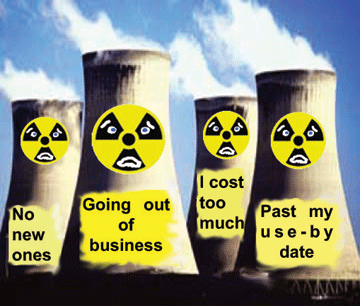
 Will new nuclear plants be ‘part of the picture’ for Duke Energy? CEO raises doubt, Charlotte Business Journal, Oct 8, 2015, Duke Energy CEO Lynn Good sounded a strongly doubtful note about the company proceeding with its proposed Lee Nuclear Station in her speech Wednesday to the Winston-Salem Chamber of Commerce.Talking about what Charlotte-based Duke (NYSE:DUK) would look like in 2025, she said natural gas would be the backbone of its power fleet and that the utility would make greater use of renewable energy and battery storage.“Nuclear will continue to be an important part of energy supplies in the Carolinas,” she said “But whether or not new nuclear is a part of the picture remains to be seen.”
Abandoned plants Duke still includes the proposed 2,334-megawatt Lee plant in its long-range plans. But the utility has never formally committed to construction of the $12 billion project. Good’s comments raised new doubts about whether it ever will. Since 2012, Duke has abandoned plans to build new nuclear units in Raleigh and in Florida. The Lee plant, proposed for Gaffney, S.C., is the last new nuclear plant still included in the company’s plans……..the company will have to “look very hard at whether we can replace current nuclear with new nuclear,” she said.
That is likely to mean a much greater dependence on natural gas plants than there is now.
Good said that no new coal plants will be built in the United States…….http://www.bizjournals.com/charlotte/blog/energy/2015/10/will-new-nuclear-plants-be-part-of-the-picture-for.html
Even routine sirens from nuclear station can cause social panic
RANDOM SIRENS ALARM NUCLEAR PLANT NEIGHBORS abc 13 eyewwitness News, , October 08, 2015 NEW HILL, NC — Annual maintenance. That’s Duke Energy’s explanation for warning sirens around the Harris Nuclear Power plant going off at seemingly random times over the past week. But no one seemed to know about it.
The first reports started popping up on social media last week.
Local police started getting calls. So did the Town of Apex. But no one could explain why the sirens were going on and off……”You can put a lot of people in panic if that siren goes off and there’s not really nothing going on at the nuclear plant,” Conley said. “People can go a little bananas when they don’t know what it’s meant for.” “It sounds like it’s in your back yard,” said Laura Taylor. “It’s really loud.”
Taylor lives in Apex, one of the surrounding towns and communities that has nuclear warning sirens scattered about. She says she heard the siren go off three times last week.
“It is concerning because you wonder what’s going on,” said Taylor. “Is it just some kind of malfunction or should we be more concerned?” As it turns out, it was neither………http://abc13.com/news/random-sirens-alarm-nuclear-plant-neighbors/1023278/
San Onofre site to get “concrete monolith” for high level radioactive trash – spent nuclear fuel
 Watchdog: Nuclear waste can be stored at new San Onofre site, Coastal Commission says, Orange County Register, by Teri Sforza, Oct. 6, 2015 The California Coastal Commission on Tuesday approved construction of a controversial “concrete monolith” to bury spent fuel at the shuttered San Onofre nuclear power plant, despite many unknowns — including precisely how the casks containing the deadly waste will be monitored.
The permit is only for 20 years, but critics fear it could be forever.
Opponents blasted the plan, saying it creates “America’s largest beach-front nuclear waste dump” just 100 feet from the plant’s sand and sea wall, and vowed legal action to block it.
Instead, opponents said, the Coastal Commission should demand that Southern California Edison – majority owner of the closed San Onofre Nuclear Generating Station – move spent fuel to the Palo Verde nuclear power plant in Arizona. Edison is a co-owner of that plant. Or, opponents say, the fuel should be moved to a remote spot in the desert, or to a private waste storage facility planned in Texas.
San Onofre’s waste would be safer there, critics insisted. There are simply too many unknowns attendant to burying it for decades in thin, hard-to-monitor steel canisters next to the beach in a densely populated area vulnerable to earthquakes and flooding…….http://www.ocregister.com/articles/coastal-686400-commission-plan.html
St Louis landfill fire: risk to nearby nuclear waste prompts plan for disaster

 Disaster plan developed for use if St. Louis landfill fire reaches buried nuclear waste US News By JIM SALTER, Associated Press ST. LOUIS (AP), 6 Oct 15, — Beneath the surface of a St. Louis-area landfill lurk two things that should never meet: a slow-burning fire and a cache of Cold War-era nuclear waste, separated by no more than 1,200 feet.
Government officials have quietly adopted an emergency plan in case the smoldering embers ever reach the waste, a potentially “catastrophic event” that could send up a plume of radioactive smoke over a densely populated area near the city’s main airport.
Although the fire at Bridgeton Landfill has been burning since at least 2010, the plan for a worst-case scenario was developed only a year ago and never publicized until this week, when St. Louis radio station KMOX first obtained a copy. County Executive Steve Stenger cautioned that the plan “is not an indication of any imminent danger.” “It is county government’s responsibility to protect the health, safety and well-being of all St. Louis County residents,” he said in a statement.
Landfill operator Republic Services downplayed any risk. Interceptor wells — underground structures that capture below-surface gasses — and other safeguards are in place to keep the fire and the nuclear waste separate……….
Directly next to Bridgeton Landfill is West Lake Landfill, also owned by Republic Services. The West Lake facility was contaminated with radioactive waste from uranium processing by a St. Louis company known as Mallinckrodt Chemical. The waste was illegally dumped in 1973 and includes material that dates back to the Manhattan Project, which created the first atomic bomb in the 1940s.
The Environmental Protection Agency is still deciding how to clean up the waste. The landfill was designated a Superfund site in 1990.
The proximity of the two environmental hazards is what worries residents and environmentalists. At the closest point, they are 1,000 to 1,200 feet apart. If the underground fire reaches the waste, “there is a potential for radioactive fallout to be released in the smoke plume and spread throughout the region,” according to the disaster plan……..
The plan calls for evacuations and development of emergency shelters, both in St. Louis County and neighboring St. Charles County. Private and volunteer groups, and perhaps the federal government, would be called upon to help, depending on the severity of the emergency………Last month, Koster said he was troubled by new reports about the site. One found radiological contamination in trees outside the landfill’s perimeter. Another showed evidence that the fire has moved past two rows of interceptor wells and closer to the nuclear waste…….http://www.usnews.com/news/us/articles/2015/10/06/disaster-plan-developed-in-case-fire-reaches-nuclear-waste
Trans-Pacific Partnership – just what do the Investor-State Dispute Settlement (or I.S.D.S.) provisions mean?
 “The rights given to investors are so open-ended and ambiguous that they allow for a lot of creative lawyering.”
Germany is in the midst of a $4.7-billion lawsuit occasioned by its decision to phase out nuclear power.
There’s nothing wrong with domestic courts reviewing government regulations, but outsourcing the responsibility to international tribunals is troubling
The Trans-Pacific Partnership: Good? or bad?, leisure guy, 6 Oct 15 “……James Surowiecki in a brief New Yorker column describes some drawbacks:……….The case has yet to be decided, but the concerns it raises help explain President Obama’s embarrassing setback last week, when the House failed to give him fast-track authority over one of two big trade agreements that had been envisaged as a key part of his legacy. Both agreements—the Trans-Pacific Partnership, with eleven Asian and Pacific countries, and an agreement with Europe called the Transatlantic Trade and Investment Partnership—include provisions very like the ones at the heart of Australia’s fight with Big Tobacco. Known as Investor-State Dispute Settlement (or I.S.D.S.) provisions, they typically allow foreign investors to sue governments when they feel they have not received “fair or equitable treatment,” and to have their cases heard not by a domestic court but by an international arbitration tribunal made up of three lawyers.
These provisions have been opposed by an unusual coalition of progressives and conservatives, who contend that they will let multinationals override government policy, and, as Senator Elizabeth Warren put it, “undermine U.S. sovereignty.” On the other side, the Obama Administration and business groups insist that this is just fear-mongering. ………
This mission creep has been abetted by the fact that the language of I.S.D.S. provisions is often vague. Jason Yackee, a law professor at the University of Wisconsin who specializes in international-investment law, told me, “The rights given to investors are so open-ended and ambiguous that they allow for a lot of creative lawyering.” Canada lost a case where it had rejected, after an environmental study, a proposed mining and marine-terminal project. The country was also sued when Quebec imposed a moratorium on fracking. Germany is in the midst of a $4.7-billion lawsuit occasioned by its decision to phase out nuclear power. Uruguay is facing a lawsuit from Philip Morris International, much like the one brought against Australia.
There’s nothing wrong with domestic courts reviewing government regulations, but outsourcing the responsibility to international tribunals is troubling. …………
FROM The Financial Page JUNE 22, 2015 ISSUE Trade-Agreement Troubles BY JAMES SUROWIECKI. http://www.newyorker.com/magazine/2015/06/22/trade-agreement-troubles
Fake parts sold for nuclear submarines
Man Gets 3 Years for Importing Fake Parts for Nuclear Subs http://abcnews.go.com/US/wireStory/man-years-importing-fake-parts-nuclear-subs-34296872 By THE ASSOCIATED PRESS, HARTFORD, Conn. — Oct 6, 2015 A Massachusetts man has been sentenced to three years in prison for importing counterfeit electronic components from China and Hong Kong for use by American customers, including builders of the U.S. Navy’s nuclear submarines.
Peter Picone (pih-COH’-nee) of Methuen (mih-THOO’-uhn), Massachusetts, was sentenced Tuesday in federal court in Hartford, Connecticut.
The 42-year-old pleaded guilty in June 2014 to conspiracy to traffic in counterfeit military goods. In addition to the prison sentence of three years and one month, the judge ordered him to pay $352,076 in restitution to 31 companies whose circuits he counterfeited.
Assistant Attorney General Leslie Caldwell said Picone sold counterfeit integrated circuits knowing that the parts were intended for use in nuclear submarines.
At his plea hearing, Picone acknowledged that failure of the parts could have led to catastrophic consequences.
USA nuclear weapons department helping China develop thorium reactors, despite their military uses
 The U.S. government lab behind China’s nuclear power push HONG KONG |REUTERS Dec 20, 2013 Scientists in Shanghai are attempting a breakthrough in nuclear energy: reactors powered by thorium, an alternative to uranium.
The project is run by the Chinese Academy of Sciences, a government body with close military ties that coordinates the country’s science-and-technology strategy. The academy has designated thorium as a priority for China’s top laboratories. The program has a budget of $350 million. And it’s being spearheaded by the influential son of a former Chinese president.
But even as China bulks up its military muscle through means ranging from espionage to heavy spending, it is pursuing this aspect of its technology game plan with the blessing – and the help – of the United States. China has enlisted a storied partner for its thorium push: Oak Ridge National Laboratory. The U.S. government institute produced the plutonium used for the Manhattan Project and laid important groundwork for the commercial and military use of nuclear power.
The Tennessee lab, as it happens, helped pioneer thorium reactors. The Pentagon and the energy industry later sidelined this technology in favor of uranium……..
Thorium’s chief allure is that it is a potentially far safer fuel for civilian power plants than is uranium. But the element also has possible military applications as an energy source in naval vessels. A U.S. congressman unsuccessfully sought to push the Pentagon to embrace the technology in 2009, and British naval officers are recommending a design for a thorium-fueled ship.
In a further twist, despite the mounting strategic rivalry with China, there has been little or no protest in the United States over Oak Ridge’s nuclear-energy cooperation with China……..
Although it does not yield byproducts that can be readily used to make weapons, thorium does have military applications.
The fuel could be used to power Chinese navy surface warships, including a planned fleet of aircraft carriers. China’s nuclear submarine fleet has struggled with reactor reliability and safety, according to naval commentators, and thorium could eventually become an alternative.
Top British naval engineers last year proposed a design for a thorium reactor to power warships. Compact thorium power plants could also be used to supply reliable power to military bases and expeditionary forces.
Thorium also has military potential for the United States, experts say……..
Secret deals to fleece ratepayers over costs of closing the San Onofre nuclear plant

 STATE UTILITY REGULATOR RE-EXAMINES SECRET MEETINGS Don’t expect big changes yet By Don Bauder, San Diego Reader, Sept. 30, 2015 By now, savvy folks know that the California Public Utilities Commission has to clean up its act — thoroughly. Commissioners and staff members used illegal, back-channel communications with Southern California Edison to fleece ratepayers over costs of closing the San Onofre nuclear plant. Similarly, commission members were secretly helping Pacific Gas and Electric in its attempt to get a light penalty for its negligence leading to the 2010 San Bruno gas pipeline explosion that killed eight people and incinerated a neighborhood.
But the commission is not giving itself a thorough bath. It’s taking a cowboy bath at best.
Example: at the same time that the utility regulator was not turning over documents requested in a search warrant from the state’s attorney general, it was gathering legal opinions on how it could restore public confidence. Hmmm…
Strumwasser report
The utilities commission paid the law firm of Strumwasser & Woocher to make recommendations on the ex parte (one-sided) meetings between regulatory officials and utilities that led to the anticonsumer actions over San Onofre and San Bruno. It also had a staff lawyer, Ed O’Neill, prepare a report on both the secrecy and necessity of bringing efficiency to the decision-making process. O’Neill, who had worked for the commission before representing energy and telecom firms, was hired to “modernize” the commission’s decision-making process.
This “modernizing” involved suggested changes in the California Bagley-Keene Open Meeting Act, even though the original purpose of that act was to sacrifice efficiency in favor of the public’s knowledge of and participation in commission decisions.
Generally speaking, the Strumwasser recommendations are considered sound. …….. http://m.sandiegoreader.com/news/2015/sep/30/citylights-california-utility-drop-secret-meetings/
Financial forecasts bode ill for the nuclear industry

 Nuclear reactors are closing and we are counting http://www.beyondnuclear.org/the-nuclear-retreat/2015/9/30/nuclear-reactors-are-closing-and-we-are-counting.html The United Bank of Switzerland (UBS), the second largest bank in the world, headlined that “Nuke Retirements are coming” in its September 24, 2015 global financial research issue of US Electric Utilities and IPPs. The international investment giant projects “a growing capitulation in the nuclear sector as the prospects for protracted downturn remains front and center.”
UBS forecasts, “We see both ETR (Entergy) and EXC (Exelon) as substantially exposed to this thesis: it has specifically emerged in recent days that not just ETR’s Fitzpatrick but also the Pilgrim unit could well be shut in lieu of investing to improve profile up to NRC levels. Further, we see EXC as highlighting this nuclear retirement thesis further with not just its Ginna plant in NY and Oyster Creek (NJ) plants poised to retire in 2019, but also now its Three Mile Island unit is at risk beyond known the ongoing saga in Illinois over support for Quad Cities, Clinton, and even Byron.”
UBS admits that its forecast “could well underestimate total retirements” as actual retirements might prove more aggressive particularly for the other single unit nuclear power stations. With Exelon’s two unit Quad Cities nuclear power plant in Illinois still posting losses, UBS sees the nuclear power corporation’s “plans to retire the plant as entirely credible (and seemingly committed to investors) should Illinois fail to produce a sufficiently attractive scheme” in spite of the fact that 50% of its nuclear assets are clustered in the state.
There is even more good news to be found in this particular UBS forecast where, “In turn, if retirements move forward as contemplated, we see a real corresponding uplift to the renewable industry as this becomes the growing source of ‘plugging’ for any further holes in meeting prospective carbon targets.” The UBS assessment undermines the pro-nuclear industry’s most prevalent false argument that “No Nukes” means more coal. It clearly doesn’t.
You can keep pace with these anticipated nuclear power plant closures and more by periodically visiting our website’s “Reactors are closing” page.
Former Idaho governor sues U.S. Department of Energy over Freedom of Information
Former governor cites Freedom of Information Act Former Idaho Gov. Cecil Andrus has filed a lawsuit against the U.S. Department of Energy to force it to comply with the Freedom of Information Act and publicly share information relating to proposed shipments of commercial spent nuclear fuel to the Idaho National Laboratory.
The suit was filed Tuesday in federal district court in Idaho on Andrus’ behalf by the Boise-based environmental law firm Advocates for the West.
Gov. Butch Otter announced in January that he would grant a one-time waiver to the 1995 Batt agreement to allow the proposed shipments if the DOE can restart a problem-plagued liquid-waste processing plant at INL, east of Arco. He said permission to ship the fuel for research at INL can be used as an incentive to get the liquid waste out of the state faster.
But nuclear activists contend the two proposed shipments of 25 fuel rods, weighing about 100 pounds per shipment, are part of a plan to open the door to ship about 20 metric tons of spent commercial nuclear fuel into the state.
In a news release, Advocates for the West said the lawsuit comes after months of effort by Andrus to require DOE to provide information to Idaho citizens about its request for the waiver. “Without DOE leveling with Idaho about both near-term and longer-range plans, we simply have no ability to assess the wisdom of what they are planning for the state,” Andrus said. “I suspect they know what they are planning will be very controversial, and for that reason they want to keep it secret. That is simply unacceptable.”
Andrus requested information about the waiver and proposed shipments in January. Advocates for the West said DOE provided documents containing dozens of redacted pages. In a letter dated July 10, the agency justified its refusal to provide other documents by saying they fell under exemptions contained in the Freedom of Information Act, including those related to proprietary information of private companies and attorney-client privilege.
Advocates for the West said virtually all the information DOE supplied was already in the public record, including newspaper accounts of the agency’s request for a waiver from state officials.
Andrus appealed the decision to withhold the information, and that appeal was also denied.
“The DOE has left us little choice but to ask the federal courts to enforce the law,” Andrus said. “A fundamental tenet of the American system of government is openness and transparency. The people have both a right and an obligation to know what their government is doing. That is why we feel it is so important to bring this information to light.”
Andrus said that without a permanent national repository for the highly radioactive material, Idaho will for the foreseeable future become that repository. Email the writer: gmoore@mtexpress.com
Storage of radioactive debris on beach near San Onofre nuclear facility!
NBC: Radioactive debris on beach at California nuclear plant — Magazine: Bombshell report reveals radiation cover-up — Experts: “Unbelievable what they’re doing there”… “We still don’t know how high those levels were” (VIDEO)http://enenews.com/nbc-radioactive-debris-beach-california-nuclear-plant-magazine-bombshell-report-reveals-radiation-cover-experts-unbelievable-theyre-doing-dont-high-levels-video?utm_source=feedburner&utm_medium=email&utm_campaign=Feed%3A+ENENews+%28Energy+News%29
East County Magazine, Sep 26, 2015 (emphasis added): NBC TV Investigation Finds Evidence Of Radioactive Debris On Beach At San Onofre — An investigation by KNSD-TV Channel 7 , the NBC affiliate in San Diego, has dropped a bombshell regarding efforts to cover-up lax handling of nuclear waste and radiation leaks at the San Onofre Nuclear Generating Stations… NBC’s investigation found high radiation levels endangered Southern California employees in trailers, including radiation levels so alarming that Nuclear Regulatory inspectors at times refused to perform routine radiation surveys… Hundreds of pieces of contaminated radioactive equipment were stored on both sides of Interstate 5, which bisects the San Onofre nuclear waste dump now under construction… Nuclear power expert Joe Hopenfeld told NBC 7 that San Onofre was “very, very sloppy, very very careless in handling radioactive material.”… Some have reportedly been pressured to sign non-disclosure agreements to prevent negative information from being made public… NBC reported that SDG&E did not respond to its requests for comments, nor did the Marines… Due to secrecy shrouding the San Onofre high nuclear readings… [Charles Langley is a former public advocate at the Utility Consumers’ Action Network who was terminated for being a whistleblower] observes, “We still don’t know how high those radiation levels were. And if Edison gets its way, we will never know… The answer is probably worse than we think.”
NBC San Diego, Sep 23, 2015: Documents Detail How Nuclear Material Was Handled at San Onofre Nuclear Generating Station… The documents were released to individuals involved with the secret negotiations about the current condition and future handling of the 25-acre property… According to the source, the team representing the utilities has told all involved they want nondisclosure agreements signed so no one can go public with any information disclosed during the negotiations [and] the utilities are reluctant to provide full disclosure on what has occurred on the property since they took possession of it… Joe Hopenfeld, an expert on the nuclear power industry, said, “It was unbelievable what they were doing there“… The report says it was determined the cubicle was “responsible for most of the radiation measured on the beach.”… The other document NBC 7 Investigates received is dated April 10, 2014… This document was provided by the utilities to “identify those locations at the Mesa that were affected by the inappropriate presence of radioactive materials.”… After reading in the report about a steam generator system pipe that was “hot,” Hopenfeld said, “You have hot spots, you don’t know what they are.”… “This is an indication of the mentality and the culture at the time at SONGS,” he said. [Former San Onofre Safety Officer Vinrod Arora ] said the plant grounds should be thoroughly inspected by an independent third party and not by SCE or SDGE or any of their subcontractors. “Be very careful of the goods they accept from Edison with the blessings of the NRC,” Arora warned. The concern, he said, is not just for the land but for those that might someday use it.
Nuclear lobby keen to ‘educate’ public
Nuclear leaders say education key to industry’s future, Pittsburgh Business Times, A decline in nuclear power has been ongoing in the United States. There are 99 nuclear reactors in operation in 30 states, but the industry’s growth has stalled significantly. In 2013, four reactors went out of service, and another was shut down in December 2014. Two nuclear reactor licenses were approved by the Nuclear Regulatory Commission in 2012, which was a bright point for the industry. But those were the first nuclear licenses approved since 1978………
Dr Lawrence Lindsey spoke during a conference of nuclear power industry leaders gathered Wednesday at the Westin Convention Center in downtown Pittsburgh. Called “Nuclear Going Forward” and underwritten by the advocacy group Nuclear Matters, the power brokers were there to discuss the industry’s future…….
“This is the time we need to start making decisions and start providing some certainty for the industry………
it’s a matter of extolling the virtues of nuclear — and staying course………
NBC4 investigates cover-up of Southern California nuclear disaster
“The radiation in that building got so high, it went clear off the scale,” Pace recalled to NBC4. “They were not able to contain the radiation that was leaking from the reactor.”
 As NBC4 documents, “Pace says that dangerous radiation was released for weeks and went whichever direction the wind was blowing. Pace says the large door in the reactor was opened so they could vent the radiation from inside the building. He also remembers that the exhaust stack of the reactor was opened so that radiation could be released from inside the damaged reactor straight into the atmosphere.”
“Each time they started and stopped the reactor . . . radiation from the reactor was released,
Pace said he and all of the other workers were “sworn to secrecy” and his boss “[got] right in his face” to make it clear. He says he and his coworkers were “just following orders.” “Nobody knows the truth of what actually happened,”
The Atomic Energy Commission reported to the public six weeks after the incident that a “fuel element failure” — a minor accident — had occurred but that no radiation had leaked to surrounding communities
The Worst Nuclear Disaster in US History That You’ve Never Heard About http://theantimedia.org/the-worst-nuclear-disaster-in-us-history-that-youve-never-heard-about/ Carey Wedler September 28, 2015 (ANTIMEDIA) Los Angeles, CA — The United States government deliberately hid “the worst nuclear disaster in U.S. history,” according to experts and an in-depth investigationby NBC4 Southern California. Whistleblowers have also come forward to expose the little-known catastrophe, which occurred north of Los Angeles in 1959 and leaked over 300 times the allowable amount of radiation into surrounding neighborhoods. That contamination is now linked to up to a 60% increase in cancer in the area, but the government still refuses to acknowledge its colossal mistake.
The ongoing tragedy was driven by America’s darkest demons, from dogmatic militarism to aggressive corporatism, and ongoing government and corporate efforts to cover-up the disaster are nothing short of staggering. Continue reading
USA nuclear fans trivialise effects of nuclear bombing
Photos of what the Manhattan Project’s plutonium bomb did to human beings at Nagasaki prove the point. There is radioactive blowback in the fact that the thousands of tons of plutonium created since 1945 is so dangerously hot and long-lived that, like the underworld itself, nobody knows how to handle it at all — except maybe to trivialize it.
Hoping perhaps to show that the bomb from hell can be transformed from a vengeful, self-destructive, nightmare demon, into a benign, peace-loving, fairy-tale prince, nuclear propagandists and their friends in Congress are establishing nuclear war theme parks — without the taint of mass destruction — at former bomb factories and nuclear weapons launch pads all across the country: Continue reading
1 This Month
Tell Congress: Prevent Nuclear Catastrophe in Iran

Tell Congress: Prevent Nuclear Catastrophe in Iran

Read the Public Inquiry Report, the Commissioners’ report, Surrendering Australia: The AUKUS Deception is available to download for free at aukuspublicinquiry.com. Or just watch the replay of the National Press Club Luncheon.


Shut down the radiation-damaged Heysham nuclear reactors now
To see nuclear-related stories in greater depth and intensity – go to https://nuclearinformation.wordpress.com

Say No to NASA’s Reckless Nuclear Reactor on the Moon
Say No to NASA’s Reckless Nuclear Reactor on the Moon
-
Archives
- November 2026 (215)
- October 2026 (302)
- September 2026 (339)
- August 2026 (330)
- July 2026 (355)
- June 2026 (287)
- May 2026 (306)
- April 2026 (356)
- March 2026 (251)
- February 2026 (267)
- January 2026 (308)
- December 2025 (358)
-
Categories
- 1
- 1 NUCLEAR ISSUES
- business and costs
- climate change
- culture and arts
- ENERGY
- environment
- health
- history
- indigenous issues
- Legal
- marketing of nuclear
- media
- opposition to nuclear
- PERSONAL STORIES
- politics
- politics international
- Religion and ethics
- safety
- secrets,lies and civil liberties
- spinbuster
- technology
- Uranium
- wastes
- weapons and war
- Women
- 2 WORLD
- ACTION
- AFRICA
- Atrocities
- AUSTRALIA
- Christina's notes
- Christina's themes
- culture and arts
- Events
- Fuk 2022
- Fuk 2023
- Fukushima 2017
- Fukushima 2018
- fukushima 2019
- Fukushima 2020
- Fukushima 2021
- general
- global warming
- Humour (God we need it)
- Nuclear
- RARE EARTHS
- Reference
- resources – print
- Resources -audiovicual
- Weekly Newsletter
- World
- World Nuclear
- YouTube
-
RSS
Entries RSS
Comments RSS

