Official Canadian report reveals Fukushima radioactive iodine in rain reached West Coast of America
Official Report: West Coast hit with 220,000,000 atoms per liter of Iodine-129 in rain after Fukushima — 15 Million year half-life — Detected in aquifer that supplies drinking water to large number of people — “Transported rapidly” to Canada and US — Elevated levels continued for many months http://enenews.com/official-report-west-coast-hit-220000000-atoms-liter-iodine-129-rain-after-fukushima-15-million-year-half-life-detected-groundwater-transported-rapidly-japan-west-coast-canada-elevated-lev
Matt Herod, Univ, of Ottawa Ph.D Candidate, Dec 21, 2015 (emphasis added): A recently published paper (by myself and colleagues from uOttawa and Environment Canada) investigates… [Iodine-129] which was released by the Fukushima-Daichii [sic] Nuclear Accident… Within 6 days of the FDNA 129I concentrations in Vancouver precipitation increased 5-15 times… sampling of groundwater revealed slight increases in 129I… The results in rain show an increase in 129I concentrations of up to 220 million atoms/L… 129I anomalies [in groundwater wells], which occurred exactly when the recharge age predicted they would, suggests that some of the 129I deposited by Fukushima was reaching the wells… [P]ulses of elevated 129I occurred for another several months. Elevated 129I concentrations were measured in two wells… indicating that 129I from Fukushima can be traced into groundwater… [M]odeling has shown that 129I can be rapidly transported to the water table…
Scientists from Univ. of Ottawa’s Dept. of Earth Science and Environment Canada (Government of Canada), Dec 2015: The atmospheric transport of iodine-129 from Fukushima to British Columbia, Canada and its deposition and transport into groundwater
- The Fukushima-Daiichi nuclear accident (FDNA) released iodine-129 (15.7 million year half-life)… The mean pre-accident 129I concentration in rain was [31,000,000 atoms/L]… following the FDNA, 129I values increased to [211,000,000 atoms/L]… [P]ulses ofelevated 129I continued for several months…
- The 129I in shallow… groundwater showed measurable variability through March 2013 with an average of [3,200,000 atoms/L]… coincident with modeled travel times…
- Radionuclides released from the FDNA have been detected across the globe… [R]eleases of 129I and 131I… travel great distances…
- The Abbotsford-Sumas Aquifer… spans the Canada–U.S. border between [B.C., Canada and Washington, US] and supplies ∼120,000 people with drinking water…
- A pulse of 129I in precipitation with maximum concentrations of [211,000,000 atoms/L] in Vancouver and [221,000,000 atoms/L] at Saturna Island was observed 6 days following the FDNA. A value of [311,000,000 atoms/L] was also measured during the first week of July…
- The high 129I concentrations while the FDNA was ongoing are attributed to the rapid trans-Pacific transport of 129I from Fukushima… This response in 129I concentrations shows that radionuclides from Fukushima were transported rapidly from Japan to the west coast of Canada and the US… [Sampling from Washington State], which is a composite of rainfall events spanning 15 March 2011 to 16 April 2011shows a significantly elevated 129I concentration of [95,000,000 atoms/L]…
- There was a spike in 129I concentration observed in the precipitation sample from the period of 1 July 2011 to 8 July 2011 [which] rose to [311,000,000 atoms/L]… a substantially higher concentration than any other sample… As monitoring at Fukushima detected no pulse of 129I in precipitation in July… this spike is likely due to a… nuclear fuel reprocessing facility. Modeling of the air parcel back trajectories… for the sampling period shows air mass trajectories from Hawaii, north Japan, and Russia…
- The initial increase in 129I concentration at the water table appeared within ∼95 days, with a maximum concentration of [10,500,000 atoms/L]…
- In the model cases, 129I reached the water table very rapidly…
- Groundwater 129I concentrations in two nearby wells showed minor anomalies over the sampling period which could be due to rapid infiltration of the FDNA atmospheric 129Isignal… [M]odeling shows that it was possible for a component of the 129I deposited by the FDNA to be conducted rapidly from the ground surface to the water table… We conclude that it is possible that a fraction of 129I from the FDNA is transported conservatively in this aquifer via preferential flow paths to the water table…
See also: Official in Canada advises public not to drink rainwater coming from Fukushima
And: Rain with 20,000,000 particles of Iodine-131 per liter fell on US (VIDEO)
Nuclear industry funded under the mask of “clean energy”
Obama’s “Clean Energy” budget is propping up nuclear energy, Enformable 12 Feb 2016 “………Cut to page 19 of the Office of Management and Budget’s Fiscal Year 2017 Budget document. Here we find “clean energy,” a phrase no longer to be trusted at face value, having been purloined into meaning at times something quite the reverse. For example, nuclear energy tends to hide beneath the “clean energy” mantel, muddling the message and undermining cause for optimism.
While it may be true that the nuclear power fuel chain does not produce the kind of dirt that can be swept under rugs, the nuclear industry has metaphorically done exactly that by presenting itself as a “clean” energy technology. There is nothing particularly clean about an industry that contaminates the air, land and waterways with heavy metals and with radioactive isotopes that, among other things, give kids living nearby leukemia.
But let’s gerund away anyway and see what lurks beneath the section entitled, “Doubling the Investment in Clean Energy R&D.” Here we learn that the U.S. Government indeed intends to double its current $6.4 billion investment in clean energy for 2016 to arrive at $12.8 billion by 2021. A hefty chunk — $7.7 billion — will be given as discretionary funding to the Department of Energy in 2017 alone for “clean energy R&D.”
But for what, exactly? “About 76 percent of the funding is directed to DOE for critical clean energy development activities, including over $2 billion for energy efficiency and renewable energy technologies,” the Budget document reads. Just two billion dollars for energy efficiency and renewable energy combined? That leaves $5.7 billion for something else that the DOE considers “clean energy.” One of those claimants undoubtedly is nuclear power.

More clues to the likely destination of this unassigned mystery money can be found in a later section where the Budget document reveals that the $7.7 billion is actually earmarked as funding for the “first step toward the Mission Innovation doubling goal.”
The White House describes Mission Innovation, which was announced during the Paris climate talks last December, as an “all-in, all-sector approach,” which is basically the same old “all of the above” foolish compromise on energy policy that the Obama administration has held to from the beginning.
Since this strategy is roundly contradicted by what is actually happening across the country — wind and solar energy installation outpacing natural gas while coal fades and nuclear plants close — there is only one logical explanation for this “fair and balanced” energy policy nonsense: corporate captivity.
To oversimplify: Barack Obama, the Senator from Illinois, emerged from Rahm Emanuel’s clamshell, and Emanuel invented Exelon and Exelon is today the country’s leading nuclear behemoth. Exelon’s chief lobbyist in the early days was David Axelrod. Team Obama was born in the country’s nuclear cradle, then. Nevertheless, it’s high time that a U.S. president as committed to renewables as Obama, ceased tossing favors — aka our money— to his corporate nuclear cronies.
And so it goes on. Sitting on that Paris stage last December for the Mission Innovation announcement was Bill Gates, whose only energy agenda is tinkering around with nuclear unicorns, an exercise so devoid of relevance to the urgent battle to address climate change that every dime spent there is a dime wasted. OK they are his dimes, trillions of them.  But think what he could really do for climate change if he spent his riches wisely.
Let’s follow the trail of budget breadcrumbs a little further. The OMB goes on to say: “Mission Innovation is complemented by the Breakthrough Energy Coalition, a separate, private sector-led effort whose purpose is to mobilize substantial levels of private capital to support the most cutting-edge clean energy technologies emerging from the R&D pipeline.”
The Breakthrough Energy Coalition is Bill Gates again, and loaded to the hilt with his fellow billionaires all salivating at the prospect of old nuclear pots to mend. But given the Breakthrough Coalition is entirely “separate” and “private,” what is it doing even being mentioned in a government budget rollout?
What comes out of the Clean Energy R&D pipeline rather depends on what goes into it. It would be good if that turned out to be a true renewable energy revolution and not more deadly radioactive effluent from an obsolete fleet of new nuclear power plants. http://enformable.com/2016/02/obamas-clean-energy-budget-is-propping-up-nuclear-energy/?utm_source=feedburner&utm_medium=email&utm_campaign=Feed%3A+Enformable+%28Enformable%29
Nuclear crooks prosper in USA
13 Feb 16 The article on the criminality of GE/Hitachi suggests that the old adage: “crooks never prosper,” is accurate. However, in December 2015, the double-tongued NRC and DoE > the federally owned Tennessee Valley Authority rewarded GE Hitachi Nuclear Energy with a contract worth more than $70 million to provide outage services for units 1, 2 and 3 of the Browns Ferry nuclear power plant.
http://www.world-nuclear-news.org/C-GEH-wins-70-million-contract-to-service-Browns-Ferry-4121501.html
In October 2014, corporate felons, GE Hitachi Nuclear Energy (partnering with ANL) were rewarded with a DoE multi-million dollar grant for “development and modernization of next-generation probabilistic risk assessment methodologies” on the PRISM reactor. http://gehitachiprism.com/ge-hitachi-selected-by-u-s-department-of-energy-to-lead-advanced-reactor-research-and-development-project/
This is despite the fact that in September 2014, GE was hit with a “consent agreement” totalling $24 million to clean up its PCB contamination of the Hudson River. The Hudson River PCB Superfund (hazardous waste site) is located in New York and consists of 200 miles of the river. The Site is one of the largest Superfund Sites in the country thanks to GE.
The EPA estimated that GE dumped approximately 1.3 million pounds of PCBs into the river.
GE knew of the deadly health and environmental hazards of PCBs as early as 1937 when employees were sickened – some dying of liver disease yet it continued contaminating the river until the tardy EPA banned PCBs in 1977.
http://malibuunites.com/the-history-of-pcbs/
http://www.epa.gov/enforcement/case-summary-ge-agrees-further-investigate-upper-hudson-river-floodplain-comprehensive
The nuclear behemoth is a magnet for corporate thugs who hide beneath Obama’s “clean energy” mantle muddling the message whilst fouling the biosphere with impunity. The nuclear industry relies on Joe Public’s apathy.
Conclusion: The old adage: “crooks never prosper” incubates in the bowels of mythology.
Native Americans’ water supply contaminated by uranium mining
 Native Americans Ask: What About Our Water Supply? http://m.voanews.com/a/native-americans-ask-what-about-our-water-supply/3188737.html Celebrities and politicians have rallied around the city of Flint, Michigan, where thousands of children have been exposed to unsafe levels of lead in drinking water. But Native Americans say they have been facing an even more dangerous water contaminant for decades – uranium – and received far less attention
The Cold War arms race triggered a boom in uranium mining in the U.S. Between the 1940s and 1980s, uranium mining operations were carried out under a 19th century mining law that did not require them to clean up after themselves.When demand for uranium waned in the 1980s, companies simply walked away, leaving open pits and tunnels – and enormous amounts of radioactive waste. Today more than 15,000 abandoned uranium mines dot the U.S. West. Three-quarters of them are located on federal and tribal lands.
Ray Manygoats grew up near Tuba City, Arizona, near a now-abandoned uranium mine. He is no stranger to the substance the Diné (Navajo) people call “the yellow monster.”
“Yellow stuff was always everywhere,” Manygoats told the House Oversight Committee in 2007. “I saw liquids bubbling and tried to stay away from them…we would play in the yellowcake sand near the mill, jumping and rolling around in it.”
Manygoats has suffered from a variety of health troubles, including growths on his eyes; his father has respiratory problems.
Effects on drinking water
“There is a really large and convincing and definitive literature that shows that for miners working underground, uranium mining is associated with a greatly increased risk of lung cancer,” said Douglas Brugge, Professor of Public Health and Community Medicine at Tufts University School of Medicine. “We also know that uranium, radium, radon and arsenic – which is frequently in the ore as well – are toxic. And we know from a fairly large number of studies that people who are drinking water contaminated with uranium have some adverse health effects, mostly kidney damage.”
In 2014, University of New Mexico researchers sampled mine waste at one Arizona site and found uranium concentrations in spring water that was four times the federal drinking-water limit. Thirty percent of Diné lack access to public water and are forced to drink from unregulated wells, springs and livestock ponds, any of which could be contaminated.
Mining ongoing
Today, only a few companies continue to mine for uranium in the U.S. The most common method is in situ leaching: oxygenated water is injected into the earth, where it dissolves uranium. The solution is then brought back up to the surface and shipped off to processing plants.
In situ mining has been going on since 1988 in northwestern Nebraska, not far from the South Dakota Pine Ridge Reservation that is home to the Oglala Lakota people.
“We are 30 minutes away as the crow flies, fifteen minutes as the wind blows, from the mine site,” said Debra White Plume, executive director ofOwe Aku (“Bring Back the Way”), a grassroots Lakota environmental group.
White Plume and other concerned activists have gone up against one of the world’s largest mining corporations in an attempt to block it from opening up three new mines in the area.
Ninety-eight wells have had to be closed on Pine Ridge because of unusually high rates of cancer, kidney disease and other health problems, said White Plume. She’s convinced that uranium is to blame, and she grows frustrated over suggestions that poor diet or smoking could be a factor.
“Why do the innocent human beings at home have to prove that the big corporation is contaminating them? Why aren’t laws in place that say, ‘OK, if that corporation is going to come into our community, let them show us how they will not harm us, let them show us how they aren’t going to threaten everything we depend on for life: Water, food, air, land?’” she asked.
The US Environmental Protection Agency says it has spent more than $100 million to identify areas at highest risk, part of a multi-year plan to address uranium contamination across the country.
Sunset for Nuclear Power? Nuclear Showdown in California
 Why the Current Nuclear Showdown in California Should Matter to You, Sunset for Nuclear Power? CounterPunch, by JAMES HEDDLE FEBRUARY 12, 2016
Does the dream of nuclear power still ‘look bright’ as one enthusiastic investment advisor gushed less than a year ago, or is it the “the dream that failed,” as the Economist asserted as far back as March of 2012?
Approaching 5 years this March 11 after the still on-going Fukushima nuclear disaster, the debate goes on, enveloped in a miasma of mis-, dis-, and conflicting information generated by industry ‘merchants of doubt,’ but rarely leavened by rational analysis of What’s Really What.
The World Nuclear Industry Status Report 2015 by Mycle Schneider, Antony Froggatt et al went a long way toward settling the issue with just that – a data-based rational analysis.
Its conclusion: worldwide, despite a few troubled construction starts over budget and behind schedule, “The nuclear industry remains in decline.”
You’d never know it from the pro-nuclear happytalk and proposed subsidy and bailout bills being floated in Congress, but all around the world the global nuclear power industry is fighting for its life.
Nuclear Showdown in California
Nowhere is that battle closer to being decisively lost by the industry than in California, where the Sunshine State’s ‘last nuke standing’ – PG&E’s Diablo Canyon – faces a very uncertain future. A showdown between those who want to shut it down, and those who want to keep it going.

It is a microcosmic drama with all the elements of a movie thriller:
· A corrupt California Public Utilities Commission racked in scandals.
· A compromised Nuclear Regulatory Commission captured by nuclear interests.
· A resurgent peoples’ movement determined to shut Diablo down and responsibly manage the state’s thousands of tons of lethal radioactive waste.
· The growing vision of a nuclear-energy-free West Coast and a solartopian transition.
· A handful of atomic denialists clamoring to ‘save Diablo.’
· All this in the context of deepening climate change and the battle for decentralized, clean, renewable power.A Diablo shutdown in California would be a shot heard in nuclear boardrooms around the world, and would continue this bellwether state’s well-earned reputation as being ‘no country for old nukes.’
A quick look at the history of California’s Nuclear Free Movement tells the tale.
Back last century, then-President Nixon predicted 1000 nuclear reactors in the US by the year 2000.
In the 60’s, PG&E announced plans to build 63 reactors every 25 miles up and down the California coast.
Thanks to informed popular resistance interventions in the courts, in the legislatures, and in the streets, that didn’t happen.
Only 9 of those planned power reactors ever got built: 1 at Humboldt Bay, 1 at Pleasanton, 2 at Rancho Secco, 3 at San Onofre, and 2 at Diablo Canyon.
Today, only 2 are still in operation, those at Diablo Canyon.
From a planned 63 nuclear power plants in the 1960’s, down to 1 in 2015.
Not a bad track record for the effectiveness of informed non-violent, popular resistance…and a demonstration of the non-viability of nuclear energy – vulnerable as it is to public opposition, industry incompetence, natural disasters, terrorist attacks, and what renowned energy expert Amory Lovins long ago called ‘a terminal overdose of market forces.’……… http://www.counterpunch.org/2016/02/12/why-the-current-nuclear-showdown-in-california-should-matter-to-you/
Epidemiology studies needed around nuclear facilities. Why is this ignored by authorities?
Childhood leukemia, low birth weight, compromised neural development are all associated with exposure to radiation during pregnancy and early childhood.
Astonishingly, no official body in the United States is seriously investigating these impacts. In fact, the U. S. federal government appears not to conduct public health impact studies of populations around nuclear power reactor sites.

Who is monitoring the health of populations around nuclear power
 plants?, http://enformable.com/2016/02/who-is-monitoring-health-of-populations-around-nuclear-power-plants/ Enformable, Cindy Folkers Author’s note: I wrote this blog post with knowledge of the ongoing tritium leaks plaguing a number of nuclear power reactors in the U.S., but before the latest high levels of tritium released from the Indian Point reactor in New York were reported. These recent unplanned and largely unaccounted for releases bring into stark relief the need to measure in real time the releases we DO initially control; further, it is reasonable to request public access to these data.
This denial of the dangers of radioactivity has carried through to the present day. When the Environmental Protection Agency (EPA) issued its first-ever radiation exposure standards in 1977, the US was only 20 years into the atomic energy age, barely long enough to see many of the health impacts radioactivity may have had. Man-made radioactivity had been around for about 40 years with the building of the bomb, well before EPA was established, but well after some very nasty health effects from larger doses were recognized. Now, in 2015, EPA is considering revising its radiation standards – the first major revision since 1977.
EPA is responsible for regulating radioactive emissions that migrate off of a site that releases such material. These off site releases can expose members of the public and their environment. Revision of these nearly 40-year old standards should be a good thing; adding protection for women who are 50 % more sensitive to radioactivity than men; and providing proper protection for pregnancy and childhood development —life stages that are particularly, in some cases uniquely, sensitive to exposure to radioactivity. But old habits, and nuclear industry interference, die hard. Continue reading
USA Government quietly funding billionaires’ nuclear folly
The Breakthrough Energy Coalition is Bill Gates again, and loaded to the hilt with his fellow billionaires all salivating at the prospect of old nuclear pots to mend.
But given the Breakthrough Coalition is entirely “separate” and “private,” what is it doing even being mentioned in a government budget rollout?
Radioactive Handouts: the Nuclear Subsidies Buried Inside Obama’s “Clean” Energy Budget CounterPunch, by LINDA PENTZ GUNTER FEBRUARY 12, 2016 “……..Cut to page 19 of the Office of Management and Budget’s Fiscal Year 2017 Budget document. Here we find “clean energy,” a phrase no longer to be trusted at face value, having been purloined into meaning at times something quite the reverse. For example, nuclear energy tends to hide beneath the “clean energy” mantel, muddling the message and undermining cause for optimism.
…….. let’s gerund away anyway and see what lurks beneath the section entitled, “Doubling the Investment in Clean Energy R&D.” Here we learn that the U.S. Government indeed intends to double its current $6.4 billion investment in clean energy for 2016 to arrive at $12.8 billion by 2021. A hefty chunk — $7.7 billion — will be given as discretionary funding to the Department of Energy in 2017 alone for “clean energy R&D.”
But for what, exactly? “About 76 percent of the funding is directed to DOE for critical clean energy development activities, including over $2 billion for energy efficiency and renewable energy technologies,” the Budget document reads. Just two billion dollars for energy efficiency and renewable energy combined? That leaves $5.7 billion for something else that the DOE considers “clean energy.” One of those claimants undoubtedly is nuclear power.
More clues to the likely destination of this unassigned mystery money can be found in a later section where the Budget document reveals that the $7.7 billion is actually earmarked as funding for the “first step toward the Mission Innovation doubling goal.”…….
there is only one logical explanation for this “fair and balanced” energy policy nonsense: corporate captivity.
To oversimplify: Barack Obama, the Senator from Illinois, emerged from Rahm Emanuel’s clamshell, and Emanuel invented Exelon and Exelon is today the country’s leading nuclear behemoth. Exelon’s chief lobbyist in the early days was David Axelrod. Team Obama was born in the country’s nuclear cradle, then. Nevertheless, it’s high time that a U.S. president as committed to renewables as Obama, ceased tossing favors — aka our money— to his corporate nuclear cronies.
And so it goes on. Sitting on that Paris stage last December for the Mission Innovation announcement was Bill Gates, whose only energy agenda is tinkering around with nuclear unicorns, an exercise so devoid of relevance to the urgent battle to address climate change that every dime spent there is a dime wasted. OK they are his dimes, trillions of them. But think what he could really do for climate change if he spent his riches wisely.
Let’s follow the trail of budget breadcrumbs a little further. The OMB goes on to say: “Mission Innovation is complemented by the Breakthrough Energy Coalition, a separate, private sector-led effort whose purpose is to mobilize substantial levels of private capital to support the most cutting-edge clean energy technologies emerging from the R&D pipeline.”
The Breakthrough Energy Coalition is Bill Gates again, and loaded to the hilt with his fellow billionaires all salivating at the prospect of old nuclear pots to mend. But given the Breakthrough Coalition is entirely “separate” and “private,” what is it doing even being mentioned in a government budget rollout?
What comes out of the Clean Energy R&D pipeline rather depends on what goes into it. It would be good if that turned out to be a true renewable energy revolution and not more deadly radioactive effluent from an obsolete fleet of new nuclear power plants.
Linda Pentz Gunter is the international specialist at Beyond Nuclear. She also serves as director of media and development. http://www.counterpunch.org/2016/02/12/radioactive-handouts-the-nuclear-subsidies-buried-inside-obamas-clean-energy-budget/
87 US Senators blithely voted for more spending on nuclear energy
Renouncing nuclear, then, is the ultimate act of patriotism. Love of country (or “cournty”as the typo-loving Ted Cruz campaign would say) should mean making decisions that protect it, not letting it turn into a radioactive wasteland.
Which makes it so hard to understand why any US political leader on the Left or Right – but especially those Freedom Fries-loving, jingoistic wall-building, Make-America-Great-Again saber rattlers – would continue to support, promote and secure funds for an industry that could kill tens of thousands of people and exile even more.
With very little fanfare, 87 senators were happy to endorse the squandering of likely billions more taxpayer dollars on yet another nuclear snipe hunt, dreaming of fusion and fast reactors, when solar and wind would do very nicely instead.
 Fukushima PM Naoto Kan: ‘if you love your country, let nuclear go!’, Ecologist Linda Pentz Gunter 12th February 2016 Nuclear power is a uniquely hazardous technology that can destroy entire nations, Japan’s prime minister at the time of the Fukushima nuclear disaster has warned British MPs. The lessons of from such catastrophes must be heeded in other countries that believe that nuclear fission can be harnessed safely, writes Linda Pentz Gunter – or they, and the world, will reap the whirlwind…….
no coincidence that the leaders at the time of the two countries that have experienced the world’s most catastrophic nuclear disasters, are fervent campaigners against any further use of nuclear energy.
They see the choice to continue with nuclear power, knowing the risk to the nation they swear an oath to protect, as tantamount to declaring war on your own country.
Former leaders during nuclear meltdowns, now oppose nuclear power
Former Soviet Premier, Mikhail Gorbachev, who led the then USSR during the April 1986 Chernobyl nuclear reactor explosion in Ukraine; and Naoto Kan who was prime minister of Japan when the March 2011 Fukushima nuclear disaster began, both now travel the speakers’ circuit extolling the need to abolish nuclear power.
Kan, now 69, who resigned the premiership in August 2011, has become a ubiquitous and compelling voice for the global anti-nuclear movement. Gorbachev is equally on board but, due to age and infirmity (he turns 85 on March 2nd) is less often in evidence.
Kan made his case in January during a presentation at the UK’s House of Commons co-organized by Nuclear Free Local Authorities, Green Cross International (the group Gorbachev founded) and Nuclear Consulting Group. Gorbachev was scheduled but had to cancel.
Kan compared the potential worst-case devastation that could be caused by a nuclear power plant meltdown as tantamount only to “a great world war. Nothing else has the same impact.”
Japan escaped such a dire fate during the Fukushima disaster, said Kan only “due to luck”. But he is clearly haunted by the map his advisors showed him in the early days of the still unfolding triple meltdowns, one he screened for his London audience:
“I was shown this map with a 250km radius around Fukushima. An area home to 50 million people. One quarter of the country’s population would have had to flee if all the fuel had escaped at Fukushima. We came that close. If 50 million people had had to evacuate Japan, as a state our very survival would have been questioned.”
The needs of the many outweigh the needs of the few Continue reading
Radioactive packages lost or stolen in Canada

 Nuclear and Radioactive Packages Keep Going Missing in Canada, VICE News By Justin Ling
February 13, 2016 If you’ve ever lost your wallet or car keys, you’ve got something in common with the people who run Canada’s nuclear facilities, who keep misplacing nuclear and radiological material.
Last year alone, 14 radioactive packages were lost or stolen, according to the annual report from the Canadian Nuclear Safety Commission (CNSC), and less than half were later recovered. That’s on top of the dozen of other nuclear packages from recent years that have yet to be found.
The report doesn’t detail the circumstances of the losses or thefts, except to say that they were either “sealed sources” — a secure container carrying nuclear or radioactive material — or “radioactive devices.”
The lapses, at a time when security services pledge neurotic devotion to tracking and recovering dangerous goods that could reach the black market, are thanks in part to a handful of private companies that are mishandling radioactive material. n the nuclear watchdog’s 2014/2015 annual report, it identified 27 companies that were mislabeling or mishandling nuclear material, or which had inadequate security protections.
In some cases, CNSC lightly rapped the knuckles of companies, including a New Brunswick brewery which, according to the government body, had “several non-compliances related to safety requirements for nuclear gauges.”
Pump House Brewery, at the time, told CBC News that the problem amounted to some missed paperwork.
In other cases, the problems were more serious and resulted in fines…….https://news.vice.com/article/nuclear-and-radioactive-packages-keep-going-missing-in-canada
Native Americans sound the alarm on radioactive pollution
 Native Americans: ‘We Are The Miner’s Canary’ Indigenous Delegation Sounds Alarm on Homegrown Radioactive Pollution Crisis By Klee Benally, www.cleanupthemines.org, Popular Resistance January 23rd, 2016Washington, DC — From January 25-28, 2016 Indigenous representatives from the Northern Great Plains & Southwest were in the District of Columbia (DC) to raise awareness about radioactive pollution, an invisible national crisis. Millions of people in the United States are being exposed as Nuclear Radiation Victims on a daily basis. Exposure to radioactive pollution has been linked to cancer, genetic defects, Navajo Neuropathy, and increases in mortality. The delegation will speak about the impacts they are experiencing in their communities, which are also affecting other communities throughout the US.
“Native American nations of North America are the miners’ canaries for the United States trying to awaken the people of the world to the dangers of radioactive pollution”, states Charmaine White Face from the South Dakota based organization Defenders of the Black Hills.
South Dakota has 272 Abandoned Uranium Mines (AUMs) which are contaminating waterways such as the Cheyenne River, and desecrating sacred and ceremonial sites. An estimated 169 AUMs are located within 50 miles of Mt. Rushmore where millions of tourists risk exposure to radioactive pollution each year.
The delegation is warning of the toxic legacy caused by more than 15,000 AUMs nationwide, extreme water contamination, surface strip coal mining and power plants burning coal-laced with radioactive particles, radioactive waste from oil well drilling in the Bakken Oil Range, mill tailings, waste storage, and renewed mining threats to sacred places such as Mt. Taylor in New Mexico and Red Butte in Arizona.
Indigenous communities have been disproportionately impacted as approximately 75% of AUMs are located on federal and Tribal lands………https://www.popularresistance.org/native-americans-we-are-the-miners-canary/
At Pilgrim nuclear power plant, security officer skipped more than 200 fire watches
NRC: Nuclear plant employee skipped assigned fire watches http://www.bostonherald.com/news/local_coverage/2016/02/nrc_nuclear_plant_employee_skipped_assigned_fire_watches Associated Press Thursday, February 11, 2016 PLYMOUTH, Mass. — The owner of the Pilgrim nuclear power plant in Plymouth faces possible punishment from federal regulators because a former security officer admitted to skipping his hourly fire watches then falsifying records to make it appear as if they been completed.
In a letter to Entergy, the Nuclear Regulatory Commission said its investigators found the security officer skipped more than 200 fire watches from 2012 to 2014.
An NRC spokesman tells the Cape Cod Times (http://bit.ly/1KHRoIV ) that Entergy could be assessed a civil fine of up to $140,000 per day per violation, but at this point a civil penalty will likely not be assessed.
Entergy says its own investigation reached a similar conclusion. The employee was fired. Entergy is still considering how it will respond.
Pilgrim has been scheduled to close by 2019.
The very secretive Transatlantic Trade and Investment Partnership (TTIP)
 WHAT I DIDN’T READ IN THE TTIP READING ROOM , War On Want, 7 February 2016 Katja Kipping was one of the first German MPs to gain access to the new TTIP reading room opened in Berlin this week, and she has written up a report of her experience. We thought it was well worth translating from the original, ‘The Opposite of Transparency’.
TTIP, the EU-US free trade deal, has secrecy written all over it. Those responsible for it live in dread of any public scrutiny. If it was up to me, I would give everyone who’s interested the chance to make up their own minds on the text of the agreement in its current form. Sigmar Gabriel, Minister for Economic Affairs and a top cheerleader for TTIP, has now set up a reading room in his ministry where since the beginning of February German MPs can each spend two hours looking at those texts on which consensus has already been reached.
A political friend of mine asked me the day before whether she could come with me into the reading room. I had to say no. After a long, tough struggle with the government, at least MPs are able to read the text, but they are the only ones. We are not even allowed to take security-cleared specialists with us into the reading room. As for members of the public, who will ultimately have to bear the brunt of TTIP, they are to have no access whatsoever to the secret text. Not what transparency looks like in my book!
Access ‘granted’
Even the registration procedure for the reading room speaks volumes. Once I’d registered, I was sent the instructions on how to use the room. The first thing that I noticed was that the terms and conditions had already been the subject of negotiations between the European Commission and the USA. Get your head round that: TTIP isn’t even signed yet, and already individual countries have lost the right to decide who gets to read the texts, and on what terms.
The following extract from the rulebook for MPs who, like me, want to use the reading room reveals the attitude towards democracy that lurks behind TTIP: “You recognise and accept that in being granted access to the TTIP texts you are being extended an exceptional degree of trust.”
Now I’d always thought that elected MPs have a right to information. Yet the TTIP negotiators (and who gave them their legitimacy?) reckon they are GRANTING us access out of the goodness of their hearts. Access as a sign of exceptional trust. Whoever wrote that – did they really think that we MPs would feel flattered? To me it smacks more of totalitarianism. ‘Granting access’ and ‘extending trust’ is not the language you use if you really believe in democracy. ………
I read nothing to alleviate my concern that the US side wishes to make life more difficult for public and community enterprises and to secure better terms for transnational corporations in the battle for public tenders. I also read nothing to calm my fears that EU negotiators are prepared to sacrifice our social and environmental standards for the prospect of winning lucrative contracts for big European firms.
I read nothing that would lead me to reconsider my previous criticism that consumer protection plays no part in TTIP other than to proclaim free market competition to be the highest form of consumer protection that exists………
It is revealing in itself that the Ministry for Economic Affairs is prepared to go to such lengths in order to keep the text of TTIP under wraps. And they have every reason for doing so. Anyone who was going into these negotiations to enhance environmental protection, consumer protection and labour standards would have nothing to fear from transparency. Anyone who’s engaged in selling out democracy, on the other hand, is obviously going to want to avoid public scrutiny. If Sigmar Gabriel and the negotiators are really so convinced of the benefits of TTIP, why don’t they just make the text available to everyone online? http://www.waronwant.org/media/what-i-didn%E2%80%99t-read-ttip-reading-room
Massachusetts snowstorm causes Pilgrim nuclear station to be shut down
ENTERGY’S PILGRIM NUCLEAR POWER PLANT IS SHUT AS SNOWSTORM ENVELOPS MASSACHUSETTS, –Jim Ostroff, james.ostroff@platts.com Washington (Platts)–8 Feb 2016 Operators at Entergy’s 728-MW Pilgrim nuclear plant in Plymouth, Massachusetts, shut the unit early Monday morning as a precautionary measure, while a snowstorm swept through the state, a plant spokesman said.
The unit was operating at 12% of capacity just prior to being shut, according to the US Nuclear Regulatory Commission’s daily reactor status report Monday.
O’Brien declined to estimate when Pilgrim will restart and return to 100% capacity, saying this information “is market sensitive.”…(subscibers only ) http://www.platts.com/latest-news/electric-power/washington/entergys-pilgrim-nuclear-power-plant-is-shut-21901806?hootpostid=28068bc08898fb813f66296f084ba47f
Armed transport ships spotted in Panama Canal, headed for secret mission to later transport plutonium
 UK-Flagged Ships Set to Transport Plutonium from Japan to US Located in Panama Canal http://www.srswatch.org/uploads/2/7/5/8/27584045/srsw_news_on_plutonim_ships_in_canal_feb_6_2016.pdf Ships on Secret Mission to Carry 331 Kilograms of Plutonium to US DOE’s Savannah River Site in South Carolina as Part of Nuclear Security Summit Preparation; Plutonium to be Stranded at SRS
South Carolina takes legal action against DOE over unfinished Nuclear Fuel Project
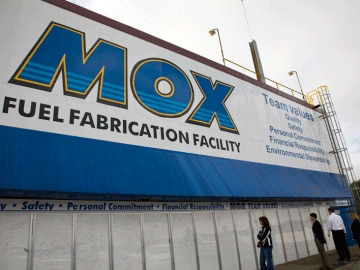 SC Sues Energy Dept Over Unfinished Nuclear Fuel Project http://abcnews.go.com/US/wireStory/sc-sues-energy-dept-unfinished-nuclear-fuel-project-36812338 By MEG KINNARD, ASSOCIATED PRESS COLUMBIA, S.C. — Feb 9, 2016 South Carolina has again sued the federal government over an unfinished project to convert nuclear weapons components into reactor fuel, saying in a lawsuit filed Tuesday that the administration has acted unconstitutionally in failing to complete the mixed-oxide facility by a Jan. 1 deadline.
“The federal government has a responsibility to follow through with its promises,” state Attorney General Alan Wilson said in a statement provided to The Associated Press. “The Department of Energy has continually shown disregard for its obligations under federal law to the nation, the state of South Carolina and frankly the rule of law.”
Federal officials didn’t immediately return a message seeking comment.
The program is intended to turn weapons-grade plutonium into commercial nuclear reactor fuel to fulfill a nonproliferation deal with Russia. Under the agreement, Russia and the U.S. agreed to dispose of at least 34 metric tons apiece of weapons-grade plutonium, enough material for about 17,000 nuclear warheads, which would then be turned into commercial nuclear reactor fuel.
The project at the Savannah River Site, along the South Carolina-Georgia border, is years behind schedule and billions over its original budget. Because the facility wasn’t operational by a Jan. 1 deadline, the federal government was supposed to remove 1 metric ton of plutonium from South Carolina or pay fines of $1 million a day for “economic and impact assistance” — up to $100 million yearly — until either the facility meets production goals or the plutonium is taken elsewhere for storage or disposal.
The suit also seeks daily fines of $1 million and the plutonium removal.
The lawsuit has been expected. Last month, Gov. Nikki Haley told Wilson that she wanted to sue, also warning Energy Secretary Ernest Moniz in December that the state would be forced to sue if his agency didn’t start making payments. A clause in the law, however, makes the fine “subject to the availability of appropriations.”
The Obama administration has gradually scaled down funding for the project, proposing to mothball it in 2014, citing cost overruns and delays. That prompted a lawsuit, with the state saying the federal government had made a commitment to South Carolina and couldn’t use money intended to build the plant to shut it down.
The state ultimately dropped the suit when the administration committed to funding the project through that fiscal year. But the administration has since said it’s searching for an alternate, less expensive way to dispose of the plutonium, like immobilizing it in glass or processing it in different kinds of reactors.
In his budget submitted Tuesday, President Barack Obama included minimal funding for the mixed-oxide fuel project.
Kinnard can be reached at http://twitter.com/MegKinnardAP . Read more of her work athttp://bigstory.ap.org/content/meg-kinnard/
1 This Month
Tell Congress: Prevent Nuclear Catastrophe in Iran

Tell Congress: Prevent Nuclear Catastrophe in Iran

Read the Public Inquiry Report, the Commissioners’ report, Surrendering Australia: The AUKUS Deception is available to download for free at aukuspublicinquiry.com. Or just watch the replay of the National Press Club Luncheon.


Shut down the radiation-damaged Heysham nuclear reactors now
To see nuclear-related stories in greater depth and intensity – go to https://nuclearinformation.wordpress.com

Say No to NASA’s Reckless Nuclear Reactor on the Moon
Say No to NASA’s Reckless Nuclear Reactor on the Moon
-
Archives
- November 2026 (202)
- October 2026 (302)
- September 2026 (339)
- August 2026 (330)
- July 2026 (355)
- June 2026 (287)
- May 2026 (306)
- April 2026 (356)
- March 2026 (251)
- February 2026 (267)
- January 2026 (308)
- December 2025 (358)
-
Categories
- 1
- 1 NUCLEAR ISSUES
- business and costs
- climate change
- culture and arts
- ENERGY
- environment
- health
- history
- indigenous issues
- Legal
- marketing of nuclear
- media
- opposition to nuclear
- PERSONAL STORIES
- politics
- politics international
- Religion and ethics
- safety
- secrets,lies and civil liberties
- spinbuster
- technology
- Uranium
- wastes
- weapons and war
- Women
- 2 WORLD
- ACTION
- AFRICA
- Atrocities
- AUSTRALIA
- Christina's notes
- Christina's themes
- culture and arts
- Events
- Fuk 2022
- Fuk 2023
- Fukushima 2017
- Fukushima 2018
- fukushima 2019
- Fukushima 2020
- Fukushima 2021
- general
- global warming
- Humour (God we need it)
- Nuclear
- RARE EARTHS
- Reference
- resources – print
- Resources -audiovicual
- Weekly Newsletter
- World
- World Nuclear
- YouTube
-
RSS
Entries RSS
Comments RSS

