Legal challenge to Florida utilities’ Nuclear Cost Fees

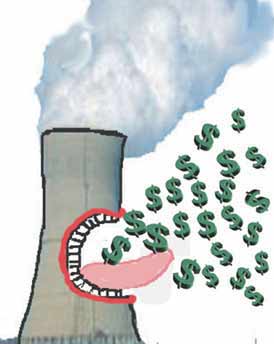
 Lawsuit Challenges Florida Utilities’ $2B Nuclear Cost Fees By CURT ANDERSON, abc, AP LEGAL AFFAIRS WRITER MIAMI — Feb 23, 2016, A federal lawsuit has been filed challenging $2 billion in fees charged by Florida’s two largest electric utilities for nuclear plant projects, some of which were never completed.
The proposed class-action lawsuit filed Monday seeks to stop the fees and recover unspecified damages for about 6.4 million customers of Florida Power & Light and Duke Energy. The fees were imposed on ratepayers under a law passed in 2006 by the Legislature and implemented by the state Public Service Commission.
The suit contends that the law violates the U.S. Constitution’s commerce clause by discriminating against other out-of-state energy producers and that it is pre-empted by federal energy and nuclear laws. It also claims Florida customers are improperly charged for nuclear projects that can be subject to huge cost overruns or that are never built.
One example cited in the lawsuit is Duke’s plan to build two new reactors in Levy County, which enabled the utility to begin collecting recovery fees in 2008. Even though the project was abandoned in 2013, Duke can keep all the fees it has collected plus other amounts deemed prudent by state regulators.
“These two utilities have racked up huge expenses with nuclear power plant projects — some of which they completely abandoned — and have left ratepayers holding the bag,” said attorney Steve Berman, managing partner at Seattle-based Hagens Berman, which filed the lawsuit in South Florida federal court.
Berman’s firm and the nonprofit Institute for Southern Studies say other states, including Georgia and Louisiana, have laws similar to that in Florida allowing utilities to collect such fees…….
According to state records, Duke Energy has collected more than $1.2 billion in nuclear cost recovery fees since 2008. For FPL, the total tops $814 million.
If the lawsuit is certified as a class action, it could eventually repay millions of Florida customers of the two utilities a portion of the fees they have been charged under the law. The lawsuit also asks U.S. District Judge William Dimitrouleas of Fort Lauderdale to halt further collection of the fees by declaring the law unconstitutional. http://abcnews.go.com/US/wireStory/lawsuit-challenges-florida-utilities-2b-nuclear-cost-fees-37145865
Entergy won’t save loss-making FitzPatrick nuclear plant
 Entergy rebuffs latest NY plan to save FitzPatrick nuclear plant, syracuse.com By Tim Knauss | tknauss@syracuse.com SCRIBA, N.Y. – The state Public Service Commission said today it is working on plans to provide financial assistance to the FitzPatrick nuclear plant in a desperate attempt to keep the plant from shutting down.
PSC officials said they will undertake a rushed review of the plan and expect to have financial subsidies available for FitzPatrick by June, long before the plant’s scheduled closure next January.
The commission did not specify how much assistance it would provide. ………
PSC Chair Audrey Zibelman beseeched Entergy Corp., which owns FitzPatrick, to work with state officials on a financial rescue for the nuclear plant.
“The plan would enable expedited financial support to FitzPatrick and other qualified nuclear power plants in Upstate New York,” said PSC Chair Audrey Zibelman. “Until then, we invite Entergy to work with us to make the plans necessary to refuel FitzPatrick and to support the statewide objectives of New York’s new Clean Energy Standard.”
Entergy officials responded that it is too late to save FitzPatrick, which the company plans to close because it loses money. The company added that if Cuomo wants to reduce carbon emissions, he should back off his insistence that Entergy shut down the Indian Point nuclear facility, which Cuomo says is unsafe because of its proximity to New York City.
Cuomo recently announced his plan to offer financial “clean energy” payments for nuclear power, but the help would only go to Upstate nukes – FitzPatrick and Nine Mile Point in Oswego County, and Ginna in Wayne County. Indian Point’s two reactors would not qualify…….
The commission today agreed to conduct a speeded-up review aimed at making financial supports available to Upstate nuclear plants as early as June. Entergy officials dismissed today’s action as too uncertain and too late to save FitzPatrick…. http://www.syracuse.com/news/index.ssf/2016/02/entergy_to_cuomo_its_too_late_to_save_fitzpatrick_but_not_indian_point.html
“disaster waiting to happen” – Indian Point nuclear plant called
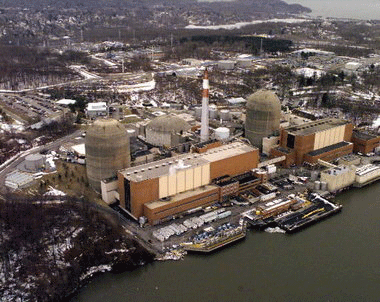 Indian Point nuclear plant called “disaster waiting to happen” CBS News,
In the past year alone there have been a number of mishaps at Indian Point, including a power failure in the reactor core, a transformer fire, an alarm failure, and the escape of radiated water into groundwater. The plant sits about 25 miles north of New York City, so a serious mishap could potentially put millions of people in harm’s way.
“It’s a disaster waiting to happen and it should be shut down,” Paul Gallay, president of Riverkeeper, a watchdog organization dedicated to protecting the Hudson River, told CBS News.
The Indian Point Energy Center, located on the bank of the Hudson River in the town of Buchanan, supplies electricity for millions of homes, businesses and public facilities in New York City and Westchester County, just north of the city.
Environmental groups call the latest problem just the tip of the iceberg, and Gov. Andrew Cuomo is joining with organizations like Riverkeeper, the National Resources Defense Council and others in seeking the permanent closure of the plant.
Earlier this month, Entergy Corporation, which owns Indian Point, reported increased levels of tritium-contaminated water at three monitoring wells, with one well’s radioactivity increasing by as much as 65,000 percent.
Tritium is a radioactive form of hydrogen that occurs naturally in small doses and is a byproduct of nuclear reactors. It could enter a person’s body by drinking tritiated water, or it can also be inhaled as a gas or absorbed through the skin. Tritium can reach all parts of the body like normal water and is eventually expelled through urine. The U.S. Nuclear Regulatory Commission (NRC) says tritium emits “very weak radiation and leaves the body relatively quick.”
Little research has been done on the health effects of exposure to increased levels of tritium. But the NRC states: “Exposure to very small amounts of ionizing radiation is thought to minimally increase the risk of developing cancer, and the risk increases as exposure increases.”……..
The Environmental Protection Agency’s (EPA) standard limit for tritium in drinking water, established in 1976, is 20,000 picocuries per liter. (A picocurie is a unit of radiation that could be measured in a laboratory.) By comparison, after the recent leak, samples showed the tritium-laced water at Indian Point had a radioactivity level of more than 8 million picocuries per liter. That level was the highest regulators have seen at Indian Point, Cuomo said, compared to a normal reading of about 12,300 picocuries per liter.
According to a 2014 notice in the Federal Register, EPA is expected to update the standards for tritium in drinking water. EPA did not make anyone available for comment……..
“The good news is, advances in alternate power sources, grid management and energy conservation have brought us to the day when the aging, unsafe Indian Point can close,” Gallay said. He enumerated a number of other available sources of energy for the region, including 600 megawatts thanks to transmission system upgrades and another 500 megawatts available through energy savings achieved through efficiency and renewable energy.
“There will be enough power to keep the lights on in our homes and hospitals, our businesses and schools — in every place that makes our communities healthy and vibrant,” Gallay said. http://www.cbsnews.com/news/indian-point-nuclear-power-plant-called-a-disaster-waiting-to-happen/
Thousands of nuclear workers made sick by radiation, but not getting any help
Sen. Tom Udall, D-N.M., is among a group of federal lawmakers who have called for an investigation into the program following McClatchy’s probe, which revealed 7,762 workers died after being denied compensation by the government.
The McClatchy DC investigation found that nuclear worker safety remains an issue: Since 2001, more than 186,000 workers have been exposed to radiation.
Efficacy of compensation program for nuclear workers under scrutiny By Rebecca Moss
The New Mexican, 20 Feb 16, “………Due to the commingling of his exposure during the war and his work on various sites at Sandia, Thompson is one of at least 10,273 New Mexicans who have applied for a federal program that compensates individuals with a $150,000 lump sum payment for serious illness or death that can be attributed to work at the state’s nuclear defense facilities since 1943.
As of March 2015, New Mexico had received the second-highest compensation of any state under the fund, with $1.64 billion paid out to workers for compensation and medical bills.
But the program has come under scrutiny lately. An investigation by the McClatchy DC news service found that fewer than half of the people who have applied for benefits have received them, and workers’ complaints are often suspended in the complex process of paperwork or court hearings, with some claims languishing in the system for up to 10 years. A new documentary coming out in March, titled Safe Side of the Fence, questions why side-by-side workers with similar ailments would receive different judgments from the Department of Labor on the validity of their claims.
At least 5,400 workers in New Mexico have been denied financial assistance, according to the Department of Labor, which issues the compensation.
The department recently added new language to the regulations, which is intended to clarify who is eligible for relief. A 60-day public comment period for the proposal ended Thursday. But critics say the new language could make it even more difficult for ailing workers to receive compensation. Continue reading
Westinghouse realised that Small Modular Nuclear Reactors (SMRs) are an economic dud
Westinghouse ditches small reactors http://funologist.org/2014/02/06/westinghouse-ditches-small-reactors/ 5 Feb 2014 The nuclear industry is often referred to as a priesthood, by critics and supporters alike. The thought is that the followers of the belief in nuclear power have to have a strong faith in the technology and a willingness to sacrifice themselves to advance the ideology. Some of the hardest working people I have ever met, promote nuclear power.
 Part of the understanding within the priesthood is that you try to never harm the position of others in the industry when you change your plans. So it was with special interest I read the recent news that Westinghouse had dropped out of the small reactor market. In this news story the Westinghouse spokes people (who are always very careful what they say to the press) tell us that the only reason they are dropping out of this technology is “there are no customers.” They go on to elaborate that the only way they can actually make money on small reactors is by selling a bunch of them. The Westinghouse CEO confessed, “Unless you’re going to build 30 to 50 of them, you’re not going to make your money back.”
Worldwide, no one is building reactors without huge financial incentives from the manufacturer or their supporting country. The idea that small reactors are going to be snapped up by utilities without external generous financing is as fanciful as the notion that nuclear power will be “too cheap to meter.”

But what is really going on here? My guess is that Westinghouse has done the economic math and they see that “they can’t get there from here.” That the persistent experience of the nuclear navy is repeating itself in the non-military world . That being that reactors do not shrink in an economically advantageous way. Nuclear power is fantastically complex stuff, the French EdF/Areva have put a lot of time and money into going the other way and building even larger reactors, hoping to get economies of scale.
The problem is not that you have to sell 50 of them, the problem is that no matter how many you sell, other energies are going to be cheaper, and so it is likely a loosing game from the get go.
Inadequate environmental assessment for Kincardine nuclear waste site
 Kincardine nuclear waste site’s paused timeline not enough for opponents, The Star.com
Environment and Climate Change Minister Catherine McKenna has said the environmental assessment is insufficient. By: Jennifer Wells Business Columnist, Feb 21 2016
For opponents of the Deep Geologic Repository proposed by Ontario Power Generation, the news that Environment and Climate Change Minister Catherine McKenna has “paused the timeline” on the project is not good news enough.
Opposition voices have been crying for an outright “no” from Ottawa, as the deadline loomed for what had been promised as a March 1 decision on the plan to bury 200,000 cubic metres of low and intermediate-level radioactive waste approximately 1.2 km from the Lake Huron shore.
Yet in asking for further studies McKenna has signalled that the Environmental Assessment Report of the joint review panel, four years in the making, is insufficient, a decision that hardly seemed likely in the Stephen Harper era. And her request for additional technical studies and information on potential environmental effects highlights what has always been a fundamental flaw in OPG’s proposal: that no other site was drill-tested and environmentally assessed.
OPG’s plan as is consists of constructing a crypt on the Bruce nuclear power site, plunging 680 metres deep beneath sedimentary rock to a strata of limestone. The DGR would be the first in the world to use limestone as the host rock…….. http://www.thestar.com/business/2016/02/21/kincardine-nuclear-waste-sites-paused-timeline-not-enough-for-opponents.html
New Hampshire shopping complex site has buried radioactive material
Radioactive material to stay put as factory becomes retail center By MARK HAYWARD
New Hampshire Union Leader, 21 Feb 16, MANCHESTER — Before developers go ahead with the conversion of the former Osram Sylvania light-bulb factory into a $60 million shopping center, they have to address one little problem — a buried vault of radioactive material on the property.
Earlier this month, developer Dick Anagnost disclosed the only containment of its kind in New Hampshire of radioactive contaminated soil.
Reportedly safe, it will be located beneath a portion of the parking lot of the would-be shopping center. But for financing purposes, Anagnost and his partner, Brady-Sullivan Properties, need to carve off a half-acre lot that contains the vault. He has asked the Manchester Planning Board to approve the subdivision.
The concrete vault contains thorium, a radioactive element used at the plant from the mid-1960s to mid-1980s, according to state health officials.
When decommissioning the plant, Sylvania discovered that thorium had contaminated some soil. The contaminated material was encapsulated following guidelines set by the U.S. Nuclear Regulatory Commission, Anagnost told the New Hampshire Union Leader……
– See more at: http://www.unionleader.com/Radioactive-material-to-stay-put-as-factory-becomes-retail-center#sthash.5NGL8Sk5.dpuf
Radioactive groundwater a difficult problem at Vermont Yankee nuclear site
 ENTERGY GRAPPLES WITH GROUNDWATER INFILTRATION AT VERMONT YANKEE, VT Digger [good photos] FEB. 18, 2016, BY MIKE FAHER “……….Vermont Yankee stopped power production in December 2014, and the NRC last year removed its resident inspector from the site. But the federal agency has continued periodic inspections, and the groundwater issue first surfaced in the NRC’s fourth-quarter report released in January.
That document says that “radioactive water inventories were increasing due mainly to the intrusion of groundwater.” Officials wrote that Entergy had been considering options both to stem the flow of groundwater and to eventually dispose of it.
After the inspection report was released, Sheehan said the problem is occurring on the lowest level of the plant’s turbine building. Groundwater intrusion has been averaging a few hundred gallons daily, Sheehan said, but there had been “occasional spikes” that on one day rose to 1,500 gallons.
Entergy has a water-management plan and has been pumping and storing groundwater, which is considered contaminated due to its contact with the building. In early February, a total of 90,000 gallons had been collected.
Groundwater intrusion was anticipated and in some ways is a symptom of the plant’s shutdown, since heat from power generation previously had caused some of the liquid to evaporate. But officials said they had not expected so much water to arrive so quickly……..
Regardless of any short-term storage solutions, Entergy must come up with a plan for getting radioactive water off the property eventually. And that plan stretches beyond the groundwater issue, as the NRC has said there are more than 1 million gallons of water at Vermont Yankee including liquid stored in a large, donut-shaped reservoir at the base of the reactor building.
Entergy has requested NRC approval to ship about 200,000 gallons of radioactive water to Idaho for disposal. There also has been preliminary talk of possible discharges into the Connecticut River, though any such plan would come under intense scrutiny by state regulators.
Sheehan said Thursday that the NRC is still “awaiting additional information from Entergy on its broader plans for addressing radioactive water at the site.”……http://vtdigger.org/2016/02/18/entergy-stores-contaminated-vermont-yankee-water-in-swimming-pools/
Violation notices issued to Nuclear Waste Partnership and Los Alamos National Security
Department of Energy Cites Nuclear Waste Partnership, LLC and Los Alamos National Security, LLC for Violations Related to Worker Safety and Health and Nuclear Safety Energy.Gov 19 Feb 16 WASHINGTON, D.C. – The U.S. Department of Energy (DOE) today issued a Preliminary Notice of Violation (PNOV) to Nuclear Waste Partnership, LLC (NWP) for violations of DOE worker safety and health and nuclear safety requirements. Concurrently, DOE’s National Nuclear Security Administration (NNSA) issued a PNOV to Los Alamos National Security, LLC (LANS) for violations of DOE’s nuclear safety requirements. Issuance of these PNOVs marks the completion of DOE’s investigations and enforcement process regarding two events in 2014 at DOE’s Waste Isolation Pilot Plant (WIPP).
NWP is the management and operating contractor for WIPP, located in Carlsbad, New Mexico. LANS is the management and operating contractor for NNSA’s Los Alamos National Laboratory (LANL), located in Los Alamos, New Mexico. Worker safety and health and nuclear safety are priorities for the Department, and DOE’s enforcement program, implemented by the Office of Enterprise Assessments’ Office of Enforcement on behalf of the Secretary of Energy, supports these priorities by holding contractors accountable for meeting regulatory requirements and maintaining a safe and healthy workplace.
The violations by NWP at WIPP are associated with two events that occurred in February 2014. The first event involved a fire in a salt haul truck in the WIPP underground, and the second event involved a radiological release. The violations by LANS at LANL are associated with processes used by LANS to package and remediate transuranic waste drums, one of which has been linked to the WIPP radiological release.
The NWP PNOV cites four Severity Level I violations and seven Severity Level II violations related to worker safety and health and nuclear safety requirements enforceable under Title 10 C.F.R. § 851, Worker Safety and Health Program; 10 C.F.R. § 820.11, Information requirements; 10 C.F.R. § 830, Nuclear Safety Management, and 10 C.F.R. § 835, Occupational Radiation Protection. The LANS PNOV cites two Severity Level I violations and two Severity Level II violations related to nuclear safety requirements enforceable under 10 C.F.R. § 830.
In FY 2014, actions taken by DOE and NWP’s inability to earn fee resulted in NWP failing to receive 93 percent of the available fee, or approximately $7.6 million. NNSA reduced the total contract fee that was awarded to LANS by more than 90 percent, or approximately $57 million, with most of this reduction due to deficiencies in the processing and handling of transuranic waste and the resultant impact on operations at WIPP. NNSA also reduced the potential length of the LANS contract by a total of 2 years. Due to these significant adverse contract and fee actions taken against NWP and LANS, DOE is proposing no civil penalties for the violations cited in the two PNOVs………..http://energy.gov/articles/department-energy-cites-nuclear-waste-partnership-llc-and-los-alamos-national-security-llc
US Energy Dept cites two companies for violations at Waste Isolation Pilot Plant (WIPP)
Two Contractors Cited for Radioactive Release at Nuclear Waste Sites http://sputniknews.com/us/20160219/1035057063/us-nuclear-waste-contactors.html The companies responsible for nuclear waste are Nuclear Waste Partnership (NWP), which operates an Energy Department facility to store nuclear waste and Los Alamos National Security (LANS), the contractor that manages the nearby Los Alamos National Laboratory, according to the US Department of Energy.
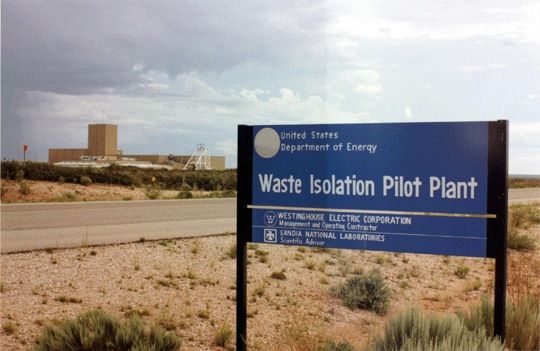
“The violations by NWP… are associated with two events that occurred in February 2014. The first event involved a fire in a salt haul truck in the [waste storage facility] underground, and the second event involved a radiological release,” the release explained.
The violations by LANS are associated with the packaging of nuclear waste containers, according to the release.
The two events took place in February 2014 at the Energy Department’s Waste Isolation Pilot Plant, an underground storage facility at a 600 meter deep salt bed, the release explained. Both companies have already been heavily penalized, losing 90 percent of their fees.
In the second event ten days later, air monitors detected unusually high levels of radiation, later traced to an exploding barrel of nuclear waste from Los Alamos.
The storage facility has been closed for the past two years, but the Energy Department expects to reopen the plant later this year with improved safety measures, according to an earlier posting on the department’s website.
Los Alamos is best known as the site where the United States developed the atomic bombs dropped on Japan at the end of World War II. http://sputniknews.com/us/20160219/1035057063/us-nuclear-waste-contactors.html#ixzz40eL2SilO
Tennessee Valley Authority considers selling its unfinished Bellefonte Nuclear Plant
Unfinished TVA nuclear plant may hit the selling block Ty West Managing editor Birmingham Business Journal, 19 Feb 16 An unfinished nuclear power plant in northeast Alabama could soon hit the open market.The Tennessee Valley Authority is considering a sale of its unfinished Bellefonte Nuclear Plant, which is located on a 1,600-acre site near Hollywood on the Tennessee River. Work on the plant started in 1974, but it was never completed or used as a nuclear plant.TVA said the site could be used for commercial, industrial or residential developments, but could also be used as a nuclear plant………http://www.bizjournals.com/nashville/blog/2016/02/unfinished-alabama-nuclear-plant-may-hit-the.html
Push to not just postpone nuclear waste burial near Great Lakes, but to stop it altogether
Critics want feds to kill nuclear-waste bunker after time extension sought http://www.metronews.ca/news/canada/2016/02/19/critics-want-feds-to-kill-nuclear-waste-bunker-after-time-extension-sought.html By: Colin Perkel The Canadian Press Published on
TORONTO — Groups opposed to the burial of nuclear waste near Lake Huron are calling on the federal government to kill a proposal for an underground storage bunker rather than ask for more information on the project.
In a statement Friday, one group said the environmental credibility of the new Liberal government under Justin Trudeau is at stake.
“It is unfortunate that the government is not listening to what the people and Great Lakes communities are telling them: to reject this plan,” said Beverly Fernandez with Stop the Great Lakes Nuclear Dump.
“No matter what process is followed, burying and abandoning radioactive nuclear waste in the Great Lakes Basin will always be a bad idea.”
The statement comes after the federal government said it needs more information before deciding whether to approve plans to build a giant underground storage bunker for nuclear waste near the Lake Huron shoreline.
That means a decision on the project, decried by scores of communities around or near the Great Lakes, will be delayed well beyond what had been a March 1 deadline.
A notice posted by the Canadian Environmental Assessment Agency says Environment Minister Catherine McKenna wants more details and further environmental studies for the proposed deep geologic repository near Kincardine, Ont.
A review panel last May had given the go-ahead, but a decision rests with the McKenna.
“The minister has requested that the proponent, Ontario Power Generation, provide additional information on three aspects of the environmental assessment: alternate locations for the project, cumulative environmental effects of the project, and an updated list of mitigation commitments for each identified adverse effect,” the notice reads.
“The minister’s request for information from the proponent has paused the timeline for an environmental assessment decision to be issued.”
A decision had been expected in September, but the former Conservative government extended the deadline to March 1 to allow for last fall’s federal election.
McKenna has now given the utility until April 18 to provide the environmental assessment agency with a schedule for fulfilling the information request. When she might make a decision is still to be determined.
Ontario Power Generation proposes to construct and operate the underground facility for the long-term management of radioactive waste at the Bruce nuclear site.
The proposal calls for hundreds of thousands of cubic metres of so-called low- and intermediate-level nuclear waste to be buried 680 metres underground in the bedrock.
Proponents argue the rock is geologically stable and would provide a hermetic seal to prevent any radioactivity reaching the lake about 1.2 kilometres away for tens of thousands of years.
However, almost 200 communities and environmental groups have argued that such a facility, despite OPG’s arguments, would be too risky given the proximity to Lake Huron. Any contamination, they say, could threaten drinking water for millions of people.
St Louis underground fire moves closer to radioactive trash dump
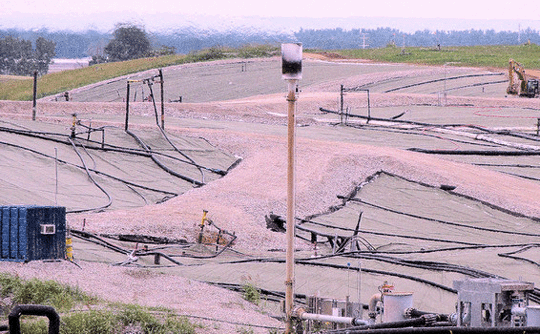 Underground Fire in Mo. Nears Nuclear Waste Dump, Discovery News, FEB 18, 2016 BY PATRICK J. KIGER IN THE ST. LOUIS AREA, A SLOW-BURNING UNDERGROUND FIRE IS CLOSE TO A VAST STORE OF NUCLEAR WASTE BURIED IN A FEDERAL SUPERFUND SITE.
The fire reportedly has been smoldering beneath a nearby landfill since at least 2010. The Washington Post reports that residents are afraid of what may happen if the fire — which is by some accounts as little as 1,500 feet away –reaches the West Lake Landfill in Bridgeton, Mo., a Superfund site filled with decades-old waste from the federal government’s nuclear weapons program. Angry locals also think the U.S. Environmental Protection Agency, which manages the site, hasn’t done enough to stop the fire.
In December, the EPA announced that it would install a physical barrier in an effort to isolate the nuclear waste. The agency also said that it would put cooling loops and other engineering controls to prevent environmental impacts if the “subsurface smoldering event,” as it’s called, were to reach the waste. An EPA administrator told the Post that the barrier would take a year to build.
But residents aren’t comforted by that timetable, and think the government, despite years of warning, has done too little to stave off a possible environmental disaster. A 2014 St. Louis County Emergency Operations Plan, obtained by a local TV station, reveals that local officials feared a “catastrophic event” with “a potential for radioactive fallout to be released in the smoke plume and spread throughout the region.”……
About 8.700 tons of nuclear waste, mixed with 39,000 tons of contaminated soil was moved to the Superfund site from another dump between July and October 1973, according to a U.S. Nuclear Regulatory Commission report. It was covered by a three-foot-deep layer of uncontaminated soil.
EPA may be running out of time to fix the problem. In early February, the U.S. Senate passed a bill introduced by Sens. Claire McCaskill, (D-Mo.), and Roy Blunt (R-Mo.), that would take control over the building remediation measures away from EPA and give it to the U.S. Army Corps of Engineers. The House hasn’t yet taken action on the legislation.
But Congress may bear some responsibility for the agency’s slowness. According to a 2015 Government Accountability Office report , legislators cut EPA’s funding for cleanup of Superfund sites by nearly half since the late 1990s. http://news.discovery.com/earth/underground-fire-in-mo-nears-nuclear-waste-dump-160218.htm
Moapa Band of Paiute Indians fear a nuclear waste dump being imposed at Yucca Mountain
The Battle Continues To Stop Yucca Mountain From Becoming A Nuclear Waste Dump Not far from the site of 40 years of nuclear weapons testing, a proposed long-term nuclear waste dump draws opposition from the Shoshone and Paiute Nations, environmental activists and even Nevada state officials. MintPress News, By Derrick Broze | February 18, 2016 The Moapa River Reservation is downwind of the Nevada Test Site, and locals have long maintained that radiation has harmed the health of the local population.
“We hope that that stuff [radiation] went up in the air and blew over us,” Vernon Lee, a Southern Paiute with the , who has lived on the Moapa River Reservation since 1973, told MintPress News. “We know that we got some because we are just east of the testing, but we hope we got less.”
Areas around the test site, particularly those located “downwind,” saw increases in cancers, including leukemia, lymphoma, thyroid cancer and brain tumors, throughout the entire span of the nuclear weapons testing. A 1984 study by the Journal of the American Medical Association found increased rates of canceramong Mormon families as far away as southwestern Utah, for example.
For Lee, the decades of environmental degradation and risks to human health reflect a much larger issue. The problem, he believes, is that the U.S. government does not recognize the tribal nations as equals. Officially, the U.S. Department of Interior states that the U.S. government operates under a “federal Indian trust responsibility,” a legal obligation that includes “moral obligations of the highest responsibility and trust” toward Native American tribes.
“To me, that doesn’t exist. It’s a word on paper, but I don’t think I have ever seen it put into practice,” Lee said.
“Trust responsibility, to me, is that government-to-government relationship that they are supposed to have with the tribes. It’s ridiculous the way the U.S. government treats the sovereign tribes. It’s very unfair.”
Native communities have a long history of resources discovered beneath the reservations being exploited by the U.S. government and supported industries. These communities have suffered exposure to dangerous substances through uranium mining and milling. In Nevada, the lives of generations of Western Shoshone and Moapa Paiute have become intertwined with the history of nuclear weapons testing and, more recently, the disposal of nuclear waste from faraway power plants.
“There are multiple problems. Moving the waste is a problem. High risk, unnecessary risk. If the company is ever going to benefit from nuclear power they should process it and store it themselves. Stop shipping it across the country and exposing the population to a potential disaster,” Lee said, alluding to the controversial long-term nuclear waste repository planned for Yucca Mountain, about a three hours’ drive from the reservation……….. http://www.mintpressnews.com/the-battle-continues-to-stop-yucca-mountain-from-becoming-a-nuclear-waste-dump/213976/
The continuing saga of the plan to dump nuclear waste on Yucca Mt – an act of genocide
for Zaparte, the actions taken by the U.S. government so far constitute an act of genocide against the Western Shoshone and other tribal nations who have been subject to the effects of nuclear testing and power. He is determined to fight for his people’s way of life and the land that his ancestors fought for.
“We have a deliberate act by the United States to systematically dismantle my living life ways for the profit of the nuclear industry and the benefit of the United States,” Zaparte said. “At the worst, this is genocide underthe U.N. Convention on the Prevention and Punishment of Genocide
The battle for Yucca Mountain The Battle Continues To Stop Yucca Mountain From Becoming A Nuclear Waste Dump Not far from the site of 40 years of nuclear weapons testing, a proposed long-term nuclear waste dump draws opposition from the Shoshone and Paiute Nations, environmental activists and even Nevada state officials. MintPress News, By Derrick Broze | February 18, 2016
“…………Commercial nuclear power plants produce spent nuclear fuel, a radioactive byproduct. High-level radioactive waste is also produced as spent nuclear fuel is reprocessed into material for nuclear weapons. Disposing of both of these byproducts is a difficult and dangerous task.
In response to growing concerns over nuclear waste storage, Congress passed the federal Nuclear Waste Policy Act in 1982, which charged the Department of Energy with finding a place to build and operate a geologic repository, or underground nuclear waste disposal facility. Operating on the notion that the safest way to dispose of the waste is to bury it in rock deep underground, the DOE studied several sites for a possible geologic repository before settling on Yucca Mountain, located 100 miles northwest of Las Vegas.
The plan for the Yucca Mountain Nuclear Waste Repository had the support of President George W. Bush, but met with opposition from Nevada state officials and environmental and Native activists, who fear that the rock at Yucca Mountain will not be able to contain nuclear waste for long periods of time.
In 2009, environmental and anti-nuclear organizations, including Beyond Nuclear, Greenpeace, Center for Health, Environment & Justice, and the International Society for Ecology, sent a letter to President Barack Obama calling the selection of the Yucca Mountain site “a purely political decision.” They argued that it has been been evident since 1992 that the site “could not meet the EPA’s general radiation protection standard for repositories.”
Obama opted to end funding for the project, setting off an ongoing legal battle. In August 2013, the U.S. Court of Appeals for the District of Columbia ordered the Nuclear Regulatory Commission to approve or reject the DOE application for the proposed waste storage site at Yucca Mountain. The Associated Press reported:
“In a sharply worded opinion, the court said the nuclear agency was ‘simply flouting the law’ when it allowed the Obama administration to continue plans to close the proposed waste site 90 miles northwest of Las Vegas. The action goes against a federal law designating Yucca Mountain as the nation’s nuclear waste repository.”
In January 2015 the NRC concluded that the DOE’s license application for Yucca Mountain satisfies nearly all of the commission’s regulations. The commission must now clear all challenges from the state of Nevada and Native communities, a process which could take several more years.
Then, in August, the NRC released a supplement to the DOE’s 2002 and 2008 environmental impact statements for the planned nuclear waste repository. The NRC’s report evaluates different potential radiological and non-radiological impacts on the environment, soil, and public health, and the potential for disproportionate impacts on minority or low-income populations. The NRC wrote:
“…[T]he NRC staff finds no environmental pathway that would affect minority or low-income populations differently from other segments of the general population. Therefore, the NRC staff concludes that no disproportionately high and adverse health or environmental impacts would occur to minority or low-income segments of the population in the Amargosa Valley area.”
The nonprofit environmental advocacy group Natural Resources Defense Council disagreed, stating that the NRC “still adheres to the flawed assumptions the DOE used to frame the foundation of its analysis of potential environmental impacts of the repository.”
As this process drags on, two companies are providing interim storage sites for the country’s nuclear waste. One is located in Andrews County, Texas, and owned by Waste Control Specialists. The other is anunderground storage site in Southeastern New Mexico, operated by Holtec International and the Eddy-Lea Alliance of New Mexico. Waste Control Specialists are hoping to turn the temporary West Texas facility into a long-term waste storage site.
An act of genocide?
About 90 miles from the money and vices of Las Vegas, Ian Zaparte stands at the base of Yucca Mountain, discussing the history of theft of Shoshone land and the threats posed by the Yucca Mountain Nuclear Waste Repository.
Zaparte represents the Western Shoshone traditional government and has been fighting in defense of his community and the planet for 30 years.
The Western Shoshone are one of 12 Indian nations whose chiefs signed the Treaty of Ruby Valley with the governors of the Nevada and Utah territory in 1863. In addition to recognizing the sovereignty of each of the Indigenous nations, the treaty gave the Indian nations ownership over millions of acres of land in Idaho, Nevada, California and Utah. It also allowed settlers access to the land for gold mining and homesteading, but did not give them title.
However, a history of land grabs through controversial legal means saw that land handed over to various agencies of the U.S. government, including the Bureau of Land Management. In 1979, the U.S. put $26 millionin a fund for the Shoshone for title to 24 million acres, but the tribe declined the money. The Supreme Court ruled six years later that the settlement, whether officially accepted by the tribe or not, extinguished the Shoshones’ claim to the land.
Essentially, the U.S. government has stated that encroachment upon Indian lands by settlers, railroads, telegraphs, ranches and gold mines extinguished the Shoshone claim to the land. In 2006, the United Nations Committee on the Elimination of Racial Discrimination found “credible information alleging that the Western Shoshone indigenous people are being denied their traditional rights to land.”
According to a University of Michigan Environmental Justice Case Study:
“The Western Shoshone argue that the basis of this plenary federal power is rooted in the colonial arrogance of the 17th century, and the laws that gave the United States Government control over the Native Americans are ‘extensions of Christian claims to world supremacy.’”
Since the Western Shoshone have lost claims to their traditional lands, the U.S. government is free to use the land for projects, such as nuclear weapons testing and the Yucca Mountain Nuclear Waste Repository.
Zaparte says the NRC and the DOE are ignoring the possibilities for danger in the area and denying the impact the Yucca Mountain Nuclear Waste Repository would have on local communities, including the Paiute and the Shoshone.
“There are 26 faults, seven cinder cone volcanoes, 90 percent of the mountain is saturated with 10 percent water,” Zaparte told MintPress. “If you heat the rock, it will release that water. If the water comes up and corrodes the canisters, it will take whatever is in storage and bring it into the water and into the valley.”
The DOE is currently accepting public comment from communities, states, tribes and other stakeholders on how to establish a nuclear waste repository with respect to the community. The DOE says it aims “to establish an integrated waste management system to transport, store, and dispose of commercial spent nuclear fuel and high level defense radioactive waste.” The public comment period ends on June 15, and the DOE and Nuclear Regulatory Commission will likely issue statements shortly after.
Although the Yucca Mountain project has stalled during the Obama administration, a new president, especially a nuclear-friendly president, could theoretically rally for funding of the Yucca Mountain Nuclear Waste Repository. The timing of the DOE’s study could potentially make the Yucca Mountain a topic of debate in the 2016 presidential election.
Still, for Zaparte, the actions taken by the U.S. government so far constitute an act of genocide against the Western Shoshone and other tribal nations who have been subject to the effects of nuclear testing and power. He is determined to fight for his people’s way of life and the land that his ancestors fought for.
“We have a deliberate act by the United States to systematically dismantle my living life ways for the profit of the nuclear industry and the benefit of the United States,” Zaparte said. “At the worst, this is genocide underthe U.N. Convention on the Prevention and Punishment of Genocide.”………http://www.mintpressnews.com/the-battle-continues-to-stop-yucca-mountain-from-becoming-a-nuclear-waste-dump/213976/
1 This Month
Tell Congress: Prevent Nuclear Catastrophe in Iran

Tell Congress: Prevent Nuclear Catastrophe in Iran

Read the Public Inquiry Report, the Commissioners’ report, Surrendering Australia: The AUKUS Deception is available to download for free at aukuspublicinquiry.com. Or just watch the replay of the National Press Club Luncheon.


Shut down the radiation-damaged Heysham nuclear reactors now
To see nuclear-related stories in greater depth and intensity – go to https://nuclearinformation.wordpress.com

Say No to NASA’s Reckless Nuclear Reactor on the Moon
Say No to NASA’s Reckless Nuclear Reactor on the Moon
-
Archives
- November 2026 (202)
- October 2026 (302)
- September 2026 (339)
- August 2026 (330)
- July 2026 (355)
- June 2026 (287)
- May 2026 (306)
- April 2026 (356)
- March 2026 (251)
- February 2026 (267)
- January 2026 (308)
- December 2025 (358)
-
Categories
- 1
- 1 NUCLEAR ISSUES
- business and costs
- climate change
- culture and arts
- ENERGY
- environment
- health
- history
- indigenous issues
- Legal
- marketing of nuclear
- media
- opposition to nuclear
- PERSONAL STORIES
- politics
- politics international
- Religion and ethics
- safety
- secrets,lies and civil liberties
- spinbuster
- technology
- Uranium
- wastes
- weapons and war
- Women
- 2 WORLD
- ACTION
- AFRICA
- Atrocities
- AUSTRALIA
- Christina's notes
- Christina's themes
- culture and arts
- Events
- Fuk 2022
- Fuk 2023
- Fukushima 2017
- Fukushima 2018
- fukushima 2019
- Fukushima 2020
- Fukushima 2021
- general
- global warming
- Humour (God we need it)
- Nuclear
- RARE EARTHS
- Reference
- resources – print
- Resources -audiovicual
- Weekly Newsletter
- World
- World Nuclear
- YouTube
-
RSS
Entries RSS
Comments RSS

