Transatlantic Trade and Investment Partnership (TTIP) damaging to environment and consumer safety
US-EU trade deal ‘risks’ emerge in leak, West Australian, May 2, 2016, Brussels (AFP) – A massive US-EU trade deal would harm the environment and consumer safety, Greenpeace said Monday citing secret documents it leaked, as Brussels dismissed the release as a “storm in a teacup”.
The campaign group published 248 pages online to “shine a light” on the closed-door talks to forge a so-called Transatlantic Trade and Investment Partnership (TTIP), which would be the world’s largest ever bilateral trade pact.
Greenpeace said the deal would place corporate interests above the environment and consumer safety, and inflict a dangerous lack of standards on US and European consumers.
“This treaty is threatening to have far reaching implications for the environment and the lives of more than 800 million citizens in the EU and US,” said Greenpeace as it presented the documents in Berlin.
Washington and Brussels have been negotiating the mega-deal since 2013 and want it completed this year before US President Barack Obama leaves office, but it has faced mounting opposition on both sides of the Atlantic…….
In Europe there is deep suspicion that TTIP will erode ecological and health regulations to the advantage of big business with officials in France and Germany also increasingly voicing doubts about the deal.
Greenpeace said the papers show, for example, that the US wants to be able to scrap existing EU rules in areas such as food labelling or approval of dangerous chemicals if it they spell barriers to free trade.
“TTIP is about a huge transfer of power from people to big business,” the group said……
Greenpeace meanwhile decried the lack of mention at all in the proposed text of global goals to reduce greenhouse gas emissions.
“These leaked documents confirm what we have been saying for a long time,” said Greenpeace EU director Jorgo Riss. “TTIP would put corporations at the centre of policy-making, to the detriment of environment and public health.” https://au.news.yahoo.com/thewest/a/31488372/greenpeace-to-release-secret-documents-on-contested-eu-us-trade-deal/
USA Defence Secretary accuses Russia of sabre-rattling
US accuses Russia of nuclear sabre-rattling, amid Nato tensions US Defence Secretary Ash Carter has accused Russia of “nuclear sabre-rattling” and of being intent on eroding international order.BBC News, 3 May 16
He said he regretted strained relations with Moscow but said the US had to “prioritise deterrence” on Nato’s eastern flank.
US-Russian ties have been strained by the Ukraine crisis and recent military encounters in the Baltic Sea.
Russia has accused Nato of threatening its national security……http://www.bbc.com/news/world-europe-36197856
A second double-shell tank leaking radiation at Hanford?
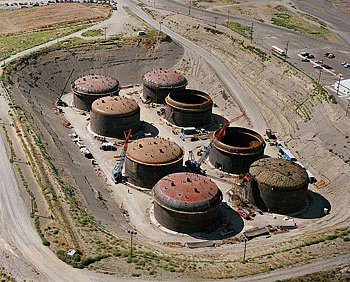
 Signs emerge of a second double-shell tank leaking at Hanford , Susannah Frame, KING 5.com 27 Apr 16, Radioactive particles have been measured at elevated levels for the first time in the outer safety space of the Hanford double-shell tank known as AY-101. The contractor that manages the tank told employees “we recently discovered higher-than-expected radioactivity readings” from filters that are part of the tank’s continuous air monitor (CAM).
“The filter contained traces of radioactive americium, cesium and plutonium, raising the possibility that the material is from tank waste that has escaped from the primary shell of the double-shell tank,” wrote Rob Gregory, chief operating officer of Washington River Protection Solutions.
Sources tell KING 5 that alarms went off last week to alert staff of the presence of “hot” (radioactive) particles trapped in filters of the tank’s continuous air monitor (CAM). The sources say this is the first time readings of this sort have been detected in AY-101.
The U.S. Department of Energy confirmed to the state that radioactive particles had been detected by filters circulating air from inside AY-101, according to officials with the Washington Department of Ecology.
But DOE’s Office of River Protection, which oversees the tank farms at Hanford, said no alarms went off indicating radioactive particles had been detected………
The citizen watchdog group Hanford Challenge also said sources of its own confirmed the detection of elevated radiation levels outside the primary liner of AY-101. The group’s sources say the by-products confirmed include Cesium-137, plutonium, and a high-beta emitter (most likely Strontium-90) that are all constituents commonly found in Hanford’s underground tanks.
The executive director of Hanford Challenge, Tom Carpenter, said this recent event has “serious implications” for the Hanford Site.
“Simply put, Hanford is nearly out of double-shell tank space, especially after pumping out AY-102 and emptying some of the shakier single-shell tanks…This is no other realistic option but to begin building new tanks immediately,” said Carpenter.
Elevated radiation and radioactive materials found in the CAM filters was the first indication that AY-102 was leaking. This was a red flag for the Department of Energy (DOE), which owns Hanford, 15 years before confirmation of the leak. Those high CAM filter readings in the 1990s were dismissed by DOE and its contractors at the time……..http://www.king5.com/mb/news/local/investigations/signs-emerge-of-a-second-double-shell-tank-leaking-at-hanford/154338445
Idaho in danger from nuclear waste, and must be protected
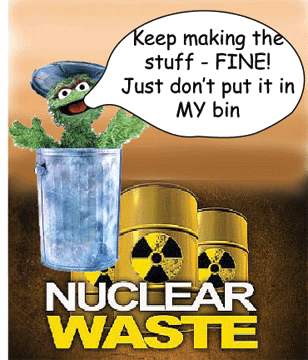 Idaho must be protected from nuclear waste HTTP://WWW.IDAHOSTATESMAN.COM/OPINION/READERS-OPINION/ARTICLE74125087.HTML BY WENDY WILSON, 28 Apr 16, Houston, we have a problem.” Although engineers and workers at the Idaho National Laboratory in Southeast Idaho have always tried to handle nuclear material safely, it doesn’t always work. Since 2005, accidents and inadvertent releases have happened with alarming regularity. In 2012, Department of Energy investigators told the Snake River Alliance that they had significant concerns and that INL was not handling plutonium safely.
Although the DOE has failed to meet countless deadlines to clean up what is already here, new proposals to import spent nuclear fuel from commercial power plants have swept safety concerns under the rug. DOE’s reputation for missed deadlines once led former Gov. Cecil Andrus to compare the agency to the Boise used car dealership “Fairly Reliable Bob’s.”
The most current missed deadline is that the DOE has failed to treat 900,000 gallons of intensely radioactive liquid waste stored at INL. Recent failures at the plant have cost taxpayers hundreds of millions of dollars in cost overruns and the system may never work.
In the meantime, this extremely dangerous waste is stored in buried tanks decades old. INL’s tanks have never leaked, as far as we know, but the pipes and valves connecting them have. The waste from those leaks may never be cleaned up and may always be in our soil and groundwater.
The McClatchy News Agency, parent company of the Idaho Statesman, recently reported that there have been nearly 400 nuclear-related deaths associated with the INL. Far more people have been sickened by their work there.
Twenty-five years ago, a Magic Valley fish farmer raised the alarm about plutonium shipments from Colorado to be buried on top of the Eastern Snake Plain Aquifer. The public was outraged. Former Gov. Andrus stepped up and Gov. Phil Batt forged a nuclear waste agreement with the DOE banning future imports of spent fuel from commercial nuclear power plants until specific timetables for clean up were met.
Today, the Byron nuclear waste proposed to come to INL falls under this ban. It is being stored safely in Indiana and it is unfathomable why Idaho would sign a “waiver” to allow the feds to bring it here and put Idahoans at risk.
Our land and water will continue to be contaminated until our political leaders put the health and safety of Idahoans ahead of DOE’s broken promises. There is still plutonium buried above the Snake River Aquifer, perhaps till the end of time. Let’s not forget.
Idahoans shouldn’t become lab animals for nuclear malfunction. Idaho Attorney General Lawrence Wasden is doing the right thing forcing the DOE to follow its own deadlines. Without a permanent national repository for nuclear waste, what comes to Idaho will stay here for decades, if not forever. Idahoans should stand together and tell the federal government to focus on INL’s existing nuclear experiment — cleaning up what is already here.
Wendy Wilson is interim executive director of the Snake River Alliance, Idaho’s nuclear watchdog and advocate for clean energy, found at www.snakeriveralliance.org.
California State Senate demands removal of stored nuclear waste from San Onofre power plant
 State Senate approves removing stored nuclear waste from San Onofre power plant http://www.cbs8.com/story/31842881/state-senate-approves-removing-stored-nuclear-waste-from-san-onofre-power-plantPosted: Apr 29, 2016 SAN ONOFRE (CNS) – A resolution demanding that the U.S. Department of Energy remove stored nuclear waste at the shuttered San Onofre Nuclear Generating Station was approved by the state Senate Thursday.
The resolution authored by Sen. Patricia Bates, R-Laguna Niguel, urges President Barack Obama and Congress to approve a bill in the House of Representatives that would consolidate the storage of nuclear waste. The bill is in the House Energy and Commerce Committee’s Subcommittee on Environment and the Economy.
“It’s way past time for the federal government to move the nuclear waste stored at San Onofre to a location away from densely populated and environmentally sensitive areas,” Bates said. “I’m pleased that my state Senate colleagues have endorsed my call to Washington D.C. to approve pending legislation that would help make Orange and San Diego County residents safer.”
The San Onofre plant has been shut down since a small, non-injury leak occurred in a steam generator in January 2012. Operator and majority owner Southern California Edison later decided to retire the plant’s two reactors,
rather than follow a costly start-up process.
Closing the facility is expected to take a couple of decades, however, so Edison recently received permission to expand nuclear waste storage tanks at San Onofre, despite opposition from environmental groups and local politicians.
USA Federal regulators approve permit for new nuclear reactor in New Jersey
 Permit for a new nuclear reactor in N.J. OK’d by feds, By Bill Gallo Jr. | For NJ.com 28 Apr 16, Federal regulators have OK’d a key permit that would be needed for the construction of a new nuclear reactor in New Jersey, officials said Thursday.
The Nuclear Regulatory Commission’s Atomic Safety and Licensing Board, following numerous reviews, found that PSEG Nuclear met all safety and environmental requirements needed for the Early Site Permit.
That permit is not a green light for the utility to build a new reactor at its generating site at Artificial Island along the Delaware River in Lower Alloways Creek Township.
The permit will be good for 20 years. It does not, however, mean that PSEG Nuclear is ready to put a shovel into the ground. Many federal, state and local approvals would still be needed.
“This is an important final step to have the ESP issued,” said Joe Delmar, spokesman for PSEG Nuclear. “It provides us with a 20-year window to pursue a construction and operating license.” PSEG Nuclear has said during the application process that it was not ready to build another plant, but wanted to be prepared…..
The decision for the permit does not have to go before the full NRC board of commissioners.
This is only the fifth Early Site Permit ever issued by the NRC, according to Sheehan. In 2007 the agency enacted the rule that allowed utility companies to bank approval for a new plant until they, the utility, decided to build……
PSEG Nuclear currently operates three reactors —€” Salem 1, Salem 2 and Hope Creek. The plants, three of the four nuclear rectors now operating in New Jersey, comprise the second-largest nuclear generating complex in the U.S. Only the Palo Verde plant in the Arizona desert generates more power.
All three of the PSEG Nuclear reactors have been granted 20-year licenses extensions.
The utility has chosen a site north of its Hope Creek reactor on Artificial Island as the site where a new plant could be constructed. If another plant is built the utility has already said it would build a second access road to the Island from the mainland.
Depending on the size of the reactor, a new plant could cost upwards of $15 billion, according to some estimates. Any new reactor would also require the construction of a cooling tower to cut down on the amount of water drawn for cooling purposes from the Delaware River.
Currently, PSEG Nuclear’s Hope Creek plant has a cooling tower, but its Salem 1 and Salem 2 units do not. Those two reactors, when operating at full power, draw in and return to the Delaware River approximately three billion gallons of water a day.
Environmentalists oppose any plans for a new reactor at the Island.
“It’s unnecessary, not needed and there are real safety issues we are concerned about,’ Jeff Tittel, executive director of the New Jersey Sierra Club, said Thursday.
He said the project would require the filling in of hundreds of acres of sensitive wetlands and because of its location where the Delaware River and Delaware Bay meet, any new plant would be vulnerable to storm surge and a rising sea level.
Tittel said the high cost of building a nuclear plant would likely be borne by ratepayers and there are cheaper sources of electricity. He pointed to renewable energy sources such as wind power are becoming less expensive as are gas-fired generating plants.
Aside from environmental and economic concerns, Tittel sees a safety threat……. Bill Gallo Jr. may be reached at bgallo@njadvancemedia.com. Follow Bill Gallo Jr. on Twitter @bgallojr. Find NJ.com on Facebook. http://www.nj.com/salem/index.ssf/2016/04/permit_for_a_new_nuclear_reactor_in_nj_okd_by_feds.html
Toshina writes down the value of its nuclear business
Toshiba to Take $2.3 Billion Write-Down on Nuclear Business, WSJ, Toshiba also revised earnings guidance for the fiscal year, forecasting a larger operating loss By TAKASHI MOCHIZUKI April 26, 2016
TOKYO—Toshiba Corp. said it would write down the goodwill value of its nuclear-power-plant business, including its U.S. subsidiary Westinghouse Electric Co., after years of criticism that the company’s outlook on the business was too optimistic.
The electronics giant said Tuesday that it would book the one-time loss of ¥260 billion ($2.3 billion) to reflect the change in the business’s earnings prospects and Toshiba’s financial standing.Toshiba’s recent financial scandal led to downgrades of its debt,which will make borrowing more expensive and so hurt profits.
The impairment charge will be recorded in results for the fiscal year that ended on March 31, due to be reported May 12…….http://www.wsj.com/articles/toshiba-to-take-2-3-billion-write-down-on-nuclear-business-1461654771
USA Dept of Energy – new funds for nuclear energy development
 Department of Energy Announces New Awards for Advanced Nuclear Energy Development
April 26, 2016 WASHINGTON, D.C. – Building on the President’s all-of-the-above energy strategy, the Department of Energy today awarded more than $5 million to undergraduate and graduate students in pursuit of nuclear engineering degrees and other nuclear science and engineering programs relevant to nuclear energy. The awards include 57 undergraduate scholarships and 33 graduate-level fellowships for students at American colleges and universities…….
Idaho nuclear waste treatment plant runs into trouble
the DOE and Idaho Treatment Group have run into recent problems. A New Mexico waste repository where much of the waste needs to be sent remains closed after an accident last year. That means about
20,000 ready-to-ship containers of waste have stacked up, with nowhere to go.

 Looming deadline for nuclear waste plant, future in limbo , WT, By LUKE RAMSETH – Associated Press , April 24, 2016 IDAHO FALLS, Idaho (AP) – A darkened central control room with more than 25 computer screens watches over nearly everything occurring inside this radioactive waste treatment plant west of Idaho Falls.
The room is where employees at the Advanced Mixed Waste Treatment Project, or AMWTP, monitor and manipulate the facility’s dangerous waste treatment process from afar. Decades-old metal boxes and drums filled with radioactive waste travel through a series of conveyor belts and elevators. At various stages the waste is remotely sorted, repackaged, smashed up, and then packaged again. A final product of multiple 55-gallon drums is shipped on trucks to waste repositories located in New Mexico, Nevada and Utah.
The facility – which employs about 700 and has operated for more than a dozen years – is undergoing an approximately $10 million overhaul. Officials hope the new infrastructure will help finish the job of treating some 65,000 cubic meters of Idaho’s transuranic nuclear waste before a looming 2018 deadline.
Meanwhile, U.S. Department of Energy officials are pondering what to do with the specialized plant once its current mission is complete. One tentative post-2018 plan would mean shipping nuclear waste to the Idaho facility from DOE sites spread around the country. The waste would be treated and packaged here, then sent onward to a final resting place outside the state……
The AMWTP was built to treat 65,000 cubic meters of transuranic waste that was buried nearby in the Arco desert in the 1970s and ‘80s. It came from the now-closed Rocky Flats Plant near Denver, where nuclear weapon components were made.
Held in slowly deteriorating metal, wooden and fiberglass boxes and metal drums, the waste includes tools, rags, clothing, sludge and dirt – anything contaminated with a transuranic element, such as plutonium, during the weapon-making process.
Workers at the facility have been chipping away at the massive pile of waste for years. It’s a painfully slow process that since 2011 has been handled by Idaho Treatment Group. This summer a new government contractor, Fluor, will take over management of the job, along with other waste cleanup duties on the desert site.
Richardson said there are about 12,000 cubic meters still to get through. All the waste is supposed to be treated and shipped out of Idaho by the end of 2018 under a state deadline laid out in the 1995 Idaho Settlement Agreement with the DOE.
But the DOE and Idaho Treatment Group have run into recent problems. A New Mexico waste repository where much of the waste needs to be sent remains closed after an accident last year. That means about 20,000 ready-to-ship containers of waste have stacked up, with nowhere to go…….http://www.washingtontimes.com/news/2016/apr/24/looming-deadline-for-nuclear-waste-plant-future-in/
USA Republicans now liking renewable energy – for financial, not climate, reasons
 Republicans Are Warming Up to Renewable Energy , Bloomberg, Joe Ryan April 21, 2016
- Some Republicans embrace renewables as Paris accord signed
-
They argue that jobs and cost cuts make renewables attractive
-
“……..The leading Republican candidates for president, Donald Trump and Sen. Ted Cruz, reject any role of humans in global warming, as do most party leaders. But a small and growing number of once-skeptical Republicans is embracing wind and solar. They see the clean energy sources delivering cheap electricity, bolstering America’s energy independence and fueling economic development in impoverished rural areas.
-
In turn, renewables are adding jobs in North Carolina, Georgia and Texas and other conservative states, creating a formidable clean-energy constituency in a party whose energy mantra was “drill, baby drill.”…..
- Past SupportSupport for clean energy is not new for all U.S. Republicans. Some conservative state lawmakers in Iowa, Texas and elsewhere have long promoted it. When he was governor of Texas, George W. Bush pushed through legislation requiring utilities to buy renewable power, leading to widespread development of wind farms.Republican enthusiasm is based largely on economics, not climate science, and does not necessarily translate into support for the Paris agreement or other efforts to curb greenhouse gases.
- Wind and solar farms are often built on farmland, which is typically flat, cheap and treeless. That has provided rental income for farmers and created a groundswell of construction jobs. Wind and solar companies employed nearly 300,000 people in the U.S. in 2015, roughly four times more than the coal industry. All of the top 10 wind-energy producing congressional districts are represented by Republicans, according to The American Wind Energy Association.“It gives us a real leg up on economic development,” said Iowa Governor Terry Branstad, a Republican whose state ranks third nationally in wind energy.A push for renewables, meanwhile, is bubbling up from within party ranks……..
-
Government Subsidies
Meanwhile, clean energy has become less reliant on the government subsidies that fueled its growth, making it a less problematic issue for Republicans.
The average long-term contract price for wind power paid by utilities has dropped 60 percent since 2009, falling in some instances below $20 per megawatt hour. Those prices, which include subsidies, are on par with off-peak power prices in some regions, BNEF analyst Nathan Serota said. The solar price drop has been even steeper, falling 65 percent with contracts as low as $37 per megawatt hour, Serota said.
A Texas Believer
Drew Darby, a Texas state Republican representative whose district encompasses nine counties at the edge of oil country, said the proliferation of cheap wind power since the state spent more than $7 billion on new transmission lines has made him a believer.
“Republicans all over the country ought to be paying attention to what Texas did,” Darby said in an interview……..http://www.bloomberg.com/news/articles/2016-04-20/party-of-drill-baby-drill-slowly-warming-to-wind-solar-power
Michael Douglas wants presidential candidates to start talking about nuclear weapons.
Tribeca: Michael Douglas Calls for Presidential Candidates to Talk Nuclear Weapons http://www.hollywoodreporter.com/news/tribeca-2016-michael-douglas-nuclear-887171 The actor is working on a doc about a San Fernando Valley family who grew up near a Boeing plant which had a nuclear accident in the 1950s. “[It] basically poisoned the whole neighborhood. The whole family has thyroid cancer,” says Douglas. 4/23/2016 by Ashley Lee
At a 2016 Tribeca Film Festival discussion before the immersive closing-night film the bomb, Douglas said the world is “on the advent of a new Cold War advancement in nuclear weapons — the U.S. is talking about a trillion dollars to spend, the Russians have their new missiles out,” he explained. “It’s just very difficult to believe. … Maybe, just maybe, we can look at a new generation to look at what I think is the most serious issue that we have on the planet right now.”
Even more so, “we’ve got elections coming up this year. Once we get through these primaries and once more attention is brought to just how this arms race is continuing now, there should be a huge discussion coming this fall,” said the actor and longtime advocate of nuclear non-proliferation. “It looks like it’s gonna be [Donald] Trump and Hillary Clinton, with diametrically different opinions on this important issue — one who wants to nuke ‘em, and somebody else.”
Command & Control director Robert Kenner added, “If Donald Trump is the Republican nominee, I think there will be more discussion on nuclear weapons because he is the best argument for abolition that we can make.”
As seen in action flicks like Pacific Rim and Independence Day, Hollywood tends to portray nuclear weapons onscreen as the ultimate and necessary arsenal, and Douglas said that won’t change anytime soon. “Not in Hollywood — we’re based on a business of balances, commerce with filmmaking. Commerce has to win out,” said the actor. “Any movie where the message gets ahead of the drama … unless you’re doing documentaries, you can’t get ahead of yourself. They’re not interested.”
Still, Douglas said he’s working on a documentary “about a young man living in the San Fernando Valley who grew up near a Boeing plant which had a nuclear accident in the 1950s and basically poisoned the whole neighborhood. The whole family has thyroid cancer.”
The panel — also featuring Command & Control author Eric Schlosser, Emma Belcher of the MacArthur Foundation and the bomb filmmaker Smriti Keshari — discussed that nuclear weapons and climate change are the two most important global issues, and because of the visual proof of climate change that’s emerged, the world has begun responding with urgency.
“The terrifying thing about the nuclear issue is … you’re really gonna have to wait for a dirty bomb. It’s gonna make 9/11, Paris, Brussels, everything a miniscule amount before the amount of people who are going to be killed [by a nuclear bomb],” said Douglas. “The only optimism I see, is of these two major issues, the two most important in the world, we can eliminate nuclear weapons. It’s really easy. … We as humans can do something about it — we actually can, it’s within our grasp.”
Douglas began his activism against nuclear weapons after making The China Syndrome, James Bridges’ 1979 film co-starring Jane Fonda and Jack Lemmon about a cover-up of safety hazards at a nuclear power plant. To prepare for its finale, the shoot included consultations with General Electric quality assurance experts who “gave us a breakdown of the most logical accident that might happen at a power plant,” the actor and producer recalled. “That power plant was the ultimate villain — it’s a horror picture.
“Thirteen days after the movie came out, Three Mile Island happened in Pennsylvania,” said Douglas, as news outlets ran split-screen footage of the real-life tragedy and the film. “It was an epiphany for me, the closest thing to a religious experience I might have ever had.”
Impressive solar panel array on Port Alberni hospital, Vancouver Island, Canada

 Port Alberni hospital has Vancouver Island’s largest array of solar power Solar power could help with high hydro rates during peak hours on hot days By Liam Britten, CBC News Apr 23, 2016
Who loves the sun? — turns out West Coast General Hospital in Port Alberni does. That building is home to 400 solar panels — the largest power-generating array on Vancouver Island, in fact.
The panels will be doing their work in the weeks and months ahead to see how much money Island Health Authority can save by using the power of the sun.
- Thompson Rivers University puts energy into solar powered walkway
- Vancouver roofing company starts offering solar panel installation
- Nelson’s ‘community solar garden’ starts leasing panels
“When it’s really hot and sunny and we’re using a lot of power to keep the hospital cool, the rates get very high with BC Hydro,” Deanna Fourt, director of energy efficiency and conservation with Island Health Authority told All Points West host Robyn Burns.
“So it’s going to work very nicely with the solar. This is what we’re thinking, because it’s going to be offsetting those really high-rate days or high-rate times.”……..http://www.cbc.ca/news/canada/british-columbia/vancouver-island-solar-power-1.3550022
USA wind energy investment – over $128 Billion
 By staying on track to supply 20 percent of U.S. electricity by 2030, wind energy could support 380,000 well-paying jobs, according to the U.S. Department of Energy. That number could grow to 600,000 by supplying 35 percent by 2050
More Than $128 Billion Dollars Invested in U.S. Economy by New Wind Power Projects,Wind Systems, 25 Apr 16 Building new wind farms in the U.S. added $13 billion per year on average to the American economy over the past five years, according to information recently released by the American Wind Energy Association (AWEA).
“By building new wind farms across the country throughout the past decade, wind companies have invested $128 billion into the U.S. economy,” said Tom Kiernan, CEO of AWEA. “Over this time, wind has rapidly scaled-up. Now, there is enough wind power installed to reliably produce electricity for more than 19 million American homes. Continuing to invest in world-class wind resources here at home will help keep our lights on, grow state economies, and keep more money in the pockets of homeowners and businesses.”
Wind energy was the number-one source for new electric capacity additions in 2015 with 8,598 MW installed. That number translates to $14.7 billion dollars in wind project investments in one year — a 73-percent increase over the $8.5 billion invested in new projects in 2014 and a more than seven-fold increase over investments by wind in 2013……..
The new investment figures made by wind come shortly after a new accord that was announced by a bipartisan group of 17 governors who made the pledge to accelerate clean energy growth, including wind power, as a way to build “a new energy future.” The accord said that creating this new energy path will result in a “more durable and resilient infrastructure and [will] enable economic growth while protecting the health of our communities and natural resources.”
Wind power costs two-thirds less than it did six years ago because of American innovation and improved domestic manufacturing, with more than 500 factories across 43 states building wind turbine parts and materials, and those savings are being passed on to U.S. consumers. Wind power saved consumers $1 billion over just two days across the Great Lakes and Mid-Atlantic states during the 2014 Polar Vortex event.
Wind energy in the U.S. produces enough electricity for more than 19 million American homes, and American wind power supports 73,000 well-paying jobs across every state, including nearly 20,000 manufacturing jobs.
By staying on track to supply 20 percent of U.S. electricity by 2030, wind energy could support 380,000 well-paying jobs, according to the U.S. Department of Energy. That number could grow to 600,000 by supplying 35 percent by 2050. http://www.windsystemsmag.com/article/detail/1167/more-than-128-billion-dollars-invested-in-us-economy-by-new-wind-power-projects
New Jersey residents near nuclear complex are to get potassium iodide pills
 Radiation-blocking pills to be distributed around N.J. nuclear complex By Bill Gallo Jr. | For NJ.com April 24, 2016 LOWER ALLOWAYS CREEK TWP. —” A fresh supply of radiation-blocking potassium iodide pills will be given to those living near PSEG Nuclear’s Artificial Island generating complex, officials said.
The distribution will take place Monday from 4 to 6 p.m., at the Lower Alloways Creek Township Municipal Building at 501 Locust Island Road in Hancocks Bridge.
Potassium iodide, or KI pills, help stop the thyroid gland from absorbing cancer-causing radioactive iodine in case a nuclear plant accident. The thyroid is the body part most sensitive to radioactive iodine.
“Should there be an accidental release, radiation could affect anyone within 10 miles of the generating center,” said Freeholder Robert Vanderslice, chair of the county’s Health Committee, in announcing the distribution.
PSEG Nuclear operates three reactors — Salem 1, Salem 2 and Hope Creek —” at its generating facility on Artificial Island in Lower Alloways Creek Township. The three plants comprise the second-largest nuclear generating facility in the United States.
In Salem County, the towns within the 10-mile radius of the plants include all or parts of Elsinboro, Lower Alloways Creek, Salem, Pennsville, Mannington and Quinton.
KI pills are distributed in individual foil packets and envelopes. The pills are to be kept on hand in case of an emergency…….
Similar distributions for Cumberland County and Delaware residents who live within the 10-mile radius of Artificial Island have also taken place through their heath departments. http://www.nj.com/salem/index.ssf/2016/04/radiation-blocking_ki_pills_to_be_distributed_arou.html
‘New Nuclear” lobby working to weaken powers of USA’s Nuclear Regulatory Commission (NRC)
Edwin Lyman, senior scientist for the Union of Concerned Scientists’ Global Security Program, said the timing of the legislation is “premature.” Lyman told Congress to consider that the legislation might pose an unfair burden on taxpayers and put Americans at increased risk.
The legislation would also eliminate language that requires NRC’s Atomic Safety and Licensing Board Panel to hold a hearing on new applications.
“That’s inherently dangerous technology that needs tough questions to be asked about it,” said Sen. Ed Markey (D-Mass.). “I don’t think the public is going to be happy if they’re told ‘no hearings’ on this dangerous technology.”
Advanced reactor bill raises ‘red flags‘ Hannah Hess, E&E reporter E&E Daily: Friday, April 22, 2016
The Nuclear Regulatory Commission’s head of operations yesterday tried to sell lawmakers on a strategy to license the latest nuclear technology.
But Victor McCree had to contend with lawmakers who have their own plan to lay the groundwork for advanced reactors, and it goes beyond the administration’s comfort zone……
Eight days ago, EPW Chairman Jim Inhofe (R-Okla.) teamed up with Whitehouse and Sens. Mike Crapo (R-Idaho) and Cory Booker (D-N.J.) to introduce legislation to reform the licensing process and restructure how NRC is funded.
But a hearing of the Clean Air and Nuclear Safety Subcommittee revealed concerns about safety and security, including NRC’s own fears that the legislation could handcuff regulators (E&E Daily, April 14).
The bill would change NRC to develop “technology-inclusive regulatory framework” — defined as using methods of evaluation that are flexible and predictable, such as risk-informed and performance-based techniques.
Critics warn that lawmakers didn’t properly explain those terms, which could lead to less rigorous standards for the approval of novel nuclear power technologies.
The legislation would also eliminate language that requires NRC’s Atomic Safety and Licensing Board Panel to hold a hearing on new applications.
“That’s inherently dangerous technology that needs tough questions to be asked about it,” said Sen. Ed Markey (D-Mass.). “I don’t think the public is going to be happy if they’re told ‘no hearings’ on this dangerous technology.”
NRC concerns
McCree, who assumed NRC’s top career post last fall, cautioned that the bipartisan legislation would require “significant time and resources” over several years in areas where the agency’s internal planning process was well underway.
Current performance metrics allow fluidity at NRC to “account for emerging safety or security issues, changes in licensee plans and the like,” McCree said. “As written, the proposed requirements would limit the NRC’s flexibility in this area.”
At the Obama administration’s request, NRC earmarked $5 million for work on advancing small modular reactor (SMR) licensing practices in its fiscal 2017 budget proposal. Both House and Senate proposed spending bills include language to address this issue.
McCree said NRC staff expect to complete the first draft of their own strategy for licensing non-light-water reactor technologies soon and will discuss it in a public meeting in June.
NRC is also in the process of a downsizing measure, popular on Capitol Hill, that aims to streamline the agency.
Testifying on behalf of the U.S. Nuclear Infrastructure Council, where he now is chairman of a task force on advanced reactors, Merrifield encouraged the committee to press for further staffing cuts below NRC’s Project Aim 2020. ….NRC’s budget for fiscal 2017 would cut an equivalent of 90 full-time employees, surpassing the Project Aim goal, for a total reduction of roughly 280 full-time workers since fiscal 2014 …….
One thing senators and the nuclear industry agree on is that the commission’s current licensing process, with a design and certification that can cost billions of dollars and stretch for up to a decade, is one of the biggest obstacles for SMRs and advanced reactor designs that use coolants other than water.
“You have a situation in which it is very hard to get early investment in these new technologies,” Crapo said.
Ashley Finan, policy director of the Nuclear Innovation Alliance, one of four industry witnesses who testified in support of the Senate legislation, presented charts showing the big money and time hurdles the private sector sees with the current NRC process.
“The investors and innovators have made it very clear that their most immediate and pressing concern is regulatory uncertainty,” Finan said……
Because advanced nuclear reactor companies rely primarily on investors, the bill seeks to change the model……
The Nuclear Infrastructure Council wants language added that would provide early stage engagement with no or limited cost to the developer, with an “appropriate cost share,” perhaps 50-50, for later stages of the licensing process.
“Fewer resources are not good for the agency in protecting against a terrorist attack,” said an animated Markey, demanding any of the witnesses to refute his claim.
Bill ‘premature’
Edwin Lyman, senior scientist for the Union of Concerned Scientists’ Global Security Program, said the timing of the legislation is “premature.”
Lyman told Congress to consider that the legislation might pose an unfair burden on taxpayers and put Americans at increased risk.
The history of the failed Next Generation Nuclear Plant project, a prototype of a modular high-temperature gas-cooled reactor, is an illustrative example, he said.
Mandated by the Energy Policy Act of 2005, the project was suspended after the Energy Department decided in 2011 not to proceed into the detailed design and license application phases. DOE’s decision cited the reluctance of vendors, owners and operators, and customers to commit to substantial upfront cost sharing.
“The main problem is the cost and difficulty of obtaining the necessary analyses and experimental data to satisfy regulatory requirements and ensure that new reactors can operate safely,” Lyman said. “This is a fundamental issue we think Congress needs to address through oversight of the budget for nuclear energy [research and development].”….. http://www.eenews.net/stories/1060036081
1 This Month
Tell Congress: Prevent Nuclear Catastrophe in Iran

Tell Congress: Prevent Nuclear Catastrophe in Iran

Read the Public Inquiry Report, the Commissioners’ report, Surrendering Australia: The AUKUS Deception is available to download for free at aukuspublicinquiry.com. Or just watch the replay of the National Press Club Luncheon.


Shut down the radiation-damaged Heysham nuclear reactors now
To see nuclear-related stories in greater depth and intensity – go to https://nuclearinformation.wordpress.com

Say No to NASA’s Reckless Nuclear Reactor on the Moon
Say No to NASA’s Reckless Nuclear Reactor on the Moon
-
Archives
- November 2026 (190)
- October 2026 (302)
- September 2026 (339)
- August 2026 (330)
- July 2026 (355)
- June 2026 (287)
- May 2026 (306)
- April 2026 (356)
- March 2026 (251)
- February 2026 (267)
- January 2026 (308)
- December 2025 (358)
-
Categories
- 1
- 1 NUCLEAR ISSUES
- business and costs
- climate change
- culture and arts
- ENERGY
- environment
- health
- history
- indigenous issues
- Legal
- marketing of nuclear
- media
- opposition to nuclear
- PERSONAL STORIES
- politics
- politics international
- Religion and ethics
- safety
- secrets,lies and civil liberties
- spinbuster
- technology
- Uranium
- wastes
- weapons and war
- Women
- 2 WORLD
- ACTION
- AFRICA
- Atrocities
- AUSTRALIA
- Christina's notes
- Christina's themes
- culture and arts
- Events
- Fuk 2022
- Fuk 2023
- Fukushima 2017
- Fukushima 2018
- fukushima 2019
- Fukushima 2020
- Fukushima 2021
- general
- global warming
- Humour (God we need it)
- Nuclear
- RARE EARTHS
- Reference
- resources – print
- Resources -audiovicual
- Weekly Newsletter
- World
- World Nuclear
- YouTube
-
RSS
Entries RSS
Comments RSS

