When speaking about climate change, President-elect Trump has flip-flopped between acceptance and denial, which suggests that he hasn’t put much thought into one of humanity’s greatest threats. However, what his administration does is far more important than what he thinks. Unfortunately, Trump has nominated individuals to several critical climate leadership positions who reject inconvenient scientific and economic evidence.
Stage 3 denial: climate dangers and model accuracy
Climate denial often pinballs between five different stages, but the cleverer denialist arguments tend to land on Stage 3: denial that climate change is a problem.
It’s ironic that Secretary of State nominee Rex Tillerson – CEO of ExxonMobil – has the most sophisticated position on climate change among Trump’s key nominees. Tillerson accepts that humans are causing global warming, but he denies that it’s a problem. His key argument focuses on sowing doubt about the accuracy of climate models.
This happens to be the core topic in my book Climatology versus Pseudoscience, whose analysis I updated for a presentation at the American Geophysical Union conference two weeks ago. Climate scientists have been making global temperature predictions for over 40 years, and they’ve turned out to be amazingly accurate, as this video of the key slides from my presentation shows:
our ability to project with any degree of certainty the future is continuing to be very limited … our examination about the models are that they’re not competent.
This line of argument led to the question Tillerson posed at the company’s 2015 annual meeting:
What if everything we do, it turns out our models are lousy, and we don’t get the effects we predict?
Trump’s appointees will sometimes get stuck in Stage 1 denial – that global warming is even happening – but most frequently they land in Stage 2 denial – that humans are responsible.
I would not support putting a carbon tax in place today because I think we still have a lot of gains to be made through technology and other less intrusive policies on the economy which are showing results.
Tillerson has argued that climate change is “an engineering problem and it has engineering solutions.” In other words, that we can keep burning fossil fuels, and solve the problem through adaptation efforts. However, research is quite clear that while we’ll need a combination of mitigation and adaptation, relying primarily on adaptation would be exceptionally costly.
It’s not surprising that the CEO of ExxonMobil advocates for a path that would lead to the burning of lots more fossil fuels. However, the Secretary of State has tremendous influence over America’s role in international climate negotiations. ExxonMobil’s priorities are in sharp conflict with America’s and the world’s on this issue.
10 Reasons Trump Won’t Lead A Nuclear Renaissance http://oilprice.com/Energy/Energy-General/10-Reasons-Trump-Wont-Lead-A-Nuclear-Renaissance.htmlBy Leonard Hyman & William Tilles – Dec 28, 2016 Donald Trump in the White House and Theresa May in 10 Downing Street. They will open the door to more nuclear spending, no doubt. Prime minister May has already given a green light to Britain’s most expensive energy project, a heavily subsidized nuclear power station at Hinkley Point. Based on the most recent federal budgeting approvals, we expect that no U.S. nuclear weapons programs will want for funds. But, despite all the post-election industry euphoria, should we anticipate a full renaissance for U.S. commercial nuclear power? Is that just a bridge too far, so to speak? Let’s look at the what will go into some of these decisions.
1.Need for the product. With no growth in the market for electricity, the industry needs new power plants only to replace old ones and to decarbonize output in order to mitigate global warming. The Trump administration has declared an end to the so-called war on coal, which makes it less likely that the electric industry will have to close old coal fired generating stations soon and it has categorized global warming as a hoax, which removes an excuse to build non-carbon producing nuclear units. The nuclear industry will need another rationalization for expansion.
2.Economics. Nuclear power looks like an expensive means of producing base load electricity with significant known risks and ongoing waste storage/disposal issues. A new 1,000 MW nuclear plant ordered today for 2025 in service would cost about $10 billion. New renewables can produce power at no higher a cost per kwh, without the same long construction schedule and need to build so large a unit. A new base load gas fired unit of the same size capacity could be completed in a few years and cost one fifth as much per MW and produce at a lower cost per kwh. Producing a commodity like electricity at a relatively high price in a competitive market is not a winning business strategy. Nuclear has to offer something else.
3. Base load generation. Nuclear plants run as base load units, something renewables cannot do — at least not until economical energy storage comes into the picture– because of the intermittency of their output. Still, renewables, particularly wind in the U.S. midwest and Texas, will temporarily displace more large central station power generation, forcing more units to “cycle”. Nuclear plants are less well suited for this duty. Flexibility and load following may become more highly valued than base load. This also reflects a change in the electric industry itself. The former command and control or paternalistic relationship between utility and consumer is changing. At a minimum consumers are dictating how their energy is produced, agreeing for example to pay premiums for “greener” forms of electricity. In other words, nuclear has something to sell in the base load market, but that market may be in decline.
4. Power markets. Neither U.S. nor UK power markets will support unsubsidized or non-mandated new generation. To the extent that the U.S. wholesale power markets remain both deregulated and regulated in parts, this is also a negative for new nuclear capacity. Deregulated power markets, both here and in the UK, aren’t permitting wholesale prices high enough to finance new gas fired capacity much less new nukes. Regulators will want a cost benefit analysis before approving a new nuclear facility. Basically, this means that a new nuclear project in order to proceed will need a subsidy of one sort or another. A carbon tax would do the job even better. But what GOP politician would vote for that tax, especially if some of their constituents view the issue of global warning as a hoax?
5. Nuclear as infrastructure. As currently built, nuclear projects require a large contingent of well paid labor and massive amounts of steel and concrete. A handful of qualified engineering firms, the usual suspects, also build other infrastructure and one can only think that these politically connected firms can lobby for nuclear projects as hard as they lobby for new bridges or highways. Nuclear construction then could play a role as a component of the as part of the infrastructure program needed to boost the economy. The problem, however, is that nuclear infrastructure has some drawbacks.
6. Resilience needed. Infrastructure should be resilient and anti-fragile. In battle, would we rather attack our enemy in a swarm formation as part of a horde of thousands or ponderously approach the fields of honor as a monolithic “death star”. The former is anti-fragile. The latter, as we all know from the movies (no spoiler intended), is powerful but most definitely fragile. The “enemy” here approaches from two sides: technological obsolescence (which is slowly confronting all central station power generators) and simple obsolescence from a harsher operating environment. In plain terms, stuff just wears out faster. It’s a riskier business that’s for sure.
7. Investor-owned operators needed. The two major U.S. electric utilities with an outsized presence in nuclear power, Entergy and Exelon, could be characterized as the Dogs of the UTY, thanks to their less than stellar stock performances. EDF, the builder of the new British station, almost didn’t get to a positive decision on the new plant due to a revolt on the part of concerned directors. Do investors want more nuclear power? Probably not without subsidies or guarantees.
8. Coastal locations needed. One problem with commercial nuclear power is not that it produces expensive electricity via fission, but that its voracious need for cooling water requires mostly coastal or riparian sites. Ignore the technology for a moment. Rising seas, hurricanes, storm surges and the like could render an ever broader swath of coastline unsuitable for infrastructure of any sort. Even if the Trump administration sees no issues, property and casualty insurors as well as and bond investors might.
9. Using nuclear subsidies as corporate welfare. New York and Illinois both launched
programs best described as Welfare for the Nuclear Elderly. It’s heart-warming to see such generosity just prior to the holiday season aimed at aging, uneconomic nuclear plants. This sounds to us like a job creation/preservation program for rural areas (where high paying jobs are scarce) masquerading as an environmentally beneficial, carbon mitigating proposal. There is nothing inherently evil about subsidizing private sector jobs in the electric utility industry. We just wish they’d drop the low carbon fig leaf as a rationale or change the market so it pays for the supposed virtues of nuclearinstead of making this a political handout. But note that handouts to old nukes do not encourage the building of new ones.
10. Nuclear for defense. Defense spending may crowd out civilian needs.Themilitary already plans to modernize its nuclear warfare capability over comingdecades. In fact, if we think about where nuclear power as an energy source has worked best, it is in military-maritime applications, things like submarines and arctic icebreakers. If a nuclear accident on a naval vessel at sea occurs resulting in all hands lost–that is clearly a tragedy. If Indian Point goes full metal Fukushima, rendering significant parts of Westchester County, NY uninhabitable, we don’t even have the adjectives much less the liability coverage. We also doubt that military applications will take a back seat in the new administration. Beyond that, there are two big nuclear related projects in the U.S.: completion of the Yucca Mountain nuclear waste repository in Nevada and construction of a vitrification facility at the Hanford, WA site now holding significant amounts of highly radioactive materials in less than perfect circumstances. More than likely, the military, Yucca and Hanford will absorb the lion’s share of new nuclear-related infrastructure monies.
Without a rationale rooted in decarbonization or in shortage of alternative fuels or energy sources, the new administration in the U.S. can only make a weak case for commercial nuclear power. If it will not embrace direct subsidies (which the incoming Congress may be reluctant to do as a matter of principle), the administration may have a hard time finding private partners for nuclear projects. But it can, and probably will, make a strong case for completing the huge nuclear tasks already on the government’s plate. That spending could boost the economy just as much as putting up new nuclear power stations,
Climate deniers, conspiracists and one-percenters: Trump’s cabinet of characters
The president-elect plans to surround himself with enemies of the environment, billions of dollars in net worth and people who are against their own agencies, Guardian, Tom McCarthy, 30 Dec 16, Barack Obama’s original cabinet was chockablock with historic firsts. The first African American attorney general. The first Nobel laureate upon appointment. The first female homeland security secretary, and the first African American to head the Environmental Protection Agency (EPA).
Donald Trump’s cabinet, if confirmed, also would advance multiple historic firsts. It would be the first cabinet of multiple billionaires. It would be the first cabinet to give pride of place to climate deniers. It would be the first cabinet whose members want to eliminate their own agencies. And it would raise the bar – a lot – for conspiracy theorists.
Before Trump’s team faces closer scrutiny from Congress in January, here’s your guide to understanding how these four categories define many of Trump’s major nominees and advisers.
Climate deniers and enemies
These nominees would lead the four most important agencies in combatting climate change.
Scott Pruitt, EPA Oklahoma state attorney general Pruitt wrote in a May 2016 editorial in the National Review that there was a climate change “debate” that was “far from settled. Scientists continue to disagree about the degree and extent of global warming and its connection to the actions of mankind. That debate should be encouraged …” He was part of a “secretive alliance” with fossil fuel companies to fight Obama administration environmental regulations, according to 2014 New York Times reporting.
Ryan Zinke, Department of the Interior Congressman from Montana
In a 2014 interview, Zinke blamed the buildup of greenhouse gases on volcanoes. “I’m a conservationist, but when there’s a volcano in the Philippines that erupts and produces more CO2 than humans have produced in 200 years – is CO2 really the problem?”
Rick Perry, Department of Energy
Former Texas governor
Perry wrote in a 2010 book that “we have been experiencing a cooling trend”. “I don’t believe that we have the settled science,” he said in a 2014 interview, continuing: “Calling CO2 a pollutant is doing a disservice the country, and I believe a disservice to the world … I’m not a scientist.”
Mike Pompeo, CIA Congressman from Kansas
Pompeo has used congressional hearings to grandstand against “what you all call climate change today”. He told CSPAN in 2013: “There are scientists who think lots of different things about climate change. There’s some who think we’re warming, there’s some who think we’re cooling, there’s some who think that the last 16 years have shown a pretty stable climate environment.”
Rex Tillerson, secretary of state
CEO of ExxonMobil
Tillerson pays lip service to “risks of climate change” but runs the world’s biggest non-state oil and gas extraction company. Likewise, he has said ExxonMobil favors a climate tax and supports the Paris climate accords but has not backedthose statements with action.
One-percenters
Trump’s billionaire cabinet could be the wealthiest administration ever. At least six appointees have net worths estimated in the nine figures. Collectively, they have more money than a third of American households combined, according to a Quartz calculation………
Divided loyalties
A noticeable Trump innovation in picking a cabinet: appointing leaders who have said they would like to destroy the agencies they’re supposed to lead. A variation is appointing leaders whose careers have undercut the agencies they’re supposed to lead.
Rick Perry
Perry famously suffered a memory lapse during a presidential debate in trying to name the Department of Energy as one of three federal agencies he would eliminate if elected. “Oops,” he said. Perry’s background in nuclear issues, which is the energy department’s main charge, appears to be limited to an effort to privatize the disposal of radioactive waste in Texas. Perry’s two immediate predecessors in the job were both nuclear physicists.
Scott Pruitt
Pruitt has been involved in multiple lawsuits against the EPA. He is currently part of a legal action waged by 28 states against the EPA to halt the Clean Power Plan, an effort by Obama’s administration to curb greenhouse gas emissions from coal-fired power plants. Pruitt has said the American people “are tired of seeing billions of dollars drained from our economy due to unnecessary EPA regulations”, and he boasted on his LinkedIn page that he was “a leading advocate against the EPA’s activist agenda”………
Conspiracists
Trump traffics in conspiracy theories and fake news – Barack Obama was born outside the US and sympathizes with terrorists, the election was rigged, Hillary Clinton is a criminal – so it’s only proper that his cabinet should too. Here are the three Trump nominees in competition for the tinfoil hat trophy.
Ben Carson, Department of Housing and Urban Development
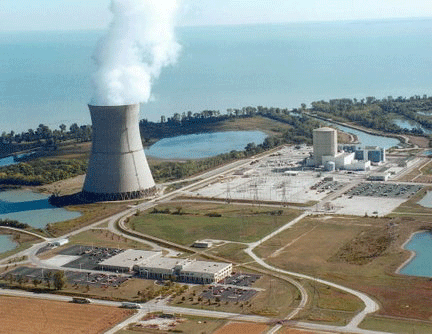
Davis-Besse Nuclear Power Station Could Soon be Closed or Sold by FirstEnergy , CleverScene, Sam Allard on Thu, Dec 29, 2016USA Today reports that the Davis-Besse Nuclear Power Station might soon be shuttered or sold by FirstEnergy Corp.
FirstEnergy CEO Chuck Jones said in an industry conference that due to cheap energy sources like natural gas, and the state of Ohio’s unwillingness to set energy prices above market rate, operating some power plants is no longer profitable. Davis-Besse is one of several plant in Ohio and Pennsylvania potentially on the chopping block…….
General Atomics has some explaining to do http://www.sandiegoreader.com/news/2016/dec/28/radar-general-atomics-hot-potato/# GA’s hot potato By Matt Potter, Dec. 28, 2016 La Jolla–based military contractor General Atomics, maker of the Predator drone and other lucrative pieces of battle-ready hardware, also provides radiation monitoring systems for atomic reactors. The company’s latest installation came in July of this year at Watts Bar Unit 2 in Tennessee, “the first new U.S. nuclear power plant scheduled to be put into operation since 1996,” says a news release by the firm. “Since 1965, we’ve maintained a solid reputation for designing and manufacturing the highest quality, most reliable safety-related products, and for continually supporting our products and our customers throughout a plant’s lifecycle,” executive Scott Forney was quoted as saying.
But the story is different in a November 29 Notice of Nonconformance, sent to the company’s Electromagnetic Systems Group here by the U.S. Nuclear Regulatory Commission. That document says the quality of the detection devices is questionable, leading to potentially mistaken radiation readings. Among other omissions listed in the 38-page document, General Atomics “did not perform periodic testing of the chemical composition of the [detectors’] coating material…nor did [General Atomics] verify the shelf life of the coating material.” In addition, the company failed to “verify the adequacy of the calibration services…which could adversely affect the accuracy of [radiation monitoring system’s] detectors.” On top of that, inspectors witnessed “staff adding and removing lead shields from the stack of lead bricks below the platform without documenting the change in configuration.”
Per the report, “staff were unaware of the amount of scattered radiation in the area, and the effect of adding and removing lead from the cart on the amount of scattered radiation.” Said the notice, “verification of the material-critical characteristics specified [for use] in safety-related applications was not performed and the connector was not adequately dedicated for operation in harsh environments.”
Concludes the document, “Please provide a written statement or explanation within 30 days from the date of this letter in accordance with the instructions specified in the enclosed Notice of Nonconformance. The NRC will consider extending the response time if you show good cause for the agency to do so.”
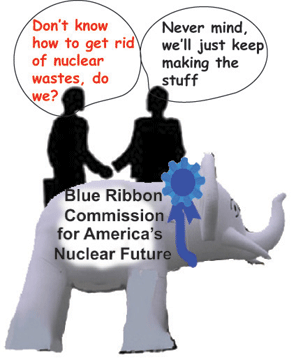
The Commission has entirely ignored the immense evidence that DOE’s plans for disposal of several types of defense waste pose much greater threats to water resources, most especially at Hanford
“I am dismayed that the Commission saw fit to recommend that the Department of Energy (DOE) have a large upfront role in both the next steps for repository program, … DOE was in large part responsible for the mess the program is in now,
Radioactive Wastes From Nuclear Bomb Program Given Short Shrift In Blue Ribbon Commission ReportEnEws Park Forest, TAKOMA PARK, MD–(ENEWSPF)–January 27, 2012. Arjun Makhijani, Ph.D., President of the Institute for Energy and Environmental Research, today commented on some of the recommendations of the final report of the Presidential Blue Ribbon Commission (BRC) on America’s Nuclear Future.
The commission was created to address U.S. nuclear waste issues after the Obama administration cancelled the Yucca Mountain program….
….On wastes from the nuclear bomb program:
Makhijani: “It is tragic that the Commission did not substantively address the most pressing radioactive waste contamination threats to precious water resources – for instance hundreds of times the drinking water limit at Hanford, Washington on the banks of the Columbia River.
The Commission had a charter to conduct a ‘comprehensive’ review of the nuclear waste problem, including defense wastes from the nuclear bomb program. Yet, it simply said it did not have the resources to deal with all the problems and punted the nuclear weapons waste issue to Congress while focusing on commercial spent fuel at nuclear reactor sites.” Continue reading →
Could Donald Trump help unleash nuclear catastrophe with a single tweet?, Canberra Times, Greg Sargent , 27 Dec 16, Donald Trump’s alarming tweet about his desire to “greatly strengthen and expand” the “nuclear capability” of the US unleashed a frenzy of media efforts to try to divine his actual policy intentions. It forced some of his advisers into tortured claims that Trump didn’t say what he actually said, even as others simultaneously insisted that Trump did meaningfully put other countries on notice that if he deems them to be challenging our supremacy, they will face an arms race.
But perhaps the most worrisome thing about Trump’s nuclear tweet is not the intention to break with decades of international disarmament efforts that it may have signalled, though that’s frightening enough on its own. Rather, it’s that he saw fit to tweet about nuclear weapons at all.
As we prepare for President Trump to take near-unchecked control of our nuclear machinery, his nuclear tweet is best seen as a window into his temperament. Trump still does not appreciate that every word he utters carries tremendous weight and could have dramatic, untold, far-reaching, unpredictable consequences – something that is especially true in the nuclear arena. Or, perhaps worse, Trump may be entirely indifferent to this fact.
Arms control experts I spoke with suggested that Trump’s willingness to tweet about nuclear weapons raises the possibility of Trump doing the same as president – and more to the point, the possibility of him doing so amid some species of international crisis or escalation………
As we prepare for President Trump to take near-unchecked control of our nuclear machinery, his nuclear tweet is best seen as a window into his temperament. Trump still does not appreciate that every word he utters carries tremendous weight and could have dramatic, untold, far-reaching, unpredictable consequences – something that is especially true in the nuclear arena. Or, perhaps worse, Trump may be entirely indifferent to this fact.
Arms control experts I spoke with suggested that Trump’s willingness to tweet about nuclear weapons raises the possibility of Trump doing the same as president – and more to the point, the possibility of him doing so amid some species of international crisis or escalation……
Bernie Sanders urges Congress to stop Donald Trump launching nuclear arms raceDemocrat speaks out after President-elect appears to reverse decade’s-old policy of disarmament, The Independent, Charlotte England@charlottenglandSaturday 24 December 2016Bernie Sanders has urged Congress to stop Donald Trump launching a Cold War-style nuclear arms race.
“It’s a miracle a nuclear weapon hasn’t been used in war since 1945,” the VermontSenator said in a post on Twitter. “Congress can’t allow the Tweeter in Chief to start a nuclear arms race.”
Earlier on Friday, the US President-elect was asked to clarify the meaning behind an ambiguous tweet in an interview with MSNBC. “Let it be an arms race,” he is reported to have told co-host Mika Brzezinski,in a telephone call……..
Laicie Heeley, a nuclear expert at the Stimson Center, a nonpartisan anti-nuclear proliferation think-tank in Washington, told AFP news agency it was “reckless” for Mr Trump to tweet on the topic without offering details.
“To make such a loaded statement without context or follow-up is irresponsible at best,” she said.
“We could be talking about a return to the Cold War here, when the threat of a nuclear catastrophe was very real,“ she said. ”Russian rhetoric is already moving in that direction. It wouldn’t take a lot to bring us back there.”
Minutes after Mr Trump’s follow up remarks were reported on MSNBC, his secretary Sean Spicer said in several television interviews that there would be no arms race because the President-elect would make sure that other countries trying to step up their nuclear capabilities, such as Russia and China, would decide not to participate.
Alex Smith, Radio Ecoshock, 22 Dec 16 The fossil fuel industry, and their paid climate deniers, have taken control of the government of the United States. Russia, another major world supplier of oil and gas, played it’s part, raiding the servers of the Democratic Party, the Democratic Candidate, and their campaign Chair.
As a result, scientists at the recent meeting of the American Geophysical Union are gathering to protect their data, and likely many of their jobs. Our first guest Joerg Schaefer came from his training in Germany and Switzerland for the brightest minds and best technology to analyze and predict climate change. Now all that is in doubt.
There are several movements in science to make copies of key climate databases and models, to get them out of the country before the climate killers take control.
But even this misses another threat. Climate science depends on long strings of dependable records. Weather comes and goes, but climate is understood decade by decade, through centuries, and even millions of years. The United States, through it’s network of satellites, ocean buoys, and research ships provides a great deal for scientists in many countries. If there is a break in those critical records, even for four years, or heaven forbid, eight – then we’ll know less, and be less prepared. Less prepared for the biggest shift in human affairs in the whole time we have been on this planet.
The great but slow movement to get off fossil fuels will continue. Citizens will continue to install solar panels, the price will continue to drop. While Donald Trump may subsidize the coal industry, and get a mine or two going, nobody wants to go back to coal. It cost more than renewable energy, or gas, even without a price on carbon. America might as well go back to making horse carriages, or the original Apple computers. Trying to rebuild a coal industry is just going to waste money and time.
We don’t have that time. Each and every scientist you’ve heard on Radio Ecoshock this fall has brought out another feed-back, a greater climate sensitivity, more reasons why we have to cut carbon emission drastically, ideally starting 20 years ago. As our guest Kevin Anderson from the Tyndall Center told us, the next four years are critical.
Can we stop Greenland from reverting to the bare rock it knows best? Can we save the remaining Arctic sea ice, to stabilize the weather further south, where most of you live? Can we prevent methane geysers from the sea floor? Can we slow deglaciation in Antarctica until we find a way to remove greenhouse gases from the atmosphere?
All this may be up to the rest of the world, while America enters bizarro world, the place where foxes guard the hen-house. Or the responsibility may go back where it really belongs: into our own homes, lives and lifestyles. If we can’t count on the big father of national governments, the future returns to us. Prepare to organize. Prepare to act, to save ourselves and Nature…… http://www.ecoshock.org/2016/12/greenland-melt-japanese-meltdown-conspiracy.html
Trump claims NBC ‘purposely’ misquoted nuclear comments, Politico, By CRISTIANO LIMA, 12/24/16
President-elect Donald Trump claimed Saturday that NBC News “purposely” misquoted his call for an expansion of the U.S. nuclear program earlier this week, despite reports to the contrary.
Trump on Thursday said the United States “must greatly strengthen and expand its nuclear capability until such time as the world comes to its senses regarding nukes.” Saturday he accused NBC of intentionally leaving out the latter, more measure portion of his statements……..
NBC News’ initial report covering Trump’s comments on nuclear expansion, however, cited his comments in full. And the Thursday broadcast of NBC’s “Nightly News with Lester Holt” displayed his comments in their entirety.
Trump’s claim of dishonesty in media coverage has been a calling card of his ascendance to the White House. Since winning the presidency, Trump has repeatedly attacked the media, broadly accusing them of inciting violence against him, singling out individual reporters and blasting the press as “crooked.”……http://www.politico.com/story/2016/12/donald-trump-nbc-nuclear-232960
A tense new battle over nuclear arms erupts between Donald Trump and his staff, WP By Philip BumpDecember 23It began, it seems, with a speech from Vladimir Putin on Thursday, during which the Russian president argued that his country’s nuclear arsenal needed to be upgraded. In short order a tense two-day stand-off began — between Donald Trump and the communications staffers on his transition team.
Trump weighs in.
Trump’s initial comment about nuclear proliferation was clear in its intent if vague in its boundaries.
“The United States must greatly strengthen and expand its nuclear capability” is not subtle, implying that as president Trump aims to match whatever it is that Russia does. That, as we pointed out on Thursday, means a new nuclear arms race, contravening decades of American foreign policy.
His team pushes back.
Not so fast, though. On Thursday afternoon, transition spokesman Jason Miller sent out a statement about Trump’s declaration.
“President-elect Trump was referring to the threat of nuclear proliferation and the critical need to prevent it—particularly to and among terrorist organizations and unstable and rogue regimes,” Miller wrote in an email to The Post. “He has also emphasized the need to improve and modernize our deterrent capability as a vital way to pursue peace through strength.”
“[T]he threat of nuclear proliferation and the critical need to prevent it” is language that comports with existing policy — but it does not comport with what Trump himself said. The word “expand” is hard to avoid, but in the spirit of generosity one might allow that the president-elect misspoke on Twitter.
Trump suggests he meant what he said.
On MSNBC’s “Morning Joe” on Friday, co-host Mika Brzezinski reported on a conversation she’d had directly with Trump.
CO-HOST JOE SCARBOROUGH: The president-elect told you what?
BRZEZINSKI: “Let it be an arms race. We will outmatch them at every pass.”
SCARBOROUGH: “And outlast them all.”
BRZEZINSKI: “And outlast them all.”
SCARBOROUGH: OK. You can put that down as breaking news.
The conversation continued with the question of whether Trump was simply posturing in order to seem unpredictable. The Post’s David Ignatius, who was part of that discussion, noted that it was more likely that Trump was reverting to his old pattern: Being criticized for something he’d said and then doubling down on it in response.
The transition team assures us he didn’t mean what he said.
The conversation moved to NBC proper, where “Today” show host Matt Lauer spoke with Sean Spicer, recently identified as the incoming White House press secretary………
Trump questionnaire recalls dark history of ideology-driven science, Skeptical Science 21 December 2016 by By Paul N. Edwards, Professor of Information and History, University of Michigan,
President-elect Trump has called global warming “bullshit” and a “Chinese hoax.” He has promised to withdraw from the 2015 Paris climate treaty and to “bring back coal,” the world’s dirtiest, most carbon-intensive fuel. The incoming administration has paraded a roster of climate change deniers for top jobs. On Dec. 13, Trump named former Texas Governor Rick Perry, another climate change denier, to lead the Department of Energy (DoE), an agency Perry said he would eliminate altogether during his 2011 presidential campaign.
Just days earlier, the Trump transition team presented the DoE with a 74-point questionnaire that has raised alarm among employees because the questions appear to target people whose work is related to climate change.
For me, as a historian of science and technology, the questionnaire – bluntly characterized by one DoE official as a “hit list” – is starkly reminiscent of the worst excesses of ideology-driven science, seen everywhere from the U.S. Red Scare of the 1950s to the Soviet and Nazi regimes of the 1930s.
The questionnaire asks for a list of “all DoE employees or contractors” who attended the annual Conferences of Parties to the United Nations Framework Convention on Climate Change – a binding treaty commitment of the U.S., signed by George H. W. Bush in 1992. Another question seeks the names of all employees involved in meetings of the Interagency Working Group on the Social Cost of Carbon, responsible for technical guidance quantifying the economic benefits of avoided climate change.
It also targets the scientific staff of DoE’s national laboratories. Continue reading →
Women are breaking the climate taboo and questioning whether to have kids in such a world, Fusion, By Renee Lewis, 20 Dec 16, Climate change has caused a reproductive justice crisis, activists say, as its projected impacts lead some to question how they could have a baby with such an uncertain future.
Nearly 200 nations came together to sign a climate treaty in Paris last year, but even their collective efforts to reduce emissions will not be enough to keep the planet at a safe level of temperature rise.
All of these things point to a precarious future for our species—a business-as-usual scenario will mean some six feet of sea level rise and some regions of the world becoming uninhabitable or disappearing under rising seas by the end of the century.
With little time to spare, many are trying to take matters into their own hands and consider their options. A group of 21 youth recently sued the federal government for its role in creating the climate crisis and for leaving them to inherit a polluted planet—calling it generational injustice.
Others worry more about future generations.
“Decision makers have repeatedly put big business and fossil fuels over a future for our children,” said Meghan Kallman, co-founder of Conceivable Future. The women-led network hopes to bring awareness to the threat climate change poses to reproductive justice, and to end U.S. subsidies for the fossil fuel industry.
Kallman and co-founder Josephine Ferorelli brought up a taboo question—how this affects a person’s decision on whether or not to have kids.
“How does this affect people of childbearing age?” Kallman asked.
The response they’ve received has been overwhelming, with many people commenting on articles written about the group: ‘That’s my reason!’
Women as well as men are consciously deciding not to have children, knowing that their kids could inherit a future that is unlivable.
“People are still shocked when they ask why I don’t have children, and I tell them ‘for environmental reasons,’” Shannon O., 38 years old,said in a testimonial for Conceivable Future. Having a child, especially in America where consumption levels are so high, adds another carbon footprint. For example, an American woman who makes lifestyle changes such as recycling and driving a fuel-efficient car saves almost 500 tons of CO2 emissions in her lifetime. But choosing to not have a child would dwarf that, preventing almost 10,000 tons of CO2 from being emitted into the atmosphere………
The testimonies are part of Conceivable Future’s strategy to build a conversation—and a movement—around this question. Ferorelli said they hope the movement will become powerful enough to enact change at the local level—especially with Trump’s statements on expanding the fossil fuel industry.
“Now more than ever, we need to organize at the grassroots level, because the possibility of federal action is pretty severely limited,” Ferorelli said.
The group encourages anyone who’s interested in talking about these issues to host a house party. There, they can discuss these often taboo topics openly in a comfortable environment.
By Patrick M. Malone, Center for Public Integrity December 21, 2016
Altogether, the three companies making these settlement payments since 2013 are involved in the operation of six of the eight active sites in the Energy Department’s nuclear weapons program. Actions by the Energy Department’s contractors – including any misspending – have substantial impact there, since contract work consumes roughly 90 percent of its total spending.
Although work on energy generation and consumption garners more public attention and President-elect Donald Trump has nominated an oil-state politician – former Texas governor Rick Perry – to become the department’s new top manager, nuclear weapons-related work accounts for nearly two-thirds of all the Energy Department’s activities.
The latest case emerged from a civil lawsuit that accused two companies of both performing substandard work at a nuclear weapons-related waste site and said one of them had improperly spent government funds to lobby for more. The companies declared on Nov. 23 they would settle the allegations by making the payment, mostly to the federal government, for a total of $125 million, a massive amount for alleged Energy Department-related malfeasance.
The settlement involves work by Bechtel National Inc. and its parent Bechtel Corp., and URS Corp. and its subsidiary URS Energy and Construction Inc., which together have been trying to clean up the Hanford Nuclear Reservation near Richland, Washington. That’s where raw uranium was enriched into fuel for nuclear bombs during the Manhattan Project and the Cold War.
The firms have denied doing anything improper. But the settlement is part of an emerging pattern.
Lockheed Martin Corp., which operates one of three U.S. nuclear weapons laboratories – Sandia, agreed in August 2015 to pay $4.7 million to settle a complaint by the Justice Department that it used federal funds to lobby for a no-bid contract extension, while Fluor Corp. paid $1.1 million in April 2013 to settle accusations that it used federal funds to lobby government agencies for more business at its Hanford training facility.
Worries about the mission being underminedBesides overseeing the Hanford cleanup, Bechtel and URS (now owned by a company called AECOM) help operate the other two U.S. nuclear weapons labs — Los Alamos and Lawrence Livermore, which perform the bulk of U.S. nuclear weapons design work. Altogether, the firms that have reached the settlements since 2013 are involved with operations at Los Alamos and Sandia in New Mexico, Livermore in California, the Pantex Plant in Texas, the Savannah River Site in South Carolina, and the Y-12 National Security Complex in Tennessee.
The recent settlement “demonstrates that the Justice Department will work to ensure that public funds are used for the important purposes for which they are intended,” Benjamin C. Mizer, principal deputy assistant attorney general in charge of the Justice Department’s civil division, said in a written statement released on Nov. 23.
Money allocated by Congress for Hanford “is intended to fund the Department of Energy’s important mission to clean up the contaminated Hanford nuclear site, and this mission is undermined if funds are wasted on goods or services that are not nuclear compliant or to further lobbying activities,” Mizer said.
Both Bechtel and AECOM in written statements said the settlements were made to avoid messy litigation and keep the waste plant project moving. “We have performed our work…ethically and professionally,” Bechtel National Inc. spokesman Fred deSousa said in a written statement, without going into details.
In its own written statement, AECOM — which acquired URS in 2014 — complained that the Department of Justice joined the whistleblowers’ “unwarranted lawsuit against URS” based on events that preceded AECOM’s acquisition of the company. “We take our responsibilities as a government contractor very seriously and have a demonstrated track record of serving our customers with honesty and integrity,” the company’s statement said.
The Justice Department’s involvement in the case originated in civil allegations of mismanagement and wrongdoing in Hanford’s Waste Treatment and Isolation Plant project, commonly called “WTP.” Under its contract with the Energy Department, Bechtel designed and is constructing machinery to convert nuclear-tainted wastes there into a stable, glassy substance suitable for safe disposal.
Three whistleblowers — Walt Tamosaitis, Donna Busche and Gary Brunson — filed a lawsuit on Feb. 4, 2013, accusing Bechtel and URS bosses of mismanagement and misappropriation of funds over a dozen years that together cost the government more than $1 billion. They also said safety lapses at the site, motivated by a desire to meet Energy Department deadlines and collect financial bonuses, were serious enough to risk a nuclear accident.
The whistleblowers’ complaint triggered an investigation by the Energy Department’s Office of Inspector General, which collected emails sent between Bechtel’s project leaders, the company’s top congressional lobbyist for nuclear projects, and Energy Department employees. The whistleblowers’ attorneys subsequently obtained the emails through the civil discovery process and incorporated them into an amended complaint. The Justice Department, in turn, used the complaint as the basis for its own investigation of Bechtel and URS.
Getting $45 million in new work
In the complaint, the whistleblowers said that when they originally lodged accusations of mismanagement – several years earlier — Bechtel project leaders launched a coordinated lobbying campaign to defend itself and also to collect new revenues for additional work on the waste treatment plant project. It then billed the department for the costs of this lobbying, the complaint said.
In an email sent by one Bechtel manager to another — along with a chart detailing the work that the company could say the additional revenue would finance — the manager said “in reality if we did not receive the additional $50m … most of these activities would still likely happen,” according to the whistleblowers’ complaint. The company subsequently got $45 million added to its contract.
The full emails detailing these actions have not been publicly released, by either the government or the plaintiffs, because the messages are part of an investigation that remains “open and ongoing,” according to Felicia Jones, spokeswoman for the Energy Department Office of Inspector General. She declined to say whether her colleagues consider the whistleblowers’ description of the emails accurate.
The Justice Department’s statement affirmed that it had “alleged that Bechtel National Inc. and Bechtel Corp. improperly claimed and received government funding for lobbying activities.” But Justice Department spokeswoman Nicole Nava declined to comment about the whistleblower’s account of specific emails.
Lobbying Congress for new work isn’t against the law. But billing the government for lobbying is, according to the federal Byrd Amendment, approved by Congress in 1989. Court records state that Bechtel will pay $67.5 million of the settlement, and AECOM will pay $57.5 million; the amount of money that will go to the whistleblowers – who are entitled to a portion of any funds they help the government recover — has not been determined yet.
Charles Curtis, who oversaw the Energy Department’s nuclear weapons work from 1994 to 1997 while serving as undersecretary and then deputy secretary, said he was not aware of any improperly-funded lobbying during his tenure. But he expressed surprise that multiple contractors within the past three years have been caught doing it. “These are for-profit enterprises. They can use their shareholders’ money for lobbying, but to use congressionally appropriated money [is] a diversion of funds,” Curtis said. “It’s not only unethical … it’s illegal.”
Three years ago, it was the Fluor Corporation and its subsidiary Fluor Hanford Inc., which at the time held the contract to manage the Hanford site, that agreed to pay $1.1 million to settle a separate complaint that its officials lobbied with government money from 2005 to 2010 to drum up business for a federally funded training facility there. Loydene Rambo, a Fluor employee, triggered the settlement by filing her own whistleblower suit, based on what she described as records of the lobbyists being paid with federal funds. She received a $200,000 reward, and Fluor denied any wrongdoing.
The Justice Department’s August 2015 settlement with Lockheed Martin Corporation, which runs Sandia, similarly followed improper billing of the government for a more complex and elaborate lobbying effort to extend its management contract, according to a special investigation report released by the Energy Department Office of Inspector General. Lockheed agreed to pay $4.7 million in 2015 to settle the Justice Department’s complaint about the billing. Like Fluor before it and Bechtel and URS since, Lockheed Martin in a written statement denied it had done anything wrong.
Asked by the Center about how the lobbying settlements have affected the department’s relationship with its nuclear weapons contractors, Energy Department spokeswoman Bridget Bartol said in an email that “the Department has taken and will continue to take vigorous action against any contractor who spends federal funds on improper lobbying activities.”
Bechtel remains the primary contractor on the WTP project, and Lockheed Martin still holds the contract to operate Sandia National Laboratories.
Cleanup of the Hanford site was authorized 25 years ago, and as of 2000 it was expected to cost $4.3 billion and be completed in 2011. The Department now estimates it may not be fully operational until 2037, according to pleadings filed in federal court by government lawyers defending the Energy Department in a lawsuit brought by the state of Washington to force an acceleration of the cleanup. If the job is funded at its current level of about $690 million a year until 2037, the cost would exceed $15 billion.
President-elect Donald Trump’s transition team is mindful of the project’s problems and growing price tag. A recent memo to top Energy Department officials from the transition team he appointed asked them to describe “your alternatives to the ever increasing WTP cost and schedule, whether technical or programmatic.”
The Center for Public Integrity is a nonprofit, investigative newsroom in Washington, D.C. More of its national security reporting can be found here.
Donald Trump Is the Stock Market’s Most Interesting Man, Bloomberg, by Joseph Ciolli and
Lily Katz 23 Dec 16,
Uranium ETF surges right after post as underlying shares soar
Icahn pick moves stocks the investor has previously rebuked
Donald Trump’s still the most interesting man in the world for U.S. stock investors.
A Twitter post from the President-elect signaling support for beefing up America’s nuclear arsenal sent shares in uranium miners surging……..
Trump’s call for expanded nuclear capability erased a loss of 2 percent in an exchange-traded fund tracking a basket of uranium miners. Uranium Energy Corp. climbed as much as 14 percent intraday to lead gains in the fund, while Mega Uranium Ltd. and Laramide Resources Ltd. are on pace to gain more than 3.7 percent…….
Goldman Sachs Group Inc. shares have surged 32 percent, touching the highest since 2007 this week, to lead financial shares higher on speculation Trump will roll back industry regulations. Goldman alumni dot the billionaire’s inner circle, with his picks for Treasury secretary, economic adviser and chief strategist all having ties to the investment bank………https://www.bloomberg.com/news/articles/2016-12-22/trump-stock-market-s-most-interesting-man-as-tweet-roils-nuclear
Tell Congress: Prevent Nuclear Catastrophe in Iran
Read the Public Inquiry Report, the Commissioners’ report, Surrendering Australia: The AUKUS Deception is available to download for free at aukuspublicinquiry.com. Or just watch the replay of the National Press Club Luncheon.