FirstEnergy Corp. to sell or close its nuclear power plants By John Funk, The Plain Dealer February 22, 2017 AKRON, Ohio — FirstEnergy made it clear Wednesday that it is leaving the competitive power plant business, closing or selling all of its plants, including its nuclear plants, by the middle of next year.
The sale of the nuclear plants to another company would have little immediate impact on customer bills.
Closing the plants, which would probably take several years, would also have little impact on customer bills or power supplies….
The company’s acknowledgement Wednesday during a teleconference with financial analysts that it plans to sell or close its three nuclear plants came 24 hours after an Ohio lawmaker revealed that the FirstEnergy is seeking what amounts to additional and unprecedented rate increases.
The money from these first-of-a-kind charges would be earmarked for Davis-Besse, located east of Toledo, Perry, located east of Cleveland, and Beaver Valley, northwest of Pittsburgh.
FirstEnergy is proposing that the state create a program awarding “Zero Emission Credits” to the three plants ……
If lawmakers approve the plan, consumers would see an estimated 5 percent increase in their monthly bills. Commercial and industrial customers would see bills increase by 5-to-9 percent to reflect the value of the millions of megawatts the nuclear plants generate.
The Zec program would give the company’s nuclear fleet an increase of about $300 million a year, maybe enough to offset the losses competitors running gas turbine power plants have inflicted. …….
Even if the state creates a Zec program to subsidize FirstEnergy’s nuclear plants, the company acknowledges that it intends to try to sell them because it no longer wants to operate in competitive markets……
The company’s background materials accompanying Wednesday’s financial report show that FirstEnergy Solutions has a total value of $1.6 billion But the subsidiary carries a long-term debt of $3 billion.
The nuclear power plants are now valued at $900 million — with a debt of about $1.3 billion, the documents show. …..
The new charges would be “non-bypassable,” meaning a customer could not avoid the ZEC charges by purchasing power from another supplier.
The Ohio Zecs would be similar to a program Illinois created last fall to assist nuclear plant owners there. Opponents immediately sued in federal court, claiming an unconstitutional subsidy because the state is deregulated and power prices are set on competitive markets.
A piecemeal state-by-state Zec program to bail out nuclear plants could pose a problem for PJM, said PJM’s top executive in an interview earlier this week. …….http://www.cleveland.com/business/index.ssf/2017/02/firstenergy_corp_to_sell_or_cl.html
February 25, 2017
Posted by Christina Macpherson |
business and costs, USA |
Leave a comment
 Connecticut girds for nuclear power debate as critics line up against Millstone support bill Independent generators say allowing the Dominion plant to bid into renewable energy solicitations would undermine competition. Utility Dive, 23 Feb 17 The bill to provide support for Connecticut’s sole nuclear power plant has yet to be drafted, but the opposition is already lining up.
Connecticut legislators are picking up where they left off last year and drafting a bill that would essentially make nuclear power a Class Irenewable resource, making it eligible to participate in state solicitations for renewable energy resources.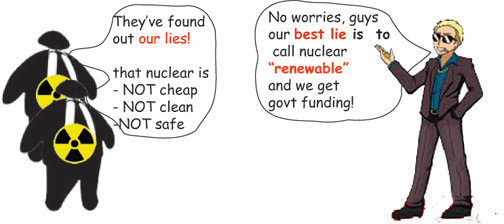
The nuclear plant is not named – indeed, the legislation is not even drafted – but there is only one nuclear plant in Connecticut, Dominion Energy’s 2,110 MW Millstone plant in Waterford.
Dominion has not been as vocal as other nuclear operators such as Exelon, which has for years said that it would have to close at least two of its nuclear plants in Illinois if it did not get some form of financial relief……
Nuclear subsidies and their discontents
As some have analysts have predicted, Illinois and New York’s success with ZECs has emboldened other states to follow suit.
In 2016, the Connecticut Senate passed SB 344, which would have allowed nuclear plants to bid into state RFPs as a renewable resource, but the bill did not make it through the state’s House of Representatives.
Legislators in the state are now drafting a bill, SB 106, that would take up those same issues again.
In its Feb. 7 testimony filed with Connecticut’s General Assembly, the Electric Power Supply Association, a trade group for independent generators, used SB 344 as the basis of its comments on the assumption that the bill will provide the “framework” for the new SB 106.
SB 344 would have expanded the definition of “renewable” so that nuclear power could bid into the state’s clean energy solicitation and be eligible to be awarded a 10-year power purchase agreement……..http://www.utilitydive.com/news/connecticut-girds-for-nuclear-power-debate-as-critics-line-up-against-mills/436685/
February 25, 2017
Posted by Christina Macpherson |
business and costs, politics, USA |
Leave a comment
 Skyrocketing costs bury Southern Co. Kristi E. Swartz, E&E News reporter Energywire: Thursday, February 23, 2017 The financial fallout of Toshiba Corp.’s nuclear construction business has now hit Southern Co.’s nuclear expansion project in Georgia.
Meanwhile, the Atlanta-based energy giant said its next-generation coal project in Mississippi still needs a couple of weeks before it is fully operational.
Those were just two of the major announcements from Southern as it reported its 2016 earnings yesterday. The company also filed a 900-plus-page annual report with the Securities and Exchange Commission, and its Mississippi Power subsidiary submitted an economic viability analysis on the Kemper County energy facility………
There is much discussion over Vogtle’s [nuclear plant’s] cost and schedule after Toshiba said last week it would book a $6.3 billion write-down from its nuclear construction business, which is tied to Vogtle and a project in South Carolina.
Scana Corp.’s South Carolina Electric & Gas Co. announced its units at V.C. Summer were roughly eight months behind.
Executives also said they were reviewing all options on how to finish the reactors if Westinghouse cannot. Toshiba and Westinghouse have told Scana and Southern that they intend to see the projects through……http://www.eenews.net/stories/1060050444
February 25, 2017
Posted by Christina Macpherson |
business and costs, USA |
Leave a comment
GOP lawmaker calls for Trump’s border wall, warns nuclear weapons may be hidden in marijuana Arizona Republican Rep. Trent Franks told CNN he worries about terrorists using bales of marijuana to smuggle nukes, salon.com SOPHIA TESFAY , FRIDAY, FEB 24, 2017 Arizona Republican Rep. Trent Franks defended President Donald Trump’s proposed border wall by claiming it could prevent a nuclear weapon from being smuggled into the United States concealed in a bale of marijuana……..
Franks also failed to explain why presumed nuke-smugglers would choose to try to hide their weapon in something the U.S. Border Patrol is already looking for, although The Washington Post
reported Wednesday that Franks’s suggestion is one that has been floated by at least one nuclear weapons expert and Democratic congressman in the past…….
David Kay of the International Atomic Energy Agency told “
Frontline” in 1996 that concealing a nuclear weapon in a bale of weed would be his “preferred method” of nuke smuggling.
February 25, 2017
Posted by Christina Macpherson |
politics, USA |
Leave a comment
Bill to label nuclear energy as renewable stalls A bill aimed at classifying nuclear power as a renewable energy source in New Mexico stalled Thursday afternoon in committee on a tie vote.
House Bill 406, sponsored by Rep. Cathrynn Brown, R-Carlsbad, would have amended the state’s Renewable Energy Act, which requires energy companies provide a certain amount of electricity from renewable sources…. New Mexico Political Report 24 Feb 17
Nuclear Is Renewable Energy? http://krwg.org/post/nuclear-renewable-energy
By CVNM •Santa Fe, N.M. 24 Feb 17 – Today, the House Energy, Environment and Natural Resources Committee debated Nuclear Energy as Renewable Energy (HB 406, Brown). The bill was tabled on a tied vote. CVNM Legislative Director Ben Shelton and CVNM Education Fund Western New Mexico Program Director Talia Boyd released the following statements:
“Nuclear energy is part of the problem, not the solution. Proposing to classify nuclear as renewable energy – as Governor Martinez did her in energy plan – disrespects the sacrifice Indigenous communities in western New Mexico have already made and continue to make with their health from the impacts of uranium mining,” says Ben Shelton, CVNM Legislative Director. “In addition, adding nuclear energy to the Renewable Energy Portfolio standard neutralizes its job creating potential because of nuclear assets already held by New Mexico’s two largest electric utilities – something our leaders should not consider a possibility.”
“My community in Gallup and Church Rock have witnessed our health, culture, families, and land be desecrated and sacrificed for uranium – an industry that many in our communities do not want, as demonstrated by a ban on uranium mining passed by the Navajo Nation in 2005,” says Talia Boyd, CVNM Education Fund Western New Mexico Organizer and member of the Diné Nation.
“Communities that have been living with the impacts of poor energy policy need to be at the table shaping our energy future by putting hardworking New Mexicans first with clean, renewable energy jobs, like wind and solar.”
February 24, 2017
Posted by Christina Macpherson |
politics, spinbuster, USA |
Leave a comment
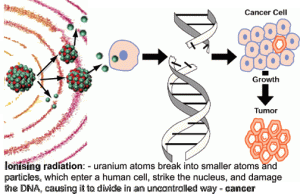 A link between cancer rates and nuclear plants? http://www.pottsmerc.com/article/MP/20170221/NEWS/170229937 Joseph Mangano Executive Director Radiation and Public Health Project 02/21/17,SINCE THE TWO NUCLEAR REACTORS AT LIMERICK Began operating in the 1980s, the question of whether toxic radiation releases affected local cancer rates has persisted.
The latest official statistics raise a red flag: among children and young adults, who are more vulnerable to radiation, cancer rates are rising — especially cancers of the thyroid, which is most sensitive to radiation.
A disastrous meltdown, like those at Three Mile Island, Chernobyl and Fukushima, has always been possible at Limerick. But toxic radioactivity routinely generated is steadily released into local air and water. People living nearby drink, eat and breathe these chemicals on a daily basis.
A study from the early 2000s found high average levels of Strontium-90 in over 100 local baby teeth. This chemical, only created in atomic bomb explosions and nuclear reactor operations, is deposited in bone and teeth. Levels in teeth of children living near Limerick were 50 percent higher than in areas far from nuclear plants; and those results were published in medical journal articles.
The childhood cancer rate in the Pottstown area was 93 percent above the rest of the region in the late 1990s and early 2000s. While multiple factors can cause children to develop cancer, public health officials failed to document any.
Now that the Limerick nuclear reactors are aging, their parts are corroding and more likely to routinely leak radiation. A review of current local cancer rates in young people is in order.
In the most recent four-year period (2011-2014), a total of 430 cancer cases were diagnosed in Montgomery County residents under age 30, a jump from the 338 cases in the four years prior. The rate increase of 27 percent was significantly larger than the 5 percent rise for the rest of Pennsylvania.
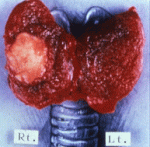 Thyroid cancer is probably the most radiosensitive of all cancers. High rates of this cancer have been found in survivors of the atom bombs in Hiroshima and Nagasaki; Baby Boomers exposed to above-ground bomb test fallout in the 1950s and 1960s; persons living near Chernobyl during the 1986 meltdown; and children living near Fukushima after the 2011 meltdown.
The reason thyroid cancer is sensitive to radiation? Another of the 100-plus chemicals released from reactors is iodine-131 (I-131), tiny radioactive metal particles that seek out the thyroid, a butterfly-shaped gland in the neck. I-131 kills or damages healthy cells, which can lead to cancer. Since 1991, U.S. thyroid cancer cases diagnosed annually soared from 12,000 to 64,000.
New thyroid cancer cases in persons under 30-years-old rose from 40 to 79 in Montgomery County during the most recent two four-year periods, a 97 percent increase. The increase for the rest of Pennsylvania is just 9 percent. The county rate is well above the state.
Thyroid cancer is not caused by working in coal mines. It is not caused by smoking. It is not caused by drinking alcohol. It is not caused by eating processed foods. The Mayo Clinic lists just three risk factors for the disease; being female (not a cause); inherited defective genes (not a cause); and radiation exposure — the only known cause.
The childhood cancer rate in the Pottstown area was 93 percent above the rest of the region in the late 1990s and early 2000s. While multiple factors can cause children to develop cancer, public health officials failed to document any.
Now that the Limerick nuclear reactors are aging, their parts are corroding and more likely to routinely leak radiation. A review of current local cancer rates in young people is in order.
In the most recent four-year period (2011-2014), a total of 430 cancer cases were diagnosed in Montgomery County residents under age 30, a jump from the 338 cases in the four years prior. The rate increase of 27 percent was significantly larger than the 5 percent rise for the rest of Pennsylvania.
Thyroid cancer is probably the most radiosensitive of all cancers. High rates of this cancer have been found in survivors of the atom bombs in Hiroshima and Nagasaki; Baby Boomers exposed to above-ground bomb test fallout in the 1950s and 1960s; persons living near Chernobyl during the 1986 meltdown; and children living near Fukushima after the 2011 meltdown.
The reason thyroid cancer is sensitive to radiation? Another of the 100-plus chemicals released from reactors is iodine-131 (I-131), tiny radioactive metal particles that seek out the thyroid, a butterfly-shaped gland in the neck. I-131 kills or damages healthy cells, which can lead to cancer. Since 1991, U.S. thyroid cancer cases diagnosed annually soared from 12,000 to 64,000.
New thyroid cancer cases in persons under 30-years-old rose from 40 to 79 in Montgomery County during the most recent two four-year periods, a 97 percent increase. The increase for the rest of Pennsylvania is just 9 percent. The county rate is well above the state.
Thyroid cancer is not caused by working in coal mines. It is not caused by smoking. It is not caused by drinking alcohol. It is not caused by eating processed foods. The Mayo Clinic lists just three risk factors for the disease; being female (not a cause); inherited defective genes (not a cause); and radiation exposure — the only known cause.
February 24, 2017
Posted by Christina Macpherson |
health, Reference, USA |
Leave a comment
 Donald Trump wants to expand US nuclear arsenal, make it ‘top of the pack’ http://www.smh.com.au/world/donald-trump-wants-to-expand-us-nuclear-arsenal-make-it-top-of-the-pack-20170223-guk6ms.htm, Steve Holland, 23 Feb 17
Washington: President Donald Trump has said he wants to build up the US nuclear arsenal to ensure it is at the “top of the pack,” saying the United States has fallen behind in its atomic weapons capacity.
In a Reuters interview, Trump also said China could solve the national security challenge posed by North Korea “very easily if they want to,” ratcheting up pressure on Beijing to exert more influence to rein in Pyongyang’s increasingly bellicose actions.
n his first comments about the US nuclear arsenal since taking office on January 20, Mr Trump said the United States has “fallen behind on nuclear weapon capacity.”
“… We’re never going to fall behind any country even if it’s a friendly country, we’re never going to fall behind on nuclear power.
“It would be wonderful, a dream would be that no country would have nukes, but if countries are going to have nukes, we’re going to be at the top of the pack,” Mr Trump said.
The new strategic arms limitation treaty, known as New START, between the US and Russia requires that by February 5, 2018, both countries must limit their arsenals of strategic nuclear weapons to equal levels for 10 years.
The treaty permits both countries to have no more than 800 deployed and non-deployed land-based intercontinental and submarine-launched ballistic missile launchers and heavy bombers equipped to carry nuclear weapons, and contains equal limits on other nuclear weapons.
Analysts have questioned whether Mr Trump wants to abrogate New START or would begin deploying other warheads.
In the interview, Mr Trump called New START “a one-sided deal”.
“Just another bad deal that the country made, whether it’s START, whether it’s the Iran deal … We’re going to start making good deals,” he said.
The United States is in the midst of a $US1 trillion ($1.3 trillion), 30-year modernisation of its aging ballistic missile submarines, bombers and land-based missiles, a price tag that most experts say the country cannot afford.
Mr Trump also complained that the Russian deployment of a ground-based cruise missile is in violation of a 1987 treaty that bans land-based American and Russian intermediate-range missiles.
“To me it’s a big deal,” he said.
Asked if he would raise the issue with Russian President Vladimir Putin, Mr Trump said he would do so “if and when we meet.” He said he had no meetings scheduled as of yet with Mr Putin.
Speaking from behind his desk in the Oval Office, Mr Trump declared that “we’re very angry” at North Korea’s ballistic missile tests and said accelerating a missile defense system for US allies Japan and South Korea was among many options available.
“There’s talks of a lot more than that,” Mr Trump said, when asked about the missile defense system. “We’ll see what happens. But it’s a very dangerous situation, and China can end it very quickly in my opinion.”
February 24, 2017
Posted by Christina Macpherson |
politics international, USA, weapons and war |
Leave a comment
 The Trump Nuclear Threat, It’s time to worry about Donald Trump’s control of U.S. nuclear forces. US News, By Louis René Beres | Feb. 21, 2017,
“The man who laughs,” warned the poet Bertolt Brecht, “has simply not yet heard the horrible news.” President Donald Trump’s control of U.S. nuclear forces is no longer a laughing matter.
Further, no longer does such a concerning conclusion have to be extrapolated from this president’s overall indifference to reason, facts and logic. Now, instead, it flows directly and unambiguously from his explicit press conference declaration last week that, regarding a Russian ship off the East coast, “the greatest thing I could do is shoot that ship that’s 30 miles offshore right out of the water.” There was absolutely no defensible reason for this gratuitous declaration. These are not the musings of an ordinary or normal American president. Rather, extraneous to any other purpose than incessantly bizarre self-promotion, they represent revealingly clinical warnings of deep emotional disturbance, especially when examined together with other blatant and incontestable signs of malignant narcissism. Naturally, all decent and informed U.S. citizens will hesitate to concur offhandedly, or to in any way appear disrespectful to longstanding presidential authority, but there now also exists a much higher citizen obligation: This is the unavoidable responsibility to speak openly and candidly about a plainly emerging existential threat.
To be sure, as I know personally from almost 50 years of scholarship involving core matters of U.S. senior command authority (National Command Authority, or NCA), there are various institutional protections built into any presidential order to use nuclear weapons. Nonetheless, virtually all of these safeguards are prescriptively operational only at lower command levels, and not at the very highest level of decisional authority. In other words, succinctly, there are no permissible or codified legal grounds to disobey a presidential order to use nuclear weapons. This means, inter alia, that if a U.S. president were sometime to issue an irrational nuclear order, the only way for the secretary of defense, the chairman of the Joint Chiefs and possibly several relevant others to obstruct this unwarranted order would be prima facie illegal. Of course, such informal safeguards might still manage to succeed, but we really ought to inquire, now, about implementing certain other more suitably predictable and formally structural impediments….
…..Thus far, we have witnessed a new president who inappropriately analogizes the conduct of world affairs to real estate haggling, and who confuses personal bluster and bravado for usable strength and power. More than anything else, we must now prepare to speak more openly about this confusion, and also about Trump’s correspondingly dangerous behaviors. American national security can never be properly served by a president who proudly announces his own decisional infallibility (“I alone can fix it”), and who identifies growing international chaos as a distinctly positive negotiation opportunity.http://www.usnews.com/opinion/world-report/articles/2017-02-21/the-existential-threat-of-donald-trump-and-nuclear-weapons
February 22, 2017
Posted by Christina Macpherson |
politics, psychology and culture, USA, weapons and war |
1 Comment
 Opposition growing to cross-border nuclear shipments, http://news.wbfo.org/post/opposition-growing-cross-border-nuclear-shipments, By MIKE DESMOND, 21 Feb 17 Opposition is brewing on both sides of the U.S.-Canada border about plans to move dozens of shipments of nuclear waste from a plant in Chalk River, Ontario, to a plant in South Carolina.
Buffalo Congressman Brian Higgins has been very vocal in his opposition. He is being joined by opposition in Canada. Dean Allison is the member of Parliament for Niagara West, which includes the QEW, a potential route for some shipments. The Conservative Allison says the shipments pose real problems for first responders because they are not being told anything about the shipments or how to prepare for the highly radioactive material.
“I’ve understood from talking to some of the people with the Canadian Coalition for Nuclear Responsibility that it’s almost 17,000 times more toxic and more radioactive than when it first started and when it was first shipped, originally,” Allison says. “So our first responders need to have some kind of idea what it is because, more than likely, they will be the ones on the road, on the scene should anything happen.”
The material started in the United States and has been made far more radioactive in Canada because of research and developing nuclear materials for medical use. Higgins has long been demanding information about the shipments and their routes.
Beamsville resident Allison says he is trying to set up a meeting in his district to bring together residents, first responders and shipments officials to talk about what is going on.
“We’re going to try to get some of the key players down,” Allison says. “I don’t anticipate they’re going to give us more information but we’re going to certainly press and see if we can get anything that may be helpful to our first responders.”
February 22, 2017
Posted by Christina Macpherson |
Canada, safety, USA |
Leave a comment

 Nuclear Regulatory Crusader http://allthingsnuclear.org/dlochbaum/nuclear-regulatory-crusader DAVE LOCHBAUM, DIRECTOR, NUCLEAR SAFETY PROJECT | JANUARY 23, 2017, To many, the acronym NRC stands for Nuclear Regulatory Commission. At times, NRC has been said to stand for Nobody Really Cares, Nuclear Rubberstamp Committee, and Nielsen Ratings Commission.
In regard to Larry Criscione, it may stand for Nuclear Regulatory Crusader.Larry is an engineer working for the U.S. Nuclear Regulatory Commission (NRC). Last year, Larry received the Joe A. Callaway Award for Civic Courage from The Safeek Nader Trust. Joe Callaway established the award in 1990 to recognize individuals who, with integrity and at some personal risk, take a public stance to advance truth and justice.
In March 2011, the three operating reactors at the Fukushima Daiichi nuclear plant in Japan melted down after a tsunami generated by a large earthquake flooded the site and disabled primary and backup power supplies to emergency equipment. In public, the NRC denied that reactors operating in the U.S. were vulnerable to such hazards.
In private, the NRC knew otherwise.
Flooding Risk at Oconee
In June 2010—nine months before Fukushima—the NRC issued a Confirmatory Action Letter to the owner of the Oconee nuclear plant in South Carolina requiring more than a dozen measures be taken. The measures were intended to lessen the chances that the Jocassee Dam fails and to increase the chances that the three operating reactors at Oconee survive should the dam fail anyway.
An evaluation showed that if the dam—located about 21 miles upriver from Oconee—failed, the site would be inundated with about 12.5 to 16.8 feet of flood water. The site was protected by a flood wall about seven feet tall, so it mattered little whether the actual depth was 12.5, 13, 14, 15, or 16.8 feet.
The NRC estimated that if the dam failed and flooded the site, there was a 100 percent chance that all three reactors would meltdown.
But the NRC issued the Confirmatory Action Letter secretly and did not tell the public about the hazard it required Oconee’s owner to lessen. After Fukushima tragically demonstrated the hazard posed by flooding, the NRC continued to cover-up measures taken and planned to lessen the flooding vulnerability at Oconee.
Larry and the OIG
So, Larry sent a 19-page letter dated September 18, 2002, to the NRC Chairman chronicling this history and asking four things:
- The NRC’s Office of General Counsel (OGC) should review the documents related to flooding at Oconee and the associated federal regulations to determine whether the documents could be made publicly available.
- The NRC’s Office of Nuclear Security and Incident Response (NSIR) should review the information on flooding hazards redacted from documents released to the public in response to Freedom of Information Act (FOIA) requests to determine whether additional information could be made publicly available.
- Based on the OGC and NSIR reviews, ensure that all flooding hazard documents that can be made publicly available are publicly available.
- The NRC’s Office of the Inspector General (OIG) should investigate whether the agency has been inappropriately marking documents as containing “Security-Related Information.”
Exercising his rights under the Lloyd-La Follette Act of 1912, Larry copied U.S. Congressional staff members on the email transmitting his letter to the NRC Chairman.
Larry’s letter was obtained by a reporter and featured in a Huffington Post article dated October 19, 2012.
As Larry had requested, the NRC’s OIG investigated handling of documents about flooding hazards. But rather than investigate whether NRC had improperly withheld information as he contended, OIG investigated whether Larry had improperly released information. As detailed in our 2015 report on the NRC and nuclear power safety, OIG made Larry an offer—he could voluntarily resign from the NRC or they would turn over his case to the Department of Justice (DOJ) for prosecution.
Larry did not resign.
OIG did refer the case to DOJ.
DOJ did not prosecute.
Through FOIA, UCS obtained DOJ’s response to NRC declining to prosecute Criscione. Under the Primary Reasons for Declination section, DOJ checked one box—No Federal Offense Committed.
Fortunately for Larry, not breaking the law is not yet against the law.
Thanks to Larry’s selfless efforts, the flooding hazards at Oconee have been made public. Larry had been right about the NRC inappropriately withholding information from the public. When lawyers and investigators were all through, the information he sought to have publicly released was publicly released. The NRC lacked legal grounds to continue hiding it.
More importantly, NRC’s mangers may think twice—or at least once—before withholding dam safety information in the future.
Unfortunately for Larry, he experienced unnecessary stress and expense defending himself against baseless OIG investigations. The Callaway Award does not fully offset those unfortunate consequences. But it helps show Larry and others who have our backs that not everyone wants to twist a dagger in their backs.
A video of the award presentation and Larry’s acceptance speech has been posted to YouTube.
Bottom Line
Doing the right thing when it’s relatively easy fails to accurately measure courage.
Larry Criscione did the right thing when it was a very hard thing to do. He could have remained silent like so many of his co-workers opted to do. He faced a strenuous courage test and aced it.
February 22, 2017
Posted by Christina Macpherson |
PERSONAL STORIES, safety, USA |
Leave a comment
 Pro-consumer Florida energy bills would expand solar, repeal nuclear fees http://protectingyourpocket.blog.mypalmbeachpost.com/2017/02/21/pro-consumer-florida-energy-bills-would-expand-solar-repeal-nuclear-fees/
A Florida Senate bill filed this week would allow property owners to generate and distribute solar energy to residents and tenants.
Senator José Javier Rodríguez, D-Miami, this week filed a series of energy-related bills aimed at protecting the environment and protecting consumers’ pocket books.
- SB 456, allowing property owners to generate and distribute solar energy to residents and tenants on their own property. The bill is supported by a broad range of groups including business groups, agricultural interests, and consumer advocates.
- SB 974, if passed, would create a mechanism to prevent utilities from passing on to customers the cost of remediating environmental damage the utility caused, offered in response to the water contamination issues at Florida Power & Light’s Turkey Point nuclear power plant in Miami-Dade County.
- SB 976, if passed, would create a progressive rate schedule for utilities customers by requiring utilities to charge residential customers a 25 percent lower rate for the first 500 kilowatt hours consumed, benefitting low-income and fixed-income residents.
- SB 1100, if passed, would repeal advanced nuclear cost recovery in Florida, dubbed the “nuclear tax” since it allow utilities to charge for nuclear power plants that may never be built. FPL wants to build two more nuclear reactors at Turkey Point, but has not been granted a license yet.
“Consumers in Florida continue to subsidize an outdated energy system in Florida that stifles innovation, shuts out competition and hurts our environment — the bills I have filed will address those issues while giving consumers a much-needed break,” Rodriguez said.
February 22, 2017
Posted by Christina Macpherson |
Legal, politics, USA |
Leave a comment
Study: Savings possible by shutting down NW nuclear-power plant Seattle Times February 21, 2017 The Associated Press PORTLAND (AP) — A new study says Pacific Northwest ratepayers could save hundreds of millions of dollars if the Bonneville Power Administration and Energy Northwest close the region’s only commercial nuclear power plant and replace its output with renewable energy.
The Oregonian/OregonLive reports (http://bit.ly/2lJ7Z7q) that the Portland-based McCullough Research consulting firm estimated savings from $261.2 million to $530.7 million over 10 years due to historically low renewable energy prices.
February 22, 2017
Posted by Christina Macpherson |
business and costs, USA |
Leave a comment
Their letter prompted another, from Dr Allen Frances, professor emeritus of psychiatry and behavioural sciences at Duke University Medical College, who happens to be the expert psychiatrist who defined narcissistic personality disorder.
He rebuked the authors, arguing that to claim that Trump is mentally ill is an insult to those who truly are. But he also had this to say – Trump may be a “world-class narcissist”.
But the debate has taken off. Another psychologist weighed in last month, telling US News and World Report that Trump displays a malignant narcissism, characterised by grandiosity, sadism and anti-social behaviour.
 Americans take an anxious journey to the centre of Donald Trump’s mind, The Age,Paul McGeough, 20 Feb 17 Washington: Flip references by reporters – mine included – to Donald Trump not taking his meds have been criticised as offensive to the mentally ill. But Trump’s unhinged behaviour, as in his erratic press conference on Thursday, ensures that the President’s mental state is the stuff of debate.
Rick Wilson, a Republican Party strategist and Trump critic, saw the Thursday press conference as a turning point – instead of a divide between left and right, the split he sees in America is between those who saw the spectacle as a “success” and those who are “terrified” for the future of the country.
“[His press conference] could have been evidence in a mental competency hearing,” he told The Washington Post. “It was really pretty disturbing and terrifying to watch this guy and think: ‘What happens when the stakes are higher?’”
On Saturday, The New York Times‘ conservative columnist David Brooks wrote in similar language about the press conference: “President Trump’s mental state is like a train that long ago left freewheeling and iconoclastic, has raced through indulgent, chaotic and unnerving, and is now careening past unhinged, unmoored and unglued.”
It’s not just the commentariat in the “fake press”, on which Trump has upped the ante, denouncing them as “the enemy of the American people”. Mental health professionals are weighing in.
In a letter to the editor of The New York Times last week, 35 psychiatrists, psychologists and social workers acknowledged they were in breach of professional rules against evaluating public figures, but to remain silent, they wrote, denied journalists and members of Congress the value of their expertise at this critical time.
Here’s their diagnosis: “Mr. Trump’s speech and actions demonstrate an inability to tolerate views different from his own, leading to rage reactions. His words and behaviour suggest a profound inability to empathise. Individuals with these traits distort reality to suit their psychological state, attacking facts and those who convey them (journalists, scientists).
“In a powerful leader, these attacks are likely to increase, as his personal myth of greatness appears to be confirmed. We believe that the grave emotional instability indicated by Mr Trump’s speech and actions makes him incapable of serving safely as president.”
Their letter prompted another, from Dr Allen Frances, professor emeritus of psychiatry and behavioural sciences at Duke University Medical College, who happens to be the expert psychiatrist who defined narcissistic personality disorder.
He rebuked the authors, arguing that to claim that Trump is mentally ill is an insult to those who truly are. But he also had this to say – Trump may be a “world-class narcissist”.
But the debate has taken off. Another psychologist weighed in last month, telling US News and World Report that Trump displays a malignant narcissism, characterised by grandiosity, sadism and anti-social behaviour.
Trump biographer Michael D’Antonio observes: “He lives inside his head, where he runs the same continuous loop of conflict with people he turns into enemies for the purposes of his psychodrama.”
The press conference was Trump unleashed. As though he couldn’t help himself, he seized the lectern at the end of a first chaotic month that had prompted this assessment from General Tony Thomas, head of the military’s Special Operations Command: “Our government continues to be in unbelievable turmoil. I hope they sort it out soon, because we’re a nation at war.”
In casting aside the usual filters and talking heads such as Sean Spicer and Kellyanne Conway, Trump signalled an attempted reset. After weeks of leaks, he is determined to rewrite the agenda – he was doing it again at a Boeing factory in South Carolina on Friday and at a campaign-style rally in Florida on Saturday.
Instead of being confronted by pesky, fake journalists, Trump was hungry for the adoring fans who turned out to both events, described by presidential historian Timothy Naftali as “an attempt to inject some adrenaline into his administration and shake a perception of loserdom“.
At the Florida bash, Trump basked in the glow of a 9000-strong crowd, forgetting his plummeting polls as he re-ran a string of well-worn campaign promises and whacked the media again before reaching his crescendo.
After serial exaggerations and misrepresentations of all that his administration has achieved, or not, he declared: “It’s a new day in America – this will be change for the ages, change like never before.”
But back in the real world, White House deputy press secretary Sarah Huckabee Sanders was probably earning a presidential rebuke by acknowledging Trump’s frustration with media reporting, as she explained the Florida gig was likely to be the first to put Trump out front more often.
“There’s definitely frustration that the media makes up stories and reports things that aren’t true,” she told the Post. The Florida rally, she said, was an attempt “for the President to speak directly to the American people and not have his message filtered through a biased media.”………
As he basked in the limelight at Boeing on Friday, Associated Press dropped an exclusive – an internal administration document outlining a plan for the National Guard to be drafted to round up undocumented migrants. Despite its conformity with all that Trump said in the election campaign, the White House claimed it had been discarded.
Also on Friday, Trump hit a new low in opinion polls – confirming his standing as the least popular new president in American history, Gallup found that just 38 per cent of Americans approve his performance, against 56 per cent who disapprove.
Amidst a constant sense of crisis, two emerging patterns work against Trump – the Republican establishment figures who might save his administration are increasingly reluctant to work for him and he is being hemmed in by the checks and balances of the American democratic process.
Also working against him is the toxic brew he has concocted in the White House – factions divided by ideology and new hires defeated by their youth and inexperience.
After the debacle of appointing a national security adviser who proved incapable of surviving in the job for a month, Trump is desperately seeking for a replacement…….
Trump and those around him are paranoid about loyalty. In the last week, the State Department sacked six senior career staffers who were deemed suspect. And faction wars continue with gusto…….. http://www.theage.com.au/world/americans-take-an-anxious-journey-to-the-centre-of-donald-trumps-mind-20170219-gugc6j.html
February 20, 2017
Posted by Christina Macpherson |
politics, USA |
Leave a comment
 Toshiba pulling plug on US nuclear reactor plan. Write-downs, delays spell end to Texas project. Nikkei Asina Review, February 20, 2017 TOKYO –– Toshiba appears set to withdraw from a plan to build two nuclear reactors at a U.S. power plant amid sizable write-downs on American nuclear operations and lengthy construction delays.
The Japanese manufacturer had been contracted to build the third and fourth reactors for U.S. utility NRG Energy’s South Texas Project, taking Toshiba’s advanced boiling water reactors abroad for the first time. Toshiba looks to pull out of the project, and will decide later what to do with its stake in the joint venture that serves as the developer.
The reactors were to debut as early as 2016. But delays on the project have brought heavy costs for Toshiba, including write-downs totaling 72 billion yen ($638 million at current rates) logged in fiscal 2013 and fiscal 2014. Ground has not been broken on the units, while work such as civil engineering lies outside Toshiba’s purview. Further losses are unlikely, according to a source involved with the project……
http://asia.nikkei.com/Business/Companies/Toshiba-pulling-plug-on-US-nuclear-reactor-plan
February 20, 2017
Posted by Christina Macpherson |
business and costs, USA |
1 Comment
 Nuclear power struggle winds up in court, Herald and Review, TONY REID H&R Staff Writer, 19 Feb 17 CLINTON – Smoldering resentment over the new law that saved Clinton Power Station – and its 700 jobs – has now flared into a federal lawsuit.
February 20, 2017
Posted by Christina Macpherson |
Legal, USA |
Leave a comment