Dave Toke’s Blog 21st July 2017, Dramatic increase in Nevada solar output as big companies abandon utility
in favour of cheap renewables. Solar pv output in the US state of Nevada is
heading for a 60 per cent year-on-year increase in electricity output in
2017 compared to 2016 as Nevada increases its lead as the top US state for
installed solar pv per person.
Nevada, which is heading for getting 10 per
cent of its total electricity from solar pv in 2017 could be setting a
trend whereby business and residential consumers switch to solar simply
because it is the cheapest source of electricity. Of course it is very
sunny in Nevada – indeed a given solar panel will generate around twice as
much electricity per year in Nevada compared to Northern Europe.
But really what’s happening in Nevada is just an advanced guard for other places.
That’s because the costs of solar power continue to crash and so what is
happening in Nevada will happen in lots of other places very soon.
US monopoly electricity utilities are trying to fight back by charging fee
structures to consumers that reduce the benefits of installing solar pv.
But as much as they do that, the prospect of what are increasingly cheaper
battery systems to balance their load is making consumers more and more
independent from the conventional electricity generation and supply system.
Bill Ellard. a consultant for the US Solar Energy Society describes this as
a ‘death spiral’ for the US utilities. The more they fight solar, the more
expensive they become for consumers in general and the more people are
induced to go solar. Ellard favours developing more microgrid systems so
that energy requirements can be balanced more and more on a local level.
http://realfeed-intariffs.blogspot.co.uk/2017/07/dramatic-increase-in-nevada-solar.html
July 24, 2017
Posted by Christina Macpherson |
renewable, USA |
Leave a comment
Trump May Have Unintentionally Killed U.S. Nuclear Oil Price, By Leonard Hyman & William Tilles – Jul 22, 2017 “………Nuclear subsidies based on environmental criteria will probably remain in place in New York and Illinois. However, other states like Ohio and Pennsylvania are facing a similar dilemma of aging, uneconomic merchant nuclear base load generation in often economically depressed regions. The pressure to keep these plants open will be considerable. But they won’t be able to claim any benefit from the non-carbon emitting nature of nuclear power. That policy is being rewritten literally as we write.
We don’t blame the nuclear power industry for attempting to rebrand itself as providing energy and environmental improvement. However, the federal government has taken the latter rationale away from the industry. If carbon’s no longer a problem, who cares if relatively high cost nuclear power plants provide a solution? http://oilprice.com/Alternative-Energy/Nuclear-Power/Trump-May-Have-Unintentionally-Killed-US-Nuclear.html
July 24, 2017
Posted by Christina Macpherson |
politics, USA |
Leave a comment
 Trump asserts all agree he has ‘complete power’ to pardon, AP, By DARLENE SUPERVILLE, 22 July 17 WASHINGTON (AP) — President Donald Trump said Saturday that he has “complete power” to issue pardons, an assertion that comes amid investigations into Russian interference in last year’s presidential election. It was one of many topics that appeared to occupy the president’s mind as the day broke.
On a day when most people are ready to forget about the issues that nagged them during the week, Trump revved up. In an early morning flurry of 10 tweets, he commented about pardons, former presidential rival Hillary Clinton, son Don Jr., health care, the USS Gerald Ford, the attorney general and other issues.
Trump said in one of his 10 messages: “While all agree the U. S. President has the complete power to pardon, why think of that when only crime so far is LEAKS against us. FAKE NEWS.”
The Washington Post recently reported that Trump has inquired about the authority he has as president to pardon aides, relatives or even himself in connection with the widening investigation into Russian interference in the election and whether any Trump associates were involved…..
One of Trump’s attorneys, Jay Sekulow, said the president has not discussed the issue of pardons with his outside legal team…….https://apnews.com/0cfcfc0956a6445ba59cc2edef5a81a0/Trump-asserts-all-agree-he-has-%27complete-power%27-to-pardon
July 24, 2017
Posted by Christina Macpherson |
politics, USA |
Leave a comment

 By Keith Rogers Las Vegas Review-Journal, July 22, 2017 Air Force Secretary Heather Wilson sees a need to protect the space frontier and envisions bolstering the ranks of drone warfare all while preserving the vast Southern Nevada range that shrinks as fighter jets zip faster across it.
What she doesn’t see in her crystal ball is a nuclear-waste train rolling across the 2.9-million-acre Nevada Test and Training Range to reach the Department of Energy’s planned repository at Yucca Mountain, 100 miles northwest of Las Vegas.
“If Yucca Mountain becomes a storage area it needs to operate without impacting the ability of the country to defend itself,” Wilson said Friday in an exclusive interview with the Las Vegas Review-Journal. “There is no route across the range that would not impact testing and training.”
Even a rail corridor that closely parallels the range’s boundary in Nye County could raise encroachment issues, she said, comparing what Nellis Air Force Base has dealt with balancing jet noise complaints and national security as urban Las Vegas sprawled closer to it over the decades……..
n 2003, Air Force Secretary James Roche and Chief of Staff Gen. John P. Jumper wrote the House Armed Services Committee objecting to the Energy Department’s proposed Chalk Mountain route across the range. They said it would impact “mission-critical systems evaluations” as well as air combat training. They noted that 75 percent of all Air Force live munitions stateside are employed there.
Roving the range
The range’s role in testing of how new generation aircraft perform and can be detected or not by radar is also vital to the readiness.
Roche and Jumper also expressed concern for the fringe of the range citing “any modified routes into portions of the NTTR (Nevada Test and Training Range). Additionally, any overflight restrictions on aircraft operating in NTTR-associated airspace will negatively impact our readiness activities.”
The Chalk Mountain route, a short-cut option for rail shipments of spent nuclear fuel assemblies from the Midwest and eastern U.S., was later downgraded to “nonpreferred” by the Energy Department but is still part of the routes evaluated for the license application submitted to the Nuclear Regulatory Commission in 2008…….. https://www.reviewjournal.com/news/military/air-force-chief-objects-to-yucca-mountain-nuclear-routes/
July 24, 2017
Posted by Christina Macpherson |
safety, USA |
Leave a comment
Yes, Trump Could Pardon Himself. Then All Hell Would Break Loose, It’s never been tried. Here’s how it could blow up his presidency, or blow up the system. Politico, By RICHARD PRIMUS July 21, 2017 This week’s eye-popping constitutional question: Can President Trump pardon himself for criminal wrongdoing? With the Russia scandal swirling more intensely around the White House every week, the Washington Post reported Friday morning that the president might be considering pardoning himself and members of his family as a way of fending off legal consequences for whatever special counsel Robert Mueller’s investigation turns up.
A self-pardon would be something new in American history — and just the kind of departure from prior norms that typifies Trump. The Constitution doesn’t specify whether the president can pardon himself, and no court has ever ruled on the issue, because no president has ever been brazen enough to try it. Among constitutional lawyers, the dominant (though not unanimous) answer is “no,” in part because letting any person exempt himself from criminal liability would be a fundamental affront to America’s basic rule-of-law values.
But as a practical matter, it’s not a panel of legal experts that will decide this issue. It probably won’t be a court, either. Instead, the answer will be fought out at the highest levels of American politics. And in real life, if the president signed a document with the words “I pardon myself”—which he certainly could—it’s impossible to know what would happen next.
Given the political firestorm that a self-pardon might provoke and the broader norm-smashing context of the Trump administration, an attempted self-pardon could do anything from keeping Trump out of jail to bringing down his presidency and landing him in the dock. Or it could do nothing at all—which would be troubling, too. All we can know for sure is that it would take our system, once again, into uncharted territory.
Here’s one possible scenario. Suppose the president announces a self-pardon, and Republicans in Congress follow the script they’ve used until this point: They express concern at the behavior but make no serious move to punish the president for it. The legal effect of the pardon would then go untested for years. A pardon is a shield against a prosecution, and in the absence of a potential prosecution it has no work to do. As long as Trump is president, there won’t be any prosecution to put it to the test, because a sitting president probably can’t be prosecuted for a crime. Again, this isn’t a certainty—the Supreme Court has made clear that a sitting president can be sued in a civil suit, as Bill Clinton was by Paula Jones—but the dominant view on the criminal side is that a President must be impeached and removed from office before he can be a criminal defendant. So while Trump remains president, an attempted self-pardon would be like an umbrella that hasn’t been taken out in the rain: We don’t know yet whether it works, or how well………
another possible future, if Trump announces a self pardon: It could be the moment that Republicans in Congress decide he has finally stepped over the line. To be sure, Congress has shown no inclination to remove the president to this point, and maybe it never will. But as the Supreme Court noted long ago, a pardon suggests the existence of illegal behavior—and a self-pardon itself would represent such flagrant disrespect for rule-of-law values that if anything could push Congress toward impeaching and removing the president, this might.
In that case, Congress wouldn’t just be stripping Trump of his presidency: In all likelihood, it would be converting his ostensible pardon from a shield against prosecution into one more reason to move against him. After all, the decision to impeach would, in itself, all but establish that self-pardons are inconsistent with American constitutional norms. …..http://www.politico.com/magazine/story/2017/07/21/yes-trump-could-pardon-himself-then-all-hell-would-break-loose-215405
July 24, 2017
Posted by Christina Macpherson |
politics, USA |
1 Comment
 Trump to tap longtime coal lobbyist for EPA’s No. 2 spot, WP By Juliet Eilperin and Brady Dennis July 21 17, President Trump will nominate a prominent coal lobbyist and former Senate aide, Andrew Wheeler, to serve as the Environmental Protection Agency’s deputy administrator, according to two senior administration officials.
Wheeler, a principal at Faegre Baker Daniels Consulting, is a lobbyist for coal giant Murray Energy and served as a top aide for Sen. James M. Inhofe (R-Okla.) when Inhofe chaired the Senate Environment Committee. He has represented Murray Energy — whose chief executive, Bob Murray, is a prominent supporter of the president — since 2009.
In addition to tapping Wheeler, according to the officials, EPA Administrator Scott Pruitt is preparing to pick three conservatives to head three key divisions within the agency. Trump will nominate Bill Wehrum as associate administrator for the Office of Air and Radiation, Matt Leopold to serve as EPA general counsel and David Ross as assistant administrator for Office of Water……..
Tiernan Sittenfeld, the League of Conservation Voters’ senior vice president for government affairs, said in email, “With these nominations, President Trump is once again catering to his polluter allies and prioritizing their profits over our kids’ health.”……https://www.washingtonpost.com/news/energy-environment/wp/2017/07/21/trump-to-tap-longtime-coal-lobbyist-for-epas-number-two-spot/?utm_term=.ada170b0c8ef
July 24, 2017
Posted by Christina Macpherson |
climate change, politics, USA |
Leave a comment
 Iran nuclear deal still under threat — US must keep its end of the bargain, http://thehill.com/blogs/pundits-blog/foreign-policy/343139-iran-nuclear-deal-still-under-threat-us-must-keep-its-end BY BERNADETTE STADLER, 07/21/17
Earlier this week, the Trump administration certified for a second time that Iran remains in compliance with the Joint Comprehensive Plan of Action (JCPOA), more commonly known as the Iran Deal. However, media reportsindicate that  the president was deeply reluctant to certify Iran’s compliance and may not be willing to do so in the future.
The administration is required to certify Iran’s compliance every 90 days, and if it fails to do so, Congress is given a 60-day period during which it can re-impose sanctions or abandon the deal altogether. Some in Congress would jump at this opportunity to kill the deal. But if the United States violates or walks away from the nuclear deal, it will alienate our allies and partners who helped us negotiate the agreement, allow Iran to resume its nuclear weapons program, and damage U.S. national security.
Iran’s nuclear activity was the subject of much concern before the JCPOA effectively constrained the risk of an Iranian nuclear weapon. Before formal negotiations were started, it is estimated that Iran was mere weeksaway from “breaking out,” or having enough fissile material to create a nuclear weapon. Now, Iran is more than a year away from breaking out.
Iran’s obligations under the deal have been strict and verifiable. Under the agreement, Iran has forfeited its stockpile of medium-enriched uranium and has reduced its stockpile of low-enriched uranium by about 97 percent. It has removed two-thirds of its centrifuges, which are used to enrich uranium, and is prohibited from enriching uranium above 3.67 percent — far below the 90 percent enrichment required for use in nuclear weapons.
The JCPOA also blocks Iran’s pathway to a plutonium weapon by requiring Iran to render its plutonium reactor inoperable, redesign the Arak facility so that it cannot produce weapons-grade plutonium, and send all radioactive waste out of the country so that it cannot be reprocessed to create plutonium.
Critics of the deal have argued that it gives Iran a “clear path to the bomb” because some of the deal’s provisions will be phased out after a specified number of years. However, even after all of the so-called “sunset clauses” have expired, Iran has indefinitely signed up to the Additional Protocol, an agreement which permanently allows the International Atomic Energy Agency (IAEA) to conduct intrusive inspections on Iran’s nuclear facilities.
Iran’s compliance with the deal has been consistently verified by the IAEA and the intelligence agencies of other countries interested in the agreement. Even initial critics of the JCPOA, like Secretary of Defense James Mattis and Senate Foreign Relations Committee Chair Senator Bob Corker, agree that it is in the United States’ national security interest to adhere to it.
Still, as President Trump’s reluctance to certify Iran’s compliance illustrates, the deal remains under threat. In addition to the question of certifying compliance, the Trump administration is conducting an interagency review of the deal to determine whether to continue suspending nuclear-related sanctions on Iran. If the Trump administration decides to stop waiving these sanctions, it will constitute a material breach of the deal.
Similarly, Congress is in the process of passing a bill that would authorize sanctions against Iran for its ballistic missile tests and sponsorship of terrorism, neither of which are addressed by the nuclear deal. Negotiators intentionally excluded these issues from the JCPOA, because they correctly understood that the nuclear issue was the first and most pressing issue at hand. Congress can and should address Iran’s missile program and support for terrorism, but must be careful to do so in a way that will not violate the nuclear deal. Reapplying waived sanctions under the guise of targeting new activities or legislating well-intentioned but poorly thought-out mandates for how the Trump administration must punish Iran will jeopardize the agreement.
There is no doubt that intentionally abandoning or accidentally violating the JCPOA will be detrimental to U.S. national security. Iran would be able to keep billions of dollars in sanctions relief that it received as part of the deal, and could choose to block IAEA inspections at its nuclear facilities. The United States could reintroduce sanctions against Iran, but our allies have indicated they have no interest in renegotiating or reapplying sanctions. The United States would be on its own and Iran could restart its race to a nuclear bomb.
There is only one good option: Uphold our end of the Iran deal while closely watching to ensure that Iran upholds theirs. We can and should combat Iran’s destabilizing activities, but not at the cost of a nuclear deal that is making the United States and the world safer.
Bernadette Stadler is a Herbert Scoville Jr. Peace Fellow at the Center for Arms Control and Non-Proliferation, where she works on issues including North Korea’s nuclear and missile program, U.S.-Russian relations, and the Iran nuclear agreement.
July 22, 2017
Posted by Christina Macpherson |
Iran, politics international, USA |
Leave a comment
 Feds Say FPL Can Store Nuclear Waste Below Miami’s Drinking Water Because It’s “Not Likely” to Leak, Miami New Times, FRIDAY, JULY 21, 2017 BY JERRY IANNELLI, FLORIDA POWER & LIGHT’S TURKEY POINT NUCLEAR GENERATING STATION IS ALREADY LEAKING DANGEROUS SALT WATER INTO THE AQUIFERS THAT ARE MIAMI’S LARGEST SOURCE OF DRINKING WATER. Despite that alarming fact, the U.S. Nuclear Regulatory Commission (NRC) recently ruled that FPL can move forward with a plan to build two new nuclear reactors and store nuclear waste — including radioactive material — in an area just below those same aquifers.
Environmentalists warn a leak would threaten the water supply of 2.7 million people, but the feds last week ruled that such a leak is “not likely,” and that even if one were to occur, it “would likely be detected and resolved prior to any significant release to the Upper Floridan Aquifer,” one of Miami-Dade County’s two water stores.
The NRC’s Atomic Licensing Board even acknowledged that wastewater at past FPL injection sites had leaked due to poor construction but claimed that new engineering techniques meant that FPL’s new sites would be safe. The body also ruled that the concentrations of four harmful chemicals FPL wants to flush underground will not exceed current Environmental Protection Agency drinking-water limits………
Importantly, the legal challenge in question did not address the low-level radioactive waste FPL also plans to inject underground. (More on that in a second.)……
In addition to two environmental groups — the Southern Alliance for Clean Energy and the National Parks Conservation Association — the ruling directly contradicted the wishes of two South Florida city governments: The Village of Pinecrest and the entire City of Miami, which both begged the NRC to force FPL to rewrite its plans and find a different storage solution for the waste water. The Florida Keys Aqueduct Authority also independently has objected to FPL’s plans to expand Turkey Point, which environmentalists say sits too close to multiple protected wetland areas and drinking-water sources.
“FPL has failed to adequately demonstrate that the direct effect, indirect effects, and cumulative impact to the natural physical environment are ‘small,'” Assistant City of Miami Attorney Xavier Albán said at last May‘s NRC hearing. “The environmental impacts will not be ‘small.'”…..
Sara Barczak, SACE’s High-Risk Energy Choices Program Director, said that the ruling was expected from the NRC, which tends to side with power-plant operators over environmentalists.
“We are disappointed but not surprised by the Board’s decision, which doesn’t change the fact that these expensive, water-intensive reactors at Turkey Point are unneeded, poorly planned, and the builder, Westinghouse, is bankrupt,” Barczak said. “FPL’s proposal (is) speculative and clearly a bad economic deal for FPL customers.”………
SACE has 25 days to appeal the ruling, and Barczak says the group is currently weighing its options.
Nationally, power companies have begun to move away from building new nuclear plants, largely due to the fact that nuclear costs have gone up while costs for clean-energy technologies, including solar and wind power, continue to drop at steep rates. Environmental activists also note that nuclear is not a “clean” source of energy, as the uranium-mining process currently relies on fossil fuels and massive mining operations.
“We are reviewing the Board’s decision in order to determine our next steps,” Barczak said. “Regardless, FPL has many, many hurdles to clear and this is just one step in a very long process. Unfortunately, FPL customers have already unfairly been charged more than $300 million towards this increasingly speculative project and we believe that must stop and FPL’s shareholders must start shouldering the financial burden.”
A citizen-led petition to convince lawmakers to legislate against the plan now has more than 67,000 signatures. http://www.miaminewtimes.com/news/fpl-nuclear-waste-not-likely-to-leak-into-miamis-drinking-water-us-nuclear-regulatory-commission-rules-9513910
July 22, 2017
Posted by Christina Macpherson |
USA, wastes, water |
Leave a comment
 Hawaii is preparing for a North Korea nuclear attack, New York Post, 21 July 17, Officials in Hawaii are launching a campaign to help residents plan for a nuclear missile attack from North Korea — much to the dismay of the state’s tourism industry.
The Aloha State’s Emergency Management Agency is kicking off an educational campaign aimed at helping people figure out what to do if strongman Kim Jung Un decides to follow through with his threats, according to Hawaii News Now.
We need to tell the public what the state is doing,” agency chief Vern Miyagi said. “We do not want to cause any undue stress for the public; however, we have a responsibility to plan for all hazards.”
The plan, which will be unveiled in full on Friday, includes Cold War-style evacuation drills for school students and announcements that say “Get inside, stay inside, and stay tuned,” according to the Honolulu Star Advertiser.
The plan also includes tests of a new emergency siren on the first work day of every month, according to Hawaii News Now.
Tourism officials said the plan could be a blow to one of the state’s most important industries…….
Miyagi said the public should simply liken the preparation for a doomsday to the work being done to prepare for hurricanes and tsunamis……..http://nypost.com/2017/07/21/hawaii-is-preparing-for-a-north-korea-nuclear-attack/
July 22, 2017
Posted by Christina Macpherson |
USA, weapons and war |
Leave a comment
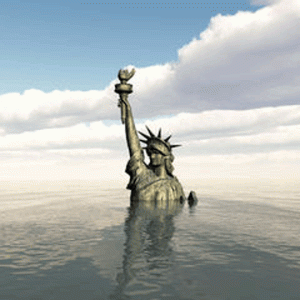
 This could be the next big strategy for suing over climate change.
Two California coastal counties and one beach-side city touched off a possible new legal front in the climate change battle this week, suing dozens of major oil, coal, and other fossil fuel companies for the damages they say they will incur due to rising seas.WP, By Chris Mooney and Brady Dennis July 20 2017, Two California coastal counties and one beach-side city touched off a possible new legal front in the climate change battle this week, suing dozens of major oil, coal, and other fossil fuel companies for the damages they say they will incur due to rising seas.
The three cases, which target firms such as Chevron, ExxonMobil, BP and Royal Dutch Shell, assert that the fossil fuel producers are collectively responsible for about 20 percent of global carbon dioxide emissions between 1965 and 2015. They claim that industry “knew or should have known” decades ago about the threat of climate change, and want companies to pay the costs of communities forced to adapt to rising seas.
“We’re already living the impact of sea level rise,” said Marin County Supervisor Kate Sears. She said a county vulnerability study found hundreds of county businesses and other assets could be at risk in coming years.
“This lawsuit is a natural next step in how we address the expense we’ve already had in planning for and trying to remediate the impacts of sea level rise, but also in addressing the impacts we expect in the future.”…….
The California cases are also proceeding under a legal doctrine called “public nuisance” (among other claims), which charges that under California common law, the companies have injured the counties and city by contributing to rising seas, and more frequent and severe flooding as a result.
But the difference is that this time, they are making state level nuisance claims rather than federal ones, which have already failed as courts pointed out that those worried about climate change had other recourses, such as EPA action.
The lawsuits were filed in California courts by Marin and San Mateo counties and the City of Imperial Beach, which sits south of San Diego near the Mexico border. Each cites specific damages expected from rising seas.
San Mateo cited worries about the flooding of the San Francisco Airport, along with up to $24 billion in assets being put at risk.
Marin County estimated nearly $16 billion of homes and businesses were threatened, and that with 6.7 feet of sea level rise, 7 percent of coastal roads would be “exposed to higher average sea level and storm threats at several locations.”
Imperial Beach cited the potential for “over $106 million” in property damages because of coastal erosion and argued the town has few resources to adapt to rising seas.
Vic Sher, a partner at the firm of Sher Edling who is helping lead the legal challenge, said the goal behind the lawsuits is to shift the “very real and very large costs of dealing with sea level rise” from ordinary citizens to the companies responsible for knowingly contributing to global warming.
He likened the cases to past litigation that sought to hold tobacco companies accountable for the public health toll of smoking, as well as efforts to force lead paint manufacturers to renovate homes where health risks remain……..
A strength of the lawsuit, note some legal observers, lies in the fact that sea level rise is easily measurable, constant (unlike climate-affected weather events), and very strongly linked to a warming planet. Moreover, analyses have become more and more precise when it comes to mapping which locations will be inundated, or subjected to greater flooding risks, for a given level of rising seas.
Bookbinder said there could be a time when the science is powerful enough to try to assess blame for other climate related changes, such as droughts, but that sea level rise is a stronger and simpler case right now. ……… https://www.washingtonpost.com/news/energy-environment/wp/2017/07/20/this-could-be-the-next-big-strategy-for-suing-over-climate-change/?utm_medium=twitter&utm_source=dlvr.it&utm_term=.af0543ecd151
July 22, 2017
Posted by Christina Macpherson |
climate change, Legal, USA |
Leave a comment
More than three decades ago, Congress banned American industries and localities from disposing of hazardous waste in these sorts of “open burns,’’ concluding that such uncontrolled processes created potentially unacceptable health and environmental hazards.
That exemption has remained in place ever since, even as other Western countries have figured out how to destroy aging armaments without toxic emissions.
Federal environmental regulators have warned for decades that the burns pose a threat to soldiers, contractors and the public stationed at, or living near, American bases.
“They are not subject to the kind of scrutiny and transparency and disclosure to the public as private sites are,”

 How The Pentagon’s Handling Of Munitions And Their Waste Has Poisoned America
Many nations have destroyed aging armaments without toxic emissions. The U.S., however, has poisoned millions of acres. Huffington Post, 20/07/2017 Co-published with ProPublica 20 July 17 RADFORD, Va. — Shortly after dawn most weekdays, a warning siren rips across the flat, swift water of the New River running alongside the Radford Army Ammunition Plant. Red lights warning away boaters and fishermen flash from the plant, the nation’s largest supplier of propellant for artillery and the source of explosives for almost every American bullet fired overseas.
Along the southern Virginia riverbank, piles of discarded contents from bullets, chemical makings from bombs, and raw explosives — all used or left over from the manufacture and testing of weapons ingredients at Radford — are doused with fuel and lit on fire, igniting infernos that can be seen more than a half a mile away. The burning waste is rich in lead, mercury, chromium and compounds like nitroglycerin and perchlorate, all known health hazards. The residue from the burning piles rises in a spindle of hazardous smoke, twists into the wind and, depending on the weather, sweeps toward the tens of thousands of residents in the surrounding towns.
Nearby, Belview Elementary School has been ranked by researchers as facing some the most dangerous air-quality hazards in the country. The rate of thyroid diseases in three of the surrounding counties is among the highest in the state, provoking town residents to worry that emissions from the Radford plant could be to blame. Government authorities have never studied whether Radford’s air pollution could be making people sick, but some of their hypothetical models estimate that the local population faces health risks exponentially greater than people in the rest of the region.
More than three decades ago, Congress banned American industries and localities from disposing of hazardous waste in these sorts of “open burns,’’ concluding that such uncontrolled processes created potentially unacceptable health and environmental hazards. Companies that had openly burned waste for generations were required to install incinerators with smokestacks and filters and to adhere to strict limits on what was released into the air. Lawmakers granted the Pentagon and its contractors a temporary reprieve from those rules to give engineers time to address the unique aspects of destroying explosive military waste.
That exemption has remained in place ever since, even as other Western countries have figured out how to destroy aging armaments without toxic emissions. While American officials are mired in a bitter debate about how much pollution from open burns is safe, those countries have pioneered new approaches. Germany, for example, destroyed hundreds of millions of pounds of aging weapons from the Cold War without relying on open burns to do it.
In the United States, outdoor burning and detonation is still the military’s leading method for dealing with munitions and the associated hazardous waste. It has remained so despite a U.S. Senate resolution a quarter of a century ago that ordered the Department of Defense to halt the practice “as soon as possible.” It has continued in the face of a growing consensus among Pentagon officials and scientists that similar burn pits at U.S. bases in Iraq and Afghanistan sickened soldiers.
Federal records identify nearly 200 sites that have been or are still being used to open-burn hazardous explosives across the country. Some blow up aging stockpile bombs in open fields. Others burn bullets, weapons parts and — in the case of Radford — raw explosives in bonfire-like piles. The facilities operate under special government permits that are supposed to keep the process safe, limiting the release of toxins to levels well below what the government thinks can make people sick. Yet officials at the Environmental Protection Agency, which governs the process under federal law, acknowledge that the permits provide scant protection.
Consider Radford’s permit, which expired nearly two years ago. Even before then, government records show, the plant repeatedly violated the terms of its open burn allowance and its other environmental permits. In a typical year, the plant can spew many thousands of pounds of heavy metals and carcinogens — legally — into the atmosphere. But Radford has, at times, sent even more pollution into the air than it is allowed. It has failed to report some of its pollution to federal agencies, as required. And it has misled the public about the chemicals it burns. Yet every day the plant is allowed to ignite as much as 8,000 pounds of hazardous debris.
“It smells like plastic burning, but it’s so much more intense,” said Darlene Nester, describing the acrid odor from the burns when it reaches her at home, about a mile and a half away. Her granddaughter is in second grade at Belview. “You think about all the kids.”
Internal EPA records obtained by ProPublica show that the Radford plant is one of at least 51 active sites across the country where the Department of Defense or its contractors are today burning or detonating munitions or raw explosives in the open air, often in close proximity to schools, homes and water supplies. The documents — EPA PowerPoint presentations made to senior agency staff — describe something of a runaway national program, based on “a dirty technology” with “virtually no emissions controls.” According to officials at the agency, the military’s open burn program not only results in extensive contamination, but “staggering” cleanup costs that can reach more than half a billion dollars at a single site.
The sites of open burns — including those operated by private contractors and the Department of Energy — have led to 54 separate federal Superfund declarations and have exposed the people who live near them to dangers that will persist for generations.
In Grand Island, Nebraska, groundwater plumes of explosive residues spread more than 20 miles away from the Cornhusker Army Ammunition Plant into underground drinking water supplies, forcing the city to extend replacement water to rural residents. And at the Redstone Arsenal, an Army experimental weapons test and burn site in Huntsville, Alabama, perchlorate in the soil is 7,000 times safe limits, and local officials have had to begin monitoring drinking water for fear of contamination.
Federal environmental regulators have warned for decades that the burns pose a threat to soldiers, contractors and the public stationed at, or living near, American bases. Local communities – from Merrimac, Wisconsin, to Romulus, New York – have protested them. Researchers are studying possible cancer clusters on Cape Cod that could be linked to munitions testing and open burns there, and where the groundwater aquifer that serves as the only natural source of drinking water for the half-million people who summer there has been contaminated with the military’s bomb-making ingredients……..
ProPublica reviewed the open burns and detonations program as part of an unprecedented examination of America’s handling of munitions at sites in the United States, from their manufacture and testing to their disposal. We collected tens of thousands of pages of documents, and interviewed more than 100 state and local officials, lawmakers, military historians, scientists, toxicologists and Pentagon staff. Much of the information gathered has never before been released to the public, leaving the full extent of military-related pollution a secret.
“They are not subject to the kind of scrutiny and transparency and disclosure to the public as private sites are,” said Mathy Stanislaus, who until January worked on Department of Defense site cleanup issues as the assistant administrator for land and emergency management at the EPA.
Our examination found that open burn sites are just one facet of a vast problem. From World War I until today, military technologies and armaments have been developed, tested, stored, decommissioned and disposed of on vast tracts of American soil. The array of scars and menaces produced across those decades is breathtaking: By the military’s own count, there are 39,400 known or suspected toxic sites on 5,500 current or former Pentagon properties. EPA staff estimate the sites cover 40 million acres — an area larger than the state of Florida — and the costs for cleaning them up will run to hundreds of billions of dollars.
The Department of Defense’s cleanups of the properties have sometimes been delegated to inept or corrupt private contractors, or delayed as the agency sought to blame the pollution at its bases on someone else. Even where the contamination and the responsibility for it are undisputed, the Pentagon has stubbornly fought the EPA over how much danger it presents to the public and what to do about it, letters and agency records show.
Chapter 1. Rules With Exceptions……..
Chapter 2. Debating the Dangers…….
Chapter 3. Awakening to Threats…….
Chapter 4. Risks and Choices……. alternatives only seem to be deployed after communities have mobilized to fight the burning with a vigor that has proven elusive in many military towns. “Sometimes it’s easier for everybody to just lie low and keep doing what they are doing,” Hayes added. “Short term thinking is the problem. In the immediate, it costs them nothing to keep burning.”
The success in Louisiana could be the start of a shift in momentum. In the 2017 Defense Department funding bill, Sen. Mitch McConnell, the majority leader, supported an amendment ordering the National Academy of Sciences to evaluate alternatives to open burning. ………
For Devawn Bledsoe, the foot dragging and decades of delay have led to profound disillusionment. For a long time, she thought her responsibility was to bring light to the issue. Now she thinks it takes more than that. “There’s something so immoral about this,” she said. “I really thought that when enough people in power — the Army, my Army — understood what was going on, they would step in and stop it.”
“It’s hard to see people who ought to know better look away.”
Nina Hedevang, Razi Syed and Alex Gonzalez, students in the NYU Arthur L. Carter Journalism Institute graduate studies program, contributed reporting for this story. Other students in the program who also contributed were Clare Victoria Church, Lauren Gurley, Clare Victoria Church, Alessandra Freitas and Eli Kurland. http://www.huffingtonpost.com.au/entry/open-burns-ill-winds_us_5970112de4b0aa14ea770b08
July 21, 2017
Posted by Christina Macpherson |
investigative journalism, Reference, USA, wastes, weapons and war |
Leave a comment
 The U.S. Tested 67 Nuclear Bombs in Their Country. Now They’re Dying in Oklahoma. Narratively, by Zoë Carpenter , 20 July 17 After a series of military experiments devastated their homeland, Marshall Islands residents were permitted to immigrate to the U.S. But they didn’t know their American dream came with a catch
Lately, Terry Mote has been going to a lot of funerals. There were at least five in the early spring, sometimes on consecutive weekends. The elderly get sicker when the weather changes, he’s noticed – though the friends dying lately aren’t all that old, and they aren’t dying just because of the weather.
One breezy evening in April, on a weekend with no funeral, Mote’s kitchen filled with steam and the snapping sound of hot oil. He’d driven a hundred miles the previous day, to Oklahoma City, to buy bitter melon and small fish that he placed delicately into the frying pan with a pair of tongs. They were among the things he missed from the Marshall Islands, where he grew up. Fresh seafood is hard to find in the dry, windy city where he lives now – Enid, Oklahoma, a hunkered-down prairie town at the eastern edge of the Great Plains…….
Many leave the islands in search of the same things as other migrants – work, education, health care. But an unusual shadow trails the Marshallese. Following the Second World War, the United States used the islands as a testing ground for its nuclear weapons program, detonating more than 60 bombs over a dozen years. The largest, the “Castle Bravo” test, blew a crater 6,510 feet wide in the lagoon of Bikini Atoll and ignited a fireball visible from 250 miles away. Children on neighboring islands played in the ashy fallout, which fell like snow from the sky.
Today, thanks to a treaty signed when the Marshall Islands gained independence from the U.S. in 1986, Marshallese citizens are allowed to live and work in the States. Between 2000 and 2010, the number here grew by 237 percent. This mass migration is driven in part by poverty and lack of services in the islands. But it’s also a legacy of the U.S. occupation and the various damages it left behind. And it’s accelerated by climate change, which has started to drown the low-lying archipelago……
Mote and many other Marshallese in the U.S. live in a precarious state of in-between. Granted residency but not citizenship, the Marshallese have virtually no political influence and rank as the single poorest ethnic group in the U.S. In 1996, the Personal Responsibility and Work Opportunity Reconciliation Act of 1996 (or welfare reform) eliminated federal health care funding for Marshallese by excluding them from the group of “qualified aliens” who are eligible for benefits. That means that Marshallese citizens who live, work and pay taxes in the U.S. are ineligible for Medicaid and Medicare unless states opt to provide it. Oklahoma has not done so.
Mote loves Enid, but life is more difficult than he anticipated. Rent and groceries are expensive, and there is the problem of the funerals. Few of the elderly Marshallese in the city live into their 70s, according to Mote and other residents I spoke with. Instead, they’re dying young – of diabetes, kidney failure and heart disease, illnesses they might have been able to manage under other circumstances. Often they leave behind families saddled with medical debt.
Mote described the struggle in his community as part of a legacy of broken promises made by the U.S. – promises that the islanders displaced by the nuclear program would be able to return; that those relocated or sickened would be provided for; that the testing was for “the good of mankind.” America tested 67 nuclear bombs in the islands, Mote reminded me. “Then they’re just going to let us die over here?”
…………Inside the clinic I met Daina Joseia, a 63-year-old woman wearing a loose, floral-print dress of a style worn by many Marshallese women. Joseia smiled easily, but she seemed frail and tired. She moved to Enid in 1999, seeking care for various physical ailments – too many for me to write down, she said. Once she arrived, she found she couldn’t afford insurance. She often feels scared or ashamed to see a doctor because she’s uninsured, but she’s sick enough that she can’t avoid it. She has a lot of bills to pay. The day we met, Joseia had a large sore on her back.
Joseia believes her ill health might be connected to something she saw in the islands when she was a little girl: an enormous flash of light, she told me through an interpreter, “a real bright color, like a fire.” It wasn’t until she was an adult that she understood what she’d seen.
Between 1946 and 1958, the United States tested 67 nuclear bombs on or near two atolls at the northern end of the Marshall Islands – an area that became known as the Pacific Proving Grounds. The largest weapons test, a hydrogen bomb set off on Bikini Atoll in 1954, detonated with more than a thousand times the power of the bomb dropped on Hiroshima during World War II. Though Bikini Atoll had been evacuated, the wind blew radioactive fallout onto several inhabited islands, and perhaps much further away. (A few days later, a doctor in Tennessee reported that cattle in the state showed unusually high levels of radioactivity in their thyroids.) Officially, the U.S. claimed only three inhabited islands were seriously affected by fallout from Bravo. But an internal report declassified in the 1990s suggested that radiation from that and subsequent tests may have affected as many as 13 atolls.
On neighboring islands, many health effects were immediate: radiation burns, damage to stomach linings, low blood cell counts. Others surfaced gradually in the following months and years. Rates of leukemia, breast cancer, and thyroid cancer rose. Children were born deformed, or had their growth stunted.
“In a nation that lacks a single oncologist or cancer treatment facility, the Marshallese experience extremely high rates of cancer; degenerative conditions associated with radiation exposure; miscarriage and infertility; and, the birth of congenitally deformed children,” environmental anthropologist Barbara Rose Johnston wrote in a 2013 report on the legacy of the tests. According to a 2012 report by a special rapporteur for the U.N., those health issues were “exacerbated by near-irreversible environmental contamination,” which in turn led to “indefinite displacement” for many Marshallese.
According to Dr. Neal Palafox, a cancer specialist at the University of Hawaii who worked in the Marshall Islands for nearly a decade, the weapons testing damaged more than flesh and bone. It constituted a form of cultural trauma, too. Palafox believes the U.S. chose to conduct the testing where it did because residents had little power to push back. “Not for a second does anybody believe that there was any kind of informed consent,” Palafox said in an interview. There is some evidence the U.S. knew that the winds had shifted before the Bravo test in a direction that endangered inhabited islands, yet proceeded anyway. Afterward, many of the people most heavily exposed to the Bravo fallout became test subjects in Project 4.1, a classified medical study of radiation exposure run by the U.S. government. Later in 1954, the Congress of the Marshall Islands requested a halt to the testing, which the U.S. rejected on the grounds that the islanders “had no medical reason to expect any permanent after-effects on the general health of the inhabitants.”
Joseia remembers the sickness that followed the bright light. She remembers women giving birth to babies that “didn’t look like human beings.” One man I met in Enid described infants born looking “like jellyfish.” Another woman, Joelynn Karben, told me she remembered infants born after the nuclear tests as incoherent lumps of flesh, like bunches of grapes. Her own brother was born missing part of his skull, and her mother died from what she thinks was thyroid cancer.
The bombings are deeply etched in the islands’ collective memory, and some people I met in Enid blamed them for all manner of illnesses. It’s impossible to say which, if any, of Joseia’s health issues are directly related. The sore she had on her back the day we met was actually a symptom of her diabetes, a nurse told me later – though that, too, is linked to the U.S. military presence in the islands, specifically to the dietary changes that accompanied imports of processed, sugary foods.
More than 90 percent of the food in the Marshall Islands is imported from the U.S. now. Before the U.S. occupation, the Marshallese ate mostly fish, breadfruit, coconut, and pandanus, a knobby fruit resembling a large pinecone. World War II and the nuclear testing that followed damaged local crops and created a stigma around local foods, which residents of islands affected by fallout had been warned by the U.S. not to eat. Some people were forced to relocate to desolate islands where growing food was impossible. Imported white rice, canned meats, refined sugar, and other cheap, processed foods filled the gap. Diabetes rates soared.
In Enid, it seemed like almost everyone I met had diabetes. In fact, the Marshallese have the second highest rate of Type II diabetes in the world. While the illness can be controlled, it becomes gruesome if not properly managed. Complications can escalate to blindness, nerve damage, and serious infections, which can require amputation.
Joseia’s diabetes is acute. Her kidneys are failing, and she needs dialysis. But there’s nowhere for her to get it in Enid without insurance. When her condition gets bad enough she can be admitted to an emergency room – but only in a crisis……..
Marshallese also bear the rare burden of radiation-related illness. Cancer killsmore Marshallese citizens than any other disease but diabetes, and according to a 2004 report by the U.S. National Cancer Institute, it is likely some radiation-related cancers have yet to develop or be diagnosed in people who lived on the islands between 1948 and 1970………
Mote is an optimistic guy, and a relentless jokester. He claims that “tired” is not part of his vocabulary. He hesitates to speak badly about anyone.
But watching Enid’s Marshallese families get sick so often, listening to them fret about coming up with rent money, going to all the funerals – it does wear on him. He constantly fields requests for help, but there’s only so much he can do; his toehold in the city bureaucracy is still tenuous. He’d like to run for a seat on the city council, but without citizenship he’s ineligible. Mote believes that if Oklahomans understood more about the history and culture of the islands, they might be more sympathetic to the plight of their people. But he also acknowledges that Enid, which is more than 80 percent white, “has a lot of issues with race” to overcome first.
“I don’t want to blame someone,” Mote said, when I asked what he thought the U.S. owed the Marshallese. “But yes, I feel frustrated sometimes, to see all these people getting sick every day, dying every day… If the state is not going to help us, and the government is not listening to us, who will help us?” He went on, “Do we just scatter our stuff and leave Oklahoma?”…….http://narrative.ly/how-years-of-ruthless-nuclear-testing-in-the-south-pacific-forged-americas-most-impoverished-ethnic-group/
July 21, 2017
Posted by Christina Macpherson |
health, PERSONAL STORIES, politics international, USA |
Leave a comment
 Chicago park will finally be cleansed of radioactive waste, By MATTHEW MESSNER (@MESSNERMATTHEW) • July 20, 2017
Chicago has a bit of a thorium problem.
The radioactive element, once heavily used in the making of gas light mantels, can now be found in contaminated superfund sites across the city. One of those sites also happens to be the long-delayed and much-anticipated DuSable Park in the downtown Streeterville neighborhood. While the park is on the Chicago Park District’s website, it has not been programmed or developed in any way. Now, 30 years after its founding, the park is set to finally be cleared of its radioactive waste, enabling its development into a usable public space……
it is still unclear what the future holds for the little park on the lake. First and foremost, the thorium contamination—first identified on the site in the 1990s—must be cleaned up. As part of a cooperative agreement signed with the Environmental Protection Agency (EPA) in June 2017, the agency will be providing $6.8 million to the Chicago Park District to facilitate that cleanup. While this is not the first attempt to clean up the park, it is hoped that attempt will completely remediate the site.
Thorium, a naturally occurring radioactive element, is notoriously hard to clean up, in part because of how it gets into the soil in the first place. As with many other sites around Streeterville, DuSable Park’s thorium is likely from the Lindsay Light Company, which processed the material from raw ore and manufactured gas light mantles in the area from 1904 through 1936. Some of the waste from the refining process is a sand-like material called thorium mill tailings, which was often used as infill in the low-lying Streeterville. It is likely thorium mill tailings were used as part of the fill on the DuSable site, which is reclaimed land from the lake. A second costly factor in removing thorium is that is can only be trucked to a few disposal sites in the United States. The only one that is likely to take the waste from DuSable is in Utah.
The money earmarked by the EPA for the cleanup comes from $5.1 billion settlement with the company that acquired Lindsay Light, the country’s largest environmental contamination settlement to date. Despite moving out of Streeterville in the 1930s, the company continued to give away the radioactive fill to home builders in the west suburbs.
While thorium is far from the only environmentally disastrous legacy left by Chicago’s industrial past, it is one that is particularly troubling to builders. In most cases, the contamination is not a direct hazard to the public until the soil and concrete covering it are disturbed. On sites known to formerly be industrial, developers often have to conduct extensive testing before breaking ground. As is the case with DuSable Park, this can add time and money to already long projects. With the EPA’s help, there is now hope that Chicago will have a new growing, rather than glowing, lakefront park.https://archpaper.com/2017/07/chicago-park-radioactive-waste/
July 21, 2017
Posted by Christina Macpherson |
environment, thorium, USA |
Leave a comment
 Report: Summer nuke could cost up to $10B more, should be abandoned, Utility Dive Peter Maloney@TopFloorPower July 20, 2017
Dive Brief:
- A report by Institute for Energy and the Environment at Vermont Law School finds that continuing construction on the V.C. Summer nuclear project could add as much as $10 billion to South Carolina ratepayers’ bills.
- The report argues for the abandonment of the project, saying that even though $9 billion has already been spent or committed, dropping Summer now would save significant amounts of money. The paper provides a preview of the testimony the Sierra Club and Friends of the Earth plan to present to the South Carolina Public Service Commission in October.
- A separate report filed with regulators by plant owners Santee Cooper and South Carolina Electric & Gas last year found that Santee’s reserve margin could reach up to 44% once the reactors are completed, and SCE&G’s could hit 27% before declining, according to The State.
Dive Insight:
The V.C. Summer nuclear project being built by South Carolina Electric & Gas and Santee Cooper was already over budget and behind schedule when Westinghouse Electric, the project’s equipment supplier and contractor, went bankrupt.
The owners now face the tough decision of whether or not to push ahead with project.
The report from the Vermont Institute, “The Failure of the Nuclear Gamble in South Carolina,” argues that the project should be abandoned and ratepayers should be issued refunds because of imprudence on the part of SCE&G…….http://www.utilitydive.com/news/report-summer-nuke-could-cost-up-to-10b-more-should-be-abandoned/447482/
July 21, 2017
Posted by Christina Macpherson |
business and costs, USA |
Leave a comment
Don’t let this uranium mill repeat history http://www.hcn.org/articles/opinion-pollution-a-uranium-mill-in-utah-threatens-to-repeat-a-history-of-pollution The White Mesa Mill’s license is up for renewal under the Trump administration. Stephanie Malin July 19, 2017 Tucked inside the Trump administration’s proposed budget is $703 million in funding for nuclear weapons. Although that’s about 30 percent less than last year, you would hardly know it here in the heart of Utah’s canyon country, where the nation’s last operating conventional uranium mill — the White Mesa Mill — is forging ahead.
The mill sits on an arid mesa just a few miles east of the newly established Bears Ears National Monument, with Monument Valley to the south and Canyonlands National Park to the north, and is owned by a subsidiary of the Canadian energy giant Energy Fuels Resources, which also owns and operates uranium mines around the Grand Canyon. Today, despite a litany of risks, Energy Fuels Resources is asking Utah to renew the mill’s license, which expired in 2007 and has been in “timely renewal” ever since.
Energy Fuels has influential friends, including high-powered lobbyists Andrew Wheeler, who worked on the Trump campaign and was involved with transition planning, and Mary Bono, the former California congresswoman and widow of Sonny Bono. So far, Utah seems to be welcoming the permit renewal as an economic boon for rural San Juan County, though the mill is staunchly opposed by its nearest neighbors — the Ute Mountain Ute Tribe and White Mesa residents who are mostly tribal members. Few have forgotten what happened to two towns and surrounding communities after uranium mills there were shuttered.
When the Monticello uranium mill closed, the environmental mess it left behind became two federal Superfund sites, one of which encompassed the entire community of Monticello. A $250 million taxpayer-funded cleanup effort ensued, even as cancers, respiratory problems, reproductive issues, allergies and birth defects plagued the residents of this small uranium town. In decades earlier, child and adolescent leukemia clusters appeared in the community. Residents suspected these ailments were linked to long-term uranium exposure, and a 2007 Utah Department of Health study found the mill to be a “plausible” cause of elevated rates of certain cancers.
In both Moab and Monticello, uranium mills have permanently contaminated the groundwater and poisoned surface water, both scarce resources in the arid West. Adding insult to injury, the Moab mill owner declared bankruptcy and stuck taxpayers with the cleanup bill. The site still isn’t completely cleaned up, and with cuts to the Department of Energy’s budget, cleanup could be delayed indefinitely. Why, despite this history of mismanagement just up the road from White Mesa, do state regulators seem content to let history repeat itself?
Already, the problems that have emerged at the White Mesa Mill look a lot like the problems plaguing Monticello and Moab. The shallow groundwater aquifer underneath the mill is contaminated with heavy metals, and the bond posted by the company to fund cleanup is laughably low — about $22 million, which is less than a fifth of professional cleanup-cost estimates.
If Utah regulators fail to stand up for the public interest now, the Ute Mountain Ute Tribe, southeastern Utahns, and ultimately American taxpayers risk paying a high price. But nowhere are the risks higher than in White Mesa. The tribal community is immediately down-gradient and often downwind from the mill. Community members describe finding rainbow-colored meat when butchering animals hunted near the mill site. When the wind blew from the direction of the mill, people kept their children inside, reporting that they smelled strong chemical odors.
In both 2012 and 2013, the mill’s own reports show that it emitted more radon — a cancer-causing air pollutant — than the Clean Air Act allows. And in 2015, 2016 and 2017, radioactive spills occurred as materials were transported to the mill for processing. Numerous cases of cancer have been reported in White Mesa, although no epidemiological studies have begun.
Still, Utah regulators seem unconvinced that the risks are real, and now, the state has opened the mill’s license renewal to public comment. With Energy Fuels lobbying in Utah and in Washington, D.C., Americans have only until July 31, 2017, to urge regulators to stop continued environmental injustice at White Mesa. Email comments to dwmrcpublic@utah.gov with the subject line: “Public Comment on White Mesa RML Renewal” or submit comments by mail to Scott Anderson, Director, Division of Waste Management and Radiation Control, P.O. Box 144880, Salt Lake City, UT 84114-4850.
At the very least, state regulators should require Energy Fuels to post a substantial bond to guarantee that the company pays for the mill’s cleanup. It’s time to stop asking taxpayers to pay for an industry’s toxic mess
July 21, 2017
Posted by Christina Macpherson |
environment, Uranium, USA |
Leave a comment