State regulators grapple with Florida Power & Light nuclear plans Orlando Weekly By Jim Saunders, News Service of Florida on Thu, Jul 27, 2017 With Florida Power & Light saying it expects to “pause” the project, state regulators next month will wade into a dispute about how to handle the utility’s long-discussed plans to add two nuclear reactors in Miami-Dade County.
The dispute, detailed in documents filed last week at the Florida Public Service Commission, pits FPL against consumer representatives, the city of Miami and business and environmental groups.
At least in part, it involves an FPL strategy to continue pursuing a crucial license for the reactors and then pausing for what could be years before making decisions about whether to move forward with the project. The utility is asking the Public Service Commission to allow it to recoup costs from customers in the future for the licensing and other expenses.
But opponents of the request argue FPL has not submitted a needed study that would show whether the nuclear project is feasible. They say the utility should not be given approval to continue adding millions of dollars in costs and billing customers later……..
opponents question whether FPL will ever build the reactors and say customers should not face the prospect of added costs.
“FPL’ s position begs a basic policy question: If FPL cannot produce a feasibility analysis showing that pursuing the reactors makes economic sense for customers, why would the (Public Service) Commission saddle customers with more risk and costs?” said a document filed last week by the Southern Alliance for Clean Energy, one of the opposition groups.
The issue is rooted in a 2006 state law that was designed to encourage the development of nuclear power in Florida. That controversial law allowed utilities to incrementally collect money from customers for costly nuclear projects, rather than recouping project costs after reactors start operating……..
“FPL has not satisfied, and almost certainly cannot satisfy, the statutory requirement that it prove that it has committed sufficient resources to enable its Turkey Point project to be completed, and that its alleged intent to do so is realistic or practical,” the Florida Retail Federation said in a filing last week. “FPL has not filed a realistic feasibility study for its project for more than two years, and in those intervening years, significant developments have occurred that cast serious doubt on the viability value of pursuing the COL for (the Turkey Point reactors).” https://www.orlandoweekly.com/Blogs/archives/2017/07/27/state-regulators-grapple-with-florida-power-and-light-nuclear-plans
Tucked inside the Trump administration’s proposed budget is $703 million in funding for nuclear weapons. Although that’s about 30 percent less than last year, you would hardly know it here in the heart of Utah’s canyon country, where the nation’s last operating conventional uranium mill—the White Mesa Mill—is forging ahead.
The mill sits on an arid mesa just a few miles east of the newly established Bears Ears National Monument, with Monument Valley to the south and Canyonlands National Park to the north, and is owned by a subsidiary of the Canadian energy giant Energy Fuels Resources, which also owns and operates uranium mines around the Grand Canyon. Today, despite a litany of risks, Energy Fuels Resources is asking Utah to renew the mill’s license, which expired in 2007 and has been in “timely renewal” ever since.
Energy Fuels has influential friends, including high-powered lobbyists Andrew Wheeler, who worked on the Trump campaign and was involved with transition planning, and Mary Bono, the former California congresswoman and widow of Sonny Bono. So far, Utah seems to be welcoming the permit renewal as an economic boon for rural San Juan County, though the mill is staunchly opposed by its nearest neighbors—the Ute Mountain Ute Tribe and White Mesa residents who are mostly tribal members. Few have forgotten what happened to two towns and surrounding communities after uranium mills there were shuttered.
When the Monticello uranium mill closed, the environmental mess it left behind became two federal Superfund sites, one of which encompassed the entire community of Monticello. A $250 million taxpayer-funded cleanup effort ensued, even as cancers, respiratory problems, reproductive issues, allergies and birth defects plagued the residents of this small uranium town.
Decades earlier, child and adolescent leukemia clusters appeared in the community. Residents suspected these ailments were linked to long-term uranium exposure, and a 2007 Utah Department of Health study found the mill to be a “plausible” cause of elevated rates of certain cancers.
In both Moab and Monticello, uranium mills have permanently contaminated the groundwater and poisoned surface water—both scarce resources in the arid West. Adding insult to injury, the Moab mill owner declared bankruptcy and stuck taxpayers with the cleanup bill. The site still isn’t completely cleaned up, and with cuts to the Department of Energy’s budget, cleanup could be delayed indefinitely. Why, despite this history of mismanagement just up the road from White Mesa, do state regulators seem content to let history repeat itself?
Already the problems that have emerged at the White Mesa Mill look a lot like the problems plaguing Monticello and Moab. The shallow groundwater aquifer underneath the mill is contaminated with heavy metals, and the bond posted by the company to fund cleanup is laughably low—about $22 million, which is less than a fifth of professional cleanup-cost estimates.
If Utah regulators fail to stand up for the public interest now, the Ute Mountain Ute Tribe, southeastern Utahns and ultimately American taxpayers risk paying a high price. But nowhere are the risks higher than in White Mesa. The tribal community is immediately down-gradient and often downwind from the mill. Community members describe finding rainbow-colored meat when butchering animals hunted near the mill site. When the wind blew from the direction of the mill, people kept their children inside, reporting that they smelled strong chemical odors.
In both 2012 and 2013, the mill’s own reports show that it emitted more radon—a cancer-causing air pollutant—than the Clean Air Act allows. And in 2015, 2016 and 2017, radioactive spills occurred as materials were transported to the mill for processing. Numerous cases of cancer have been reported in White Mesa, although no epidemiological studies have begun.
Still, Utah regulators seem unconvinced that the risks are real, and now the state has opened the mill’s license renewal to public comment. With Energy Fuels lobbying in Utah and in Washington, D.C., Americans have only until July 31, 2017, to urge regulators to stop continued environmental injustice at White Mesa. At the very least, state regulators should require Energy Fuels to post a substantial bond to guarantee that the company pays for the mill’s cleanup. It’s time to stop asking taxpayers to pay for an industry’s toxic mess.
Stephanie Malin is a contributor to Writers on the Range, the op ed service of High Country News (hcn.org). She is the author of The Price of Nuclear Power: Uranium Communities and Environmental Justice and is an assistant professor at Colorado State University.
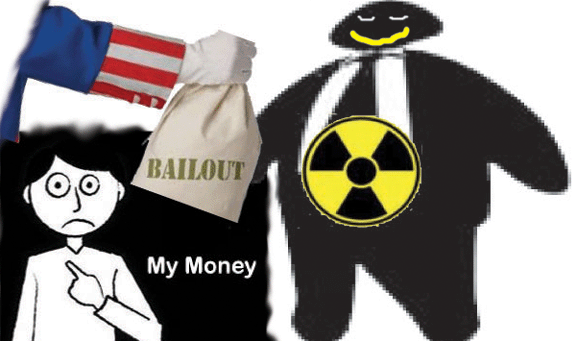
Taxpayers shouldn’t have to bail out the nuclear industry: David Williams Press Journal 27 July 17Lawmakers are forcing taxpayers to go nuclear.
Now that nuclear energy is becoming less competitive nationwide, lawmakers are responding by using Americans’ hard-earned dollars to bail out floundering nuclear plants.
But government handouts are no way to protect consumers. Rather than favor certain energy sources over others, lawmakers should let consumers benefit from a competitive, level energy playing field.
Many nuclear companies are struggling to compete with other forms of energy. As a result, nuclear bailouts are becoming the norm.
Consider Illinois. Last year, Chicago-based Exelon — the owner of Three Mile Island — announced that without government intervention, its power plants in Clinton and the Quad Cities would be forced to shut down. So legislators cooked up the Future Energy Jobs Act, which will throw a $200 million a year lifeline to Exelon — allowing its plants to limp on.
And they’ll pay for that bailout with the largest tax-rate increase in U.S. history. The scheme would hit Illinois residents with an extra $16.4 billion in energy costs. All told, the plan would forgo $14.7 billion in economic activity and $429 million in local and state tax revenue, costing Illinois up to 44,000 jobs……
In New York, Gov. Andrew Cuomo approved a similar plan to spend $7.6 billion to save struggling nuclear plants. Exelon is purchasing an additional plant in the Empire State on the condition that the state’s government help pick up the tab by raising utility rates.
That’ll cost New Yorkers big time. Indeed, experts estimate the plan will rob New Yorkers of $3.4 billion over the first five years — and more in the long term. New York and federal taxpayers will also feel the pinch when energy costs for state and federal buildings increase.
The bailouts don’t stop there. Now that nuclear companies have locked down funding models in Illinois and New York, they’re getting ready to turn to other states for more money.
In Ohio, for instance, another power company, FirstEnergy, is looking to sell its floundering plants near Cleveland and Toledo. Exelon is considering moving in — asking the state for a little help in taking over the facilities. Nuclear companies are also eyeing handouts in Pennsylvania, New Jersey and Connecticut.
These other states should look to New York and Illinois as cautionary tales. Throwing taxpayer-subsidized lifelines to nuclear energy will hurt energy markets across America, resulting in poorer service, less choice, and higher utility rates for customers.
Indeed, if all nuclear plants in the northeast and mid-Atlantic win similar subsidies, it could cost ratepayers an astounding $3.9 billion a year, according to a report by Bloomberg Intelligence…….
Aboard the NS Savannah, America’s first (and last) nuclear merchant ship, Years after shutdown, Savannah still waits for funding for its reactor decommissioning. Ars Technica, SEAN GALLAGHER – 7/26/2017 Constructed at a cost of $46.9 million ($386.8 million in 2016 dollars) and launched on July 21, 1959, the Savannah was the world’s first nuclear cargo ship and the second nuclear-powered civilian ship (coming just two years after the Soviet nuclear icebreaker Lenin). Owned by the US Maritime Administration (MARAD) and operated by commercial cargo companies, for nearly a decade she carried cargo and passengers around the world. She also acted as a floating herald for America’s seemingly inevitable, cool Atomic Age future. Savannah boasted all the latest conveniences, including one of the world’s first microwave ovens.
Many critics have since called the Savannah an expensive Cold War-era.boondoggle,………Ultimately, the bright atomic future Savannah was supposed to herald quickly lost its luster. The $2 million in annual subsidies required to operate made her a target for budget cuts—especially when the price of oil was low. In 1971, she was taken out of service. By the 1980s, both Japan and Germany abandoned their own nuclear merchant programs; only Russia still operates nuclear-powered merchant ships from its Arctic port in Murmansk. The country has a lone nuclear icebreaking cargo ship and six icebreakers in service…….
So more than 45 years after her last voyage, the Savannah remains moored here at the Canton Marine Terminal in a sort of limbo. It has been defueled and had nearly all of its radioactive materials removed, but the Savannah‘s reactor is still intact—as is the ship’s license to operate from the Nuclear Regulatory Commission (NRC)……
the ship is also still regulated by the NRC and awaiting congressional funding for full decommissioning. It’s a step that the US government didn’t really even think about back when Savannah was built……. t the ship is also still regulated by the NRC and awaiting congressional funding for full decommissioning. It’s a step that the US government didn’t really even think about back when
Citizens ask about spent nuclear fuel storage, closure of Palisades, Kalamazoo News 27 July 17 By Brad Devereaux bdeverea@mlive.com SOUTH HAVEN, MI — Inspectors and experts on radioactive material and decommissioning nuclear power plants spoke with the public during an open house about Palisades Nuclear Plant.
While the plant is slated to be shut down in October 2018, the Nuclear Regulatory Commission will remain involved to oversee safety compliance as the reactor fuel is removed and the plant enters decommissioning.
During a July 26 meeting in South Haven, citizens asked NRC officials about the clean-up and expressed concerns about the process to shutter the facility.
Benton Harbor resident Bette Pierman said she wanted answers from the NRC about what the site would be like for future generations. She wanted to know if any radioactive materials would be transported off-site during decommissioning, and said she worries the infrastructure is not in place to transport radioactive materials…….
Corinne Carey of Grand Rapids sat in the front row during some of the presentations by NRC officials, recording on a video camera. She said the plant should have been closed “a long time ago,” and now she’s concerned about the details of the clean-up and wants to make sure it’s done right.
“Who knows what’s going to happen to it? Is the radioactive waste going to remain on site?” she said.
She worries that a plane could hit a site where spent nuclear fuel is to be stored.
“What is the world we’re turning over to (our grandchildren)?” she said.
Decommissioning experts spoke about the process that can take up to 60 years that involves removing radioactive material and cleaning materials at the site and putting spent fuel into safe storage……..
Security measures will remain in place as long as spent fuel is stored on the site, the NRC said. The spent fuel is in a different category than other radioactive materials found on site, and will not decay to a safe level in the near future.
The U.S. military burns millions of pounds of munitions in a tiny, African-American corner of Louisiana. The town’s residents say they’re forgotten in the plume, by Abrahm Lustgarten, ProPublica, Photography by Ashley Gilbertson/VII Photo, special to ProPublica July 21, 2017 COLFAX, LOUISIANA— Two years ago, the U.S. military had an embarrassment on its hands: A stockpile of aging explosives blew up at a former Army ammunition plant in Minden, Louisiana, sending a cloud of debris 7,000 feet into the sky
Local residents, alarmed by toxic contaminants from the accident, were nothing short of furious when they learned what the military intended to do with the 18 million of pounds of old explosives still remaining at the depot. The Army was set to dispose of the explosives through what are known as “open burns,” processes that would result in still more releases of pollutants.
Facing an uproar, the Army turned to a familiar partner to help placate the residents of Minden: A private facility in Colfax, 95 miles south, operated by Clean Harbors, a longtime Defense Department contractor and one of the largest hazardous waste handlers in North America.
The Colfax plant is the only commercial facility in the nation allowed to burn explosives and munitions waste with no environmental emissions controls, and it has been doing so for the military for decades. And so while the Army ultimately commissioned a special incinerator to dispose of most of the Minden explosives, more than 350,000 pounds of them were shipped here. Over the ensuing months, the munitions were burned on the grounds of the plant, fueling raging fires that spewed smoke into the air just hundreds of yards from a poor, largely black community.
Beyond the story of the Minden explosives, the Clean Harbors facility here has become an important clearinghouse for military-related waste as the Department of Defense and its contractors struggle to deal with hazardous byproducts from weapons manufacturing and huge stockpiles of aging munitions. For years, defense-related firms have burned this waste at their own facilities, stubbornly clinging to the practice even as it has been outlawed in parts of Europe and Canada. But the permits to do so have become harder to get, the terms less flexible, and, increasingly, the pollution unacceptable to surrounding communities. Clean Harbors offers a legal way to get rid of dangerous materials from a wide range of sites that can’t or don’t want to handle them on their own.
In 2015 alone, 700,000 pounds of military-related munitions and explosives were trucked to Colfax, where both Clean Harbors and the military have so far been able to outmaneuver a community with abundant concerns but little money, and even less political influence, to fight back.
The Department of Defense did not respond to questions regarding its use of the Clean Harbors burn facility in Colfax, or environmental concerns related to it.
That such material is being shipped anywhere appears to contradict the military’s longstanding claim that these wastes are too dangerous to move, so they must be burned in the open where they were made or used. Yet every year, military bases and defense contractors send munitions or other explosive material to Colfax, packing explosives into cardboard boxes, shuffling them onto 18-wheelers and driving them sometimes thousands of miles across the country. Delivery manifests filed with Louisiana regulators detail the variety of materials: rocket fuel from a missile factory near Los Angeles; hand grenades from a munitions factory in Arkansas; detonating fuses from Cincinnati; solid propellant from an Aerojet Rocketdyne factory in Virginia; explosive lead from a North Carolina military aircraft factory; warhead rockets from a Lockheed Martin facility in Alabama.
Once received, they are burned on a set of 20 metal-lined pans on a parking-lot-like patch of concrete with “no risk to human health or the environment,” according to Clean Harbor’s senior vice president for compliance and regulatory affairs, Phillip Retallick.
The burns take place several times each day, and when they do, they turn parts of Colfax into a virtual war zone.
“It’s like a bomb, shaking this trailer,” said Elouise Manatad, who lives in one of the dozen or so mobile homes speckling the hillside just a few hundred yards from the facility’s perimeter. The rat-tat-tat of bullets and fireworks crackles through the woods and blasts rattle windows 12 miles away. Thick, black smoke towers hundreds of feet into the air, dulling the bright slices of sky that show through the forest cover. Manatad’s nephew Frankie McCray — who served two tours at Camp Victory in Iraq — runs inside and locks the door, huddling in the dark behind windows covered in tinfoil.
Like most of the people who live there, Manatad and McCray find it difficult to believe the booms and clouds aren’t also exacting some sort of toxic price.
Colfax is a rough-hewn, mostly black town of 1,532 people that hugs a levee separating it from the surging mud and wild alligators of the Red River. Fleeing former slaves once camped under thatched tents in the bayou, and a historic marker serves as a reminder that more than 150 “negroes” were once massacred here. Another monument, in the graveyard a few steps away, praises the three white men who also died, as “heroes … fighting for white supremacy.”……
Last November, state environment officials parked an air monitoring van on Bush road a few doors down from Elouise Manatad’s trailer. Manatad says they never told her what they were doing or what they’d found, but lab samples obtained from the state show environmental regulators detected notable levels of acrolein, a highly toxic vapor commonly associated with open burns of munitions. A division of the U.S. Centers for Disease Control and Prevention describes acrolein as having a “suffocating odor” and causing severe respiratory problems and heart attacks — even at low doses and for as long as 18 months after exposure.
The lab reports also showed low levels of other volatile organic compounds, including benzene, known to cause cancer, and which the World Health Organization warns has “no safe level of exposure.”
Soil, groundwater and stream beds sampled on the Clean Harbors site over the past few months have also been found to contain an array of extremely harmful substances likely connected with the burning of munitions waste. Underground water supplies sampled this spring show perchlorate, a type of rocket fuel, at more than 18 times Louisiana’s trigger levels for additional screening and eight times greater than what California, which sets stringent regulatory limits on perchlorate in groundwater, permits. RDX and HMX, both military explosive compounds, were also detected. Soil tested near the fence line of the facility contained dioxin — a chemical that builds up in fish and affects the human immune, reproductive and nervous systems — at three times the limits that trigger a state safety review. Silt scraped from a stream bed that runs toward the plant’s fence line and a nearby farm contained lead at nearly four times the level that triggers additional state screening.
State inspections also found Clean Harbors in violation of a number of regulations, including handling hazardous waste in unpermitted ways, failing to make repairs to its burn pads, and discharging unauthorized pollutants in violation of its state water permit………
Neither the Louisiana Chemical Industry Alliance nor representatives from Southern Strategies, the lobbying firm hired by Clean Harbors, responded to requests for comment for this story.
In Colfax, the fight endures. The state is pressing for more water and air samples. It is threatening Clean Harbors with sanctions for some of its violations. Its health department has promised to continue watching the issue. But almost nobody — especially Manatad and others living pressed up against the Clean Harbors fence line — expects officials to force Clean Harbors to stop burning altogether.
“I’m pretty sure if they was living in an environment like this they wouldn’t be pleased either, because it’s not safe,” said Annie Tolbert, 80, resting from the heavy heat in her fenced-in porch. Tolbert takes a puff of steroids from an inhaler, prescribed for her severe asthma. “They are not going to listen to us because we are black.”
“But we are citizens, too.”
Abrahm Lustgarten is a senior environmental reporter, with a focus at the intersection of business, climate and energy.
Nina Hedevang, Razi Syed, Clare Victoria Church, students in the NYU Arthur L. Carter Journalism Institute graduate studies program, contributed reporting for this story. Other students in the program who also contributed were Alex Gonzalez, Lauren Gurley, Alessandra Freitas and Eli Kurland.
Fall Film Festival includes Documentary on St. Louis Nuclear Waste Site and Landfill Fire, Huntington News, July 23, 2017 BY TONY RUTHERFORD , HNN ENTERTAINMENT EDITOR “……….The Fall International Film Festival includes a not yet shown HBO documentary, “Atomic Homefront,” which details the anguish of confronting state and federal agencies over nuclear waste dumping in St. Louis. The film is by Sarah Spurlock, wife of Morgan Spurlock.
HBO documentary, “Atomic Homefront” at St. Louis Filmmakers Showcase
Left unsaid, both the NY Times , Wall Street Journal, and HNN have revealed that Huntington , too, had a uranium and nickel carbonyl plant that processed and recycled fuels for three gaseous diffusion plants. When the process was found to not be cost effective, the structure — owned by the Atomic Energy Commission — was dismantled and the most contaminated portions buried in Piketon,Ohio. Workers from the Huntington Pilot Plant have received compensation from the Dept. of Labor for working in a facility covered under the Atomic Energy Commission definition that includes the St. Louis site, Oak Ridge, Paducah, and Piketon, Ohio.
According to IMDB, “Atomic Homefront” reveals :
“… St. Louis, Missouri’s atomic past as a uranium processing center for the Atomic bomb and the governmental and corporate negligence that lead to the illegal dumping of Manhattan Project radioactive waste throughout North County neighborhoods. Our film is a case study of how citizens are confronting state and federal agencies for the truth about the extent of the contamination and are fighting to keep their families safe. ”
Film International published the following review of Oscar winning director’s Rebecca Cammisa reviewed at the AFI film festival:
f you’re not screaming mad by the end of Atomic Homefront, you obviously believe the systemworks. As a study in government failure and corporate greed, this HBO-supported documentary from director Rebecca Cammisa shows that your trust is grievously and tragically misplaced if you expect the Environmental Protection Agency to serve a desperate public. Likewise, if you believe a large waste service company would provide honest guidance and responsibility in serving its customers, think again.
This passionate film, having its world premiere as one of the 11 Spotlight Screenings at AFI DOCS in Washington DC, is a heart breaker. Cammisa, an Oscar nominee for her 2009 documentary feature Which Way Home (dealing with child migrants) and her 2012 short God Is the Bigger Elvis (a lovely look at Dolores Hart, a Hollywood actress turned nun), spent several years following the problems of two St. Louis neighborhoods that have seen their residents ravaged by cancer and death. http://www.huntingtonnews.net/150485
U.S. judge refuses to halt New York nuclear power plant subsidies, Reuters, JULY 26, 2017 Jonathan Stempel, NEW YORK – A federal judge on Tuesday dismissed a lawsuit by energy companies and trade groups to stop New York Governor Andrew Cuomo from providing billions of dollars in subsidies to prop up struggling nuclear power plants in the state.
U.S. District Judge Valerie Caproni in Manhattan rejected claims that federal law preempted New York and its Public Service Commission from offering credits to promote clean energy and reduce reliance on fossil-fueled or gas plants.
The plaintiffs said the credits could boost electric bills for New York’s “captive ratepayers” by $7.6 billion over 12 years, and violate the “dormant” Commerce Clause by impeding Congress’ power to regulate commerce among states.
But the judge said New York’s “zero-emissions credits” program was “plainly related to a matter of legitimate state concern”: the production of clean energy, and reduction of emissions from other energy that could add to global warming……..
Audrey Zibelman, in her role as PSC chair, was the lead defendant. Nuclear generators receiving the credits and their owners, including Exelon Corp, also sided with the governor.
Cuomo endorsed the subsidies in connection with his “Clean Energy Standard” announced last August, which required that half of New York’s electricity come from renewable energy sources such as wind and solar by 2030.
The case is Coalition for Competitive Electricity et al v. Zibelman et al, U.S. District Court, Southern District of New York, No. 16-08164.
Not surprisingly, with costs so high, few reactors are being built. The hope offered by the nuclear industry is that going back to building smaller reactors might allow more utilities to invest in them.
The main priority preventing safe deployment [of small nuclear reactors] is economics. Most commercial proposals for SMRs involve cost-cutting measures, such as siting multiple reactors in close proximity. This increases the risk of accidents, or the impact of potential accidents on people nearby.
Cost overruns aside, smaller reactors might be cheaper but they also produce much less electricity and revenue. As a result, generating each unit of electricity will be more expensive.
In June, Canadian Nuclear Laboratories put out a “call for a discussion around Small Modular Reactor (SMRs) in Canada,” and the role the organization “can play in bringing this technology to market.”
The news release asserts that SMRs are “a potential alternative to large-scale nuclear reactors,” would be effective at “decreasing up-front capital costs through simpler, less complex plants” and are “inherently safe” designs. All of this warrants examination.
As a physicist who has researched and written about various policy issues related to nuclear energy and different nuclear reactor designs for nearly two decades, I believe that one should be skeptical of these claims. Continue reading →
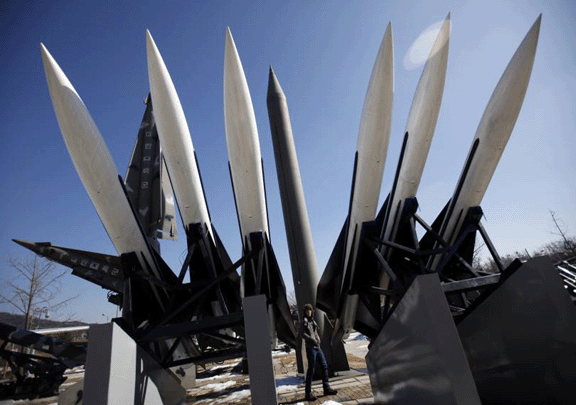
Why The U.S. Must Get Rid Of Its Land-Based Nuclear Missiles, Foxtrot Alpha, Terrell Jermaine Starr, 7/18/17 The Cold War is over. And so is the need for America’s land-based Intercontinental Ballistic Missiles. Not only are the costs of maintaining 450 Minuteman-III missiles unsustainable, keeping them in the nuclear arsenal is hardly practical. Maintaining hundreds of outdated, budget-draining Minuteman-IIIs when the Pentagon has the more accurate, multi-dimensional Trident II that can be shot from Ohio-class submarines that are virtually undetectable makes little sense.
It’s already estimated that modernizing America’s nuclear stockpile will cost taxpayers more than $1 trillion over 30 years. The U.S. Air Force wants to replace the current land-based ICBM force with newer missiles that are estimated to cost more than $100 billion, which is 60 percent greater than the figure the Defense Department set last summer.
But scrapping the Minuteman-III will not only save money, it will show Russia, and other emerging nuclear powers like India and Pakistan that America is serious about non-proliferation. From both a financial, tactical and leadership standpoint, America and the rest of the world will be better off if Washington puts aside its political posturing and kill the land-based leg of its nuclear triad—the land, air and sea-based platforms America uses to launch its nuclear weapons……..
Funding Land-based ICBMs Is Financially And Politically Unsustainable
The Congressional Budget Office wrote in 2015 that it will cost $26 billion to maintain the Minuteman-III stockpile over a 10-year period, which is $3 billion more than the 2013 estimate. The U.S. Navy is calling for the entire land-based ICBM force to be replaced with new Minuteman-IIIs.
The service, which is fielding vendors, says the new generation of ICBMs will last well beyond 2070— at a cost of at least $100 billion. In 2014, RANDpublished a report stating that new Minuteman-IIIs will cost “almost two times—and perhaps even three times—more than incremental modernization of the current Minuteman III system.”
Science and Public Health Under Siege, UCA,KATHLEEN REST, EXECUTIVE DIRECTOR | JULY 24, 2017, My colleagues at the Union of Concerned Scientists (UCS) have released a report on how science—and public health—have been sidelined during the first six months of the Trump administration. The report documents a deliberate and familiar set of strategies that undermines the role of science, facts, and evidence in public policy and decision-making.
From a public health perspective, the short- and long-term impacts are truly frightening. The Trump administration—aided and abetted by a willing Congress—is actively pushing an ideological, anti-science agenda that will profoundly affect the health, safety, and security of children, families, and communities today, tomorrow, and for decades to come.
They claim their approach is pro-business, but on closer look, that isn’t true. It harms the many good business people who want to play by the rules and make a profit without harming the public or their workers. How? By giving an unfair advantage to unscrupulous businesses that will put profit ahead of public and worker safety and health.
Control, Alt, Delay: Public health protections on the chopping blockMercury, lead, arsenic, ozone, beryllium, silica, chlorpyrifos. These substances all have several things in common:
They have all been found to contaminate our air, water, soil, and/or food, as well as some of our workplaces and community environments.
Robust and often long-standing science has proven that exposure to them can cause serious health effects, including death.
Government agencies charged with protecting our health and safety have established rules and standards to prevent or minimize our exposure to them. (Note: these and other public health safeguards are increasingly denigrated as unnecessary regulations by the Trump administration and some in Congress.)
Exposure standards established years ago have been found to be insufficiently protective.
The Trump administration has taken steps to weaken, delay, and subvert recent science-based safeguards that enhance public protection from these toxic substances.
Make no mistake. There is an all-out assault on the agencies charged with using independent, unconflicted science to protect our nation’s public health—and on the critical resources and infrastructure they need to do just that.
The proposed draconian cuts to budgets, staffing levels, and programs at agencies like the EPA, CDC, FEMA, NOAA, USDA, and OSHA speak for themselves. (And don’t even get me started on how current congressional efforts to reform health care will impact the health of our most vulnerable populations.)
Someone else can clean it up https://www.sandiegoreader.com/news/2017/jul/24/ticker-someone-else-can-clean-it/# General Atomics looks to offload uranium Superfund site in Colorado By Dave Rice, July 24, 2017 After more than a decade in mothballs, a subsidiary of San Diego’s General Atomics has indicated that it intends to offload the cleanup work at a uranium mine it owns in central Colorado. The Cañon City facility, owned by the Cotter Corporation, has sat dormant since 2006, and was declared a Superfund site in 1984.
Last week, Cotter announced that it would petition state health officials to transfer its radioactive materials license to Colorado Legacy Land, a limited liability company established specifically to handle the cleanup effort. That wouldn’t entirely eliminate General Atomics’ liability, however — since their mining operations caused the contamination any failed cleanup burden would fall back to Cotter, which has allegedly been working on a cleanup plan since 2014.
If the transfer, expected to be completed sometime this fall, is successful, it’ll reduce, but not eliminate General Atomics’ portfolio of contaminated uranium mines that have fallen into disuse. Through another subsidiary, the company controls a New Mexico operationthat hasn’t been used in 25 years. In 2015, the firm fought efforts to begin cleanup efforts at that site, indicating that the intention was to reopen the mine once worldwide uranium prices return to profitable levels.
Trump’s new nuclear defense pick once wrote, “America must be ready to nuke first.” New Republic, Emily Atkin, 21 July 17 The White House announced a slew of nominations earlier this week to fill some of the many open positions in the administration. The last on the list was Guy B. Roberts, whom Trump tapped to be the assistant secretary for nuclear, chemical, and biological defense programs at the Department of Defense. In this role, Roberts will “prevent, protect against, and respond to weapons of mass destruction threats,” according to the DOD website. He’ll also advise the secretary of defense in “matters concerning nuclear, chemical, and biological defense programs.” ……..
The Fallout, In St. Louis, America’s nuclear history creeps into the present, leaching into streams and bodies. Guernica, By Lacy M. Johnson, 10 July 2017, Dawn Chapman first noticed the smell on Halloween in 2012, when she was out trick-or-treating with her three young children in her neighborhood of Maryland Heights, Missouri, a small suburb of St. Louis…….
Joe Trunko from the Missouri Department of Natural Resources … told Dawn that there is a landfill near her home, that it is an EPA Superfund site contaminated with toxic chemicals, that there has been an underground fire burning there since 2010. “These things happen sometimes in landfills,” he said. “But this one is really not good.”
Joe told Dawn that this landfill fire measures six football fields across and more than a hundred and fifty feet deep; it is in the floodplain of the Missouri River, less than two miles from the water itself, roughly twenty-seven miles upstream from where the Missouri River joins the Mississippi River before flowing out to the sea. “But to be honest, it’s not even the fire you should be worrying about,” Joe continued. “It’s the nuclear waste buried less than one thousand feet away.”
Joe explained how almost fifty thousand tons of nuclear waste left over from the Manhattan Project was dumped in the landfill illegally in 1973…….
Weeks later, she found herself standing outside the chain-link fence that surrounds the landfill with half a dozen environmental activists who had gotten hold of some air-sampling equipment……..
Karen Nickel didn’t know much about the landfill—she’d only just learned about it a few weeks before—but she knew about the waste……
Karen did look into it and learned that many of her classmates and neighbors and childhood friends had died of leukemias and brain cancers and appendix cancers—rare in the general population, but, again, apparently common among those who live or had lived near the creek. It couldn’t possibly be a coincidence…..
When Dawn and Karen learned what the EPA had proposed years earlier, in their Record of Decision, they immediately pushed back. They called the media, gave interviews, started a Facebook page. “I remember getting so excited when we hit two hundred members,” Karen told me. “Now we have over seventeen thousand.” They all lobbied their representatives, their senators, City Council members, mayors…….
“We’re just moms!” Karen and Dawn would answer. “We’re just citizens concerned about the health and safety of our kids and our community!”
Soon after, Karen and Dawn, along with another resident, Beth Strohmeyer, officially formed Just Moms STL………
After a few weeks of making these graphs, they realized the fire wasn’t under control, it wasn’t going out. It was, in fact, moving toward the waste, inching toward the known edge, spreading through the old limestone quarry. Now one thousand feet away. Now seven hundred………
Robbin and Mike Dailey moved to this house in 1999, after their kids had moved out and started families of their own. It’s a relief their children never lived here, she tells me. In this neighborhood children fall ill. There are brain cancers and appendix cancers, leukemias and salivary-gland cancers. Up the street from Robin and Mike there’s a couple with lung and stomach cancer. They bought their home just after it was built in the late 1960s.
I ask what they think might happen if the fire ever reaches the waste. The question hangs in the air for a moment as the TV flickers from the far wall. “Look, we know it won’t explode,” Robbin explains. “We’re not stupid. We know that’s not how it works. But just because there’s no explosion doesn’t mean there won’t be fallout.”…….
I’ve looked at thousands of pictures of this landfill, aerial photos and historical photos, elevation photos and topographical maps, but nothing has prepared me to see it in person, this giant belching mound of tubes and pumps and pipes. There’s some kind of engineered cover over the dirt itself, which is supposed to suffocate the fire and capture the fumes. It looks like little more than a green plastic tarp patched together over a hundred acres of sagging hills.
“This is the burning side,” Robbin tells me. “The radwaste is on the other side.” The patchwork is topographical and bureaucratic: the burning side is the southern section of the landfill and falls under the jurisdiction of the Missouri Department of Natural Resources; the radioactive waste is mostly on the northern side, and under EPA jurisdiction. On the burning side, workers drive over the tarp on utility carts, wearing hard hats and work clothes. No gloves, no masks, no protection from the destruction buried underneath their feet……….https://www.guernicamag.com/the-fallout/
The reports don’t acknowledge these stories, these illnesses, those who are dying or dead. Most residents of St. Louis—including and especially the residents of predominantly African-American neighborhoods—don’t even know the contamination is there. …….
the half-life of Thorium 232: fourteen billion years, a half-life so long that by the time this element is safe for human exposure
a contradiction I can’t resolve: that the massive crime here began with a belief in a kind of care, a belief that protection comes only in the form of wars and bombs, and that its ultimate expression is a technology that can destroy in a single instant any threat to our safety with perfect precision and efficiency. But hundreds of thousands lost their lives to those bombs in Japan, and the fallout from building them has claimed at least as many lives right here at home.
The Fallout, In St. Louis, America’s nuclear history creeps into the present, leaching into streams and bodies. Guernica, By Lacy M. Johnson, 10 July 2017 “………Months ago, when a high-school friend reached out to me asking that I give my attention to this story, she told me that a company tasked decades ago with disposing of nuclear waste for the federal government had instead dumped thousands of barrels of the waste somewhere in North St. Louis County. The barrels were left exposed to the elements for decades, and the waste had leaked into the ground and into the water of a nearby creek……
When the federal government filed suit to acquire the property under eminent domain, officials refused to disclose the exact nature of the waste “for security reasons.” They assured the local government that the waste they’d be storing there wasn’t dangerous. They shook hands and signed papers. They looked people squarely in the eye.
During the next twenty years, truckload by truckload, the green patchwork of farm fields by the airfield turned into a foreign world. Mountains of raffinate rose up across from row after row of rusty black drums, stacked two or three high.
……..The reports tell only so much, only certain parts of certain versions of the story. The rest I have to piece together using articles in the local newspaper, phone calls with these residents, oral histories collected by others, newsletters from various companies celebrating one anniversary or another…..
In my pile of reports there is a series of letters from Cotter to the Atomic Energy Commission, in which Cotter tries to convince the government to take these wastes back. Commercial disposal would cost upwards of two million dollars (about twelve million dollars today). They couldn’t afford it. They knew that the AEC was using a quarry at the recently decommissioned second Mallinckrodt facility at Weldon Spring, roughly twenty miles southwest of the airport, as a dump for nuclear waste. They asked the AEC if they could use it, asked for guidance, and for help.
That help never came……
A lengthy investigation discovered that from August to October 1973, a private construction firm drove truckloads of the leached barium sulfate—along with roughly forty thousand tons of soil removed from the top eighteen inches of the Latty Avenue site—to West Lake Landfill, all around the clock, sometimes in the middle of the night. To the landfill operator it looked like dirt, so he waved the trucks in and charged them nothing, using it as landfill cover over the municipal refuse…..
the reports express the detection of this contamination in charts, as numbers and statistics. They’ve found contamination at the airport, in the drainage ditches leading away from the airport, and all along the creek—along the trucking routes, in ballfields and in parks and gardens and backyards, in driveways, in people’s basements and under their kitchen cabinets. Even now, as I write this, they are still trying to figure out just how far it has spread.
The reports measure the health risk of exposure to this contamination as an equation, with a threshold of acceptable risk. But what the reports don’t say is that the contamination has already done so much damage that cannot be measured or undone. The Mallinckrodt uranium workers are some of the most contaminated in the history of the atomic age. So contaminated, in fact, that in 2009 all former Mallinckrodt uranium workers were added as a “special exposure cohort” to the Energy Employees Occupational Illness Compensation Program Act. The act provides compensation and lifetime medical benefits to employees who became ill with any of twenty-two named cancers as a result of working in the nuclear-weapons industry. Because of this special cohort status, if a former Mallinckrodt worker develops any of these named illnesses, exposure to the uranium is assumed. But the people who live near the creek didn’t work for Mallinckrodt. They aren’t entitled to compensation or to medical benefits.
A woman named Mary Oscko, for instance, has lived her whole life in North St. Louis County, most of it near that small creek. Now she is dying of stage-four lung cancer, though she has never smoked a day in her life. Shari Riley, a nurse who lived near the creek, died recently of appendix cancer—rare in the general population, but several dozen cases have been reported among those who live or lived near the airport or along the creek. My friend—the one who contacted me about this story—never lived in St. Louis, but her mother grew up two houses away from that creek. My friend suspects that her mother’s exposure to the contamination as a child changed her DNA in ways she passed on to her children, which would explain why my friend was diagnosed with an aggressive form of cancer a few years ago, at the age of thirty-five. Could it also explain why my friend’s mother once gave birth to a set of conjoined twins? Conjoined twins are an anomaly in the general population, but these make the fourth set born to women who grew up near that creek. And those are just the ones we know about.
The reports don’t acknowledge these stories, these illnesses, those who are dying or dead. Most residents of St. Louis—including and especially the residents of predominantly African-American neighborhoods—don’t even know the contamination is there. …….
“My librarian,” Kay Drey tells me—has filed the EPA’s Record of Decision for the West Lake Landfill, and then on the drawer where I might find studies that contradict the EPA’s assessment that the radioactive waste in the landfill doesn’t pose a threat to residents—the radiological surveys of the site conducted in the 1970s and 1980s by the Nuclear Regulatory Commission and the Department of Energy, as well as more current studies by independent researchers. She explains that the radioactive waste buried in West Lake Landfill covers about twenty acres in two locations in one or many layers, estimated at two to fifteen feet thick, some of it mixed in with municipal refuse and some of it sitting right at the surface. It is in the trees surrounding the landfill and the vacuum bags in nearby homes. This waste contains not only uranium, but also thorium and radium, all long-lived, highly radio-toxic elements. And because Mallinckrodt removed most of the naturally occurring uranium from this ore, the Cotter Corporation, in effect, created an enriched thorium deposit when they dumped the residues at West Lake Landfill. “In fact,” Kay muses, “West Lake Landfill might now be the richest deposit of thorium in the world.”
Thorium and uranium in particular are among the radioactive primordial nuclides, radioactive elements that have existed in their current form since before Earth was formed, since before the formation of the solar system even, and will remain radioactive and toxic to life long after humans are gone. We’re sitting back in Kay’s dining room when she pulls out a tiny booklet labeled “Nuclear Wallet Cards.” What its intended purpose is, I don’t know, but Kay flips to the back to show me the half-life of Thorium 232: fourteen billion years, a half-life so long that by the time this element is safe for human exposure, the Appalachian Mountains will have eroded away, every ocean on Earth’s surface will have evaporated, Antarctica will be free of ice, and all the rings of Saturn will have decayed. Earth’s rotation will have slowed so much that days will have become twenty-five hours long, photosynthesis will have ceased, and multicellular life will have become a physical impossibility.
“You know, tritium is my favorite,” Kay tells me before I leave. It’s produced as a side effect of operating nuclear reactors and released into the air, or leaks into the waterways; it contaminates the water supply and condenses in our food. One official who worked at the nuclear reactor Kay had tried to prevent once told her that tritium was no big deal. “It only destroys DNA molecules.” A few years ago they found tritium in the groundwater in Callaway County. “There is no way to remove it,” she says…..
….the Weldon Spring site. After it was decommissioned, the plant—a second one run by Mallinckrodt—was found to be so contaminated that the Department of Energy eventually entombed the whole site in layers upon layers of clay and soil, gravel, engineered filters and limestone rocks, creating a mountain covering forty-five acres, containing approximately 1.5 million cubic yards of hazardous waste. With its own educational center located near the base, the containment dome has become a kind of memorial for a tragedy that hasn’t finished happening. The top of the dome is the highest point in the county.
“Oh, you don’t want to go there anyway,” Kay says, waving the idea away with her slender hand. “It’s leaking.”……..
a contradiction I can’t resolve: that the massive crime here began with a belief in a kind of care, a belief that protection comes only in the form of wars and bombs, and that its ultimate expression is a technology that can destroy in a single instant any threat to our safety with perfect precision and efficiency. But hundreds of thousands lost their lives to those bombs in Japan, and the fallout from building them has claimed at least as many lives right here at home.
There is no one to arrest for this, to send to jail, to fine or execute or drag to his humiliation in the city square. Even if Karen and Dawn win their fight and convince the government to remove every gram of radioactive waste in the landfill and the creek and the airport and the backyards and gardens here, people will still be sick. Thousands of them. Chronic exposure to radiation has changed their DNA, and they’ll likely pass those changes on to their children, and to their children’s children, and on and on through every generation. In this regard, no one is immune……..
The EPA Region 7 offices are located in a sprawling modern government building in a suburb of Kansas City. The small conference room just to the side of the main entrance is filled with a surprising number of people……
During our too-short conversation I learn that the EPA has over 1,300 sites in the Superfund program, and Region 7 alone has ninety-eight sites on the National Priorities List. Each of these communities is demanding that their toxic sites be scrubbed clean. ………https://www.guernicamag.com/the-fallout/
Tell Congress: Prevent Nuclear Catastrophe in Iran
Read the Public Inquiry Report, the Commissioners’ report, Surrendering Australia: The AUKUS Deception is available to download for free at aukuspublicinquiry.com. Or just watch the replay of the National Press Club Luncheon.
19 November – Webinar – The Reality of Reprocessing
Time: 11:00 AM Pacific Time (US & Canada) / 2:00 PM Eastern / 7:00 PM UK / 8:00 PM CET














While the plant is slated to be shut down in October 2018, the Nuclear Regulatory Commission will remain involved to oversee safety compliance as the reactor fuel is removed and the plant enters decommissioning.
During a July 26 meeting in South Haven, citizens asked NRC officials about the clean-up and expressed concerns about the process to shutter the facility.
Benton Harbor resident Bette Pierman said she wanted answers from the NRC about what the site would be like for future generations. She wanted to know if any radioactive materials would be transported off-site during decommissioning, and said she worries the infrastructure is not in place to transport radioactive materials…….
Corinne Carey of Grand Rapids sat in the front row during some of the presentations by NRC officials, recording on a video camera. She said the plant should have been closed “a long time ago,” and now she’s concerned about the details of the clean-up and wants to make sure it’s done right.
“Who knows what’s going to happen to it? Is the radioactive waste going to remain on site?” she said.
She worries that a plane could hit a site where spent nuclear fuel is to be stored.
“What is the world we’re turning over to (our grandchildren)?” she said.
Decommissioning experts spoke about the process that can take up to 60 years that involves removing radioactive material and cleaning materials at the site and putting spent fuel into safe storage……..
Security measures will remain in place as long as spent fuel is stored on the site, the NRC said. The spent fuel is in a different category than other radioactive materials found on site, and will not decay to a safe level in the near future.
“The contents inside is extremely radioactive,” Edwards said about spent fuel that is usually stored in a dry cask some time after a plant shutdown. It emits lethal doses if left unshielded……..http://www.mlive.com/news/kalamazoo/index.ssf/2017/07/citizens_ask_about_radioactivi.html