Jan 30, 2018 , COLUMBIA — A compromise being considered by state lawmakers would temporarily halt nuclear-related payments to SCANA until regulators and the state’s courts decide who should pay for the cancelled reactors at V.C. Summer.
The South Carolina House is set to amend legislation that would roll back the 2007 law that put in motion the eventual $9 billion construction failure in Fairfield County, according to three sources familiar with the amendment.
But communities around the uranium mines and test sites needed for the production of nuclear weapons — places which are often socio-economically disadvantaged already — have been especially impacted by the health and environmental costs of nuclear weapons production.
The Navajo Nation is just one example — where cancer rates doubled from the 1970s to the 1990s due to the impacts of testing, mining and milling in the southwestern US. Mining companies extracted millions of tons of uranium between 1944 and 1986. At the time, Navajo children played in mine debris piles and pools, and livestock drank contaminated water. Some homes were even built with materials from uranium mines and mills.
Runit Dome, on Enewetak Atoll, serves as a living reminder of US nuclear testing that continues to threaten the islands today. The 18-inch concrete cap covers 111,000 cubic yards of radioactive debris left behind after 12 years of nuclear tests. Today, scientists fear the effects of climate change could damage the dome, releasing its contents into the ocean.
The lands of some indigenous communities still house nuclear waste today. Tribes play host to this waste because their reservations are not subject to the same environmental and health standards as US land.
“In the quest to dispose of nuclear waste, the government and private companies have disregarded and broken treaties, blurred the definition of Native American sovereignty, and directly engaged in a form of economic racism akin to bribery,” Bayley Lopez of the Nuclear Age Peace Foundation told Scientific American, citing examples of companies taking advantage of the “overwhelming poverty on native reservations by offering them millions of dollars to host nuclear waste storage sites.”
Whether this characterization and those like it are fair, it’s an unfortunate fact that the people who live near the hallmarks of the US nuclear industrial complex — like test sites in Nevada and the Marshall Islands, mines in the western half of the US, and the indigenous communities that still house nuclear waste today — have been disproportionately affected by the cost of what it takes to keep the rest of us safe.
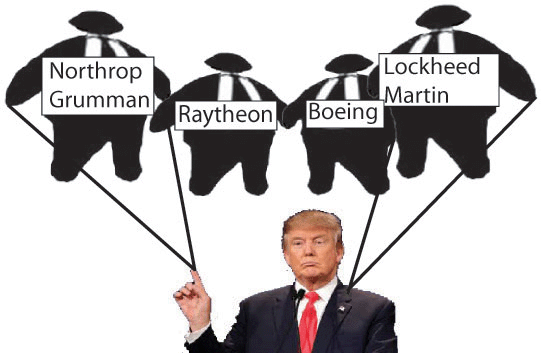
Pentagon Wins as Trump Readies a $716 Billion Budget Request,Bloomberg, By
Anthony Capaccio and Erik Wasson
Big increase for Pentagon would deepen the U.S. deficit
Mattis has raised alarm over U.S. ‘competitive edge’ eroding
President Donald Trump will propose $716 billion in defense spending in his fiscal 2019 budget request, a 7.2 percent from his request for this year that backs the Pentagon’s push for a major buildup, a U.S. official said.
The funding would include $597 billion for the Defense Department’s base budget, with the rest going for its war-fighting account and to other government programs such as the Energy Department’s nuclear weapons program, said the official, who spoke on condition of anonymity in advance of the release of Trump’s second proposed budget next month.
The amount is a sharp increase from the $668 billion total Trump proposed last year for fiscal 2018 and also offered as a placeholder for fiscal 2019. Currently, the Pentagon is operating under stopgap funding at fiscal 2017 levels, which totaled $634 billion. The plan, reported earlier Friday by the Washington Post, represents a victory of defense hawks over those trying to constrain deficit spending.
The U.S. official confirmed Trump’s next proposed budget will include major increases on procurement spending over the $124 billion sought this year.
Mattis’s Push
Defense Secretary Jim Mattis has pushed for a jump in defense spending to match the breadth of the new National Defense Strategy he released this month……….
Ultimately, Trump’s proposal will be measured by the amount it exceeds the caps in the Budget Control Act of 2011.Unless Congress waives the budget limits, as it’s done three times in the past, the cap for fiscal 2019, which begins Oct. 1, is $563 billion for defense-related spending, including $534 billion for the base defense budget.
War-Fighting Fund
The official said more than $90 billion of Trump’s budget proposal would come from the war-fighting fund — known as Overseas Contingency Operations — that’s exempt from caps. While the fund is supposedly for pressing war needs, it’s often used as a tool to bulk up overall defense funding. Trump’s war-fighting budget for the current year includes $10 billion for weapons acquisition……..https://www.bloomberg.com/news/articles/2018-01-26/trump-is-said-to-seek-716-billion-for-defense-in-2019-budget
Reading the summary is illuminating, to say the least, and somewhat disturbing, as it focuses very little on actual defense of the realm and relates much more to offensive military action that might be employed to further certain debatable national interests. Occasionally, it is actually delusional, as when it refers to consolidating “gains we have made in Afghanistan, Iraq, Syria and elsewhere.”
At times Mattis’ supplementary “remarks” were more bombastic than reassuring, as when he warned
“…those who would threaten America’s experiment in democracy: if you challenge us, it will be your longest and worst day.”
He did not exactly go into what the military response to hacking a politician’s emails might be and one can only speculate, which is precisely the problem.
One of the most bizarre aspects of the report is its breathtaking assumption that “competitors” should be subjected to a potential military response if it is determined that they are in conflict with the strategic goals of the U.S. government. It is far removed from the old-fashioned Constitutional concept that one has armed forces to defend the country against an actual threat involving an attack by hostile forces and instead embraces preventive war, which is clearly an excuse for serial interventions overseas.
Some of the remarks by Mattis relate to China and Russia. He said that
“We face growing threats from revisionist powers as different as China and Russia, nations that seek to create a world consistent with their authoritarian models – pursuing veto authority over other nations’ economic, diplomatic and security decisions.”
There is, however, no evidence that either country is exporting “authoritarian models,” nor are they vetoing anything that they do not perceive as direct and immediate threats frequently orchestrated by Washington, which is intervening in local quarrels thousands of miles away from the U.S. borders. And when it comes to exporting models, who does it more persistently than Washington?
The report goes on to state that Russia and China and rogue regimes like Iran have “…increased efforts short of armed conflict by expanding coercion to new fronts, violating principle of sovereignty, exploiting ambiguity, and deliberately blurring the lines between civil and military goals.” As confusing civil and military is what the United States itself has been doing in Libya, Iraq and, currently, Syria, the allegation might be considered ironic.
he scariest assertion in the summary is the following:
“Nuclear forces – Modernization of the nuclear force includes developing options to counter competitors’ coercive strategies, predicated on the threatened use of nuclear or strategic non-nuclear attacks.”
That means that the White House and Pentagon are reserving the option to use nuclear weapons even when there is no imminent or existential threat as long as there is a “strategic” reason for doing so. Strategic would be defined by the president and Mattis, while the War Powers Act allows Donald Trump to legally initiate a nuclear attack.
What might that mean in practice? Back in 2005,Vice President Dick Cheney had requested “a contingency plan to be employed in response to another 9/11-type terrorist attack on the United States… [including] a large-scale air assault on Iran employing both conventional and tactical nuclear weapons … not conditional on Iran actually being involved in the act of terrorism directed against the United States.”
Possible employment of “weapons of mass destruction” responded to intelligence suggesting that conventional weapons would be unable to penetrate the underground hardened sites where Iran’s presumed nuclear weapons facilities were reportedly located. But as it turned out, Iran had no nuclear weapons program and attacking it would have been totally gratuitous. Some other neocon inspired plans to attack Iran also included a nuclear option if Iran actually had the temerity to resist American force majeure.
Pentagon planners clearly anticipate another year of playing at defense by keeping the offense on the field. An impetuous and poorly informed president is a danger to all of us, particularly as he is surrounded by general-advisers who see a military solution to every problem. Hopefully wiser counsel will prevail.
Philip Giraldi, Ph.D., is Executive Director of the Council for the National Interest.
US-South Korean war games will go on after Olympics, Pentagon says , By KIM GAMEL | STARS AND STRIPES, January 26, 2018SEOUL, South Korea — U.S. military exercises with South Korea will be held after the Olympics as planned despite a demand for a complete suspension from the North, the Pentagon said.
The planned war games cast a shadow over hopes that the recent détente between the two Koreas may lead to a broader dialogue with the United States after months of saber rattling over the North’s nuclear weapons program.
Defense Secretary Jim Mattis reiterated that military options remain at the ready to make sure diplomats have leverage in pressuring Pyongyang to denuclearize…….
Washington agreed to delay them until after the Olympics, which will be held on Feb. 9-25 in the South Korean alpine town of Pyeongchang. Mattis has said they would resume after the March 8-18 Paralympics.
But North Korea, which agreed to participate in the Winter Games as part of rare talks with the South, demanded a complete suspension……..
North Korea has frequently responded to the exercises — and similar drills held by the allies in the fall — with missile tests and a stream of bellicose rhetoric…….
The recent false alarm in Hawaii underscores the threat from nuclear devices. While there has been media attention placed on how the United States is taking military and diplomatic action against North Korea from launching a nuclear strike, there is little media attention given to how well the United States is medically prepared for a nuclear attack. According to a recent report in the Bulletin of the Atomic Scientists, U.S. cities are not medically prepared for a nuclear detonation. This report, written by Dr. Jerome Hauer, who was the former assistant secretary for the Office of Public Health Emergency Preparedness at the U.S. Department of Health and Human Services, asserts that the United States is completely unprepared to manage the aftermath of a nuclear detonation. We are at a moment in history where nuclear terrorism is an unfortunate reality. North Korea and Iran have established nuclear capabilities, and Pakistan has stockpiles of highly enriched uranium.
These countries have a history of supporting terrorist groups. It has been acknowledged by our government that highly enriched uranium can be smuggled into this country to build a 10-kiliton improvised nuclear bomb, like that dropped on Hiroshima in 1945. A nuclear threat would even include a dirty bomb that combines a conventional explosive with radioactive isotopes, which could contaminate an area and leave a residual radioactive “hot zone” that is too dangerous for even first responders to enter. Also, radioactive particles can disperse into the air and create a “plume” that could extend hundreds of miles away from ground zero and create a contamination area that would last for years.
A nuclear blast would instantly release a massive pressure wave and heat that would incinerate everything within half a mile and kill an estimated 75,000 to 100,000 people. Another 100,000 to 200,000 would suffer complexed radiation burns, while others would be exposed to high doses of radiation that would cause acute radiation syndrome that is characterized by bone marrow failure and gastrointestinal, cardiac, neurological and pulmonary toxicity. The starkest fact about a nuclear bomb attack is that it destroys the capacity to respond from a medical and civil service perspective. There will be a loss of local government services from firefighters, police and hospitals, along with loss of water, sewage and utilities. There will be a loss of communication systems to direct survivors where to evacuate for treatment.
The management of mass casualties from nuclear detonation is far more complex than for natural disasters. Hot zones are too dangerous for first responders to enter to render medical assistance to casualties. Yet, victims would still need to be evacuated somehow. According to the report, most U.S. cities lack medical preparedness to manage the aftermath of a nuclear explosion. FEMA has not devoted enough attention to address this issue. This makes it important for cities and states to develop plans for the worse case scenarios. Each state should have a plan of preparedness that includes special medical triage centers; coordinated schemes from state military and local police to provide mobile communication assets and protection against civil unrest; and specialized trained hospitals that can medical manage the injuries associated with a nuclear bomb. There needs to be a statewide plan from the governor’s office from each state, along with each state’s department of public health, to ensure there is sufficient medical preparedness.
Several government officials stated they were unable to take steps forward out of being accused of inciting fearmongering. However, developing a comprehensive preparedness program against nuclear threats should not just stop with military action but should include a medical preparation program regardless of how politically undesirable the subject may be. Preparedness should be mandated at every local and state government level.
• Alan Moy is CEO of Cellular Engineering Technologies and scientific director of the John Paul II Medical Research Institute.
Early victory for Hudson River Sloop Clearwater in battle over upstate nuke plant bailout,Thomas C. Zambito, tzambito@lohud.com Jan. 26, 2018 Environmental groups scored an early-round victory in the legal battle over the state’s plan to bail out three upstate nuclear power plants with billions of dollars in subsidies backed by ratepayers….
A state Supreme Court judge in Albany on Tuesday turned back the Public Service Commission’s effort to dismiss a lawsuit filed by Hudson River Sloop Clearwater and Goshen Green in Rockland County, among others.
At issue is the commission’s decision to hand over an estimated $7.6 billion in subsidies over 12 years so that three upstate nuclear power plants – R.E. Ginna near Rochester and the James A. FitzPatrick and Nine Mile Point in Oswego County – can continue operating………
Manna Jo Greene, the environmental director of Clearwater, called Acting Judge Roger McDonough’s decision a “David vs. Goliath victory.”
“It doesn’t serve the public interest or even follow the law that New York’s ratepayers are required to pay to keep these nuclear plants open, when they are no longer economically viable without a subsidy,” Greene said.
Georgia Senate bill aims to protect consumers’ pocketbooks from Vogtle, Savannah Now, January 27, 2018, By Mary Landersmary.landers@savannahnow.com Legislation co-sponsored by state Sen. Lester Jackson, D-Savannah, seeks to limit the money paid by ratepayers — particularly schools — for Georgia Power’s expansion of Plant Vogtle.
If enacted as written, it would immediately reduce monthly residential power bills. And it could provide big rebates if the project isn’t completed.
The troubled expansion is five years behind schedule and its price tag has nearly doubled to $27 billion. Despite a staff recommendation that the project is uneconomic and a finding that the company will make $5 billion in profits from the delays, the Georgia Public Service Commission in December gave the green light to complete the expansion with few added consumer safeguards.
Senate Bill 355, sponsored by Rome Republican Chuck Hufstetler and introduced Wednesday, would amend the Georgia Nuclear Energy Financing Act to limit in several ways the ongoing collection of a nuclear fee while these reactors are being built and prevent the utility from automatically collecting the same nuclear fee on future projects. It would also provide for a refund if the reactors never become operational…….. http://savannahnow.com/news/2018-01-26/georgia-senate-bill-aims-protect-consumers-pocketbooks-vogtle
£100m cost of advice on renewing nuclear arsenal, Mark Hookham, Defence Correspondent, The Sunday TimesMore than £100m has been spent helping ministers decide whether to overhaul or replace Britain’s arsenal of nuclear warheads.
Campaigners said the “vast” sum of taxpayers’ money was spent without proper parliamentary scrutiny.
The UK has a stockpile of more than 200 nuclear warheads, which can be fitted onto the Trident ballistic missiles that arm the Royal Navy’s deterrent submarines. One of the four submarines is always on patrol.
In 2016, MPs approved plans for four replacement submarines — at an estimated cost of £31bn — the first of which will be deployed in the early 2030s and have a lifespan of at least 30 years. Ministers will decide before 2022 whether to build new warheads for the submarines or whether the lifespan of the existing weapons… (subscribers only)
Akron-based FirstEnergy Corp. has been pushing for the financial rescue that it says is needed to keep the Davis-Besse nuclear plant near Toledo and the Perry plant near Cleveland operating.
The legislation would give FirstEnergy’s plants an extra $180 million a year.
Republican Sen. Bill Beagle leads the Senate’s Public Utilities Committee. He says he doesn’t anticipate taking up a vote on the plan.
A FirstEnergy executive said earlier this week that the plants will likely close without a financial rescue.
The company has been saying the plants can’t compete with cheaper natural gas plants in the current market.
Nevada raises new concerns about Yucca Mountain licensing plan, Las Vegas Review Journal, By Gary Martin Review-Journal Washington Bureau, January 26, 2018 – WASHINGTON— Nevada has detailed fresh concerns about plans to expedite licensing of Yucca Mountain as a nuclear repository in a report that was delivered Friday by the state’s congressional delegation to key House members.
Rep. Dina Titus, D-Nev., distributed the state’s report to lawmakers on the House Energy and Commerce and the House Appropriation committees asking that they review it before moving forward on the Nuclear Waste Policy Amendments Act.
The amendments bill passed out of the Energy Committee on a 49-4 vote last June, and is largely expected to pass in the full House, which has yet to schedule a vote.
Nevada Gov. Brian Sandoval has led the state’s opposition to storing nuclear waste at Yucca Mountain, noting that “no amount of monetary benefits can compensate for the coerced selection of an unsafe site.”
In the report, the state said the bill does not address the amount of funding that would be needed for expediting the licensing application by the Department of Energy and the participation of federal, state and local governments in the process before the Nuclear Regulatory Commission.
Tribunal rules in favour of man who claims he developed cancer from radiation at work CTVNews.ca Staff , January 26, 2018The labour tribunal in Quebec has ruled in favour of a Trois Rivieres man who says he developed “aggressive” cancer from radiation exposure at work.
As the director of quality control at a sugar refinery previously known as Sucre BBR, Michel Plante used an X-ray machine to ensure the sugar was free of metal. He was diagnosed with bladder cancer in 2014, and underwent surgery. Less than a year later, he was also diagnosed with prostate cancer.
Plante is now taking legal action because he claims his workplace made him sick. His claim is backed by the labour tribunal, which recently ruled that there’s reason to believe the X-ray machine exposed Plante to unsafe amounts of radiation.
After the X-ray machine Plante used at work was sold to a company in Ontario, it was tested and determined to be emitting higher levels of radiation than permitted. Plante’s lawyer, Sophie Mongeon, said the objective of the legal action is “not financial.” “Our objective is purely for the workers,” she told CTV Montreal.
Radiation oncologist Dr. Bernard Fortin, who studied the files related to Plante’s case, said he agrees that the workplace radiation exposure was unsafe.
U.S. modernization efforts risk sparking a nuclear arms race with China. The Diplomat, By Kim Mu Kwan (Harry) 26 Jan 18, Since the end of the Cold War, the United States has been a leader of nuclear disarmament efforts. It gradually reduced its nuclear weapons stockpile through a series of arms reduction treaties with Russia. In 2009, then-President Barack Obama also affirmed “America’s commitment to seek the peace and security of a world without nuclear weapons.”
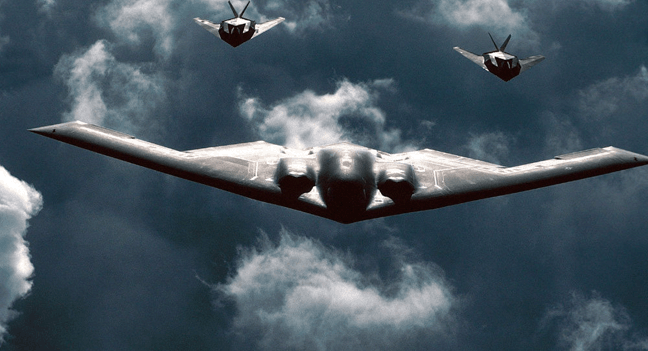
However, the United States still has an inexplicably large number of nuclear weapons. It maintains an arsenal of 1,393 strategic warheads deployed on 660 intercontinental ballistic missiles (ICBMs), 240 Trident II D5 submarine-launched ballistic missiles (SLBMs), 20 of which are on 12 Ohio-class submarines, and air-launched cruise missiles (ALCMs) equipped on 18 B-2 Spirit stealth bombers and 76 B-52H bombers.
In addition, contrary to global disarmament efforts, the United States recently began modernizing its nuclear arsenal. The Department of Defense (DOD) seeks to maintain and upgrade the country’s aging nuclear triad – IBCMs, SLBMs, and strategic bombers. The Congressional Budget Office (CBO) estimates the current modernization plans for U.S. nuclear forces would cost $400 billion between FY 2017 and FY 2026.
The Trump administration’s nuclear posture review is yet to be published (though a draft leaked earlier this month). However, it is hard to imagine his administration will discontinue this modernization effort. During the presidential campaign, Donald Trump repeatedly expressed his frustration about the “very terrible shape” of the country’s nuclear arsenal. He also has said he is preparing to have the arsenal in “tip-top shape,” though he denied reports that he wants a tenfold increase in the nuclear arsenal
This modernization effort not only undermines global disarmament efforts but also will force China to reevaluate its nuclear doctrine and reinvigorate its nuclear arsenal in order to maintain deterrence against the United States. China’s response could pose a serious threat to global disarmament efforts, U.S. national security, and regional stability in the Asia-Pacific………
US stealth bombers in Guam appear to be readying for a tactical nuclear strike on North Korea, Business Insider, ALEX LOCKIE, JAN 25, 2018,
The US recently sent nuclear bombers to Guam that can carry tactical nukes that would be perfect for taking out Kim Jong Un.
Some have suggested that a quick tactical nuclear strike on North Korea could cripple the country’s nuclear infrastructure with few casualties.
Recent reports have suggested President Donald Trump considering a strike on North Korea, but some experts and politicians think the idea of a tactical nuclear strike is a recipe for disaster.
The US has been quietly amassing firepower in the Pacific during a lull in tensions with North Korea, but recent developments on an under-the-radar nuclear weapon suggest preparation for a potential tactical nuclear strike.
While the B-2 and B-52 are known as the air leg of the US’s nuclear triad, as they carry nuclear-capable air-launched cruise missiles, a smaller nuclear weapon that has undergone some upgrades may lend itself to a strike on North Korea………..
Despite evidence that tactical nuclear weapons won’t solve the North Korean military quagmire, President Donald Trump’s administration has looked favourably on smaller nuclear weapons.
Trump’s recent nuclear posture review recommended building more small nuclear weapons, as their size would make them easier to use in a conflict – something the International Security paper supports.
Tell Congress: Prevent Nuclear Catastrophe in Iran
Read the Public Inquiry Report, the Commissioners’ report, Surrendering Australia: The AUKUS Deception is available to download for free at aukuspublicinquiry.com. Or just watch the replay of the National Press Club Luncheon.
19 November – Webinar – The Reality of Reprocessing
Time: 11:00 AM Pacific Time (US & Canada) / 2:00 PM Eastern / 7:00 PM UK / 8:00 PM CET