Trump pulls America out of Iran nuclear deal
Trump pulls US out of Iran nuclear deal in major blow for allies http://www.news.com.au/finance/economy/world-economy/trump-set-to-pull-out-of-iran-nuclear-deal-in-major-blow-for-us-allies/news-story/7a5eab875ec947073656ec8bba211cd0
BARACK Obama has warned of serious consequences over Donald Trump’s decision to withdraw from a nuclear accord with Iran.Emma Reynolds and wires. news.com.au– 9 May 18
President Trump announces decision on Iran nuclear deal
BARACK Obama has slammed Donald Trump’s decision to withdraw the US from a landmark nuclear accord with Iran.
In a statement, the former president said the announcement was “so misguided” and would see the US “turning our back on America’s closest allies, and an agreement that our country’s leading diplomats, scientists and intelligence professionals negotiated”.
The Joint Comprehensive Plan of Action, or JCPOA, was negotiated and implemented during Mr Obama’s presidency.
“I believe that the decision to put the JCPOA at risk without any Iranian violation of the deal is a serious mistake,” warned Mr Obama. “Without the JCPOA, the United States could eventually be left with a losing choice between a nuclear-armed Iran or another war in the Middle East.
“We all know the dangers of Iran obtaining a nuclear weapon. It could embolden an already dangerous regime; threaten our friends with destruction; pose unacceptable dangers to America’s own security; and trigger an arms race in the world’s most dangerous region.”
Mr Trump will withdraw the US from a landmark nuclear accord with Iran, in a move that is already triggering global panic.
The President warned that “at the heart of the Iran deal is a giant fiction” — that the regime wanted peace.
He said the nation had continued to develop nuclear capabilities, and if he allowed the “defective” accord to remain in place, it would lead to an arms race in the Middle East.
Mr Trump vowed he would reimpose the highest level of economic sanctions, which were lifted under the 2015 deal, warning that any nation helping Iran “in its quest for nuclear weapons” could also be strongly penalised by the US.
“We will not allow a regime that chants ‘Death to America’ to gain access to the most deadly weapons on Earth,” he said.
His decision raised fears Iran could mount an attack on Israel, which pushed for an end to the deal. The announcement also saw oil prices plummet by 1.2 per cent.
Mr Obama, who brokered the deal, said the decision weakened America’s ability to confront Iran’s “destabilising” behaviour.
In a rare public criticism of Mr Trump, the former president said the deal had accomplished the very outcome that is being pursued with North Korea.
“The consistent flouting of agreements that our country is a party to risks eroding America’s credibility, and puts us at odds with the world’s major powers,” he said.
“Every aspect of Iranian behaviour that is troubling is far more dangerous if their nuclear program is unconstrained.”
Mr Trump’s choice had become known as the “nuclear option”, because it is almost certain to signal an end to the multination agreement. Iran will now have to decide whether to follow the US and exit the deal, or try to retain the agreement with other countries.
Mr Trump insisted the US “no longer makes empty threats”, in a televised address from the White House. He also noted that secretary of state Mike Pompeo was on his way to North Korea to discuss the upcoming summit between the US President and Kim Jong-un.
The 2015 deal between multiple world powers lifted most sanctions against the Iran, provided it agreed to restrictions on its nuclear program that would prevent it producing a bomb, and regular inspections.
Now, sanctions on Iran’s central bank — intended to target oil exports — will kick back in on Saturday, the next deadline for renewal, rather than being waived again.
The administration will give those who are doing business with Iran between three and six months to wind down business and avoid breaching those sanctions.
But it is still possible that a new agreement could be reached. Administration officials briefing congressional leaders about Mr Trump’s plans reportedly emphasised that just as with the ditched Trans-Pacific Partnership and Paris climate agreement, he remains open to renegotiating a better deal.
European nations have in recent days given in to many of Mr Trump’s demands in the hope he would choose a more gradual approach, which might have allowed the deal to survive.
But they failed to prevent his decision to reimpose sanctions and walk away from the signature Obama agreement, which Mr Trump has attacked since the election campaign.
Israeli prime minister Benjamin Netanyahu praised Mr Trump’s “historic move”, while while the military said forces were on high alert near its border with Syria after spotting Iranian activity.
French President Emmanuel Macron, who strongly supports the deal and tried to persuade Mr Trump to stay in it during a visit to Washington last month, said he was “disappointed” by the announcement.
EU foreign policy chief Federica Mogherini said: “Together with the rest of the international community, we will preserve this nuclear deal.”
France, the UK and Germany have previously vowed to maintain the deal without the US, but that could potentially put them at risk of sanction.
Hours before the announcement, European members of the agreement met to underline their support for it. Officials from Britain, France and Germany met in Brussels with Iran’s deputy foreign minister for political affairs, Abbas Araghchi.
If the deal collapses, Iran will be free to resume prohibited enrichment activities, while businesses and banks doing business with Iran will have to rush to extricate themselves or run afoul of the US.
American officials have been making plans to sell the pullout to the public and explain its complex financial ramifications, said US officials and others, who weren’t authorised to speak and requested anonymity.
Mr Trump built up anticipation for his announcement by tweeting that he would reveal his decision at 2pm at the White House.
In Iran, many are deeply concerned about how his decision could affect the already struggling economy.
President Hassan Rouhani sought to calm nerves during a speech on Tehran, smiling as he appeared at a petroleum expo in the capital. He didn’t name Mr Trump, but emphasised that Iran continued to seek “engagement with the world.”
“It is possible that we will face some problems for two or three months, but we will pass through this,” Mr Rouhani said.
The first 15 months of the Trump presidency have been filled with many “last chances” for the Iran deal in which he’s repeatedly postponed the decision.
An immense web of sanctions, written agreements and staggered deadlines make up the accord. Sanctions on specific Iranian businesses, sectors and individuals will snap back into place in July unless Mr Trump signs another waiver.
Even the secretary of state and the UN agency that monitors nuclear compliance agree that Iran, so far, has lived up to its side of the deal. But the deal’s critics, such as Israel, the Gulf Arab states and many Republicans, say it’s a giveaway to Tehran that ultimately paves the path to a nuclear-armed Iran several years in the future.
ran has been coy in predicting its response to a US withdrawal. For weeks, Iran’s foreign minister had been saying that a reimposition of US sanctions would render the deal null and void, leaving Tehran little choice but to abandon it as well.
But on Monday, Mr Rouhani said Iran could stick with it if the European Union, whose economies do far more business with Iran than the US, offers guarantees Iran would keep benefiting. For the Europeans, a Trump withdrawal would also constitute dispiriting proof that trying to appease him is futile.
The three EU members of the deal — Britain, France and Germany — were insistent from the start that it could not be reopened. But they agreed to discuss an “add-on” agreement that would not change the underlying nuclear deal, but would add new restrictions on Iran to address what Mr Trump had identified as its shortcomings.
The President wanted to deter Iran’s ballistic missile program and other destabilising actions in the region. He also wanted more rigorous nuclear inspections and an extension of restrictions on Iranian enrichment and reprocessing rather than letting them phase out after about a decade.
Negotiating an add-on agreement, rather than revising the existing deal, had the added benefit of not requiring the formal consent of Iran or the other remaining members: Russia and China. The idea was that even if they baulked at the West’s impositions, Iran would be likely to comply anyway so as to keep enjoying lucrative sanctions relief.
Although the US and Europeans made progress on ballistic missiles and inspections, there were disagreements over extending the life of the deal and how to trigger additional penalties if Iran were found violating the new restrictions, officials revealed.
Reprocessing nuclear waste – expensive, problematic transport, water intensive, dirty, dangerous
 Recycling nuclear waste is not the win-win it seems like it should be, Las Vegas Sun, Editorial, Sunday, May 6, 2018 The idea of turning Yucca Mountain into a nuclear waste reprocessing facility, which some Nevadans are proposing, sounds wonderful….
But the hard facts behind reprocessing show that doing it at Yucca Mountain is almost as scary as storing waste there. …. Here are a few key reasons why:
- It’s expensive. Reprocessing does yield new fuel, but it costs up to 10 times more than producing conventional fuel — uranium that is mined and enriched. That being the case, the market price of reprocessed fuel is far higher than enriched uranium, so it’s not a cost-effective option for nuclear plant operators.
• It doesn’t solve the transportation problem. Radioactive materials would still be shipped into Nevada, and some of the transportation routes for the waste cut through the heart of the Las Vegas Valley. This isn’t just a NIMBY issue, either, considering that the routes also pass through 43 other states.
• It’s water-intensive. According to one estimate, it would require 50,000 acre-feet of water annually, or the equivalent of enough for 100,000 homes for a year. Considering that the water in the Yucca Mountain area is already over-appropriated, that’s more than would be available and far more than would be environmentally sound.
• It’s dirty. Reprocessing involves using acid to extract plutonium and recover unused uranium from irradiated uranium fuel, which results in liquid wastes teeming with radioactive and chemical poisons. The Hanford Nuclear Reservation in Washington, one of the few places in the U.S. where reprocessing for nuclear weapons production has occurred, is an environmental disaster area where $50 billion in cleanup work has been done and more than $100 billion more is needed to deal with millions of gallons of liquid waste stored in underground tanks.
So while the basic idea behind reprocessing may sound like sort of a nuclear version of recycling aluminium cans or plastic bottles, it’s actually not environmentally friendly and is prohibitively costly.
…… it’s a dangerous idea, not only from a health and environmental standpoint but from a political one, as well.Yucca Mountain proponents in other states would love to see a crack in Nevada’s longstanding official opposition to the repository. If they sense that the reprocessing concept has caused Nevadans to warm to the idea of bringing the nation’s waste to the state, you can bet they’ll exploit it.
That’s especially true given President Donald Trump’s support of the project, for which he placed $120 million in funding to restart the licensing process in his budget. Congress rebuffed him by not including the funding in this year’s omnibus spending bill, but there’s been no indication that Trump will stop pressing.
It’s important for Nevadans to remain galvanized in their opposition to Yucca Mountain. Regardless of whether the site is used for storage or reprocessing, bringing the nation’s 77,000 tons of highly radioactive nuclear waste to a site just 90 miles northwest of Las Vegas would be a disaster waiting to happen. https://lasvegassun.com/news/2018/may/06/recycling-nuclear-waste-is-not-the-win-win-it-seem/
USA’s emergency plans for a nuclear attack
 US readies emergency plan ‘SCENARIO ONE’ amid fears of nuclear attack https://www.dailystar.co.uk/news/world-news/700561/us-nuclear-attack-plan-bomb-donald-trump-homeland-security-scenario-one-bomb-fallout
THE US already has a has a plan ready for a nuclear attack, Daily Star Online can reveal. By Henry Holloway
Washington, New York and Los Angeles were all proposed as prime targets for a strike.
US military forces would be deployed to the city to conduct major search and rescue operations.
At least 3,000 square miles would have to be quarantined, mass evacuations deployed and predictions of recession.
Daily Star Online can reveal the US’s chilling “National Response Scenario Number One” designed to combat a nuke strike.
US officials have drawn up their nuke plans based on a nuclear bomb with the power of 10,000 tons of TNT.
Predictions were sketched out based on a device being detonated within Washington by terrorists rather than a nuclear strike in World War 3.
The possible scenario for a nuclear attack was deemed to be an improvised bomb driving into the city centre in a delivery van.
Exploding and levelling part of central DC, the bomb would kill “hundreds of thousands” – according to Department of Homeland Security (DHS) documents seen by Daily Star Online.
And a plume of fallout would blossom out from the city – potentially being felt as far away as 150 miles.
Detonation of the nuclear bomb would also trigger an electromagnetic pulse that could knock out communications and further hamper rescuers.
The “high voltage spike” would trigger problems from around three miles around the blast, with power grids, mobile phone towers and switching stations “vulnerable”.
Emergency first responders are predicted to receive “lethal doses of radiation”.
And first responders “value” will have to considered on whether they will be sent into the danger zone – potentially leaving people abandoned near the nuke’s ground zero.
US officials also produced a handy table precisely detailing the numbers and types of injuries expected during the blast.
Radiation poisoning, flash blindness, burns to eyes and blunt trauma are all predicted for survivors in the thousands.
Even the size of the crater has been calculated – potentially being 64ft deep with a diameter of 150ft.
Warnings are also made the plans about the “significant psychological impact on survivors” that may impact rescuers.
Damage to building and infrastructure is deemed to cost “billions of dollars”.
It is predicted clean-up from the bomb would take “years” with “staggering costs and the incident would “forever change the American psyche”.
The document reads: “There will certainly be economic, political, law enforcement, civil liberty and military consequences that will likely change the very nature of the country.”
Decontamination is deemed to the priority of the US Government response – rather than the “lifesaving efforts that assist the victims directly injured by the detonation”.
Scenario One read: “The costs of the decontamination and rebuilding would be staggering. But these losses do not begin to address the true implications of this type of an incident
“The detonation of an IND in a US city would forever change the American psyche, as well as its politics and worldview.
“The real implications may only be addressable by historians many years after the incident.”
It said: “These scenarios are designed to be the foundational structure for the development of national preparedness standards from which homeland security capabilities can be measured.
“They represent threats or hazards of national significance with high consequence. While these scenarios reflect a rigorous analytical effort by Federal homeland security experts.”
California to make solar panels mandatory on new houses?
Independent 5th May 2018 , California is set to become the first US state to make solar panels
mandatory on most newly built homes. The state’s Energy Commission is due
to vote next week on new energy standards that would require virtually all
new homes to be constructed with solar panels from 2020. Currently around
20 per cent of single-family homes are constructed with solar capacity
built in, but if the new standards are approved as expected this proportion
will rise sharply.
https://www.independent.co.uk/news/world/americas/california-solar-power-panels-homes-renewable-green-energy-climate-change-a8337626.html
A voice from the heart – on the exploitation of indigenous people in the cause of nuclear weaponry
 Why do we desperately need to listen to voices from the heart?
The corporate dominated world does not like to hear voices from the heart. Oh no, there must be no emotion. We must all stick to technical jargon, statistics, the “accepted” facts, in appropriately respectable academic language.
Of course statistics, facts, and technical language have their place in the nuclear-free movement. But as long as the anti-nuclear voices remain boring, the corporate global empires do not need to worry.
This voice came as a comment today on our sister ship antinuclear.net

Jan – Janotine@asia.com– 6 May 18 -My grandad was half kiowa. His father married a native american lady, to expand his spread. She was his last wife. The other two died in child-birth. All, so he could have more slave kids to work his spread. May grandad ran away from home at age 12.
I am a westerner. I used to think the west was so grand! My family is from the west. Places like Utah, Arizona, Nevada, New Mexico, Washington, Oregon, Idaho, and yes parts of California.
Later, i realized, our frikin government, used the west as a sacrifice zone for open air nuclear bomb testing, biological and chemical warfare testing, uranium mining and processing, nuclear bomb testing.
I have been to every native nation in the west and, most in Alaska as a professional. No sane person thinks the anglos did the west any favors!
People ask me if natives or, even anglos are better off from the europeans coming in and taking america. The anglos used their rascist-Monroe Doctrine, as an excuse for the environmental destruction and genocides of the once pristine, western United States!
In the end, is the west better off? Hell no! They ruined turtle island, and the whole northern hemisphere with their insanity!
Shockley was the dumnest, white rascist ever! He might have helped invent transisters, but the genetics of Europeans and Americans are forever ruined, by the white evil-war-monkey obession, with the magic rocks.
There are very few radionuclide toxicologists in the world because, of the nuclear cosa nostra. Radionuclides are a billion times more genotoxic, teratogenic, mutagenic, carcinogenic, than the most dangerous manmade-mutagenic, chemicals, like agent orange.
Anything factual about radionuclides is verboten! Environmental health professionals, are pariahs in the war-monging, capitalist-paradigm. Health physics is nuclearist propaganda. Superior Northern-European culture and technology, is a sick-cosmic-joke.
The northern europeans culture, with it’s insane blood-lust and psychopathy, has made Europeans genetically inferior and, That’s a Fact Jack! That is the cruel irony
Trump talks tough in preparation for summit with Kim Jong Un
 Trump warns that ‘weakness gets you nuclear war’ ahead of Kim Jong Un summit
The president earlier announced the U.S. and North Korea had settled on a time and place for the historic meeting. Politico, By QUINT FORGEY, 05/04/2018
Donald Trump reassures National Rifle Association (NRA) that he’s governing on their behalf
 We are fighting for you, Trump tells NRA http://www.news.com.au/world/breaking-news/we-are-fighting-for-you-trump-tells-nra/news-story/ff8f78766f5d8e9917e2ca27ef48c463 4 May 18
Donald Trump has told the NRA convention in Dallas that Second Amendment rights ‘will never, ever be under siege’ as long as he remains in the White House.
Jeff Mason and Daniel Trotta President Donald Trump has enthusiastically embraced the National Rifle Association, vowing not to tighten US firearms laws despite suggesting after a Florida school shooting that he would take on the powerful gun-rights group.
At the NRA’s annual convention in Dallas, Trump called again for arming teachers and increasing school security to head off future mass shootings like the one in Parkland, Florida in February that killed 17 people. Such measures are supported by the NRA.
With Republican control of Congress up for grabs in November’s midterm elections, Trump used the NRA platform to return to rhetoric he used in 2016 to excite pro-gun voters, warning that Democrats are determined to take away Americans’ guns.
Trump made no mention of gun-control proposals he tentatively floated in the past, such as raising the age limit for buying rifles. The NRA opposes that and other limits on gun sales as a violation of the right to gun ownership under the Second Amendment to the US Constitution.
Democratic lawmakers generally support tighter gun laws, but specific proposals that they favour, such as universal background checks and a ban on military-style “assault” rifles, would not alter the Second Amendment.
“Your Second Amendment rights are under siege. But they will never, ever be under siege as long as I’m your president,” Trump told the cheering crowd. “We’ve got to get Republicans elected.
“The one thing that stands between Americans and the elimination of our Second Amendment rights has been conservatives in Congress.
The Parkland massacre at Marjory Stoneman Douglas High School on February 14 seemed to have marked a turning point in America’s long-running gun debate, sparking a youth-led movement for tighter gun controls.
Days after the shooting, Trump promised action on gun regulation and at a gathering of state officials, he said of the NRA: “We have to fight them every once in a while.”
But since then, no major new federal gun controls have been imposed, although the administration is pursuing a proposed regulatory ban on “bump stocks,” which enable a semi-automatic rifle to fire a steady stream of bullets. The devices were used in an October 2017 mass shooting in Las Vegas that killed 59 people.
The nuclear weapons that USA lost in the 1950s and 60s
The US Has Lost Six Nuclear Weapons. So Where The Hell Are They? http://www.iflscience.com/technology/the-us-has-lost-six-nuclear-weapons-so-where-the-hell-are-they/ Tom Hale, 4 May 18 Keys, phones, headphones, socks, thermonuclear weapons – some things just always seem to go missing. Believe it or not,
the US has lost at least six atomic bombs or weapons-grade nuclear material since the Cold War.
Not only that, but the US is responsible for at least 32 documented instances of a nuclear weapons accident, known as a “Broken Arrow” in military lingo. These atomic-grade mishaps can involve an accidental launching or detonation, theft, or loss – yep loss – of a nuclear weapon.
February 13, 1950
The first of these unlikely instances occurred in 1950, less than five years after the first atomic bomb was detonated. In a mock nuclear strike against the Soviet Union, a US B-36 bomber en route from Alaska to Texas began to experience engine trouble. An icy landing and stuttering engine meant the landing was going to be near-impossible, so the crew jettisoned the plane’s Mark 4 nuclear bomb over the Pacific. The crew witnessed a flash, a bang, and a sound wave.
The military claim the mock-up bomb was filled with “just” uranium and TNT but no plutonium, so it wasn’t capable of a nuclear explosion. Nevertheless, the uranium has never been recovered.
March 10, 1956
On March 10, a Boeing B-47 Stratojet set off from MacDill Air Force Base Florida for a non-stop flight to Morocco with “two nuclear capsules” onboard. The jet was scheduled for its second mid-flight refueling over the Mediterranean Sea, but it never made contact. No trace of the jet or the nuclear material was ever found again.
February 5, 1958
In the early hours of February 5, 1958, a B-47 bomber with a 3,400-kilogram (7,500-pound) Mark 15 nuclear bomb on board accidentally collided with an F-86 aircraft during a simulated combat mission. The battered and bruised bomber attempted to land numerous times, but to no avail. Eventually, they made the decision to jettison the bomb into the mouth of the Savannah River near Savannah, Georgia, to make the landing possible. Luckily for them, the plane successfully landed and the bomb did not detonate. However, it has remained “irretrievably lost” to this day.
January 24, 1961
On January 24, 1961, the wing of a B-52 bomber split apart while on an alert mission above Goldsboro, North Carolina. Onboard were two 24-megaton nuclear bombs. One of these successfully deployed its emergency parachute, while the other fell and crashed to the ground. It’s believed the unexploded bomb smashed into farmland around the town, but it has never been recovered. In 2012, North Carolina put up a sign near the supposed crash site to commemorate the incident.
December 5, 1965
An A-4E Skyhawk aircraft loaded with a nuclear weapon rolled off the back off an aircraft carrier, USS Ticonderoga, stationed in the Philippine Sea near Japan. The plane, pilot, and nuclear bomb have never been found.
In 1989, the US eventually admitted their bomb was still laying in the seabed around 128 kilometers (80 miles) from a small Japanese island. Needless to say, the Japanese government and environmental groups were pretty pissed about it.
?, 1968
At some point during the Spring of 1968, the US military lost some kind of nuclear weapon. The Pentagon still keeps information about the incident tightly under wraps. However, some have speculated that the incident refers to the nuclear-powered Scorpion submarine. In May 1968, the attack submarine went missing along with its 99-strong crew in the Atlantic Ocean after being sent on a secret mission to spy on the Soviet navy. This, however, remains conjecture.
Coalition of diverse groups call on Governor to veto New Jersey nuclear subsidy bailout
Murphy asked to conditionally veto nuclear bailout bill, Press of Atlantic City MICHELLE BRUNETTI POST Staff Writer 4 May 18
Duke Energy’s Levy County nuclear licenses ended by regulators: Duke will switch to solar
Regulators terminate Duke Energy’s Levy County nuclear licenses, Malena Carollo, Tampa Bay Times staff writer, 4 May 18
ST. PETERSBURG — Regulators have finally closed the books on the Levy County nuclear project that never was. The Nuclear Regulatory Commission terminated Duke Energy Florida’s licenses last week for the proposed nuclear reactors at the utility’s request — more than a decade after the project was first proposed.
“Southern Alliance for Clean Energy applauds Duke Energy Florida for formally terminating the licenses for the Levy site,” said Sara Barczak, regional advocacy director for the alliance, in a statement.
The action comes nine months after Duke announced it would no longer make customers pay for the nuclear facility. Duke customers had already paid $800 million on the plant that was never built. The St. Petersburg utility decided to shoulder the remaining $150 million for the project instead of passing it on to customers, saving rate payers about $2.50 on their monthly bills.
Instead of nuclear, the utility will turn its focus to solar and natural gas
We anticipate an increase in solar energy in Florida and have included plans for the addition of over 700 megawatts of solar capacity in the next 10 years,” Ana Gibbs, spokesperson for Duke, said in an email. …..Progress Energy had asked customers to pay up front for the facility, promising the plant would reduce energy costs down the line. But after nearly $1 billion was sunk into the nuclear project, it was never built. In 2013, the venture was canned.
The site where the nuclear plant was supposed to be built is now approved for “unrestricted use.”http://www.tampabay.com/news/business/energy/Regulators-terminate-Duke-Energy-s-Levy-County-nuclear-licenses_167941619
Chairman of nuclear panel adamantly opposed’ to Yucca Mountain as waste dump
 Nuclear panel chair: ‘I remain adamantly opposed’ to Yucca Mountain Las Vegas Sun, By Sun Staff (contact) May 3, 2018
The chairman of the state interim legislative Committee on High-Level Radioactive Waste says he’ll continue to support a 2017 legislative resolution stating opposition to the proposed national nuclear waste repository at Yucca Mountain.
“I remain adamantly opposed to the development of Yucca Mountain as a repository for spent nuclear fuel and high-level radioactive waste, as well as the storage or disposal of spent nuclear fuel and high-level radioactive waste anywhere in the state of Nevada,” the chairman, Assemblyman Edgar Flores, D-Las Vegas, said in a statement. “I will continue to monitor the actions taken on the federal level to ensure that Nevadans’ voices are heard.” …..
Funding for the project was cut off during the Obama administration, but President Donald Trump signaled support for restarting the licensing process by including funding for it in his proposed budget last year. Congress rejected the funding, opting not to include it in the omnibus spending bill, so the project remains in limbo. However, opponents remain concerned that Trump and congressional delegates from other states that support Yucca Mountain will continue trying to revive it. https://lasvegassun.com/news/2018/may/03/nuclear-panel-chair-i-remain-adamantly-opposed-to/
Widening fraud scandal over radioactive contamination clean-up
Former Hunters Point shipyard cleanup workers plead guilty to fraud
First criminal convictions in widening toxic cleanup scandal, Curbed San Francisco , By
Uranium market looking crook – again!
The price of U3O8, a common uranium compound used mainly in nuclear-power generation, has already sunk 12% this year to roughly $21 a pound—near its 12-year low of $18, struck in 2016—according to the Ux Consulting Co….. (subscribers only) https://www.wsj.com/articles/uranium-loses-power-as-u-s-miners-seek-protection-1525424829
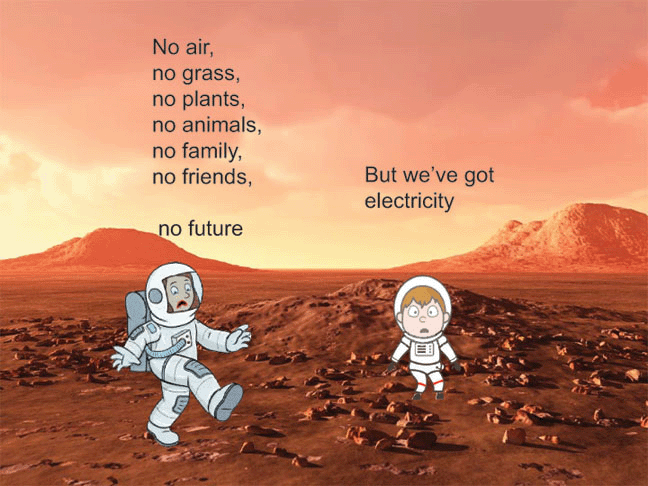
NASA ready to radioactively trash another planet – no plan for disposal of wastes from nuclear reactors on Mars

We Now Have A Working Nuclear Reactor for Other Planets — But No Plan For Its Waste,
Futurism, If the power goes out in your home, you can usually settle in with some candles, a flashlight, and a good book. You wait it out, because the lights will probably be back on soon.
But if you’re on Mars, your electricity isn’t just keeping the lights on — it’s literally keeping you alive. In that case, a power outage becomes a much bigger problem.
NASA scientists think they’ve found a way to avoid that possibility altogether: creating a nuclear reactor. This nuclear reactor, known as Kilopower, is about the size of a refrigerator and can be safely launched into space alongside any celestial voyagers; astronauts can start it up either while they’re still in space, or after landing on an extraterrestrial body.
The Kilopower prototype just aced a series of major tests in Nevada that simulated an actual mission, including failures that could have compromised its safety (but didn’t).
………. Nuclear reactors are not an unusual feature in space; the Voyager 1 and 2 spacecraft, now whizzing through deep space after departing our solar system, have been running on nuclear energy since they launched in the 1970s. The same is true for the Mars rover Curiosity since it landed on the Red Planet in 2012.
But we’d need a lot more reactors to colonize planets. And that could pose a problem of what to do with the waste.
If the power goes out in your home, you can usually settle in with some candles, a flashlight, and a good book. You wait it out, because the lights will probably be back on soon.
But if you’re on Mars, your electricity isn’t just keeping the lights on — it’s literally keeping you alive. In that case, a power outage becomes a much bigger problem.
NASA scientists think they’ve found a way to avoid that possibility altogether: creating a nuclear reactor. This nuclear reactor, known as Kilopower, is about the size of a refrigerator and can be safely launched into space alongside any celestial voyagers; astronauts can start it up either while they’re still in space, or after landing on an extraterrestrial body.
But we’d need a lot more reactors to colonize planets. And that could pose a problem of what to do with the waste.
According to Popular Mechanics, Kilopower reactors create electricity through active nuclear fission — in which atoms are cleaved apart to release energy. You need solid uranium-235 to do it, which is housed in a reactor core about the size of a roll of paper towels. Eventually, that uranium-235 is going to be “spent,” just like fuel rods in Earth-based reactors, and put nearby humans at risk.
When that happens, the uranium core will have to be stored somewhere safe; spent reactor fuel is still dangerously radioactive, and releases lots of heat. On Earth, most spent fuel rods stored in pools of water that keep the rods cool, preventing them from catching fire and blocking radiating radioactivity. But on another planet, we’d need any available water to, you know, keep humans alive.
…….Right now, all we can do is speculate — as far as we know, NASA doesn’t have any publicly available plan for what to do with spent nuclear fuel on extraterrestrial missions. That could be because the Kilopower prototype just proved itself actually feasible. But not knowing what to do with the waste from it seems like an unusual oversight, since NASA is planning to go back to the Moon, and then to Mars, by the early 2030s.
And in case you were wondering, no, you can’t just shoot the nuclear waste off into deep space or into the sun; NASA studied that way back in the 1970s and determined it was a pretty terrible idea. Back to the drawing board. https://futurism.com/nuclear-reactor-space-waste/
NASA again hyping its plans for nuclear reactors on Mars
NASA demos little nuclear power plant to help find little green men, Kilopower experiment looks good for 10 kilowatts on the Moon, Mars or beyond By Simon Sharwood, APAC Editor 3 May 2018 NASA has announced successful tests of a small fission reactor capable of producing about 10 kilowatts of power, and hopes the technology will prove suitable for use on the Moon or Mars.
1 This Month

Tell Congress: Prevent Nuclear Catastrophe in Iran

Tell Congress: Prevent Nuclear Catastrophe in Iran

Read the Public Inquiry Report, the Commissioners’ report, Surrendering Australia: The AUKUS Deception is available to download for free at aukuspublicinquiry.com. Or just watch the replay of the National Press Club Luncheon.

19 November – Webinar – The Reality of Reprocessing
Time: 11:00 AM Pacific Time (US & Canada) / 2:00 PM Eastern / 7:00 PM UK / 8:00 PM CET
Register for the Zoom Event Here


Shut down the radiation-damaged Heysham nuclear reactors now
To see nuclear-related stories in greater depth and intensity – go to https://nuclearinformation.wordpress.com

Say No to NASA’s Reckless Nuclear Reactor on the Moon
Say No to NASA’s Reckless Nuclear Reactor on the Moon
-
Archives
- November 2026 (147)
- October 2026 (302)
- September 2026 (339)
- August 2026 (330)
- July 2026 (355)
- June 2026 (287)
- May 2026 (306)
- April 2026 (356)
- March 2026 (251)
- February 2026 (267)
- January 2026 (308)
- December 2025 (358)
-
Categories
- 1
- 1 NUCLEAR ISSUES
- business and costs
- climate change
- culture and arts
- ENERGY
- environment
- health
- history
- indigenous issues
- Legal
- marketing of nuclear
- media
- opposition to nuclear
- PERSONAL STORIES
- politics
- politics international
- Religion and ethics
- safety
- secrets,lies and civil liberties
- spinbuster
- technology
- Uranium
- wastes
- weapons and war
- Women
- 2 WORLD
- ACTION
- AFRICA
- Atrocities
- AUSTRALIA
- Christina's notes
- Christina's themes
- culture and arts
- Events
- Fuk 2022
- Fuk 2023
- Fukushima 2017
- Fukushima 2018
- fukushima 2019
- Fukushima 2020
- Fukushima 2021
- general
- global warming
- Humour (God we need it)
- Nuclear
- RARE EARTHS
- Reference
- resources – print
- Resources -audiovicual
- Weekly Newsletter
- World
- World Nuclear
- YouTube
-
RSS
Entries RSS
Comments RSS

