nuclear-news

The News That Matters about the Nuclear Industry Fukushima Chernobyl Mayak Three Mile Island Atomic Testing Radiation Isotope

Saudi Arabia, Israel, dictating to Trump USA foreign policy on Iran nuclear deal?

Trump Outsources US Foreign Policy to Riyadh, Tel Aviv Over Iran Deal – Analysts https://sputniknews.com/us/201805101064310160-usa-trump-iran-foreign-policy/  Jonathan Ernst 17 10.05 WASHINGTON (Sputnik) – The United States by exiting the Iran nuclear agreement has now essentially outsourced US foreign policy in the Middle East to both Israel and Saudi Arabia, analysts told Sputnik.

On Wednesday, White House Press Secretary Sarah Sanders told reporters the United States is ready to announce an additional set of sanctions against Iran as early as next week in response to its alleged development of nuclear weapons.

President Donald Trump on Tuesday announced that the United States was withdrawing from the 2015 Joint Comprehensive Plan of Action (JCPOA), signed by the P5+1 and EU, which ensures Iran’s nuclear program remains peaceful in exchange for sanctions relief. In addition, the US Treasury said it would reimpose the highest-level economic sanctions possible on Iran.

In the week prior to Trump’s decision Israeli Prime Minister Benjamin Netanyahu in an internationally-broadcast address presented old intelligence and tried to claim that Tehran was continuing to develop nuclear weapons.

In fact, Iran has remained compliant under the conditions of the JCPOA as verified by the IAEA in 11 reports since January 2016 — a reality US Secretary of State Michael Pompeo even admitted during his confirmation hearings.

Israeli, Saudi Victory

Retired US Army Major and historian Todd Pierce told Sputnik that Trump’s announcement was a triumph for the leaders of Israel and Saudi Arabia, both of whom want the United States to confront Iran.

“Trump has placed US foreign policy in the hands of the coalition of Israel under Netanyahu and Saudi Arabia under [Crown Prince] Mohammad bin Salman, which his son in law Jared Kushner helped bring together to collectively wage war against Iran and Syria,” he said.

Trump’s statement on why he was pulling out of the international nuclear agreement with Iran was expressed in terms that made it sound like Trump was determined to go to war, Pierce observed.”Constructively, in effect, Trump’s talk sounded like a declaration of war against Iran, with the first step being to tighten up the ‘blockade’ of Iran, meaning in the 21st century version of that, US sanctions,” Pierce said.

Trump’s address was also notable for how closely it followed the arguments made eight days earlier by Netanyahu in his efforts to persuade the US government and Congress to scrap the agreement, Pierce pointed out.

Trump, like his ally and friend Netanyahu had shown scant regard for factual accuracy in his presentation.Trump was not an extremist or aberration in setting such policies but was fulfilling goals that had been followed for decades, Pierce pointed out.

Tehran Undaunted

Global peace activist and expert on the medical dangers of nuclear energy, Dr. Helen Caldicott, told Sputnik that she expected Tehran to continue honoring its commitmentsunder the 2015 nuclear accord.

“I think there will not be a nuclear arms race in the Middle East despite the fact that Israel was vehemently opposed to the treaty and surreptitiously lobbied against it with the powers that be in the US,” Caldicott said.

Caldicott, founder of Physicians for Social Responsibility, the organization that was the co-winner of the 1985 Nobel Peace Prize, noted that Iranian President Hassan Rouhani had pledged to remain in the accord.

“Rouhani says that Iran will abide by the JCPOA, a stand which I intuitively had predicted,” she said. “It also seems clear that the European nations will definitely not abide by Trump’s terms of increased sanctions, after begging him to comply.”
The United States still needed to realize that Russia was not an ideological enemy of the West any more the way the Soviet Union had been throughout the Cold War, Caldicott maintained.

“If America could come to its senses and decide that all nuclear weapons are useless symbols of annihilation and have absolutely nothing to do with ‘defense’ it could lead the world to sanity, survival and nuclear disarmament,” she said.

Saudi Foreign Minister Adel Jubeir said on Wednesday that the country may start development of nuclear weapons if Iran continues its nuclear program.

Caldicott is the author of many books, including “The New Nuclear Danger: George W. Bush’s Military Industrial Complex” and “War in Heaven:” The Arms Race in Outer Space.” The Smithsonian Institution has named her one of the most influential women of the 20th century.


May 11, 2018 Posted by | Iran, Israel, politics international, Saudi Arabia, USA | Leave a comment

Bechtel engineering very happy at prospect of selling nuclear technology to Saudi Arabia

US engineering giant sees ‘tremendous opportunity’ in Saudi nuclear energy plans https://www.cnbc.com/2018/05/10/bechtel-executive-us-firms-should-be-involved-in-saudi-nuclear-plans.html  –Saheli Roy Choudhury

  • A senior executive at engineering giant Bechtel told CNBC on Thursday that U.S. businesses should be involved in Saudi Arabia’s civilian nuclear energy ambitions.
  • The presence of American firms would likely be welcomed by the Saudis and should also be welcomed by the U.S. government, according to Stuart Jones, regional president for Europe and Middle East at Bechtel.
  • Saudi Arabia has plans to construct 16 nuclear power reactors over the next 20 to 25 years, costing more than $80 billion.

May 11, 2018 Posted by | business and costs, marketing, Saudi Arabia, USA | 1 Comment

Expert commentary on the Trump decision to leave the Iran nuclear deal: its implications for North Korea

The Trump decision: dangerous, irresponsible, and full of implications for North Korea https://thebulletin.org/commentary/trump-decision-dangerous-irresponsible-and-full-implications-north-korea11802 EXPERT COMMENTARY 9 MAY 2018, Kelsey Davenport, director for nonproliferation policy, Arms Control Association

Trump’s decision to reimpose sanctions on Iran clearly violates the multilateral Iran nuclear deal, known officially as the Joint Comprehensive Plan of Action (JCPOA). While the move is unsurprising—given Trump’s failure to recognize the nonproliferation value of the deal and frequent threats to walk away—it is dangerous and irresponsible, and it risks manufacturing a nuclear crisis that the international community cannot afford.

There was no legitimate reason for Trump to reimpose sanctions. For the past two years, the nuclear deal has verifiably restricted Iran’s nuclear program and subjected it to intrusive monitoring and verification. Even critics of the deal, such as Secretary of State Mike Pompeo, have admitted that there is no evidence that Iran is in violation of the agreement.

Trump’s main criticism—that the deal paves the way to an Iranian nuclear weapon in 10 years—is based on a flawed analysis that discounts the value that the permanent monitoring mechanisms and prohibitions put in place by the deal possess. They are a bulwark against nuclear weapons development.

By violating the deal, Trump has only isolated the United States and undermined Washington’s credibility. His “plan B” —to negotiate a “better deal” with Iran— is completely unrealistic. After this clear demonstration that the United States cannot be counted on to implement an agreement in good faith, Trump will hard pressed to gain any support for sanctions, let alone new talks. As a result, Trump is inciting a proliferation crisis, rather than working with allies to develop a long-term diplomatic strategy that would build on the agreement in the years ahead and address Iran’s malign activities outside of the accord.

Despite Trump’s reckless decision to reimpose sanctions, it would be premature to declare the nuclear deal dead. The JCPOA is a multilateral agreement endorsed by the UN Security Council and Washington’s P5+1 partners—China, France, Germany, Russia, and the United Kingdom—which have pledged to implement the deal, irrespective of US actions. And these states and the European Union have powerful tools at their disposal to block the secondary effects of US sanctions.

It will be critical that these states move quickly to insulate legitimate business from US sanctions, demonstrating to Iran that there is still an incentive—trade with Europe and other developed economies—to continue abiding by the nuclear commitments made under the accord. Failure to ensure that Iran has international trading opportunities will make it more likely that Tehran will respond to Trump’s violation by breaching the nuclear limits. While Iran is unlikely to dash for a bomb, Iranian officials have left the door open to restart uranium enrichment to 20 percent uranium 235, a level of fissionable material currently prohibited by the deal. If Iran choses this path it would destabilize the region and increase the risks of conflict.

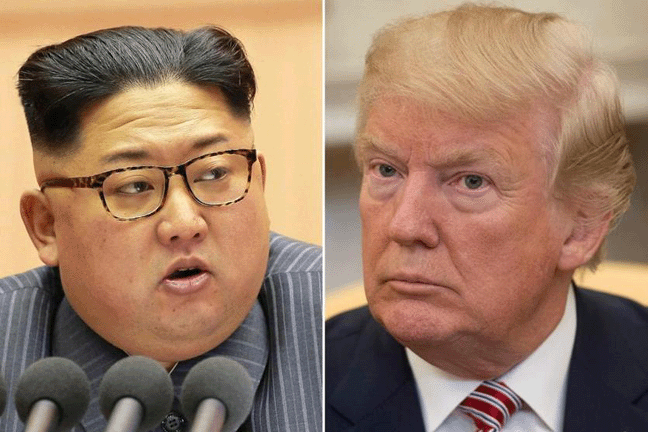
Trump’s decision has nonproliferation consequences beyond Iran. Trump is about to sit down at an important summit with North Korean leader Kim Jong-un to discuss denuclearization of the Korean peninsula. Violating the Iran deal undermines US credibility in those negotiations and sends a message to Kim Jong-un that even if an agreement is reached and North Korea abides by its terms, there’s no guarantee that Washington will fulfill its commitments. This is a dangerous precedent to set and risks this historic opportunity to de-escalate tensions with North Korea.

May 11, 2018 Posted by | Iran, North Korea, politics international, USA | Leave a comment

Trump tweets that the U.S.-North Korea summit will be held in Singapore on June 12th

Singapore will host U.S.-North Korea summit, nuclear issue to dominate Steve Holland, Matt Spetalnick  WASHINGTON (Reuters), 11 May 18 Leaders of the United States and North Korea will meet for the first time when President Donald Trump and Kim Jong Un hold a summit on June 12 in Singapore where the U.S. side will try to persuade Pyongyang to give up its nuclear weapons.

…….. “The highly anticipated meeting between Kim Jong Un and myself will take place in Singapore on June 12th. We will both try to make it a very special moment for World Peace!” Trump wrote on Twitter…….

Trump is embarking on this high-stakes meeting with Kim after sending shockwaves through the world on Tuesday when he announced that the United States was pulling out of a 2015 accord imposing international oversight of Iran’s nuclear program.

The move raised questions over whether North Korea might now be less inclined to negotiate its own nuclear deal with Washington.

Trump and Japanese Prime Minister Shinzo Abe spoke by telephone on Wednesday and the White House said the two leaders “affirmed the shared goal of North Korea abandoning its illicit weapons of mass destruction and ballistic missile programs” and remained committed to cooperating with South Korea.

Japan worries that it could be the target of any first-use of nuclear weapons by Pyongyang.

……… Kim recently promised to suspend missile tests and shut a nuclear bomb test site.

North Korea is still technically at war with the United States and its ally South Korea because the 1950-53 Korean War ended in a truce, not a treaty.

The choice of Singapore will put the summit on friendly turf for Trump, as the island nation is a strong U.S. ally and the U.S. Navy frequently visits its port.

The wealthy financial and shipping hub is seen as a gateway between Asia and the West and has been called the “Switzerland of Asia,” in contrast to North Korea’s isolated economy that its leaders now want to modernize.

Nonetheless, Human Rights Watch has described Singapore as having a “stifling” political environment with severe restrictions on “basic rights.”……… https://www.reuters.com/article/uk-northkorea-usa/singapore-will-host-us-north-korea-summit-nuclear-issue-to-dominate-idUSKBN1IB240

May 11, 2018 Posted by | North Korea, politics international, USA | Leave a comment

Donald Trump exits the Iran nuclear deal: its future now uncertain

Trump withdraws from the Iran nuclear deal. What now?  Bulletin of the Atomic Scientists, John Mecklin  May 18 

With his decision today to withdraw the United States from the Iran nuclear deal, US President Donald Trump has put the long-term future of the deal in doubt, at the very least. In a televised announcement from the White House, Trump said the United States would reimpose the “highest level” of economic sanctions against Iran and would hold other nations accountable for violating those sanctions. During his truculent presentation, Trump asserted that the Iran nuclear deal—known officially as the Joint Comprehensive Plan of Action, or JCPOA—was “horrible” and “one-sided.” Even if Iran complied with the terms of the “decaying and rotten structure” of the JCPOA, the president claimed, it could move to the verge of creating nuclear weapons in “a very short time” even as it continued to build nuclear-capable missiles and support terrorism across the Middle East and the world. (The president’s claims run counter to the assessments of the numerous international security experts who note that the JCPOA’s intrusive inspection regime and other components would prevent Iran from acquiring nuclear weapons indefinitely.)

As he announced US withdrawal from the Iran deal, Trump threatened dire consequences for Iran if it resumed work toward nuclear weapons. At the same time, he asserted that his administration would work with allies toward a new deal that he was “ready, willing and able” to negotiate with Iran. Iran has previously insisted it will not renegotiate the JCPOA.

In the immediate aftermath of Trump’s decision, it was unclear how Iran, the other five countries that agreed to the JCPOA—Russia, China, the UK, France, and Germany—and the rest of the world would respond over the long term. The Bulletin invited a wide variety of top international security experts to provide comments on Trump’s decision and its potentially wide-ranging ramifications. Their responses are published below, in hopes they will help the international community find the best possible path forward. ………. https://thebulletin.org/trump-withdraws-iran-nuclear-deal-what-now11791


May 11, 2018 Posted by | Iran, politics international, USA | Leave a comment

America got the Iran nuclear program going

How America Jump-Started Iran’s Nuclear Program, History,  // MAY 9, 2018 

For several decades now, the U.S. has sought to deter Iran from developing nuclear weapons. But ironically, the reason Iran has the technology to build these weapons in the first place is because the U.S. gave it to Iran between 1957 and 1979. This nuclear assistance was part of a Cold War strategy known as “Atoms for Peace.”

The strategy’s name comes from Dwight Eisenhower’s “Atoms for Peace” speech, given before the United Nations General Assembly in 1953. In it, he suggested that promoting the non-military use of nuclear technology could discourage countries from using it to create nuclear weapons, or “Atoms for War.”

The speech came only eight years after the invention of the atomic bomb, at a time when the U.S. was anxious to keep these new and frightening weapons from proliferating around the world. Strange as it sounds, President Eisenhower viewed his “Atoms for Peace” strategy partly as a form of arms control.

“He thought that sharing nuclear technology for peaceful purposes would reduce the incentives of countries to want to make nuclear bombs,” says Matthew Fuhrmann, a political science professor at Texas A&M University and author of Atomic Assistance: How “Atoms for Peace” Programs Cause Nuclear Insecurity. ……..

the U.S. provided nuclear assistance to countries it wanted to influence, such as Israel, India, Pakistan, and Iran.

At the time, the U.S. was closely allied with Iran’s Shah, Mohammad Reza Pahlavi. So closely, in fact, that when Iran toppled the Shah’s monarchy and democratically elected a prime minister, the CIA staged a 1953 coup d’état that put the Shah back in power. Part of the reason the U.S. valued Iran as an ally was because of its strategic location bordering the Soviet Union. During the early part of the Cold War, the U.S. set up a base in Iran to monitor Soviet activity.

In this context, the United States’ nuclear cooperation with Iran “was, in part, a means to shore up the relationship between those countries,” Fuhrmann says. The cooperation lasted until 1979, when the the Iranian Revolution ousted the Shah and the U.S. lost the country as an ally.

All of the nuclear technology the U.S. provided Iran during those years was supposed to be for peaceful nuclear development. But the “Atoms for Peace” strategy ended up having some unintended consequences.

“A lot of that infrastructure could also be used to produce plutonium or weapons-grade, highly-enriched uranium, which are the two critical materials you need to make nuclear bombs,” Fuhrmann says. In effect, the U.S. laid the foundations for the Iranian nuclear weapons program.

Iran first became seriously interested in creating nuclear weapons during the 1980s Iran-Iraq War. It tried unsuccessfully to develop them in the late ‘90s and early 2000s. Still, Iranian nuclear development remains an international concern, especially now that Trump has withdrawn the U.S. from the 2015 Iranian nuclear deal, known as the Joint Comprehensive Plan of Action.

In the weeks leading up to Trump’s decision, Israeli Prime Minister Benjamin Netanyahu tried to convince him to exit the deal by arguing that Iran was still pursuing nuclear weapons. Other policy experts and world leaders have rejected this claim, and Fuhrmann says he’s seen no evidence that “Iran has violated the deal, or that Iran has done anything since 2003 … to build nuclear bombs.”

However, now that the U.S. has withdrawn from the nuclear deal, Fuhrmann worries “Iran is going to have incentives to do those things, whereas under the deal, those incentives were greatly reduced.” https://www.history.com/news/iran-nuclear-weapons-eisenhower-atoms-for-peace

May 11, 2018 Posted by | history, Iran, USA | Leave a comment

U.S. Congress approves bill to revive Nevada nuclear waste dump plan

House approves bill to revive Nevada nuclear waste dump    WP,  May 10   WASHINGTON — The House on Thursday approved an election-year bill to revive the mothballed nuclear waste dump at Nevada’s Yucca Mountain despite opposition from home-state lawmakers.

Supporters say the bill would help solve a nuclear-waste storage problem that has festered for more than three decades. More than 80,000 metric tons of spent fuel from commercial nuclear power plants sit idle in 121 communities across 39 states.

The bill would direct the Energy Department to continue a licensing process for Yucca Mountain while also moving forward with a separate plan for a temporary storage site in New Mexico or Texas.

The House approved the bill, 340-72, sending the measure to the Senate, where Nevada’s two senators have vowed to block it.

“The House can vote all they want to revive #YuccaMountain, but let’s be clear – any bill that would turn Nevadans’ backyards into a nuclear waste dump is dead on arrival,” Democratic Sen. Catherine Cortez Masto tweeted. “Yucca will never be anything more than a hole in the ground.”

……. “The House can vote all they want to revive #YuccaMountain, but let’s be clear – any bill that would turn Nevadans’ backyards into a nuclear waste dump is dead on arrival,” Democratic Sen. Catherine Cortez Masto tweeted. “Yucca will never be anything more than a hole in the ground.”

……..While the fight over Yucca resumes, lawmakers say they hope to make progress on a plan to temporarily house tons of spent fuel that have been piling up at nuclear reactors around the country. Private companies have proposed state-of-the-art, underground facilities in remote areas of west Texas and southeastern New Mexico to store nuclear waste for up to 40 years.

The nuclear industry has said temporary storage must be addressed since the licensing process for Yucca Mountain would take years under a best-case scenario. https://www.washingtonpost.com/politics/federal_government/house-takes-up-bill-to-revive-nevada-nuclear-waste-dump/2018/05/10/87ec7cac-540b-11e8-a6d4-ca1d035642ce_story.html?noredirect=on&utm_term=.68


May 11, 2018 Posted by | politics, USA, wastes | Leave a comment

USA, Australia, want to keep fossil fuel lobbyists in climate talks – developing nations want them OUT

US, Australia fight push to bar fossil fuel interests from climate talks https://reneweconomy.com.au/us-australia-fight-push-bar-fossil-fuel-interests-climate-talks-14266/ By Natasha Geiling on 11 May 2018  ThinkProgress  

For nine days, representatives from governments across the globe have been meeting in Bonn, Germany, to hammer out details of the Paris climate agreement.

But participating at the talks alongside diplomatic representatives and environmental groups are some perhaps unexpected parties — like the U.S. Chamber of Commerce, which has long opposed climate regulations and is a vocal proponent of fossil fuels.

A coalition of developing nations in Africa and Latin America had hoped to draw attention to the influence that the fossil fuel industry maintains over the climate negotiation process with a formal acknowledgement of conflicts of interest at the conclusion of the talks in Bonn this week.

But developed nations — led largely by the United States — succeeded in preventing such a formal acknowledgement from being included in the meeting’s final notes.

Conflicts of interest within the United Nations Framework Convention on Climate Change (UNFCC) — the international treaty that dictates the UN’s annual climate conferences — aren’t a new phenomenon.

In 2015, companies like Engie — a utility company that gets more than 70 percent of its energy output from fossil fuels — were financial sponsors of the Paris climate talks.

But this year, developing nations — alongside environmental groups — have been working to make eliminating conflicts of interest a central part of the climate negotiations moving forward, much to the chagrin of countries like the United States and Australia.

“Every institution, especially of this scale, has some kind of policy to identify and mitigate internal conflict of interests,” Jesse Brag, media director for Corporate Accountability, which has been campaigning to make conflicts of interest within the United Nations climate negotiations a central issue since 2015, told ThinkProgress.

“Right now, there is no acknowledgement [within the UNFCCC] that there could be problems that arise from the financial interests of businesses and NGOs operating here.”

There are a few ways in which fossil fuel companies — or industry groups that represent fossil fuel companies — have already influenced UN climate negotiations.

At the Paris climate negotiations in 2015, for instance, fossil fuel companies that sponsored the talks were given access to “communications and networking” areas in rooms where negotiations were taking place.

The text of the Paris climate agreement, which calls for limiting global warming to “well below 2 degrees Celsius” (3.6 degrees Fahrenheit) doesn’t mention the term “fossil fuels” once, despite the fact that burning fossil fuels is the primary action driving climate change.

And the UNFCCC’s Climate Technology Network, which promotes the adoption of low carbon technology in developing countries, includes a member of the World Coal Association.

Developing nations, alongside NGOs like Corporate Accountability, had hoped to get parties on the record this year acknowledging that conflicts of interest exist within the climate negotiations.

They had also hoped that such acknowledgement would be followed by policy suggestions aimed at helping root out conflicts of interest within the process.

That effort was largely waylaid due to intense opposition from the United States, which refused to allow any mention of conflicts of interest or fossil fuel companies into the meeting’s official notes.

But a coalition of governments representing 70 percent of the world’s population — largely from developing countries in Latin America and Africa — did succeed in getting parties to agree to keep talking about the issue at climate negotiations next year.

That might seem like a small victory, but Bragg argues it’s an important signal that the culture of the talks — as well as general recognition of the issue of conflicts of interest within the negotiations — is starting to change.

“Three years ago, no one wanted to talk about the fossil fuel industry’s role in climate denial in these talks,” Bragg said. “Now, it’s a discussion that is happening in every area of these halls. As the process advances, so does the culture around what needs to be done.”

It is unsurprising that the United States — which is still a party to the UNFCCC even as President Trump has promised to withdraw from the Paris climate agreement — would oppose efforts to draw attention to conflicts of interest between environmental treaties and fossil fuel companies.

Under the Trump administration, several high-profile environmental regulator posts have been filled by people who previously represented the industries that they now oversee.

Environmental Protection Agency (EPA) Deputy Administrator Andrew Wheeler, for instance, came to the EPA after working as a lobbyist for Murray Energy, the largest privately-owned coal firm in the United States.

Nancy Beck, who is currently the highest-ranking political appointee at overseeing regulation of the chemical industry at the EPA, used to work for the American Chemical Council , the chemical industry’s main lobbying organization.

And over at the Department of the Interior, Deputy Secretary David Bernhardt came to the agency after working for years as a lobbyist in the natural resources department of the firm Brownstein Hyatt Farber Schreck.


May 11, 2018 Posted by | AUSTRALIA, climate change, politics international, USA | Leave a comment

US sanctions Iran currency network after Trump pulls out of nuclear deal

 CNBC 10 May 18 

May 11, 2018 Posted by | Iran, politics international, USA | Leave a comment

Sacramento keen to get rid of its more than two hundred tons of nuclear waste

 bipartisan negotiations  produced “a separate path to interim storage, decoupling it from a permanent repository.”

Sacramento Municipal Utility District (SMUD) SMUD estimates that it spends roughly $5 million each year to essentially “babysit” the waste, which requires tight security and a small crew to oversee its proper storage.

Tons of nuclear waste sitting near Sacramento finally might move http://www.sacbee.com/latest-news/article210858009.html   BY EMILY CADEI ecadei@mcclatchydc.com WASHINGTON 10 May 18, 

More than two hundred tons of nuclear waste have been sitting a half-hour drive from downtown Sacramento for decades, as policymakers in Washington haggle over where to send the material.

A breakthrough in Congress Thursday improves the chances that the Sacramento Municipal Utility District (SMUD) will finally be able remove the spent uranium fuel stored at the decommissioned Rancho Seco nuclear power plant since 1989.

It would ultimately mean lower costs for local ratepayers.

The House of Representatives on Thursday overwhelmingly passed the Nuclear Waste Policy Amendments Act, which represents a bipartisan compromise on nuclear waste disposal. The legislation restarts work on the controversial nuclear waste storage site at Yucca Mountain, Nevada, as Republicans favor. But it also authorized the temporary storage of nuclear waste at other sites. Democrats have supported interim storage provisions, but until now, House Republicans refused to consider that option, independent of resolving Yucca Mountain’s status.

“When this bill was first presented in committee, the licensing of an interim storage facility was linked to a final decision on Yucca Mountain,” noted Democratic Rep. Doris Matsui of Sacramento, who was one of the key players in the negotiations that led to the bill’s passage. That “meant that our nation’s nuclear waste could continue to be stranded at decommissioned plants in California and across the country.”

Speaking on the House floor before the vote, Matsui hailed the bipartisan negotiations that produced “a separate path to interim storage, decoupling it from a permanent repository.”

It’s unclear where the waste would go. Two private companies have already applied to take the uranium spent fuel from SMUD and other nuclear facilities, creating a much more immediate storage option than Yucca Mountain, which has yet to be constructed and faces intense local opposition.

SMUD is eager to rid itself of the 228.8 metric tons of uranium spent fuel and 13.6 metric tons of metal from the reactors, dubbed Greater Than Class C waste, stored in casks on the site in Herald, Calif., just east of Galt.

The waste has resided there for nearly 30 years now, ever since Sacramento voters elected to shut down the plant in June 1989. That vote came after a 1986 cooling accident at the plant that came close to triggering a reactor meltdown. And it made Sacramento the first community to shutter a nuclear plant by public vote anywhere in the world.

SMUD estimates that it spends roughly $5 million each year to essentially “babysit” the waste, which requires tight security and a small crew to oversee its proper storage. On Thursday, SMUD CEO and General Manager Arlen Orchard called the uranium’s removal one of SMUD’s “top legislative priorities.”

“Not only will this legislation save our customers money,” Orchard said, “it will also allow us to restore the site to a beneficial use, such as expanding our nearby solar array or pursuing other renewable energy projects.”

First, however, the bill has to pass the Senate, which will be difficult. Nevada’s senators oppose any move to advance Yucca Mountain and Republican leaders aren’t inclined to hold a vote on legislation that could hurt their Nevada colleague, Dean Heller, who faces a tough Democratic challenge in 2018.

But the strong bipartisan vote in the House sends an important signal to Nuclear Regulatory Commission, which is attempting to push forward on interim storage removal on its own. The House’s ability to reach an elusive policy agreement on nuclear waste could prompt the Senate to move forward after the election.


May 11, 2018 Posted by | USA, wastes | Leave a comment

Executives of unfinished South Carolina got $9 million in performance bonuses from state utility

South Carolina’s state utility paid bonuses to private execs WP,  May 9 2018  COLUMBIA, S.C. — South Carolina’s state owned utility paid $9 million in performance bonuses to executives of a private utility for two nuclear reactors that were never finished, according to the public utility and emails turned over to state and federal investigators.

SCANA Corp. even billed taxpayer-supported Santee Cooper $3.2 million for bonuses in August, a month after the utilities abandoned 10 years of construction and planning for the reactors, according to the emails released by Gov. Henry McMaster’s office on Wednesday.

Santee Cooper refused to pay, utility spokeswoman Mollie Gore said.

“I will not approve this invoice,” Senior Vice President for Nuclear Energy Michael Crosby wrote in one email. “I may get over-ridden … but if SCANA cares to push this … CFOs & CEOs will need to get involved.”

Crosby also suggested letting SCANA CEO Jimmy Addison know his company was still seeking performance bonuses after the reactors were abandoned, and suggested that other executives “man-up and ask if he wants to push this,” according to the emails……..

The invoices indicated at least $5 million of bonuses paid to SCANA executives, but Gore said Santee Cooper’s records showed the public utility paid $8.9 million to the executives at the private firm.

The governor also sent the emails to legislative leaders, asking senators to confirm his nominee to run the Santee Cooper board as soon as possible.

“Santee Cooper’s customers, including individuals and the electric cooperatives of our state, deserve to know how their hard earned money is being spent by the utility, and now, we know that much of it was going to pay SCANA executives’ bonuses related to the failed reactors,” Symmes said in a statement.

……. Also on Wednesday, South Carolina lawmakers made a last-minute push to pass several bills to give ratepayers temporary relief and pass regulations to prevent anything like this from happening again.A committee of House members and senators could not reach a compromise on how much to cut a charge that customers of South Carolina Electric & Gas — a SCANA subsidiary — pay for the abandoned reactors.

……. The Senate tentatively approved repealing the Base Load Review Act which allowed utilities to charge ratepayers for the nuclear plants before they ever generated a watt of power. Nine different rate increases were passed during the 10 years of planning and construction on the reactors…… https://www.washingtonpost.com/national/south-carolinas-state-utility-paid-bonuses-to-private-execs/2018/05/09/c91148a4-53e6-11e8-a6d4-ca1d035642ce_story.html?noredirect=on&utm_term=.491


May 11, 2018 Posted by | business and costs, politics, USA | Leave a comment

Call from Michigan to stop nuclear waste dumping near Great Lakes

No nuclear waste near Great Lakes, Detroit News Debbie Dingell and Fred Upton  May 9, 2018  

May 11, 2018 Posted by | Canada, USA, wastes | Leave a comment

Saudi Arabia applauds Donald Trump in pulling out of the Iran nuclear deal

Saudi Arabia says backs U.S. decision to withdraw from Iran nuclear deal, Reuters Staff  RIYADH (Reuters) 9 May 18- Saudi Arabia welcomed President Donald Trump’s decision on Tuesday to withdraw the United States from the international nuclear agreement with Iran and to reimpose economic sanctions on its arch-foe Tehran.

The kingdom, a key U.S. ally, said it would work with the United States and the international community to address Iran’s nuclear program as well as its ballistic missile program and support of militant groups in the region……..

It confirmed “the need to deal with the danger that Iran’s policies pose to international peace and security through a comprehensive view that is not limited to its nuclear program but also includes all hostile activities” in the region……..

Saudi Arabia has called the 2015 nuclear deal a “flawed agreement”, and in March Saudi Crown Prince Mohammed bin Salman told CBS news that his kingdom would “without a doubt” develop nuclear weapons if Iran did so.

 The Sunni Muslim kingdom has been at loggerheads with Shi’ite Iran for decades. They have fought a long-running proxy war in the Middle East and beyond, backing opposing sides in armed conflicts and political crises including in Iraq, Syria, Lebanon and Yemen.

Reporting by Stephen Kalin and Sarah Dadouch; Writing by Ghaida Ghantous; Editing by Michael Georgy and Hugh Lawson  https://www.reuters.com/article/us-iran-nuclear-gulf/saudi-arabia-says-backs-u-s-decision-to-withdraw-from-iran-nuclear-deal-idUSKBN1I92SH

May 9, 2018 Posted by | politics international, Saudi Arabia, USA | Leave a comment

  Idaho State University Lost Enough Weapons-Grade Plutonium to Make a Dirty Bomb. 

Motherboard 8th May 2018.On Friday, the Nuclear Regulatory Commission announced that Idaho
State University may face an $8,500 fine after losing one gram of
weapons-grade plutonium. Although this quarter-sized amount of plutonium is
nowhere near enough to make a nuclear weapon, it is enough to make a dirty
bomb that spreads radiation, according to the Associated Press.
https://motherboard.vice.com/en_us/article/evqjp4/idaho-state-university-lost-enough-weapons-grade-plutonium-to-make-a-dirty-bomb

May 9, 2018 Posted by | - plutonium, secrets,lies and civil liberties, USA | Leave a comment

U.S. Department of Energy sending helicopters to measure radiation levels

UF flyovers part of DOE radiation study http://www.gainesville.com/news/20180508/uf-flyovers-part-of-doe-radiation-study

The flyovers are part of a research project measuring baseline levels of radiation in the environment.

The U.S. Department of Energy’s National Nuclear Security Administration says the public shouldn’t be alarmed by a low-flying helicopter near the University of Florida.

It’s a part of a routine procedure, officials say.

According to a Department of Energy press release, the public might see a twin-engine Bell 412 helicopter flying at about 150 feet or higher around UF and in Gainesville until early Wednesday evening.

The helicopter is operated by the Remote Sensing Laboratory Aerial Measuring System from Joint Base Andrews in Prince George’s County, Maryland, and is equipped with radiation-sensing technology.

The manned helicopter will fly in a grid pattern over the area at about 80 miles per hour, the release says.

The flyovers are part of a research project measuring baseline levels of radiation in the environment.

May 9, 2018 Posted by | radiation, USA | Leave a comment