New regulations coming for US nuclear plants 8 years after Fukushima disaster , Washington Examiner, by John Siciliano March 12, 2019
,
Federal regulators are marking the eight-year anniversary of the horrendous tsunami and nuclear power plant disaster that rocked Fukushima, Japan, by issuing major new regulations this spring to harden the U.S. power plant fleet against multiple threats that could lead to similar disasters in the United States.
The new rules seek to codify individual actions taken by power plant operators at the behest of the federal Nuclear Regulatory Commission in the wake of the March 11, 2011, disaster…….
The forthcoming post-Fukushima regulation, called the “Mitigation of Beyond-Design-Basis Events rule,” is slated to go into effect this spring, giving utilities and power plant operators a little more than two years to comply with new safety procedures to guard against an incident such as an earthquake, or other event, that could cause a radiation leak and environmental disaster.
The regulation is considered a “major rule” because its cost will exceed $100 million, according to the draft rule’s impact analysis.
The rule will require commercial reactors to do three things that include physically modifying the plants to protect reactor cores while adding new planning and monitoring practices.
First, power plant owners must put in place the resources and implement the procedures required to keep a reactor’s core cool in the event a power plant’s emergency electricity supply is knocked out. Similar procedures and resources must be adopted to keep fuel rod pools, where a power plant stores its radioactive waste, full of water, following any event that knocks out all of a plant’s emergency power supplies.
The inability to keep the reactor cores cool at Daiichi, once power was knocked out and emergency power packs drained, resulted in the meltdowns in Japan.
Second, the power plants must install equipment that can reliably measure the water levels at the pools used to house and cool a power plant’s spent fuel rods.
Fuel rods are used to generate heat and electricity at a nuclear power plant. When they are used up, but still highly radioactive, they have to be stored underwater until a permanent waste facility is built to house them indefinitely. No national site has been built to house commercial waste from any power plant, so most of the waste is stored locally at the power plant.
Third, the rule requires the power plants to “reserve the resources” required to protect the core and spent fuel pools from external hazards that may breach the plant’s walls and containment areas. ……..https://www.washingtonexaminer.com/policy/energy/new-regulations-coming-for-us-nuclear-plants-8-years-after-fukushima-disaster
March 14, 2019
Posted by Christina Macpherson |
safety, USA |
Leave a comment
Adults won’t take climate change seriously. So we, the youth, are forced to strike. Bulletin of the Atomic Scientists By Maddy Fernands, Isra Hirsi, Haven Coleman, Alexandria Villaseñor, March 7, 2019 Editor’s note: The authors are the lead organizers of US Youth Climate Strike, part of a global student movement inspired by 16-year-old climate activist Greta Thunberg’s weekly school strikes in Sweden and other European countries.
We, the youth of America, are fed up with decades of inaction on climate change. On Friday, March 15, young people like us across the United States will strike from school. We strike to bring attention to the millions of our generation who will most suffer the consequences of increased global temperatures, rising seas, and extreme weather. But this isn’t a message only to America. It’s a message from the world, to the world, as students in dozens of countries on every continent will be striking together for the first time.
For decades, the fossil fuel industry has pumped greenhouse gas emissions into our atmosphere. Thirty years ago, climate scientist James Hansen warned Congress about climate change. Now, according to the most recent Intergovernmental Panel on Climate Change report on global temperature rise, we have only 11 years to prevent even worse effects of climate change. And that is why we strike.
We strike to support the Green New Deal. Outrage has swept across the United States over the proposed legislation. Some balk at the cost of transitioning the country to renewable energy, while others recognize its far greater benefit to society as a whole. The Green New Deal is an investment in our future—and the future of generations beyond us—that will provide jobs, critical new infrastructure and most importantly, the drastic reduction in greenhouse gas emissions essential to limit global warming. And that is why we strike.
To many people, the Green New Deal seems like a radical, dangerous idea. That same sentiment was felt in 1933, when Franklin D. Roosevelt proposed the New Deal—a drastic piece of legislation credited with ending the Great Depression that threatened (and cost) many lives in this country…….
The alarming symptoms of Climate Denialism—a serious condition affecting both the hallways of government and the general population—mark our current historical crossroads of make-it-or-break-it action on climate change. Although there are many reasons for this affliction—such as difficulty grasping the abstract concept of a globally changed climate, or paralysis in the face of overwhelming environmental catastrophe—the primary mode of Climate Denialism contagion involves lies spouted by politicians, large corporations, and interest groups. People in power, like Senator McConnell and the Koch brothers, have used money and power to strategically shift the narrative on climate change and spread lies that allow themselves and other fossil fuel industry beneficiaries to keep the fortunes they’ve built on burning fossil fuels and degrading the environment. …….
We strike because our world leaders haven’t acknowledged, prioritized, or properly addressed the climate crisis. We strike because marginalized communities across our nation—especially communities of color and low income communities—are already disproportionately impacted by climate change. We strike because if the societal order is disrupted by our refusal to attend school, then influential adults will be forced to take note, face the urgency of the climate crisis, and enact change. With our future at stake, we call for radical legislative action—now—to combat climate change and its countless detrimental effects on the American people. We strike for the Green New Deal, for a fair and just transition to a 100 percent renewable economy, and to stop creation of new fossil fuel infrastructure. We strike because we believe the climate crisis should be called what it really is: A national emergency, because we are running out of time. https://thebulletin.org/2019/03/adults-wont-take-climate-change-seriously-so-we-the-youth-are-forced-to-strike/?utm_source=Bulletin%20Newsletter&utm_medium=iContact%20email&utm_campaign=ClimateStrikeOpEd_03072019
March 12, 2019
Posted by Christina Macpherson |
climate change, USA |
Leave a comment
 A top US diplomat just laid out the new approach to North Korea. It’s doomed.
Stephen Biegun told a Washington audience that “we are not going to do denuclearization incrementally.”Vox, By Alex Ward@AlexWardVoxalex.ward@vox.com Mar 11, 2019, The top US diplomat tasked with negotiating with North Korea just laid out a denuclearization plan that’s destined to fail.
above – John Bolton
In his first public comments since President Donald Trump and North Korean leader Kim Jong Un met in Vietnam last month, Stephen Biegun, the US special representative for North Korea, told a Washington audience Monday that the administration wants Pyongyang to give up all of its weapons of mass destruction before anything else.
“We are not going to do denuclearization incrementally,” the envoy said at the Carnegie Endowment for International Peace’s nuclear conference. “The foundation of US policy is denuclearization.”
But it’s not just nuclear weapons: The Trump administration also wants the complete removal of chemical and biological weapons from North Korea, Biegun said, meaning the US wants Pyongyang only to have conventional weapons by the end of the process.
Let’s be extremely clear about what this means: If the US maintains this position, any chance for the US to convince North Korea to part with its nuclear arsenal is gone.
Pyongyang for years has said that the only way it would consider giving up its nuclear weapons is through a step-by-step process where both sides offer reciprocal, commensurate concessions. By resolving smaller disagreements, like lifting sanctions in exchange for the closure of an important nuclear facility, over time the US and North Korea would eventually arrive at the grand prize: the end of Pyongyang’s nuclear program.
But Biegun said the US won’t do that. Instead, the Trump administration wants to see North Korea dismantle its nuclear arsenal before it offers any economic or diplomatic benefits. That’s just not going to work, experts say.
The US has hardened its position on North Korea………..
March 12, 2019
Posted by Christina Macpherson |
North Korea, politics international, USA |
1 Comment
Melting Ice Sheets Could Reveal Top Secret US Cold War Nuclear Base https://www.iflscience.com/environment/melting-ice-sheets-could-reveal-top-secret-us-cold-war-nuclear-base/ 11 Mar 19, Among the many Bond villain–esque plans dreamed up during the Cold War, few come stranger than “Project Iceworm,” the shady US program to build a network of top secret nuclear missile launch sites beneath the Danish territory of Greenland. The largest and most impressive of the US bases was Camp Century, a warren of tunnels and labs under northwest Greenland’s ice sheet that was powered by its own portable nuclear reactor.
After just eight years of operation, Camp Century was decommissioned in 1967 due to engineering woes and a political scandal centered on whether Denmark had actually given the US full permission to house nuclear materials in their territory.
As the Cold War ended, the base was largely forgotten, not least because it was hoped to remain “preserved for eternity” under a blanket of snow and ice. However, with climate change knocking at the door, it looks like a different kind of thaw could reveal all.
A study published in 2016 used simulations to show that the ice above and around Camp Century could thaw by 2090 under a “business-as-usual” climate change scenario. Not only would this unearth the once-secret abandoned military base, but it also holds the potential to let loose the huge amounts of chemical and nuclear waste left at the site. These pollutants could leech into the surrounding surface water and spark a plethora of problems for the island’s human population and ecosystem.
Another study, published last year in the journal Global Environmental Politics, took a further look at the situation at Camp Century, arguing it has the potential to fire up some long-frozen geopolitical tensions. It’s not very clear how much Denmark knew about the US’ plans in Greenland. While they agreed the US could have the Thule Air Base in northwest Greenland, the issue of nuclear weapons in Danish territory was a big no-no. To make matters even thornier, Greenland has since transitioned to a self-governing overseas administrative division of Denmark.
If the climatic scenario predicted does hit, as anticipated, who will be responsible for the clean-up of toxic chemicals and radioactive materials?
As the study argues, Camp Century is not the only problem. This scenario serves as just one example of how climate change could trigger a huge number of unforeseen consequences in international politics, especially when it comes to overseas military bases.
“The case could be the proverbial canary in the coal mine for future politics surrounding overseas military bases,” according to study author Jeff Colgan.
“Climate change can create knock-on environmental problems associated with a military base’s infrastructure or waste that disrupt the international politics that govern the base,” he wrote in the study. “Any cleanup costs or compensation related to the knock-on environmental problems create an unfunded liability for the host country, the country operating the base, or both.”
This is just another unexpected fallout of the climate issue we’re facing that needs to be dealt with sooner rather than later.
March 12, 2019
Posted by Christina Macpherson |
ARCTIC, climate change, Reference, USA, weapons and war |
Leave a comment

Bailout bill proposed for Three Mile Island nuclear plant, 21 News, by Jessie McDonough, March 9th 2019 MIDDLETOWN, PA — A 981-million dollar bailout will be proposed next week to keep Three Mile Island Nuclear Plant afloat.
Republican representatives want to amend Pennsylvania’s Alternative Energy Portfolio
MIDDLETOWN, PA — A 981-million dollar bailout will be proposed next week to keep Three Mile Island Nuclear Plant afloat.
Republican representatives want to amend Pennsylvania’s Alternative Energy Portfolio Standard by adding nuclear energy to the plan. Energy providers will have to buy a certain percentage of nuclear which would lead high utility bills for you the consumer.
The proposal would bail out two nuclear energy plants. One of those is Exelon’s Three Mile Island.
Not everyone is on board with the proposal and its’ hefty price tag.
“We are talking almost a billion dollar nuclear bailout and basically it is a tax on consumers. It is going to force energy prices to be higher”, said Commonwealth of Pennsylvania CEO Nathan Benefield.
Some residents in Middletown where the plant is located are also worried about increases in their electric bill……. https://local21news.com/news/local/bailout-bill-proposed-for-three-mile-island-nuclear-plant
March 10, 2019
Posted by Christina Macpherson |
business and costs, politics, USA |
Leave a comment

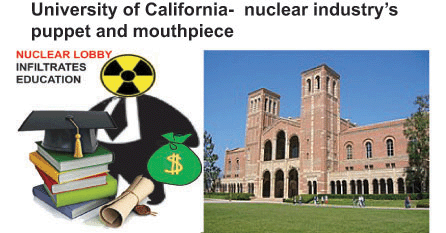
The future of all life: Indigenous sovereignty and the Fukushima nuclear disaster, Bay View, National Black Newspaper, by Harun Minhaj, March 4, 2019 “………..As the Caretakers of Mother Earth have warned, the nuclear establishment has been working tirelessly to cover up and downplay the consequences of this nuclear disaster. The University of California has long played an essential role in this establishment, as it designed the core physical package of every single nuclear warhead in the U.S. arsenal. And now, formerly secret documents show that UC played an indispensable role in the federal response to – and cover-up of – the Fukushima nuclear disaster.
The estimates secretly forecasted by the LLNL’s model predicted very high doses to children in California from radioactive iodine, which is known to cause serious thyroid illnesses. Subsequent measurements found that this model’s predictions of radiation exposure in California were far more accurate than lower estimates and actually underestimated the radiation found 30 km off the coast of Japan.
Yet the UC never issued a single health warning to anyone living on the West Coast prior to their exposure to this deadly radiation. Instead, at the very time that the UC’s LLNL was modeling “estimates of possible plume arrival times and dose for U.S. locations,” UC Berkeley scientists were at the forefront of corporate media coverage on outlets such as ABC7 proclaiming brazen falsehoods such as “there is no plume.”
The LLNL’s model was continually being refined and updated “based on meteorological analyses and available field data” to ensure its predictions were maximally accurate, yet UC Berkeley scientists were simultaneously telling the public that “you cannot predict how the weather is going to carry radiation particles over the West Coast, if anything at all.”
Even worse was the initial UC Berkeley claim that the radiation reaching California was “not harmful at all” and posed “no risk to California,” despite the LLNL’s forecast of very high doses to children in California from radioactive iodine.
Meanwhile, the head of UC Berkeley’s Nuclear Engineering Department secretly admitted that “it is possible that we will find that some people have received doses … that could exceed the levels that current Protective Action Guidelines are designed to prevent.” The Protective Action Guidelines (PAGs) are legal limits on radiation exposure set by the EPA designed to minimize the risk of harm, and this professor subsequently suggested that, should they be exceeded, “this could provide a basis for immediate action to change PAGs.”
When UC Berkeley began testing for radioactive iodine from the Fukushima fallout in California, it found levels in rainwater up to 181 times the EPA’s safe drinking water standards. And although rainwater and tap water should not be conflated, radioactive isotopes climb their way up the food chain in increasing concentrations in numerous ways, such as the soil of produce farms and the pastures of milk-giving cattle.
The UC cover-up of West Coast fallout
Far from being incidentally related to the case, the University of California’s Lawrence Livermore National Lab (LLNL) was in fact the federal contractor given the responsibility of projecting the damage or “dose” from Fukushima Daiichi’s fallout to Japan, the Pacific Ocean and U.S.-occupied Turtle Island.
And, indeed, radioactive materials from Fukushima were detected across California’s food web, while UC Berkeley’s own measurements showed that food items such as milk were regularly exceeding the EPA’s PAGs in both 2011 and 2012 until they stopped taking these measurements.
The response to these findings was once again denial and distortion. The EPA soon increased its PAG “safe limit” by more than 400 times, to such a high level that all of these findings would retroactively cease to be considered health risks.
In the meantime, UC Berkeley engineers once again asserted there was no cause to worry and falsely minimized these readings by conflating external radiation as received from plane travel with the more dangerous internal radiation received through ingesting radioactive particles, which remain in the body emitting radiation for much longer and have the ability to concentrate in specific vulnerable organs such as the thyroid.
But the initial epidemiological evidence is in, and it already shows a variety of illnesses and deaths across the West Coast significantly correlated with the arrival and presence of Fukushima fallout, such as over 100 additional fetal deaths and birth abnormalities in the state of Washington in 2011 and increased rates of congenital hyperthyroidism in California infants born shortly after the meltdowns – around 1,500 additional borderline and severe cases.
The EPA soon increased its PAG “safe limit” by more than 400 times, to such a high level that all of these findings would retroactively cease to be considered health risks.
The University of California totally failed to make public the initial LLNL projections of “very high doses” to California infants and provide adequate health warnings – such as avoiding contaminated milk or taking natural iodine supplements – despite having this legal responsibility both as a federal contractor and as the operator of California’s Poison Control System, which administers such warnings on behalf of the California Emergency Medical Services Authority for the entire state.
The UC cover-up of Pacific fallout and seafood contamination
As serious as the consequences of the fallout on California were, the radiation California and the West Coast received was only a small fraction (<2 percent) of the total, of which the majority (~80 percent) fell into the Pacific.
From the very beginning, UC scientists were involved in studying the Pacific die-offs. Indeed, it was UC scientists who declared when studying the 2011 marine invertebrate mass die-offs that “[N]o previously documented mortality event has been so severe over such a large region …” Yet these UC scientists who had been studying this epidemic from the very beginning have failed to ever monitor the sick and dead animals for radiation, despite one of the lead scientists admitting that Fukushima could not be ruled out as a cause.
When their major study was published in 2018, it included no consideration of Fukushima or radiation whatsoever. Apparently, it was a moot point – the UC’s website on the die-offs had already been claiming for years there was “no evidence” of Fukushima radiation having an impact, even though they had never looked for any despite having already admitted it couldn’t be ruled out.
To make matters worse, one of the principal UC authors of this study falsely claimed that Fukushima radiation could not have precipitated the die-off, because “many more creatures would be affected.” By this time, the unprecedented and concurrent die-offs of fish, marine mammals and sea birds had already been reported.
In denying the impact of Fukushima on the Pacific, these scientists are hardly alone. Overand over again, UC professors – frequently in leadership positions and with government ties – have minimized the impact by relying on the widely debunked fallacy of “dilution.”
Yet dilution has been known to be a false solution to radiation for over 50 years now. In 1955, a once-secret memo from the U.S. Atomic Energy Commission (AEC) – then headquartered in Berkeley – noted that the “dissipation of radioactive fallout in ocean waters is not a gradual spreading out of the activity from the region with the highest concentration to uncontaminated regions, but that in all probability the process results in scattered pockets and streams of higher radioactive materials in the Pacific.”
This is due to a variety of reasons, including the flow of currents and the role played by sediment and debris in transporting radiation. Furthermore, studies have shown that the bioconcentration of radioactive particles up the food chain increasingly amplifies its prevalence in smaller and larger marine organisms by factors ranging from 3 to 300.
While this memo may have previously been secret, the “no threshold” model of radiation has been well-established for almost as long, and is the accepted foundation of radiation protection for the Environmental Protection Agency, National Academy of Sciences, and many other institutions.
In the 1960s, UC Berkeley Nuclear Scientist John Gofman established the Biomedical Research Division of the UC’s LLNL, when he was employed by the AEC to discredit findings which showed that “low level” radiation from nuclear weapons tests was exposing infants in surrounding areas to dangerous amounts of radiation.
Instead, Gofman’s research confirmed these dangers, and at the end of the decade he gave a report showing that there is no threshold beneath which radiation exposure is “safe”: lower levels correspond to a lower – but very real – risk of disease. Consequently, dilution does nothing more than spread the impact of radiation amongst a larger population vulnerable to disease, with each individual facing a lower risk but the overall aggregate impact remaining the same.
The AEC disliked these findings and forced Gofman out of the LLNL, illustrating the reprisals nuclear scientists often face for challenging the pro-nuclear establishment.
Numerous projections of the spread of Fukushima radiation in the Pacific Ocean have predicted that, far from becoming increasingly diluted, once the radiation leaves the immediate vicinity of the Fukushima shoreline it would actually become increasingly concentrated as it approaches the West Coast due to the dynamics of ocean currents, with eventual peak concentrations reaching levels up to 10 times higher than off the coast of the rest of Japan.
There is no threshold beneath which radiation exposure is “safe”: lower levels correspond to a lower – but very real – risk of disease.
What measurements are available not only confirm these projections, showing increasing concentrations traveling east across the Pacific Ocean roughly correlating to these models, they also show that the vast quantities of radioactive particles the Nordic PSA Group predicted would kill at least 50-100 million fish were indeed present throughout large areas of the Pacific Ocean.
In other words, a vast array of scientific knowledge, regulatory precedent, expert models, and empirical data directly contradicts the denials of the UC nuclear establishment that Fukushima’s radiation is of no concern in the Pacific due to “dilution.”
Once again, these denials have serious consequences not just in terms of the ecocidal impact of Fukushima Daiichi’s radiation on Pacific sea life. Based on the thoroughly disproven dilution fallacy, several prominent UC scientists have also denied that there are any health impacts from Fukushima radiation in the Pacific, including the risks entailed in eating contaminated seafood.
The Nordic Probabilistic Safety Assessment Group, however, founded by the nuclear utilities of Finland and Sweden and therefore not at all “anti-nuclear,” concluded in its 2011 report that even if seafood radiation levels from Fukushima stay below legal limits, more than 1 million people would die from just one of the elements of concern, cesium-137. They wrote:
“The fish, seafood, whale meat and seaweed consumed may have concentrations below legal limits, but the radioactive content will be increased from normal levels. As noted in Section 3.6.3, the ingestion dose could be substantial even if the legal limits for the foodstuff are preserved. This cycle will last for many generations, because of the food chain of fish and other marine fauna, and the radioactivity will be recycled and in fact the meat content will increase rather than decreasing by decay. Even if only one one-hundredth of the radioactivity (more than 1e15 Bq of CS137) were to enter this recirculation pattern, the collective whole body ingestion dose over many generations would exceed 1e7 Sv, sufficient to kill more than 1,000,000 people.”
As predictions of mass die-offs and increasingly concentrated radiation crossing the Pacific to the West Coast have already come true, ignoring the scientific evidence about the dangers this radiation poses to us too promises to have deadly consequences. With over 1 hundred million sea creatures having already perished as predicted by the nuclear utility-founded Nordic PSA Group, this institution’s estimate that more than 1 million people could also die if human consumption of Pacific seafood continues unabated is supported by a solid track record based on the scientific method, unlike the UC’s ongoing denials and distortions of even the most basic facts of the Fukushima disaster………….https://sfbayview.com/2019/03/the-future-of-all-life-indigenous-sovereignty-and-the-fukushima-nuclear-disaster/
March 9, 2019
Posted by Christina Macpherson |
Fukushima continuing, secrets,lies and civil liberties, USA |
Leave a comment