U.S. military intelligence steps up accusation against Russia over nuclear testing, WP, By Paul Sonne, 14 June 19 The U.S. military intelligence agency stepped up its accusations against Russia over low-yield nuclear testing on Thursday, saying that the country has conducted nuclear weapons tests that resulted in nuclear yield.
The new statement from the Defense Intelligence Agency amounted to a more direct accusation against Russia, compared to hedged comments about Russian nuclear testing that DIA Director Lt. Gen. Robert P. Ashley Jr. made in a speech in Washington in late May.
“The U.S. Government, including the Intelligence Community, has assessed that Russia has conducted nuclear weapons tests that have created nuclear yield,” the DIA statement released Thursday said. The agency didn’t give any details about the alleged tests or release any evidence backing the accusation.
Previously, the agency’s director said that Russia “probably” was not adhering to the “zero-yield” standard the United States applies for nuclear testing. He suggested that Russia was probably conducting tests with explosions above a subcritical yield as part of its development of a suite of more-sophisticated nuclear weapons.
Russia has vehemently rejected Washington’s accusations, with Russian Foreign Minister Sergei Lavrov describing them as delusional.
“We consider claims that Russia may be conducting very low-yield nuclear tests as a crude provocation,” Russia’s Foreign Ministry said in a statement after the DIA first aired the allegations. “This accusation is absolutely groundless and is no more than another attempt to smear Russia’s image.”
DIA’s latest accusation came a day after Under Secretary of State for Arms Control and International Security Andrea L. Thompson met with Russian Deputy Foreign Minister Sergei Ryabkov in Prague to discuss arms control.
The meeting didn’t result in any significant decisions. After the meeting, Thompson said in a message on Twitter that she raised a range of issues on which the United States would like to engage in a more constructive dialogue with Russia. …… https://www.washingtonpost.com/world/national-security/us-military-intelligence-steps-up-accusation-against-russia-over-nuclear-testing/2019/06/13/2dadf2e2-8e26-11e9-b162-8f6f41ec3c04_story.html?utm_term=.9b2400d2dfbe
June 15, 2019
Posted by Christina Macpherson |
politics international, Russia, USA, weapons and war |
Leave a comment
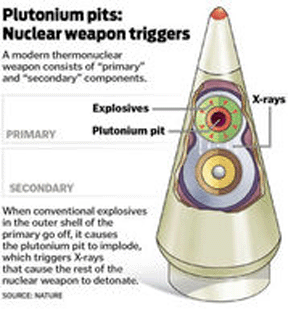
Atomic bomb factory could produce more than 1,000 jobs for SC. But how safe is it? https://www.charlotteobserver.com/news/state/south-carolina/article231568153.html, BY SAMMY FRETWELL. JUNE 14, 2019 Anti-nuclear activists fired away Friday at what they said is a dangerous and little known plan to produce deadly atomic weapons components at the Savannah River Site near Aiken.
The federal government has proposed a multibillion dollar plutonium pit factory that could create as many as 1,700 jobs as part of an effort to make fresh plutonium, a major ingredient in atomic bombs.
But the proposed factory is raising concerns about its risk to the environment and the public, in addition to how it would be viewed by world leaders. Critics say the government may use the pits in a new type of nuclear weapon, instead of only replenishing the existing stockpile with fresh plutonium.
Savannah River Site Watch, a nuclear watchdog organization that tracks SRS, planned a public meeting Friday night in Aiken County to brief people on the government’s plan at SRS, a 310-square-mile complex in western South Carolina.
“We don’t think people are really aware of what is going on: that this new mission is fraught with risk that could come to SRS,’’ Savannah River Site Watch director Tom Clements told The State.
Nuclear watchdog groups from New Mexico and California joined SRS Watch for the forum in Aiken County, where many SRS workers live. Before the Friday meeting, the groups held a news conference to voice concerns. The U.S. Department of Energy plans its own forum on the proposal June 27 in North Augusta.
The Energy Department is proposing to convert its failed and unfinished mixed oxide fuel plant at SRS for use as a plutonium pit plant. The cost to convert the plant could be up to $5 billion, nuclear watchdogs said.
Federal records show the new SRS plant would produce at least 50 pits for nuclear weapons each year. A federal site in Los Alamos, N.M., would produce another 30 pits, according to the government’s plan. Part of the reason for needing more pits is to refresh the nation’s aging stockpile of atomic weapons, federal officials have said.
Officials with the U.S. Department of Energy were not immediately available Friday for comment, but a public notice this week said the pits it wants to replace were made from 1978-89. Most plutonium cores were produced at the Rocky Flats, Colo., nuclear site decades ago, but that site has since closed.
“Today, the United States’ capability to produce plutonium pits is limited,’’ according to a DOE public notice. The notice said producing 80 pits per year, beginning in 2030, would “mitigate the risk of plutonium aging.’’
“The security policies of the United States require the maintenance of a safe, secure and reliable nuclear weapons stockpile,’’ the public notice said.
Pro-nuclear groups say the pit plant is a good replacement for the MOX facility. Not only will it provide jobs, but it will help keep the United States safe, they say.
“We are 100 percent supportive,’’ said Jim Marra, director of Citizens for Nuclear Technology Awareness. ‘’From a national defense standpoint, it is vitally important. Quite frankly, there’s no better place to do it, at least part of it, than Savannah River Site. The expertise in dealing with plutonium, and the existing work now going on with plutonium, is huge.’’
Clements and Jay Coghlan, who directs Nuclear Watch New Mexico, don’t see it that way.
“It will be a great waste of taxpayer’s money,’’ Coghlan said. “There also is a long history of chronic safety problems and environmental or waste problems associated with pit production.’’
Clements said plutonium, one of the most dangerous parts of a nuclear weapon, is toxic and a potential threat to the environment. Workers would be exposed to plutonium at SRS, and the public could be exposed to plutonium if an accident occurs, he said.
SRS was a vital cog in Cold War weapons production. Built in the early 1950s, it produced materials, such as tritium, that were used for nuclear weapons. It has been largely in a cleanup mode and looking for new missions since the early 1990s. More than 10,000 people work there.
One of the biggest questions raised by pit project critics is whether the pits are needed as badly as the DOE contends.
Existing plutonium pits, essentially the cores of nuclear bombs, have a longer shelf life than the government has recently said they have, said Marylia Kelley, executive director of Tri-Valley CARES in California. She said past government studies have shown that. One study shows that plutonium pits can last 85- 100 years, about 25-40 years longer than previously thought.
But the government today is working on a new type of nuclear weapon the pits could be used in — and nuclear proliferation is a bad idea, critics say.
“If you don’t design new nuclear weapons, you will need to do very few pits every year,’’ Kelley said. “This enterprise is not necessary, and I would argue that we need a very robust discussion here.’’
She said if the U.S. develops a new weapon and tests it, other countries may do the same, potentially leading to an escalation of nuclear arms.
Marra said he’s not opposed to plutonium pits being used for new weapons.
“’If that includes new weapons systems, I think that’s the right thing to do,’’ he said. “Our adversaries are not standing still in this regard. China and Russia are continuing to modernize their nuclear weapons, and we all know about North Korea.’’
Plans to develop the plutonium pit factory are not final. A bill in the U.S. House of Representatives, discussed recently in a key committee, would derail the plan.
The Department of Energy plans to conduct an environmental impact statement on how the plant would affect the environment and human health. The current proposal isn’t the first time the DOE has brought up the matter of a new pit plant. The agency proposed a pit factory more than 17 years ago, but the plan never went anywhere.
Reach Fretwell at 803-771-8537. @sfretwell83
June 15, 2019
Posted by Christina Macpherson |
USA, weapons and war |
Leave a comment

 WASHINGTON ,WATCH: IS TRUMP HELPING THE SAUDIS GO NUCLEAR? https://www.jpost.com/Opinion/Washington-Watch-Is-Trump-helping-the-Saudis-go-nuclear-592310,BY DOUGLAS BLOOMFIELD, JUNE 12, 2019
US President Donald Trump recently took another step toward bringing Saudi Arabia into the nuclear club. While Israeli-Saudi ties have warmed in recent years, helping the desert kingdom go nuclear – with its ongoing support for the most extreme Islamic radicals in the world – can hardly be good for the Jewish state.
Secret negotiations with the US Energy Department over many months have led Washington to “transfer highly sensitive US nuclear technology, a potential violation of federal law,” to Saudi Arabia, according to House Oversight Committee sources cited by The Washington Post.
Sen. Tim Kaine (D-Virginia) revealed last week that at least two transfers were approved since the assassination of Washington Post journalist Jamal Khashoggi.
The Saudis say they want to begin building their own nuclear power plants with their own enriched uranium, even though it could be purchased elsewhere more cheaply. That raises suspicions that their real goal isn’t producing electricity. By enriching their own uranium, they could begin diverting it to highly enriched weapons grade, especially if they bar international inspectors, as they’ve insisted.
Given its record of obeisance to Saudi demands for top technology and weapons, it is unlikely the Trump administration would object, but instead continue helping to conceal the kingdom’s plans. Crown Prince Muhammad bin Salman, the de facto ruler, has said that the kingdom would build nuclear weapons if the Iranians did. He may have taken encouragement from a speech in the UAE last month by Trump’s national security adviser, John Bolton.
The Iranians are threatening to leave the nuclear pact with the major powers – the Joint Comprehensive Plan of Action (JCPOA) – in the wake of the Trump administration’s unilateral exit last year and imposition of sanctions to tighten the economic screws on Tehran.
There’s “no reason” for Iran to walk away from JCPOA, “unless it is to reduce the breakout time to nuclear weapons,” said Bolton, a decades-long advocate of regime change in Iran. Bolton offered no evidence to back his claim.
That should give MBS the rationale he seeks to develop his version of the bomb.
When he turns to Trump for help, he will remind the president that if America won’t sell it to him, there are others who will. Trump is a sucker for that pitch.
North Korea would be a good place to go shopping, since they tried helping Syria build nukes until the Israeli Air Force stopped the plan, something it had done earlier in Iraq. Then there’s Pakistan, which is believed to have built its own nuclear weapons stockpile with Saudi financial help.
THERE MIGHT BE some resistance on Capitol Hill, where Saudi support is low and sinking, but Trump has shown himself more responsive to the wishes of the Saudis than the US Congress.
Republicans like Sen. Lindsey Graham of South Carolina may moan and groan and make threatening sounds toward Riyadh, but he and majority leader Mitch McConnell are Trump’s poodles, and will make sure the president gets what he wants.
All US administrations – Republican and Democratic – have indulged the Saudi appetite for top technology and weapons. They’ve been driven by pressure from industry and its friends in the Pentagon to sell, sell, sell – and an inexplicable attitude that we need the Saudis far more than they need us. Trump has just raised this to a new level.
Trump’s latest selling spree includes 120,000 conversion kits to produce smart bombs. It is part of an $8.1 billion package that Trump labeled “emergency” to bypass Congressional review.
Most alarming is the Trump administration’s approval for the transfer of highly sensitive weapons technology and equipment to Saudi Arabia so the kingdom can produce electronic guidance systems for Paveway precision-guided bombs, according to congressional sources cited by The New York Times.
The administration assured Congress that it is confident in the Saudi ability to protect the technology, that the need is urgent and that it won’t alter the balance of power in the region – which is exactly what it is intended to do.
Look for Trump to justify massive sales to the Saudis and the UAE as also helping protect Israel from Iran. Historically, all administrations have justified arms sales around the Middle East as harmless to Israel’s qualitative military edge. But they aren’t. Especially when the US is selling the Arabs the same planes, missiles and technology it sells Israel. Trump values his oil-rich customer so much that he has rejected the findings of his own CIA that the crown prince was complicit in Khashoggi’s murder.
Saudi Arabia is the Pentagon’s favorite cash cow. Arms sales are a lucrative business for the US Defense Department, which charges commissions and other fees, and gets economies of scale for its own purchases while selling off old inventory to help pay for replacements. Military attachés around the world are top salesmen for defense contractors as they lay the groundwork for post-uniform careers. Then there are the former – and possibly future – defense industry executives at the highest levels of the Pentagon, starting with the Secretary of Defense.
Sen. Chris Murphy (D-Connecticut) said the administration “has effectively given a blank check to the Saudis – turning a blind eye to the brutal murder of Jamal Khashoggi and allowing their ballistic missile program to expand.”
The United States is not allowed to sell ballistic missiles, so the Saudis have turned to China. CNN reported last week that American intelligence believes Beijing is helping enhance the kingdom’s strategic missile program. In the 1980s, it secretly bought Chinese DF-3 missiles and based them within range of Israel. It bought more advanced missiles in 2007 with the approval of then-president George W. Bush. Unconfirmed published reports suggest they also bought other missiles from Pakistan, which produces a version of the North Korean Nodong missile.
If the Saudis decide to pursue nuclear weapons, they can turn to Trump’s dear friend Kim Jong Un, whose cash-strapped regime has developed its own and the missiles to deliver them.
With Trump looking for business that will create jobs he can claim credit for – and with John Bolton rattling sabers and B-52s, and calling for regime change in Iran – can Saudi Arabia be knocking on an open door to the nuclear club?
June 13, 2019
Posted by Christina Macpherson |
business and costs, politics, politics international, Saudi Arabia, USA |
Leave a comment

 Fight over Ottawa River nuclear waste dump getting political, but Liberals downriver standing behind the project—or staying quiet, The HillTimes, By PETER MAZEREEUW, BEATRICE PAEZ JUN. 10, 2019 Aplan to bury low-level nuclear waste at a site near the Ottawa River is raising opposition from municipalities and environmentalists. The company behind the project, Canadian Nuclear Laboratories, says it’s safe. The Near Surface Disposal Facility proposal is in year three of an environmental assessment handled by a regulator the Liberal government is on the verge of stripping of that responsibility.
A proposed dump for low-level nuclear waste near the Ottawa River has stirred up opposition from community groups, environmentalists, and municipalities worried the waste could leach into the river that flows past about 50 federal ridings, including Ottawa Centre, the home of Parliament Hill and Canada’s environment minister, Catherine McKenna.
Members of Parliament from riverside ridings closest to the site of the proposed dump at thesprawling nuclear laboratories at Chalk River, Ont., are largely staying out of the fray. That includes Ms. McKenna, who has the final say over an environmental assessment for the project that is being conducted through a Harper-era assessment process, which she and an independent review panel have discredited………
Several Liberal MPs from ridings just downstream of the site declined to comment on or be interviewed about the proposed project, as did Natural Resource Minister Amarjeet Sohi (Edmonton Mill Woods, Alta.), , while two others organized or held information sessions on the subject for their constituents.
Ms. McKenna told The Hill Times during a press conference that she “heard” concerns from her constituents about the project, but didn’t say whether she shared them. Her office did not respond to numerous interview requests on the subject.
The Ottawa Riverkeeper environmental group and the NDP candidate in Ottawa Centre, Emilie Taman, are among those who say they will raise the issue during the upcoming election campaign. Municipal politicians in Montreal and Gatineau have already expressed their opposition. CNL staff, meanwhile, are trying to spread the word about the safety and safeguards planned to keep the proposed dump, which is located less than one kilometre from the Ottawa River, from harming the environment, or people around and downstream from Chalk River.
No ‘public trust’ in assessment system
The Near Surface Disposal Facility to hold the low-level nuclear waste is being proposed by Canadian Nuclear Laboratories (CNL). It is part of a complicated arrangement of private and public organizations created under the previous Conservative federal government, which privatized the operation of the Chalk River nuclear facilities that had been run by Atomic Energy of Canada Ltd. (AECL), a Crown corporation, in 2013.
Under the new model, the part of AECL that ran the labs was shrunk down to a shell of its former self, with most of its employees transferred to CNL. The government pays CNL to run the Chalk River facilities, and AECL—and by extension, the federal government—keeps both the assets and liabilities tied to the site.
CNL is owned by a consortium of companies that mounted a bid for the right to run Chalk River. It includes Quebec’s SNC-Lavalin and U.S. engineering firms Fluor and Jacobs, which call themselves the Canadian National Energy Alliance.
The Near Surface Disposal Facility, commonly abbreviated as NSDF, is three years into an environmental impact assessment overseen by the Canadian Nuclear Safety Commission, a regulator for the nuclear industry.
It started the assessment in 2016, months after Ms. McKenna was given a mandate letter from Prime Minister Justin Trudeau (Papineau, Que.) that tasked her with reviewing the process immediately “to regain public trust and help get resources to market.”
Ms. McKenna struck an expert review panel that same year, which spent seven months surveying environmental groups, project proponents, academics, government officials, and other stakeholders about the environmental assessment process established by the previous Conservative government in 2012. Some said that CNSC should continue to be responsible for conducting assessments, given the technical expertise of its staff, but others said it was too close to industry, creating an “erosion of public trust” in the process and its outcomes. The panel recommended that CNSC be stripped of its role conducting assessments on nuclear projects.
Ms. McKenna tabled a bill in Parliament, C-69, which did just that. An omnibus bill that has been subject to criticism by Conservative politicians, industry, and some environmentalists, C-69 would put the power over assessments into the hands of the Canadian Environmental Assessment Agency, which it would rename to the Impact Assessment Agency of Canada. CNSC officials would still play a role, occupying some of the seats on review panels struck to guide assessments of nuclear projects. The Senate sent Bill C-69 back to the House last week with nearly 200 amendments, including those that would put more power over reviews back into the hands of CNSC officials.
In the meantime, however, the NSDF nuclear dump proposal is being evaluated under the old assessment system. Isabelle Roy, a spokesperson for CNSC, said in an email statement that the projects currently being examined “would not be subject to Bill C-69 if it passes,” and that the decision will ultimately be made by its independent commission. Ms. Roy said CNSC is awaiting CNL’s response to public comments regarding concerns about the project. ………
More transparency needed on what CNL considers low-level waste, experts say
In the face of public concerns that one per cent of the waste in the engineered mound would be intermediate-level waste, Ms. Vickerd said, CNL has since tweaked its proposal, limiting it to low-level waste.
According to the International Atomic Energy Agency (IAEA), a near-surface disposal facility doesn’t have the capacity to safely contain and isolate intermediate-level waste, which, by its definition, has long-lived radionuclides. Such waste, it says, has to be buried underground, by up to a few hundred metres.
Michael Stephens is a former AECL employee whose career in the nuclear industry spanned 25 years, including 16 years at the Chalk River labs, where he helped oversee the decommissioning of nuclear waste. He is one among several retired AECL employees who have decried the project as environmentally unsound.
Mr. Stephens said his main contention with NSDF is the criteria CNL is using to determine what the mound can hold. “What bothered me from the outset was originally the proposal [called] for intermediate-level waste [to be dumped],” he said. “That, by definition, is a non-starter.”
Gordon Edwards, president of the Canadian Coalition for Nuclear Responsibility, a non-profit organization that aims to educate the public on nuclear-energy issues, said the lab seems to be trying to push the limits of what it can reasonably get away with. “If you put forward an outrageous, totally unacceptable proposal, you can trim it and see how far you can go,” Mr. Edwards said. “CNL [was urged by the Harper government] to act quickly, to find a timely remediation to reduce Canada’s nuclear liability, in a … cost-effective manner. That’s code for relatively quickly, cheaply.”
Mr. Edwards has worked as a nuclear consultant; in 2017, he was hired by the federal auditor general’s office to consult for its performance audit of CNSC.
He said scrapping the idea of adding intermediate-level waste only goes “a little way” to addressing the larger issue. “What we’re talking about is a mound of literally hundreds of radioactive materials. All have different chemistries, and have different pathways to the environment, to the food chain,” he said………
Another concern for him is the plan to transport and dump the waste of other decommissioned plants, including from Whiteshell Laboratories in Pinawa, Man. “How do they know what’s in those containers? As far as we know, if they get the go-ahead to drive those containers right into where the mound will be, they’ll simply put them there, bury them … without having properly identified what’s in there,” he said.
Mr. Stephens echoed Mr. Edwards’ concerns about what, he said, could conceivably wind up in the dump. CNL, he argued, hasn’t been transparent about whether, for example, it would dump packaged solid waste, which could have varying degrees of toxicity, or building rubble that’s just been slightly contaminated…………
https://www.hilltimes.com/2019/06/10/fight-over-nuclear-waste-dump-getting-political-but-liberals-downriver-standing-behind-the-project-or-staying-quiet/203454
June 11, 2019
Posted by Christina Macpherson |
Canada, politics, wastes |
Leave a comment



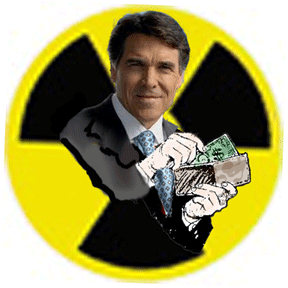

 huge proposed bailout of two Chernobyl-in-progress Ohio nukes (plus two old coal burners) would put $20 million directly into the pockets of seven utility executives. Their bankrupt company last year spent $3 million “lobbying” the legislature.












