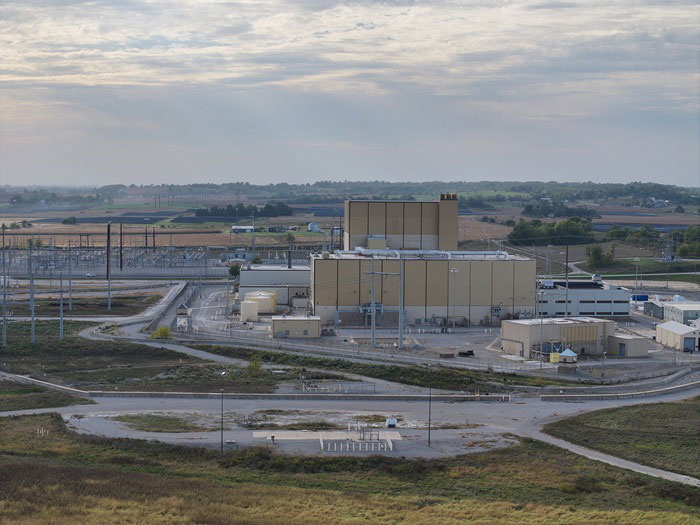
Natural Resources Defense Council supports the proposed restart of Iowa’s permanently closed Duane Arnold nuclear power station on assurances of adequate public safety upgrades to a Fukushima-style reactor from the US Nuclear Regulatory Commission
In a disappointing reversal of its previously critical stance toward nuclear power and especially the dangerously flawed 1960s vintage GE Mark I boiling water reactor, a major green group now appears to be supporting the restart of exactly that reactor model. The Natural Resources Defense Council’s stated in a blog “Rising Demand, Real Choices” that it had submitted comments to the Nuclear Regulatory Commission supporting the restart of the permanently closed and decommissioning GE Mark I Duane Arnold nuclear reactor in Iowa. NRDC “filed comments today at the Nuclear Regulatory Commission supporting an early step in the reactor’s restart: the transfer of the plant’s license to NextEra.” Duane Arnold is nearly identical to the three reactors that melted down in Japan in March 2011.
NRDC nuances its advocacy for the restart with, “To be clear, NRDC’s long-held concerns regarding nuclear energy—including issues related to siting, cost, safety risks, waste management, water use, mining supply chain issues, and community impacts—remain unchanged and must be addressed. The Duane Arnold plant will have to prove it can operate safely and responsibly.”
Let the record reflect, “easier said than done” as this nation’s nuclear regulatory agencies, from the beginning, with the Atomic Energy Commission (AEC) first licensing Duane Arnold on November 24, 1974, knowing full well in 1972 that the undersized design of the GE Mark I boiling water reactor containment would very likely fail under the tremendous overpressurization and explosive hydrogen gas generated under severe nuclear accident conditions and their top safety official encouraged development to be halted. That scientifically confirmed warning was not only ignored but suppressed for years by AEC fears that the halt of construction and cancellations would derail the government plan for a massive nuclear power build up. Duane Arnold was one of the those obfuscated start-ups.
Since then, the US Nuclear Regulatory Commission (NRC) is identified as a captured regulator and an expert at stonewalling reactor safety concerns from fire protection for safe reactor shutdown to ignoring currently projected climate change impacts on severe nuclear accident risks and frequency.
The NRC relicensed Duane Arnold on December 16, 2010, with an initial extension of 20 years to February 21, 2034 with the built-in containment vulnerability. Eighty-five days later, the Fukushima nuclear accident demonstrated a 100% containment failure rate under overpressurization from hydrogen gas detonations for the three units at that were at full power. NRC wrangled for years with the weak, undersized containment vulnerability only to allow the fundamental design flaw to remain unchecked to date.
Duane Arnold is presently utility certified to the NRC as “permanently” closed and defueled reactor for the purpose of decommissioning in SAFSTOR mode or “deferred dismantling”. The 615 megawatts electric Mark I boiling water reactor is owned by three utility entities; the majority owner, NextEra Energy Resources (70% interest) and two minority owners, Central Iowa Power Cooperative (CIPCO with 20% interest) and Corn Belt Power Cooperative (10% interest). The utilities have submitted an application to the NRC to consolidate a 100% ownership transfer to NextEra as sole owner and a plan to reverse the decommissioning certification to instead seek NRC approval for a likely to exceed $1.6 billion rehabilitation, refueling and restart effort by 2029. Google has signed with NextEra for a Power Purchase Agreement as the primary electricity customer for an expanded AI infrastructure, cloud computing and energy guzzling data centers. Post-consolidation, CIPCO, at 0%, will purchase Duane Arnold surplus electricity and Corn Belt Power Cooperative, at 0%, will sell its share to NextEra.
In Beyond Nuclear’s view, as well as many public safety, environmental protection and safe energy advocates, the immediate, permanent closure, decommissioning and environmental cleanup of Duane Arnold and all GE Mark I boiling water reactors are warranted in the ever extending aftermath of the Fukushima Daiichi’s multiple hydrogen explosions. The subsequent reactor core meltdowns breached the universally flawed GE Mark I containment design and construction, releasing harmful radiation downwind into the atmosphere and recurring radioactive batch releases from the wreckage of the three melted reactor cores into the Pacific Ocean that persist today.
The uneconomical, aging and dangerously flawed Duane Arnold nuclear power station was first announced by NextEra Energy Resources in a Federal Register Notice of its intent to the NRC on March 2, 2020 to permanently close and defuel the reactor by October 30, 2020.
Then, on August 10, 2020, a fierce “derecho” with severe thunderstorms, a deluge of rain and straight line winds reaching up to 140 mph swept across the hundreds of miles of prairie knocking out vast stretches of the electric grid including all six offsite power lines to 100% of Duane Arnold’s safety systems causing the reactor to SCRAM. Onsite back up generators restored critical reactor cooling systems but the badly damaged site included the collapse of the reactor’s cooling towers. NextEra’s subsequent damage assessment concluded, “[O]ur evaluation found that replacing those towers before the site’s previously-scheduled decommissioning on Oct. 30, 2020, was not feasible.” NextEra elected to immediately set the date for permanent closure of Duane Arnold, a Fukushima-style reactor, a notorious General Electric Mark I boiling water reactor even in 1972 under warnings from the Atomic Energy Commission safety officials that it was not safe.
We are now coming up on the 15th commemoration of the triple meltdown of Japan’s Fukushima Daiichi reactors caused by a combination of natural disasters that overwhelmed the significantly flawed and identified vulnerable design problem built into every GE Mark I reactors containments. These containments are now demonstrated to have a 100% failure rate under severe accident conditions as were all three Fukushima reactors at full power on March 11, 2011 experiencing devastating hydrogen gas explosions and widespread radioactive releases. This widespread radioactive contamination of the biosphere (land and sea) from the fallout persists to date and indefinitely into the future.
Where Fukushima’s radioactive releases largely blew out over the Pacific Ocean, a radioactive breach from the volumetrically undersized Mark I reactor containment system in the event of a severe over-pressurization accident, will instead spread out over US populations sickening those caught in the fallout, contaminating farms, pastures and agriculture, and similarly dislocating local, commercial and industrial economies.
If restarted, as NRDC supports, Duane Arnold initial 20-year license renewal (40 to 60 years) will expire on February 21, 2034. And well before that date, NextEra will most assuredly file an application to extend the operating license of a still fundamentally flawed and vulnerable reactor with an additional 20 year subsequent license renewal application (60 to 80 years) out to February 21, 2054, presently without a hard look at a changing climate that might already have been central to it closure.
Beyond Nuclear and the Sierra Club presently have a “petition for judicial review” pending ruling from an October 30, 2025 oral argument in the US Court of Appeals for the District of Columbia Circuit, Beyond Nuclear and Sierra Club v. US NRC. The petitioners through legal counsel have raised a purely legal issue of whether the US NRC, as a matter of law, can refuse to evaluate climate change change impacts (derechos, increasingly severe hurricanes, flooding, sea level rise, etc.) on the risk and frequency of severe nuclear accidents. The NRC is illegally entrenched in refusing to perform a lawfully required environment impact statement that fully evaluates the impact of climate change, saying only that such an evaluation is “out of scope” of reactor licensing.
Nuclear Regulatory Commission license of dangerous new reactor risks lives
Beyond Nuclear decries NRC decision to put public safety aside and buckle to Trump orders to license a Gates reactor known as “Cowboy Chernobyl”
Last September, the then three sitting commissioners at the US Nuclear Regulatory Commission insisted during a Senate hearing they would put safety first when considering the approval of new reactor projects.
Senators had raised fears that new executive orders issued by the White House last May that demanded fast-tracking new reactor projects, could jeopardize the commissioners’ judgement. The Senators also asked if the commissioners feared losing their jobs if they refused to license a reactor they viewed as dangerous. Two said they did.
“This week we learned that the now five members of the NRC commission are all too willing to capitulate to Trump’s rubber stamp orders, protect their jobs and sacrifice public safety in order to license a new reactor design that is known to be extremely dangerous,” said Paul Gunter, director of the reactor oversight project at Beyond Nuclear. The two new commissioners are nuclear industry insiders chosen by the White House.
Gunter’s remarks came after the NRC commissioners voted unanimously this week to grant a construction license to the Bill Gates company TerraPower’s 345-megawatt sodium-cooled small modular reactor, designated for a site in Kemmerer, Wyoming.
“It appears that the White House influence is working,” Gunter said. “But pressuring regulators to cut safety corners and fast-track a technology as inherently dangerous as nuclear power is gambling with the lives of thousands and possibly millions of people.”
Dr. Edwin Lyman, a physicist at the Union of Concerned Scientists, warned last December after NRC staff approved the TerraPower design, that the “fast” reactor, known as the Natrium, is deeply flawed and highly vulnerable to a serious accident.
“Make no mistake, this type of reactor has major safety flaws compared to conventional nuclear reactors.” Lyman said. “The potential for rapid power excursions and the lack of a real containment make the Kemmerer plant a true ‘Cowboy Chernobyl.’”
“The White House, through its executive orders and by exerting control over the NRC, has embarked on a dangerous dismantling of essential safety regulations,” Gunter said.
The new reactor rush puts the US on a path to another nuclear disaster while wasting precious time and billions of taxpayer dollars better spent on implementing a rapid and widespread renewable energy program. This would answer the country’s energy needs faster and without the extreme risks and ever soaring costs posed by nuclear power technology,” Gunter concluded.
In this catastrophic war of choice, it is Tehran fighting a rearguard action to restore geopolitical sanity. If Iran loses, god only knows where Israel and the US will drag the world next
The admission this week by US secretary of state Marco Rubio, echoed by Mike Johnson, Speaker of the House of Representatives, that Israel forced Washington’s hand in attacking Iran has rightly caused consternation.
Breathing life into something that would normally be treated as an antisemitic trope, Rubio argued that the Trump administration had been left with no choice but to attack Iran because, had it not, Israel would have launched an attack anyway, exposing US soldiers to retaliation.
Rubio stated: “The president made the very wise decision: We knew that there was going to be an Israeli action, we knew that that would precipitate an attack against American forces, and we knew that if we didn’t preemptively go after them before they launched those attacks, we would suffer higher casualties.”
Rubio was using the term “preemptively” in a highly irregular and misleading way.
In international law, aggression is an illegal application of force – the “supreme international crime”, according to the 1950 principles set out by the Nuremberg war crimes tribunal. But there is a potential mitigating factor if the attacking state can show it was acting pre-emptively: that is, it was acting to prevent a plausible, immediate and severe threat of attack.
Rubio, however, was not suggesting that the US acted “preemptively” against a threat from Iran. He meant Washington had acted preemptively to stop its ally, Israel, from setting off a chain of military events that would lead to US soldiers being harmed.
Had the Trump administration really been acting preemptively in these circumstances, the US should have attacked Israel, not Iran.
Paper tiger
But Rubio’s comment begged a further question: Why didn’t Washington simply tell Israel it was forbidden from starting a war against Iran without US approval?
After all, Israel would be incapable of mounting any kind of attack on Iran without the critical support provided by the US.
Israel has had to rely on help from US military bases dotted around the region, as well as the Arab states that host those bases.
The attack would have been quite inconceivable without the backup of a massive armada of US war ships sent to the region by Trump.
Israel can withstand Iranian retaliation only because it gets a degree of protection from missile interception systems provided and funded by the US.
And on top of all that, Israel is regional hegemon only because it gets massive subsidies from the US – worth many billions of dollars a year – to preserve it as one of the strongest militaries in the world.
In other words, Israel would have found it impossible to wage war on Iran alone. It is a paper tiger without the US.
Rubio’s comment suggested one of two possibilities: either that the US, with the strongest military in world history, is under the thumb of the tiny state of Israel; or that Trump has made his own military, the strongest-ever, servile to Israel.
Whichever it is, it is hard to square with Trump’s repeated assertion that he is putting America First.
This point is so glaringly obvious it is presumably the reason why Rubio was forced to walk back his comments the next day. Meanwhile, Trump hurriedly suggested it was he who had forced Israel’s hand to attack Iran, not the other way round.
Geopolitical insanity
The more likely truth is not that Israel forced Trump’s hand. It is that he was seduced by Israeli prime minister Benjamin Netanyahu’s false claim that an attack on Iran would be a cakewalk – if they struck at a moment when they could be sure of killing Iran’s supreme leader, Ali Khamenei.
Such a decapitation strike, Trump was led to believe, would be a repeat of his Venezuela “success”, when he kidnapped President Nicolas Maduro from Caracas to bring him to trial in New York.
In Venezuela, the flagrant flouting of international law by the US was intended to be the equivalent of pointing a loaded shotgun at the head of Maduro’s replacement, Delcy Rodriguez. Do as we say, or the new president gets it from both barrels.
Netanyahu knew exactly how to sell Trump, still giddy on the noxious fumes of this lawbreaking venture, the idea that he could repeat the exercise in Iran. The ayatollah’s successor would similarly be putty in his hands.
Which is why, in this catastrophic war of choice by the US and Israel, it is Tehran fighting a rearguard action to restore a little geopolitical sanity. If Iran loses, or the US succeeds without paying a fearsome price, god only knows where Israel and Washington will drag the world next.
The world’s fate, in a real sense, is in Tehran’s hands.
Israelisation’ of the US
What the joint attack on Iran demonstrates most clearly is how much Netanyahu has succeeded over the past quarter of a century in “Israelising” Washington and the Pentagon.
The US has always waged illegal wars of aggression. It has always been more gangster than global policeman. But just because Washington was run by ruthless criminals, it did not mean it was incapable of getting still more deranged, still more psychopathic.
That is what Netanyahu has been working on. And Trump is now giving full rein to the Israelisation of the US. The clues are everywhere.
On Wednesday secretary of war Pete Hegseth – the traditional title of “secretary of defence” presumably sounded too law-abiding – dropped any pretence of being the good guy.
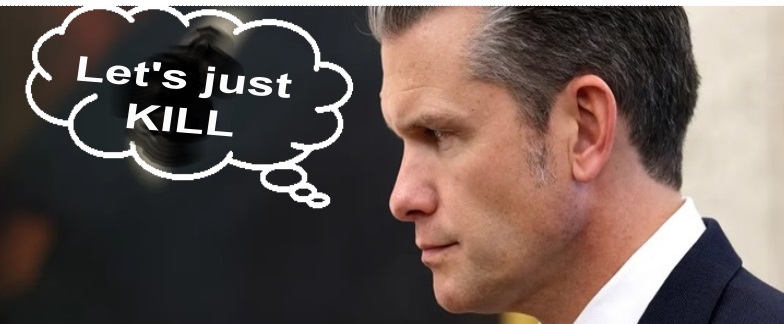
He insisted US forces were acting “without mercy” and that the Iranian regime “are toast”. The US would deliver “death and destruction all day long”.
The previous day he had set out the game plan: “No stupid rules of engagement, no nation-building quagmire, no democracy building exercise, no politically correct wars.”………………………………………………………………………………………………………………………………………………………………………………………………………………………………………
The word of God
Central to these beliefs is the gathering of Jews, as God’s Chosen People, into the Land of Israel – a much larger area than that covered by the modern state of Israel.
For Christian fundamentalists such as Hegseth and a growing number of US commanders, Israel is the catalyst for the End Times.
For very obvious reasons, Israel has been nuturing its ties with the huge numbers of Christian fundamentalists in the US. They are politically active – their vote secured the presidency for Trump – and they treat Israel as a critically important domestic issue rather than a foreign policy matter. https://jonathancook.substack.com/p/in-iran-israels-morbid-military-cult
Walt Zlotow, West Suburban Peace Coalition Glen Ellyn IL, 6 Mar 26.
As a non-theist I both respect freedom of religion and demand separation of church and state.
Most violations of the latter concern relatively minor infractions such as school prayer or posting the 10 Commandments in the public square.
Never in my life could I imagine our government promoting America’s grotesque, criminal war on Iran by telling military personnel in all the services that this war is God’s plan to cause Armageddon and mark his return to Earth,”
This was not one-off insanity by a rogue military leader. The Military Religious Freedom Foundation (MRFF) reports over 100 complaints from 30 military installations about their commanders’ instructions. One NCO complained their commander “urged us to tell our troop this was all part of God’s divine plan and supported it with numerous citations from the Book of Revelation referring to Armageddon and the imminent return of Jesus Christ.”
While Christian nationalism has simmered on the back burner of the military for decades, under fanatical Christian Nationalist and War Secretary Pete Hegseth, it’s now official US military policy. Hegseth is egged on by irreligious President Trump, who cynically uses Christian nationalism to justify his warfare in the Middle East on behalf of Israel.
You do not have to be a non-theist to oppose this religious madness Trump and Hegseth infect our military with to promote endless war in the name of God. You just have to be a decent, morally centered person.
Secretary of War Pete Hegseth gave one of his signature “I don’t have a small penis” tirades at the Pentagon on Wednesday, ranting and raving about the big, powerful, masculine war machinery that’s currently raining death and destruction upon the people of Iran.
“We will fly all day, all night, day and night finding, fixing and finishing the missiles and defense industrial base of the Iranian military, finding and fixing their leaders and their military leaders, flying over Tehran, flying over Iran, flying over their capital, flying over the IRGC,
Iranian leaders looking up and seeing only US and Israeli air power every minute of every day until we decide it’s over,” Hegseth bloviated, saying there will be “B-2s, B-52s, B-1s, Predator drones, fighters controlling the skies, picking targets, death and destruction from the sky all day long.”
“This was never meant to be a fair fight, and it is not a fair fight. We are punching them while they’re down, which is exactly how it should be,” the War Secretary spouted.
This would be the same Pete Hegseth who was mentioned in a recent article by Jonathan Larsen titled “U.S. Troops Were Told Iran War Is for ‘Armageddon,’ Return of Jesus”, which reports that US military commanders are telling American soldiers that they are on a mission from God to fulfill a biblical prophecy and bring about the end of the world.
“Defense Secretary Pete Hegseth has enshrined evangelical Christianity at the uppermost levels of the U.S. military, airing monthly prayer meetings throughout the Pentagon,” Larsen reports, saying that “Last year, the Pentagon confirmed to me that Hegseth attends a weekly White House Bible study. It’s led by a preacher who says God commands America to support Israel.”
Larsen reports that the Military Religious Freedom Foundation has been inundated with complaints from every branch of the US military that troops are being told by their leaders that President Trump has been “anointed by Jesus to light the signal fire in Iran to cause Armageddon and mark his return to Earth,” and similar statements.
Then you’ve got House Speaker Mike Johnson spouting religious war rhetoric, claiming Iranians have been led to evil by a “misguided religion”.
“The largest state sponsor of terrorism, Iran and its proxies, have killed more Americans than any other terrorist regime on Earth,” said Johnson on Wednesday. “They are dedicated to it. They have been, and they say the quiet parts out loud. They wanted to wipe Israel off the face of the Earth, and they’d like to take us out as well. We’re the great Satan in their analogy and their misguided religion.”
So as if we didn’t have enough problems to deal with, it turns out the world is ruled by a nuclear-armed Armageddon cult.
The US empire is the most evil, destructive and dangerous power structure on this planet. It is operated by psychopaths and guided by demented religious zealotry. These freaks wouldn’t be believable as villains in a children’s cartoon show.
These are the people claiming to have the moral authority to decide who should be the leader of a sovereign nation on the other side of the planet. These are the powerful individuals whose choices are determining the path our species will take into the future.
They are everything they accuse Iran of being. They are dangerous religious fanatics. They cannot be trusted with nuclear weapons. They are the tyrants. They are the monsters.
This is unsustainable. These guys gotta go. The US empire must fall. Humanity depends on it.
The U.S. Department of Defense is accelerating development of a next-generation missile defense architecture referred to as “Golden Dome.” It is framed in national defense strategy as a layered homeland shield designed to counter emerging threats, including hypersonic weapons.
Modern missile defense is not just about ground interceptors. It requires:
Hypersonic propulsion systems
Advanced thermal shielding
Rapid manufacturing capacity
Space-based tracking and sensor networks
Scalable industrial production
This is not theoretical. Federal strategy and procurement planning show an expansion of missile tracking systems and accelerated contractor engagement across the defense sector.
When the Pentagon scales a program like this, the supply chain scales with it.
Missile production is not a single building. It is a network of chemical processing, propulsion casting, electronics assembly, static testing, and heavy logistics. When one node expands, infrastructure expands with it. This when the supply chain externalizes costs to communities.
What’s Happening Locally
Project Ranger is an “advanced manufacturing” project.
It is contractually defined as a:
“hypersonic systems test and manufacturing facility.”
3609_PPA_Castelion_LEDA_(10.17.…
At the same time, the City and County approved public funding specifically to expand Paseo del Volcán to benefit this Project.
3609_SandCo_Ranger_LEDA_City_IG…
The agreements also acknowledge that audit and inspection provisions are subject to Department of Defense and national security constraints.
3609_PPA_Castelion_LEDA_(10.17.…
Those are not abstract references. They place this facility squarely within the national defense ecosystem.
Public road expansion + hypersonics manufacturing + DoD-related oversight constraints is not a coincidence. It is infrastructure alignment.
Why That Matters
Defense corridors do not appear overnight. They form through a predictable sequence:
A federal defense initiative accelerates.
Contractors expand production capacity.
Local governments subsidize access roads, land, and utilities.
Environmental and cumulative impact questions lag behind infrastructure commitments.
That sequence is visible here.
When public funds expand a major corridor to serve a hypersonics manufacturing site, that is not simply “economic development.” It is regional integration into a national defense supply chain.
The Public Interest Questions.
We want transparency, scope, and full disclosure.
A hypersonic test and manufacturing facility
3609_PPA_Castelion_LEDA_(10.17.…
enabled by publicly funded road expansion
3609_SandCo_Ranger_LEDA_City_IG…
raises foreseeable impacts that must be openly evaluated:
Industrial water demand
Hazardous materials transport
Air emissions and plume modeling
Outbound waste streams
Long-term infrastructure maintenance costs
Cumulative regional build-out effects
If the project is positioned within a rapidly expanding missile defense program, then induced growth and scaling pressures are foreseeable.
Treating the road expansion as separate from the facility ignores the integrated purpose described in the agreements.
Bottom Line
The documents do not describe a small standalone factory.
They describe a hypersonics test and manufacturing facility….
Project Ranger is part of a larger defense build-out, whether local officials frame it that way or not. When national missile defense accelerates, local communities become supply-chain territory. Rio Rancho deserves a full accounting of what that means…………………………..
When national missile-defense acceleration intersects with local public subsidies, the burden does not fall on billionaires or defense contractors. It falls on residents:
Water withdrawals and contamination risk
Air emissions and particulate exposure
Hazardous materials transport through residential corridors
The United States and Japan have been considering the inclusion of a nuclear power project involving Westinghouse in the $550-billion package of investment that Japan has pledged in the U.S. under the bilateral trade deal, sources familiar with the plans told Reuters on Wednesday.
Last year, as part of the U.S.-Japan trade agreement, Japan pledged to buy $8 billion worth of American products per year. The Government of Japan has also agreed to invest $550 billion in the United States, the White House said.
At the time, U.S. Secretary of Commerce, Howard Lutnick, hailed the deal as “historic” and said that the U.S. would use the $500-billion Japanese investment “to build our energy infrastructure, chip manufacturing, critical minerals mining, and shipbuilding to name a few.”
The plan for a nuclear power project, as well as a copper refining facility, is being discussed and could be talked into details later this month when Japan’s Prime Minister Sanae Takaichi is due to meet with U.S. President Donald Trump at the White House on March 19, according to Reuters’ anonymous sources.
Westinghouse, which could be involved in the nuclear power project, was named as a company that has expressed interest to launch projects in the energy sector, according to a joint fact sheet for the Japan-U.S. Investment.
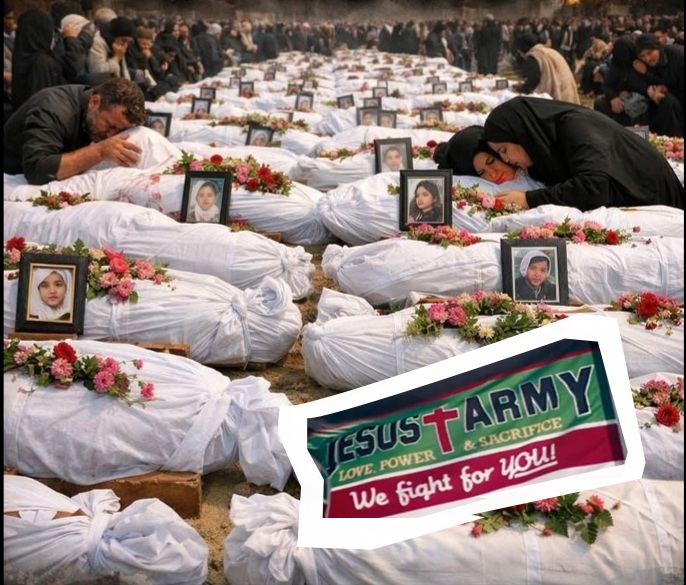
After a strike on a girls’ elementary school in Minab, Iran, killed at least 175 people, nearly all young schoolchildren, online reports spread disinformation about the attack, including claims that the Iranian government itself had bombed the school. Journalist Nilo Tabrizy describes how outside reporters have been able to verify the attack despite Iran’s internet blackout and says attempts are still being made to confirm whether the strike is attributable to the U.S. or to Israel.
Democracy Now! is an independent global news hour that airs on over 1,500 TV and radio stations Monday through Friday. Watch our livestream at democracynow.org Mondays to Fridays 8-9 a.m. ET.
The Rutherford Institute, John & Nisha Whitehead, March 04, 2026
“From the least to the greatest, all are greedy for gain; prophets and priests alike, all practice deceit. They dress the wound of my people as though it were not serious. ‘Peace, peace,’ they say, when there is no peace.”—Jeremiah 6:13–14
“This is insane. Regime change will result in a bloody civil war… Resist this!”—Charlie Kirk (2025)
The military-industrial complex and the American police state have joined forces.
War abroad and war at home are no longer separate enterprises. They have fused.
Each time that boundary is breached, the Constitution recedes a little further.
This is one of those moments.
In a complete about-face from his claims to being a peace president, Donald Trump has authorized yet another preemptive strike—this time against Iran—without a declaration of war from Congress, without meaningful public debate, and without constitutional clarity.
The gravity of that decision cannot be overstated.
That spectacle tells you everything you need to know.
That is how we arrived at Operation Epic Fury.
With its Orwellian proclamations of “peace through strength,” Operation Epic Fury is less strategy than spectacle—an egotistical, muscle-flexing distraction by the Trump administration and an overarching attempt to normalize the use of unilateral force by the executive branch without congressional input or authorization.
This was never about peace. It was always about power.
And the Constitution is clear about how this is supposed to work, even if the White House is not.
Despite the word games over its war games—the administration insists its actions in Iran do not constitute a war—members of Trump’s Cabinet use the word “war” freely until congressional authorization is mentioned.
And when the administration is asked to explain themselves, the answer is not constitutional deference but open defiance.
Clearly, they have lost sight of who they answer to—and who funds their war chests: we the taxpayers.
Pete Hegseth—the self-righteous blowhard who brags about lethal weapons and has rebranded the Defense Department as the Department of War—dismissed public accountability outright, expressing in no uncertain terms that it’s none of our business: “Why in the world would we tell you, you, the enemy, anybody what we will or will not do in pursuit of an objective. We fight to win. We fight to achieve the objectives the President of the United States has laid out and we will do so unapologetically.”
The Constitution is the “why.”
The American people have a right to debate war before it begins. We have a right to know how our tax dollars are spent. We have a right to insist our representatives authorize the use of force. We have a right to know why our sons and daughters are sent into harm’s way. We have a right to refuse to have our tax dollars used to kill other people’s daughters and sons.
……………As Cato Institute’s Katherine Thompson explains, “War…costs American blood and treasure. The Founders placed the power to initiate it in Congress precisely to ensure those costs are confronted and debated before the country walks into battle.”
War fuels defense contracts, reconstruction deals and intelligence budgets. It sustains a vast military-industrial apparatus whose profits depend on instability.
Nothing about Operation Epic Fury puts America first. It pushes us toward a fiscal cliff.
Within days, the costs were staggering: $300 million for three F-15E jets downed by “friendly” fire. $630 million to transport troops, ships and aircraft to the region in advance of the attacks. More than 50,000 troops deployed to the region. $13 million a day just for two aircraft carriers stationed nearby. $43.8 million for 1,250 Kamikaze drones. $2 million each for Tomahawk missiles. $12.8 million each for anti-ballistic missile interceptors.
……………………………………………………………………………………………………………………….. This unprovoked attack on Iran is turning the Middle East into a war zone, in turn laying the groundwork for Trump to act on the fantasies he has long entertained about cancelling the mid-term elections.
………………………………………………………………………….War is not peace. Preemptive war is not strength. And an imperial presidency—no matter how loudly it wraps itself in flags—is not constitutional government.
The Founders understood that the gravest threat to liberty would not come from foreign enemies alone, but from the concentration of power in the hands of one man who believed himself indispensable.
A president who can send bombs abroad without consent can silence opposition at home without hesitation.
A government that governs by the rule of emergency eventually ceases to govern by the rule of law.
And a nation that trades liberty for spectacle will wake up to find that it has neither.
…………………………………………………………………….As I make clear in my book Battlefield America: The War on the American People and in its fictional counterpart The Erik Blair Diaries, the question is no longer whether America can police the globe. The question is whether our Republic can survive the weight of the Empire it has become.
We are at the point where we must choose: the spectacle of permanent war, or the survival of the American experiment in freedom.
Last Friday the mediator of the U.S. and Iranian nuclear negotiations in Oman, that country’s foreign minister Badr Albusaidi, pulled the rug out from President Trump’s deceptive pretense threatening war with Iran. Why? Because it had refused his demands to give up what he claimed was its own atom bomb. The Omani foreign minister explained on CBS’s Face the Nation that the Iranian team had agreed not to accumulate enriched uranium and offered “full and comprehensive verification by the IAEA.” This new concession was a “breakthrough that has never been achieved any time before. And I think if we can capture that and build on it, I think a deal is within our reach” to achieve “agreement that Iran will never, ever have a nuclear material that will create a bomb. This is, I think, a big achievement.”
Pointing out that this breakthrough “has been missed a lot by the media,” he emphasized that by calling for “zero stockpiling” went far beyond what had been negotiated during President Obama’s administration, because “if you cannot stockpile material that is enriched then there is no way you can actually create a bomb.”
Ayatollah Ali Khamenei – who already had issued a fatwa against doing any such thing, and had repeated this position year after year – called Iran’s Shi’a leaders and military chief to discuss ratification of the agreement to cede control of its enriched uranium in order to prevent war.
But any such capitulation was precisely what neither the United States nor Israel could accept. A peaceful resolution would have prevented the long-term U.S. plan to consolidate and weaponize its control over Middle Eastern oil, its transportation and the investment of its oil export revenues, and to use Israel and al Qaeda/ISIS as its client armies to block independent oil-producing countries from acting in their own sovereign interests.
Israeli intelligence apparently alerted the U.S. military to suggest that the meeting at the Ayatollah’s compound offered a great chance to decapitate the leading decision makers all together. This followed the U.S. military handbook advice that killing a political leader whom the U.S. deems to be undemocratic will liberate popular dreams of regime change. That was the hope of bombing President Putin’s country residence last month, and it was in line with the U.S’s recent Starlink attempt to mobilize popular opposition for revolution in Iran.
The joint U.S.-Israeli attack makes it clear that there is nothing that Iran could have conceded that would have deterred the long-standing U.S. drive to control Middle Eastern oil, alongside using Israel and ISIS/Al Qaeda client armies to prevent sovereign nations in the region from emerging to take control of their oil reserves. That control remains an essential arm of U.S. foreign policy. It is the key to the U.S. ability to hurt other economies by denying them access to energy if they do not adhere to U.S. foreign policy. This insistence on blocking the world’s access to energy sources not under American control is why the U.S. has attacked Venezuela, Syria, Iraq, Libya and Russia.
The attack on negotiators (the second time America has done this to Iran) is a perfidy that will go down in history. It was to prevent Iran’s intended move to peace, before its leaders could have disproven Trump’s false claim that Iran had refused to give up its desire to obtain its own atom bomb.
The markets last week were vastly underestimating the risk of closing the Oil Gulf. U.S. oil companies will make a killing. China and other oil importers will suffer. U.S. financial speculators also will make a killing, because their oil production is domestic. This fact may even have played a role in the U.S. decision to end the world’s access to Middle Eastern oil for what promises to be a lengthy period.
The trade and financial disruption in fact will be so worldwide that I think we can think of Saturday’s February 28 attack on Iran as the true trigger of World War III. For most of the world, the imminent financial crisis (to say nothing of the moral outrage) will define the next decade of international political and economic restructuring.
European, Asian and the Global South countries will be unable to obtain oil except at prices that make many industries unprofitable and many family budgets unaffordable. The rise in oil prices also will make it impossible for Global South countries to service their dollar debts falling due to Western bondholders, banks and the IMF.
Countries can save themselves from having to impose domestic austerity, currency depreciation and inflation only by recognizing that the U.S. attack (supported by Britain and Saudi Arabia, with ambiguous Turkish acquiescence) had ended the U.S. unipolar order – and with it the dollarized international financial system. If this is not recognized, acquiescence will continue until it becomes unsustainable in any case..
If this is the inaugural real battle of World War III, it is in many ways a final battle to decide what World War II was all about. Will international law crumble as a result of the unwillingness of enough countries to protect the rules of civilized law supporting the principles of national sovereignty free from foreign interference and coercion from the 1648 Peace of Westphalia to the UN Charter? And with regard to wars that inevitably are to be waged, will they spare civilians and non-belligerents, or will they be like Ukraine’s attack on its Russian speaking population in its eastern provinces, Israel’s genocide against ethnic Palestinians, Wahabi religious cleansing of non-Sunni Arab populations, or indeed the Iranian, Cuban and other populations under U.S.-sponsored attack.
Can the United Nations be saved without freeing itself and its member countries from U.S. control? An early litmus test of where alliances are sorting out will be which countries join the legal move to declare Donald Trump and his cabinet war criminals. Something more than the present ICC is needed, given the U.S. Government’s personal attacks on ICC judges that found Netanyahu guilty.
What is required is a Nurenberg-scale trial against the Western military policy that has been seeking to plunge the entire world into political and economic chaos if it does not submit to the U.S. unipolar ruler-based order. If other countries do not create an alternative to the US-European-Japanese-Wahabi offensive, they will suffer what U.S. Secretary of State Rubio called (in his recent Munich speech) a resurgence of the Western history of conquest to the basic principles of international law and equity.
An alternative requires restructuring the United Nations to end the U.S. ability to block majority resolutions. In view of the fact that U.N. Secretary-General Antonio Guterres has said that it may be bankrupt by August and have to close its New York City headquarters, this is a propitious time to move it out of the United States itself. The U.S. has banned Francesca Albanese from entering the United States as a result of her report describing Israeli genocide in Gaza. There can be no rule of law as long as control over the U.N. and its agencies remains in U.S. hands and those of its European satellites.
The language matters. “They are toast” is not the language of statesmanship. It is the language of certainty – the kind that precedes catastrophic miscalculation.
“They are toast”: A Critical Analysis of Pete Hegseth’s Press Conference and the Dangerous Rhetoric of Endless War
Introduction: The Performance
On 4 March 2026, U.S. Defense Secretary Pete Hegseth stood at a Pentagon podium and delivered what can only be described as a performance. Flanked by Gen. Dan Caine, chairman of the Joint Chiefs of Staff, Hegseth spoke for nearly an hour about Operation Epic Fury – the ongoing US-Israeli military campaign against Iran.
His language was not the measured cadence of a statesman. It was the swagger of a cable news host, which he once was. It was the bravado of someone who believes that confidence can substitute for clarity, and that bravado can replace strategy.
“I stand before you today with one unmistakable message about Operation Epic Fury – America is winning decisively, devastatingly, and without mercy,” he declared.
“They are toast – and they know it,” he said of Iran’s leadership.
“We are punching them while they are down, which is exactly how it should be.”
This article examines Hegseth’s statements against the available evidence. It contrasts the rhetoric with reality. And it asks the question that no one at that press conference thought to ask: what happens next?
What Hegseth Actually Said
The full transcript of Hegseth’s remarks reveals a pattern of escalation framed as inevitability.
The “Toast” Declaration
“They are toast and they know it. Or at least, soon enough, they will know it.”
This was not a one-off line. Hegseth returned to it repeatedly, framing the conflict as a foregone conclusion. “The Iranian air force is no more. The Iranian navy rests at the bottom of the Persian Gulf. Combat ineffective, decimated, destroyed, defeated – pick your adjective. It is no more.”
The Control of Airspace
“We will fly all day, all night, day and night, finding, fixing and finishing the missiles and defence industrial base of the Iranian military.”
Hegseth claimed the U.S. and Israel would have “uncontested airspace and complete control” of Iranian skies within days.
The Torpedo Claim
In a particularly dramatic moment, Hegseth announced that a U.S. submarine had sunk an Iranian warship named the Soleimani – a vessel named after the Iranian general killed by U.S. drone strike in 2020.
“An American submarine sunk an Iranian warship that thought it was safe in international waters. Instead, it was sunk by a torpedo, quiet death – the first sinking of an enemy ship by a torpedo since World War II.”
He added: “Looks like POTUS got him twice.”
The Assassination Claim
Hegseth also revealed that U.S. forces had killed an Iranian official allegedly involved in a plot to assassinate President Trump.
“The leader of the unit who attempted to assassinate President Trump has been hunted down and killed. Iran tried to kill President Trump and President Trump got the last laugh.”
He acknowledged that this was not the focus of the operation, and that Trump never raised it as a priority. But “I ensured, and others ensured, that those who were responsible for that were eventually part of the target list.”
The “Not Endless” Promise
In a brief moment that seemed designed to preempt criticism, Hegseth insisted: “This is not Iraq. This is not endless. I was there for both. Our generation knows better, and so does this president.”
He promised “no nation-building quagmires, no democracy-building exercise, no politically correct wars.”
The Reality Check
Hegseth’s rhetoric is forceful. But force is not the same as truth.
The Contradiction on Endings
Hegseth declared the war “not endless” while simultaneously refusing to define any endpoint. Asked about the timeline, he deflected:
“President Trump has all the latitude in the world to talk about how long it may or may not take. Four weeks, two weeks, six weeks.”
Gen. Caine was more direct: “We expect to take additional losses.”
This is the classic language of wars that become endless. There is no exit strategy because there is no defined objective beyond “destroy” and “defeat” – terms that are infinitely elastic.
The Casualty Count
While Hegseth boasted of American dominance, the human cost continued to mount:
787 confirmed dead in Iran, with 1,009 emergency teams deployed
87 bodies recovered by Sri Lanka’s navy from the sunken Iranian warship
Hegseth’s “they are toast” rhetoric obscures the reality that toast cuts both ways.
The Intelligence Gap
Perhaps most troubling: in closed-door briefings with congressional staff, Pentagon officials acknowledged that there was no intelligence indicating Iran was preparing to launch a pre-emptive strike against U.S. forces before the American and Israeli attacks.
This directly contradicts the administration’s public justification that the operation was necessary to eliminate “imminent threats.”
The Constitutional Question
Congress has not authorised this war. The Senate is set to vote on a War Powers resolution that would limit Trump’s authority to conduct additional strikes – the first formal attempt by Congress to weigh in on a campaign launched without its approval.
Senator Tim Kaine’s words are worth remembering: “I pray so hard for my colleagues to exercise the judgment that this is not the right time for more war.”
The Regional Spread
Hegseth presented the conflict as contained. In reality:
Iran and Hezbollah launched coordinated missile attacks on Israel
UAE air defences intercepted three ballistic missiles and more than 120 drones
Qatar shot down 10 drones and two cruise missiles
Strait of Hormuz – through which 20% of global oil passes – is now under Iranian threat
This is not a contained operation. This is a regional conflagration.
The Language Problem
The Tone
Even Hegseth’s supporters might wince at the language. A forum commenter captured the sentiment:
“The tone of these White House press conferences and the rhetoric within them is incredible. If you didn’t know you’d assume they were the rabid dictatorship in this scenario.”
Another wrote:
“Listening to Hegseth on the ITV news. Putting it mildly, he is not very statesmanlike. Phrases like ‘they are toast’ etc. It should be embarrassing, but he is (as ITV has just said) gleeful.”
This is not diplomacy. It is theatre.
The Iraq Echo
Hegseth repeatedly invoked the Iraq war as a contrast – “this is not Iraq” – while using language that eerily echoes the early days of that conflict. The promise of “no nation-building” sounds remarkably like the assurances that preceded two decades of exactly that.
When Hegseth says “this is not endless,” one recalls the similar assurances made about Afghanistan, about Iraq, about every war that was supposed to be quick and clean and never was.
The Assassination Framing
The claim about killing the Iranian official involved in the Trump assassination plot is particularly striking. Hegseth acknowledged it was never a priority, never raised by the president, yet it became part of the target list.
This suggests mission creep before the mission has even fully begun.
What Iran Says
Iran’s President Masoud Pezeshkian responded with words that stand in stark contrast to Hegseth’s bravado:
“We tried, with your help, to avoid war through diplomacy, but the American-Zionist military attack left us no choice but to defend ourselves. We respect your sovereignty and still believe peace in the region must be ensured by the countries of the region.”
This is the language of a nation that understands it cannot win a conventional war but can make it costly enough that the other side eventually tires.
Iranian Deputy Foreign Minister Majid Takht-Ravanchi was more pointed:
“Time is not of the essence. We will do whatever necessary to protect our sovereignty and our people – no matter what.”
The Unanswered Questions
Hegseth’s press conference raised more questions than it answered:
What is the definition of victory? If the goal is to destroy Iran’s missile program and navy, what happens when those are rebuilt – as they inevitably will be?
What is the exit strategy? There is none articulated. “Not endless” is not a plan.
Who governs Iran after Khamenei? Trump admitted that potential successors were killed in the strikes. What fills the vacuum?
What about the 115,000 Australians still stranded in the region? The first repatriation flight has landed, but most remain.
Why no congressional authorisation? The Constitution requires it. The administration has ignored it.
The Forum Wisdom
Sometimes the most insightful analysis comes not from experts but from ordinary people watching the same press conferences we watch.
Victoria wildlife guide
“The tone of these White House press conferences and the rhetoric within them is incredible. If you didn’t know you’d assume they were the rabid dictatorship in this scenario.”
“Lads, it’s bone spurs.”
The last comment is a reference to Trump’s Vietnam-era deferments. It’s a reminder that those who send others to war rarely feel its weight themselves.
What This Means for Us
The language matters. “They are toast” is not the language of statesmanship. It is the language of certainty – the kind that precedes catastrophic miscalculation.
We have seen this before. We know how it ends.
But we also know something else: we are not helpless. We watch. We document. We prepare. We protect our own.
As the Trump administration continues to grapple with the fallout from the betrayal of its core campaign promise to abandon the cycle of endless wars in the Middle East that have marred U.S. history since the dawn of the new millennium, the American public isn’t the only target of the barrage of propaganda it has unleashed in a hapless attempt to save face. The administration has undertaken the same tactics with the hopes of brainwashing its military in order to build support for Trump’s war in Iran. Instead of political rhetoric, the propaganda aimed at U.S. troops is rooted in a darker Messianic message that underscores the ulterior motives driving the conflict.
According to the Military Religious Freedom Foundation (”MRFF”), a non-profit civil rights watchdog aimed at protecting the religious liberties of enlisted personnel, U.S. military commanders are accused of telling troops that Trump’s war in Iran is designed to be the apocalyptic catalyst that brings forth the Second Coming of Jesus Christ. According to the MRFF, it has received over 100 complaints from troops across 40 different units spanning 30 different military sites making this accusation. One complaint from a non-commissioned officer filed with the MRFF distilled the nature of these allegations by detailing how their combat-unit commander claimed that Trump has been “anointed by Jesus to light the signal fire in Iran to cause Armageddon and mark his return to Earth.” The complaint goes on to read that “He [the commander] urged us to tell our troops that this was ‘all part of God’s divine plan,’ and he specifically referenced numerous citations out of the Book of Revelation referring to Armageddon and the imminent return of Jesus Christ.”
When confronted with the volume of complaints filed with the MRFF by U.S. military personnel, a White House official denied the accusation that commanders were invoking any end times prophecies to cultivate support for Operation Epic Fury. Instead, the White House official responded by reiterating the objectives the Trump administration has put forward: destroying Iran’s ballistic missile program, its munitions industry, and its navy. Pentagon officials did not respond to requests for comment regarding the complaints filed with the MRFF.
………………………………….. The eschatological narrative U.S. commanders are accused of conditioning troops with in complaints made to the MRFF follows a troubling tone instilled by senior officials of the Department of Defense. No official has been more vocal with this rhetoric than Secretary of Defense Hegseth, who has long echoed the views of conservative theologian Douglas Wilson in advocating for the restoration of guiding principles rooted in Christianity over U.S. governance and society.
However, like most members of the Trump administration, Hegseth’s version of Christianity is perverted by the contradictory belief in “Judeo-Christianity.” This corruption of Hegseth’s “Christian” worldview is evidence from remarks he made in 2018, when speaking during the Arutz Sheva conference at the King David Hotel in Jerusalem. During his speech, Hegseth categorized the decision of the first Trump administration to recognize Jerusalem as the capital of Israel as a miracle. Hegseth then proclaimed that “there’s no reason why the miracle of the re-establishment of the temple on the Temple Mount is not possible,” going on to proclaim that “a step in that process, a step in every process, is the recognition that facts and activities on the ground truly matter.” Years later after being appointed Secretary of Defense in the second Trump Administration, Hegseth now appears to be manifesting that vision by leading the U.S. assault on Iran.
Christian leaders aligned with the Trump administration have also amplified the message that war with Iran is a sign of the coming Apocalypse in an effort to cultivate support for the conflict…………………………………………………………………………………………………………………………………………………………..
While remarks from Secretary of State Marco Rubio and Senator Mark Warner illustrate the Israel-driven interests behind entering into war with Iran, the speech made by Secretary Hegseth in 2018 reveals a deeper motive that goes far beyond the political realm, revealing the esoteric forces ultimately shaping it to do their bidding. The remarks made by Hegseth in 2018 center on the sacred tenet of the building of the Third Temple at the core of Jewish eschatology. Moreover, they highlight how the version of “Christian” nationalism shamelessly espoused by members of the Trump administration like him and U.S. Ambassador to Israel Mike Huckabee is nothing more than a vehicle to further instill Zionism as the driving force behind U.S. policymaking. The complaints filed with the MRFF reveal how deeply that influence has corrupted the Trump administration, erasing any doubt that its decision to wage war on Iran is not a religious mission anointed by any Christian concept of God. Instead, it is one being done at the behest of its masters in Israel, who, as its actions show, the Trump administration has come to revere more than Christ. https://ddgeopolitics.substack.com/p/us-military-leaders-tell-troops-trump?utm_source=post-email-title&publication_id=1769298&post_id=189851466&utm_campaign=email-post-title&isFreemail=true&r=1ise1&triedRedirect=true&utm_medium=email
by repeatedly bringing up Iranian state brutality, US corporate media effectively distract from the brutality of the strikes on Iran
the fact that the government “oppresses women”—forever a favorite talking point of the same media outlets that advocated for bombing Afghan women to save them from the Taliban.
the media’s tendency to humanize Iranians only when they can be portrayed as victims of their own government.
The United States and Israel launched attacks on Iran on February 28, propelling the entire region into a predictable cataclysm of unprecedented proportions.
This puts paid to the alleged “peacemaking” project of US President Donald Trump, who was supposed to be keeping the country out of international wars rather than actively seeking to expedite the end of the world.
The attacks put an abrupt end to the negotiations underway between the US and Iran—to the delight of Israeli Prime Minister Benjamin Netanyahu, who has always viewed as anathema anything remotely resembling diplomacy or the pursuit of peace.
‘Trigger Iran to retaliate’
Three days before the joint strikes, a Politico exclusive (2/25/26) reported that “senior advisers” to Trump “would prefer Israel strike Iran before the United States launches an assault on the country.” As per the report, administration officials were “privately arguing that an Israeli attack would trigger Iran to retaliate, helping muster support from American voters for a US strike.”
So much for subsequent US/Israeli attempts to cast the assault as “preemptive” in nature. Indeed, there is nothing at all “preemptive” about forcing Iran to retaliate; this is instead what you would call a deliberate provocation.
Unfortunately for the “senior advisers,” Trump and Netanyahu ultimately opted to pull the trigger simultaneously, thus depriving the US administration of its fabricated casus belli.
‘A clear explanation of the strategy’
In the aftermath of the strikes, certain US corporate media outlets unleashed ostensible critiques of the war—having apparently spontaneously forgotten their own fundamental role in paving the warpath by devoting the past several decades to demonizing the Iranian government (or “regime,” as we are required to refer to imperial foes).
The New York Times editorial board (2/28/26), for example, immediately penned an intervention titled “Why Have You Started This War, Mr. President?”—the headline of which was later amended to “Trump’s Attack on Iran Is Reckless.”
This is the same New York Times, of course, that has been known to publish such masterpieces as “To Stop Iran’s Bomb, Bomb Iran” (3/25/15), a 2015 call to arms by former US ambassador to the United Nations John Bolton.
Now, after calling out Trump’s “reckless” attack, the Times editorial board proceeds to undertake its own rationalization of war on Iran—provided it is overseen by “a responsible American president” who takes the time to offer “a clear explanation of the strategy, as well as the justification for attacking now, even though Iran does not appear close to having a nuclear weapon.”
Because Trump could give fuck all about being “responsible,” however, the US newspaper of record assumes the duty of laying out the litany of Iranian transgressions for its readers, such as the killing of “hundreds of US service members in the region”—decisive proof that “Iran’s government presents a distinct threat because it combines this murderous ideology with nuclear ambitions.”
Never mind the hundreds of thousands of regional deaths wrought in recent years by the (already nuclear-equipped) US military, including on account of the 2003 US invasion of Iraq, which the Times and like-minded media did their best to shove down the throats of the American public.
‘Few recent parallels’
Following the weekend’s strikes on Iran, many US media were quick to mention the Iranian government’s response to protests that erupted in December against high inflation. The Washington Post (2/28/26), for instance, specified that the “strikes come in the wake of a violent crackdown by Iran’s security forces…on anti-government demonstrations.”
Citing reports of “more than 7,000 people dead,” the Post went on to lament that “the level of violence against protesters has few recent parallels, human rights groups say.”
Not mentioned in such reports is the key role devastating US sanctions on Iran—a form of lethal violence in themselves—played in fomenting the protests in the first place. Ditto for Israel’s own admitted interference; Mossad’s Farsi-language X account urged Iranians to “Go out together into the streets. The time has come.” The Jerusalem Post (12/29/25) reported that the intelligence agency continued: “We are with you. Not only from a distance and verbally. We are with you in the field.”
“Foreign actors are arming the protesters in Iran with live firearms, which is the reason for the hundreds of regime personnel killed,” Tamir Morag of Israel’s right-wing Channel 14 remarked (Times of Israel, 1/16/26). “Everyone is free to guess who is behind it,” he winked.
But by repeatedly bringing up Iranian state brutality, US corporate media effectively distract from the brutality of the strikes on Iran, which happen to be perpetrated by two states that have zero “parallels” in terms of “levels of violence.” The ongoing US-backed Israeli genocide in the Gaza Strip has officially killed more than 72,000 Palestinians since October 2023, though household surveys indicate the true toll could be substantially higher (Lancet, 2/18/26).
In its own antiwar-but-not-really dispatch, the Times editorial board also took care to reference how Iran “massacred” protesters, as well as the fact that the government “oppresses women”—forever a favorite talking point of the same media outlets that advocated for bombing Afghan women to save them from the Taliban.
Unuseful victims
It can be safely filed under the “can’t make this shit up” category that among the first casualties of the current war on Iran were the at least 175 people confirmed dead in a missile strike on a girls’ elementary school in the city of Minab.
While the establishment media initially treated this particular atrocity as a brief aside (Washington Post, 12/28/26; Wall Street Journal, 12/28/26)—leaving the job of actual reporting to independent outlets like Middle East Eye (2/28/26) and Drop Site News (2/28/26)—it eventually became unavoidable. As the corpses of young children are of no use to the imperial narrative when they are killed by the US and Israel rather than by Iran, however, the requisite moral condemnation has been in short supply.
Nor has much attention been paid to the hundreds of other casualties of the US/Israeli strikes, which is unsurprising given the media’s tendency to humanize Iranians only when they can be portrayed as victims of their own government. While the death toll made headlines in outlets like Al Jazeera (3/2/26) and Truthout (3/2/26), in major US media like the New York Times (3/2/26) and Washington Post (3/2/26), it was basically a footnote.
Three US troops killed in Iran’s retaliatory strikes, on the other hand, have received considerable airtime, with the Associated Press (3/1/26) noting that these were “the first American casualties in a major offensive that President Donald Trump said could likely lead to more losses in the coming weeks.”
And as the entire region rapidly goes up in flames, it seems those senior US advisers may have gotten their casus belli, after all.
Walt Zlotow West Suburban Peace Coalition Glen Ellyn IL, 5 Mar 26
President Trump bet his entire criminal attack on Iran as a quick 3 day operation which would force Iran’s capitulation. Kill its leader Ayatollah Ali Khamenei and the 90 million Iranians would rise up against their government and make peace with new master America.
It has backfired spectacularly. The vast majority of Iranians have rallied around the Islamic government. When Trump demanded Iran surrender, the remaining government publicly told Trump, ‘Go to hell.’ Instead, they have launched thousands of missiles and drone explosives on US instillations thruout the region. American deaths and injuries are occurring. They are successfully bombing America’s criminal war partner Israel, the real mastermind of this self-destructive war. Iran has closed the Strait of Hormuz which will quickly destabilize the world economy over oil pricing. Iran’s attacks on US resources in the Gulf States will possibly destabilize the entire region.
Trump, realizing he’s both failed and trapped, is becoming increasingly more detached from reality. The US is already running low munitions to fight a long war, but Trump claims we have enough to fight multiple wars “forever”. But he quickly contradicted himself by claiming any shortages are due to negligence of his predecessor he only refers to as “Sleepy Joe”. This from a debilitated president falling asleep at public events. He’s cut off all trade with Spain because they refuse to help Trump wage his criminal war. Trump hints at boots on the ground in Iran, setting congressional critics’ hair on fire.
Why doesn’t Iran fold against the largest military in the world and its criminal war partner Israel? Simple. After trying to negotiate peace with these two brutal, vicious countries for decades, Iran realizes both represent an existential threat to their existence. Facing obliteration, proud Iran has decided to go down fighting, taking America and Israel with them.
Knowing it was coming, Iran has been preparing years for all out war. It has tens of thousands of missiles and drones scattered and well-hidden to prevent US, Israeli destruction. The US, Israeli hunters are now becoming the hunted. US embassies in the region, some already under attack, are telling their staffers they cannot help evacuate them.
Trump has nearly 3 years left in office. His failed 3 day quickie war to destroy Iran as an Israeli hegemonic rival may turn his last 3 years into an unrelenting personal catastrophe. Alas, it may also be a catastrophe for Israel, America, the Middle East, possibly the entire world.
It’s only Day Five of the war, but surely the epic stupidity of Australia so cravenly backing the US-Israeli invasion of Iran is evident by now. Michael West reports.
We are led by fools and sycophants. The illegal, unprovoked invasion of Iran is not just garden-variety stupidity. This is stupidity on a grandiose, stratospheric scale.
The Israeli propaganda narrative that Iranians would sprinkle rose petals at the feet of their invaders has not come to pass. It has already been demolished in fact.
Instead of bringing freedom and democracy – ‘regime change’ – we have brought chaos, possibly a world war, and definitely the destruction of the Middle East. The world economy is being hit hard as we write; oil prices spiralling, energy prices about to soar, and the inexorable spectre of inflation and recession.
“And it didn’t have to happen.“
This was a war of choice. Even without the “Epstein Coalition” – as the Iranian media so aptly dubs their invaders – murdering 168 Iranian school girls on day one, ‘peace through strength’ was never going to happen.
Quite the contrary. The illegal and unprovoked invasion of Iran has hardened the resolve of Iranians, who are massing in their hundreds of thousands across the country to mourn their dead and chant Death to America, to back their regime.
Where was the advice?
The Epstein Coalition killed the Ayatollah, who was actually against nuclear power; he was a moderate. Did Albo and Penny Wong not seek advice from Foreign Affairs that attacking Iran was folly, that the anti-regime protestors were a minority, that the pre-invasion protests were a Mossad and CIA psyop, that Iran might attack US proxy states in the region, that invasion would be a Brobigdadgian mistake?
Or did they ignore the advice in favour of a Washington regime compromised by the Epstein pedophile scandal?
And now, we see the feeble, hypocritical whining by Israel and its supporters about Iran attacking the Gulf states. Is that our only moral defence? Decades of supporting these regimes: Bahrain, Qatar, Kuwait, Saudi Arabia, and the United Arab Emirates – US proxy states all – regimes now unravelling, the oil price is soaring, inflation and recession are beckoning globally.
Images are emerging from Bahrain of locals cheering on the Iranian missiles. Were DFAT and our politicians unaware of popular angst in the Gulf states against American imperialism?
And what did they expect Iran to do in the face of this existential threat? Not blow up American bases and infrastructure while the US attacked them; after the US betrayed them at the very negotiating table when they were offering significant concessions on nuclear enrichment, all to avoid war? This war.
Australia, the US flunkies
Yet here was Australia, Saturday night, first out of the blocks worldwide to throw its support behind Donald Trump and his preposterous “Operation Epic Fury”, a probable pedophile being blackmailed and led around by the genocidal Benjamin Netanyahu like a pony at the fairground show.
“Operation Epstein Fury”, it was fast labelled. The soaring, craven stupidity is hard to grasp. Both major parties backing it. Albo first, then Angus Taylor rushing to tow the Donald’s line. Then, Pauline Hanson, too, who even congratulated and praised Netanyahu. We are led by fools and sycophants.
The flawed defence of atrocity
To address the empty rhetoric of the pro-war lobby, criticism of this war does not equate to support for the regime in Iran. Defenders of the US-Israel atrocity are busy with their swarms of social media bots peddling the argument that “you are an Islamist terror supporter” if you criticise the invasion.
This is the 2026 version of “You are a Hamas supporter” if you argue against genocide in Gaza.
The cold facts of this debacle are that regime change does not work, that Iran did not want this war, that Iran appears to be exceptionally well prepared – even winning the war – that the Epstein Coalition, which Australia supports, is daily backing war crimes: blowing up hospitals, schools and civilian infrastructure.
“This is a war which has already been lost.“
The obvious reality is that regime change wars are a demonstrable failure. Vietnam. Iraq. Afghanistan. Iraq – a million dead, irretrievable regional stability. In Afghanistan, 20 years, trillions of dollars spent, four US presidents, six Australian PMs – all to replace the Taliban with the Taliban.
And here we are, the world’s busybodies, doing it again.
Who would ever negotiate with the US in good faith again, or Israel for that matter? Iran did not want this war. Iran has not attacked another country in 300 years.
The US lured them to the negotiating table, then, without warning, murdered their leadership. This echoes last year’s 12-day war, where Israel and the US lured them in on the premise of good faith talks, then murdered them and now play the victim.
What did they expect Iran to do in the face of this existential threat?
The record speaks for itself. The US is the biggest invader of other countries in history. Israel has, last year alone, attacked Iran, Iraq, Lebanon, Yemen, Jordan, Palestine, Qatar, Tunisia, Malta, and Greece.
Six illegal attacks of sovereign nations, as well as three illegal attacks in international waters equals 9 all up. In one year. And now they are invading Lebanon again, seizing more territory as their puppets, America, fight their campaign against Iran.
Albo, what are you doing?
We know who the war mongers are. We are the war mongers. Yet, in his bizarre statement of support, Prime Minister Anthony Albanese was the fastest out of the blocks of all the allies on the weekend, issuing a false statement.
The claim, echoed by the usual warmongers of the Lib-Lab establishment, is that Iran is guilty of attacks on Australian soil, referencing alleged attacks on a deli in Bondi.
We know who the war mongers are. We are the war mongers. Yet, in his bizarre statement of support, Prime Minister Anthony Albanese was the fastest out of the blocks of all the allies on the weekend, issuing a false statement.
The claim, echoed by the usual warmongers of the Lib-Lab establishment, is that Iran is guilty of attacks on Australian soil, referencing alleged attacks on a deli in Bondi.
Then there is the age-old claim that Iran is about to produce nuclear weapons. The US and Israel’s nuclear risk claims have been so roundly discredited it’s a joke.
Benjamin Netanyahu has been trying to instigate a war against Iran for 30 years – claiming Iran is days away, weeks away, months away from nuclear missiles.
And they were at the negotiating table again when the Epstein forces murdered them.
The propaganda
We are now seeing mainstream media decry the ‘illegal attacks’ on Israel and the Gulf states. Yet the ‘victim card’ is tapped out. Around the world, outside the legacy media propaganda, there is little sympathy for Israel having razed Gaza and slaughtered between 72,000 and 700,000 Palestinians while stealing more land in the West Bank daily.
It will continue. The media and political classes have failed so majestically that they can only try to salvage their authority with more propaganda.
The deplorable coverage of the murdered schoolgirls in Iran is a case in point. The “40 beheaded babies” and the “mass rapes” of Hamas filled the headlines in the West on October 8, 2023. Yet real murders – 170 murdered schoolgirls – have hardly rated a mention. Yes, a mention perhaps, but a side story, buried, no headlines of outrage.
Can’t handle the truth?
Is the truth too hard to handle? Is it not evident to everybody except the most brainwashed advocate of the Epstein lobby that Israel – the government, the state – is the problem here?
Netanyahu has won his ambition to drag America into a war against Iran, and if you follow the money, while world stock markets teeter, the stock market in Tel Aviv is surging, replete with weapons companies as it is.
Meanwhile, the ASX is tanking, ergo our savings. Oil prices are surging, ergo higher energy prices and inflation. The Houthis, Iran’s allies, are shooting again in the Red Sea while, on the other side of the Arabian peninsula, Iran has blocked the Straits of Hormuz, choking off a large chunk of the world’s oil supply.
Higher prices in India and China will mean higher prices for imports and inflation around the world.
The lessons of history have not been learnt; in fact, they have been discarded in spectacular fashion.











 nuclear-news