Finally: 1000s of sailors leaving nuclear Aircraft Carrier and going into Coronavirus isolation

US Sailors Pour Off Aircraft Carrier and Into Coronavirus Isolation on Guam, Defense One , BY BRADLEY PENISTON, DEPUTY EDITOR, 2 Apr. 20 NAVY LEADERS PRAISE SHIP’S CAPTAIN FOR URGENT EVACUATION REQUEST; 3,700 WILL LEAVE THE SHIP WITHIN DAYS.
About one-fifth of the USS Theodore Roosevelt’s 4,865 sailors are off the COVID-stricken aircraft carrier and into isolation on Guam, with about 2,700 more expected to evacuate in the next few days, Acting Navy Secretary Thomas Modly said Wednesday.
Modly’s update comes two days after the ship’s captain sent a stark letter up the chain of command — made public on Tuesday by the San Francisco Chronicle — warning that fully 90 percent of the crew needed to evacuate and isolate for two weeks for their own safety. The secretary’s comments clarify that the Navy was indeed evacuating most sailors from the ship, after Defense Secretary Mark Esper said in a CBS News interview aired late Tuesday that said an evacuation was not yet necessary. Modly praised the captain for the prodding, and said that evacuation efforts already were in the works but not with the right urgency. ….. https://www.defenseone.com/threats/2020/04/us-sailors-pour-aircraft-carrier-and-isolation-guam/164287/?oref=d-topstory
Second: Navy change of heart: nuclear-powered aircraft carrier sailors can evacuate
|
“We are not at war,” Caprain Brett Crozier wrote in a four-page letter to bosses detailing how the ship did not have enough quarantine facilities. “Sailors do not need to die. If we do not act now, we are failing to properly take care of our most trusted asset – our sailors.” Now, his demand to get crew ashore appears to have been met with Acting Navy Secretary Thomas Modly confirming sailors were being taken off board in stages, with 1,000 people already evacuated and placed in isolation on land. It is thought around 100 people on the nuclear-powered vessel have tested positive for Covid-19, although this remains unconfirmed by the navy itself. Modly said the force had been working for several days to get the majority of crew off the ship but that, because Guam was dealing with its own outbreak of Covid-19, there were not currently enough isolated beds. He said he was in talks with officials there to use hotels and set up tents. “It’s not the same as a cruise ship, it has armaments on it, it has aircraft on it, we have to be able to fight fires if there is a fire on there,” he said……..
|
First: Captain of nuclear-powered aircraft carrier begs to have its sailors evacuated
Navy Rejects Captain’s Plea to Evacuate Virus-Ravaged Carrier, Bloomberg, By Roxana Tiron ,Travis J Tritten, and Glen Carey
- Admiral says sailors will be rotated off in smaller numbers
-
A U.S. Navy captain’s dramatic plea to evacuate most sailors from an aircraft carrier struck by the coronavirus was tamped down by an admiral who called for a more gradual rotation of crew members off the ship that’s sidelined in Guam.
Citing an “ongoing and accelerating” danger on board the USS Theodore Roosevelt, Captain Brett Crozier sent his Navy superiors a memo pleading, “We are not at war. Sailors do not need to die.” He called for removing all but a skeleton crew off the carrier, where sailors are in close quarters, so that they can be isolated and tested……
The Roosevelt, meant to be patrolling the Pacific and South China Sea, is sitting dockside in Guam indefinitely as the number of soldiers infected by the novel coronavirus rises daily. Infections started cropping up after an early March port call in Vietnam, which Pentagon leaders say had about 16 known virus cases at the time …… https://www.bloomberg.com/news/articles/2020-03-31/carrier-s-captain-pleads-for-coronavirus-action-to-save-sailors?fbclid=IwAR2jMtSh2oHrD8_xM384jGcK52DX3TihqP3brMrzaUrSNBgY17GYBVxcbEg
38 sailors on nuclear-powered aircraft carrier positive for COVID-19, U.S. military secretive on impact of virus
APR 1, 2020
Relying on a high-state of readiness, the nuclear triad is under threat from the coronavirus……….in a War of the Worlds-style twist, humanity’s most lethal weapons could be nullified by an organism that can’t even be seen. ……
U.S. Nuclear Regulatory Commission weakens some regulations in view of COVID-19
Nuclear regulators ease some power reactor regs in response to COVID-19, By Matthew Bandyk Utility Dive, March 31, 2020,
- In response to the COVID-19 pandemic and its strain on available nuclear plant personnel, the U.S. Nuclear Regulatory Commission is allowing power reactor operators to apply for temporary exemptions from regulations limiting the amount of hours workers can stay on the job, according to a letter released by the agency on Monday.
- In addition, the NRC staff is also working on a separate memorandum that will guide nuclear plants as to which labor and time-intensive tasks they can temporarily waive, such as many of the inspections during refueling outages………
The nuclear industry and the impact of coronavirus
|
Nuclear industry’s response to Covid-19 outbreak, Power Technology, 1 Apr,20 “……..Impact of coronavirus on the nuclear industry’s operations The nuclear industry is assessing measures to safeguard their workforce and implementing business continuity plans to ensure continuous functioning of key aspects of their businesses. The nuclear industry already has a robust safety culture in place worldwide. Based on the guidance and directives put into practice across various countries and regions, actions have been taken. Since the time that coronavirus was first detected in China’s Wuhan region, before becoming a global pandemic, companies worldwide had time to execute business continuity plans and take the necessary steps for the dealing with the impact of the virus. Measures have been taken to screen workers and isolate those who show virus symptoms through temperature checks to detect fever, which is among the common Covid-19 symptom. Few countries have advised their staff to work remotely and not on-site, hence aiding with social distancing measures. For example, in the US, officials have recommended they may isolate or quarantine crucial nuclear power plant (NPP) technicians and allow them to live onsite to decrease their proximity with others in case this is needed. Many operators are getting hold of supplies of food, beds along with other essentials items required to support their staff for this purpose. Key NPP staff could be required to stay in assigned accommodation and commute to and from the nuclear facility in separate transportation. To safeguard the health of workers in regions where the occurrence of coronavirus may rise considerably, actions such as changing shift patterns are being assessed. Companies are also limiting or dropping their non-essential business travel plans and making use of conference video and audio calls for carrying out business meetings. France’s regulator, Nuclear Safety Authority (ASN), is avoiding direct physical contact to stop the spread of the coronavirus and is prioritizing control of operating facilities. A number of inspectors from the UK’s regulator, Office for Nuclear Regulation (ONR), will go ahead with travel plans to sites where needed but will restrict most of its business operations via phone, email and Skype. Currently, NPP operations are continuing in many countries. The US Nuclear Regulatory Commission (US NRC) has stated that it may close down any of the country’s 60 NPP if they cannot be aptly staffed. Few nuclear facilities have temporarily shut down their operations to avoid the spread of the coronavirus and secure their workforce. In the UK, authorities have idled a nuclear fuel reprocessing site located at Sellafield after 8% of its 11,500 workforce were asked to self-isolate or quarantine to avoid the spread of the coronavirus infection. This step came after a staff member was tested Covid-19 positive a few weeks earlier, and will eventually lead to a controlled shutdown of the site’s Magnox facility, expected to close down permanently this year. The EDF-owned Hinkley Point C (HPC) NPP in the UK, has also reduced its workforce by more than half and will further decrease its staff members as work in progress is finished. Rosatom’s overseas NPP construction projects have also progressed under the recommendations and guidelines of the disease control services as well as governments of the corresponding countries where construction work is going on. Work was suspended on few nuclear reactors which are under construction in China following the coronavirus outbreak. Now as work is slowly restarting in the country, countermeasures have been taken for all staff members returning to nuclear site. France, the most nuclear dependent country in the world, announced scaling down of staff at its Flameville NPP, operated by EDF, the country’s major nuclear operator. EDF stated that it is decreasing staff at the NPP from 800 to 100, because of the high regional Covid-19 infection rates. Three workers at the EDF’s Fessenheim NPP, Belleville NPP, and Cattenom NPP have already been tested positive for the coronavirus. French grid operator Réseau de Transport d’Électricité (RTE) presumes that nuclear availability will stay 3.6 Gigawatt (GW) below 2015 to 2019 average, in addition to a national fall in nuclear power demand. EDF has withdrawn its 2020 nuclear power generation target amidst an expected drop in its output this year due to the coronavirus outbreak. Orano, an integrated nuclear energy company, has also withdrawn its financial year (FY) outlook for 2020. When it comes to nuclear reactor operations, the Ascó I NPP in Tarragona and Almaraz I NPP in Cáceres, Spain, have notified about rescheduling or delaying of their outages for nuclear fuel loading. In Germany, NPP operators are stepping up precautionary measures to stop the spread of coronavirus. For instance, RWE, is involved in disinfecting radiation meters which are normally used by staffs quite often. The company has also shut down visitor centres and called off its scheduled group visits to decrease the risk of Covid-19 infections. The Finnish state-owned energy company Fortum Oyj’s Loviisa NPP is also undertaking precautionary measures to help stop the spread of the coronavirus. The company is adhering to the Covid-19 recommendations and guidelines put forward by the World Health Organization (WHO) and national authorities. External visitors are also prohibited at the NPP until further notice. MiningKazatomprom, Kazakhstan’s state-owned uranium production company, with a total uranium production volume (100% basis) of 22,808t of elemental uranium (tU) in 2019 has made announcement of drawing on its current uranium inventory if its mining activities are affected. The company’s uranium mining sites are located in remote areas of the country and so far the coronavirus outbreak has not yet affected its operations. However, considering the remoteness of these mining sites, the company needs to take precautionary measures if in case any outbreak occurs. The Canadian uranium company, Cameco, has also temporarily idled production of its Cigar Lake uranium mine located in northern Saskatchewan, Canada, as a response to the Covid-19 pandemic. This will reduce the staff members working on-site from around 300 to 35, hence leading to physical distancing and heightened safety precautionary measures. In addition, Cameco’s joint venture (JV) partner, Orano Canada, has also shut down operations at its McClean Lake uranium mill, which processes ore from the Cigar lake mine…… https://www.power-technology.com/comment/nuclear-industry-covid-19/ |
|
|
Trump repeatedly reverses his decisions – but if he pressed the nuclear button, there’s no reversing
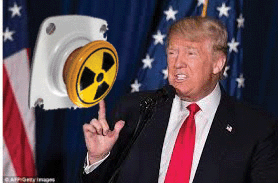 The Coronavirus Teaches Us Not to Let Trump Press the Nuclear Button BY TOM Z. COLLINA, DEFENSE ONE, POLICY DIRECTOR, PLOUGHSHARES FUND 1 Apr 20, Some of the president’s poor decisions on COVID-19, like proposing to reopen the nation by Easter, have been reversed. But a presidential decision to start nuclear war cannot be.
President Trump has swung from calling the coronavirus pandemic “totally under control” to a “national emergency” and back. Trump’s latest idea that the nation could be “opened up and just raring to go by Easter” did not stand up to scrutiny. Amazingly, we are months into this crisis and the president is still struggling to get it right.
But what if the president needs to get a decision right the very first time, no do-overs? And what if the wrong decision could lead to a disaster even worse than COVID-19?
Chillingly, that is where we find ourselves on another underappreciated but even more catastrophic threat: —nuclear war. Instead of a relatively slow-moving pandemic, this crisis could have involved strategic warning of a massive Russian nuclear attack. The president would have not weeks but just minutes to decide if the attack was real and, if so, whether to launch U.S. nuclear weapons before the attack arrives. If he decides to launch, there is no going back. No mulligans.
What would the president do? Judging by the coronavirus experience, Trump would likely be uninformed about the specifics of the threat and so would fall back on his gut instincts, assume he knows best, and proceed with dangerous over-confidence. But unlike the current crisis, he would only have time to consult with a few advisors, under intense time pressure, and only if he chooses to. The president has the sole authority to order the launch of U.S. nuclear weapons with no oversight from Congress, the Secretary of Defense, or anyone else …….
It is a deeply troubling reality that if early warning systems show a massive nuclear attack on the way, the president might decide to launch an immediate retaliation and has the absolute authority to do so. This would be a catastrophically bad decision for a number of important reasons, none of which may be obvious to an uninformed president.
First and foremost, the president might not know that the attack is probably a false alarm. There have been multiple false alarms like this in the United States and Russia, and the rise of sophisticated cyberattacks make this danger even worse…..
We need to limit the president’s unchecked and unnecessary authority to launch. Trump’s reckless mistakes on COVID-19 are a call to action: we cannot allow the president to make a unilateral decision to start nuclear war.https://www.defenseone.com/ideas/2020/04/coronavirus-teaches-us-not-let-trump-press-nuclear-button/164280/
Trump doesn’t ‘get it’ -climate change as the next great engine for the next pandemic
 With the Coronavirus, It’s Again Trump vs. Mother Nature, The president’s failure to understand his limits is very costly. NYT, By Thomas L. Friedman, March 31, 2020
- Today’s news quiz: What do these data points have in common?Jan. 22: President Trump is asked by CNBC: “Are there worries about a pandemic at this point?” Trump answers: “No. Not at all. And we’re, we have it totally under control. It’s one person coming in from China. … It’s — going to be just fine.”
Jan. 31: Moving to counter the spreading coronavirus outbreak, Trump bars entry by most foreign nationals who had recently visited China…….
Nov. 26, 2018: CNN reports that Trump “dismissed a study produced by his own administration … and more than 300 leading climate scientists, warning of the potentially catastrophic impact of climate change.” Asked why, Trump told reporters, “I don’t believe it.” Asked if he read it, Trump said, “some.”
March 30, 2020: This newspaper reports that Trump completed plans to scrap Obama-era automobile fuel efficiency standards that limited climate-warming tailpipe pollution — a move that will “allow cars on
American roads to emit nearly a billion tons more carbon dioxide over the lifetime of the vehicles.”
What’s the common theme? We have a president who is enamored with markets but ignorant of Mother Nature, and we have paid a steep, steep price for that — and will pay an even bigger price when it comes to climate change, if Trump remains in charge……..
there is one huge difference between the coronavirus and climate change: Climate change doesn’t “peak” — and then flatten out and then maybe dissipate or be permanently prevented by vaccine — so normal life resumes.
No, when the Greenland and Antarctic ice melts, it’s gone, and we humans will have to contend with the implications of sea level rise, mass movements of populations and various kinds of extreme weather — wetter wets, hotter hots and drier dries — forever.
There is no herd immunity to climate change. There are only endless impacts on the herd.
Thinking about climate change, even in the middle of this pandemic, is actually useful in a number of ways. For starters, they follow similar natural laws and have common mitigation strategies………
Finally, epidemiologists will tell you that climate change may well be the next great engine for the next pandemic — only this virus could easily be carried by mosquitoes, which, because of warmer temperatures in the global north, are able to migrate up from places they’ve never migrated from before.
For all these reasons, as we invest in infrastructure to stimulate our economy out of this corona crisis, we should be doing it to make our society more resilient against both pandemics and climate change. ……
Now that we have tasted Mother Nature’s wrath in the form of both Covid-19 and climate change, let’s get her on our side. She’s as happy to help as to destroy. Let’s use chemistry, biology and physics, not to mention sun and wind, to create the vaccines and power systems that immunize us from viruses and weather extremes — and not double down on bad habits that will only make us sick again. https://www.nytimes.com/2020/03/31/opinion/covid-trump-climate-change.html
The Russian point of view on nuclear arms control
|
Russia’s View on Nuclear Arms Control: An Interview With Ambassador Anatoly Antonov, Arms Control Association April 2020Arms Control Today conducted a written interview in early March with Anatoly Antonov, Russian ambassador to the United States on issues including the current status of U.S.-Russian strategic security talks, the future of New START, talks on intermediate-range missile systems, engaging China in arms control, and President Vladimir Putin’s proposal for a summit of the leaders of the five permanent members of the UN Security Council……..
Amb. Anatoly Antonov: Russia and the United States are the largest nuclear weapons powers and permanent members of the UN Security Council. They bear a special responsibility for preserving world peace and security. That is why it is crucial to maintain the bilateral strategic stability dialogue at any given circumstance, regardless of political situation. It goes without saying that such engagement should be conducted on a regular basis. ……. As for the consultations in January, our reaction can be described as “cautious optimism.” On the bright side is the fact that the meeting did take place, even though it exposed serious disagreements between our countries on a number of topics. ….. There is no doubt that the Russian-U.S. bilateral arms control agenda remains relevant. We are open to discussing within the strategic dialogue the issue of the newest and prospective weapons that do not fall under New START. ……. https://www.armscontrol.org/act/2020-04/interviews/russias-view-nuclear-arms-control-interview-ambassador-anatoly-antonov |
|
Different federal laws complicate legal case about radiation exposure and teenager’s brain cancer
The appellate panel must decide how two different federal laws should intersect. Law.com By Raychel Lean | April 01, 2020 A federal wrongful death lawsuit alleging exposure to radiation from nuclear materials caused a South Florida teenager’s brain cancer had its moment before the U.S. Court of Appeals for the Eleventh Circuit on Wednesday as attorneys debated whether Florida’s four-year statute of limitations should apply.
The appellate panel must decide how two different federal laws should intersect. While 42 U.S.C. § 9658 preempts state time limits for lawsuits involving nuclear incidents, the Price-Anderson Act adopts state law as “the rules for decision.”
The question arose after Palm Beach County resident Cynthia Santiago sued in the Southern District of Florida in 2014, five years after she was diagnosed with a brain tumor at 13. When she died about two years later, her parents Joselyn and Steve Santiago became personal representatives.
The complaint blamed Connecticut-based aircraft maker United Technologies Corp., alleging its Palm Beach County engineering facility released radioactive materials, heavy metals and semi-volatiles in The Acreage, where several children were also reportedly diagnosed with brain tumors. …… https://www.law.com/dailybusinessreview/2020/04/01/clock-ticking-for-florida-family-alleging-radiation-exposure-caused-teens-cancer/?slreturn=20200301190656
The court has yet to rule.
Nuclear Regulatory Commissions plans for lengthy lifetimes for U.S. nuclear power plants
 THE BIG PICTURE (Infographic): U.S. Nuclear Lifetimes, [ Excellent graph and table on original] https://www.powermag.com/the-big-picture-infographic-u-s-nuclear-lifetimes/ Mar 31, 2020. by Sonal Patel The U.S. has 96 licensed-to-operate nuclear power reactors and two reactors under construction. But the average age of the nation’s 96 licensed nuclear units is about 39 years old. That has been of some concern to the nuclear industry, which has provided roughly a fifth of the nation’s power since the 1990s. About 88 of the 96 reactors have already renewed their operating license once, extending their lifetimes from 40 to 60 years, but the majority of these will be “nearing the end of that 20-year extension by 2029 and will be seeking to renew their license a second time, for another 20-year period,” the Nuclear Energy Institute (NEI) has said.In December 2019, marking a major milestone, the Nuclear Regulatory Commission (NRC) granted the first-ever subsequent license renewal (SLR) applications to Turkey Point 3 and 4, and then to Peach Bottom 2 and 3 in March 2020, extending these reactors’ operating licenses from 60 to 80 years. THE BIG PICTURE (Infographic): U.S. Nuclear Lifetimes, [ Excellent graph and table on original] https://www.powermag.com/the-big-picture-infographic-u-s-nuclear-lifetimes/ Mar 31, 2020. by Sonal Patel The U.S. has 96 licensed-to-operate nuclear power reactors and two reactors under construction. But the average age of the nation’s 96 licensed nuclear units is about 39 years old. That has been of some concern to the nuclear industry, which has provided roughly a fifth of the nation’s power since the 1990s. About 88 of the 96 reactors have already renewed their operating license once, extending their lifetimes from 40 to 60 years, but the majority of these will be “nearing the end of that 20-year extension by 2029 and will be seeking to renew their license a second time, for another 20-year period,” the Nuclear Energy Institute (NEI) has said.In December 2019, marking a major milestone, the Nuclear Regulatory Commission (NRC) granted the first-ever subsequent license renewal (SLR) applications to Turkey Point 3 and 4, and then to Peach Bottom 2 and 3 in March 2020, extending these reactors’ operating licenses from 60 to 80 years.
More SLRs are expected this June for Surry 1 and 2. Meanwhile, owing to market conditions, technical issues, political pressure, and financial stresses, nine reactors have retired before their licenses expired since 2013, and an additional six units are slated to retire by 2026. The NEI suggests that half the nation’s nuclear fleet will need to obtain SLRs by 2040 to continue operating or be forced to retire. Sources: NRC, POWER |
|
Montgomery County officials not happy with Exelon’s Limerick Nuclear Power Plant plans for addressing Covid19
A parking lot has been designated for the new contractors that have been hired as the annual refuel of the reactor maintenance project is underway.
Dr. Valerie A. Arkoosh, chair of the Montgomery County Board of Commissioners, says back on March 16, Exelon, the company that runs the Limerick nuclear plant, gave them a lackluster social distancing plan.
She said, “We learned of plans to bring approximately 1,800 workers into our region from around the United States. We asked Exelon to postpone this refuel until a time when the disease burden from COVID-19 was lower.” …….. https://6abc.com/limerick-plant-exelon-corporation-covid19-cases/6067085/
Coronavirus: USA Nuclear Sites Could Run Out of Critical Supplies
Coronavirus and the states: Plastic bag bans on hold; nuclear plants run low on gloves, masks, wipes. Missoula, BY MATT VASILOGAMBROS, 30 Mar 20
“…… Nuclear Sites Could Run Out of Critical Supplies. Nuclear sites across the country might soon run out of gloves, masks and wipes. The U.S. Energy Department said the priority was to supply those items to health care workers and others on the frontline of the coronavirus epidemic.
That means thousands of nuclear power plant workers across the country may not have the protection needed to do their jobs. Nuclear Energy Institute CEO Maria Korsnick anticipated the shortage as early as last week, when she asked U.S. Energy Secretary Dan Brouillette for supplies and testing kits.
To be sure, not every plant expects to run out of masks. The Tennessee Valley Authority this week donated more than 50,000 masks to state emergency responders, according to spokeswoman Melinda Hunter.
Still, the TVA has worked to adapt to the crisis, including reducing power at some plants. One of its plants, Sequoyah, downsized its refueling crew from 1,000 to 800. No TVA worker had tested positive for COVID-19 as of Thursday.
Regulators also have been scrambling to adapt. The U.S. Nuclear Regulatory Commission will allow plants to operate with fewer workers on duty for longer hours, said Scott Burnell, a spokesman for the agency, in an email.
Environmental activists say now is not the time to cut corners and risk a nuclear accident. “An accident with a major release of radiation or the threat of it during this time of pandemic and social isolation would be a double whammy,” said Don Safer, a member of the board of the Tennessee Environmental Council, which advocates for renewable energy. “A major evacuation now would be chaos.”….. https://missoulacurrent.com/government/2020/03/states-coronavirus/
U.S. Nuclear Regulatory Commission (NRC) may exempt some nuclear stations from work-hour controls
NRC to Consider COVID-19 Exemptions for Nuclear Plant Work-Hour Controls https://www.powermag.com/nrc-to-consider-covid-19-exemptions-for-nuclear-plant-work-hour-controls– Sonal Patel , POWER senior associate editor (@sonalcpatel, @POWERmagazine). 30 Mar 20,
The Nuclear Regulatory Commission (NRC) on March 28 told industry that it is prepared to grant requests from individual nuclear generators for exemptions from work-hour controls specified in its rules to help provide more flexibility to the sector as it grapples with workforce issues related to the COVID-19 public health emergency.
The objective of the exemptions from Title 10 of the Code of Federal Regulations (10 CFR 26.205(d)(1)-(7)) is to ensure that the “control of work hours and management of worker fatigue do not unduly limit licensee flexibility in using personnel resources to most effectively manage the impacts of the COVID-19 [public health emergency (PHE)] on maintaining the safe operation of these facilities,” NRC Director of Nuclear Reactor Regulation Ho Nieh wrote in letters sent to the Nuclear Energy Institute (NEI), Entergy Nuclear, and Florida Power and Light over the weekend.
Nieh wrote that the exemptions will apply narrowly—only to nuclear plants whose staffing levels are affected by the pandemic. Licensees must also show they can no longer meet the work-hour controls outlined in the rules, and they can institute site-specific administrative controls for pandemic fatigue-management for personnel as outlined in the rules.
Alternative fatigue-management controls, for example, should ensure employees do not work more than 16 work-hours in any 24-hour period and not more than 86 work-hours in any 7-day period, excluding shift turnover; a minimum 10-hour break is provided between successive work periods; 12 hour shifts are limited to not more than 14 consecutive days; and a minimum of six days off are provided in any 30-day period.
Nuclear licensees that cannot meet the rule’s requirements should notify the NRC in writing, including by email, no less than 24 hours before they would be out of compliance with the rules, Nieh said. The NRC plans to consider requests on a case-by-case basis and, if approved, provide exemptions for a period of 60 days. “If the COVID-19 PHE condition does not improve before expiration of the exemption, then the NRC may consider an additional exemption period,” he added.
(This story is being updated; check back later for more details.)
—
1 This Month

Protect Sazan Island from the Trump family! https://secure.avaaz.org/campaign/en/protect_sazan_island_from_the_trump_family_loc/?bqFCVab&v=174511&cl=22707147157&_checksum=5e9dde668860e8231c33699735e16a1fbf22ab2cb01da50c999fe8732b9775ef&utm_source=email&utm_medium=blast_email&utm_campaign=174511
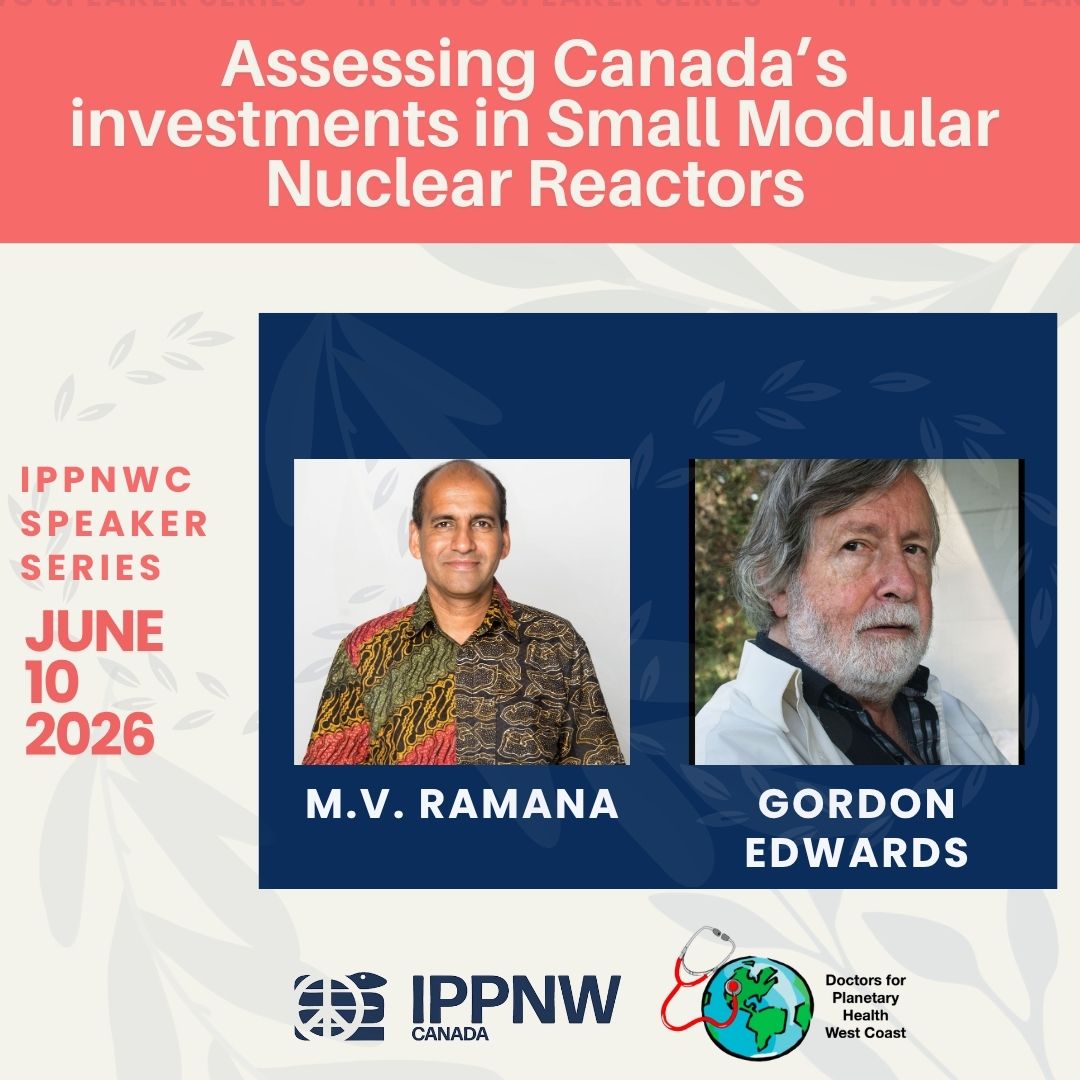
10 June – Assessing Canada’s Investments in Small Modular Nuclear Reactors – https://zoom.us/meeting/register/IiqHA5feRhaEBycOLNTJlA#/registration


Cuba Is Not a Failed State – It Is a Besieged State
PETITION: “Global Appeal to Endorse Palestinian Right of Return of Refugees”
To see nuclear-related stories in greater depth and intensity – go to https://nuclearinformation.wordpress.com
-
Archives
- June 2026 (89)
- May 2026 (306)
- April 2026 (356)
- March 2026 (251)
- February 2026 (268)
- January 2026 (308)
- December 2025 (358)
- November 2025 (359)
- October 2025 (376)
- September 2025 (257)
- August 2025 (319)
- July 2025 (230)
-
Categories
- 1
- 1 NUCLEAR ISSUES
- business and costs
- climate change
- culture and arts
- ENERGY
- environment
- health
- history
- indigenous issues
- Legal
- marketing of nuclear
- media
- opposition to nuclear
- PERSONAL STORIES
- politics
- politics international
- Religion and ethics
- safety
- secrets,lies and civil liberties
- spinbuster
- technology
- Uranium
- wastes
- weapons and war
- Women
- 2 WORLD
- ACTION
- AFRICA
- Atrocities
- AUSTRALIA
- Christina's notes
- Christina's themes
- culture and arts
- Events
- Fuk 2022
- Fuk 2023
- Fukushima 2017
- Fukushima 2018
- fukushima 2019
- Fukushima 2020
- Fukushima 2021
- general
- global warming
- Humour (God we need it)
- Nuclear
- RARE EARTHS
- Reference
- resources – print
- Resources -audiovicual
- Weekly Newsletter
- World
- World Nuclear
- YouTube
-
RSS
Entries RSS
Comments RSS
 nuclear-news