Renewables surpass coal and nuclear says USA’s Federal Energy Regulatory Commission (FERC)

US: Renewables to rise above coal and nuclear says FERC https://www.smart-energy.com/renewable-energy/us-renewables-to-rise-above-coal-and-nuclear-says-ferc/ Renewables are estimated to add nearly 50,000 MW, being more than a quarter of the total capacity according to a review by the SUN DAY Campaign of data, issued last week by the Federal Energy Regulatory Commission (FERC). 13 Mar 20,
According to the report, the mix of renewable energy sources (i.e., biomass, geothermal, hydropower, solar, wind) provided 57.26% of new U.S. electrical generating capacity added in 2019 – swamping that provided by coal, natural gas, oil, and nuclear power combined.
FERC’s latest monthly “Energy Infrastructure Update” report (with data through to December 31, 2019) reveals renewable sources (i.e. biomass, geothermal, hydropower, solar, wind) accounted for 11,857 megawatts (MW) of new generating capacity by the end of the year. That is a third more (33.97%) more than that of natural gas (8,557 MW), nuclear (155 MW), oil (77 MW), and coal (62 MW) combined.
Renewables have now also surpassed 22% (i.e., 22.06%) of the US’ total available installed generating capacity – further expanding their lead over coal capacity (20.89%). Among renewables, wind can boast the largest installed electrical generating capacity – 8.51% of the U.S. total, followed by hydropower (8.41%), solar (3.49%) [2], biomass (1.33%), and geothermal (0.32%). Thus, wind and solar combined now account for 12.0% of the nation’s electrical generating capacity.
Moreover, the FERC foresees renewables dramatically expanding their lead over fossil fuels and nuclear power in terms of new capacity additions during the coming three years (i.e., by December 31, 2022). Net generating capacity additions (i.e., “proposed additions under construction” minus “proposed retirements”) for renewable sources total 48,254 MW: wind – 26,403 MW, solar – 19,973 MW, hydropower – 1,460 MW, biomass – 240 MW, and geothermal – 178 MW.
By comparison, net additions for natural gas total 21,090 MW while the installed capacities for coal, nuclear, and oil are projected to drop by 18,857 MW, 3,391 MW, and 3,085 MW respectively. In fact, FERC reports no new coal capacity in the pipeline over the next three years.
Thus, while net new renewable energy capacity is projected to be nearly 50,000 MW greater within three years, that of fossil fuels and nuclear power combined will decline by over 4,200 MW. Between now and the end of 2022, new wind capacity alone will be greater than that of natural gas while that of wind and solar combined will more than double new gas capacity.
Moreover, if FERC’s data prove correct, then by the end of 2022, renewable sources will account for more than a quarter (25.16%) of the nation’s total available installed generating capacity while coal will drop to 18.63% and that of nuclear and oil will decrease to 8.29% and 2.95% respectively. Natural gas will increase its share — but only slightly – from 44.67% today to 44.78%.
As the Executive Director of the SUN DAY Campaign, I believed that the rapid growth of renewables and corresponding drop in electrical production by coal and oil in 2019 provides a glimmer of hope for slowing down the pace of climate change. In addition, renewables’ continued expansion in the near future – as forecast by FERC – suggests that with supportive governmental policies, these technologies could provide an even greater share of total U.S. electrical generation.
Statistics presented in this article can be found here. Read the full FERC report.
They’ve licensed Exelon’s Peach Bottom Nuclear Plant for 80 Years – but it mightn’t last
Exelon’s Peach Bottom Nuclear Plant Licensed for 80 Years—Will It Make It? Power, Mar 12, 2020, by Aaron Larson The U.S. Nuclear Regulatory Commission (NRC) granted a 20-year license extension for Peach Bottom Atomic Power Station Units 2 and 3. The extension authorizes the two reactors—both of which began commercial operation in 1974—to continue operating through 2054…….
Exelon, which operates the largest fleet (21 reactors) of nuclear plants in the U.S., has lobbied strongly for years to obtain government support for nuclear power. The company was successful in getting legislation passed in Illinois and New York that provides financial incentives for some of its plants. Government investigations, however, have put Exelon under a microscope as a result of its lobbying activities.
Exelon received a grand jury subpoena in the second quarter of 2019 from the U.S. Attorney’s Office for the Northern District of Illinois, requiring production of information concerning the company’s lobbying activities in the state. On Oct. 4, 2019, Exelon received a second grand jury subpoena, requiring production of records of any communications with certain individuals and entities. On Oct. 22, 2019, the U.S. Securities and Exchange Commission (SEC) notified Exelon that it had also opened an investigation into the company’s lobbying activities. ……..
Other units have also been retired long before their licenses expired, including Kewaunee, Vermont Yankee, Fort Calhoun, and Pilgrim, so obtaining a license extension is no guarantee of long-term operation for the Peach Bottom facility. ………https://www.powermag.com/exelons-peach-bottom-nuclear-plant-licensed-for-80-years-will-it-make-it/
Joe Biden to encourage nuclear power, and Bernie Sanders is not all that anti nuclear
 Bernie’s nuclear plan, explained, By KELSEY TAMBORRINO Politico Newsletter 03/10/2020 Bernie’s nuclear plan, explained, By KELSEY TAMBORRINO Politico Newsletter 03/10/2020 BREAKING DOWN BERNIE’S NUCLEAR PLAN: Sen. Bernie Sanders has pledged to secure 100 percent of U.S. electricity from renewable sources by 2030, and he’d do so in part by ending new licenses to nuclear power plants. But his opposition to nuclear energy may not be as radical as his critics fear, Pro’s Gavin Bade reports this morning. Sanders’ campaign says he would not order the vast majority of existing reactors in the U.S. to shut down, and campaign aides privately acknowledge that Sanders will lack the tools to bring an end to nuclear power within the next decade.Sanders’ opposition to nuclear power stands in contrast to former Vice President Joe Biden, who promises to “identify the future of nuclear power,” including new waste disposal systems and small, modular reactors that the industry hopes will be safer and easier to deploy. The nuclear issue could affect upcoming Democratic primaries in states like Illinois, New Jersey, Ohio and Connecticut, where state nuclear subsidies keep plants running and employ thousands of union jobs. Sanders’ allies say the candidate would prioritize phasing out natural gas and coal-fired power before shutting any nuclear generators. The campaign declined to give further detail on how it would ensure nuclear plants are not replaced by gas, but emphasized Sanders’ call for a complete phase-out of fossil fuels and a ban on hydraulic fracking for gas. …..https://www.politico.com/newsletters/morning-energy/2020/03/10/bernies-nuclear-plan-explained-785957 |
|
U.S. Department of Energy’s plans could mean delay in Hanford nuclear waste clean-up
|
Nuclear waste cleanup efforts in Washington could be delayed https://triblive.com/news/world/nuclear-waste-cleanup-efforts-in-washington-could-be-delayed/, ASSOCIATED PRESS | Wednesday, March 11, 2020 RICHLAND, Wash. — The Department of Energy has announced priority plans for environmental cleanup nationwide and indicates a slower process for the decommissioned nuclear site in Washington state, a report said.
The focus at the Hanford Site will be to start treating waste at the $17 billion vitrification plant, but the report does not detail other work at the 580-square-mile site, the Tri-City Herald reported Tuesday. The report does not mention moving radioactive capsules to safer storage and cleaning up a radioactive spill under one of the buildings a mile north of Richland. “It is shocking that DOE would propose to delay projects like the cesium-strontium capsules and the 324 Building contamination, which pose such great risks to the workers and public,” said Tom Carpenter, executive director for Hanford Challenge, a watchdog and worker advocacy group. The “Environmental Management Vision 2020-2030: A Time of Transition and Transformation” report may also signal delays and decreased commitment to current plans for up to 10 years, including cleanup of contaminated groundwater flowing toward the Columbia River, the newspaper said. “Proactively addressing these hazards before they pose an imminent risk is critically important, and frankly, they can’t wait until sometime in the 2030s,” said David Reeploeg, the Tri-City Development Council vice president for federal program. A budget request for upcoming year by President Donald Trump’s administration proposes cleaning up 56 gallons of radioactive waste held in underground tanks at the site. Reeploeg added that he was pleased there is some commitment to treat tank waste. Hanford produced plutonium for nuclear weapons during the Cold War and World War II. |
|
And they say that small nuclear reactors do not have military applications
Pentagon awards contracts to design mobile nuclear reactor Defense News
By: Aaron Mehta 3/9/20 , WASHINGTON — The Pentagon on Monday issued three contracts to start design work on mobile, small nuclear reactors, as part of a two-step plan towards achieving nuclear power for American forces at home and abroad.
The department awarded contracts to BWX Technologies, Inc. of Virginia, for $13.5 million; Westinghouse Government Services of Washington, D.C. for $11.9 million; and X-energy, LLC of Maryland, for $14.3 million, to begin a two-year engineering design competition for a small nuclear microreactor designed to potentially be forward deployed with forces outside the continental United States.
The combined $39.7 million in contracts are from “Project Pele,” a project run through the Strategic Capabilities Office (SCO), located within the department’s research and engineering side. The prototype is looking at a 1-5 megawatt (MWe) power range. The Department of Energy has been supporting the project at its Idaho National Laboratory…….
If the testing goes well, a commercially developed, Nuclear Regulatory Commission licensed reactor will be demonstrated on a “permanent domestic military installation by 2027,” according to DoD spokesman Lt. Col. Mike Andrews. “If the full demonstration proves to be a cost effective energy resilience alternative, NRC-licensed [reactors] will provide an additional option for generating power provided to DoD through power purchase agreements.”
The best way to differentiate between the programs may be to think of the A&S effort as the domestic program, built off commercial technology, as part of an effort to get off of local power grids that are seen as weak targets, either via physical or cyber espionage. Pele is focused on the prototyping a new design, with forward operations in mind — and may never actually produce a reactor, if the prototype work proves too difficult…… https://www.defensenews.com/smr/nuclear-arsenal/2020/03/09/pentagon-to-award-mobile-nuclear-reactor-contracts-this-week/
Peach Bottom nuclear station can struggle on for 80 years!

It’s getting a bit tiresome – this endless, mindless repetition of “carbon-free”  “clean energy” “zero-carbon” nuclear energy. Why don’t Larry Pearl and other writers, who otherwise provide thorough and well-researched information – why don’t they do their homework on the full carbon emissions of the entire nuclear fuel chain? Even the reactors themselves release a tiny an mount of Carbon 14. There is not only the chain of construction and demolition, but also the continuing fuel chain of mining through to radioactive waste disposal.
Exelon’s Peach Bottom becomes second US nuclear plant to get license 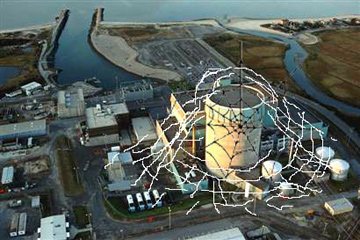 approval to 80 years, Utility Dive , By Larry Pearl March 9, 2020
Dive Brief:
- Exelon’s Peach Bottom plant became the second nuclear power reactor in the U.S. to get permission to operate out to 80 years, after the Nuclear Regulatory Commission approved another 20-year extension on Friday.
- Last December, Florida Power & Light’s Turkey Point units 3 and 4 got the first such approval as utilities work to retain a major source of carbon-free [?] as long as possible.
- Dominion has applied for a similar license extension for its Surry nuclear plant and plans to request for at least two more, while Duke plans to do the same for all 11 of its nuclear plants, Bloomberg reported last month.
Dive Insight:
Peach Bottom Unit 2 in York County, Pennsylvania, is now licensed to operate through August 2053 and Unit 3 through July 2054. The approvals come as more and more states move to adopt aggressive clean energy goals and the nuclear industry looks to advance a new generation of reactors.
But the economics of the current generation of U.S. reactors remains challenging, especially for new plants, and the industry and a number of states have adopted programs to recognize the zero emission attributes of nuclear.
While Exelon Nuclear’s Chief Nuclear Officer Bryan Hanson called the license extension, “good news for the environment, our employees and the community,” he noted that “nuclear plants must remain financially viable to continue to operate. ….
But FERC’s move in December to effectively raise the price floor for subsidized resources attempting to bid into the PJM wholesale capacity market complicates state efforts to support nuclear plants in Pennsylvania and elsewhere.
A variety of stakeholders have petitioned FERC to reconsider its decision.
The NRC’s decision to move forward with Peach Bottom’s license extension is also being challenged…. https://www.utilitydive.com/news/exelons-peach-bottom-becomes-second-us-nuclear-plant-to-get-license-approv/573690/
Dr Chris Busby exposes the facts on Cancer in US Navy Nuclear Powered Ships

They reported the results of their own epidemiology study which they carried out on the Ronald Reagan sailors. This compared the illness yield (including cancers) of the 4,843 RR sailors with a matched control group of 65,269 sailors on nuclear powered ships that were not anywhere near Fukushima.
There were 30% more cancers in the control group after adjusting for age. But what I did was to compare the control group with the National population, using data on cancer rates by age group from the SEER database [3]. The result showed an astonishing 9.2-fold excess of cancer in the sailors on nuclear-powered vessels.
Cancer in US Navy Nuclear Powered Ships https://www.counterpunch.org/2020/03/06/cancer-in-us-navy-nuclear-powered-ships/ by CHRIS BUSBY Here is a good one. In 2011, the nuclear-powered aircraft carrier USS Ronald Reagan was about 100km off the coast of Japan at the time of the Tsunami and the subsequent Fukushima reactor explosions. It was directed by the US government to ride to the rescue in what was later called Operation Tomodachi (friendship)–to provide assistance to the victims of the floods. What no-one on board was told was that the reactors had exploded and a plume of highly radioactive material was blowing east from the site into the path of the vessel. Of course, when this arrived, all the radiation monitors on the boat started screaming, and the planes and helicopters that had flown the rescue sorties were contaminated.
In 2014 I was engaged by some California attorneys to advise on a court case being taken against the Japanese company TEPCO and the US reactor makers GEC on behalf of the sailors who served on the aircraft-carrier. A significant number of the Ronald Reagan crew were reporting a wide range of weird illnesses including cancers, all of which they were attributing to their radiation exposures. Between 2014 and now, the court arguments were all about procedure: whether the cases should be heard in Japan or in the California where the vessel’s home port of San Diego was. There was a lot of publicity [1]. Eventually, and recently, the California judge decided that the case had to be heard in Japan. This is (in passing) monstrously unjust since Japanese law is different and the sailors cannot afford to go to Japan and hire Japanese lawyers. But this is not the story here.
In 2014, following all the publicity about the cancers, a number of US Senators and important people were asking pertinent questions—the Navy had to do something to answer the accusations that the Fukushima radiation was killing those who sailed on Operation Tomodachi. They panicked. A big report was prepared by the US Defense Threat Reduction Agency (DTRA), entitled: Final Report to the Congressional Defense Committees in Response to the Joint Explanatory Statement Accompanying the Department of Defense Appropriations Act, 2014, page 90, “Radiation Exposure” [2]. Never use one word when ten will do
This report rambled on about how low the Fukushima doses were, how everyone acted wonderfully and how all the radioactivity was rapidly cleaned up. The dose reconstruction showed no one got more than a fraction of the Natural Background dose and so forth. We have been here regularly. (The methodology for the dose reconstruction has since disappeared from the link given in the report). Since no-one believes any of this dose bullshit any more, to prove that there was no cancer excess, the Navy took one step too far.
They reported the results of their own epidemiology study which they carried out on the Ronald Reagan sailors. This compared the illness yield (including cancers) of the 4,843 RR sailors with a matched control group of 65,269 sailors on nuclear powered ships that were not anywhere near Fukushima. The period of analysis was from 2011 to 2013, about 3 years. This showed that there were more cancers in the control group over that period. The idea clearly was to knock on the head any suggestion that the radiation from Fukushima was the cause of the cancers and other stuff that was the basis of the court case. And this it apparently did.
Their move was to compare the matched “unexposed” control group with the Ronald Reagan group. There were 30% more cancers in the control group after adjusting for age. But what I did was to compare the control group with the National population, using data on cancer rates by age group from the SEER database [3]. The result showed an astonishing 9.2-fold excess of cancer in the sailors on nuclear-powered vessels. There were 121 cancers predicted on the basis of the national rates, and 1119 reported by the DTRA study. For the Reagans it was about 6-fold with 46 reported and 7.76 expected. Now this result is astonishing. I wrote my study up for a good scientific peer reviewed journal, and it was published last week [4]. You can find it on academia.edu if you can’t afford the journal cost.
What I discuss in the paper to explain the result is my usual argument about how the radiation protection legislation is wildly incorrect when dealing with internal contamination from radionuclides. The legal limits in USA and the West are based on the comparison of cancers in those exposed to acute external gamma ray doses to the Japanese A-Bomb populations and cannot apply to internal exposures to substances which target DNA (Uranium, Strontium-90) or which provide huge local ionisation to some living cells but nothing at all to others (DU particles, reactor discharge particles).
But this time it really is a big deal. Nine times the expected rates? What are they going to do? It is their own data which they stupidly released. It shows that all the sailors on nuclear powered Navy ships are dying from cancer. You can bet the telephone lines are hot, and that we won’t see any coverage of this in the Theatre newspapers and media. But the sailors themselves and the veterans? What will they think when they find this online but not reported?
Studies of nuclear workers have been the new battleground for this Chess game since it became apparent in the last few years that the Japanese A-Bomb studies were dishonestly manipulated and ignored internal exposures to fallout and rainout [5]. We have seen a number of attempts to kill the argument about low dose radiation and health using nuclear worker studies. There was the Lancet publication in year 2015 [6]. There was the desperate and disgraceful Royal Society publication last year [7]. The late Alexei Yablokov and I wrote to the Lancet Editor on behalf of the Independent WHO [8] asking if we could point out in the journal that the Lancet articles reassuring everyone that the science of radiation risk was secure were written by nuclear industry scientists and were unsafe. The Lancet refused. I wrote to the Royal Society. They also refused to publish anything. What is Truth—says Pilate—waits for no answer.
Nuclear workers work outside at a nuclear site where the discharges get dispersed. Nuclear sailors live in a tin box that also contains the reactors. Nuclear worker studies are based on data that is provided by the nuclear industry to show there are no cancers. The DTRA study had to show more cancers in order to swamp the Ronald Reagan sailors’ cancers. But to do this, they brought out their Queen. And it was taken
Anyway, let’s not walk further into the What is Truth swamp and discuss the News Theatre. Thankfully this story shows that in this truth argument there are two last frontiers. These are the scientific peer-review literature and the courts. I am representing the widow of a UK nuclear submariner, a man who was a reactor servicing technician and who died from cancer. Let’s see what the Scottish court makes of this paper. Read it yourself and have a laugh. If you are a Navy sailor on a nuclear-powered ship, be very frightened. Write to your Senator. Kick up a fuss.
Notes.
1) https://www.courthousenews.com/us-sailors-face-grim-diagnoses-after-fukushima-mission/
3) https://seer.cancer.gov/data/
4) https://www.tandfonline.com/doi/abs/10.1080/07357907.2020.1731526?journalCode=icnv20
5) https://www.genetics.org/content/204/4/1627
6) https://royalsocietypublishing.org/doi/10.1098/rspb.2017.1070
7) https://royalsocietypublishing.org/doi/10.1098/rspb.2017.1070
More articles by:CHRIS BUSBY
Dr Chris Busby is the Scientific Secretary of the European Committee on Radiation Riskand the author of Uranium and Health – The Health Effects of Exposure to Uranium and Uranium Weapons Fallout (Documents of the ECRR 2010 No 2, Brussels, 2010). For details and current CV see chrisbusbyexposed.org. For accounts of his work see greenaudit.org, llrc.org and nuclearjustice.org.
Trump’s America prepares to use low-level nuclear weapons as “a viable option” – Russia fears
 Russia Fears US Under Trump Now Ready to Use Nuclear Weapons as ‘Viable Political Option’ https://www.commondreams.org/news/2020/03/06/russia-fears-us-under-trump-now-ready-use-nuclear-weapons-viable-political-option“This dramatically increases the chance of a nuclear exchange due to miscalculation or human error.”by Eoin Higgins, staff writer
 |
“Washington is not just modernizing its nuclear forces, but is striving to give them new capabilities, which greatly expands the likelihood of their use,” Russian Foreign Ministry spokeswoman Maria Zakharova said Friday. Zakharova told reporters that the U.S. increase in nuclear weapons capabilities earlier in the year, when the military deployed a low-yield ballistic warhead to its submarines, reduces the threshhold for using the weapons and brings the world closer to the possibility of nuclear war. As Common Dreams reported, the move was seen by International Campaign to Abolish Nuclear Weapons treaty coordinator Tim Wright as “an alarming development that heightens the risk of nuclear war.” “Of particular concern is the expansion of the range of U.S. low-yield weapons in its nuclear arsenal, including the development and deployment of such munitions for strategic carriers,” said Zakharova. The U.S. in February angered Russian officials for a war game in which the Pentagon ran a scenario where Russia attacked a NATO ally with a low-yield nuclear weapon and the U.S. responed with a “limited” nuclear strike. According to RT, the Russian government’s concerns are based in part on the U.S.’s nuclear doctrines:
As the Washington Physicians for Social Responsibility’s Bruce Amundson and Joseph Berkson wrote for the Seattle Times in February after the U.S. deployment of low-yield weapons was announced, the deployment raises the risk of overreaction and escalation:
In her remarks Friday, Zakharova said Moscow was treating U.S. moves as a sign the country “has made a decision to consider a nuclear conflict as a viable political option and are creating the potential [scenario] necessary for it.” President Donald Trump and his administration have been reluctant to commit to renewing the Nuclear Nonproliferation Treaty in April 2021. The treaty turned 50-years-old on March 5, leading United Nations General Secretary António Guterres in a statement to call on treaty signatories to recommit to world peace. “The Secretary-General calls on States parties to make the most of this opportunity to strengthen international peace and security through the promotion of non-proliferation of nuclear weapons and nuclear disarmament, as well as measures to strengthen implementation of the NPT and achieve its universality,” said Guterres. |
Deceit and Dark Money -Ohio’s nuclear subsidy saga

Dark money dominated Ohio’s nuclear subsidy saga ENERGY NEWS NETWORK, Kathiann M. Kowalski, March 5, 2020
FirstEnergy Solutions paid nearly $2 million to at least one group, but  most other data remains hidden.

After-the-fact filings show that FirstEnergy’s generation subsidiary paid nearly $2 million to Generation Now, one of the special interest groups that orchestrated ads, political donations and other efforts behind Ohio’s nuclear and coal bailout.
But legal loopholes make it harder to find out the total spent and who else was behind xenophobic advertising, dueling voter petitions, alleged intimidation and other claims of foul play. And none of those actions fully disclosed who was behind them.
The scant public filings that are available show additional connections to FirstEnergy Solutions (now Energy Harbor), as well as the law firm of an outspoken legislator who has long fought the state’s clean energy standard, and others with high-level political influence.
House Bill 6 gutted Ohio’s renewable energy and energy efficiency standards while putting ratepayers on the hook for nearly $1 billion in subsidies for nuclear power plants, plus an additional amount for aging coal plants. Multiple groups spent heavily to promote HB 6 and prevent a referendum on the law following its passage.
In some cases, nonprofit and for-profit organizations funded each other or shared the same spokesperson. Groups active in the HB 6 campaign also had links to some of the same lobbyists and consultants who acted for companies that stood to benefit from HB 6, or unions with workers at their plants. But only limited amounts of funding could be traced.
ON ORIGINAL – INTRIGUING INTERACTIVE DIAGRAM HERE _ shows interrelationships of individuals and groups Continue reading
Dark nuclear-lobby money effects political changes in Ohio, and where next?
 Support for HB 6 comes from beyond the state and reaches into some top levels of national politics.
The forces that passed Ohio’s subsidy law are poised for further action to shore up utilities and protect fossil fuel interests.
Dark money helped shift leadership in the General Assembly.Dark money dominated Ohio’s nuclear subsidy saga ENERGY NEWS NETWORK, Kathiann M. Kowalski, March 5, 2020 “…………..Dark money groups such as Generation Now and the Growth & Opportunity PAC spent roughly $1 million in the 2018 election cycle. That election replaced Kasich with Mike DeWine as governor.
Other groups were also active, sometimes popping up for just a few months. At least one group launched a $100,000 negative ad campaign against an Ohio representative running in a congressional primary after she opposed subsidies for FirstEnergy.
The 2018 election also led to a leadership shift in the Ohio House of Representatives. Larry Householder, R-Glenford, the new speaker, proved to be a major force shepherding HB 6 through the General Assembly, even to the point of holding up a budget agreement last summer until the subsidy bill passed.
Dark money efforts while the bill was pending included advertising, coordination of bill testimony, and blocking a referendum effort that would have let voters reject HB 6 this November. Groups’ actions sparked critics to complain about misleading ads, alleged harassment of signature collectors, buyouts of petition workers, and even alleged assault.
At the end of the day, someone paid big money” for all those efforts, Hill said. “They didn’t do that [as] an un-self-interested contribution to a public policy debate.”
Groups’ efforts overlapped and linked with each other from before 2017 through the present.
Public reports reflect partial funding and cross-transfers among organizations whose backers remain secret.
Generation Now formed in 2017 as a tax-exempt organization under Section 501(c)(4) of the Internal Revenue Code. That code section covers a broad range of civic and “social welfare” organizations. An IRS filing identified its president/secretary as JPL & Associates, rather than a specific individual.
Generation Now gave $1,050,000 to the Growth & Opportunity PAC in 2018, which in turn ran ads and took other steps to support candidates who would favor Householder’s selection as House speaker, preparing the way for the subsidy bill. In 2019, Generation Now continued to spend money for pro-HB 6 ads and to discourage voters from signing referendum petitions. The total amount of its spending is not yet known.
Neither Generation Now spokesperson Curt Steiner nor Jeff Longstreth, a principal at JPL & Associates, responded to questions about the organization’s funding and its activities.
Unions reported giving $840,000 to Generation Now in 2018 and 2019. Generation Now also got money from other 501(c)(4) organizations, according to IRS filings. A group called Empowering Ohio’s Economy gave $100,000 to Generation Now in 2017 and another $50,000 for advocacy in 2018. That group also gave $200,000 for public advocacy to the Coalition for Growth & Opportunity in 2017, which in turn gave $59,000 to Generation Now over the course of 2017 to 2018.
The Coalition for Growth & Opportunity has also donated money to the Growth & Opportunity PAC. And it paid roughly $103,000 in 2018 for services from Communications Counsel, Inc., a public relations firm that has represented many Republicans in Ohio politics. Mark Weaver, a principal in the firm, is also an attorney with the Isaac Wiles law firm in Columbus. Other lawyers there filed incorporation papers and serve as registered agents for Ohioans for Energy Security. That group was formed on July 30, a week after Gov. DeWine signed HB 6.
When asked about that organization, Weaver said the law firm “represent[s] a wide range of political action committees and non-profit organizations” that have free speech rights and that its lawyers “follow the law and ethical rules in every respect.” He did not answer questions about the group’s funding.
As a for-profit entity, Ohioans for Energy Security doesn’t have to report its funding sources or spending. The group’s print and video ads featured a debunked Chinese conspiracy claim. The group also took part in some blocking activities related to the referendum, such as working to hire or otherwise “buy out” workers who had been hired to collect signatures from voters.
An affidavit filed in federal court in October provides a copy of a form contract for one of those proposed buyouts. The contracting party is shown as Ohioans for Energy Security. However, it said, any notices for Ohioans for Energy Security should go to Generation Now, care of Jeff Longstreth in Columbus.
Additional blocking efforts included the circulation of rival petitions, arranged by Ohioans for Energy Security. Those petitions had no binding value. Yet they looked enough like the real thing to cause some confusion, said critics, such as Hill.
“Under the shroud of disclosure loopholes, corporations can outright lie to voters without any accountability,” said Jen Miller, executive director of the League of Women Voters of Ohio. “This is particularly concerning about complex issues like Ohio’s energy policy, which ultimately will affect Ohioans economically and environmentally for years to come.”
Yet another group, Protect Ohio Clean Energy Jobs, bought Facebook ads urging people to remove their names from referendum petitions. Its treasurer, Alex Thomas, also played a coordinating role for the Ohio Clean Energy Jobs Alliance. The alliance’s website says it’s a “coalition of Ohio community leaders and organizations” and is “powered by FirstEnergy Solutions.” The spokesperson, Carlo LoParo, also acted as spokesperson and president for Ohioans for Energy Security.
LoParo did not answer questions about funding for either Ohioans for Energy Security or the Ohio Clean Energy Jobs Alliance.
FirstEnergy Solutions is connected to dark money groups through its spending and through several consultants and lobbyists.
Even before the July 2019 wire payment from FirstEnergy Solutions to Generation Now, its lobbyists, Matt Borges and Alex Thomas, then with Roetzel Consulting Services, worked behind the scenes for passage of HB 6. During that time, Thomas helped get organizations to sign on to a June 12 letter to the Ohio Senate Energy and Public Utilities Committee in support of HB 6. Committee records show that letter as coming from the Ohio Clean Energy Jobs Alliance.
Other FirstEnergy Solutions lobbyists and consultants coordinated efforts on HB 6. Among other things, materials in the FirstEnergy Solutions bankruptcy case reflected payments to help get the Ohio Clean Energy Jobs Alliance underway. A former FirstEnergy external affairs director, Murphy Montler, who is now deceased, was a consultant for FirstEnergy Solutions. He provided local public officials linked to the alliance with drafts of their testimony on HB 6.
Labor unions that provided funds to Generation Now also appear to have members who work at the Davis-Besse and Perry nuclear power plants. The political education arm of International Union of Operating Engineers, Local 18 gave $250,000 in 2018 and another $105,000 through November 2019. The AFL-CIO also ran anti-referendum ads in 2019. And an AFL-CIO affiliate gave $250,000 to Generation Now in 2018.
Meanwhile, employee “contests” at the Davis-Besse and Perry nuclear plants recruited workers as part of the Ohio Clean Energy Jobs Alliance’s “employee ambassador” program. FirstEnergy Solutions employees appeared in a pro-HB 6 ad presented by the Ohio Clean Energy Jobs Alliance.
At least two employees at FirstEnergy Solutions’ nuclear plants are also in a video ad from Ohioans for Energy Security. “Don’t sign the petition to allow China to control Ohio’s power,” the ad’s voiceover announcer said.
FirstEnergy Solutions’ spokesperson declined to answer questions about the company’s relationship with the nonprofits.
Law firm links also factor prominently in activities linked to HB 6.
Trump picks nuclear envoy – Marshall Billingslea, formerly involved in torture program
 Trump picks official involved in Bush-era torture program as his nuclear envoy
- Marshall Billingslea oversaw Guantánamo detainees’ treatment
- Trump wants to negotiate new deal with Russia and China, Julian Borger in Washington, 5 Mar 2020 The Trump administration has chosen a special envoy for nuclear talks, with the principal task of negotiating a new arms control agreement with Russia and China, according to congressional sources and former officials. The proposed special negotiator, Marshall Billingslea, is currently the under-secretary for terrorist financing at the US Treasury. His nomination last year for a top human rights job at the state department was stalled by controversy over the extent of his involvement in the torture programme established by the George W Bush administration, in which he oversaw the conditions of detainees in Guantanamo Bay.
Neither the state department nor the Treasury responded to a request for comment, but congressional staffers and former officials said Billingslea had accepted the post.
The Trump administration has been trying to recruit a high-level arms control negotiator for several months, but several former Republican officials with significant experience in the field turned down the offer.
Billingslea, who has a long record as a hawk on nuclear weapons issues, faces a daunting task. Donald Trump wants to negotiate a new agreement to reduce the vast nuclear weapons arsenals of the major powers, to replace the New Start deal with Russia agreed by Barack Obama.
Trump wants China to be included in a new agreement but Beijing has so far refused on the grounds that the Chinese arsenal is a small fraction (estimated at about a 20th) of its US and Russian counterparts.Trump has accepted an invitation from Vladimir Putin to take part in talks on nuclear arms control and other strategic issues at a summit meeting of the five permanent members of the UN security council, most likely at the time of the UN general assembly in September.
One of Billingslea’s tasks would be to prepare for the summit, but in the absence of a major shift by China, he would have to advise Trump on whether or not to extend the New Start deal – the last nuclear arms control agreement to have survived the Trump era – as an interim measure. That is something the president is highly reluctant to do, because the 2010 agreement is part of the Obama legacy Trump has been eager to expunge.
Billingslea is a former aide to the late Republican senator Jesse Helms, who was a fervent opponent of arms control efforts during the cold war, for example blocking US ratification of the Comprehensive Test Ban Treaty, and campaigning for the US withdrawal from the Anti Ballistic Missile treaty. AT TOP https://www.theguardian.com/us-news/2020/mar/04/trump-nuclear-talks-envoy-marshall-billingslea
Tennessee Valley Authority violated whistleblower protections for nuclear workers
|
Federal regulators say TVA willfully violated safety standards in firing nuclear engineers, Chattanooga Times Free Press TVA disputes NRC findings, claims employee concerns program improving.by Dave Flessner March 3, 2020,The Tennessee Valley Authority improperly fired two nuclear engineers after they raised concerns about safety and management in TVA’s nuclear power program, according to federal regulators.
In a letter to TVA made public Tuesday, the head of regulatory enforcement at the U.S. Nuclear Regulatory Commission said TVA violated whistleblower protections for nuclear workers by disciplining and then dismissing the nuclear engineers who worked on programs at the Sequoyah and Watts Bar nuclear power plants. George A. Wilson, director the NRC’s Office of Enforcement, said “the actions taken against (by TVA) these former employees were in apparent violations (of NRC safety standards) and the apparent violations were willful” and “are being considered for escalated enforcement action,” which could include a civil penalty against TVA. The NRC did not identify the affected employees. But they are similar to concerns reviewed in an earlier U.S. Department of Labor finding that ordered TVA to rehire a nuclear engineer after she raised safety concerns and questioned the performance of her boss in TVA’s corporate nuclear program. Despite objections by TVA, the NRC said the engineers working on programs at the Sequoyah and Watts Bar nuclear plants were first subject to a harassment investigation, then placed on paid administrative leave and ultimately were discharged after raising concerns about safety problems and corporate nuclear licensing activities from 2015 to 2018. NRC has yet to issue a notice of violation, but a civil penalty for the violations could be forthcoming……….. The NRC finding comes after the U.S. Department of Labor ordered TVA earlier this year to reinstate nuclear engineer Beth Wetzel after she was fired for raising safety concerns and complaining about her boss. The Labor Department ordered TVA to give Beth Wetzel her job back and pay more than $200,000 in back pay, lost bonuses and benefits, compensatory damages and legal fees, according Department of Labor records obtained by the Knoxville News Sentinel. TVA spokesman Jim Hopson said the disputes in the DOL investigation were resolved, but he said under the agreement details of the settlement are not publicly disclosed…… Wetzel filed a series of nuclear safety complaints with Henderson and the NRC, including violations of worker fatigue rules, as part of her job, according to the Labor Department……. The NRC is continuing to inspect and evaluate the safety conscious work environment at all three of TVA’s nuclear sites after the regulatory agency found in 2016 that TVA had a “chilling” environment for worker concerns at its Watts Bar Nuclear Plant near Spring City, Tennessee. NRC cited TVA for the ongoing problem and confirmed the chilled work environment at TVA again in 2017. In 2018, TVA’s Inspector General also found that TVA was not adequately addressing nuclear safety concerns voiced by its workers. ……https://www.timesfreepress.com/news/business/aroundregion/story/2020/mar/03/federal-regulators-tva-violated-safety-standards/517214/ |
|
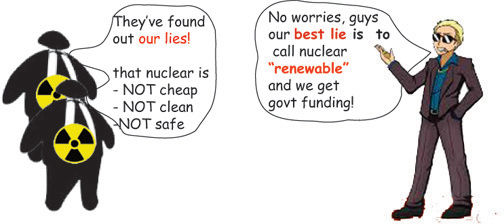
Bill in California to call nuclear power “renewable”!
|
Should California classify nuclear power as renewable? San Diego Union Tribune By ROB NIKOLEWSKI, MARCH 3, 2020
Although he admits it’s a long shot, a member of the California Legislature from the district that includes the Diablo Canyon nuclear plant has introduced a bill that would add nuclear power to the state’s list of renewable energy sources……..
Established in 2002, California’s Renewables Portfolio Standard spells out the power sources eligible to count toward the state’s goals to wean itself of fossil fuels. The list includes solar, wind, biomass, geothermal, small hydroelectric facilities and even tidal currents. The standard has been updated, currently calling for 60 percent of California’s electricity to come from renewables by 2030 and 100 percent from carbon-free sources by 2045. Nuclear power is not part of the portfolio standard and Diablo Canyon — the only remaining nuclear plant in California — is scheduled to stop producing electricity by 2025. Pacific Gas & Electric, the operators of Diablo Canyon, announced in 2016 an agreement with a collection of environmental and labor groups to shut down the plant. PG&E said Diablo will become uneconomical to run due to changes in California’s power grid — such as growth of renewable energy sources, increased energy efficiency measures and the migration of customers from traditional utilities to community choice energy programs. But Cunningham thinks the passage of Assembly Bill 2898, which he introduced last week, could give the plant literally a new lease on life…….. When told of Cunningham’s bill, David Weisman, outreach coordinator for the Alliance for Nuclear Responsibility, said flatly, “Diablo Canyon has become a burdensome, costly nuclear white elephant.” Critics say nuclear power by definition cannot be considered renewable because it leaves behind waste in the form of spent nuclear fuel that then has to be stored. The federal government has not found a site to deposit the waste that has built up over decades from commercial nuclear power plants……. https://www.sandiegouniontribune.com/business/energy-green/story/2020-03-03/should-california-count-nuclear-power-count-as-renewable |
|
Trump gives huge funding increase to nuclear agency that develops nuclear warheads
The White House gave this nuclear agency a giant funding increase. Can it spend it all? Defense News By: Aaron Mehta 4 Mar 20, WASHINGTON — Members of Congress used a hearing Tuesday to question whether the National Nuclear Security Administration, a semiautonomous arm of the Department of Energy that handles development of nuclear warheads, can spend an almost 20 percent funding increase requested by the Trump administration.
As part of its national security budget request, the White House asked for more than $46 billion for nuclear programs in fiscal 2021. That includes $28.9 billion for the Department of Defense, which develops the delivery systems such as the B-21 bomber and the new replacement for intercontinental ballistic missiles, as well as $15.6 billion for NNSA’s nuclear weapons accounts and another $1.7 billion for nuclear reactor work, run through the NNSA on behalf of the Navy.
That NNSA total represents a major increase in agency weapons funding over levels projected in the previous budget request, something that several members noted during an appearance by NNSA head Lisa Gordon-Hagerty at the House Armed Services Committee’s Strategic Forces Subcommittee…….
Allison Bawden, director of the natural resources and environment team within the Government Accountability Office, who also appeared before the committee. Bawden warned that the “spend rate has to go up very quickly” for NNSA to be able to spend all the money coming its way.
Asked directly by Rep. Susan Davis, D-Calif., if NNSA could successfully execute a roughly $3 billion increase from its FY20 to FY21 request, Bawden said it would be “very challenging” to do so.
Expect agency officials to face similar questions about how to spend its money on Wednesday, when they appear in front of the House Energy and Water Development, and Related Agencies Subcommittee, the appropriations panel with the most direct control of the NNSA’s budget.
The chairwoman of that subcommittee, Rep. Marcy Kaptur, D-Ohio, told Defense News this week that the administration is “again proposing a nuclear weapons budget that does not establish clear priorities.”
“The proposed $3.1 billion increase for weapons is simply sprinting toward failure, and Congress should right-size NNSA’s workload to match what the complex can realistically do,” Kaptur said……….
an estimated $81.37 billion to be spent on nuclear weapons programs, including modernization of a number of warheads. Combined with the Pentagon’s plan to spend about $87 billion over that same time frame on nuclear modernization, the overall price tag for the Future Years Defense Program could be at least $163 billion.
Stephen Young, an expert with the Union of Concerned Scientists, said that the nuclear “bow wave” of spending that has long been predicted is finally arriving. But he agrees that the NNSA is likely to be challenged in spending its significant increase in dollars.
“The problem is, the NNSA will almost certainly fail to achieve its admittedly aggressive timelines, even though it is throwing money at the problem. If the United States does not have an achievable, realistic warhead plan, the Pentagon will face difficult choices going forward,” Young said. “The good news is, because the U.S. nuclear arsenal is so robust, even if the NNSA has significant failures, the U.S. deterrent will remain robust.” https://www.defensenews.com/smr/nuclear-arsenal/2020/03/04/the-white-house-gave-this-nuclear-agency-a-giant-funding-increase-can-it-spend-it-all/
Nuclear – a failing technology, example Canada’s risky CANDU reactors
Ontario Clean Air Alliance The Star By Angela Bischoff, March 3, 2020
Ask yourself: Would we build a massive nuclear power station in the middle of Canada’s largest urban area today? The answer, of course, is a common sense “no.”
It’s common sense because nuclear energy, despite its boosters’ assurances, is not without risk. And while the risk of something going wrong may be small, the consequences could be catastrophic. Just ask the people of Japan.
There is a persistent myth that there is something “special” about CANDU (Canada’s nuclear) technology. But that’s just wishful thinking. CANDU’s are just as prone to risk as any other type of system for splitting atoms.
In fact, the inability of nuclear engineers to address some of the risks built into the CANDU process led to the shelving of both the CANDU 6 “advanced” reactor design and the Maple small reactors that were to supply medical isotopes (a role that is now being increasingly filled by non-nuclear technologies). Those failures cost us billions in wasted taxpayer dollars.
Furthermore, with their miles and miles of corrosion-prone piping and complex designs, CANDUs are notoriously hard to maintain, and all our reactors have had to undergo significant rebuilding well before reaching the end of their promised lifetimes………
The total radioactivity in Pickering’s spent nuclear fuel is 200 times greater than the total radiation released to the atmosphere by the Fukushima accident in 2011.
Maybe the risk involved in storing 15,000 tonnes of radioactive waste next to the source of our drinking water and surrounded by millions of people would be worth it if we had no alternatives. But we have plenty of options to keep our lights on and our beer cold. What we don’t have is any viable solution for the long-term storage of highly radioactive waste that will have to be kept absolutely secure for hundreds of thousands of years.
There’s no shortage of happy talk about deep geologic waste disposal or even miraculous waste-consuming mini breeder reactors (a technology long since dismissed by countries around the world due to its horrendous risk profile). What you won’t find are any actual operational solutions — or even any ready-to-implement plans on the near horizon.
And then there’s the danger to your wallet. Nuclear power — with risks so huge that no commercial insurance industry will touch it for any amount of premium — is no bargain. Today, Ontario Power Generation is charging 9.5 cents per kilowatt hour for nuclear power; within 5 years that will jump to 16.5 cents as OPG deals with the huge cost of rebuilding Darlington’s reactors.
That is three times the cost of renewable power we could secure from Quebec, twice what Ontario was paying for wind power (and about equal to solar) four years ago, and eight times what we pay to help our industries and businesses improve their energy efficiency and reduce their need for power (and their bills).
So, the calculus is simple. On one hand we have a fading technology — nuclear now generates half the power it did worldwide 10 years ago — with rising costs and security concerns, and a long history of bringing in projects behind schedule and massively over budget.
On the other, a 100 per cent renewable system where costs continue to plummet, technology — including storage — is leaping ahead, and safety is about making sure workers wear harnesses, not radiation monitors. Which one would you choose for your neighbourhood?
1 This Month

of the week– Nuclear Reactor Information Task Force

14 May – online event From Bombs to Data Centres: the Face of Nuclear Colonialism
To see nuclear-related stories in greater depth and intensity – go to https://nuclearinformation.wordpress.com
-
Archives
- May 2026 (102)
- April 2026 (356)
- March 2026 (251)
- February 2026 (268)
- January 2026 (308)
- December 2025 (358)
- November 2025 (359)
- October 2025 (376)
- September 2025 (257)
- August 2025 (319)
- July 2025 (230)
- June 2025 (348)
-
Categories
- 1
- 1 NUCLEAR ISSUES
- business and costs
- climate change
- culture and arts
- ENERGY
- environment
- health
- history
- indigenous issues
- Legal
- marketing of nuclear
- media
- opposition to nuclear
- PERSONAL STORIES
- politics
- politics international
- Religion and ethics
- safety
- secrets,lies and civil liberties
- spinbuster
- technology
- Uranium
- wastes
- weapons and war
- Women
- 2 WORLD
- ACTION
- AFRICA
- Atrocities
- AUSTRALIA
- Christina's notes
- Christina's themes
- culture and arts
- Events
- Fuk 2022
- Fuk 2023
- Fukushima 2017
- Fukushima 2018
- fukushima 2019
- Fukushima 2020
- Fukushima 2021
- general
- global warming
- Humour (God we need it)
- Nuclear
- RARE EARTHS
- Reference
- resources – print
- Resources -audiovicual
- Weekly Newsletter
- World
- World Nuclear
- YouTube
-
RSS
Entries RSS
Comments RSS
 nuclear-news