Canada’s Bruce County Council postpones voting on nuclear waste bunker plan
 Bruce County defers vote to support the science behind a nuclear waste bunker, By Janice MacKay, Blackburn News, November 5, 2020 Bruce County Council has agreed to defer the vote on a motion made at today’s meeting to accept the Nuclear Waste Management’s proposed Deep Geologic Repository to store used nuclear fuel as a matter of settled science.Michelle Stein of the group “no DGR South Bruce” told council via skype Thursday during their meeting that the motion was premature when the science isn’t settled on the proposed nuclear fuel Repository…….. Bruce County defers vote to support the science behind a nuclear waste bunker, By Janice MacKay, Blackburn News, November 5, 2020 Bruce County Council has agreed to defer the vote on a motion made at today’s meeting to accept the Nuclear Waste Management’s proposed Deep Geologic Repository to store used nuclear fuel as a matter of settled science.Michelle Stein of the group “no DGR South Bruce” told council via skype Thursday during their meeting that the motion was premature when the science isn’t settled on the proposed nuclear fuel Repository……..
She says moving the waste could add increased risk as it is transported through local municipalities. She worries that since there is no nuclear fuel DGR operating in the world, developing one in South Bruce would be an experiment which could put local rivers and waterways at risk. She added that the nuclear fuel waste would also still need to be stored at the surface, as “the nuclear waste needs to go into cooling pools, and then it needs to be stored above ground for approximately 30 years before it’s even cool enough to be moved.” https://blackburnnews.com/uncategorized/2020/11/05/bruce-county-defers-vote-support-science-behind-nuclear-waste-bunker/ |
|
U.S. Navy to spend $billions on two Columbia-class nuclear missile submarines
|
US Navy inks $9.4B contract for two Columbia-class nuclear missile submarines, Defense News
By: David B. Larter 6 Nov 20, WASHINGTON — The U.S. Navy announced Thursday it had inked a $9.47 billion contract with builder General Dynamics Electric Boat for the full construction cost of the lead boat of the Columbia-class ballistic missile submarine, as well as advanced procurement money for the second boat, the future USS Wisconsin.
The announcement marks the end of the beginning for the Columbia class, which the Navy has for years said is its top priority. The 12-ship class will replace the retiring Ohio-class submarines. The Columbia is slated to make its first patrol in 2031, and the Navy says it must meet the timeline to maintain continuous sea-based deterrent patrols……. The Columbia program is a massively expensive undertaking, with the Navy estimating it will run about $7.5 billion per hull over the class. By 2026, when the Navy will be buying one Columbia per year, considering the FY21′s roughly $20 billion shipbuilding request as a guide, Columbia would eat up to 38 percent of the Navy’s shipbuilding money……. https://www.defensenews.com/naval/2020/11/05/navy-inks-contract-for-two-columbia-class-nuclear-missile-submarines/ |
|
Texas governor wants Trump to oppose nuclear waste dump plan
Gov. Abbott Asks Trump for Help with Nuclear Waste in West Texas, Sanangelo Live, MATT TRAMMELL, NOV 6, 2020, ANDREWS, TX – Governor Greg Abbott sent a letter to President Trump last week urging him to put a stop to storing high levels of nuclear waste in rural West Texas.
In the letter sent to President Trump, on Sep. 29, Abbott gave a number of reasons for his opposition.
The main concerns the Governor has is the risk the nuclear material will bring to the Permian Basin.
Here is the full letter: [ but extract only posted here]
Dear Mr. President: Thank you for all you do to ensure a prosperous economy and strong energy industry in the United States. I write to express my opposition to the license applications to the Nuclear Regulatory Commission (NRC) for the consolidated interim storage of spent nuclear fuel and high-level waste at proposed sites within the state of Texas and within the state of New Mexico, close to the Texas border. A stable oil and gas industry is essential to the economy, and crucial to the security of our great nation. Allowing the interim storage of spent nuclear fuel and high- level nuclear waste at sites near the largest producing oilfield in the world will compromise the safety of the region.
The proposed facilities would be sited in the Permian Basin Region, which is the largest producing oilfield in the world ……..the Permian Basin is a significant economic and natural resource for the entire country, and the proposed storage facilities would place America’s recovering economy and energy security at great risk.
The NRC is currently evaluating issuance of a 40-year license to Interim Storage Partners (ISP) for a consolidated interim storage facility in west Texas as well as issuance of a 40-year license to Holtec International for such a facility in southeastern New Mexico. As proposed, the ISP facility would store commercial spent nuclear fuel and reactor-related materials, presenting a radiological risk greater than currently authorized for storage and disposal in Texas. ISP has also indicated it may seek to renew the license for an additional 20 years, which would result in an operating life of 60 years, or until a permanent facility is established. ……..https://sanangelolive.com/news/politics/2020-11-06/gov-abbott-asks-trump-help-nuclear-waste-west-texas
The most frightening prospect – Trump remaining still in control of nuclear weaponry
 The Guardian view on the election endgame: end Trump’s war on the truthm Editorial, 6 Nov 20 https://www.theguardian.com/commentisfree/2020/nov/06/the-guardian-view-on-the-election-endgame-end-trumps-war-on-the-truth
Around the world former democracies are slipping into autocracy. The United States is not immune
Since he took office Donald Trump has posed a grave threat to democracy. His wild, relentless post-poll fight against reality this week has shown just how dangerous he can be. Designed to give his supporters a rationale for their anger over losing the popular vote, the falsehoods raised troubling questions about when, and how, Mr Trump will leave the White House.
The bad news is that it won’t be anytime soon. Democracy in America is rare in giving a president more than 10 weeks of power after losing an election. Mr Trump is using this time to ratchet up the rhetoric to a fever pitch, seeding the idea that society is irreconcilably at odds with itself. This is profoundly damaging to America, a fact that cable networks have thankfully and belatedly woken up to after election day. Around the world former democracies are slipping into autocracy. The United States is not immune.
The fact is Mr Trump will lose the popular vote by millions of votes and only America’s outdated electoral college has saved him from a crushing defeat. The president should be preparing to leave the White House, not be instructing his lawyers. Perhaps Mr Trump cannot afford to lose. Presidential immunity from prosecution vanishes once Mr Trump leaves office, a consideration that may weigh heavily given the ongoing investigations by the New York district attorney into reported“protracted criminal conduct at the Trump Organization”. Mr Trump denies any wrongdoing.
or months it has been obvious that Mr Trump would claim victory and fraud should he lose the election. He has refused to say he would accept a peaceful transfer of power. The polls, he claimed, could not be trusted. Without a shred of shame, Mr Trump appears willing to challenge the validity of the vote in any state he loses, seeking to undermine the electoral process and ultimately invalidate it.
This is a dangerous moment. There’s no evidence of widespread illegal votes in any state. Yet a fully fledged constitutional crisis over the process of counting ballots is on the cards because Mr Trump is demanding recounts and court cases while conditioning his base to view the election in existential terms. Last year, in an influential and prescient analysis, Ohio University’s Edward B Foley wargamed how a quarrel over mail-in ballots in Pennsylvania could lead to a disputed result in the 2020 presidential election.
The most frightening scenario, said Prof Foley, was “where the dispute remains unresolved on January 20, 2021, the date for the inauguration of the new presidential term, and the military is uncertain as to who is entitled to receive the nuclear codes as commander-in-chief”. This ends with the US attorney general, William Barr, announcing that it is legally sound for Mr Trump to be recognised as re-elected for a second term while Democrats call for nationwide protests to dislodge the squatters in the White House. It would be better to avoid such a predicament rather than plan to get into it.
Republicans must not be seduced by Mr Trump into manipulating the electoral system, through political and legal battles, to defy the popular will for partisan advantage. The Grand Old Party has profited from voter suppression and gerrymandering to keep an emerging Democratic majority at bay. But these darker impulses have given rise to Mr Trump and an unhealthy reliance on a shrinking coalition of overwhelmingly white Christian voters paranoid about losing power.
Joe Biden looks to have done enough to win the White House. He will have his work cut out when he gets there, needing to rebuild the US government’s credibility after Trumpism hollowed out its institutions. That means offering hope to a country that faces a pandemic and an economic recession. He will have to reassert America’s role as the global problem-solver. Under Mr Trump the “indispensable nation” disappeared when it was needed the most. By any reasonable standard Mr Biden should not have to continue to run against Mr Trump. He must be allowed to get on with running America.
 |
ReplyForward
|
Several U.S. utilities back out of deal to build Small Nuclear Reactors

|
Several U.S. utilities back out of deal to build novel nuclear power plant, Science, By Adrian Cho, Nov. 4, 2020 Plans to build an innovative new nuclear power plant—and thus revitalize the struggling U.S. nuclear industry—have taken a hit as in recent weeks: Eight of the 36 public utilities that had signed on to help build the plant have backed out of the deal. The withdrawals come just months after the Utah Associated Municipal Power Systems (UAMPS), which intends to buy the plant containing 12 small modular reactors from NuScale Power, announced that completion of the project would be delayed by 3 years to 2030. It also estimates the cost would climb from $4.2 billion to $6.1 billion………. critics of the project say the developments underscore that the plant, which is designed by NuScale Power and would be built at the Department of Energy’s (DOE’s) Idaho National Laboratory, will be untenably expensive. M. V. Ramana, a physicist who works on public policy at the University of British Columbia, Vancouver, says he’s not surprised that so many utilities have opted out of the project. The question, he says, is why so many are sticking with it. “They ought to be seeing the writing on the wall and getting out by the dozens,” he says. ……… if the NuScale plant doesn’t run constantly at full output, it will be less efficient and even more expensive to operate, in terms of cost per megawatt hour (MWh) of energy, Ramana argues. Peter Bradford, a former member of the Nuclear Regulatory Commission (NRC) and former chair of the state utility commissions in Maine and New York, says renewables coupled with short-term storage in batteries would likely be a cheaper means to even out the supply……. in the 1980s, Washington Public Power Supply System agreed to build several nuclear reactors in Washington that ran far overbudget and were never completed, leading to the biggest default on municipal bonds in U.S. history. Public utilities are particularly vulnerable to such risks, Bradford says, as other than ratepayers they have few sources of revenue that could be used to cover cost overruns. “Not only are there no deep pockets, there are no pockets,” he says. On 28 October, Heber Light & Power in Utah withdrew from the project, just 1 day after utilities in the Utah communities of Bountiful and Beaver pulled out. Still, even critics doubt the UAMPS deal will fall apart immediately. In August, the NuScale design passed a key milestone in the NRC review process, receiving its safety evaluation report, and observers expect final “design certification” to come next year. In the meantime, UAMPS is moving to complete an application to construct and operate the plant, Webb says. That application should be submitted in 2023, construction of the plant should start in 2025, he says. Before construction can start, however, UAMPS still has to line up customers to buy the full 720-megawatt output of the plant, Webb says. So far, UAMPS members involved in the project have agreed to take only a relatively small fraction of that output. So UAMPS may have to convince plenty of other folks that it’s a good deal. https://www.sciencemag.org/news/2020/11/several-us-utilities-back-out-deal-build-novel-nuclear-power-plant |
|
United States under Donald Trump formally exits Paris Agreement on climate change
|
United States under Donald Trump formally exits Paris Agreement on climate change https://www.abc.net.au/news/2020-11-05/us-formally-exits-paris-climate-change-agreement-trump/12849940
The Trump administration told the United Nations it intends to pull out of the agreement in 2017. Some 189 countries remain committed to the 2015 Paris Agreement. Moving forward the agreement aims to keep the global increase in average temperatures worldwide “well below” two degrees Celsius, ideally no more than 1.5 Celsius, compared to pre-industrial levels. A further six countries have signed, but not ratified the pact. Scientists said any rise beyond two degrees Celsius could have a devastating impact on large parts of the world, raising sea levels, stoking tropical storms and worsening droughts and floods. The only binding requirement is that nations have to accurately report on their efforts. The United States is the world’s second-largest emitter of heat-trapping gases such as carbon dioxide, with only China producing more. In recent weeks, China, Japan and South Korea have joined the European Union and several other countries in setting national deadlines to stop pumping more greenhouse gases into the atmosphere. While the Trump Administration has shunned Federal Government measures to cut emissions, some states, cities and businesses in the US have pressed ahead with their own efforts. Democratic presidential candidate Joe Biden has said he favours signing the US back up to the Paris Accord. With the United States outside the pact, it will be harder for the rest of the world to reach the agreed goals. |
|
Some problems that will handicap the development of Small Nuclear Reactors
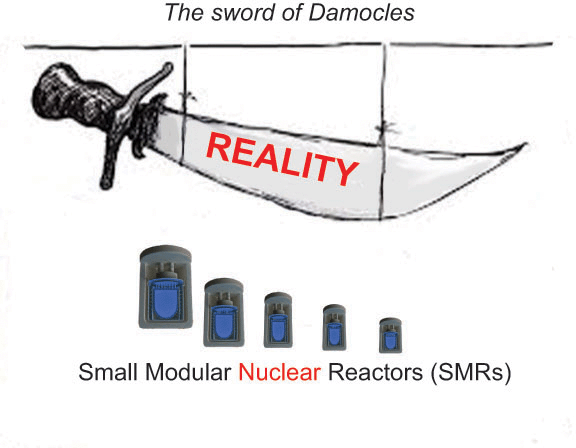 The I&C challenges for small modular reactors, Nuclear Engineering International 4 November 2020 Dr Li Li examines the instrumentation and control requirements and challenges for a new generation of small modular reactors.
REACTOR DEVELOPERS ARE DEVELOPING A wide variety of small modular reactor (SMRs)….. Many use Generation III+ pressurised water reactor (PWR) technology similar to that used in current gigawatt-scale reactors, while others are based on advanced Generation IV technologies ranging from high temperature gas-cooled reactors to molten-salt reactors.
Each design will have its own requirements for instrumentation and control (I&C) systems for the operation, monitoring and control of the reactor, turbine island and balance of plant. Even among PWRs, the design principles and I&C architectures are very different and cannot be easily replicated from one design to another.
To understand the challenges, let’s look at three competing designs: the UK SMR being developed by a consortium of companies including Rolls-Royce, Jacobs, Assystem and Atkins with support from research institutions including Nuclear AMRC; the NuScale Power Module backed by Fluor Corporation with funding from the US Department of Energy; and the Westinghouse SMR, which adapts technologies from the established AP1000 design………..
The issue of cyber security will be critical for the certification of digital I&C systems. According to the Industrial Control Systems Cyber Emergency Response Team, part of the US Department of Homeland Security, cyber-attacks and security infringement targeting control systems have increased significantly in recent years. With more digital smart devices used in nuclear power plant of any size, it must be a priority to protect the vulnerability of smart devices and digital I&C system from cyber attack and malicious sniffing from hostile individuals or organisations…….
in most cases, new codes and standards will need to be developed for advanced reactors.
The development of new codes and standards is a very lengthy process. It will take resources and time to publish a new standard for the nuclear industry, and we might not see one ready before new SMR developers file their design certification application……….
Many SMR designs, including the three considered above, have the potential to be used for co-generation of process heat, district heating or desalination. This will introduce additional complexity for regulators to approve the power plant I&C design, if the co-generation processes are located at same site for economic reasons. This brings new challenges because extra safety measures must be considered. For example, additional safety features of the control system and evacuation plan must be approved by an adequate jurisdictional authority for the orderly shutdown of both the nuclear plant and industrial processes in the event of an accident.
Author information: Dr Li Li, Head of the digital I&C group at the UK’s Nuclear Advanced Manufacturing Research Centre (Nuclear AMRC) https://www.neimagazine.com/features/featurethe-ic-challenges-for-small-modular-reactors-8345341/
Ohio Nuclear-Plant Owner’s Bankruptcy Plan Upheld by Appeals Court
|
Ohio Nuclear-Plant Owner’s Bankruptcy Plan Upheld by Appeals Court, Environmental groups and consumer advocates had asked court to reconsider Energy Harbor’s chapter 11 plan, WSJ, By Andrew Scurria Nov. 3, 2020
Monday’s decision by the U.S. Court of Appeals for the Sixth Circuit in Cincinnati affirmed the chapter 11 restructuring of Energy Harbor, which filed for bankruptcy in 2018 as a subsidiary of FirstEnergy and emerged in February owned by investors. Environmental… (Subscribers only) https://www.wsj.com/articles/ohio-nuclear-plant-owners-bankruptcy-plan-upheld-by-appeals-court-11604434946 |
|
Exelon may be about to split off its unprofitable nuclear generation business.
Exelon has secured zero-emissions credits for financially struggling nuclear plants in New York and New Jersey, two states seeking to eliminate their carbon emissions by midcentury, and has won similar credits as part of Illinois’ 2016 Future Energy Jobs Act that supply about $235 million per year in zero-emissions credits to its Clinton and Quad Cities nuclear plants.
But Exelon has not secured subsidies for four other Illinois nuclear power plants, including the Byron and Dresden facilities. In August it announced it will close those plants in 2021 and may also seek early retirement of its Braidwood and LaSalle power plants unless it can obtain state support to bolster their economics. ………
State support for zero-carbon nuclear scrambled by bribery scandal
But the FRR plan contained in last year’s Clean Energy Jobs Act lost lawmaker support in the wake of Exelon utility ComEd’s connection to a federal bribery investigation alleging the utility steered jobs, contracts and payments to House Speaker Michael Madigan in exchange for favorable treatment in the state capitol. Exelon agreed to pay a $200 million fine and submit to a deferred prosecution agreement this summer.
A historic moment of threat to American democracy
Don’t underestimate the threat to American democracy at this moment Corey Brettschneider https://www.theguardian.com/commentisfree/2020/nov/04/american-democracy-election-threat-trump–5 Nov 20
|
Even if Biden does win and the results are accepted, we will have lived through a moment that showed our democracy is less stable than we assumed. n the early morning hours after election day, the president of the United States showed his authoritarian ambitions. He launched an attack on our democratic system at a moment when it is at its most fragile in recent memory. His lies about the results of the election erode trust in the fairness of the democratic process and risk provoking violence. Now we are dependent on media, especially the outlets most popular with Donald Trump’s base, to rein in the chaos he is encouraging. This grave threat comes from the president’s false declaration of victory, despite no evidence that he had won the election, and with millions of valid votes yet to be counted. He referred to any suggestion that he had lost as “a fraud on the American public”. In one breath, he declared that “we want all voting to stop” and that “we don’t want any ballots to be found at four in the morning.” This conflation of voting after election day and counting votes after election day – a standard practice in every election – is deeply misleading and deeply dangerous. In this respect, its damage is far worse than many of the many fibs Trump has made while in office. His suggestion is a direct lie, one that comes while millions of voters look to him to understand who our legitimate president will be. In past elections, the media – specifically TV networks – served as the main gatekeepers of results, but this president communicates directly to his base through social media, avoiding the reputable news organizations that could factcheck him in real time. This means that his unsubstantiated claims of victory – and of electoral fraud perpetrated by Democrats – are being fed directly to his base. Many will believe him, undermining confidence in the ultimate legitimate results and sowing discord and potentially violence. The problem of Trump’s unfiltered reach coupled with his blatant lying is compounded by social media executives’ inadequate handling of the situation. Facebook and its irresponsible CEO, Mark Zuckerberg, refused to directly challenge the president, even while receiving credit from some observers for reminding voters that “final results” may take days. They did not call Trump’s statement a lie or take strong steps to counter it. Twitter went far enough to say that the president’s message might be “misleading”, but it too failed to take a strong and definitive stand on a statement that is not just possibly, but indisputably, incorrect. Surprisingly, Fox News might be the media outlet that holds the country together. The network called Arizona for Joe Biden around the same time as the Associated Press and has insisted on reporting real numbers, with its reputable non-partisan news anchors leading the coverage. Ultimately, a large number of Trump voters might turn to Fox to decide whether to trust official results or their president, who has told them that those disputing his victory are committing fraud. If Fox continues to say that any early declaration of victory is incorrect, viewers might be more likely to have the patience required to wait for what might be days, with twists and turns as more ballots are reported, until a winner is declared. Still, it is not only the media outlet that should be tasked with maintaining the public’s confidence in our electoral machinery. Part of Trump’s pattern of deception to his base involves invoking bizarre and completely erroneous legal claims. On Tuesday night, Trump promised to take up his concerns about ongoing ballot counting to the US supreme court. However, if ballots are received on or before election day, there is no serious legal claim to support Trump’s seeming contention that any ongoing ballot counting after the election is fraudulent. Indeed, in a decision the president disparaged on Twitter, the US supreme court refused to undo the Pennsylvania supreme court’s decision that even ballots that arrived three days after election day would count as long as they were postmarked by election day. I cannot overstate the danger of this moment. Right now, it is essential that Republican members of Congress and the vice-president make it clear that the ballots need to be counted. Both candidates and parties should be modeling respect for our democratic process, patiently waiting for the legitimate results, and encouraging all Americans to do the same. Instead, Trump’s claims risk sowing violence, confusion and an erosion of faith in the bedrock principles of American democracy. Amid this chaos, what is left for us to do? Americans who believe that every person’s ballot should count in an election must insist on truth and spread this message as widely as possible on social media, at our dinner tables and, if need be, through peaceful demonstrations. That is the only way to counteract Trump’s lies and his threat of upending our democracy. Even if Biden does win and the results are accepted, we will have lived through a moment that showed our democracy is less stable than we assumed. Strengthening it and reinforcing its protections must be a priority of a Biden presidency.
|
|
The US election is a vote on climate change for the whole world
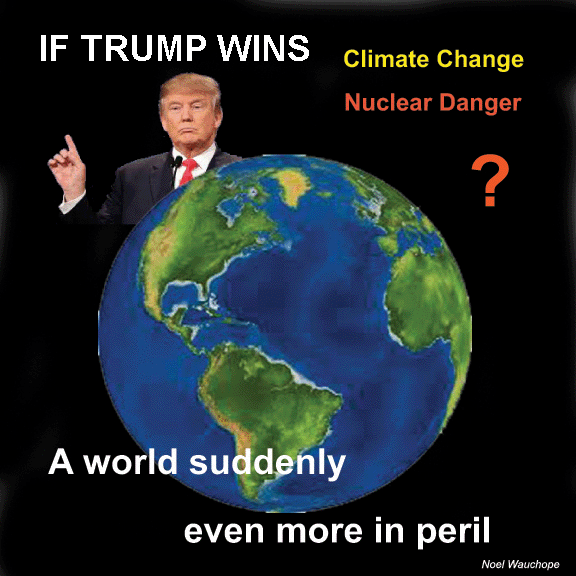 “Covid will be overcome, the climate crisis cannot be overcome unless we have American leadership.”
The US election is a vote on climate change for the whole world, By Helen Regan, Ivana Kottasová and Drew Kann, CNN, November 2, 2020 The climate crisis has become a key issue not just for American voters in this US election — but people across the world.
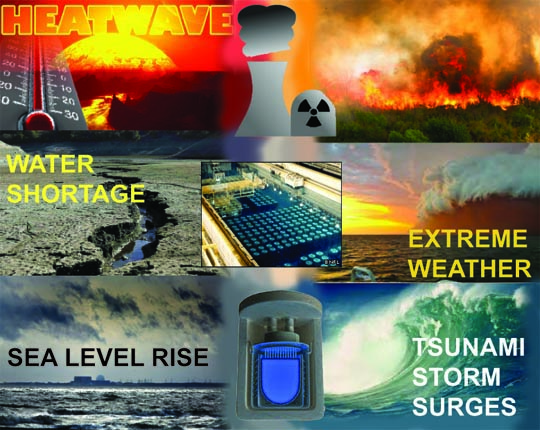 It’s too late to stop all the impacts of climate change. They are already happening. Wildfires have torched homes across the Western US this year, unprecedented floods have inundated large swathes of Asia, and the past decade — — featuring deadly heatwaves and droughts — was the hottest ever recorded. The ice caps that bookend our planet are also seeing rapid loss and glacial melt.
 Why Paris matters

Global momentum
Bill Gates and ORANO (formerly the bankrupt AREVA) aim to start nuclear shipping, despite its history of failures.
UK-Based Startup Proposes a Renaissance for Nuclear-Powered Shipping, The Maritime Executive 11-02-2020, A UK-based startup with backing from some of the biggest names in nuclear energy has applied to the U.S. Department of Energy for cost-sharing support for the development of a new generation of nuclear power for commercial ship propulsion.Nuclear-powered civilian shipping had a small heyday during the Cold War, when the United States, the Soviet Union and Japan invested in demonstration vessels that could operate for years without refueling. In the U.S., the Eisenhower administration conceived of a nuclear-powered “peace ship” that would carry passengers and cargo in small quantities to serve as a demonstration of the potential for civilian nuclear energy projects. The result, the NS Savannah, entered service in 1962 and operated until 1972, when the Maritime Administration decommissioned her over cost concerns.
Japan’s entrant, the freighter Mutsu, entered service in 1974. She suffered a minor reactor shield fault on her maiden voyage, which led to a wave of negative publicity, and her operators had to negotiate with port communities in order to find her a new berth. She was not fully repaired until 1982 and did not set sail again until 1991. She was decomissioned one year later, and her reactor core was removed so that she could be converted into a conventionally-powered oceanographic research vessel.
The Soviet-built icebreaking LASH vessel Sevmorput is the only remaining nuclear-powered merchant cargo ship in civilian use. Operated by Atomflot, the agency charged with running Russia’s nuclear-powered icebreaker fleet, Sevmorput carries containerized cargo and project cargo along Russia’s Northern Sea Route (NSR). Shortly after she entered service in 1988, four Russian ports in the Siberian Far East refused to allow her to enter over fears that her nuclear reactor posed a public safety hazard. Similar concerns have been raised by foreign port operators, and she has generally been deployed on domestic intra-Russian routes only; however, this year she was dispatched to resupply Russia’s Antarctic research station. (As of Monday, she was broadcasting restricted maneuverability  and moving north at a slow bell off the port of Luanda, Angola.)
Despite the past difficulties encountered by nuclear vessel operators, nuclear innovation company TerraPower – chaired by Microsoft founder and serial entrepreneur Bill Gates – has decided to partner with utility firm Southern Company and nuclear tech company Orano USA to back a new reactor designed to power commercial ships. The reactor’s developer, UK-based Core Power, sees molten salt reactor (MSR) nuclear “batteries” as a sustainable alternative for decarbonizing the world’s merchant fleet in the decades ahead. ….. https://www.maritime-executive.com/article/uk-based-startup-proposes-a-renaissance-for-nuclear-powered-shipping
Cuban missile crisis -a reminder that nuclear war could so easily still happen
Yes, nuclear war could still happen https://thehill.com/opinion/white-house/523951-yes-nuclear-war-could-still-happen, BY JOHN DALE GROVER, — 11/02/20 The recent anniversary of the Cuban Missile Crisis should be a reminder to American citizens and policymakers that nuclear war is not impossible. For 13 days from Oct. 16, 1962, to Oct. 28, 1962, America and the Soviet Union nearly killed each other in a nuclear war. Today, the passing of that anniversary should warn us that through a crisis that spirals out of control, sheer accident, or miscommunication, Washington could still find itself in a nuclear exchange with Moscow, Beijing, or Pyongyang.
Today, relations with China are strained and tensions with North Korea — though on an uneasy pause — will likely resume sooner rather than later. America’s relationship with Russia is also contentious and only one arms control treaty remains in place between Washington and Moscow. The 2011 New Strategic Arms Reduction Treaty (New START) is set to expire in February 2021, but last-minute negotiations are underway to extend that treaty for another year.
Kennedy considered many options, including bombing the missile sites or invading Cuba, but thankfully decided against military action. Instead, he ordered a “quarantine” of Cuba. While America enforced its de-facto blockade, negotiations commenced, and a secret agreement was made: Moscow would remove its nuclear missiles from Cuba if Washington removed its Jupiter missiles from Turkey. However, Washington kept its end of the deal quiet to make it look as if Moscow had backed down — a decision which has incorrectly given the impression to later generations of policymakers that hard power is all that matters when facing a crisis.
The Cuban Missile Crisis nearly spiraled into a nuclear war as accidents, errors, and miscommunication was commonplace. For example, the CIA incorrectly estimated that only around 12,000 Soviet troops were in Cuba. In reality, there were over 40,000 and if any of them had died, Moscow would surely have retaliated.
Kennedy considered many options, including bombing the missile sites or invading Cuba, but thankfully decided against military action. Instead, he ordered a “quarantine” of Cuba. While America enforced its de-facto blockade, negotiations commenced, and a secret agreement was made: Moscow would remove its nuclear missiles from Cuba if Washington removed its Jupiter missiles from Turkey. However, Washington kept its end of the deal quiet to make it look as if Moscow had backed down — a decision which has incorrectly given the impression to later generations of policymakers that hard power is all that matters when facing a crisis.
The list goes on. Shortly after being ordered to Defcon 2, General Thomas Powers, commander of America’s nuclear bombers and intercontinental ballistic missiles (ICBMs) dangerously broadcast some of his orders without code and out in the open. America also conducted a routine ICBM test even though such a move may have looked like an attack.
A guard at Duluth Air Base mistook a bear for a saboteur and pulled an alarm, which accidentally rang the nuclear attack warning at Volks Field in Wisconsin. The nuclear-armed fighter jets nearly took off but were halted by an officer who drove onto the runway with his lights flashing.
There were also not one — but two — simultaneous U-2 spy plane incidents. One American spy plane accidentally got lost over the Soviet Union for at least an hour and a half, while another U-2 over Cuba was actually shot down by Russian troops that acted unilaterally without authorization from Moscow.
A USA Senator reflects on the anniversary of the Cuban missile crisis
|
Sam Nunn on Cold War & nuclear weapons, Technique, Hope Williams on November 2, 2020 2020 marks the 75th anniversary of the end of World Word II and the start of the Cold War, a conflict that shaped former United States Senator Sam Nunn’s time while serving in Congress, as well as his work afterwards with the Nuclear Threat Initiative.On Oct. 14, Nunn discussed how nuclear weapons still pose a threat to the world today in a talk with the Georgia Historical Society.
Nunn, who was born in Macon, Georgia, attended Tech, Emory University and Emory Law School. He then served in the U.S. Coast Guard and Georgia House of Representatives before being elected in 1972 to the U.S. Senate. One of his earliest experiences with the intersection of foreign policy and nuclear war was the Cuban Missile Crisis in October 1962, during which he was attending a NATO Conference with the Armed Services Committee in Europe. “We were actually briefed by the Air Force with photographs and all the classified information, sort of every step of the way once the Cuban Missile Crisis broke out,” said Nunn. “… We were at Wiesbaden Air Force Base, which was sort of the head of the U.S. Air Force Europe, on the night where it really looked like we were going to war.” That night, Nunn sat next to the top Air Force General in Europe during dinner. “He had a whole big computer back [with] him with all sorts of communication equipment,” said Nunn. “During the course of the dinner, he told me that he had about 20 to 30 seconds, once he got the signal, to basically turn loose his aircraft to go after the Soviet Union, because we thought we were going to war.” This experience shaped his view of nuclear war. “That brought home a sense of reality to me about the dangers of nuclear war that had an effect on the rest of my life,” said Nunn. “… It brought home to me two things: how close we came to war and how much subjective judgment was involved in the [John F.] Kennedy decisions and the [Nikita] Khrushchev decisions to avoid war and second, how little warning time we had.” Nunn points out that during the 1960s, leaders had more decision time because planes flew much slower. “Having very little decision time in a moment of great crisis is extremely dangerous for the world and that’s, to me, one of the prime goals we should have today, which is to give both U.S. and Russian leaders more time so that we do not move into a nuclear war by blunder,” said Nunn. New technology adds additional danger. “When you introduce cyber and possible interference in command and control and warning systems, I still very much worry about compressed decision time,” said Nunn. “And if I had my way today, and I’ve told President Obama this, I’ve told President Trump this and I’ve told President Putin this, that if I had my way, the leaders would call in their military and say ‘Look, we have a mutual existential interest to give each other more warning time.’”………. Relating decisions about the usage of nuclear weapons to presidential politics, Nunn served under six presidents during his terms as a Senator: Presidents Richard Nixon, Gerald Ford, Jimmy Carter, Ronald Reagan, George H.W. Bush and Bill Clinton. As commander-in-chief, presidents have the sole authority to authorize the use of nuclear weapons. “It is a moral question, but every military commander is charged with the responsibility of carrying out orders from the commander-in-chief,” said Nunn. “But those orders have to be moral orders, and how do you determine that?”……. In conclusion, Nunn reiterates there is currently less of a chance of premeditated nuclear attacks than there was during the Cold War, but with a more compressed decision time for leaders, there is a higher risk of a mistake. “We’ve got a lot of work to do so that our children and grandchildren can live in a world that does not have the perils of nuclear, biological and climate change, all of those things hanging over us,” said Nunn. “So it’s very hard under these circumstances to get out to the voters, to get seen.”…….. In conclusion, Nunn reiterates there is currently less of a chance of premeditated nuclear attacks than there was during the Cold War, but with a more compressed decision time for leaders, there is a higher risk of a mistake. “We’ve got a lot of work to do so that our children and grandchildren can live in a world that does not have the perils of nuclear, biological and climate change, all of those things hanging over us,” said Nunn. “So it’s very hard under these circumstances to get out to the voters, to get seen.”…… https://nique.net/life/2020/11/02/sam-nunn-on-cold-war-nuclear-weapons/ |
|
Nukes in space
1 This Month

of the week– Nuclear Reactor Information Task Force

14 May – online event From Bombs to Data Centres: the Face of Nuclear Colonialism
To see nuclear-related stories in greater depth and intensity – go to https://nuclearinformation.wordpress.com
-
Archives
- May 2026 (81)
- April 2026 (356)
- March 2026 (251)
- February 2026 (268)
- January 2026 (308)
- December 2025 (358)
- November 2025 (359)
- October 2025 (376)
- September 2025 (257)
- August 2025 (319)
- July 2025 (230)
- June 2025 (348)
-
Categories
- 1
- 1 NUCLEAR ISSUES
- business and costs
- climate change
- culture and arts
- ENERGY
- environment
- health
- history
- indigenous issues
- Legal
- marketing of nuclear
- media
- opposition to nuclear
- PERSONAL STORIES
- politics
- politics international
- Religion and ethics
- safety
- secrets,lies and civil liberties
- spinbuster
- technology
- Uranium
- wastes
- weapons and war
- Women
- 2 WORLD
- ACTION
- AFRICA
- Atrocities
- AUSTRALIA
- Christina's notes
- Christina's themes
- culture and arts
- Events
- Fuk 2022
- Fuk 2023
- Fukushima 2017
- Fukushima 2018
- fukushima 2019
- Fukushima 2020
- Fukushima 2021
- general
- global warming
- Humour (God we need it)
- Nuclear
- RARE EARTHS
- Reference
- resources – print
- Resources -audiovicual
- Weekly Newsletter
- World
- World Nuclear
- YouTube
-
RSS
Entries RSS
Comments RSS
 nuclear-news