Unanswered questions cloud the future of NuScam’s Small Modular Nuclear Reactor project
Questions Remain About ID Nuclear Reactor Project https://www.upr.org/post/questions-remain-about-id-nuclear-reactor-project
NuScale‘s small, modular reactor design is the first of its kind to be approved in the United States. The new, compact concept is made up of 12 small reactors and will be located at the Idaho National Laboratory.

Sarah Fields, program director with the group Uranium Watch, said the Nuclear Regulatory Commission needs to scrutinize the project carefully. In particular, she said she’s concerned about a proposal for fewer people to oversee the project.
“They want to reduce the number of operators, and that’s just to save money,” said Fields. “And the NRC is undergoing a review of that.”.
NuScale said the project needs fewer operators because of its design is simpler and the controls involve more automation. The NRC is reviewing the proposal, which could involve policy changes since the approval process is based on conventional nuclear power plant designs.
The NRC has approved the Design Certification Application for the project in its current form. But Fields said the agency still has to authorize certain aspects of the design.
One NRC engineer has raised questions about dilution of boron water around reactor cores, which could cause a dangerous power surge even if the reactor is shut down. Fields said it could be hard to make modifications once aspects of the design are approved.
“It’s like designing a house,” said Fields. “And once you want to change one thing about the house, then you have to make all different kinds of adjustments. And then, get approvals from that.”
Prison, big fines, for Catholic anti nuclear activists
|
Dorothy Day’s granddaughter sentenced to prison for nuclear base break-in https://www.americamagazine.org/politics-society/2020/11/16/dorothy-day-granddaughter-sentenced-prison-kings-bay-plowshares-7
Yonat Shimron – Religion News Service, November 16, 2020 Martha Hennessy, a granddaughter of Dorothy Day, the founder of the Catholic Worker movement, was sentenced Friday (Nov. 13) to 10 months in prison for breaking into Kings Bay Naval Base in Georgia two years ago to protest its stockpile of nuclear weapons.
Hennessy’s was the lightest sentence given for the break-in at the Navy base 40 miles south of Brunswick, Georgia, on April 4, 2018, in which Hennessy, 65, was joined by six other Catholic pacifists. Together they are known as the Kings Bay Plowshares 7, named after the Plowshares anti-war movement founded 40 years ago by Daniel and Philip Berrigan, both Jesuit priests, and six others. On Thursday, Carmen Trotta, of St. Joseph Catholic Worker in New York City, was sentenced to 14 months in prison, while Clare Grady of the Ithaca Catholic Worker was sentenced to 12 months. Both have spent their lives at Catholic Worker houses in New York state, which house and feed the needy. All were also sentenced to probation and will be required to repay the Navy base a total of $33,500 in damages. |
|
Ohio Attorney General Dave Yost has filed a second lawsuit to stop bailout of nuclear reactors
 Ohio Attorney General Sues To Stop New Charges For Nuclear Bailout https://radio.wosu.org/post/ohio-attorney-general-sues-stop-new-charges-nuclear-bailout#stream/0 By KAREN KASLER 16 Nov 20, •There are only a few weeks until Ohio’s controversial nuclear bailout law is set to add new charges to residents’ electric bills. With no repeal yet of HB6, Ohio Attorney General Dave Yost has filed a second lawsuit seeking to stop those rate increases. Ohio Attorney General Sues To Stop New Charges For Nuclear Bailout https://radio.wosu.org/post/ohio-attorney-general-sues-stop-new-charges-nuclear-bailout#stream/0 By KAREN KASLER 16 Nov 20, •There are only a few weeks until Ohio’s controversial nuclear bailout law is set to add new charges to residents’ electric bills. With no repeal yet of HB6, Ohio Attorney General Dave Yost has filed a second lawsuit seeking to stop those rate increases.
Yost’s suit seeks to immediately stop the collection of $2.35 in monthly charges on all Ohio electric bills. Those charges would start January 1 and total $150 million a year statewide – with the money bound for Ohio’s two nuclear power plants, as well as coal and solar subsidies. A lawsuit Yost filed in September sought to stop the money from going to Energy Harbor, the former FirstEnergy subsidiary that now owns the nuclear plants. However, even if the suit were successful, it would not prevent the charges from being collected in the first place. FirstEnergy said at the time it would “vigorously” defend itself and that the case had no merit. The cities of Columbus and Cincinnati have filed a civil lawsuit to halt the bailout fee and strike down HB6, claiming that the law is an unconstitutional lending of state credit to a private enterprise. There are currently four bills under consideration at the Ohio Statehouse that would repeal HB6. Three would seek a full repeal, while the fourth would eliminate the ratepayer subsidies but retain the law’s cuts to renewable energy standards and elimination of energy efficiency standards. Federal investigators say HB6 became law as part of a $61 million bribery scheme involving Republican former House Speaker Larry Householder, four associates, the dark money group Generation Now, and a utility believed to be FirstEnergy. Two people have so far pleaded guilty to the racketeering charges. While FirstEnergy is not charged yet in the federal case and has defended itself against any allegations of misconduct, several executives – including CEO Chuck Jones – have been fired for violating company policy. |
|
USA looks to get $18billion now, maybe $40billion later, in flogging off nuclear reactors to Poland
|
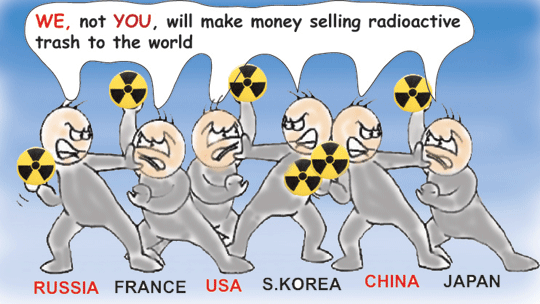
U.S. sees $18 billion from purchases in nuclear power agreement with Poland, By Timothy Gardner, WASHINGTON (Reuters) 16 Nov 20, – The United States and Poland have struck a nuclear power agreement in which Poland will likely buy $18 billion in nuclear technology from U.S. companies, the U.S. energy department said on Monday.
The United States has been competing with China and Russia and other countries to supply nuclear power technology to countries hoping to build their first reactors, or boost their programs. “We are hopeful that the ultimate decisions that are made by Poland … over a period of time will result in them choosing U.S. technology,” U.S. Energy Secretary Dan Brouillette told reporters in a teleconference. …… Over the next 18 months, the United States and Poland will work on an a report for the program that seeks to build six reactors, as well as potential financing arrangements, the department said. The first reactors are planned to be in operation by 2033 in a program that will potentially be worth $40 billion, a senior U.S. energy department official said. Poland would buy at least $18 billion from U.S. companies, the official said. Westinghouse, owned by Brookfield Asset Management BAMa.TO, Bechtel and Southern Co SO.N and the U.S. government, will participate in a first step in the agreement, an engineering study for planned plants, the official said. This month the United States and Romania came to an initial $8 billion agreement on the construction of two reactors on the river Danube. Romanian state-owned nuclear power producer Nuclearelectrica ROSNN.BX ended talks with China General Nuclear (CGN) about the construction of the reactors after they had dragged on for six years. Reporting by Timothy Gardner; Editing by Nick Zieminski and Marguerita Choy https://www.reuters.com/article/us-usa-nuclearpower-poland-idUSKBN274239 |
|
American universities in the US nuclear weapons complex

US universities should reject, not invest in, nuclear weapons Schools of mass destruction https://beyondnuclearinternational.org/2020/11/15/schools-of-mass-destruction/
American universities in the US nuclear weapons complex
An ICAN report
Universities across the United States are identified in this report for activities ranging from directly managing laboratories that design nuclear weapons to recruiting and training the next generation of nuclear weapons scientists. Much of universities’ nuclear weapons work is kept secret from students and faculty by classified research policies and undisclosed contracts with the Defense Department and the Energy Department. The following is the executive summary from ICAN’s report: Schools of Mass Destruction, with some changes made for timeliness. Posted on November 15, 2020 by beyondnuclearinternational
Over the next ten years, the Congressional Budget Office estimates U.S. taxpayers will pay nearly $500 billion to maintain and modernize their country’s nuclear weapons arsenal, or almost $100,000 per minute. A separate estimate brings the total over the next 30 years to an estimated $1.7 trillion. In a July 2019 report, National Nuclear Security Administrator Lisa Gordon-Haggerty wrote, “The nuclear security enterprise is at its busiest since the demands of the Cold War era.”
In addition to large amounts of funding, enacting these upgrades requires significant amounts of scientific, technical and human capital. To a large extent, the U.S. government and its contractors have turned to the nation’s universities to provide this capital.
At the same time, the United States is shirking its previous commitments to nuclear arms control and reducing nuclear risks despite its obligation under Article VI of the Nuclear Non-Proliferation Treaty to pursue good-faith measures towards nuclear disarmament.
In August 2019, the United States officially withdrew from the landmark 1987 Intermediate-Range Nuclear Forces Treaty, testing a treaty-prohibited missile shortly thereafter. The Trump Administration’s 2018 Nuclear Posture Review expanded the circumstances under which the United States would consider the first use of nuclear weapons and called for the development of two new sea-based low-yield nuclear weapon systems.
Internationally, many member states of the United Nations have recognized the devastating humanitarian and environmental impacts of nuclear weapons: debating, adopting, signing and now ratifying the 2017 Treaty on the Prohibition of Nuclear Weapons.
Despite these debates, U.S. universities have continued to build connections to the U.S. nuclear weapons complex. Although students and faculty have opposed university participation in nuclear weapons research and development at various points in the last 70 years, such participation continues.
Universities involve themselves in the nuclear weapons complex through the four channels listed below. In return for this engagement, universities receive funding, access to research facilities, and specific career opportunities for students.
1) Direct Management
A handful of universities directly manage nuclear weapons related activities on behalf of the federal government, retaining contracts worth billions of dollars per year collectively. These include the University of California, Texas A&M University, Johns Hopkins University, the Massachusetts Institute of Technology, and the University of Rochester.
2) Institutional Partnerships
Many of the National Nuclear Security Administration’s (NNSA) sites advertise collaborative agreements with local and national universities. These formal agreements allow the institutions to cooperate on research and share personnel and expertise. They can also provide university researchers access to funding and advanced facilities in the NNSA laboratories. The report highlights more than 30 such agreements with schools in 18 states.
3) Research Programs and Partnerships
In addition to formal institutional partnerships, numerous connections exist between universities and the nuclear weapons complex at the research project level. In a report delivered to Congress in July 2019, the NNSA highlights that more than $65 million in grants were delivered to academic institutions in the last year to support stockpile stewardship. When including grants and subcontracts from the NNSA labs as well, the total amount of funding to universities for research may be higher than $150 million per year.
4) Workforce Development Programs
Former Department of Energy Secretary Rick Perry has written that finding “the next generation workforce of world-class scientists, engineers and technicians is a major priority.” Through university partnerships, vocational training programs and research fellowships, the NNSA creates employment pipelines for the development of its future workforce.
A primary goal of this report is to facilitate a shared understanding of university connections to nuclear weapons research and development. A common factual basis will help communities of university faculty, students and administrations engage in robust internal debates and take action. Universities would not willingly participate today in the production of chemical and biological weapons; for the same humanitarian reasons, no university should seek an association with the other category of weapons of mass destruction: nuclear weapons.
While American universities have played a key role in the development and continuation of nuclear weapons, they can now join U.S. cities and states that have rejected U.S. nuclear weapons and called on the federal government to support nuclear reductions and the Treaty on the Prohibition of Nuclear Weapons. In light of the research presented, this report offers the following recommendations to universities:
Recommendations
• Provide greater transparency into connections with the nuclear weapons complex;
• Stop directly managing nuclear weapons production sites and dissolve research contracts solely related to nuclear weapons production;
• For contracts with dual-purpose research applications, demand greater transparency and create specific processes for ethical review of this research;
• Advocate for reinvestment of weapons activities funding to non-proliferation and environmental remediation efforts; and
• Join cities and state legislatures in urging the federal government to support the 2017 Treaty on the Prohibition of Nuclear Weapons and reverse course on nuclear arms control backsliding.
See the full list of universities.
The above is the Executive Summary of ICAN’s report on US Universities. Read the full report. Beyond Nuclear is a member of ICAN.


The human impact of ”Trinity” and a thousand other nuuclear bomb tests on American soil

|
75 Years Later, Victims of Nuclear Bomb Tests on U.S. Soil Still Seek Justice, https://truthout.org/articles/75-years-later-victims-of-nuclear-bomb-tests-on-u-s-soil-still-seek-justice/, BY Satya Vatti, Globetrotter / Independent Media Institute, November 15, 2020 They thought the world was coming to an end,” Genoveva Peralta Purcella explains.
On July 16, 1945, the first-ever nuclear bomb was tested in New Mexico, in the Southwestern United States. The detonation was code-named “Trinity.” It is the day that would seal the fate of many Americans living in the surrounding areas for generations to come. Seventy miles from what became known as ground zero—the Trinity test site—Genoveva’s family lived on a ranch just outside the village of Capitan in New Mexico. Genoveva was born the year after the blast. Now 74 years old, she solemnly recalls how her family remembers the day that would change their lives forever. Genoveva’s sisters had come to visit their father and pregnant mother at the ranch. At precisely 5:30 a.m., as dawn broke, the sky suddenly went pitch dark. Having no other point of reference, they mistook the abnormally loud roaring and rumbling in the sky for thunder. The entire house began to shake. Fear-stricken, the family huddled together in a corner. When the sky cleared, her father stepped outside the house and found himself being showered with a white powder. The powder was everywhere and covered everything around them. Nothing escaped it, not the cows the family had raised, or the vegetables in the garden, or the rainwater they stored in the absence of running water. Like other families who went through this experience, Genoveva’s family also dusted off the powder and consumed their vegetables and the stored water. The blast produced so much energy that it incinerated everything it touched and formed a fireball that rose to more than 12 kilometers into the atmosphere. The fireball created ash that snowed over the communities surrounding the blast site. The people did not know it then, but this ash that covered thousands of square miles was the radioactive fallout from the explosion. Dread gripped the communities in Tularosa Basin who either witnessed or experienced the phenomenon they could not make sense of. Meanwhile, the immediate reaction of the staff of the Manhattan Project, which created the bomb, was of “surprise, joy, and relief.” Paul Pino, Genoveva’s cousin, who was born nine years after the Trinity blast, says that his family, which lived 33 miles from the blast site, was one of many who were unaware of what had transpired on that day. In the days and months leading up to the blast, U.S. government officials did not notify anyone who lived in the region about the imminent nuclear bomb test. Nobody in the Tularosa Basin was evacuated to safety. In the aftermath of the nuclear test, officials began to cement a false narrative into the consciousness of the nation; the region was remote and uninhabited. Tens of thousands of people, in fact, lived in the Tularosa Basin in 1945. For a long time, the people of the basin believed that the blast was an ammunition explosion. “We were lied to by the government,” said Pino. It takes 24,000 years for half of the radioactive plutonium used in the Trinity bomb to decay. The people of the region have inhaled and ingested radioactive particles for 75 years because of environmental contamination. Those in power refuse to accept responsibility and take any corrective action. To this day, there have been no cleanup efforts. Radiation exposure has caused high rates of aggressive cancers, thyroid disease, infant mortality, and other health abnormalities in generations of families in the Tularosa Basin region. The scale of the health impact cannot be determined accurately as long-term epidemiological studies have only been undertaken recently. The findings of the latest research studies by the National Cancer Institute were published in September 2020 in the journal Health Physics. “There were 10 of us; now only one is surviving,” Genoveva says, speaking of herself. She has lost everyone in her family to cancer. In a country without universal health care, debt from medical expenses has brought economic ruin to the communities near the Trinity site. “All the pain and suffering we have had to endure, and not a speck of help from the government,” Pino says. “Meanwhile, it has spent trillions on thousands of nuclear weapons.” Genoveva’s story is not an exceptional one. It is the story of tens of thousands of families in the United States. More than 1,000 nuclear bomb tests have been conducted in the U.S. between 1945 and 1992. A total of 100 above-ground tests were conducted at the Nevada test site from 1951 to 1962. The winds carried radioactive fallout for thousands of kilometers. Hundreds of millions of people living in the U.S. have been exposed to varying levels of radiation over the years, unknown to them. New Mexico was downwind of the Nevada test site, and the people living there continued to be exposed to radioactivity for decades after the initial exposure during the Trinity nuclear test. People from the impacted communities founded the Tularosa Basin Downwinders Consortium in 2005 to fight for justice for the survivors and their descendants. Tina Cordova, one of the group’s cofounders, was shocked to find out that a few of the impacted states neighboring New Mexico were receiving financial compensation under the Radiation Exposure Compensation Act since 1990. The communities in New Mexico, however, were left out of the act. When asked why, Cordova responds with, “It is the billion-dollar question. I think we are being left out because we are mainly Mexican Hispanics, Natives, and Latinos. We are minorities and we are poor.” Cordova herself is the fourth generation in her family to have cancer. She has joined with others like her to educate and organize the affected communities, to fight to establish the truth. “In their [the government’s] rush to bomb Japan, we were sacrificed in the process. We were enlisted in the service of our country, unknowing, unwilling, and remain uncompensated.” |
|
The nuclear perils of Trump’s last days
“The air tonight is as heavy as the sum of human sorrows.”-Albert Camus, Caligula
It is no longer just hyperbole. Still armed with nuclear weapons, a conspicuously deranged American president may be willing to do anything to cling to power. And if that willingness should appear futile, Donald J. Trump could conceivably prefer apocalypse to “surrender.”[1]
Credo quia absurdum, said the ancient philosophers. “I believe because it is absurd.” In these presumptively final days of the Trump presidency, an impaired or irrational nuclear command decision remains possible. Though nothing can be determined about the true mathematical probability of any such once unimaginable scenario,[2] there are increasingly compelling reasons for concern. One of these reasons is Mr. Trump’s bizarre eleventh-hour shakeup at the Department of Defense.
 Americans have let these urgent matters drift too long. Nonetheless, despite evident lateness of the hour, a summarizing query must finally be raised: Should this visibly impaired president still be allowed to decide when and where to launch American nuclear weapons? This is not a silly or trivial question.
In the early days of the Nuclear Age, when strategic weapon-survivability was still uncertain, granting presidential authority for immediate firing command was necessary to ensure credible nuclear deterrence. Today, however, when there no longer exists any reasonable basis to doubt America’s durable second-strike nuclear capability (sometimes also called an “assured destruction” or undiminished retaliatory capability), there remains no good argument for continuing to grant the president (any president) such potentially problematic decisional authority.
More general questions should now also be raised.
In our expansively imperiled democracy, ought any American president be permitted to hold such precarious life or death power over the entire country?
Inter alia, could such an allowance still be consistent with a Constitutional “separation of powers?”
Can anyone reasonably believe that such existential power could ever have been favored by America’s Founding Fathers?
The correct answers are apparent, obvious and starkly uncomplicated.
We can readily extrapolate from Articles I and II of the Constitution that the Founders had profound concern about Presidential power long before the advent of nuclear weapons. This concern predates even any imagination of apocalyptic warfare possibilities.[3] So what next?…………………..
At this grievous point in America’s Trump-created declension, anything seems possible.
History deserves pride of place. Soon, any such disregard for plausible national harms could prove unconscionable. In the chaotic 1st century CE, long before political democracy could ever seem sustainable[12] and long before nuclear weapons, Roman Emperor Caligula revealed the overwhelmingly lethal costs of barbarous governance.
Today, a democratically defeated American president, clinging wrongfully to political power and expressing this egregious dereliction during a period of “plague,” could produce even less bearable costs. At that nation-destroying point, the “air would be as heavy as the sum of human sorrows.”
History may not repeat itself, observed Mark Twain, “but it often rhymes.” Donald J. Trump may not be quite as decadent or depraved as Caligula, but he may not be that far removed either. Credo quia absurdum, warned the ancient Romans. “I believe because it is absurd.”
Donald J. Trump is not Caligula, but he is a sinister stain upon the integrity and survival of the United States. https://moderndiplomacy.eu/2020/11/15/caligula-goes-covid-nuclear-perils-of-trumps-last-days/
We should require a second voice when it comes to ordering first use of nuclear arms
A Nuclear Strike Should Require More than One Person’s Order. We should require a second voice when it comes to ordering  first use of nuclear arms. Defense One, BY STEVEN PIFER FELLOW, STANFORD UNIVERSITY, NOVEMBER 12, 2020. Donald Trump has proven to be volatile, erratic, vengeful and prone to angry outbursts. Last week, as the vote count pushed his reelection bid out of sight, he reportedly fell into a dark mood. At the time, Mr. Trump had—and now has—sole authority to order the launch of U.S. nuclear weapons, just as he had in October, when his medications for COVID had side effects including mania, euphoria and a sense of invulnerability.
Do we want Mr. Trump, or any president, alone making the most consequential decision that an American president likely would ever make?
As a Foreign Service officer working on arms control, I had the opportunity to get close to nuclear weapons on three occasions. One involved viewing, through a thick, shatter-proof window, two technicians working on a warhead for a Trident ballistic missile. Our escort noted that, should one leave the room, the other would also have to leave. A “two-man” rule applied around nuclear weapons.
Another time, on a Los Angeles-class attack submarine, our group saw a nuclear-armed cruise missile in its canister with an attached cable. Ship’s officers explained that, if the canister moved slightly, alarms would sound and other sailors would quickly arrive, some with weapons. A “two- (or more) man” rule applied.
The third time, on board an Ohio-class ballistic missile submarine at sea, I was offered the chance to climb into a Trident missile (yes, that is possible, and yes, I did). When the hatch to the missile was open, standard protocol provided for the presence of two armed sailors. Again, the “two-man” rule.
As a Foreign Service officer working on arms control, I had the opportunity to get close to nuclear weapons on three occasions. One involved viewing, through a thick, shatter-proof window, two technicians working on a warhead for a Trident ballistic missile. Our escort noted that, should one leave the room, the other would also have to leave. A “two-man” rule applied around nuclear weapons.
Another time, on a Los Angeles-class attack submarine, our group saw a nuclear-armed cruise missile in its canister with an attached cable. Ship’s officers explained that, if the canister moved slightly, alarms would sound and other sailors would quickly arrive, some with weapons. A “two- (or more) man” rule applied.
The third time, on board an Ohio-class ballistic missile submarine at sea, I was offered the chance to climb into a Trident missile (yes, that is possible, and yes, I did). When the hatch to the missile was open, standard protocol provided for the presence of two armed sailors. Again, the “two-man” rule.
At only one level does the “two-man” rule not apply: the president, as commander-in-chief, has sole authority to order the use of U.S. nuclear arms. There is not even a requirement that the president consult someone. The always nearby “football” carries the briefing materials, codes and communications allowing the president to launch nuclear weapons. Were the president give the order, the system would rapidly transmit it. Intercontinental ballistic missiles could blast out of their silos within minutes.
If nuclear weapons are used first against America or its allies, it makes sense to allow the president sole authority to order a nuclear response. However, current U.S. policy envisages the possibility that the United States would use nuclear weapons first, perhaps in a conventional conflict that goes badly or in response to a non-nuclear strategic attack. (Whether U.S. first use makes sense is a separate question.)
When President-elect Biden takes office, we can breathe easier. Nothing guarantees, however, that a future president might not have something more like Mr. Trump’s temperament—and he reportedly is mulling a 2024 run.
We should require a second voice when it comes to ordering first use of nuclear arms……….. https://www.defenseone.com/ideas/2020/11/nuclear-strike-should-require-more-one-persons-orders/170004/
Quite a lot of hurdles for NuScam’s Utah project, and only 27 of UAMPS members signed up

|
|
UAMPS Mulls Downsizing Nuclear Project, Power, 11 Nov 20“…………..So far, the company has marked key regulatory milestones. On Aug. 28, notably, NuScale’s 50-MW (160 MWth) module became the first SMR to receive a final safety evaluation report (FSER) from the NRC as part of a Phase 6 review—the last and final phase—of NuScale’s Design Certification Application (DCA).
The latest power uprate will be reviewed by the NRC as part of a Standard Design Approval (SDA) application, which NuScale on Tuesday said it is schedule to submit in 2022. However, Hughes said that while NuScale has not yet made a final decision on the size or configuration that will be reflected in the SDA application, it will seek approval of 250 MWth modules. “Our final decision will be announced soon,” she said. So far, the company has marked key regulatory milestones. On Aug. 28, notably, NuScale’s 50-MW (160 MWth) module became the first SMR to receive a final safety evaluation report (FSER) from the NRC as part of a Phase 6 review—the last and final phase—of NuScale’s Design Certification Application (DCA). The latest power uprate will be reviewed by the NRC as part of a Standard Design Approval (SDA) application, which NuScale on Tuesday said it is schedule to submit in 2022. However, Hughes said that while NuScale has not yet made a final decision on the size or configuration that will be reflected in the SDA application, it will seek approval of 250 MWth modules. “Our final decision will be announced soon,” she said. NuScale’s Announcement Gives UAMPS’ Options to Downsize Carbon-Free Power Project When UAMPS will submit a COLA for its Carbon Free Power Project (CFPP), a 12-module NuScale power plant that is developing for a site at an Idaho National Laboratory (INL) site in Idaho Falls, Idaho, is not clear. UAMPS has so far developed the much-watched project as a 720-MWe plant, and it has said it expects the first of the 12 proposed NuScale modules could be operational in 2029 with the other 11 modules operational in 2030. But NuScale’s new power increase and its launch of smaller plant sizes now gives the project much-needed flexibility that could affect it current timetable. The newly announced uprate is significant because it “facilitates plant downsizing,” UAMPS told POWER in a statement on Tuesday. “An important early task in the UAMPS [CFPP’s] next phase will be evaluating these new options in plant size and configuration. UAMPS will evaluate the possibilities of building a [308-MWe] 4-module or [462-MWe] 6-module plant instead of a 12-module plant,” it said. UAMPS, notably, just wrapped up the first phase of the CFPP on Oct. 31, securing financial commitments for a potential 720-MW plant from 27 of its 48 members, which are mostly cities in Utah but also scattered across California, Idaho, Nevada, New Mexico, and Wyoming. During the tumultuous first phase, at least eight cities—Lehi, Logan, Murray, Kaysville, Bountiful, Beaver, Heber, and Salmon River Electric—dropped out of the the project, and at least one, Idaho Falls halved its share. The withdrawing cities cited a long list of reasons for their reluctance to commit to the project, but costs—which could increase for remaining subscribers—and uncertainty led their concerns. ….. The next off-ramp will likely be in April 2023, when UAMPS is expected to submit the application to the NRC. The final off-ramp would be in December 2025, before the start of the construction period. As POWER has reported, the 720-MWe CFPP is currently estimated to cost $6.1 billion, and UAMPS is expected to shoulder $4.76 billion of that figure, which is based on a Class 4 estimate (and could decrease by about 10% or increase by 30%). The Department of Energy (DOE) will fund the remaining $1.355 billion through an award announced on Oct. 16. The award, which will be subject to yearly Congressional appropriations, replaces the DOE’s Joint Use Module Plant (JUMP) program. ……. On Tuesday, UAMPS again stressed that the project’s LCOE (Levelised Cost Of Energy )will play a crucial factor in any decisions it makes. Before it can agree to a change in plant size or configuration—including to move forward with NuScale’s newly launched smaller power plant solutions—“UAMPS would have to be assured that the [LCOE] of $55/MWh (or lower) would be preserved. UAMPS would also want assurance that the current schedule/timeline would be followed,” the agency said. ……. |
|
Julian Assange ‘targeted as a political opponent of Trump administration and threatened with the death penalty’
Julian Assange ‘targeted as a political opponent of Trump administration and threatened with the death penalty’ Evening Standard. By Tristan Kirk. @kirkkorner
Professor Paul Rogers, a lecturer in peace studies at Bradford University and specialist on the ‘War on Terror’, said Assange’s opinions put him “in the crosshairs” of Trump’s top team.
Giving evidence to Assange’s extradition hearing this morning, he said he believes the prosecution case is part of a drive in the United States to target “dissenters”.
“In my opinion Mr Assange’s expressed views, opinions and activities demonstrate very clearly ‘political opinions’”, he told the court.
Professor Rogers, in his witness statement, said Assange’s work involved exposing secrets that the US government wanted to keep hidden, he had been in conflict with the Obama administration, but there was “no question” that Assange had been targeted as a political opponent by Trump’s officials.
“The opinions and views of Mr Assange, demonstrated in his words and actions with the organisation WikiLeaks over many years, can be seen as very clearly placing him in the crosshairs of dispute with the philosophy of the Trump administration”, he said.
Assange’s legal team argue that a decision was taken under President Obama not to prosecute the Wikileaks activist, but that move was overturned under Trump. https://www.standard.co.uk/news/uk/julian-assange-donald-trump-administration-old-bailey-hearing-a4543656.html?fbclid=IwAR3Rj4n0Lzlt5GmE1lXZXoMVDsOS5BdT9sEKgj82SCmMnpNLFQ6ZfEzVUOI
The USA devised an apocalyptic nuclear weapon – the Supersonic Low Altitude Missile or SLAM
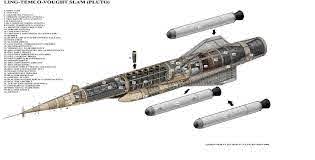
PROJECT PLUTO: THE CRAZIEST NUCLEAR WEAPON IN HISTORY SOFREP, by Sandboxx 15 Nov 20, “…………. Although the destructive force of the atom bombs dropped on Hiroshima and Nagasaki had been so monstrous that they changed the geopolitical landscape of the world forever, both the U.S. and Soviet Union immediately set about developing newer, even more powerful thermonuclear weapons. Other programs sought new and dynamic delivery methods for these powerful nukes, ranging from ballistic missiles to unguided bombs.Project Pluto and the SLAM Missile
One such effort under the supervision of the U.S. Air Force was a weapon dubbed the Supersonic Low Altitude Missile or SLAM (not to be mistaken for the later AGM-84E Standoff Land Attack Missile). The SLAM missile program was to utilize a ramjet nuclear propulsion system being developed under the name Project Pluto. Today, Russia is developing the 9M730 Burevestnik, or Skyfall missile, to leverage the same nuclear propulsion concept.
As Russian President Vladimir Putin recently pointed out, nuclear propulsion offers practically endless range, and estimates at the time suggested the American SLAM Missile would likely fly for 113,000 miles or more before its fuel was expended. Based on those figures, the missile could fly around the entire globe at the equator at least four and a half times without breaking a sweat.
The unshielded nuclear reactor powering the missile would practically rain radiation onto the ground as it flew, offering the first of at least three separate means of destruction the SLAM missile provided. In order to more effectively leverage the unending range of the nuclear ramjet, the SLAM missile was designed to literally drop hydrogen bombs on targets as it flew. Finally, with its bevy of bombs expended, the SLAM missile would fly itself into one final target, detonating its own thermonuclear warhead as it did. That final strike could feasibly be days or even weeks after the missile was first launched.
Over time, the SLAM missile came to be known as Pluto to many who worked on it, due to the missile’s development through the project with the same name.
The onboard nuclear reactor produced more than 500-megawatts of power and operated at a scorching 2,500 degrees — hot enough to compromise the structural integrity of metal alloys designed specifically to withstand high amounts of heat. Ultimately, the decision was made to forgo metal internal parts in favor of specially developed ceramics sourced from the Coors Porcelain Company, based in Colorado.
The downside to ramjet propulsion is that it can only function when traveling at high speeds. In order to reach those speeds, the SLAM would be carried aloft and accelerated by rocket boosters until the missile was moving fast enough for the nuclear ramjet to engage. Once the nuclear ramjet system was operating, the missile could remain aloft practically indefinitely, which would allow it to engage multiple targets and even avoid intercept.
The nuclear-powered ramjet was so loud that the missile’s designers theorized that the shock wave of the missile flying overhead on its own would likely kill anyone in its path, and if not, the gamma and neutron radiation from the unshielded reactor sputtering fission fragments out the back probably would. While this effectively made the missile’s engine a weapon in its own right, it also made flying the SLAM over friendly territory impossible.
While the doctrine of Mutually Assured Destruction has since made the launch of just one nuclear weapon the start of a cascade that could feasibly end life on Earth as we know it, Project Pluto’s SLAM Missile was practically apocalyptic in its own right. The nuclear powerplant that would grant the missile effectively unlimited range would also potentially kill anyone it passed over, but the real destructive power of the SLAM missile came from its payload.
Unlike most cruise missiles, which are designed with a propulsion system meant to carry a warhead to its target, Project Pluto’s SLAM carried not only a nuclear warhead, but 16 additional hydrogen bombs that it could drop along its path to the final target. Some even suggested flying the missile in a zig-zagging course across the Soviet Union, irradiating massive swaths of territory and delivering it’s 16 hydrogen bombs to different targets around the country.
Doing so would not only offer the ability to engage multiple targets, but would almost certainly also leave the Soviet populace in a state of terror. A low-flying missile spewing radiation as it passed over towns, shattering windows and deafening bystanders as it delivered nuclear hellfire to targets spanning the massive Soviet Union, would likely have far-reaching effects on morale.
How Do You Test an Apocalyptic Weapon?
Project Pluto’s nuclear propulsion system made testing the platform a difficult enterprise. Once the nuclear reactor onboard was engaged, it would continue to function until it hit its target or expended all of its fuel. Any territory the weapon passed over during flight would be exposed to dangerous levels of radiation, limiting the ways and the places in which the weapon’s engine could even be tested.
On May 14, 1961, engineers powered up the Project Pluto propulsion system on a train car for just a few seconds, and a week later a second test saw the system run for a full five minutes. The engine produced 513 megawatts of power, which equated to around 35,000 pounds of thrust — 6,000 pounds more than an F-16’s Pratt & Whitney F100-PW-229 afterburning turbofan engine with its afterburner engaged.
However, those engine tests were the only large scale tests Project Pluto would ultimately see, in part, because a fully assembled SLAM missile would irradiate so much territory that it was difficult to imagine any safe way of actually testing it.
A weapon That’s Too Destructive to Use
Ultimately, Project Pluto and its SLAM missile were canceled before ever leaving the ground. The cancellation came for a litany of reasons, including the development of intercontinental ballistic missiles and the introduction of global strike heavy payload bombers like the B-52 Stratofortress. There were, however, some other considerations that led to the program’s downfall.
Because the SLAM would irradiate, destroy, or deafen anyone and anything it flew over, the missile could not be launched from U.S. soil or be allowed to fly over any territory other than its target nation. That meant the missile could really only be used from just over the Soviet border, whereas ICBMs could be launched from the American midwest and reach their targets in the Soviet Union without trouble.
There was also a pressing concern that developing such a terrible weapon would likely motivate the Soviet Union to respond in kind. Each time the United States unveiled a new weapon or strategic capability, the Soviet Union saw to it that they could match and deter that development. As a result, it stood to reason that America’s nuclear-spewing apocalypse missile would prompt the Soviets to build their own if one entered into service.
Project Pluto and its SLAM missile program were canceled on July 1, 1964 https://sofrep.com/news/project-pluto-the-craziest-nuclear-weapon-in-history/
Iran moderates hail Biden win, but any nuclear talks expected to be fraught
|
Iran moderates hail Biden win, but any nuclear talks expected to be fraught, France24, Bahar MAKOOI, 16 Nov 20,
Six months before the Iranian presidential election, Joe Biden’s victory in the US could influence the vote in Iran, where hopes to resume negotiations on the nuclear deal have prompted enthusiasm from moderates and even some hardliners. However, analysts expect that any future talks would be vexed.
Iranians eagerly awaited the presidential results on November 3. After four years of the Trump administration’s “maximum pressure” policies, Biden’s victory could pave the way for more emollient approach on both sides. In theory, that would put the lifting of US sanctions on the cards.
Biden has promised a “credible path back to diplomacy” with Tehran once he enters the White House in January. He said he wanted to return to the 2015 deal signed by his then boss, Barack Obama, but as a “starting point for follow-on negotiations” and on the condition that Iran follows its strictures closely. In Iran, many believe that Biden’s win will have consequences for the future of their country, which will elect a new president in May as incumbent Hassan Rouhani reaches his term limit. Analysts conjecture that a less hawkish US president could benefit the moderate camp in Iranian politics, which favours diplomatic engagement with Washington. ……. https://www.france24.com/en/middle-east/20201114-iran-moderates-hail-biden-win-but-any-nuclear-talks-expected-to-be-fraught
|
|
Federal utility fined $900K for nuclear violations, coverup
Howard Hall, director of the University of Tennessee’s Institute for Nuclear Security, said the notice of violation to TVA points to “a systemic problem in management.”
“As someone who has worked in this field essentially my entire life, I would have been appalled to receive such a letter,” Hall said.
In a notice dated Nov. 6, regulators noted a “substantial safety culture issue” at Watts Bar at the time of the incident. They also found that “TVA senior management and staff failed to communicate with candor, clarity, and integrity during several interactions with the NRC during the course of the inspection and investigation.”
According to NRC documents, on Nov. 11, 2015, a shift manager at Watts Bar directed the control room to begin heating up a reactor even though the plant’s usual pressurizer system, which keeps the reactor water from turning to steam, was out of service. When trying to heat up with an alternate system, the pressurizer rapidly began to fill with water. Staff then had to “take actions outside of proper operating procedures” to bring the water level down.
The incident wasn’t recorded in the plant’s logbook and managers later misled NRC investigators about what had happened. ……… https://www.startribune.com/federal-utility-fined-900k-for-nuclear-violations-coverup/573069392/
Kings Bay Plowshares peace activists get lighter sentences than expected

Martha Hennessy, the sixth of the Kings Bay Plowshares defendants to be sentenced, was ordered to serve 10 months incarceration as well as three years supervised probation and restitution. This was a downward departure from the guidelines of 18 to 24 months recommended by the probation department. Conducting the sentencing virtually from the Brunswick, GA… Read More
Carmen and Clare Sentenced Lighter Than Expected
Today two more of the Kings Bay Plowshares 7 were sentenced by video conferencing with Judge Wood in the court in Brunswick, GA. They both received less time than was expected according to the sentencing guidelines prepared by the probation department. Carmen Trotta was sentenced to 14 months in the morning session. This was a… more https://kingsbayplowshares7.org/?link_id=0&can_id=195a0feb9877cdd62aa2d9960e728695&source=email-carmen-and-clare-sentenced-lighter-than-expected-2&email_referrer=email_995104&email_subject=martha-hennessy-sentenced-to-ten-months
Ohio Attorney General takes legal action to stop nuclear bailout
“The people of Ohio are about to be shaken down for money they should not pay and will never be able to get back,” reads the lawsuit filed in Franklin County Common Pleas Court.
and abundant natural gas. “The corrupt enterprise and its billion-dollar payout is no longer a theory, but an admitted fact,” the suit contends. “Recently, two members of the corrupt enterprise entered guilty pleas in federal court. Those actors were Energy Harbor’s H.B. 6 lobbyist,
According to the plea deals, the scheme was to conceal cash received from Energy Harbor’s former parent company,
The scheme then continued to push House Bill 6 over the finish line and subsequently kill a petition effort to convince voters to
1 This Month

of the week– Nuclear Reactor Information Task Force

14 May – online event From Bombs to Data Centres: the Face of Nuclear Colonialism
To see nuclear-related stories in greater depth and intensity – go to https://nuclearinformation.wordpress.com
-
Archives
- May 2026 (81)
- April 2026 (356)
- March 2026 (251)
- February 2026 (268)
- January 2026 (308)
- December 2025 (358)
- November 2025 (359)
- October 2025 (376)
- September 2025 (257)
- August 2025 (319)
- July 2025 (230)
- June 2025 (348)
-
Categories
- 1
- 1 NUCLEAR ISSUES
- business and costs
- climate change
- culture and arts
- ENERGY
- environment
- health
- history
- indigenous issues
- Legal
- marketing of nuclear
- media
- opposition to nuclear
- PERSONAL STORIES
- politics
- politics international
- Religion and ethics
- safety
- secrets,lies and civil liberties
- spinbuster
- technology
- Uranium
- wastes
- weapons and war
- Women
- 2 WORLD
- ACTION
- AFRICA
- Atrocities
- AUSTRALIA
- Christina's notes
- Christina's themes
- culture and arts
- Events
- Fuk 2022
- Fuk 2023
- Fukushima 2017
- Fukushima 2018
- fukushima 2019
- Fukushima 2020
- Fukushima 2021
- general
- global warming
- Humour (God we need it)
- Nuclear
- RARE EARTHS
- Reference
- resources – print
- Resources -audiovicual
- Weekly Newsletter
- World
- World Nuclear
- YouTube
-
RSS
Entries RSS
Comments RSS
 nuclear-news