The US has a unique opportunity to put the world back on the path to nuclear weapons zero

|
Restoring Momentum Toward Nuclear Zero, https://fellowtravelersblog.com/2020/11/16/restoring-momentum-toward-nuclear-zero/ON NOVEMBER 16, 2020 BY FELLOWTRAVELERSFPBLOGIN ARTICLES, POLICY BRIEF 2020, Second in a series of policy briefs laying out clear steps to re-think and re-orient US foreign policy. By John Carl Baker
Takeaway: Pass the No First Use Act, cancel the new ICBM, and begin negotiating with Russia toward deep reductions in both countries’ outsized arsenals. The world faces a renewed nuclear arms race. All nine nuclear-armed states–China, France, India, Israel, North Korea, Pakistan, Russia, the United Kingdom, and the US—are modernizing their arsenals and adding new capabilities. Nuclear superpowers the US and Russia control 91% of the world’s 13,000 nuclear warheads and together keep well over 3,000 deployed – more than enough to end human civilization. The US nuclear posture needlessly inflames this volatile international situation. The president holds unilateral launch authority and the US still reserves the right to launch a nuclear first strike. The US possesses hundreds of ground-based Intercontinental Ballistic Missiles (ICBMs) that are kept on alert in anticipation of a completely unrealistic surprise attack. These ICBMs drastically reduce presidential decision time (approximately ten minutes) and increase the chance of a mistaken launch. Close calls have happened in the past. US policy has also done little to keep the guard rails from falling off the international arms control regime. The US left the Anti-Ballistic Missile Treaty (ABM) in 2002 and the Intermediate Nuclear Forces Treaty (INF) in 2019. It announced its intent to leave the Open Skies Treaty the following year. If New START is not extended by February 2021, there will be no constraints on the US and Russian arsenals for the first time since 1972. At the same time, the United Nations review process created by the Treaty on the Nonproliferation of Nuclear Weapons (NPT) remains broken. Article 6 of the NPT obligates the nuclear-armed signatories to pursue disarmament, a provision they are not upholding. Global frustration with the lack of progress has led in part to the United Nations Treaty on the Prohibition of Nuclear Weapons (TPNW), which will ban nuclear weapons under international law in January 2021. Renewing US Leadership on Disarmament The US can increase nuclear stability and lead the world back toward disarmament by taking the following bold actions: Reform the Nuclear Posture: The US should declare that deterrence—not warfighting—is the sole purpose of the nuclear arsenal. Congress should establish that the US will never use nuclear weapons first by passing the No First Use Act introduced by Rep. Adam Smith and Sen. Elizabeth Warren. Congress can also develop legislation to distribute launch authority among more individuals than just the US president. Nearly any alternative is preferable to the current unilateral arrangement. Negotiate Arsenal Reductions: The US and Russia should extend New START and immediately begin negotiations toward a follow-on agreement that seeks major mutual reductions. There is simply no reason for each country to have thousands of warheads when their nearest peer competitor (China) has only a few hundred. Addressing this disparity could bring China into the arms control regime and would demonstrate to the world that the US takes its disarmament obligations under the NPT seriously. Retire Missiles: Congress should cancel the new ICBM, also called the Ground-Based Strategic Deterrent (GBSD), and begin phasing out land-based missiles for good. This will save substantial public dollars (an estimated $264 billion over the lifetime of the GBSD) and dramatically lower the risk of nuclear war. A system without land-based ICBMs will be far more stable, with increased decision time if there are reports of an incoming attack. Submarines and bombers will still be available to launch retaliatory strikes if need be. Phasing out ICBMs is also popular: a University of Maryland study found that 61% of Americans, including 53% of Republicans, support the idea. The US has a unique opportunity to put the world back on the path to nuclear zero. Through common sense policy changes, the US can lower nuclear risks, demonstrate a commitment to disarmament, and repair relations with the international community. The stakes could not be higher and the time for action is now. John Carl Baker is a senior program officer at Ploughshares Fund. Baker’s writing on nuclear weapons issues has appeared in the Bulletin of the Atomic Scientists, New Republic, Defense One, and elsewhere. Follow him on Twitter at @johncarlbaker. |
|
Ohio likely to require nuclear reactor audit before renewing bailout
 Ohio likely to require nuclear reactor audit before renewing bailout -analysts https://uk.reuters.com/article/instant-article/idUKL1N2I61D0 Banking and Financial News Scott DiSavino, NEW YORK, Nov 20 (Reuters) – Ohio’s legislature will likely require the owner of two nuclear power reactors to prove they need financial assistance to remain in service following a bribery scandal related to passage of the state’s 2019 nuclear bailout, analysts said on Friday.FirstEnergy Corp lobbied state officials to provide more than $1 billion to fund the continued operation of its Davis-Besse and Perry reactors. Ohio likely to require nuclear reactor audit before renewing bailout -analysts https://uk.reuters.com/article/instant-article/idUKL1N2I61D0 Banking and Financial News Scott DiSavino, NEW YORK, Nov 20 (Reuters) – Ohio’s legislature will likely require the owner of two nuclear power reactors to prove they need financial assistance to remain in service following a bribery scandal related to passage of the state’s 2019 nuclear bailout, analysts said on Friday.FirstEnergy Corp lobbied state officials to provide more than $1 billion to fund the continued operation of its Davis-Besse and Perry reactors.
The Ohio reactors are now owned by Energy Harbor, which emerged from the bankruptcy of FirstEnergy’s FirstEnergy Solutions unit in February. The reactors likely still need financial help to keep operating. FirstEnergy was not alone in seeking state funding for its reactors. Nuclear plants in Illinois, New York, New Jersey and Connecticut also received subsidies in recent years. n Ohio, however, the U.S. Federal Bureau of Investigation (FBI) arrested Larry Householder, Speaker of the Ohio House of Representatives, in July, alleging bribery related to the passage of the state’s nuclear subsidy law, known as House Bill 6 (HB6). In an effort to undue damage done by the scandal, Ohio politicians have proposed new legislation that could remove or reduce the nuclear subsidies in HB6. “Ultimately, the subsidies may be reduced following the audit but we are skeptical they’ll go to zero when all is said and done,” said Josh Price, senior analyst at Height Capital Markets. FirstEnergy shares fell over 3% on Friday to their lowest since September. Earlier this week, the FBI also raided a home owned by Sam Randazzo, chairman of the Public Utilities Commission of Ohio (PUCO). Randazzo resigned on Friday, according to the state governor’s office. Officials at the PUCO had no comment. Energy Harbor was not immediately available for comment. FirstEnergy said its “Board will continue to take decisive action to address this matter,” noting it is in the “best interest” of Ohio and the nation to maintain clean and reliable nuclear power. Reporting by Scott DiSavino Editing by Marguerita Choy |
A New U.S. Missile Defense Test May Have Increased the Risk of Nuclear War
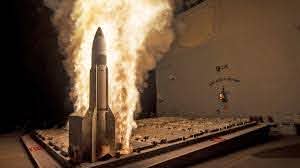
A New U.S. Missile Defense Test May Have Increased the Risk of Nuclear War, Carnegie Endowment for International Peace
A November 2020 U.S. missile defense test stands to upend strategic stability and complicate future arms control. The test marks a crossing of the Rubicon, with irreversible implications.
Ultimately, the consequences of the technical demonstration in FTM-44 will be challenging to reverse. This genie has left the bottle and the consequences for future arms control and strategic stability will be significant. https://carnegieendowment.org/2020/11/19/new-u.s.-missile-defense-test-may-have-increased-risk-of-nuclear-war-pub-83273
Lack of safety documents in Los Alamos National Laboratory’s handling of radioactive wastes.
  CCNS Asks Why LANL’s Area G Waste Handling Lacks Proper Safety Documents, http://nuclearactive.org/ 20 Nov 20, On Wednesday, Chris Roscetti, the Technical Director for the Defense Nuclear Facilities Safety Board, raised more red flags about the fact that Los Alamos National Laboratory (LANL) handles, treats and stores radioactive and hazardous waste without the proper paperwork in place. He was speaking during a virtual meeting of the Northern New Mexico Citizens’ Advisory Board. DNFSB POWERPOINT . CCNS Asks Why LANL’s Area G Waste Handling Lacks Proper Safety Documents, http://nuclearactive.org/ 20 Nov 20, On Wednesday, Chris Roscetti, the Technical Director for the Defense Nuclear Facilities Safety Board, raised more red flags about the fact that Los Alamos National Laboratory (LANL) handles, treats and stores radioactive and hazardous waste without the proper paperwork in place. He was speaking during a virtual meeting of the Northern New Mexico Citizens’ Advisory Board. DNFSB POWERPOINT .
Some paperwork has remained unresolved for years. For example, since at least 2016, LANL does not have compliant safety documents for nuclear facilities, such as the Area G dump. These documents, called documented safety analysis, serve to identify and analyze the hazards associated with the work. Nuclear facilities are required to respond to the analyses in ways that will protect workers, the public and the environment. Some elements of safety documents include fire protection calculations, computer modeling for the dispersion of contaminants, and analyses of the efficiency of the operating controls to prevent releases. The Area G safety documents have languished since 2016 – even though LANL continues to handle, treat, and store plutonium-contaminated and hazardous waste there. Roscetti said there are about 3,100 drums containing radioactive and hazardous waste sitting above ground at Area G. These wastes are destined for the Waste Isolation Pilot Plant (WIPP), but need to be treated or repackaged before shipment. In fiscal year 2020, LANL sent 54 shipments to WIPP. Most of these shipments were newly-generated waste from the fabrication of the triggers for nuclear weapons, or plutonium pits. Each shipment to WIPP can hold 42 55-gallon steel drums
Based on the current shipping rate, if all 3,100 above-ground drums were sent to WIPP at a maximum of 42 drums per shipment, it would take about 18 months. But the amount of radioactivity in each drum dictates how many drums make up each shipment. In the meantime, newly generated waste would be shipped into Area G. In recent virtual meetings, LANL officials have been announced its plans to begin retrieving thousands of buried containers at Area G. Those drums would most likely need to be repackaged before shipment to WIPP. But again, the safety documents have not been developed and approved. Safety documents address not only the repackaging and shipping operations, but also the delicate retrieval operations. There is evidence that some drums have corroded.
CCNS asks why LANL is allowed to continue to operate Area G when safety basis documents have not been properly updated – in the case of Area G, nearly five years…….. http://nuclearactive.org/
|
|
USA revives plan for fast nuclear reactor, despite terrorism risks
|
Idaho is top pick for Energy Department nuclear test reactor, By KEITH RIDLER, BOISE, Idaho (AP) 20 Nov 20, — The U.S. government said Thursday that Idaho is its preferred choice ahead of Tennessee for a test reactor to be built as part of an effort to revamp the nation’s fading nuclear power industry by developing safer fuel and power plants. The U.S. Department of Energy said in an email to The Associated Press that the site that includes Idaho National Laboratory will be listed as its preferred alternative in a draft environmental impact statement planned for release in December. The Versatile Test Reactor, or VTR, would be the first new test reactor built in the U.S. in decades and give the nation a dedicated “fast-neutron-spectrum” testing capability. Some scientists decry the plan, saying fast reactors are less safe than current reactors. A news release by the Energy Department earlier Thursday listed both Idaho and Tennessee as possible locations without selecting one as being favored…… The department had a fast reactor, the Experimental Breeder Reactor II, operating in eastern Idaho until it was shut down in 1994 as the nation turned away from nuclear power. ……. Some scientists are wary of fast reactors, noting they’re cooled with harder to control liquid sodium and likely fueled by plutonium, increasing potential nuclear terrorism risks because plutonium can be used to make nuclear weapons….. https://apnews.com/article/environment-tennessee-nuclear-power-idaho-f70ae4dac811f90f1493231fe7edb7bd |
|
The Biden- Harris administration can change nuclear weapons policy, make it safer, and much cheaper
Whatever you think ails this nation, a new generation of ICBMs is not the answer, WP, by Tom Collina and William Perry, November 18, 2020 Tom Z. Collina is director of policy at Ploughshares Fund. William J. Perry was secretary of defense from 1994 to 1997. They are co-authors of the book “The Button: The New Nuclear Arms Race and Presidential Power from Truman to Trump.”
Are any of these challenges addressed by nuclear weapons? Clearly not. Yet the United States is planning to spend well over $1 trillion to rebuild its nuclear arsenal, complete with a new generation of intercontinental ballistic missiles.
The United States can move to a smaller but more secure second-strike nuclear force whose sole purpose is to deter nuclear attack. We do not need to spend hundreds of billions more in a dangerous and futile attempt to “prevail” in a nuclear conflict.
The Biden-Harris campaign has rightly stated that “the sole purpose of the U.S. nuclear arsenal should be deterring — and if necessary, retaliating against — a nuclear attack. As president, [Biden] will work to put that belief into practice, in consultation with our allies and military.”
The best policy would specifically rule out preemptive nuclear attacks, as such attacks have a high risk of starting nuclear war by mistake, and should not be considered under any circumstances. Similarly, a sole-purpose policy should prohibit launching nuclear weapons on warning of attack, as such launches increase the risk of starting nuclear war in response to a false alarm.
The Biden-Harris administration can make a sole-purpose policy more credible and further reduce the risk of accidental launch by retiring the ICBMs. ICBMs are most likely to be used first in response to a false alarm. They are highly unlikely to ever be used in retaliation, as most would be destroyed in any (highly unlikely) Russian nuclear attack against the United States. Thus, ICBMs have no logical role in a U.S. sole-purpose, deterrence-only policy.
This transformational nuclear policy would be win-win: It would free up federal resources to address more urgent needs and, at the same time, reduce nuclear dangers to the nation. In this time of crisis, change and opportunity, our government must have the courage to spend our federal dollars where they are needed most. https://www.washingtonpost.com/opinions/2020/11/17/how-biden-administration-could-create-win-win-situation-nuclear-policy/
The intractible problem of San Onofre’s, and indeed, America’s, nuclear waste

Mosko: Public Safety at Stake in Debate Over Nuclear Waste Storage at San Onofre, https://voiceofoc.org/2020/11/mosko-public-safety-at-stake-in-debate-over-nuclear-waste-storage-at-san-onofre/by SARAH MOSKO 18 Nov 20 SoCal Edison’s  spokesperson, John Dobken, authored an Oct. 20 editorial touting the dry nuclear waste storage system Edison chose when a radiation leak from steam generator malfunction forced permanent closure of the San Onofre Nuclear Generating Station (SONGS) in 2013. Ignoring for the moment the numerous obfuscations and omissions of critical facts, the essence of Dobken’s article is this: Edison wants to divert public attention away from the inadequacies of its dry canister storage system while promising that a deep geological national repository, as mandated in the Nuclear Waste Policy Act of 1982, will magically materialize before their storage canisters fail.
There’s plenty Dobken did not say that the public needs to know.
First off, we are nearly four decades past passage of the Nuclear Waste Policy Act and there is no tangible progress toward creation of a national repository operated by the Department of Energy. The cold hard reality is that no state wants it and, worse still, there is no feasible technology currently available to make a geological repository workable, according to the U.S. Nuclear Waste Technical Review Board. Plans for a geological repository at Yucca Mountain were rejected by Nevada, and subsequent proposals for “interim” storage sites in Texas and New Mexico are opposed by those states too.
Thus, the dream of a national repository remains in limbo for the foreseeable future, and it’s misleading to suggest otherwise. Also misleading is Dobken’s suggestion that, if needed, a failing canister could be transported to “a centralized Department of Energy facility” for repackaging in the future, as no such facility exits anywhere in the United States for this purpose.
Consequently, the plan throughout the country is to leave highly radioactive nuclear waste onsite indefinitely. The relevant 2014 report from the Nuclear Regulatory Commission (NRC) openly states that a repository might never become available. Like all other nuclear plant operators in the United States, Edison is saddled with a storage task never originally intended.
For dry storage, Edison chose thin-walled (just 5/8 inch thick), welded-shut stainless steel canisters which contrast sharply with the 10-19 inch thick-walled and bolted-shut casks many nuclear waste safety advocates in Orange, San Diego, and Los Angeles Counties are advocating for. Unlike the thick casks, SONGS’s canisters are vulnerable to stress corrosion cracking from numerous conditions, such as a salty marine environment like San Onofre. A 2019 Department of Energy report assigned “#1 Priority” to the risk of through-wall cracking in welded, stainless steel canisters in a moist salty environment.
The 73 Holtec canisters at SONGS are warranted for only 25 years, covering only manufacturing defects. This means the warranty excludes environmental conditions like earthquakes, salt air, water intrusion, seagull droppings, and any other corrosive damage to the canisters. Edison has not divulged what the warranty covers on the 51 older Areva canisters, which are already up to 17 years old. Dobken’s statement that the nuclear waste will become less radioactive in 100 years is meaningless in the timescale of the hundreds of thousands of years the waste will remain deadly to humans.
Dobken argues that the fact SONGS’s canisters are welded shut and can never be opened is a plus. This completely ignores the crucial safety requirement in the Nuclear Waste Policy Act that spent nuclear fuel storage containers be designed to be monitored inside and out and the contents retrievable from the containers. Edison purposely chose welded shut canisters, making it impossible to monitor or retrieve the fuel assemblies, which means the canisters can’t lawfully be accepted by the Department of Energy (DOE) for either an interim or permanent storage site.
In listing six other nations that also use welded-shut canisters (Brazil, Mexico, Slovenia, South Africa, Ukraine, United Kingdom), Dobken hopes readers won’t notice these are not countries the United States typically aims to emulate technologically. From that standpoint, a partial list of countries using thick-walled casks is more formidable: Belgium, Finland, France, Germany, Japan, Korea, Netherlands, Russia, Spain, and Switzerland. And, thick casks are used in the United States too, though thin-walled canisters are unfortunately most common.
In arguing that robotic camera technology – which Edison applied to the exterior of a sample of eight of 123 total canisters in 2019 – can be relied upon to detect defects like cracking, Dobken hides the fact that Edison has admitted that this methodology does not meet American standards for an inspection. This is because nuclear storage containers are pressure vessels, thus subject to standards set by the American Association of Mechanical Engineers for safe storage and transport of nuclear pressure vessels which explicitly require use of either magnetic particle or dye penetrant methodology to inspect for defects like cracking (ASME N3).
Edison used neither ASME-approved method simply because they can’t be applied to their canisters which are both too hot, too radioactive and inaccessible in their concrete storage overpacks. Furthermore, a robotic camera can never access the bottoms or inside walls of canisters to look for cracks originating there. Nor can it characterize cracking that might start on the exterior but proceeds laterally rather than straight through the canister wall.
Consequently, many nuclear safety advocates are arguing strenuously for retention of the cooling pools until a specialized dry fuel handling facility (aka “hot cell”) can be constructed onsite. This is because the only means to repackage the radioactive contents of a defective canister into another container is to perform the transfer within a cooling pool or hot cell.
Dobken correctly points out that NRC is nevertheless allowing decommissioned nuclear plants to destroy the cooling pools. This highlights a troublesome relationship between NRC and Edison which the public needs to understand. NRC has granted safety exemptions and waivers in dry storage systems nationwide which has allowed Edison to proceed with a canister system that is unsafe and cannot legally be accepted by DOE into either an interim storage site or permanent repository. Consequently, there is no plan to prevent or stop radioactive releases.
This liaison between NRC and Edison played out during the July 2020 meeting of the California Coastal Commission when NRC representative, Andrea Kock, remained mute as Edison cited the unapproved canister repair technology as justification for destroying the cooling pools. Though community nuclear waste safety advocates ardently cited factual objections, Kock’s silence no doubt helped shape the unanimous vote of the nine commissioners to grant Edison’s request. However, that two commissioners literally uttered “boos” despite casting “yes” votes speaks to doubts about Edison’s plan among the commission’s ranks.
Lastly, Dobken offers no defense for the fact that San Onofre had by far the worst safety record of any nuclear plant in the country during its pre-2012 operation, yet he cries foul any suggestion this should undermine public confidence in how Edison is currently handling dry storage. What’s not mentioned is that, in 2018, it took a conscience-driven whistleblower to expose a near-drop incident where a 54-ton canister loaded with radioactive waste was poised to plummet 18 feet while it was being lowered into its storage overpack. NRC’s subsequent investigation attributed the event to both design flaws and human error and cited Edison with the single most serious violation ever imposed on a spent fuel licensee.
Moreover, it was only because of this incident that Edison bothered to look at the canisters with the contrived robotic camera technology, revealing that essentially all the canisters get scraped/gouged during downloading into storage overpacks.
Dobken makes one point with which everyone agrees: “The public deserves the facts about spent nuclear fuel and its storage.” As the public listens to this debate over safe nuclear waste storage, both sides should be held accountable for underlying motivations. In asking Edison to opt for bolted-shut thick-walled casks with safety features lacking in thin-walled canisters, community safety advocates are seeking safety for their families and communities. Edison, on the other hand, will save untold $millions should the public be swayed to trust in Edison’s promises that their canister system won’t fail and that a national repository will materialize in time to save the day.
Sarah (Steve) Mosko is a local freelance journalist focused on solutions to environmental problems and social injustices.
Trump still has the awesome power to launch America’s nuclear arsenal
 By the Way, Donald Trump Could Still Launch Nuclear Weapons at Any Time The president’s responsibility for the US nuclear arsenal is a Cold War anachronism. The Trump era shows why it needs reform, Wired, .GARRETT M. GRAFF, SECURITY, 11.17.2020
 THE NATION IS entering a particularly dangerous period of Donald Trump’s presidency. Still refusing to concede his election loss and angrily tweeting at all hours of the night, Trump faces the dwindling days of his administration, with all the authorities of the office intact and nothing left to lose. Among the authorities he’ll retain until his final minutes in office? The awesome and awful power to launch the United States’ nuclear arsenal on command.
Donald Trump’s “fire and fury” presidency has exposed all too clearly the intellectual fallacy at the heart of the nation’s nuclear plans: that the commander-in-chief will always be the most sober, rational, and conservative person in the room.
Many people assume, wrongly, that some other official has to agree with a presidential order to launch nuclear weapons; surely the White House chief of staff, the secretary of defense, the vice president, or maybe the general in charge of the nation’s nuclear forces has to concur with a presidential launch order, right? Nope. The president can choose to consult with those officials, or whoever else he may like, but from the dawn of the atomic age in the 1940s and 1950s, there has been no procedure to require any such second, concurring opinion in order to authorize a nuclear strike.
Advancing technologies and expanding arsenals have negated that fear; today’s nuclear submarines ensure a so-called “survivable deterrent” such that even under the most extreme surprise attack scenarios, the US could still destroy dozens of foreign targets and kill tens of millions of people.
Even as the underlying technology and need changed, the US has never revisited its launch strategy. It doesn’t have to be this way, though. There’s simply no need for the nation’s weapons to be placed on routine high-alert and left in the hands of a single individual. We shouldn’t have to worry whether presidential whims endanger our world and human civilization.
This isn’t the first wake-up call for the US. In the final days of Richard Nixon’s presidency, as Watergate consumed his administration from within, his top aides worried what he might do. Nixon was despondent and drinking heavily. Those around him raised fears about his mental state; during one meeting with members of Congress he’d reportedly emphasized the world-ending powers at his fingertips …………
The impending end of Donald Trump’s presidency and a new Biden administration provides an important opportunity to reform the nation’s launch authorities. The country should insist upon a new command-and-control system that ensures the same checks and balances that we insist upon elsewhere in the nuclear system, as well as the same checks and balances we insist on other aspects of government power. Such a move would dramatically improve the safety of the world.
Policymakers have sketched out some ideas for what a new system might look like in recent years………..https://www.wired.com/story/donald-trump-nuclear-weapons-system-reform/
Russia and the United States Nuclear Industry
Trump’s Impact on Nuclear Proliferation, Treating Foreign Policy as a Business, Just Security, by Tamsin Shaw, November 18, 2020 “…………….Russia and the United States Nuclear Industry
It’s only relatively recently that the public and private U.S. institutions have begun to examine seriously the intricate financial network that lies behind and links Russian nuclear business dealings in the United States. Public perception of these dealings has been dominated by the false Uranium One conspiracy theory. This distraction has diverted attention from the extent to which Russia has established a strong foothold in the US nuclear industry in a way that suggests an aspiration to vertical control.
The grain of truth in the Uranium One story is that in 2010 Canadian company Uranium One, which was responsible for mining 20% of the currently licensed uranium in the United States, made an agreement with JSC Atomredmetzoloto, or ARMZ, the mining arm of Rosatom, giving them a controlling stake (51%). In 2013 Rosatom acquired full ownership. Uranium One continues to mine approximately 10% of that licensed in-situ uranium.
The United States also relies, both for civilian utilities and defense purposes, on nuclear fuel supplied by Russian subsidiary of Rosatom called Techsnabexport (TENEX). No U.S. uranium enrichment facilities are currently in operation. The U.S. company, Centrus has a new centrifuge design but it will likely be over a decade before it goes into action.
Nor does the United States currently have a company that builds commercial nuclear reactors. The only U.S. company now aiming to construct them is Bill Gates’s TerraPower, which is working on what will likely be the next generation of reactors, small modular reactors (SMRs), but again these won’t be commercially viable for a decade. Commercial nuclear reactors were previously designed and built by US company Westinghouse. But on March 24, 2017, Westinghouse declared Chapter 11 bankruptcy. The sale of that company naturally has serious national security implications. But the story of the sale and of the role that the Trump administration played in it raises many questions.
Trump’s friend and adviser, Tom Barrack, seized on the opportunity presented by the Westinghouse bankruptcy to put together a new version of the Marshall Plan for the Middle East, producing his own document setting out the details. In his March 2017 white paper, Barrack refers to the plan interchangeably as the “Trump Marshall Plan” and the “Trump Plan.” The July 2019 House Oversight and Reform Committee report details the ambitious deal Barrack tried to put together to purchase Westinghouse. Barrack had permission from the highest levels at the White House for a US-led consortium involving Colony Capital, IP3, and financial firms Blackstone and Apollo. Barrack assured Blackstone CEO Steve Schwartzman,
Our GCC [Gulf Cooperation Council] allies in Saudi Arabia and the UAE have committed to invest in the Westinghouse acquisition and are willing to concurrently lock in Westinghouse as the primary partner on the 30+ reactors expected to be constructed in their countries in the coming decade.
IP3 officials were very optimistic. President Trump and Jared Kushner had met with MBS on March 14, and IP3 boasted that this meeting prepared the way for a “partnership to acquire Westinghouse between IP3 and Saudi Arabia.” They eagerly arranged meetings with officials in the administration to promote the plan, including then-CIA Director Mike Pompeo, Director of the National Economic Council Gary Cohn, and top National Security Council (NSC) Staff officials. They also briefed Jared Kushner.
But in January, 2018 it was announced that Canadian company, Brookfield Business Partners, a subsidiary of investing giant Brookfield Asset Management, would purchase Westinghouse. And Westinghouse promptly and unilaterally decided to sever ties with IP3. ProPublica discovered that Kushner was the one who prevented the IP3-led deal from happening, reporting that Kushner “wanted to table the nuclear question in favor of simpler alliance-building measures with the Saudis, centered on Trump’s visit in May, according to a person familiar with the discussions.”
The Westinghouse sale went through on August 1, 2018. Three days later it was announced that Brookfield Properties, another subsidiary of Brookfield Asset Management that had just purchased Westinghouse, would buy Jared Kushner out of his catastrophic real estate deal involving 666 Fifth Avenue.
Who Owns Westinghouse?
The Westinghouse purchase was naturally considered an extremely sensitive deal, deserving scrutiny by the Committee on Foreign Investment in the United States (CFIUS), which at the time included Steve Mnuchin, Rex Tillerson, Jeff Sessions, Wilbur Ross and Dan Coats. The committee approved the transaction but with a Nuclear Regulatory Committee (NRC) Requirements Notice forbidding transfer of their licenses and insisting on compliance with all applicable statutory and regulatory requirements. But the NRC filing submitted to CFIUS is fairly thin. It tells us that Westinghouse would be “ultimately controlled” by Brookfield Asset Management, but little about the money behind the deal. According to their 2018 20-F annual report, BBU acquired 44% of the company, while having a 100% voting interest, having put in $405m of equity totaling $920m, with the balance coming from “institutional partners.” The rest of the purchase price was funded with approximately $3b of long-term debt financing. The sources of the equity and financing aren’t disclosed.
Immediately prior to the Westinghouse sale, prominent foreign policy experts Thomas Duesterberg and William Schneider wrote an article expressing serious concerns about the opacity………….https://www.justsecurity.org/73422/trumps-impact-on-nuclear-proliferation/
Trump’s Impact on Nuclear Proliferation, Treating Foreign Policy as a Business
Trump’s Impact on Nuclear Proliferation, Treating Foreign Policy as a Business, Just Security, by Tamsin Shaw, November 18, 2020 Donald Trump has never been known for his visionary foreign policy and yet his presidency will leave the world transformed. In an age of disinformation, the precise nature of the changes he has brought about in global affairs can be elusive, particularly when those changes have resulted from his administration’s clandestine negotiations with Russian officials and businessmen. While America has been focused on the ways in which the Kremlin interfered to support Trump in the 2016 election, too little attention has been paid to what Moscow intended to get out of a Trump presidency or indeed what they got.
From the earliest days of the campaign right up until the present day, Trump and his associates have tried to conduct foreign policy through the genre they know best: the business deal. Since they didn’t use the usual government channels for foreign affairs, unless we have official investigations we won’t know exactly what transpired in these dealings. But there is one area — nuclear energy — in which it seems clear that Russia stands to benefit from these transactions at the expense not only of US interests, but also those of Ukraine and of global nonproliferation more generally. This could present serious challenges to any attempts the Biden administration might make to reconstruct a stable nonproliferation regime.
The impetus for Trump 2016 campaign associates and Trump administration officials to make nuclear energy deals has come in large part from the interest of the Gulf states, particularly Saudi Arabia, in nuclear power. And the lure of Saudi billions has created financial incentives that have eclipsed non-proliferation concerns. ……..
An examination of two separate sets of negotiations reveals distinct forms of corruption and geopolitical risk involved in Trump associates’ nuclear energy deals. The first, led by Trump’s first National Security Advisor Michael Flynn, but also implicating other members of Trump’s inner circle, involved openly courting Russia to participate in a nuclear energy deal that would likely further Russian interests at the expense of Ukraine’s. The second, which involved an attempt to purchase nuclear company Westinghouse, was led by Trump’s close associate and former Middle East adviser, Tom Barrack. It didn’t explicitly include Russia, but it was thwarted by Jared Kushner for unknown reasons, and it now appears that Russia may have secretly been a chief beneficiary of the alternative deal that was ultimately made…….
international nuclear security has already been profoundly shaken by a few stamps of Trump’s foot. That includes his withdrawal from three international arrangements — the Joint Comprehensive Plan of Action (JCPOA) for Iran’s nuclear program, the Intermediate-Range Nuclear Forces Treaty (INF) with Russia, and the Open Skies Treaty that permitted verification of nuclear agreements — as well as his potential withdrawal from the U.S. Bilateral Agreement for Peaceful Nuclear Cooperation. These extraordinary steps have collectively transformed the nuclear landscape. In June of this year he even threatened to restart nuclear testing……..
since 2016, Trump and his team have treated the international nuclear order as if it were cheap real estate in a former Soviet republic: rich in opportunities for deals, liberatingly deficient in enforceable laws and norms. Their secret bargaining over nuclear security has compounded the damage done by Trump’s highly visible unraveling of non-proliferation agreements.
Dispensing with International Regulations
The initial efforts by members of the Trump administration to strike a lucrative nuclear deal were reportedly made by General Michael Flynn. These were detailed in a report by the House Committee on Oversight and Reform under the late Elijah Cummings, in July 2019, entitled “Corporate and Foreign Interests Behind White House Push to Transfer U.S. Nuclear Technology to Saudi Arabia.” It exposed a concerted attempt by Trump administration officials to broker nuclear power deals in the Middle East, commenting that the attempt “virtually obliterated the lines normally separating government policymaking from corporate and foreign interests.”
The Cummings report exposed several attempts by Trump associates to get Saudi financial backing for a plan that involved building nuclear power plants in a block of Middle Eastern countries deemed potentially friendly to the interests of the United States and Israel………….. https://www.justsecurity.org/73422/trumps-impact-on-nuclear-proliferation/
Canadian government misplacing funding into unviable small nuclear reactors for North West Territories

Is small-scale nuclear energy an option for the N.W.T.?
N.W.T., federal gov’t looking closely at industry, but some say they should focus only on renewable energy, Hannah Paulson · CBC News Nov 18, 2020 “……. both the federal government and the Northwest Territories look to transition away from fossil fuels, territorial leaders are exploring how small-scale nuclear energy could alleviate the North’s dependency on diesel.
In October, the federal government announced it was investing $20 million into small modular nuclear energy reactors
…….The N.W.T. government has also shown interest in this form of energy and identified it as an emerging energy technology that it follows “closely,” according to a written statement from the Department of Infrastructure.
Others, however, think the federal funding is misplaced.
Last week, the Green Party of Canada called on the federal government to abandon nuclear energy and invest in renewable energy instead.
In a press release, MP Elizabeth May said that “small nuclear reactors (SMRs) have no place in any plan to mitigate climate change when cleaner and cheaper alternatives exist.”
May cited issues with the high costs involved in nuclear energy, the long timeline to rollout, and the environmental risk.
What is small-scale nuclear energy?
SMRs is a term that represents “a range of technology,” said Diane Cameron, director of nuclear energy at Natural Resources Canada.
The federal government’s $20-million investment is toward Terrestrial Energy, an Oakville, Ont., firm that is working to bring SMRs to market. That technology is still in the design phase, but could become commercially viable in five to 10 years, said Cameron……..
N.W.T. part of small-scale nuclear group
The Northwest Territories is among several jurisdictions and energy corporations that are part of a working group looking at how small-scale nuclear reactors could be used across the country.
The working group “has recognized the potential for application in off-grid small and remote communities and for remote industrial sites that rely on diesel,” the Department of Infrastructure said in a statement.
The statement also said that there needs to be more information about whether SMRs would be technically viable, safe, reliable and cost effective in the North.
The Department of Infrastructure considers small-scale nuclear energy a long-term initiative.
Cameron said SMRs could be commercially viable anywhere from 2025 to 2030, but before it’s likely to be brought up to the N.W.T., it will be tested in national labs.
If that is successful, the technology could make its wat into communities, but that might not be for another 20 or so years, she said.
‘Not the answer to climate change’
In a 2018 UN report, scientists warned that there were only 12 years left to drastically reduce global emissions in order to avert the most catastrophic impacts of climate change.
This is part of the reason why May and other environmentalists don’t think small-scale nuclear energy is part of “the answer to climate change.”
Theresa McClenaghan, the executive director of the Canadian Environmental Law Association, said the industry requires extremely high startup costs, which divert attention away from renewable energy.
Funding should be going toward existing renewable energy sources that are currently viable, like geothermal, solar, or wind energy, she said. “These are not pipe dreams. These are existing technologies where the price is coming down practically by the day,” said McClenaghan.
“It’s not to say we don’t want an alternative to diesel, but that alternative should be renewables.” https://www.cbc.ca/news/canada/north/small-scale-energy-nwt-1.5803972
For Joe Biden – an early trial problem – the UN Treaty on the Prohibition of Nuclear Weapons
 The New Nuclear Weapons Ban Treaty Will Be an Early Trial for Biden, World Politics Review
 , Miles A. Pomper Wednesday, Nov. 18, 2020, With support from nearly half the world’s nations, a new United Nations treaty banning the possession and use of nuclear weapons will take effect early next year. The U.N. confirmed last month that the Treaty on the Prohibition of Nuclear Weapons, or TPNW, had been ratified by the required 50 countries. Secretary-General Antonio Guterres called it “a tribute to the survivors of nuclear explosions and tests, many of whom advocated for this treaty.”
Many non-nuclear-armed states, as well as pro-disarmament activists and organizations like the Nobel Peace Prize-winning International Campaign to Abolish Nuclear Weapons, have celebrated the agreement, which they see as a milestone in global efforts to prevent nuclear war. However, it has drawn strong opposition from nuclear-armed states, especially the five permanent members of the U.N. Security Council: Russia, China, France, the United Kingdom and the United States. The Trump administration has called on the treaty’s 84 signatories to back out of it. Its entry into force on Jan. 22, 2021, will pose a thorny diplomatic challenge for the incoming Biden administration………..
In the case of the Chemical and Biological Weapons Conventions, the major possessors of these arsenals, such as the United States and Russia, helped draft and build support for the pacts. However, the TPNW was drawn up by non-nuclear-armed states over the objections of nuclear powers. The initiative reflected the frustration of non-nuclear-weapons states with what they contended was the failure of their nuclear-armed counterparts to uphold their end of the “grand bargain” at the heart of the NPT. That bargain calls on the non-nuclear-weapon states to permanently renounce nuclear arms in exchange for access to peaceful nuclear technology and a commitment by nuclear powers to “pursue negotiations in good faith on effective measures” toward nuclear disarmament. ………
|
the treaty could pose a political problem in the future for NATO members and other countries that shelter under the U.S. nuclear umbrella, given the TPNW’s call not to support actions inconsistent with the treaty. That challenge is especially acute for the five NATO members that host an estimated 150 forward-deployed U.S nuclear weapons: Belgium, Germany, the Netherlands, Italy and Turkey. German, Dutch and Belgian disarmament advocates, in particular, enjoy strong mainstream political support among center-left parties in all three countries. And 56 former world leaders, including many from NATO countries, argued recently in an open letter that the new nuclear ban treaty can “help end decades of paralysis in disarmament.” NATO has beaten back such arguments before, most recently in the wake of Obama’s Prague speech. However, handling the TPNW and tensions within the alliance more generally will likely prove a challenge for President-elect Joe Biden, who will take office just two days before the treaty enters into force……. Another important event looms on the horizon: In August 2021, state parties to the NPT are scheduled to meet and review that treaty for the first time since the TPNW was concluded. Such conferences—which usually take place every five years, though the 2020 meeting was delayed until next year due to the COVID-19 pandemic—are always a headache for U.S. negotiators, as they provide an opportunity for the far more numerous non-nuclear-weapon states to bash Washington and other nuclear-armed states for their disarmament shortcomings, and thus of the NPT more generally. These arguments will only become more intense now that the TPNW is a legal alternative. Making progress on U.S. nonproliferation goals in this new environment, with a U.N. treaty that bans nuclear weapons, is sure to prove a tough diplomatic test of the new administration. Miles Pomper is a senior fellow at the James Martin Center for Nonproliferation Studies at the Middlebury Institute of International Studies. https://www.worldpoliticsreview.com/articles/29225/the-new-nuclear-weapons-ban-treaty-will-be-an-early-trial-for-biden |
|
Could a mad, unhinged US president, push the nuclear button?
 Could a mad, unhinged US president, push the nuclear button? From JFK and the Cuban crisis, to Nixon and Watergate, to now: the sum of all fears, is still carried in a suitcase, By DAVE MAKICHUK, NOVEMBER 19, 2020 “I had no idea we had so many weapons … what do we need them for?”
— A stunned President Bush, after his first briefing on US nuclear forces
It is the elephant in the room.
And it is a very big elephant, and, a very big room.
We are living in a very surreal time, that much we know. Officials would even say, challenging — I would even say, it’s a bit worse than that.
We have a US president who still believes he won the election, despite the fact he clearly lost.
Yet, there isn’t one iota of evidence to back up President Trump’s claims.
He is, without question, angry, in denial and — most importantly — vengeful to those who served him, whom he thinks
All in all, it paints a picture of a man, who only cares about himself …. not the will of the people, not the country, and
The exact opposite, in fact, of one President John F. Kennedy, who, after a meeting with the Joint Chiefs during the
Anti-Nuclear Pacifists Get Federal Prison Terms for Nonviolent Protest
 ach weekend, while New York City’s East Village packs into sidewalk tables for brunch, activist Carmen Trotta leads a vigil for ending the U.S.-backed war in Yemen in Tompkins Square Park. He only has a few more Saturday mornings before he must report to federal prison, along with fellow activists from Plowshares, the anti-nuclear, Christian pacifist movement. Despite a lethal pandemic ravaging prison populations, Trotta, Martha Hennessy, Clare Grady, and Patrick O’Neill are due to report to prison within the next few months for activism against a suspected nuclear weapons depot.
More than two years ago, Trotta and Hennessy, two of seven activists known as the Kings Bay Plowshares Seven, peacefully broke into the naval base in Brunswick, Georgia — risking their own lives to protest the suspected nuclear arsenal housed within. Armed only with vials of their own blood, hammers, GoPro cameras, spray paint, protest banners, and whistleblower Daniel Ellsberg’s book, the activists symbolically attempted to disarm the nuclear weapons located on the Trident submarines at the base.
The nonviolent direct action took place on the 50th anniversary of the assassination of Martin Luther King Jr. Far out of the spotlight of major media coverage, all but one of the activists have quietly been sentenced in their faith-based battle with the U.S. government over the “immoral” possession of nuclear weapons. The activists were charged with three felonies — conspiracy, destruction of government property, depredation — and misdemeanor trespassing.
The sentencing — sending aging activists to federal prisons amid the coronavirus pandemic — fits squarely within the long history of the U.S. government throwing the book at people of conscience who dare to dissent. President Donald Trump’s acceleration of heavy-handed federal charges against protesters have drawn critical media attention.
Yet activists like those in the Plowshares community, whose protests garner less attention, are suffering at the hands of a bipartisan consensus on harsh crackdowns related to direct action against so-called defense policies. Under the rubric of national security, the persecutions of figures like Chelsea Manning, Daniel Everette Hale, or Reality Winner become polarized or fail to raise public ire, when they are noticed at all.
That was the case last week, when few took note of the latest Plowshares sentences. Trotta, 58; Hennessy, 65; along with Grady, 62, were sentenced by Judge Lisa Godbey Wood in individual virtual court sessions. Trotta got 14 months, Grady was given 12 months and one day, and Hennessy was sentenced to 10 months; all were ordered to pay restitution and were given years of supervised release. As cases of Covid-19 engulfed Georgia, the defendants reluctantly agreed to proceed with their sentencing without appearing in person. Only Mark Colville, 59, has yet to be sentenced. Colville refuses to travel to Georgia because of the coronavirus and will not give up his constitutional right to an in-person sentencing before the court. ………….. https://readersupportednews.org/news-section2/318-66/66270-anti-nuclear-pacifists-get-federal-prison-terms-for-nonviolent-protest
In the face of public opposition, Ottawa delays small nuclear reactor plan
Ottawa delays small nuclear reactor plan as critics decry push for new reactors, Yahoo Finance Colin Perkel, The Canadian Press, Thu., November 19, 2020, “……… Industry critics were quick to pounce on the government’s expected SMR announcement. They called on Ottawa to halt its plans to fund the experimental technology.
.. a major problem facing the industry is its growing mound of radioactive waste. This week, the government embarked on a round of consultations about what do with the dangerous material.
Dozens of groups, including the NDP, Bloc Quebecois, Green Party and some Indigenous organizations, oppose the plan for developing small modular reactors. They want the government to fight climate change by investing more in renewable energy and energy efficiency.
“We have options that are cheaper and safer and will be available quicker,” Richard Cannings, the NDP natural resources critic, said in a statement. …
Joe McBrearty, head of Canadian Nuclear Laboratories, told the conference the company had signed a host agreement this week with Ottawa-based Global First Power for a demonstration SMR at its Chalk River campus in eastern Ontario. A demonstration reactor will allow for the assessment of the technology’s overall viability, he said
1 This Month

of the week– Nuclear Reactor Information Task Force

14 May – online event From Bombs to Data Centres: the Face of Nuclear Colonialism
To see nuclear-related stories in greater depth and intensity – go to https://nuclearinformation.wordpress.com
-
Archives
- May 2026 (82)
- April 2026 (356)
- March 2026 (251)
- February 2026 (268)
- January 2026 (308)
- December 2025 (358)
- November 2025 (359)
- October 2025 (376)
- September 2025 (257)
- August 2025 (319)
- July 2025 (230)
- June 2025 (348)
-
Categories
- 1
- 1 NUCLEAR ISSUES
- business and costs
- climate change
- culture and arts
- ENERGY
- environment
- health
- history
- indigenous issues
- Legal
- marketing of nuclear
- media
- opposition to nuclear
- PERSONAL STORIES
- politics
- politics international
- Religion and ethics
- safety
- secrets,lies and civil liberties
- spinbuster
- technology
- Uranium
- wastes
- weapons and war
- Women
- 2 WORLD
- ACTION
- AFRICA
- Atrocities
- AUSTRALIA
- Christina's notes
- Christina's themes
- culture and arts
- Events
- Fuk 2022
- Fuk 2023
- Fukushima 2017
- Fukushima 2018
- fukushima 2019
- Fukushima 2020
- Fukushima 2021
- general
- global warming
- Humour (God we need it)
- Nuclear
- RARE EARTHS
- Reference
- resources – print
- Resources -audiovicual
- Weekly Newsletter
- World
- World Nuclear
- YouTube
-
RSS
Entries RSS
Comments RSS
 nuclear-news