Report: Cancer death rates rising near Fermi nuclear plant
 Report: Cancer death rates rising near Fermi nuclear plant https://www.13abc.com/2021/03/11/report-cancer-death-rates-rising-near-fermi-nuclear-plant/
A new study is looking to test baby teeth from children living near the plant. NEWPORT, Mich. (WTVG) – A new report from the Radiation and Public Health Project claims that the cancer death rate in Monroe County, Michigan is on the rise and it’s tying that growth to the Fermi 2 nuclear plant in Newport.
According to the report, which uses public health data from the Centers for Disease Control and Prevention, the rate of death due to cancer in Monroe County was roughly equal to that of the rest of the United States. Since 1988, that rate has risen steadily, reaching 11.3% higher than the national average in the most recent 10 years (2009-2018). From 2014-2018, that rate was 14.3% higher than the national average, amounting to 1,794 deaths. In the period between 1969 and 1978, outlines the report, that rate was 4.5% lower than the national average.
The Fermi 2 nuclear power plant went online in June of 1985, and while the report has no concrete evidence that the plant is the definitive cause of the rise in cancer deaths in the county, it does provide a correlative pattern. 13abc has reached out to DTE Energy, owners of the Fermi 2 plant, for comment.
“The trends in Monroe County cancer rates since the mid-1980s cannot overlook the startup of the Fermi reactor, and the potential role of radioactive emissions on health,” says Joseph Mangano MPH MBA, Executive Director of RPHP and study author.
“The report needs to be taken seriously, and follow-up measures are urgently needed,” adds Christie Brinkley, a long-time activist on nuclear issues, Board member of RPHP, and a native of Monroe County. “In particular our children must be protected, as they are most vulnerable.”
In an effort to further understand the role the reactor may have had in the rise in cancer rates in the area, the RPHP is conducting a “Tooth Fairy” study. They’re collecting baby teeth from children living near the power plant to test for levels of Strontium-90, a chemical created by nuclear reactors. They’re hoping to test up to 50 teeth and will compare the results to Sr-90 levels in Detroit-area residents from a 1950s-era study of atomic bomb test fallout. Information about the study, including how to participate, can be found at their website.
Nuclear education of state energy regulators

With the Department of Energy behind this – can it really offer impartial education?
NARUC, DOE strike five-year deal to allow nuclear education of state energy regulators, Daily Energy Insider, March 10, 2021 by Chris Galford A new partnership between the National Association of Regulatory Utility Commissioners (NARUC) and the U.S. Department of Energy (DOE) will provide opportunities for NARUC to educate state public service commissioners and staff on nuclear issues.
This Nuclear Energy Partnership will last for five years to help regulators better understand the barriers to and potential of what is currently the nation’s largest source of zero carbon power.[ [zero carbon? That’s just not true ] It will officially begin this month and be co-chaired by Anthony O’Donnell of the Maryland Public Service Commission and Tim Echols of the Georgia Public Service Commission, chair and vice chair, respectively, of the NARUC Subcommittee on Nuclear Issues — Waste Disposal.
Estimates put nuclear power’s contributions to U.S. electricity at approximately 20 percent of the total last year. However, among the 94 nuclear reactors pumping out that clean power, many are approaching 40 years in service……. https://dailyenergyinsider.com/featured/29440-naruc-doe-strike-five-year-deal-to-allow-nuclear-education-of-state-energy-regulators/
USA’s new $100billion nuclear missile – a white elephant?
|
‘Cold war-era weapon’: $100bn US plan to build new nuclear missile sparks concern, Guardian, Washington, Wed 10 Mar 2021
Scientists say the GBSD project is outdated and the result of lobbying rather than a clear sense of what it will achieve. The US is building a new $100bn nuclear missile based on a set of flawed and outdated assumptions, a new report by the Federation of American Scientists (FAS) will say.The report, due to be published next week, will argue the planned ground-based strategic deterrent (GBSD) is being driven by intense industry lobbying and politicians from states that will benefit most from it economically, rather than a clear assessment of the purpose of the new intercontinental ballistic missile (ICBM).“It is becoming increasingly clear that there has not been a serious consideration of what role these cold war-era weapons are supposed to play in a post-cold war security environment,” the FAS report, titled Siloed Thinking, will say. According to the FAS, a non-partisan thinktank, the US Air Force price tag for the new GBSD was deliberately framed in such a way as to appear slightly less than the cost of extending the life of the missile it would be replacing, the Minuteman III. An independent assessment by the Rand corporation at about the same time, suggested the cost of a totally new weapon could cost two to three times more. An effort by Congress to mandate an independent study on the comparative costs was blocked in 2019 with the help of the industry lobby. The current estimate is that the basic acquisition costs of the GBSD will be $100bn, while the total cost of building, operating and maintaining it over its projected lifespan to 2075 is projected as $264bn. The report is being published as the Biden administration is preparing its first defence budget which may reveal its intentions towards the GBSD, which is in its early stages. In September 2020, Northrop Grumman was awarded an uncontested bid for the $13.3bn engineering, manufacturing and development phase of the project, just over a year after its only rival, Boeing, pulled out of the race, complaining of a rigged competition. It said Northrop Grumman’s purchase of one of the two companies in the US making solid fuel rocket motors gave it an unfair advantage. There are currently 400 Minuteman missiles spread over five states: Colorado, Montana, Nebraska, North Dakota and Wyoming. Many arms control advocates argue that rather than being replaced, they should be phased out entirely on grounds of their vulnerability and consequent instability…… |
|
Ohio House passes its version of Bill rescinding nuclear subsidies
House Bill 128 passed 86-7 on Wednesday afternoon. The bill also would revoke “decoupling” language in HB6 that guaranteed revenue for FirstEnergy at 2018 levels, and language that likely would have made it easier for FirstEnergy to pass a state test meant to prevent utilities from making excessive profits.
Of note, a House committee before passing the bill earlier this week changed it to add back in language offering $20 million in annual solar subsides to six large-scale solar projects. Developers behind some of the projects, some of which are have been completed or are close to it, told lawmakers that revoking the funding would economically undermine the deals they had made with companies that had agreed to buy the power they generated.
Other portions of HB6 so far have remained untouched, provisions eliminating energy efficiency programs and renewable energy mandates, and subsidizing two coal plants — one in Indiana, one in Ohio — owned by a consortium of Ohio utility companies.
Ohio House and Senate leaders will have to sort out how they line up the competing versions of the bills. Any law change requires approval by both chambers before heading to Gov. Mike DeWine for his signature….. https://www.cleveland.com/open/2021/03/ohio-house-passes-their-version-of-bill-rescinding-nuclear-subsidies.html
Problem in accepting higher level radioactive wastes in Texas
|
Waste Control Specialists won’t move high level nuclear waste to Permian Basin without state’s approval https://www.cbs7.com/2021/03/10/waste-control-specialists-wont-move-high-level-nuclear-waste-to-permian-basin-without-states-approval/ In a meeting on environmental regulation yesterday, Waste Control Specialists said they would not be moving high-level nuclear waste into the Permian Basin without the state’s approval. By Kate Porter Mar. 10, 2021 ANDREWS, Texas (KOSA) – In a meeting on environmental regulation yesterday, Waste Control Specialists said they would not be moving high-level nuclear waste into the Permian Basin without the state’s approval.Texas lawmakers, such as Representative Brooks Landgraf, have presented legislation that would shut the door on WCS ever bringing high-level nuclear waste to Andrews county. Representative Landgraf tells CBS 7 that the nuclear waste facility here in Andrews houses rubber gloves and hospital gowns. Landgraf says WCS proposed a plan to bring higher-level nuclear waste like rods used at nuclear testing sites. That proposal spurred representative Landgraf into action – he presented a bill to block all high-level waste being stored or disposed of here in Texas. I reached out to WCS several times today for comment but have not heard back as of right now. This thinking isn’t isolated to the Republican party.
Midland County Democrat, David Rosen, agrees that high-level nuclear waste does not have a place in the Permian Basin. The bottom line for Andrews residents: WCS will still store nuclear waste There, but it’s up in the air about the level of radioactivity. |
|
At last! – some media questioning the story that small nuclear reactors combat climate change
 What’s the Role for New Nuclear Power in the Fight Against Climate Change?
Some fear that small modular reactors could rob cash from more proven low-carbon technologies. Greentech Media, JASON DEIGN MARCH 08, 2021 Small modular reactors (SMRs) — nuclear reactors using novel technologies to fit into much smaller and mass-producible packages than the behemoth nuclear power plants of today — are presented as a way of rapidly decarbonizing the grid in the face of an ever more pressing need to meet climate targets. But some opponents claim new nuclear power could have the opposite effect, slowing the fight against human-caused climate change just when things should be speeding up.In September last year, for example, the Sierra Club Canada Foundation harshly criticized Canada’s plans to foster an SMR industry.SMRs “are not the solution to climate change,” said the organization, citing a University of British Columbia study indicating that energy produced by SMRs could cost up to 10 times as much as power from renewable sources such as wind and solar.
“Critics of SMRs say that developing experimental nuclear reactor technologies will take too long to make a difference on climate change and could drain billions of dollars from public coffers,” said the advocacy group.
Similar challenges have been leveled against U.S. utilities such as Duke Energy and Southern Company that include SMRs in the longer-range suite of options to fully decarbonize their power grids by 2050. Critics question whether the SMRs under development today can be commercialized fast enough to drive down emissions over the next decade or two and whether government funding to drive faster deployment might better be spent on other technologies.
That’s not the only criticism facing new nuclear. In 2014, NuScale Power, which looks likely to become the first Western SMR developer to commercialize a reactor, published a paper on the use of its SMRs for oil recovery and refining applications.
The aim of the paper was to show that SMRs could be instrumental in “reducing the overall carbon footprint of these industrial complexes and preserving valuable fossil resources as feedstock for higher-value products,” according to the authors.
Nevertheless, it doesn’t look good for the nuclear industry’s climate-fighting credentials when one of its upcoming stars is apparently touting wares to the oil and gas sector.
In a written statement, Diane Hughes, NuScale Power’s vice president of marketing and communications, told GTM that the SMR developer “does not comment or discuss what companies we may be talking to regarding potential business opportunities.”……
Doubts over government finance for SMRs
Despite this, the question remains whether it makes sense for governments to put money into SMR research and development when other low-carbon generation technologies can be used to combat climate change right away.
Nuclear skeptics such as David Toke, who researches energy politics at the University of Aberdeen in the U.K., don’t think so. SMRs “are a diversion from the development of energy systems that best mitigate climate change,” he said in an interview.
“Small reactors already exist, and they occupy a very niche zone, which is military marine, mainly. That allows very high costs. But that’s the point: They cost an awful lot of money. Just because something reduces carbon emissions doesn’t mean to say the state ought to encourage it.” ….https://www.greentechmedia.com/articles/read/whats-the-role-for-new-nuclear-power-in-the-climate-change-fight
How to dispose of 50 tons of weapons-grade plutonium for 10,000 years?
 The need for a long-term commitment to plutonium disposal. The Energy Department faces the daunting and unprecedented task of geologically disposing of tens of tons of weapons-grade plutonium, so it can never be used again, while ensuring its toxic dangers do not threaten the environment over a time period longer than the existence of human civilization.
|
Can the Energy Department store 50 tons of weapons-grade plutonium for 10,000 years? Bulletin of the Atomic Scientists, By Robert Alvarez | March 8, 2021 The nuclear age is undergoing a paradigm shift. During much of the latter half of the past century, the nuclear enterprise was ascendant; now, it has entered a period of decline and uncertain long-term custodianship. This reversal of fortune is especially apparent in the United States’ efforts to rid itself of its unwanted reserves of plutonium. It’s been more than 75 years since a blinding flash lit up the pre-dawn sky at Alamogordo in the Chihuahua Desert of New Mexico. On July 16, 1945, a single gram of the grapefruit-size sphere of plutonium at the center of the world’s first nuclear explosion released three times the destructive force of the largest conventional bomb used during World War II. [1]
Thereafter, the United States government built a grossly oversized nuclear arsenal and never envisioned having to stop building it. Between 1944 and 1994, the Energy Department and its predecessors produced 99.5 metric tons of plutonium for use in an estimated 70,000 nuclear weapons. (An additional 11 tons were produced or acquired for research and development purposes.) The perverse logic of the nuclear arms race reached a point of ultimate absurdity during the early Reagan presidency, when it was asserted that the winner of a nuclear war would be the one with the most weapons left afterward. Now, 80 percent of the US nuclear arsenal has been discarded, and the United States is still struggling with the strategic mistake of producing so much fissile material to begin with. Currently, a total of 61.2 tons of plutonium is declared excess to the needs of the US government, of which 53.4 tons is designated for nuclear weapons. The Energy Department faces the daunting task of geologically disposing of this huge cache of weapons-grade plutonium, so it can never be used again, while ensuring that its does not threaten the environment over a time period longer than human civilization has existed. Achieving safe plutonium disposal will be a multifaceted challenge requiring both long-term commitments and large financial investments at a time when nuclear modernization programs are also competing for federal funding. But arms control and disarmament will not progress as they should unless the excess plutonium problem is solved. The scope of the problem. Safely ridding the nation of one of the world’s largest excess stockpiles of weapons-grade plutonium will be no minor feat. At issue is the US Energy Department’s 2016 decision to dilute and dispose of, all told, about 48.2 metric tons of plutonium, including 26.2 tons of components, known as “pits,” from several thousand dismantled thermonuclear warheads and 22 metric tons in other forms. These massive quantities of plutonium are destined for the Energy Department’s Waste Isolation Pilot Plant (WIPP), the nation’s only geologic burial site for radiological waste, dug into a deep-underground salt formation near Carlsbad New Mexico. WIPP was opened in 1999, originally for disposal of equipment, clothing, and soil contaminated with dilute amounts of transuranic elements, mostly plutonium, somewhere in the nation’s nuclear weapons complex. If one gram of soil contains as little as 1.587 micrograms of plutonium, the Energy Department is required by federal standards to geologically isolate it from the environment for at least 10,000 years at WIPP. The site is not without its problems. In 2014, a drum burst open deep underground, shooting contamination to the surface and leading to a three-year closure of the facility that cost about $2 billion. During the Cold War, the Energy Department facilities involved in weapons productions recovered residual plutonium from production processes—for example, the lathe turnings produced when spherical plutonium bomb cores were shaped—when the cost of doing so was less than the cost of making new plutonium in production reactors. After the downsizing of its Cold War warhead stockpile, in 1998 the Energy Department reclassified residues from the Rocky Flats Plant— some 3.5 metric tons of weapons-grade plutonium, or enough to fuel some 900 weapons—as waste that should also be disposed of in the WIPP. In fact, as of September 2019, more than two thirds of 5.36 metric tons of plutonium 239 placed in the repository originally had been set aside to make bombs. An additional 5.29 metric tons of this residual plutonium is awaiting disposal, and amount that is separate from and above what is generally considered as excess fissile material from the weapons stockpile. The government has not publicized the formidable challenges of protecting thousands of workers and members of the public during the process necessary to geologically dispose of this enormous stockpile of nuclear explosives. To put it bluntly, if not done with extreme care, plutonium is a waste-disposal nightmare. The isotope used in American nuclear weapons, plutonium 239, has a specific activity (that is, an amount of radiation produced per unit of mass) that is about 200,000 times greater than uranium 238’s, and plutonium 239 has a radioactive half-life of 24,110 years. Alpha particle emissions from plutonium and other transuranic elements are considered to be about 20 times more carcinogenic than x-rays. Particles of plutonium less than a few microns in diameter can penetrate deep in the lungs and lymph nodes and also be deposited, via the bloodstream, in the liver, on bone surfaces, and in other organs. If inhaled, extremely small amounts can lead to cancer. Stringent procedures—many involving large number of workers with specialized skills—are required to ensure that even small amounts of plutonium are properly processed. That processing often must be done by hand, using gloveboxes, to prevent the creation of a critical mass that initiates a nuclear chain reaction and the resulting highly dangerous bursts of energy and radioactivity. While technologies have existed for years to process plutonium, they come out of the Cold War era when safety was secondary to production. Over the years, dozens of workers around the world have been killed or seriously over- exposed from criticality accidents. Various safeguards—including a security system that carefully accounts for all plutonium and protects against theft and diversion—add another costly dimension to handling this nuclear explosive. Plutonium production ends, but problems continue. Years before the collapse of the Soviet Union, the growing cost of plutonium production led to its gradual cessation. By the 1980s, half of every dollar spent to make plutonium at the aged Energy Department nuclear complex went for its burgeoning waste-management and environmental-restoration problems. By 1988, production costs compelled Energy Secretary John Herrington to declare: “We’re awash with plutonium. We have more than we need.” By 1992, the United States had stopped making new nuclear weapons as the industrial base for producing them began to collapse; about 80 percent of the Energy Department’s sprawling nuclear weapons production complex was shuttered a few years later. This left behind a legacy of radioactive waste and human suffering, one that is still unfolding. The Energy Department’s recent baseline cost estimates for waste management and environmental remediation are about $435 billion for the two main plutonium production facilities, the Hanford Reservation in Washington and the Savannah River Site in South Carolina. The single largest portion of the entire US government’s environmental liability in 2019, including the Defense Department, is due to plutonium production at these two sites. In terms of the human legacy, 22,459 sick workers at three major plutonium and fabrication sites have been granted more than $4.2 billion in compensation and medical care…………….
|
|
|
Sorry saga of America’s plutonium waste problems
Can the Energy Department store 50 tons of weapons-grade plutonium for 10,000 years? Robert Alvarez Bulletin of the Atomic Scientists, 8 Mar 21,
”…………The US-Russia plutonium disposal disagreement.
The end of the Cold War led to deep cuts in the US and Russian nuclear arsenals, and in 1993 President Clinton issued a directive declaring that the United States is “committed to eliminating, where possible, the accumulation of stockpiles of highly enriched uranium and plutonium.” In September 2000, the United States and Russia signed the Plutonium Management Disposition Agreement, under which 34 metric tons of plutonium from weapons would be blended with uranium and serve as mixed-oxide or MOX reactor fuel to produce electricity.
 Construction on the Mixed Oxide Fuel Fabrication Plant at the Savannah River Site began in 2007, but the United States abandoned the project because of delays and estimated cost overruns of $30 billion to $50 billion. After a “Red Team” expert review in 2015, the Energy Department decided to pursue a “dilute and dispose” option for storing plutonium, which, the team reported, would cost about half as much as the MOX project. Plutonium from weapons and other forms would be converted from metal to oxide, diluted with a secret adulterant, and then placed a special container for shipment and disposal at WIPP.
The dilute and dispose project.
The Energy Department optimistically estimates that its dilution and disposal project will start up in 2027 and store 34 metric tons of weapons-grade plutonium by 2049, at a cost of $18 billion. That time estimate seems likely to be unrealistic; according to the Institute for Defense Analysis, “we could find no successful historical major project that both costs more than $700 million and achieved [Energy Department project startup] … in less than 16 years.”
The dilute and dispose project i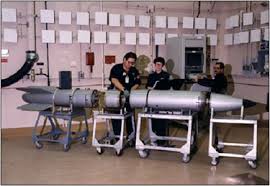
- The Pantex weapons assembly and disassembly plant near Amarillo, Texas, where thousands of pits and other forms of plutonium have to be prepared for safe and secure shipment to Los Alamos National Laboratory (LANL) in New Mexico. The majority of the plutonium at Pantex is stored in facilities at that were built in the 1940s. In 2010 and 2017, unexpected 2,000-year rains flooded a major plutonium storage area with several inches of water, which shut down the plant. It cost of hundreds of millions of dollars to deal with about 1,000 containers affected by the flooding.
 At the Los Alamos National Laboratory, pits will be converted from metal to an oxide that resembles a yellow-to-olive-green talcum-like powder, which is highly dispersible if it escapes from leaking glove boxes. The conversion process takes place at the PF-4 facility, a 69-year-old complex where the Energy Department has a major multibillion-dollar project underway to upgrade aged processes to produce new plutonium bomb triggers. In 2020, a panel of the National Academies of Science warned that “LANL may be a major bottleneck” impacting the plutonium disposal mission. The disposal and production projects could be on a collision course by the middle of this decade, when both are planned to scale up by 10 times.
 Once Los Alamos produces plutonium oxides, they will be sent to the Savannah River Site in South Carolina, where the plutonium will be diluted and mixed with a secret adulterant, sometimes via the use of mortars and pestles. About 166,000 specially designed drums will be filled with the dilute fissile material. This task is a tall order for the Savannah site, where the round-the-clock work is expected to scale up by 10 times in a facility that officially exceeded its design life years ago. The facility will be almost 100 years old by 2049 when the dilute and disposal project is expected to be completed.
- Once the drums are filled, commercial trucks are expected to transport them across
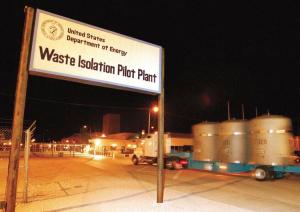 the country, from South Carolina to New Mexico and WIPP, in more than 3,888 shipments.
 - As it plans to dispose of its excess plutonium, the Energy Department has, notably, paid little attention to inspections and verification by the International Atomic Energy Agency, a key element of the Nuclear Non-Proliferation Treaty. As noted by the report of an expert panel of the National Research Council, “IAEA monitoring and inspections are an important component of the [Plutonium Management and Disposition Agreement with Russia] requirements, and they could also provide enhanced public and international confidence that the material is properly accounted for and emplaced in WIPP.”
Plutonium disposal beyond dilute and dispose.
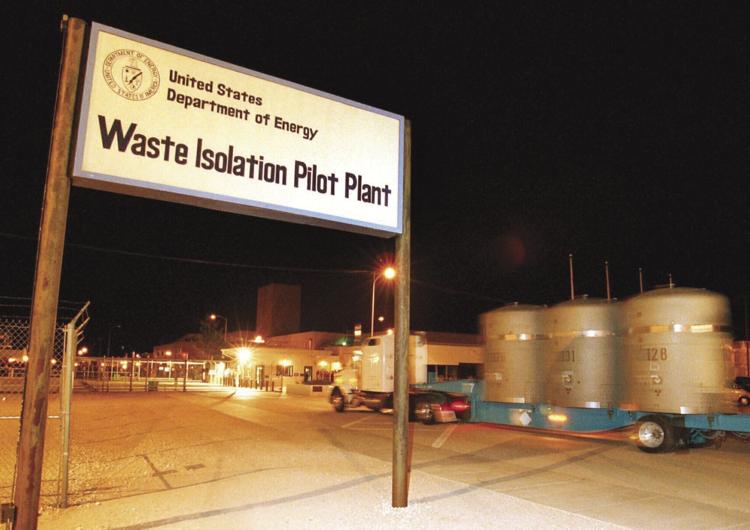
- Over the past three years, WIPP and the nearby area have become ground zero for several storage and disposal plans for the bulk of civilian and military radioactive wastes. In addition to trans-uranic wastes set for WIPP and plutonium related to weapons production, the Energy Department seeks to dispose of six tons of fuel-grade plutonium from its research and development program, sludge from 15 of Hanford’s high-level radioactive waste tanks, trans-uranic waste generated from the production of new plutonium pits, and other radioactive waste.
- Even after the Energy Department recently recalculated its excess plutonium and other radioactive wastes, resulting in a 30 percent reduction in the total volume to be sent to WIPP, the federal statutory limit set in the Land Withdrawal Act, which authorized the opening of WIPP, will be exceeded by these planned disposal efforts. Congress would have to amend the law to expand the volume, set for WIPP at 175,564 cubic feet, by as much as than 50 percent to accommodate all the waste. Moreover, it appears that new plutonium pit production is projected to generate huge amounts more waste.Lurking in the shadows, 71 miles from the WIPP, sits an Energy Department effort to dispose of as much as 500,000 gallons of grouted wastes from Hanford’s high-level radioactive waste tanks at the Waste Control Specialists landfill in Andrews County Texas.

- That firm is also seeking a license from the Nuclear Regulatory Commission to establish centralized interim storage of spent nuclear fuel from the nation’s power reactor fleet. So, too, is the Holtec Corporation with a proposed spent nuclear fuel storage site 16 miles from WIPP in Lea County, New Mexico.If these interim storage efforts succeed, by mid-century up to 10,000 spent fuel cannisters containing nearly the entire US commercial spent nuclear fuel inventory will be transported across the country for storage near WIPP. They may sit there for more than 100 years. (See sidebar: “The long-term problem of “peaceful” plutonium.) If these plans are realized, WIPP and the nearby area will have become the recipients of an enormous, decades-long, radioactive-waste-transport funnel directing the bulk of the nation’s commercial and military radioactive detritus to New Mexico and far West Texas……… https://thebulletin.org/2021/03/can-the-energy-department-store-50-tons-of-plutonium-for-10000-years/#.YEa37PTkUIk.twitter



Difficult time for Biden to sort out Iranian nuclear deal
Biden as a candidate promised to take the U.S. back to the deal and was confident of achieving it; however, his time in office has proved that this won’t be an easy task
Since the inauguration of U.S. President Joe Biden, one of the most frequently asked questions are about his position on the Iranian nuclear deal. The candidate Biden had called the U.S. withdrawal from the Joint Comprehensive Plan of Action (JCPOA) a significant mistake and promised to take the U.S. back to the deal.
However, his few weeks in office demonstrated that this process will not be as easy as many may have thought.
The negotiation process, the content of the potential deal and its possible impacts on the countries’ domestic policies started to be discussed even before the beginning of negotiations.
Now, after the appointment of a special envoy to Iran, everybody is expecting to hear about the process and its details. However, there will be five different challenges that the Biden administration and its negotiators need to pay attention to while reaching a new deal with regards to the Iranian nuclear program.
Deadlock at home
First of all, it will be critical for the Biden administration to gain majority support in the U.S. Congress for a new nuclear deal with Iran……….
Regional outcry
Secondly, some U.S. partners in the region have reacted negatively to the JCPOA. They felt like they were left in the dark about critical foreign policy issues in regard to their region……….
Alliance skepticism
Thirdly, the U.S. administration also needs to pay attention to the concerns of its allies and partners in the P5+1 – the U.S., the U.K., France, China, Russia and Germany……….
Iran’s internal concerns
Fourthly, there will also be domestic dynamics at play with Iran. In June of this year, presidential elections will be held in Iran. Quite possibly, the Iranian nuclear deal and the relations with the U.S. will be part of this election campaign………. https://www.dailysabah.com/opinion/columns/biden-on-horns-of-a-dilemma-for-iranian-nuclear-deal
The war-mongering lobby embraces AI (artificial intelligence)


The testimony is generously spiked with the China threat thesis
the note of warning in not being too morally shackled becomes a screech.
War Mongering for Artificial Intelligence, https://www.counterpunch.org/2021/03/02/war-mongering-for-artificial-intelligence/ BY BINOY KAMPMARK-2 March 21,
The ghost of Edward Teller must have been doing the rounds between members of the National Commission on Artificial Intelligence. The father of the hydrogen bomb was never one too bothered by the ethical niggles that came with inventing murderous technology. It was not, for instance, “the scientist’s job to determine whether a hydrogen bomb should be constructed, whether it should be used, or how it should be used.” Responsibility, however exercised, rested with the American people and their elected officials.
The application of AI in military systems has plagued the ethicist but excited certain leaders and inventors. Russian President Vladimir Putin has grandiloquently asserted that “it would be impossible to secure the future of our civilization” without a mastery of artificial intelligence, genetics, unmanned weapons systems and hypersonic weapons.
Campaigners against the use of autonomous weapons systems in war have been growing in number. The UN Secretary-General António Guterres is one of them. “Autonomous machines with the power and discretion to select targets and take lives without human involvement,” he wrote on Twitter in March 2019, “are politically unacceptable, morally repugnant and should be prohibited by international law.” The International Committee for Robot Arms Control, the Campaign to Stop Killer Robots and Human Rights Watch are also dedicated to banning lethal autonomous weapons systems. Weapons analysts such as Zachary Kallenborn see that absolute position as untenable, preferring a more modest ban on “the highest-risk weapons: drone swarms and autonomous chemical, biological, radiological, and nuclear weapons”.
The critics of such weapons systems were far away in the Commission’s draft report for Congress. The document has more than a touch of the mad scientist in the bloody service of a master. This stood to reason, given its chairman was Eric Schmidt, technical advisor to Alphabet Inc., parent company of Google, which he was formerly CEO of. With Schmidt holding the reins, we would be guaranteed a show shorn of moral restraint. “The AI promise – that a machine can perceive, decide, and act more quickly, in a more complex environment, with more accuracy than a human – represents a competitive advantage in any field. It will be employed for military ends, by governments and non-state groups.”
In his testimony before the Senate Armed Services Committee on February 23, Schmidt was all about “fundamentals” in keeping the US ascendant.This involved preserving national competitiveness and shaping the military with those fundamentals in mind. But to do so required keeping the eyes of the security establishment wide open for any dangerous competitor. (Schmidt understands Congress well enough to know that spikes in funding and outlays tend to be attached to the promotion of threats.) He sees “the threat of Chinese leadership in key technology areas” as “a national crisis”. In terms of AI, “only the United States and China” had the necessary “resources, commercial might, talent pool, and innovation ecosystem to lead the world”. Within the next decade, Beijing could even “surpass the United States as the world’s AI superpower.”
The testimony is generously spiked with the China threat thesis. “Never before in my lifetime,” he claimed, “have I been more worried that we will soon be displaced by a rival or more aware of what second place means for our economy, our security, and the future of our nation.” He feared that such worries were not being shared by officials, with the DoD treating “software as a low priority”. Here, he could give advice on lessons learned in the spawning enterprises of Silicon Valley, where the principled live short lives. Those dedicated to defence could “form smart teams, drive hard deliverables, and move quickly.” Missiles, he argued, should be built “the way we now build cars: use a design studio to develop and simulate in software.”
This all meant necessarily praising a less repressible form of AI to the heavens, notably in its military applications. Two days of public discussion saw the panel’s vice chairman Robert Work extol the virtues of AI in battle. “It is a moral imperative to at least pursue this hypothesis” claiming that “autonomous weapons will not be indiscriminate unless we design them that way.” The devil is in the human, as it has always been.
In a manner reminiscent of the debates about sharing atomic technology in the aftermath of the Second World War, the Committee urges that the US “pursue a comprehensive strategy in close coordination with our allies and partners for artificial intelligence (AI) innovation and adoption that promotes values critical to free and open societies.” A proposed Emerging Technology Coalition of likeminded powers and partners would focus on the role of “emerging technologies according to democratic norms and values” and “coordinate policies to counter the malign use of these technologies by authoritarian regimes”. Fast forgotten is the fact that distinctions such as authoritarianism and democracy have little meaning at the end of a weapon.
Internal changes are also suggested to ruffle a few feathers. The US State Department comes in for special mention as needing reforms. “There is currently no clear lead for emerging technology policy or diplomacy within the State Department, which hinders the Department’s ability to make strategic technology decisions.” Allies and partners were confused when approaching the State Department as to “which senior official would be their primary point of contact” for a range of topics, be they AI, quantum computing, 5G, biotechnology or new emerging technologies.
Overall, the US government comes in for a battering, reproached for operating “at human speed not machine speed.” It was lagging relative to commercial development of AI. It suffered from “technical deficits that range from digital workforce shortages to inadequate acquisition policies, insufficient network architecture, and weak data practices.”
The official Pentagon policy, as it stands, is that autonomous and semi-autonomous weapons systems should be “designed to allow commanders and operators to exercise appropriate levels of human judgment over the use of force.” In October 2019, the Department of Defence adopted various ethical principles regarding the military use of AI, making the DoD Artificial Intelligence Centre the focal point. These include the provision that, “DoD personnel will exercise appropriate levels of judgment and care, while remaining responsible for the development, deployment, and use of AI capabilities.” The “traceable” principle is also shot through with the principle of human control, with personnel needing to “possess an appropriate understanding of the technology, development processes, and operational methods applicable to AI capabilities”.
The National Commission pays lip service to such protocols, acknowledging that operators, organisations and “the American people” would not support AI machines not “designed with predictability” and “clear principles” in mind. But the note of warning in not being too morally shackled becomes a screech. Risk was “inescapable” and not using AI “to solve real national security challenges risks putting the United States at a disadvantage”. Especially when it comes to China.
Binoy Kampmark was a Commonwealth Scholar at Selwyn College, Cambridge. He lectures at RMIT University, Melbourne. Email: bkampmark@gmail.com
Nuclear workers plagued by leukaemia, cancers and other illnesses
Some workers developed cancer, leukemia and other illnesses. The same held true for workers at other nuclear facilities across the nation.
The number of potentially eligible workers across the nation is uncertain. Likewise, the number of employees potentially affected at West Valley could be in the thousands when accounting for temporary workers.
“This was particularly troubling if the same workers were hired repeatedly as temporaries and received high doses each time,”
In addition, the exposure of growing numbers of individuals increased the possibility of genetic consequences for the entire population.”
Cancer plagues West Valley nuke workers https://www.investigativepost.org/2021/03/01/cancer-plagues-west-valley-nuke-workers/
“What we were doing was insane. We were dealing with so much radiation,” he told Investigative Post from his home in New Hampshire.
“I’ve got absolutely no joints left in my knees — my knees are gone, my ankles are gone and my hips are gone,” he said.
“I wonder if it’s from working in that bathtub full of radiation.”
Pyles was one of about 200 full-time employees who operated the former Nuclear Fuel Services reprocessing facility five decades ago in the hamlet of West Valley, where the company partnered with the federal government to recycle used radioactive fuel. Other workers were hired to contain and dispose of the dangerous waste the operation left behind.
Some workers developed cancer, leukemia and other illnesses. The same held true for workers at other nuclear facilities across the nation. As a result, Congress established the Energy Employees Occupational Illness and Compensation Program in 2000.
An Investigative Post review of the program found the government has paid $20.3 million over the last two decades in cases involving at least 59 people who worked at the West Valley site.
In all, individuals have submitted claims involving 280 employees who worked at the bygone reprocessing facility or during the ongoing $3.1 billion taxpayer-funded cleanup. An undetermined number of claims have been denied; the rest are being adjudicated.
Pyles said he was unaware of the program. He isn’t alone.
The Department of Labor’s Office of the Ombudsman has repeatedly criticized outreach efforts in its annual oversight reports. Most of it has been in the form of events held near former sites. Given the passage of time and people’s movement, reaching more eligible workers is a challenge.
The workforce at West Valley involved more than full-timers. About 1,000 temporary laborers were hired by the company in any given year, according to government and media reports from the time.
The use of temporary workers was a common labor practice at the time, but few operations needed to “raise quite so large an army” as Nuclear Fuel Services, according to a Science Magazine report from the era.
The industry had a nickname for them: “sponges.”
They were hired to “absorb radiation to do simple tasks,” according to Dr. Marvin Resnikoff, a radiological waste consultant who co-authored a study of West Valley.
While working at a site like West Valley does not guarantee later illnesses or genetic complications for offspring, each exposure to radiation increases the likelihood of cancer, Resnikoff said.
“It’s what I guess I would call a meat grinder,” he said.
Exposure to radiation
At its groundbreaking in 1963, the Nuclear Fuel Services reprocessing facility was thought to be a harbinger of a coming economic transformation. It closed in less than a decade, however.
Through six years of operation, at least 36 individuals in 13 incidents were exposed to “excessive concentrations” of radioactivity, according to a federal consultant’s report. Nevertheless, government officials at the time reported “no significant improvement in exposure controls or radiological safety conditions.”
The plant opened in the spring of 1966. Used fuel rods, thousands of which are assembled to power a nuclear reactor core, were transported to the plant by rail and truck. Upon arrival, containers were submerged in a 45-foot-deep cooling pool of demineralized water.
The fuel rods were then cut open, chopped up and placed in an acid bath. The solvent separated the used fuel from the reusable uranium and plutonium, which was collected for resale. The radioactive byproduct was pumped into underground tanks for storage.
The plant had handled 630 tons of fuel and produced 660,0000 gallons of liquid waste by 1972, when it was shut down in anticipation of making improvements to increase capacity and meet new regulatory standards.
That’s when Pyles quit.
The former lab supervisor said he was upset at management’s inaction concerning safety issues. Radioactive dust migrated through the ventilation system and accumulated in ducts, federal records said. A single duct was a “primary source of radiation” in the plant on three levels.
Pyles and coworkers absorbed radiation from that duct for five years, he said. They recognized that it posed a danger, but he said management ignored repeated requests to keep the airway flushed.
In response, Pyles said he and his coworkers hammered into the floor quarter-inch sheets of lead, used as temporary shields throughout the plant. When radiation levels went up, another sheet went down, he said. Finally, when the lead was an inch thick, Pyles said there were concerns they’d reached “the load bearing limit of the floor.”
Many unaware of program
Under the terms of its contract with the federal government, Nuclear Fuel Services pulled out of the operation in 1977. Federal and state officials battled over who was responsible for the site, until it was decided by Congressional action five years later.
In 1982, the newly formed U.S. Department of Energy took control of the 200 acres where the reprocessing facility operated. The New York State Energy Research and Development Authority, or NYSERDA, was charged with shutting down the site’s disposal area and stewardship of the 3,345 acres that surround it.
Nationally, the Department of Labor has received claims based on 129,488 former employees and paid $19.1 billion. While substantial, the department’s ombudsman has continually pushed for more resources and outreach efforts.
“While it is clear that those efforts have informed many individuals of the existence of the [program], it is likewise clear that there are still many who are unaware of [the program] and for whom more should be done to address this lack of awareness,” the office said in its most recent report to Congress.
The report cites an email from one frustrated former employee, who learned of the program with his wife by overhearing another couple’s conversation in the lobby of a hotel in Colorado.
“The husband was a former (energy employee),” the email said, concluding: “THIS IS HOW I WAS MADE AWARE OF THIS PROGRAM.”
The number of potentially eligible workers across the nation is uncertain. Likewise, the number of employees potentially affected at West Valley could be in the thousands when accounting for temporary workers. A 1985 report to Congress on workplace reproductive health threats noted 991 temporary workers were hired in West Valley in 1971. It was an “extreme case” of using such labor, the report said.
The 1974 report in Science Magazine said temporary laborers outnumbered operating staff 10 to 1 at times. According to federal records, media reports and interviews, temps were assigned tasks ranging from replacing light bulbs to “burying low-level nuclear waste.”
Records are typically scant for such subcontractor laborers, however. Companies, rather than the government, tended to retain those employment records, many of which no longer exist.
Science Magazine reported that former employees, members of the International Association of Machinists and Aerospace Workers, said “two contractors drew heavily on moonlighters, students and men seasonally employed at area automobile plants.”
A union official told the magazine then that between one-third and one-half of the Nuclear Fuel Services workforce were temporary hires that “could have been described as ‘down-and-out’ men from skid-row areas.”
How educated they were about the hazards of the job is an open question, according to J. Samuel Walker, a historian of the United States Nuclear Regulatory Commission whose published work includes research on nuclear transient workers. Use of the labor practice declined in time as safety concerns grew, Walker wrote in his book, “Permissible Dose.”
“This was particularly troubling if the same workers were hired repeatedly as temporaries and received high doses each time,” Walker said. “In addition, the exposure of growing numbers of individuals increased the possibility of genetic consequences for the entire population.”
Want to know more about the program? Call 716-832-6200 or visit this website.
Battle coming in U.S. Congress over spending on nuclear weapons

|
Lawmakers gird for spending battle over nuclear weapons, The Hill, BY REBECCA KHEEL – 03/07/21 Nuclear weapons are emerging as one of the top political brawls in the brewing battle over next year’s defense budget.Democrats have been introducing bills to curtail costly nuclear modernization programs, as well writing letters urging President Biden to support their efforts.
But Republicans are shooting back with their own letters and op-eds calling on Biden to stay the course on programs that largely originated during the Obama administration. They’re also working to pin down Pentagon nominees on where they stand. The back-and-forth over nuclear modernization is providing a lens into the larger fight that’s taking shape as the Biden administration prepares to present its first defense budget in the spring. Expectations are that the administration will keep funding flat. In one of the latest salvos, top Republicans on the House Armed Services Committee said Biden should boost defense spending by 3 to 5 percent, in part citing nuclear modernization needs, as well as bolstering cyber and naval capabilities……. But even the Trump administration had projected a relatively flat defense budget in fiscal year 2022 compared to the $740 billion defense budget in fiscal 2021, amid other pressures such as a growing national debt. As the Biden administration faces a time crunch in crafting its first budget proposal, Deputy Defense Secretary Kathleen Hicks in a February memo directed a review of a select group of programs, including low-yield nuclear warheads and nuclear command and control, according to multiple reports. The Trump administration developed and deployed a submarine-launch low-yield nuclear warhead, dubbed the W76-2 warhead, that Democrats argued raised the risk of nuclear war by potentially lowering the threshold for the U.S. willingness to use nuclear weapons. Trump officials were also in the early stages of developing a new nuclear-armed sea-launched cruise missile. On Thursday, Sen. Chris Van Hollen (D-Md.) and Rep. Joe Courtney (D-Conn.) introduced a bill to prohibit production and deployment, as well as research and development, of the nuclear-armed sea-launched cruise missile and its associated warhead. “Putting new, expensive nuclear warheads on attack submarines and surface ships that haven’t carried those weapons in almost thirty years is a distraction that will suck precious resources away from the most pressing need of the U.S. Navy—namely, to increase the size of its overworked fleet,” Courtney, chairman of the House Armed Services Committee’s seapower subcommittee, said in a statement. “This legislation is a common-sense bill that will stop the hemorrhaging of precious Navy dollars for a wasteful program that Congress barely debated.” An interim national security strategy released by the White House on Wednesday said the administration would “take steps to reduce the role of nuclear weapons in our national security strategy, while ensuring our strategic deterrent remains safe, secure, and effective and that our extended deterrence commitments to our allies remain strong and credible.” But Republicans have been pushing back against any potential changes to nuclear programs……………….. https://thehill.com/policy/defense/541906-lawmakers-gird-for-spending-battle-over-nuclear-weapons |
|
Bill in U.S. Congress to stop new nuclear-armed, sea-launched cruise missile
|
Lawmakers aim to prevent sea-based nuclear cruise missile, Defense News,
By: Joe Gould 7 Mar 21, WASHINGTON ― Two Democratic lawmakers are introducing legislation to kill the nuclear-armed, sea-launched cruise missile set to begin development next year and its associated warhead.
Maryland Sen. Chris Van Hollen, a lead appropriator, and House Seapower Subcommittee Chairman Joe Courtney, of Connecticut, planned Thursday to unveil the bill, a copy of which was obtained by Defense News. It’s the latest sign of pressure on President Joe Biden from his own party to scale back nuclear plans formed under the Trump administration. The bill would prohibit research and development, production, and deployment of the missile, known as the SLCM-N, arguing that the Obama administration found a similar weapon, the TLAM-N, redundant and retired it. The lawmakers say the cost of the SLCM-N would top the Congressional Budget Office estimate of $9 billion. In a statement, Courtney said that installing nuclear warheads on Virginia-class attack subs would sap resources from growing the Navy’s fleet and distract from the core mission of attack submarines in the Pacific and European theaters, where they are typically laden with ship-killing, conventional Tomahawk missiles. “This legislation is a common-sense bill that will stop the hemorrhaging of precious Navy dollars for a wasteful program that Congress barely debated.” Courtney said………. https://www.defensenews.com/congress/2021/03/04/lawmakers-aim-to-prevent-sea-based-nuclear-cruise-missile/ |
|
Radionuclides from the nuclear industry increase wildfires, and greatly increase their danger

Radionuclides in trace amounts, in the environment, increase wild fires, 30 fold by making them hotter, bigger and, much more profuse. Radionuclides Increase the width and breadth of wildfires, like the huge 90,000 acre wildfire at Idaho National laboratory, where the area is saturated with radionuclides.
govt extends nuclear reactor licenses, deregulates their supervision further. The government does not mandate-shutting the old dangerous nuke, monsters down . They are so expensive and dangerous, with no place safe to store, their extinction level-hoards of hi level nuclear wast
Death Maybe Your Santa Claus But, Pyrophoricity is The Burning Deliverance. https://www.opednews.com/articles/30-years-too-late-by-Terra-Lowe-Danger_Fukushima_Nuclear-210301-909.html–By Terra Lowe , 3 Mar 21,
STP failure Texas nuclear plant was just 3 minutes away from going completely off-line during blackout – Raw Story – .rawstory.com PSYCHOTIC IRRATIONALITY AND STUPIDITY What have the massive gulf coast hurricanes Harvey, Maria, and others, taught me? Harvey taught that catastrophes occur in America and that they are not well managed.
There was the monster cold-spell and failure of the grid in Texas, with temps in the teens in Feb. Almost freezing to death. Many almost dying again of starvation, like during the hurricanes. Almost dying of thirst and, bacteria infested water. Texas is the rightwing devil of the south. Texas is where the South Texas Project nuclear reactors, at Bay city, lost backup . So close to melting down again, like they were during Hurricane Harvey. This occurred in the time, during the blackouts in Texas . There was no water in half of Texas. Even hospitals in Austin. Texas is a total failure, with the pandemic still going.
I write this diatribe-invective, appealing to the sense and sanity, of the American people and people in the WORLD. No one is listening 30 years too late. Its all 30 years too late. The nukeape countries are: Pronuke energy. Pronuclear weapons. Generals are attached at the hip, to nuclear power. Attached to the Nuclear military industrial complexes and stock markets. There are minnions of them in all nuke countries. In Nuke countrys like the USA , France, Russia, Canada .
Australias wildfires, are starting to burn again. Like all the huge wildfires, they are from hydrocarbon residue in soils, drought, global climate change, pryophoric radionuclides like uranium waste, in the soil.
There are MEGA recurring Firestorms and wildfires, that occur in areas where nuclear catastrophes occured in the forests around Fukushima and pripyat and other heavily contaminated areas.. The phenomenon is from the inherent pyrophoricity of the multiple radionuclides, deposited there by the nuclear explosions and meltdowns or dumping for the past 5 to 10 years. Unusual biannual Forest wildfires have b een recurring around Chernobyl for 30 years. Radionuclide wildfires have been raging at Fukushima, Chernobyl, Santa Susana , INL
Santa Susana had two meltdowns in the 1960s. The Woolsey wildfires there, are some of the worst wildfires in history. The Idaho National Laboratory had 2 nuclear reactor meltdowns, in 50 years.
The 2018 INL wildfires, burned 90,000 acres in and around the 50 reactor, Idaho National Laboratory site, spreading deadly radionulide death over the United States in the air.
INL is a 30 square mile area, chocked full of Radionuclide waste. The pyrophoricity of all radionuclides, the Uranium, plutonium, cesium 137 cobalt 60 strontium 90 americium, thorium 90 . Radium and Uranium, from fracking, from nuclear , from uranium mining, from oil refining and burning hydrocarbons.
Areas around Mayak and Hanford have perennial wildfires .
Depleted uranium is used in bullets, mortars, bombs, rockets because of it’s inherent pyrophoricty.
Areas around Los Alamos, have had perennial-massive wild fires for years from the plutonium and americium byproducts of nuclear bomb manufacturing, residue there. Wildfires will happen this year at Los Alamos. It is primed for it from the drought in nothern New Mexico. Primed for it, from climate change, drought and radionuclide pyrophoric catalysis. Plutonium burns, when exposed to air, like the rocky flats, plutonium pit factory fires in arvada in the 60s, 70s, and, 80s in Denver.
Plutonium, depleted uranium, uranium, Amerecium dust contamination, from plutonium pit manufacture, at Los Alamoa catalyze wildfires, there. Wildfire areas have grown since older wildfire, AROUND LOS ALAMOS.
WILDFIRES ARE GROWING. Wildfires engulfed half of Australia, half of the USA, a third of the Amazon in the past 3 years. Continue reading
The American media sanitises the Biden administration’s killings in Syria
 Purging Inconvenient Facts in Coverage of Biden’s ‘First’ Air Attacks https://fair.org/home/purging-inconvenient-facts-in-coverage-of-bidens-first-air-attacks/ Purging Inconvenient Facts in Coverage of Biden’s ‘First’ Air Attacks https://fair.org/home/purging-inconvenient-facts-in-coverage-of-bidens-first-air-attacks/
GREGORY SHUPAK 5 Mar 21, When the Biden administration bombed Syria on February 25, the attack killed “at least 22,” most of them members of Iraqi militias, according to the Syrian Observatory for Human Rights, a London-based monitoring organization opposed to the Syrian government. The US said the bombing was retaliation for three rocket
 attacks on US bases in Iraq that it claims were carried out by groups allied with Iran (NBC, 2/25/21). In one of the attacks, rockets fired at Erbil airport killed a military contractor and an Iraqi civilian. attacks on US bases in Iraq that it claims were carried out by groups allied with Iran (NBC, 2/25/21). In one of the attacks, rockets fired at Erbil airport killed a military contractor and an Iraqi civilian.
The US does not say that its airstrike on Syria was aimed at the group that carried out the Erbil attack, which, as the New York Times (2/26/21) reported, was claimed by a previously unknown armed group calling itself the Guardians of the Blood. United States officials said it appeared to be affiliated with one or more of Iraq’s better-known militias, and Thursday’s strikes in Syria targeted facilities belonging to them. Furthermore, the site that the US bombed in Syria “was not specifically tied to the rocket attacks” (CNN, 2/25/21). A New York Times (2/25/21) report from Helene Cooper and Eric Schmitt ran with the headline, “US Airstrikes in Syria Target Iran-Backed Militias That Rocketed American Troops in Iraq.” However, the 11th paragraph of the article said that “little is known about” Guardians of the Blood, “including whether it is backed by Iran or related to the organizations that used the facilities the American airstrikes targeted on Thursday.” Manufactured amnesia CNN’s Barbara Starr, The less clear the US population is about the frequency and scale of murderous violence its government carries out, the easier it is for the US ruling class to go about its wars. Fortunately for the US state, corporate media help manufacture collective amnesia by expunging US aggression from the record. Liebermann and Nicole Gaouette (2/25/21) said the February 25 airstrikes “mark the US military’s first known action under President Joe Biden,” while their colleague Fareed Zakaria (GPS, 2/28/21) had a segment about them called “Biden’s First Military Action.” Christian Science Monitor (3/2/21) ran an editorial called “Biden’s First Use of Force Overseas.” Yet not even a month before Biden bombed Syria, the US carried out an airstrike in Iraq that it said killed ISIS commander Jabbar Salman Ali Farhan al-Issawi and nine other ISIS fighters (New York Times, 1/29/21). Furthermore, Airwars, a nonprofit monitoring group affiliated with the University of London, suspects the US of carrying out or helping to carry out four bombings in Somalia in the period between Biden’s inauguration and the attack on Syria, killing 2–4 people in one case and 6–12 on two other occasions. The US military stopped disclosing its airstrikes in Afghanistan last year, but it is unlikely that military operations in the US’s longest overseas war came to a halt when Biden took office. Purging inconvenient facts is another way of producing mass forgetfulness and confusion. Flying colors To praise Biden’s killings, corporate media pretended the US was fighting back against a bully. Max Boot of the Washington Post (2/26/21), writing that Biden “is passing his early tests with flying colors” and “is off to an excellent start,” claimed that “if Biden did nothing in response to the latest Iranian provocations, he would have risked sending a message of weakness that would have further emboldened Tehran.” In Boot’s opinion, “Biden ordered the right response: an airstrike on a Syrian base used by Iranian-backed militias.” He praised Biden for negotiating with Iran while simultaneously “engaging in a policy of active containment and deterrence to curb Iran’s destabilizing activities in the region,” which he characterized as “regional aggression.” (The Times‘ February 26 piece used similar language, writing that the prospect of a new nuclear deal with Iran is overshadowed by “the issue of Iran’s destabilizing activities across the Middle East.”)
Forget for a moment that no evidence has been provided that Iran was actually behind the relevant rocket attacks: Boot apparently doesn’t think he even has to say what “Iran’s destabilizing activities in the region” are, nor where its “regional aggression” takes place, let alone offer any proof for these claims. The US murdered an Iranian general who was revered in his country (FAIR.org, 1/21/20), invaded Iraq and causing the death of upward of 1 million people (Jacobin, 6/19/14), resupplied Israel with weaponry (Al Jazeera, 7/31/14) as it slaughtered more than 2,000 Palestinians in Gaza, played a central role in a war that has made Yemen home to the world’s worst humanitarian crisis (Middle East Eye, 11/17/17): For Boot, evidently, nothing on this nonexhaustive list of recent US crimes in the Middle East constitutes “regional aggression” or “destabilizing activities in the region” that need “active containment and deterrence.” Boot was hardly the only journalist who rationalized the American bombing by portraying the US as acting defensively. The Post‘s Jennifer Rubin (2/28/21) said Biden had “responded forcefully” to “Iranian proxy attacks,” and thereby sent an “important…signal to Iran that the new administration will not look the other way on Tehran’s regional conduct simply to encourage discussion about” Iran’s nuclear power program. Cooper and Schmitt (New York Times, 2/25/21) noted that the US dropped “seven 500-pound bombs” on Syria, and described this as Biden taking “a more measured response to the rocket fusillade in Erbil than Mr. Trump’s pitched campaign against Iran and past actions of its proxies in Iraq.” Set aside the absurdity of calling dropping nearly two tons of bombs “measured”; set aside the lack of evidence of Iranian responsibility for the deaths at Erbil; set aside that the US doesn’t claim that it bombed the parties that fired the rockets that killed the contractor and the Iraqi civilian in Erbil, and assume for the sake of argument that Iran is behind those acts. The pretense that the US defended itself by carrying out last week’s airstrikes also necessitates glossing over the fact that the country Washington actually bombed, Syria, is accused of neither sponsoring nor carrying out the rocket attacks on American bases in Iraq that should not be there in the first place. The articles I’ve examined all acknowledge that the US airstrikes hit Syria, but it’s remarkable how little attention they pay to the country, especially considering that the bombing was aimed at groups allied with the Syrian government in that country’s war, so the attack amounts to an intervention on behalf of anti-government forces there. Had the coverage paid more notice to how Biden’s bombing was carried out against a country that the US has helped to decimate (FAIR.org, 3/7/18; Electronic Intifada, 3/16/17), despite Syria not attacking or threatening to attack the US, the narrative that Biden was merely conducting a “response” to bad actors would have been that much more obviously threadbare. Securing consent for running a lethal, worldwide empire requires unremitting propaganda: Redacting the historical record and playing the victim are two useful strategies. |
|
-
Archives
- May 2026 (62)
- April 2026 (356)
- March 2026 (251)
- February 2026 (268)
- January 2026 (308)
- December 2025 (358)
- November 2025 (359)
- October 2025 (376)
- September 2025 (257)
- August 2025 (319)
- July 2025 (230)
- June 2025 (348)
-
Categories
- 1
- 1 NUCLEAR ISSUES
- business and costs
- climate change
- culture and arts
- ENERGY
- environment
- health
- history
- indigenous issues
- Legal
- marketing of nuclear
- media
- opposition to nuclear
- PERSONAL STORIES
- politics
- politics international
- Religion and ethics
- safety
- secrets,lies and civil liberties
- spinbuster
- technology
- Uranium
- wastes
- weapons and war
- Women
- 2 WORLD
- ACTION
- AFRICA
- Atrocities
- AUSTRALIA
- Christina's notes
- Christina's themes
- culture and arts
- Events
- Fuk 2022
- Fuk 2023
- Fukushima 2017
- Fukushima 2018
- fukushima 2019
- Fukushima 2020
- Fukushima 2021
- general
- global warming
- Humour (God we need it)
- Nuclear
- RARE EARTHS
- Reference
- resources – print
- Resources -audiovicual
- Weekly Newsletter
- World
- World Nuclear
- YouTube
-
RSS
Entries RSS
Comments RSS
 nuclear-news