Ohio’s Electric Power Association happy to see the end of customer-funded nuclear subsidies
EPSA expresses support for Ohio’s end of customer-funded nuclear subsidies, https://dailyenergyinsider.com/news/29767-epsa-expresses-support-for-ohios-end-of-customer-funded-nuclear-subsidies/?amp Chris Galford, With Gov. Mike DeWine’s approval last week, Ohio House Bill 128 officially put an end to nuclear energy subsidies in the state and amended existing law to better benefit solar resources instead, earning praise from the Electric Power Supply Association (EPSA).
Specifically, H.B. 128 took aim at the provisions of another bill, H.B. 6, from the last General Assembly.
“Today is a long-awaited day for Ohio families and businesses,” Todd Snitchler, head of the EPSA, said. “The nuclear subsidies included in H.B. 6 were unnecessary and unjustified, and only passed due to the alleged unprecedented corruption in the legislative process and referendum effort. The H.B. 6 debacle shows that politically motivated efforts to subsidize favored energy resources at the behest of powerful and well-funded interests invites malfeasance, undermines competition and innovation, and drives up costs for consumers without ensuring better energy solutions for those paying the bill.”
H.B. 6 had, at the time, been widely promoted by FirstEnergy Corp. and FirstEnergy Solutions. It categorized nuclear power alongside other renewable energy sources. It allowed providers to draw credits for each megawatt hour of electricity reported and to draw from a $20 million annual disbursement fund for renewable sources, among other things.
The EPSA staunchly opposed that fact, and even now, Snitchler added that the rest of H.B. 6 should be taken up by the Legislature and resolved. However, the national trade association did call the current moves a win for fair market competition and consumer choice.
H.B. 128 was sponsored by state Reps. Jim Hoops (R-Napoleon) and Dick Stein (R-Norwalk)
Ohio Senate votes to remove nuclear power subsidies
Ohio Senate eliminates nuclear subsidies from House Bill 6 Jessie Balmert, https://www.cincinnati.com/story/news/politics/2021/03/24/ohio-senate-vote-axing-nuclear-subsidies-house-bill-6/6971129002/Cincinnati Enquirer COLUMBUS – Lawmakers once touted $1 billion in ratepayer-financed subsidies as essential to saving nuclear plant jobs in northern Ohio. Now, they are ready to repeal those fees.
Ohio Senate unanimously passed House Bill 128, which would eliminate fees for nuclear plants on Ohioans’ electric bills, ax another fee on FirstEnergy customers’ bills and eliminate another benefit for the Akron-based company.
The legislation, which will soon head to Gov. Mike DeWine, comes two years after Ohio lawmakers passed House Bill 6, saying it was needed to save jobs at the Davis-Besse and Perry nuclear plants in northern Ohio.
Nuclear fees in House Bill 6 made headlines last July when former Ohio House Speaker Larry Householder and four others were arrested in connection to a nearly $61 million bribery scheme to pass the law and defend the legislation against a ballot effort to block it.
The scandal is one reason why lawmakers wanted to start over on portions of House Bill 6.
“When the story broke about the scandal and what was happening behind the scenes, I along with every member of this General Assembly was angry, disgusted and disappointed in what we were hearing,” said Rep. Jim Hoops, R-Napoleon. “We did not vote for what was happening behind the scenes and in a room somewhere outside the Statehouse.”
But the scandal was not the only reason. The energy landscape has changed since the state’s GOP-controlled Legislature approved $1 billion in fees on Ohioans’ electric bills for nuclear plants now owned by Energy Harbor.
A late 2019 change from federal utility regulators effectively penalizes companies that receive state subsidies when they sell their power at regional capacity auctions. That means Energy Harbor sees relinquishing the House Bill 6 subsidies as a competitive advantage.
Those in nuclear power are also banking on Democratic President Joe Biden’s policies hurting their competitors: natural gas. Biden stopped the Keystone XL pipeline and blocked new fracking on federal land.
The Ohio Senate passed similar changes in two separate bills, but House Bill 128 was selected as the piece of legislation to hit DeWine’s desk. The bill also includes a review of whether transmission projects – under-scrutinized fees on ratepayers’ bills – are cost-effective.
House Bill 128 keeps $20 million each year for solar projects. The changes would drop the monthly fee from 85 cents to 10 cents for residential customers and from $2,400 to $242 for industrial customers. Fees already charged on some customers’ bills would be refunded.
The legislation doesn’t change cuts to energy efficiency incentives, fees for two coal plants owned by Piketon-based Ohio Valley Electric Corporation or eliminated mandates to incorporate renewable energy into the mix. Those topics could be addressed later. Sen. Sandra Williams, D-Cleveland, said she would continue to advocate for a full repeal.
The House must approve some technical changes before the bill hits DeWine’s desk.
Bill Gates backs costly nuclear reactor design fueled by nuclear-weapon-usable plutonium
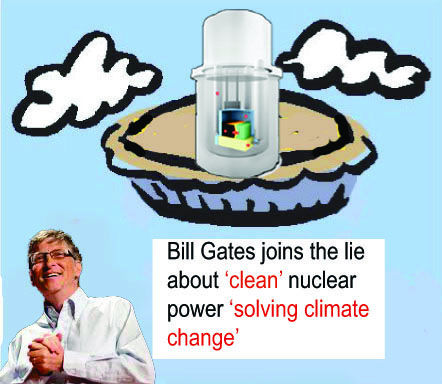
Bill Gates’ bad bet on plutonium-fueled reactors https://thebulletin.org/2021/03/bill-gates-bad-bet-on-plutonium-fueled-reactors/?utm_source=Newsletter&utm_medium=Email&utm_campaign=MondayNewsletter03222021&utm_content=NuclearRisk_Gates_03222021 By Frank N. von Hippel | March 22, 2021
One of Bill Gates’ causes is to replace power plants fueled by coal and natural gas with climate-friendly alternatives. That has led the billionaire philanthropist and Microsoft co-founder to embrace nuclear power, and building nuclear power plants to combat climate change is a prospect worth discussing. But Gates has been persuaded to back a costly reactor design fueled by nuclear-weapon-usable plutonium and shown, through decades of experience, to be expensive, quick to break down, and difficult to repair.
In fact, Gates and his company, Terrapower, are promoting a reactor type that the US and most other countries abandoned four decades ago because of concerns about both nuclear weapons proliferation and cost.
The approximately 400 power reactors that provide about 10 percent of the world’s electric power today are almost all water-cooled and fueled by low-enriched uranium, which is not weapon usable. Half a century ago, however, nuclear engineers were convinced—wrongly, it turned out—that the global resource of low-cost uranium would not be sufficient to support such reactors beyond the year 2000.
Work therefore began on liquid-sodium-cooled “breeder” reactors that would be fueled by plutonium, which, when it undergoes a fission chain reaction, produces neutrons that can transmute the abundant but non-chain-reacting isotope of natural uranium, u-238, into more plutonium than the reactor consumes.
But mining companies and governments found a lot more low-cost uranium than originally projected. The Nuclear Energy Agency recently concluded that the world has uranium reserves more than adequate to support water-cooled reactors for another century.
And while technologically elegant, sodium-cooled reactors proved unable to compete economically with water-cooled reactors, on several levels. Admiral Rickover, who developed the US Navy’s water-cooled propulsion reactors from which today’s power reactors descend, tried sodium-cooled reactors in the 1950s. His conclusion was that they are “expensive to build, complex to operate, susceptible to prolonged shutdown as a result of even minor malfunctions, and difficult and time-consuming to repair.” That captures the experience of all efforts to commercialize breeder reactors. The United States, Germany, the United Kingdom, France, and Japan all abandoned their breeder-reactor efforts after spending the equivalent of $10 billion or more each on the effort.
Today, despite about $100 billion spent on efforts to commercialize them, only two sodium-cooled breeder reactor prototypes are operating—both in Russia. India is building one, and China is building two with Russian help. But it is not clear India and China are looking only to generate electricity with their breeders; they may also be motivated in part by the fact that breeder reactors produce copious amounts of the weapon-grade plutonium desired by their militaries to expand their nuclear-weapon stockpiles.
The proliferation risks of breeder-reactor programs were dramatically demonstrated in 1974, when India carried out its first explosive test of a nuclear-weapon design with plutonium that had been produced with US Atoms for Peace Program assistance for India’s ostensibly peaceful breeder reactor program. The United States, thus alerted, was able to stop four more countries, governed at the time by military juntas (Brazil, Pakistan, South Korea, and Taiwan), from going down the same track—although Pakistan found another route to the bomb via uranium enrichment.
It was India’s 1974 nuclear test that got me involved with this issue as an advisor to the Carter administration. I have been involved ever since, contributing to the plutonium policy debates in the United States, Japan, South Korea and other countries.
In 1977, after a policy review, the Carter administration concluded that plutonium breeder reactors would not be economic for the foreseeable future and called for termination of the US development program. After the estimated cost of the Energy Department’s proposed demonstration breeder reactor increased five-fold, Congress finally agreed in 1983
Gates is obviously not in it for the money. But his reputation for seriousness may have helped recruit Democratic Senators Cory Booker, Dick Durbin, and Sheldon Whitehouse to join the two Republican senators from Idaho in a bipartisan coalition to co-sponsor the Nuclear Energy Innovations Capabilities Act of 2017, which called for the VTR.
I wonder if any of those five Senators knows that the VTR is to be fueled annually by enough plutonium for more than 50 Nagasaki bombs. Or that it is a failed technology. Or that the Idaho National Laboratory is collaborating on plutonium separation technology with the Korea Atomic Energy Research Institute at a time when about half of South Korea’s population wants nuclear weapons to deter North Korea.
Fortunately, it is not too late for the Biden administration and Congress to avoid repeating the mistakes of the past and to zero out the Versatile Test Reactor in the Department of Energy’s next budget appropriations cycle. The money could be spent more effectively on upgrading the safety of our existing reactor fleet and on other climate-friendly energy technologies.
Frank N. von Hippel
Frank N. von Hippel is a co-founder of the Program on Science and Global Security at Princeton University’s School of Public and International…
New solar farm to replace Iowa’s only nuclear power plant: will supply more energy, and many jobs.
 Iowa’s only nuclear power plant will be turned into a solar farm, https://electrek.co/2021/03/22/iowas-only-nuclear-power-plant-will-be-turned-into-a-solar-farm/ Michelle Lewis, Mar. 22nd 2021
The Duane Arnold Energy Center in eastern Iowa, a now-idle nuclear power plant, will soon become a 690-megawatt solar farm. The new solar farm plus storage will produce more energy than the single-unit 615-megawatt nuclear plant generated, which powered more than 600,000 homes.
The new solar plan
Owner NextEra Energy of Florida will build the solar farm across 3,500 acres at and near Duane Arnold in Palo, Linn County. NextEra also intends to include up to 60 megawatts of AC-coupled batteries for power storage.
The project is expected to bring in a $700 million project investment, $41.6 million in tax revenue, and around 300 construction jobs.
NextEra will negotiate leases with landowners in summer 2021 and begin construction in winter 2022. The company intends to have the solar farm online by the end of 2023.
NextEra Energy Resources currently has ownership interests in 3,160 megawatts of operating solar projects representing universal-scale solar facilities in 27 US states and one in Spain, as well as multiple small-scale (distributed generation) solar projects.
Nuclear decommissioning process
The Gazette in Cedar Rapids reports on the history of the Duane Arnold site and why the nuclear power plant was shut down
In a 2019 article, a Duane Arnold plant director told the Gazette that the facility, which employed nearly 600 people, no longer fit in Iowa’s energy portfolio that increasingly consisted of wind and solar.
The facility — Iowa’s only nuclear power plant, which began operating 45 years ago — was supposed to be decommissioned at the end of October 2020.
But “extensive” damage to the facility from the August 10, 2020, derecho [a severe storm] forced NextEra to shut it down early.
The Sierra Club explains Duane Arnold’s nuclear plant decommissioning process here, but the bottom line is that it’s going to take 60 years (and nuclear waste is of course radioactive for thousands of years):
After 60 years, the plant will be torn down, the nuclear materials would be transported to a central storage facility if one is built by then, any contamination would be cleaned up, and the land will be available for re-use.
Wind is currently the largest single source of electricity in Iowa, making up more than 40% of the state’s electricity.
US Nuclear Corp signs agreements with Chinese nuclear corporation
US Nuclear Completes $256,626 Shipment to China, Signs New Agreement With CNNC Subsidiary, Intrado, March 22, 2021 LOS ANGELES, CA, (GLOBE NEWSWIRE) — via NewMediaWire – US Nuclear Corp. (OTCQB: UCLE) recently completed a shipment to China of USN’S popular tritium and carbon-14 air samplers as well as portable tritium monitors worth a total of $256,626.
Furthermore, as part of US Nuclear’s expansion into the Chinese market, US Nuclear signed a new “Cooperation Agreement” on March 1, 2021 with Dalian Zhonghe Scientific and Technological Development Co., a subsidiary of China National Nuclear Corporation (CNNC). Together, the companies will work to design the perfect instrumentation to outfit Chinese nuclear power plants. The instruments are planned to be built at a local factory in China to be cost-competitive and will be optimized for Chinese operators based on the local regulations and procedures. This can be a game changer since currently 80% of nuclear instruments purchased are imported into China at a high cost, and the functionality often does not fit local procedures, regulations, and language.
US Nuclear already has a local sales office in Beijing, China, and this new cooperation agreement with Dalian Zhonghe will help US Nuclear capture even more of the burgeoning market for nuclear power and radiation detection equipment in China.
The China National Nuclear Corporation (CNNC) controls most nuclear sector business including R&D, engineering design, uranium exploration and mining, enrichment, fuel fabrication, reprocessing, and waste disposal. It is also said to be the major investor in all nuclear plants in China.
China’s Nuclear Power Measurement Market
China is by far the world’s most active builder of nuclear power with plans to surpass the U.S. as the world’s top producer of nuclear energy by as early as 2030…………
China National Nuclear Corporation (CNNC) designs and builds nuclear power plants and oversees all aspects of China’s civilian and military nuclear programs. ……… China National Nuclear Corporation (CNNC) designs and builds nuclear power plants and oversees all aspects of China’s civilian and military nuclear programs. https://currently.att.yahoo.com/att/us-nuclear-completes-256-626-123000822.html
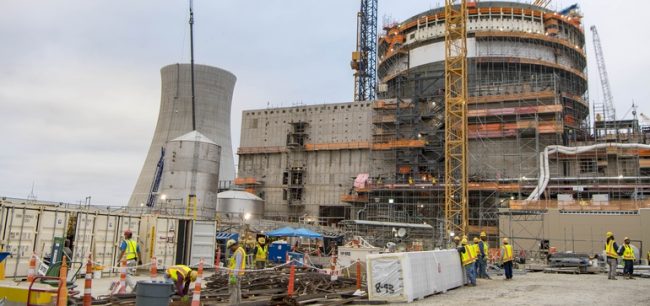
Delay in construction of Vogtle nuclear station – every day extra means additional costs to customers
|
Southern Company identifies ‘likely’ nuclear construction delay on Vogtle unit, Utility Dive, 22 Mar 21, Iulia Gheorghiu @IMGheorghiu
Dive Brief:
“Every day that that unit is delayed means additional cost burdens are going to get thrust on customers,” David Rogers, Southeast deputy regional director for Sierra Club’s Beyond Coal Campaign, said. “We could find cheaper, more effective ways to meet any needs that [Unit 3] fills by using things like wind, solar, storage, [and] energy efficiency.”……. https://www.utilitydive.com/news/southern-company-identifies-likely-nuclear-construction-delay-on-vogtle-u/597095/
|
|
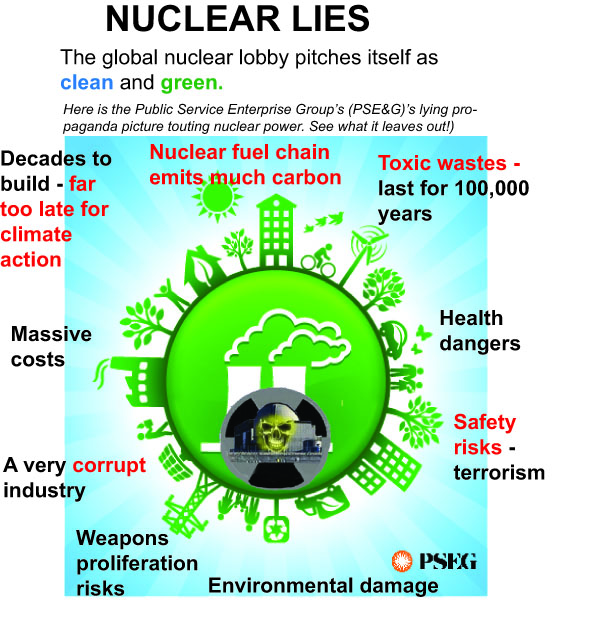
The nuclear lobby’s lying propaganda on the run up to COP Climate Conference
Ya gotta admire the global spread and relentless persistence of the nuclear industry at every level. Whether it be aimed ast schoolkids or heads of state, – the message is just such a lie – that nuclear power is ”essential to fight climate change’‘
Never mind that nuclear power is itself very vulnerable to climate change (over-heating, rising sea leveles, storm surges, water shortages……)
Anyway, today I was captivated by a charming, pretty, graphic, touted by the Public Service Enterprise Group, (PSE&G’) in an article extolling nuclear power, published by INSIDER NJ.
I just felt the need to make PSE&G’s picture honest.
With ”regulatory capture” of USA’s Nuclear Regulatory Commission, California’s got nuclear fuel buried 108 feet from the sea

Nuclear Fuel Buried 108 Feet From the Sea https://www.counterpunch.org/2021/03/19/nuclear-fuel-buried-108-feet-from-the-sea/, BY ROBERT HUNZIKER “The most toxic substance on Earth is separated from exposure to society by ½” of steel encased in a canister.” (Blanch)
That eye-opener comes from renowned nuclear expert Paul Blanch in reference to spent fuel rods removed from San Onofre Nuclear Generation Plant buried near the sea on California’s southern coastline 50 miles north of San Diego.
Seventy-three 20-foot tall canisters of highly toxic nuclear spent fuel rods are nestled underground within 108 feet of the Pacific Ocean and not far from Interstate 5 from which passersby catch a glimpse of 73 large rectangular lids poking above ground, thus sealing the most toxic substances on Earth ensconced in ½” dry casks. (Footnote: In contrast, German CASTOR V/19 ductile cast iron casks, with permanent integrated monitoring, are nearly two-feet thick)
What could possibly go wrong on the seashore?
At the outset of San Onofre’s plans for its 73 buried canisters, the Nuclear Regulatory Commission itself admitted: (1) the thin ½” stainless steel canisters could crack within 30 years (2) there’s no current technology to inspect, repair or replace cracked canisters (3) limited monitoring means leaks may not be detected soon enough. (Source: Sanonofresafety.org) It is not believed the foregoing has changed one iota.
Unfortunately, when it comes to nuclear risks, what can go wrong isn’t known until it actually goes wrong. Then, it’s too late. Which explains the contention of a professional group associated with publicwatchdogs.org that discussed issues of credibility and truthfulness of the US Nuclear Regulatory Commission at a public hearing on March 9th, 2021. More on that follows later.
The 73 San Onofre rectangular lids symbolize the final act of decommissioning San Onofre Nuclear Generating Station, remnants of 50 years of nuclear power. Nobody knows with any degree of certainty the consequences of highly toxic spent fuel rods buried within 108 feet of the ocean. Is it risky or not risky? Is it even possible to define the risk?
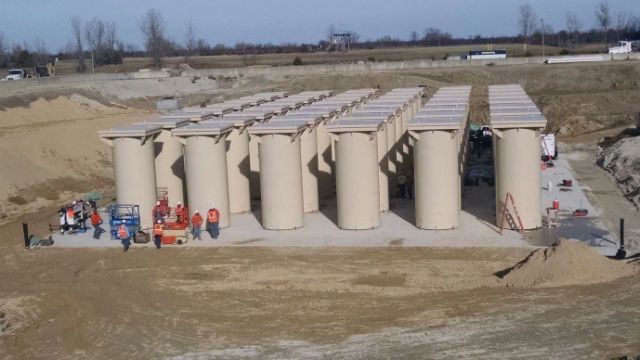
In truth, the risks of nuclear power cannot be adequately defined. Experience shows that the risk factors have no ceiling, no comparisons, no analogies, nothing similar, only disastrous results when things go wrong. More to the point, it’s a grand experiment of juggling the most potent substance on the planet. Like a hot potato, nobody knows what to do with it, other than bury it somewhere somehow that hopefully keeps it secure. Is a beachfront 108 feet off the ocean a good, secure location?
Still, given enough time, nuclear risks are defined via incidents, e.g., Fukushima, which exposed the consequences of failure of identifying nuclear risks. If it were otherwise, Fukushima would’ve been better prepared. They weren’t!
According to Prime Minister Naoto Kan /Japan, 2011: “We did not anticipate such a huge natural disaster could happen.” At the tensest moments, PM Kan was briefed on plans for complete evacuation of Tokyo, a horrific beyond belief event that came far too close for comfort! Nowadays, the former PM is an antinuke protestor.
It’s worth noting that Fukushima houses 10 nuclear reactors and 11 open pools of water containing spent fuel rods. If exposed to open air, spent fuel rods erupt into a sizzling zirconium fire followed by massive radiation bursts of the most toxic material known to humanity. It can upend an entire countryside and force evacuation of major cities, literally begging the impossible question of whether San Onofre’s remnants threaten all of Southern California?
Throughout America nuclear facilities contain open pools of spent fuel rods. According to the widely recognized nuclear expert Paul Blanch: “Continual storage in spent fuel pools is the most unsafe thing you could do.” Some spent fuel rods have been removed and stored in dry casks, but what if the dry casks are buried 108 feet from the Pacific Ocean? And, what of dry casks only ½” thick filled with radioactive spent fuel rods running a 500°F temp inside and 400°F on the canister’s exterior? By all appearances, it is an extremely lively affair!
That goes to the heart of questions posed at a recent Nuclear Regulatory Commission public hearing on March 9th. Thereupon, on behalf of the general public, three professionals drilled down into the procedures of the NRC whilst questioning its credibility. The bios of those three professionals:
Paul Blanch, registered professional engineer, US Navy Reactor Operator & Instructor with 55 years of experience with nuclear engineering and regulatory agencies, widely recognized as one of America’s leading experts on nuclear power.
Stuart H. Scott, founder and Executive Director of Facing Future, best known for bringing Greta Thunberg to the 2018 UN climate negotiations in Poland (COP-24) and for convincing Dr. James Hansen, the 32-year veteran Director of NASA’s Goddard Institute for Space Studies to COP-21, to attend Paris ’15.
Charles Langley, Executive Director of PublicWatchdogs.org, a public advocate with more than 25 years of experience in the field of energy law, energy policy, and utility rate setting.
 According to publicwatchdogs.org, the NRC is a “captive regulator” that accedes to nearly every request for regulatory relief for the nuclear power industry, as well as relaxation of safety rules and enforcement for the industry, in fact, following the command of industry insiders. But, when it comes to the general public, the NRC summarily rejects nearly every public petition aimed at strengthening the rules or following enforcement of existing rules. The petition process at the NRC is a one-sided affair that leaves the public out in the cold. From 1975- 2012 there were 387 petitions filed under provisions of the code, only two granted substantive relief, and one of those was from the nuclear industry. So, over 37 years there were, in actuality, more like a thousand petitions submitted by the public, and only one made it. It should be noted that rejections of petitions cannot be appealed.
On the other hand, when an industry player makes requests, according to Paul Blanch, working for a public utility, asking NRC for “a deviation from the rules” on a phone call got approved within one hour.
As it happens, the field of play with the NRC is lopsided. Industry players can ask any questions of NRC, but the public can only ask “process questions,” which does not lead to adequate answers, if any answers at all. Moreover, according to publicwatchdogs.org: “The NRC is providing inaccurate and false information to the public… At issue is the fact that the NRC is claiming that a flooding event at the SONGS (San Onofre Nuclear Generating Station) Independent Spent Fuel Storage Installation or ISFSI is ‘non-credible’.”
Really? Non-credible? What does that mean?
According to publicwatchdogs.org: “ISFSI is an Orwellian word used by the NRC to describe a toxic beachfront nuclear waste dump containing a spent nuclear fuel depot that is deadly radioactive for 250,000 years. The SONGS “ISFSI” is located 108 feet from the beach, in a tsunami inundation zone next to an earthquake fault line. It contains 73 thin-walled stainless steel cans weighing upwards of 100,000 pounds each. Each 20-foot high canister contains the same amount of Cesium-137 that was released into the atmosphere during the entire Chernobyl event. The cans themselves are only guaranteed to last for 25 years.”
What happens if a king tide, during full moon, or tsunami strikes and triggers a loss of cooling for the containers? Therefore, publicwatchdogs.org demanded the NRC provide a realistic flood analysis, with consequences spelled out. But, according to the petitioners, the NRC has never analyzed a loss of cooling of the 73 buried canisters. That fact alone is beyond comprehension. How could they not? Will they now?
Furthermore, nobody can explain what happens with ruptured casks. The San Onofre casks are filled with helium gas with natural conduction airflow surrounding each individual container, which are thin casks ½” thick.
In all, Public Watchdog’s research found that NRC misrepresented information. At the hearing, petitioners exposed inept Nuclear Regulatory Commission processes, responses, and a lack of credibility, claiming the NRC is merely a rubber stamp for the nuclear industry and not at all responsive to public queries.
The following is a condensed version of the issues brought forth on the virtual meeting with the Nuclear Regulatory Commission:
It should be noted that NRC rejected the group’s Oct 13th petition on the dubious grounds of the term “not credible.” Failure or leakage of the canisters, according to NRC, is “not credible.” But “not credible” is not defined anywhere in NRC documents. Of course, no answers came at the scheduled meeting.
An important pursuit at the hearing was exposure of deficiencies of the Holtec Umax spent fuel storage system at San Onofre, as well as exposing its use at other locations in the US. Not only that but a king tide could wash over the canisters, no tsunami needed. A few feet of water would be disastrous. Meanwhile, there are no contingency plans to remove flooded water from the canisters in an emergency. Which is insidiously irresponsible: “Each canister contains more radioactive cesium than released at Chernobyl, each of 73 canisters, plus there are over 3,000 in this country.” (Blanch)
The Holtec canisters provide a 1/2” to 5/8” barrier between the most toxic material in the world and a Chernobyl-size release of radiation. The canisters must be kept full of helium gas, welded shut, thus they can never be examined on the inside for cracks or leaks, and scandalously, not monitored for temperature, pressure, or radiation. But yet, the NRC says failure is “not credible.”
Was Chernobyl not credible?
Was Fukushima not credible?
Making matters worse, there’s no provision for drainage of water in the underground canisters. A king tidal wave could flood, and as water boils off, nobody would know what to do to save Southern California from some level of mass evacuation. Additionally, there are no provisions to refill the canisters with pressurized helium should pressure drop. These are obvious risks factors, plus: San Onofre is located within an inundation zone for tsunamis. It’s also close to Camp Pendleton, a legitimate enemy target.
“We regard the NRC’s preliminary decision to reject our petition as irresponsible and wrong and it places millions of people in Southern California at risk that is unquantifiable.” (Petitioners)
When NRC receives petitions, they can be rejected by an unspecified number of PRB members and the petitioner does not know if it’s only one member a minority a majority or whatever. No logical reasons are given for rejections of petitions and no supporting documentation.
The San Onofre canisters need to be removed and placed into thick-wall casks and transported to a new repository in New Mexico. “The biggest problem is the NRC failure to admit there is a problem.” (Blanch)
In the final analysis, the NRC abrogates its own mission statement, which is to license and regulate civilian use of radioactive materials to protect public health and safety to promote the common defense and security and protect the environment. Yet, by all appearances, the NRC is more akin to an emotionless Frankenstein monster that belittles detractors via evasion and disdain without any answers for credible questions. What a trip!
Robert Hunziker lives in Los Angeles and can be reached at rlhunziker@gmail.com
Georgia’s Vogtle nuclear station likely to again miss a deadline
Georgia Power now says Vogtle nuclear ‘likely’ to bust deadline, GEORGIA NEWS, March 20, 2021, By Matt Kempner, The Atlanta Journal-Constitution GEORGIA NEWS Company cites need for ‘remediation’ work to meet standards
Many other electric providers in Georgia, including municipal systems and electric co-ops, are also contractually tied to the Vogtle expansion.
The new reactors at Vogtle, located south of Augusta, have yet to generate electricity, but monthly bills for Georgia Power customers already include charges related to
If the project is further delayed, Georgia Power faces the prospect of a short-term cut in its government-allowed profits. Long term, though, higher costs on the project
Deb Haaland -new U.S. Secretary for Interior, – first Native American in a U.S. presidential cabinet
Democracy Now 17th March 2021, Deb Haaland, a tribal citizen of the Laguna Pueblo, is being sworn in as
secretary of the interior and will be the first Native American ever to
serve in a U.S. presidential cabinet. Just four Republicans joined
Democrats in voting to confirm Haaland, who will manage 500 million acres
of federal and tribal land.
Haaland will also oversee government relations
with 574 federally recognized tribal nations and is expected to address the
legacy of uranium mining on Indigenous land and other areas. Leona Morgan,
a Diné anti-nuclear activist and community organizer, says that while
it’s “impossible to expect one person to correct the centuries of
racism and policy that have really devastated our people,” there is hope
that Haaland will use her power to make important changes. “She will be
held accountable,” Morgan says.
https://www.democracynow.org/2021/3/17/deb_haaland_interior_secretary?s=09
Duane Arnold nuclear reactor, same type as Fukushima Daiichi, vulnerable to extreme weather
|
Fukushima 10 years later: It still could happen here https://thebulletin.org/2021/03/fukushima-10-years-later-it-still-could-happen-here/ By Edwin Lyman | March 11, 2021 On March 11, 2011, 10 years ago this week, a massive earthquake and tsunami flooding triggered a power blackout at the Fukushima Daiichi nuclear plant in Japan, causing three reactors to melt down and release massive amounts of radioactive material. Last summer, an aging nuclear reactor several miles outside of Cedar Rapids, Iowa came uncomfortably close to experiencing a similar fate. On August 10, a powerful storm called a derecho swept through the Midwest with wind gusts of up to 130 miles per hour, cutting off the external power supply to the Duane Arnold Energy Center, a General Electric reactor of the same type and vintage as the doomed Fukushima Daiichi units. A pandemic-weary nation didn’t pay much attention, but it should have. According to a preliminary Nuclear Regulatory Commission (NRC) analysis, this was the most serious US nuclear power plant incident in at least 18 years. Duane Arnold, which its owner, NextEra, had been planning to shut down at the end of October 2020 for economic reasons, was already in a vulnerable state. It was operating at only 80 percent of capacity because the primary containment had been overheating due to a cooling system leak, and there was a ruptured nuclear fuel element in the core. In addition, major pieces of safety equipment were out of service for maintenance. At 12:49 p.m. local time, Duane Arnold automatically shut down after the derecho took down all six power lines supplying the plant. The reactor’s two emergency diesel generators started up as expected. However, the nuclear fuel remained hot, and it took plant operators 14 hours of deft maneuvering to stabilize and cool down the reactor—a process that was not trouble-free. Operators violated technical restrictions several times, one of the two spent fuel pool cooling pumps blew a fuse, and a strainer that filtered potentially damaging debris from the cooling water supply to one of the diesel generators became clogged and had to be bypassed. Off-site power to the plant was not restored until nearly 24 hours after it was lost. Meanwhile, the destructive derecho had blown down the cooling towers that normally provide shutdown heat removal, punched a hole in the reactor’s secondary containment, and ripped large sections of siding from the turbine building. The storm also damaged one of two storage buildings containing emergency backup equipment that the NRC required all nuclear plants to acquire after Fukushima, rendering that equipment inoperable. Given all this damage, NextEra decided to scrap the plant then and there, rather than repair it for only another couple of months of operation. Although operators were able to compensate for all the problems and shut down Duane Arnold safely, the NRC estimates that there was at least a one-in-1,000 chance, on average, that the reactor could have experienced a meltdown. The NRC considers such high-risk events “significant” precursors to a severe accident. For example, if the reactor’s emergency diesel generators had failed, a station blackout similar to the Fukushima accident would have occurred. (The NRC risk estimate optimistically assumes a nearly 90 percent chance that personnel would have been able to save the plant even after a blackout, which workers had failed to accomplish three times over at Fukushima.) The NRC initially decided not to conduct a more intensive inquiry of Duane Arnold’s near-miss and its potential implications for other US reactors. John Hanna, an NRC analyst who dissented from this decision, wrote: “Some population of our commercial reactor fleet may have unacceptably high risk due to (weather-related) losses of off-site power coincident with a challenge to the ultimate heat sink. I am of the opinion that the Duane Arnold event is ‘telling us something,’ and I think we, as an agency, should listen.” In response to Hanna’s concerns, the agency did agree to undertake a review, which should be completed this month. Unfortunately, it is highly unlikely that the NRC will take action even if it finds other plants with similar risks, as the agency continues to maintain an “it can’t happen here” attitude. After Fukushima, the NRC ordered all nuclear plant owners to reassess their facilities’ vulnerability to natural disasters such as floods and earthquakes, and most found that their sites faced more severe hazards than they were required to withstand. Regardless, the NRC decided that it was unnecessary for owners to harden their plants’ defenses against these updated threats. Under the leadership of newly appointed chairman Christopher Hanson, the NRC should reverse course and require nuclear plants to thoroughly prepare not only for the known hazards they face today, but also for the potentially greater disasters that climate change will likely bring in the future. Otherwise, a US Fukushima-like disaster may be all but inevitable. |
|
Plutonium used at Japanese reactor will be glassed, stored at Savannah River Site
Plutonium used at Japanese reactor will be glassed, stored at Savannah River Site, Aiken Standard, By Colin Demarest cdemarest@aikenstandard.com, Mar 17, 2021
The National Nuclear Security Administration has decided a cache of plutonium sent from Japan years ago will be processed and disposed of for the foreseeable future at the Savannah River Site, a change of plans with local ramifications.
Up to 350 kilograms of stainless steel-clad plutonium from a Japanese reactor will be rid of using a slew of Savannah River Site facilities, tech and staff, recent federal documents show.
The Fast Critical Assembly fuel – already at the Savannah River Site – will be processed and dissolved at H-Canyon, a one-of-a-kind separations facility built in the 1950s. The material will then go to the tank farms, where millions of gallons of waste is stored.
After that, it will move to the Defense Waste Processing Facility, a mammoth plant that encases nuclear sludge in glass, making it safer to handle and stow long-term. The glass cylinders will ultimately go to an on-site storage building, where they will stay pending the availability of a dedicated depot, like Yucca Mountain in Nevada.
The entire endeavor will take years. And Japan is helping defray the cost.
The plutonium was previously slated to be handled and treated at the Savannah River Site and entombed at the Waste Isolation Pilot Plant in New Mexico, a repository resembling a salt mine. “Direct disposal of the FCA materials” at the Savannah River Site is a “sound option,” said SRS Watch Director Tom Clements, but it drums up some other questions……….. https://www.postandcourier.com/aikenstandard/news/savannah-river-site/plutonium-used-at-japanese-reactor-will-be-glassed-stored-at-savannah-river-site/article_b7b08e4c-8667-11eb-b8cd-8f0fb9c35316.html?fbclid=IwAR1s_w6jcU21h64HZ6z-tzb7uaWt4x-51ECsKd8E3bw6tvGacJn9_9gGmA8
Production of plutonium must cease, for the Nuclear Non Proliferation Treaty to work
 For the NPT to work, plutonium has to go https://thebulletin.org/2021/03/for-the-npt-to-work-plutonium-has-to-go/?utm_source=Newsletter&utm_medium=Email&utm_campaign=MondayNewsletter03152021&utm_content=NuclearRisk_NPTwork_03152021
By Victor Gilinsky, Henry Sokolski | March 15, 2021 The Nuclear Nonproliferation Treaty (NPT), whose tenth review conference is coming up in August, is in trouble, and not only because of the crescendo of complaints about the failure of the nuclear-armed states to implement nuclear disarmament. The treaty is threatened with irrelevancy because its controls have not kept up with the times. It was drafted over 50 years ago, when it was widely believed that nuclear energy represented the future and would soon take over the generation of electricity. Not surprisingly, countries put few treaty restrictions on access to technology or materials other than to impose international inspection, and even that was circumscribed. We now have a more realistic view of the dangers of access to fuels that are also nuclear explosives (plutonium and highly enriched uranium) and also of the limited economic utility of these fuels for powering reactors. If we want an effective NPT, we have to eliminate these dangerous materials from civilian nuclear power programs. Dealing with uranium enrichment is complicated because nuclear power plants use enriched uranium fuel, but that should not hold us back from eliminating the danger we can eliminate—plutonium.
As soon as one mentions reinterpreting what the NPT allows, the treaty’s “originalism” crowd immediately pronounces the notion a non-starter. But we already have essentially eliminated an entire article (Article V) of the NPT that covered a technology—“peaceful” nuclear explosives—subsequently deemed both too dangerous and with negligible economic promise. That is exactly the situation with plutonium-fueled nuclear power reactors.
Separated plutonium in national hands leaves too little safety margin against possible use in warheads. At the same time, there is no economic penalty for doing without it. It should not be permitted in commercial use in all member countries. Existing civil stocks, like Japan’s nine tons, should be put under International Atomic Energy Agency (IAEA) supervision until their owners can safely dispose of the material.
This may sound radical, especially given the drumbeat of the US Energy Department and nuclear industry propaganda about a new generation of “advanced reactors” under development, most of them plutonium-fueled. But it is nothing more than President Gerry Ford’s common sense proposal in his 1976 Nuclear Policy Statement. He said we should forego using plutonium until “the world community can effectively overcome the associated risks of proliferation.” We are nowhere within reach of such a condition.
The NPT’s laxity on plutonium stems from the widespread beliefs at the time it was negotiated in the 1960s. Nuclear power plants were then considered destined to take over electricity generation and were thus vital for powering national economies. The US Atomic Energy Commission estimated that “essentially all [US] generating capacity built in the 21st century would be nuclear.” Moreover, and this is key, the Atomic Energy Commission believed uranium was scarce. To stretch nuclear fuel supply, they believed it would be necessary to develop reactors that turned the 99 percent of non-fissionable uranium into plutonium and then use that as fuel—plutonium-fueled fast breeder reactors.
That became doctrine in nuclear bureaucracies throughout the world and the NPT was drawn up to facilitate that result. (Ironically, had the projections been fulfilled, and the world commercial channels been flooded with plutonium, the possibility of effective control would have vanished.) Given nuclear power’s then-imagined critical importance, it’s not surprising that the less advanced NPT signatories insisted on full access to nuclear technology, hence on Article IV of the NPT that famously states all members have “the inalienable right” to it.
It has since turned out that all of the “expert” thinking about plutonium-fueled fast breeder reactors taking over electricity production was wrong. Contrary to the projections of the 1960s, nuclear energy’s prospects are limited, uranium is not scarce, extracting plutonium from irradiated uranium fuel is hugely expensive, and the plutonium-fueled reactors are expensive to build, which eliminated the economic arguments for the so-called plutonium economy. This is now clear to all but messianic believers in nuclear energy.
But the vestiges of this technological archaism continue to animate national bureaucracies that deal with the NPT, including that of the US, and the IAEA, as well. Perhaps the most glaring examples of the residual attachment to plutonium is Japan, which accumulated an enormous stockpile of plutonium and China, which, like Japan, plans to open a large reprocessing plant to separate more for two large fast breeder reactors. The US Energy Department is planning an expensive fast reactor to test fuel (the Versatile Test Reactor) for a mythical future commercial generation of such reactors. These steps legitimate similar actions elsewhere and undermine effective nonproliferation controls.
With the diminished prospects of nuclear power, the amount of this plutonium-related activity is not going to be anything like what the nuclear community once projected. The essential point remains: Amounts of plutonium that are very small in commercial terms can be very large in military terms.
At a more fundamental level, the United States needs to speak clearly to dispel the myth—one that still grips some NPT member countries—that nuclear power is an essential technology without which a country cannot consider itself as advanced. To get into the details would take us too far afield. But, as an indication of current nuclear prospects, consider the collapse of the highly vaunted “nuclear renaissance” at the beginning of this century that was to lead to construction of dozens of plants in the United States. US nuclear operators filed license applications for 31 large units. They ultimately canceled all but two, and those two are years behind schedule and already double the original cost, which led the original contractor, once proud Westinghouse, to file for bankruptcy.
America’s utility sector has been consistent on this score: It is not going to build any additional large nuclear reactors and doesn’t extract plutonium from used nuclear fuel. This message presented at the 2021 NPT Review Conference would help clear the decks for an honest assessment of what is needed for protection against access to nuclear weapons. If plutonium and reprocessing (its separation technology) are generally permissible, and only barred when worries arise in special cases like Iran, the NPT will ultimately undo itself.
None of this is to suggest that the NPT members will be easily persuaded, or perhaps even persuaded at all, of the need to limit what is permissible under the treaty. The entrenched plutonium-fuel firms and laboratories, and their government backers, including those in the United States, will not easily let go of their subsidies. But we need to start.
Sudden death of defendant in Ohio nuclear corruption case
|
Lobbyist Neil Clark, Defendant In Ohio Nuclear Bailout Case, Found Dead At 67, WOSU
By ANDY CHOW-16 Mar, 21 Neil Clark, a longtime Ohio lobbyist indicted in a sweeping federal bribery investigation into the state’s nuclear bailout law, has been found dead in Florida……
The Naples, Fla. medical examiner says they are conducting an autopsy on the 67-year-old Clark, following a sheriff’s office report of a man found dead with a head wound and a gun on the premises……
Clark was one of several defendants charged with racketeering last year in connection with HB6, Ohio’s nuclear bailout law. Federal prosecutors say the $61 million bribery scheme funneled money from FirstEnergy companies to then-Ohio House Speaker Larry Householder, in exchange for securing a $1 billion bailout benefiting several plants owned by First Energy and its former subsidiaries.
Clark pleaded not guilty in August. Householder has also pleaded not guilty in the case. Two other defendants and the dark money group Generation Now, which prosecutors said was created and operated at Householder’s discretion, have entered guilty pleas….. https://radio.wosu.org/post/lobbyist-neil-clark-defendant-ohio-nuclear-bailout-case-found-dead-67#stream/0 |
Report alleges elevated cancer deaths in Monroe may be result of nuclear plant
Report alleges elevated cancer deaths in Monroe may be result of nuclear plant, Tyler Eagle-The Monroe News, 16 Mar 21,
A new report has found that Monroe County’s cancer mortality rate is significantly higher than that of the national average.
And the scientist behind it contends the driving force behind that statistic is DTE Energy’s Fermi 2 Nuclear Power Plant in Newport.
Epidemiologist and executive director of the Radiation and Health Project Joseph Mangano unveiled a report titled “Fermi 2 Nuclear Reactor and Rising Cancer Rates” Thursday afternoon during a virtual press conference.
Using mortality data collected by the Centers for Disease Control and Prevention, Mangano’s analysis found that cancer-related deaths in Monroe County were 14.3% higher than the national average.
“We have raised red flags — these are matters of concern,” Mangano said. “There are no other obvious reasons for such an unexpected change. …
“You wouldn’t think Monroe County is a (center) for cancer. It’s a suburban county.”
More:DTE Energy decries advocacy group’s report
The national average for cancer-related deaths nationally was about 150 deaths per 100,000, according to Mangano’s report. Monroe County’s most recent metric — which is from 2019 — was 170 per 100,000.
Prior to Fermi 2’s activation in 1985, Monroe County’s cancer death rate was 3% less the national average, according to Mangano. He said the elevated trend has continued to increase in the last ten years, resulting in the most recent and highest metric.
Mangano said elevated risk and mortality of cancer was present in all population groups, including those classified by gender, race and age.
His report shows that in Monroe County, 10 of the 11 most common cancers in the U.S. occurred at a significantly higher rate, including leukemia, brain and central nervous system and bronchus and lung cancers.
The report also indicates that cancer-related mortality among younger populations is also much higher than the national average.
According to the report, cancer-related deaths among those ages 0-24 occurred 40.2% more than the national average.
Among those ages 25-49, the rate was 49.2% above the U.S. average.
Mangano is calling for more research into the matter, saying the federal and state government have not done enough to examine nuclear plants’ impact on those who live near such sites.
“You don’t have to wait for a meltdown for nuclear reactor to harm people,” Mangano said. “Every single day, reactors release a mix of 100 or more (harmful) chemicals into the environment. It gets into people’s bodies through the food chain.”……….
Mangano also discussed a new initiative to collect donated baby teeth from Monroe County residents in an effort to investigate whether there are increased instances of in-body radioactive contamination.
Mangano said the Tooth Fairy Project will analyze collected specimens for Strontium-90, a harmful substance that is a byproduct of nuclear reaction.
The project will seek to collect 25-50 local specimens, he said………. https://www.monroenews.com/story/news/2021/03/11/study-elevated-cancer-deaths-monroe-may-result-nuclear-plant/4649665001/
-
Archives
- May 2026 (62)
- April 2026 (356)
- March 2026 (251)
- February 2026 (268)
- January 2026 (308)
- December 2025 (358)
- November 2025 (359)
- October 2025 (376)
- September 2025 (257)
- August 2025 (319)
- July 2025 (230)
- June 2025 (348)
-
Categories
- 1
- 1 NUCLEAR ISSUES
- business and costs
- climate change
- culture and arts
- ENERGY
- environment
- health
- history
- indigenous issues
- Legal
- marketing of nuclear
- media
- opposition to nuclear
- PERSONAL STORIES
- politics
- politics international
- Religion and ethics
- safety
- secrets,lies and civil liberties
- spinbuster
- technology
- Uranium
- wastes
- weapons and war
- Women
- 2 WORLD
- ACTION
- AFRICA
- Atrocities
- AUSTRALIA
- Christina's notes
- Christina's themes
- culture and arts
- Events
- Fuk 2022
- Fuk 2023
- Fukushima 2017
- Fukushima 2018
- fukushima 2019
- Fukushima 2020
- Fukushima 2021
- general
- global warming
- Humour (God we need it)
- Nuclear
- RARE EARTHS
- Reference
- resources – print
- Resources -audiovicual
- Weekly Newsletter
- World
- World Nuclear
- YouTube
-
RSS
Entries RSS
Comments RSS
 nuclear-news