Will Biden stay the course toward nuclear disarmament?

When President Joe Biden took office last year, a historic shift in U.S. nuclear policy seemed likely. Now, with ongoing threats from Russia and China, experts say moving away from nuclear weapons may be more difficult. CS Monitor, By Robert Burns Associated Press, 4 Jan 22,
Joe Biden’s arrival in the White House nearly a year ago seemed to herald a historic shift toward less U.S. reliance on nuclear weapons and possibly a shrinking of their numbers. Even an American “no first use” pledge – a promise to never again be the first to use a nuclear weapon – seemed possible.
The outlook will be clearer when the Biden administration completes its so-called nuclear posture review – an internal relook at the numbers, kinds, and purposes of weapons in the nuclear arsenal, as well as the policies that govern their potential use. The results could be made public as early as January.
The biggest unknown is how forcefully Mr. Biden will weigh in on these questions, based on White House calculations of the political risk. During his years as vice president, Mr. Biden talked of new directions in nuclear policy. But heightened concerns about China and Russia would seem to improve the political leverage of Republicans seeking to portray such change as a gift to nuclear adversaries.
Tom Z. Collina, policy director at Ploughshares Fund, an advocate for nuclear disarmament, says the China and Russia problems complicate the politics of Mr. Biden’s nuclear review but should not stop him from acting to reduce nuclear dangers.
“We do not want a new nuclear arms race with either nation and the only way to prevent that is with diplomacy,” Mr. Collina said. “We must remember the main lesson we learned in the Cold War with Russia – the only way to win an arms race is not to run.”………………………
The Pentagon has not publicly discussed details of the nuclear review, but the administration seems likely to keep the existing contours of the nuclear force – the traditional “triad” of sea-, air-, and land-based weapons, which critics call overkill. It also may embrace a $1 trillion-plus modernization of that force, which was launched by the Obama administration and continued by Mr. Trump.
It’s unclear whether Mr. Biden will approve any significant change in what is called “declaratory policy,” which states the purpose of nuclear weapons and the circumstances under which they might be used.
The Obama administration, with Mr. Biden as vice president, stated in 2010 that it would “only consider the use of nuclear weapons in extreme circumstances to defend the vital interests of the United States or its allies and partners.” It did not define “extreme circumstances.”
Eight years later, the Trump administration restated the Obama policy but got more specific. “Extreme circumstances could include significant non-nuclear strategic attacks. Significant non-nuclear strategic attacks include, but are not limited to, attacks on the U.S., allied, or partner civilian population or infrastructure, and attacks on U.S. or allied nuclear forces, their command and control, or warning and attack assessment capabilities.”…………… https://www.csmonitor.com/USA/Foreign-Policy/2022/0103/Will-Biden-stay-the-course-toward-nuclear-disarmament
Progress in nuclear waste cleanup at Idaho nuclear site
US close to ending buried nuke waste cleanup at Idaho site, KEITH RIDLER, Associated Press, Jan. 3, 2022,
BOISE, Idaho (AP) — A lengthy project to dig up and remove radioactive and hazardous waste buried for decades in unlined pits at a nuclear facility that sits atop a giant aquifer in eastern Idaho is nearly finished, U.S. officials said.
The U.S. Department of Energy said last week that it removed the final amount of specifically-targeted buried waste from a 97-acre (39-hectare) landfill at its 890-square-mile (2,300-square-kilometer) site that includes the Idaho National Laboratory.
The targeted radioactive waste included plutonium-contaminated filters, graphite molds, sludges containing solvents and oxidized uranium generated during nuclear weapons production work at the Rocky Flats Plant in Colorado. Some radioactive and hazardous remains in the Idaho landfill that will receive an earthen cover.
The waste from Rocky Flats was packaged in storage drums and boxes before being sent from 1954 to 1970 to the high-desert, sagebrush steppe of eastern Idaho where it was buried in unlined pits and trenches. The area lies about 50 miles (80 kilometers) west of the city of Idaho Falls.
The cleanup project, started in 2005, is named the Accelerated Retrieval Project and is one of about a dozen cleanup efforts of nuclear waste finished or ongoing at the Energy Department site.
The project involving the landfill is part of a 2008 agreement between the Energy Department and state officials that required the department to dig up and remove specific types and amounts of radioactive and hazardous material.
The agency said it removed about 13,500 cubic yards (10,300 cubic meters) of material — which is the equivalent of nearly 50,000 storage drums each containing 55 gallons (208 liters).
Most of the waste is being sent to the U.S. government’s Waste Isolation Pilot Plant in New Mexico for permanent disposal. Some waste will be sent to other off-site repositories that could be commercial or Energy Department sites.
The Energy Department said it is 18 months ahead of schedule in its cleanup of the landfill.
“The buried waste was the primary concern of our stakeholders since the beginning of the cleanup program,” Connie Flohr, manager of the Idaho Cleanup Project for the Energy Department’s Office of Environmental Management, said in a statement. “Completing exhumation early will allow us to get an earlier start on construction of the final cover.”……
The Lake Erie-sized Eastern Snake River Plain Aquifer supplies farms and cities in the region. A 2020 U.S. Geological Survey report said radioactive and chemical contamination in the aquifer had decreased or remained constant in recent years. It attributed the decreases to radioactive decay, changes in waste-disposal methods, cleanup efforts and dilution from water coming into the aquifer. https://www.nhregister.com/news/article/US-eyes-finish-of-buried-nuclear-waste-cleanup-at-16746645.php
Biden’s First Year Foreign Policy Record May Be Worse than Trump’s
In many ways, Biden has actually been worse than Trump, for example, in his expansion of Special Forces operations in Africa, his aggressive stance on war in Ukraine, and in his use of human rights as a weapon to try to rally public opinion against China and Russia.
Biden has also been more dishonest—as in Syria, for example, where Trump admitted that the U.S. military was there to control the oil, while Biden deceptively claimed they were there to help the Syrian people.
The next three years could be very dangerous if tensions between the U.S., Russia and China continue to escalate. Deteriorating domestic conditions—evident in skyrocketing inflation and a rising cost of living—may also lead to greater domestic unrest, which the Biden administration could try to circumvent by trying to mobilize people against a foreign enemy.
Biden’s First Year Foreign Policy Record May Be Worse than Trump’s Covert Action By Jeremy Kuzmarov – December 31, 2021 His administration has escalated dangerous conflicts with Russia and China while increasing the military budget, expanding deadly sanctions and sustaining forever wars.
AM endorsed Biden for president as a lesser evil to the neofascism of Donald J. Trump and the modern-day GOP. At the same time, we warned readers about Biden’s past and long record as a Cold Warrior and hawk.
Biden’s first year in office has shown that the past was indeed a prologue to the future.
Continue readingJapan to help build Bill Gates’ high-tech Natrium nuclear reactor in Wyoming
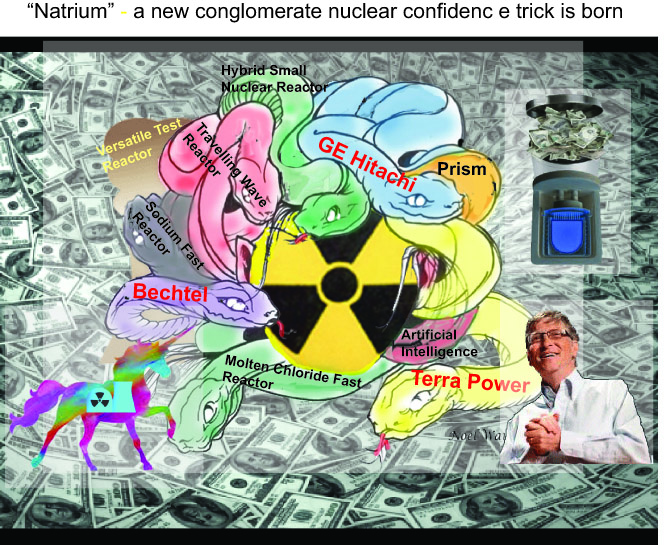
Japan to help build Bill Gates’ high-tech nuclear reactor in Wyoming -Yomiuri https://www.reuters.com/markets/commodities/japan-help-build-bill-gates-high-tech-nuclear-reactor-wyoming-yomiuri-2022-01-01/Reuters TOKYO. Reporting by Sakura Murakami; Editing by Kim Coghill- The Japan Atomic Energy Agency (JAEA) and Mitsubishi Heavy Industries Ltd (7011.T) are set to cooperate with the United States and Bill Gates’ venture company to build a high-tech nuclear reactor in Wyoming, the daily Yomiuri reported on Saturday.
The parties will sign an agreement as early as January for JAEA and Mitsubishi Heavy Industries to provide technical support and data from Japan’s own advanced reactors, the report said citing multiple unidentified sources.
TerraPower, an advanced nuclear power venture founded by Gates, is set to open its Natrium plant in Wyoming in 2028. The U.S. government will provide funding to cover half of the $4 billion project. read more
Terrapower had initially explored the prospect of building an experimental nuclear plant with state-owned China National Nuclear Corp, until it was forced to seek new partners after the administration of Donald Trump restricted nuclear deals with China.
The United States has been competing with China and Russia which also hope to build and export advanced reactors.
Japan, on the other hand, has a bitter history of decommissioning its Monju prototype advanced reactor in 2016, a project which cost $8.5 billion but provided little results and years of controversy.
The Monju facility saw accidents, regulatory breaches, and cover-ups since its conception, and was closed following public distrust of nuclear energy after the 2011 Fukushima nuclear disaster.
Both JAEA and Mitsubishi Heavy Industries could not be reached for comment, as their offices were closed for the New Year holidays.
Yucca Mountain remains in debate over nuclear waste storage

The Government Accountability Office report said most experts agree that building Yucca Mountain is neither socially nor politically viable
Yucca Mountain remains in debate over nuclear waste storage, By GARY MARTIN – Las Vegas Review-Journal, Jan 1, 2022
LAS VEGAS (AP) — Mounting opposition to proposed nuclear waste storage sites in Texas and New Mexico has kept Yucca Mountain in Nevada in the national debate over what to do with the growing stockpile of radioactive material scattered around the country.
The Biden administration is opposed to Yucca Mountain and announced plans this month to send waste to places where state, local and tribal governments agree to accept it. That stance is shared by Nevada elected officials, tribal leaders and business and environmental groups.
But until the 1987 Nuclear Waste Policy Act is changed by Congress, the proposed radioactive waste repository 90 miles north of Las Vegas remains the designated permanent storage site for spent fuel rods from commercial nuclear plants.
”That’s what worries me. Until you get a policy in place, it will always be something you have to watch,” U.S. Rep. Dina Titus, D-Nevada, told the Las Vegas Review-Journal.
An expert on atomic testing and American politics, Titus as a professor at the University of Nevada, Las Vegas wrote a 1986 book on Nevada’s nuclear past.
As an elected state and congressional lawmaker, she has opposed a permanent storage facility at Yucca Mountain.
Titus introduced legislation in past sessions of Congress that adopts recommendations by a 2012 Blue Ribbon Commission under the Obama administration to send the waste to states that want it.
Similar legislation has been filed in the Senate by Catherine Cortez Masto, D-Nevada, a former state attorney general who also has fought federal efforts to build a repository at Yucca Mountain.
The legislation has failed to pass, as lawmakers from both parties who represent states with nuclear power plants seek a quick solution to waste disposal.
“I’ve always fought misguided efforts to deposit nuclear waste in Nevada, and I’ll keep working with the Nevada delegation to pass my consent-based siting bill that would ensure these dangerous materials are never dumped on our state,” Cortez Masto said.
WASTES PILING UP
The Biden administration has since proposed to fund interim storage in light of the 30-year stalemate over Yucca Mountain, due to growing need to address stockpiles of radioactive waste at decommissioned and operating plants across the country.
As of 2019, about 86,000 metric tons of spent nuclear fuel was being stored at 119 sites, according to the Department of Energy.
There are about 95 power plants operating in 29 states, currently, generating 2,900 metric tons a year. And, there are 38 reactors in 30 states in various stages of decommissioning. The waste is stored in casks, a former Energy Department adviser, Robert Alvarez, told an Environmental and Energy Study Institute briefing last year.
The Government Accountability Office, the investigative arm of Congress, issued a report in September recommending storing the waste in places where local and state officials would agree to accept it. The reporting cited the dangerous characteristics of nuclear waste and need for safe disposal.
Energy Secretary Jen Granholm announced this month that the department was seeking recommendations from states, cities, industry officials and others on locations where officials were willing to accept spent fuel and materials.
The plan announced by Granholm is expected to take up to two years to research and determine costs.
The plan announced by the Department of Energy essentially restarts a process that began under the Obama administration with a recommendation from a Blue Ribbon Commission that suggested “consent-based siting” with local input as the most effective way to develop storage sites.
That did not occur in Nevada.
LONG HISTORY
Yucca Mountain was designated by Congress as the sole site for permanent storage in 1987 after other sites in Kansas, Tennessee and Utah were rejected. Since that time, more than $15 billion has been spent on research and exploration at Yucca Mountain.
Local opposition in Nevada, led by Democratic former Sen. Harry Reid and other state elected officials blocked development of the project, until President George W. Bush directed the Department of Energy to seek a construction license from the Nuclear Regulatory Commission.
The licensing process, however, was halted by President Barack Obama and by Reid, who as Senate majority leader pulled funding for the application. A federal court allowed funds already earmarked for licensing to continue to be spent.
President Donald Trump’s election brought a new push for licensing by Energy Secretary Rick Perry, who like Bush was a former Texas governor. Despite political opposition from former Nevada Republican Gov. Brian Sandoval and the entire state congressional delegation, the Trump administration pushed to develop Yucca Mountain.
Perry repeatedly told Congress that he was following the 1987 law as he moved forward on licensing for nuclear storage at the designated Yucca Mountain site.
But Trump later flip-flopped on Yucca Mountain as he sought re-election with Nevada a part of his campaign strategy.
After the election, the Biden administration budgeted funding for commercial operators to take control of some waste at interim sites.
ALTERNATIVES FACE OPPOSITION……………..
YUCCA NOT VIABLE
The Government Accountability Office report said most experts agree that building Yucca Mountain is neither socially nor politically viable……………https://www.coloradopolitics.com/yucca-mountain-remains-in-debate-over-nuclear-waste-storage/article_fbaf9e12-ea43-5bf1-82ab-c115bee4f770.html
Vermont nuclear decommissioning committee drafting advisory opinion on nuclear waste policy
Vermont nuclear decommissioning committee drafting advisory opinion on nuclear waste policy, WAMC Northeast Public Radio | By Pat Bradley December 31, 2021 The Department of Energy is taking suggestions on how to “site Federal facilities for the temporary, consolidated storage of spent nuclear fuel using a consent-based approach.” A committee of the Vermont Nuclear Decommissioning Citizens Advisory Panel is drafting an advisory opinion for the full panel to submit to the DOE.
At its latest meeting, Vermont Nuclear Waste Policy Committee Vice Chair Lissa Weinmann reviewed the status of the draft resolution that will be forwarded to the state’s full Nuclear Decommissioning Citizens Advisory Panel.
“The primary matter right now from what I can see with this language is that there’s a lot of concern that the Nuclear Waste Policy Act very explicitly outlines the requirement that a permanent repository be licensed before a consolidated interim storage facility be named or started,” Weinmann said. “So that is a point here. The DOE has asked for information regarding consent based siting for a consolidated interim storage facility.”
The Vermont Yankee Nuclear Power Plant, which began operating in 1972, shut down on December 29, 2014. According to the Nuclear Regulatory Commission all of the spent nuclear fuel was placed into dry cask storage. Decommissioning of the plant is expected to be completed by 2030.
Some committee members wondered if the national nuclear waste fund should be addressed in the state’s resolution. Citizens Awareness Network Vermont organizer Chris Williams raised concerns about references in the document to financing a waste repository.
“The nuclear waste fund was collected from ratepayers of record for the express purpose of building a repository,” Williams said. “To be without that money or operate without that cash in these times when we’re looking to build a repository would be very problematic. The language just doesn’t work for me.”……………
Advisory opinions on consent based siting must be submitted electronically to the Department of Energy by March 4, 2022. https://www.wamc.org/news/2021-12-31/vermont-nuclear-decommissioning-committee-drafting-advisory-opinion-on-nuclear-waste-policy
State of New Mexico demands federal investigation into Waste Isolation Pilot Plant (WIPP) and federal nuclear programs.
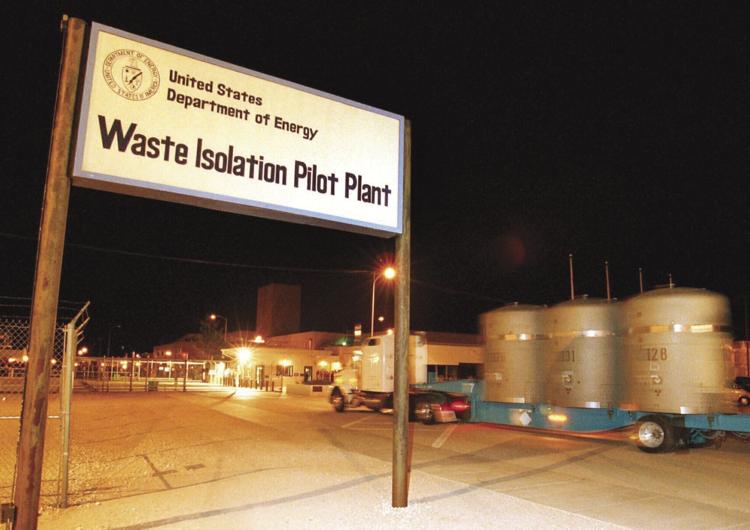
State of New Mexico demands feds investigate WIPP, federal nuclear programs
New Mexico Environment Department joins call from Congress for oversight, Adrian Hedden, Carlsbad Current-Argus , 31 Dec 21,
State concerned out-of-state waste prioritized over New Mexico’s
WIPP officials says waste shipments prioritized by availability
Congressional committee worried for ongoing “challenges” at DOE
Stronger oversight of the Waste Isolation Pilot Plant could be coming as the federal government was called on by New Mexico officials and members of Congress to address alleged problems with the U.S. Department of Energy’s environmental cleanup operations.
New Mexico Secretary of the Environment James Kenney expressed concerns for operations at WIPP in a letter to the federal Government Accountability Office (GAO), calling for the federal office to increase its oversight of the nuclear waste repository near Carlsbad.
Low-level transuranic (TRU) waste from around the country is disposed of at WIPP via burial in an underground salt deposit about 2,000 feet underground. It is owned and operated by the DOE and its Office of Environmental Management (EM) but is permitted and regulated by the New Mexico Environment Department (NMED) headed by Kenney.
In his Dec. 22 letter to the GAO, Kenney said the Office should review nuclear programs in New Mexico, including the prioritization of nuclear waste shipments to WIPP from facilities outside New Mexico.
He said first priority should be given to waste from Los Alamos National Laboratory (LANL) in northern New Mexico as the DOE intends to increase the production of plutonium pits.
“The WIPP is subject to an NMED operating permit and must adhere to the requirements of the permit in order to remain operable in New Mexico and in service to the nation,” Kenney wrote. “Yet, the DOE EM has entered into legally binding settlement agreements with states to prioritize waste shipments to WIPP at the expense of shipments from other states, including New Mexico.
“This is problematic for both the clean-up of legacy waste at LANL and new waste from pit production at LANL.”
Before the DOE entered into such agreements, as it had with the State of Idaho for cleanup at Idaho National Laboratory (INL) in 1995, Kenney said the agency should have first engaged with New Mexico stakeholders he said would bear the impacts of moving out-of-state nuclear waste into their state……………
“The practice of DOE EM solely managing waste shipments to WIPP from around the U.S. without first discussing with New Mexico stakeholders – including NMED as its regulator – now merits immediate congressional oversight,” Kenney wrote…………..
Kenney also voiced reservations about DOE officials allegedly seeking to “expand” the kinds of waste accepted at WIPP.
A recent DOE proposal sought to redefine high-level waste to consider the radiation level as opposed to the current method that considers where the waste was generated, potentially leading to more waste coming to WIPP, Kenney said.
Another concern, Kenney wrote, was a DOE-proposed “dilute and dispose” program that would see high-level plutonium processed to lower its radioactivity so it could meet WIPP requirements for TRU waste. https://www.currentargus.com/story/news/local/2021/12/30/state-new-mexico-demands-feds-investigate-wipp-doe-nuclear-programs/9034953002/
USA reclassifies nuclear waste, with new interpretation, making it easier to move to storage.
The Biden administration has affirmed a Trump administration
interpretation of high-level radioactive waste that is based on the
waste’s radioactivity rather than how it was produced.
The U.S. Department of Energy announcement last week means some radioactive waste
from nuclear weapons production stored in Idaho, Washington and South
Carolina could be reclassified and moved for permanent storage elsewhere.
“After extensive policy and legal assessment, DOE affirmed that the
interpretation is consistent with the law, guided by the best available
science and data, and that the views of members of the public and the
scientific community were considered in its adoption,” the agency said in
a statement to The Associated Press on Wednesday.
The policy has to do with nuclear waste generated from the reprocessing of spent nuclear fuel to
build nuclear bombs. Such waste previously has been characterized as high
level. The new interpretation applies to waste that includes such things as
sludge, slurry, liquid, debris and contaminated equipment. The agency said
making disposal decisions based on radioactivity characteristics rather
than how it became radioactive could allow the Energy Department to focus
on other high-priority cleanup projects, reduce how long radioactive waste
is stored at Energy Department facilities, and increase safety for workers,
communities and the environment. The department noted that the approach is
supported by the Blue Ribbon Commission on America’s Nuclear Future,
formed during the Obama administration.
The department identified three
sites where waste is being stored that will be affected by the new
interpretation.
ABC News 29th Dec 2021
https://abcnews.go.com/Health/wireStory/us-affirms-interpretation-high-level-nuclear-waste-81991323
The murky world of financing Small Nuclear Reactors (SMRs)

IKEA it ain’t: don’t go looking for friendly nuclear option, no matter the spin
MICHAEL WEST MEDIA, By Noel Wauchope|December 30, 2021
”……………..[Everyone] should be aware of the financial gymnastics going on in the USA, with NuScale, and in the UK, with Rolls-Royce. That’s just to single out the two most advanced of the many dubious SMR projects still at the starting gate.
The Murdoch media is enthusiastic about SMRs. Missing from the hype are a lot of unanswered questions. For a start — the ”M” stands for ”modular” — meaning that these reactors will be built in pieces, sort of, and transferred to a site, where they will be assembled, like a piece of IKEA furniture. But in fact there are at least 50 designs being promoted, and not all are modular.
The critical question comes down to – the money
The enthusiasm of the SMR lobby for the economic viability of SMRs is not matched by the facts.
For one thing to consider – there’s the price of the electricity to be eventually delivered by these small nuclear reactors. The Minerals Council of Australia estimates that by 2030 and beyond, SMRs could offer power to grids from $64-$77MWh, depending on size and type.
An analysis by WSP / Parsons Brinckerhoff, prepared for the 2015-16 South Australian Nuclear Fuel Cycle Royal Commission, estimated a cost of A$225 / MWh for a reactor based on the NuScale design, about three times higher than the MCA’s target range. CSIRO estimates SMR power costs at A$258-338 / MWh in 2020 and A$129-336 / MWh in 2030.
Then there are the costs of actually getting SMRs in the first place.
In Russia, China, France, and Argentina, the construction is done entirely or largely at taxpayers’ expense, and there is little or no transparency about the costs. But generally in the Western world, electricity production is supposed to be a commercially viable operation. In the context of promoting low -carbon technologies, SMRs are promoted as being cheaper than large ones. It is generally acceptable for the government to kick-start the process, with some funding, but with the understanding that the industry will become successful, profitable.
NuScale financing contortions
In the US, NuScale leads the pack. After its efforts to partner with Romania, UK, Canada and Jordan, NuScale has joined with a Utah-based utility consortium to develop what initially was proposed to be a power plant with 12 small reactors. The project, which is now forecast to cost $5.1 billion, has since been scaled back to six reactors, expected to start coming online in 2029. The Department of Energy (DOE) is to provide an annual supplement of about $130 million a year for a decade. However, that would be dependent upon annual renewals of the funding by Congress during that decade, which is a risk.
NuScale promises to deliver electricity at $55/MWh. UAMPS and NuScale have not explained the methodology used to develop this figure. Meanwhile PacifiCorp and Idaho Power have concluded that electricity from NuScale reactors would cost $94-$121/MWh.
Now NuScale is to go public by merging with what’s known as a special purpose acquisition company, or SPAC. The company, Spring Valley Acquisition Corporation, is already publicly traded. The new company named NuScale Power Corporation will list on the Nasdaq under the ticker symbol SMR. Their new SMR power plants will be called VOYGR, and NuScale will open centres at universities to promote technical training for them. The Department of Energy (DOE) will support these centres with funding, and NuScale will open centres at universities to promote technical training for them. DOE will support these centres with funding.
A SPAC is a type of shell company (shell companies being those not having actual business operations, just specific objectives, in this case, raising capital) The SPAC raises money from the public through initial public offerings, the sponsor getting 20% of the funds invested. Later private investments through public equity, or PIPES, can be added, often bought at a discount price by big institutions. The whole process is done relatively speedily, and with much less scrutiny than in usual mergers. US Securities and Exchange Commission Chair Gary Gensler wants to tighten regulations on SPACs:
Glitzy corporate presentation decks, hyped press releases and celebrity endorsements can balloon a SPAC’s equity well beyond a reasonable value long before proper disclosures are filed, Gensler said.
SPACs have had a chequered history — they enable the sponsors to avoid financial loss, even if the business fails, as many did, in the 1990s. Sixty-five per cent of deals completed in 2021 at a valuation above $1bn are trading below $10 — the price at which they were floated. All of the companies are trading below their stock market highs with some of them down by as much as 70%. Senator Elizabeth Warren and three other Democrats are investigating the imbalance between the financial results for the sponsors and banks versus the early investors.
Rolls-Royce still looking for money
The process of getting funding for the UK’s SMRs is equally tortuous. The government invested £18 million in November 2019, which delivered significant development of the initial design as part of Phase One of the project. At the beginning of November 2021, Rolls-Royce Holdings Plc raised 455 million pounds ($608 million) to fund the development of SMRs, with almost half of the financing coming from the U.K government Rolls-Royce Small Modular Reactor (SMR) business is a consortium, backed by BNF Resources and Exelon Generation. BNF Resources UK Limited is a subsidiary of BNF Capital Limited. Other members of the consortium are Assystem, Atkins, BAM Nuttall, Laing O’Rourke, National Nuclear Laboratory (NNL), Jacobs, The Welding Institute (TWI) and Nuclear AMRC, as well as Rolls-Royce. It’s not at all clear how much each group has put into the venture.
For the plan to have the planned £30 billion fleet of mini-nuclear power stations, the business will have to rely on UK taxpayers to help fund the construction of the first of the new designs. New government funding of £210 million announced on November 9 will take forward phase 2, over the next three years, of the so-called Low-Cost Nuclear project to further develop SMR design and take it through the regulatory processes to assess suitability of potential deployment in the UK. Exelon is contributing under an agreement from a year ago to find international markets. Rolls-Royce expects the first five SMR reactors to cost £2.2bn each, falling to £1.8bn for subsequent units.
Rolls-Royce will be seeking more investment for the project to help fund the building of actual SMRs.
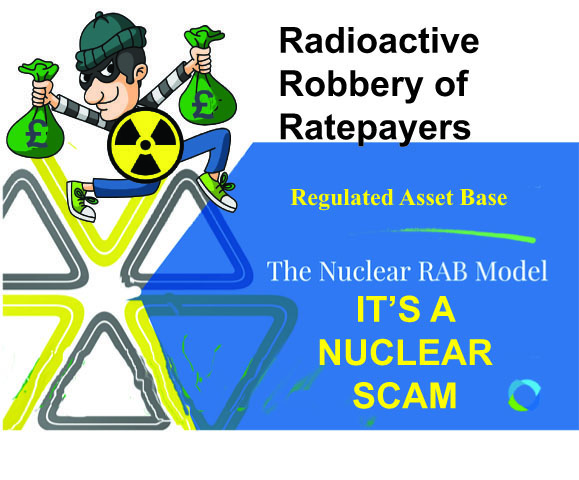
The government is currently passing legislation that will allow investors to back projects like SMRs using a regulated asset base (RAB) model, which allows them to recoup upfront costs from the consumers, over the construction period, long before those consumers actually get any electricity from the project.
Mythical beasts
So — what it all boils down to is an agreement to spend about £400 million over the next three years — to perhaps produce a design for a reactor, which might get approved by the regulators, and might find investors who might be willing to pay what will be at least £2 billion to build each one.
It’s not at all clear who is going to end up paying the most for small nuclear reactors, or indeed, if that fleet of SMRs will ever become a reality. It will probably be the taxpayers. I haven’t mentioned all those ancillary costs — of winning community approval, of security, waste disposal.
In the meantime, it’s worth being wary about the financial aspects, given the obscure manipulations going on in the US and UK, and remembering that not yet does one of these mythical beasts, Small Modular Nuclear Reactors actually exist.
Renewables remain the cheapest “new-build” source of energy generation. They exist. They work. https://www.michaelwest.com.au/ikea-it-aint-small-modular-nuclear-reactors/
.
Pentagon retains aircraft carrier, strike group in Mediterranean to confront Russia

US Keeps Carrier in Mediterranean Amid Russia Tensions The United States has ordered an aircraft carrier to remain in the Mediterranean in a bid to reassure European allies amid fears Russia…. Defense Secretary Lloyd Austin ordered the USS Harry S Truman aircraft carrier strike group to stay in the region and hold off on its […]
Pentagon retains aircraft carrier, strike group in Mediterranean to confront Russia — Anti-bellum
Canada to be the guinea pig for America’s probably unviable small nuclear reactor.

“There’s lots of enthusiasm among nuclear reactor designers, developers and national laboratories, and academic nuclear engineering departments” about SMRs, said Edwin Lyman, director of nuclear power safety at the Union of Concerned Scientists, who published a report on SMR reactor designs in early 2021. “
There’s a lot of supply but there’s not much demand, because utilities don’t want to be guinea pigs.”
cost escalation is practically inevitable.
Canada’s first new nuclear reactor in decades is an American design. Will it prompt a rethink of government support? The Globe and Mail, MATTHEW MCCLEARN, 26 Dec 21, Ontario Power Generation’s selection of GE Hitachi Nuclear Energy to help build a small modular reactor (SMR) at its Darlington station in Clarington, Ont., set in motion events that could shape Canada’s nuclear industry for decades to come.
OPG’s choice, announced in December, is the BWRX-300. It’s a light water reactor, the variety most popular in developed countries, and quite unlike Canada’s existing fleet of CANDU heavy water reactors. Though not exactly small – the BWRX’s 300-megawatt nameplate capacity is roughly equivalent to a large wind farm – it would produce only one-third as much electricity as traditional reactors. It would use different fuel, produce different wastes and possibly have different safety implications.
The Darlington SMR would be the first BWRX-300 ever constructed. By moving first, OPG hopes Ontario will become embedded in a global supply chain for these reactors.
“OPG ourselves, we don’t really get anything out of it – it’s a lot of work,” said Robin Manley, OPG’s vice-president of nuclear development. “Our goal is to have as many contracts signed with Canadian suppliers as we possibly can.” But that might not satisfy some critics, who’ve protested OPG’s selection of a U.S. design by GE Hitachi, which is based in North Carolina.
Ontario Power Generation chose GE Hitachi Nuclear Energy to build a light water reactor .
It does seem to confirm the end of Canada’s tradition of homegrown reactors. The BWRX-300 would be Canada’s first new reactor since Darlington Unit 4 in Ontario, completed in 1993. According to Mycle Schneider Consulting, the average age of the country’s 19 operational reactors is 38 years. Attempts to update the CANDU design proved largely fruitless; OPG and Bruce Power opted to refurbish reactors at Darlington and Bruce stations to operate another few decades, while sizing up SMRs as a possible next act.
Time is running short. This decade is widely regarded as crucial for building emissions-free generation capacity. SMRs will be late to that party even if this BWRX-300 is built on time. Delays and cost overruns, ever-present risks with any reactor, could kill its prospects.
The partnership with OPG represents a major coup for GE Hitachi, a U.S.-Japanese alliance that set up its SMR subsidiary in Canada less than a year ago. There are at least 50 SMR designs worldwide, but most exist only on paper; vendors compete vigorously to sell to experienced nuclear operators such as OPG because they represent an opportunity to build a bona fide reactor that might entice other clients. For the same reason, OPG’s decision is a blow to the losing candidates, Oakville, Ont.-based Terrestrial Energy Inc. and X-energy, an American vendor
“There’s lots of enthusiasm among nuclear reactor designers, developers and national laboratories, and academic nuclear engineering departments” about SMRs, said Edwin Lyman, director of nuclear power safety at the Union of Concerned Scientists, who published a report on SMR reactor designs in early 2021. “There’s a lot of supply but there’s not much demand, because utilities don’t want to be guinea pigs.”
Nuclear industry executives and government officials hope the Darlington SMR will be the first of many deployed in Ontario and beyond. SaskPower is also shopping; it has collaborated with OPG since 2017, and said the BWRX-300 is among its candidates. Canada has a small population, so observers doubt the country could support supply chains for multiple reactor designs.
But OPG’s selection of an American SMR has drawn some sharp criticism. Some observers assumed Terrestrial enjoyed a home turf advantage, particularly in light of the federal government’s decision to invest $20-million toward its Integral Molten Salt Reactor (IMSR). The Society of Professional Engineers and Associates, a union representing engineers and others working on CANDU reactors, complained that “priority should have been given to Canadian design.”
“It is a slap in the face for Terrestrial,” said M.V. Ramana, professor at the University of British Columbia’s Liu Institute for Global Issues. “It is not a good sign for Canada’s nuclear industry.”
Prof. Ramana added that OPG’s decision may prompt a rethinking of government support to SMR developers. In addition to Terrestrial’s funding, Moltex Energy received $50.5-million from the federal Strategic Innovation Fund and the Atlantic Canada Opportunities Agency to advance the Stable Salt Reactor-Wasteburner it is working on in New Brunswick. ARC Clean Energy received $20-million from New Brunswick’s government toward its ARC-100 reactor.
“If these companies are not able to persuade OPG, then maybe we should stop funding them,” he said…………………..
Unlike CANDUs, which consume unenriched uranium, light water reactors require fuel enriched to increase Uranium-235 content. Mr. Lyman said that by adopting any non-CANDU design, Canada will become dependent on enriched fuel imported from the U.S., Europe or elsewhere.
The industry would also need to learn how to dispose of unfamiliar wastes. The Nuclear Waste Management Organization (NWMO), which is in the final stages of selecting an underground storage site for Canada’s radioactive spent fuel, said spent BWRX-300 fuel would generate more heat and radioactivity than CANDU fuel, but could be stored in fewer containers, placed further apart.
“We will learn from our international partners who already have plans to permanently store this type of waste in a deep geological repository,” the NWMO said in a statement.
All this assumes OPG’s reactor gets built. To begin with, the BWRX-300 actually isn’t licensed to be built anywhere. GE Hitachi is participating in the Canadian Nuclear Safety Commission’s Vendor Design Review, through which it receives early feedback from the regulator on its reactor. ………
critics say completing the reactor by 2028 is a tall order. According to Mycle Schneider Consulting, one in eight reactors that have begun construction since 1951 were never connected to the grid. Many survivors, meanwhile, arrived years later than promised.
Mr. Manley said 2028 is “an aspirational goal” rather than a hard deadline. The project schedule will firm up over the next two years.
OPG has yet to publish a cost estimate, but according to a report published by PwC, the SMR project “is expected to spend $2-billion over seven years.” That’s already higher than the US$1-billion price tag GE Hitachi promised for a BWRX-300 in 2019. (In public presentations, GE executives declared that keeping the price below US$1-billion was crucial to its plans to exponentially grow its customer base.)……
Prof. Ramana said cost escalation is practically inevitable……….https://www.theglobeandmail.com/business/article-canadas-first-new-nuclear-reactor-in-decades-is-an-american-design/
America’s nuclear waste problem becoming more urgent, as the nuke lobby tries to ramp up the industry.
Waste Disposal Back In The Spotlight As America Ramps Up Nuclear Sector https://oilprice.com/Alternative-Energy/Nuclear-Power/Waste-Disposal-Back-In-The-Spotlight-As-America-Ramps-Up-Nuclear-Sector.html
By Felicity Bradstock – Dec 26, 2021,
- The United States is looking to ramp up its nuclear energy sector.
In September this year, the go-ahead was given for the construction of a dump in West Texas that will act as a disposal site for nuclear waste for around 40 years. - Though there are disposal sites for the short term, if the sector is set to grow, the U.S. will need to find long-term solutions, and fast.
For years the U.S. federal government has been saving to invest in a long-term nuclear waste disposal solution. But despite collecting the funds, no clear plan has been made. As we see certain states developing new nuclear projects it begs the question, where will the waste be dumped? At present, the U.S. government is sitting on a $44.3 billion fund for the construction of a nuclear waste disposal facility. Starting in the 1980s, the fund was aimed at finding a safe solution for the containment of the waste, but to date, nothing has been established. After suggesting three potential sites between 1982 and 1987 the government made plans to create a site in the Yucca Mountain in Nevada.
In the meantime, the U.S. created interim storage sites but failed to take action on a long-term solution. In 2002, President George W. Bush approved the Yucca Mountain site only for it to be rejected by Barack Obama, who cut funding for it in the 2010 budget. In 2014, a legal ruling stated that the government could no longer collect funding for the scheme, meaning the reserve has been sitting there collecting interest of around $1.4 billion a year and has started to be used for other purposes.
While there is no established disposal site, the government continues to pay utility companies to store their nuclear waste. The Nuclear Regulatory Commission (NRC) stated that the current storage solution, mainly dry casks on current and former nuclear plant sites, will be effective for around 100 years, until 2086.
| At the beginning of the nuclear era, the U.S. was criticized for dumping its nuclear waste in the sea, being the first country to do so in 1946. The US Environmental Protection Agency estimated that over 55,000 containers of radioactive waste were dumped across three sites in the Pacific over a period of 24 years. Although this practice stopped in 1970, eyes have been on America ever since to ensure it disposes of its energy waste safely and effectively. While some nuclear powers continue to dump their waste in the ocean to this day. The debate was raised again this month in Massachusetts as energy firm Holtec proposed a plan to dump nuclear waste, recovered during the decommissioning of the Pilgrim Nuclear Power Station, in Cape Cod Bay. Following wide-scale campaigning from concerned citizens and environmental organizations, the company eventually backtracked on its plans. But this raises questions around how nuclear companies plan to dispose of their waste without a viable long-term solution at the federal level. Diane Turco, Director of Cape Downwinders, stated, “Holtec’s decision-making process is motivated by profit, only. This was the cheapest, fastest way.” In September this year, the go-ahead was given for the construction of a dump in West Texas that will act as a disposal site for nuclear waste for around 40 years. A license was granted by the Nuclear Regulatory Commission for the building of a facility that can store up to 5,000 metric tonnes of nuclear fuel rods as well as 231 million tonnes of other radioactive waste. This comes despite clear opposition from the state. Earlier that month Gov. Greg Abbott signed a bill banning the storage and transportation of high-level nuclear waste through Texas, with environmental groups also fighting the project through legal action. Meanwhile, the government seems to have kept its eye on Yucca Mountain for a long-term solution, much to the dismay of local citizens. The Nevada Department of Environmental Protection (NDEP) has been steadfast in its opposition to the potential development. And the federal Department of Energy (DoE) has acknowledged the barriers to the project, requiring state authorization to increase the amount of waste entering the state. Even President Biden stated his opposition to the Nevada site development earlier this year. The various political administrations of the past 20 years have been back and forth with support and opposition for the Yucca Mountain disposal plan. As mentioned before, Congress cut funding for the development when it appeared no progress was being made. Despite the clear opposition, to date, the government has come up with no other site proposal. However, the DoE is now pushing for consent-based siting, starting with a request for information. It is approaching various state powers to understand their opposition to constructing a nuclear waste disposal site and asking for a volunteer state for the project. But with the controversial example of Nevada, it seems unlikely that any state will offer its land for this purpose. With plans for new nuclear projects – even Bill Gates is getting a piece of the action – the government is once again feeling the pressure to establish a viable long-term solution for nuclear waste disposal. And as the country moves away from fossil fuels towards cleaner alternatives interest in nuclear projects are increasing and the energy industry is expecting the government to act. |
USA is examining its ”nuclear declaratory policy”, while Biden considers how to reduce the role of nuclear weapons.
Nuclear declaratory policy examined as Biden eyes curbing nukes, By Ryohei Takagi, KYODO NEWS , 26 Dec 21, The United States is examining its “declaratory policy” on the use of nuclear arms under President Joe Biden’s commitment to seeking to reduce the role of such weaponry, the State Department’s top arms control official Bonnie Jenkins said recently.
Her remarks came as focus is increasing on whether the Biden administration will declare the “sole purpose” of U.S. nuclear forces is to deter or respond to nuclear attacks in its upcoming nuclear posture review, a guideline for American nuclear policy for the coming years………….
The U.S. nuclear declaratory policy has so far centered on what is known as “strategic ambiguity” regarding the exact circumstances that might lead to a nuclear response, though efforts have been seen in the past to offer clarification.
Former President Barack Obama, who pledged in 2009 to pursue a world free of nuclear weapons, considered adopting a “no first use” policy, which would mean limiting the U.S. use of nuclear weapons only in response to nuclear attacks on itself or allies.
But his administration gave up the idea in the face of objections from some allies including Japan.
The Financial Times reported early this month that U.S. officials have reassured allies in Europe and Asia that Biden, who was vice president during the Obama administration, will not adopt a “no first use” policy. The officials will provide the president with options for a “sole purpose” declaratory policy, the newspaper said.
The sole purpose posture could leave open the possibility of using nuclear weapons first, if it were the only way to preempt an imminent nuclear attack by a country such as North Korea, pundits say.
Still, it could demonstrate a more restrained approach toward the use of U.S. nuclear weapons compared with the 2018 nuclear posture review compiled under Biden’s predecessor Donald Trump. Under the former leader, the possibility remained nuclear weapons could be used not only against nuclear attacks but against “significant” non-nuclear attacks………………………… https://english.kyodonews.net/news/2021/12/3b69a0d35603-nuclear-declaratory-policy-examined-as-biden-eyes-curbing-nukes.html
Former Westinghouse CEO Danny Roderick now a government witness in South Carolina nuclear fraud case

Records: Ex-CEO won’t face charges in nuclear fraud case, https://apnews.com/article/business-south-carolina-efd7755944eb9f7adff588cc76313df8 December 22, 2021 The former top executive for the contractor hired to build two South Carolina nuclear reactors that were never finished won’t face criminal charges, new court documents show.
Former Westinghouse CEO Danny Roderick was previously a subject of the federal investigation into the failed multibillion project and is now a government witness, according to the records unsealed last week that were first reported by The Post and Courier.
The documents indicate Roderick could testify against his former employee Jeff Benjamin, a fired Westinghouse vice president who is facing multiple federal felony charges tied to the 2017 debacle that cost ratepayers and investors billions and left nearly 6,000 people jobless.
Westinghouse was the lead contractor in the project to build the reactors at the V.C. Summer site in Fairfield County. South Carolina Electric & Gas Co. parent company SCANA Corp. and state-owned utility company Santee Cooper spent nearly $10 billion on the project before halting construction in 2017 following Westinghouse’s bankruptcy.
In the aftermath, prosecutors have targeted top officials at the companies, saying they lied to investors, regulators and ratepayers as they sought rate hikes, insisting the expensive project was on schedule even as it fell hopelessly behind.
Three executives have already pleaded guilty in the multi-year federal fraud investigation so far. Benjamin, the fourth, has maintained his innocence and could go to trial next year. He could face up to 20 years in prison and a $5,000,000 fine if convicted.
Roderick gave the FBI incriminating information about Benjamin in two interviews earlier this year, prosecutors said in court filings. Roderick said Benjamin lied to him about the project schedule and had created a “culture of fear” with an “unbearable” management style.
The documents outlining Roderick’s cooperation are part an effort by prosecutors to disqualify Roderick’s previous attorney from representing Benjamin.
William Sullivan was representing both men at the same time when prosecutors first tried to get him removed last year, arguing it was a conflict of interest as either defendant might turn on the other. Roderick eventually obtained a new lawyer before sitting down with investigators.
Prosecutors still want Sullivan disqualified from the case, noting that Sullivan “cannot properly expect to cross-examine his own former client in defense of his current one,” they wrote.
Sullivan has produced documents showing that both Roderick and Benjamin have approved the arrangement.
Roderick “has explicitly acknowledged that he is unaware of any criminal culpability of Mr. Benjamin,” Sullivan wrote in an emailed statement to The Post and Courier.
Roderick’s new attorney, Whit Ellerman, declined to comment to the newspaper.
The nuclear project failure also spurred multiple lawsuits and a probe by state lawmakers.
1 This Month

4 May -West Suburban Peace Coalition to discuss Iran war at May Educational Forum
Monday, May 4, 7:00 – 8:00 PM Central Standard Time
Title: : How Trump’s Narrative Tries to Shape the Reality of the War on Iran.
Contact Walt Zlotow, zlotow@hotmail.com 630 442 3045 for further information
14 May – online event From Bombs to Data Centres: the Face of Nuclear Colonialism
To see nuclear-related stories in greater depth and intensity – go to https://nuclearinformation.wordpress.com
-
Archives
- May 2026 (37)
- April 2026 (356)
- March 2026 (251)
- February 2026 (268)
- January 2026 (308)
- December 2025 (358)
- November 2025 (359)
- October 2025 (376)
- September 2025 (257)
- August 2025 (319)
- July 2025 (230)
- June 2025 (348)
-
Categories
- 1
- 1 NUCLEAR ISSUES
- business and costs
- climate change
- culture and arts
- ENERGY
- environment
- health
- history
- indigenous issues
- Legal
- marketing of nuclear
- media
- opposition to nuclear
- PERSONAL STORIES
- politics
- politics international
- Religion and ethics
- safety
- secrets,lies and civil liberties
- spinbuster
- technology
- Uranium
- wastes
- weapons and war
- Women
- 2 WORLD
- ACTION
- AFRICA
- Atrocities
- AUSTRALIA
- Christina's notes
- Christina's themes
- culture and arts
- Events
- Fuk 2022
- Fuk 2023
- Fukushima 2017
- Fukushima 2018
- fukushima 2019
- Fukushima 2020
- Fukushima 2021
- general
- global warming
- Humour (God we need it)
- Nuclear
- RARE EARTHS
- Reference
- resources – print
- Resources -audiovicual
- Weekly Newsletter
- World
- World Nuclear
- YouTube
-
RSS
Entries RSS
Comments RSS
 nuclear-news