US Republican senators say they will not back Iran nuclear deal
US Republican senators say they will not back Iran nuclear deal, Aljazeera, 14 Mar 22,
Republican lawmakers oppose, but lack power to block, an agreement with Tehran sought by US President Joe Biden. Forty-nine of the 50 Republicans in the US Senate have announced they will not back a new nuclear deal between Iran and world powers, underscoring their party’s opposition to attempts to revive a 2015 accord amid fears multilateral nuclear talks might collapse.
In a statement on Monday, the Republican senators pledged to do everything in their power to reverse an agreement that does not “completely block” Iran’s ability to develop a nuclear weapon, constrain its ballistic missile programme and “confront Iran’s support for terrorism”
………………………. US lawmaker Rand Paul was the only Senate Republican who did not sign Monday’s statement. In an emailed statement, he said, “Condemning a deal that is not yet formulated is akin to condemning diplomacy itself, not a very thoughtful position.”
No congressional Republicans supported the 2015 nuclear agreement between Tehran and the so-called “P5+1” countries, the five permanent members of the UN Security Council – the US, UK, Russia, China and France – plus Germany. A handful of Democrats also objected.
US Deputy Secretary of State Wendy Sherman said during the weekend that Biden administration officials believe an agreement is near and “we would like all of the parties – including Russia, which has indicated it’s got some concerns – to bring this to close.”…………………………
The 2015 Iran Nuclear Agreement Review Act gives Congress the right to review an agreement, but lawmakers are unlikely to be able to kill a deal outright after failing to do so in 2015 when Republicans controlled Congress.
Democrats now hold slim majorities in both the House of Representatives and Senate and are unlikely to turn against Biden in sufficient numbers to stop a major initiative like an Iran deal.
Nevertheless, the Republican opposition ensures Congress cannot adopt any nuclear agreement with Iran as a permanent treaty, which requires a two-thirds vote in favour, rendering it vulnerable to abandonment by a future Republican president.
A spokesperson for Iran’s foreign ministry said on Monday that Washington needs to decide to wrap up a deal……… https://www.aljazeera.com/news/2022/3/14/us-republican-senators-say-they-will-not-back-new-iran-nuclear
The US And Ukraine Have Every Reason To Lie About The War

The US-centralized empire is censoring and propagandizing as though it is in a hot war with Russia currently. Officially the US and its allies are not at war, but the imperial narrative management machine is behaving as though we are. This makes sense because when two nuclear-armed powers are fighting for dominance and know a direct military confrontation can kill them both, other types of warfare are used instead, including propaganda campaigns and psychological warfare.
For this reason it is necessary to take everything claimed about what happens in Ukraine with a planet-sized grain of salt, whether it’s by Russia, Ukraine, or the US and its allies. Be very skeptical of anything you hear about chemical attacks or any other narrative that can be used to get military firepower moving in a way that it otherwise would not. All parties involved in this conflict have every reason in the world to lie about such things.
The US And Ukraine Have Every Reason To Lie About The War https://caitlinjohnstone.substack.com/p/the-us-and-ukraine-have-every-reason?s=w
| Caitlin JohnstoneThe Washington Post has a new article out titled “Intelligence points to heightened risk of Russian chemical attack in Ukraine, officials say,” and I challenge you to find me any Russian state media with two opening paragraphs that are more brazenly propagandistic and bereft of journalistic ethics than these: |
The United States and its allies have intelligence thatRussia may be preparing to use chemical weapons against Ukraine, U.S. and European officials saidFriday, as Moscow sought to invigorate its faltering military offensive through increasingly brutal assaults across multiple Ukrainian cities.
“Security officials and diplomats said the intelligence, which they declined to detail, pointed to possible preparations by Russia for deploying chemical munitions, and warned the Kremlin may seek to carry out a ‘false-flag’ attack that attempts to pin the blame on Ukrainians, or perhaps Western governments. The officials, like others quoted in this story, spoke on the condition of anonymity because of the sensitive nature of the matter.”
So Russia is preparing to stage a chemical attack, and also the Russian chemical attack might look like Ukrainians or western governments committing a chemical attack, and also the evidence for this is secret, and also the details are secret, and also the government officials advancing this claim are secret, and also Russia’s military offensive is faltering. Gotcha.
The third paragraph is even better:
“The accusations surfaced as Russia repeated claims that the United States and Ukraine were operating secret biological weapons labs in Eastern Europe — an allegation that the Biden administration dismissed as ‘total nonsense’ and ‘outright lies.’”
This paragraph is awesome in two different ways. First, it’s awesome because The Washington Post goes out of its way to inform readers that Russia’s claims have been dismissed as “total nonsense” and “outright lies” after having literally just reported completely unevidenced claims by anonymous government officials with no criticism or scrutiny of any kind. Secondly, it’s awesome because at no point during the rest of the article is any mention made of Victoria Nuland’s incendiary admission before the Senate Foreign Relations Committee that Ukraine has “biological research facilities” that the US is “quite concerned” might end up “falling into the hands of Russian forces”.
Over and over again throughout the article The Washington Post takes great care to inform readers that Russian claims about biological weapons are not to be trusted, with allegations from Moscow described as “unproven accusations” made with “no verifiable evidence“, “absurd and laughable“, “outrageous claims”, “utter nonsense”, “sinking to new depths” and “baseless“.
This, again, after uncritically reporting completely unsubstantiated allegations by government officials and sheltering them from any accountability by granting them the cover of anonymity. Unproven claims by the Russian government are laughable absurdities presented without evidence; unproven claims by the US government are just The News.
The Washington Post also refers to past Russian dismissals of alleged chemical weapons attacks in Syria as false flags used to frame Damascus, while of course making no mention of the mountains of evidence that this has indeed occurred. It also says the UN human rights office “has received ‘credible reports’ of Russia using cluster bombs” which “could constitute war crimes”, making no mention of the USA’s abundant use and sale of these same munitions.
Democracy Dies in Darkness.
The fact that this Russian false flag narrative is being shoved forward with so much propagandistic fervor, not just by The Washington Post but also by government officials and CIA media pundits, makes it all the more concerning that we’re seeing things like YouTube banning the denial of “well-documented violent events” involving Russia’s invasion of Ukraine. We could soon see a chemical weapons incident occur in Ukraine, after which Silicon Valley platforms ban all accounts who express skepticism of the official western narrative about what happened.
The US-centralized empire is censoring and propagandizing as though it is in a hot war with Russia currently. Officially the US and its allies are not at war, but the imperial narrative management machine is behaving as though we are. This makes sense because when two nuclear-armed powers are fighting for dominance and know a direct military confrontation can kill them both, other types of warfare are used instead, including propaganda campaigns and psychological warfare.
There is a widespread general understanding in the west that Russia stands everything to gain by lying about what happens on the ground in Ukraine and cannot be taken at its word about occurrences during this war. There is much less widespread understanding of the fact that both Ukraine and the United States stand everything to gain by lying about this war as well and cannot be trusted either.
The Washington Post’s own reporting says that behind the scenes western governments see Russian victory in this war as a foregone conclusion. Ukraine’s only chance at stopping Russia in the near term would be if it could persuade NATO powers to take a more direct role in combat, like setting up a no-fly zone as President Zelensky has persistently pleaded with them to do. One way to get around NATO’s rational resistance to directly attacking the military forces of a nuclear superpower would be to appeal to emotion via atrocity propaganda. By circulating a narrative that Russia has done something heinous which cries out to the heavens for vengeance, regardless of the risks entailed.
The United States would also benefit from circulating atrocity propaganda about Russia, in that it would further consolidate international support behind the agenda to economically strangle the nation to death in facilitation of the empire’s struggle for unipolar planetary hegemony. Even before the invasion the US was already pushing the narrative that Russia has a list of dissidents, journalists and “vulnerable populations such as religious and ethnic minorities and LGBTQI+ persons” who it plans on rounding up and torturing.
To be clear, it is not conjecture that the US and its proxies make use of atrocity propaganda. The infamous Nayirah testimony for example helped manufacture consent for the Gulf War when a 15 year-old girl who turned out to be a coached plant falsely told the US Congressional Human Rights Caucus that she’d witnessed Iraqi soldiers taking babies out of incubators in Kuwait and leaving them on the floor to die.
Atrocity propaganda has been in use for as long as war and media have coexisted, and it would be incredibly naive to believe it won’t continue to be. Especially by power structures with a known history of doing so.
For this reason it is necessary to take everything claimed about what happens in Ukraine with a planet-sized grain of salt, whether it’s by Russia, Ukraine, or the US and its allies. Be very skeptical of anything you hear about chemical attacks or any other narrative that can be used to get military firepower moving in a way that it otherwise would not. All parties involved in this conflict have every reason in the world to lie about such things.
Ukraine war fills Pentagon’s, NATO allies’ war chests
“Over multiple administrations, Democrat and Republican, we have tried to minimize friction with Putin and with Russia, in the hopes that it wouldn’t exacerbate a problem….And I feel like that era is over,” said Slotkin, a former Pentagon official. “I think it’s a sea change for how both the Defense Department and the State Department should think about our presence in Europe.”

[N]ow there is a unique moment of bipartisanship that will allow the Pentagon to request and receive just about anything it wants, Rep. Elissa Slotkin, D-Mich., said last week during a House Armed Services Committee hearing. Congress is poised to approve $14 billion for Ukraine aid this week, including nearly $5 billion for additional troops in Europe and replenishing U.S. weapons already sent to Ukraine. The House passed the package Wednesday and the Senate is expected to vote on the bill by Friday.
“Over multiple administrations, Democrat and Republican, we have tried to minimize friction with Putin and with Russia, in the hopes that it wouldn’t exacerbate a problem….And I feel like that era is over,” said Slotkin, a former Pentagon official. “I think it’s a sea change for how both the Defense Department and the State Department should think about our presence in Europe.”
Ukraine war fills Pentagon’s, NATO allies’ war chests https://wordpress.com/read/feeds/113283937/posts/3880404511, Rick Rozoff, Anti-bellum
Stars and Stripes, March 10, 2022,
Congressional support for larger defense budget grows amid Ukraine invasion The changing security landscape in Eastern Europe will “no doubt” increase next year’s defense budget, Rep. Adam Smith, D-Wash., chairman of the House Armed Services Committee, said at an event last week. Other Capitol Hill lawmakers say they are also prepared to funnel more money to the Pentagon as the U.S. rethinks its national security and defense posture.
“President [Joe] Biden needs to put a serious budget proposal forward to confront the real threats we face,” Sen. Kevin Cramer, R-N.D., said in a statement. “Russia is just one reason why defense spending needs to be higher. China and other nations are watching the seriousness and resolve of freedom-loving nations.”
Russia’s unprovoked attack on Ukraine has prompted other NATO countries to pledge additional funding for their armed services.
In a reversal of decades of post-Cold War policy, Germany’s Chancellor Olaf Scholz said last month that his country would embark on a $110 billion rearming program. Poland announced last week that it will raise its spending on defense from 2% to 3% of the country’s gross domestic product. Leaders of France, Italy, Latvia and Romania have all vowed in recent days to boost their commitment to defense.
U.S. lawmakers authorized nearly $778 billion for defense spending for the 2022 fiscal year – $25 billion more than requested by the White House. The Biden administration has yet to submit its budget request for fiscal year 2023, which starts Oct. 1, but Smith said last week that the eventual spending plan will be “the most impactful and important budget that we’ve seen in the 25 years I’ve been in Congress.”
Sen. Jim Inhofe of Oklahoma, the top Republican on the Senate Armed Services Committee, said he wants to see defense expenditures grow by at least 3% to 5%, adjusted for inflation….
[N]ow there is a unique moment of bipartisanship that will allow the Pentagon to request and receive just about anything it wants, Rep. Elissa Slotkin, D-Mich., said last week during a House Armed Services Committee hearing. Congress is poised to approve $14 billion for Ukraine aid this week, including nearly $5 billion for additional troops in Europe and replenishing U.S. weapons already sent to Ukraine. The House passed the package Wednesday and the Senate is expected to vote on the bill by Friday.
“Over multiple administrations, Democrat and Republican, we have tried to minimize friction with Putin and with Russia, in the hopes that it wouldn’t exacerbate a problem….And I feel like that era is over,” said Slotkin, a former Pentagon official. “I think it’s a sea change for how both the Defense Department and the State Department should think about our presence in Europe.”
USA cheers Ukrainian fighters on, makes sure to keep Americans out of it.
US Policy: Cheer Ukrainians On – and Keep Us Out! Anti War.com by Patrick J. Buchanan March 08, 2022
After Friday’s NATO summit refused to establish a no-fly zone over Ukraine, President Volodymyr Zelensky said the allies’ failure to “close the skies” to Russian military aircraft gives “a green light for further bombing of Ukrainian cities.”
“All the people who will die starting from this day will … die because of you,” said Zelensky to NATO, “because of your weakness.”
Zelensky’s indictment of NATO for cowardice came after NATO Secretary General Jens Stoltenberg ruled out a no-fly zone:
“NATO is not party to the conflict. NATO is a defensive alliance. … We don’t seek war, conflict with Russia. … We should not have NATO planes operating over Ukrainian airspace or NATO troops on Ukrainian territory.”
Secretary of State Antony Blinken echoed Stoltenberg:
“Ours is a defensive alliance. We seek no conflict. … President Biden has been clear that we are not going to get into a war with Russia.”
Sunday, Blinken expanded:
President Joe Biden has “a responsibility to not get us into a direct conflict, a direct war with Russia, a nuclear power, and risk a war that expands even beyond Ukraine to Europe. … What we’re trying to do is end this war in Ukraine, not start a larger one.”
U.S. policy in summary: Ukrainians should keep fighting and dying, killing Russians, while we stay out – and cheer them on.
In the greatest European military crisis since NATO was founded, U.S. actions and inaction speak louder than its words.
Simply put, establishing a no-fly zone over Ukraine would entail U.S. planes and pilots shooting down Russia’s planes and pilots. This would mean war between Russia and America. Given Russian military doctrine, such a war could swiftly escalate to the use of tactical nuclear weapons.
Bottom line: We are not willing to risk war with Russia over Ukraine, as that nation of 44 million is not a vital interest nor a member of NATO.
We will not establish a no-fly zone over Ukraine, as that would mean war with Russia. But had Russia attacked Estonia, not Ukraine, we would be at war with Russia, because Estonia is a member of NATO……………….
Russian President Vladimir Putin has been clear and convincing.
Any attempt to establish a no-fly zone over Ukraine will be treated as an act of war. And Russia reserves the right to attack any nation whose planes are enforcing this no-fly zone.
As for the transfer from former Warsaw Pact countries like Poland of older MiGs to Ukraine, for use against Russian troops, says Putin, this would be an act of war, and Russia would retaliate against the nations putting the MiGs into the fight.
Biden also met last week with President Sauli Niinisto of Finland, a neutral nation that shares an 833-mile border with Russia. Niinisto may be considering membership in NATO.
Yet, this presents problems, among them the warning Friday from the Russian Foreign Ministry’s Maria Zakharova:
“We regard the Finnish government’s commitment to a military non-alignment policy as an important factor in ensuring security and stability in northern Europe. … Finland’s accession to NATO would have serious military and political repercussions.”……………….
Did Ukraine’s trolling for membership in NATO trigger Putin’s war?
Friday’s Wall Street Journal writes:
“The Russian invasion of Ukraine resulted from two immense strategic blunders, (Russian historian) Robert Service says. The first came on Nov. 10, when the U.S. and Ukraine signed a Charter on Strategic Partnership, which asserted America’s support for Kyiv’s right to pursue membership in the North Atlantic Treaty Organization. The pact made it likelier than ever that Ukraine would eventually join NATO – an intolerable prospect for Vladimir Putin. ‘It was the last straw,’ Mr. Service says. Preparations immediately began for Russia’s so-called special military operation in Ukraine.”
An alliance established to prevent war may have just ignited one. https://original.antiwar.com/buchanan/2022/03/07/us-policy-cheer-ukrainians-on-and-keep-us-out/
Ukraine is a sacrificial pawn on the imperial chessboard.
 | |||


No meaningful diplomatic effort is being made by Washington to end the violence. Ukrainian lives are being spent like pennies to facilitate the agenda of US planetary domination by whipping up international support for the strangulation of Russia while pouring vast fortunes into the military-industrial complex rather than taking even the tiniest step toward de-escalation, diplomacy and detente.
Ukraine Is A Sacrificial Pawn On The Imperial Chessboard, https://caitlinjohnstone.com/2022/03/06/ukraine-is-a-sacrificial-pawn-on-the-imperial-chessboard/ Caitlin Johnstone, The war is not going well for Kyiv, and it would be unreasonable to expect that to change. As a vastly superior military force overwhelms the US client state, reality is in the process of crashing down hard in the face of western liberals who bought into the war propaganda that the brave, sexy comedian was leading an upset victory to kick Putin’s ass out of Ukraine.
Zelensky is now raging at NATO powers for refusing to intervene militarily against Russia, apparently having previously been given the impression that the US-centralized empire might risk its very existence defending its dear friends the Ukrainians from an invasion.
“Unfortunately, today there is a complete impression that it is time to give a funeral repast for something else: security guarantees and promises, determination of alliances, values that seem to be dead for someone,” Zelensky said Friday.
“All the people who will die starting from this day will also die because of you,” Ukraine’s president added. “Because of your weakness, because of your disunity.”
It must be hard, the process of learning that you were never actually a valued partner in western civilization’s fight for freedom and democracy. That you were always just one more sacrificial pawn on the imperial chessboard.
In a new article titled “U.S. and allies quietly prepare for a Ukrainian government-in-exile and a long insurgency“, The Washington Post reports that US officials anticipate Russia will reverse its early losses and successfully drive the Zelensky regime out of the country, after which “a long, bloody insurgency” is planned against the invaders backed by billions of dollars in US funding.
The US has a history of working to draw Moscow into gruelling, costly military quagmires which monopolize its military firepower while leaching it of blood and treasure. Jimmy Carter’s National Security Advisor Zbigniew Brzezinski, author of US hegemonic manifesto The Grand Chessboard: American Primacy and Its Geostrategic Imperatives, openly bragged about having lured Russia into its own Vietnam fighting the US-backed mujahideen in Afghanistan for a decade.
Just two years ago then-US Special Representative for Syria engagement said during a video event hosted by the Hudson Institute that his job was to make Syria “a quagmire for the Russians”.
So this isn’t something new or out of the blue, and what it means is that all the self-righteous posturing by the western political/media class about the need to pour weapons into Ukraine is not really about saving Ukrainian lives (only negotiating a ceasefire can do that), but about seizing this golden opportunity to hurt Russia’s geostrategic interests as much as possible. Ukraine on its own is powerless to stop Russia from taking Kyiv no matter how many weapons are sent, but those weapons can be used to fight a “long, bloody insurgency” after that happens which costs many more lives, keeps Moscow militarily preoccupied and hemorrhaging money, and ultimately hurts Putin’s popularity at home.
This by itself would do a great deal to advance US interests, but on top of that you’ve got the even greater benefit of manufacturing international consent for unprecedented acts of economic warfare against the entire nation of Russia, as well as killing Nord Stream 2 and rallying immense support for NATO and the imperial military/intelligence machine. The western world is now a united front against the Sauron-like menace of Vladimir Putin in much the same way it united against the threat of global terrorism after 9/11, and we’re probably only seeing the beginnings of the agendas this will be used to roll out.
We can expect these agendas to be used in an attempt to impoverish, undermine, agitate, and ultimately collapse and balkanize Russia, as the CIA and Washington swamp monsters have wanted to do since the fall of the Soviet Union.
This would leave China standing alone without its nuclear superpower guard bear and much more vulnerable to imperial operations geared toward thwarting the emergence of a true multipolar world, a goal US imperialists have had in writing for three decades.
That’s a whole lot of potential benefit to the US empire just for losing Ukraine. Kind of like sacrificing a pawn to get the queen in chess.
I think a big part of why I and others wrongly underestimated the likelihood of a full-scale invasion of Ukraine was that the cost-to-benefit math never made sense; on paper Moscow stands so much more to lose by this action in the long term than it stood to gain. There was also a bit of an assumption that the empire would rather Russia not take Ukraine, preferring to gradually encroach with NATO salami slicing tactics than give up a useful client state on Russia’s border, and would adjust its actions accordingly.
But chess is all about out-maneuvering your opponent to leave them nothing but bad options to choose from, and in the end leaving the king with no safe moves. The drivers of empire would have known that, as the late Justin Raimondo explained all the way back in 2014 for Antiwar, Putin could not afford to lose Ukraine to the west without losing crucial support in Russia. Combine that with increased attacks on Donbas separatists and the west’s adamant refusal to make even the most meaningless concessions like guaranteeing they wouldn’t add a nation to NATO who they had no intention of adding anyway, and you can understand if not support Putin’s drastic course of action.
No meaningful diplomatic effort is being made by Washington to end the violence. Ukrainian lives are being spent like pennies to facilitate the agenda of US planetary domination by whipping up international support for the strangulation of Russia while pouring vast fortunes into the military-industrial complex rather than taking even the tiniest step toward de-escalation, diplomacy and detente.
And it’s entirely possible that this was all planned years in advance.
Is it a coincidence that before this started we were bombarded with shrieking anti-Russia narratives for five years, all of which were initiated by secretive and unaccountable intelligence agencies and none of which have ever been substantiated with hard evidence? The discredited conspiracy theories that there was a Kremlin asset in the Oval Office had nothing to do with Ukraine. Neither did the plot hole–riddled and still completely unproven claim that Russian hackers intervened in the US election, or the baseless claim that St Petersburg trolls did the same. Neither did the claim that Russia was paying Taliban-linked fighters to kill US troops in Afghanistan, which was eventually walked back by the same intelligence cartel that made it.
All these hysterical anti-Russia narratives were shoved in everyone’s face day after day, year after year, with nothing really uniting them apart from the fact that they drove up general anxiety about Russia and that they were initiated by the US intelligence cartel. Even the empty Ukrainegate scandal which led to Trump’s unsuccessful impeachment was initiated by a CIA officer who just happened to be in the right place at the right time.
And while all those shrill narratives about a Putin puppet serving as America’s commander-in-chief were being aggressively hammered into public consciousness, Trump’s actual policies toward Moscow were extremely hawkish and aggressive. Beneath the narratives about Kremlin servitude, a new cold war was being dangerously escalated.
And now, lubricated years in advance by these mass-scale anti-Russia narratives, I’ve got western liberals in my social media notifications with blue and yellow profile pictures calling me a Russian propagandist and a Kremlin shill all day, every day. Because of that mass-scale propaganda campaign, we were paced to this point all the way from where we were at a few years ago when Obama was mocking Mitt Romney for his then-outlandish Russia hawkishness.
So we’re looking at increasingly aggressive confrontations between the US power alliance and the China-Russia bloc for the foreseeable future in a struggle which has already erupted in hot war and could easily get infinitely worse. All because a few manipulators in high places convinced the US establishment that global unipolar domination would be a good thing. Many of these unipolarist empire architects were involved in the murderous and influential Project for a New American Century (PNAC), whose founding members are now providing expert punditry on what should be done about the war in Ukraine.
Michael Parenti saw this all coming long ago:
The PNAC plan envisions a strategic confrontation with China, and a still greater permanent military presence in every corner of the world. The objective is not just power for its own sake but power to control the world’s natural resources and markets, power to privatize and deregulate the economies of every nation in the world, and power to hoist upon the backs of peoples everywhere — including North America — the blessings of an untrammeled global “free market.” The end goal is to ensure not merely the supremacy of global capitalism as such, but the supremacy of American global capitalism by preventing the emergence of any other potentially competing superpower.
We should not have to live this way. We should not have to see the horrors of war inflicted upon humanity with the risk of total nuclear annihilation hanging over our heads every minute of every day, all for some dopey grand chessboard maneuverings of a few sociopaths who can’t just let humanity be.
There is no good reason why nations cannot simply collaborate with each other for everyone’s benefit. There is no good reason we should accept these omnicidal games of planetary conquest as inevitable, normal, or fine. If our minds weren’t so pervasively locked down by mass-scale psychological manipulation, there is no way we would stand for this madness.
I don’t know if the US will succeed in this grand strategic confrontation to prevent the rise of a multipolar world. From where I’m sitting it depends on which side of the conflict has more tricks up their sleeve, and that could easily be the emerging China-centralized alliance of which Russia is a key player. But I do think it’s far too early for anyone to declare that the US-led world order is over and a true multipolar world has solidified.
There are many moves on the chessboard still to be played.
USA nuclear industry affected by shortage of enriched uranium, due to sanctions on Russia
As economic sanctions pile up on Russia, there’s growing concern that
export restrictions on the world’s top supplier of nuclear fuel has the
potential to disrupt the U.S. power industry. Russia produces about 35% of
the world’s enriched uranium for reactors, about twice as much as the No.
2 provider, and supplies about 20% of the U.S. industry, according to UxC
LLC, a nuclear industry researcher.
Bloomberg 3rd March 2022
How the Narcotic of Defense Spending Undermines a Sensible Grand Strategy,

MARCH 2, 2022, How the Narcotic of Defense Spending Undermines a Sensible Grand Strategy, CounterPunch, BY FRANKLIN SPINNEY The Military-Industrial-Congressional-Complex’s (MICC) grand-strategic chickens are coming home to roost big time. While war is bad, the Russo-Ukrainian War has the champagne corks quietly popping in the Pentagon, on K Street, in the defense industry, and throughout the halls of Congress. Taxpayers are going to be paying for their party for a long time.
It is no accident that the United States is on the cusp of the Second Cold War.
Future historians may well view the last 30 years as a case study in the institutional survival of the American Military – Industrial – Congressional Complex (MICC), together with its supporting blob now saturating the media, think tanks, academia, and the intelligence community. Perhaps, these future historians will come also to view the Global War on Terror (GWOT) as the bridging operation that greased the transition to Cold War II by keeping defense budgets at Cold War levels after Cold War I ended. Also, 9-11 may have re-acclimated the American people to the climate of fear now needed to sustain Cold War II for the remainder of the 21st Century.
The First Cold War’s 40-year climate of fear was something Mikhail Gorbachev tried to end. But Presidents Clinton and Bush (the 2nd) were busy planting the seed money for a new generation of cold-war inspired weapons. These weapons required massive future defense budgets that would require a climate of fear to sustain (especially for the across-the-board nuclear modernization program). President Obama then locked in these programs, and won a Nobel Peace Prize to boot. President Trump and the Dems in Congress worked overtime to ice the Pentagon’s budget cake by incestuously amplifying the growing Russophobia
No one wants war, but rising tension and the politics of fear … and their bedfellow: demonization … had to be magnified to justify the huge bow wave of defense spending looming in the budgetary offing, particularly the trillion+ dollars to pay for the nuclear modernization program. This “chicken” takes us back to the “egg” laid in the 1990s.
As it gradually sank in that the First Cold War had indeed ended when the Soviet threat evaporated in 1991, the titans in the defense industry understood their comfortable market for new hi-tech, high-cost weapons could dry up.
At the same time, the defense industrialists recognized that market diversification was necessary. So, it was no accident that a lobbying operation named the Committee to Expand NATO emerged in the early 1990s and was headed by a vice president of Lockheed Martin — see also Why is US Foreign Policy a Shambles?. At the very least, in the mid-1990s, it seemed that expanding NATO implied dramatically increased requirements for what is known in NATO jargon as weapons interoperability……………..
the Pentagon’s strategy of maximizing its budget has created a growing dependency on defense spending in the American political economy. This grotesque distortion was first recognized by President Eisenhower in 1961. In 1987, George Kennan, forty years after he fathered the dominant US policy of “Containment” for the entire First Cold War, summed up the narcotic of defense spending, saying prophetically:
“Were the Soviet Union to sink tomorrow under the waters of the ocean, the American military-industrial complex would have to remain, substantially unchanged, until some other adversary could be invented. Anything else would be an unacceptable shock to the American economy,” …………..
Understanding the internal political-economic causes of the American addiction to the narcotic of defense spending is at the heart of the problem. This understanding is essential to reforming the foreign policy mess exacerbated by NATO expansion. …….
Franklin “Chuck” Spinney is a former military analyst for the Pentagon and a contributor to Hopeless: Barack Obama and the Politics of Illusion, published by AK Press. He be reached at chuck_spinney@mac.com https://www.counterpunch.org/2022/03/02/how-the-narcotic-of-defense-spending-undermines-a-sensible-grand-strategy/
Calling Russia’s Attack ‘Unprovoked’ Lets USA Off the Hook

FAIR, BRYCE GREENE, MARCH 4, 2022, Many governments and media figures are rightly condemning Russian President Vladimir Putin’s attack on Ukraine as an act of aggression and a violation of international law. But in his first speech about the invasion, on February 24, US President Joe Biden also called the invasion “unprovoked.”
It’s a word that has been echoed repeatedly across the media ecosystem. “Putin’s forces entered Ukraine’s second-largest city on the fourth day of the unprovoked invasion,” Axios (2/27/22) reported; “Russia’s unprovoked invasion of Ukraine entered its second week Friday,” said CNBC (3/4/22). Vox (3/1/22) wrote of “Putin’s decision to launch an unprovoked and unnecessary war with the second-largest country in Europe.”
The “unprovoked” descriptor obscures a long history of provocative behavior from the United States in regards to Ukraine. This history is important to understanding how we got here, and what degree of responsibility the US bears for the current attack on Ukraine.
Ignoring expert advice
The story starts at the end of the Cold War, when the US was the only global hegemon. As part of the deal that finalized the reunification of Germany, the US promised Russia that NATO would not expand “one inch eastward.” Despite this, it wasn’t long before talk of expansion began to circulate among policy makers…………
Despite these warnings, Poland, Hungary and the Czech Republic were added to NATO in 1999, with Bulgaria, Estonia, Latvia, Lithuania, Romania, Slovakia and Slovenia following in 2004.
US planners were warned again in 2008 by US Ambassador to Moscow William Burns (now director of the CIA under Joe Biden). WikiLeaks leaked a cable from Burns titled “Nyet Means Nyet: Russia’s NATO Enlargement Redlines” that included another prophetic warning worth quoting in full (emphasis added):
Ukraine and Georgia’s NATO aspirations not only touch a raw nerve in Russia, they engender serious concerns about the consequences for stability in the region. Not only does Russia perceive encirclement, and efforts to undermine Russia’s influence in the region, but it also fears unpredictable and uncontrolled consequences which would seriously affect Russian security interests.
Experts tell us that Russia is particularly worried that the strong divisions in Ukraine over NATO membership, with much of the ethnic Russian community against membership, could lead to a major split, involving violence or at worst, civil war. In that eventuality, Russia would have to decide whether to intervene; a decision Russia does not want to have to face.
A de facto NATO ally
But the US has pushed Russia to make such a decision. Though European countries are divided about whether or not Ukraine should join, many in the NATO camp have been adamant about maintaining the alliance’s “open door policy.”
Even without officially being in NATO, Ukraine has become a de facto NATO ally—and Russia has paid close attention to these developments. In a December 2021 speech to his top military officials, Putin expressed his concerns:…………………………
The Maidan Coup of 2014
A major turning point in the US/Ukraine/Russia relationship was the 2014 violent and unconstitutional ouster of President Viktor Yanukovych, elected in 2010 in a vote heavily split between eastern and western Ukraine. His ouster came after months of protests led in part by far-right extremists (FAIR.org, 3/7/14). Weeks before his ouster, an unknown party leaked a phone call between US officials discussing who should and shouldn’t be part of the new government, and finding ways to “seal the deal.” After the ouster, a politician the officials designated as “the guy” even became prime minister.
The US involvement was part of a campaign aimed at exploiting the divisions in Ukrainian society to push the country into the US sphere of influence, pulling it out of the Russian sphere (FAIR.org, 1/28/22). In the aftermath of the overthrow, Russia illegally annexed Crimea from Ukraine, in part to secure a major naval base from the new Ukrainian government.
The New York Times (2/24/22) and Washington Post (2/28/22) both omitted the role the US played in these events. In US media, this critical moment in history is completely cleansed of US influence, erasing a critical step on the road to the current war.
Keeping civil war alive
In another response to the overthrow, an uprising in Ukraine’s Donbas region grew into a rebel movement that declared independence from Ukraine and announced the formation of their own republics. The resulting civil war claimed thousands of lives, but was largely paused in 2015 with a ceasefire agreement known as the Minsk II accords.
The deal, agreed to by Ukraine, Russia and other European countries, was designed to grant some form of autonomy to the breakaway regions in exchange for reintegrating them into the Ukrainian state. Unfortunately, the Ukrainian government refused to implement the autonomy provision of the accords
Anatol Lieven, a researcher with the Quincy Institute for Responsible Statecraft, wrote in The Nation (11/15/21):
The main reason for this refusal, apart from a general commitment to retain centralized power in Kiev, has been the belief that permanent autonomy for the Donbas would prevent Ukraine from joining NATO and the European Union, as the region could use its constitutional position within Ukraine to block membership.
Refusal to de-escalate…………
By December 2021, US intelligence agencies were sounding the alarm that Russia was amassing troops at the Ukrainian border and planning to attack. Yet Putin was very clear about a path to deescalation: He called on the West to halt NATO expansion, negotiate Ukrainian neutrality in the East/West rivalry, remove US nuclear weapons from non proliferating countries, and remove missiles, troops and bases near Russia. These are demands the US would surely have made were it in Russia’s position.
Unfortunately, the US refused to negotiate on Russia’s core concerns…………..
Instead of addressing Russian concerns about Ukraine’s NATO relationship, the US instead chose to pour hundreds of millions of dollars of weapons into Ukraine, exacerbating Putin’s expressed concerns. Ukrainian President Volodymyr Zelenskyy didn’t help matters by suggesting that Ukraine might begin a nuclear weapons program at the height of the tensions.
After Putin announced his recognition of the breakaway republics, Secretary of State Antony Blinken canceled talks with Putin, and began the process of implementing sanctions on Russia—all before Russian soldiers had set foot into Ukraine.
Had the US been genuinely interested in avoiding war, it would have taken every opportunity to de-escalate the situation. Instead, it did the opposite nearly every step of the way……………
None of this is to say that Putin’s invasion is justified—FAIR resolutely condemns the invasion as illegal and ruinous—but calling it “unprovoked” distracts attention from the US’s own contribution to this disastrous outcome. The US ignored warnings from both Russian and US officials that a major conflagration could erupt if the US continued its path, and it shouldn’t be surprising that one eventually did.
Now, as the world once again inches toward the brink of nuclear omnicide, it is more important than ever for Western audiences to understand and challenge their own government’s role in dragging us all to this point.
https://fair.org/home/calling-russias-attack-unprovoked-lets-us-off-the-hook/—
American nuclear power industry uses Russian fuel, seeks exemption from sanctions

U.S. utilities push White House not to sanction Russian uranium, By Ernest Scheyder and Trevor Hunnicutt, March 1 (Reuters) – The U.S. nuclear power industry is lobbying the White House to allow uranium imports from Russia to continue despite the escalating conflict in Ukraine, with cheap supplies of the fuel seen as key to keeping American electricity prices low, according to two sources familiar with the matter.
The United States relies on Russia and its allies Kazakhstan and Uzbekistan for roughly half of the uranium powering its nuclear plants – about 22.8 million pounds (10.3 million kg) in 2020 – which in turn produce about 20% of U.S. electricity, according to the U.S. Energy Information Administration and the World Nuclear Association.
Washington and its allies have imposed a series of sanctions on Moscow in the past week as Russian forces pushed deeper into neighboring Ukraine, though the sanctions exempt uranium sales and related financial transactions.
The National Energy Institute (NEI), a trade group of U.S. nuclear power generation companies including Duke Energy Corp (DUK.N) and Exelon Corp (EXC.O), is lobbying the White House to keep the exemption on uranium imports from Russia, the sources said.
The NEI lobbying aims to ensure that uranium is not caught up in any future energy-related sanctions, especially as calls intensify to sanction Russian crude oil sales, the sources said.
“The (U.S. nuclear power) industry is just addicted to cheap Russian uranium,” said one of the sources, who declined to be named, citing the sensitivity of the situation.
Duke and Exelon, two of the largest U.S. utilities, could not immediately be reached for comment…………………
Russia’s uranium production is controlled by Rosatom, a state-run company formed by Russian President Vladimir Putin in 2007. The company is an important source of revenue for the country……..
Other utilities around the globe have already begun looking beyond Russia for supply. Swedish power company Vattenfall AB (VATN.UL) said last week it would stop buying Russian uranium for its nuclear reactors until further notice, citing the Ukrainian conflict. https://www.reuters.com/business/energy/exclusive-us-utilities-push-white-house-not-sanction-russian-uranium-2022-03-02/
How the U.S. Started a Cold War with Russia and Left Ukraine to Fight It
By Medea Benjamin and Nicolas J.S. Davies, 1 Mar 22, https://www.codepink.org/how_the_us_started_a_cold_war_with_russia_and_left_ukraine_to_fight_it—
The defenders of Ukraine are bravely resisting Russian aggression, shaming the rest of the world and the UN Security Council for its failure to protect them. It is an encouraging sign that the Russians and Ukrainians are holding talks in Belarus that may lead to a ceasefire. All efforts must be made to bring an end to this war before the Russian war machine kills thousands more of Ukraine’s defenders and civilians, and forces hundreds of thousands more to flee.
But there is a more insidious reality at work beneath the surface of this classic morality play, and that is the role of the United States and NATO in setting the stage for this crisis.
President Biden has called the Russian invasion “unprovoked,” but that is far from the truth. In the four days leading up to the invasion, ceasefire monitors from the Organization for Security and Cooperation in Europe (OSCE) documented a dangerous increase in ceasefire violations in Eastern Ukraine, with 5,667 violations and 4,093 explosions.
Most were inside the de facto borders of the Donetsk (DPR) and Luhansk (LPR) People’s Republics, consistent with incoming shell-fire by Ukraine government forces. With nearly 700 OSCE ceasefire monitors on the ground, it is not credible that these were all “false flag” incidents staged by separatist forces, as U.S. and British officials claimed.
Whether the shell-fire was just another escalation in the long-running civil war or the opening salvos of a new government offensive, it was certainly a provocation. But the Russian invasion has far exceeded any proportionate action to defend the DPR and LPR from those attacks, making it disproportionate and illegal.
In the larger context though, Ukraine has become an unwitting victim and proxy in the resurgent U.S. Cold War against Russia and China, in which the United States has surrounded both countries with military forces and offensive weapons, withdrawn from a whole series of arms control treaties, and refused to negotiate resolutions to rational security concerns raised by Russia.
In December 2021, after a summit between Presidents Biden and Putin, Russia submitted a draft proposal for a new mutual security treaty between Russia and NATO, with 9 articles to be negotiated. They represented a reasonable basis for a serious exchange. The most pertinent to the crisis in Ukraine was simply to agree that NATO would not accept Ukraine as a new member, which is not on the table in the foreseeable future in any case. But the Biden administration brushed off Russia’s entire proposal as a nonstarter, not even a b820asis for negotiations.
So why was negotiating a mutual security treaty so unacceptable that Biden was ready to risk thousands of Ukrainian lives, although not a single American life, rather than attempt to find common ground? What does that say about the relative value that Biden and his colleagues place on American versus Ukrainian lives? And what is this strange position that the United States occupies in today’s world that permits an American president to risk so many Ukrainian lives without asking Americans to share their pain and sacrifice?
The breakdown in U.S. relations with Russia and the failure of Biden’s inflexible brinkmanship precipitated this war, and yet Biden’s policy “externalizes” all the pain and suffering so that Americans can, as another wartime president once said, “go about their business” and keep shopping. America’s European allies, who must now house hundreds of thousands of refugees and face spiraling energy prices, should be wary of falling in line behind this kind of “leadership” before they, too, end up on the front line.
At the end of the Cold War, the Warsaw Pact, NATO’s Eastern European counterpart, was dissolved, and NATO should have been as well, since it had achieved the purpose it was built to serve. Instead, NATO has lived on as a dangerous, out-of-control military alliance dedicated mainly to expanding its sphere of operations and justifying its own existence. It has expanded from 16 countries in 1991 to a total of 30 countries today, incorporating most of Eastern Europe, at the same time as it has committed aggression, bombings of civilians and other war crimes.
In 1999, NATO launched an illegal war to militarily carve out an independent Kosovo from the remnants of Yugoslavia. NATO airstrikes during the Kosovo War killed hundreds of civilians, and its leading ally in the war, Kosovo President Hashim Thaci, is now on trial at The Hague for the appalling war crimes he committed under the cover of NATO bombing, including cold-blooded murders of hundreds of prisoners to sell their internal organs on the international transplant market.
Far from the North Atlantic, NATO joined the United States in its 20-year war in Afghanistan, and then attacked and destroyed Libya in 2011, leaving behind a failed state, a continuing refugee crisis and violence and chaos across the region.
In 1991, as part of a Soviet agreement to accept the reunification of East and West Germany, Western leaders assured their Soviet counterparts that they would not expand NATO any closer to Russia than the border of a united Germany. U.S. Secretary of State James Baker promised that NATO would not advance “one inch” beyond the German border. The West’s broken promises are spelled out for all to see in 30 declassified documents published on the National Security Archive website.
After expanding across Eastern Europe and waging wars in Afghanistan and Libya, NATO has predictably come full circle to once again view Russia as its principal enemy. U.S. nuclear weapons are now based in five NATO countries in Europe: Germany, Italy, the Netherlands, Belgium and Turkey, while France and the U.K. already have their own nuclear arsenals. U.S. “missile defense” systems, which could be converted to fire offensive nuclear missiles, are based in Poland and Romania, including at a base in Poland only 100 miles from the Russian border.
Another Russian request in its December proposal was for the United States to simply rejoin the 1988 INF Treaty (Intermediate-Range Nuclear Forces Treaty), under which both sides agreed not to deploy short- or intermediate-range nuclear missiles in Europe. Trump withdrew from the treaty in 2019 on the advice of his National Security Adviser, John Bolton, who also has the scalps of the 1972 ABM Treaty, the 2015 JCPOA with Iran and the 1994 Agreed Framework with North Korea dangling from his gun-belt.
None of this can justify Russia’s invasion of Ukraine, but the world should take Russia seriously when it says that its conditions for ending the war and returning to diplomacy are Ukrainian neutrality and disarmament. While no country can be expected to completely disarm in today’s armed-to-the-teeth world, neutrality could be a serious long-term option for Ukraine.
There are many successful precedents, like Switzerland, Austria, Ireland, Finland and Costa Rica. Or take the case of Vietnam. It has a common border and serious maritime disputes with China, but Vietnam has resisted U.S. efforts to embroil it in its Cold War with China, and remains committed to its long-standing “Four Nos” policy: no military alliances; no affiliation with one country against another; no foreign military bases; and no threats or uses of force.
The world must do whatever it takes to obtain a ceasefire in Ukraine and make it stick. Maybe UN Secretary General Guterres or a UN special representative could act as a mediator, possibly with a peacekeeping role for the UN. This will not be easy – one of the still unlearned lessons of other wars is that it is easier to prevent war through serious diplomacy and a genuine commitment to peace than to end a war once it has started.
If and when there is a ceasefire, all parties must be prepared to start afresh to negotiate lasting diplomatic solutions that will allow all the people of Donbas, Ukraine, Russia, the United States and other NATO members to live in peace. Security is not a zero-sum game, and no country or group of countries can achieve lasting security by undermining the security of others.
The United States and Russia must also finally assume the responsibility that comes with stockpiling over 90% of the world’s nuclear weapons, and agree on a plan to start dismantling them, in compliance with the Non-Proliferation Treaty (NPT) and the new UN Treaty on the Prohibition of Nuclear Weapons (TPNW).
Lastly, as Americans condemn Russia’s aggression, it would be the epitome of hypocrisy to forget or ignore the many recent wars in which the United States and its allies have been the aggressors: in Kosovo, Afghanistan, Iraq, Haiti, Somalia, Palestine, Pakistan, Libya, Syria and Yemen.
We sincerely hope that Russia will end its illegal, brutal invasion of Ukraine long before it commits a fraction of the massive killing and destruction that the United States and its allies have committed in our illegal wars.
Medea Benjamin is cofounder of CODEPINK Women for Peace, and author of several books, including Inside Iran: The Real History and Politics of the Islamic Republic of Iran.
Nicolas J. S. Davies is an independent journalist, a researcher with CODEPINK and the author of Blood on Our Hands: The American Invasion and Destruction of Iraq.
Opponents of plutonium shipments to petition New Mexico governor
Opponents of plutonium shipments to petition New Mexico governor, By Scott Wyland swyland@sfnewmexican.com 28 Feb 22,
Opponents of the federal government’s plans to truck plutonium through New Mexico, including Santa Fe’s southern edge, will deliver a petition with 1,142 signatures to the Governor’s Office on Tuesday, with the aim of pressing state officials to deny the necessary disposal permits.
The two most vocal opponents — an activist and a Santa Fe County commissioner — have spoken out against the Department of Energy’s plans to dispose of diluted plutonium at the Waste Isolation Pilot Plant in Carlsbad, which they say was never meant to take this type of radioactive material.
Plutonium is far more radioactive than the transuranic waste — contaminated gloves, equipment, clothing, soil and other materials — Los Alamos National Laboratory normally ships to WIPP.
The plutonium shipments would travel through a dozen states and cover 3,000 miles — and would go through Santa Fe twice in different forms.
With this petition, more than 1,000 residents are showing their concerns about plutonium being hauled through their communities, said Cindy Weehler, who co-chairs the watchdog group 285 ALL.
“I think it’s kind of important for the governor to see that she has constituents all over the state who really would like to know more about this and would really like her protection and any actions she can take,” Weehler said.
The petition drew signatures from Santa Fe, Albuquerque, Gallup, Roswell, Las Cruces, Alamogordo, Silver City and Tucumcari, among others, she said.
Binding agreements and at least one law limit WIPP to taking transuranic waste, with no allowance for modified weapons grade plutonium, Weehler said, arguing the governor could use this as the legal basis to deny the disposal permits.
The Governor’s Office and the state Environment Department, which oversees hazardous waste, didn’t respond to a request for comment Monday……………………………https://www.santafenewmexican.com/news/local_news/opponents-of-plutonium-shipments-to-petition-new-mexico-governor/article_8955894e-98b8-11ec-8aa7-3710a6f503bf.html
Doubts about extending the lives of USA’s nuclear reactors as federal regulators halt 80 year extension time for 3 reactors
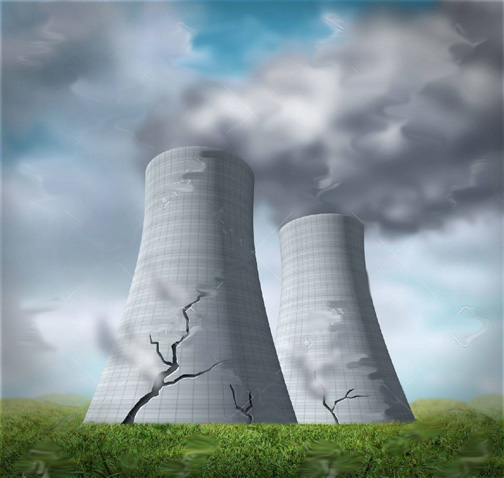
Feds walk back plans for nuclear reactors to run 80 years, E and E News, By Kristi E. Swartz, Jeremy Dillon | 02/25/202 Federal nuclear regulators have reversed course on letting three of the nation’s nuclear power plants run for an unprecedented 80 years, arguing an updated environmental study is needed beforehand.
The surprising decision is a blow to the nuclear industry, which has been pushing to keep existing reactors running for as long as possible while simultaneously touting next-generation technology that could be ready in the coming decade.
The Nuclear Regulatory Commission yesterday told
Florida Power & Light Co. (FPL) that its two Turkey Point nuclear reactors must go through a full environmental review before the agency will allow them to run for an additional 20 years. The NRC originally signed off on the extension in late 2019, using what’s known as a generic environmental study.
The NRC agreed with a legal challenge from several environmental and consumer groups, which argued that a full National Environmental Policy Act review is needed for the already aging reactors to run another 20 years.
The review should include significant new environmental issues that have come up since 2013, the year that a general environmental impact statement was prepared.
Yesterday’s decision applies to other reactors that have won approval to operate for 80 years as well as others with pending applications.
“[We] will not issue any further licenses for subsequent renewal terms until the NRC staff … has completed an adequate NEPA review for each application,” the commission said in one of three written orders.
Diane Curran, an attorney for Beyond Nuclear, said the decision “is a tremendous advance for nuclear reactor safety and environmental protection, because it commits NRC to evaluate the unique risks of renewing reactor licenses for a second term.”
Noted risks include safety and environmental issues that stem from aging equipment, she said.
“This decision paves the way for a hard look at those significant concerns,” said Curran.
Richard Ayres, an attorney for Friends of the Earth, said the decision was a complete surprise. It wasn’t until yesterday that he and others learned that the NRC would hold a morning meeting.
He called the decision “rare” and said he hoped it was a sign that the NRC would continue to strengthen its regulatory action.
Ayers said he thinks the NRC’s decision will lead to a “significant delay” in currently operating reactors getting additional extensions to run for 80 years. And “hopefully, it means a real thoughtful consideration of how climate change will affect these units and how, frankly, age will affect them,” Ayers said in an interview with E&E News.
FPL’s Turkey Point reactors were the first in the nation to win NRC approval to run another 20 years (Energywire, Dec. 6, 2019). The NRC issued that decision in late 2019.
Constellation Energy Corp.’s Peach Bottom nuclear power station in Pennsylvania got the same green light three months later (E&E News PM, March 6, 2020). Dominion Energy Inc.’s Surry nuclear power plant received approval in 2021 but is not named in the NRC’s decisions (Energywire, May 5, 2021). It is not clear why.
An FPL spokesperson said the NRC’s decisions do not affect its authority to operate the Turkey Point reactors currently but apply to the agency’s environmental review for plant operations in the future, starting in 2032.
“We are evaluating the NRC’s decisions to determine our next steps in the license renewal process,” FPL spokesperson Bill Orlove said in a statement.
The Turkey Point reactors are not without controversy, particularly because of their location. Florida has been the centerpiece of debates over the impacts of climate change, and rising seas already plague its coastal towns (Climatewire, Nov. 6, 2019). Turkey Point is on the southern tip of Florida in Miami-Dade County, near Biscayne Bay.
The site is the only one in the United States to use canals to keep the reactors cool. While the 168-linear-mile watery maze has been credited with removing the American crocodile from the endangered species list in a state racked by the effects of climate change, environmentalists argue that the canals make the area ground zero for algal blooms and excessive salinity, threatening nearby water wells (Energywire, July 15, 2019).
“Increased flooding risk caused by climate change poses serious risks to the safe operation of Turkey Point — and greater risks in the decades ahead,” said Caroline Reiser, an attorney at the Natural Resources Defense Council, in a statement.
The NRC’s decision throws uncertainty into the relicensing process as it undoes a decision previously made by the Republican-controlled commission during the Trump administration……..
For operators of the reactors, the NRC change introduces a new level of uncertainty into the age extension program.
Already, as part of the relicensing process, the reactors had to demonstrate a host of performance metrics to show that the plant’s structural and protective integrity could withstand an additional 20 years of operations.
A new environmental impact statement requirement could add another “three years or more” to an already lengthy process, an industry group said in a statement to E&E News……… https://www.eenews.net/articles/feds-walk-back-plans-for-nuclear-reactors-to-run-80-years/
Activist groups to rally against plutonium disposal project at Waste Isolation Pilot Plant

Adrian HeddenCarlsbad Current-Argus 23 Feb 22, A plan to dilute weapons-grade plutonium and then dispose of it at the Waste Isolation Pilot Plant, an underground repository for low-level nuclear waste near Carlsbad, drew concerns from around New Mexico amid fears transporting this stream of waste could risk public safety.
The U.S. Department of Energy announced in 2020 a plan that would ship the plutonium from the Pantex Plant near Amarillo, Texas to Los Alamos National Laboratory where it would be chemically diluted.
The waste would then head to the DOE’s Savannah River Site in South Carolina for packaging before the final shipment to WIPP in southeast New Mexico.
This would mean the 34 metric tons of the waste on the way to its final resting place at the WIPP site could pass through New Mexico three times.
Cynthia Weehler, co-chair of Santa Fe-based activist group 285 All said this creates an unacceptable risk for local communities in New Mexico and 11 states she said the waste would travel through.
285 All advocates for issues throughout New Mexico, focusing on U.S. Highway 285 which stretches from the mountains in northern New Mexico down into the high desert and oilfields of the southeast region, crossing into West Texas.
That’s why Weehler and a consortium of groups critical of WIPP and nuclear activities in New Mexico planned to deliver a petition to New Mexico Gov. Michelle Lujan Grisham next week, asking the state’s highest government leader to oppose the plutonium project.
“Unless New Mexico says NO to WIPP expansion, other disposal locations will not be developed, and WIPP will always be the only dump site, which is not fair. New Mexico never agreed to bear the burden of being the only site,” read a portion of the petition.
Weehler said the petition has about 1,140 signatures as of Monday and is being distributed in the Santa Fe area and to communities along the transportation routes.
The petition will be delivered to the State Capitol at 11:30 a.m., March 1 during a press conference on the east side of the Roundhouse.
“We don’t expect an accident to happen every week or every community, but when you increase the time and the shipments, we just see this as an inevitability over the time frame,” Weehler said. “It’s going to be a huge increase in shipments and it’s going to last almost this whole century.”
Weehler said Lujan Grisham should cite the legal agreement between the State and DOE that defines WIPP’s mission: to dispose of low-level transuranic (TRU) waste at the site near Carlsbad, streams she said were pre-determined by the agreement and should not be expanded.
If the DOE’s plutonium plan moves forward, Weehler said it would amount to an “expansion” of WIPP both in its mission and the volume of waste it would accept.
“The waste would be plutonium-contaminated material, contaminated during the production of nuclear weapons,” Weehler said. “This is something different (than TRU waste).”
WIPP officials said this was not the case……………………………..
The plutonium would be “down blended” meaning its level of radioactivity would be lowered so that the waste would qualify as TRU waste and could be disposed of at WIPP without adjusting federal policy.
“In order for it qualify, they’re having to dilute it. They’re having to adulterate it,” Weehler said. “This will never be acceptable. For them to say that is just unbelievable to me.” ……….. https://www.currentargus.com/story/news/local/2022/02/23/wipp-activist-groups-rally-against-plutonium-disposal-project/6878583001/
Maryland Couple Conspired to Sell Nuclear Secrets
Maryland Couple Conspired to Sell Nuclear Secrets Sarah Coble News Writer, Info-Security Magazine, 21 Feb 22, A married couple from Maryland has admitted conspiring to steal nuclear secrets from the United States and sell them to a foreign nation.
Annapolis residents, Jonathan and Diana Toebbe, were arrested by the FBI and the Naval Criminal Investigative Service on October 9 2021 after placing an SD card containing stolen restricted data at a pre-arranged ‘dead drop’ location in Jefferson County, West Virginia.
At the time of his arrest, Jonathan Toebbe was employed as a nuclear engineer by the Department of the Navy, who had assigned Toebbe to the Naval Nuclear Propulsion Program, also known as Naval Reactors.
Toebbe used the national security clearance he had obtained through the Department of Defense to access restricted data. Among the data Toebbe worked with and had access to was information concerning naval nuclear propulsion, which included data on military sensitive design elements, operating parameters and performance characteristics of the reactors for nuclear-powered warships………
On February 14, 43-year-old Jonathan Toebbe pleaded guilty to conspiracy to communicate Restricted Data related to the design of nuclear-powered warships. Diana Toebbe, 46, pleaded guilty on February 18 to the same offense. …….. https://www.infosecurity-magazine.com/news/maryland-couple-conspired-nuclear/
‘Serious problems’ with NuScale’s proposed small nuclear reactors
Report claims ‘serious problems’ with proposed NuScale SMR, Power Engineering, By Kevin Clark -2.18.2022. Too late, too expensive, too risky and too uncertain” is how a new report by the Institute for Energy Economics and Financial Analysis (IEEFA) described NuScale’s proposed small modular reactor (SMR) project.
The analysis, released by the institute February 17, primarily focuses on the SMR project the Oregon-based company is building for Utah Associated Municipal Power Systems (UAMPS) at a U.S. Department of Energy (DOE) site in Idaho. However, the institute noted it was outlining cost risks, construction timelines, and competitive alternatives for all buyers in the SMR market.
In 2020, NuScale received U.S. Nuclear Regulatory Commission (NRC) approval on its SMR design, the first design approval for a small commercial nuclear reactor. SMRs have a smaller footprint, capacity and anticipated cost than traditional high-capacity nuclear power plants.
NuScale is among several companies developing SMRs, with the intent of reigniting the country’s nuclear power sector. The company touts its reactors as “smarter, cleaner, safer and cost competitive.”
The SMRs are light-water reactors, which represent most of the reactors now in operation. But modular reactors are designed to use less water than traditional ones and have a passive safety system enabling them to shut down automatically, should something go wrong.
The federal government has invested in the development of SMRs, and the NuScale site is no exception. In October 2020, UAMPS received a nearly $1.4 billion, 10-year award from the DOE to help fund the project.
However, in its report, IEEFA said there are “uncertain implications for the units’ cost, performance and reliability,” and that NuScale makes overly optimistic claims in each of these categories.
NuScale said its plant has a construction period of “less than 36 months from the first safety concrete through mechanical completion,” according to reports on the company’s website. But the institute said based on recent nuclear industry experience, plants with new reactor designs have taken more than twice as long to build as the owners projected at construction start, resulting in “delays of four years or longer before the start of commercial operations.”
IEEFA also noted NuScale’s project design has changed repeatedly throughout the development process. In July 2021 UAMPS said it would be downsizing the project from 12 to six modules, with 462 MW of power. NuScale recently projected the project’s first module, once expected to deliver in 2016, would come online in 2029, with all six modules online by 2030.
The institute also doubted NuScale’s ability to keep construction costs in check, thereby meeting a target power price of less than $60/MWh, set in mid-2021.
The nonprofit noted costs for all recent nuclear projects have vastly exceeded original estimates. It cited cost overruns at the embattled Plant Vogtle in Georgia, the project “most like NuScale in terms of modular development” where costs “now are 140% higher than the original forecast.”
“This first-of-a-kind reactor poses serious financial risks for members of [UAMPS], currently the lead buyer, and other municipalities and utilities that sign up for a share of the project’s power,” IEEFA researchers wrote.
The report also cited the new wind, solar and energy storage that have been added to the grid in the last decade, along with significant additional renewable capacity and storage expected to come online by 2030. IEEFA added new techniques for operating these renewable and storage resources, along with energy efficiency, load management and broad efforts to better integrate the western grid would undermine NuScale’s affordability and reliability claims.
“This new capacity is going to put significant downward pressure on prices, undercutting the need for expensive round-the-clock power,” the institute said……..
VOYGR is the official name of NuScale’s small modular reactor………..
In December 2021 the company and Spring Valley Acquisition Corp., a publicly traded special purpose acquisition company, reached a merger agreement with an estimated enterprise value of $1.9 billion.
Upon completion of the transaction, Fluor projects to control around 60% of the combined company, based on the PIPE investment commitments and the current equity and in-the-money equity equivalents of NuScale Power and Spring Valley.
Existing NuScale shareholders, including majority owner Fluor, will retain their equity in NuScale and roll it into the combined company. Fluor will also continue to provide NuScale with engineering services, project management, administrative and supply chain support. Additional investors in NuScale include Doosan Heavy Industries and Construction, Samsung C&T Corp., JGC Holdings Corp., IHI Corp., Enercon Services, Inc., GS Energy, Sarens and Sargent & Lundy.
In April 2021, Japanese project firm JGC Holdings Corp. announced it was investing $40 million in NuScale Power. https://www.power-eng.com/nuclear/report-claims-serious-problems-with-proposed-nuscale-smr/
1 This Month
26 April – Chernobyl: Inside the Meltdown airs on National Geographic on Sunday 26th April from 4pm
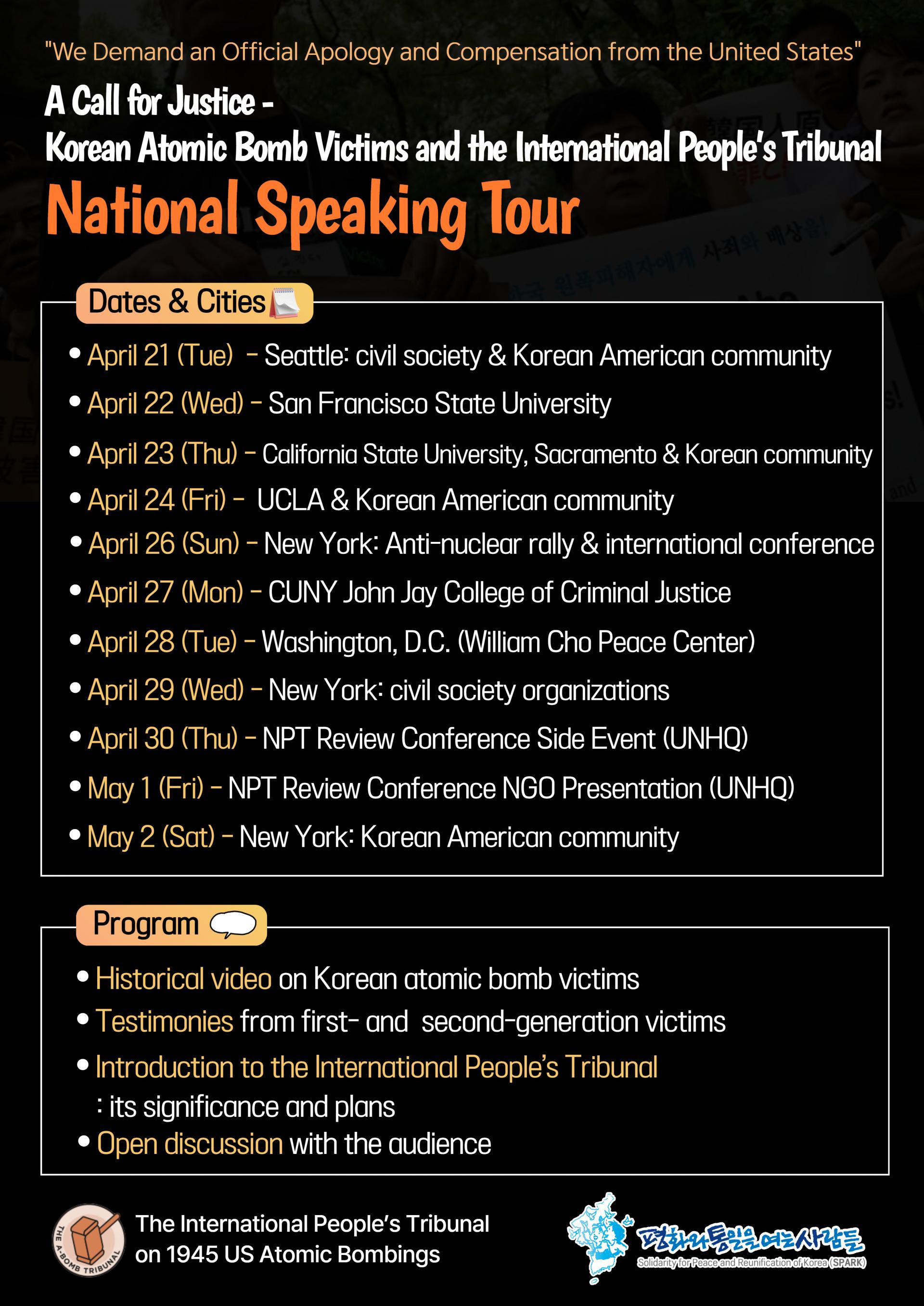

29 April – Nuclear Expert Webinar #1 – Radiation Impacts on Families with Mary Olson and Cindy Folkers
- 12:15 PM MT – 1:45 PM MT
- Location: Virtual – REGISTER TODAY

4 May -West Suburban Peace Coalition to discuss Iran war at May Educational Forum
Monday, May 4, 7:00 – 8:00 PM Central Standard Time
Title: : How Trump’s Narrative Tries to Shape the Reality of the War on Iran.
Contact Walt Zlotow, zlotow@hotmail.com 630 442 3045 for further information
14 May – online event From Bombs to Data Centres: the Face of Nuclear Colonialism

Pine Ridge Uranium is the real threat, not Tehran- Tell Burgum: Stop the Extraction.
Chernobyl: The Lost Tapes – A good documentary on Chernobyl on SBS available On Demand for the next 3 weeks– https://www.sbs.com.au/ondemand/tv-program/chernobyl-the-lost-tapes/2352741955560
To see nuclear-related stories in greater depth and intensity – go to https://nuclearinformation.wordpress.com
-
Archives
- May 2026 (25)
- April 2026 (356)
- March 2026 (251)
- February 2026 (268)
- January 2026 (308)
- December 2025 (358)
- November 2025 (359)
- October 2025 (376)
- September 2025 (257)
- August 2025 (319)
- July 2025 (230)
- June 2025 (348)
-
Categories
- 1
- 1 NUCLEAR ISSUES
- business and costs
- climate change
- culture and arts
- ENERGY
- environment
- health
- history
- indigenous issues
- Legal
- marketing of nuclear
- media
- opposition to nuclear
- PERSONAL STORIES
- politics
- politics international
- Religion and ethics
- safety
- secrets,lies and civil liberties
- spinbuster
- technology
- Uranium
- wastes
- weapons and war
- Women
- 2 WORLD
- ACTION
- AFRICA
- Atrocities
- AUSTRALIA
- Christina's notes
- Christina's themes
- culture and arts
- Events
- Fuk 2022
- Fuk 2023
- Fukushima 2017
- Fukushima 2018
- fukushima 2019
- Fukushima 2020
- Fukushima 2021
- general
- global warming
- Humour (God we need it)
- Nuclear
- RARE EARTHS
- Reference
- resources – print
- Resources -audiovicual
- Weekly Newsletter
- World
- World Nuclear
- YouTube
-
RSS
Entries RSS
Comments RSS
 nuclear-news