Nuclear energy development not possible in USA, unless it is tax-payer funded?

What Is Holding U.S. Nuclear Energy Back? OilPrice.com 21 Mar 22,
”……….There are three basic business risks associated with nuclear power for an investor-owned utility: financing, operating, and sales. (Four if you add in new construction risk which is not inconsequential.) The simple reason no US investor-owned utility — apart from Southern Company’s Plant Vogtle—- is building or considering new nuclear investments is the first risk, financing. To paraphrase a former NYC mayoral candidate, the capital costs are “too damn high”. By any metric, nuclear power is economically uncompetitive. According to the recent Lazard study comparing the cost of new power generation, it is about three times more costly than natural gas and five times more costly than new wind and solar.
This begs an obvious question. How can we have more of something if it is wildly, economically uncompetitive? The answer is simple: eliminate the consideration of economics from new power plant development. Take for example a large nuclear construction project at Turkey’s four-unit Akuyu nuclear power station. In the US that is a $40+billion capital project. No US investor-owned utility has the balance sheet to handle multiple unit projects of that size. Only the US government has the borrowing capacity for projects of that magnitude and risk. This, in turn, suggests that new nuclear power plant development will only occur in the US If we compromise on our free enterprise principles and take new nuclear plant development out of the private sector entirely. These enormous financing risks are now impossible to comfortably absorb in a corporate setting where they must be constantly balanced against shareholder interests. ….’
Nuclear lobby touting small nuclear reactors to Alaska

House bill would streamline approval of small nuclear reactors in Alaska, Alaska Public Media, By, Dan Bross, KUAC – Fairbanks, March 21, 2022 A bill moving through the Alaska Legislature would streamline the state’s approval process for small nuclear reactors, which have been touted as cleaner, more cost-effective sources of energy for Alaska.
There are no microreactors operating anywhere in the United States. But a few pilot projects are planned, including one at Eielson Air Force Base. The federal Nuclear Regulatory Commission must approve any new reactor, but House Bill 299 from Gov. Mike Dunleavy would exempt microreactors from some decades-old state requirements.
At a state House committee hearing, Alaska Department of Environmental Conservation environmental health director Christina Carpenter said the bill would exempt microreactors from multi-agency study and legislative siting approval requirements……………
Alaska Community Action on Toxics executive director Pam Miller describes nuclear power as destructive throughout its lifecycle.
“While these nuclear microreactors are being touted as a solution for the climate crisis and energy needs in rural Alaska, I believe that it’s a false solution and that these reactors are actually quite dangerous,” she said. “From the mining of uranium, which usually takes place on Indigenous lands, through the enrichment process. And then there is the untenable problem of radioactive waste disposal, and that has not been solved.”
Miller said she is also concerned about the security of microreactors in Alaska, especially if deployed in remote locations.
Under the bill, microreactors proposed for areas without local government would still need to get siting approval from the legislature. https://www.alaskapublic.org/2022/03/21/house-bill-would-streamline-approval-of-small-nuclear-reactors-in-alaska/
‘Let them kill as many as possible’ The Roots of US Militarism in Russia and Around the World
“This time, is the primary goal of the paramilitary program to help Ukrainians liberate their country or to weaken Russia over the course of a long insurgency that will undoubtedly cost as many Ukrainian lives as Russian lives, if not more?”
What the people of Ukraine are suffering from Russian aggression is suffered daily by millions around the world from U.S. aggression.
Common Dreams, BRIAN TERRELL, March 4, 2022 In April 1941, four years before he was to become President and eight months before the United States entered World War II, Senator Harry Truman of Missouri reacted to the news that Germany had invaded the Soviet Union: “If we see that Germany is winning the war, we ought to help Russia; and if that Russia is winning, we ought to help Germany, and in that way let them kill as many as possible.” Truman was not called out as a cynic when he spoke these words from the floor of the Senate. On the contrary, when he died in 1972, Truman’s obituary in The New York Times cited this statement as establishing his “reputation for decisiveness and courage.”
“This basic attitude,” gushed The Times, “prepared him to adopt from the start of his Presidency, a firm policy,” an attitude that prepared him to order the atomic bombings of Hiroshima and Nagasaki with “no qualms.” Truman’s same basic “let them kill as many as possible” attitude also informed the postwar doctrine that bears his name, along with the establishment of NATO, the North Atlantic Treaty Organization and the CIA, the Central Intelligence Agency, both of which he is credited with founding.
A February 25 op-ed in The Los Angeles Times by Jeff Rogg, “The CIA has backed Ukrainian insurgents before- Let’s learn from those mistakes,” cites a CIA program to train Ukrainian nationalists as insurgents to fight the Russians that began in 2015 and compares it with a similar effort by Truman’s CIA in Ukraine that began in 1949. By 1950, one year in, “U.S. officers involved in the program knew they were fighting a losing battle…In the first U.S.-backed insurgency, according to top secret documents later declassified, American officials intended to use the Ukrainians as a proxy force to bleed the Soviet Union.” This op-ed cites John Ranelagh, a historian of the CIA, who argued that the program “demonstrated a cold ruthlessness” because the Ukrainian resistance had no hope of success, and so “America was in effect encouraging Ukrainians to go to their deaths.
The “Truman Doctrine” of arming and training insurgents as proxy forces to bleed Russia to the peril of the local populations that it was purporting to defend was used effectively in Afghanistan in the 1970s and ’80s, a program so effective, some of its authors have boasted, that it helped bring down the Soviet Union a decade later. In a 1998 interview, President Jimmy Carter’s National Security Advisor Zbigniew Brzezinski explained, “According to the official version of history, CIA aid to the Mujaheddin began during 1980, that is to say, after the Soviet army invaded Afghanistan on December 24, 1979. But the reality, closely guarded until now, is completely otherwise: Indeed, it was July 3, 1979 that President Carter signed the first directive for secret aid to the opponents of the pro-Soviet regime in Kabul. And that very day, I wrote a note to the president in which I explained to him that in my opinion this aid was going to induce a Soviet military intervention… We didn’t push the Russians to intervene, but we knowingly increased the probability that they would.”
“The day that the Soviets officially crossed the border,” Brzezinski recalled, “I wrote to President Carter, essentially: ‘We now have the opportunity of giving to the USSR its Vietnam war.’ Indeed, for almost 10 years, Moscow had to carry on a war that was unsustainable for the regime, a conflict that brought about the demoralization and finally the breakup of the Soviet empire.”
…………………….. In his LA Times op-ed, Rogg calls the 1949 CIA program in Ukraine a “mistake” and asks the question, “This time, is the primary goal of the paramilitary program to help Ukrainians liberate their country or to weaken Russia over the course of a long insurgency that will undoubtedly cost as many Ukrainian lives as Russian lives, if not more?” Viewed in light of United States foreign policy from Truman to Biden, the early cold war debacle in Ukraine might better be described as a crime than a mistake and Rogg’s question seems rhetorical.
………………… Globally, through its armed forces but even more through the CIA and the so-called National Endowment for Democracy, through NATO muscle masquerading as mutual “defense,” in Europe as in Asia, as in Africa, as in the Middle East, as in Latin America, the United States exploits and dishonors the very real aspirations of good people for peace and self-determination. At the same time, it feeds the swamp where violent extremisms like the Taliban in Afghanistan, ISIS in Syria and Iraq and neo-Nazi nationalism in Ukraine can only fester and flourish and spread. …………………………………………… https://www.commondreams.org/views/2022/03/04/let-them-kill-many-possible-roots-us-militarism-russia-and-around-world
Dangerous wildfires in Texas
Wildfires in Texas covering more than 38,000 acres have prompted
evacuation orders to be put in place across several counties in central
parts of the Lone Star State. Strong winds and dry conditions led to
firefighters battling the blaze in dangerous weather late on Thursday.
Independent 19th March 2022
Canada’s green bond program specifically prohibits investments in nuclear energy

Is nuclear energy green or not? Federal government sending conflicting messages, critics say
At the same time the government invests in small modular nuclear reactor projects, its new planned green bond program specifically prohibits investments in nuclear energy
Excerpt from the National Post, Mar 18, 2022 •The Liberal government is being accused of sending conflicting messages about the nuclear industry and how it can help adapt to a green environment.
The week the Liberal government put $27.2 million into a promising new small modular nuclear reactor — but at the same time its green bond program, meant to boost environmentally-friendly programs, specifically excludes investments in nuclear power.
The conflict shows mixed support at best for the industry, say critics………….
The green bond program was announced in last spring’s budget and detailed rules were released earlier this month. The green bonds would be part of Canada’s broader debt program, but the money would be specifically diverted to environmentally-friendly programs, such as climate change adaptation measures, other forms of renewable energy, and energy efficiency……….
Adrienne Vaupshas, a spokesperson for Finance Minister Chrystia Freeland, said Canada’s green bonds were following international standards.
“Canada’s green bond framework is fully aligned with international green bond standards and market expectations,” she said….
Indigenous, scientific, environmental and citizen groups strongly oppose Ottawa’s push for small nuclear reactors
Ottawa pours more money into next-gen nuclear tech; critics to push back
against ‘dangerous distraction’. Innovation, Science and Industry
Minister François-Philippe Champagne announced a $27.2-million investment
Thursday in the development of next-generation nuclear technology he said
will make energy more accessible to remote communities.
However, numerous Indigenous, scientific, environmental and citizen groups have called the
technology a “dirty, dangerous distraction” from real climate action.
The money will go to the development of Westinghouse Electric Canada
Inc.’s eVinci micro-reactor, a small modular reactor (SMR) the company
says will “bring carbon-free, transportable, safe and scalable energy
anywhere Canada requires reliable, clean energy.”
National Observer 17th March 2022
Russia’s Ukraine invasion may have been preventable, The US made a huge mistake?
Russia’s Ukraine invasion may have been preventable, The US refused to consider Ukraine’s NATO status as Putin threatened war. Experts say that was a huge mistake, MSNBC, March 5, 2022, By Zeeshan Aleem, MSNBC Opinion Columnist
The prevailing wisdom in the West is that Russian President Vladimir Putin was never interested in President Joe Biden’s diplomatic efforts to avert an invasion of Ukraine. Bent on restoring the might of the Soviet empire, this narrative goes, the Russian autocrat audaciously invaded Ukraine to fulfill a revanchist desire for some combination of land, power and glory.
In a typical account operating under this framing, Politico described Putin as “the steely-eyed strongman” who proved immune to “traditional tools of diplomacy and deterrence” and had been “playing Biden all along.” This telling suggests that the United States exhausted its diplomatic arsenal and that Russia’s horrifying and illegal invasion of Ukraine, which has involved targeting civilian areas and shelling nuclear plants, could never have been prevented.
But according to a line of widely overlooked scholarship, forgotten warnings from Western statesmen and interviews with several experts — including high-level former government officials who oversaw Russia strategy for decades — this narrative is wrong.
Many of these analysts argue that the U.S. erred in its efforts to prevent the breakout of war by refusing to offer to retract support for Ukraine to one day join NATO or substantially reconsider its terms of entry. And they argue that Russia’s willingness to go to war over Ukraine’s NATO status, which it perceived as an existential national security threat and listed as a fundamental part of its rationale for the invasion, was so clear for so long that dropping support for its eventual entry could have averted the invasion.
…………….. the abundance of evidence that NATO was a sustained source of anxiety for Moscow raises the question of whether the United States’ strategic posture was not just imprudent but negligent.
The fact that the NATO status question was not put on the table as Putin signaled that he was serious about an invasion — so plainly that the U.S. government was spelling it out with day-by-day updates — was an error, and potentially a catastrophic one. It may sound cruel to suggest that Ukraine could be barred, either temporarily or permanently, from entering a military alliance it wants to be in. But what’s more cruel is that Ukrainians might be paying with their lives for the United States’ reckless flirtation with Ukraine as a future NATO member without ever committing to its defense.
…………. by dangling the possibility of Ukraine’s NATO membership for years but never fulfilling it, NATO created a scenario that emboldened Ukraine to act tough and buck Russia — without any intention of directly defending Ukraine with its firepower if Moscow decided Ukraine had gone too far.
But for the West to offer to compromise on Ukraine’s future entry into NATO would have required admitting the limitations of Western power.
“It was the desire of Western governments not to lose face by compromising with Russia,” Anatol Lieven, senior research fellow on Russia and Europe at the Quincy Institute for Responsible Statecraft and the author of “Ukraine and Russia: A Fraternal Rivalry,” told me. “But it was also the moral cowardice of so many Western commentators and officials and ex-officials who would not come out in public and admit that this was no longer a viable project.”
The West didn’t want to set limits on NATO’s enlargement and influence or lose face. So what it did was gamble.
“The choice that we faced in Ukraine — and I’m using the past tense there intentionally — was whether Russia exercised a veto over NATO involvement in Ukraine on the negotiating table or on the battlefield,” said George Beebe, a former director of Russia analysis at the CIA and special adviser on Russia to former Vice President Dick Cheney. “And we elected to make sure that the veto was exercised on the battlefield, hoping that either Putin would stay his hand or that the military operation would fail.”
What’s happened has happened, and there’s no going back. But it still matters.
The U.S. must do everything it can do to end this war — which is already brutalizing Ukraine, rattling the global economy, and could quite easily spiral into a nuclear-armed confrontation between the U.S. and Russia, if things get out of hand — as swiftly as possible, including negotiating on Ukraine’s NATO status and possible neutrality with an open mind. And over the longer term, Americans must realize that in an increasingly multipolar world, reckoning with the limits of their power is critical for achieving a more peaceful and just world………………………………………………..
Russia has grown concerned again about Ukraine for a number of reasons. Analysts like Lieven and Beebe point out that Ukrainian President Volodymyr Zelenskyy has taken a number of sharp measures to eradicate Russian influence in Ukraine recently by doing things like banning the use of Russian language in schools and state institutions, shutting down Kremlin-linked television stations and arresting some of the most prominent Russo-sympathetic leaders in the country — all while cooperating on the ground with NATO. Russia read this as a sign that Kyiv was throwing its lot in with the U.S. and the prospect of an agreement ensuring autonomy for the separatist-held Donbas region, crucial to Russia’s plan to thwart Ukraine’s NATO entry, might be dead……………………
Emma Ashford, resident senior fellow with the New American Engagement Initiative in the Scowcroft Center for Strategy and Security, wrote in an email that it was a “pity” that “NATO’s open-door principle was not up for debate.” Though she was skeptical about the political ability of the West to “promise to close NATO’s open door, particularly in a way that would have been credible to Moscow,” she said there were potential ways to deal with Moscow’s concerns, such as “a moratorium on NATO membership for Ukraine and Georgia, conventional arms control agreements limiting the scope of NATO military integration and cooperation with Ukraine, or some form of negotiated Ukrainian neutrality.”
The idea behind a moratorium — of, say, 20 years — is to provide a way for the West to propose to Russia that the issue can be taken up by a future generation of leaders, at a time when Russia’s political class has changed and geopolitics may have shifted………….
All we do know is that the NATO element mattered a great deal to Russia’s political establishment, and there’s reason to think it could’ve changed the course of negotiations. When things looked dicey, it was worth trying……..
dangling is incredibly dangerous, and it’s possible that it just caused Ukraine to experience the worst of all worlds: not receiving NATO protection while also enduring one of the most aggressive forms of Russian domination possible.
Many of the experts I spoke to said Ukraine’s neutrality or some kind of altered NATO status should be part of the discussion in diplomatic backchannels. Critics will say this constitutes “appeasement” of Putin. But as Biden has already made clear, the U.S. is not willing to wage war with Russia, and it certainly isn’t going to allow Ukraine into NATO when Russia is attacking it, since that would require all of NATO to go to war with Russia. The issue now is to think clearly about how to end a conflict that could spiral into World War III.
It is imperative that America develops a clearer understanding of its adversaries and behaves more judiciously in an increasingly multipolar world. It is not difficult to imagine the U.S. making a miscalculation over what China would be willing to do to secure its domination of the South China Sea. The U.S. may want to be the only great power in the world, free to expand its hegemony with impunity, but it is not. Refusing to see this is dangerous for us all. https://www.msnbc.com/opinion/msnbc-opinion/russia-s-ukraine-invasion-may-have-been-preventable-n1290831?featureFlag=true#anchor-ExpandingNATOwasalwayshugelycontroversial
Small modular nuclear reactors – no good for Canada’s indigenous communities, no good for climate action
The Government of Canada is further delaying climate action with an
announcement of $27 million in funding today to develop a Small Modular
Nuclear Reactor (SMR).
There is no guarantee SMRs will ever produce energy
in a safe and reliable manner in Canada. During his remarks for the
announcement, François-Philippe Champagne, Minister of Innovation, Science
and Economic Development Canada, as well as Westinghouse representatives,
said that the technology to be developed, the e-Vinci reactor by the
Westinghouse Electric Company, will be suitable for remote Indigenous
communities currently using diesel energy.
However, research has demonstrated that small modular nuclear reactors such as the type
Westinghouse is proposing are not the energy answer for remote communities.
The researchers–Froese, Kunz & Ramana (2020)–concluded that the
economics of SMRs do not compete when compared with other alternatives. The
cost of electricity from SMRs was found to be much higher than the cost of
wind or solar, or even of the diesel supply currently used in the majority
of these communities.
Canadian Coalition for Nuclear Responsibility 17th March 2022
Fate of Radioactive Waste at Plymouth Nuclear Site Continues to Raise Concerns
PILGRIM NUCLEAR POWER STATION
Fate of Radioactive Waste at Plymouth Nuclear Site Continues to Raise Concerns https://www.nbcboston.com/news/local/radioactive-waste-at-plymouth-nuclear-site-continues-to-raise-concerns/2672927/
The Plymouth Board of Health has issued a resolution strongly opposing any potential plan to dump nearly 1 million gallons of radioactive waste into Cape Cod Bay.
This comes amid ongoing conversations about how Holtec International, which purchased Plymouth’s Pilgrim Nuclear Power Station in 2019, intends to complete the plant’s decommissioning. While Holtec says no final decisions have been made about what it will do with Pilgrim’s radioactive waste, many in the area fear it will be released into the bay.
The Board of Health Resolution said that type of release could likely cause “immense” damage to the area’s shell fishing, aquaculture, maritime and tourist-based economy. It also notes that there would be health hazards for exposure to the type of radioactive compounds in question, including increased risk of cancers and potential harm to pregnant women and their fetuses.”All of these radioactive compounds have already been found in the surface water, groundwater and soils at Pilgrim at levels exceeding “background levels,” the resolution reads. “There is also a longer-term risk to our sole source aquifer water supply – especially from tritium which isn’t removed by existing filtration producers used to purification attempts.”
The resolution goes on to urge Holtec to choose the “safest possible disposal method” for the radioactive water that must be removed during the decommissioning process. It also urges lawmakers to add new language to state law to prohibit this type of release of solid or radioactive material in coastal or inland waters.
Ukraine war a bonanza for Lockheed Martin, Raytheon, General Dynamics, Northrop Grumman and more

Less than three full months into 2022, Lockheed Martin’s stock has surged by more than 25%, while the share prices of Raytheon, General Dynamics, and Northrop Grumman have also risen by roughly 12%, 14%, and 16%, respectively.
War in Ukraine a Windfall for Weapons Industry
Military contractors “will benefit, and in the short term we could be talking about tens of billions of dollars, which is no small thing, even for these big companies,” said one analyst. Common Dreams KENNY STANCIL, March 15, 2022,
Russia’s deadly assault on Ukraine is a bonanza for arms manufacturers, which are lined up to profit as the United States and its allies increase military spending in an effort to bolster Kyiv’s forces.
William Hartung, a senior research fellow at the Quincy Institute for Responsible Statecraft, told The Hill on Tuesday that “there’s a lot of possibilities for ways that the contractors will benefit, and in the short term we could be talking about tens of billions of dollars, which is no small thing, even for these big companies.”
In the weeks since Russian President Vladimir Putin ordered his troops to invade, lawmakers in the U.S. Congress approved a record-setting Pentagon budget, and their counterparts in several European countries also vowed to significantly boost military spending to counteract Moscow.
The $1.5 trillion government funding bill that U.S. President Joe Biden signed Friday greenlights an astronomical $782 billion in military spending—an increase of 6% over last year and nearly $30 billion above the White House’s initial request. The package also provides $6.5 billion in military aid to Eastern European nations, including $3.5 billion worth of additional weapons for Ukraine.
As The Hill reported, the extra support for Ukraine “comes on top of more than $1 billion the U.S. has already spent in the past year to arm Ukrainian soldiers with modern weapons, including Javelin anti-tank missiles, manufactured by Lockheed Martin and Raytheon Technologies, and Raytheon’s anti-aircraft Stinger missiles.”
One arms industry lobbyist told the news outlet that an immediate effect of the U.S. ramping up weapons shipments to Ukraine is that “we’re going to have to backfill some of that ourselves, so that will force the Pentagon to buy more from some of the defense companies.”
As for longer-term implications, the lobbyist said that Democratic and Republican lawmakers alike expect to pass an even larger military budget next year, which “will pump more money into procurement and into [research and development].”
The U.S. is not the only country where military contractors are anticipating a bump in sales. Over the past few weeks, European countries including Germany, Italy, Poland, and Sweden have announced that they will boost military spending………….
“We are proud of the confidence the German Federal Ministry of Defense and Luftwaffe officials have shown in choosing the F-35,” Lockheed Martin said in a statement.
Less than three full months into 2022, Lockheed Martin’s stock has surged by more than 25%, while the share prices of Raytheon, General Dynamics, and Northrop Grumman have also risen by roughly 12%, 14%, and 16%, respectively.
Even before the Kremlin attacked Ukraine last month, arms manufacturers could hardly contain their excitement over the prospect of war, which they explained would be good for their bottom lines.
AsThe Hill reported:…………………………………
The weapons industry lobbyist told the news outlet that higher military spending in Europe would be a boon for U.S.-based military contractors:…………..
One day after Putin launched his full-scale invasion of Ukraine, the Quincy Institute’s Hartung warned against letting corporations and their allies in government use the war in Ukraine as a pretext for showering the military-industrial complex with even more money.
A week later, he argued that such a move would be “counterproductive” and potentially detrimental to U.S. security, echoing calls from anti-war groups that have long pushed for reallocating a portion of the Pentagon’s bloated budget to meet pressing human needs…………………
Last year, researchers at Brown University’s Costs of War project estimated that as much as half of the $14 trillion spent by the Pentagon alone since its 2001 invasion of Afghanistan has gone to private military contractors.
Lindsay Koshgarian and her colleagues at the Institute for Policy Studies’ National Priorities Project and Stephen Semler of the Security Policy Reform Institute, meanwhile, have estimated that corporations gobbled up more than half. https://www.commondreams.org/news/2022/03/15/war-ukraine-windfall-weapons-industry
Peace Talks in Ukraine “Will Get Nowhere” If US Keeps Refusing to Join
Chomsky: Peace Talks in Ukraine “Will Get Nowhere” If US Keeps Refusing to Join, https://truthout.org/articles/chomsky-peace-talks-in-ukraine-will-get-nowhere-if-us-keeps-refusing-to-join/?eType=EmailBlastContent&eId=0f3fe992-e64c-42c7-85ff-483718a7c020, C.J. Polychroniou, 14 Mar 22
As Russia steps up its assault on Ukraine and its forces advance on Kyiv, peace talks between the two sides were scheduled to resume today for the fourth time, but have now been postponed until tomorrow. Unfortunately, some opportunities for a peace agreement have already been squandered, so it’s hard to be optimistic about when the war will end. Regardless of when or how the war ends, though, its impact is already being felt across the international security system, as the rearmament of Europe shows. The Russian invasion of Ukraine also complicates the urgent fight against the climate crisis. The war takes a heavy toll on Ukraine and on the environment, but it also gives the fossil fuel industry extra leverage among governments.
In the interview that follows, world-renowned scholar and dissident Noam Chomsky shares his insights about the prospects for peace in Ukraine and how this war may impact our efforts to combat global warming.
Noam Chomsky, who is internationally recognized as one of the most important intellectuals alive, is the author of some 150 books and the recipient of scores of highly prestigious awards, including the Sydney Peace Prize and the Kyoto Prize (Japan’s equivalent of the Nobel Prize), and of dozens of honorary doctorate degrees from the world’s most renowned universities. Chomsky is Institute Professor Emeritus at MIT and currently Laureate Professor at the University of Arizona.
C.J. Polychroniou: Noam, while a fourth round of negotiations was scheduled to take place today between Russian and Ukrainian representatives, it is now postponed until tomorrow, and it still seems unlikely that peace will be reached in Ukraine any time soon. Ukrainians don’t appear likely to surrender, and Putin seems determined to continue his invasion. In that context, what do you think of Ukrainian President Volodymyr Zelensky’s response to Vladimir Putin’s four core demands, which were (a) cease military action, (b) acknowledge Crimea as Russian territory, (c) amend the Ukrainian constitution to enshrine neutrality, and (d) recognize the separatist republics in eastern Ukraine?
Noam Chomsky: Before responding, I would like to stress the crucial issue that must be in the forefront of all discussions of this terrible tragedy: We must find a way to bring this war to an end before it escalates, possibly to utter devastation of Ukraine and unimaginable catastrophe beyond. The only way is a negotiated settlement. Like it or not, this must provide some kind of escape hatch for Putin, or the worst will happen. Not victory, but an escape hatch. These concerns must be uppermost in our minds.
I don’t think that Zelensky should have simply accepted Putin’s demands. I think his public response on March 7 was judicious and appropriate.
In these remarks, Zelensky recognized that joining NATO is not an option for Ukraine. He also insisted, rightly, that the opinions of people in the Donbas region, now occupied by Russia, should be a critical factor in determining some form of settlement. He is, in short, reiterating what would very likely have been a path for preventing this tragedy — though we cannot know, because the U.S. refused to try.
As has been understood for a long time, decades in fact, for Ukraine to join NATO would be rather like Mexico joining a China-run military alliance, hosting joint maneuvers with the Chinese army and maintaining weapons aimed at Washington. To insist on Mexico’s sovereign right to do so would surpass idiocy (and, fortunately, no one brings this up). Washington’s insistence on Ukraine’s sovereign right to join NATO is even worse, since it sets up an insurmountable barrier to a peaceful resolution of a crisis that is already a shocking crime and will soon become much worse unless resolved — by the negotiations that Washington refuses to join.
………………………. Zelensky’s proposals considerably narrow the gap with Putin’s demands and provide an opportunity to carry forward the diplomatic initiatives that have been undertaken by France and Germany, with limited Chinese support. Negotiations might succeed or might fail. The only way to find out is to try. Of course, negotiations will get nowhere if the U.S. persists in its adamant refusal to join, backed by the virtually united commissariat, and if the press continues to insist that the public remain in the dark by refusing even to report Zelensky’s proposals.
In fairness, I should add that on March 13, the New York Times did publish a call for diplomacy that would carry forward the “virtual summit” of France-Germany-China, while offering Putin an “offramp,” distasteful as that is. The article was written by Wang Huiyao, president of a Beijing nongovernmental think tank.
C.J. Polychroniou: It also seems to me that, in some quarters, peace in Ukraine is hardly on top of the agenda. For example, there are plenty of voices both in the U.S. and in U.K. urging Ukraine to keep on fighting (although western governments have ruled out sending troops to defend Ukraine), probably in the hopes that the continuation of the war, in conjunction with the economic sanctions, may lead to regime change in Moscow. Yet, isn’t it the case that even if Putin actually falls from power, it would still be necessary to negotiate a peace treaty with whatever Russia government comes next, and that compromises would have to be made for the withdrawal of Russian forces from Ukraine?
Noam Chomsky: We can only speculate about the reasons for U.S.-U.K. total concentration on warlike and punitive measures, and refusal to join in the one sensible approach to ending the tragedy. Perhaps it is based on hope for regime change. If so, it is both criminal and foolish. Criminal because it perpetuates the vicious war and cuts off hope for ending the horrors, foolish because it is quite likely that if Putin is overthrown someone even worse will take over. That has been a consistent pattern in elimination of leadership in criminal organizations for many years, matters discussed very convincingly by Andrew Cockburn.
It is worth noticing that most of the world is keeping apart from the awful spectacle underway in Europe. One telling illustration is sanctions. Political analyst John Whitbeck has produced a map of sanctions against Russia: the U.S. and the rest of the Anglosphere, Europe and some of East Asia. None in the Global South, which is watching, bemused, as Europe reverts to its traditional pastime of mutual slaughter while relentlessly pursuing its vocation of destroying whatever else it chooses to within its reach: Yemen, Palestine, and far more. Voices in the Global South condemn Putin’s brutal crime, but do not conceal the supreme hypocrisy of western posturing about crimes that are a bare fraction of their own regular practices, right to the present.
C.J. Polychroniou: Russia’s invasion of Ukraine may very well change the global order, especially with the likely emergence of the militarization of the European Union. What does the change in Germany’s Russia strategy — i.e., its rearmament and the apparent end of Ostpolitik — mean for Europe and global diplomacy?
Noam Chomsky: The major effect, I suspect, will be what I mentioned: more firm imposition of the U.S.-run, NATO-based Atlanticist model and curtailing once again the repeated efforts to create a European system independent of the U.S., a “third force” in world affairs, as it was sometimes called. That has been a fundamental issue since the end of World War II. Putin has settled it for the time being by providing Washington with its fondest wish: a Europe so subservient that an Italian university tried to ban a series of lectures on Dostoyevsky, to take just one of many egregious examples of how Europeans are making fools of themselves.
Meanwhile, it seems likely that Russia will drift further into China’s orbit, becoming even more of a declining kleptocratic raw materials producer than it is now. China is likely to persist in its programs of incorporating more and more of the world into the development-and-investment system based on the Belt-and-Road initiative, the “maritime silk road” that passes through the UAE into the Middle East, and the Shanghai Cooperation Organization. The U.S. seems intent on responding with its comparative advantage: force. Right now, that includes Biden’s programs of “encirclement” of China by military bases and alliances, while perhaps even seeking to improve the U.S. economy as long as it is framed as competing with China. Just what we are observing now.
There is a brief period in which course corrections remain possible. It may soon come to an end as U.S. democracy, such as it still is, continues on its self-destructive course.
C.J. Polychroniou: Russia’s invasion of Ukraine may also have dealt a severe blow to our hopes of tackling the climate crisis, at least in this decade. Do you have any comments to make on this rather bleak observation of mine?
Noam Chomsly: Appropriate comments surpass my limited literary skills. The blow is not only severe, but it may also be terminal for organized human life on earth, and for the innumerable other species that we are in the process of destroying with abandon.
In the midst of the Ukraine crisis, the IPCC released its 2022 report, by far the most dire warning it has yet produced. The report made it very clear that we must take firm measures now, with no delay, to cut back the use of fossil fuels and to move toward renewable energy. The warnings received brief notice, and then our strange species returned to devoting scarce resources to destruction and rapidly increasing its poisoning of the atmosphere, while blocking efforts for extricating itself from its suicidal path.
The fossil fuel industry can scarcely suppress its joy in the new opportunities the invasion has provided to accelerate its destruction of life on earth. In the U.S., the denialist party, which has successfully blocked Biden’s limited efforts to deal with the existential crisis, is likely to be back in power soon, so that it can resume the dedication of the Trump administration to destroy everything as quickly and effectively as possible.
These words might sound harsh. They are not harsh enough.
The game is not over. There still is time for radical course correction. The means are understood. If the will is there, it is possible to avert catastrophe and to move on to a much better world. The invasion of Ukraine has indeed been a severe blow to these prospects. Whether it constitutes a terminal blow or not is for us to decide.
Message to Biden: Help De-Escalation in Ukraine or Risk Nuclear War

https://www.commondreams.org/views/2022/03/14/message-biden-help-de-escalation-ukraine-or-risk-nuclear-war, Instead of pouring in weapons and piling on sanctions, we should call on President Biden to begin good faith negotiations with all concerned parties, respecting each of their security concerns.
GERRY CONDON, March 14, 2022 “The first casualty of war is truth.” This simple yet profound statement is attributed to many, including Hiram Johnson in a speech in the U.S. Senate in 1918, during the “war to end all wars.”………………..
As the war rages in Ukraine in 2022, actual combat is eclipsed by well-practiced information warfare. It was not surprising when the White House and State Department began shouting that the Russians were about to launch a “false flag” event to justify their pending invasion of Ukraine. After all, isn’t that the way it is always done? Isn’t that the way the US did it with the Tonkin Gulf Incident in Vietnam, babies being thrown out of incubators in Kuwait, and Weapons of Mass Destruction in Iraq. Of course, the US has a bigger challenge claiming self-defense as it invades smaller, weaker countries halfway around the globe.
Twenty-four hour news coverage is keeping Americans hyped up and dumbed down
Once the fighting commences, deception is also an important ploy on the battlefield. The ancient Greek playwright Aeschylus wrote, “God is not adverse to deceit in a just cause.” Aside from keeping the enemy guessing about when and where the next attack will be launched, it is critically important to maintain popular support for a questionable enterprise that requires the sacrifice of blood and treasure.

Totally absent from nonstop coverage of the war and condemnations of Russian president Putin is any reporting on the role of the United States and NATO in creating the crisis over Ukraine. No reports about the relentless NATO expansion up to the very borders of Russia. No mention of US missile emplacements in Romania and Poland. Nothing about the unilateral US exit from vital nuclear treaties—the Anti-Ballistic Missile Treaty (George W. Bush, 2002), and the Intermediate Nuclear Forces Treaty (Donald Trump, 2018).
Twenty-four hour cable news coverage of the ugly war in Ukraine is keeping Americans hyped up and dumbed down. The very real horror of war is on the screen for all to see. The bombed-out buildings, the mounting civilian casualties and the frightened refugees speak their own truth. Unfortunately, we rarely see the victims, the grieving families and the terrified refugees when the invader is the US. The “shock and awe” US terror bombing campaign on Baghdad was described by one network TV anchor as a “beautiful thing to see.”
Joe Biden is also worried about nuclear war, a serious concern for all modern presidents. Vladimir Putin is brandishing his large nuclear arsenal as a disincentive for direct US/NATO engagement in the Ukraine war. The US canceled a planned ICBM test launch from Vandenberg Space Force Base in California to its usual target in the much-bombed Marshall Islands. Apparently, the US did not want to risk spooking Putin, about whose mental state many people are speculating. Could it be that Putin is employing Richard Nixon’s famous “madman theory,” keeping his enemies at bay with unpredictability?
Of course, Russia has its own propaganda apparatus, but we will not be much exposed to it here in the US. Russia Today (RT) has been removed from most cable TV services as well as from YouTube. Well actually, almost everything Russian is currently being canceled, in a furious frenzy of the Russia-hating that has been central to US culture ever since World War II. The Russians are never given credit for their outsized role in defeating the Nazis, nor sympathy for the 27 million lives lost in that war.
The US routinely violates the UN Charter—and now Russia has done so
The Russian invasion is a terrible violation of the UN Charter, but hardly unprecedented. International law in no way restrained US war-making in Vietnam, the Dominican Republic, Panama, Grenada, Afghanistan, Iraq, Libya, Syria, Somalia or Yemen. Russia’s invasion was not in self-defense—except in a preemptive sense—they were not under immediate military attack.
Some say that the ongoing Ukrainian war against two breakaway Russia-aligned provinces in eastern Ukraine provided Just Cause for Russia’s invasion. Fourteen thousand people have died in the violence there since 2014, when a US-backed coup overthrew a Russia-friendly president and replaced him with someone handpicked by the US.
Another annoying factoid is the well-documented role of Nazi militias in the 2014 coup and in the current government and military. These inconvenient truths in no way can justify the blatant Russian aggression, however, which is killing hundreds of innocent civilians and has created a dangerous crisis for humanity.
The Information War Presents the Peace Movement with a Dilemma
The nonstop barrage of information, misinformation, disinformation and rallying around the flag has presented the peace movement with a dilemma. How do peace-loving people righteously condemn the Russian invasion—the destruction of cities, the killing of hundreds of civilians, the displacement of millions? How do we express our outrage and our strong disapproval of this aggression and violence without appearing to join in the war fervor that is sweeping the US?
Conversely, how do we explain the role of the US and NATO in creating this crisis without appearing to justify this horrible violence? How do we demand that President Biden stop pouring fuel on the fire by sending more weapons into Ukraine? How do we tell people that sanctions are not an alternative to war, but rather an escalation of war?
Escalation is the very last thing we want. The Ukraine war presents the entire world with an existential threat. It is not alarmist to say this is the greatest imminent threat of nuclear war since the Cuban Missile Crisis of 1962. The one where the US was reacting to Russian nuclear missiles being positioned in Cuba, way too close for comfort. Does that ring a bell?
The Danger of Nuclear War Should Focus Our Attention
The very real danger of nuclear war should focus all our attention. With both US and Russian nukes on “hair-trigger alert,” what could go wrong? And then there are the 15 or so nuclear power plants in Ukraine, several of them reportedly compromised by the war. Is that a real threat or is it war propaganda? Perhaps both. It is in EVERYBODY’s interest to end this very dangerous war as soon as possible.
Joe Biden is not new to this conflict. Biden and—famously—his son Hunter, have been involved in the Ukraine mess at least since the 2014 coup, after which a Ukrainian oil company paid Hunter Biden $50,000 a month to sit on its Board. No conflict of interest there, all the Democrats insisted. Even without family enrichment, Joe Biden has long been dedicated to the Cold War project of putting the Soviet Union—and now Russia—in its place, which is no place, and with no respect.
The United States leads NATO—the Supreme Allied Commander in Europe is always a U.S. general. President Biden probably could have headed off the Russian invasion by simply saying publicly that Ukraine would not become a member of NATO. But he refused to do that. He called Putin’s bluff, and Putin showed him it was no bluff.
President Biden Must Act Now to De-Escalate this Dangerous War
Whatever disagreements there are about how the Ukraine war came about, reasonable people should be able to agree on this: This war is very dangerous. It threatens to become a wider war in Europe. It could even lead to a civilization-ending nuclear war. It therefore must be brought to an end as soon as possible.
President Biden is in a position to make a bold diplomatic move that could bring this war to a screeching halt. Instead of pouring in weapons and piling on sanctions, we should call on President Biden to begin good faith negotiations with all concerned parties, respecting each of their security concerns.
Once the world has—hopefully—pulled back from the brink, we should begin a serious international discussion about how to abolish nuclear weapons and war once and for all. How will we avoid getting into the same kind of war with China over Taiwan? How can the United States adjust to a multi-polar world where it is no longer The Sheriff?
Veterans For Peace is offering its own Nuclear Posture Review, with sections on Russia and Europe and all the nuclear powers. It makes well-researched recommendations, such as implementing No First Use policies and taking nuclear missiles off “hair-trigger alert.” It calls on the US to rejoin the ABM and INF treaties, and to sign the Treaty on the Prohibition of Nuclear Weapons. It calls on the U.S. to initiate negotiations “to reduce and eventually eliminate all nuclear weapons,” as the five permanent UN Security Council members—the original nuclear powers—agreed when they signed the 1970 Nuclear Nonproliferation Treaty. If the United States and other nuclear powers had kept their promise to eliminate nuclear weapons, we would probably not be at war today in Ukraine, or worrying about Armageddon.
Fossil and nuclear energy regimes threaten global security
Opinion: The deadly power of the troika of oil, gas and nuclear energy is unfolding before our eyes
New Brunswick Media Co-Op, by Janice Harvey, March 14, 2022
Vladimir Putin’s terror campaign against Ukraine has pulled back the curtain on the tightly integrated, brittle, and destructive energy regime that fuels the industrialized world. This regime poses an immediate threat to the survival of the people of Ukraine, and the longer-term survival of civilization itself. The deadly power of the troika of oil, gas and nuclear energy is unfolding before our eyes as Ukraine pays the price for a path all our countries have forged.
Energy is a source of two kinds of power – the kind that turns on lights, heats homes, and turns engines and the kind that drives politics. While there are many options for providing the energy services we all need, only some create authoritarian petrostates, transnational corporations with budgets larger than many nations, and billionaire oligarchs. Only some finance wars and inflict gross injustices on those in the paths of rigs and pipelines. Only some emit pollutants that kills millions every year. Only some create deadly wastes that will persist longer into the future than humans have walked on this Earth. Only some turn a conventional missile into a nuclear weapon. Only some destroy the climate that makes Earth liveable.
All these existential threats are associated with the global networks of political and economic power built by transnational energy corporations. Energy policy has long been dominated by ‘iron triangles’ of energy business interests, ‘client’-oriented energy bureaucrats, and captured politicians. Whether it is Putin’s transnational petrodollars, Western Europe’s energy tap line to Russia, or nuclear plants dotting the European landscape, governments and whole countries have become entangled in a dangerous, brittle system that now threatens global security.
The inevitable outcome is the world on a knife-edge.
In the midst of Russia’s oil-financed terror campaign, the international climate science body issued its latest report documenting our collective descent into climate hell. UN Secretary-General Guterres called the report ‘an atlas of human suffering and a damning indictment of failed climate leadership.’
Enter the nuclear industry. After languishing for decades in Western countries due to intractable liabilities, and a legitimacy crisis following narrow escapes and full-blown disasters at Three Mile Island, Chernobyl and Fukushima, opportunistic nuclear interests have seized on the climate emergency to promote itself as the ‘clean’ energy solution. This falsehood has now been exposed in Ukraine. Every nuclear reactor and nuclear waste storage site is a potential nuclear weapon, minus the blast and fireball. All Putin has to do to wreak radioactive havoc across Europe is target a nuclear facility or two with conventional missiles. Uncontrolled nuclear reactions and wind currents will do the rest.
Yet, the Liberal government’s climate action plan includes pouring hundreds of millions into an industry that would build modular nukes to export around the world, each one a target for a despot or a terrorist. This is all laid out in the federal “SMR Action Plan” that the nuclear industry helped to write, with funding disguised within the $8 billion “Net Zero Accelerator”.
New Brunswick is vying to become the hub for producing this deadly commodity. Nuclear experts from the United States have exposed the security threat inherent in the plutonium feedstock – the stuff of nuclear weapons – that one of the New Brunswick models requires. But even without diverting that fuel into a nuclear weapons program, the plant only needs to exist to be a nuclear target.
The Ukraine catastrophe should be enough to halt nuclear expansion in its tracks. Trading one existential threat (fossil fuel dependency) for another (an even wider network of nuclear targets) is a callous, willful betrayal of the public trust by those politicians enabling it…………..
Political leaders in Canada and abroad have two choices before them. They can deepen domestic and global energy and security vulnerabilities and hasten climate breakdown by building more pipelines, escalating oil and gas production, and enabling the expansion of the nuclear industry. Or they can work towards the elimination of energy as a geopolitical weapon and an existential threat to the civilization. It is up to us citizens to hold them accountable for the choice they make.
The Ukraine war is bad for USA’s nuclear industry- hard to get the Highly Enriched Uranium needed from Russia for Advanced Nuclear Reactors
How Russia’s invasion is affecting U.S. nuclear, EE News, By Hannah Northey | 03/14/2022
Russia’s invasion of Ukraine is raising questions about the cost and flow of fuel to existing and yet-to-be commercialized advanced U.S. reactors touted by advocates as a tool for tackling climate change.
President Biden didn’t target the nuclear sector when he issued an executive order this month to block imports of Russian crude and natural gas.
But as the war drags on for a third week, the White House is consulting with the nuclear sector about the potential impact of imposing sanctions on Rosatom, Russia’s state-owned atomic energy company, according to Bloomberg, which cited anonymous sources familiar with the matter.
The White House did not immediately confirm talks with the nuclear industry.
Sanctions on Rosatom, sources told E&E News, could pose long-term challenges for the United States’ fleet of more than 90 reactors running on low-enriched uranium.
While the existing plants have enough fuel for the next six to eight months and possibly longer, experts say sanctions on Russian imports could raise the global cost of low-enriched uranium and rile U.S. plants sensitive to cost swings. Russia supplies 20 percent of the low-enriched uranium needed to run American nuclear plants, according to the Nuclear Energy Institute.
Others say the larger concern may sit with advanced reactor demonstrations expected to come online around 2028 that will require high-assay, low-enriched uranium, or HALEU. That’s because Russia is the only viable commercial supplier globally and other firms are years away from readily providing such fuel, they say.
Groups like Beyond Nuclear have said the Russian invasion highlights the liability of nuclear power and spent fuel, arguing the fuel source cannot be a climate solution.
Frank von Hippel, a physicist and professor emeritus at Princeton University, said the bigger challenge for nuclear power is that the technology is not economically competitive…………..
Russia represents— about 20 percent in 2020 — of the enriched uranium making its way to American reactors. Concerns about what steps the Biden administration would take regarding uranium began surfacing publicly when Reuters, citing sources familiar with the matter, reported earlier this month that NEI urged the White House to keep uranium sales exempt from sanctions (Energywire, March 3)…………………
Focus on advanced reactors
Possible sanctions on Russia could affect the current timeline for the deployment of advanced reactors in the U.S., said Jeff Merrifield, who sat on the Nuclear Regulatory Commission during the Clinton and George W. Bush administrations and is now a Pillsbury Winthrop Shaw Pittman LLP law firm partner.
Merrifield agreed Russia is the most readily available short-term option for providing fuel for advanced reactors that will need HALEU, uranium that’s enriched between 5 percent and 20 percent — higher rates that allow smaller designs to get more power for their size.
The first projects that would need a steady source of HALEU could be the Energy Department’s advanced reactor demonstration program, including a TerraPower plant in Wyoming and an X-energy project in Washington state. Those plants are expected to come online around 2028.
To be sure, sources of HALEU outside Russia are emerging — but industry and regulatory sources E&E News spoke with said it’s a matter of demand and timing as advanced reactors come online…………… https://www.eenews.net/articles/how-russias-invasion-is-affecting-u-s-nuclear/
Another burst of tax-payer funding for Bill Gate’s gee-whiz Natrium reactor project
TerraPower receives $8.5M grant to explore recovering uranium from used nuclear fuel, Oil City News
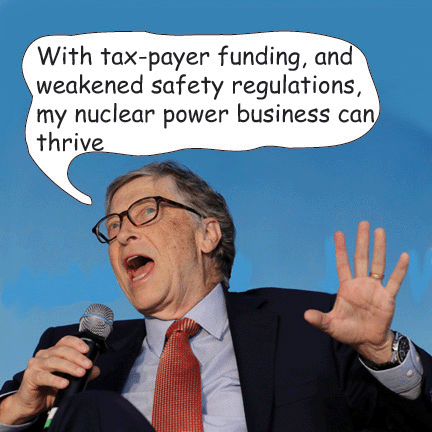
CASPER, Wyo. — TerraPower, the Bill Gates–founded company working toward building a new nuclear reactor in Kemmerer, Wyoming, said in a press release Monday that it has been awarded an $8.5 million grant from the U.S Department of Energy’s Advanced Research Project Agency – Energy (ARPA-E).
The grant funding is part of ARPA-E’s Optimizing Nuclear Waste and Advanced Reactor Disposal Systems (ONWARDS) program that aims to increase the use of nuclear power as a source of clean energy while limiting the amount of nuclear waste created by advanced reactors……
TerraPower and GE technology is going into the new Natrium nuclear reactor, which is expected to be built in Wyoming as part of the U.S. Department of Energy’s Advance Reactor Demonstration program.
“TerraPower is further demonstrating, through the Molten Chloride Reactor Experiment (MCRE), a uranium chloride salt–fueled concept with the DOE, Southern Company and other partners, and advancing medical research and innovation through its TerraPower Isotopes® subsidiary,” the press release states.
TerraPower President and CEO Chris Levesque added in the press release that “TerraPower continues to advance nuclear energy’s promise for our country and the world………… https://oilcity.news/wyoming/energy/2022/03/14/terrapower-receives-8-5m-grant-to-explore-recovering-uranium-from-used-nuclear-fuel/
1 This Month
26 April – Chernobyl: Inside the Meltdown airs on National Geographic on Sunday 26th April from 4pm
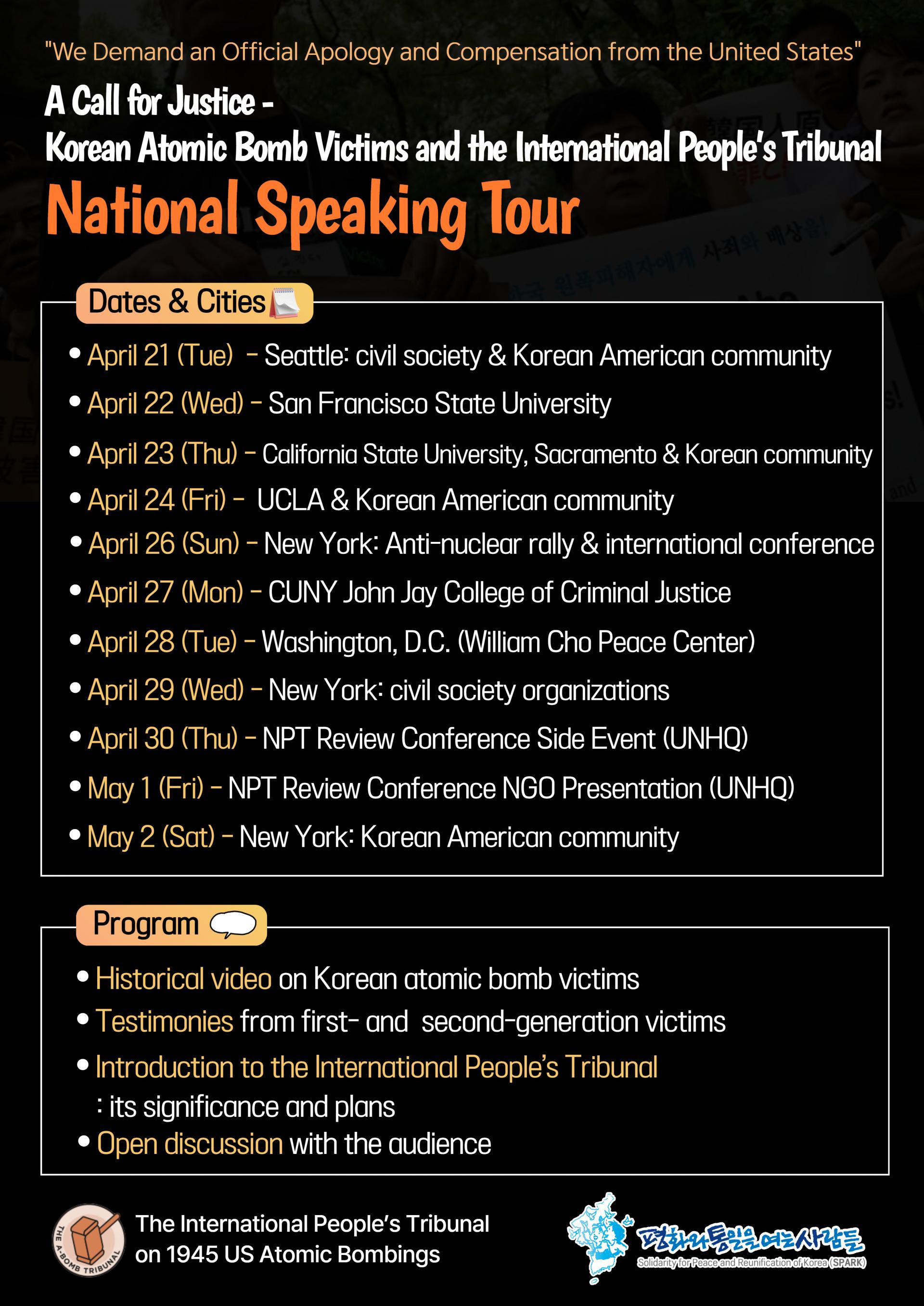

29 April – Nuclear Expert Webinar #1 – Radiation Impacts on Families with Mary Olson and Cindy Folkers
- 12:15 PM MT – 1:45 PM MT
- Location: Virtual – REGISTER TODAY

4 May -West Suburban Peace Coalition to discuss Iran war at May Educational Forum
Monday, May 4, 7:00 – 8:00 PM Central Standard Time
Title: : How Trump’s Narrative Tries to Shape the Reality of the War on Iran.
Contact Walt Zlotow, zlotow@hotmail.com 630 442 3045 for further information
14 May – online event From Bombs to Data Centres: the Face of Nuclear Colonialism

Pine Ridge Uranium is the real threat, not Tehran- Tell Burgum: Stop the Extraction.
Chernobyl: The Lost Tapes – A good documentary on Chernobyl on SBS available On Demand for the next 3 weeks– https://www.sbs.com.au/ondemand/tv-program/chernobyl-the-lost-tapes/2352741955560
To see nuclear-related stories in greater depth and intensity – go to https://nuclearinformation.wordpress.com
-
Archives
- May 2026 (25)
- April 2026 (356)
- March 2026 (251)
- February 2026 (268)
- January 2026 (308)
- December 2025 (358)
- November 2025 (359)
- October 2025 (376)
- September 2025 (257)
- August 2025 (319)
- July 2025 (230)
- June 2025 (348)
-
Categories
- 1
- 1 NUCLEAR ISSUES
- business and costs
- climate change
- culture and arts
- ENERGY
- environment
- health
- history
- indigenous issues
- Legal
- marketing of nuclear
- media
- opposition to nuclear
- PERSONAL STORIES
- politics
- politics international
- Religion and ethics
- safety
- secrets,lies and civil liberties
- spinbuster
- technology
- Uranium
- wastes
- weapons and war
- Women
- 2 WORLD
- ACTION
- AFRICA
- Atrocities
- AUSTRALIA
- Christina's notes
- Christina's themes
- culture and arts
- Events
- Fuk 2022
- Fuk 2023
- Fukushima 2017
- Fukushima 2018
- fukushima 2019
- Fukushima 2020
- Fukushima 2021
- general
- global warming
- Humour (God we need it)
- Nuclear
- RARE EARTHS
- Reference
- resources – print
- Resources -audiovicual
- Weekly Newsletter
- World
- World Nuclear
- YouTube
-
RSS
Entries RSS
Comments RSS
 nuclear-news