Biden’s team fears the aftermath of a failed Ukrainian counteroffensive
Behind closed doors, the administration worries about what Ukraine can accomplish.
Politico, By JONATHAN LEMIRE and ALEXANDER WARD, 04/24/2023
The Biden administration is quietly preparing for the possibility that if Ukraine’s spring counteroffensive falls short of expectations, critics at home and allies abroad will argue that America has come up short, too.
Ukraine’s ever-imminent counteroffensive will attempt to retake Russian-seized territory most likely in the east and south, though for operational reasons no senior officials from Kyiv have detailed specifics.
Publicly, President Joe Biden’s team has offered unwavering support for Ukraine, pledging to load it up with weapons and economic aid for “as long as it takes.” But, if the impending fighting season yields limited gains, administration officials have expressed privately they fear being faced with a two-headed monster attacking it from the hawkish and dovish ends of the spectrum.
One side will say that Ukraine’s advances would’ve worked had the administration given Kyiv everything it asked for, namely longer-range missiles, fighter jets and more air defenses. The other side, administration officials worry, will claim Ukraine’s shortcoming proves it can’t force Russia out of its territory completely.
That doesn’t even account for the reaction of America’s allies, mainly in Europe, who may see a peace negotiation between Ukraine and Russia as a more attractive option if Kyiv can’t prove victory is around the corner.
Inside the administration, officials stress they’re doing everything possible to make the spring offensive succeed.
“We’ve nearly completed the requests of what [Ukraine] said they needed for the counteroffensive as we have surged weapons and equipment to Ukraine over the past few months,” said one administration official who, like others, was granted anonymity to discuss sensitive internal considerations.
But belief in the strategic cause is one thing. Belief in the tactics is another — and behind closed doors the administration is worried about what Ukraine can accomplish.
Those concerns recently spilled out into the open during a leak of classified information onto social media. A top secret assessment from early February stated that Ukraine would fall “well short” of its counteroffensive goals. More current American assessments are that Ukraine may make some progress in the south and east, but won’t be able to repeat last year’s success……………………………………………………………………….. more https://www.politico.com/news/2023/04/24/biden-ukraine-russia-counteroffensive-defense-00093384
Nuclear vs Solar: The Race For Renewable Dominance
oil Price, By Alex Kimani – Nov 11, 2020
“………………………………………………………….. now some nuclear experts and activists are suggesting a middle-ground: The Green Nuclear Deal.
Far more Republicans (65%) than Democrats (42%) are pro-nuclear as per Gallup Polls.
………………………………………………….. The United States Department of Energy (DOE), Nuclear Engineering & Science Center at Texas A&M, and the Idaho National Laboratory (INL) have partnered with Chicago-based Clean Core Thorium Energy (CCTE) to develop a new thorium-based nuclear fuel they have dubbed ANEEL. ANEEL, which is short for “Advanced Nuclear Energy for Enriched Life”, is a proprietary combination of thorium and “High Assay Low Enriched Uranium” (HALEU) that hopes to solve some of the knottiest problems nuclear power faces, including high costs and toxic wastes.
That said, we pointed out that the main sticking point to the promotion of thorium as a cleaner nuclear fuel is that it remains unproven on a commercial scale. Thorium MSRs (Molten Salt Reactors) have been in development since the 1960s by the United States, China, Russia, and France, yet nothing much ever came of them. Further, only about 50 of the world’s 440 reactors can currently be configured to run on thorium.
We have also highlighted how scientists have finally broken ground by kicking off the five-year assembly phase of the massive International Thermonuclear Experimental Reactor (ITER), the world’s largest fusion reactor, in Saint-Paul-les-Durance, France. Funded by six nations, including the U.S., Russia, China, India, Japan, and South Korea, ITER will be the world’s largest tokamak fusion device with an estimated cost of ~$24 billion and capable of generating about 500 MW of thermal fusion energy as early as 2025. Unfortunately, practical nuclear fusion remains a long-shot and could be decades away from becoming a commercial reality.
We simply don’t have the luxury of time.
Further, nuclear power in the U.S. faces an uncertain future. Of the country’s 97 currently active commercial nuclear reactors, 11 are scheduled for retirement by 2025. Only the Watts Bar plant in Tennessee has been commissioned over the past two decades, though two new reactors at the Vogtle plant in Georgia could be pressed into action as early as 2021.
The biggest obstacle for nuclear power, however, is that it remains a tough sell with well-publicized nuclear disasters such as Chernobyl, Fukushima, and Three Mile Island still looming large in the American public’s psyche. A Morning Consult survey has revealed that just 29% of Americans view nuclear energy favorably with 49% viewing it negatively thus making it the most unpopular energy source.
Solar rising
Whereas the nuclear sector comeback has its work cut out for it, solar power has clearly been on the ascendancy thanks in large part to falling costs………………………………….
Strongly Bullish
Despite challenges, the solar sector remains strongly bullish.
Indeed, S&P Platts says that the shift to renewable energy is likely to continue full steam ahead regardless of fed policies noting that the energy transition has “clearly been moving forward on a regional basis,” despite lacking clear endorsement at the federal level under Trump.
It remains to be seen whether nuclear energy can command the same level of support. https://oilprice.com/Alternative-Energy/Nuclear-Power/Nuclear-vs-Solar-The-Race-For-Renewable-Dominance.html
Stop SpaceX from crashing rockets in the Pacific.
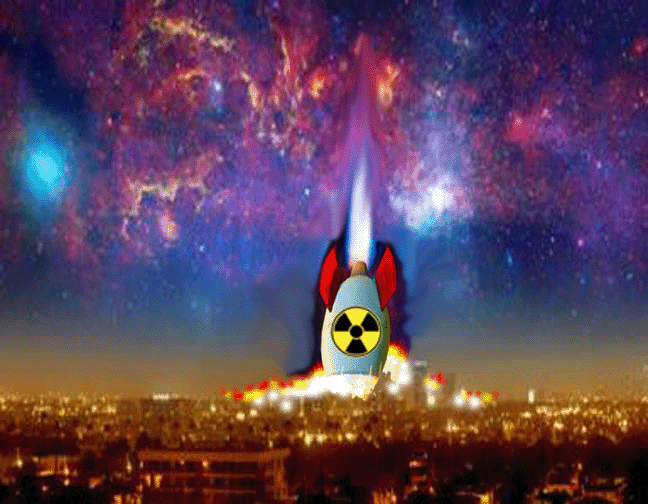
Hawaii should not be a collateral sacrifice zone for a private space company working for the pentagon
Hawaii needs to have input on SpaceX ocean-landing plan, STAR ADVERTISER. By Lynda Williams, APRIL 27, 2023
The world watched aghast as SpaceX blew up its own spaceship on April 20, four minutes after launch due to engine failure. Even though the mission was not completed, Elon Musk, CEO of SpaceX, claimed it was a success because the real goal was for the rocket to clear the launch pad at the spaceport in Boca Chica, Texas.
What most folks don’t know or realize is that Starship was always going to blow up when it crashlanded in the Pacific Ocean, just 62 nautical miles north of Kauai and a few hundred miles east of the Papahanaumokuakea Marine National Monument.
In the next test launch, which Musk boasted will happen in the next few months, the world’s largest spaceship will descend toward Earth in free fall and blow up upon impact with a force of a ton of TNT as fuel ignites in a great explosion. On a second and third launch test, Starship will break up in the atmosphere and tumble down and crash-land in a debris field several hundred miles southwest of the island chain.
SpaceX obtained a Federal Aviation Administration (FAA) commercial space launch license (experimental permit), rubber-stamped by the National Oceanic and Atmospheric Agency (NOAA) without any consultation of Hawaii’s people because, according to an email I received from the FAA: “No in-person public outreach was conducted in Hawaii as the Starship vehicle was planned to land outside of range for impacts to the residents of Hawaii.”
First of all, that is assuming everything goes exactly according to the plan, which we have all just witnessed doesn’t always happen. If the Starship goes off course by even a few degrees, the consequences could be catastrophic to Hawaii.
Secondly, I think most folks in Hawaii would agree that 62 miles north of Kauai is considered Hawaii culturally if not legally, and that is way too close for what is essentially a rocket bomb to crash-land.
SpaceX was not required to do a full environmental impact study (EIS), but a much-weaker environmental assessment (EA) that only requires the analysis of “nominal operations” or bestcase scenarios. Why was that allowed when the worst-case scenarios are so catastrophic?
In the EA, rather than doing a detailed analysis of the potential impact to marine mammals protected by the Endangered Species Act, NOAA wrote a “Biological Opinion” that argued “less than one” animal would be harmed by a 100 ton steel rocket exploding with the energy of a small nuclear bomb.
It came to that conclusion because it analyzed only one “nominal” scenario in which the rocket hits the water exactly horizontal to the surface with the fuel tanks orientated on top, which is impossible to control or predict. If the explosion is above water, NOAA argues, only a fraction of the energy will be transmitted into the ocean and travel deep enough to harm any of the 30 endangered species of whales, sharks, turtles, monk seals, dolphins and rays in Hawaii.
The EA has many unsubstantiated claims, such as no animals would be near the surface of the water during the crash — even though most are mammals that surface to breathe air.
It ignored the fact that Humpback whales migrate through the target “action area.” It assumed that most of the debris will be large enough to sink to the bottom of the ocean without encountering and injuring animals — but if any does drift into the Papahanaumokuakea Marine National Monument, then the Coast Guard would be sent to clean it up.
This alone is reason to contest the EA and demand an EIS since NOAA and the Office of Hawaiian Affairs co-manage Papahanaumokuakea and OHA should have been consulted, but was not.
The FAA and NOAA analyses are flawed, and both are failing in their duty to protect the people of Hawaii from extreme corporate and federal government abuse.
Hawaii must not become collateral damage and a colonized sacrifice zone for the government’s privatization of the space program and a billionaire’s personal ambition and corporate profits.
At minimum, the FAA must suspend the SpaceX license, conduct a full EIS and include the residents of Hawaii in the review process. The best plan is to ban SpaceX from trashing people and planet in Musk’s ego trip to Mars.
ISLAND VOICES
New nuclear tech not the answer to Canada’s climate woes, MPs say
National Observer, By Natasha Bulowski & Matteo Cimellaro, Ottawa Insider | April 26th 2023
Next-generation nuclear technology “has no part in fighting the climate emergency,” Green Party Leader Elizabeth May said Tuesday as a handful of MPs joined anti-nuclear activists to voice concern about the federal government’s intention to expand nuclear power.
“It, in fact, takes valuable dollars away from things that we know work, that can be implemented immediately, in favour of untested and dangerous technologies that will not be able to generate a single kilowatt of electricity for a decade or more,” the Saanich-Gulf Islands MP said at a cross-party press conference.
The comments came one day after Prime Minister Justin Trudeau said Canada must produce more nuclear power in the years to come. The federal government is funding the development of small modular reactors (SMRs) with a stated aim of replacing coal plants, powering heavy industry operations such as the oilsands and providing electricity for remote, diesel-reliant communities.
Ontario, Saskatchewan, New Brunswick and Alberta have agreed to a joint strategic plan for deploying SMRs to “provide safe, reliable and zero-emissions energy to power our growing economy and population.” In 2019, approximately 38 per cent of New Brunswick’s electricity generation was from nuclear, and Ontario is sitting at roughly 60 per cent.
…………critics argue the timelines, cost overruns and delays associated with building nuclear power generation facilities contrast with the need to immediately scale up fossil fuel-free energy to avoid the worst impacts of climate change. The longevity of radioactive waste, which is hazardous to human health and the environment, also raises questions among critics, as do concerns about nuclear proliferation.
Susan O’Donnell, a member of the Coalition for Responsible Energy Development in New Brunswick, warned: “SMRs create new types of toxic radioactive waste that would be very costly and difficult to isolate from the environment for millions of years.”
Some SMRs would extract plutonium — a radioactive, silvery metal used in nuclear weapons and power plants — mixed with other substances from nuclear fuel waste. But to do so undermines global nuclear weapons non-proliferation agreements, said O’Donnell, who is also an adjunct research professor in the environment and society program at St. Thomas University.
May, Liberal MP Jenica Atwin, Bloc Québécois MP Mario Simard and NDP MP Alexandre Boulerice attended the cross-party press conference on April 25…………..
May and Boulerice pointed to the influence of the nuclear industry on Parliament Hill and the close relationship between Natural Resources Canada and Atomic Energy of Canada Limited, a federal Crown corporation and the largest nuclear science and technology laboratory in the country.
“They don’t have to knock on the door to get into the house because they own the house,” said Boulerice of industry lobbyists.
“There’s no question that the nuclear industry has far more access to the Canadian Nuclear Safety Commission in terms of raising different concerns about SMRs” compared to the anti-nuclear camp, said O’Donnell.
The expansion and maintenance of nuclear power in Canada will have to deal with its significant waste problem. …………………..
…………………………………… not all agree Canada should remain a nuclear-dependent nation.
“I think the prime minister needs better advisers,” said O’Donnell, in reference to Trudeau’s recent comments that an expansion of nuclear energy will be necessary going forward………. https://www.nationalobserver.com/2023/04/26/news/new-nuclear-tech-not-answer-canada-climate-woes-mps-say
Lawmakers propose banning AI from singlehandedly launching nuclear weapons
29 Apr 23 https://www.theverge.com/2023/4/28/23702992/ai-nuclear-weapon-launch-ban-bill-markey-lieu-beyer-buck
Yes, this is already banned, but there are logical reasons to affirm the policy.
American Department of Defense policy already bans artificial intelligence from autonomously launching nuclear weapons. But amid rising fears of AI spurred by a plethora of potential threats, a bipartisan group of lawmakers has decided to make extra-double-sure it can’t.
As announced earlier this week, Senator Edward Markey (D-MA) and Representatives Ted Lieu (D-CA), Don Beyer (D-VA), and Ken Buck (R-CO) have introduced the Block Nuclear Launch by Autonomous AI Act, which would “prohibit the use of Federal funds to launch a nuclear weapon using an autonomous weapons system that is not subject to meaningful human control.” The act would codify existing Pentagon rules for nuclear weapons, which, as of 2022, read thusly:
“In all cases, the United States will maintain a human ‘in the loop’ for all actions critical to informing and executing decisions by the President to initiate and terminate nuclear weapon employment.”
The bill, by the same token, says that no autonomous system without meaningful human oversight can launch a nuclear weapon or “select or engage targets” with the intention of launching one. “Any decision to launch a nuclear weapon should not be made by artificial intelligence,” the text reads.
If this is already forbidden, why introduce the bill? Its sponsors note that a 2021 National Security Commission on Artificial Intelligence report recommended affirming a ban on autonomous nuclear weapons launches, not only to prevent it from happening inside the US government but to spur similar commitments from China and Russia.
Publicizing the bill calls attention to the potential dangers of current-generation autonomous artificial intelligence systems, a going concern in Congress and the tech world alike. And as indicated by the press release, it offers a chance to highlight the sponsors’ other nuclear non-proliferation efforts — like a recent bill restricting the president’s power to unilaterally declare nuclear war. I’ll let you make the obvious War Games joke yourself.
Plans to release nuclear wastewater into Hudson River delayed following outcry

Spectrum News, By John Camera Hudson Valley, Apr. 28, 2023
Manna Jo Greene, an Ulster County legislator and environmental director for Hudson River Sloop Clearwater, does not want to see the proposed release of nuclear wastewater from Indian Point into the Hudson River to go forward.
She says standards that deem the proposed discharge safe are outdated.
“And we’re also looking into whether or not this could impact communities that take their drinking water from the Hudson,” Greene said.
……………………………… For now, the release of about 300,000 gallons of nuclear wastewater has been slated for September, giving more time to determine the best path forward.
The next meeting from the Indian Point Decommissioning Oversight Board will take place June 15. https://spectrumlocalnews.com/nys/hudson-valley/news/2023/04/28/release-of-nuclear-wastewater-into-hudson-pushed-to-fall
MPs and activists push back as Ottawa pitches expansion of nuclear energy -“a dirty dangerous distraction”
Prime Minister Justin Trudeau says Canada is ‘going to have to be doing much more nuclear’
John Paul Tasker · CBC News · April 26 2023
Anti-nuclear activists and a cross-partisan group of MPs urged the federal government Tuesday to drop its support for nuclear energy projects, calling the energy source a “dirty, dangerous distraction” from climate action.
…………………………………… SMR technology is still in its infancy and it isn’t widely used around the world.
As of 2022, there were only three SMR projects in operation — one each in Russia, China and India — according to the International Energy Agency.
There are dozens of others under construction or in the design and planning phase — including one at Ontario Power Generation’s Darlington nuclear site.
Finance Minister Chrystia Freeland’s recent federal budget included a generous tax credit to spur clean energy development, including SMRs.
The industry lobby group, the Canadian Nuclear Association, has said the 15 per cent refundable tax credit is a recognition by Ottawa that nuclear power is “a fundamental and necessary component of Canada’s low carbon energy system.”
Susan O’Donnell, a professor and a member of the Coalition for Responsible Energy Development in New Brunswick, said Prime Minister Justin Trudeau and his cabinet are getting bad advice about nuclear energy.
“The nuclear industry, led by the U.S. and the U.K., has been lobbying and advertising heavily in Canada, trying to convince us that new SMR designs will somehow address the climate crisis,” O’Donnell told a press conference on Parliament Hill on Tuesday.
She said SMRs will produce “toxic radioactive waste” and could lead to serious “accidents” while turning some communities into “nuclear waste dumps.”
She also said there’s “no guarantee these nuclear experiments will ever generate electricity safely and affordably,” since SMRs are still relatively untested.
“Canada is wasting time that must be urgently spent on genuine climate action,” she said. “This is a dirty, dangerous distraction. We don’t need nuclear power.”
Asked how Canada would meet its baseload power requirements — the power that is needed 24 hours a day without fluctuation — without nuclear power or fossil fuel sources like natural gas, O’Donnell pointed to promising developments in energy storage technology.
Liberal MP Jenica Atwin was at the anti-nuclear press event.
“I want to be clear, I’m here as an individual, a concerned individual and a mother,” she said — before launching into remarks that raised questions about the “associated risks” and “many unknowns” of nuclear energy development, which is expected to see a sharp increase in activity due to her government’s proposed tax policies.
“When it comes to nuclear, there’s no margin for error,” Atwin said. “This is a time of action. We don’t have the luxury of waiting to see if things will pan out.”
Green Party Leader Elizabeth May, who once sat in caucus with Atwin before she decamped to the Liberals, said government funding for nuclear projects is a “fraud.”
“It has no part in fighting the climate emergency. In fact, it takes valuable dollars away from things that we know work, that can be implemented immediately, in favour of untested and dangerous technologies that will not be able to generate a single kilowatt of electricity for a decade or more,” May said……………………………………………………https://www.cbc.ca/news/politics/anti-nuclear-activists-ottawa-1.6821807
Biden and South Korea’s Yoon sign new agreement on nuclear weapons
By Jean Mackenzie in Seoul & Madeline Halpert in New York, BBC News 26 Apr 23
US President Joe Biden and South Korean President Yoon Suk-yeol have secured a landmark deal which includes plans to periodically deploy US nuclear-armed submarines in South Korea.
Washington has also agreed to involve Seoul in its planning for any use of nuclear weapons against North Korea.
In return, South Korea has agreed to not develop its own nuclear weapons.
………………………………… It does not ink a total commitment from the US that it would use nuclear weapons to defend South Korea if North Korea were to attack.
……… Plans for a nuclear-armed submarine to visit South Korea for the first time in four decades adds further weight to the US commitment.
In return, the US has demanded that South Korea remain a non-nuclear state and a faithful advocate of the non-proliferation of nuclear weapons. The US sees dissuading South Korea from going nuclear as essential, fearful that if it fails, other countries may follow in its footsteps.
But it is unclear how this commitment will be received by the influential, and increasingly vocal, group of academics, scientists and members of South Korea’s ruling party who have been pushing for Seoul to arm itself. https://www.bbc.com/news/world-us-canada-65404805
US nuclear weapons modernization plan spurs cost questions

Susan Montoya Bryan, Independent. 27 April 23
The U.S. agency that oversees development and maintenance of the nation’s nuclear arsenal is moving ahead with plans to modernize production of key components for the weapons, but some watchdog groups and members of Congress are concerned about persistent delays and cost overruns.
The National Nuclear Security Administration released its annual plan on Monday, outlining the multibillion-dollar effort to manufacture plutonium pits, the spherical cores that trigger the explosion in thermonuclear weapons, at national laboratories in New Mexico and South Carolina.
The Savannah River Site in South Carolina faces a 2030 deadline to make 50 pits per year. Officials already have acknowledged they won’t meet that timeline, and this year’s report no longer includes a target date for Los Alamos National Laboratory, in New Mexico, to meet its goal of 30 pits per year.
Last year’s report had pegged 2026 as the year when manufacturing would be up and running at Los Alamos, which played a key role in the Manhattan Project during World War II and was the birthplace of the atomic bomb……………..
The Biden administration is requesting $18.8 billion for weapons activities, a 10% increase over spending for the last fiscal year. Modernization of production accounts for $5.6 billion of the request.
Members of congressional subcommittees blasted Hruby and top defense officials during hearings in recent weeks about the delays and the increasing price tag. Hruby acknowledged that it would be another year before her agency would have a full cost estimate.
The NNSA fell short when it came to having a comprehensive schedule for the project and ran the risk of delays and increasing budgets because its plans for reestablishing plutonium pit production didn’t follow best practices, according to a January Government Accountability Office report.
Democratic U.S. Sen. Elizabeth Warren of Massachusetts suggested during a hearing this month that the NNSA was making up its plan as it goes along and that the timeline would be extended even further.
“It is not unreasonable for Congress to ask you to tell us how long a project is going to take and how much it’s going to cost in exchange for our forking over billions of dollars. And I suggest that’s what NNSA be required to do before we give them another penny,” Warren told Hruby……… https://www.independent.co.uk/news/world/americas/national-nuclear-security-administration-ap-congress-albuquerque-south-carolina-b2327627.html
Canada’s push for small nuclear reactors will be costly, ineffective, some MPs warn
By David Fraser, The Canadian Press, Tue., April 25, 2023
Prime Minister Justin Trudeau has asserted that Canada is “very
serious” about developing nuclear technology across the country to meet
growing power needs, but some members of Parliament are warning the
technology could be costly and ineffective.
A Liberal MP is among the critics who say Ottawa is looking at an expensive investment into an unproven and potentially dangerous technology. The federal government
started actively exploring small modular reactor technology in 2018, and
released an action plan in 2020 that dubbed them a strategic Canadian asset
that could leverage significant economic, geopolitical, social and
environmental benefits.
But Green Party Leader Elizabeth May says other
renewable energy sources are getting cheaper, so there’s not much of a case
for Canada to expand its capacity on that technology, which she said is
being pushed by powerful lobbyists.
Liberal MP Jenica Atwin, who was first
elected under the Green banner, said she is used to being an outlier in her
caucus, but the party has allowed her to express her concerns about the
unknowns of emerging nuclear technologies. Four nuclear energy stations are
generating about 15 per cent of Canada’s electrical grid today, mostly in
Ontario and New Brunswick, and as the facilities age more attention is
being paid to the potential of smaller, more-portable reactors.
Toronto Star 25th April 2023
Once Shocking, U.S. Spying on Its Allies Draws a Global Shrug
April 13, 2023, New York Times https://www.nytimes.com/2023/04/13/us/politics/us-spying-allies.html
The last time a trove of leaked documents exposed U.S. spying operations around the world, the reaction from allied governments was swift and severe.
In Berlin, thousands of people protested in the streets, the C.I.A. station chief was expelled, and the German chancellor told the American president that “spying on friends is not acceptable.” In Paris, the American ambassador was summoned for a dressing-down.
That was a decade ago, after an enormous leak of classified documents detailing American surveillance programs by … Edward Snowden. The latest leak of classified documents that appeared online this year, the motive behind which remains unknown, has again illustrated the broad reach of U.S. spy agencies, including into the capitals of friendly countries such as Egypt, South Korea, Ukraine and the United Arab Emirates.
Though the documents mainly focus on the war in Ukraine, they include C.I.A. intelligence briefs describing conversations and plans at senior levels of government in those countries, in several cases attributed to “signals intelligence,” or electronic eavesdropping.
Unlike in 2013, however, U.S. allies appear to be mostly shrugging off the latest examples of apparent spying. So far, the only evident political fallout from the latest leaks has occurred in South Korea, where one classified U.S. document described a debate among senior national security officials about whether to send artillery shells abroad that might wind up in Ukraine, potentially angering Russia.
US Senators and Congress Members introduce Bill to stop A1 from power to launch a nuclear weapon.

MARKEY, LIEU, BEYER, AND BUCK INTRODUCE BIPARTISAN LEGISLATION TO PREVENT AI FROM LAUNCHING A NUCLEAR WEAPON
Washington (April 26, 2023) – Senator Edward J. Markey (D-Mass.) and Representatives Ted W. Lieu (CA-36), Don Beyer (VA-08) and Ken Buck (CO-04) today introduced the bipartisan and bicameral Block Nuclear Launch by Autonomous Artificial Intelligence Act, legislation to safeguard the nuclear command and control process from any future change in policy that allows artificial intelligence (AI) to make nuclear launch decisions.
The Department of Defense’s 2022 Nuclear Posture Review states that current policy is to “maintain a human ‘in the loop’ for all actions critical to informing and executing decisions by the President to initiate and terminate nuclear weapon employment” in all cases. The Block Nuclear Launch by Autonomous AI Act would codify the Department’s existing policy by ensuring that no federal funds can be used for any launch of any nuclear weapon by an automated system without meaningful human control. Furthermore, the National Security Commission on Artificial Intelligence, established by Congress through the FY19 National Defense Authorization Act, recommended in their final report that the U.S. clearly and publicly affirm its policy that only human beings can authorize employment of nuclear weapons. This bill follows through on their recommendation.
“As we live in an increasingly digital age, we need to ensure that humans hold the power alone to command, control, and launch nuclear weapons – not robots,” said Senator Markey. “That is why I am proud to introduce the Block Nuclear Launch by Autonomous Artificial Intelligence Act. We need to keep humans in the loop on making life or death decisions to use deadly force, especially for our most dangerous weapons.”……………………………………………………………………………………………….
In April, Senator Markey and Representative Lieu reintroduced the Restricting First Use of Nuclear Weapons Act to prohibit any U.S. President from launching a nuclear strike without prior authorization from Congress. Last October, Senator Markey, then-member of Senate Foreign Relations Committee, filed eight amendments to the National Defense Authorization Act (NDAA) to reduce the risk of ‘nuclear Armageddon’ and stop the proliferation of nuclear weapons. Last January, co-chairs of the Nuclear Weapons and Arms Control Working Group, Senators Markey and Jeff Merkley (D-Ore.) and Representatives John Garamendi (CA-03) and Beyer led 51 of their colleagues in a letter to President Joe Biden urging the United States to take bold steps to reduce the nation’s reliance on nuclear weapons and to elevate arms control. https://www.markey.senate.gov/news/press-releases/markey-lieu-beyer-and-buck-introduce-bipartisan-legislation-to-prevent-ai-from-launching-a-nuclear-weapon
In Indiana, small nuclear reactors don’t need to be “small” any more.

ED. – the picture above is of a NuScale smr design, not Rolls Royce, but the principle is the same. It’s not really small, and they know that truly small reactors are not economically viable.
New law boosts maximum size of nuclear reactors permitted in Indiana
nwi.com Dan Carden, Apr 24, 2023
Gov. Eric Holcomb approved a new state law Thursday increasing the maximum size of the small modular nuclear reactors that someday may be used by utility companies to generate electricity in Indiana.
Senate Enrolled Act 176, which took effect immediately, redefines a small modular reactor (SMR) as a nuclear reactor capable of generating up to 470 megawatts of energy — a 34% increase from the state’s former 350 MW generating cap.
Rep. Ed Soliday, R-Valparaiso, the sponsor of the legislation, said the higher generating capacity encompasses more of the nascent SMR market, including a 450 MW reactor designed by Rolls-Royce, an aircraft engine manufacturer based in Indianapolis…………………………………………..
State lawmakers directed the Indiana Utility Regulatory Commission last year to adopt rules by July 1, 2023, that would permit nuclear SMRs to be used to generate electricity in the Hoosier State……….
Critics of the plans have said there’s no need for Indiana to lead the way with nuclear SMRs, especially through rules that give utilities built-in profits, other incentives and the opportunity to recoup potentially billions of dollars in construction costs from ratepayers before a nuclear reactor actually generates any electricity. https://nwitimes.com/business/technology/new-law-boosts-maximum-size-of-nuclear-reactors-permitted-in-indiana/article_3962a672-8e8c-5168-bc88-31cc6891a88b.html
The US Has No Plans to Give Up Nuclear Weapons. The Public Needs to Change That.

While the U.S. nuclear enterprise has widespread support by both Democrat and Republican members of Congress, one of the boldest shows of opposition to nuclear weapons was voiced by Michigan congresswoman Rep. Rashida Tlaib, who has expressed her support for the Treaty for the Prohibition of Nuclear Weapons (TPNW). Additional support for the prohibition of TPNW (also called the “ban treaty”) came from Massachusetts Rep. James McGovern and Oregon Rep. Earl Blumenauer, who introduced a resolution in 2019 calling for “the American people to work towards reducing and ultimately eliminating nuclear weapons.” Furthermore, in 2022, more than 200 U.S. mayors collectively called for the adoption of a timebound plan for the total elimination of nuclear weapons.

A first step toward anti-nuclear advocacy is becoming aware of the current sprawling state of the U.S. nuclear arsenal.
By Jon Letman , TRUTHOUT April 24, 2023
hen Russian President Vladimir Putin announced his intention to deploy short-range nuclear missiles to Belarus in March, he pointed to U.S. nuclear weapons housed in five NATO nations as justification. Putin said the construction of a “special repository” for an Iskander missile complex in Belarus would not violate obligations under the Nuclear Nonproliferation Treaty.
But by accepting the deployment of Russian nuclear weapons, Belarus President Alexander Lukashenko would be reversing more than three decades free of nuclear weapons after it pledged to abandon them in 1991. Like Ukraine and Kazakhstan, Belarus gave up Soviet nuclear weapons shortly after the USSR broke apart.
In a statement, Daniel Högsta, acting executive director of the International Campaign to Abolish Nuclear Weapons (ICAN) said, “As long as Putin has nuclear weapons, Europe cannot be safe.” He also warned that decades of “nuclear sharing” with NATO nations “helps give Putin cover,” posing a grave risk far beyond Europe.
ICAN has played a central role in advocating for the UN Treaty on the Prohibition of Nuclear Weapons which entered into force in 2021. Although 68 countries have ratified the treaty which prohibits all aspects of developing, possessing or threatening to use nuclear weapons, none of the nine nuclear-armed nations — Russia, the United States, China, France, the United Kingdom, Pakistan, India, Israel and North Korea — recognizes the treaty.
According to the Federation of American Scientists’ Nuclear Information Project, the U.S. houses an estimated 100 B61 gravity bombs on air bases in five NATO nations (Belgium, Germany, Italy, the Netherlands and Turkey). Usually described as “tactical” or nonstrategic nuclear weapons, the new B61-12, which will replace older versions of the B61, has a selectable yield (energy released in a nuclear explosion) that can be adjusted from 0.3 to 50 kilotons. The atomic bombs which destroyed Hiroshima and Nagasaki were 15 and 21 kilotons respectively.
Daryl Kimball, executive director of the Arms Control Association, said that describing a nuclear weapon as “tactical” may lead people to wrongly assume that such weapons are necessarily “smaller,” less destructive, and would be confined to a battlefield or limited geographic area.
That, he said, is a dangerous assumption. ……………………………………………………
According to research by the Federation of American Scientists’ Nuclear Information Project, the United States maintains an estimated total inventory of 5,244 nuclear weapons, including reserve warheads and retired warheads awaiting dismantlement. Currently, 3,708 nuclear warheads make up the military stockpile (those weapons which could potentially be used in war).
Within the stockpile, the U.S. has 1,770 deployed nuclear warheads that make up the nuclear triad of air, land and sea-based bombs…………………………………….
Under the Sea
Widely considered to be least vulnerable to attack are long-range submarine-launched ballistic missiles (SLBM). The United States has two Strategic Weapons Facilities, one for the Pacific beside Naval Base Kitsap in Bangor, Washington, 20 miles west of Seattle, and a second facility for the Atlantic at Naval Submarine Base Kings Bay, Georgia…………………………………………………………………………
The U.S.’s Nuclear Sponge
The third leg of the nuclear triad is its intercontinental ballistic missiles (ICBMs), which are housed in fortified underground silos in five states (Montana, Colorado, Nebraska, Wyoming and North Dakota). The ICBM force is made up of aging Minuteman III missiles which are slated to be replaced with a new $96 billion system called Sentinel (formerly called Ground Based Strategic Deterrent).
Plagued by scheduling delays and cost overruns, there is growing public support for phasing out ICBMs. Despite this, the bipartisan congressional ICBM Coalition’s support is all but unshakable. But the idea of creating what has been called a “nuclear sponge” (referring to the idea that ICBM silos would attract enemy missiles and, like a sponge, soak up an incoming attack), raises serious questions about why rural communities only began receiving greater government support for improved communications and transportation infrastructure after they started hosting nuclear weapons. “I think it’s important to interrogate that and ask why the needs of the missiles have so often come before the needs of the people who actually live there,” Korda said.
In addition to the SLBM, ICBMs and bombers, Korda and his colleague Hans M. Kristensen have documented additional nuclear warheads (many awaiting dismantlement) at a storage complex in New Mexico and, Korda noted, California has “very important nuclear weapons infrastructure” which could potentially host a small number of nuclear weapons for design purposes.
Finally, there is the Pantex Plant near Amarillo, Texas, which describes itself as “the nation’s primary assembly, disassembly, retrofit, and life-extension center for nuclear weapons.” The dismantlement of retired nuclear warheads is ongoing but, Korda said, the pace has slowed in recent years……………………………………….
In recent years, arms control treaties such as the Intermediate-Range Nuclear Forces Treaty, the Open Skies Treaty and the Joint Comprehensive Plan of Action (“Iran Nuclear Deal”) have been abandoned by the U.S., Russia, or both. The last remaining nuclear arms control treaty between the U.S. and Russia, the New Strategic Arms Reduction Treaty (New START), was extended for five years just two days before it expired in 2021 but in February, Russia announced it was suspending participation, leaving the last U.S.-Russia arms control treaty hanging by a thread.
With the end of inspections, data exchanges, and much-needed communication between Washington and Moscow, as well as Beijing, Kimball worries mistrust can lead to the assumption of worst-case scenarios. He says there is a great need for increased public awareness and engagement on nuclear issues.
While the U.S. nuclear enterprise has widespread support by both Democrat and Republican members of Congress, one of the boldest shows of opposition to nuclear weapons was voiced by Michigan congresswoman Rep. Rashida Tlaib, who has expressed her support for the Treaty for the Prohibition of Nuclear Weapons (TPNW). Additional support for the prohibition of TPNW (also called the “ban treaty”) came from Massachusetts Rep. James McGovern and Oregon Rep. Earl Blumenauer, who introduced a resolution in 2019 calling for “the American people to work towards reducing and ultimately eliminating nuclear weapons.” Furthermore, in 2022, more than 200 U.S. mayors collectively called for the adoption of a timebound plan for the total elimination of nuclear weapons.
“This is an existential threat that demands engagement even with our worst adversaries and even with a bona fide war criminal like Vladimir Putin because our survival ultimately depends on it.”
Without dialogue and diplomatic engagement, the result, Kimball warned, could be an unconstrained three-way arms race between Russia, China and the U.S. “If we didn’t have enough problems already,” Kimball said, “it still can get worse.”
The public has a vital role in all this, Kimball said. “Over the long course of the nuclear age, concerned U.S. citizens have stood up and demanded that their leaders take action to reduce the number and the risks posed by nuclear weapons by engaging in arms control and disarmament diplomacy with our adversaries. That effort has to be renewed again.” https://truthout.org/articles/the-us-has-no-plans-to-give-up-nuclear-weapons-the-public-needs-to-change-that/
—
Presidential candidate Robert F. Kennedy Jr. vows to ‘unwind US empire’
Rt.com 23 Apr 23
Robert F. Kennedy Jr., nephew of JFK, is set to challenge Joe Biden for the Democratic nomination in 2024
US presidential candidate Robert F. Kennedy Jr has pledged to wind down American military interventionism abroad if he is elected to the White House in 2024.
Kennedy, who is the son of Robert F. Kennedy and the nephew of former President John F. Kennedy, confirmed his candidacy for the Democratic nomination at a campaign rally in Boston last week, placing him in competition with current US leader Joe Biden.
Also known for being a prominent anti-vaccine activist, the 69-year-old environmental lawyer has acknowledged that he is not an “ideal” candidate given his often-controversial brand of discourse, but has argued that he is “not one of those people who said I have to be careful because one day I’m going to be in the White House.”
Chief among Kennedy’s campaign proposals, as noted in a six-point plan published on his official website, would be drawing a line through US military interventionism abroad and “start[ing] the process of unwinding [an] empire.”
We will bring the troops home. We will stop racking up unpayable debt to fight one war after another. The military will return to its proper role of defending our country,” the plan stated, adding that “America cannot be an empire abroad and a democracy at home.”
Regarding the Ukraine conflict, Kennedy stated that the US mission is “to end the suffering of the Ukrainian people.” However, he argued that Ukrainians are “victims” not just of Russia, but also of “American geopolitical machinations going back to at least 2014.”
Kennedy, who has never held significant public office, has drawn criticism from health experts – and even members of his own family – amid various outspoken comments throughout his career. In 2005, a prominent science publication issued a stinging rebuke of claims he made in which he appeared to link the development of autism to vaccines.
His wife, the actress Cheryl Hines, condemned Kennedy last year for invoking the name of Anne Frank and the Holocaust while describing US vaccine requirements. He later withdrew the comments…..https://www.rt.com/news/575267-us-kennedy-unwin-empire/
 | |||
| to me | |||
1 This Month



19 November – Webinar – The Reality of Reprocessing
Time: 11:00 AM Pacific Time (US & Canada) / 2:00 PM Eastern / 7:00 PM UK / 8:00 PM CET
Register for the Zoom Event Here



Shut down the radiation-damaged Heysham nuclear reactors now
To see nuclear-related stories in greater depth and intensity – go to https://nuclearinformation.wordpress.com

Say No to NASA’s Reckless Nuclear Reactor on the Moon
Say No to NASA’s Reckless Nuclear Reactor on the Moon
-
Archives
- November 2026 (64)
- October 2026 (302)
- September 2026 (339)
- August 2026 (330)
- July 2026 (355)
- June 2026 (287)
- May 2026 (306)
- April 2026 (356)
- March 2026 (251)
- February 2026 (267)
- January 2026 (308)
- December 2025 (358)
-
Categories
- 1
- 1 NUCLEAR ISSUES
- business and costs
- climate change
- culture and arts
- ENERGY
- environment
- health
- history
- indigenous issues
- Legal
- marketing of nuclear
- media
- opposition to nuclear
- PERSONAL STORIES
- politics
- politics international
- Religion and ethics
- safety
- secrets,lies and civil liberties
- spinbuster
- technology
- Uranium
- wastes
- weapons and war
- Women
- 2 WORLD
- ACTION
- AFRICA
- Atrocities
- AUSTRALIA
- Christina's notes
- Christina's themes
- culture and arts
- Events
- Fuk 2022
- Fuk 2023
- Fukushima 2017
- Fukushima 2018
- fukushima 2019
- Fukushima 2020
- Fukushima 2021
- general
- global warming
- Humour (God we need it)
- Nuclear
- RARE EARTHS
- Reference
- resources – print
- Resources -audiovicual
- Weekly Newsletter
- World
- World Nuclear
- YouTube
-
RSS
Entries RSS
Comments RSS

