A clean energy transition means moving away from nuclear power

Because we’ve stalled for so long in getting off coal, oil and gas for electricity generation, we need solutions that can be scaled up quickly and affordably.
the Intergovernmental Panel on Climate Change’s Sixth Assessment report shows that nuclear power delivers only 10 per cent of the results of wind and solar at far higher costs.
by David SuzukiMay 24, 2023 https://rabble.ca/environment/a-clean-energy-transition-means-moving-away-from-nuclear-power/
As the impacts of climate disruption become more frequent and intense, we need a range of solutions. One that’s getting a lot of attention is nuclear power.
Industry is pushing hard for it, especially “small modular reactors,” and the federal government has offered support and tax incentives. After 30 years without building any new reactors, Ontario is also jumping onto the nuclear bandwagon again. How should we react?
Along with its many known problems, as an inflexible, costly baseload power source, nuclear is becoming as outdated as fossil fuels. Small modular reactors will create even more waste and cost more — and slow the necessary transition to renewable energy.
Many disadvantages of nuclear are well known. It can contribute to weapons proliferation. Radioactive waste remains highly toxic for a long time and must be carefully and permanently stored or disposed of. And while serious accidents are rare, they can be devastating and difficult to deal with, as the Chernobyl and Fukushima disasters demonstrated.
Uranium to fuel nuclear also raises problems, including high rates of lung cancer in miners and emissions from mining, transport and refining. Add that to the water vapour and heat it releases, and nuclear power produces “on average 23 times the emissions per unit electricity generated” as onshore wind, according to Stanford University professor Mark Jacobson.
But the biggest issues are that nuclear power is expensive — at least five times more than wind and solar — and takes a long time to plan and build. Small modular reactors are likely to be even more expensive, especially considering they’ll produce far less electricity than larger plants. And because the various models are still at the prototype stage, they won’t be available soon.
Because we’ve stalled for so long in getting off coal, oil and gas for electricity generation, we need solutions that can be scaled up quickly and affordably.
The last nuclear plant built in Ontario, Darlington, ended up costing $14.4 billion, almost four times the initial estimate. It took from 1981 to 1993 to construct (and years before that to plan) and is now being refurbished at an estimated cost of close to $13 billion. In 1998, Ontario Hydro faced the equivalent of bankruptcy, in part because of Darlington.
Ontario’s experience isn’t unique. A Boston University study of more than 400 large-scale electricity projects around the world over the past 80 years found “on average, nuclear plants cost more than double their original budgets and took 64 per cent longer to build than projected,” the Toronto Star reports. “Wind and solar, by contrast, had average cost overruns of 7.7 per cent and 1.3 per cent, respectively.”
China has been building more nuclear power plants than any other country — 50 over the past 20 years. But in half that time, it has added 13 times more wind and solar capacity.
As renewable energy, energy efficiency and storage technologies continue to rapidly improve and come down in price, costs for nuclear are rising. As we recently noted, the Intergovernmental Panel on Climate Change’s Sixth Assessment report shows that nuclear power delivers only 10 per cent of the results of wind and solar at far higher costs. In the time it takes to plan and build nuclear, including small modular reactors, and for much less money, we could be putting far more wind, solar and geothermal online, and developing and increasing storage capacity, grid flexibility and energy efficiency.
The amount it will cost to build out sufficient nuclear power — some of which must come in the form of taxpayer subsidies — could be better put to more quickly improving energy efficiency and developing renewable energy such as wind, solar and geothermal.
Putting money and resources into nuclear appears to be an attempt to stall renewable electricity uptake and grid modernization. Small modular reactors are likely to cost even more than large plants for the electricity they generate. And, because more will be required, they pose increased safety issues.
David Suzuki Foundation research shows how Canada could get 100 per cent reliable, affordable, emissions-free electricity by 2035 — without resorting to expensive and potentially dangerous (and, in the case of small modular reactors, untested) technologies like nuclear.
What we know about the federal government’s ongoing nuclear waste plans in New Mexico
Adrian Hedden, Carlsbad Current-Argus https://www.currentargus.com/story/news/2023/05/24/what-we-know-about-federal-nuclear-waste-plans-in-new-mexico-waste-isolation-pilot-plant-wipp/70242952007/
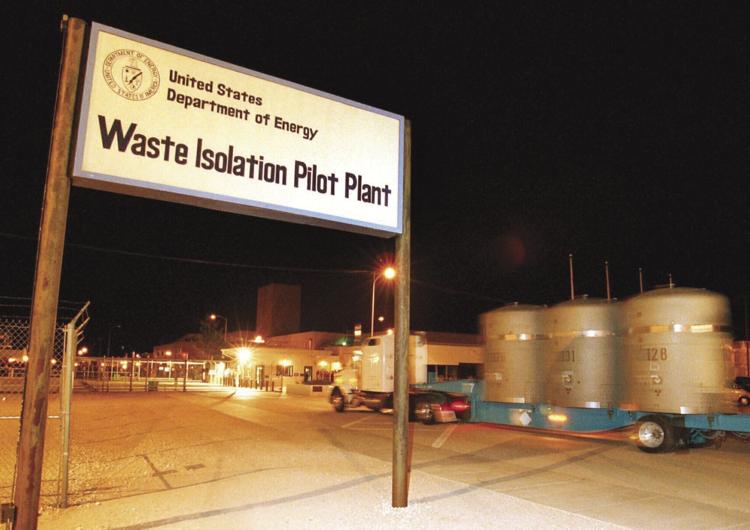
Southeast New Mexico is home to the nation’s only repository for nuclear waste at the Waste Isolation Pilot Plant about 30 miles east of Carlsbad.
At WIPP, transuranic (TRU) nuclear waste from across the country is trucked in and buried in a salt deposit about 2,000 feet underground.
The waste comes from national laboratories and other facilities owned by the U.S. Department of Energy and WIPP is managed by the DOE’s Office of Environmental Management to clean up waste left at generator sites and new waste produced through the agency’s ongoing nuclear activities.
Here are the key takeaways from the federal government’s recent accomplishments and plans for WIPP future.
Air system at WIPP hoped to finish construction
Two projects were underway at WIPP intended to rebuild its underground ventilation system and improve airflows for workers in the underground.
After an accidental radiological release in 2014 air was restricted at the site, limiting personnel in the underground, and slowing progress in emplacing waste for disposal and mining new areas of the facility.
The Safety Significant Confinement Ventilation System (SSCVS) project along with a new utility shaft to act as an air intake were expected to increase available air at WIPP from 170,000 cubic feet per minute (cfm) to 540,000 cfm.
In 2023, the DOE said it hoped the primary construction of the SSCVS – a series of building and filters that will clean the air at WIPP before exhausting it at the surface- would be finished in 2023
In 2022, the DOE reported it partially completed constructing the SSCVS’ new filter building.
WIPP’s utility shaft finished this year
Meanwhile, the DOE planned to finish sinking the utility shaft to its planned depth of 2,150 feet underground.
The agency also reported it was 50 percent complete in mining a west access drift for the new shaft as of 2022.
Goal set for 400 shipments of nuclear waste to WIPP in 2023
The DOE said it hoped to send about 400 shipments of TRU waste to WIPP from its generator sites in 2023.
This would be the most shipped to WIPP since the 2014 incident, and subsequent three-year shutdown of WIPP’s underground operations.
Included in this listed priority was also ensuring no backlog of waste at Los Alamos National Laboratory (LANL) in northern New Mexico, in response to pressure from the State of New Mexico that instate facilities be prioritized by the DOE for cleanup.
The DOE estimated it was taking in about two shipments a week from Los Alamos, contending they were sent to WIPP as soon as the drums were ready for transport.
Since opening in 1999, WIPP accepted 1,608 shipments from LANL, about 12 percent of WIPP’s total of 13,460 shipments, according to DOE records.
The DOE completed its 2022 goal, read the report, of 30 LANL shipments.
Where else does WIPP get its waste from?
Other major shippers include Idaho National Laboratory – WIPP’s biggest shipper – with 6,880 shipments sent to the repository opened, about 51 percent of WIPP’s total.
The second-biggest active shipper was the Savannah River site in South Carolina, which sent 1,714 shipments in total during WIPP’s lifetime, records show.
The decommissioned Rocky Flats Environmental Technology Site near Denver was the second-biggest overall shipper to WIPP with 2,045 shipments of nuclear waste to the repository.
Nuclear waste retrieved from Texas site could go to WIPP
Buoying the DOE’s priorities at LANL was a goal for this year to retrieve drums of Los Alamos waste from the Waste Control Specialists (WCS) facility in Andrews, Texas and likely prepare them for disposal at WIPP.
The DOE reported after last year it “partially completed” a goal to install equipment needed for this work.
The DOE was originally slated, via an agreement with the Texas Commission on Environmental Quality (TCEQ), to remove the 74 waste boxes from LANL stored at WCS in 2014 temporarily amid WIPP’s closure as it resumed operations in 2017.
The TCEQ “extended the deadline multiple times” for the waste’s removal from WCS, read a May 2022 letter from the agency to the DOE, or the State of Texas would take “additional enforcement actions.”
Adrian Heddencan be reached at 575-628-5516,achedden@currentargus.com or@AdrianHedden on Twitter.
Biden Okays F-16s For Ukraine, US Weapons To Attack Crimea

Moscow has considered Crimea a part of the Russian Federation since its annexation in 2014, meaning efforts to recapture it would — at least in theory — be treated the same as an invasion of any other part of Russia. It was only by way of an arbitrary bureaucratic fluke that Crimea wound up a part of Ukraine after the fall of the Soviet Union, and Crimeans overwhelmingly prefer to be a part of the Russian Federation. That we may soon be staring down the barrel of a nuclear third world war over something so pedantic is a very dark shade of absurd.
As Tapper noted, both the F-16 decision and the Crimea decision marked a sharp policy shift by the Biden administration in just a few months. This proxy war just keeps escalating and escalating, with aggressions once deemed unthinkable due to their likelihood of sparking a nuclear exchange now becoming commonplace. Every time a new once-unthinkable escalation is enacted, the hawks are already pushing for the next one.
CAITLIN JOHNSTONE, MAY 22, 2023 https://caitlinjohnstone.substack.com/p/biden-okays-f-16s-for-ukraine-us?utm_source=post-email-title&publication_id=82124&post_id=123001716&isFreemail=true&utm_medium=email
The Biden administration has signed off on both F-16s for Ukraine and attacks on Crimea using US-made weapons. Both of these moves have drawn dire warnings from nuclear-armed Russia, and both would have been unthinkable a year ago.
In a Sunday interview with CNN’s Jake Tapper from the G7 summit in Hiroshima, Biden’s National Security Advisor Jake Sullivan made it clear that Washington would approve of US weapons being used in an offensive to recapture Crimea, a horrifying prospect that many experts have agreed is the most likely scenario to lead to nuclear warfare in this conflict. Sullivan told Tapper that while the US has forbidden the use of American weapons to attack Russia, the US considers Crimea to be part of Ukraine, not Russia.
Here’s CNN’s transcript of the exchange:
TAPPER: In February on this show, you would not say whether the U.S. would support Ukrainian efforts to recapture Crimea. That’s one of the concerns that has been expressed about whether or not the Ukrainians are given the ability to hit Russian targets in Crimea. Do you think that Crimea is part of Ukraine?
SULLIVAN: Of course.
TAPPER: So, what would be the objection of giving…
SULLIVAN: Crimea is Ukraine.
TAPPER: Right.
SULLIVAN: I mean, that’s a very straightforward thing.
TAPPER: Well, yes you answered it directly. I mean, Russia doesn’t think so, obviously. But do you think that Ukraine should have weapons that can reach Russian targets in Crimea?
SULLIVAN: Yes. We have not placed limitations on Ukraine being able to strike on its territory within its internationally recognized borders. What we have said is that we will not enable Ukraine with U.S. systems, Western systems, to attack Russia. And we believe Crimea is Ukraine.
TAPPER: OK.
Moscow has considered Crimea a part of the Russian Federation since its annexation in 2014, meaning efforts to recapture it would — at least in theory — be treated the same as an invasion of any other part of Russia. It was only by way of an arbitrary bureaucratic fluke that Crimea wound up a part of Ukraine after the fall of the Soviet Union, and Crimeans overwhelmingly prefer to be a part of the Russian Federation. That we may soon be staring down the barrel of a nuclear third world war over something so pedantic is a very dark shade of absurd.
In the same interview, Tapper questioned Sullivan about the Biden administration’s policy shift toward approving F-16 fighter jets to be sent to Ukraine, demanding to know why the war planes weren’t approved sooner.
“President Biden told the G7 leaders that the United States is going to support this joint effort to train Ukrainian pilots to fly F-16 fighter jets,” said Tapper. “As you know, just a few months ago, the president said there was no basis militarily for giving Ukraine jets and that Ukraine didn’t need them at all. What changed? And would these jets not have been more effective if Ukraine had been trained and had them in time for the upcoming counteroffensive?”
It’s so obnoxious how the only time you ever see these mass media propagandists challenging the US government on its warmongering is when they’re pushing it to be more warlike and demanding answers on why it isn’t warmongering more. This creates the illusion of brave adversarial journalism, when in reality these empire cronies are just manufacturing consent for the increased aggressions the US wants to wage anyway.
These escalations have drawn stern warnings from Moscow, which have just been casually hand-waved away by Biden like he’s rejecting jello for dessert. In an article titled “Russia Says West Providing F-16s to Ukraine a ‘Colossal Risk’”, Antiwar’s Dave DeCamp writes the following:
A Russian official said Saturday that the Western plans to provide Ukraine with American-made F-16 fighter jets bring “colossal risks” after the US announced it would sign off on European countries delivering the aircraft.
“We see that Western countries are still adhering to the escalation scenario. It involves colossal risks for themselves,” said Russian Deputy Foreign Minister Alexander Grushko, according to TASS.
“In any case, this will be taken into account in all our plans, and we have all the necessary means to achieve the goals we have set,” Grushko added.
During the last day of the G7 Summit in Hiroshima, Japan, President Biden was asked about Russia calling the F-16 plan a “colossal risk.” He replied, “It is for them.”
As Tapper noted, both the F-16 decision and the Crimea decision marked a sharp policy shift by the Biden administration in just a few months. This proxy war just keeps escalating and escalating, with aggressions once deemed unthinkable due to their likelihood of sparking a nuclear exchange now becoming commonplace. Every time a new once-unthinkable escalation is enacted, the hawks are already pushing for the next one.
As we’ve discussed previously, this pattern of continually escalating nuclear brinkmanship in Ukraine has built-in incentives for Russia to ramp up its own aggressions against NATO itself. Every time the west ramps up its brinkmanship and crosses another once-taboo line in the sand without Moscow responding with direct military confrontation, the west takes this as a sign that it can ramp up the escalations again. This has put things on a trajectory toward more and more direct western-backed attacks on the Russian Federation unless Russia lashes out at NATO powers in some way to show them it’s not worth it. Which would be about as dangerous an occurrence as you could possibly imagine.
It is not okay for our rulers to play games with our lives like this. It is not okay for them to keep rolling the dice on nuclear escalation more and more often in the name of securing US unipolar hegemony. These people are making it abundantly clear that sanity and level-headedness are not in the driver’s seat here. Everyone on earth should be shouting a loud, unequivocal “no” to this at the top of their lungs.
US Electricity From Renewable Energy Beat Electricity From Coal Or Nuclear In 2022

Since 2007, the use of coal for electricity generation has generally been in decline, while the use of renewables has been on the rise. Electricity generation from nuclear had remained relatively flat over the last two decades but has experienced a slight decline in recent years. In 2022, net generation of electricity from renewables reached 0.91 billion megawatt-hours, topping both coal and nuclear (0.83 and 0.77 billion megawatt-hours, respectively). In 2022, renewables accounted for about 21% of all net generation of electricity.
- Renewable sources of power include wind, solar, hydropower, biomass, and geothermal energy. “Other” category includes petroleum liquids, petroleum coke, batteries, chemicals, hydrogen, pitch, purchased steam, sulfur, miscellaneous technologies, and non-renewable waste.
- Electricity net generation is the amount of gross electricity generation a generator produces minus the electricity used to operate the power plant.
Source: U.S. Energy Information Administration, Electricity Data Browser, queried April 21, 2023.
View the supporting data for this Fact of the Week.
Nuclear would be labeled ‘clean energy’ under new legislation

KEVIN GARCIA-GALINDO, MAY 22, 2023, The Carolina Journal
Senate Bill 678, “Promote Clean Energy,” currently in the N.C. House Rules Committee, could pave the way for more investment in nuclear energy in North Carolina.
The bill would relabel “renewable energy resources” as “clean energy resources” in the State’s Renewable Energy Portfolio Standard and add nuclear fission and fusion into the definition of clean energy. If approved by the state legislature, this bill would make nuclear energy a viable option toward replacing coal-fired power plants with new cleaner sources.
S.B. 678 would also help further the proliferation of nuclear energy by eliminating statutes that had previously restricted the construction of nuclear facilities in House Bill 951, which passed in 2021.
COOPER INDICATES RESISTANCE
The N.C. Senate passed S.B. 678 in late April, but it is now seeing opposition from Gov. Roy Cooper. At the State Energy Conference last month, Cooper told business leaders that he did not want politicians to be seen as influencing which energy sources are prioritized over others.
Environmental activist group CleanAIRE NC told the Wilmington Star-News in a statement that “nuclear energy may be zero-emission, but it is not renewable and it’s certainly not clean. … Uranium is a mined resource. And on the backend storing nuclear waste poses major, unanswered safety questions. With wind and solar capacity rapidly expanding, is it really worth gambling with our health and safety?”
A Cooper spokesperson stated that the governor would not look at the bill until it reached his desk………………………………………………….. https://www.carolinajournal.com/nuclear-would-be-labeled-clean-energy-under-new-legislation/
Robert F Kennedy’s Peace Platform – BRING IT HOME
In the long term, a nation’s strength does not come from its armies. America spends as much on weaponry as the next nine nations combined, yet the country has grown weaker, not stronger, over the last 30 years. Even as its military technology has reigned supreme, America has been hollowing out from the inside. We cannot be a strong or secure nation when our infrastructure, industry, society, and economy are infirm.
A high priority of a Kennedy administration will be to make America strong again. When a body is sick, it withdraws its energy from the extremities in order to nourish the vital organs. It is time to end the imperial project and attend to all that has been neglected: the crumbling cities, the antiquated railways, the failing water systems, the decaying infrastructure, the ailing economy. Annual defense-related spending is close to one trillion dollars. We maintain 800 military bases around the world. The peace dividend that was supposed to come after the Berlin Wall fell was never redeemed. Now we have another chance.
As President, Robert F. Kennedy, Jr. will start the process of unwinding empire. We will bring the troops home. We will stop racking up unpayable debt to fight one war after another. The military will return to its proper role of defending our country. We will end the proxy wars, bombing campaigns, covert operations, coups, paramilitaries, and everything else that has become so normal most people don’t know it’s happening. But it is happening, a constant drain on our strength. It’s time to come home and restore this country.
In Ukraine, the most important priority is to end the suffering of the Ukrainian people, victims of a brutal Russian invasion, and also victims of American geopolitical machinations going back at least to 2014. We must first get clear: Is our mission to help the brave Ukrainians defend their sovereignty? Or is it to use Ukraine as a pawn to weaken Russia? Robert F. Kennedy will choose the first. He will find a diplomatic solution that brings peace to Ukraine and brings our resources back where they belong. We will offer to withdraw our troops and nuclear-capable missiles from Russia’s borders. Russia will withdraw its troops from Ukraine and guarantee its freedom and independence. UN peacekeepers will guarantee peace to the Russian-speaking eastern regions. We will put an end to this war. We will put an end to the suffering of the Ukranian people. That will be the start of a broader program of demilitarization of all countries.
We have to stop seeing the world in terms of enemies and adversaries. As John Quincy Adams wrote, “Americans go not abroad in search of monsters to destroy.” Robert F. Kennedy will revive a lost thread of American foreign policy thinking, the one championed by his uncle, John F. Kennedy who, over his 1000 days in office, had become a firm anti-imperialist. He wanted to exit Vietnam. He defied the Joint Chiefs of Staff and refused to bomb Cuba, thus saving us from nuclear Armageddon. He wanted to reverse the imperialistic policies of Truman and Eisenhower, rein in the CIA, and support freedom movements around the world. He wanted to revive Roosevelt’s impulse to dissolve the British empire rather than take it over.
John F. Kennedy’s vision was tragically cut short by an assassin’s bullet. But now we have another chance. The country is ailing, yes, but underneath there is vitality still. America is a land rich in resources, creativity, and intelligence. We just need to get serious about healing our society, to become strong again from the inside.
America was once an inspiration to the world, a beacon of freedom and democracy. Our priority will be nothing less than to restore our moral leadership. We will lead by example. When a warlike imperial nation disarms of its own accord, it sets a template for peace everywhere. It is not too late for us to voluntarily let go of empire and serve peace instead, as a strong and healthy nation.
$3 BILLION Pentagon ‘accounting error’ means more weapons for Ukraine
What’s a lazy couple of billion in U.S. taxpayer dollars when there’s a war in Eastern Europe to fight? That question was answered Thursday when the Defense Department revealed it can send more weapons to Ukraine without Congress spending approval after the Pentagon overestimated the value of the arms it has already sent Kyiv by some $3 billion.
AP reports the error was caused when officials wrongly used valuation for new equipment, rather than for used equipment drawn from U.S. stocks, to assess the cost of weapons already despatched to the war zone.
The poor accounting methodology has been exposed as the Pentagon faces increased pressure by Congress to show accountability for the billions of dollars it has sent in weapons, ammunition, equipment, and training to Ukraine and as some lawmakers question whether that level of support is sustainable.
In many of the military aid packages, the Pentagon has opted to drain stockpiles of older, existing gear because it can get those items to Ukraine faster. Pentagon spokeswoman Sabrina Singh addressed the financial mess by saying:
During our regular oversight process of presidential drawdown packages, the Department discovered inconsistencies in equipment valuation for Ukraine.
In some cases, ‘replacement cost’ rather than ‘net book value’ was used, therefore overestimating the value of the equipment drawn down from U.S. stocks.
She added the mistake hasn’t constrained U.S. support to Ukraine or hampered the ability to send aid to the battlefield.
According to the AP report, a defense official said the Pentagon is still trying to determine exactly how much the total surplus will be.
The official, who spoke on condition of anonymity to discuss internal deliberations, said the comptroller has asked the military services to review all previous Ukraine aid packages using the proper cost figures.
The result, said the official, will be that the department will have more available funding authority to use as the Ukraine offensive nears.
The aid surplus was first reported by the Wall Street Journal.
To date the U.S. has provided Ukraine nearly $37 billion in military aid since Russia invaded in February 2022.
The rush of U.S. weapons to Ukraine has already sparked a warning that domestic military stockpiles have been pushed to “dangerously low levels” not seen for decades. https://www.breitbart.com/politics/2023/05/19/oops-3-billion-pentagon-accounting-error-means-more-arms-for-ukraine/
Nuclear Fusion breakthrough hits hurdles as five experiments fail

Japan Times, BY DAVID R. BAKER, BLOOMBERG 17 May 23,
The U.S. government lab that made a long-awaited breakthrough in fusion energy late last year has run five similar experiments since then without being able to replicate the results.
The milestone came in December as the the Lawrence Livermore National Laboratory near San Francisco reported achieving the first fusion reaction that produced more energy than it took to create — a threshold known as ignition. The achievement opened the possibility of power plants one day running on nuclear fusion, the same energy source as the sun.
Since then, the lab has run five similar experiments, shooting the world’s most powerful laser at small diamond capsules filled with hydrogen, said Lawrence Livermore Director Kim Budil. But so far, ignition hasn’t been achieved again…………….
Speaking at an event at the lab Monday celebrating December’s breakthrough, U.S. Energy Secretary Jennifer Granholm said the federal government would spend $45 million over the next four years to create a series of research hubs pursuing the kind of fusion achieved at Lawrence Livermore, known as inertial confinement. https://www.japantimes.co.jp/news/2023/05/09/business/nuclear-fusion-experiments-fail/
Pentagon seeks authority to transfer nuclear submarines (and costs) to Australia
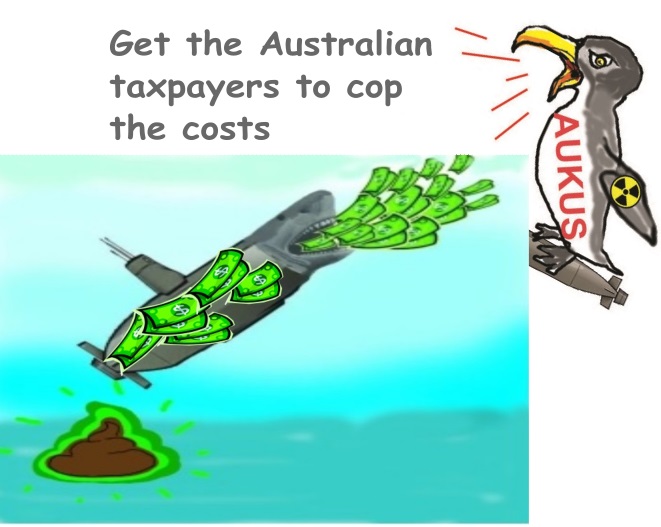
Finally, the Pentagon is also asking Congress for permission to accept Australian payments to bolster the U.S. submarine industrial base. Australia has offered to make an undisclosed sum of investments in the U.S. submarine industrial base as part of AUKUS.
Defense News, By Bryant Harris and Megan Eckstein 17 May 23
WASHINGTON — The U.S. Department of Defense asked Congress to authorize the transfer of nuclear-powered submarines to Australia as part of the trilateral AUKUS agreement with the U.K.
Three legislative proposals, submitted on May 2 and first posted online Tuesday, would greenlight the sale of two Virginia-class submarines to Australia, permit the training of Australian nationals for submarine work and allow Canberra to invest in the U.S. submarine industrial base………………
“Importantly, the proposals spell out a clear path forward to facilitate the transfer of Virginia-class submarines to Australia while ensuring we have the necessary authorities to accept the Australian Government’s investments to enhance our submarine industrial base capacity and provide training for Australian personnel.” – Rep. Joe Courtney of Connecticut, the top Democrat on the Armed Services Committee’s sea power panel
AUKUS stipulates that Australia will buy at least three and as many as five Virginia-class submarines in the 2030s as part of phase two of the agreement, giving Congress more than a decade to authorize the sale. This year’s proposal, which the Pentagon hopes will become part of the fiscal 2024 National Defense Authorization Act, asks that Congress approve just two of those submarines “without a deadline to consummate the transfers and without specifying the specific vessels to be transferred.”
The proposal argues that this “small amount of flexibility is necessary” since the transfers depend on Australian readiness to operate the submarines, which will involve developing Australia’s submarine industrial base through training and appropriate shipyard infrastructure.
To that end, a second legislative proposal would authorize U.S. defense service exports directly to Australia’s private sector in order to train its own submarine workers……..
Finally, the Pentagon is also asking Congress for permission to accept Australian payments to bolster the U.S. submarine industrial base. Australia has offered to make an undisclosed sum of investments in the U.S. submarine industrial base as part of AUKUS.
The Pentagon states in the legislative proposal that those funds would be used to “add a significant number of trade workers” that will help address “the significant overhaul backlog” for the Virginia-class submarine. Australian monies would also be used for “advance purchasing of components and materials that are known to be replacement items for submarine overhauls” and “outsourcing less complex sustainment work to local contractors.”
Congress is also making its own investments to expand the U.S. submarine industrial base as the Navy ultimately aims to build two Virginia-class and one Columbia-class submarines per year. Courtney helped secure $541 million in submarine supplier development and $207 million in workforce development initiatives as part of the FY 23 government funding bill.
Austal USA, the American subsidiary of Australia-based Austal, plans to open a new facility at its shipyard in Mobile, Alabama to begin construction on nuclear submarine modules for General Dynamics’ Electric Boat shipyard in Connecticut, which produces both Virginia and Columbia-class submarines. Austal expects it will need 1,000 new hires in Mobile to staff that facility.
At Electric Boat, the prime contractor for the Virginia- and Columbia-class submarine programs, the hiring need will be even greater. The company currently employs more than 19,000 people, after hiring 3,700 new workers in 2022, according to local newspaper The Day. But the company needs to hire 5,750 new workers this year, to manage attrition and to help grow the workforce to about 22,000 to handle the increased workload.
The legislative proposal notes that Australian funds “would be applied to recruitment, training, incentivizing, and retention of key skilled trades, engineering and planning personnel in both nuclear and non-nuclear disciplines that are required by the additional AUKUS workload.” https://www.defensenews.com/congress/2023/05/17/pentagon-seeks-authority-to-transfer-nuclear-submarines-to-australia/
Should SC have canceled Plant Summer? Yes, and Ga. should have canceled, too

https://www.postandcourier.com/columbia/opinion/should-sc-have-canceled-plant-summer-yes-and-ga-should-have-canceled-too/article_a298d894-f34c-11ed-8647-cfd2ea480900.html By Patty Durand 17 My 23
In a recent Post and Courier opinion piece, author Kevin Fisher quoted an Atlanta Journal-Constitution headline, “Georgia Power began splitting atoms on Monday at one of its two new nuclear units at Plant Vogtle.” In his piece, he expressed regret that SCANA and Santee Cooper botched and then abandoned Plant Summer, costing ratepayers about $9 billion while getting nothing in return.
It might seem logical to think that spending $9 billion for something you did not receive meant the decision to stop was wrong, but in the case of Plant Summer, it was absolutely the right decision. Rather than taking up space here, please type “sunk cost fallacy” into any search engine after you read this article.
People who wish South Carolina had not canceled Plant Summer must not realize how much trouble Georgians are in over the cost of Plant Vogtle. Now approaching $40 billion, it is the most expensive power plant ever built on earth.
As Georgia Power continues to rack up billions of dollars of cost overruns for Plant Vogtle, botched is hardly a strong enough word to describe this project. According to documents filed at the Georgia Public Service Commission prepared by independent construction monitors, issues plaguing the project include unachievable schedules, a culture of poor work inspections, failure to document progress, violation of IEEE standards and component failure rates of 80 percent. Failure to adopt lessons learned has also been a bedrock theme.
Although Georgia officials like to say zero carbon energy is a benefit of Plant Vogtle, let’s be clear: reduced carbon emissions were not why this plant was built. Georgia has no renewable energy goals and last July the Ga PSC authorized 2300 MW of new natural gas generation. Georgia doesn’t even track carbon emissions.
This plant happened because Georgia Power’s business model rewards capital investment, a perverse incentive that results in overbuilding and delivers rich profits. Georgia Power has already earned billions of dollars in early profits just for construction financing costs from riders on electricity bills. Once both reactors begin operating Georgia Power bills are expected to increase a shocking 20 percent for 60 years to pay for it.
For a state already in the top 10 for high power bills and energy poverty, these increases will be more than many people can bear.
Since South Carolina has half the population of Georgia, state officials knew that billions of dollars of cost overruns for Plant Summer would have been divided over a small number of customers and electricity rate increases would have been unbearable. That is why officials wisely canceled Plant Summer.
And look at what South Carolina has accomplished since Plant Summer was canceled: The 2014 landmark energy bill known as the Distributed Energy Resources (DER) program has flourished in ways it would not have with the heavy costs and distractions of building a nuclear power plant which crowds out other investments.
In 2023 South Carolina is a top 10 state for affordable electric bills and is ranked 13th nationally for rooftop solar. Georgia is the opposite: we are a top 10 state for most expensive electric bills and in 43rd place for rooftop solar — practically last. Rooftop solar is too expensive for almost everyone since Georgia officials do nothing to support it, so customers are forced to pay big electricity bills profiting Georgia Power. Once construction costs are added to the rates Georgia Power bills will become the highest in the nation because of Plant Vogtle. This is the fate South Carolina avoided by cancelling Plant Summer.
South Carolina officials who made the tough call to cancel Plant Summer in 2017 should be thanked for that decision. Utility officials who lied about Plant Summer’s progress were held accountable, while utility officials in Georgia similarly providing false schedule updates and cost estimates have had no accountability.
And by the way? The “splitting of atoms” at Plant Vogtle’s Unit 3 that began April 1 is no longer occurring. This unit shut down May 5, for the second time in the past month, for safety failures. Cost overruns continue.
Patty Durand is founder of Cool Planet Solutions and is a candidate for the Georgia Public Service Commission.
The Women of Three Mile Island
CounterPunch BY KARL GROSSMAN 12 May 23
Radioactive: The Women of Three Mile Island is the title of a newly-released documentary feature film directed, written and produced by award-winning filmmaker Heidi Hutner, a professor of environmental humanities at Stony Brook University, a “flagship” school of the State University of New York.
With greatly compelling facts and interviews, she and her also highly talented production team have put together a masterpiece of a documentary film.
It connects the proverbial dots of the 1979 Three Mile Island nuclear plant disaster—doing so brilliantly.
The documentary has already received many film awards and has had a screening in recent months in New York City—winning the “Audience Award for Best Documentary” at the Dances With Films Festival—and Harrisburg, Pennsylvania; Sarasota, Florida; Dubuque, Iowa; Long Island, New York; First Frame International Film Festival in New York City; the Environmental Film Festival in Washington D.C., and is soon the featured film at Kat Kramer’s #SHEROESForChange Film Festival in Los Angeles and the Cinequest Film Festival in San Jose, California, as well as the Uranium Film Festival in Rio de Janeiro in Brazil. And there will be tours across the U.S.
Resident after resident of the area around Three Mile Island is interviewed and tells of widespread cancer that has ensued in the years that have followed the accident—a cancer rate far beyond what would be normal. Accounts shared in the documentary are heartbreaking.
A whistleblower who had worked at the nuclear plant tells Hutner of the deliberate and comprehensive attempt by General Public Utilities, which owned TMI, to cover up the gravity of the accident and its radioactive releases, especially of cancer-causing Iodine-131 and Xenon 133.
An attorney, Lynne Bernabei, involved in litigation in the wake of the accident, says the Three Mile Island “cover-up was one of the biggest cover-ups in history.” Meanwhile, the U.S. Nuclear Regulatory Commission which is “supposed to protect the public” has then and since been just “interested in is promoting the [nuclear] industry. This is corrupt,” says attorney Joanne Doroshow, now a professor at New York Law School and director of the Center for Justice & Democracy. Many examples of this are presented.
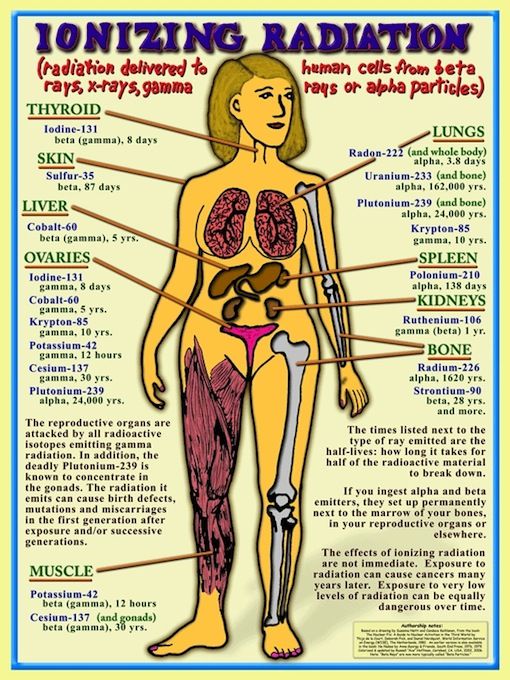
The documentary’s focus on women includes women being far more at risk to the effects of radioactivity than men. Mary Olson, a biologist, founder, and director of the Gender & Radiation Impact Project, says in the film that those setting radiation standards in the U.S. from the onset of nuclear technology in 1942, based impacts on a “25 to 30 years-old” male “defined as Caucasian.” She said, “It has come to be known as the ‘Reference Man.” However, Olson cites research findings that “radiation is 10 times more harmful to young females” and “50 percent more harmful to a “comparable female” than it is to “Reference Man” who is “more resistant” to radioactivity than a woman.
There’s the scientist Dr. Aaron Datesman, who is now pursuing a major chromosomal study regarding the impact of the disaster on the health of people in the area, and how people have been harmed despite the denials of the nuclear industry. This study is based on his recent ground-breaking work, “Radiological Shot Noise,” in Nature.
And more and more.
………………………………… Hutner, in speaking about the focus on women in Radioactivity: The Women of Three Mile Island, explains: “Following health and safety disasters, it is often women on the ground fighting back, and over and over throughout nuclear history, these women are gaslighted, silenced, called hysterical and ‘radiophobic.’ The result of such silencing: we lose significant information about nuclear history, science, and health.”
Hutner goes on: “What I have dug up after over 20 years of ecofeminist research is shocking—Dr. Alice Stewart’s research on the danger of X-rays to fetuses in the womb; Rachel Carson’s writing about radiation and bioaccumulation; Dr. Helen Caldicott’s warnings about the dangers of nuclear weapons and her peace and vital medical health advocacy as a physician (she has been attacked mercilessly and unfairly by male critics on sexist grounds); Mary Olson’s study of the alarming danger of radiation to girls and women, Leona Morgan’s decolonization activism to protect indigenous communities from uranium extraction and poisoning, and the dumping radioactive waste on native lands; poet activist Kathy Jetnil-Kijner’s story-telling about the suffering of women miscarrying in the Marshall Islands after the 67 nuclear test-bombing by the U.S. There are endless stories such as these.”
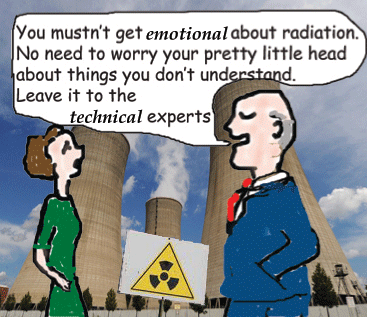
“By erasing such women’s voices, by gaslighting these women, men have erased significant human stories, science, research,” says Hutner. “This is a classic sexist maneuver. Call women and those who speak up about the dangers of nuclear technology as radiophobic, hysterical, and incapable of understanding science. As the women in Radioactivity explain, when they spoke at the Nuclear Regulatory Hearings and meetings, asking intelligent questions about the verity of the nuclear company’s and NRC’s claims, and armed with detailed information regarding their corruption and cover-ups—what really happened—the women were laughed at, mocked, told to ‘go home and bake cookies.’”
“That’s why we made Radioactive. The public needs to know and understand how they are being lied to, how key aspects of nuclear disasters and radiation impacts have been swept under the rug. And at what cost. This is life and death. An so we focus on buried women stories, and in subsequent film projects we hope to make as part of a series, we will bring in the silenced voices of black, brown, and women’s indigenous groups impacted unequally by nuclear disasters.”
She adds: “The film could not come at a more important time for a number of reasons. With nuclear power being discussed in some circles as an ‘answer’ to our climate crisis, we believe anyone seeing this film will walk away with the unmistakable conclusion that nuclear power must be off the table. TMI is one of a long list of environmental disasters and cover-ups that have caused serious harm to surrounding communities, which will last decades. It was and continues to be the lesson of what happens when a corporation and industry lacking integrity, regulated by an agency completely captured by that industry, is put in charge of people’s lives. TMI happened 44 years ago. But when it comes to systems meant to protect the public’s health and safety from nuclear hazards, nothing has changed and in fact, has only gotten worse.”
Comments about the documentary include:………………………………………………………………………………………..
The documentary website is: https://radioactivethefilm.com/. There you will find listings for upcoming screenings.
Hutner says: “We made Radioactive: The Women of Three Mile Island because the issue of nuclear dangers has ‘died’ as an important cause. It was once a global movement. Front page news. One million people marched in Central Park and so did millions around the world. The big screen popped with blockbusters on the topic. Today: few know or care about nuclear dangers—historical or in the present.”
“Sadly,” Hutner continues, “younger folks are taught nothing in school about nuclear history except a brief lesson (if they are taught anything) on how great nuclear energy is. My students are shocked and aghast at what they learn in my classes (in-depth history and present information). They’ve heard a little bit about Hiroshima and Nagasaki, and they have heard of Chernobyl (barely). They haven’t a clue about anything else. They don’t know what nuclear power is or how it functions. They don’t think about nuclear weapons and the potential for nuclear obliteration.”
“The nuclear industry has won its plan to silence this history and science. They’ve invested heavily in painting a pretty picture, erasing facts, and denigrating concerned citizens, particularly women, as I have explained. There’s no recognition of the great harm done to fetuses, babies, children—especially girl children. There’s a complete disregard for the poisoning of communities of color. Dr. Robert Bullard, the father of the environmental justice movement, and Winona LaDuke, a leading indigenous ecofeminist activist, call this environmental racism.”
“Pronuclear films by Bill Gates, Oliver Stone, Robert Stone, leave out essential information — real experiences of real people who live next to reactors, live with and in disaster zones and highly toxic areas,” Hutner notes. “From what I can see—these guys (note their gender and color) have not spoken with or met the people who live with high rates of cancer and multigenerational cancers in disaster locations. They don’t visit and spend time in these communities. Childhood cancers. Heart disease. Infertility. Deformed babies. Miscarriages. Infertility. On and on.”
“These pro-nuke guys,” Hutner continues, “do not address the science that shows the dangers of radiation exposures or the future of inevitable meltdowns. They blackball this science. They don’t discuss radioactive waste—where and how it’s maintained (poorly—putting all life at risk for thousands of years). And the location of the waste? Mostly indigenous lands and always poorly stored. Waste right on-site at the nuclear facilities, leaving communities located next to and near power plants at risk for thousands of years. They dump nuclear waste in waterways.”…………………………………………………………………………… more https://www.counterpunch.org/2023/05/12/the-women-of-three-mile-island/?fbclid=IwAR0PdDIrL2eXpRa9KFGN2aL7xSLkUwNYVIZFotFrfpKHlRmi8kQSeNCxKUQ
8 arrested at nuclear protest on Mother’s Day
https://www.kitsapdailynews.com/news/8-arrested-at-nuclear-protest-on-mothers-day/ By Staff report • May 15, 2023
A small group of nuclear arms protesters celebrated Mother Earth on Mother’s Day by getting arrested.
Despite the heat, eight peace activists held banners that read, “The Earth is Our Mother Treat Her With Respect” and “Nuclear Weapons are Immoral to Use, Immoral to Have, Immoral to Make.”
Brenda McMillan, 89, wore a T-shirt with Julian Ward Howe’s plea, “Disarm, Disarm!”
The activists are all with Ground Zero Center for Nonviolent Action in Poulsbo. They were cited and released by state troopers for pedestrian on roadways infractions.
Demonstrators included Lee Alden of Bainbridge Island, Sue Ablao of Bremerton, Carolee Flaten of Hansville and Tom Rogers of Keyport.
Traffic was halted and diverted as the 15-member Seattle Peace Chorus Action Ensemble, sang “The Lucky Ones,” an original composition by director Doug Balcom, to the guards and Navy personnel. The song describes the different stages of personal, regional and global destruction that a nuclear war would inflict on humanity.
The civil disobedience was part of Ground Zero’s annual observance of Mother’s Day, first suggested in the United States in 1872 by Howe as a day dedicated to peace.
Earlier in the day 45 people gathered to plant rows of sunflowers at the Ground Zero Center directly across from the Trident Submarine Base. Naval Base Kitsap-Bangor is homeport to the largest concentration of deployed nuclear warheads in the U.S. The nuclear warheads are deployed on Trident D-5 missiles on SSBN submarines and are stored in an underground nuclear weapons storage facility on the base.
Rogers, a retired Navy captain and former nuclear submarine commanding officer who was cited for participating in the action, said, “The destructive power of the nuclear weapons deployed here on board Trident submarines, is beyond human imagination. The simple fact is, that a nuclear exchange between the great powers would end civilization on our planet.”
Biden is selling weapons to the majority of the world’s autocracies

Despite the White House’s rhetoric about supporting global democracy, the U.S. sold weapons in 2022 to 57 percent of the world’s authoritarian regimes.
Stephen Semler, May 11 2023, The Intercept
SINCE PRESIDENT JOE BIDEN came into office in 2021, he hasdescribed a “battle between democracies and autocracies” in which the U.S. and other democracies strive to create a peaceful world. The reality, however, is that the Biden administration has helped increase the military power of a large number of authoritarian countries. According to an Intercept review of recently released government data, the U.S. sold weapons to at least 57 percent of the world’s autocratic countries in 2022.
Since the end of the Cold War, the United States has been the world’s biggest weapons dealer, accounting for about 40 percent of all arms exports in a given year. In general, these exports are funded through grants or sales. There are two pathways for the latter category: foreign military sales and direct commercial sales.
The U.S. government acts as an intermediary for FMS acquisitions: It buys the materiel from a company first and then delivers the goods to the foreign recipient. DCS acquisitions are more straightforward: They’re the result of an agreement between a U.S. company and a foreign government. Both categories of sales require the government’s approval.
Country-level data for last year’s DCS authorizations was released in late April through the State Department’s Directorate of Defense Trade Controls. FMS figures for fiscal year 2022 were released earlier this year through the Pentagon’s Defense Security Cooperation Agency. According to their data, a total of 142 countries and territories bought weapons from the U.S. in 2022, for a total of $85 billion in bilateral sales.
How many of those countries were democracies, and how many were autocracies? That question can be answered by comparing the new U.S. arms sales data to political regime data from the Varieties of Democracy project at the University of Gothenburg in Sweden, which uses a classification system that’s called Regimes of the World.
The system classifies regimes into four categories: closed autocracy, electoral autocracy, electoral democracy, and liberal democracy. For a country to be classified as a democracy, it must have multiparty elections and political freedoms that make those elections meaningful. According to this methodology, the dividing line between democracies and autocracies is whether a country’s leaders are accountable to their citizens through free and fair elections.
Of the 84 countries codified as autocracies under the Regimes of the World system in 2022, the United States sold weapons to at least 48, or 57 percent, of them. The “at least” qualifier is necessary because several factors frustrate the accurate tracking of U.S. weapons sales. The State Department’s report of commercial arms sales during the fiscal year makes prodigious use of “various” in its recipients category; as a result, the specific recipients for nearly $11 billion in weapons sales are not disclosed………………………… https://theintercept.com/2023/05/11/united-states-foreign-weapons-sales/
75 active wildfires rage in Alberta, Canada
Much of Canada and parts of the US are blanketed by smoke as wildfires in
the province of Alberta continue to rage. As of Thursday, there are 75
active wildfires in Alberta, 23 of which are considered out of control.
Early May is typically the start of wildfire season in the region, but
experts have said that this level activity is unusual.
BBC 12th May 2023
Helion and Microsoft Lead World Down Nuclear Fusion Rabbit Hole
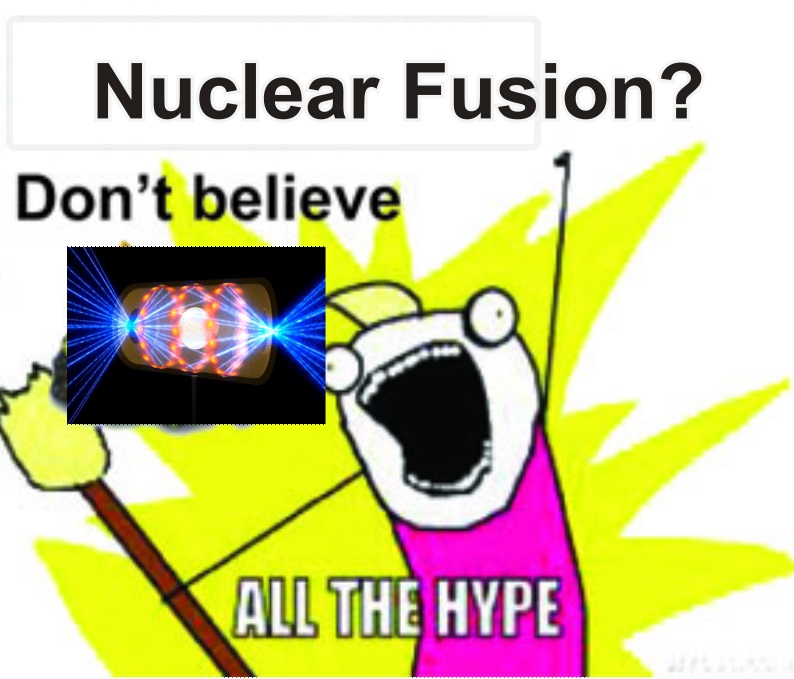
manufacturing the lasers used at Livermore and creating other inputs to set up the fusion process require much more energy than is accounted for in the final equation.
there’s so much money in the system, and so much desire to have this technological solution, people are very excited — and totally ignoring the fact that there is no result that has any energy output to it.”
Gizmodo, Molly Taft, May 12, 2023
Are we closer to the “Holy Grail” of clean energy? Silicon Valley wants you to believe.
This week, nuclear fusion startup Helion announced that it had inked a first-of-its-kind deal with Microsoft to provide 50 megawatts of power from a yet-to-be built power plant, all within the next five years. Unlike nuclear fission, the process that powers all the nuclear power plants existing today, nuclear fusion could create potentially unlimited energy. It’s a dream that scientists and engineers have been chasing for decades, with little luck.
The announcement from Helion and Microsoft is historic — and raises a lot of thorny questions about fusion, the role of tech in promoting new energy sources, and whether all this talk about fusion is even doing any good for the planet.
What is nuclear fusion, and why has it been so difficult to achieve?
Nuclear fusion is, simply put, the same process that powers the Sun. The Sun turns matter into energy through the enormous pressures and high temperatures at its core.
“If you smash atoms together hard enough and in a hot enough and dense enough environment, you can get essentially free energy,” said Charles Seife, a journalism professor at NYU’s Arthur L. Carter Journalism Institute and the author of Sun in a Bottle: The Strange History of Fusion and the Science of Wishful Thinking. “It’s enormous amounts of energy from very little fuel,” he told Earther.
Physicists have been chasing the dream of replicating the fusion process since the 1940s, when research into building nuclear reactors began. It quickly became clear that the problem was not replicating fusion itself but rather creating conditions in which the process produces more energy than it takes in. Fusion needs an enormous amount of energy, and almost all of the demonstrations of fusion scientists have accomplished thus far have not been able to reach the point where the energy output is greater than the input.
Seife said that the Livermore announcement is significant but pointed out that manufacturing the lasers used at Livermore and creating other inputs to set up the fusion process require much more energy than is accounted for in the final equation. He’s less impressed by the numerous nuclear fusion startups that have cropped up in Silicon Valley and elsewhere in recent years.
“I think there’s been something of a hype cycle” around fusion recently, he said. “There’s been a lot of venture capital flowing, and people have gotten better and better at leveraging dumb money into hype. You’ve got a lot of startups blooming everywhere that are replicating stuff that we were able to do in the 1960s in small labs, and putting their own spin on it. Because there’s so much money in the system, and so much desire to have this technological solution, people are very excited — and totally ignoring the fact that there is no result that has any energy output to it.”
What is Helion, and what is it promising?
Speaking of startups: enter Helion. Helion was founded in 2013 and was helped along by an infusion of cash from startup accelerator Y Combinator in 2014. That year, its CEO claimed that Helion could get a fusion reactor up and running in three years; two years ago, he said that the company would be able to generate fusion power and “go after commercially installed power generation” by 2024.
Despite the repeated misses on the timeline, Helion broke ground on its first reactor site in 2021, thanks in part to a $US375 million investment from Silicon Valley entrepreneur Sam Altman. It has now become the first fusion company to ink an actual power purchasing agreement for its services, and says that it will start supplying power to Microsoft in 2028 — more than 10 years after it initially said its reactor would be built.
Earther reached out to Helion to ask about its confidence in the timeline given its past misses. The recent results of its sixth prototype of a fusion reactor, a spokesperson wrote in an email, “give us great confidence that our timeline is realistic and that we can build the first fusion power plant by 2028.”
Can they actually do it?
Despite the company’s cheery outlook, there’s a lot of scepticism from experts around the Helion and Microsoft announcement, particularly the truncated timeline — including from Seife, who nevertheless says that he understands the hype.
“It’s so beautiful on paper,” Seife said. “That’s the appeal of it.”
Beyond Helion’s ability to perfect a process in five years that decades of research hasn’t yet gotten us to, there’s also a marked difference between advancing the science of fusion itself — which would alone be an incredible feat — and harnessing fusion for energy. A lot of the funding behind nuclear fusion in recent years in the U.S. has focused on achieving ignition, without an additional focus on creating usable energy from fusion; it’s a whole separate ballgame to actually put energy on the grid with the process. (Building a power plant alone is already a big infrastructure project that can take a couple years at best.)
“The classic joke is, ok, if you can produce energy, make me a cup of tea,” Seife said. “Once you make me a cup of tea, I will consider paying you money to do something, but first, make me a goddamn cup of tea.”
Is banking on fusion good for the planet?
A spokesperson for Helion told Earther in an email that the details of its power purchasing agreement with Microsoft won’t be made public. “That said, this is a real PPA, with commitments and obligations as well as penalties for failing to meet them,” the spokesperson said.
There are many questions left unanswered — has Microsoft paid Helion any money up-front? What are those commitments, obligations, and penalties, specifically? And, perhaps most importantly from a climate perspective, how much is Microsoft banking on this carbon-free fusion power?
………………………….. we don’t have much time to make the big changes we need. Creating plans that rely on technologies that haven’t been fully tested — and listening to Silicon Valley technocrats who keep making big promises and aren’t held to account when they don’t deliver — wastes valuable time, energy, and money that we could be spending on the clean energy technologies that we have today or are much nearer to deployment…… https://www.gizmodo.com.au/2023/05/helion-and-microsoft-lead-world-down-nuclear-fusion-rabbit-hole/
1 This Month
26 April – Chernobyl: Inside the Meltdown airs on National Geographic on Sunday 26th April from 4pm

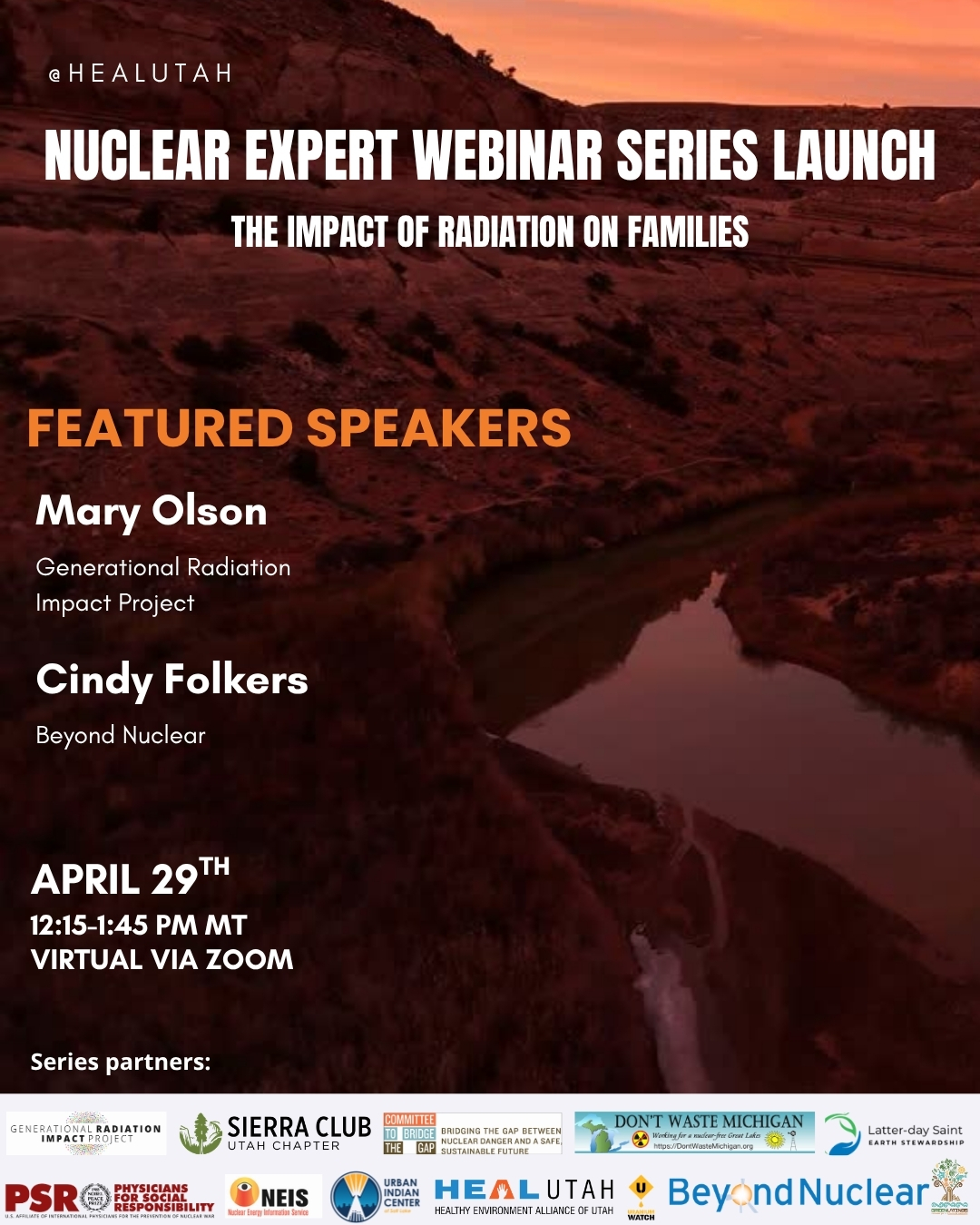
29 April – Nuclear Expert Webinar #1 – Radiation Impacts on Families with Mary Olson and Cindy Folkers
- 12:15 PM MT – 1:45 PM MT
- Location: Virtual – REGISTER TODAY

4 May -West Suburban Peace Coalition to discuss Iran war at May Educational Forum
Monday, May 4, 7:00 – 8:00 PM Central Standard Time
Title: : How Trump’s Narrative Tries to Shape the Reality of the War on Iran.
Contact Walt Zlotow, zlotow@hotmail.com 630 442 3045 for further information
14 May – online event From Bombs to Data Centres: the Face of Nuclear Colonialism

Pine Ridge Uranium is the real threat, not Tehran- Tell Burgum: Stop the Extraction.
Chernobyl: The Lost Tapes – A good documentary on Chernobyl on SBS available On Demand for the next 3 weeks– https://www.sbs.com.au/ondemand/tv-program/chernobyl-the-lost-tapes/2352741955560
To see nuclear-related stories in greater depth and intensity – go to https://nuclearinformation.wordpress.com
-
Archives
- April 2026 (317)
- March 2026 (251)
- February 2026 (268)
- January 2026 (308)
- December 2025 (358)
- November 2025 (359)
- October 2025 (376)
- September 2025 (257)
- August 2025 (319)
- July 2025 (230)
- June 2025 (348)
- May 2025 (261)
-
Categories
- 1
- 1 NUCLEAR ISSUES
- business and costs
- climate change
- culture and arts
- ENERGY
- environment
- health
- history
- indigenous issues
- Legal
- marketing of nuclear
- media
- opposition to nuclear
- PERSONAL STORIES
- politics
- politics international
- Religion and ethics
- safety
- secrets,lies and civil liberties
- spinbuster
- technology
- Uranium
- wastes
- weapons and war
- Women
- 2 WORLD
- ACTION
- AFRICA
- Atrocities
- AUSTRALIA
- Christina's notes
- Christina's themes
- culture and arts
- Events
- Fuk 2022
- Fuk 2023
- Fukushima 2017
- Fukushima 2018
- fukushima 2019
- Fukushima 2020
- Fukushima 2021
- general
- global warming
- Humour (God we need it)
- Nuclear
- RARE EARTHS
- Reference
- resources – print
- Resources -audiovicual
- Weekly Newsletter
- World
- World Nuclear
- YouTube
-
RSS
Entries RSS
Comments RSS
 nuclear-news