HOW ONTARIO KEEPS THE TRUE COST OF NUCLEAR POWER OFF YOUR HYDRO BILL
Toronto Star, MARCO CHOWN OVED CLIMATE CHANGE REPORTER, 11 Jan 2026, https://www.pressreader.com/article/282007563777540
Electricity prices in Ontario have long proven to be politically toxic.
Rapid increases between 2009 and 2016 contributed to the downfall of the Liberal governments of Dalton McGuinty and Kathleen Wynne.
Doug Ford and his Progressive Conservatives were elected on a pledge to bring hydro bills down, and the rapid increases have since ended — though it’s not because power is cheaper. The true costs are now invisible to the consumer.
For 15 years, Ontarians saw the cost of nuclear power on their hydro bills each month. Between 2002 and 2017, there was a line item called the “debt retirement charge” that enlisted every ratepayer to chip away at more than $20 billion in debt left over from the splitup of Ontario Hydro — debt largely run up by construction overruns at the Darlington nuclear plant, which was completed in 1993. The nuclear debt was removed from bills in 2018 — but it didn’t disappear. Instead, it was added onto the provincial books, where it is now considered part of the general public debt. As of last year, more than 30 years after Darlington went online, there was still $11.9 billion in debt remaining.
The province also brought in the Ontario Electricity Rebate, which subsidizes power bills with taxpayer dollars. While the rebate was introduced under McGuinty, Ford recently nearly doubled it — with an estimated price tag of $8.5 billion annually — to absorb an almost 30 per cent hike to the price of electricity.
The Ford government has blamed rate increases on the previous Liberal government’s Green Energy Act, which paid a premium for renewable energy in an effort to kickstart a domestic wind and solar industry. The domestic renewables manufacturing sector failed to take off in the face of competition from China, but more than 33,000 renewable projects remain on the grid at inflated prices on 20year contracts. Today, these legacy contracts have pushed the cost of solar power up to the point that it’s the highest among all types of generation in Ontario, when measured by kilowatt hour (kWh) of electricity produced. Wind isn’t far behind.
But what the per kWh figures hide is that renewables make up such a small proportion of the energy production mix that they cannot be responsible for overall rate increases, according to a Star analysis of Ontario Energy Board and Independent Electricity System Operator data. Even though solar costs threeandahalf times more than nuclear per kWh, it only accounted for two per cent of the total cost of electricity in 2024 — too little to drive overall cost increases. Nuclear, by contrast, accounted for 56 per cent of Ontario’s total cost of electricity last year. And while the costs of legacy renewables are inflated, they’re fixed or even going down as their contracts expire and have been renewed at 30 per cent less than they were paid previously.
In contrast, nuclear costs keep going up. The refurbishment of the Pickering plant will cost three times more per kWh than the refurbishments of Darlington and four times more than Bruce. The costs of these refurbishments will start to be added to hydro bills when they return to service.
Because nuclear makes up such a large part of the electricity mix, even a little increase to the cost of nuclear will affect the price Ontarians pay for electricity — either via monthly bills or taxpayer funds.
Spending big on nuclear
Ontario is investing billions into reactors — even as the rest of the world turns to solar and wind. Is this the wrong bet?
Toronto Star, MARCO CHOWN OVED, 11 Jan 2026, https://www.pressreader.com/article/281865829856772
In the race to prepare for an electrified future of AI, data centres, EVs and heat pumps, Ontario has placed a big bet on nuclear.
With more than $73 billion committed to building new and refurbishing old reactors — and two more plants in the pipeline that could add tens of billions more — Ontario taxpayers are counting on nuclear energy to pay off for decades to come.
Widely hailed for its ability to provide massive amounts of stable, emissionsfree power that the province will need to electrify the economy, nuclear has emerged as a solution advocates say is crucial to avoid the worst effects of climate change — all while supporting a wellestablished local industry. A single nuclear plant can provide the same amount of power as tens of thousands of solar panels and wind turbines — even when the wind isn’t blowing, and the sun isn’t shining.
“Nuclear brings a set of attributes and characteristics that you really can’t find with any other generating source,” said Brendan Frank, Director of Policy and Strategy at Clean Prosperity, a climate policy think tank. It’s large scale, [?] clean and reliable with a small land footprint, he says. “There’s a lot to like about nuclear.”
But the promise of nuclear power is tempered by the potential for peril.
Critics say nuclear proponents have never been able to address existing reactors’ significant shortcomings, including decadelong construction timelines, consistently large cost overruns, and the tiny but nonzero risk of catastrophic accidents. The cost considerations alone risk undermining the fight against climate change by making clean power more expensive than burning fossil fuels.
“Baked right into the nuclear option is centralization, a reliance on technical elites, the need for longterm stewardship and paramilitary security, a low tolerance for failure, and the acceptance of uninsurable risks,” said Ralph Torrie, the head of research with Corporate Knights and a veteran energy analyst.
And unlike nuclear opponents of the 1980s, today’s critics have a ready alternative in renewable energy, which is being built at an unprecedented speed and scale all over the world. Last year, more than 90 per cent of new power brought online globally has been wind and solar. Meanwhile, the nuclear industry has been mired in a 25year decline with more reactors decommissioned than built, according to the International Atomic Energy Agency.
Nuclear power is yesterday’s technology, the critics say.
“Every dollar we spend on new nuclear plants or reconditioning 20thcentury nuclear steam generators drives up the cost of building a sustainable energy system in Ontario and puts us further behind in the energy transition that is a defining feature of successful 21stcentury economies,” Torrie said.
In the search for climate solutions, the debate over nuclear power is particularly acute. For proponents, global warming cannot be addressed without a nuclear renaissance. For opponents, nuclear is a trap that diverts resources from better solutions while committing us for decades to a technology that has never lived up to its promises.
And Ontario has already picked its side.
“We’re doubling down on nuclear,” Energy Minister Stephen Lecce told the Star in an interview.
“If you care about jobs for Canadians, if you care about an ethical supply chain using a clean grid, not a coalfired grid, if you care about human rights, the rule of law, fundamental Canadian values, and the economic advantages for the workers, for the women and men who work in this province, then you will unapologetically defend and promote Ontario’s nuclear advantage, which is now an envy of the world.”
Why nuclear is considered a `very expensive’ option
This June, the province laid out a 25year road map for the electricity system that relies overwhelmingly on nuclear. It projects a massive 75 per cent increase in demand for power, the equivalent of adding fourandahalf Torontos to the grid. While there have been some investments in battery storage and hydro, most of this energy will come from refurbishing the existing fleet of reactors and building new ones, including one in Wesleyville — on the shore of Lake Ontario to the east of the existing Pickering and Darlington plants — that would be the world’s biggest nuclear plant. In doing so, the province would triple its nuclear generation, exceeding the entire electricity system’s output today.
“Ontario is putting a lot of eggs in a very expensive basket,” said David Pickup, an energy analyst at the Pembina Institute and the author of a report highlighting the risks of the province’s nuclear build out……………………………………………………………………………………………………………………………………………………………………. https://www.pressreader.com/article/281865829856772
Top 15 US Billionaires Gained Nearly $1 Trillion in Wealth in Trump’s First Year.

The US has 935 billionaires, roughly a dozen of whom have jobs within the Trump administration.
By Sharon Zhang , Truthout, January 7, 2026, https://truthout.org/articles/top-15-us-billionaires-gained-nearly-1-trillion-in-wealth-in-trumps-first-year/
new analysis finds that the richest 15 billionaires in the U.S. saw their wealth skyrocket by nearly $1 trillion in the first year of President Donald Trump’s second term, which also contained one of the single largest cuts to welfare benefits in U.S. history.
The Institute for Policy Studies (IPS) report, citing data from Forbes, has found that U.S. billionaires’ assets surged by a whopping 21 percent in 2025.
The 935 billionaires in the U.S. now control $8.1 trillion in wealth, the analysis found — nearly double the amount of wealth held by the bottom 50 percent of Americans, which comprises over 170 million people. Roughly a dozen of these billionaires work in the Trump administration.
The very richest billionaires saw the biggest gains. The top 15 richest people in the U.S. gained 33 percent in wealth last year, with their wealth skyrocketing from $2.4 trillion to $3.2 trillion — a gain of roughly $800 billion, IPS found.
A significant portion of this gain was driven by the wealth accumulation of one person: Elon Musk, the richest man on earth. In 2025, Musk’s wealth rose from $421 billion to $726 billion, a gain of $305 billion.
With this amount of money, Musk could singlehandedly pay for Republicans’ newly enacted cuts to Medicare for the next decade, estimated to cost $536 billion. He could fund health benefits for tens of millions of Americans and still be left with nearly $200 billion to spare.
IPS points out that Musk’s net worth has increased by 2,800 percent since 2020, when he was valued at just under $25 billion.
Other billionaires and billionaire families saw gains of tens of billions of dollars last year, including Google cofounder Larry Page, Oracle cofounder Larry Ellison, and the Walton family.
“The affordability crisis is hitting ordinary Americans particularly hard as we head into the new year, but not everyone is feeling the pain: billionaires are raking in staggering profits off the backs of ordinary workers,” said Chuck Collins, who directs IPS’s Program on Inequality and the Common Good.
Regular Americans are indeed struggling. At the end of 2025, polls were already finding that an affordability crisis was spreading across the U.S., with roughly 30 percent of Americans saying they skipped medical care in the past year due to cost, according to surveys by Politico and GQR for The Century Foundation.
This is slated to become far worse as Republicans’ cuts to Medicaid and Affordable Care Act (ACA) subsidies kick in this year. Last week, on New Year’s Day, Affordable Care Act subsidies for tens of millions of Americans expired overnight, causing premiums to double on average as a result of cuts to the Republican budget bill. Meanwhile, the Congressional Budget Office has estimated that 16 million people will lose their health care benefits altogether due to the Medicaid and ACA cuts.
These cuts were enacted to pay for a massive tax cut for billionaires and the rest of the top richest Americans. The CBO estimated that the richest Americans would see a gain of $12,000 each year as a result of the bill, while the poorest 10 percent would see their wealth decrease by $1,600 yearly on average.
“It’s not just that U.S. billionaires are entering 2026 with record-breaking increases in extreme wealth: it’s that they are also paying far less in taxes compared to the huge amount of wealth they amass. Average taxpayers like you and I pay income tax at triple the rate of the wealthiest Americans,” said Omar Ocampo, inequality researcher for IPS, in a statement. “Not only are a small number of Americans holding more wealth than the rest of America, but they’re also not paying their fair share in taxes.”
‘We’ll Hit Them Very Hard’: Trump Threatens Iran Again as Protest Death Toll Rises

Critics pointed out that Trump has often endorsed violence against protesters when they opposed him.
Stephen Prager, Common Dreams, Jan 08, 2026
President Donald Trump doubled down on his threats to attack Iran on Thursday in response to its government’s increasingly violent crackdown on ongoing protests.
“If they start killing people, which they tend to do during their riots—they have lots of riots—if they do it, we’re going to hit them very hard,” he said.
Addressing the Iranian people, he added: “You must stand up for your right to freedom. There is nothing like freedom. You are a brave people. It’s a shame what’s happening to your country.”
The Norway-based Iran Human Rights (IHR) reported on Thursday that Iranian security forces have killed at least 45 protesters since demonstrations against the regime began in late December. Wednesday was the bloodiest day yet, with 13 people reportedly killed.
On Thursday, Iranian authorities shut down internet access for the population, which has limited the flow of information in and out of the country.
The protests kicked off in response to the sudden collapse in the value of Iran’s currency, the rial, which exacerbated the country’s already spiraling cost-of-living crisis, heightening inflation and putting many basic goods out of reach for many Iranians.
This economic crisis has been shifted into hyperdrive since Trump returned to office last year and re-implemented his “maximum pressure” strategy against Iran, including more severe economic sanctions and a 12-day war in June during which the US struck several Iranian nuclear sites. Over the past year, the average cost of food has increased by 70%, while the cost of medicine has increased by 50%……………………………………..
Iran has blamed the unrest on “interference in Iran’s internal affairs” by the United States. The nation’s president, Masoud Pezeshkian, has urged authorities to exhibit the “utmost restraint” in handling protesters. But earlier this week, Supreme Leader Ayatollah Ali Khameini said “rioters” must be “put in their place,” while a top judge accused demonstrators of being agents of the US and Israel.
The latest swell of protests began after Reza Pahlavi, the former crown prince and son of Iran’s former US-backed shah, called for demonstrators to take to the streets. On Thursday, Pahlavi, who has lived most of his life in the US after the royal family was run out of Iran during the 1979 revolution, met with Israeli leaders, including Prime Minister Benjamin Netanyahu and President Isaac Herzog.
On Thursday, Iranian authorities shut down internet access for the population, which has limited the flow of information in and out of the country.
The protests kicked off in response to the sudden collapse in the value of Iran’s currency, the rial, which exacerbated the country’s already spiraling cost-of-living crisis, heightening inflation and putting many basic goods out of reach for many Iranians.
This economic crisis has been shifted into hyperdrive since Trump returned to office last year and re-implemented his “maximum pressure” strategy against Iran, including more severe economic sanctions and a 12-day war in June during which the US struck several Iranian nuclear sites. Over the past year, the average cost of food has increased by 70%, while the cost of medicine has increased by 50%.
The rial has lost 95% of its value since 2018, when Trump withdrew the US from the nuclear agreement with Iran, which included sanctions relief.
Last Friday, just one day before he bombed Venezuela as part of an operation to overthrow its leader Nicolás Maduro and seize the nation’s oil reserves, Trump wrote on Truth Social that “if Iran shoots and violently kills peaceful protesters, which is their custom, the United States of America will come to their rescue. We are locked and loaded and ready to go.”
On Tuesday, US Sen. Lindsey Graham (R-SC), a leading proponent of regime change, warned Iran’s leaders that “if you keep killing your people who are demanding a better life—Donald J. Trump is going to kill you.” Just days before, Graham said that Iran’s “weakened” state was thanks in part to Trump’s efforts to “economically isolate” the country.
Iran has blamed the unrest on “interference in Iran’s internal affairs” by the United States. The nation’s president, Masoud Pezeshkian, has urged authorities to exhibit the “utmost restraint” in handling protesters. But earlier this week, Supreme Leader Ayatollah Ali Khameini said “rioters” must be “put in their place,” while a top judge accused demonstrators of being agents of the US and Israel.
The latest swell of protests began after Reza Pahlavi, the former crown prince and son of Iran’s former US-backed shah, called for demonstrators to take to the streets. On Thursday, Pahlavi, who has lived most of his life in the US after the royal family was run out of Iran during the 1979 revolution, met with Israeli leaders, including Prime Minister Benjamin Netanyahu and President Isaac Herzog.
Critics pointed out that Trump has often endorsed violence against protesters when they opposed him. Just a day before he issued his latest threat, he defended a federal immigration agent who fatally shot an unarmed mother in Minneapolis, while members of his administration falsely described her as a “domestic terrorist.”
He has previously advocated for the US military to be deployed to use force against protesters and threatened to invoke the Insurrection Act to quell peaceful protests, including the No Kings demonstrators who mobilized nationwide in October. https://www.commondreams.org/news/trump-hit-iran-protests
New owners of Canadian Nuclear Laboratories have extensive nuclear weapons connections.
| By hendricksonjones on January 10, 2026, https://concernedcitizens.net/2026/01/10/new-owners-of-canadian-nuclear-laboratories-have-extensive-nuclear-weapons-connections/ |
Nuclear weapons are an existential threat to life on Earth and need to be abolished.
Concerned Citizens and other civil society groups are concerned about the nuclear weapons connections of US-based multinational corporations contracted to operate Canadian Nuclear Laboratories. Some new facilities being built or proposed at Chalk River Laboratories are aimed at handling tritium and plutonium, both of which are key ingredients in nuclear warheads.
The current owner/operator of Canadian Nuclear Laboratories, “Nuclear Laboratory Partners of Canada,” assumed ownership in December 2025 under a 6-year, multibillion dollar contract with the Government of Canada. It consists of three US-based corporations: BWXT, Amentum, and Battelle. A fourth corporation, Kinectrics, was recently acquired by BWXT.
Here is what Perplexity Pro told us about nuclear weapons connections of BWXT, Amentum and Batelle.
BWXT
BWXT has significant connections to U.S. nuclear weapons programs through its work with government agencies and defense contracts.bwxt+1
Key Contracts
BWXT manages high-consequence nuclear operations for the U.S. Department of Energy (DOE) and National Nuclear Security Administration (NNSA), which oversees the U.S. nuclear weapons stockpile. In 2025, it secured a $1.5 billion contract from NNSA to build a uranium enrichment facility for defense applications, including tritium production—a key component in nuclear weapons.reuters+2
Naval and Defense Roles
The company manufactures nuclear reactor components for U.S. Navy submarines and aircraft carriers, including Virginia-class and Columbia-class vessels, under multi-billion-dollar contracts like a $2.6 billion award in 2025. BWXT holds licenses for depleted uranium fabrication for defense and has handled highly enriched uranium from down-blended nuclear weapon cores.reddit+3
Historical Context
BWXT was previously involved in tritium production for the U.S. nuclear arsenal. Subsidiaries like Nuclear Fuel Services support these government programs.dontbankonthebomb+1
Amentum
Amentum has substantial nuclear weapons connections through U.S. and UK defense contracts for weapons facilities, plutonium processing, tritium operations, and national security sites.amentum+2
U.S. Weapons Complex
Amentum manages the Pantex Plant (nuclear weapons assembly/disassembly) and Y-12 National Security Complex (uranium components for weapons) under a $28 billion NNSA contract via NPOne JV. It supports Los Alamos plutonium facilities, Savannah River pit production, and naval nuclear propulsion for ballistic missile submarines.amentum+3
Plutonium and Remediation
The company decommissions plutonium-contaminated facilities at U.S. sites like Hanford’s Plutonium Finishing Plant and UK’s Low Level Waste Repository, plus Portsmouth uranium enrichment for weapons.amentum+2
UK AWE (Atomic Weapons Establishment)Involvement
Amentum serves as Delivery Partner for AWE’s Enriched Uranium Components Programme at Aldermaston, handling enriched uranium for UK nuclear warheads, decommissioning gloveboxes, and program management.amentum+2
Battelle
Battelle Memorial Institute has deep historical and ongoing connections to nuclear weapons programs, including direct contributions to the Manhattan Project and management of key NNSA national laboratories involved in weapons research.battelle+2
Manhattan Project Role
During World War II, 400 Battelle researchers fabricated plutonium from uranium for atomic bomb cores. This work positioned Battelle as a leader in nuclear research, including extruding uranium fuel for early reactors at Oak Ridge.wikipedia+2
National Labs Management
Battelle manages or co-manages eight DOE national labs central to nuclear security, such as Los Alamos National Laboratory (plutonium pits for weapons via Triad National Security, LLC), Pacific Northwest National Laboratory, and Savannah River National Laboratory (nuclear materials management). These labs support stockpile stewardship, pit production, and nuclear deterrence under NNSA.battelle+4
Additional Ties
Battelle developed nuclear fuel rods for naval reactors like the USS Nautilus and provided Environment, Health and Safety support at Pantex Plant, the primary site for weapons assembly/disassembly. It oversees chemical weapons demilitarization and biodefense tied to nuclear security missions.battelle+3
References:
Whitewashing U.S. barbarism by smearing Russia and China
Finian Cunningham, January 10, 2026, https://strategic-culture.su/news/2026/01/10/whitewashing-us-barbarism-by-smearing-russia-and-china/
The Western media are doing what they usually do: minimizing and covering up the criminal aggression of the United States.
Trump’s blatantly illegal military attack on Venezuela, the kidnapping of its president, the murder of foreign nationals, and theft of the country’s vast oil resources are not being called out for the litany of grave crimes that such actions constitute. The aggression that the U.S. has carried out is the Nuremberg standard of “supreme crime”.
Yet the U.S. and European corporate-controlled news media fail to report or comment on all this. Britain’s BBC has banned its journalists from using the word “kidnap”.
Instead of a forthright condemnation of Trump’s multiple violations of the UN Charter and international law, the Western media have sought to distract with spurious smearing of Russia and China.
The New York Times, the US so-called paper of record, claimed: “President Trump’s audacious nighttime raid in Venezuela sent a message: If you’re strong enough, you can attack a country, topple its leader and perhaps get access to the resources you’re after. The leaders of China and Russia, who have long shared a vision that divides the world into spheres of influence dominated by major powers, will be drawing their own conclusions.”
How’s that for diversion of public attention? The United States has just committed war crimes and brought the whole international order into disrepute in the most flagrant way, and yet the New York Times endeavors to focus concern on what Russia and China might allegedly do.
The Daily Beast and the Guardian both used the line, “the Putinization of US foreign policy.”
They claim that Trump is now “emulating” Russian President Vladimir Putin.
These Western media outlets are trying to minimize U.S. criminality by making a false equivalence with Russia and China.
So, it is postulated, Trump is repeating what Russia’s Putin has done in Ukraine, while China’s leader, Xi Jinping, is now going to follow through with an invasion of Taiwan.
The Western media distortion is contradicted by Moscow and Beijing, vehemently condemning U.S. aggression towards Venezuela and the violation of the UN Charter.
The only person Trump is emulating is every previous U.S. president. All of them have repeatedly invaded countries in Latin America and all around the world to overthrow governments and steal natural resources.
The criminal record of the United States is incomparable with that of any other nation. Since the Second World War alone, the U.S. has launched regime-change operations in as many as 100 foreign nations and waged countless illegal wars and proxy conflicts on every continent.
During the past eight decades of this “American exceptionalism” of mayhem and barbarism, the Western media have covered up the criminality by peddling pretexts such as the Cold War, defending the free world from communism, protecting human rights, promoting democracy, eliminating weapons of mass destruction, and so on.
The prelude to the latest aggression against Venezuela involved five months of the U.S. and Western media laundering Trump’s absurd claims about combating narcoterrorism. Now that the criminal aggression has taken place, the baseless war propaganda has been dutifully dropped as Trump boasts of taking over the country’s oil industry.
The naked imperialism of the United States stands exposed for the whole world to see. But instead of shouting that the emperor has no clothes, the servile Western media must distract from their own propaganda complicity by diverting the narrative to claim that Trump is emulating Putin and Xi, or that Russia and China are supposedly relishing the prospect of an alleged free hand in their “spheres of influence”.
This is sheer conjuring by the Western media. Russia is involved in Ukraine because of a proxy war that the U.S.-led NATO bloc has provoked over several decades. As for China, Taiwan is a sovereign part of its territory under international law. Tensions have been incited by relentless U.S. interference in China’s internal affairs, primarily by selling massive weapons shipments to Taiwan.
Moscow and Beijing have repeatedly advocated respect for the UN Charter and a peaceful multipolar world order based on abiding by international law.
It is the United States and its lackey Western partners who have corroded international law and unleashed chaos by pursuing their imperialist objectives and violating countries at will.
Trump is essentially no different from every other preceding U.S. president in his presumption that might is right and resort to gunboat diplomacy. Previous presidents were politically obliged to use cynical pretexts to cover up the criminality. And the Western media, as a controlled propaganda system, always obliged with peddling the cover stories.
Trump is fast-moving to open barbarism and dispensing with fig leaf excuses. It’s raw imperialist violence. The lackey media are in a quandary. The ugly truth is obvious. But they can’t report that. So a conjuring trick is used to cover their abject complicity. Smear Russia and China.
Finian Cunningham is coauthor of Killing Democracy: Western Imperialism’s Legacy of Regime Change and Media Manipulation
Plunging Toward Armageddon: U.S. and Russia on the Brink of a New Nuclear Arms Race

Beginning on February 6th, Russian and American leaders will face no barriers whatsoever to the expansion of those arsenals or to any other steps that might increase the danger of a thermonuclear conflagration.
Both the United States and Russia have already committed vast sums to the “modernization” of their nuclear delivery systems
By Michael Klare. 8 Jan 26, https://tomdispatch.com/plunging-into-the-abyss/
Plunging Into the Abyss. Will the U.S. and Russia Abandon All Nuclear Restraints?
For most of us, Friday, February 6, 2026, is likely to feel no different than Thursday, February 5th. It will be a work or school day for many of us. It might involve shopping for the weekend or an evening get-together with friends, or any of the other mundane tasks of life. But from a world-historical perspective, that day will represent a dramatic turning point, with far-reaching and potentially catastrophic consequences. For the first time in 54 years, the world’s two major nuclear-weapons powers, Russia and the United States, will not be bound by any arms-control treaties and so will be legally free to cram their nuclear arsenals with as many new warheads as they wish — a step both sides appear poised to take.
It’s hard to imagine today, but 50 years ago, at the height of the Cold War, the U.S. and Russia (then the Soviet Union) jointly possessed 47,000 nuclear warheads — enough to exterminate all life on Earth many times over. But as public fears of nuclear annihilation increased, especially after the near-death experience of the 1962 Cuban Missile Crisis, the leaders of those two countries negotiated a series of binding agreements intended to downsize their arsenals and reduce the risk of Armageddon.
The initial round of those negotiations, the Strategic Arms Limitation Talks I, began in November 1969 and culminated in the first-ever nuclear arms-limitation agreement, SALT-I, in May 1972. That would then be followed in June 1979 by SALT-II (signed by both parties, though never ratified by the U.S. Senate) and two Strategic Arms Reduction Treaties (START I and START II), in 1991 and 1993, respectively. Each of those treaties reduced the number of deployed nuclear warheads on U.S. and Soviet/Russian intercontinental ballistic missiles, submarine-launched ballistic missiles, and long-range bombers.
In a drive to reduce those numbers even further, President Barack Obama and Russian President Dmitry Medvedev signed a New Strategic Arms Reduction Treaty (New START) in April 2010, an agreement limiting the number of deployed nuclear warheads to 1,550 on each side — still enough to exterminate all life on Earth, but a far cry from the START I limit of 6,000 warheads per side. Originally set to expire on Feb. 5, 2021, New START was extended for another five years (as allowed by the treaty), resetting that expiration date for February 5, 2026, now fast approaching. And this time around, neither party has demonstrated the slightest inclination to negotiate a new extension.
So, the question is: What, exactly, will it mean for New START to expire for good on February 5th?
Most of us haven’t given that a lot of thought in recent decades, because nuclear arsenals have, for the most part, been shrinking and the (apparent) threat of a nuclear war among the great powers seemed to diminish substantially. We have largely escaped the nightmarish experience — so familiar to veterans of the Cold War era — of fearing that the latest crisis, whatever it might be, could result in our being exterminated in a thermonuclear holocaust.
A critical reason for our current freedom from such fears is the fact that the world’s nuclear arsenals had been substantially diminished and that the two major nuclear powers had agreed to legally binding measures, including mutual inspections of their arsenals, meant to reduce the danger of unintended or accidental nuclear war. Together, those measures were crafted to ensure that each side would retain an invulnerable, second-strike nuclear retaliatory force, eliminating any incentive to initiate a nuclear first strike.
Unfortunately, those relatively carefree days will come to an end at midnight on February 5th.
Beginning on February 6th, Russian and American leaders will face no barriers whatsoever to the expansion of those arsenals or to any other steps that might increase the danger of a thermonuclear conflagration. And from the look of things, both intend to seize that opportunity and increase the likelihood of Armageddon. Worse yet, China’s leaders, pointing to a lack of restraint in Washington and Moscow, are now building up their own nuclear arsenal, only adding further fuel to the urge of American and Russian leaders to blow well past the (soon-to-be-abandoned) New START limits.
A Future Nuclear Arms Race?
Even while adhering to those New START limits of 1,550 deployed nuclear warheads, both Russia and the United States had taken elaborate and costly steps to enhance the destructive power of their arsenals by replacing older, less-capable intercontinental ballistic missiles (ICBMs), submarine-launched ballistic missiles (SLBMs), and nuclear bombers with newer, even more capable ones. As a result, each side was already becoming better equipped to potentially inflict catastrophic damage on its opponent’s nuclear retaliatory forces, making a first strike less inconceivable and so increasing the risk of precipitous escalation in a crisis.
The Russian Federation inherited a vast nuclear arsenal from the former Soviet Union, but many of those systems had already become obsolete or unreliable. To ensure that it maintained an arsenal at least as potent as Washington’s, Moscow sought to replace all of the Soviet-era weapons in its inventory with more modern and capable systems, a process still underway. Russia’s older SS-18 ICBMs, for example, are being replaced by the faster, more powerful SS-29 Sarmat, while its remaining five Delta-IV class missile-carrying submarines (SSBNs) are being replaced by the more modern Borei class. And newer ICBMs, SLBMs, and SSBNs are said to be in development.
At present, Russia possesses 333 ICBMs, approximately half of them deployed in silos and the other half on road-mobile carriers. It also has 192 SLBMs on 12 missile-carrying submarines and possesses 67 strategic bombers, each capable of firing multiple nuclear-armed missiles. Supposedly, those systems are currently loaded with no more than 1,550 nuclear warheads (enough, of course, to destroy several planets), as mandated by the New START treaty. However, many of Russia’s land- and sea-based ballistic missiles are MIRVed (meaning they’re capable of launching multiple independently targetable reentry vehicles) but not fully loaded, and so could carry additional warheads if a decision were ever made to do so. Given that Russia possesses as many as 2,600 nuclear warheads in storage, it could rapidly increase the number of deployed nuclear weapons at its disposal beginning on February 6, 2026.
Rather than confront such challenges, the leaders of both countries may instead choose to retain the New START limits voluntarily. Indeed, Vladimir Putin has already agreed to a one-year extension of this sort, if the United States is willing to do likewise. But pressures (which are bound to increase after February 5th) are also building to abandon those limits and begin deploying additional warheadsmost missile-tracking radars.
The United States is engaged in a comparable drive to modernize its arsenal, replacing older weapons with more modern systems. Like Russia, the U.S. maintains a “triad” of nuclear delivery systems — land-based ICBMs, submarine-launched SLBMs, and long-range bombers, each of which is now being upgraded with new warheads at an estimated cost over the next quarter century of approximately $1.5 trillion.
The existing New START-limited U.S. nuclear triad consists of 400 silo-based Minuteman-III ICBMs, 240 Trident-II SLBMs carried by 14 Ohio-class submarines (two of which are assumedly being overhauled at any time), and 96 strategic bombers (20 B-2s and 76 B-52s) armed with a variety of gravity bombs and air-launched cruise missiles. According to current plans, the Minuteman-IIIs will be replaced by Sentinel ICBMs, the Ohio-class SSBNs by Columbia-class ones, and the B-2s and B-52s by the new B-21 Raider bomber. Each of those new systems incorporates important features — greater accuracy, increased stealth, enhanced electronics — that make them even more useful as first-strike weapons, were a decision ever made to use them in such a fashion.
When initiated, the U.S. nuclear modernization project was expected to abide by the New START limit of 1,550 deployed nuclear warheads. After February 5th, however, the U.S. will be under no legal obligation to do so. It could quickly begin efforts to exceed that limit by loading all existing Minuteman-IIIs and future Sentinel missiles on MIRVed rather than single-warhead projectiles and loading the Trident missiles (already MIRVed) with a larger number of warheads, as well as by increasing production of new B-21s. The United States has also commenced development of a new delivery system, the nuclear-armed sea-launched cruise missile (SLCM-N), supposedly intended for use in a “limited” regional nuclear conflict in Europe or Asia (though how such a conflagration could be prevented from igniting a global holocaust has never been explained).
In short, after the expiration of the New START agreement, neither Russia nor the United States will be obliged to limit the numbers of nuclear warheads on their strategic delivery systems, possibly triggering a new global nuclear arms race with no boundaries in sight and an ever-increasing risk of precipitous nuclear escalation. Whether they choose to do so will depend on the political environment in both countries and their bilateral relations, as well as elite perceptions of China’s nuclear buildup in both Washington and Moscow.
The Political Environment
Both the United States and Russia have already committed vast sums to the “modernization” of their nuclear delivery systems, a process that won’t be completed for years. At present, there is a reasonably broad consensus in both Washington and Moscow on the need to do so. However, any attempt to increase the speed of that process or add new nuclear capabilities will generate immense costs along with significant supply-chain challenges (at a time when both countries are also trying to ramp up their production of conventional, non-nuclear arms), creating fresh political disputes and potential fissures.
Rather than confront such challenges, the leaders of both countries may instead choose to retain the New START limits voluntarily. Indeed, Vladimir Putin has already agreed to a one-year extension of this sort, if the United States is willing to do likewise. But pressures (which are bound to increase after February 5th) are also building to abandon those limits and begin deploying additional warheads.
In Washington, a powerful constellation of government officials, conservative pundits, weapons industry leaders, and congressional hawks is already calling for a nuclear buildup that would exceed the New START limits, claiming that a bigger arsenal is needed to deter both a more aggressive Russia and a more powerful China. As Pranay Vaddi, a senior director of the National Security Council, put it in June 2024, “Absent a change in the trajectory of the adversary arsenal, we may reach a point in the coming years where an increase from current deployed numbers is required, and we need to be fully prepared to execute if the president makes that decision.”
Those who favor such a move regularly point to China’s nuclear buildup. Just a few years ago, China possessed only some 200 nuclear warheads, a small fraction of the 5,000 possessed by both Russia and the U.S. Recently, however, China has expanded its arsenal to an estimated 600 warheads, while deploying more ICBMs, SLBMs, and nuclear-capable bombers. Chinese officials claim that such weaponry is needed to ensure retaliation against an enemy-first strike, but their very existence is being cited by nuclear hawks in Washington as a sufficient reason for the U.S. to move beyond the New START limits.
Russian leaders face an especially harsh quandary. At a moment when they are devoting so much of the country’s state finances and military-industrial capacities to the war in Ukraine, they face a more formidable and possibly expanded U.S. nuclear arsenal, not to mention the (largely unspoken) threat posed by China’s growing arsenal. Then there’s President Trump’s plan for building a “Golden Dome” missile shield, intended to protect the U.S. from any type of enemy projectile, including ICBMs — a system which, even if only partially successful, would threaten the credibility of Russia’s second-strike retaliatory capability. So, while Russia’s leaders would undoubtedly prefer to avoid a costly new arms buildup, they will probably conclude that they have little choice but to undertake one if the U.S. abandons New START.
Racing to Armageddon
Many organizations, individuals, and members of Congress are pleading with the Trump administration to accept Vladimir Putin’s proposal and agree to a voluntary continuation of the New START limits after February 5th. Any decision to abandon those limits, they argue, would only add hundreds of billions of dollars to the federal budget at a time when other priorities are being squeezed. Such a decision would also undoubtedly provoke reciprocal moves by Russia and China. The result would be an uncontrolled arms race and a rising risk of nuclear annihilation.
But even if Washington and Moscow were to agree to a one-year voluntary extension of New START, each would be free to break out of it at any moment. In that sense, February 6th is likely to bring us into a new era — not unlike the early years of the Cold War — in which the major powers will be poised to ramp up their nuclear war-fighting capabilities without any formal restrictions whatsoever. That comfortable feeling we once enjoyed of relative freedom from an imminent nuclear holocaust will also then undoubtedly begin to dissipate. If there is any hope in such a dark prognosis, it might be that such a reality could, in turn, ignite a worldwide anti-nuclear movement like the Ban the Bomb campaigns of the 1960s, 1970s, and 1980s. If only.
Marco Rubio, Senate Complicity, and the Open Return of Empire.
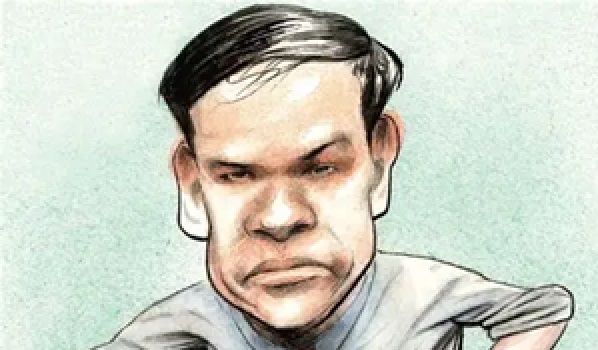
SCHEERPOST, January 8, 2026, By Joshua Scheer
The Oil Belongs to the United States?
Let’s begin—and end—with the thought that says everything about this moment: the oil belongs to the United States. It is a sentence so brazen, so logically bankrupt, that it barely disguises what U.S. policy toward Venezuela has become—a naked assertion of imperial entitlement dressed up as democracy promotion.
That logic was laid bare in a briefing delivered by Secretary of State Marco Rubio, who reportedly told senators: “We are going to take between 30 and 50 million barrels of oil. We’re going to sell it in the marketplace at market rates, not at the discounts Venezuela was getting.”
There it is.
Not liberation.
Not humanitarian concern.
Not international law.
Oil.
The Washington Post, in what can only be described as a puff piece for a war manager, crowned Rubio with a new title: “Viceroy of Venezuela.” The paper framed his role as his “most challenging yet,” admiring his command of details and his long-standing obsession with regime change in Caracas. What it did not seriously grapple with is the obvious question: since when does the United States appoint viceroys over sovereign nations in the 21st century?
An Insane Plan, Stated Out Loud
Democrats who attended classified briefings were far less impressed. Common Dreams captured the mood bluntly with its headline: “‘This Is an Insane Plan’: Democrats Fume After Briefing on Trump Plot to Steal Venezuela’s Oil.” After the session, Sen. Chris Murphy (D-Conn.) told reporters, “We learned a lot. I’m glad we had the briefing. But this is going to be a very rough ride for the United States.”
A rough ride—for whom? Venezuelans already crushed by sanctions? U.S. soldiers deployed without debate? Or lawmakers forced to defend the indefensible?
Sen. Tim Kaine (D-Va.) put it plainly: “We are four months into a sustained military operation. More than 200 ‘enemies’ have been killed. American troops have been injured. We have U.S. forces arranged around Venezuela. Yet neither the House nor the Senate have been willing to hold a single public hearing.”…………………………………………………………………………………………………………………………..
The question is why the president believes he has the authority to invade another country in the first place……………………..
Meanwhile, the answers—when they come—are evasive. Trump officials insist there are “no troops in Venezuela,” even as lawmakers describe sustained military operations and U.S. forces encircling the country. The contradictions pile up. The machine keeps moving.
Let’s be honest about what this is. The United States has run countless coups—successful and failed—across Latin America, including in Venezuela. What makes this moment different is not its morality, but its openness. This is not covert. This is not deniable. This is empire, stated plainly.
The Election Myth
Much is made—by Rubio and his allies—of a coming “transition” leading to free and fair elections, possibly headed by opposition figure María Corina Machado. But this talking point deserves scrutiny. Free elections are invoked ritualistically, even as economic strangulation, military pressure, and foreign interference define the political terrain.
Around the world, elections are shaped—often decisively—by outside investment, coercion, and information warfare. Venezuela is no exception. To pretend otherwise is political theater, not analysis.
A Viceroy, With Bipartisan Applause
Perhaps most disturbing is that Rubio’s ascent has not been rejected across party lines……………………
Ending Where We Began
The oil belongs to the United States. That is the assumption driving this policy. Strip away the rhetoric, the briefings, the editorials, and the bipartisan niceties, and what remains is an imperial presidency asserting control over another nation’s resources.
If democracy means anything, it cannot coexist with viceroys, resource seizures, and wars conducted without public consent. The question is no longer what is happening in Venezuela. It is whether anyone in Washington is willing to stop it.
There will be no shortage of briefings, no shortage of troubled statements, no shortage of bipartisan praise offered while the machinery of empire grinds forward. What is missing is friction—public, sustained, and impossible to ignore. Strikes, protests, calls to Congress—whatever it takes to break the insulation that allows empire to operate without consequence.
Empires do not end because their administrators lose confidence. They end when wars become politically unmanageable, when secrecy is shattered by demand, when hearings are forced, funding is contested, and silence is withdrawn.
History will not ask whether Marco Rubio was well briefed or whether senators expressed concern in private. It will ask who normalized this—and who refused to. On that question, quiet complicity will count as an answer. https://scheerpost.com/2026/01/08/marco-rubio-senate-complicity-and-the-open-return-of-empire/
Senate rejects Trump’s military threats against Venezuela with war powers vote

The Associated Press, LIVE 5 WCSC, Thu, 08 Jan 2026
WASHINGTON (AP) — The Senate advanced a resolution Thursday that would limit President Donald Trump’s ability to conduct further attacks against Venezuela, sounding a note of disapproval for his expanding ambitions in the Western Hemisphere.
Democrats and five Republicans voted to advance the war powers resolution on a 52-47 vote and ensure a vote next week on final passage. It has virtually no chance of becoming law because Trump would have to sign it if it were to pass the Republican-controlled House. Still, it was a significant gesture that showed unease among some Republicans after the U.S. military seized Venezuelan leader Nicolás Maduro in a surprise nighttime raid over the weekend.
Trump’s administration is now seeking to control Venezuela’s oil resources and its government, but the war powers resolution would require congressional approval for any further attacks on the South American country.
“To me, this is all about going forward,” said Missouri Sen. Josh Hawley, one of the five Republican votes. “If the president should determine, ‘You know what? I need to put troops on the ground of Venezuela.’ I think that would require Congress to weigh in.”
The other Republicans who backed the resolution were Sens. Rand Paul of Kentucky, Lisa Murkowski of Alaska, Susan Collins of Maine and Todd Young of Indiana.
Trump reacted to their votes by saying on social media that they “should never be elected to office again” and that the vote “greatly hampers American Self Defense and National Security.”
Democrats had failed to pass several such resolutions in the months that Trump escalated his campaign against Venezuela. But lawmakers argued now that Trump has captured Maduro and set his sights to other conquests such as Greenland, the vote presents Congress with an opportunity.
“This wasn’t just a procedural vote. It’s a clear rejection of the idea that one person can unilaterally send American sons and daughters into harm’s way without Congress, without debate,” said Senate Democratic leader Chuck Schumer of New York.
Lawmakers’ response to the Venezuela operation
Republican leaders have said they had no advance notification of the raid early morning Saturday to seize Maduro and his wife, Cilia Flores, but mostly expressed satisfaction this week as top administration officials provided classified briefings on the operation.
Sen. Tim Kaine, D-Va., who forced the vote on the resolution, said he believes many Republicans were caught off guard by the outcome. He said that Trump’s recent comments to The New York Times suggesting U.S. oversight in Venezuela could last for years — combined with details revealed in the classified briefings — prompted some lawmakers to conclude that “this is too big to let a president do it without Congress.”
The administration has used an evolving set of legal justifications for the monthslong campaign in Central and South America, from destroying alleged drug boats under authorizations for the global fight against terrorism to seizing Maduro in what was ostensibly a law enforcement operation to put him on trial in the United States.
Republican leaders have backed Trump…………………………
The rarely enforced War Powers Act
Trump criticized the Senate vote as “impeding the President’s Authority as Commander in Chief” under the Constitution.
Presidents of both parties have long argued the War Powers Act infringes on their authority. Passed in 1973 in the aftermath of the Vietnam War — and over the veto of Republican President Richard Nixon — it has never succeeded in directly forcing a president to halt military action.
Congress declares war while the president serves as commander in chief, according to the Constitution. But lawmakers have not formally declared war since World War II, granting presidents broad latitude to act unilaterally. The law requires presidents to notify Congress within 48 hours of deploying forces and to end military action within 60 to 90 days absent authorization — limits that presidents of both parties have routinely stretched. https://www.live5news.com/2026/01/08/senate-advances-resolution-limit-trumps-war-powers-after-venezuela-raid/
Billionaire’s Mouthpiece Searches for Reasons to Avoid Taxing Billionaires
Jim Naureckas, 8 Jan 26, https://fair.org/home/billionaires-mouthpiece-searches-for-reasons-to-avoid-taxing-billionaires/
The Washington Post, which exists mainly to serve the interests of its mega-billionaire owner Jeff Bezos, unsurprisingly thinks taxing the wealth of billionaires is a bad idea (FAIR.org, 12/11/19). Its recent editorial (1/1/26) warning California not to institute a tax on extreme wealth—headlined “California Will Miss Billionaires When They’re Gone”—illustrates that when you’re telling the boss exactly what he wants to hear, you don’t have to think very hard.
California is considering a referendum on whether to impose a one-time wealth tax on the state’s billionaires. The paper’s hot take: “Many progressives think of taxation the way teenage boys think about cologne: If some is good, more must be great.”
The paper offers PayPal’s Peter Thiel and Google‘s Larry Page, both of whom have threatened to leave California, as poster children for why you shouldn’t subject billionaires to a wealth tax—both highly dubious examples.
Thiel is well-known for his use of an absurd tax loophole (ProPublica, 6/24/21): He put 1.7 million shares of PayPal stock—which he valued at 0.1 cents apiece, so $1,700—into a Roth IRA, and by 2021 that had grown through reinvestment into a $5 billion nest egg. (In 2026, it’s likely the bulk of his $25 billion fortune.) A Roth IRA means that if he waits until 2027, when he turns 59, he won’t have to pay any taxes at all on that. This is precisely why people want a wealth tax, because the tax code makes it easy for oligarchs like Thiel to pay little or nothing in income tax.
Page is also known for tax shenanigans, parking much of his wealth in a “charity” that distributes almost none of its wealth to disclosed recipients (Vox, 12/18/19). When ProPublica (4/13/22) analyzed tax filings from the super-rich, Page had one of the lowest effective federal income tax rates among prominent billionaires.
‘Blew a hole in the budget’
To illustrate the fiscal danger California would be putting itself in with a wealth tax, the Post cited the example of New Jersey billionaire David Tepper, who “blew a hole in the state budget by moving to Florida.” That’s according to an article from Philadelphia public TV station WHYY (4/11/16), which said in 2016 that “while the amount Tepper paid in taxes last year is unknown to the public…a resident that rich [$11.4 billion] could pay tens or even hundreds of millions of dollars in income taxes if they paid New Jersey’s highest rate, 8.97%.”
The only way Tepper would have paid “hundreds of millions” in Jersey state income tax would be if he were declaring several billion in income a year. But Tepper reportedly made $750 million in 2016, which would be $67 million at the top tax rate—which he wouldn’t pay anyway, since he’s a hedge fund manager and benefits from a special tax loophole designed just for them.
In any case, Tepper moved back to New Jersey in 2020 (Politico, 9/24/20)—so it’s not clear what kind of object lesson he should serve for California. Was his 2016 move representative of a broader problem of the flight of the wealthy from New Jersey? It’s hard to see how, as the state has the highest concentration of millionaires in the country (Kiplinger, 5/27/20)—up from third-highest in 2014 (New Jersey Policy Perspective, 4/13/16).
Imaginary exodus
This is a perennial problem with the oligarchy’s don’t-touch-our-money arguments: They want to claim that they’ll run away from high taxes, but they like living in high-tax states. The LA Times‘ Michael Hiltzik (10/24/19) pointed this out years ago, responding to a similar editorial in the Wall Street Journal (“California’s Tax-the-Rich Boomerang,” 10/21/19).
The Journal leaned heavily on a study by two economists at the right-wing Hoover Institution, Joshua Rauh and Ryan Shyu, who the paper said found that “the likelihood of a wealthy resident moving out of California increased by about 40%”
following an income tax hike on the ultra-wealthy. Hiltzik noted that the actual percentage of rich people moving out was quite small—increasing from 1.5% to 2.125%—and, more importantly, that Rauh and Shyu only looked at outgoing multi-millionaires, ignoring the fact that more affluent people were moving to the state than moving away.
More than six years later, the Post is still citing Rauh and Shyu, still talking about that same 2013 California tax hike and the imaginary exodus of plutocrats it caused. I don’t know why they should be any more convincing than they were a decade ago—but then, the editorialists only have to convince one reader that they’re doing their best to protect his fortune.
Dazed and confused in North America

Five of us were out on the busiest intersection in Brunswick, Maine for an hour today at noon. (Photo by MB Sullivan)
Bruce Gagnon, Jan 09, 2026https://brucegagnon177089.substack.com/p/eye-contact-hard-to-come-by?open=false#%C2%A7dazed-and-confused-in-north-america
We got a good share of honks but more bad fingers than usual. The vast majority are trying not to make eye contact. Are they dazed and confused or suffering from orange man induced depression?
Either way it is going to be a hard fall for us in this country. Far too many will sit back and watch the collapse and do little to help.
I know these people quite well. My own mother objected to my choice of an ‘organizing career’ – her favorite saying was, ‘You can’t beat city hall’.
How many real humans are left these days? How many true patriots (I consider myself one) are still around?
Maybe those who are lost should listen to the Moody Blues song Tuesday afternoon, ‘I’m just beginning to see…something calls to me.’
We need all the inspiration we can get.
Keep paddling as the sea levels rise.
Bruce
Meta Is Making a Big Bet on Nuclear With Oklo1

Alexander C. Kaufman, Jan 9, 2026
Meta will finance Oklo’s purchase of uranium for its reactors. It’s a massive vote of confidence for both the startup and nuclear power, but challenges remain.
There are two ways for tech companies to invest in nuclear power right now. One is to buy power from traditional reactors that are already built, either by purchasing electricity from the plants directly or financing the reconstruction of decommissioned units. The other is to invest in one of the dozens of reactor startups promising to commercialize designs and technologies never before used in the American market to generate electricity.
Microsoft took the former approach with a 2024 deal to buy electricity from a revived Three Mile Island nuclear plant and gambled on Helion, one of the many startups promising to construct America’s first fusion energy station. Amazon chose the other approach, buying a stake in X-energy, the next-generation nuclear company for which the tech behemoth is financing construction of a debut power plant in Washington.
Google split the difference with deals to help bring Iowa’s lone decommissioned nuclear plant online again and back construction of the first plant from next-generation startup Kairos Power, the only reactor company in its class to sign a power purchase agreement with a utility so far.
Meta, on the other hand, has taken a cautious approach to nuclear power. The Facebook owner had previously only agreed to buy power from an existing atomic power station in Illinois for its data centers.
Now, Meta is making an unconventional bet on the widely hyped next-gen nuclear startup Oklo.
On Friday morning, the company announced a deal to pay Oklo cash up front to finance the purchase of fuel for the startup’s reactors.
The agreement will allow Oklo to advance its plans for a 1.2-gigawatt campus in Pike County, Ohio, a rural municipality east of Cincinnati within the grid system from which Meta’s data centers in the region draw power. The terms of the deal were not disclosed. But Oklo CEO Jake DeWitte tells WIRED in an exclusive interview that it represents “one of the biggest deals around the nuclear space as a whole.”
“This is one of the biggest commitments from a hyperscaler into the nuclear side that we’ve seen,” he said. “It’s a huge validator.”
It’s part of a broader new nuclear investment from Meta that also includes deals with the Texas-based nuclear utility Vistra and the Bill Gates–owned next-generation nuclear startup TerraPower, which the centrist advocacy group Third Way calls “the largest such investment in nuclear energy in US history.”……………….
The price of nuclear fuel is on the rise as a federal ban on certain uranium imports from Russia takes effect and investors speculate about the possibility of a renaissance of reactor construction across the US. For next-generation designers such as Oklo, whose reactors depend on unconventional types of fuel, the problem has been particularly acute. Oklo managed to acquire old government stockpiles of high-assay low-enriched uranium, the material known as HALEU (pronounced HAY-loo) that’s enriched roughly four times as much as traditional reactor fuel. The company is also angling for a chunk of some plutonium leftover from mid-century atomic bomb construction, which Oklo’s reactors can burn as a fuel……………………..
It’s not unusual for utilities to negotiate long-term contracts for fuel for reactors. But this is the first known incident where a hyperscaler is purchasing the fuel that will generate the electrons it plans to buy, says Koroush Shirvan, a researcher at the Massachusetts Institute of Technology.
“The Oklo model that they have advertised is that they build, own, and operate,” says Shirvan. “But I’m trying to think of any other customers who provide fuel other than the U.S. government. I can’t think of any.”
Oklo emerged in the past year as the poster child for a possible revolution in the US on how nuclear plants are built. Until recently, the US hadn’t started and completed any new reactors in a generation. By the time the only new machines came online at a Southern Company power plant in northern Georgia in 2023 and 2024—a pair of 1,100-megawatt Westinghouse AP1000s, the leading design for a traditional reactor in the US—the project was billions of dollars over budget and more than half a decade late……
To fix this problem, a growing faction in the nuclear industry proposed shrinking the size of reactors, so that building a 1,000-megawatt plant would require constructing multiple reactors of the same size, ultimately bringing down the cost. Many of those companies, including NuScale Power and GE Vernova-Hitachi Nuclear Energy, focused on building shrunken-down versions of the water-cooled reactors that make up all of America’s fleet of 94 units. But Oklo and rivals such as X-energy, Google-backed Kairos Power, and Aalo Atomics instead looked for a totally clean slate, seeking to commercialize experimental reactor models that use coolants such as sodium, molten salt, or high-temperature gas rather than water…………..
The company has been a darling of retail investors since going public via a SPAC merger with a blank-check firm in May 2024, soaring to a market capitalization worth tens of billions of dollars last year as traders looked to bet on the future of data centers powered by atomic energy. But Oklo has yet to generate any real revenues, the company’s Securities and Exchange Commission filings show, and it hasn’t resubmitted its application to the Nuclear Regulatory Commission. In October, an anonymous former NRC official who oversaw the last attempt at gaining approval in 2022 told Bloomberg Business that the company “is probably the worst applicant the NRC has ever had.” Oklo has, in turn, leveled fierce criticisms against the NRC for standing in the way of new technologies and said it plans to resubmit its application soon. https://www.wired.com/story/meta-is-making-a-big-bet-on-nuclear-with-oklo/
Chris Hedges: Grand Illusion
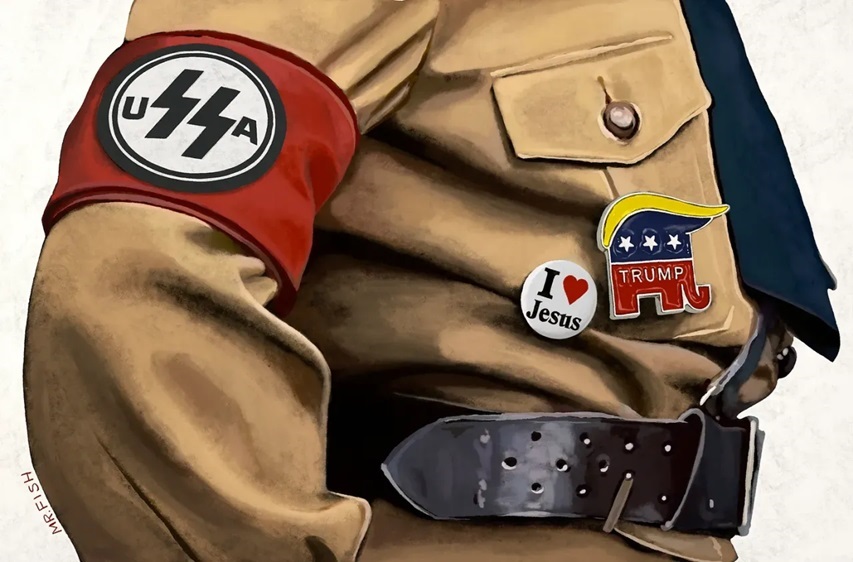
Gangster states have no need of diplomacy. Trump and Rubio, for this reason, have gutted the State Department, along with other forms of “soft” power that achieve influence without resorting to force, including the U.S. role in the United Nations
By Chris Hedges , ScheerPost
“We live in a world in which you can talk all you want about international niceties and everything else, but we live in a world, in the real world, Jake, that is governed by strength, that is governed by force, that is governed by power. These are the iron laws of the world that have existed since the beginning of time.” — Stephen Miller to Jake Tapper on CNN, Jan. 5, 2026.
“He who would live must fight. He who does not wish to fight in this world, where permanent struggle is the law of life, has not the right to exist. Such a saying may sound hard; but, after all, that’s how it is.” — Adolf Hitler in Mein Kampf
“The Fascist State expresses the will to exercise power and to command. Here the Roman tradition is embodied in a conception of strength. Imperial power, as understood by the Fascist doctrine, is not only territorial, or military, or commercial; it is also spiritual and ethical… Fascism sees in the imperialistic spirit — i.e., in the tendency of nations to expand — a manifestation of their vitality.” — Benito Mussolini in The Doctrine of Fascism
ll empires, when they are dying, worship the idol of war. War will save the empire. War will resurrect past glory. War will teach an unruly world to obey. But those who bow down before the idol of war, blinded by hypermasculinity and hubris, are unaware that while idols begin by calling for the sacrifice of others, they end by demanding self-sacrifice. Ekpyrosis, the inevitable conflagration that destroys the world according to the ancient Stoics, is part of the cyclical nature of time. There is no escape. Fortuna. There is a time for individual death. There is a time for collective death. In the end, with weary citizens yearning for extinction, empires light their own funeral pyre.
Our high priests of war, Donald Trump, Marco Rubio, Pete Hegseth, Stephen Miller and the Joint Chiefs of Staff Chairman Gen. Dan “Razin” Caine, are no different from the fools and charlatans who snuffed out empires of the past — the haughty leaders of the Austro-Hungarian Empire, the militarists in imperial Germany and the hapless court of Tsarist Russia in World War I. They were followed by the fascists in Italy under Benito Mussolini, Germany under Adolf Hitler and the military rulers of imperial Japan in World War II.
These political entities committed collective suicide.
They drank the same fatal elixir Miller and those in the Trump White House imbibe. They too tried to use industrial violence to reshape the universe. They too considered themselves to be omnipotent. They too saw themselves in the face of the idol of war. They too demanded to be obeyed and worshiped.
Destruction to them is creation. Dissent is sedition. The world is one-dimensional. The strong versus the weak. Only our nation is great. Other nations, even allies, are dismissed with contempt.
These architects of imperial folly are buffoons and killer clowns. They are ridiculed and hated by those rooted in a reality-based world. They are followed slavishly by the desperate and the disenfranchised. The simplicity of the message is its appeal. A magic incantation will bring back the lost world, the golden age, however mythic. Reality is viewed exclusively through the lens of ultranationalism. The flip side of ultranationalism is racism.
“The nationalist is by definition an ignoramus,” wrote Yugoslav-Serbian novelist Danilo Kiš. “Nationalism is the line of least resistance, the easy way. The nationalist is untroubled, he knows or thinks he knows what his values are, his, that’s to say national, that’s to say the values of the nation he belongs to, ethical and political; he is not interested in others, they are no concern of his, hell — it’s other people (other nations, other tribes). They don’t even need investigating. The nationalist sees other people in his own image — as nationalists.”
These stunted human beings are unable to read others. They threaten. They terrorize. They kill. The art of power politics between nations or individuals is far beyond their tiny imaginations. They lack the intelligence — emotional and intellectual — to cope with the complex, ever-shifting sands of old and new alliances. They cannot see themselves as the world sees them.
Diplomacy is often a dark and deceptive art. It is by its nature manipulative. But it requires an understanding of other cultures and traditions. It requires getting inside the heads of adversaries and allies. For Trump and his minions, this is an impossibility.
Skillful diplomats, such as Prince Klemens von Metternich, the Austrian Empire’s foreign minister who dominated European politics after the defeat of Napoleon, do so by crafting agreements and treaties such as the Concert of Europe and the Congress of Vienna. Metternich, no friend of liberalism, adroitly kept Europe stable until the revolutions of 1848…………………………………………………………………………………………………………….
Gangster states have no need of diplomacy. Trump and Rubio, for this reason, have gutted the State Department, along with other forms of “soft” power that achieve influence without resorting to force, including the U.S. role in the United Nations, the U.S. Agency of International Development, the U.S. Institute for Peace — renamed Donald J. Trump Institute of Peace after most of the board and staff were fired — and Voice of America.
Diplomats in gangster states are reduced to the role of errand boys. Hitler’s Foreign Minister, Joachim von Ribbentrop, whose primary experience in foreign affairs before 1933 was selling fake German champagne in Britain, appointed party hacks from the SA or Brownshirts — the paramilitary wing of the party — to diplomatic posts abroad. Benito Mussolini’s Foreign Minister was his son-in-law, Galeazzo Ciano. Mussolini — who believed that “war is to man what maternity is to woman” — later executed Ciano for disloyalty. Trump’s Special Envoy to the Middle East, Steven Charles Witkoff, is a real estate developer, often accompanied on diplomatic missions by Trump’s feckless son-in-law Jared Kushner.
The Italian philosopher Benedetto Croce quipped that fascism had created a fourth form of government, “onagrocracy,” a government by braying asses, to add to Aristotle’s traditional triumvirate of tyranny, oligarchy and democracy.
Our ruling class, Democrats and Republicans, piece by piece, dismantled democracy. In Germany and Italy, the constitutional state, as well, collapsed long before the arrival of fascism. Trump, who is the symptom, not the disease, inherited the corpse. He is making good use of it. https://scheerpost.com/2026/01/09/chris-hedges-grand-illusion/
Oil Companies Are Key Partners in Trump’s Imperial Plans for Latin America

Stocks in ExxonMobil, Halliburton, and ConocoPhillips surged the day after Trump’s illegal attack on Venezuela.
By Derek Seidman , Truthout January 8, 2026
or months, U.S. President Donald Trump proclaimed that his pressure campaign against the government of Venezuelan President Nicolás Maduro, backed by dozens of illegal killings through drone strikes, was about fighting drugs and cartels. But at his press conference after the U.S. abduction of Maduro, Trump couldn’t stop talking about oil.
“We’re gonna take back the oil,” Trump brazenly said. “Very large United States oil companies” will “go in” and “spend billions of dollars,” he promised. “We’re gonna be taking out a tremendous amount of wealth out of the ground.”
All told, Trump uttered the word “oil” at least 20 times during the press conference. Oil company stocks — ExxonMobil, Halliburton, ConocoPhillips, Valero, Phillips 66 — surged the following day, with Chevron, the only major U.S. oil corporation with a current foothold in Venezuela, seeing its share value jump more than 5 percent.
Further demonstrating the administration’s drug accusations to be mere propaganda, the Justice Department recently dropped its longstanding claim that Maduro was the head of “Cartel de los Soles,” implicitly conceding that it is indeed not a drug cartel but a slang term referring to political officials who have become corrupted by drug money.
The Trump administration’s barefaced imperial grab for Venezuela’s oil is fraught with challenges, and it’s far too early to predict what will happen. But its abduction of Maduro and effort to gain control over Venezuela’s oil industry aligns with the administration’s openly stated vision of reasserting undisputed political and economic hegemony across the Americas and the Caribbean, including control over natural resources and trade routes, through gunboat diplomacy backed by military threats. In doing so, Trump is looking to corporate allies like Chevron, which could stand to benefit handsomely from his administration’s action — though this is far from guaranteed……………………………………………………………………………………………………………………………………………………https://truthout.org/articles/oil-companies-are-key-partners-in-trumps-imperial-plans-for-latin-america/?utm_source=Truthout&utm_campaign=26a84c82c8-EMAIL_CAMPAIGN_2026_01_08_10_43&utm_medium=email&utm_term=0_bbb541a1db-26a84c82c8-650192793
Oil in Venezuela: Strangulation, Not a Steal
8 January 2026 David Tyler, https://theaimn.net/oil-in-venezuela-strangulation-not-a-steal/
It’s not drill baby drill, after all. Picture a vast, rusting skeletal oil rig off Venezuela’s coast, derricks frozen mid-stroke like the limbs of some colossal fossil. If you’ve heeded Stenographers R Us, the mainstream international media franchise embedded with the rich the powerful and the fabulously ruthless, you’d think Washington’s frenzy over this country boils down to a simple heist. But you’d be wrong.
Put to one side Bull Dust Trump’s buccaneering fantasy, a daring smash and grab raid for the world’s largest proven oil reserves, a tanker-load of cut-price fuel so cheap that every man can run at least one Ram V8 or Ford F-Series truck. And one for the little woman. Above all, it’s the heist that pays for itself. You steal Venezuela’s oil. Take over their country. All free of charge; funded by the plundered oil.
Trump’s lying. Of course. Like his career as a deal-maker, turning Caracas into a McDonald’s hamburger franchise is a fantasy founded on a fiction based on a lie, pure and simple. Behind the headlines, see the levers of power post-Maduro’s Manhattan manacles, muffs and blindfold, the full, Gitmo rig, and a sharper, more sinister pattern swims into view. Not just touring the trophy in a van with the back door open. This isn’t about nicking the black gold. It’s all about the chokehold, a slow but sure squeeze to block off the oil, denying the flow not just to Venezuela, but to anyone who dares defy The Hulk.
The Chokehold Takes Shape
Cast your mind back to the early 2010s. US sanctions began to creep from diplomatic tiffs to industrial strength sabotage. PDVSA, Venezuela’s state oil mammoth, didn’t just falter; it was engineered into failure. Spare parts were embargoed, rigs starved of foreign cash, refineries left to rust in the tropical brine and the sulphur that makes the nation’s heavy, treacle-thick crude, notoriously hard to refine.
Output didn’t dip, it plummeted from three million barrels a day to under 800,000. The Intercept, and Democracy Now! map the blueprint: not haphazard penalties, but a calculated corrosion of the coronary arteries of the economy. And here’s the exquisite irony in the crude itself; that heavy, sour Venezuelan black isn’t some elixir of cheap bounty.
It demands bespoke refineries, the kind that gobble margins unless global prices pitch high, say at the $60-70 per barrel sweet spot for US shale outfits. By idling millions of barrels, Washington doesn’t just punish Caracas; it rigs scarcity, propping up prices for its own patch and Saudi bedfellows.
Why would the planet’s oil glutton sabotage a gusher? Follow the boardroom gaze across the trading floors: scarcity keeps the market taut, volumes crimped, returns plump for the anointed players. The Grayzone and The Real News call it engineered sabotage, with Chevron and Exxon not clamouring for a bargain-bin blowout, but biding time for PDVSA’s orderly dismemberment and disembowelling. It will be privatised, of course, to some asset-stripper, on terms dictated from Foggy Bottom.
The Empire’s Ledger: Workers Foot the Bill
Yet no imperial romp runs on fairy dust, and the tab for this buccaneering lands not in some mythical oil jackpot, but squarely on the brows of ordinary Americans. Imagine the bills: 80 billion dollars a year vanishing into overseas bases, the concrete teeth enforcing sanctions and glowering at rivals across 25 countries since 2001.
Tack on another 62 billion in fossil fuel subsidies; bargain priced pollution, tax loopholes ladled to a coterie of oil titans, as with our gas industry, and the mathematics unmasks itself. The truck driver filling up at dawn, the nurse tallying grocery receipts inflated by freight costs: they’re clobbered doubly, once by the pump’s regressive bite from jacked global crude, again by tax dollars greasing the imperial gears. No plunder’s bounty offsets it; this is a quiet expropriation from wage packets to corner suites.
Now widen the lens to Latin America, where the rogue elephant lumbers, trunk swinging. Step forward Marco Rubio, son of Cuban exiles, his irony bypass a marvel of surgical precision. There he is on ABC’s 7:30 Report, cool as a Miami breeze, labelling Havana a “huge problem” mired in “a lot of trouble” for cradling Maduro; ripe, he implied, for Uncle Sam’s rapture. Rubio has the gall to scorn Cuba’s “senile incompetents” while a demented Donald Trump cheers intervention and why stop with Venezuela?
Trump paints Colombia’s Petro a narco-overlord and Mexico’s Sheinbaum a cartel consort.
Cuba’s original sin harks to 1959, when Fidel Castro’s revolution swept away the neon bordello Washington had bankrolled. Havana wasn’t just a city then; it was an offshore playground for Mafia dons and sugar barons, gangsters and generals carousing amid the roulette wheels while peasants toiled in the cane fields. Paradise Lost. Be not afraid. Trump has the team to turn back the clock.
Socialism didn’t just nationalise assets; Cuba reclaimed dignity, dodging the fate of a permanent Americano brothel. The reprisal? The Bay of Pigs bloodbath, a six-decade embargo tighter than a drum, whispers of invasion perennially on the wind. Rubio’s ire isn’t bungled governance; it’s the gall of autonomy. Now Venezuela’s shell is broken, Havana may well be next; Latin America is no mere backyard, but a type of professional wrestling tournament where Trump shows off US muscle.
China’s Jolt: Crude Hijacked, Chains Rattled
Beijing, too, savours the aftershock. Picture the tankers rerouted: China guzzles 60-90% of Venezuela’s exports, some 470,000 barrels daily. That’s 4-7% of its total crude thirst, a sliver that balloons to strategic heft in a 30-35% import pool menaced by US writ (Iran in the crosshairs too).
Trump’s hijack doesn’t just nick barrels; it disrupts The Panda’s supply lines, spiking costs and forcing frantic diversification. Beijing’s Foreign Ministry thunders condemnation, pledging legal armour for billions in PDVSA loans, but the calculus shifts: no Taiwan gambit while Washington clutches the taps.
Trump: Puppet or Pyromaniac for Neocon Zealots?
Spare us the fairy tale about “transactions”.
Trump isn’t negotiating. He is issuing demands. He is the public face for a crowd that thinks power makes the rules. Stephen Miller says the quiet part out loud: America has “rights” to Greenland, and the military is “always an option”. That is not diplomacy. It is threat.
Greenland is the test case.
If the United States says it can take what it wants from an ally’s territory, then NATO is no longer a defensive pact. It becomes a protection racket. Denmark’s Prime Minister is right to spell out the obvious: if an ally is the aggressor, Article 5 becomes meaningless. The alliance stops. The guarantee dies. The post-war settlement cracks.
Europe can see it. Britain, France, Germany can mouth support for Denmark’s sovereignty, but the damage is already done. You cannot demand unity on Ukraine while leaning on a founding member with a bully’s grin. You cannot preach rules and practise coercion.
This is the return of gunboats.
The language changes first. “Rights” becomes a blank cheque. “Security” becomes a pretext. “Options” becomes a threat. Then the map changes. Resources become the prize: minerals, oil, shipping lanes, bases, ice. Sovereignty becomes conditional. Obedience buys “stability”. Independence buys punishment.
Greenlanders don’t want American rule. Danes are no longer sure America is a safe partner. That is what this behaviour produces: distrust, hedging, rearmament, fragmentation. Not order. Not peace. Not alliance.
And it’s the same playbook in Venezuela.
Venezuela’s mistake was not incompetence alone. It was disobedience. It traded with Russia and China. It tried to keep control of its crude and its policy. For that, it was put in a vise. Sanctions dressed up as morality. Pressure dressed up as rescue. A national oil company turned into a target.
The aim is simple: break the state, break the industry, and decide the terms of recovery. Not to “liberate” Venezuelans, but to control the output, the contracts, and the alignments. To make sure rivals don’t benefit. To make sure the price, and the leverage, stays where Washington wants it.
Call it what it is.
Greenland is not a quirky real estate stunt. Venezuela is not a humanitarian project. They are chapters in the same doctrine: America takes, others comply, and law follows power like a dog behind a ute.
If you keep pretending it’s “dealmaking”, you help the fraud along.
Name the grip. Or live inside it.
This article was originally published on URBAN WRONSKI WRITES
1 This Month

of the week – Shut Down Drone Warfare!


Tell the Ukrainian Government to Drop Prosecution of Peace Activist Yurii Sheliazhenko

Petition to revoke the licensing of the Near Surface Nuclear Disposal Facility (NSDF) at Chalk River. https://www.ourcommons.ca/petitions/en/Petition/Details?Petition=e-7247
To see nuclear-related stories in greater depth and intensity – go to https://nuclearinformation.wordpress.com
-
Archives
- March 2026 (244)
- February 2026 (268)
- January 2026 (308)
- December 2025 (358)
- November 2025 (359)
- October 2025 (376)
- September 2025 (257)
- August 2025 (319)
- July 2025 (230)
- June 2025 (348)
- May 2025 (261)
- April 2025 (305)
-
Categories
- 1
- 1 NUCLEAR ISSUES
- business and costs
- climate change
- culture and arts
- ENERGY
- environment
- health
- history
- indigenous issues
- Legal
- marketing of nuclear
- media
- opposition to nuclear
- PERSONAL STORIES
- politics
- politics international
- Religion and ethics
- safety
- secrets,lies and civil liberties
- spinbuster
- technology
- Uranium
- wastes
- weapons and war
- Women
- 2 WORLD
- ACTION
- AFRICA
- Atrocities
- AUSTRALIA
- Christina's notes
- Christina's themes
- culture and arts
- Events
- Fuk 2022
- Fuk 2023
- Fukushima 2017
- Fukushima 2018
- fukushima 2019
- Fukushima 2020
- Fukushima 2021
- general
- global warming
- Humour (God we need it)
- Nuclear
- RARE EARTHS
- Reference
- resources – print
- Resources -audiovicual
- Weekly Newsletter
- World
- World Nuclear
- YouTube
-
RSS
Entries RSS
Comments RSS
 nuclear-news