Global consequences from Fukushima-like nuclear disaster; Many nations at risk of ‘great exposure’
January 28th, 2015
Study: Global consequences from Fukushima-like nuclear disaster; Many nations at risk of ‘great exposure’ — Transport of hot particles to US was especially effective during worst releases after reactor explosions — Radioactivity confined ‘close to surface’ due to seasonal factors
T. Christoudias and Y. Proestos of The Cyprus Institute, J. Lelieveld of Max Planck Institute of Chemistry (Germany), Dec 12, 2014 (emphasis added):
- We estimate the contamination risks from the atmospheric dispersion of radionuclides released by severe nuclear power plant accidents… We present an overview of global risks… [These] risks exhibit seasonal variability, with the highest surface level concentrations of gaseous radionuclides in the Northern Hemisphere during winter [Fukushima crisis began with 10 days left in winter].
- The model setup was evaluated… using emission estimates from… Fukushima
- The risk posed from nuclear power plant accidents is not limited to the national or even regional level, but can assume global dimensions. Many nations may be subjected to great exposure after severe accidents.
- Our model shows increased surface-level concentrations throughout the Northern Hemisphere during the boreal winter months compared to the summer… Not only the expected risk magnitude is higher, but the geographical extent of the high concentrations of transported radionuclides is more pronounced towards the north… Horizontal advection [i.e. transfer] is more efficient in winter due to relatively stronger winds, and the concentrations are highest near the surface [and] surface level concentrations in the summer tend to be more localized in the emission region.
- Our results illustrate that accidents… could have significant trans-boundary consequences. The risk estimate [shows] increased surface level concentrations of gaseous radionuclides in the Northern Hemisphere during winter and a larger geographical extent towards the north and the east… This is related to the relatively shallow boundary layer in winter that confines the emitted radioactivity to the lowest part of the atmosphere close to the surface…It is the view of the authors that it is imperative to assess the risks from the atmospheric dispersion of radioactivity from potential NPP accidents [for] emergency response planning on national and international levels.
Source: http://www.mdpi.com/1996-1073/7/12/8338
JAMSTEC, Univ. of Tokyo, etc.: We show a numerical simulation for the long-range transport from the [Fukushima] plant to the US… Large-scale updraft [over] Japan from March 14 to 15 was found effective in lifting the particles [to the] jet stream that could carry the particles across the Pacific within 3 to 4 days [See study: On Mar. 15, Fukushima reactors emitted 100 quadrillion Bq of cesium into air — This one day was equal to total lifetime release from Chernobyl]… Some of the particles [had a] long-range atmospheric transport over — 10,000 km within 3 to 4 days… [R]adioactive materials were detected in that period over the east and west coasts of the U.S… In order for the particles to be transported with the jet stream, they must be lifted up from the surface boundary layer to the mid- or upper troposphere. Large-scale updraft was indeed observed… on March 14 through 15… [T]he westerlies in mid-March were thus particularly effective in the trans-Pacific transport of the radioactive materials…
Watch the numerical plume simulation here http://www.docin.com/p-773002550.html
Fukushima radiation in Pacific monitored by Canadian citizen scientists
 B.C.’s citizen scientists on alert for radiation from Japan, Vancouver Sun BY AMY SMART, TIMES COLONIST JANUARY 25, 2015 Since October, citizen scientists have been dipping buckets into the waters of B.C.’s coast, looking for fallout from the 2011 nuclear meltdown in Japan.
At the centre of the search are two man-made isotopes, Cesium-134 and Cesium-137, which act as “fingerprints” for radiation specific to the Japan disaster. Both isotopes were released when the reactors failed in the aftermath of an earthquake and tsunami, just as they were during nuclear testing in the mid-20th century.
 While Cesium-137 has a half-life — the time it takes for the radioactivity to fall to half its original value — of 30 years, Cesium-134’s is only two years. That means that if Cesium-134 is found in a sample, scientists can be certain it came from Fukushima.
“It’s been sufficiently long since atmospheric weapons testing last century or the Chernobyl disaster that we don’t see traces of [Cesium-134 from those sources] anymore,” said University of Victoria ocean chemist Jay Cullen. “So if we detect it in seawater or an organism, then we know that sample has been affected by Fukushima.”
The radiation is as close as 100 kilometres, with levels expected to peak over the next two years. But so far, members of the InFORM Network — citizen scientists, and representatives from academia, government and non-governmental organizations — haven’t found anything in seawater samples collected by volunteers at 14 coastal locations.
“The models of ocean circulation that the physical oceanographers have put together suggest that we are going to see it along the coast and we can expect it to arrive over the next couple of years, the heart of that contaminated plume,” said Cullen, who leads the network.
InFORM is also monitoring marine life, which can absorb radiation. The first results, from sockeye salmon and steelhead trout selected for their known migration paths, showed traces of Cesium-137, but no Cesium-134……….
John Smith, a senior research scientist with Fisheries and Oceans Canada, agrees that the health risks are likely to be “extremely low.” At its peak, the radiation in the plume is expected to be three to five becquerels per cubic metre of water. Canadian guidelines for safe drinking water impose a limit of 10,000 becquerels per cubic metre, he said.
For Smith, who began monitoring the plume’s spread in 2011, it provides a “dye test” for testing theories about ocean currents. The results will have implications for all kinds of models, including understandings of climate change, he said.
“This was a unique oceanographic event in that a large quantity of radioactivity was deposited into the ocean off Japan at a given moment in time and at a given location. It was a tremendous disaster. But it has provided an oceanographic tracer for currents that has never occurred before.”…….. www.vancouversun.com/health/citizen+scientists+alert+radiation+from+Japan/10758982/story.html
Soldier exposed to depleted uranium has cancer, but no disability compensation
 Cancer-stricken soldier denied disability claim over exposure to depleted uranium CTVNews.ca Staff , January 20, 2015 A cancer-stricken warrant officer who served with the Canadian military for nearly three decades is facing a long appeal process after Veterans Affairs denied his application for disability compensation.
Alain Vachon of Calgary spent 27 years in military service, which included deployments to Afghanistan, Kuwait, Bosnia and Kosovo, among other places. For the past two years, he has been battling Hodgkin’s Lymphoma, a form of cancer that affects the lymphatic system.
Vachon believes his exposure to depleted uranium at Camp Doha in Kuwait caused his illness. Although Canadians did not use depleted uranium, the American troops at the base did, Vachon said. There was an incident in which “their ammunition dump blew up,” he said in an interview with CTV Calgary………
The couple has a letter from the military admitting that Vachon was exposed to depleted uranium, pesticides and other unknown substances………. http://www.ctvnews.ca/canada/cancer-stricken-soldier-denied-disability-claim-over-exposure-to-depleted-uranium-1.2198339#ixzz3PhSiGCYs
Study: Fukushima plume spread worldwide, far exceeding the hundreds of miles mentioned previously — 100 Quadrillion becquerels of Cs-137 released tops Chernobyl
“Implicates radiological hazard at distances otherwise overlooked”
January 21st, 2015
International Journal of Environmental Research and Public Health (pdf), University of Florida College of Medicine, Weill-Cornell Medical College, etc. (2014):
- The Fukushima Dai-ichi nuclear power plant accident is an example of a contemporary nuclear plant accident with serious implications.
- The Fukushima NPP accident has had health implications due to the high levels of radiation released and vast area over which the radiation has disperse.
- The significant radiation release, as likened to Chernobyl, reflects the context and severity of the Fukushima accident.
- The level of 137Cs that was released is likened to Chernobyl levels, with 100,000 TBq released.
- Radioactive plume dispersion occurs worldwide, far exceeding 300 miles previously mentioned. This should implicate radiological hazard at distances otherwise overlooked.
Potassium Iodide Distribution
- Radioactive plumes from the Chernobyl accident containing 131I caused benign and malignant thyroid nodules to develop, especially in children within a 310 miles radius of the incident.
- The current recommendation is for KI [potassium iodide] availability to people 200 miles from a NPP. Plume radii for nuclear events have been shown to exceed 300 [miles]. Extension of KI availability to 300 miles only further underscores the inadequacy of current preparedness plans.
- In regard to KI prophylaxis, TEPCO utilized 17,500 KI tablets for 2,000 onsite workers… with one individual receiving and taking 85 tablets.
- Radiological plumes containing 131I cause benign and malignant thyroid nodules to develop within a 300 mile radius… This necessitates KI pre-distribution to all schools, hospitals and other of-interest sites extending 300 miles from any nuclear reactor. Evacuation or sequestering is impossible in congested urban areas… There is currently virtually no compliance with [the] 20 miles radius KI pre-distribution law, section 127 of the Bioterrorism Act of 2002. In fact, there is little compliance with the 10 miles Ki pre-distribution radius law in the United States.
- Japan did not utilize KI for prophylaxis of the general public, acknowledging it was not prepared to act accordingly.
Source: Enenews
Dying Pacific Ocean?

Monday, January 19, 2015
Marine defaunation: Animal loss in the global ocean.
Science 16 January 2015: Vol. 347 no. 6219
DOI: 10.1126/science.1255641 Review
Douglas J. McCauley Malin L. Pinsky Stephen R. Palumbi James A. Estes Francis H. Joyce Robert R. Warner
[excerpted] Wildlife populations in the oceans have been badly damaged by human activity…. Human dependency on marine wildlife and the linked fate of marine and terrestrial fauna necessitate that we act quickly to slow the advance of marine defaunation….
Three lessons emerge when comparing the marine and terrestrial defaunation experiences:
- today’s low rates of marine extinction may be the prelude to a major extinction pulse, similar to that observed on land during the industrial revolution, as the footprint of human ocean use widens;
- effectively slowing ocean defaunation requires both protected areas and careful management of the intervening ocean matrix; and
- the terrestrial experience and current trends in ocean use suggest that habitat destruction is likely to become an increasingly dominant threat to ocean wildlife over the next 150 years.[end excerpt]
Ocean Releases
[Majia writes] Consensus holds that Fukushima constitutes the greatest radiological release into the ocean ever to occur. According to Woods Hole Oceanographic Institution in Massachusetts, levels of radioactive cesium reached more than 100,000 becquerels per cubic meter in early April of 2011.[i] The World Nuclear Association suggests that 169 Petabecquerels of Iodine-131 equivalent were releases into the ocean from Cesium-137, Cesium-134, and Iodine-131from March 26 to September 30th.[ii] This figure does not include March releases into the atmosphere, which the World Nuclear Association calculates at 1020 petabecquerels from March 12 to March 31, 011. The French Institute for Radiological Protection and Nuclear Safety (IRSN) described Fukushima as the world’s worst nuclear contamination event ever for the ocean,[iii] reporting that from March 21st to mid-July 27, 27.1 petabecquerels of cesium-137 contaminated the ocean. One peta becquerel is equivalent to a million billion becquerels, or 10^15. [iv]
Atmospheric and direct ocean releases occurring as contaminated water spilled from reactors into the ocean caused radionuclide levels to spike offshore. Woods Hole scientist Ken Buessler revealed (12/12/2011) that Fukushima cesium-137 radiation in the sea near the plant peaked in April 2011 at 50 million times above normal levels (http://www.forbes.com/sites/jeffmcmahon/2011/12/12/fukushima-ocean-radiation-was-50-million-times-above-normal-but-no-threat-scientists/).
In a separate interview with Straight on October 28, 2011, Ken Buesseler stated that Fukushima was by far the greatest accidental release of radiation into ocean waters, the magnitude of which in April 2011 was over one hundred times Chernobyl’s contamination of the Black Sea.[v]
These comments reflect concerns based on ocean emissions during the first few months of the disaster. Ocean contamination did not however end in the first months of the disaster. The releases of radioactive water from the plant into the ocean have been, in this writer’s opinion, ongoing because of the need for continuous cooling of melted reactor corium and the inability to effectively de-contaminate cooling water.
Reactors 1 through 3 have been continuously cooled since March of 2011 with water injections. The World Nuclear Association reports that by the end of March 2011 all water storage tanks – the condenser units and condensate tanks – around units 1 through 4 were full of contaminated water pumped from the buildings.[vi] Tepco built a wastewater treatment facility to decontaminate the water but has struggled with decontamination and storage given the volume of water being pumped into the reactor buildings and the level of contamination. During the summer of 2011 Tepco installed concrete panels designed to seal water intakes of units 1 through 4 in order to prevent contaminated water from reaching the ocean. In October 2011, Tepco installed a steel water shield wall between the units and the ocean.[vii]
Yet, despite these efforts ocean contamination has continued because the site is literally saturated from the ongoing water injections. In 2012, Tepco reported water injections as follows: five tons per hour at Unit 1reactor; seven tons per hour at unit 2; seven tons per hour at unit 3.[viii] No information was provided about any water injections into unit 4 or the common spent fuel pool. At 456 tons a day of water going into the units, we can expect substantial ongoing leakage into the ocean. In November of 2011,Tepco admitted that its filtration system at the plant dumped more 11,000 tons of water contaminated with cesium 134, 137, and Iodine 131 into the sea.[ix] Tepco stated that it had been spraying about 70 tons of water around the Daiichi compound a day since early October and that water in some trenches measured at 10,000 millisieverts an hour, which is 10 sieverts an hour, a fatal dose.[x]
Ken Buesseler speaking in March 2012, described the data from his international research cruise off Japan that took place in June 2011:
Despite the announcement in December that operators of the power plant had achieved cold shut down, we know they are still using tons of water to cool the reactors and that not all the water has been collected or treated. As a result, the ground around the site is like a dirty sponge, saturated with contaminated water that is leaking into the ocean. He noted that other scientists had confirmed his 2011 findings of radiation levels 400 miles offshore Japan. He pointed out that little was known about radiation levels at seafloor levels but evidence exists that marine sediments are collecting radioactive contamination at higher concentrations than in the water. He said that little information was available about the radiation levels of groundwater.
He tells the public that information about the extent of releases of contaminated water are lacking:
Other measurements show trends that are more worrisome. Levels of radioactivity found in fish are not decreasing and there appear to be hot spots on the seafloor that are not well mapped. There is also little agreement on exactly how much radioactivity was released or even whether the fires and explosions at the power plant resulted in more radioactive fallout to the ocean than did direct releases of radioactivity caused by dumping water on the reactors to keep them cool.[xi] The Mainichi reported on April 3, 2012 that “Cesium up to 100 times levels before disaster found in plankton far off nuke plant” and that the “high concentration of cesium, which is believed to derive from the Fukushima No. 1 Nuclear Power Plant, suggests that radioactive substances that have leaked from the complex are spreading extensively in the sea.” http://mdn.mainichi.jp/mdnnews/news/20120403p2a00m0na009000c.html
Cesium-134 deposits in marine snow gathered 2000 kilomters away from the plant at depths of 5000 meters measuring 1,200 Becquerels per kilogram indicate that radiation contamination from Fukushima spread far and wide.
Lack of certainty about the extent of initial and ongoing atmospheric and ocean releases of radiation from the plant complicates extrapolations of effects. Tepco has provided no concrete information about the extent of damage to the nuclear fuel in the reactors and pools. Mr. Yastel Yamada, a retired engineer and founder of the volunteer Fukushima Skilled Veterans Corps commented that the fuel from the reactors may possibly be in powder form.[xii]
The radiation contamination of the Pacific will be an ongoing problem. One study that modeled dilution declines of Cesium-137 published in Environmental Research Letters predicted that after seven years the “total peak radioactivity levels would still be about twice the pre-Fukushima values” off the coastal waters of North America”[xiii]. That study did not factor in ongoing contamination.
The risks from contaminated ocean water are not restricted to marine and coastal life. Long-lasting radioactive isotopes, such as Cesium-137 and Plutonium-239, will bio-accumulate in marine life in the same fashion that mercury bio-accumulates currently. Marine animals at the top of the food chain and birds that feed on marine life will become highly contaminated radioactively. The Canadian Museum of Nature notes that orcas are often considered toxic waste when they die based on their high toxicity.[xiv]
Furthermore, contaminants in the ocean do not necessarily stay in the ocean….
http://majiasblog.blogspot.com/2012/09/compromised-oceans-mean-compromised.html
The Pacific Ocean was imperiled before Fukushima: what have we wrought?
Pacific Ocean tipping points? http://majiasblog.blogspot.com/2014/11/pacific-ocean-tipping-points.html
Bioaccumulation: Cesium is One Among the 1000 Radi…
ENDNOTES
[i] Cited Hiroko Tabuchi. Fears Accompany Fishermen in Japanese Disaster Region The New York Times (2012, June 25): http://www.nytimes.com/2012/06/26/world/asia/fears-accompany-fishermen-in-japanese-disaster-region.html?nl=todaysheadlines&emc=edit_th_20120626
[ii] World Nuclear Association Fukushima Accident (2012, September last update), http://www.world-nuclear.org/info/fukushima_accident_inf129.html
[iii] Fukushima nuclear pollution in sea was world’s worst: French institute. Japan Today Oct. 28, 2011 – http://www.japantoday.com/category/national/view/fukushima-nuclear-pollution-in-sea-was-worlds-worst-french-institute
[iv] “Fukushima Disaster Produces World’s Worst Nuclear Sea Pollution. The Maritime Excective (2011, October 28) http://www.maritime-executive.com/article/fukushima-disaster-produces-world-s-worst-nuclear-sea-pollution.
[v] Alex Roslin http://www.straight.com/article-491941/vancouver/what-are-officials-hiding-about-fukushima?page=0%2C2
[vi] World Nuclear Association Fukushima Accident (2012, September last update), http://www.world-nuclear.org/info/fukushima_accident_inf129.html
[vii] World Nuclear Association Fukushima Accident (2012, September last update), http://www.world-nuclear.org/info/fukushima_accident_inf129.html
[viii] Sep 1 2012 TEPCO reports drop in water injection rate at N-plant. Yomiuri (2012, Sep 1), http://www.yomiuri.co.jp/dy/national/T120831004812.htm
[ix] Robert Mackey and Ravi Somaiya (November 1, 2011) 14 Japanese Official Drinks Water From Fukushima Reactor Buildings. The New York Times By ROBERT MACKEY and RAVI SOMAIYA http://thelede.blogs.nytimes.com/2011/11/01/japanese-official-drinks-water-from-fukushima-reactor-buildings/
[x] Robert Mackey and Ravi Somaiya (November 1, 2011) 14 Japanese Official Drinks Water From Fukushima Reactor Buildings. The New York Times By ROBERT MACKEY and RAVI SOMAIYA http://thelede.blogs.nytimes.com/2011/11/01/japanese-official-drinks-water-from-fukushima-reactor-buildings/
[xi] Ken Buessler What Fukushima accident did to the ocean By Ken Buesseler, Special to CNN March 11, 2012 http://www.cnn.com/2012/03/10/opinion/buesseler-fukushima-ocean/index.html
[xii] “I Don’t Know What Would Happen”: Fuel from Fukushima reactors may be powder — If so, work almost impossible (AUDIO). Enenews (2012, ) http://enenews.com/dont-happen-future-fuel-fukushima-reactors-be-powder-work-almost-impossible-video/comment-page-1#comment-291586Mr. Yastel Yamada, a retired engineer and founder of the Fukushima Skilled Veterans Corps
Uploaded by: OccupyUkiah Filmed: July 30, 2012 Uploaded on: Sept. 27, 2012
[xiii] Erik Behrens1, Franziska U Schwarzkopf1, Joke F Lübbecke2 and Claus W Böning1 Model simulations on the long-term dispersal of 137Cs released into the Pacific Ocean off Fukushima Erik Behrens et al 2012 Environ. Res. Lett. 7 034004
[xiv] Canadian Museum of Nature. Diving in (2011, March 3), of http://nature.ca/explore/di-ef/wcef_tfw_e.cfm.
Source: Majia’s Blog
http://majiasblog.blogspot.fr/2015/01/dying-pacific-ocean.html
Canada’s record breaking wind energy results
 Record-setting year for Canadian wind industry http://www.renewableenergyfocus.com/view/41133/record-setting-year-for-canadian-wind-industry/19 January 2015
1,871 MW of wind energy capacity was installed in five provinces in Canada in 2014.
For the second consecutive year, Canada has set a record for the installation of new wind energy capacity. According to the Canadian Wind Energy Association (CanWEA), a total of 1,871 MW of wind energy capacity was installed in five provinces in Canada in 2014, with most growth centred in Ontario (999 MW), Quebec (460 MW) and Alberta (350 MW).
Canada ended 2014 with nearly 9,700 MW of installed wind energy capacity, producing enough electricity to meet the needs of more than 3 million average Canadian homes every year.
“Blind Faith” – book reveals the toxic nuclear legacy in Port Hope
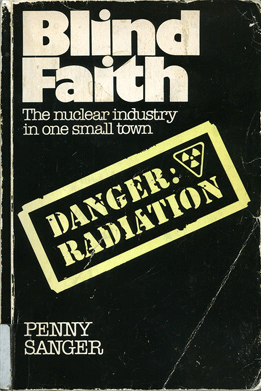 Blind Faith: The Nuclear History of Port Hope, Ontario http://www.mintpressnews.com/MyMPN/author/driches/ January 15, 2015 By Dennis Riches
Radiation is invisible, and it has always been imbued with a diverse range of magical powers in science fiction. Ironically, in a very real sense, radiation does make people invisible. Once groups of people have become victims of a radiological contamination, they are, in addition to being poisoned (or being traumatized by the possibility that they have been poisoned), marginalized and forgotten. Their traditions and communities are fragmented, and they are shamed into concealing their trauma. When contamination occurs, there is a strong impulse even among many victims to not admit that they have been harmed, for they know the fate that awaits them if they do.
Thus it is that hibakusha (the Japanese word for radiation victims) become invisible. When a new group of people become victims, such as in Fukushima in 2011, they feel that they have experienced a unique new kind of horror. For them, for their generation, it is new, but for those who know the historical record, it is a familiar replay of an old story. The people of Fukushima should know by now that they are bit players who have been handed down a tattered script from the past.
A case in point is “Blind Faith,” the superb 1981 book by journalist Penny Sanger, about the small irradiated Canadian town of Port Hope on the shores of Lake Ontario. In the 1970s, it faced (and more often failed to face) the toxic legacy of processing first radium, then uranium for nuclear weapons and nuclear power plants.
Ontario’s Grand Renewable Wind Project
Grand Renewable Wind Project Completed http://www.energymatters.com.au/renewable-news/grand-renewable-wind-em4640/ January 13, 2015 The 149 megawatt Grand Renewable Wind facility in Ontario is now complete and has commenced operations.
Consisting of 67 2.3 MW Siemens turbines, the wind farm will create enough clean electricity to power approximately 50,000 Ontario homes. All electrical output will be sold under a 20-year power purchase agreement with the Ontario Power Authority.
Grand Renewable is a joint venture between Samsung Renewable Energy, Inc., Pattern Energy Group Inc. the Six Nations of Grand River; comprised of the Mohawk, Seneca, Oneida, Cayuga, Onondaga and Tuscarora nations.
“The Six Nations Elected Council is committed to ensuring we enter into sustainable development projects that not only enrich our economy but are also socially and environmentally responsible,” said Chief Ava Hill, Six Nations Elected Council.
The Six Nations community owns 10% of the project.
More than 500 workers were employed on site during peak of construction, most of whom were Ontarians. 12 full-time permanent positions have been created for ongoing operations and maintenance. Construction of the project began in September 2013.
Samsung says it is making a $5-billion investment in Ontario, “to create the world’s largest cluster of wind and solar power. Our investments will create 900 direct renewable energy manufacturing jobs and 9,000 high-skilled jobs in Ontario.”
Yet to be constructed is Samsung’s 100 megawatt Grand Renewable Solar Project (GRS), the largest solar farm of its type in Canada and one of the largest in North America.
Grand Renewable Wind is the second wind farm in Ontario to reach operational status for Pattern Energy, which says it also has two other facilities under construction and two in late stage development; totaling 1,269 megawatts to be installed in the province by 2018.
The electricity from Grand Renewable Wind will make a significant contribution to Ontario’s clean energy goals.
According to Ontario’s Ministry of Energy, 20,000 MW of renewable energy will be online by 2025, representing about half of Ontario’s installed capacity. The province’s 2013 Long-Term Energy Plan (LTEP) estimates 10,700 MW of wind, solar and bioenergy capacity will be operational by 2021.
Further details of the Grand Renewable Wind and Grand Renewable Solar projects can be viewed here.
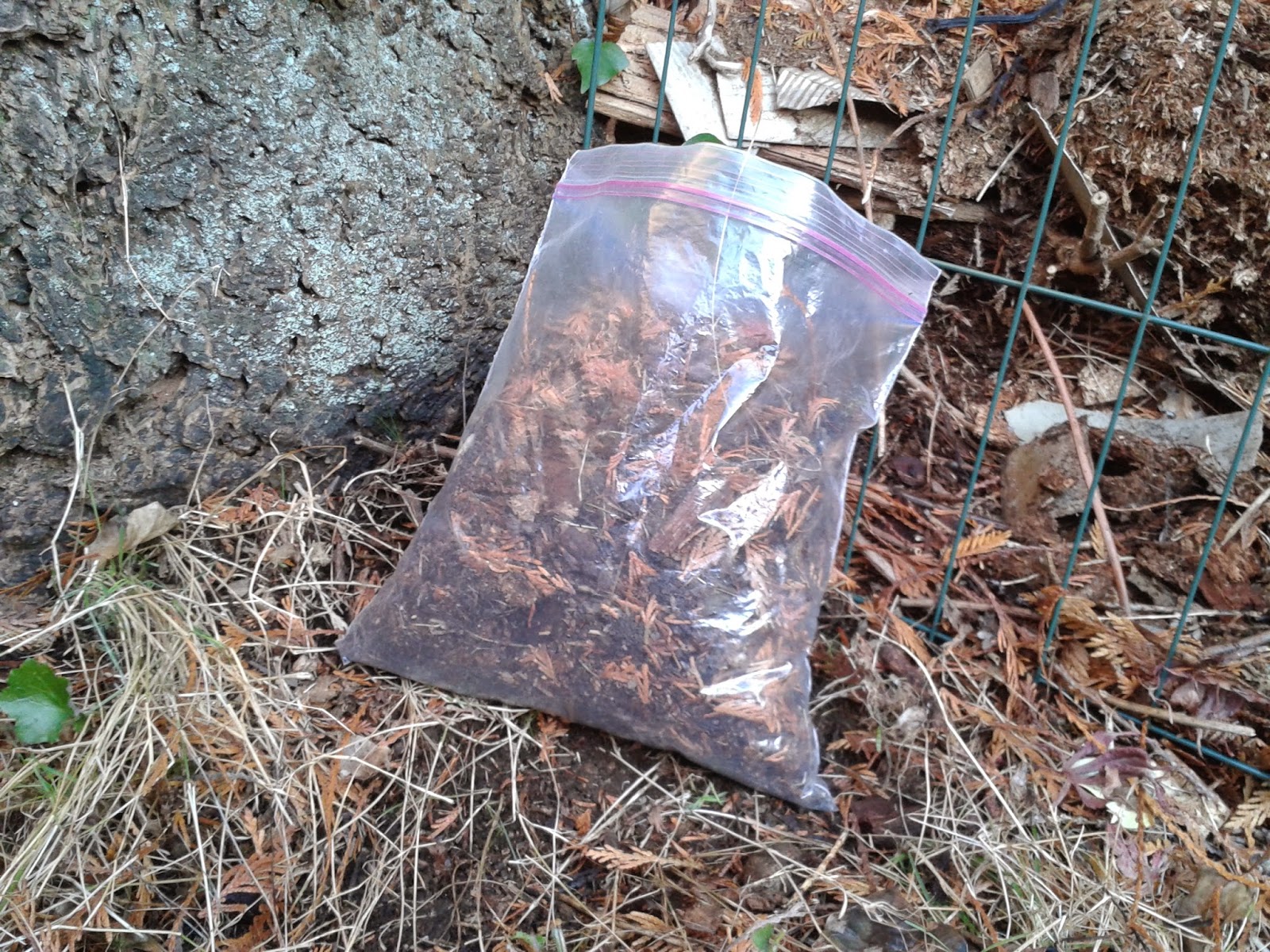
North Burnaby, British Columbia, Canada – Debris Analysis
 Friday, January 2, 2015
カナダBC州ノースバーナビー堆積物 BC North Burnaby Debris
試料 名 Sample: 堆積物 Debris
採取 場所 Origin:
BC州 ノースバーナビー
North Burnaby, B.C. Canada
Dehydrated ↓
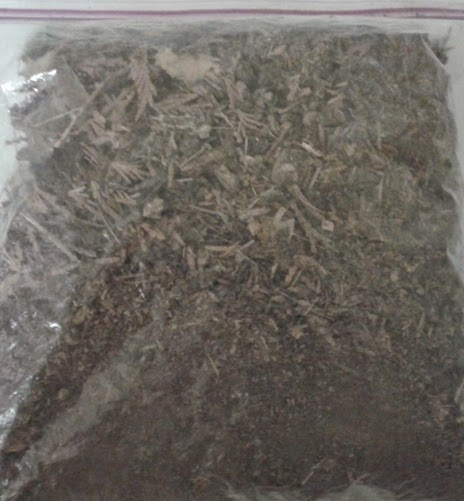
採取年月 Sampling date:
2014 年 11 月 (November, 2014)
測定日時 Date Tested :
2014 年12月10 日 (December 10, 2014)
測定時間 Duration : 57,600 秒(seconds)
試料容器 Container: 2 Lマリ ネリ容器(Marinelli)
試料重量 Sample weight: 502.2g
乾燥前 Before dehydration: 1380g
乾燥後 After dehydration: 710g

 Be-7 = Beryllium 7
Tl-208 = Thallium 208
Bi-212 = Bismuth-212
Bi-214 = Bismith-214
Pb-212 = Lead-212
Pb-214 = Lead-214
Ac-228 = Actinium-228
U-235 = Uranium-235
Source: Vancover Food Radiation Monitoring
http://vancouvermonitoring.blogspot.ca/2015/01/bc-north-burnaby-debris.html
United against uranium mining: Aboriginal people of Quebec at Montreal hearings
 The Aboriginal peoples of Quebec stand together against uranium at the final hearings of the BAPE in Montreal theturtleislandnews.com/daily/mailer_stories/dec162014/The-Aboriginal-peoples-of-Quebec-stand-together-against-uranium-at-the-final-hearings-of-the-BAPE-in-Montreal-pr1121614.html MONTREAL, Dec. 15, 2014 – At the final public hearings of the Bureau d’audiences publiques sur l’environnement (BAPE) on the uranium industry in Quebec, to be held today in Montreal, the James Bay Cree Nation will deliver a resounding and united message of opposition to uranium development in their territory, Eeyou Istchee. The Cree Nation, which has led the charge against uranium development, has been joined in this position by the Assembly of First Nations of Quebec and Labrador and the Inuit of northern Quebec, who will also make presentations to the BAPE today.
“A powerful message has been sent by all of the Aboriginal peoples of Quebec. Together, we have said NO to uranium,” said Matthew Coon Come, the Grand Chief of the James Bay Cree Nation. “Today, we show that the Cree Nation speaks in one voice – united with the other Aboriginal peoples of Quebec – when we insist that our lands remain free of uranium mining and uranium waste.”
The Cree Nation Youth Council’s StandAgainstUranium march, which began in Mistissini on November 23, arrived in Montreal today to attend the BAPE hearings. The marchers have travelled on foot over 850 km in 23 days, to share the Cree Nation’s message and to encourage other Quebeckers to stand with them against uranium development. Overwhelmingly, those they met along the way have agreed that uranium mining should be banned in Quebec.
Youth Grand Chief Joshua Iserhoff has led the StandAgainstUranium march and will be making submissions to the BAPE on behalf of the Youth Council. “One of our community’s favourite fishing spots, Gobanji, is on Mistissini Lake, downstream from Strateco’s Matoush project. My grandma’s goose camp is there too,” reflected Youth Chief Iserhoff. “I’ve had lots of time on this walk to think about how important this land is to me, my family and our entire community. I will be telling the Commissioners, on behalf of Cree Youth, that uranium mining, and the radioactive and hazardous waste it will leave behind, are not welcome in Eeyou Istchee.”
“The courage and resolution shown by the StandAgainstUranium marchers over the last few weeks speaks in a powerful way to the determination of our people to protect Eeyou Istchee from the risks of uranium mining and uranium waste, today and for future generations. We give our thanks to the First Nations who offered support and encouragement along the way,” noted Grand Chief Coon Come. “We have been gratified to see that as they learn the facts about uranium, Quebeckers are joining with us in our stand.”
The BAPE’s final hearings will be held in the Salle Ovation at the Hyatt Regency Montreal, at 1pm and 7pm. The evening sessions will be co-chaired by the BAPE Commission, the James Bay Advisory Committee on the Environment and the Kativik Environmental Advisory Committee.
More information about uranium and the Cree Nation’s position can be found at www.StandAgainstUranium.com, on Facebook (James Bay Cree Against Uranium) or on Twitter (@JBCAUranium). SOURCE The Grand Council of the Crees (Eeyou Istchee)
Cree anti uranium marchers reach Montreal in time to take part in hearings
Cree march against uranium arrives in Montreal in time for hearings ROBERTO ROCHA, MONTREAL GAZETTE December 15, 2014 Three weeks after they left Mistissini on foot to protest against uranium mining in northern Quebec, a group of 20 Cree youths arrived in Montreal Monday.
The group braved blizzards and temperatures as low as minus-28 C as they marched 850 kilometres across the province to take part in environmental hearings on uranium mining.
They fear the waste from mining would contaminate the land and water of Cree communities and encroach on trap lines, and want a ban on uranium exploration.
A hearing by the Bureau d’audiences publiques sur l’environnement (BAPE) on uranium mining wrapped up on Monday, with a final report expected next May.
“The potential risks associated with uranium mining, which leaves behind thousands of years of radioactive material, that’s what concerns our people,” Chief Richard Shecapio of Mistissini told reporters shortly before the hearings began.
The Cree Nation Youth Council argues that uranium mining would affect tourism, as the region is a popular getaway for fishers………
There’s a moratorium on uranium exploration in Quebec, imposed last year by the previous Parti Québécois government. Before that time, the only uranium project seeking an exploration permit was Strateco Resources Inc.’s Matoush site in the Otish mountains, about 275 kilometres north of Chibougamau.
Yves-François Blanchet, the environment minister at the time, said no permits would be issued for the exploration or mining of uranium until an independent study on the mineral’s social acceptability and environmental impacts had been completed.
Last week, Strateco Resources filed a $190-million lawsuit against the Quebec government for blocking its project after years of ground work.
rrocha@montrealgazette.com
twitter.com/robroc http://montrealgazette.com/news/local-news/cree-march-against-uranium-arrives-in-montreal-in-time-for-hearings
Marathon walk by Cree youth to stop uranium mining in Quebec
Cree Youth Walk 850 km To Protest Against Uranium Mining In Quebec, Huff Post. CBC 14 Dec 14 About 20 young Cree people have walked nearly 850 kilometres to Montreal’s South Shore from their village in northern Quebec, protesting against uranium exploration in the province.
The youth left Mistissini, Que., northeast of Chibougamau in the James Bay region three weeks ago. On the way, they stopped in Quebec City to share their message. They arrived in Longueuil, just across the bridge from Montreal, Saturday.
Their final destination is downtown Montreal, where they will deliver that message to the province’s environmental protection agency, known as the BAPE, when it holds the last of a series of public hearings on uranium exploration tomorrow.
The Cree young people have endured frigid temperatures and wintry conditions, walking an average of a marathon a day. “We’ve lost a couple of toenails on this journey,” said Joshua Iserhoff, chair of the Cree Nation Youth Council.
But according to Iserhoff, it’s been worth it.
He said uranium exploration near his community could cause irreparable damage to the watershed………
Now the province is holding public hearings on uranium mining. http://www.huffingtonpost.ca/2014/12/14/cree-uranium-mining-protest_n_6322934.html
Climate change; hotter weather brings expensive nuclear power shutdowns
 Planned shutdowns of nuclear plants could mean higher prices for consumers CTV Toronto , December 8, 2014 The planned shutdowns of two of Ontario’s biggest nuclear plants during normally high peak times could mean soaring prices for consumers next year.
The Bruce Power and Darlington Nuclear Generating Stations will be shut down at the same time next spring and summer for 16 weeks for planned repairs.
The closure means that Ontario will not have enough electricity to meet its mandatory reserve during those weeks, when power demands normally soar. Last year, Ontario’s top-10 record days for electricity demand fell during those weeks. And Toronto also declared six extreme heat alerts during the same time.
The massive shutdowns combined with the possible added demand for power could mean the province may import electricity from the U.S. to avoid an outage.
“We always have the option if we see extreme weather coming to import power from our neighbours,” Alexandra Campbell, a spokesperson for the Independent Electricity System Operator, told CTV Toronto.
But Ontario’s NDP energy critic Peter Tabuns is warning that could mean higher prices for consumers.
“Let’s all pray for a cool, rainy May and a cloudy June and July because very high prices comes with those very high temperatures,” Tabus said…….
Ontario’s Bruce Power Nuclear Deal under scrutiny – needs full public review
 9 good reasons why we need a public review of a Bruce Nuclear deal
The Ontario Power Authority and Bruce Power are secretly negotiating a multi-billion dollar deal to rebuild four aging reactors at the Bruce B Nuclear Station. Here are 9 good reasons why Premier Kathleen Wynne should send any agreement to the Ontario Energy Board (OEB) for a full public review:
1. |
The Bruce B contract would be the largest private sector contract ever signed by an Ontario government, worth $60-$111 billion that householders and businesses would pay. Is Bruce B the cheapest available power? |
2. |
Electricity demand in Ontario is falling. Since 2005 Ontario’s total annual electricity demand has fallen by 10%, despite the fact that our GDP has grown by 8.5%, and it appears likely that our electricity demand will continue to fall as our electricity productivity continues to rise. Will we need Bruce B power? |
3. |
Ontario has a rising supply of renewable and gas-fired generation, including the TransCanada gas-fired power plant in Napanee. Will Bruce B power be needed? |
4. |
Ontario already has a surplus baseload problem. Bruce Power claims its nuclear units are now capable of cutting back generation when demand falls. But in reality the company is running its reactors full tilt, either venting the excess steam into Lake Huron or producing unneeded power and exporting it to the US at a loss. Will a Bruce B deal make these problems worse? |
5. |
The cost overruns on nuclear projects have always been passed on to electricity consumers and taxpayers. Despite government assurances that nuclear projects must minimize “commercial risk on the part of ratepayers and government”, 93% of the work on the proposed Darlington re-build project is not subject to fixed price contracts, with the provincial treasury and ratepayers liable for inevitable cost overruns. Will it be any different at Bruce where ratepayers have already picked up billions of dollars in cost overruns on previous projects? |
6. |
We can meet some or all of our electricity needs at a lower cost with additional investments in energy conservation and efficiency. According to the government’s Conservation First policy, Ontario will pursue all cost-effective energy conservation and efficiency resources beforeinvesting in new supply. |
7. |
We can meet our electricity needs at a lower cost with water power imports from Quebec. The cost of upgrading transmission infrastructure to fully exploit Quebec imports would be a fraction of the cost of re-building nuclear reactors. |
8. |
According to the Long-Term Energy Plan, the existing Bruce B reactors will not come to the end of their lives until 2022 and beyond. There is a very good chance that renewable energy options like wind, solar, biogas and biomass will be lower cost electricity supply options by 2022. Quebec’s existing hydro-electric storage capacity could also be used to transform wind and solar from intermittent to “firm” base-load electricity resources. Is this the right time to commit to Bruce B power? |
9. |
We don’t know by how much a Bruce B contract would cause our electricity rates to rise. Surely we should know this before a deal is signed. |
 Please send Premier Wynne a message urging her to follow through on her commitment to run “the most open and transparent government in Canada” by sending any Bruce deal to the OEB for review.
These are important questions that the Ontario Energy Board’s procedures are designed to answer — before any contract is signed.
You can also read our open letter to Premier Wynne outlining our questions about a Bruce deal.
Green energy now big business in Canada, bigger employer than tar sands is
 Canada’s Green Energy Sector Now Employs More People Than Its Tar Sands, Climate Progress BY JEFF SPROSS DECEMBER 2, 2014 BETWEEN 2009 AND 2013, EMPLOYMENT IN CANADA’S CLEAN ENERGY SECTOR INCREASED BY 37 PERCENT — MEANING IT NOW SUPPLIES MORE JOBS THAN THE COUNTRY’S INFAMOUS TAR SANDS, ACCORDING TO A NEW REPORT.
“Clean energy has moved from being a small niche or boutique industry to really big business in Canada,” said Merran Smith, the director of Clean Energy Canada.
Green energy tends to be more labor intensive than energy from fossil fuels, meaning that every unit of energy produced by green sources tends to employ more people than those sources that come along with carbon emissions. In America, research suggests green jobs are more accessible to workers without a college education, that green sectors grow a bit faster than the economy as a whole, and that they more successfully weathered the 2008 recession.
The report also noted that Canada’s energy generation capacity in wind, solar, and other renewable sources has grown 93 percent over the past five years, and investors have pumped $25 billion into green energy in the country over that same time period………..http://thinkprogress.org/climate/2014/12/02/3598312/canada-green-energy-tar-sands/
1 This Month



26 September – International Day for the Total Elimination of Nuclear Weapons


PLEASE OPPOSE HR 8255 AND S.3639 – bills would accelerate satellite deployment, with no environmental review or safeguards – https://ncstd5li.quorum.us/campaign/169331/
To see nuclear-related stories in greater depth and intensity – go to https://nuclearinformation.wordpress.com
-
Archives
- September 2026 (219)
- August 2026 (330)
- July 2026 (355)
- June 2026 (287)
- May 2026 (306)
- April 2026 (356)
- March 2026 (251)
- February 2026 (267)
- January 2026 (308)
- December 2025 (358)
- November 2025 (359)
- October 2025 (375)
-
Categories
- 1
- 1 NUCLEAR ISSUES
- business and costs
- climate change
- culture and arts
- ENERGY
- environment
- health
- history
- indigenous issues
- Legal
- marketing of nuclear
- media
- opposition to nuclear
- PERSONAL STORIES
- politics
- politics international
- Religion and ethics
- safety
- secrets,lies and civil liberties
- spinbuster
- technology
- Uranium
- wastes
- weapons and war
- Women
- 2 WORLD
- ACTION
- AFRICA
- Atrocities
- AUSTRALIA
- Christina's notes
- Christina's themes
- culture and arts
- Events
- Fuk 2022
- Fuk 2023
- Fukushima 2017
- Fukushima 2018
- fukushima 2019
- Fukushima 2020
- Fukushima 2021
- general
- global warming
- Humour (God we need it)
- Nuclear
- RARE EARTHS
- Reference
- resources – print
- Resources -audiovicual
- Weekly Newsletter
- World
- World Nuclear
- YouTube
-
RSS
Entries RSS
Comments RSS
 nuclear-news