73 Organizations Send Joint Letter Calling on the Federal Government to Improve Nuclear Waste Oversight

73 organizations representing a broad segment of Canadian society have sent a joint letter to the federal government urging more oversight of the nuclear industry and of nuclear waste projects.
In the letter, the groups urged the Prime Minister and the Ministers of Environment and Climate Change and of Energy and Natural Resources to exercise oversight of the Nuclear Waste Management Organization’s “Adaptive Phased Management Project” to transport, process, bury and eventually abandon all of Canada’s nuclear fuel waste at the NWMO’s selected site in the heart of Treaty 3 Territory in northwestern Ontario and its upcoming impact assessment process.
The groups expressed an overarching concern about the lack of federal oversight of this project since its inception in 2002.
More recently, the NWMO has made it known that they are seeking to have transportation of the radioactive wastes excluded from the project’s impact assessment process. But for 20 years the NWMO has been describing transportation as part of their project, and the Impact Assessment Act requires activities that are integral to – or, in the language of the Act “incidental” to – the project be included in the assessment.
The joint letter requests that the federal government provide immediate oversight and direction in four areas:
73 organizations representing a broad segment of Canadian society have sent a joint letter to the federal government urging more oversight of the nuclear industry and of nuclear waste projects.
In the letter, the groups urged the Prime Minister and the Ministers of Environment and Climate Change and of Energy and Natural Resources to exercise oversight of the Nuclear Waste Management Organization’s “Adaptive Phased Management Project” to transport, process, bury and eventually abandon all of Canada’s nuclear fuel waste at the NWMO’s selected site in the heart of Treaty 3 Territory in northwestern Ontario and its upcoming impact assessment process.
The groups expressed an overarching concern about the lack of federal oversight of this project since its inception in 2002.
More recently, the NWMO has made it known that they are seeking to have transportation of the radioactive wastes excluded from the project’s impact assessment process. But for 20 years the NWMO has been describing transportation as part of their project, and the Impact Assessment Act requires activities that are integral to – or, in the language of the Act “incidental” to – the project be included in the assessment.
The joint letter requests that the federal government provide immediate oversight and direction in four areas:
Radioactive fertilizer and the nuclear industry

Gordon Edwards. 14 Dec 25
CORRECTION
I wrote that
“…selling raffinate as fertilizer goes on all the time from the world’s largest uranium refinery owned by Cameco, situated at Blind River on the north shore of Georgian Bay.”
This sentence is incorrect. Raffinate from Blind River is not used as fertilizer. I apologize for the error.
Radioactive fertilizer from the Canadian uranium industry does not come from the Cameco Blind River refinery but from two other sources – the Cameco Key Lake uranium mill in Northern Saskatchewan, and the Cameo uranium dioxide conversion facility at Port Hope Ontario.
Moreover, the material that is being used in radioactive fertilizer is not raffinate (i.e. refinery waste). It is ammonium sulphate that is recovered from the Key Lake uranium processing circuits and sold as fertilizer, together with a liquid by-product of Cameco’s Port Hope uranium dioxide conversion plant – an ammonium nitrate solution – that is sold to a local agricultural supply company for use in fertilizer production.
The use of similar waste solutions from nuclear fuel facilities as fertilizer has been a concern in other jurisdictions as well. So at the present time, it is not raffinate but ammonium compounds that have been used in uranium processing that ends up in fertilizer. I apologize for not checking the facts much more carefully..
About radioactive fertilizer and the nuclear industry.
A lot of the phosphate used for fertilizer comes from Florida where the phosphate ore is mined. That ore is contaminated with uranium and its decay products, especially radium. Radium disintegrates to produce radon gas Radon-222) and this builds up in an enclosed space, without adequate ventiliation, reaching an “equilibrium” in about one month.
That’s why Florida was the first “hot spot” that alerted the US government to the major public health hazard posed by radon, which is estimated to kill about 20-30 thousand Americans every year. Every atom of radon comes from the disintegration of a radium atom, and in turn, every atom of radium started out as an atom of uranium.
Radioactive quilibrium means #becquerels of radium = #becquerels of radon. One becquerel being one disintegration per second. In a simiar way, if pure radon gas is in an enclosed container, it will reach equilibrium with its four short-lived decay products in a couple of hours – so the radioactivity in the container is about five times greater than it was originally, as all the short-lived decay products have attained roughly the same level of radioactivity as the radon.
When this radioactive fertilizer is used on tobacco crops, the radon from the soil and the fertilizer builds up under the thick canopy of tobacco leaves and hangs there for a time (radon being 7-8 times heavier than air). The radon atoms disintegrate to produce four airborne solid short lived decay products – polonium-218, bismuth-214, lead-214, polonium-214, all of which decay into lead-210 and polonium-210. [Note: the last two nuclides never reach equilibrium, unlike the first four.]
These radon decay products stick to the resinous (sticky) hairs on the undersides of the tobacco leaves and when the tobacco is harvested these radioactive materials are harvested along with the tobacco. By the time the tobacco is cured, rolled, and packaged, small quantities of lead-210 (22-year half-life) and its immediate successor polonium-210 are left in the tobacco/cigarettes for the unwitting smoker (or second-hand-smoke inhaler) to encounter.
When the cigarette is lit and the smoker draws on it, the temperature at the tip increases dramatically and it vaporizes the lead-210 and polonium-210 which is inhaled deep into the lungs, where polonium-210 sticks to and attacks the sensitive lung tissue with its very energetic alpha particles.
Polonium-210 is a very damaging radionuclide which Los Alamos Labs reckons is about 250 billion time more toxic than hydrogen cyanide. (It’s what was used to murder Alexander Litvenenko in London at the “request” of Putin who was openly criticized by Litvenenko).
Polonium-210 adds greatly to the cancer-causing characteristic of the tobacco residues lodged in the lung, making cigarettes smoke significantly more carcinogenic than it would otherwise be. (When the smoker is not inhaling, the lead-210/polonium-210 is wafted into the second-hand cigarette smoke as a respirable aerosol to endanger the health of those within sniffing distance,)
Inside the lung, some of the inhaled polonium-210 crosses the blood-air barrier end enters the bloodstream. Being solid, it attaches to pre-existing plaque build-up in the arteries of the smoker, usually near the arterial valves, where the alpha particle bombardment causes fibrosis of the arterial wall and valve, thus exacerbating the plaque build-up and increasing the restriction of blood flow, thereby contributing substantially to the incidence of heart attacks and strokes among smokers because of the alpha emitting polonium-210 in the plaque.
What you may not have heard is that voluminous sand-like radioactive waste from the uranium industry, called “raffinate” (leftovers from uranium refining), is also sold as fertilizer on the open market without any warnings about the radioactive content. The justification for this nefarious practice seems to be, that since “natural” phosphate from Florids is used to make fertilizer, and it is clearly radioactive (due to the radium-radon chain), and since raffinate from a uranium refinery is not much higher in radioactive content, then what the heck, we (the uranium industry) may as well turn this sow’s ear into a silk purse by selling the radioactive raffinate waste as fertilizer.
Extensive radioactive contamination – involving uranium raffinate – of the homes, schools, roadways, ravines, and the public beach in the town of Port Hope (prior to 1985) – has led to a $2.6 billion radioactive environmental cleanup of the town (by the federal government) resulting in over a million cubic metres (about a million tonnes) of radioactibve waste to be stored for 500 years in a gigantic earthen mound just north of the town. The subsequent fate of the still-radioactive waste will be decided at that time.
This practice of selling raddinate as fertilizer goes on all the time from the world’s largest uranium refinery owned by Cameco, situated at Blind River on the north shore of Georgian Bay. The Blind RIver plant turns uranium mill concentrates from Saskatchewan, Australia and South Africa, called “yellowcake” (mostly U3O8), into a product called “uranium trioxide” UO3. At that point the raffinate is the waste product, contaminated with radium. That’s what’s sold for fertilizer.
The trioxide then goes to Port Hope Ontario, where it is chemically converted into UO2 (uranium dioxide) for domestic use, about 15% of the total, and into UF6 (uranium hexafluoride or “hex”) for export to enrichment plants outside of Canada where the concentration of U-235 is increased to the level required by the customer.
At the enrichment plant, the “hex” is turned into a gas at a fairly low temperature so that the heavier U-238 atoms can be separated from the lighter U-235 atoms, resulting in an enriched uranium product that goes out the front door while the voluminous discarded U-238 (called depleted uranium or “DU”) goes out the back door.
For low enrichment in light water nuclear power plants, about 85% of the refined uranium is discarded as depleted uranium. The DU has important military uses, and a few civilian uses, but for the most part DU is part of the radioactive legacy of the nuclear age wth a half-life of 4.5 billion years.
Besides using DU in conventional bullets, shells, missiles, tanks, et cetera, used in the former Yugoslavia and in other conflicts, resulting in a battlefield litters with radioactive waste, the military also uses DU as “target rods” in plutonium production reactors to breed plutonium for nuclear warheads. In addition, the military uses DU metal in almost all nuclear warheads as a way of significantly multiplying the explosive power of the warhead by a sizable factor. These weapons are called “fission-fusion-fission” weapons,
The first fission is from a small ball of plutonium (usually with a tritium “spark-plug” inside) whose sole purpose is to ignite the fusion reaction by raising it to a temperature of about 100 million degrees. When fusion occurs, extremely energetic neutrons are goven off which fission the U-238 that has been used for that exact purpose in the construction of the warhead. That third stage, the fission of U-238, provides the bulk of the explosive power and the lion’s share of the radioactive fallout.
It is a sad story from beginning to end.
And, to add to this tale of woe, Canada currently has about 220 million tonnes of radioactive waste (tailings) stored at or near the surface from uranium milling (the operation that produces yellowcake) along with about 167 million tonnes of radioactive “waste rock”. Yet the Canadian authorities and others routinely and unabashedly declare that nuclear power is a “clean” source of energy and for the most part, Canadian academic scientists and sientific bodies say not a peep to the contrary.
Ottawa medical manufacturer giving up nuclear licence after defying regulator
Canadian Nuclear Safety Commission ordered Best Theratronics to comply over a year ago.

COMMENT.There are questions about lack of financial guarantee in the case where the plant in Kanata is decommissioned, i.e. cost of cleaning up the radioactive materials at the site. Next step is the CNSC is waiting for the decommissioning preliminary plan. The owner is moving the business to the U.S. and India, he says.
Campbell MacDiarmid · CBC News · Dec 14, 2025, https://www.cbc.ca/news/canada/ottawa/ottawa-medical-manufacturer-giving-up-nuclear-licence-after-defying-regulator-9.7014006
A storied Kanata medical manufacturer is in the process of relinquishing its nuclear licence, more than a year after Canada’s nuclear regulator placed it under orders for violating the terms of that certificate.
On Friday, the Canadian Nuclear Safety Commission (CNSC) confirmed that Best Theratronics is in the process of offloading the nuclear material it used to manufacture cancer treatment devices.
“Best Theratronics Limited has obtained an export licence to ship its Cobalt 60 sealed sources, as well as an export licence to ship its Cesium 137 sealed sources,” said Andrew McAllister, director of the CNSC’s nuclear processing facilities division, during a public meeting.
Best Theratronics was once a Crown agency that created the world’s first cancer treatment machine, but it has struggled in recent years under the private ownership of overseas businessman Krishnan Suthanthiran.
Suthanthiran says he has lost millions of dollars since buying the company from MDS Nordion in 2007. More recently, the company faced a protracted labour dispute that saw workers strike for nearly 10 months to demand better pay.
Last November, the CNSC issued orders against Best Theratronics after noticing that its financial guarantee had lapsed. The industry regulator ordered the company to make $1.8 million available to cover any cleanup costs in the event that its site was decommissioned.
But Suthanthiran never complied, telling CBC in October that the CNSC was in the wrong and that he lacked the funds to restore the guarantee.
Instead, Suthanthiran said he would give up his nuclear licence and shift the company toward activities that don’t involve nuclear materials.
CBC asked Suthanthiran whether staff at Best Theratronics would would be out of work as a result of the company surrendering its nuclear licence.
In an email, he wrote that he was being forced “to relocate to the USA and India” and that would result in “the loss of 200 high-tech jobs.” He also cited the high yearly cost of having the nuclear licence.
The CNSC has required Best Theratronics to submit monthly reports relating to its progress in offloading its nuclear material. But the company missed its December deadline, submitting its report several days later, McAllister said.
Manny Subramanian, a representative of Best Theratronics, told the CNSC the delay was due to Suthanthiran’s absence.
“One particular report, you know, we ended up sending about a day late or two days late because Krish, the president of the company, was travelling. We couldn’t get ahold of him,” Subramanian said.
The next deadline facing Best Theratronics comes Tuesday when it’s due to submit a preliminary plan for decommissioning its plant in Kanata.
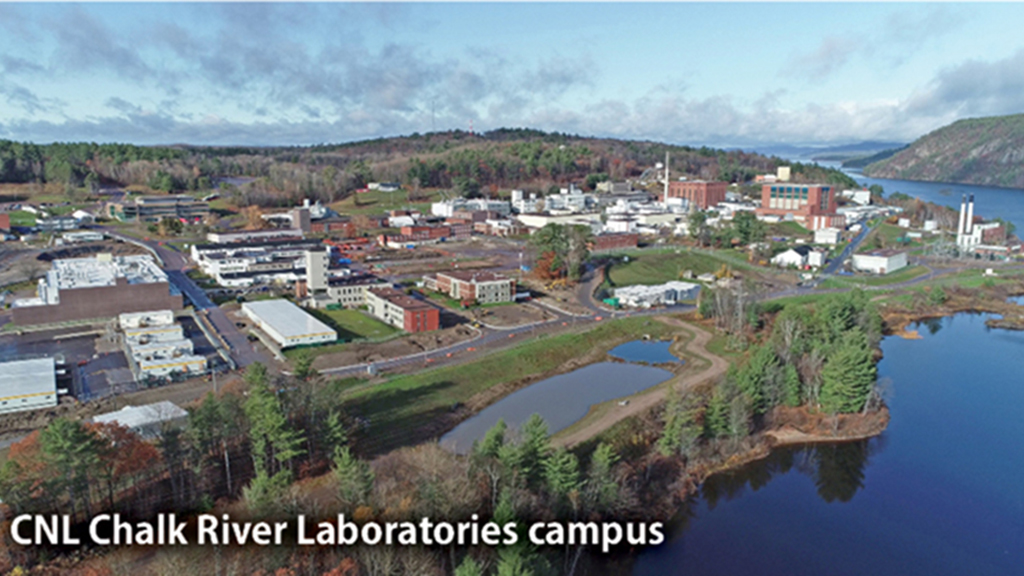
American-owned consortium assumes control of Canada’s premier nuclear research facility.
THE GLOBE AND MAIL, Matthew McClearn, 12 Dec 25
An American-owned consortium has assumed responsibility for managing Canada’s premier nuclear research facility, Chalk River Laboratories, along with cleaning up the federal government’s sizable inventory of radioactive waste spread across the country.
After a three-month delay, Nuclear Laboratory Partners of Canada Inc. formally took control on Thursday of the organization that runs Chalk River, known as Canadian Nuclear Laboratories.
CNL manages the assets and liabilities of a federal Crown corporation called Atomic Energy of Canada Ltd. under an arrangement Ottawa describes as a “government-owned, contractor-operated” model………………………………………………….
Earlier this year, AECL said the consortium’s contract is worth about $1.2-billion annually. It has been called the federal government’s largest contract at the moment, although key federal authorities – including the Treasury Board Secretariat, Auditor-General and AECL – have been unwilling or unable to confirm that. The term of the contract will be six years but it can be extended for up to another 14 years.
The consortium’s American ownership has provoked controversy. Since assuming office, Prime Minister Mark Carney has espoused a Buy Canadian policy – a key part of his government’s response to mounting conflict with its dominant trading partner, the United States.
Corey Tochor, a Conservative member of Parliament for Saskatoon-University, accused AECL of “selling out our nuclear secrets” to American interests, during the first of three scheduled hearings held before the House of Commons standing committee on natural resources to examine the consortium’s American ownership.
“What we have real deep concerns [about] is that we’re letting a foreign country manage our medical isotopes,” Mr. Tochor said.
Earlier this month, Conservative MP Cheryl Gallant from Renfrew-Nipissing-Pembroke characterized the awarded contract as an “elbows-down” approach that left Americans in control of Canadian intellectual property…………………………………………………………….
The American-owned consortium is led by a large nuclear specialty manufacturer focused on military equipment and nuclear fuel called BWX Technologies Inc…………………………………..
The U.S.-led consortium takes over from another partnership known as Canadian National Energy Alliance, which held the contract for a decade. Its members recently included Montreal-based AtkinsRéalis Group Inc. and two American companies, Jacobs Engineering Group Inc. and Fluor Corp………………………….
The American consortium was declared the winner of a competitive procurement process in June and had originally been scheduled to take over in September. The transfer was delayed pending a review by the Competition Bureau, which is responsible for enforcing federal antitrust rules. Late last month the Competition Bureau issued a “no-action letter” confirming it will not oppose the contract, which allowed the transfer to proceed. https://www.theglobeandmail.com/business/article-nuclear-laboratory-partners-chalk-river-laboratories-cnl-atomic-energy/
On the road with radioactive waste: Canada’s roads are not safe.

Transporting nuclear waste is inherently dangerous because it involves moving materials that remain hazardous to human health and the environment for centuries to millennia. Even under ideal conditions, risks cannot be fully eliminated — accidents, mechanical failures, weather events, security threats, or human error can all result in the release or exposure of radioactive materials.
Unlike other hazardous goods, radioactive waste cannot simply be cleaned up with standard emergency response measures; contamination can render land unusable, water unsafe, and ecosystems damaged for generations. Every shipment is a high-stakes event, and the impacts of even a single failure could be irreversible for the communities and lands along the transport route.
by Mayara Gonçalves e Lima, December 11, 2025
Canada is decommissioning a nuclear power plant for the first time, marking a new chapter in the country’s nuclear history. The decommissioning of Gentilly-1 in Bécancour, Quebec — on the St. Lawrence River in Wabanaki territory — is a milestone in the country’s reckoning with its radioactive legacy, setting a precedent that will influence how future projects are approached across Canada.
The implications extend far beyond Quebec. How Gentilly-1 is dismantled, how its waste is transported, and how oversight is conducted will set precedents for future decommissioning projects across the country.
For New Brunswick, these decisions will shape the expectations, policies, and protections in place when it comes time to decommission Point Lepreau — a process that will carry even higher stakes for this province.
The threat of radioactive waste on the move
Gentilly-1 recently entered its active dismantling phase, with the removal of remaining radioactive and structural components, including equipment, piping, cabling, and control panels from the service and turbine buildings.
Under the current dismantling plan, the resulting radioactive waste is expected to be transferred to Canadian Nuclear Laboratories at Chalk River, Ontario, for interim storage.
This planned transfer follows an earlier shipment of Gentilly-1 used fuel to Chalk River that occurred without publicity or demonstrated compliance with regulatory requirements.
Transporting nuclear waste is inherently dangerous because it involves moving materials that remain hazardous to human health and the environment for centuries to millennia. Even under ideal conditions, risks cannot be fully eliminated — accidents, mechanical failures, weather events, security threats, or human error can all result in the release or exposure of radioactive materials.
Unlike other hazardous goods, radioactive waste cannot simply be cleaned up with standard emergency response measures; contamination can render land unusable, water unsafe, and ecosystems damaged for generations. Every shipment is a high-stakes event, and the impacts of even a single failure could be irreversible for the communities and lands along the transport route.
These risks are compounded by the fact that current storage solutions for Gentilly-1 nuclear waste are only temporary. Neither Canada nor any country in the world has a permanent solution for radioactive waste — meaning the waste will eventually need to be moved again, effectively doubling both the risks and costs associated with its handling and transportation.
Bloc Québécois urges halt to radioactive waste shipments to Chalk River
On October 17, 2025, amid growing national debate over nuclear waste transport, the Bloc Québécois formally called on Federal Natural Resources Minister Tim Hodgson to immediately halt the transfer of radioactive materials from Gentilly-1 to the Chalk River Laboratories.
To reinforce their position, the Bloc Québécois has launched a petition allowing the public to voice their opposition to the project. It underscores the environmental risks of transporting radioactive waste and storing it so close to a major drinking water source, as well as the lack of meaningful consultation with Indigenous communities.
The Bloc’s petition also highlights a separate proposal for the Chalk River site: the construction of a nuclear waste landfill known as the Near Surface Disposal Facility (NSDF). This project also has become a major source of controversy. The Kebaowek First Nation, along with more than 140 municipalities in Quebec and Ontario, has voiced strong opposition to placing large volumes of radioactive waste near the Kichi Sibi (Ottawa River) and its tributaries.
Whistleblowers raise alarm over secretive transport practices
More than 60 groups, with the Passamaquoddy Nation among them, have endorsed a letter sent to the Prime Minister and key members of Cabinet on December 2, 2025, sounding the alarm about the federal government’s management of radioactive waste transport in Canada.
The signatories state that they are “blowing the whistle” on a practice that has remained largely hidden from public view: the movement of radioactive waste along public roads, bridges, and through First Nations territories without consultation, notification, or parliamentary oversight.
The letter focuses on Canadian Nuclear Laboratories’ decision to consolidate federally-owned radioactive waste at the Chalk River Laboratories site. The signatories emphasize that Chalk River is an unsuitable and inherently vulnerable location due to its proximity to the Ottawa River and its exposure to seismic activity.
In response to these escalating concerns, the signatories call for three concrete actions: an immediate cessation on shipments of radioactive waste to Chalk River; a full ban on the import of radioactive waste; and a strategic assessment under section 95 of the Impact Assessment Act to evaluate the cumulative and long-term risks of transporting radioactive waste on public highways.
Such an assessment, they argue, is essential to ensuring informed, democratic decision-making and to guiding future reviews of nuclear facilities, reactor decommissioning projects, and federal waste policies.
Canada’s radioactive waste crisis demands action
Canada urgently needs to halt the practice of transporting radioactive waste over public roads, through municipalities, across public bridges, and over Indigenous territories without meaningful consultation, public notification, or clear regulatory justification.
These shipments — often occurring quietly and without community awareness — pose risks that are collectively borne by the public while decisions are made by a small number of government and industry actors.
The lack of transparency erodes trust and fails to meet even the basic standards of democratic governance, environmental protection, or respect for Indigenous rights. Communities have the right to know when hazardous materials are moving through their homelands, and they deserve a real voice in determining whether and how such shipments occur.
The Age of Nuclear Waste is only beginning, and Canada is unprepared to manage the growing challenges of transporting, importing, and exporting radioactive materials.
As reactors age, decommissioning accelerates, and new nuclear projects emerge, waste shipments will only increase — but federal oversight remains fragmented, inconsistent, and insufficiently accountable to the public.
Without a coherent national policy grounded in precaution, transparency, and genuine consultation — especially with First Nations whose territories are routinely crossed — Canada risks locking in a legacy of poorly governed radioactive waste movements.
Canada must act now to establish responsible oversight and build a safer, more accountable framework before today’s shortcomings become tomorrow’s crises.
At times like these, we’re reminded that every chapter of Canada’s nuclear history carries lasting responsibilities: our nuclear past has left behind a trail of toxic legacy that no technology, no policy, and no promise can safely contain for the timescales required.
Mayara Gonçalves e Lima works with the Passamaquoddy Recognition Group Inc., focusing on nuclear energy. Their work combines environmental advocacy with efforts to ensure that the voice of the Passamaquoddy Nation is heard and respected in decisions that impact their land, waters, and future.
After Canadian Police Raid Homes, Six Peace Activists Face Charges.

The event was sponsored by Israel-based defence contractor Elbit Systems, Lockheed Martin, General Dynamics, Hensoldt, Saab and Gastops. All of these firms are directly involved in supplying drones, munitions, targeting systems and surveillance technology used in the genocidal assault on the population of Gaza. Notably, Ottawa-based contractor Gastops is the sole supplier of critical engine sensors for the F-35 jets that Israel uses to drop 2,000-pound bombs.
By Pierre Lajeunesse, World Socialist Web Site, December 2, 2025, https://popularresistance.org/after-canadian-police-raid-homes-six-peace-activists-face-charges/
Activists With World Beyond War Raided Over Protest Against Arms Fair.
The World Socialist Web Site and the Socialist Equality Party (Canada) unequivocally condemn these raids and charges. They represent a serious escalation of state repression aimed at criminalizing anti-war and anti-genocide dissent.
London, Ontario police carried out coordinated pre-dawn raids on November 25 against four homes across southern Ontario, targeting members of the anti-war and Palestinian-solidarity group World Beyond War (WBW). The raids bring to six the number of peace activists charged in relation to a protest of more than 100 people against the Best Defence Conference in London at the end of October, an arms-industry gathering attended by Israeli-linked weapons manufacturers and Canadian military officials.
The sweeping operation saw officers burst into homes at 6 a.m., frighten children, seize personal electronic devices and haul activists hours away from their communities.
The World Socialist Web Site and the Socialist Equality Party (Canada) unequivocally condemn these raids and charges. They represent a serious escalation of state repression aimed at criminalizing anti-war and anti-genocide dissent under conditions where the Canadian government is deeply implicated in US-led wars around the world and Israel’s genocide in Gaza. All charges must be dropped immediately.
On the morning of October 21, WBW and other anti-war activists blockaded entrances to the RBC Place convention centre in London, attempting to prevent arms dealers and military officials from entering the weapons conference.
The event was sponsored by Israel-based defence contractor Elbit Systems, Lockheed Martin, General Dynamics, Hensoldt, Saab and Gastops. All of these firms are directly involved in supplying drones, munitions, targeting systems and surveillance technology used in the genocidal assault on the population of Gaza. Notably, Ottawa-based contractor Gastops is the sole supplier of critical engine sensors for the F-35 jets that Israel uses to drop 2,000-pound bombs.
Protesters denounced the corporations for supplying a government engaged in mass killings and demanded that the Canadian government impose an arms embargo on Israel. For this, the organizers of the protest are being treated as criminals.
Just over a month after the protest, on November 25, the London Police Service Street Crime Unit, normally deployed against drug trafficking and “organized crime,” executed search warrants at homes in London, Hamilton, Marmora and Owen Sound. The items seized reveal the political nature of the operation: computers, laptops, hard drives, phones, USB sticks, two-way radios, protest placards and even a “Free Palestine” wreath taken from one activist’s door. Police also paraded before the media the discovery of purported “plans indicating how to cause property damage” and “documents describing police Public Order Unit tactics.”
In its own account, WBW describes officers waking families before dawn, crowding into small homes, harassing parents, disturbing disabled residents and seizing every electronic device in sight. These were intimidation raids carried out to send a message that opposition to war will be punished.
Those arrested and charged include WBW Canada organizer Rachel Small, longtime London activist and Western University professor David Heap, Hamilton activist Patricia Mills and Toronto-based organizer Diana Thorpe, whom police now claim is “wanted.” Earlier in October, charges were also laid against Nicholas Vincent Amor and Pamela Reano.
The charges include mischief over $5,000, conspiracy, resisting arrest, disguise with intent and “obstructing a peace officer,” the standard prosecutorial arsenal used to intimidate protest movements.
Speaking to CBC News about the excessive charges, Heap noted, “I think the police response is overreaching, and that’s because they’re trying to intimidate people from standing against war industries … more generally, and it won’t work.” Responding to police claims about property damage, Heap explained, “I think we should be thinking about [how] these war industries are used to kill civilians in many parts of the world. Property damage pales in comparison.”
The London police statements are shot through with politically-motivated exaggerations and insinuations. A handful of activists allegedly damaged electronic locks or threw paint, acts that are insignificant next to the industrial-scale violence of the corporations and military officials being protected by the police, companies profiting from the arming of the Zionist regime in Israel as it commits genocide, and Canadian military officers providing training, intelligence and logistical support.
The London raids form part of a broader pattern of repression unfolding across Canada.
The “Peace 11” frame-up in Toronto in 2023 targeted protesters who splashed washable red paint on the front of an Indigo bookstore to highlight CEO Heather Reisman’s support for the Israel Defense Forces (IDF). The police conducted violent no-knock raids, seized electronics and handcuffed family members, while the corporate media smeared the protesters as antisemites for opposing genocide.
The increasing brazenness of the authorities was underscored in a further incident last month, when 95-year-old legal scholar Richard Falk, a former special rapporteur for the UN on human rights in the Palestinian Territories, was detained for three hours at Pearson Airport in Toronto. Falk was attending a “people’s tribunal” in Ottawa aimed at exposing Canada’s complicity in Israel’s imperialist-backed genocide of the Palestinians.
In Quebec, longtime anti-war writer and NDP leadership candidate Yves Engler stood trial last week on charges of “harassing” a Montreal hate-crimes detective after he was told he would be arrested for criticism of a Zionist provocateur on social media. Engler’s alleged crime is encouraging his supporters to join in an email writing campaign to the police demanding that the spurious charges be dropped. The fact that this escalated into a criminal prosecution underscores the drive by police and prosecutors to criminalize any protest against imperialist war.
The federal Liberal government and its provincial counterparts, Liberal, Conservative, Coalition Avenir Quebec, and NDP alike, have fuelled this climate. Prime Minister Mark Carney has continued the Trudeau government’s backing of Israel’s slaughter in Gaza with weapons, diplomatic cover and intelligence support. It was only after immense pressure that Ottawa cast a largely symbolic UN vote for a “ceasefire,” while simultaneously affirming Israel’s “right” to complete its war aims.
The Liberal government can tolerate no opposition to war under conditions in which it is enforcing a massive increase in military spending unprecedented since World War II. With the backing of the New Democrats and trade unions, Carney’s government just passed a budget containing over $80 billion in additional military spending over the coming five years aimed at equipping Canadian imperialism to secure its share of the spoils in a rapidly escalating third world war.
The Ontario NDP, meanwhile, hounded legislator Sarah Jama and kicked her from its caucus for denouncing Israel’s apartheid regime. This gave fuel to a campaign by the right-wing Ontario government of Tory Premier Doug Ford to ban her from speaking in the legislature until she recanted. Jama was subsequently blocked from standing as a candidate for the ONDP in elections earlier this year.
Under these conditions, police forces have been emboldened to treat anti-war protests as a threat to national security. The raids on WBW members follow the logic of Canadian imperialism’s warmongering, in which war abroad requires repression at home.
The lessons of the past two years of anti-genocide and anti-war protests in Canada and internationally must be drawn. Despite enormous public opposition to Israel’s genocidal assault on the Gaza Palestinians, and despite countless appeals to Liberal cabinet ministers, NDP MPs, municipal officials and international bodies, the slaughter and dispossession continue unabated. Protest alone, especially when subordinated to moral appeals to the very governments and corporate CEOs arming the Zionist state, cannot halt imperialist war and genocide.
The working class requires its own independent organizations of struggle. Rank-and-file committees must be established in workplaces, campuses and neighborhoods to unite workers against war, austerity and repression. These committees must be guided by a socialist program that links opposition to militarism with the fight against the capitalist system that breeds war.
The criminalization of anti-war activism flows from the preparations of the ruling class for a global conflict against Russia and China. The fight to defend the WBW activists and oppose war and genocide is inseparable from the struggle to build an international revolutionary political movement of the working class against capitalism’s descent into barbarism.
Opponents ‘vehemently disagree’ on omitting transport from nuclear assessment.
The Nuclear Waste Management Organization says its initial project description is to cover the waste repository project only, not the transportation of radioactive materials.
Matt Prokopchuk, Local Journalism Initiative Reporter
Dec 3, 2025, https://www.nwonewswatch.com/local-journalism-initiative-lji/opponents-vehemently-disagree-on-omitting-transport-from-nuclear-assessment-11567432
IGNACE — The transportation of radioactive materials should be included in the impact assessment for a proposed nuclear waste repository, environmental groups say.
But the Nuclear Waste Management Organization, which is working to develop the deep geological repository in the Revell Lake area between Ignace and Wabigoon Lake Ojibway Nation, says existing regulations govern that aspect of the plan.
“They see it as falling within that framework and not needing further examination,” Wendy O’Connor, a volunteer and spokesperson with the We the Nuclear Free North coalition told Newswatch. “And, of course, we vehemently disagree.”
Carolyn Fell, the NWMO’s manager of impact assessment communications, told Newswatch that its initial project description to the federal Impact Assessment Agency of Canada “pertains to new projects and not activities that are already subject to regulation and licensing standards.”
“The transportation of used nuclear fuel is jointly regulated by the Canadian Nuclear Safety Commission and Transport Canada,” Fell added.
The initial project description for the proposed deep geological repository, or DGR, describes a project’s need and purpose, offers an assessment of potential impacts, and proposals to avoid and mitigate them.
The years-long impact assessment process will start with the NWMO submitting the description to, and its public posting by, the federal assessment regulator.
That process, according to the NWMO, is expected to last into 2030, and will include soliciting public feedback. The assessment regulator greenlighting the waste management organization’s proposal is one essential piece for construction of the DGR to start.
The initial submission, Fell said, is expected “sometime in the near future.”
Environmental groups concerned about the hauling of high-level radioactive waste hundreds and thousands of kilometres from Canada’s nuclear plants into Northwestern Ontario, say the existing regulations in place cover the transportation of nuclear waste that is much less dangerous — and a lot less of it.
Should the DGR be built and accept the high-level waste, O’Connor said, it will amount to two to three loads of the spent fuel being transported by truck, and possibly train, per day for 50 or more years.
“Something like this has never happened in Canada,” she said. “Something like this has never been proposed or carried out.”
That, said Dodie LeGassick, the nuclear lead for Environment North, means more attention should be paid to this aspect of the entire proposal — by project proponents and the public.
“It takes the emphasis off transportation,” she said of omitting the issue from the initial project description. “Where, in fact, all along the routes it is the major concern.”
If you’re living along the route, you’re not as concerned about the DGR site as you are about the train or the trucks coming through.”
Fell said existing regulations around nuclear waste transport are “very stringent,” adding that “ninety-three per cent of shipments are moved on roads under strict regulations that ensure they pose very little threat.”
O’Connor said comparing what’s on the roads nowadays to what is being proposed is “disingenuous.”
“The scale is exponentially bigger than anything they’ve done before.”
O’Connor said she and her colleagues were surprised to learn the initial project description wouldn’t include transportation.
“When (the NWMO has) given information on the transportation component, they’ve always presented that as part and parcel of the project as a whole, which was appropriate,” she said. “They gave information as they had it on the trucking, the containment materials, et cetera, which we’ve looked at and sometimes critiqued.”
“So, we’re used to seeing this as a package, and the transportation, as we see it, is integral to the project as a whole — which also includes the deep geological repository and its surface facilities.”
O’Connor said her group is encouraging people to sign up with the Impact Assessment Agency of Canada to receive emails about project information, including public comment periods, and to make their concerns heard.
Towards a transparent and responsible management of radioactive waste

Ottawa, December 4, 2025, www.ccnr.org/release_radwaste_transport_2025.pdf
Bloc Québécois spokesperson for the Environment and Climate Change, Patrick Bonin, held a press conference on December 2 on Parliament Hill in Ottawa, alongside Lance Haymond, Chief of the Kebaowek First Nation, Lisa Robinson, Chief of the Wolf Lake First Nation, and representatives of several environmental and anti-radioactive-pollution groups to co-sign a letter along with more than 80 environmental associations, elected officials, trade unions, and First Nations representatives in Ontario, Quebec and the Rest of Canada, calling for a moratorium on the transport of radioactive waste over public roads and bridges to the Chalk River site located beside the Ottawa River. [See the letter in English and French at www.ccnr.org/letter_e_f_2025.pdf ]
The signatories are calling on the federal government to ban, among other things, all imports of radioactive waste from other countries, including disused medical sources, expired tritium light sources, and irradiated nuclear fuel.
They are also calling on the Minister of Environment and Climate Change to conduct a strategic assessment of the transport of high-level and intermediate-level radioactive waste on public roads.
Quotes:
Ginette Charbonneau, spokesperson for the Coalition Against Radioactive Pollution, deplores the fact that “it is irresponsible to transport all radioactive waste under federal jurisdiction to Chalk River. It is doubly dangerous to transport the waste twice: once for temporary storage at Chalk River and a second time to its final destination.”
Gordon Edwards, Ph.D., president of the Nuclear Watchdog Canadian Coalition for Nuclear Responsibility, states that “The Age of Nuclear Waste is just beginning. It’s time to stop and think. First, we must stop moving the waste. This only increases the costs and the risks without solving the problem. Second, we must think of the need for three things – justfiication, notification, and consultation – before moving any of this dangerous human-made cancer-causing material over public roads and bridges.”
Jean-Pierre Finet of the Regroupement des organismes environnementaux en énergie (Alliance of Environmental Organizations on Energy) states, “We wholeheartedly support the call for a moratorium on the transport and importation of waste and the request for a strategic environmental assessment. We believe that Chalk River must cease to be our government’s nuclear waste dump.”“
“In 2017, Ottawa residents were denied a regional environmental impact assessment of radioactive wastes accumulating alongside the Ottawa River. Given all the proposed waste transfers underway and yet to be implemented, a strategic assessment is more urgent than ever,” explains Dr. Ole Hendrickson of the Ottawa River Institute.
“The government is willing to accept unacceptable risks, to silence affected nations, and to operate without any transparency or accountability,” says Lance Haymond, Chief of the Kebaowek First Nation. “We have learned long ago: Silence is Consent. We will not be silent.”
Lisa Robinson, Chief of the Wolf Lake First Nation, Canada, says, “We are all calling on Canada to do better with the nuclear situation in storage and transportation, and we call on all Canadian to insist on complete accountability for the tens of billions of dollars of public money that is being spent by those hired to manage these indestructible radioactive wastes.”
Contacts :
English
Gordon Edwards, Canadian Coalition for Nuclear Responsibility, Montreal
– ccnr@web.ca 514-839-7214
Ole Hendrickson, Concerned Citizens of Renfrew County and Area, Ottawa
– oleqhendrickson@gmail.com 613-735-4876
Brennain Lloyd, Northwatch, We the Nuclear Free North, North Bay, Ontario
– brennain@onlink.net 705-493-9650
French/English
Ginette Charbonneau Ralliement contre la pollution radioactive Oka (Québec)
– ginettech@hotmail.ca 514=246-6439
Jean-Pierre Finet, Regroupement des organismes environnementaux en énergie, Montréal
– pierre.finet@gmail.com 514-515-1957
Eva Schacherl, Council of Canadians – Ottawa
– evaschacherl@gmail.com 613-316-9450
Article: Transferts de déchets radioactifs à Chalk River | Le Bloc québécois reçoit de
nombreux appuis et ravive son appel à un moratoire | La Presse
Watch the press conference : Le Bloc demande un moratoire sur le transport de matières nucléaires | À la une | CPAC.ca
Link to the letter:letter_e_f_2025.pdf
Signatories of the letter…………………………………………………………………….
Ontario’s Nuclear Announcement Locks Us Into a High-cost, High-risk Energy Path
Statement by Mike Marcolongo, Associate Director, Environmental Defence, November 26, 2025, https://environmentaldefence.ca/2025/11/26/ontarios-nuclear-announcement-locks-us-into-a-high-cost-high-risk-energy-path/
Toronto | Traditional territories of the Mississaugas of the Credit, the Anishinaabeg, the Haudenosaunee, and the Wendat – The Ontario government’s decision today to approve a $26.8-billion refurbishment of Pickering Nuclear Generating Station Units 5–8 is a costly and high-risk choice that will push electricity bills higher, increase pollution, and sideline the clean-energy solutions Ontario urgently needs.
Nuclear power already dominates Ontario’s grid today and, under the government’s plan, would expand to 75 per cent of all electricity generation by 2050. Because nuclear is inflexible and cannot ramp up or down with demand, the entire system must be engineered around it, limiting its ability to integrate wind and solar. This design leaves Ontario relying more on fossil gas plants to balance the grid, driving up both emissions and costs.
Committing to refurbish Pickering—already one of the oldest nuclear stations in North America—adds more risk to an already risky strategy. And because Pickering’s reactors will be offline for most of the next decade before returning to service in the mid-2030s, the government plans to burn significantly more gas in the meantime—driving electricity-sector emissions from a near-zero low of 2.5 megatonnes to 20 megatonnes by 2030, wiping out most of the gains Ontario made in phasing out coal.
The government claims the refurbishment will create nearly 37,000 jobs, but this does not change the fundamental reality: nuclear is one of the most expensive sources of electricity. Wind and solar are now the lowest-cost sources of new power worldwide, including here in Ontario. Meanwhile, nuclear remains a key driver of the recent 29 per cent increase in electricity rates. The government is masking the true cost by shifting expenses onto the tax base—but taxpayers and ratepayers are the same people, and they will ultimately cover the bill.
At the same time, Ontario is planning for fewer renewables in 2050 than we will have in the 2030s. This flies in the face of global trends, where clean energy is being deployed at record scale because it is affordable, flexible, and fast to build. Pairing wind and solar with hydro power and battery storage has become the backbone of clean-energy systems worldwide—yet Ontario’s nuclear-heavy strategy sidelines these solutions for decades.
Ontario does not need to choose a pathway that locks in higher costs and higher emissions. There is still time to shift course toward a modern electricity system that prioritizes renewables, energy efficiency, storage, and reliability—without saddling Ontarians with decades of unnecessary nuclear expansion and increased gas burning.
ABOUT ENVIRONMENTAL DEFENCE (environmentaldefence.ca): Environmental Defence is a leading Canadian environmental advocacy organization that works with government, industry and individuals to defend clean water, a safe climate and healthy communities.
‘Elbows up’ means ‘lots of things,’ energy minister says after pressed on U.S.-based nuclear contract
Yahoo News, Catherine Lévesque, Wed, November 26, 2025
OTTAWA — Pressed on a Crown corporation’s decision to award a contract to a U.S.-based joint venture for the management of the country’s nuclear laboratories, Energy Minister Tim Hodgson suggested his government’s promise of “elbows up” can mean “lots of things.”
The National Post first revealed in June that critics were sounding the alarm on the recent decision by Atomic Energy of Canada Limited (AECL) to award a contract to sole bidder Nuclear Laboratory Partners of Canada Inc. (NLPC) — a joint venture led by U.S.-based BWXT — for the management and operation of Canadian Nuclear Laboratories (CNL).
CNL includes mainly Chalk River Laboratories, the birthplace of the CANDU reactor.
Critics raised national security concerns about giving access to Canada’s homegrown nuclear technology to companies involved with the U.S. Department of Defence at a time when Canada’s sovereignty was seemingly under attack by the Trump administration.
It appeared to be also contrary to Prime Minister Mark Carney’s “elbows up” campaign promise, even though AECL awarded the contract independently from the government.
NLPC is spearheaded by Virginia-based BWXT — an important supplier to the U.S. Defence Department. The other partners are Amentum — also based in Virginia — and Kinectrics Inc. — a company based in Toronto but bought by BWXT earlier this year.
Its key subcontractor, Ohio-based Batelle Memorial Institute, is the world’s largest research and development organization and manages national laboratories, including for the U.S. Department of Energy and the U.S. Department of Homeland Security…………………………………………………………………………………………………..
Are you against any American company operating in Canada?” the minister asked Tochor, adding that he does not think that view is “consistent” with Conservative thinking.
Tochor shot back: “I think it’s consistent with the ‘elbows up’ campaign you just ran.”
Hodgson replied that “‘elbows up’ means lots of things.”
“Elbows up means negotiating with all of the countries in the world, doubling our exports, creating alternatives to Americans. That’s what we’re doing,” he said.
Tochor also mentioned that the Competition Bureau announced last week it has expanded its investigation into BWXT’s acquisition of Kinetrics in determining whether the transaction is likely to prevent competition in Canada’s live-saving medical isotopes………………………………………………………………………………………….. https://ca.news.yahoo.com/elbows-means-lots-things-energy-202224637.html
‘National Security Threat’? 95-Year-Old Human Rights Scholar Richard Falk Interrogated for Hours by Canada.

“Clearly, the international repression of the Palestinian cause knows no bounds.”
Jon Queally, Common Dreams, Nov 15, 2025
Ninety-five-year-old Richard Falk—world renowned scholar of international law and former UN special rapporteur focused on Palestinian rights—was detained and interrogated for several hours along with his wife, legal scholar Hilal Elver, as the pair entered Canada for a conference focused on that nation’s complicity with Israel’s genocide in Gaza.
“A security person came and said, ‘We’ve detained you both because we’re concerned that you pose a national security threat to Canada,’” Falk explained to Al-Jazeera in a Saturday interview from Ottawa in the wake of the incident that happened at the international airport in Toronto ahead of the scheduled event.
“It was my first experience of this sort–ever–in my life,” said Falk, professor emeritus of international law at Princeton University, author or editor of more than 20 books, and formerly the UN special rapporteur on the situation of human rights in the Palestinian territories.
Falk, who is American, has been an outspoken critic of the foreign policy of Canada, the United States, and other Western nations on the subject of Israel-Palestine as well as other issues. He told media outlets that he and his wife, also an American, were held for over four hours after their arrival in Toronto. They were in the country to speak and participate at the Palestine Tribunal on Canadian Responsibility, an event scheduled for Friday and Saturday in Ottawa, the nation’s capital.
The event, according to the program notes on the website, was designed to “document the multiple ways that Canadian entities – including government bodies, corporations, universities, charities, media, and other cultural institutions–have enabled and continue to enable the settler colonization and genocide of Palestinians, and to articulate what justice and reparations would require.”………………………………………………….. https://www.commondreams.org/news/richard-falk-canada-gaza
Request for an Immediate Stop to the Transportation of Radioactive Waste to Chalk River.

This is a translation of a letter, written in French, sent to the Minister of Natural Resources
by the Bloc Québécois on October 17 2025.
Mr. Tim Hodgson,Minister of Energy and Natural Resources, House of Commons,Ottawa (Ontario)
Dear Minister,
It is with dismay that we learned of your government’s ambition to use the Chalk River site as a “radioactive dump” to house the waste irradiated from at least three different nuclear reactors.
This revelation is all the more distressing because it comes just weeks after we learned that tons of spent fuel were transported over the summer, to this same location at Chalk River, all with the blessing of your government.
We remind you, Mr. Minister, that the site used in Chalk River is located very close to the source of drinking water for millions of Quebecers. This is probably one of the worst possible and imaginable places to decide to store nuclear waste.
And we are not the only ones to be outraged by this location: no less than 140 Quebec and Ontario municipalities as well as the Kebaowek First Nation are urging to abandon your proposed landfill site also located in Chalk River, known as the Near Surface Disposal Facility (NSDF), near the Chalk River Ottawa.
This is an irresponsible project that unnecessarily risks an ecological and environmental disaster with effects for decades and a direct impact on millions of human lives.
As a result we call for an immediate halt to any further operations to transport radioactive waste to the Chalk River site.
There is no reason, no reason at all, to justify the lack of transparency and consideration that your government has shown in this matter. We’re talking about decisions that affect millions of people and an entire ecosystem: they can’t be taken lightly. The bare minimum should be to listen to the views of those affected and to to take into account the consequences that such a choice would have for our world.
We are counting on your sense of responsibility, Minister. There is still time to take a step back, abandon the landfill project and stop all further transportation of nuclear waste to Chalk River.
Mario Simard, Bloc Québécois Critic for Natural Resources
Patrick Bonin, Bloc Québécois Critic for Environment and Climate Change
Sébastien Lemire, Bloc Québécois Critic for Indigenous Relations
C.C.: Julie Dabrusin, Minister of Environment and Climate Change, House of Commons, Ottawa (ON) K1A 0A6 613-995-8425
The Bloc Québécois is calling for an immediate halt to the transfer of radioactive waste to Chalk River, on the shores of the drinking water source for millions of Quebecers

Anne Caroline Desplanques, Journal de Montréal, October 20, 2025, https://www.journaldemontreal.com/auteur/anne-caroline-desplanques
- The Gentilly-1 Cemetery: A Radioactive Dump
- David vs. Goliath: A small local Indigenous community’s fight against a federal radioactive dump
The request sent to the Minister of Energy and Natural Resources, Tim Hodgson, follows a series of reports by our Investigative Bureau, which had rare access to the Canadian Nuclear Laboratories (CNL) site where the waste is stored.
In the past year, the laboratories received 62.8 tonnes of irradiated uranium fuel from the Gentilly-1 nuclear generating station in Bécancour. This high-risk material is stored in a dozen gigantic reinforced concrete silos in the middle of the forest, along the Ottawa River.
The least contaminated materials are stored nearby, in containers stacked on top of each other.
More silos and containers need to be added as CNL also wants to dismantle two other federal nuclear power plants, in Ontario and Manitoba, and bring the waste back to Chalk River, they told us.
Risk of environmental disaster
“This is probably one of the worst possible and worst imaginable places to decide to store nuclear waste,” says the Bloc Québécois, which fears “an ecological and environmental disaster.”
CNL says the storage is only temporary: the high-level radioactive waste is ultimately to be placed in a geological repository more than 650 metres deep, supposed to open by 2050 in northwestern Ontario.
But for Lance Haymond, chief of the Kebaowek First Nation, whose traditional territory includes CNL, the opening of the geological repository remains hypothetical, as construction has not even begun yet.
The repository project is expected to cost $26 billion. Chief Haymond is concerned that the federal government will not be able to afford such a bill in these times of budget restraint and therefore may abandon the silos in Chalk River.
Long legal battle ahead
As for less contaminated waste accumulated in other containers, CNL wants to bury it directly on site one kilometre from the river. But the Kebaoweks has blocked the project in court.
They won the battle in the first instance, but the war continues since Ottawa has taken the case to the Court of Appeal. The hearings began in early October. Lance Haymond, supported by the Assembly of First Nations Quebec-Labrador and the Assembly of First Nations of Canada, promises to go all the way to the Supreme Court if necessary.
The conflict is therefore likely to drag on for years. In the meantime, and whatever the courts ultimately decide, the accumulation of garbage in Chalk River must stop, argues the Bloc Québécois.
Ukraine has just generated another cash sink for Western taxpayers

In the meantime, Canadian cash for weapons, “for Ukraine,” is sure pumping up the integrated US/Canada military-industrial complex, which seems to be the go-to Western strategy for boosting their GDP these days
The office of the “Special Representative for the Reconstruction of Ukraine” has been created for Canada’s ex-deputy prime minister
Rachel Marsden, a columnist, political strategist, and host of independently produced talk-shows in French and English. 4 Oct 25
Last month, former Canadian Prime Minister Justin Trudeau’s deputy prime minister, Chrystia Freeland, was dropkicked from newish Prime Minister Mark Carney’s cabinet. He did her a massive favor. Because now she doesn’t have to pretend to represent Canada anymore while following her true passion: representing Ukraine.
Freeland has a new role: “Special Representative for the Reconstruction of Ukraine,” officially speaking. The first question that came to mind when hearing this was, “When does she finally get to move to Kiev, already?” Imagine my disappointment to learn that she doesn’t.
Well, actually, my first question was, “Is Ukraine under reconstruction now? Did I slip into a coma and miss the bomb show wrapping up?” Nope, the conflict is still raging. But I guess it makes it sound like she’s going to be keeping a careful watch over the money that Carney has “pledged” to Ukraine – perhaps in the same way that people “pledged” to pay me a dollar per lap for my childhood swim-a-thons, then bailed when I came back to collect after competing 500 laps. I guess time will tell. Canadian taxpayers can only pray that will be the case, and that Carney is just virtue signaling Canadian cash for Ukraine and not actually sending any there, in the same way that the jokers running the EU make a big stink about the evils of Russian energy while importing it on the down-low through third countries.
In the meantime, Canadian cash for weapons, “for Ukraine,” is sure pumping up the integrated US/Canada military-industrial complex, which seems to be the go-to Western strategy for boosting their GDP these days amid their tanking economies.
Another question: Will Freeland use her experience in blocking Canadian bank accounts as Trudeau’s finance minister during the Covid-era Freedom Convoy anti-mandate protests to block shady cash flowing to Ukraine? I’m guessing not, if only because those Canadian bank accounts were blocked under the ultimately false pretext (as determined by Canadian intelligence) that foreign cash was funding interference with Canadian government decisions. In Ukraine’s case, that foreign cash is considered a plus because it’s coming from the West. Seems like she’d be more likely to tackle anything that got in its way.
Anyway, Freeland has just used her new Canadian taxpayer-funded role to plead Ukraine’s case in the pages of the Financial Times.
She wrote that “the fact is that we need Ukraine to save us,” presumably from the other side of the world, in Ottawa. She then goes on to qualify some murky, contentious drone activity around the Ukraine–EU border as “recent incursions into Central and even Western Europe.” At least I think that’s what she’s referring to. Unless I somehow missed the Russian tanks rolling down the Champs-Élysées. She doesn’t specify. But no matter. All the better, apparently, to argue that these incidents “show NATO needs Ukraine as a shield against Russia.”
Sounds like what Vladimir Zelensky was saying just the other day. The Ukrainian leader was going off about an incident last month of some alleged 90 drones over Ukraine, which he said were heading for Poland. He said that if only 20 of them actually ended up there, it was only because Kiev shot the rest down. The implication? That Ukraine was saving Poland. Trump was asked about it at the time and didn’t exactly praise Zelensky as Poland’s savior. He basically shrugged, saying, look, whatever – could have just been accidental.
Freeland also cited Trump’s tongue-in-cheek remarks from the other week when he rapped on social media about how Ukraine was winning on the battlefield against Russia and probably could even conquer Russian territory. He then offered to sell the Europeans all the American weapons they wanted in that endeavor. What part of Trump’s wishing them “good luck” did Freeland not understand as a commentary on Trump being keen to profit off the EU’s delusions, as long as Washington doesn’t have to get its hands dirty? She grasped none of it, apparently. Because she wrote in the FT that “US President Donald Trump got it right at the UN last week: Ukraine is a winner, and Ukraine can win.”
Freeland literally had just written of Ukraine in the same piece, a bit further up, that “we have assumed it would lose, at least without extraordinary effort from us.” Really? Your whole posse in Canada has been saying otherwise for years. “Ukraine will win and Canada will be there until the end,” said Canadian Foreign Affairs Minister Anita Anand, in early 2023, when she was defense minister.
So now we’ve gone from “Ukraine will win” to “Ukraine will only win if we do everything except pull the trigger” to “we need Ukraine because NATO is so weak.” Yeah, so weak that NATO is actually contemplating blasting Temu-grade drones out of the sky with F-16s, as the Romanian defense minister suggested during a recent Warsaw Security Forum panel.
Freeland adds that the West can learn from Ukraine about “how to fight a 21st-century war, and how to invent, manufacture and then keep reinventing the weapons we need for this new way of war in real time.” Look out, folks! Freeland has just discovered guerrilla warfare – but apparently not the double-edged sword it represents.
It’s all good when Ukrainian Nazis are getting schooled by NATO forces to fight Russia, and when they then graduate to fulfilling Freeland’s fantasy of pretending to teach NATO how to do guerrilla warfare – as though it’s a matter of NATO lacking ability and not just guerrilla warfare being way too cheap for NATO to justify washing tax cash into defense coffers.
What could possibly go wrong with letting Ukraine play asymmetric warfare “teacher” to justify the West turning it into a giant weapons toy box? It’s not like there haven’t been reports lately of Latin American drug cartels getting their drone training in Ukraine to use back home. We’re talking about Mexican and Colombian gangsters, according to Defense News, one of the leading military publications. Just your average start-up, really.
Freeland then proceeds to cheerlead the idea recently promoted by German Chancellor Friedrich Merz of straight-up stealing €140 billion in European-held Russian assets as a “loan” for Ukraine. Ukraine apparently just pays it back once Russia admits fault and writes a check, huh? In other words: never.
It’s one thing for Freeland to justify her new role by bloviating and virtue-signaling in the Western press. It’s another to make taxpayers foot the bill for it when her real job should be to end this war as quickly as possible through diplomacy so some legitimate reconstruction business can be done in Ukraine’s interests that doesn’t just involve perpetuating a taxpayer-funded racket.
Boosting Nuclear Power Is Not Nation-Building

| Cathy Vakil, 8 Oct 25 |
Prime Minister Mark Carney has released his priority “nation-building projects,” including the Darlington New Nuclear Project (DNNP) in Ontario. He claims this project will “build Canada strong,” but nuclear power is the slowest, most expensive way of providing electricity, far greater than the costs of renewables and energy storage.
Canada’s nuclear regulator has already fast-tracked the DNNP, awarding a construction license despite the lack of a credible environmental assessment or an approved design.
The projected cost of the DNNP’s “small modular reactor” (SMR) is in the billions, greatly exceeding the $970 million contribution from the Canada Infrastructure Bank in 2022. There is essentially no interest by private investors in nuclear power owing to its substantial financial risks, so it is funded by taxpayers and ratepayers.
The BWRX-300 SMR planned for the DNNP is American, made by GE Hitachi. Its projected completion date is 2030, though almost all reactors built in the past have overshot their expected completion dates by years, often decades. Canada would have to buy enriched uranium fuel for this American reactor from the U.S. because enriched fuel is not produced in Canada.
Many unanswered questions remain about this dubious “nation-building project”. Prime Minister Carney may hope that Canada will become a global energy “superpower” by selling SMRs all over the world, but how likely is this? The BWRX-300 is untested technology with no performance track record. SMRs are far from being built at scale to bring the exorbitant price down. Canada has not sold a reactor since the 1970s. Canada would have an American reactor, reliant on American fuel, and subject to the whims of an unpredictable American administration.
Spending billions of taxpayer dollars on nuclear power, using an American reactor that uses American fuel, when cheaper, cleaner technologies already exist, does not make sense as a “nation-building project.”
1 This Month

Petition to revoke the licensing of the Near Surface Nuclear Disposal Facility (NSDF) at Chalk River. https://www.ourcommons.ca/petitions/en/Petition/Details?Petition=e-7247


of the week – STOP SMALL MODULAR REACTORS IN CANADA
To see nuclear-related stories in greater depth and intensity – go to https://nuclearinformation.wordpress.com
-
Archives
- March 2026 (163)
- February 2026 (268)
- January 2026 (308)
- December 2025 (358)
- November 2025 (359)
- October 2025 (376)
- September 2025 (258)
- August 2025 (319)
- July 2025 (230)
- June 2025 (348)
- May 2025 (261)
- April 2025 (305)
-
Categories
- 1
- 1 NUCLEAR ISSUES
- business and costs
- climate change
- culture and arts
- ENERGY
- environment
- health
- history
- indigenous issues
- Legal
- marketing of nuclear
- media
- opposition to nuclear
- PERSONAL STORIES
- politics
- politics international
- Religion and ethics
- safety
- secrets,lies and civil liberties
- spinbuster
- technology
- Uranium
- wastes
- weapons and war
- Women
- 2 WORLD
- ACTION
- AFRICA
- Atrocities
- AUSTRALIA
- Christina's notes
- Christina's themes
- culture and arts
- Events
- Fuk 2022
- Fuk 2023
- Fukushima 2017
- Fukushima 2018
- fukushima 2019
- Fukushima 2020
- Fukushima 2021
- general
- global warming
- Humour (God we need it)
- Nuclear
- RARE EARTHS
- Reference
- resources – print
- Resources -audiovicual
- Weekly Newsletter
- World
- World Nuclear
- YouTube
-
RSS
Entries RSS
Comments RSS
 nuclear-news