Trump stuns Saudis by pinning nuclear deal to Israel ties
By AFPT, 24 July 2026, https://www.dailymail.com/wires/afp/article-16000561/Trump-stuns-Saudis-pinning-nuclear-deal-Israel-ties.html
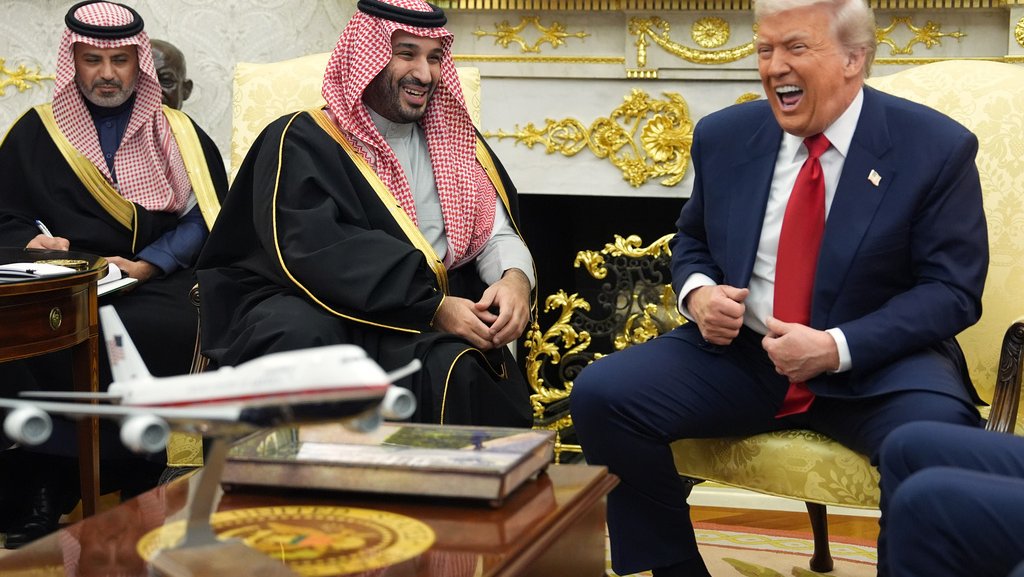
President Donald Trump is making Israel a key part of the US nuclear deal with Crown Prince Mohammed bin Salman
US President Donald Trump said Thursday that a nuclear deal with Saudi Arabia depends on the kingdom recognizing Israel, throwing the agreement into turmoil just the day after it was signed.
The apparently new condition comes despite Riyadh having long resisted joining the so-called Abraham Accords with Israel, insisting on a pathway to a Palestinian state.
It was not mentioned in the civilian nuclear deal announced on Wednesday, which had appeared to be a major win for the Saudis even as Trump wages war on Iran over its nuclear program.
But Trump stunned the Saudis with his post on his Truth Social network saying the deal “will be approved, but is totally subject to Saudi Arabia joining the very respected and successful Abraham Accords.”
The White House insisted that Trump had previously told Saudi Arabia the deal was contingent on recognizing Israel.
“The president is always the final dealmaker. He has said if they don’t join the Abraham Accords, the deal is off,” Press Secretary Karoline Leavitt told reporters.
“The president has spoken directly with the Saudis about this in numerous conversations in the past, and the administration will continue to engage in those conversations.”
– ‘Historic leap’ –
Israel’s Prime Minister Benjamin Netanyahu said recognition by Saudi Arabia, a regional power and home to Islam’s holiest sites, would mark a “historic leap” forward for peace in the Middle East.
Leavitt said she did not know of any calls between Trump and Netanyahu following the announcement of the Saudi agreement.
There was no immediate reaction from Riyadh.
Should it go through, the deal to establish a civilian nuclear program in Saudi Arabia would generate billions of dollars for American companies.
But with Trump’s latest announcement, it was unclear whether it would ever see the light of day.
If Washington “tries to force normalization on Riyadh, it’s not likely to work out very well,” said H.A. Hellyer, senior associate fellow at the Royal United Services Institute (RUSI), a leading UK defense and security think tank.
“Would Saudi decide to do a complete 180 on what it has declared for the past three years, or 30 years? Quite dubious,” he told AFP.
Critics have also insisted that the deal could precipitate a nuclear race in a region already battered by war.
One provision would potentially see US companies build a uranium enrichment facility in Saudi Arabia, The Wall Street Journal reported.
The US Energy Department made no mention of such a provision and did not offer comment when asked about it by AFP.
And Trump seemingly quashed it by saying on Truth Social that there would be “no enrichment of material!”
The deal will be submitted to Congress for review.
US lawmakers from both parties and Israeli officials have previously voiced opposition to such a project over fears Saudi Arabia could eventually convert it to develop nuclear weapons.
Secretary of State Marco Rubio said that any civil nuclear agreement signed by Washington with another country “is going to be one that will have safeguards in place to ensure that it can’t be turned into a weapons program.”
– Proliferation concerns –
Riyadh, like Tehran, has long been adamant about its right to pursue a civilian nuclear program. Last year it signed a mutual defense pact with nuclear-armed Pakistan.
Policymakers have long feared that if Iran produced a nuclear weapon, the move would set off an arms race across the Gulf.
US Energy Secretary Chris Wright dismissed concerns, insisting the deal was in Washington’s economic and strategic interest and involved the “highest standards of nuclear safety and nonproliferation.”
The United States has agreements governing nuclear cooperation with more than 50 countries.
The Saudi deal meanwhile comes as Riyadh looks set to be dragged further into the Middle East war, with Yemen’s Houthi rebels starting to attack ships in the Red Sea to enforce what they say is a blockade on Saudi Arabia.
Trump vowed to punish both Iran and the Houthis if the attacks continue.
Saudi Arabia, the Khashoggi murder case: the nuclear connections with Terra Power, Bill Gates, Breakthrough etc.

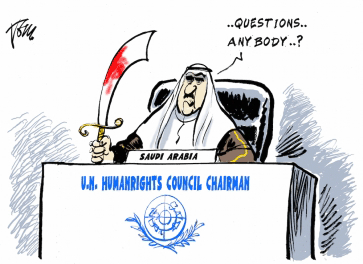 US Nuclear Energy Policy & Khashoggi Murder: Appeasement Or Threat? Clean Technica, December 12th, 2018 by Tina Casey “…………..The Nuclear Energy Connection
Either way, that brings us around to the idea that the corporate world needs to step up and press for meaningful action on the Khashoggi case, since the White House is falling down on the job.
In particular, the tech sector is feeling the pressure not only because of its financial ties to Saudi Arabia, but also because of the high profile of its biggest players.
That brings us right back around to the nuclear energy angle, where the US nuclear company TerraPower has been making waves.
TerraPower was formed back in 2006 and crossed the CleanTechnica radar during COP 2015, when it popped up in relation to a newly launched investor umbrella organization called the Breakthrough Energy Coalition.
Breakthrough is a tech incubator with a focus on clean energy and rapid decarbonization, and nuclear energy makes the cut.
As a global organization, Breakthrough can provide TerraPower with a platform for pitching its technology overseas — a key consideration, given the morbid state of demand for new nuclear power plants here in the US.
So far TerraPower has been focusing on foreign markets, particularly China, for its new technology.
If all of this is beginning to ring some bells, that’s where the tech and Silicon Valley connections kick in.
Microsoft’s Bill Gates is financial backer of TerraPower and chairman of its board.
Gates is also the chair of the Breakthrough Coalition’s Breakthrough Energy Ventures, where you’ll find a host of other familiar top-dollar investors with an interest in decarbonization including Jeff Bezos, Richard Branson, Vinod Khosla, and Michael Bloomberg.
Saudi Arabia is represented among Breakthrough members through Prince Alwaleed bin Talal, who is Chairman of Alwaleed Philanthropies and a supporter of Gates’s “giving pledge.”
Saudi Arabia is also represented among the 24 countries (including the EU) that support the Mission Innovation clean energy initiative, which is in turn receives considerable support from Breakthrough, so there’s that.

Not for nothing, but as of last August the Department of Energy has supported a TerraPower molten salt reactor project with $28 million in cost-shared funds.
When Will The Silicon Valley Crickets Stop Chirping And Start Acting?
All this is by way of saying that when it comes to the Saudi government, the Khashoggi murder, and the cash flow, all roads lead back to Silicon Valley and the US tech sector.
The New York Times raised a red flag on Saudi financial ties to Silicon Valley last year. Among other developments since then, Tesla has been ramping up its profile in the country, and Google has expressed interest in building data centers there.
Perhaps it’s not fair for the tech sector to take all the heat, but on the other hand these are the guys who promised to make life better for millions if not billions of people all over the world. More is expected of them than, say, the CEO of a local pest control company.
The Trump family’s financial ties with Saudi Arabia seem to be the driving force behind Trump’s response to the Khashoggi murder, and now it seems those same ties have silenced the US tech sector.
The fact is that the Khashoggi murder is not going away. New details about the murder are emerging on a regular basis, and even Trump’s Republican allies have finally stirred into action.
In the latest development, today the US Senate is reportedly set to debate cutting off US support for the Saudi-lead war in Yemen. The measure has been linked directly to outrage over the country’s role in the Khashoggi killing.
Meanwhile, CleanTechnica is reaching out to TerraPower for comment, so stay tuned for more on that.
Follow me on Twitter. https://cleantechnica.com/2018/12/12/us-nuclear-energy-policy-khashoggi-murder-appeasement-or-threat/
A nuclear deal for the Saudis, media blackout for Kushner’s corruption
Judd Legum, Rebecca Crosby, and Noel Sims, Jul 23, 2026,
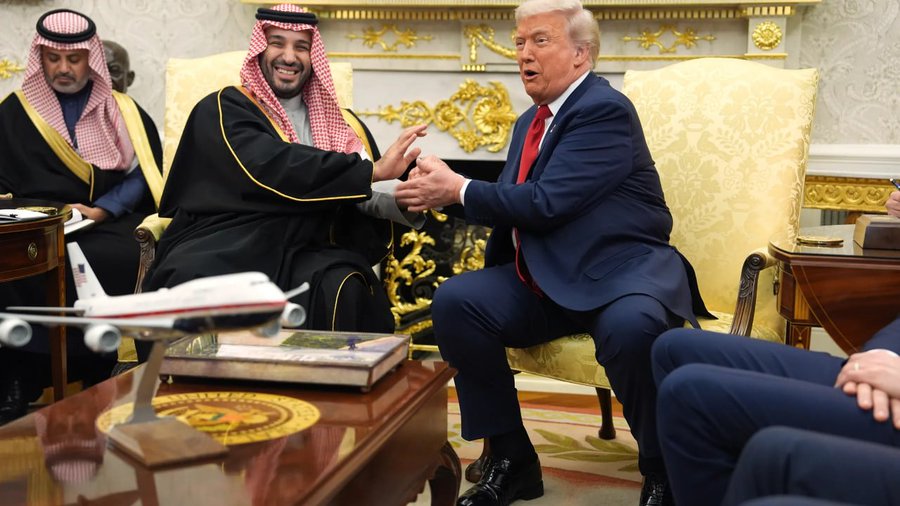
On Wednesday, the Trump administration signed a 30-year nuclear agreement with Saudi Arabia that paves the way for the kingdom to enrich its own uranium. The Saudi government has been aggressively seeking such a deal for years, eager to gain an edge over regional rivals. The agreement lacks safeguards that previous administrations, and many independent foreign policy analysts, viewed as essential to prevent nuclear proliferation.
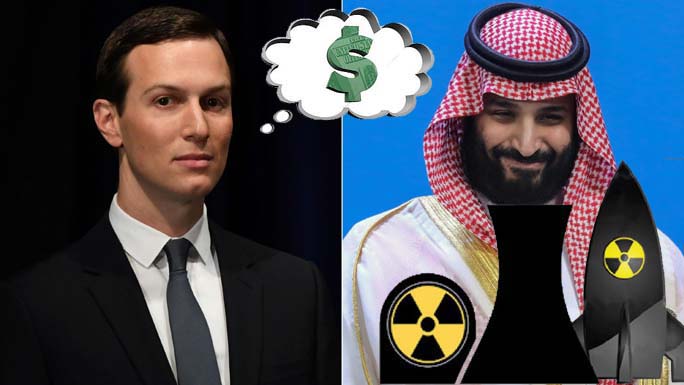
The deal comes after the Saudi government’s Public Investment Fund (PIF) invested $2 billion in Jared Kushner’s private equity fund, Affinity Partners. Since 2021, Kushner, President Trump’s son-in-law, has collected over $110 million from the Saudi government in management fees. In March, Kushner was seeking billions more from the Saudis. (After Kushner’s fundraising was exposed, his efforts were purportedly put on hold.)
Kushner also has a close personal relationship with Saudi Crown Prince Mohammed bin Salman (MBS) — the pair are known to communicate regularly over WhatsApp. In 2021, when the PIF committee originally recommended rejecting Kushner’s proposal due to the high price and Kushner’s inexperience, MBS overruled the recommendation.
As he continues to collect fees from the Saudi government, Kushner has resumed his role as a top foreign policy aide to Trump. He has played a key role in virtually every significant foreign policy negotiation since Trump returned to the White House.
.Kushner’s specific involvement in the nuclear pact, if any, has not been disclosed. But the fact that one of the president’s top foreign policy advisors is receiving large, ongoing financial payments from the Saudi government is unquestionably relevant to the story.
Proposed US-Saudi nuclear energy deal: What we know so far
Reports suggest the Trump administration backs a pact with Saudi Arabia allowing it to enrich uranium.
22 Jul 2026, https://www.aljazeera.com/news/2026/7/22/proposed-us-saudi-nuclear-energy-deal-what-we-know-so-far
United States President Donald Trump has approved an agreement that would allow Saudi Arabia to develop a civilian nuclear programme with the potential to enrich uranium on its own soil, marking a significant shift in longstanding US non-proliferation policy, according to media reports.
Citing people familiar with the discussions, the Wall Street Journal and The New York Times reported on Tuesday that Trump is expected to ask Congress to approve the agreement, which could pave the way for US companies to help build Saudi Arabia’s nuclear industry.
The timing is likely to prove controversial, with the US saying one of the objectives of its military campaign against Iran is to prevent it from acquiring the ability to build a nuclear weapon. Critics say that allowing Saudi Arabia to enrich uranium could weaken that message, even if the programme is intended for civilian use, while other commentators fear that raising nuclear enrichment levels could be misused.
Here’s what we know.
Why is this significant?
Saudi Arabia has long sought a civilian nuclear programme as part of plans to diversify its economy and reduce its dependence on oil.
Negotiations over US nuclear cooperation have stretched across multiple administrations. Under former President Joe Biden, talks were tied to a broader package that included Saudi recognition of Israel, according to The Times.
Those negotiations stalled after Israel’s genocidal war on Gaza, but the Trump administration revived discussions, removing the normalisation requirement.
During Saudi Crown Prince Mohammed bin Salman’s visit to the US last year, the two countries announced a framework for civilian nuclear cooperation, laying the groundwork for what they described as a long-term partnership built on non-proliferation standards.
What does the reported agreement say?
According to the reports, the agreement would last for 30 years and allow US companies, including Westinghouse, a Pittsburgh-based nuclear energy giant, to help develop Saudi Arabia’s civilian nuclear sector.
One of its most significant provisions would permit Saudi Arabia to pursue domestic uranium enrichment following a joint US-Saudi study.
Enriching uranium is not illegal and is used to produce fuel for nuclear power plants. However, the same technology can also produce highly enriched uranium suitable for nuclear weapons if enrichment continues to much higher levels.
Saudi Arabia has previously said it would seek a nuclear weapon if Iran were ever to acquire one, although Tehran insists its nuclear programme is peaceful.
Why are some experts concerned?
The reported agreement is expected to fall short of the standards accepted by some other US partners.
In 2009, the United Arab Emirates signed a so-called “123 Agreement” with Washington before opening its Barakah nuclear power plant, agreeing not to enrich uranium or reprocess spent nuclear fuel – a model that non-proliferation experts have often described as the “gold standard”.
Reports suggest the Saudi agreement would instead allow enrichment and may not require the International Atomic Energy Agency’s (IAEA) Additional Protocol, which gives inspectors broader powers to verify that nuclear material is not being diverted for military purposes.
Michael Horowitz, a geopolitical analyst, said the Saudi agreement would be “very consequential” for a number of reasons.
“The US reportedly agreed to a deal that falls both below the gold standard and doesn’t include the Additional Protocol – both of which are made to ensure a civilian programme doesn’t turn into a military one,” he said.
“This isn’t a detail: If Riyadh had wanted to just have US backing for a civilian programme, it would have done so years ago – with Washington’s blessing. In other words, the goal is to get US support for a deal that doesn’t fully exclude a pathway to a nuclear programme,” he added.
“That’s not to say that there aren’t guarantees. But guarantees are purely bilateral, and that means they will be entirely dependent” on the state of US-Saudi relations, said Horowitz.
Why would the US agree?
Supporters argue the agreement would strengthen US influence in the Gulf.
In a report submitted to Congress earlier this year, the Trump administration argued that expanding civilian nuclear cooperation would help maintain US leadership in the global nuclear industry while preventing strategic competitors from gaining influence in the kingdom.
The administration has also argued that Saudi Arabia’s growing electricity demand makes nuclear energy an increasingly important part of its long-term energy strategy, despite its vast oil resources and climate well suited for solar power.
Will Congress approve it?
Any civilian nuclear cooperation agreement must be submitted to Congress, which has the power to review and block so-called “123 agreements”.
Congress would need a two-thirds majority to block the proposed agreement and override any presidential veto.
The proposal is expected to face scrutiny from lawmakers in both parties over the safeguards governing Saudi uranium enrichment.
Some members of Congress and Israeli officials have said that permitting enrichment could leave open a future pathway to a Saudi nuclear weapons capability, even if the programme begins for civilian purposes.
Andrea Stricker, deputy director of the Foundation for Defense of Democracies’ Nonproliferation Program, urged Congress to “block” the proposed agreement.
“If it does not, one hopes the policy will be reversed by a subsequent administration before too much damage is done in terms of watering down safeguards, setting negative precedents for other states, and failing to contain the spread of enrichment,” said Stricker.
US signs landmark nuclear deal with Saudi Arabia
Nuclear experts and former officials in Israel – the US’s top ally in the Middle East – have voiced concern that the plan could ultimately lead to Saudi Arabia being able to develop a nuclear weapon – though other experts say that path would likely take decades and spark pushback from the international community.
James FitzGerald and Max Matza
The US and Saudi Arabia have signed a landmark deal that will allow the Gulf kingdom to develop a civilian nuclear programme.
The deal is described as a “peaceful nuclear co-operation agreement” that will provide “great access for American companies in the Saudi nuclear energy program” by the US energy department.
Text from the deal has not been made public, but US media report that it could allow Saudi Arabia to enrich uranium in the future – which can be used as fuel for power plants, but also to make nuclear bombs.
Experts say that would mark a first for the US and could run the risk of future nuclear proliferation in an already unstable region.
Trump’s nuclear deal with Saudis jettisons longstanding US demands
The US Department of Energy said a “bilateral safeguards agreement” had been signed along with the co-operation deal.
“Together, these two agreements lay the legal foundation for a decades-long, multi-billion-dollar partnership that advances several priority economic and strategic objectives, including nuclear nonproliferation,” the statement said.
The Saudi government also released a statement saying the deal “represents an extension of existing co-operation between the two countries in the energy sector”, noting that it comes after the Saudi leader visited Washington last November.
The nuclear issue has been at the centre of the months-long US-Israeli conflict with Iran. The two nations say one of the reasons they attacked Iran in February was to prevent the country from ever developing a nuclear weapon – something that Tehran denies planning to do.
Saudi Arabia’s de facto ruler, Crown Prince Mohammed bin Salman, told CBS News in 2018 that his own nation was not planning to acquire a nuclear weapon, but that “without a doubt if Iran developed a nuclear bomb, we will follow suit as soon as possible”.
Wednesday’s announcement came as fighting escalates between the US and Iran. Saudi Arabia, a longtime US ally, hosts several US bases that have been targeted by Iranian attacks. It also comes two days after Iran’s allies in Yemen, the Houthis, announced a “maritime blockade” against the kingdom.
Specific details of the nuclear deal have not been given but earlier media reports suggested that, after undertaking a joint study with the US, Saudi Arabia may be allowed to enrich uranium on its soil to produce fuel at a US-built enrichment facility, instead of relying on imported fuel.
This could be worth billions of dollars to the US, whose companies could be involved in building a facility to produce enriched uranium, which can be used as fuel for power plants but also to make nuclear bombs.
“Rest assured, these agreements uphold the highest standards of nuclear safety and nonproliferation, while relying on the world’s best nuclear technology and scientists, designed right here in the United States,” US Secretary of Energy Chris Wright said.
The energy department said the deal would advance both “US and regional security”, and would strengthen America’s “competitive edge in civil nuclear technology”.
Nuclear experts and former officials in Israel – the US’s top ally in the Middle East – have voiced concern that the plan could ultimately lead to Saudi Arabia being able to develop a nuclear weapon – though other experts say that path would likely take decades and spark pushback from the international community.
Israeli Economy Minister Nir Barkat said his country “can manage it” if Saudi Arabia had nuclear power for peaceful means.
Israel itself is widely believed to have nuclear weapons, but it neither confirms nor denies that this is the case.
Rosemary Kelanic, the director of the Middle East programme at the US-based Defense Priorities think tank, said it would be “quite shocking” if the US were to allow Saudi Arabia uranium enrichment facilities.
“The US has never done that before. We have never helped another country enrich on their own soil,” she said, adding that this was because “if you can produce your own nuclear fuel, you become a much bigger risk” for building nuclear weapons.
The agreement will now be sent to the US Congress for review.
Trump approves 30-year nuclear enrichment deal with Saudi Arabia ‘without safeguards’: Report
The new reports coincide with an illegal war on Iran, framed by the US as an effort to ‘prevent’ Tehran from acquiring nukes
News Desk, JUL 22, 2026, https://thecradle.co/articles/trump-approves-30-year-nuclear-enrichment-deal-with-saudi-arabia-without-safeguards-report
Washington is seeking congressional approval for a nuclear energy pact with Saudi Arabia that does not include safeguards aimed at preventing the development of an atomic bomb, two sources told Reuters on 22 July.
US President Donald Trump’s government is planning to submit “to Congress a pact with Saudi Arabia to share nuclear power technology that does not include safeguards the US has long said would stop materials being used in nuclear weapons programs,” the sources said.
“The administration would submit to Congress within days a document known as a 123 Agreement that will be signed by US Energy Secretary Chris Wright and Saudi energy minister Abdulaziz bin Salman,” they added.
he White House and US Energy Department did not immediately respond to requests for comment.
A source told CNN on 22 July that “the deal would last 30 years and could be announced as soon as Wednesday.”
CNN had reported the news first over the weekend, citing sources who discussed the matter on 18 July
The outlet cited documents and sources as saying that Trump has agreed to allow Saudi Arabia to enrich uranium without the need for international safeguards arrangements, like the ones that have been imposed on Iran for years.
That report said that the draft nuclear deal from last year is still awaiting Trump’s signature despite the conclusion of US–Saudi nuclear negotiations in October last year.
“The ongoing war with Iran … has played a role in delaying Trump’s signature … the Trump administration is delaying sign-off because it could face a bipartisan disapproval resolution blocking the deals from going into effect,” the sources stated.
CNN cited experts as saying that the deal “could potentially provide Saudi Arabia with a path to nuclear weapons.”
The US president and Israel have largely justified the current illegal war on Iran as an effort to prevent the Islamic Republic from obtaining a nuclear weapon.
Iran is a member of the Nuclear Non-Proliferation Treaty (NPT), and operates under a religious fatwa outlawing the development of atomic bombs. US intelligence reports have also repeatedly concluded that Tehran is not seeking to weaponize its nuclear program.
Nonetheless, Tehran continues to refuse demands that it hand over its enriched uranium, which was raised to higher purity levels as a response to Trump’s 2018 withdrawal from the Joint Comprehensive Plan of Action (JCPOA) – an Obama-era US-Iran deal reached in 2015.
Israeli officials, including Prime Minister Benjamin Netanyahu, have been saying for decades that Tehran was close to developing a nuclear weapon.
Several years ago, Saudi Crown Prince Mohammed bin Salman (MbS) stated that if Iran acquires a nuclear bomb, “we will have to get one” as well.
US greenlights Saudi nuclear enrichment without safeguards: Report
MEE staff, 20 July 2026, https://www.middleeasteye.net/news/us-greenlights-saudi-nuclear-enrichment-without-safeguards-report
Crown Prince Mohammed bin Salman previously said he would acquire a bomb if Iran did
Crown Prince Mohammed bin Salman previously said he would acquire a bomb if Iran did.
The Trump administration has greenlit Saudi Arabia’s nuclear enrichment project, but with no safeguards in place to prevent the development of a bomb, CNN reported on Friday.
The draft deal, viewed by the news outlet, showed Washington’s support for Riyadh’s civilian nuclear programme is still awaiting President Donald Trump’s signature, despite US-Saudi negotiations concluding in October.
Unnamed officials cited in the story indicated that the documents, which include the mandatory “123 agreement” and safeguards protocols, have not yet been sent to Congress, potentially for fear of bipartisan pushback.
It is unclear how long the president will wait, given Congress is likely to switch hands to a Democratic majority after the November elections, stymying his policy agenda.
Crown Prince Mohammed bin Salman and his advisors have long pushed for a deal that would allow them to enrich uranium, which they say the kingdom holds vast reserves of.
“We will enrich it and we will sell it and we will do a ‘yellowcake’,” Saudi Energy Minister Prince Abdulaziz bin Salman said last year, referring to a step in the process that comes after mining but before enrichment.
Nuclear umbrella
The Saudi push to be included under the US’s nuclear umbrella was a key issue during the Saudi crown prince’s visit to the White House in November last year.
Days after Israel attacked Hamas negotiators in Qatar earlier in the year, Saudi Arabia signed a defence pact with Pakistan, the only nuclear-armed state in the Muslim world.
Pakistan is estimated to possess around 170 nuclear warheads. Saudi and Pakistani descriptions of the deal said it encompassed all military options.
The Americans’ nuclear talks with Saudi Arabia have been kept under tight wraps, but one former US intelligence official previously told Middle East Eye that the idea of extending protection to the kingdom could serve a purpose.
“It would pull them out of the Pakistanis’ nuclear umbrella and make the Saudis feel better than the Qataris,” he said at the time.
In February, the Trump administration notified Congress it is pursuing a civil nuclear pact with Riyadh that does not include non-proliferation safeguards it has traditionally imposed on countries to prevent them from developing nuclear weapons.
The language in the document also leaves room for Saudi Arabia to enrich uranium, as it stipulates “additional safeguards and verification measures to the most sensitive areas of potential nuclear cooperation” between the two countries, including enrichment and reprocessing, the report said.
A nuclear deal with Saudi Arabia that does not explicitly prohibit the kingdom’s potential to enrich uranium in the future would be much more transformative for the region than a separate deal for F-35 warplanes that the Trump administration is pursuing.
In nuclear agreements with foreign governments, for example, the UAE, the US made cooperation conditional on commitments that they will not enrich uranium or reprocess spent nuclear fuel.
The UAE, Morocco and dozens of European and Asian countries have signed the so-called “123 Agreements” with the US.
US law generally requires a 123 Agreement to be in force before licensing significant exports of US-origin nuclear material or equipment to a foreign country.
In addition to a 123 Agreement, US lawmakers have insisted that the US require Saudi Arabia to submit to what is called the “Additional Protocol”, which allows the United Nations’ International Atomic Energy Agency (IAEA) additional access to nuclear facilities, data, and undeclared sites.
The UAE, the only other Gulf state to have officially partnered with the US in nuclear energy, signed the Additional Protocol to its IAEA agreement in 2009.
Reuters reported, however, that the Trump administration sent a preliminary report to some heads of congressional committees in November, which it is required to send if it is not pursuing the Additional Protocol.
The Reuters report underscores how Trump is putting deal-making at the centre of his diplomacy, even if it means chafing at the traditional concerns of the US foreign policy establishment.
Nuclear deal that would permit uranium enrichment by Saudi Arabia in limbo awaiting Trump admin sign-off
18 July By Davis Winkie, Zachary Cohen, https://edition.cnn.com/2026/07/18/politics/saudi-arabia-trump-nuclear-enrichment
The Trump administration has tentatively agreed to allow Saudi Arabia to enrich uranium without enacting international safeguards intended to prevent nuclear weapons development, according to sources familiar with the matter and documents reviewed by CNN.
The draft nuclear accord that outlines US support for Riyadh’s civilian nuclear program is awaiting President Donald Trump’s signature despite US-Saudi negotiations concluding in October 2025.
Two sources familiar with the matter indicated that the ongoing war with Iran — which according to Trump was launched in part to prevent Tehran from using its enriched uranium to build nuclear weapons — has played a role in delaying Trump’s signature. Some on Capitol Hill also believe the Trump administration is delaying sign-off because it could face a bipartisan disapproval resolution blocking the deals from going into effect, said one of the sources.
Experts told CNN the deal could potentially provide Saudi Arabia with a path to nuclear weapons unless stringent safeguards are put in place. The country’s Crown Prince, Mohammed bin Salman, has previously threatened to build his own nuclear weapons should Iran, his country’s principal regional rival, acquire the bomb.
Four sources said the agreement, which includes a civil nuclear cooperation deal known as a 123 agreement and a mandatory nuclear safeguards agreement, still have not been sent to Congress for review, as federal law requires the White House to do once signed.
The White House did not answer questions regarding the agreements and instead referred CNN to an October 2025 statement from Energy Secretary Chris Wright announcing the end of negotiations.
“We’ve come together on a deal for civil nuclear cooperation,” Wright said at the time. “Together, with bilateral safeguard agreements, we want to grow our partnership, bring American nuclear technology to Saudi Arabia and keep a firm commitment to nonproliferation.”
The Saudi Arabian Embassy in Washington, DC did not respond to a request for comment.
Proposed Saudi-U.S. deal could allow uranium enrichment, arms control experts warn
PBS News, Jon Gambrell, Associated Press, Feb 20, 2026
DUBAI, United Arab Emirates (AP) — Saudi Arabia could have some form of uranium enrichment within the kingdom under a proposed nuclear deal with the United States, congressional documents and an arms control group suggest, raising proliferation concerns as an atomic standoff between Iran and America continues.
U.S. Presidents Donald Trump and Joe Biden both tried to reach a nuclear deal with the kingdom to share American technology. Nonproliferation experts warn any spinning centrifuges within Saudi Arabia could open the door to a possible weapons program for the kingdom, something its assertive crown prince has suggested he could pursue if Tehran obtains an atomic bomb.
Already, Saudi Arabia and nuclear-armed Pakistan signed a mutual defense pact last year after Israel launched an attack on Qatar targeting Hamas officials. Pakistan’s defense minister then said his nation’s nuclear program “will be made available” to Saudi Arabia if needed, something seen as a warning for Israel, long believed to be the Middle East’s only nuclear-armed state.
“Nuclear cooperation can be a positive mechanism for upholding nonproliferation norms and increasing transparency, but the devil is in the details,” wrote Kelsey Davenport, the director for nonproliferation policy at the Washington-based Arms Control Association.
The documents raise “concerns that the Trump administration has not carefully considered the proliferation risks posed by its proposed nuclear cooperation agreement with Saudi Arabia or the precedent this agreement may set.”
Saudi Arabia did not respond to questions Friday from The Associated Press.
Congressional report outlines possible deal
The congressional document, also seen by the AP, shows the Trump administration aims to reach 20 nuclear business deals with nations around the world, including Saudi Arabia. The deal with Saudi Arabia could be worth billions of dollars, it adds.
The document contends that reaching a deal with the kingdom “will advance the national security interests of the United States, breaking with the failed policies of inaction and indecision that our competitors have capitalized on to disadvantage American industry and diminish the United States standing globally in this critical sector.” China, France, Russia and South Korea are among the leading nations that sell nuclear power plant technology abroad.
The draft deal would see America and Saudi Arabia enter safeguard agreements with the United Nations’ nuclear watchdog — the International Atomic Energy Agency or IAEA. That would include oversight of the “most proliferation-sensitive areas of potential nuclear cooperation,” it added. It listed enrichment, fuel fabrication and reprocessing as potential areas………………………………………………………………………………..
Saudi-U.S. proposal comes amid Iran tensions
The push for a Saudi-U.S. deal comes as Trump threatens military action against Iran if it doesn’t reach a deal over its nuclear program. The Trump military push follows nationwide protests in Iran that saw its theocratic government launch a bloody crackdown on dissent that killed thousands and saw tens of thousands more reportedly detained.
In Iran’s case, it long has insisted its nuclear enrichment program is peaceful. However, the West and the IAEA say Iran had an organized military nuclear program up until 2003. Tehran also had been enriching uranium up to 60% purity, a short, technical step from weapons-grade levels of 90% — making it the only country in the world to do so without a weapons program.
Iranian diplomats long have pointed to 86-year-old Supreme Leader Ayatollah Ali Khamenei’s comments as a binding fatwa, or religious edict, that Iran won’t build an atomic bomb. However, Iranian officials increasingly have made the threat they could seek the bomb as tensions have risen with the U.S.
Saudi Crown Prince Mohammed bin Salman, the kingdom’s day-to-day ruler, has said if Iran obtains the bomb, “we will have to get one.” https://www.pbs.org/newshour/amp/world/proposed-saudi-u-s-deal-could-allow-uranium-enrichment-arms-control-experts-warn
Press-hating president kisses up to press-murdering crown prince
Nov. 18, 2025 / Freedom of the Press Foundation, https://freedom.press/issues/press-hating-president-kisses-up-to-press-murdering-crown-prince/
President Donald Trump shamefully welcomed Saudi Crown Prince Mohammed bin Salman to the White House today. He brushed aside questions about Prince Mohammed’s role in the gruesome murder of Washington Post journalist Jamal Khashoggi, commenting that “things happen” and “You don’t have to embarrass our guest by asking a question like that.”
Freedom of the Press Foundation Director of Advocacy Seth Stern said:
“Somehow calling a female reporter ‘piggy’ was only the second-most offensive anti-press utterance to come out of the president’s mouth in recent days. And somehow Biden’s infamous fist bump is now only the second-most disgusting public display of flattery by a U.S. president to journalist-murderer Mohammed bin Salman.
“Scolding a U.S. reporter for asking questions about MBS ordering a fellow journalist to be bonesawed signals to dictators everywhere that they can murder journalists with impunity — as if Trump hadn’t already sent that message clearly enough by bankrolling and arming Israel while it does just that in Gaza.
“Today’s fiasco felt like the nail in the coffin for whatever was left of the U.S.’s global standing as a leader on press freedom. The next president is going to have their work cut out for them in rebuilding that credibility. In the meantime, judges, lawmakers, and everyone else in a position to slow the backslide need to step up and rise to the moment before more journalists get killed.”
US Reaches Initial Deal With Saudi Arabia on Nuclear Sharing.
The absence of a 123 Agreement — designed to prevent countries from manufacturing fuel which could be diverted to weapons — has implications across the region. Should Saudi Arabia win access to the full nuclear fuel cycle, other Middle Eastern countries including Iran and the United Arab Emirates may demand the same conditions.
By Ari Natter and Jonathan Tirone, November 20, 2025
Takeaways by Bloomberg AI
- US negotiations with Saudi Arabia on a nuclear technology-sharing deal have been completed, potentially allowing American companies to build reactors in the kingdom.
- A formal 123 Atomic Energy Act agreement, which includes non-proliferation requirements, has yet to be signed, according to a US Energy Department spokesman.
- The prospect of a deal has alarmed non-proliferation experts and some members of Congress who have raised concerns over weapons-grade material and the potential for Saudi Arabia to gain access to the full nuclear fuel cycle.
US negotiations with Saudi Arabia on a long-sought nuclear technology-sharing deal have been completed, potentially opening the door for American companies to build reactors in the kingdom.
Energy Secretary Chris Wright and his Saudi Arabian counterpart signed a joint declaration signifying the talks were finished, the Trump administration said Tuesday following a White House visit by the kingdom’s Crown Prince Mohammed bin Salman. A formal 123 Atomic Energy Act agreement, which customarily includes non-proliferation requirements, has yet to be signed, a US Energy Department spokesman confirmed.
If finalized, such an agreement between the two nations could inject new life into America’s atomic energy sector and provide a boost to Westinghouse Electric Co. and other US companies that want to construct plants or sell reactor technology to Saudi Arabia. Still, the prospect has alarmed non-proliferation experts and some members of Congress who have raised concerns over weapons-grade material.
The absence of a 123 Agreement — designed to prevent countries from manufacturing fuel which could be diverted to weapons — has implications across the region. Should Saudi Arabia win access to the full nuclear fuel cycle, other Middle Eastern countries including Iran and the United Arab Emirates may demand the same conditions.
“It does include fuel cycle activities,” International Atomic Energy Agency Director General Rafael Mariano Grossi told journalists after speaking by phone with Saudi Arabia’s Energy Minister Prince Abdulaziz bin Salman early Wednesday. The IAEA hasn’t been notified about whether or not there will be a 123 Agreement attached to the deal, Grossi said.
Both the Energy Department and the White House didn’t immediately respond to questions seeking clarity over whether the deal would include the so-called “gold standard,” barring the enrichment and reprocessing of spent uranium that Saudi Arabia has been reluctant to agree to in the past
………………..The declaration signed Tuesday “builds the legal foundation for a decades-long, multi-billion-dollar nuclear energy partnership with the Kingdom; confirms that the United States and American companies will be the Kingdom’s civil nuclear cooperation partners of choice; and ensures that all cooperation will be conducted in a manner consistent with strong nonproliferation standards,” the White House said in a fact sheet.
On Nov. 17, ahead of the Saudi crown prince’s visit to the White House, Israeli Energy Minister Eli Cohen told Channel 14 TV that he’s skeptical of an agreement.
“I think Israel should be opposed, because it would bring about a situation where there will constantly have to be monitoring and oversight, to check whether the nuclear civilian project is sliding toward the military side,” Cohen said “This will constantly have to be checked.”
Non-proliferation watch dog groups pointed to the fact that the formal agreement, known as 123 for the section of the US Atomic Energy Act that discusses transfers of nuclear equipment and material to other nations, wasn’t announced…………. https://www.bloomberg.com/news/articles/2025-11-19/us-reaches-intitial-deal-with-saudi-arabia-on-nuclear-sharing
Saudi Arabia’s Crown Prince Is Set to Visit Washington. Here’s What to Expect Out of His Meeting with Trump.

the country has continued to push for a civilian nuclear program as the high energy demand of new AI data centers prompts a global revival in nuclear power. Riyadh has long expressed interest in developing its own nuclear program
The Chicago Council on Global Affairs, Analysis, by Rachel Bronson, November 13, 2025
Crown Prince Mohammed bin Salman’s meeting with US President Donald Trump comes during a period of relatively strong and stable ties between Saudi Arabia and the United States. How much he can leverage those ties will be on full display.
Saudi Arabia’s Crown Prince Mohammed bin Salman (MBS) will make an official working visit to the White House on Tuesday, November 18. It will be his first trip to Washington since March 2018.
The period between his two visits has been bumpy. MBS seeks to solidify and extend a recent positive period, building on a strong personal relationship with US President Donald Trump, deep commercial ties between members of each country’s leadership, and Trump’s successful trip to the Kingdom in May. The connection between the two countries and the two men will prove critical this visit, as they will confront a wide-ranging agenda requiring considerable attention and diplomatic finesse.
There will be no shortage of topics for the two leaders to discuss during the meeting. New commercial and defense ties are likely to receive significant attention, particularly in the realms of artificial intelligence and growing regional data centers. Trickier for the two sides will be managing bigger ticket items—such as the purchase of F-35s and the development of nuclear power. Larger regional questions loom large about Saudi Arabia’s relationship with Israel, Turkey, and Qatar that will shape the future of Gaza, the West Bank, Syria, and beyond.
What’s on the agenda?
Key priority areas for the Saudis include broadening and deepening commercial ties, particularly in the realm of artificial intelligence, data technology, energy, and defense.
State visits usually result in announcements of new agreements or memoranda of understanding, and this trip will likely prove no different. But such trips can also highlight where sides remain further apart. Human rights, a perennial stumbling block in US-Saudi relations, are unlikely to receive significant attention.
The Saudis have been working assiduously to lower expectations that they will join the Abraham Accords—a stated goal of the Trump administration that would require normalizing relations with Israel—until the White House articulates a clearer vision for the future of Gaza and the West Bank. The two sides will thus need to work through how much is possible without attaining this loftier goal.
What is behind the visit?
When MBS last arrived in Washington to meet with Trump, he had only recently assumed his role as crown prince, supplanting his uncle, Crown Prince Mohammed bin Nayef. He was not yet halfway through a controversial 15-month purge of business leaders, officials, and members of the royal family that would eventually solidify his rule.
Just seven months after his March 2018 visit, MBS was implicated in the grotesque and brazen assassination of Washington Post journalist Jamal Khashoggi, a murder that brought international opprobrium. The growing humanitarian disaster in Yemen resulting from intense Saudi armed intervention was further galvanizing public outcry in the United States and abroad. Although the Trump administration tried to downplay both crises, Congress and the American public remained cautious of US-Saudi ties.
In September 2019, as the conflict in Yemen escalated, Iranian missiles and drones successfully targeted Abqaiq and Khurais, two major Saudi oil facilities, taking out 50 percent of Saudi oil production for about two weeks. Although the Trump administration responded by bolstering America’s military troop presence in the Kingdom and reimposing select sanctions on Iran, Riyadh wanted a more visible show of force. Washington’s perceived tepid response left many in Riyadh openly questioning US commitment to the desert kingdom.
The following September, just four months before leaving office, the Trump administration heralded in the Abraham Accords between Israel, the United Arab Emirates, Bahrain, Morocco, and Sudan. Saudi Arabia remained on the sidelines…………………..
The return of the Trump administration in January 2025 provided an opportunity to reset and strengthen relations more generally. In May, building on strong commercial ties forged between Trump administration associates and their Saudi counterparts during the Biden years, Trump traveled to Gulf states including Saudi Arabia, the United Arab Emirates, and Qatar, ushering in a raft of new defense and technology deals, particularly in the areas of data center technologies and artificial intelligence…………………………………………………………………………..
What does Saudi Arabia hope to get out of it?
…………..The focus of the announcements will most likely center on a robust AI future that is emerging in the Gulf in particular. Saudi Arabia has made investing in data centers and digital infrastructure a key aspect of its “Saudi Vision 2030” economic development plan and is investing $21 billion in data centers alone. ……….
……… the country has continued to push for a civilian nuclear program as the high energy demand of new AI data centers prompts a global revival in nuclear power. Riyadh has long expressed interest in developing its own nuclear program, which the Biden administration entertained as a sweetener to Saudi-Israeli normalization.
………………………During Trump’s May trip to the region, US Secretary of Energy Chris Wright signed a memorandum of understanding with Saudi Arabia’s energy minister on civil nuclear energy, including safety, security, and nonproliferation programs; vocational training and workforce development; US Generation III+ advanced large reactor technologies and small modular reactors; uranium exploration, mining, and milling; and safe and secure nuclear waste disposal. ……………….
What could happen?
In addition to energy and data infrastructure, the two sides will likely continue to deepen their defense relationship. During the May trip, the White House announced $142 billion in arms sales, and related weapons packages are now making their way through the Pentagon, including a Saudi request for F-35s—one of the world’s most advanced aircrafts. During the Biden administration, the F-35s were tied to Saudi-Israeli normalization. As with nuclear power, it is not clear whether such tethering will continue.
Another key topic to watch is how the two leaders define their overall defense relationship. Saudi Arabia has long sought a defense treaty with the United States that would elevate the country among other US partners in the Gulf. Without full recognition of Israel—and given the current polarization in US politics—Riyadh is unlikely to be able to muster the two-thirds US Senate vote required for official ally status. Still, the Saudis likely want to upgrade their existing relationship……………………………..
What we are likely to hear less about during this trip is human rights, which have been on the US-Saudi agenda for decades.
…………………………………………………………………………………………………………. The future of Gaza and the West Bank will likely prove the trickiest shoal to navigate. The Saudis want to ensure a strong influence in leading Gaza reconstruction given that they are expected to foot a large portion of the bill. ……………………………………. https://globalaffairs.org/commentary/analysis/saudi-arabias-crown-prince-visit-washington-trump-what-to-expect?utm_source=ActiveCampaign&utm_medium=email&utm_content=Trump%20s%20radiation%20exposure%20rule%3A%20%20catastrophic%20%20for%20women%20and%20girls&utm_campaign=20251117%20Monday%20Newsletter
Don’t fuel Riyadh’s nuclear weapons cravings
By: Henry Sokolski, October 31, 2025, https://npolicy.org/dont-fuel-riyadhs-nuclear-weapons-cravings-breaking-defense/
Since 2017, US diplomats have tried unsuccessfully to devise ways to help Saudi Arabia enrich uranium — a dangerous nuclear activity that can bring a state to the very brink of making bombs. Next month, they get another chance: Crown Prince Mohammed bin Salman is coming to the White House on Nov. 18 to sign a formal US-Saudi nuclear cooperative agreement. Will this agreement finally help the Kingdom make nuclear fuel? Let’s hope not.
Tehran making nuclear fuel is scary enough. Encouraging others to do the same is scarier still.
That’s why the Pentagon bombed Iran this June. Certainly, the White House understood that nuclear fuel-making was too close to nuclear bomb-making: By the time inspectors might detect a military diversion at such plants, it would be too late to intervene to prevent a weapon from being built.
This insight prompted Trump’s termination of Obama’s 2015 nuclear deal with Iran, which allowed Iran to enrich uranium. It’s also why Trump’s nuclear emissary, Steve Witkoff, backed off trying to negotiate a new inspections regime for Iranian nuclear fuel-making, conceding that “enrichment enables weaponization.” Energy Secretary Chris Wright went further: At the International Atomic Energy Agency’s (IAEA) September general conference, he insisted that Iran’s uranium enrichment program be “completely dismantled.”
But what of the Nuclear Nonproliferation Treaty (NPT) “right” to make nuclear fuel? Iran maintains this entitlement is inalienable. As I’ve explained elsewhere, nuclear fuel-making is not mentioned anywhere in the treaty. Some NPT negotiators proposed language to assure a right to “the entire fuel cycle,” but the NPT conference rejected it. Even the Biden administration, which wanted to revive the 2015 Iran nuclear deal, only implicitly recognized such a “right” — never explicitly.
Iran, unfortunately, never bought this view. Nor has Saudi Arabia. In 2017, Prince Turki Al-Faisal, former Saudi ambassador to Washington, noted that “the NPT tells us all we can enrich.” He, bin Salman, and his lieutenants have consistently demanded that America help it exercise this “right.”
Fortunately, Congress refused. Back in 2018, Senators from the left, like Ed Markey, and the right, like Lindsey Graham, understood helping Iran enrich uranium was too dangerous. They all cited bin Salman’s warning that if Saudi Arabia thought Iran was getting a bomb, it would too, despite any NPT pledge the Saudis may have made. The Hill’s recommended fix: Get the Saudis to forswear making nuclear fuel, just as their neighbor, the UAE, had in their US nuclear agreement in 2009.
Now, it should be easier to get the Saudis to forswear as well. Why? In September, the Saudis struck a mutual defense pact with Pakistan. Pakistani Defense Minister Khawaja Mohammad Asif said that as part of this pact Pakistan would make its nuclear weapons available to Saudi Arabia if needed. So, Riyadh no longer needs its own bomb.
Meanwhile, the White House is said to be negotiating binding, NATO-like security assurances for the Saudis similar to those recently granted to Qatar. Then there is the Trump administration’s “obliteration” of Iran’s nuclear fuel-making capacity and the president’s commitment to bomb it again, if necessary.
All of this should be dispositive against Riyadh’s will to enrich and American inclinations to bend to it. But it’s not. In April, Secretary of Energy Chris Wright visited Riyadh. When asked if a deal would include “sensitive” nuclear technologies, he replied, “It certainly looks like there is a pathway to do that. … Are there solutions to that that involve enrichment here in Saudi Arabia? Yes.”
He should have said no. Keeping timely, accurate track of the powders, liquids, and gases involved in making nuclear fuel is not yet good enough to safeguard against military diversions. Nor is American ownership or operation of Saudi nuclear fuel making a fix. As America’s experience in Iran demonstrates, the United States can operate bases and own companies in foreign nations and still be thrown out. This has happened before and can happen again in Saudi Arabia.
Another headache if America helps Riyadh make nuclear fuel is the example it sets. Saudi Arabia’s neighbors, who also have US nuclear cooperative will demand the same.
They’ll all race to develop bomb options. Saying no to Riyadh’s fuel-making demands is our best chance to skirt this.
Saudi Arabia, nuclear-armed Pakistan sign mutual defence pact
Saudi Arabia and nuclear-armed Pakistan signed a formal mutual defense pact on Wednesday, in a move that significantly strengthens a decades-long
security partnership amid heightened regional tensions. The enhanced
defense ties come as Gulf Arab states grow increasingly wary about the
reliability of the United States as their longstanding security guarantor.
Israel’s attack on Qatar last week heightened those concerns.
Reuters 17th Sept 2025,
https://www.reuters.com/world/asia-pacific/saudi-arabia-nuclear-armed-pakistan-sign-mutual-defence-pact-2025-09-17/
Trump’s trip to Saudi Arabia raises the prospect of US nuclear cooperation with the kingdom
By ASSOCIATED PRESS, Daily Mail, 10 May 2025
WASHINGTON (AP) – Saudi Arabia wants U.S. help developing its own civil nuclear program, and the Trump administration says it is “very excited” at the prospect. U.S.-Saudi cooperation in building reactors for nuclear power plants in the kingdom could shut the Chinese and Russians out of what could be a high-dollar partnership for the American nuclear industry.
Despite that eagerness, there are obstacles, including fears that helping the Saudis fulfill their long-standing desire to enrich their own uranium as part of that partnership would open new rounds of nuclear proliferation and competition. Saudi Arabia’s pursuit of a nuclear agreement is likely to play into the ever-evolving bargaining on regional security issues involving the U.S., Iran and Israel.
This coming week, Republican President Donald Trump will make his first trip to Saudi Arabia of his second term. Here´s a look at key issues involved in the Saudi request…………………………………………………………………………………………
Crown Prince Mohammed bin Salman also is pushing to build up Saudi Arabia’s mining and processing of its own minerals. That includes Saudi reserves of uranium, a fuel for nuclear reactors.
For the Trump administration, any deal with Iran that lets Tehran keep its own nuclear program or continue its own enrichment could increase Saudi pressure for the same.
That’s even though Saudi Arabia and other Gulf states have toned down their enmity toward Iran in recent years and are supporting the U.S. efforts to limit Iran´s nuclear program peacefully.
For the U.S., any technological help it gives the Saudis as they move toward building nuclear reactors would be a boon for American companies…………………………………..
“Without a doubt, if Iran developed a nuclear bomb, we would follow suit as soon as possible,” Prince Mohammed said in 2018, at a time of higher tension between Arab states and Iran.
Saudi Arabia and other Gulf states stress better relations and diplomacy with Iran now. But Prince Mohammed’s comments – and other Saudi officials said similar – have left open the possibility that nuclear weapons are a strategic goal of the Saudis.
The Saudis long have pushed for the U.S. to build a uranium enrichment facility in the kingdom as part of any nuclear cooperation between the two countries. That facility could produce low-enriched uranium for civilian nuclear reactors. But without enough controls, it could also churn out highly enriched uranium for nuclear bombs.
Trump administration officials cite the Saudis’ desire to make use of their country´s uranium deposits. The kingdom has spent tens of millions of dollars, with Chinese assistance, to find and develop those deposits. But the uranium ore that it has identified so far would be “severely uneconomic” to develop, the intergovernmental Nuclear Energy Agency says.
It has been decades since there has been any state-sanctioned transfer of that kind of technology to a nonnuclear-weapon state, although a Pakistani-based black-market network provided enrichment technology to Iran, North Korea, Libya and possibly others about 20 years ago, Robert Einhorn noted for the Brookings Institute last year.
Allowing Saudi Arabia – or any other additional country – to host an enrichment facility would reverse long-standing U.S. policy. It could spur more nuclear proliferation among U.S. allies and rivals, Einhorn wrote………………………………….
After Wright’s trip, some Israelis expressed their opposition to allowing Saudi Arabia to enrich uranium, and Iran and Saudi Arabia are both carefully watching the other’s talks with the U.S. on their nuclear issues…………………………
https://www.dailymail.co.uk/wires/ap/article-14698407/Trumps-trip-Saudi-Arabia-raises-prospect-US-nuclear-cooperation-kingdom.html
1 This Month
23-25 October – on Zoom – World BEYOND War’s annual global conferenc


Shut down the radiation-damaged Heysham nuclear reactors now
To see nuclear-related stories in greater depth and intensity – go to https://nuclearinformation.wordpress.com

Say No to NASA’s Reckless Nuclear Reactor on the Moon
Say No to NASA’s Reckless Nuclear Reactor on the Moon

-
Archives
- October 2026 (247)
- September 2026 (339)
- August 2026 (330)
- July 2026 (355)
- June 2026 (287)
- May 2026 (306)
- April 2026 (356)
- March 2026 (251)
- February 2026 (267)
- January 2026 (308)
- December 2025 (358)
- November 2025 (359)
-
Categories
- 1
- 1 NUCLEAR ISSUES
- business and costs
- climate change
- culture and arts
- ENERGY
- environment
- health
- history
- indigenous issues
- Legal
- marketing of nuclear
- media
- opposition to nuclear
- PERSONAL STORIES
- politics
- politics international
- Religion and ethics
- safety
- secrets,lies and civil liberties
- spinbuster
- technology
- Uranium
- wastes
- weapons and war
- Women
- 2 WORLD
- ACTION
- AFRICA
- Atrocities
- AUSTRALIA
- Christina's notes
- Christina's themes
- culture and arts
- Events
- Fuk 2022
- Fuk 2023
- Fukushima 2017
- Fukushima 2018
- fukushima 2019
- Fukushima 2020
- Fukushima 2021
- general
- global warming
- Humour (God we need it)
- Nuclear
- RARE EARTHS
- Reference
- resources – print
- Resources -audiovicual
- Weekly Newsletter
- World
- World Nuclear
- YouTube
-
RSS
Entries RSS
Comments RSS

