Israel used weapons in Gaza that made thousands of Palestinians evaporate.

Israel’s systematic use of internationally prohibited thermal and thermobaric weapons, often referred to as vacuum or aerosol bombs, capable of generating temperatures exceeding 3,500 degrees Celsius [6,332 degrees Fahrenheit].
“This is a global genocide, not just an Israeli one,”
Al Jazeera investigation reveals how US-supplied thermal and thermobaric munitions burning at 3,500C have left no trace of nearly 3,000 Palestinians.
By Mohammad Mansour, 10 Feb 202610 Feb 2026, https://www.aljazeera.com/features/2026/2/10/israel-used-weapons-in-gaza-that-made-thousands-of-palestinians-evaporate
At dawn on August 10, 2024, Yasmin Mahani walked through the smoking ruins of al-Tabin school in Gaza City, searching for her son, Saad. She found her husband screaming, but of Saad, there was no trace.
“I went into the mosque and found myself stepping on flesh and blood,” Mahani told Al Jazeera Arabic for an investigation that aired on Monday. She searched hospitals and morgues for days. “We found nothing of Saad. Not even a body to bury. That was the hardest part.”
Mahani is one of thousands of Palestinians whose loved ones have simply vanished during Israel’s genocidal war on Gaza, which has killed more than 72,000 people.
According to the Al Jazeera Arabic investigation, The Rest of the Story, Civil Defence teams in Gaza have documented 2,842 Palestinians who have “evaporated” since the war began in October 2023, leaving behind no remains other than blood spray or small fragments of flesh.
Experts and witnesses attributed this phenomenon to Israel’s systematic use of internationally prohibited thermal and thermobaric weapons, often referred to as vacuum or aerosol bombs, capable of generating temperatures exceeding 3,500 degrees Celsius [6,332 degrees Fahrenheit].
Grim forensic accounting
The figure of 2,842 is not an estimate, but the result of grim forensic accounting by Gaza’s Civil Defence.
Spokesperson Mahmoud Basal explained to Al Jazeera that teams use a “method of elimination” at strike sites. “We enter a targeted home and cross-reference the known number of occupants with the bodies recovered,” Basal said.
“If a family tells us there were five people inside, and we only recover three intact bodies, we treat the remaining two as ‘evaporated’ only after an exhaustive search yields nothing but biological traces—blood spray on walls or small fragments like scalps,” he added.
The chemistry of erasure
The investigation detailed how specific chemical compositions in Israeli munitions turn human bodies into ash in seconds.
Vasily Fatigarov, a Russian military expert, explained that thermobaric weapons do not just kill; they obliterate matter. Unlike conventional explosives, these weapons disperse a cloud of fuel that ignites to create an enormous fireball and a vacuum effect.
“To prolong the burning time, powders of aluminium, magnesium and titanium are added to the chemical mixture,” Fatigarov said. “This raises the temperature of the explosion to between 2,500 and 3,000 degrees Celsius [4,532F to 5,432F].”
According to the investigation, the intense heat is often generated by tritonal, a mixture of TNT and aluminium powder used in United States-made bombs like the MK-84.
Dr Munir al-Bursh, director general of the Palestinian Ministry of Health in Gaza, explained the biological impact of such extreme heat on the human body, which is composed of roughly 80 percent water.
“The boiling point of water is 100 degrees Celsius [212F],” al-Bursh said. “When a body is exposed to energy exceeding 3,000 degrees combined with massive pressure and oxidation, the fluids boil instantly. The tissues vaporise and turn to ash. It is chemically inevitable.”
Anatomy of the bombs
The investigation identified specific US-manufactured munitions used in Gaza that are linked to these disappearances:
- MK-84 ‘Hammer’: This 900kg [2,000lb] unguided bomb packed with tritonal generates heat up to 3,500C [6,332F].
- BLU-109 bunker buster: Used in an attack on al-Mawasi, an area Israel had declared a “safe zone” for forcibly displaced Palestinians in September 2024, this bomb evaporated 22 people. It has a steel casing and a delayed fuse, burying itself before detonating a PBXN-109 explosive mix. This creates a large fireball inside enclosed spaces, incinerating everything within reach.
- GBU-39: This precision glide bomb was used in the al-Tabin school attack. It uses the AFX-757 explosive. “The GBU-39 is designed to keep the building structure relatively intact while destroying everything inside,” Fatigarov noted. “It kills via a pressure wave that ruptures lungs and a thermal wave that incinerates soft tissue.”
Basal of the Civil Defence confirmed finding fragments of GBU-39 wings at sites where bodies had vanished.
A ‘global genocide, not just an Israeli one’
Legal experts said the use of these indiscriminate weapons implicates not just Israel but also its Western suppliers.
“This is a global genocide, not just an Israeli one,” said lawyer Diana Buttu, a lecturer at Georgetown University in Qatar.
Speaking at the Al Jazeera Forum in Doha, Buttu argued that the supply chain is evidence of complicity. “We see a continuous flow of these weapons from the United States and Europe. They know these weapons do not distinguish between a fighter and a child, yet they continue to send them.”
Buttu emphasised that under international law, the use of weapons that cannot distinguish between combatants and noncombatants constitutes a war crime.
“The world knows Israel possesses and uses these prohibited weapons,” Buttu said. “The question is why are they allowed to remain outside the system of accountability.”
Collapse of international justice
Despite the International Court of Justice issuing provisional measures against Israel in January 2024, ordering it to prevent acts of genocide, and an arrest warrant from the International Criminal Court issued against Israeli Prime Minister Benjamin Netanyahu in November 2024, the killing intensified.
Tariq Shandab, a professor of international law, argued that the international justice system has “failed the test of Gaza”.
“Since the ceasefire agreement [in October], more than 600 Palestinians have been killed,” Shandab said. He highlighted that the war has continued through siege, starvation and strikes. “The blockade on medicine and food is itself a crime against humanity.”
Shandab pointed to the “impunity” granted to Israel by the US veto power at the UN Security Council. However, he noted that universal jurisdiction courts in countries like Germany and France could offer an alternative path to justice, provided there is political will.
For Rafiq Badran, who lost four children in the Bureij refugee camp during the war, these technical definitions mean little. He was only able to recover small parts of his children’s bodies to bury.
“Four of my children just evaporated,” Badran said, holding back tears. “I looked for them a million times. Not a piece was left. Where did they go?”
The Ticking Time Bomb Looming Over Gaza, And Other Notes
If an Epstein document had revealed that Trump advanced Israeli interests as a political favor to the world’s richest Israeli in exchange for campaign funding, it would’ve been the biggest story in the world. But because he came right out and said it, it barely caused a blip.
Caitlin Johnstone, Feb 18, 2026, https://www.caitlinjohnst.one/p/the-ticking-time-bomb-looming-over?utm_source=post-email-title&publication_id=82124&post_id=188334423&utm_campaign=email-post-title&isFreemail=true&r=1ise1&triedRedirect=true&utm_medium=email
One under-discussed ticking time bomb is the way Israel keeps saying it’s going to resume incinerating Gaza if Hamas doesn’t disarm while Hamas keeps saying it won’t disarm. Netanyahu’s office is saying that Hamas will soon be given a 60-day deadline to give up its arms, after which the full-scale bombing of the enclave will resume if these demands aren’t met.
A lot of people don’t understand that Hamas has never at any point agreed to give up its weapons. To give up its weapons would be to surrender, which is a very different thing from agreeing to a ceasefire. Israel’s demands and Hamas’ refusal are two diametrically opposed positions which put things on a collision course toward reigniting the Gaza holocaust at full scale.
Israel and its allies have no legitimate basis upon which to demand that Hamas surrender. All they can legitimately do is stop murdering and abusing the Palestinians. If Israel does resume the full-scale incineration of Gaza it will try to justify its actions, but those actions will be completely unjustifiable.
After a year of dishonest concern trolling about imaginary nuclear weapons in Iran, the so-called “President of Peace” Donald Trump has let the last remaining nuclear arms treaty between the US and Russia go the way of the dinosaur. The New START treaty has been allowed to fully collapse by the Trump administration, and has been replaced by nothing. This is infinitely more dangerous for our world than anything Iran has ever been accused of doing.
❖
Someone on Twitter tried to cite Cuba’s floundering economy as evidence that socialism doesn’t work. I told him, “Believing capitalism is better than communism because the US was able to strangle the Cuban economy is like believing you’re a better person than your neighbor because you beat the shit out of him in his driveway.”
There’s an infuriating video going around showing an AI program whose entire function is to monitor baristas using facial recognition software and make sure they’re maintaining maximum efficiency at the coffee shop.
We could have a utopia where robots do most of the labor. Instead we’ve got a dystopia where AI programs push human employees to work like robots.
If an Epstein document had revealed that Trump advanced Israeli interests as a political favor to the world’s richest Israeli in exchange for campaign funding, it would’ve been the biggest story in the world. But because he came right out and said it, it barely caused a blip.
Every news outlet, pundit and analyst who tries to tell you that Jeffrey Epstein was a Russian intelligence operative instead of an Israeli one is just telling you they’re a propagandist. View it as a big flashing sign that says “Never trust anything from this source ever again.”
❖
Israel supporters were overjoyed when the Bondi shooting happened, because they knew it would cause authoritarian laws to be passed. They were happier than the worst Nazis in Australia. They were flooding my replies excitedly telling me I’m going to prison for criticizing Israel.
❖
Every time those in power move to silence Israel’s critics, we must triple our criticism of Israel.
Every time they try to shut down pro-Palestine protests, we must triple our participation in the protests.
We need to make sure their efforts to silence us guarantees them MORE of the thing they’re trying to get rid of, not less.
Impose direct costs on their tyrannical behavior and show them with our actions that every effort to silence us only makes things worse for them.
And that’s as it should be. They’re coming after our rights now. If you attack the civil rights of the citizenry, the citizenry are going to fight you right back.
You don’t get to push without getting pushback. You don’t get to try to take away my rights and then just coast along like it’s no big deal. You get back what you give, thrice over.
The only governments who’ve been able to resist US imperial domination are the ones like China and Iran who forcefully control what goes on in their country, because that’s the only way to shut down US infiltration and subversion effectively. So now the US spends its time going “All our enemies are authoritarian dictatorships! We must be the Good Guys!”
Really they’re the ones who set the conditions which made it so that the only states which maintain their sovereignty are the ones who tightly restrict things like western media propaganda, National Endowment for Democracy influence operations, and other regime change ops. If the US wasn’t constantly trying to topple governments which don’t kiss the imperial boot, those nations could be a lot less restrictive in their laws and policies.
The US empire makes the whole world more tyrannical.
Beijing moves to contain Mossad’s expanding reach in Iran

Israeli intelligence operations inside Iran have alarmed Beijing, which saw them as a new model of intelligence warfare, prompting deeper technological, security, and strategic cooperation with Tehran.
Nadia Helmy, The Cradle, FEB 17, 2026
Chinese military experts and intelligence agencies increasingly describe Mossad’s deep infiltration into Iran as opening a “Pandora’s box” of global security risks.
From Beijing’s perspective, Israeli and US intelligence operations – particularly those expanding after 2015 and accelerating through 2025–2026 – mark the evolution of a new battlespace. Mossad’s ability to embed agents, compromise sensitive databases, disable radar networks, and facilitate precision strikes from inside Iranian territory is interpreted as a shift toward what Chinese analysts call ‘Informationized and Intelligent’ Warfare.
This represents the convergence of cyber sabotage, internal recruitment, technological penetration, and operational coordination – a hybrid model in which intelligence operations hollow out defensive infrastructure before kinetic action begins.
For China, the implications extend well beyond Iran.
Intelligence warfare as a precursor
Within Chinese security discourse, Israel’s operations in Iran are frequently cited as evidence that intelligence warfare now precedes kinetic engagement.
Military expert Fu Qianshao, a former analyst in the Chinese Air Force, characterized Mossad’s success in planting agents and disabling Iranian radar and air defense systems from within as a “new pattern of intelligence warfare.” The June 2025 Israeli strikes on the Islamic Republic, which reportedly faced minimal resistance due to compromised systems, reinforced this assessment.
Fu argued that such tactics transcend traditional battlefield engagement. Instead of confronting air defenses externally, Mossad undermined them internally – neutralizing deterrence before aircraft entered contested airspace.
Another Chinese military expert, Yan Wei, echoed this concern, emphasizing that the penetration of sensitive Iranian facilities exposed structural weaknesses rather than merely technological gaps. Legal safeguards and routine security protocols, he suggested, are insufficient against intelligence operations that exploit bureaucratic vulnerabilities and internal access points.
Professor Li Li, a Chinese expert on West Asian affairs, has pointed to Israeli cyber operations targeting research centers and infrastructure as evidence of intelligence warfare functioning as a force multiplier. Unlike conventional attacks, these operations blur the line between espionage and sabotage, complicating retaliation.
Tian Wenlin, director of the Institute of Middle Eastern Studies at Renmin University, warned that sustained intelligence incursions could pressure Tehran to accelerate its nuclear capabilities as a defensive countermeasure……………………………………………………………………………………………………………………………………………………………….https://thecradle.co/articles/beijing-moves-to-contain-mossads-expanding-reach-in-iran
Trump buildup for war with Iran mimics George W. Bush’s buildup for 2003 Iraq war.

Trump frames the ongoing negotiations as designed to prevent Iran from developing nuclear weapons. This despite Trump’s bragging that he completely destroyed their nuclear program with his one-off bombing last June
Walt Zlotow West Suburban Peace Coalition Glen Ellyn IL, 17 Feb 26
Back in 2002 the US demanded Iraq give up its WMD, weapons of mass destruction, ostensibly to prevent another 911 attack a year earlier. To back up its demand the US threatened attacking the Iraqi regime to safeguard the Homeland.
Along with most Americans, I fell for the line that the US would stand down due to the weapons inspectors and intelligence resources in Iraq concluding Iraq had no WMD and was not a threat to America whatsoever.
Then in August 2002, I read a report buried deep in the Chicago Tribune describing America’s massive military buildup, concluding with the strong implication that such a buildup made attack on Iraq inevitable with nothing Iraq could do to prevent it.
At that moment I knew everything the Bush administration said about the Iraqi danger was a vicious lie in service of ousting Saddam Hussein and conquering Iraq. Seven months later, contrary to all the evidence, Bush did precisely that.
I’m getting the same ominous feeling when I hear Trump bragging out his massive buildup of air and naval forces near Iran poised to attack should Iran not capitulate to Trump’s non-negotiable demands that Iran give up its missile defense resources and cease supporting its regional allies.
Trump frames the ongoing negotiations as designed to prevent Iran from developing nuclear weapons. This despite Trump’s bragging that he completely destroyed their nuclear program with his one-off bombing last June in support of Israel’s 12 day war on Iran that utterly failed to topple the Iranian regime.
The current negotiations in Geneva have nothing to do with Iran’s nuclear weapons program since, like Iraq’s imaginary WMD program in 2002, Iran has none. Indeed, for verification Iran is willing to negotiate limited nuclear enrichment for peaceful domestic purposes; even allow inspections to verify compliance But they will never negotiate away their missile program which is their only defense against further Israeli, US attacks such as they incurred last June.
Another similarity to Bush’s illegal invasion of Iraq 23 year ago? It had nothing to do with vital US national interests. It had to do with Israeli demands that successive US administrations, bought up with Israel Lobby money, take out any Israeli rivals for Middle East hegemony.
Trump’s fealty to Israeli demands, encouraged by their near quarter billion in campaign support, fueled Trump’s blowing up Obama’s sensible 2015 Iran nuclear agreement in 2018. He lied to us then how the deal favored Iran by not ending its nuclear bomb program that did not exist. Trump is lying to us now on the urgency of destroying Iranian sovereignty which includes the right to self-defense.
But there is one huge difference between Trump’s trumped up Iranian threat likely presaging all out war today and George W. Bush’s falsified Iraqi threat in 2002. Unlike Iraq which had no defensive military means and no powerful allies to assist his defense, Iran has both.
They have thousands of missiles scattered thruout their large country capable of inflicting massive damage on US and Israeli forces. In addition they are getting defensive support from Russia and especially China in the form of intelligence resources to track approaching US bombers and provide accurate targeting information in retaliation.
History shows that sending a military armada near a pretend enemy never gets recalled. Its sole purpose is to attack and destroy based on a tissue of lies. And any lie and any ludicrous demand to negotiate an impossible deal in furtherance of war will be used to justify attack.
George W. Bush got 4,497 soldiers and 1,487 civilian contractors killed for nothing in his made up Iraq war. Trump’s march to war with Iran may make Bush’s folly pale in comparison.
Netanyahu pushing to turn US into ‘slave state for Israel’s expansionist dreams’: Analyst
“Now, with increased US military presence in [West Asia], Trump is preparing strikes on Iran — not for American interests, but to appease his Zionist bosses. This isn’t ‘peace’; it’s escalating conflicts to advance Greater Israel fantasies, displacing millions and looting American taxpayers.”
Wed, 11 Feb 2026, https://www.sott.net/article/504639-Netanyahu-pushing-to-turn-US-into-slave-state-for-Israels-expansionist-dreams-Analyst
Israeli Prime Minister Benjamin Netanyahu has been deliberately steering the United States toward confrontation with Iran in an escalation that pushes America into a “slave state for Israel’s expansionist dreams,” says an American analyst.
In an interview with the Press TV website, Michael Rectenwald, an author and former professor, pointed to the strong Zionist influence in the US policy-making:
“The Zionist stranglehold on US policy prioritizes Israel’s aggression over American sovereignty. Netanyahu knows that provoking Iran draws in US forces and funds, turning our country into a slave state for Israel’s expansionist dreams.”
He noted that Tel Aviv’s push to see an all-out Iran-US war is not “just a willingness” but “a calculated strategy to bleed America dry.”‘Rectenwald, founder of the Anti-Zionist America Political Action Committee (AZAPAC), said Trump’s record stood in stark contrast to his campaign vows to end wars:
“He ran on ending endless wars and putting America first. In practice, his administration had served as Israel’s munitions depot and ATM, bombing countries like Yemen, Iraq, Syria, and others at Israel’s behest while funneling billions in arms and aid to support Israel’s genocidal actions in Gaza and beyond.”
In Rectenwald’s assessment, the expansion of US military assets in the region signaled preparation for direct confrontation with Tehran.
“Now, with increased US military presence in [West Asia], Trump is preparing strikes on Iran — not for American interests, but to appease his Zionist bosses. This isn’t ‘peace’; it’s escalating conflicts to advance Greater Israel fantasies, displacing millions and looting American taxpayers.”
Trump’s rhetoric has sharpened in recent months. Following economic protests in Iran, which were later hijacked and turned into terrorist riots by US and Israeli spy agencies, he had warned that military action remained on the table and said that “help is on its way.”
In late January, he stated that “another beautiful armada” of warships was “floating beautifully toward Iran,” later suggesting the deployment might pressure Tehran back into nuclear negotiations,while Tehran said it had never abandoned talks.
Trump further threatened that failure to reach a deal would bring consequences “far worse” than the previous strike on Iran’s nuclear facilities.
Tehran responded with its own warnings, declaring that any aggression would meet a swift and forceful response.
After an attack on its nuclear facilities in June — which ironically came during indirect Tehran-Washington talks — Iran launched a barrage of missiles at Al Udeid Air Base in Qatar, which hosted US forces and equipment.
Rectenwald argued that the push toward confrontation with Iran could not be understood without examining Israel’s strategic calculus and its influence in Washington. He contended that Netanyahu had been actively seeking a broader war between Washington and Tehran.
Rectenwald noted that Trump himself had been complicit in this pattern:
“Netanyahu and the Zionist regime in Israel are desperate for an all-out war between the US and Iran, as it would eliminate a key regional rival while keeping the US entangled as Israel’s military golem.
“Trump is no anti-war president; he’s a Jewish mobster puppet, dragging the US into more bloodshed for a parasitic state.”
Rectenwald described the president’s foreign policy as subservient to Israeli priorities rather than grounded in American sovereignty.
The risks of confrontation with Iran, he argued, were neither abstract nor hypothetical. Rectenwald said Trump had been fully aware of Iran’s military capabilities, particularly its missile arsenal.
“Trump is fully aware of Iran’s formidable missile capabilities, which have already pierced Israel’s multi-layered defenses and could devastate US assets and troops scattered across the region.”
Despite that awareness, Rectenwald believes the president had been influenced more by hardline voices aligned with Israel than by strategic caution. He described Trump as “more beholden to Zionist hawks like those in his administration and the pro-Israel lobby that dictates US policy.”
In making his case, Rectenwald contrasted Iran’s posture with Israel’s record:
“Iran hasn’t attacked US ships like the USS Liberty (that was Israel), nor does it control our political class or siphon our resources for genocide; that’s Israel’s playbook,.”
He argued that Trump had ignored the strategic dangers while appealing to domestic political instincts. The president, he said, had been “pumping up his base with pre-war rhetoric and aligning with figures who see siding with Israel as ‘good vs. evil.'”
Rectenwald warned:]”Attacking Iran would be another disastrous war for Israel, not fought for America, endangering our troops and economy.”
The latest round of talks between Tehran and Washington took place in Muscat on February 6, mediated by Omani Foreign Minister Badr Al Busaidi. The delegations exchanged their views and approaches through Omani channels.
Iranian Foreign Minister Abbas Araghchi described the process as a “good start” and said that the continuation of talks depended on refraining from threats and pressure.
However, Rectenwald repeated his warning against Israeli influence, which can derail the talks as happened in June.
“Trump isn’t acknowledging Iran’s power; he’s blinded by Zionist influence, risking catastrophe to serve foreign interests,” he said.
For Rectenwald, the stakes extended beyond a single military decision. The broader issue, he argued, concerned sovereignty and governance. “We must end this control and reclaim American governance for Americans.”
The right to have nukes
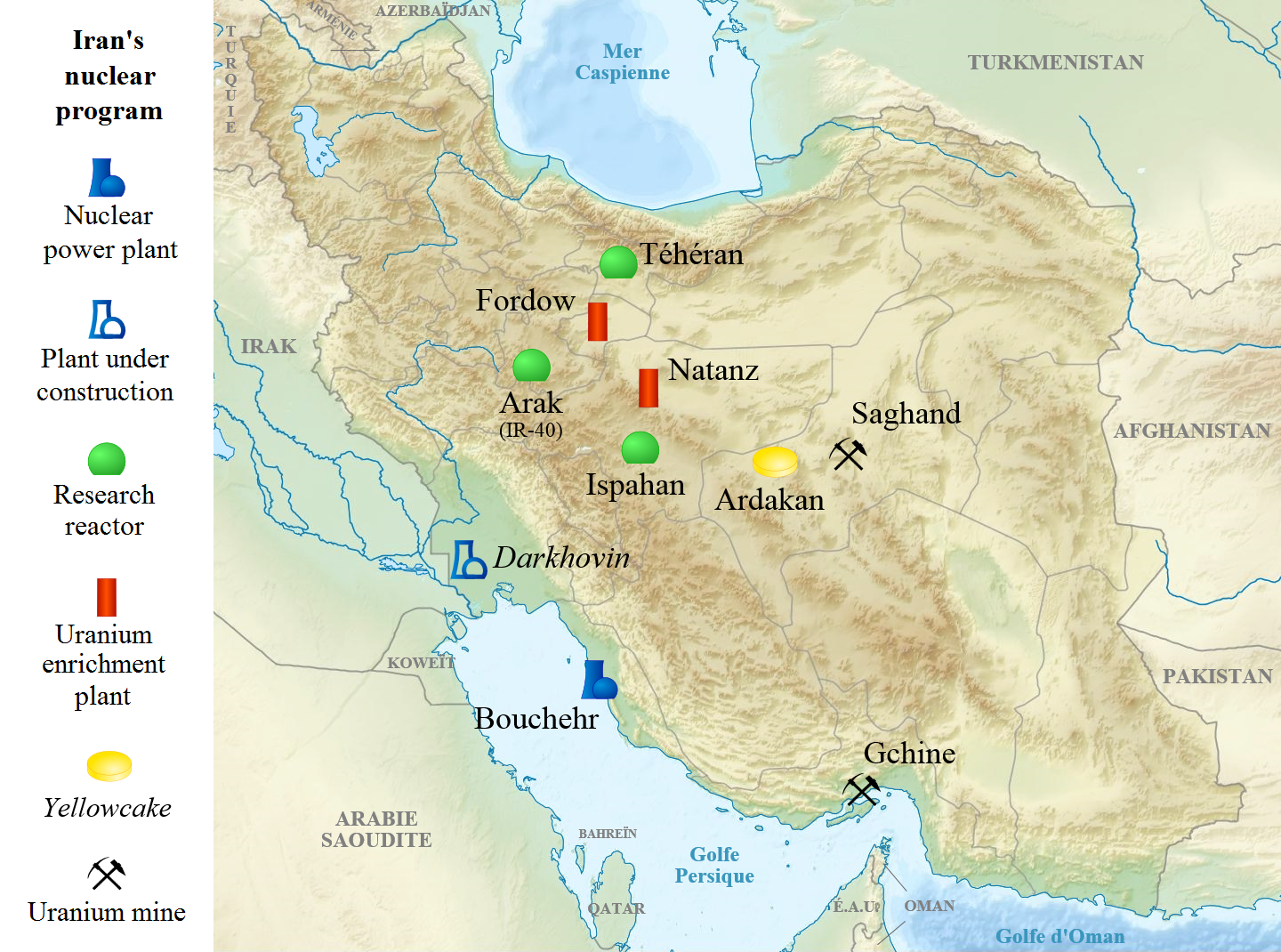
by beyondnuclearinternational, https://beyondnuclearinternational.org/2026/02/11/the-right-to-have-nukes/
No country should have nuclear weapons, but the ones that do should disarm first before telling others they can’t have them, writes Linda Pentz Gunter
The trouble with telling Iran it can’t have nuclear weapons is, look who’s doing the talking. The United States, which, with more than 5,000 nuclear weapons, has the second largest inventory in the world behind Russia. And Israel, an undeclared nuclear weapons nation with anywhere from 80 to 200 bombs. Israel is actually allowed to maintain the disingenuous position of “nuclear opacity” within the UN, neither confirming nor denying its nuclear arsenal.
This is despite the fact that the UN General Assembly adopts a resolution every year calling on Israel to renounce possession of nuclear weapons and to place its nuclear facilities under international supervision, something the Jerusalem Center for Security and Foreign Affairs, equally disingenuously describes as “the annual three-month ‘Israel-bashing’ festival”.
Since we know that US President Trump doesn’t actually care whether or not the Iran government is shooting demonstrators in the streets, especially given he is quite happy for his own Homeland Security to do it here —albeit in not nearly as high numbers, or not yet — we must reckon with the other motivations for continuing to threaten Iran. And one of those is absolutely about stopping Iran from developing the bomb.
There is further irony here, because, unlike nuclear-armed Israel, non-nuclear armed Iran is a signatory to the nuclear Non-Proliferation Treaty (NPT). And unlike the US, Iran so far appears to have abided by its terms. Article IV — one of the major flaws of the treaty as Iran perfectly exemplifies — gives signatories the “inalienable right” to develop nuclear power as long as they don’t transition to nuclear weapons development. Article VI demands that the nuclear-armed nations pursue negotiations in good faith on effective measures relating to cessation of the nuclear arms race at an early date and to nuclear disarmament.
Iran could argue that it is abiding by Article IV. The US clearly cannot make the case that it is abiding in any way by Article VI. On the contrary, with the collapse last week of the New START Treaty, the last surviving nuclear arms reduction treaty between the US and Russia, both countries could now significantly ramp up their respective arsenals.
According to a statement put out last week by International Physicians for the Prevention of Nuclear War, which won the Nobel Peace Prize back in 1985, these increases could happen by uploading additional warheads on each country’s existing long-range missiles. This would mark the first increase in the sizes of their deployed nuclear arsenals in more than 35 years. According to independent estimates, Moscow and Washington could double the number of strategic deployed warheads without New START.
Iran’s nuclear facilities were seemingly pulverized by the provocative bombing raids carried out by Israel and the US last June. But they were no means completely “obliterated”, as Trump claimed. New satellite imagery suggests there is currently considerable activity at the Iranian nuclear sites, but some of these appear to be simple repairs such as the rebuilding of roofs and other structures destroyed in the attacks. There is more activity, according to analysis of the satellite images by the New York Times, at conventional missile sites, presumably in anticipation of another attack by Israel and/or the US.
Iran has and may well continue to insist it is developing its uranium enrichment capabilities for a civil nuclear program. And that could be true. Or not. The level to which it has lately been enriching uranium — to at least 60 percent and possible higher — before first Israel and then the US bombed its nuclear facilities, puts it in that gray area of weapons-usable rather than weapons-grade uranium enrichment. All this points once again the flaw in the NPT that continues to hand back the keys to the nuclear weapons lab by encouraging the development of nuclear power.
A delegation from the White House went to Oman last Friday to negotiate a new nuclear deal with Iran, even though it was Trump’s own regime back in 2018 that destroyed the perfectly workable Iran nuclear deal — known as the Joint Comprehensive Plan of Action — that had been in place up until then.
The negotiating team was led by Steve Witkoff and Jared Kushner. Witkoff is Trump’s Middle East Envoy but Kushner has no official position within the US government and no actual qualifications, other than an unsavory and predatory zeal about beachfront property — Iran has 5,800 km of coastline along the Caspian Sea, the Persian Gulf and Sea of Oman.
Should Iran have nuclear weapons? Of course not. But that also goes for the nine nations who do. And they should be the first to disarm before any demands are made elsewhere.
Linda Pentz Gunter is the founder of Beyond Nuclear and serves as its international specialist. Her book, No To Nuclear. Why Nuclear Power Destroys Lives, Derails Climate Progress and Provokes War, can be pre-ordered now from Pluto Press
The West Bank. Israel’s atrocities in clear sight, but out of mind
by Ben Bohane | Feb 7, 2026 , https://michaelwest.com.au/the-west-bank-israels-atrocities-in-clear-sight-but-out-of-mind/
While the world has focussed on the atrocities in Gaza, Israel continues its support of illegal settlements, hostility and apartheid in the West Bank. Ben Bohane reports from Bethlehem.
We are no more than 5 minutes out of Bethlehem on a crisp December morning when my Palestinian driver – let’s call him Ahmed – stops and points to a curl of smoke rising in the valley below, near Beit Jala.
“That’s a local restaurant the Israeli’s are burning since last night. They demand permits even when it is on family land. Israel then gives demolition orders, and no one can stop them.”
It’s the day before Christmas. I’m in the West Bank and Israel for a month to see the situation for myself, to try and understand how this comparatively small area continues to hijack history and our news agenda. Gaza remains off-limits to all foreign media attempting to report on Israel’s genocide there, so I can’t go.
The international Committee to Protect Journalists (CPJ) states 249 media personnel have been killed so far by Israel in Gaza, Yemen, Lebanon, Israel and Iran since the Gaza war began.
“Israel has killed more journalists in the past three years than any other government in history,“
assassinating more than all media personnel killed in all the wars of the 20th century combined.
Israel has also now banned many reputable international NGOs from operating there. In late January, the IDF finally acknowledged the death toll tally compiled by Palestinian health authorities as accurate, saying it believed 71,000 people had been killed so far.
I’ve come to the other front, the West Bank, as Israeli settlers and the IDF establish new illegal settlements and make life difficult for Palestinians just trying to eke out a living.
While I’m there, Israel announces 19 new settlements, bringing to 69 the number of new settlements approved in the past few years.
They are slowly circling and strangling Palestinian towns by taking the high ground on hilltops, establishing their own roads to link up with other settlements, and destroying ancient olive groves which locals have long relied on for a meagre income. Some of these trees are many hundreds of years old, and their desecration seems somehow symbolic of Israel’s attempts to change history and geography.
“We are trapped here”, says Ahmed. “Ever since October 7, Israel has closed off our access to Jerusalem and the rest of Israel. A lot of businesses are struggling to survive after 5 years of shutdowns – first it was Covid, and then the Gaza war. No tourists for years.”
Unless they are employed in one of a handful of jobs, such as in hospitals or working for a Christian organisation, Palestinians in the West Bank can’t leave. Denied both Palestinian statehood and Israeli citizenship,
“West Bank Palestinians are caught in a limbo where they can’t travel into wider Israel or beyond.“
“Israel controls all our movements, all our water, and controls our petrol supply”, says Ahmed. “The only thing they don’t control is the air we breathe, and if they could control that, they would.”
Bulldozer warfare
We visit a home recently bulldozed by settlers and fields uprooted because they were considered too close to the expanding nearby Israeli settlement of Beitar Illit. As locals lose access to their olive orchards, the only trees safe are those within towns or around their homes. I see a young boy with a wheelbarrow full of seedlings and uprooted olive saplings moving towards a nearby field. Ahmed translates:
“The boy says that part of their resistance is to immediately replant the olive trees when settlers chop them down. The olives aren’t just an income for us, they are part of our identity on this land.”
We have to be quick when visiting the contested edges of these towns and fields, as settlers are always watching from nearby hilltops and the IDF can be on scene in less than 5 minutes. On two occasions, my driver yells to get us back in the car for a hurried exit when he spots settlers driving down to intercept us.
Returning to Bethlehem, the annual Christmas parade is underway. Hundreds of Palestinian, Arab and Armenian Christians in uniforms march along roads leading to Manger Square in the heart of Bethlehem. Palestinian Authority police guard the route and Churches, including the Orthodox Basilica of the Nativity, first begun by Emperor Constantine’s Christian mother, Saint Helena, in the 4th century. Under this Byzantine church is a grotto where Jesus was supposedly born.
This is the first time in two years that Christmas celebrations, including a huge Christmas tree, have taken place. With few foreign tourists, shops in Bethlehem are happy to see many Muslim families from across the West Bank visiting with children to see Santa and the holy sites. It’s a peaceful time with Christian and Muslim families celebrating together.
I met Father Issa Thaljieh, a Palestinian (Greek Orthodox) priest overseeing the Basilica. ‘Issa’ is the Muslim name for Jesus. He says the number of Christians continues to dwindle, from 10% of the Palestinian population during the British mandate period 100 years ago, to around 1% today. Most live overseas now, with Israel incentivising their departure.
Apartheid
One thing I hadn’t known until I came here is that Israelis are forbidden from entering any West Bank towns. At the entrance to many towns I visited, including Jericho and Bethlehem, are large road signs in red warning Israeli citizens not to enter.
Although usually framed as a security measure to prevent kidnapping, it has the additional impact of preventing ordinary Israelis and Palestinians from mixing together and stops Israelis from really understanding what is going on across the West Bank. It underlined the sense of apartheid, along with the long winding separation wall that snakes between Jerusalem, Bethlehem and the rest of the West Bank.
Always interested in art and graffiti as forms of resistance, I cruise a length of the wall, near two refugee camps inside Bethlehem and come across artist Banksy’s ‘Walled Off’ hotel, which had only reopened the week before after 5 years of closure. Upstairs is a gallery supporting local artists, downstairs a museum about the wall and ‘occupation’, along with a chintzy piano bar styled like a frontier saloon.
The hotel faces a section of the wall emblazoned with graffiti and promises ‘the worst views in the world’. The wall began construction substantially in 2002, runs for 810kms and is Israel’s biggest infrastructure project. Banksy’s museum quotes the man put in charge of the build, Danny Tirza:
“The main thing the government told me in giving me the job was,
“to include as many Israelis inside the fence and leave as many Palestinians outside as possible.“
Down the road, a number of local stores have popped up selling cheap Banksy merch, and apparently, Banksy is fine with all the rip-offs.
Other days are spent visiting Jericho and Hebron with its shrine containing the tomb of Abraham, patriarch of all the monotheistic faiths.
It is a town often at flashpoint between Palestinians and hardcore Israeli settlers who have moved right into pockets of the town, protected by IDF soldiers. A day trip to Ramallah is aborted when my driver says that Israeli forces had entered that morning to destroy dozens of shops and shot two people.
“It’s too dangerous today to visit, and besides, it would take us 5 hours to get through the checkpoints instead of one hour as normal”, he says.
Every day across the West Bank, Palestinians must navigate security challenges, declining business and hungry families. Given the impunity with which Israel operates in Gaza, Palestinians across the West Bank are still standing their ground, but without much hope that the international community will stop Israel’s encroachment.
Netanyahu’s government wants to extinguish any hope of a two-state solution, but Palestinians will not cede their homes – or their olive trees – easily.
Israel Destroyed Gaza’s Hospitals. Now It’s Banning Doctors Without Borders.
Israel says it will start enforcing its ban on 37 aid groups in Gaza in March, putting more Palestinian lives at risk
.By Eman Abu Zayed , Truthout, February 12, 2026
On January 1, the Israeli occupation revoked the licenses of 37 international and local humanitarian organizations operating in Gaza, and it has now warned they must “must complete the cessation of their activities by March 1, 2026.” These organizations provide essential services to civilians: delivering food aid to the poor, supplying clean drinking water, supporting hospitals with medicines and medical equipment, protecting children and women, and overseeing education and nutrition programs in camps and local communities. The decision to revoke the licenses affects more than just paperwork — it threatens the lives of thousands of civilians who rely on this aid daily to survive one of the most severe humanitarian crises the territory has faced.
The license revocation came at the same time that Donald Trump established the “Board of Peace” tasked with overseeing Gaza’s reconstruction and implementing the second phase of the ceasefire. This international group, which includes no representation of Palestinians themselves, is allegedly responsible for facilitating the delivery of aid and the rebuilding of war-damaged areas. However, the ban on humanitarian organizations creates a significant gap, threatening the continuity of vital relief programs and leaving thousands of Palestinians without real protection amid harsh living conditions.
According to international humanitarian law, all parties in conflict are obliged to allow humanitarian aid to enter and to enable neutral organizations to assist those in need, regardless of political or security considerations. This obligation includes protecting civilians and ensuring the continued delivery of food, medicine, and clean water to affected populations. Under these laws, Israel bears the responsibility to permit these organizations to operate in Gaza and facilitate their activities in a way that does not endanger civilians or staff. Denying access to essential services constitutes a direct violation of international law.
According to testimonies from staff within aid organizations operating in Gaza, such as Oxfam, the restrictions imposed by Israel are seen as a means of pressuring humanitarian organizations to halt the delivery of vital aid. One Oxfam employee based in Gaza, who asked to remain anonymous due to fear of reprisal, explained that these measures are not merely about controlling aid — they aim to criminalize humanitarian work, weaken aid infrastructure, harm civilians, and increase daily suffering.
Staff members from the branch of Médecins Sans Frontières (Doctors Without Borders) based at Al-Aqsa Hospital confirmed to Truthout that the restrictions include detailed demands for employee information and operational locations, as well as strict administrative procedures, making it extremely difficult to continue their work and threatening the stability of food, medicine, and water services relied upon by thousands of civilians daily. In light of these pressures, employees believe that the real objective of these policies is not security, but rather to disrupt humanitarian work and widen the gap in aid delivery……………………………………………..
These restrictions come at a critical moment, as humanitarian workers face real dangers in carrying out their duties. Since the beginning of the Israeli assault in October 2023, at least 543 humanitarian workers have been killed while providing aid in Gaza, including staff from local and international organizations. Over 1,700 health care workers have lost their lives while attempting to deliver medical care to the wounded and other patients. Additionally, around 256 journalists and media personnel, as well as more than 140 civil defense workers, have been killed. These shocking statistics demonstrate how Israel has turned humanitarian work into a dangerous mission, threatening the continuity of essential services………………………………………………………………………………………………………………………….. https://truthout.org/articles/israel-destroyed-gazas-hospitals-now-its-banning-doctors-without-borders/?utm_source=Truthout&utm_campaign=6c4318efa8-EMAIL_CAMPAIGN_2026_02_12_10_34&utm_medium=email&utm_term=0_bbb541a1db-6c4318efa8-650192793
Leading Papers Call for Destroying Iran to Save It
Gregory Shupak, February 10, 2026, https://fair.org/home/leading-papers-call-for-destroying-iran-to-save-it/
The United States has no right to wage war on Iran, or to have a say who governs the country. The opinion pages of the New York Times and Washington Post, however, are offering facile humanitarian arguments for the US to escalate its attacks on Iran. These are based on the nonsensical assumption that the US wants to help brighten Iranians’ futures.
In two editorials addressing the possibility of the US undertaking a bombing and shooting war on Iran, the Washington Post expressed no opposition to such policies and endorsed economic warfare as well.
Crediting Trump with “the wisdom of distinguishing between an authoritarian regime and the people who suffer under its rule,” the first Post editorial (1/2/26) approvingly quoted Trump’s Truth Social promise (1/2/26) to Iranian protesters that the US “will come to their rescue…. We are locked and loaded and ready to go.”
For the Post, the problem was not that Trump was threatening to bomb a sovereign state, but that “airstrikes are, at best, a temporary solution”:
If the administration wants this time to be different, it will need to oversee a patient, sustained campaign of maximum pressure against the government…. The optimal strategy is to economically squeeze the regime as hard as possible at this moment of maximum vulnerability. More stringent enforcement of existing oil sanctions would go a long way…. Western financial controls are actually working quite well.
Thus, the paper offers advice on how to integrate bombing Iran into a broader effort to overthrow the country’s government in a hybrid war. Central to that project are the sanctions with which the Post is so thoroughly impressed. Such measures have “squeeze[d] the regime” by, for example, decimating “the government’s primary source of revenue, oil exports, limiting the state’s ability to provide for millions of impoverished Iranians through social safety nets” (CNN, 10/19/25).
That the US continues to apply the sanctions, knowing that they have these effects, demonstrates that it has no interest in, as the Post put it, “free[ing]” Iranians “from bondage.”
‘Always more room for sanctions’
The second Washington Post editorial (1/23/26) expressed disappointment that, despite “mass killings” and the “most repressive crackdown in decades,” “Trump has ratcheted back his earlier rhetoric.” It emphasized that “the regime is now mocking Trump for backing down.” The paper offered advice for the president:
Airstrikes alone won’t bring down the regime—or make it behave like a normal country. But Israel and the US have shown in recent years that bombing can cause significant tactical setbacks. And there is always more room for sanctions pressure….
The president cannot maintain effective deterrence by turning the other cheek [in response to Iranians who have taunted him]. How he responds is just as important as how quickly he does it.
The implication is that, to deter Iran’s government from killing Iranians, the US needs to kill Iranians. After all, bombing campaigns come with “mass killings” of their own: The US/Israeli aggression against Iran last June killed more than 1,000 Iranians, most of them civilians.
Meanwhile, those sanctions the paper wants to use to deter the Iranian government from “harm[ing] its own people” do quite a bit of damage in their own right, often causing “low-income citizens’ food consumption” to “deteriorate due to sanctions”—a rather novel approach to harm reduction.
Bombing other countries, depriving them of food—is this what it means to “behave like a normal country”?
‘Too depraved’ for reform
Over its own pro–regime change piece, the New York Times editorial board headline (1/14/26) declared: “Iran’s Murderous Regime Is Irredeemable.”
“The Khamenei regime is too depraved to be reformed,” the editors wrote, spending the majority of the piece building its case to that effect before turning to solutions. For the Times, these start “with a unified expression of solidarity with the protesters,” and quickly move to punitive measures against the Iranian government:
The world can also extend the sanctions it has imposed on Iran. The Trump administration this week announced new tariffs on any countries that do business with Iran, and other democracies should impose their own economic penalties.
For the authors, “deprav[ity]” needs to be resisted by Washington and its partners, who have demonstrated their moral superiority with their presumably depravity-free sanctions. These have, as Germany’s DW (11/23/25) reported, “caused medical shortages that hit [Iran’s] most vulnerable citizens hardest,” preventing the country from being able “to purchase special medicines—like those required by cancer patients.”
The Times also supported US military violence against Iran—if with somewhat more restraint than the Post, asking Trump to “move much more judiciously than he typically does.” The Times wants him to seek “approval from Congress before any military operation,” and make “clear its limitations and goals.” The paper warned Trump not to attack “without adequate preparation and resources”:
Above all, he should avoid the lack of strategic discipline and illegal actions that have defined the Venezuela campaign. He should ask which policies have the best chance of undermining the regime’s violent repression and creating the conditions for a democratic transition.
One glaring problem with suggesting that a US “military operation” should be based on “policies [that] have the best chance of…creating the conditions for a democratic transition” is that very recent precedents show that US wars don’t bring about democracy, and are not intended to do so; instead, such wars bring about social collapse.
Consider, for example, US interventions in Libya and Syria. In both cases, the US backed decidedly nondemocratic forces (Jacobin, 9/2/13; Harper’s, 1/16) and, as one might expect, neither war resulted in democracy. In Libya’s case, the outcome has been slavery and state collapse (In These Times, 8/18/20). In Syria, the new, unelected government is implicated in sectarian mass murder (FAIR.org, 6/2/25).
If DHS killed Pretti, why not bomb Iran?
There are no grounds for believing that the US would chart a different course if it bombs Iran again. But that hasn’t stopped other Times contributors from suggesting that the US should conduct a war in Iran—for the good of Iranians, of course.
Times columnist Bret Stephens (1/27/26) worried about the “risk” posed by “the example of a US president who urged protesters to go in the streets and said help was on the way, only to betray them through inaction.”
Invoking the DHS’s killing of Minneapolis resident Alex Pretti, Stephens urged “thoughtful Americans” to encourage the same administration that killed him to exercise “the military option” in Iran:
But if Pretti’s death is a tragedy, what do we say or do in the face of the murder of thousands of Iranians? Are they, as Stalin might have said, just another statistic?
Stephens is citing people’s outrage against the US government killing a protester as a reason they should support the US government inflicting more violence against Iran. The logical corollary to that would be that if you’re opposed to Iran suppressing anti-government forces, you should therefore be in favor of Tehran launching armed attacks to defend protesters in the US.
Masih Alinejad, a US-government-funded Iranian-American journalist, wrote in the Times (1/27/26) that Trump
encouraged Iranians to intensify their mass protests, writing, “HELP IS ON ITS WAY.” That help never came, and many protesters now feel betrayed. Still, the USS Abraham Lincoln aircraft carrier strike group has recently arrived in the Middle East. Mr. Trump has not said what he plans to do now that it is there, but it does give him the option of striking a blow against government repression.
Policy of pain
Both Stephens and Alinejad present their calls for the US to assault Iran in moral terms, suggesting that the US should demonstrate loyalty to Iranian protestors by “help[ing]” them through an armed attack on the country in which they live. Their premise is that the US is interested in enabling the Iranian population to flourish, an assertion contradicted by more than 70 years of Washington’s policy of inflicting pain on Iranians in an effort to dominate them.
That US policy has included overthrowing Iran’s democratically elected government in 1953 (NPR, 2/7/19), propping up the Shah’s brutal dictatorship for the next 26 years (BBC, 6/3/16; AP, 2/6/19), sponsoring Saddam Hussein’s invasion of the country and use of chemical weapons against it (Foreign Policy, 8/26/13), partnering with Israel in a years-long campaign of murdering Iranian scientists (Responsible Statecraft, 12/21/20), and currently maintaining—along with its allies—a sanctions regime that is associated with a substantial drop in Iranian life expectancy (Al Jazeera, 1/13/26).
If Stephens or Alinejad had evidence that the US is so radically re-orienting its conduct in the international arena, one imagines that they would want to share with their readers the proof that the Trump administration’s magnanimity is so profound that it overrides the UN Charter, and justifies America carrying out a war to “help” a country it has terrorized for decades.
Iran offers to dilute enriched uranium in exchange for full sanctions relief
By Euronews, 09/02/2026
Iran says it could dilute its 60% uranium stockpile if “all sanctions” end, amid renewed Oman talks and uncertainty over missing nuclear material.
Tehran is prepared to dilute its stockpile of highly enriched uranium if sanctions against Iran are lifted, the head of its atomic energy agency said on Monday following indirect talks with Washington.
Mohammad Eslami, head of the Atomic Energy Organisation of Iran, said the possibility of diluting 60% enriched uranium “depends on whether all sanctions would be lifted in return”, according to the official IRNA news agency.
The statement did not specify whether Eslami was referring to all international sanctions on Iran or only those imposed by the United States.
The offer comes as the whereabouts of more than 400 kilograms of highly enriched uranium Iran possessed before last year’s conflict with Israel and the US remains unknown……………………………………………………………………………………………….
Indirect talks to resume after Oman meeting
Eslami’s statement followed indirect talks between Iranian Foreign Minister Abbas Araghchi and US Middle East envoy Steve Witkoff in Oman last Friday, the first negotiations since the June conflict.
Both sides agreed to continue negotiations. However, Araghchi warned that “the mistrust that has developed is a serious challenge”.
US President Donald Trump has repeatedly called for Iran to accept a total ban on uranium enrichment, a condition unacceptable to Tehran and far less favourable than the 2015 agreement.
Iran maintains it has a right to a civilian nuclear programme under the Nuclear Non-Proliferation Treaty, to which 191 countries are signatories.
Western countries, led by the US, suspect the Islamic Republic is seeking to develop nuclear weapons, a claim Iran has consistently denied. https://www.euronews.com/2026/02/09/iran-offers-to-dilute-enriched-uranium-in-exchange-for-full-sanctions-relief
U.S. Tech Park in Israel May Have a Nuclear Power Plant
While President Trump has busted through a lot of international norms, and removed the U.S. from multilateral agreements like climate change, busting the bounds of the Nonproliferation Treaty would set a dangerous precedent that could be followed by similar actions by Russia and China
The fact that Israel has signed an MOU with the U.S. that could potentially involve it acquiring U.S. manufactured SMRs is a signal that if India can do it, so can Israel. Saudi Arabia will not be far behind in asking for the same deal should the Israeli industrial park agreement move forward beyond the MOU stage.
February 7, 2026 by djysrv, https://neutronbytes.com/2026/02/07/u-s-tech-park-in-israel-may-have-a-nuclear-power-plant/
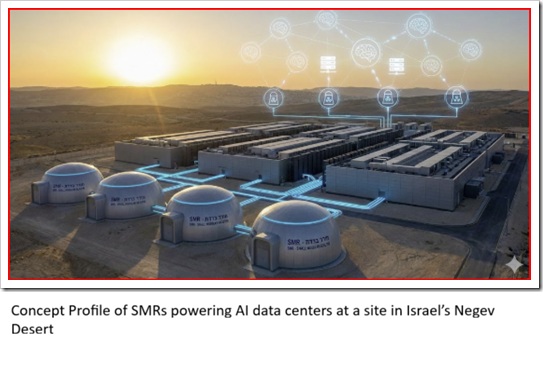
Israel signed an agreement with the U.S. on 01/16/26 to build an industrial park to produce advanced computer chips at a location in the Negev desert that would use a small modular nuclear reactor (SMR) to power the factory and nearby data centers also planned for this location.
Where things stand now, according to Israel news media, Israel and the US have inked an agreement to jointly build and operate a large technological park in Israel. The deal is part of a strategic cooperation agreement on AI signed in Jerusalem last month. (Israel government statement)
One of the surprising details to emerge from the discussions on the agreement relates to the energy infrastructure. The huge power demands of data centers and AI computer systems require a large, reliable 7/24/365 energy solution. As a result, the possibility appears to be kicking around of constructing one or more nuclear power plants, most likely SMRs, at the site.
The MOU, signed by the head of the National AI Directorate, Brig. Gen. (Res.) Erez Eskel, and the U.S. Under Secretary of State for Economic Affairs Jacob Helberg, reveals an ambitious plan to allocate 4,000 acres to the U.S. The park, which will be constructed in the Negev Desert or less likely in the Gaza Strip border area, and which will be called “Fort Foundry One”
Helberg travelled to Israel after signing similar agreements in Doha and Abu Dhabi. He said that Israel was an “anchor partner” in the effort, thanks to its technological ecosystem and its ability to produce “asymmetric results” in relation to its geographical size.
US Under Secretary of State for Economic Affairs, Jacob Helberg said, “With the launch of Pax Silica, the United States and Israel are uniting our innovation ecosystems to ensure the future is shaped by strong and sovereign allies leading in critical technologies like AI and robotics.”
Helberg comes to his role as a former lobbyist for Silicon Valley information technology firms and as a former executive for Google. One of his key interest areas has been addressing the national security risks posed to the U.S. by China. He wrote a book on the subject, The Wires of War: Technology and the Global Struggle for Power, (2021) calling for a stronger U.S. strategy against China’s technological ambition. According to the publisher’s book jacket, Helberg led Google’s global internal product policy efforts to combat disinformation and foreign interference in U.S. domestic affairs.
U.S. Thinks a Contractual Fig Leaf Can Cover the Absence off a 123 Agreement
Israel to date has no experience with civilian nuclear power plants used for electricity generation. The country has reportedly produced an unspecified number of nuclear weapons used as a deterrence factor when dealing with hostile neighbors like Iran. Also, Israel has not signed the Nuclear Nonproliferation Treaty due to policy of strategic ambiguity and its obvious reluctance to reveal the extent of its nuclear arsenal.
The official MOU for the Negev AI data center remains somewhat vague referring to a “high-intensity energy infrastructure” but it clearly is pointing to small modular reactors (50-300 MW). Due to the location in the extremely dry Negev desert, an advanced design, such as an HTGR, which does not require cooling water to operate, is likely to be chosen should the project reach a stage where a reactor design would be selected for this site.
The joint initiative is part of a broad international framework launched by the Trump administration called “Pax Silica“, a coalition of about twelve countries in technology, the aim of which is to secure supply chains of semiconductors and AI. Taiwan did not sign the agreement.
Israel joined the initiative in December 2025, and was the first country to sign a bilateral agreement with the U.S. in this framework. Among the other countries in the coalition are Qatar, the UAE, Australia, Greece, Japan, South Korea, Singapore, and United Kingdom.
The Heavy Lift Associated with Civilian Nuclear Power in Israel
Israel has abundant natural gas supplies to support private wire gas power generation for data centers. It doesn’t need small modular reactors to power them.
The geopolitical heavy lift that would be required for a civilian nuclear power plant in Israel would probably set off a similar request from Saudi Arabia for the same kind of deal.
The Saudi government has been stalled for years in its quest for US nuclear reactors due to its insistence on the right to uranium enrichment as part of a 123 Agreement with the U.S. The Saudi government sees enrichment as a deterrence signal to Iran over its nuclear program. If the U.S. gives a green light to Israel, through some kind of three bank policy pool shot, to build U.S. supplied civlian SMRs, without a 123 Agreement, the Saudis would likely ask for a similar deal.
While President Trump has busted through a lot of international norms, and removed the U.S. from multilateral agreements like climate change, busting the bounds of the Nonproliferation Treaty would set a dangerous precedent that could be followed by similar actions by Russia and China.
This would move the planet into dangerous territory. For this reason, consideration of a U.S. managed nuclear power plant in Israel may be too hot a potato for even Trump to toss over the transom. Bipartisan opposition in the Senate would be almost certain for a civilian nuclear reactor deal with Israel without a 123 agreement.
Israel does not have an agreement with the U.S. under Section 123 of the Atomic Energy act as such a move would require it to declare its nuclear infrastructure. The Israeli government has relied on strategic ambiguity about how many nuclear devices it has as a deterrence measure. The Israeli government is not going to give that up military advantage away to get small modular reactors to power data centers in a white collar industrial park.
Finally, the news release by the Israeli Prime Minister’s office about the U.S. deal may be one of a series of trial balloons the Israeli government has floated over the years about civilian nuclear power so it should be viewed with some skepticism for that point alone.
The U.S. plan apparently is to cover these issues with a contractual fig leaf that depends on a unique model in which the reactor operates under U.S. safety regulation and supervision, despite being located on Israeli territory. It’s a pretty thin leaf.
Watch What We Do Not What We Say
It is not lost on the Saudi and Israel governments that India enjoys a special relationship regarding recent developments that open the door to India for acquisition of civilian U.S. nuclear reactor technologies, without having a 123 Agreement, while these two nations are locked out these opportunities.
Where things get complicated is that the Saudi government has undoubtedly been watching how U.S. nuclear reactor firms are faring with India for some time. Recently, India opened the door to U.S. nuclear reactors by terminating its supplier liability law that acted very effectively as a trade barrier for U.S. firms.
Almost at the same time, the U.S. Department of Energy granted Holtec permission to export its 300 MW SMR to India. The authorization names three Indian companies – Larsen & Tubro (Mumbai), Tata Consulting Engineers (Mumbai) and the Company’s own subsidiary, Holtec Asia (Pune) – as eligible entities with whom Holtec can share necessary technical information to execute its SMR-300 program. Holtec also plans to build a factory in India to manufacture the small reactors. Westinghouse is expected to seek to enter the Indian nuclear market.
What the Saudi government sees is that U.S. policy towards India shows a remarkably different approach to a country which has declared it has a nuclear arsenal, has tested its nuclear weapons, and is not a party to the Nonproliferation Treaty. Further, India does not have a 123 agreement with the U.S. and has no immediate plans to seek one. Israel has likely come to the same point of view.
The fact that Israel has signed an MOU with the U.S. that could potentially involve it acquiring U.S. manufactured SMRs is a signal that if India can do it, so can Israel. Saudi Arabia will not be far behind in asking for the same deal should the Israeli industrial park agreement move forward beyond the MOU stage.
Saudi Plans for AI Data Centers Points to Nuclear Reactor to Power Them
The Saudi government’s ambitious plans and programs to transform the oil rich company into a regional powerhouse for artificial intelligence will require significant investments in electricity generation to power the AI data centers needed to carry out this effort.
According to a report in the New York Times, Saudi Arabia is investing $40 billion to become a dominant player for the use of AI in the Middle East. Data centers to support this program will require enormous amounts of electrical power to support the advanced semiconductors that process AI software, to power the data centers themselves, and to keep them cool in one of the hottest regions on the planet.
It follows that the Saudi government will coordinate its plans for a nuclear new build with its massive investments in AI. It is likely that sooner or later Saudi Arabia’s need to break ground on the first two reactors in anticipation of the need for power for its AI program and related data centers.
It may decide that building commercial nuclear power plants to power its AI program is more important than the geopolitical consideration of having access to nuclear technologies with or without a U.S. 123 Agreement. Given the U.S. course of actions with India, Saudi Arabia may ask for the same kind of deal thus bypassing the entire enrichment policy issue it has with the U.S.
The Saud government has a tender outstanding, which has been on hold for some time, to build two 1,400 MW PWR type reactors. It has also explored options for SMRs for data centers and to power desalination plants to provide potable water for general and industrial uses. A award for the two reactors could be the first order of business the Saudi government will seek to pursue in asking for the same deal the U.S. gave India.
Iran’s mysterious Pickaxe Mountain a ‘candidate’ for new nuclear activities
By Annika Burgess, ABC, 7 Feb 26
Hidden among the mountains in central Iran, work has been continuing on a mysterious underground facility believed to be buried beyond the range of US “bunker buster” bombs.
The site, known as Pickaxe Mountain, or Kuh-e Kolang Gaz La, has never been accessed by international nuclear inspectors, and its exact purpose remains unclear.
Analysts monitoring its development via satellite imagery have witnessed security walls growing, spoil piles expanding and tunnel entrances being reinforced as engineers dig deeper into the mountain.
“We don’t have internal schematics to really judge what the inside will look like,” says Spencer Faragasso, a senior research fellow at the US Institute for Science and International Security.
“But given the size of the spoil piles, the amount of construction they’re doing, it wouldn’t be incomprehensible to see them establish an enrichment facility inside it.”
Located near the peak of the Zagros Mountains, the site is just 1.6 kilometres south of Natanz, which was Iran’s main uranium enrichment facility.
But Pickaxe Mountain was not affected when Natanz and two other key Iranian nuclear facilities — Fordow and Isfahan — were targeted in US strikes that aimed to disrupt Tehran from potentially developing nuclear bombs.
US President Donald Trump said the three sites were “obliterated” in the June 2025 attacks, but has renewed demands for Iran to make a deal over its nuclear program or face fresh strikes that would be “far worse”.
Negotiators from both countries held indirect talks in Oman on Friday, with Iran’s top diplomat striking a cautiously optimistic note after their conclusion.
However, the US delegation, led by special envoy Steve Witkoff and Mr Trump’s son-in-law, Jared Kushner, did not offer any immediate comment.
Recent assessments show Tehran’s nuclear program was severely damaged by the US during the 12-day war between Iran and Israel, but it could be built up again.
And satellite imagery revealed Pickaxe Mountain could be a “potential candidate” for new uranium enrichment activities………………………………………………………………………………………………………………………………………………………………………………………………………………………………
Where are the uranium stockpiles?
Iran’s stockpiles of 60 per cent enriched uranium remain missing.
Trucks observed outside Fordow and Isfahan before and after the US strikes suggested Iran may have moved the material.
But the IAEA director said there was a “general understanding” the enriched uranium was likely still buried under the damaged facilities.
“We need to go back there and to confirm that the material is there and it’s not being diverted to any other use,” Mr Grossi said in October…………………………………………………………………………………………………………………………………………………………………. https://www.abc.net.au/news/2026-02-07/iran-nuclear-sites-program-us-strikes-pickaxe-mountain-uranium/106288446
Iran’s Comprehensive Peace Proposal to the United States

The Middle East stands at a crossroads between endless war and comprehensive peace. A framework for peace does exist. Will the US finally seize it?
Jeffrey D. Sachs, Sybil Fares, Common Dreams, Feb 09, 2026
History occasionally presents moments when the truth about a conflict is stated plainly enough that it becomes impossible to ignore. Iranian Foreign Minister Abbas Araghchi’s February 7 address in Doha, Qatar (transcript here) should prove to be such a moment. His important and constructive remarks responded to the US call for comprehensive negotiations, and he laid out a sound proposal for peace across the Middle East.
Last week, US Secretary of State Marco Rubio called for comprehensive negotiations: “If the Iranians want to meet, we’re ready.” He proposed for talks to include the nuclear issue, Iran’s military capabilities, and its support for proxy groups around the region. On its surface, this sounds like a serious and constructive proposal. The Middle East’s security crises are interconnected, and diplomacy that isolates nuclear issues from broader regional dynamics is unlikely to endure.
On February 7, Iranian Foreign Minister Araghchi’s responded to the United States’ proposal for a comprehensive peace. In his speech at the Al Jazeera Forum, the foreign minister addressed the root cause of regional instability – “Palestine… is the defining question of justice in West Asia and beyond” and he proposed a path forward.
The Foreign Minister’s statement is correct. The failure to resolve the issue of Palestinian statehood has indeed fueled every major regional conflict since 1948. The Arab-Israeli wars, the rise of anti-Israel militancy, the regional polarization, and the repeated cycles of violence, all derive from the failure to create a State of Palestine alongside the State of Israel. Gaza represents the most devastating chapter in this conflict, where Israel’s brutal occupation of Palestine was followed by Hamas’s attack on Israel on October 7, 2023, and then by Israel’s genocide against the people of Gaza.
In his speech, Araghchi condemned Israel’s expansionist project “pursued under the banner of security.” He warned of the annexation of the West Bank, which Israeli government officials, as National Security Minister Ben Gvir, continually call for, and for which the Knesset has already passed a motion.
Araghchi also highlighted another fundamental dimension of Israeli strategy which is the pursuit of permanent military supremacy across the region. He said that Israel’s expansionist project requires that “neighboring countries be weakened—militarily, technologically, economically, and socially—so that the Israeli regime permanently enjoys the upper hand.” This is indeed the Clean Break doctrine of Prime Minister Netanyahu, dating back 30 years. It has been avidly supported by the US through 100 billion dollars in military assistance to Israel since 2000, diplomatic cover at the UN via repeated vetoes, and the consistent US rejection of accountability measures for Israel’s violations of international humanitarian law.
Israel’s impunity has destabilized the region, fueling arms races, proxy wars, and cycles of revenge. It has also corroded what remains of the international legal order. The abuse of international law by the US and Israel with much of Europe remaining silent, has gravely weakened the UN Charter, leaving the UN close to collapse.
In the concluding remarks of his speech, he offered the US a political solution and path forward. “The path to stability is clear: justice for Palestine, accountability for crimes, an end to occupation and apartheid, and a regional order built on sovereignty, equality, and cooperation. If the world wants peace, it must stop rewarding aggression. If the world wants stability, it must stop enabling expansionism.”
This is a valid and constructive response to Rubio’s call for comprehensive diplomacy…………………………………………………………………………………………………………………….. https://www.commondreams.org/opinion/comprehensive-peace-plan-middle-east
If You Think Our Rulers Do Bad Things In Secret, Wait Til You See What They Do Out In The Open.
Caitlin Johnstone, Feb 09, 2026, https://www.caitlinjohnst.one/p/if-you-think-our-rulers-do-bad-things?utm_source=post-email-title&publication_id=82124&post_id=187345674&utm_campaign=email-post-title&isFreemail=true&r=1ise1&triedRedirect=true&utm_medium=email
They launched a live-streamed genocide in full view of the entire world.
They’re openly targeting civilian populations with siege warfare in Iran and Cuba in full view of the entire world.
They openly kidnapped the president of a sovereign nation in full view of the entire world.
They deliberately provoked a horrific and dangerous proxy war in Ukraine in full view of the entire world.
They spent years actively backing Saudi Arabia’s monstrous genocidal atrocities in Yemen in full view of the entire world.
They’re plundering and exploiting the resources and labor of the global south in full view of the entire world.
They’re killing the biosphere we all depend on for their own enrichment in full view of the entire world.
They’re circling the globe with hundreds of military bases to secure planetary domination in full view of the entire world.
They engage in nuclear brinkmanship and wave around armageddon weapons like pistols in full view of the entire world.
People go homeless and die of exposure while billionaires buy private islands and choose the next president in full view of the entire world.
Weapons manufacturers lobby for wars and then profit from the death and destruction they cause in full view of the entire world.
The president of the United States has repeatedly admitted to being bought and owned by the world’s richest Israeli in full view of the entire world.
The US Treasury Secretary has been repeatedly admitting that the US deliberately sparked the violence and unrest in Iran by methodically immiserating the population via economic warfare, in full view of the entire world.
I keep seeing people freaking out and asking how it’s possible that the individuals in the Epstein files haven’t been arrested for their secret nefarious behavior. And I always want to ask them, mate, have you seen the nefarious behavior they’re engaging in right out in the open?
Pay attention to the Epstein files. Pay attention to what little we can learn about how these freaks conduct themselves behind closed doors. By all means, pay close attention to these things.
But don’t forget to also pay attention to the far greater evils they are inflicting in full view of the entire world.
Trump is not threatening war on Iran over its nuclear program, but because it challenges U.S. dominance.
In short, it is about removing Iran from the strategic playing field, as it is the sole actor in the region that is powerful, influential, and beyond the United States’ direct control. The U.S. and Israel desperately want to remove that oppositional force.
So Trump is buying time by agreeing to talks that cannot succeed on the terms he and Rubio have laid down. He is likely to use that time to magnify the threat against the Iranian leadership in the vain hope that they will acquiesce to his demands.
The U.S. is once again threatening a war on Iran that could devastate the region. Trump knows Iran is not pursuing nuclear weapons, but that has never been the point. It is about removing Iran as the only actor in the region beyond U.S. control.
By Mitchell Plitnick February 6, 2026, https://mondoweiss.net/2026/02/trump-is-not-threatening-war-on-iran-over-its-nuclear-program-but-because-it-challenges-u-s-dominance/
American and Iranian negotiators are meeting in Muscat to see if they can come to an agreement and avoid an American attack on Iran. The chances don’t look good.
There was some initial hope because Donald Trump agreed to hold talks at all. The buildup of American forces in the region and the frequent planning meetings with Israeli political and military officials gave the appearance of an unstoppable buildup to war.
But American allies Türkiye, Saudi Arabia, Qatar, and Oman have been working hard to convince Trump not to attack Iran. They fear the potential backlash of an American attack on the Islamic Republic, believing that Iran is not likely to respond to an attack with the restraint they have shown in the past.
Israel is urging Trump to attack, as the government of Benjamin Netanyahu is the one entity that stands to benefit from the chaos that an attack on Iran could bring.
Indeed, Iran has warned that an attack this time will be met with a very different response than previous ones. Yet, paradoxically, it is the very fact that Iran is capable of a more damaging response than it has taken in the past that creates the impasse that is likely to derail negotiations.
What each side wants
Iran’s desires from any talks with the U.S. are straightforward: they want the U.S. to stop threatening to attack, and to lift the sanctions that have helped to cripple Iran’s economy.
But the United States has more complicated demands.
- The United States wants Iran to completely abandon nuclear power. This demand is not just about weaponry, but includes all civilian nuclear power under Iran’s control. No uranium at all can be enriched by Iran, regardless of whether it is for civilian or military purposes, and all enriched uranium Iran has must be handed over.
- The U.S. is demanding that Iran agree to limits dictated by Washington on the range and number of ballistic missiles it can possess.
- The U.S. is demanding that Iran end its support of any and all armed resistance groups in the region.
All of these demands are unreasonable. But the United States is holding a loaded gun to Iran’s head. The U.S. has moved a large carrier group into the waters near Iran, and between American and Israeli intelligence, they surely have a very clear map of where they want to strike to go along with the technical capability to essentially ignore Iran’s defenses.
But while Iran can do very little to shield itself from an American or Israeli attack, it is capable of responding to one. That is what the last two American demands are focused on, and it’s really the reason all of this is happening.
If the U.S. or Israel attacks Iran and Iran elects to respond with all of its capabilities—which it has not done in previous attacks—it has the ability to kill many American soldiers, severely disrupt oil production in the Gulf, or cause significant damage to Israel.
Iran can do this because it has a large battery of long-range ballistic missiles. It has already shown, last June, that it can hurt Israel, and that was an attack largely meant to be a warning.
Iran also backs various militias in the region, some large, like Ansar Allah in Yemen, others smaller. That means it can launch guerrilla attacks on American bases or other key sites in places like Iraq and Syria.
Iran can also target oil fields throughout the region, either with missiles or drones or with militia attacks. That’s a major reason Trump’s friends in the Gulf are reluctant to see him start a war.
The ability to do all of that gives Washington pause. Donald Trump likes it when he can do quick operations with little or no pushback, as he did recently in Venezuela or last year in Iran. Trump has carefully avoided situations where American soldiers might be killed. Iran might not let the U.S. off so easily this time around.
The reality behind U.S. demands
That brings us to why talks are so unlikely to succeed.
Iran has already made it clear it has no intention to negotiate on their support for groups throughout the region or on their ballistic missile arsenal. They understand that the reason the United States is trying to force them to agree to such measures is that it would leave Iran defenseless. Giving in to these demands would be tantamount to national suicide.
The Iranian leadership is more than happy to discuss the issue of nuclear power. As unfair as the terms might be, they might even be willing to reach a compromise that allows them to use nuclear power without enriching uranium themselves. That’s far from ideal, but Iran is facing a considerable threat.
But this holds little interest for the Trump administration. Despite American chest-thumping, they know that Iran is not pursuing a nuclear weapon, nor were they before the U.S. damaged so much of their nuclear infrastructure last year. Trump’s own intelligence corps confirmed that Iran was not actively seeking a nuclear weapon, just as it had affirmed that finding every year since 2007.
But none of this has ever been about an Iranian nuclear weapon. Rather, it has always been about pressuring the Islamic Republic either to fall or to radically change its behavior in the region. It has always been about getting Iran to stop supporting the Palestinian cause rhetorically and to stop arming Palestinian factions. It has always been about stopping Iran from supporting militias in the region that act outside of the American-run system, unlike those that are backed by Saudi Arabia, the UAE, or other states in the region that are on good terms with Washington.
In short, it is about removing Iran from the strategic playing field, as it is the sole actor in the region that is powerful, influential, and beyond the United States’ direct control. The U.S. and Israel desperately want to remove that oppositional force.
Trump weighs the consequences of attacking Iran
Does Trump really want a war? That concern with Iran is a long-term U.S.-Israeli policy goal. What Donald Trump personally wants is always difficult to know. It can change from day to day, and is often based on a less-than-full understanding of the real world.
From all appearances, Trump felt emboldened by the American success in Venezuela. He kidnapped the head of state and his wife, and suffered no American casualties in doing so. The short-term political backlash, both in Latin America and in the U.S., was brief and minimal.
No doubt, he envisioned a similar success in Iran, when the protests there and the Iranian government’s brutal response helped to create what might have looked superficially like similar circumstances. Trump began issuing one threat after another, and while their frequency has been intermittent, they have not stopped.
But his friends in Saudi Arabia, Qatar, Türkiye, and elsewhere in the Mideast explained to Trump that the outcome in Iran would be very different from that in Venezuela. Iran has the capabilities we’ve already discussed here, but there are other key differences.
For one, Iran has a deep governmental infrastructure, and there is no one in it who is both capable of taking over from Ayatollah Ali Khamenei and willing to compromise with Trump in the way Delcy Rodriguez has in Caracas. Despite the occasional protester in Iran calling out the name of Reza Pahlavi, the son of the last Shah of Iran, who was deposed in 1979, there is no infrastructure of support for him in Iran, and it would likely be impossible to simply install him without a full-scale invasion of the country.
So Trump is buying time by agreeing to talks that cannot succeed on the terms he and Rubio have laid down. He is likely to use that time to magnify the threat against the Iranian leadership in the vain hope that they will acquiesce to his demands.
But the primary purpose of that time is to continue to position American and Israeli forces to counter what they can anticipate of an Iranian response. That would mean not just the stationing of ships in striking distance of Iran, but also positioning whatever military assets they might have in countries like Iraq and Syria, as well as in other Gulf states, to counter guerrilla attacks by Iran-aligned militias and getting friendly states to agree to help with shooting down Iranian missiles and drones, as they did last year.
With Rubio and Benjamin Netanyahu pushing Trump toward a regime change war with Iran, and given the amount of bluster he has already put out there, it is hard to see Trump backing away from a war if Iran will not agree to compromise on its missiles and the militias it supports. And Iran is not about to do that.
The war that will ensue stands a good chance of toppling the Iranian government, but with nothing to replace it, the power vacuum that will surely follow will mean chaos not only for Iran but for the whole region. That isn’t really in Trump’s interests, and it certainly does not benefit his Gulf Arab allies.
Netanyahu, on the other hand, will have made the “neighborhood” that much more dangerous just as Israel’s election season begins to ramp up. While many Israelis have lost faith that “Mr. Security” can protect them after October 7, a heightened sense of danger to Israelis remains the atmosphere that is most favorable to Netanyahu electorally. It’s therefore no surprise that Israel is the one actor in the region that is pressing for this regime change war.
Averting that war will mean the Trump administration climbing down from its maximalist demands. There are indications that the U.S. is looking, at least,for an option that allows it to do that without appearing to have shied away from Iranian retaliation. But that remains an unlikely outcome, as hawks in Israel, Washington, and among the anti-regime exile Iranian community continue to urge an attack.
1 This Month

of the week – Shut Down Drone Warfare!


Tell the Ukrainian Government to Drop Prosecution of Peace Activist Yurii Sheliazhenko

Petition to revoke the licensing of the Near Surface Nuclear Disposal Facility (NSDF) at Chalk River. https://www.ourcommons.ca/petitions/en/Petition/Details?Petition=e-7247
To see nuclear-related stories in greater depth and intensity – go to https://nuclearinformation.wordpress.com
-
Archives
- March 2026 (237)
- February 2026 (268)
- January 2026 (308)
- December 2025 (358)
- November 2025 (359)
- October 2025 (376)
- September 2025 (257)
- August 2025 (319)
- July 2025 (230)
- June 2025 (348)
- May 2025 (261)
- April 2025 (305)
-
Categories
- 1
- 1 NUCLEAR ISSUES
- business and costs
- climate change
- culture and arts
- ENERGY
- environment
- health
- history
- indigenous issues
- Legal
- marketing of nuclear
- media
- opposition to nuclear
- PERSONAL STORIES
- politics
- politics international
- Religion and ethics
- safety
- secrets,lies and civil liberties
- spinbuster
- technology
- Uranium
- wastes
- weapons and war
- Women
- 2 WORLD
- ACTION
- AFRICA
- Atrocities
- AUSTRALIA
- Christina's notes
- Christina's themes
- culture and arts
- Events
- Fuk 2022
- Fuk 2023
- Fukushima 2017
- Fukushima 2018
- fukushima 2019
- Fukushima 2020
- Fukushima 2021
- general
- global warming
- Humour (God we need it)
- Nuclear
- RARE EARTHS
- Reference
- resources – print
- Resources -audiovicual
- Weekly Newsletter
- World
- World Nuclear
- YouTube
-
RSS
Entries RSS
Comments RSS
 nuclear-news