Nuclear weapons an obsolete defense strategy, says Ahmadinejad
 Ahmadinejad says nuclear weapons a thing of the past, Tehran Times, 15 Aug 11, TEHRAN – Iranian President Mahmoud Ahmadinejad has said that the 21st century is about knowledge, while nukes are the means of the past and are not going to be a determining force in the world in future. Ahmadinejad says nuclear weapons a thing of the past, Tehran Times, 15 Aug 11, TEHRAN – Iranian President Mahmoud Ahmadinejad has said that the 21st century is about knowledge, while nukes are the means of the past and are not going to be a determining force in the world in future.Ahmadinejad made the remarks during an interview with Russia Today (RT) on August 13. His comments were later translated into English by this television network.
Commenting on the dispute over Iran’s nuclear program, Ahmadinejad said, “We do not want nuclear weapons for a few reasons… This weapon is inhumane. Because of our faith, we are against it. Our religion says it is prohibited, and we are religious people.”
“Nuclear weapons have no capabilities today. If any country tries to build a nuclear bomb, in fact, they waste their money on resources and, secondly, they create a big danger to themselves,” he stated.
No country possessing nuclear weapons has benefited from it, Ahmadinejad said, adding, “The Americans have nuclear bombs and nuclear weapons. Could they win in Iraq or in Afghanistan? Could nuclear weapons help the Zionist regime win in Lebanon and Gaza? Could nuclear weapons help the former Soviet Union avoid collapse?”
He added, “Nuclear weapons are the means of the previous century. This century is the century of knowledge and thinking. It is the century of human beings. It is the century of culture and knowledge.”…
|
Third finding of radiation in shipment to Egypt, from Japan
 Egypt authorities find another case of radiation in Japanese shipment, Almasyry Alyoum, 9 Aug 11, — Egypt’s General Authority for Export and Import Control recently discovered radioactive cargo in two containers shipped from Japan to Ain Sokhna port, the Red Sea Ports Authority said.
This is the third radioactive shipment Egypt has discovered over the past month.
The radioactive material was found aboard ships carrying electric and mechanical instruments. A letter from Egypt’s atomic energy authorities confirmed the cargo had above-regulation radiation levels….http://www.almasryalyoum.com/en/node/485146
Israel tried to drag USA into a war with Iran
How Iran defeated Obama. By Patrick Seale, The Diplomat 5 Aug 11“……..What is less well understood is that Obama was also defeated in another major area of foreign policy – relations with Iran. When he came to office he vowed to ‘engage’ with the Islamic Republic, but this admirable objective was soon supplanted by a policy of threats, sanctions and intimidation aimed at isolating Iran, subverting its economy and overthrowing its regime.
Israel and its friends led the campaign against Iran, demonizing it as a threat to all mankind, and forcing the United States to follow suit. Israel has repeatedly, and very publicly, threatened to strike at Iran’s nuclear facilities, and has done its best to drag the United States into war against it, in much the same way as pro-Israeli neo-conservatives at the Pentagon were alleged to have manipulated intelligence to push the United States into war against Iraq in 2003, with catastrophic consequences.
Why did they do it? Because they feared that, having survived the eight-year Iran-Iraq war, Saddam Hussein’s Iraq might just possibly pose a threat to Israel. It had to be destroyed. Tony Blair, Britain’s prime minister at the time, was foolish enough to tag along. The war totally discredited him…..”http://globalpublicsquare.blogs.cnn.com/2011/08/05/how-iran-defeated-obama/
Fears of al-Qa’ida finding refuge in a nuclearized Iran
al-Qa’ida may logically seek to achieve an untouchable strategic sanctuary within a nuclearized Iran.
Might al-Zawahiri’s al-Qa’ida come to view future nuclear power Iran as THE perfect sanctuary?, TIME, by Thomas P. M. Barnett , August 1, 2011 As al-Qa’ida leaders the world over signal their intent to stay the course — challenging assumptions that the integrity of their network has been perhaps irreversibly jeopardized by the death of bin Laden — national security managers must remain focused on denying its core leaders a safe base of operations.
Meanwhile, due to growing ties between al-Qa’ida’s regional network and defense officials in Iran, the strategic dimension of the West’s counter-terrorism efforts is likely to grow significantly in the years ahead. Continue reading
USA to sell nukes to Saudi Arabia, despite its weapons ambitions?
The White House’s decision is already facing opposition from members of Congress who worry about sharing nuclear technologies with countries in today’s increasingly unstable Middle East. The concerns were further fueled by recent comments made by a senior member of the Saudi royal family that their country would seek to develop nuclear weapons if Iran did.
 U.S., Saudis to Discuss Nuclear Agreement, WSJ, JULY 29, 2011,By JAY SOLOMON,WASHINGTON—The Obama administration plans to resume talks with Saudi Arabia about nuclear cooperation, according to senior U.S. officials, in a move aimed at boxing in Iran and keeping an eye on Riyadh’s strategic ambitions. Continue reading
Assassination of Iranian nuclear scientist
Increasing nuclear collaboration by North Korea and Iran?
North Korea and Iran increase collaboration on nuclear missile, report claims, Telegraph UK, 22 July 11 North Korea and Iran are jointly working on weapons programmes designed to build a long-range missile capable of carrying a nuclear warhead, a leading British security think tank has said. Continue reading
UN Security Council not taking action on allegations about Syria’s nukes
Security Council Agrees to Disagree About Syria Nuclear Program, IsraelNationalNews.15 July 11 The International Atomic Energy Agency (IAEA) on Thursday brought its allegations of covert atomic work by Syria before the UN Security Council, but the 15-nation body took no immediate action, Reuters reported. Last September, IAEA said that Syria had refused to allow UN inspectors to visitDair Alzour, the nuclear facility that was meant to produce plutonium and which was bombed by the Israeli Air Force while still under construction in 2007.
The IAEA’s report expressed concern that should Syria continue to stonewall the investigation, “some of the necessary information may deteriorate or be lost entirely.”In June, the IAEA’s board of governors voted to report Syria to the Security Council over its behavior.
Reuters reported that during Thursday’s closed-door briefing by Neville Whiting, head of the IAEA safeguards department dealing with Syria and Iran, it was made clear that Syria had a secretnuclear plant.But despite this, Syria’s close allies Russia and China queried whether the Council should be involved, as the Syrian complex no longer exists…..http://www.israelnationalnews.com/News/News.aspx/145741
Israel’s nuclear weapons – a threat to Middle East peace?
Israel: An Impediment To A Nuclear-Free Middle East,By Kourosh Ziabari ,The Public Record,Jun 20th, 2011 “……–According to the Federation of American Scientists, Israel now possesses up to 200 nuclear warheads and since it is not a signatory to the Nuclear Non-proliferation Treaty (NPT), it cannot be held accountable over its military nuclear program. ….Since Israel started the development of nuclear weapons in early 1950s, it adopted a so-called policy of “deliberate ambiguity” and concealed its nuclear activities under this counterfeit label to enjoy immunity and avoid responsibility over its nuclear program, meaning that it neither confirms nor denies the possession of nuclear weapons, while even the U.S.-based scientific and research organizations have admitted that it has a perilous nuclear arsenal which is potentially able to evaporate the whole Middle East in a matter of seconds. Continue reading
Economist urges Saudi Arabia to wards solar energy,not nuclear
 “Spending this amount on solar energy projects will be relatively safer compared with nuclear energy, which is a time bomb that could explode at any time, as with what occurred in Japan.”.
Region urged to embrace renewable energy projects Japan’s Fukushima plant disaster should serve as a warning to Middle East countries bent on spending billions of dollars on nuclear plants Gulf News By Orlando Crowcroft, Business News Editor June 13, 2011 “……..Speaking just months after the explosion at Japan’s Fukushima plant in April, Abdul Gani Bin Melaibari, coordinator of scientific collaboration at the King Abdullah City for Atomic and Renewable Energy, said that Saudi Arabia intended to build a total of 16 nuclear reactors by the end of 2030. At a cost of some $300 billion..
….. Critics point out that the investment in nuclear power comes at a time when other countries are shying away from nuclear energy, due to risks demonstrated all to clearly at Fukushima. For the kind of money that Saudi Arabia is willing to invest, there are far safer forms of renewable energy avaliable. Economic analyst Omar Al Jutraifani suggests that rather than spend billions of dollars on advancing nuclear energy — with all the risks that it involves — why not spend the money on other forms of renewable energy? ”
I think that the level of risks in such projects will be very high in all criteria,” he said. “Spending this amount on solar energy projects will be relatively safer compared with nuclear energy, which is a time bomb that could explode at any time, as with what occurred in Japan.”….. gulfnews : Region urged to embrace renewable energy projects
Danger of unstable nations having nuclear power
 A trove of U.S. diplomatic cables obtained by WikiLeaks and provided to Reuters by a third party provide colorful and sometimes scary commentary on the conditions in developing nations with nuclear power aspirations……Turmoil of the kind sweeping north Africa and the Middle East could affect the security of power plants and nuclear fuel – which some fear could be turned into weapons in case of a coup or if they fell into the hands of terrorists.
After Japan, Where’s the Next Nuclear Weak Link?, Reuters By Nick Carey, Jun 10, 2011 It may sound alarming but that is what could happen in many developing countries which are either building nuclear power plants or considering doing so – a prospect that raises serious questions after Japan’s experience handling a nuclear crisis.
Imagine a country where corruption is rampant, infrastructure is very poor, or the quality of security is in question. Now what if that country built a nuclear power plant? Continue reading
Corrupt authoritarian regimes and nuclear power – example Azerbaijan
 Rampant corruption in some developing countries could also lead to corners being cut in everything from plant construction to security,
In Azerbaijan, a cable written in November 2008 describes the man who would have the responsibility for regulation of a proposed nuclear program, Kamaladdin Heydarov, as “ubiquitous, with his hands in everything from construction to customs.”.
After Japan, Where’s the Next Nuclear Weak Link?, Reuters By Nick Carey, Jun 10, 2011″…..REGULATION AND CORRUPTION For many, rule No.1 for a safe nuclear program is a regulator with at least some semblance of independence from government or corporate influence.
Critics worry that authoritarian governments will not tolerate an authority with even pretensions to partial independence or transparency of decision-making. While nuclear authorities in the West have also faced criticism for being too close to the industry they regulate, they are at least open to media and lawmaker scrutiny. Continue reading
UN reports on Syria’s nuclear program
U.N. Nuclear Watchdog Presses Case Against Syria, NYT, By DAN BILEFSKY June 9, 2011 UNITED NATIONS — The United Nations nuclear watchdog voted Thursday to report Syria to the Security Council, citing Syria’s construction of a covert nuclear reactor and its failure to cooperate with investigators, diplomats said……Citing a lack of confidence that Syria’s nuclear program is for peaceful purposes and pointing to a history of concealment by Damascus, the I.A.E.A. resolution says that the destroyed Dair Alzour site was “very likely a nuclear reactor and should have been declared by Syria.”
The 15-member Security Council has the power to rebuke Syria by urging it to cooperate with the I.A.E.A. and imposing sanctions against the country, as it has done in the case ofIran’s nuclear program. But Russia and China, two veto-wielding members of the Security Council, voted against the resolution, underlining international divisions over how to approach Damascus and signaling that punitive measures against the Syrian government were unlikely.
Syria has said the Dair Alzour site was a non-nuclear facility and has denied having a secret nuclear program. It has urged the I.A.E.A. to focus on Israel and allegations about its own covert nuclear activities…..http://www.nytimes.com/2011/06/10/world/middleeast/10nations.html
Iran increasing uranium enrichment
Iran Plans High Level of Uranium Enrichment, NYT By DAVID JOLLY June 8, 2011 Iran declared Wednesday that it aims to triple production of nuclear fuel this year and, at a site that had been secret until 2009, increase enrichment to 20 percent. Enrichment at that level indicates technological progress that experts say would make the weapons-grade level of 90 percent enrichment much closer. Continue reading
Egypt could prosper with solar energy, not nuclear
why is there this insistence on neglecting calls that we should depend more on solar energy for producing electricity, which could be the base for the country’s development, not only for producing the requisite amount of electricity for local consumption but also for having surplus for export? 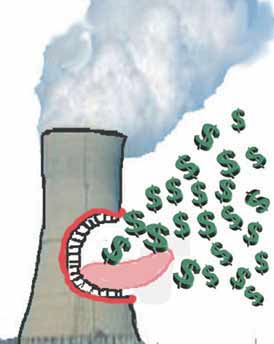 The costs of nuclear energy By Manal Abdul Aziz – The Egyptian Gazette, June 6, 2011 CAIRO – The difference between humankind, homo sapiens, and other animals is that human beings have experience and learn from their mistakes, while other animals behave according to instinct. For this reason, human beings are the only creatures that have a civilisation.
1 This Month




PLEASE OPPOSE HR 8255 AND S.3639 – bills would accelerate satellite deployment, with no environmental review or safeguards – https://ncstd5li.quorum.us/campaign/169331/
To see nuclear-related stories in greater depth and intensity – go to https://nuclearinformation.wordpress.com
-
Archives
- September 2026 (339)
- August 2026 (330)
- July 2026 (355)
- June 2026 (287)
- May 2026 (306)
- April 2026 (356)
- March 2026 (251)
- February 2026 (267)
- January 2026 (308)
- December 2025 (358)
- November 2025 (359)
- October 2025 (375)
-
Categories
- 1
- 1 NUCLEAR ISSUES
- business and costs
- climate change
- culture and arts
- ENERGY
- environment
- health
- history
- indigenous issues
- Legal
- marketing of nuclear
- media
- opposition to nuclear
- PERSONAL STORIES
- politics
- politics international
- Religion and ethics
- safety
- secrets,lies and civil liberties
- spinbuster
- technology
- Uranium
- wastes
- weapons and war
- Women
- 2 WORLD
- ACTION
- AFRICA
- Atrocities
- AUSTRALIA
- Christina's notes
- Christina's themes
- culture and arts
- Events
- Fuk 2022
- Fuk 2023
- Fukushima 2017
- Fukushima 2018
- fukushima 2019
- Fukushima 2020
- Fukushima 2021
- general
- global warming
- Humour (God we need it)
- Nuclear
- RARE EARTHS
- Reference
- resources – print
- Resources -audiovicual
- Weekly Newsletter
- World
- World Nuclear
- YouTube
-
RSS
Entries RSS
Comments RSS

