Iranian President Rouhani takes a moderate line on Syria, nuclear talks
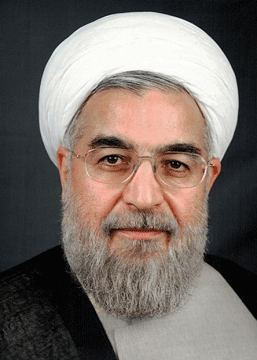 Rouhani outflanks hardliners on Syria, nuclear talks SMH, September 6, 2013 Ramin Mostaghim and Carol J. Williams Tehran: Iranian President Hassan Rouhani appears to be outmanoeuvring hard-liners with his move to take control of stalled nuclear negotiations and in curbing bombastic declarations to defend ally Syria from threatened US airstrikes.
In sharp contrast with the bellicose posturing of his predecessor, former President Mahmoud Ahmadinejad, Mr Rouhani has kept expectations low that Iran will provide military aid to Syrian President Bashar Assad if Western forces attack his government.
Another former president and influential backer of Mr Rouhani, Ali Akbar Hashemi Rafsanjani, last week was reported to have publicly blamed Dr Assad’s forces for an alleged chemical weapons attack August 21 on the suburbs of Damascus that reportedly killed hundreds of civilians……….: http://www.smh.com.au/world/rouhani-outflanks-hardliners-on-syria-nuclear-talks-20130906-2t9oa.html#ixzz2eGAIakBW
Iran’s Foreign Minister to now be nuclear negotiator
Iran Foreign Ministry to lead nuclear  talks http://www.aljazeera.com/news/middleeast/2013/09/20139515176846972.htm President
 tasks ministry with handling negotiations, in shift away from security officials setting Tehran’s strategies. 05 Sep 2013 Iranian President Hassan Rouhani has tasked the Foreign Ministry with handling the country’s nuclear negotiations with world powers, in a shift away from security officials setting Tehran’s strategies for the talks.
The announcement on Thursday came three weeks before Iran and the UN atomic watchdog are to resume talks in Vienna over Tehran’s controversial nuclear programme.
Since 2007, negotiations have been conducted by Saeed Jalili, head of the country’s Supreme National Security Council, who was seen by Western diplomats as an uncompromising ideologue.
Last month, the president named ex-foreign minister Ali Akbar Salehi to head the country’s Atomic Energy Organisation and career diplomat Reza Najafi as envoy to the UN nuclear watchdog, the International Atomic Energy Agency.
Iran’s most powerful authority, Ayatollah Ali Khamenei, retains the final say on any proposed deals.The last round of negotiations in April with the United States, Russia, China, Britain, France and Germany again fell short of any breakthrough.
But some believe more progress can be achieved under Rouhani, a relative moderate who was elected in June and has pledged a more conciliatory and transparent approach to foreign policy than his predecessor, Mahmoud Ahmadinejad. The six world powers have demanded Tehran cease enrichment of uranium to a fissile purity of 20 percent to reduce concerns that it could be used for nuclear weapons, allegations Tehran has repeatedly denied.
During his role as Iran’s chief nuclear negotiator, from 2003-2005, Rouhani accepted the suspension of the enrichment programme. Rouhani said last month that Iran was ready for serious talks, but he said there could be no surrender of the right to the peaceful use of nuclear energy and that Iran would not give up uranium enrichment.
West taking a gentler approach to Iran at nuclear meeting
West to hold back from targeting Iran at U.N. nuclear meeting By Fredrik Dahl VIENNA | Thu Sep 5, 2013 (Reuters) – World powers will refrain from raising pressure on Iran at a U.N. nuclear meeting next week to give its new moderate president time to show he is serious about moves to reduce tensions over its atomic activity, Western diplomats say…….. “There has definitely been a change in tone from the Iranian government which we recognize and welcome,” a Western envoy said, speaking ahead of next week’s governing board meeting.
“We have to give them at least the time to translate their words into action,” the envoy added, noting there were no plans – unlike previous board meetings – to push for a resolution to chide Iran over its refusal to curb sensitive atomic activity…….. http://www.reuters.com/article/2013/09/05/us-iran-nuclear-iaea-idUSBRE9840IL20130905
Middle East nuclear conflagration risk, if USA attacks Syria
Moscow Says US Strike on Syria Threatens Nuclear Security http://en.ria.ru/russia/20130904/183168440/Moscow-Says-US-Strike-on-Syria-Threatens-Nuclear-Security.html MOSCOW, September 4 (RIA Novosti) – The Russian Foreign Ministry on Wednesday urged the International Atomic Energy Agency (IAEA) to analyze risks of a potential US military operation in Syria, saying such a strike would threaten nuclear security throughout the Middle East.
Ministry spokesman Alexander Lukashevich said in a statement that such an operation in Syria “might affect targets sensitive in terms of nuclear security and nuclear non-proliferation,” including the Miniature Neutron Source Reactor (MNSR) near Damascus.
He said “the consequences will be catastrophic” if the MNSR is hit by a US missile. Potential risks entail “possible contamination of adjacent territories with highly enriched uranium and radioactive decay products and the de-facto impossibility of ensuring control and safety of nuclear material at this object,” he said.
“In order to prevent events from taking a negative turn, we strongly urge the IAEA secretariat to promptly react to the situation and to present member states with an analysis of risks related to airstrikes on the MNSR and other objects in Syria,” the statement reads.
‘A Dangerous Delusion’ – book shows up Western errors about Iran’s nuclear ambitions
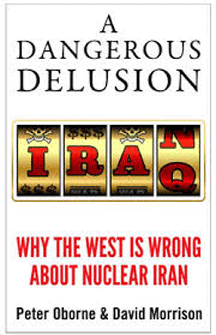 BOOKS: ‘Delusion’ Challenges U.S. Claims About Nuclear Iran Global Issues, by Peter Jenkins September 02, 2013 Inter Press Service LONDON, Sep 02 – A Dangerous Delusion is the work of one of Britain’s most brilliant political commentators, Peter Oborne, and an Irish physicist, David Morrison, who has written powerfully about the misleading of British public and parliamentary opinion in the run-up to the 2003 Iraq War.
This book will infuriate neoconservatives, Likudniks and members of the Saudi royal family but enlighten all who struggle with what to think about the claim that Iran’s nuclear programme threatens the survival of Israel, the security of Arab states in the Persian Gulf, and global peace.
Writing with verve and concision as well as with the indignation that has been a feature of good criticism since the days of Juvenal, the authors spare the reader potentially tedious detail so that the book can be devoured in a matter of hours. Their purpose, stated early in the work, is to argue that U.S. and European confrontation with Iran over its nuclear activities is unnecessary and irrational. Insofar as some concern about Iranian intentions has been and is justified, that concern can be allayed by measures that Iran has been ready to volunteer since 2005 and by more intrusive international monitoring. Continue reading
Gulf Cooperation Council showcases solar energy development
UAE And Saudi Arabia Evolving Into Solar Powerhouses http://www.energymatters.com.au/index.php?main_page=news_article&article_id=3920 3 Sept 13 The United Arab Emirates and Saudi Arabia are leading the way among Gulf Cooperation Council (GCC) states in the deployment of solar power.
Combined, GCC countries have approximately 84 GW of solar farm projects in the pipeline due for completion by 2017; representing investment value of US$155 billion.
“Over the years, solar power has been acknowledged as the most promising source of renewable energy and GCC governments have demonstrated their keenness to shift from traditional energy sources to these low-cost and abundant alternatives,” said Derek Burston, Director of the UK-based Bowmedia, the organisers of Gulf Sol 2013.
“Direct radiation in many Middle Eastern countries exceeds 6 kWh per square metre per day, making for excellent solar potential. In addition, recent decreases in the costs of solar technologies coupled with rising electricity demand in these growing nations, if coupled with the right policies, could make the region a hub for solar expansion”.
Saudi Arabia aims to double its installed electricity capacity; a goal that will be achieved in part by the construction of 54 GW of renewable energy power stations by 2032, 41 GW of which will be solar.
The largest operating solar panel based power generation facility in the GCC region currently is Enviromena’s 10 MW PV plant in Masdar City, Abu Dhabi, UAE. Abu Dhabi has set a goal of generating 7% of its electricity from renewable sources by 2020.
The Gulf Sol 2013 summit will run from September 3 to 5 and aside from showcasing the latest in solar technology, the event will include sessions discussing the feasibility of solar power projects in remote areas, opportunities in the GCC for international companies and regulatory and policy frameworks for implementation of solar projects.
The Gulf Cooperation Council consists of six Middle Eastern countries – Saudi Arabia, Kuwait, the United Arab Emirates, Qatar, Bahrain, and Oman. The alliance was formed in part to strengthen relations among its member countries.
Iran is cautious about supporting Syria
 Eyes on nuclear talks, Iran tempers support for Assad, Christian Science Monitor Iran is in a tough spot. It has a decades-long alliance with Syria to uphold, but is seeking to reengage with the US, which is considering strikes against Syria.
By Scott Peterson, Staff writer / August 30, 2013 As an American military strike looms over Syria, Iran is weighing its decades-long alliance with Syria against its own pledges to reengage with the US and the West over its nuclear program and other issues…… the newly elected government of President Hassan Rouhani has struck a far more moderate tone. As a victim of years of chemical weapon attacks during the Iran-Iraq War of the 1980s – during which Syria was a lone supporter of Iran’s nascent revolutionary regime – Iranian officials have carefully condemned the use of chemical weapons in Syria by any side and urged a diplomatic solution.
“It is a complex process, but I think Iran can do this, keep [the Syria issue] away from its negotiation with the West and also the US on the nuclear file,” says an Iranian analyst in Tehran who asked not to be named…….
Rouhani’s test The Syria crisis is a first foreign policy test for Rouhani, the centrist cleric who won a surprise victory in mid-June elections and took office earlier this month promising to resolve tensions with the West and bring “more transparency” to stalled nuclear talks.
Noting Iran’s history of being targeted with chemical weapons, Rouhani tweeted this week: “Iran gives notice to [sic] international community to use all its might to prevent use of chemical weapons anywhere in the world, esp. in Syria.”……. http://www.csmonitor.com/World/Middle-East/2013/0830/Eyes-on-nuclear-talks-Iran-tempers-support-for-Assad
How the West ignores the horror of depleted uranium weapons and their biological effects
 Last week, U.K. foreign secretary William Hague, said that the use of chemical weapons in Syria is “not something that a humane or civilized world can ignore.” Ironically, Western countries such as the U.K. and their allies have appeared to ignore the use of weapons that are equally vicious.
When “non-Westerners” make use of weapons of mass destruction, there is outrage and calls for military intervention from “the West,” but when “Westerners” themselves use them, it is totally permissible and the world can hardly react.
 U.S. DEPLETED URANIUM AS MALICIOUS AS SYRIAN CHEMICAL WEAPONS HTTPS://CRAIGCONSIDINETCD.WORDPRESS.COM/2013/08/25/U-S-DEPLETED-URANIUM-AS-MALICIOUS-AS-SYRIAN-CHEMICAL-WEAPONS/ CRAIG CONSIDINE
By this time you have likely heard of the atrocity that recently took place in which over 1,000 Syrian civilians reportedly died at the hands of a chemical weapon attack. Seeing the video and images of dead or helpless Syrian civilians struggling for life reminds me of another terrible weapon of war – depleted uranium.
It is no secret that the U.S., with the assistance of OTHER GOVERNMENTS, used depleted uranium in the Gulf and Iraq War. A simple Google search of this topic can produce dozens and dozens of credible reports or stories to confirm these war crimes. For example, an important REPORT on Harvard University’s website discusses the fallout of depleted uranium contamination in Iraq. Dr. Souad N. Al-Azzawi, who authored the report after the GULF WAR, wrote that:
“DEPLETED URANIUM (DU) WEAPONRY HAS BEEN USED AGAINST IRAQ FOR THE FIRST TIME IN THE HISTORY OF RECENT WARS. THE MAGNITUDE OF THE COMPLICATIONS AND DAMAGE RELATED TO THE USE OF SUCH RADIOACTIVE AND TOXIC WEAPONS ON THE ENVIRONMENT AND THE HUMAN POPULATION MOSTLY RESULTS FROM THE INTENDED CONCEALMENT, DENIAL AND MISLEADING INFORMATION RELEASED BY THE PENTAGON ABOUT THE QUANTITIES, CHARACTERISTICS AND THE AREA’S IN IRAQ, IN WHICH THESE WEAPONS HAVE BEEN USED.”
Similarly, as Democracy Now! REPORTED in an interview with Al Jazeera reporter Dahr Jamail, ”the U.S. INVASION OF IRAQ has left behind a legacy of cancer and birth defects suspected of being caused by the U.S. military’s extensive use of depleted uranium and white phosphorus.” Democracy Now! wrote: Continue reading
Israel is the stumbling block to a nuclear weapons free Middle East
Israel, Arab Nations Differ on Mideast Nuclear-free Zone: U.N. Official Yahoo News, Global Security Newswire Staff 20 Aug 13, Efforts by the International Atomic Energy Agency to help persuade Israel and Arab nations to agree on a path toward a Middle East free of nuclear arms and other weapons of mass destruction have been unsuccessful thus far, according to a new report by agency head Yukiya Amano’s office, Reutersreported on Tuesday.
Interchanges have revealed that there still is a “fundamental difference of views” between Arab nations and Israel, but Amano will continue trying to bridge the diverging perspectives, according to his team.
IAEA member nations last year tasked Amano with meeting with officials from the region to discuss bringing all atomic programs under agency safeguards. Israel is thought to be the area’s sole nuclear-weapons nation, but it by policy does not confirm or deny its arsenal and is not a member of the Nuclear Nonproliferation Treaty…… http://news.yahoo.com/israel-arab-nations-differ-mideast-nuclear-free-zone-110205580.html
Former nuclear chief says Iran has 18,000 Uranium centrifuges
Uranium Centrifuge Details Released by Iran’s Former Nuclear Chief (INFOGRAPHIC) By Gracie Lee , Christian Post August 18, 2013 Iran has 18,000 Uranium centrifuges, according to the country’s outgoing nuclear chief, Fereydoun Abbasi-Davani who spoke on the country’s nuclear program on Saturday. The claim has come from Abbasi-Davani, who was speaking to Iranian media on Saturday.
Iran has continued to build its uranium-enrichment centrifuges as part of its nuclear program despite the United States and the international community pressuring the Middle Eastern nation to stop its nuclear push.
However, Iran has refused to comply with their requests, and has insisted that its nuclear program has nothing to do with weapons, but is simply for “peaceful purposes.”
Recently the new Iranian president, Hassan Rouhani, has expressed a slightly more open rhetoric about opening talks with world powers over the country’s nuclear program. However, he has been clear that Iran has every right to enrich uranium and has shown no intentions of halting the program.
On Saturday, the ISNA news agency quoted Abbasi-Davani as saying that Iran has 17,000 older “first-generation” IR-1 centrifuges. Out of those 17,000, about 10,000 are still operating and 7,000 are ready to start operations…. http://www.christianpost.com/news/uranium-centrifuge-details-released-by-irans-former-nuclear-chief-infographic-102512/#RUSHZxTeF8bKoOlY.99
Delay in World Health Organisation reporting on causes of Iraq birth defects
In March 2013, BBC World broadcast a documentary on the story. As with other media reports, Born Under A Bad Sign visited the hospitals and spoke with parents and doctors – all of whom were convinced that the health problems they were witnessing were linked to the war.
Broadcast of the BBC report in March was followed by updates to the WHO’s FAQ. Gone was the petulant ‘No, absolutely not’ from the line on depleted uranium and the first of a series of procedural delays was announced as committees were formed and new analyses proposed. For campaigners seeking disclosure of the data as a first step towards focused research and humanitarian assistance in Iraq, the delays were worrying.
So how can civil society and individuals influence an organisation as monolithic and apparently compromised as the WHO? On the 31st July, Dr Al’aani launched an online petition through Change.org (with the associated twitter hashtag of #Act4Iraq) calling for the WHO to immediately publish the collected data for independent peer review, so that scientific conclusions can be drawn and the affected parents can finally understand what has happened to their children
Birth Defects: Did The Occupation of Iraq Leave a Toxic Legacy? http://www.newleftproject.org/index.php/site/article_comments/birth_defects_did_the_occupation_of_iraq_leave_a_toxic_legacy 6 Aug 13, During the occupation of Iraq, the city of Fallujah bore witness to some of the most intense US combat operations since Vietnam, with 2004’s OperationPhantom Fury widely condemned for its ferocity and disregard for international law.
Paediatrician Dr Samira Al’aani has worked in the city since 1997. In 2006 she began to notice an increase in the number of babies being born with congenital birth defects (CBD). Concerned, she began to log the cases that she saw. Through careful record keeping she has determined that at Fallujah General Hospital, 144 babies are now born with a deformity for every 1000 live births. This is nearly six times higher than the average rate in the UK between 2006 and 2010, and one strong suspicion is that contamination from the toxic constituents of munitions used by occupying forces could be the cause. (photo of Dr A;’aani by Donna Mulhearn)

Now a new nationwide study by the Iraqi Ministry of Health, in collaboration with the World Health Organisation, has the potential to catalyse efforts to understand and confront the issue, but only if science can be allowed to rise above politics. Continue reading
Syria now attacked with tactical nuclear weapons?
It is awfully ironic that an inhuman weapon such as nuclear weapons and chemical weapons could be used to promote human rights and freedom in the world.
Nuclear Strike on Syria The Genie is Out of the Bottle http://www.veteranstoday.com/2013/08/07/nuclear-strike-on-syria/ By Jon Snow, 7 Aug 13
Note – This item was posted on the Channel 4 (UK) website at this locationhttp://blogs.channel4.com/snowblog/nuclear-strikes-syria-genie-bottle/20846 on August 05, 2013, and has since been removed. A copy can still be found at Google Cache – and has been recovered and archived below. The fight against Assad’s brutal regime has taken an unexpected turn late Thursday afternoon when a large weapons cache belonging to the so-called national protection force in Homs city, an arm of Assad’s Shabeeha, was destroyed.
The explosion was reminiscent of the attack on Qasyoon mountain, a stronghold for the Syrian army and a location said to house missiles targeting Israel.
It was first reported that the missile fueling station had blown up which seemed like a reasonable proposition especially since an ammunition depot was targeted.
But the two explosions in Homs and Qasyoon share the same property: They are both above ground air bursts according to Greg Thielmann, an expert on arms control policy whom I spoke with on Saturday at great length. I was first alerted to the connection by slow twitter chatter right after the bombing in Homs.
Needless to say I was shocked at what he told me next: “The fact of the matter is, what we are seeing in both these cases is a tactical nuclear strike, probably by cruise missiles launched from aircrafts near the borders of Syria or right off the coast in the Mediterranean.” Continue reading
Iran’s new President determined to resolve nuclear issue
New Iranian president Hassan Rouhani pledges resolution with West over nuclear issue, ABC News 7 Aug 13 Iran’s new president, Hassan Rouhani, says he is determined to resolve his country’s dispute with the West over its nuclear regime.
In the first media conference since being sworn in for the man seen in the west as a relatively moderate leader, Mr Rouhani said he was ready to begin negotiations over the issue which has caused years of stalemate.
“We will not do away with the right of the nation,” the 64-year-old said, indicating Iran would not be abandoning its nuclear program.
“However, we are for negotiations and interaction. We are prepared, seriously and without wasting time, to enter negotiations which are serious and substantive with the other side.
“If the other party is also prepared like we are, then I am confident that the concerns of both sides will be removed through negotiations within a period which will not be very long.”
Warns against carrot and stick approach
Western countries and Israel have said in the past they believed Iran was trying to achieve nuclear weapons capability, but Tehran says its program is purely for peaceful needs.
The new president’s approach is likely to reinforce a sense of cautious optimism in the West, despite the fact negotiations over Iran’s nuclear program have long frustrated both sides……….. http://www.abc.net.au/news/2013-08-07/iran27s-rouhani-pledges-resolution-of-nuclear-issue/4869626
Bahrain to set up nuclear radiation monitoring centre
CENTRE TO MONITOR NUCLEAR RADIATION http://www.gulf-daily-news.com/NewsDetails.aspx?storyid=358742By Ahmed Al Omari , Tuesday, August 06, 2013
MANAMA: Bahrain may soon set up a nuclear radiation monitoring centre.
This comes amidst growing concerns over threats of a fallout from Iran’s disputed nuclear power plant at Bushehr, just 300km away from Bahrain, across the Gulf.
The GCC last month raised concerns about radiation leaks from the facility after a 6.3 magnitude earthquake hit Iran in April earlier this year, killing more than 60 people.
Supreme Council for Environment (SCE) director-general Dr Adel Al Zayani believes a National Centre for Radiation could be approved within a week – the National Disaster Committee is currently studying a SCE proposal in this regard.
He said the nuclear threat has become larger with neighbouring countries moving toward using atomic facilities for energy production.
Saudi Arabia has announced plans to set up 16 nuclear reactors within the next 20 years and two are already being built in the UAE.
Dr Al Zayani said the proposed centre is designed to become a resource for the field of radiation and to prevent local disasters if they occur regionally.
“The centre will give Bahrain a more dedicated and faster radiation warning and reporting system.”
The centre will also give training to Bahrainis in subjects such as nuclear physics..
USA and Israel – two unaccountable nuclear weapons States
Because the American press is a corrupt government propaganda ministry, the American people have no idea that neoconized Washington is planning nuclear war. Americans are no more aware of this than they are of former President Jimmy Carter’s recent statement, reported only in Germany, that the United States no longer has a functioning democracy.
America Plans Unprovoked Nuclear Attack on China, edited and abridged from various sources by Lasha Darkmoon, Darkmoon, August 3, 2013 by Montecristo “……….PAUL CRAIG ROBERTS: Amitai Etzioni has raised an important question: “Who authorized preparations for war with China?” We are confronted with a neoconized US military out of control endangering Americans and the rest of the world.
Etzioni is correct that this is a momentous decision made by a neoconized military. If the Chinese government is realistic, it is aware that Washington is planning a pre-emptive nuclear attack against China. No other kind of war makes any sense from Washington’s standpoint. The “superpower” was never able to occupy Baghdad, and after 11 years of war has been defeated in Afghanistan by a few thousand lightly armed Taliban. It would be curtains for Washington to get into a conventional war with China.
The Pentagon’s war plan for China is called “AirSea Battle.” It is clear that if the Washington morons get a war going, the only way Washington can prevail is with nuclear weapons. The radiation, of course, will kill Americans as well……..

The Soviet collapse and China’s focus on its economy instead of its military have resulted in Washington’s advantage in nuclear weaponry, giving it first-strike capability. Neither Russia nor China would be in any position to retaliate to Washington’s first strike. To ensure Russia’s inability to retaliate, Washington is placing anti-ballistic missiles on Russia’s borders in violation of the US-USSR agreement. Continue reading
1 This Month



19 November – Webinar – The Reality of Reprocessing
Time: 11:00 AM Pacific Time (US & Canada) / 2:00 PM Eastern / 7:00 PM UK / 8:00 PM CET
Register for the Zoom Event Here



Shut down the radiation-damaged Heysham nuclear reactors now
To see nuclear-related stories in greater depth and intensity – go to https://nuclearinformation.wordpress.com

Say No to NASA’s Reckless Nuclear Reactor on the Moon
Say No to NASA’s Reckless Nuclear Reactor on the Moon
-
Archives
- November 2026 (54)
- October 2026 (302)
- September 2026 (339)
- August 2026 (330)
- July 2026 (355)
- June 2026 (287)
- May 2026 (306)
- April 2026 (356)
- March 2026 (251)
- February 2026 (267)
- January 2026 (308)
- December 2025 (358)
-
Categories
- 1
- 1 NUCLEAR ISSUES
- business and costs
- climate change
- culture and arts
- ENERGY
- environment
- health
- history
- indigenous issues
- Legal
- marketing of nuclear
- media
- opposition to nuclear
- PERSONAL STORIES
- politics
- politics international
- Religion and ethics
- safety
- secrets,lies and civil liberties
- spinbuster
- technology
- Uranium
- wastes
- weapons and war
- Women
- 2 WORLD
- ACTION
- AFRICA
- Atrocities
- AUSTRALIA
- Christina's notes
- Christina's themes
- culture and arts
- Events
- Fuk 2022
- Fuk 2023
- Fukushima 2017
- Fukushima 2018
- fukushima 2019
- Fukushima 2020
- Fukushima 2021
- general
- global warming
- Humour (God we need it)
- Nuclear
- RARE EARTHS
- Reference
- resources – print
- Resources -audiovicual
- Weekly Newsletter
- World
- World Nuclear
- YouTube
-
RSS
Entries RSS
Comments RSS

