U.S., partners allowed ‘secret’ exemptions in nuclear agreement for Iran to meet sanctions deadline, http://www.bignewsnetwork.com/news/247272885/us-partners-allowed-secret-exemptions-in-nuclear-agreement-for-iran-to-meet-sanctions-deadline Big News Network, 1 Sep 16, WASHINGTON, U.S. – Reports reveal that the U.S. and its negotiating partners agreed “in secret” to allow Iran to evade some restrictions from last year’s nuclear agreement so it can meet deadlines for relief on economic sanctions.
According to reports, the U.S. and five negotiating partners agreed to allow Iran to keep more low-enriched uranium (LEU) and other nuclear materials than agreed upon, so that the country could be in compliance with the deal by the January deadline.
Another exemption was also made for an undisclosed amount of 20 per cent enriched uranium, described as “lab contaminant.” President of the think tank Institute for Science and International Security, former UN weapons inspector David Albright said that “the exemptions or loopholes are happening in secret, and it appears that they favour Iran.”
The decision was made by an oversight committee which included representatives from the five permanent United Nations Security Council nations, France, Russia, China, U.K., and U.S., along with Germany and Iran, dubbed collectively as the “P5+1.”
Had the exemptions not been allowed, Iran would have failed to comply with the January deadline, forcing the P5+1 powers to keep the sanctions in place.
Further, the report also makes claims that Iran was secretly permitted to maintain 19 radiation containment chambers, or “hot cells”, which violated the terms of the nuclear deal.
Iran was also relieved from having to sell off its excess heavy water, despite a clause in the agreement that the Islamic country should reduce its stores below 130 tons, and allowed it to store excess abroad.
Meanwhile, Iran is expected to build two new nuclear power stations, with aid from Russia, in Iran’s southern city of Bushehr.
Ali Akbar Salehi, head of the Atomic Energy Organization of Iran said, “Operations to build two new nuclear power plants in Bushehr will start on Sept. 10.”
Ali Akbar Salehi, head of the Atomic Energy Organization of Iran said, “Operations to build two new nuclear power plants in Bushehr will start on Sept. 10.”
He added, “We will save 22 million barrels of oil per year by building these two power plants,” and continued, “In the cooperation contract with the Russians, the emphasis has been laid on making use of technical capabilities of Iran for implementation of the project.”
The cost of the project is estimated at $10 billion.
Russian Deputy Foreign Minister Sergei Ryabkov said that global businesses were still wary of the effect of the remaining U.S. sanctions on Iran and that the commission monitoring the implementation of the joint Comprehensive Plan of Action (JCPOA) should address the issue.
He said, “We agree with the conclusions which our Iranian friends make, namely that some countries who participated very prominently while the talks were ongoing, now at the phase of implementation, I would use the word, (they are) stuck in their position of not removing obstacles which have been created by themselves through their national legislations, through their national decisions which do not allow for an even more active result-oriented and advanced economic and trade cooperation between Iran and the rest of the world.”
September 2, 2016
Posted by Christina Macpherson |
Iran, politics international |
Leave a comment
 UN urges Israel to ratify nuclear test ban treaty, http://www.timesofisrael.com/un-urges-israel-to-ratify-nuclear-test-ban-treaty/ Praising regional impact of Iran deal, top official calls on Jerusalem to officially adopt moratorium on atomic testing BY EDITH M. LEDERER September 1, 2016, UNITED NATIONS (AP) — Israel should ratify the nuclear test ban treaty within five years — and Iran should also ratify but the timing is uncertain, the head of the UN organization established to implement the treaty said Wednesday.
Lassina Zerbo said in an interview with The Associated Press that Israel should be the next key country to ratify the treaty and he hopes it takes less than five years. “I’m putting five years as the longest it should take now based on the positive sign that I’m seeing from Israel,” said Zerbo, who met Prime Minister Benjamin Netanyahu for the first time during a visit there in June.
He cited the impact of last year’s Iran nuclear deal in the Middle East for “creating the confidence-building conditions in the region to help others to move forward.” Zerbo said he has met Iran’s Foreign Minister Mohammad Javad Zarif several times and the Iranians participate very actively in the test ban organization. “I think in Iran it’s a matter of when, and the when will depend on the condition that will be right … for them to consider the ratification,” he said. “The only thing I say as head of the organization is I hope the when is yesterday!”
The Comprehensive Nuclear Test Ban Treaty, known as the CTBT, has 196 member states — 183 that have signed the treaty and 164 that have ratified it.
But the treaty has not entered into force because it still needs ratification by eight countries that had nuclear power reactors or research reactors when the UN General Assembly adopted it in 1996: the United States, China, Iran, Israel, Egypt, India, Pakistan and North Korea.
This year is the 20th anniversary of the treaty and Zerbo was at UN headquarters for a panel organized by the General Assembly to mark Wednesday’s International Day Against Nuclear Tests.
The Obama administration supports a worldwide ban on nuclear testing but hasn’t ratified the treaty because it doesn’t have the votes in the Republican-controlled Senate. China also reaffirmed its commitment to the treaty at Wednesday’s meeting, but didn’t say when it might ratify, Zerbo said.
He said Pakistan has shown leadership recently, talking about a “bilateral moratorium with India” on nuclear testing. “They’re waiting for a response from India,” he said.
North Korea, the only nation that has tested nuclear weapons in the 21st century, was the only country of the eight key nations whose ratifications are needed to boycott Wednesday’s General Assembly meeting. While its seat was empty, its underground explosions were criticized by Japan and many others.
Zerbo said he advocates reopening a dialogue with North Korea “one way or another,” stressing that nothing has stopped Pyongyang from carrying out nuclear tests and firing ballistic missiles.
“What I’m thinking is how can we get them to adhere to a moratorium on nuclear testing as an immediate and first step to denuclearization,” he said. “We have to find the means to do that.”
Zerbo said he thinks there’s an opportunity to open a dialogue with North Korea, similar to the six-party talks with Iran that led to last year’s nuclear deal, and possibly using the six-party talks aimed at negotiating the denuclearization of the Korean peninsula which Pyongyang pulled out of in 2008.
He said one-on-one talks with countries close to North Korea can lead to wider international discussions because “it’s the only way we can get them to stop.”
September 2, 2016
Posted by Christina Macpherson |
Israel, weapons and war |
2 Comments
 Sealing the Deal: Turkey, China Launch Nuclear Cooperation Partnership,http://sputniknews.com/middleeast/20160901/1044832084/turkey-china-nuclear.html , 1 Sep 16 The news follows last week’s ratification by the Turkish parliament of the Sino-Turkish Agreement for Cooperation in Peaceful Uses of Nuclear Energy.

Ankara has opted to cooperate with Beijing, ratifying an agreement which includes not only nuclear power plant construction on Turkish territory, but also joint nuclear power development with China and the US. The Chinese State Nuclear Power Technology Corporation will implement technologies obtained in collaboration with US-based Westinghouse Electric company. The potential technological tripartite arrangement could result in significant regional and global political clout, according to the Asia Times. After a successful contract with Russia in 2010 to build Turkey’s first nuclear plant in Akkuyu, Ankara made plans for a second plant, to be located in Sinop, on the Black Sea. Among potential partners were Japan, a plan which was suspended following the Fukushima disaster. Canada, China and South Korea were also considered as possible partners. Although Beijing’s financing made the Chinese option attractive, the Turkish government in May 2013 awarded the construction of the second Turkish nuclear power plant to a Japanese-French consortium.
Turkey nonetheless continued collaborating with China on energy-related issues. Beginning November 2014, Turkey and China boosted mutual cooperation, and that year signed an agreement of exclusivity with the Chinese State Nuclear Power Technology Corporation (SNPTC) for a third nuclear plant. In June, Turkish Energy Minister Berat Albayrak, during a visit to China for the G20 Energy Ministers Meeting, signed a memorandum of understanding for the mutual development of nuclear power technologies. In August, China’s deputy minister of foreign affairs, Zhang Ming, visited Turkey to express solidarity with the country’s elected government and to discuss energy issues. Ratification of a 2012 nuclear cooperation agreement with China came soon after. Currently, the Chinese State Nuclear Power Technology Corporation (SNPTC) is close to winning the competition to construct Turkey’s third nuclear power plant, slated to cost some $25 million and have a 5,000-megawatt capacity.
September 2, 2016
Posted by Christina Macpherson |
China, marketing, Turkey |
Leave a comment
The system is reportedly thought to be capable of firing missiles at targets over 90 miles away. Independent, 31 Aug 16 Gabriel Samuels
Iran has reportedly installed a powerful missile defence system around a former underground nuclear enrichment plant now used as a science facility, in order to “protect” it from external harm.
The Fordow facility, situated roughly 60 miles south of the Iranian capital Tehran, is to be defended by a comprehensive S-300 surface-to-air missile defence system, supplied by the Russian government.
The system is thought to be capable of firing missiles at targets over 90 miles away and track potential threats within a 200 mile radius, carried on the back of large launcher trucks.
Iranian state television broadcast footage showing the deployment of the system with General Farzad Esmaili telling reporters it was the air force’s “main priority” to protect the country’s nuclear facilities…….
Operations at the Fordow uranium plant were thought to have ceased in January following an international agreement to limit Iran’s nuclear programme in exchange for lifting sanctions on Tehran…….
Officials have stated the site is now primarily being used for nuclear research and the production of isotopes for medical purposes, after the facility was converted into a technology and science centre.
General Esmaili said the S-300 missiles were a mobile system which would be relocated often to protect a range of site across the area.
Iran says that it has never sought nuclear arms and that the security around the site is intended to protect it from American or Israeli airstrikes.
Russia began delivering the S-300 system this year under a contract signed in 2007, and Iran says the entire system should be in place by the end of the year. http://www.independent.co.uk/news/world/middle-east/iran-installs-air-missile-systems-around-former-nuclear-enrichment-plant-a7216846.html
August 31, 2016
Posted by Christina Macpherson |
Iran, weapons and war |
Leave a comment
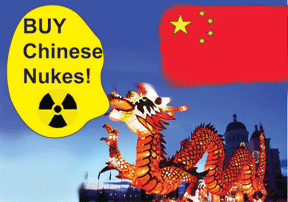
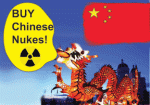 China nuclear developer, Saudi’s Falih meet on nuclear cooperation By Reuters | Aug 30, 2016,BEIJING: China’s leading state nuclear project developer China National Nuclear Corp (CNNC) said it met on Monday with Saudi energy minister Khalid Al-Falih to discuss cooperation in the nuclear power sector.
Beijing is embarking on an ambitious plan to export its locally developed nuclear technology as well as its equipment manufacturing capacity, potentially worth billions of dollars.
CNNC chairman Sun Qin told Al-Falih that China is ready to cooperate fully with Saudi Arabia over nuclear power, according to a short statement posted on the CNNC website late on Monday.
The statement said the Saudi energy ministry welcomed CNNC in expanding its business in the kingdom, including research and development of nuclear technology, uranium mining and the building of nuclear power stations, but gave no further details. The two countries signed a memorandum of understanding on training nuclear personnel, the statement said. http://economictimes.indiatimes.com/articleshow/53924844.cms?utm_source=contentofinterest&utm_medium=text&utm_campaign=cppst
August 31, 2016
Posted by Christina Macpherson |
China, marketing, Saudi Arabia |
Leave a comment
08/28/2016 DUBAI, Aug 28 (Reuters) – Iran has arrested a member of the negotiating team that reached a landmark nuclear deal with world powers on suspicion of spying, a judiciary spokesman said on Sunday.
The suspect was released on bail after a few days in jail but is still under investigation, Gholamhossein Mohseni Ejei said at a weekly news conference, calling the unidentified individual a “spy who had infiltrated the nuclear team,” state media reported.
The deal that President Hassan Rouhani struck last year has given Iran relief from most international sanctions in return for curbing its nuclear program, but it is opposed by hardliners who see it as a capitulation to the United States.
Ejei was responding to a question about an Iranian lawmaker’s assertion last week that a member of the negotiation team who had dual nationality had been arrested on espionage charges.
Tehran’s prosecutor general on Aug. 16 announced the arrest of a dual national he said was linked to British intelligence, but made no mention of the person being in the nuclear negotiations team. On Sunday, Ejei did not explicitly confirm that the arrested person had a second nationality.
Britain said on Aug. 16 that it was trying to find out more about the arrest of a joint-national.
August 29, 2016
Posted by Christina Macpherson |
Iran, secrets,lies and civil liberties |
Leave a comment
 The Saudi Cables. Cables and other documents from the Kingdom of Saudi Arabia Ministry of Foreign Affairs https://wikileaks.org/saudi-cables/buying-silence
A total of 122619 published so far
Buying Silence: How the Saudi Foreign Ministry controls Arab media
On Monday, Saudi Arabia celebrated the beheading of its 100th prisoner this year. The story was nowhere to be seen on Arab media despite the story’s circulation on wire services. Even international media was relatively mute about this milestone compared to what it might have been if it had concerned a different country. How does a story like this go unnoticed?
Today’s release of the WikiLeaks “Saudi Cables” from the Saudi Ministry of Foreign Affairs show how it’s done.
The oil-rich Kingdom of Saudi Arabia and its ruling family take a systematic approach to maintaining the country’s positive image on the international stage. Most world governments engage in PR campaigns to fend off criticism and build relations in influential places. Saudi Arabia controls its image by monitoring media and buying loyalties from Australia to Canada and everywhere in between.
Documents reveal the extensive efforts to monitor and co-opt Arab media, making sure to correct any deviations in regional coverage of Saudi Arabia and Saudi-related matters. Saudi Arabia’s strategy for co-opting Arab media takes two forms, corresponding to the “carrot and stick” approach, referred to in the documents as “neutralisation” and “containment”. The approach is customised depending on the market and the media in question.
“Contain” and “Neutralise”
The initial reaction to any negative coverage in the regional media is to “neutralise” it. The term is used frequently in the cables and it pertains to individual journalists and media institutions whose silence and co-operation has been bought. “Neutralised” journalists and media institutions are not expected to praise and defend the Kingdom, only to refrain from publishing news that reflects negatively on the Kingdom, or any criticism of its policies. The “containment” approach is used when a more active propaganda effort is required. Journalists and media institutions relied upon for “containment” are expected not only to sing the Kingdom’s praises, but to lead attacks on any party that dares to air criticisms of the powerful Gulf state.
One of the ways “neutralisation” and “containment” are ensured is by purchasing hundreds or thousands of subscriptions in targeted publications. These publications are then expected to return the favour by becoming an “asset” in the Kingdom’s propaganda strategy. A document listing the subscriptions that needed renewal by 1 January 2010 details a series of contributory sums meant for two dozen publications in Damascus, Abu Dhabi, Beirut, Kuwait, Amman and Nouakchott. The sums range from $500 to 9,750 Kuwaiti Dinars ($33,000). The Kingdom effectively buys reverse “shares” in the media outlets, where the cash “dividends” flow the opposite way, from the shareholder to the media outlet. In return Saudi Arabia gets political “dividends” – an obliging press.
An example of these co-optive practices in action can be seen in an exchange between the Saudi Foreign Ministry and its Embassy in Cairo. On 24 November 2011 Egypt’s Arabic-language broadcast station ONTV hosted the Saudi opposition figure Saad al-Faqih, which prompted the Foreign Ministry to task the embassy with inquiring into the channel. The Ministry asked the embassy to find out how “to co-opt it or else we must consider it standing in the line opposed to the Kingdom’s policies“.
The document reports that the billionaire owner of the station, Naguib Sawiris, did not want to be “opposed to the Kingdom’s policies” and that he scolded the channel director, asking him “never to host al-Faqih again”. He also asked the Ambassador if he’d like to be “a guest on the show”.
The Saudi Cables are rife with similar examples, some detailing the figures and the methods of payment. These range from small but vital sums of around $2000/year to developing country media outlets – a figure the Guinean News Agency “urgently needs” as “it would solve many problems that the agency is facing” – to millions of dollars, as in the case of Lebanese right-wing television station MTV.
Confrontation
The “neutralisation” and “containment” approaches are not the only techniques the Saudi Ministry is willing to employ. In cases where “containment” fails to produce the desired effect, the Kingdom moves on to confrontation. In one example, the Foreign Minister was following a Royal Decree dated 20 January 2010 to remove Iran’s new Arabic-language news network, Al-Alam, from the main Riyadh-based regional communications satellite operator, Arabsat. After the plan failed, Saud Al Faisal sought to “weaken its broadcast signal“.
The documents show concerns within the Saudi administration over the social upheavals of 2011, which became known in the international media as the “Arab Spring”. The cables note with concern that after the fall of Mubarak, coverage of the upheavals in Egyptian media was “being driven by public opinion instead of driving public opinion”. The Ministry resolved “to give financial support to influential media institutions in Tunisia“, the birthplace of the “Arab Spring”.
The cables reveal that the government employs a different approach for its own domestic media. There, a wave of the Royal hand is all that is required to adjust the output of state-controlled media. A complaint from former Lebanese Prime Minister and Saudi citizen Saad Hariri concerning articles critical of him in the Saudi-owned Al-Hayat and Asharq Al-Awsat newspapers prompted a directive to “stop these type of articles” from the Foreign Ministry.
This is a general overview of the Saudi Foreign Ministry’s strategy in dealing with the media. WikiLeaks’ Saudi Cables contain numerous other examples that form an indictment of both the Kingdom and the state of the media globally.
August 26, 2016
Posted by Christina Macpherson |
civil liberties, media, Saudi Arabia, secrets,lies and civil liberties |
Leave a comment
 Jordan seeking funds for first nuclear power plant — official, Jordan Times By Mohammad Ghazal – Aug 20,2016 – AMMAN — Jordan’s first nuclear power plant could be operational by 2025, if sufficient financing is secured, the Jordan Atomic Energy Commission (JAEC) said on Thursday.
“Jordan is currently in talks with German, Czech, Chinese and Japanese companies among others to supply turbines and electrical systems for the power plant and things are going well,” said JAEC Chairman Khaled Toukan.
Thirty per cent of the $10 billion project will be financed equally by Jordan and Russia, who are partners in the project. JAEC is engaged in discussions with companies to secure the remaining 70 per cent to pay for turbines and electrical systems, Toukan said.
“If we secure finance by the end of 2017, we will be able to operate the first reactor by 2025,” he noted.
Under an agreement with Russia, Jordan plans to build a power plant with two nuclear reactors, each with a capacity of 1,000 megawatts.
Toukan was speaking at a press conference on Thursday to announce the results of a report on the programme by the International Advisory Group (IAG).
The IAG was formed in November 2015 to provide consultations on the strategy to deal with nuclear waste, and the best options and mechanisms to finance the plant.
The group includes former energy minister Khaled Shraideh and seven international industry experts. …….http://www.jordantimes.com/news/local/jordan-seeking-funds-first-nuclear-power-plant-%E2%80%94-official
August 21, 2016
Posted by Christina Macpherson |
Jordan, marketing, Russia |
Leave a comment
Obama Admin Gives Green Light for Iran to Build Two New Nuclear Plants
New Iranian nuclear plants will not violate nuclear deal, officials say Washington Free Beacon, BY: Adam Kredo August 12, 2016
Iran is permitted to pursue the construction of two newly announced nuclear plants under the parameters of last summer’s nuclear agreement, Obama administration officials informed the Washington Free Beacon, setting the stage for Tehran to move forward with construction following orders from President Hassan Rouhani.
Ali Salehi, Iran’s top nuclear official, announced on Thursday that Iran has invested $10 billion into the construction of two new nuclear plants after receiving orders from Rouhani, according to reports in Iran’s state-controlled media.
A State Department official said to the Free Beacon following the announcement that Iran is allowed to move forward with this venture under the nuclear agreement, which does not prohibit this type of nuclear construction.
“The [nuclear deal] does not prevent Iran from pursuing new light-water reactors,” a State Department official not authorized to speak on record said to the Free Beacon in response to questions about Iran’s latest announcement. “Any new nuclear reactors in Iran will be subject to its safeguards obligations.”………http://freebeacon.com/national-security/obama-admin-gives-green-light-iran-build-two-new-nuclear-plants/
August 13, 2016
Posted by Christina Macpherson |
Iran, politics |
Leave a comment
 Let’s get our nuclear weapons out of Turkey, LA Times, Steve
 Andreasen, 11 Aug 16 “……..After a faction within the Turkish military tried to overthrow the Turkish government last month, one of the many arrested for his alleged role in the attempted coup was a commanding officer at the Incirlik Air Base. That base — according to numerous media reports — is a major NATO installation hosting one of the largest stockpiles of nuclear weapons in Europe.
What if the Turkish base commander at Incirlik had ordered his troops surrounding the perimeter of the base to turn their guns on the U.S. soldiers that reportedly guard U.S. nuclear storage bunkers there?
What if anti-American Turkish protesters, believing the U.S. was behind the coup plot and that it was harboring the coup’s leader (ominously reminiscent of how Iranians felt about America and the shah 37 years ago) decided to march on Incirlik chanting anti-American and anti-Israeli slogans (as has actually happened) and taken over the base?
Leaving aside the coup, what if Islamic State were to attack Incirlik? In March, the Pentagon reportedly ordered military families out of southern Turkey, primarily from Incirlik, due to terrorism-related security concerns.
While we’ve avoided disaster so far, we have ample evidence that the security of U.S. nuclear weapons stored in Turkey can change literally overnight. Now fully aware of the dangers, the Obama administration should remove any remaining nuclear weapons from Turkey – and the next president should remove all U.S. nuclear weapons from Europe……..
Nuclear deterrence does not require the U.S. to store nuclear bombs in Turkey, or elsewhere in Europe. The U.S. has long-range “strategic” nuclear weapons to ward off hostile powers and guarantee the security of all NATO allies. But since the end of the Cold War, most military leaders believe that our short-range “tactical” nuclear weapons based in Europe have virtually no utility, for the simple reason that no U.S. president is likely to use them…….
storing tactical nuclear weapons in Turkey and in other NATO nations comes with the increasing risk of vulnerability to an evolving and more deadly terrorist threat, or to domestic unrest. In the wake of an incident at a nuclear storage site — for which the U.S. would be held accountable and suffer long-term consequences with allies — it would be difficult to explain that vulnerable targets were left in place due to a perceived need to reassure our allies. …..http://www.latimes.com/opinion/op-ed/la-oe-andreasen-nuclear-weapons-turkey-20160811-snap-story.html
August 12, 2016
Posted by Christina Macpherson |
Turkey, weapons and war |
Leave a comment
 An epic Middle East heat wave could be global warming’s hellish curtain-raiser WP, By Hugh Naylor August 10 BAGHDAD — Record-shattering temperatures this summer have scorched countries from Morocco to Saudi Arabia and beyond, as climate experts warn that the severe weather could be a harbinger of worse to come.
In coming decades, U.N. officials and climate scientists predict that the mushrooming populations of the Middle East and North Africa will face extreme water scarcity, temperatures almost too hot for human survival and other consequences of global warming.If that happens, conflicts and refugee crises far greater than those now underway are probable, said Adel Abdellatif, a senior adviser at the U.N. Development Program’s Regional Bureau for Arab States who has worked on studies about the effect of climate change on the region.
“This incredible weather shows that climate change is already taking a toll now and that it is — by far — one of the biggest challenges ever faced by this region,” he said.
These countries have grappled with remarkably warm summers in recent years, but this year has been particularly brutal. Parts of the United Arab Emirates and Iran experienced a heat index — a measurement that factors in humidity as well as temperature — that soared to 140 degrees in July, and Jiddah, Saudi Arabia, recorded an all-time high temperature of nearly 126 degrees. Southern Morocco’s relatively cooler climate suddenly sizzled last month, with temperatures surging to highs between 109 and 116 degrees. In May, record-breaking temperatures in Israel led to a surge in heat-related illnesses.
Temperatures in Kuwait and Iraq startled observers. On July 22, the mercury climbed to 129 degrees in the southern Iraqi city of Basra. A day earlier, it reached 129.2 in Mitribah, Kuwait. If confirmed by the World Meteorological Organization, the two temperatures would be the hottest ever recorded in the Eastern Hemisphere.
[Two Middle East locations hit 129 degrees]
The bad news isn’t over, either. Iraq’s heat wave is expected to continue this week……..https://www.washingtonpost.com/world/middle_east/an-epic-middle-east-heat-wave-could-be-global-warmings-hellish-curtain-raiser/2016/08/09/c8c717d4-5992-11e6-8b48-0cb344221131_story.html
August 12, 2016
Posted by Christina Macpherson |
climate change, MIDDLE EAST |
1 Comment
Israel minister admits Iran has respected nuclear deal, Yahoo 7 News, AFP on August 7, 2016 Jerusalem Israel’s energy minister on Sunday criticised a landmark nuclear accord between the Jewish state’s arch-foe Iran and world powers but said Tehran had so far respected the deal.
The agreement, which was signed in July 2015 and came into force in January, saw Tehran accept curbs to its nuclear programme in exchange for a lifting of economic sanctions by world powers.
“It’s a bad deal but it’s an accomplished fact and during the first year we spotted no significant breach from the Iranians,” said Youval Steinitz, who is close to Prime Minister Benjamin Netanyahu.
“But it’s still too early to conclude that this 12-year deal is a success,” he told public radio.
Steinitz’s comments came after US President Barack Obama on Thursday defended the accord…..https://au.news.yahoo.com/world/a/32262076/israel-minister-admits-iran-has-respected-nuclear-deal/#page1
August 8, 2016
Posted by Christina Macpherson |
Iran, Israel, politics international |
Leave a comment
Iran executes nuclear scientist who returned to country from US Iranian judiciary confirms hanging of Shahram Amiri who it claims was a spy who had given away state secrets, Guardian, Saeed Kamali Dehghan, 7 Aug 16 Iran An Iranian nuclear scientist, whose disappearance in Saudi Arabia in 2009 and subsequent return to Tehran a year later from Washington was shrouded in mystery, has been executed in his home country.
The family of Shahram Amiri, an expert in radioactive isotopes at Tehran’s Malek Ashtar University, which is affiliated to Iran’s ministry of defence, told two overseas Persian-language TV networks at the weekend that he had been executed earlier in the week at an unknown location.
The spokesman for the Iranian judiciary confirmed on Sunday that Amiri had been hanged, claiming he had given away state secrets. The semi-official Tasnimnews agency quoted Gholam-Hossein Mohseni-Eje’i as saying that Amiri had been convicted of spying and put to death after his sentence was upheld by the supreme court.
“This person had obtained top secret information and established contacts with our number one sworn enemy, America, and passed on our country’s most crucial intelligence to the enemy,” Mohseni-Eje’i said.
Amiri’s execution marks the final dark chapter in a real-life spy drama that was the subject of much speculation. It also gives more weight to claims that he defected to the US after going missing on a pilgrimage to Mecca some time in spring 2009.
A few months after Amiri’s disappearance, Iran’s then foreign minister Manouchehr Mottaki accused the US of abducting the scientist. But ABC News reported in March 2010 that he had defected to the US as part of an intelligence coup aimed at undermining Iran’s nuclear programme. That report said he had been extensively debriefed by the US authorities……..https://www.theguardian.com/world/2016/aug/07/iran-executes-nuclear-scientist-shahram-amiri-returned-country-from-us
August 8, 2016
Posted by Christina Macpherson |
Iran, secrets,lies and civil liberties |
Leave a comment
 Documents detailing UK’s involvement in Israel’s alleged nuclear arsenal vanish, Jerusalem Post, 5 Aug 16 Israel maintains a policy of ambiguity concerning nuclear weapons, neither confirming nor denying publicly that it has the capability. The United Kingdom on Thursday said that records detailing the UK’s involvement in Israel’s alleged nuclear arsenal have gone missing over the last four years, according to London based internet publication, The Independent.
Over 400 documents were discovered missing after a Freedom of Information request failed to produce a number of files from the 1970’s, including documents detailing the UK’s involvement in Israel’s suspected nuclear program.
Documents include more than 60 Foreign Ministry files, over 40 from the Home Office and six from the offices of former prime ministers, The Independent reported.
August 6, 2016
Posted by Christina Macpherson |
Israel, secrets,lies and civil liberties, UK |
Leave a comment
Iranian President Says World Powers Must Fulfill Nuclear Deal Radio Free Europe, August 02, 2016
Iranian President Hassan Rohani has criticized world powers for not fulfilling all of their commitments under a historic nuclear deal signed last year.
Rohani said on state television on August 2 that the failure to lift all sanctions against Iran had harmed the country’s economic growth.
He said that “if the other party had acted properly we would be in a better [economic] situation today.”
Rohani added that Iran still cannot access all of its assets held abroad and that the U.S. Congress, Israel, and some other unnamed regional countries had prevented the nuclear deal from being fully implemented.
He admitted, however, that Iran had been able to export much more oil after sanctions limiting exports were lifted and had regained access to the international banking system…..http://www.rferl.org/content/iran-rohani-world-must-fulfill-nuclear-deal/27896610.html
August 3, 2016
Posted by Christina Macpherson |
Iran, politics international |
Leave a comment