U.S. Congress kept in the dark about government nuclear negotiations with Saudi Arabia
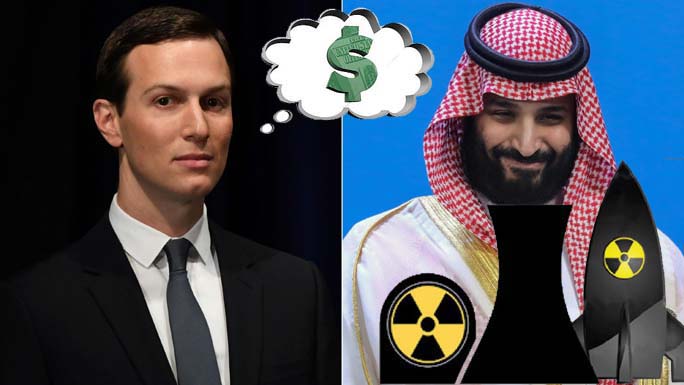 U.S. should keep Congress informed about nuclear talks with Saudis: GAO, https://www.reuters.com/article/us-usa-saudi-nuclearpower/us-should-keep-congress-informed-about-nuclear-talks-with-saudis-gao-idUSKBN22G2X Timothy Gardner
6 May 20, WASHINGTON (Reuters) – The U.S. Departments of State and Energy should commit to regular briefings to relevant committees in Congress on talks about nuclear power cooperation with Saudi Arabia, a congressional watchdog said in a report on Monday.
The Government Accountability Office, or GAO, report said Congress should consider amending the 1954 Atomic Energy Act, or AEA, to require the briefings for the House Committee on Foreign Affairs and the Senate Committee on Foreign Relations about negotiations on nuclear power sharing.
Lawmakers concerned about nonproliferation issues associated with nuclear power development had complained they were being kept in the dark about Trump administration talks with Saudi Arabia, many of which were led by former Energy Secretary Rick Perry. Concern grew after Crown Prince Mohammed bin Salman told CBS in 2018 that the kingdom did not want to acquire a nuclear bomb, but would do so if its rival Iran did so.
Some U.S. lawmakers want the United States to insist that Saudi Arabia agree to a so-called gold standard that restricts enrichment and reprocessing, potential pathways to making fissile material for nuclear weapons. The United States struck such an agreement with the United Arab Emirates in 2009. If Saudi Arabia develops nuclear power without the gold standard, the UAE would likely seek to be released from its agreement.
Senators Robert Menendez, a Democrat, and Marco Rubio, a Republican, had asked the GAO last year to review U.S. agency negotiations with Saudi Arabia on nuclear power, partially because they were concerned the Energy Department, not the State Department took the lead.
The senators said they would explore legislative changes recommended by the GAO. “Congress must reassert its critical role in reviewing nuclear cooperation agreements to ensure these agreements do not pose an unnecessary risk to the United States” they said.
The senators said they would explore legislative changes recommended by the GAO. “Congress must reassert its critical role in reviewing nuclear cooperation agreements to ensure these agreements do not pose an unnecessary risk to the United States” they said.
USA’s complicated and contradictory plan to punish Iran
|
US pushing to punish Iran by invoking nuclear deal Trump abandonedDiplomats fear drive is an attempt by Washington hawks to destroy nuclear deal and sabotage United Nations Independent UK, Borzou DaragahiInternational Correspondent @borzou 2 May 20
The United States is pushing ahead with a scheme to extend a United Nations arms embargo on Iran that is due to be lifted in October as part of the nuclear deal that Washington abandoned two years ago. To force the extension, Washington will attempt to lobby the Security Council to continue the arms embargo, which bars weapons sales to or from Iran. But it also is making what legal experts and diplomats describe as a convoluted argument that it is still part of the 2015 Joint Comprehensive Plan of Action it left, and hence able to use one of its provisions to “snapback” the embargo. The administration’s plan is to claim it is still part of the Security Council resolution that enshrined the nuclear deal in international law even though Mr Trump trashed the agreement, meant to curtail Tehran’s atomic technology programme, as the “worst deal” in history. The plan was first reported by The New York Times earlier this week……… diplomats and scholars fear that the Trump administration’s latest gambit is a move by hardline Washington fixtures aimed at delivering a lasting blow to any prospects for a future deal with Iran, as well as part and parcel of far-right efforts to damage international multilateral institutions. “The administration is trying to force everyone’s hand by creating yet another crisis that they hope this time would bring down the JCPOA for good,” said Ali Vaez, of the International Crisis Group, a conflict-resolution advocacy organisation. Iran, which has severely downgraded its adherence to provisions of the nuclear deal in response to crippling US sanctions, has vowed that any reimposition of international sanctions would prompt it to leave the nuclear Non-Proliferation Treaty, and potentially open the door for it to pursue nuclear weapons……. |
|
|
Netanyahu’s deceitful push to try to get USA to attack Iran
 Netanyahu pushed U.S. to attack Iran with fabricated nuclear documents: report, Tehran Times May 1, 2020 – TEHRAN — The Iranian nuclear documents presented by Israeli Prime Minister Benjamin Netanyahu were an Israeli fabrication designed to trigger U.S. into a war with Iran, according to an investigation.U.S. President Donald Trump withdrew from the Iran nuclear deal on May 8, 2018 partly based on Netanyahu’s claim that Iran was determined to build nuclear weapons, the investigation said. Netanyahu pushed U.S. to attack Iran with fabricated nuclear documents: report, Tehran Times May 1, 2020 – TEHRAN — The Iranian nuclear documents presented by Israeli Prime Minister Benjamin Netanyahu were an Israeli fabrication designed to trigger U.S. into a war with Iran, according to an investigation.U.S. President Donald Trump withdrew from the Iran nuclear deal on May 8, 2018 partly based on Netanyahu’s claim that Iran was determined to build nuclear weapons, the investigation said.
In April 2018, Netanyahu claimed publicly that Israel’s Mossad spy agency had stolen Iran’s entire nuclear archive from Tehran. “You may well know that Iran’s leaders repeatedly deny ever pursuing nuclear weapons…” he declared. “Well, tonight, I’m here to tell you one thing: Iran lied. Big time.” However, an investigation of the supposed Iranian nuclear documents by The Grayzone reveals them to be the product of an Israeli disinformation operation that helped trigger the most serious threat of war since the conflict with Iran began nearly four decades ago. The following is an excerpt of an article published in The Grayzone on Wednesday: This investigation found multiple indications that the story of Mossad’s heist of 50,000 pages of secret nuclear files from Tehran was very likely an elaborate fiction and that the documents were fabricated by the Mossad itself. According to the official Israeli version of events, the Iranians had gathered the nuclear documents from various locations and moved them to what Netanyahu himself described as “a dilapidated warehouse” in southern Tehran. Even assuming that Iran had secret documents demonstrating the development of nuclear weapons, the claim that top secret documents would be held in a nondescript and unguarded warehouse in central Tehran is so unlikely that it should have raised immediate alarm bells about the story’s legitimacy. Even more problematic was the claim by a Mossad official to Israeli journalist Ronen Bergman that Mossad knew not only in what warehouse its commandos would find the documents but precisely which safes to break into with a blowtorch. The official told Bergman the Mossad team had been guided by an intelligence asset to the few safes in the warehouse contained the binders with the most important documents. Netanyahu bragged publicly that “very few” Iranians knew the location of the archive; the Mossad official told Bergman “only a handful of people” knew. No proof of authenticity Netanyahu’s April 30 slide show presented a series of purported Iranian documents containing sensational revelations that he pointed to as proof of his insistence that Iran had lied about its interest in manufacturing nuclear weapons. The visual aides included a file supposedly dating back to early 2000 or before that detailed various ways to achieve a plan to build five nuclear weapons by mid-2003. Another document that generated widespread media interest was an alleged report on a discussion among leading Iranian scientists of a purported mid-2003 decision by Iran’s defense minister to separate an existing secret nuclear weapons program into overt and covert parts. Left out of the media coverage of these “nuclear archive” documents was a simple fact that was highly inconvenient to Netanyahu: nothing about them offered a scintilla of evidence that they were genuine. For example, not one contained the official markings of the relevant Iranian agency…… Withholding access to outside experts In fact, even the most pro-Israeli visitors to Tel Aviv have been denied access to the original documents. David Albright of the Institute for Science and International Security and Olli Heinonen of the Foundation for Defense of Democracies – both stalwart defenders of the official Israeli line on Iranian nuclear policy – reported in October 2018 that they had been given only a “slide deck” showing reproductions or excerpts of the documents. When a team of six specialists from Harvard Kennedy School’s Belfer Center for Science and International Affairs visited Israel in January 2019 for briefings on the archive, they too were offered only a cursory browse of the supposedly original documents. Harvard Professor Matthew Bunn recalled in an interview with this writer that the team had been shown one of the binders containing what were said to be original documents relating to Iran’s relations with the IAEA and had “paged through a bit of it.” But they were shown no documents on Iran nuclear weapons work. As Bunn admitted, “We weren’t attempting to do any forensic analysis of these documents.”………….. The role of the MEK in passing the massive tranche of supposed secret Iranian nuclear documents to the BND and its hand-in-glove relationship with the Mossad leaves little room for doubt that the documents introduced to Western intelligence 2004 were, in fact, created by the Mossad. For the Mossad, the MEK was a convenient unit for outsourcing negative press about Iran which it did not want attributed directly to Israeli intelligence. To enhance the MEK’s credibility in the eyes of foreign media and intelligence agencies, Mossad passed the coordinates of Iran’s Natanz nuclear facility to the MEK in 2002. Later, it provided to the MEK personal information such as the passport number and home telephone number of Iranian physics professor Mohsen Fakhrizadh, whose name appeared in the nuclear documents, according to the co-authors of a best-selling Israeli book on the Mossad’s covert operations. By trotting out the same discredited technical drawing depicting the wrong Iranian missile reentry vehicle – a trick he had previously deployed to create the original case for accusing Iran of covert nuclear weapons development – the Israeli prime minister showed how confident he was in his ability to hoodwink Washington and the Western corporate media. Netanyahu’s multiple levels of deception have been remarkably successful, despite having relied on crude stunts that any diligent news organization should have seen through. Through his manipulation of foreign governments and media, he has been able to maneuver Donald Trump and the United States into a dangerous process of confrontation that has brought the U.S. to the precipice of military conflict with Iran.https://www.tehrantimes.com/news/447377/Netanyahu-pushed-U-S-to-attack-Iran-with-fabricated-nuclear |
|
Saudi Arabia’s nuclear reactor will eventually lead to a Saudi nuclear weapon, and to its use
 Saudi Arabia’s Nuclear Reactor Nears Completion, Bringing Prospect Of Saudi WMD – OpEd https://www.eurasiareview.com/19042020-saudi-arabias-nuclear-reactor-nears-completion-bringing-prospect-of-saudi-wmd-oped/, April 19, 2020 Richard Silverstein Bloomberg reported last week that Saudi Arabia’s first nuclear reactor is nearing completion. It purchased the reactor from the Argentinian company, INVAP. But construction and installation of the plant has proven a huge payday for companies in several European countries and the U.S.
After the Obama administration hesitated to support the project, Trump offered full-throated support. One of the most attractive propositions in the deal for him was the lucrative contracts for U.S. businesses who participated.
The reactor is one of the crowning achievements of Crown Prince Mohammed bin Salman (aka “the Headchopper”) in his plan to “modernize” and “reform” the Saudi Arabian economy and military. Part of his ambition has been to project his country’s power and interests in more muscular fashion in the region. One of the ways he did this was to invade Yemen and rain terror upon the Houthi regions of that country killing 100,000 Yemenis and starving even more with a crippling blockade.
Saudi Arabia’s chief regional rival has been Iran. The purpose of the reactor is to send a loud and clear message that Iran’s nuclear ambitions will be met step-for-step by MBS. If Iran gets nuclear weapons, the Crown Prince wants to be right behind. The problem with this approach is that Iran, which has not made such a weapon though it could have if it wanted, has pursued a careful, calibrated approach. While the Saudis have pursued a reckless, aggressive approach in every operation they undertake to project their military power.
If they can decimate Yemen as they have, sinking themselves into a costly quagmire, why would anyone think they would use the products of their nuclear reactor in any more responsible way? Does MBS’s order to murder Jamal Khashoggi, cut his body into pieces and disappear it in acid, give anyone confidence that he wouldn’t be willing to do the same to entire countries he saw as implacable enemies?
Iran has never threatened to use nuclear weapons. Just the opposite, Ayatollah Khamenei has issued a fatwa declaring them forbidden. MBS, despite the fact that his country is a signatory to the Nuclear Non-Proliferation Pact, would never swear off such weapons. In fact, the moment that he has the ability to build and deliver WMD will likely be the day he threatens to use it.
Every party which collaborated with the Saudis in this project will have blood on their hands when (not if) that country becomes nuclear-capable.
Only a decade ago, the Obama administration supported a regional conference planned to promote a Middle East nuclear-free zone. Israel, with its 200 nuclear weapons, objected strenuously and the idea died of neglect. There will come a time in the near future when the world will regret this tragically-missed opportunity.
Despite boilerplate statements that the reactor is for civilian power and research purposes, mark my words: Saudi Arabia’s nuclear reactor will eventually lead to a Saudi nuclear weapon. That weapon will exponentially increase the likelihood it will be used someday. Again, not “if,” but “when.”
This article was published by Tikun Olam
United Arab Emirates’ new ‘cheap and cheerful’ Barakah nuclear reactor adds to danger and Middle East tensions
|
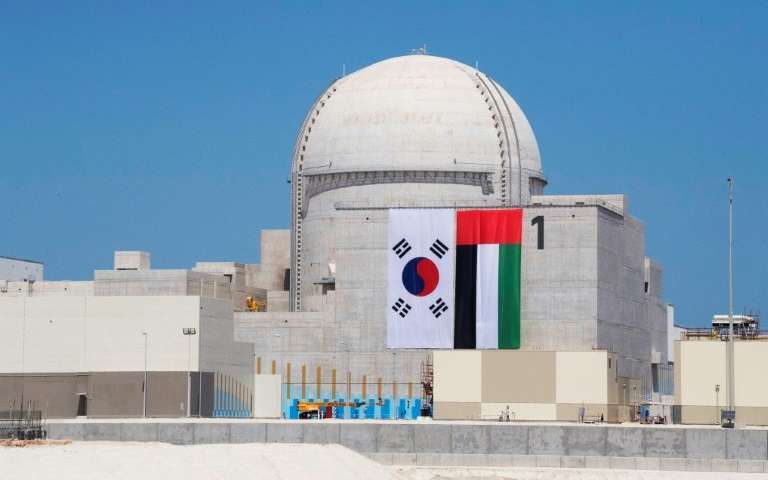
The wrong reactor at the wrong time”: inside the UAE’s Barakah nuclear , Power Technology, JP Casey, 17 Apr 20,
The UAE has announced that the first reactor of its under-construction Barakah nuclear power plant is scheduled to come online within “a few months”. The country’s first nuclear plant could address a key energy need in the region, but questions remain as to its usefulness and safety in a geopolitically tense environment.
……. Located 53km from the city of Ruwais in Abu Dhabi’s Gharbiya region, construction on the $20bn project began in 2012, and is finally nearing completion. With four reactors, developed by the state-owned Emirates Nuclear Energy Corporation and the South Korea-based Korean Electric Power Corporation (KEPCO), the plant is expected to have an operating capacity of 5.6GW, which will account for one quarter of the country’s energy needs.
But behind these grand claims, the project has been dogged by controversy. From macro problems, such as the inherent dangers of building a nuclear reactor in a geopolitically tense region, to specific weaknesses with Barakah, such as the cracking of the cement used to build the facility itself, the project has no shortage of critics. With the UAE eager to continue with the project, its completion appears a matter of when, not if, opening up a series of lessons to learn ahead of new nuclear construction……
The plant is expected to produce 5.6GW of power once fully operational, with four reactors powered with APR-1400 technology, developed in South Korea, driving this production. This figure would make the plant the sixth-largest nuclear facility in the world by net production capacity, and its backers hope the project will help to kick-start an energy revolution in the Middle East. However, questions remain about the ultimate suitability of the plant, considering the risks inherent in nuclear and the potential for alternative sources of clean energy in the region. Dr Paul Dorfman, an honorary research associate at UCL and founder and chair of the Nuclear Consulting Group, an independent group of academics that aim to assess the risks and merits of nuclear projects, is sceptical about the suitability of Barakah for the UAE. So, given the fact – and it is a fact – that nuclear investment generates significant financial losses, one wonders if there are other reasons for Barakah,” he said. “Especially because nuclear energy seems to make limited economic sense for the Gulf States. As desert kingdoms, they have some of the best solar resources in the world, with solar having much, much lower investment and generation costs than nuclear.”
These solar resources are particularly significant considering the relative importance of renewable technology and nuclear power to the UAE’s 2050 climate goals. The nation aims to develop renewables as a primary source of power, and nuclear as a backup, a policy that could positively impact the solar industry, but hamstring the nuclear sector.
“Saudi recently tripled its renewable energy targets, and has successfully tended for large scale projects in wind and solar, with a Saudi-based consortium launching a world record low price of $17 per megawatt hour for a 900 megawatt solar park in Dubai itself,” said Dorfman. “So, worldwide and in the Gulf, the fate of new nuclear is linked to and determined by renewable energy technology rollout.” ……..
Dorfman is again concerned about these safety assurances, not only because of alleged mishaps at Barakah, but the generally lax approach to safety regulation across the nuclear sector.
“And what’s particularly worrying is the lack of a core catcher, which in the event of a failure of the emergency reactor core systems, would retain the nuclear fuel once it breached the reactor pressure vessel. On top of that, concrete cracking in all four reactor containment buildings hasn’t helped, nor has installation of faulty pilot-operated safety relief valves.”
 He also noted that KEPCO’s reputation has been somewhat tarnished by a series of scandals originating in 2013, where top safety officials were sentenced for falsifying safety documents for parts used in its nuclear reactors. 100 people were ultimately charged, as six of the country’s 23 operating nuclear reactors were shut down between late 2012 and late 2013, discrediting the reputation in which the UAE has placed such high stock to justify its safety moves at Barakah. He also noted that KEPCO’s reputation has been somewhat tarnished by a series of scandals originating in 2013, where top safety officials were sentenced for falsifying safety documents for parts used in its nuclear reactors. 100 people were ultimately charged, as six of the country’s 23 operating nuclear reactors were shut down between late 2012 and late 2013, discrediting the reputation in which the UAE has placed such high stock to justify its safety moves at Barakah.Finances may have played a key role in the involvement of KEPCO. The UAE awarded KEPCO a contract worth $20bn for the construction of the plant, a much lower bid than was made by other firms. In 2008, Synapse Energy predicted that new nuclear construction could cost up to $9bn for each 1.1GW plant; while this figure is not a specific measurement for all nuclear facilities, this prediction would place the expected cost of Barakah at around $45bn, more than double what KEPCO invested into the facility. “It’s a bit of a ‘cheap and cheerful’ reactor,” Dorfman added. Political damage The impact of these uncertain safety credentials could significantly discredit many of the world’s nuclear regulatory bodies, which have signed off on the Barakah plant despite these risks. Dorfman said that the plight of the facility highlights the “discretionary rather than mandatory” nature of nuclear regulation, where national governments are given exclusive responsibility to enforce operational and safety standards without the support of a strong international body. “The International Atomic Energy Association can attempt to control what’s happening, but it can’t necessarily say to anybody: ‘you will do this’ or ‘you will do that’, as we’ve found out to a cost in Iran, Pakistan, or Israel,” he said. The lack of a central global executive to take responsibility for safety, and the resulting burden on national governments, means nuclear power and nuclear safety are tied to national policy and local geopolitics in a way that is unlike any other energy source. Dorfman pointed to the example of the Houthi insurgency in Yemen, which saw rebel groups overthrow the Yemeni president Abd-Rabbu Mansour Hadi, who was allied with the Gulf states, in 2015. Two years later, the rebels claimed to have fired rockets at Barakah as a warning to the UAE against future involvement in Yemeni affairs, with the prospect of military strikes launched at a nuclear facility an obvious political, and potentially humanitarian, emergency.
“Following a very recent military strike against Saudi oil refineries, and all that implies, nuclear safety in the region increasingly revolves around the broader issue of security,” Dorfman continued, highlighting the pressure on the UAE government to ensure the security of the Barakah plant. “Tense Gulf strategic geopolitics makes new civil nuclear construction more controversial there than elsewhere,” said Dorfman, summarising many of the threats to local people and regional stability posed by the plant, which remain unresolved. “Once Barakah begins full-scale generation there will be a major maritime risk, whether directly intended or unintentional. “It’s the wrong reactor in the wrong place at the wrong time.” https://www.power-technology.com/features/the-wrong-reactor-at-the-wrong-time-inside-the-uaes-barakah-nuclear-plant/ |
|

USA has helped Israel to develop a mighty armory of nuclear missiles
 Israel’s Nuclear Missiles Could Smash You Back to the Stone Age, And that’s just for starters. National Interest, by Caleb Larson 6 Apr 20, Israel’s missile capabilities are perhaps among the most advanced in the Middle East. Through extensive aid from the United States and Europe, as well as collaboration in developing missiles, Israel has been able to nurture a mature domestic missile production capability that has been successful as exports.
Most of Israel’s missiles are relatively short- to medium-range, they also have several missiles in the Jericho family that can reach out into the 1,500 to 4,800-kilometer range (930 to 3000 miles). …… https://nationalinterest.org/blog/buzz/israels-nuclear-missiles-could-smash-you-back-stone-age-141242
Trump’s stringent sanctions on Iran could result in a dangerous backlash
 WW3 warning: Donald Trump’s grave error may accelerate Iran’s push for nuclear weaponsDONALD TRUMP’S military errors may spark the next world war conflict as his stringent sanctions on Iran could result in a dangerous backlash. Express UK By GERRARD KAONGA Apr 5, 2020 Tensions between the US and Iran have remained high for years and the killing of general Qassem Soleimani raised fears of World War 3 in early 2020. Iranian expert of Iran International TV Dr Pupak Mohebali warned Iran’s stockpiling of nuclear-rich Uranium and ignoring the rules of the 2015 nuclear agreement may be a response to Donald Trump’s recent military and political actions. During an interview with Express.co.uk, Dr Mohebali claimed Iran stockpiling Uranium could be linked to the US leaving the nuclear agreement in 2018 and the killing of Qassem Soleimani.
Earlier in the interview, Dr Mohebali warned one wrong move from either the US or Iran could result in a major conflict.
She said: “I would not say there is one worst-case scenario but more like a domino effect.
“One problematic decision leads to another and another.
“If Iran was to withdraw from the Treaty on the Non-Proliferation of Nuclear Weapons (NPT) it could bring further diplomatic isolation.
Iran, hit by hardship and coronavirus, gets callous sanctions from Trump administration
 Trump’s callous sanctions risk tipping Iran over the nuclear precipice, Mike Pompeo’s imposition of further sanctions is another disaster for the people of Iran and could cause Tehran to raise the stakes, Guardian, Simon Tisdall Sun 22 Mar 2020
Displaying the sort of unthinking bellicosity that has characterised his tenure as US secretary of state, Mike Pompeo chose last week – a time of unprecedented global turmoil – to impose yet more unilateral sanctions on Iran. This was akin to pouring petrol on a burning building, then waiting to see how big an explosion ensues.
The timing of the new measures was doubly inept. Iran’s freeing of thousands of political prisoners last week raised hopes of full pardons for jailed US citizens and the British-Iranian dual national Nazanin Zaghari-Ratcliffe, who has been temporarily released.
Those hopes have receded now. Meanwhile, Pompeo’s heedless intervention risked fuelling calls inside Iran to
not only the creaking 2015 nuclear deal but also the nuclear non-proliferation treaty (NPT) – the cornerstone since 1970 of international efforts to curb the spread of nuclear weapons.
,………. the move could hardly have been more provocative, or more cruel. Iranians have endured many months of intensifying hardship as US sanctions have shrunk the economy, destroyed jobs and depressed living standards. They have been badly hit by the coronavirus, which the health ministry has said is killing one person every 10 minutes.
Advertisement
Callous US disregard for Iran’s Covid-19 emergency – it is effectively blocking bilateral medical aid and a request for a $5bn loan from the International Monetary Fund – suggests that Washington is not interested in confidence-building measures. “The Wuhan virus is a killer and the Iranian regime is an accomplice,” Pompeo snarled.
Iran’s leadership is under pressure from conservative hardliners after the latter’s recent election successes. This latest manifestation of Washington’s unremitting hostility may help push them over the brink. Thanks mainly to Donald Trump and his sidekick, Tehran could soon move a crucial step closer to going nuclear – the very outcome the Americans most fear……. https://www.theguardian.com/commentisfree/2020/mar/21/trump-pompeo-iran-callous-sanctions-nuclear-precipice
Sun 22 Mar 2020 Trump’s callous sanctions risk tipping Iran over the nuclear precipiceSimon Tisdall
isplaying the sort of unthinking bellicosity that has characterised his tenure as US secretary of state, Mike Pompeo chose last week – a time of unprecedented global turmoil – to impose yet more unilateral sanctions on Iran. This was akin to pouring petrol on a burning building, then waiting to see how big an explosion ensues.
The timing of the new measures was doubly inept. Iran’s freeing of thousands of political prisoners last week raised hopes of full pardons for jailed US citizens and the British-Iranian dual national Nazanin Zaghari-Ratcliffe, who has been temporarily released.
Those hopes have receded now. Meanwhile, Pompeo’s heedless intervention risked fuelling calls inside Iran to
not only the creaking 2015 nuclear deal but also the nuclear non-proliferation treaty (NPT) – the cornerstone since 1970 of international efforts to curb the spread of nuclear weapons.
,………. the move could hardly have been more provocative, or more cruel. Iranians have endured many months of intensifying hardship as US sanctions have shrunk the economy, destroyed jobs and depressed living standards. They have been badly hit by the coronavirus, which the health ministry has said is killing one person every 10 minutes.
Callous US disregard for Iran’s Covid-19 emergency – it is effectively blocking bilateral medical aid and a request for a $5bn loan from the International Monetary Fund – suggests that Washington is not interested in confidence-building measures. “The Wuhan virus is a killer and the Iranian regime is an accomplice,” Pompeo snarled.
Iran’s leadership is under pressure from conservative hardliners after the latter’s recent election successes. This latest manifestation of Washington’s unremitting hostility may help push them over the brink. Thanks mainly to Donald Trump and his sidekick, Tehran could soon move a crucial step closer to going nuclear – the very outcome the Americans most fear……. https://www.theguardian.com/commentisfree/2020/mar/21/trump-pompeo-iran-callous-sanctions-nuclear-precipice
Nuclear power, then nuclear weapons? for United Arab Emirates
 Why is the UAE, where solar energy is abundant, about to open four nuclear reactors? https://theconversation.com/why-is-the-uae-where-solar-energy-is-abundant-about-to-open-four-nuclear-reactors-130248 Paul Dorfman, 11 Mar 20, Why is the UAE, where solar energy is abundant, about to open four nuclear reactors? https://theconversation.com/why-is-the-uae-where-solar-energy-is-abundant-about-to-open-four-nuclear-reactors-130248 Paul Dorfman, 11 Mar 20, Honorary Senior Research Associate, Energy Institute, UCL March 11, 2020 The United Arab Emirates (UAE) is building the world’s largest concentrated solar power plant, capable of generating 700 megawatts. During daylight, solar power will provide cheap electricity, and at night the UAE will use stored solar heat to generate electricity.But at the same time, four nuclear reactors are nearing completion in the UAE, built by the South Korean Electric Power Corporation, KEPCO. The nuclear power plant is named Barakah – Arabic for divine blessing. The UAE’s investment in these four nuclear reactors risks further destabilising the volatile Gulf region, damaging the environment and raising the possibility of nuclear proliferation. Safety flawsThe UAE nuclear contract remains South Korea’s one and only export order, despite attempts by KEPCO to win contracts in Lithuania, Turkey, Vietnam and the UK. Barakah, construction of which began in 2011, is in the Gharbiya region of Abu Dhabi, on the coast. Although nuclear reactor design has evolved over time, key safety features haven’t been included at Barakah. This is important, since these reactors might not be able to defend against an accidental or deliberate airplane crash, or military attack. Particularly worrying is the lack of a “core-catcher” which, if the emergency reactor core cooling system fails, works to keep in the hot nuclear fuel if it breaches the reactor pressure vessel. Concrete cracking in all four reactor containment buildings hasn’t helped, nor has the installation of faulty safety relief valves. All this is further complicated by large-scale falsification of KEPCO quality control documents, which ended up in a far-reaching criminal investigation and convictions in 2013. Proliferation risksThe tense Gulf strategic geopolitical situation makes new civil nuclear construction in the region even more controversial than elsewhere, as it can mean moves towards nuclear weapon capability, as experience with Iran has shown. Following military strikes against Saudi oil refineries in late 2019, nuclear energy safety in the region increasingly revolves around the broader issue of security. This is especially the case since some armed groups may view the UAE’s military operations in Yemen as a reason to target nuclear installations, or intercept enriched uranium fuel or waste transfers. Such spillover from foreign policy – and politics more generally – will increasingly dovetail with nuclear safety considerations in the region. Perhaps disconcertingly, Yemeni rebels already claim to have fired a missile at the Barakah nuclear power plant site in 2017. Although UAE denied the claim, saying it had an air defence system capable of dealing with any threat, protection of Barakah won’t be an easy task. Time to scramble fighter aircraft or fire surface-to-air missiles may be limited, as the attacks in Saudi Arabia indicated. Not only that, but the increase in transport of radioactive materials into and through the Gulf once the reactors at Barakah start up will, unfortunately, present a major maritime risk. Environmental concernsThe Gulf is one of the most water-scarce regions in the world, and Gulf states rely on desalination. Radioactive release to the marine environment following an accident or deliberate incident at Barakah would have significant pollution consequences for desalination and drinking water in the region. And the UAE coast is a vulnerable environment, critically important for a very large range of marine life. Extensive mangrove habitats grow on and in coastal fine sediments and mudflats, notable for their ability to sequester radioactivity. Acting as a “sink” and concentrating radioactivity over time, normal operational nuclear discharge from Barakah will inevitably lead to human inhalation and ingestion. The debate over nuclear power and climate is hotting up, with some scientists suggesting new nuclear can help. Yet, the International Panel on Climate Change recently reported that extreme sea-level events will significantly increase, whether emissions are curbed or not. All coastal nuclear plants, including Barakah, will be increasingly vulnerable to sea-level rise, storm surges, flooding of reactor and spent fuel stores. The UAE’s governmental environmental assessment of global heating’s impact on Barakah is conspicuous by its absence. Since not all energy policy choices are equal, the case for nuclear power in the Middle East has never been strong. While lower CO₂ emissions and improvement in renewable technology is one explanation for the dynamic global ramp in new renewable generation and the fall in new nuclear – the main driver seems to be the plummeting costs of the former and the increasing costs of the latter. So it’s strange that the UAE has cast significant resources at nuclear power, when other viable options already exist. Since new nuclear seems to make little economic sense in the Gulf, which has some of the best solar energy resources in the world, the nature of Emirate interest in nuclear may lie hidden in plain sight – nuclear weapon proliferation. |
|
Iran continues to provide international inspectors access to its nuclear facilities
“The agency has not observed any changes to Iran’s implementation of its nuclear-related commitments under the JCPOA in connection with this announcement, or in the level of cooperation by Iran in relation to agency verification and monitoring activities under the JCPOA,” Grossi said in prepared remarks……..
The JCPOA promised Iran economic incentives in return for the curbs on its nuclear program, but since President Donald Trump pulled the U.S. out of the deal unilaterally in 2018 and imposed new sanctions, the country’s economy has been struggling.
Its violations of the pact are intended to pressure the other nations involved to increase economic incentives to make up for the American sanctions. So far, attempts by the other members of the JCPOA have fallen short of Iran’s demands.
In a separate report to members last week, the IAEA said it had identified three locations in Iran where the country possibly stored undeclared nuclear material or undertook nuclear-related activities without declaring it to international observers.
The activities at those locations are believed to have dated from the early 2000s, before the nuclear deal, and Iran responded to the report by suggesting that the IAEA had no legal basis to inspect those sites.
In his speech to the board members, Grossi called on “Iran to cooperate immediately and fully with the agency, including by providing prompt access to the locations specified by the agency.”
“The agency has identified a number of questions related to possible undeclared nuclear material and nuclear-related activities at three locations that have not been declared by Iran,” Grossi said, according to his prepared remarks. “The agency sought access to two of the locations. Iran has not provided access to these locations and has not engaged in substantive discussions to clarify the agency’s questions.” https://www.japantimes.co.jp/news/2020/03/09/world/u-n-atomic-watchdog-says-iran-still-providing-nuclear-access/#.XmbVIagzbIU
Middle East nuclear arms race to begin, as United Arab Emirates to open world’s largest nuclear reactor?
State-run Korea Electric Power Corporation of South Korea is finishing work on four nuclear reactors in the Al Dhafra region of Abu Dhabi. Known as Barakah and owned by Emirates Nuclear Energy Corporation, the plant is scheduled to go online later this month with a capacity of 5.6 gigawatts.
Barakah is likely to fuel fears in the already tense region, given the uncertainty over the Joint Comprehensive Plan of Action, or Iran nuclear deal, and Israel’s lack of transparency over its nuclear program. Experts warn about more nuclear plants, increased uranium enrichment, and a possible nuclear arms race in what is arguably the most volatile region in the world……
the UAE’s neighbors are far from comfortable with the new plant.
Qatar expressed concern in a letter to the International Atomic Energy Agency, stating that an accidental discharge of radioactive material from Barakah could reach the capital of Doha in under 13 hours.
There are also concerns that the facility could be attacked. Paul Dorfman, researcher at University College London, told Nikkei that the risk of a missile attack on a nuclear facility is not to be discounted. Yemeni rebels claimed responsibility for just such an attack that targeted Barakah while still under construction in 2017. ……
Egypt and Jordan have also jumped on board the nuclear bandwagon. Egypt is set to build four nuclear reactors this year in collaboration with Russia in the El Dabaa region west of Cairo. Lawmaker Ahmed al Tantawi is wary of his country’s nuclear program, stating that Egypt already has a surplus of electricity.
Jordan’s nuclear program, however, faces problems such as financing and how to mitigate potential terrorist attacks. There is also a shortage of water needed to cool reactors, as it is one of the world’s most arid countries.
Iran’s nuclear ambitions are the most alarming. The country already has one nuclear power reactor at the Bushehr power plant and has two other Russian-designed reactors in the works. Construction on one began in November 2019 and is scheduled to finish in 2023. Another is still in the planning stage.
Tehran had curtailed enrichment under the nuclear deal, from which the U.S. withdrew in 2018. But the situation drastically changed in January after the U.S. drone assassination of Iranian Gen. Qassim Soleimani.
“Iran is still adhering to some of its duties under the JCPOA, such as International Atomic Energy Agency oversight,” Mohammed Marandi, political analyst at the University of Tehran, told Nikkei. “But with regards to research and development, the Iranians will no longer accept limitations due to the Europeans and Japanese [not cooperating],” he added.
The European Union tried to save the Iran Nuclear Deal after the administration of U.S. President Donald Trump withdrew. Later, however, the U.K., France and Germany invoked the dispute settlement framework in the deal after Iran increased enrichment activities on the heels of Soleimani’s assassination. Even Japan tried to help by mediating between Tehran and Washington but ultimately failed to ease tensions.
Israel, which is notably not a signatory to the Treaty on the Non-Proliferation of Nuclear Weapons, has a highly advanced military. The Nuclear Threat Initiative, a U.S. nuclear research entity, warns that Israel possesses nuclear weapons along with a large supply of ballistic and cruise missiles to deliver them. And there is no open consensus among experts as to the extent of Israel’s nuclear program.
Analysts say that U.S. policy is encouraging a Middle East nuclear arms race in two ways. First, the U.S. defense and nuclear industries view the region as a lucrative market, with Saudi Arabia being a key buyer. Second, the inaction of Europe, Russia and China to counter U.S. sanctions against Iran do not encourage Tehran to remain a party to the nuclear deal. https://asia.nikkei.com/Politics/International-relations/UAE-s-nuclear-plant-fuels-fears-of-Middle-East-arms-race
Nuclear power not economic, nor safe, but it bolsters a secretive autocratic regime, United Arab Emirates
|
In February, the UAE government in Abu Dhabi licensed the first of four 1.4 gigawatt nuclear reactors after 12 years of construction on the Persian Gulf coast at Barakah, just east of the UAE border with Saudi Arabia. When the remaining three reactors at the $25 billion plant are completed, Barakah will reach its total nameplate capacity of 5.6 gigawatts. As the South Korea-led consortium loads fuel rods and tests the reactor’s output, the UAE will finally have a major source of zero-carbon [?] electricity on a power grid that relies upon fossil fuels—mainly natural gas—for 97 percent of its electric power generation, a much higher percentage than that of other countries where consumption is high. …… The UAE is now the third nuclear-competent state in the Middle East. Israel, with its stockpiles of nuclear weapons, was the first. Iran, with its single one-gigawatt nuclear power plant at Bushehr (just across the Gulf from the UAE’s) was second. Iran’s uranium enrichment program has extended to levels beyond that needed for electricity production, suggesting that it might follow the secretive Israeli path toward weaponization. The UAE is leveraging nuclear power in a different way. It has committed to the nuclear Non-Proliferation Treaty and the International Atomic Energy Agency’s Convention on Nuclear Safety to secure international cooperation. The UAE’s 2009 agreement with the United States explicitly bans the Gulf country from developing technologies needed to enrich uranium and reprocess spent reactor fuel. Advocates tout the “Abu Dhabi model” as a path to climate-friendly electricity while safeguarding against proliferation and the potential for development of a breakout nuclear weapons capability. The drawbacks. Abu Dhabi’s experience with nuclear power has been difficult, and the country’s National Energy Strategy 2050 suggests that no further nuclear development is in the cards. Cost thresholds and completion deadlines fell by the wayside years prior to completion of the first reactor. The complexity, toxicity, and strategic sensitivity of nuclear power make it an uncompetitive choice based solely on competitive cost calculations. Abu Dhabi’s difficulties with Barakah began at launch in 2008 with the over-ambitious nine-year start-up deadline, then set for 2017. Unrealistic expectations were undermined during construction by revelations that the main South Korean contractor KEPCO justified its low bid for the plant by dropping post-Chernobyl safety features, including an extra wall in the reactor containment building. KEPCO was also said to have built Barakah’s prototype reactor in South Korea using counterfeit cables and other parts procured using forged safety documents. Retrofitting of the Korean plant delayed the training of the team of UAE operators. Some counterfeit Korean parts were apparently installed in the Barakah plant as well, but few details have emerged about whether they have been replaced. Separately, inspectors were said to have found that all four reactor containment buildings suffered cracks in concrete walls that required repair. These issues contributed to the three-year delay in bringing the all four Barakah rectors online. The project has been subject to criticism by analysts who argue that the plant’s reduced safety features and other deficiencies render it more susceptible to a radiation release, including in the event of a military strike. The latter is not a remote possibility; in 2017, Houthi rebels battling UAE forces inside Yemen claimed to have targeted the Barakah plant in an apparently unsuccessful cruise missile strike…….. From the perspective of an autocratic regime like that in Abu Dhabi, there are further political benefits from civil nuclear power. Nuclearization tends to involve measures that bolster the strength and control of the state through increased internal security and enhanced coercive apparatus, justified by the technology’s inherent hazards. Vulnerabilities in nuclear systems also create new requirements for secrecy and surveillance, and less tolerance for dissent. In these ways, protecting the fuel cycle does double duty in bolstering regime security and vigilance..….. https://thebulletin.org/2020/03/for-uae-the-political-perks-of-nuclear-power-eclipse-economics/# |
|

Egypt going into $25 billion debt to Russia, to buy nuclear reactors
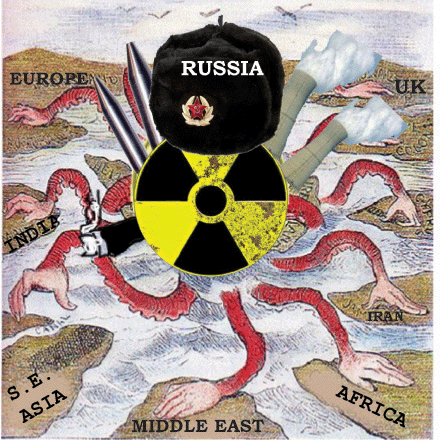
Russia lends Egypt $25 billion for Dabaa nuclear power plant, AL-Monitor, 26 Feb 20, CAIRO — Atomstroyexport, a subsidiary of Russia’s State Atomic Energy Corporation, or Rosatom, announced Feb. 17 that three Egyptian companies were awarded a tender offer for constructing the first phase of Egypt’s Dabaa nuclear power plant.
The three Egyptian companies, competing among 10 others, are Petrojet, Hassan Allam and the Arab Contractors.
The Egyptian government intends to start negotiations within the next few days with the Egyptian Nuclear and Radiological Regulatory Authority to obtain permission to start implementing the Dabaa nuclear plant project. The plant will be constructed in the Dabaa area of Marsa Matrouh governorate in the west of the country.
The Dabaa plant is the first nuclear plant for peaceful uses, with a total capacity of 4.8 gigawatts. The project is financially supported by Rosatom through a Russian loan amounting to $25 billion………….
Yemen al-Hamaki, a professor of economics at Ain Shams University said that under this agreement Egypt will use the loan to finance 85% of the total value of the building, construction, insurance and all other related works. Egypt would bear the remaining 15% in the form of installments. The loan is for 13 years at a 3% annual interest rate. If Egypt fails to repay any of the annual interest within 10 working days, it shall be subject to arrears of 150% of the interest rate calculated on a daily basis
Hamaki also warned that this massive Russian loan of $25 billion could blow up Egypt’s foreign debts. “This loan is a great risk to the future because it burdens the state and should be settled from the wealth and economic assets of the future generations,” she said, adding, “Egypt’s resorting to many loans foretells its inability to attract foreign investments, while tourism revenues continue to decline.” ….. https://www.al-monitor.com/pulse/originals/2020/02/power-plant-nuclear-egypt-russia-loan.html#ixzz6F5iQcolQ
Iran Nuclear Accord Parties Meet to Try to Salvage Deal
|
Iran Nuclear Accord Parties Meet to Try to Salvage Deal https://www.voanews.com/middle-east/voa-news-iran/iran-nuclear-accord-parties-meet-try-salvage-deal By RFE/RL, February 26, 2020 The remaining members of the floundering Iran nuclear deal are set to meet in Vienna Wednesday for the first time since Germany, France, and Britain initiated dispute procedures that could reimpose U.N. sanctions on Tehran.
The talks come as the signatories try to rescue the landmark 2015 accord, which has been faltering since U.S. President Donald Trump unilaterally withdrew from it in 2018 and enforced crippling sanctions on Iran. It will be attended by senior diplomats from Iran, Britain, France, Germany, China, Russia, and the EU. They have promised to uphold the deal that saw Iran agree to reduce its program of developing nuclear weapons in exchange for an easing of sanctions, even without Washington’s support. However, since the U.S. withdrawal, Iran has stepped up its program in defiance of Washington’s “maximum pressure” campaign.“ This is a chance — though not of 100 percent — to stop escalation before it’s too late,” Russian Foreign Minister Sergei Lavrov was cited as saying by the Russian Embassy in Vienna on Twitter. Why EU Powers Rejected Trump’s Call to Leave Iran Nuclear Deal
EU foreign policy chief Josep Borrell said Friday the 28-nation bloc will keep trying to save the Iran nuclear deal despite Trump’s call on EU to join US in breaking away from it
This is a chance — though not of 100 percent — to stop escalation before it’s too late,” Russian Foreign Minister Sergei Lavrov was cited as saying by the Russian Embassy in Vienna on Twitter. Iran has since breached its main limitations, exceeding the stockpiles of heavy water and uranium allowed, the number and types of centrifuges it can operate to enrich uranium, and the purity of uranium. As a result, in mid-January, the three European countries said they had “no choice” but to trigger a dispute mechanism in the accord, citing reduced compliance. The process for ultimately reimposing U.N. sanctions consists of several steps, the final one of which is to notify the U.N. Security Council. The restrictive measures would then automatically be reinstated after 30 days unless the Security Council voted to keep them lifted. Trump has called the deal “fatally flawed,” in part because it did not restrict Tehran’s ballistic-missile program or address its support for terrorist groups in the Middle East. Iran insists its nuclear program is for civilian purposes only and that the Joint Comprehensive Plan of Action (JCPOA) allows the country to run reactors to generate power. |
Secretary of State Mike Pompeo explains Trump’s plan to kill off the Iran nuclear agreement
|
Pompeo Reveals Trump Admin’s Wide-Ranging Plan to Combat Iran, Deal Death Blow to Nuclear Deal, Washington Free Beacon,
In discussion with Free Beacon, secretary of state explains how he is galvanizing the globe against the Islamic Republic Republic, Adam Kredo – FEBRUARY 23, 2020, RIYADH, Saudi Arabia—The Trump administration is waging a multi-pronged effort to thwart Iran’s expansion across the Middle East, including efforts at the United Nations to ensure global sanctions come back into effect in what would mark a final death blow for the landmark nuclear deal, Secretary of State Mike Pompeo told the Washington Free Beacon in an exclusive and wide-ranging interview. In a one-on-one talk with the Free Beacon on Friday following high-level meetings with the Saudi royal family in Riyadh, Pompeo pulled the curtain back on the Trump administration’s years-long effort to combat Iran militarily and diplomatically…….. In the coming months, Pompeo said, he and the president will make a major decision about whether to petition the U.N. to invoke what is known as “snapback” on a set of international sanctions on Iran that were lifted as part of the Obama administration’s nuclear accord. Iran hawks in Congress have been pressing Pompeo and the administration to pursue this course of action for months, a message the secretary says he has received and is digging into. Such a move would deal a deathblow to the nuclear deal. …….. In the coming months, Pompeo said, he and the president will make a major decision about whether to petition the U.N. to invoke what is known as “snapback” on a set of international sanctions on Iran that were lifted as part of the Obama administration’s nuclear accord. Iran hawks in Congress have been pressing Pompeo and the administration to pursue this course of action for months, a message the secretary says he has received and is digging into. Such a move would deal a deathblow to the nuclear deal……… When asked about that “special” relationship—a term typically applied to the U.S.-Israel alliance—Pompeo acknowledged that the two countries are on better footing than ever, particularly when it comes to Iran……… https://freebeacon.com/national-security/exclusive-pompeo-reveals-trump-admins-wide-ranging-plan-to-combat-iran-deal-death-blow-to-nuclear-deal/ |
|
1 This Month
26 September – International Day for the Total Elimination of Nuclear Weapons





PLEASE OPPOSE HR 8255 AND S.3639 – bills would accelerate satellite deployment, with no environmental review or safeguards – https://ncstd5li.quorum.us/campaign/169331/
To see nuclear-related stories in greater depth and intensity – go to https://nuclearinformation.wordpress.com
-
Archives
- September 2026 (305)
- August 2026 (330)
- July 2026 (355)
- June 2026 (287)
- May 2026 (306)
- April 2026 (356)
- March 2026 (251)
- February 2026 (267)
- January 2026 (308)
- December 2025 (358)
- November 2025 (359)
- October 2025 (375)
-
Categories
- 1
- 1 NUCLEAR ISSUES
- business and costs
- climate change
- culture and arts
- ENERGY
- environment
- health
- history
- indigenous issues
- Legal
- marketing of nuclear
- media
- opposition to nuclear
- PERSONAL STORIES
- politics
- politics international
- Religion and ethics
- safety
- secrets,lies and civil liberties
- spinbuster
- technology
- Uranium
- wastes
- weapons and war
- Women
- 2 WORLD
- ACTION
- AFRICA
- Atrocities
- AUSTRALIA
- Christina's notes
- Christina's themes
- culture and arts
- Events
- Fuk 2022
- Fuk 2023
- Fukushima 2017
- Fukushima 2018
- fukushima 2019
- Fukushima 2020
- Fukushima 2021
- general
- global warming
- Humour (God we need it)
- Nuclear
- RARE EARTHS
- Reference
- resources – print
- Resources -audiovicual
- Weekly Newsletter
- World
- World Nuclear
- YouTube
-
RSS
Entries RSS
Comments RSS

