Israel appears to confirm it carried out cyberattack on Iran nuclear facility
Shutdown happened hours after Natanz reactor’s new centrifuges were started, Guardian, Martin Chulov Middle East correspondentMon 12 Apr 2021, Israel appeared to confirm claims that it was behind a cyber-attack on Iran’s main nuclear facility on Sunday, which Tehran’s nuclear energy chief described as an act of terrorism that warranted a response against its perpetrators.
The apparent attack took place hours after officials at the Natanz reactor restarted spinning advanced centrifuges that could speed up the production of enriched uranium, in what had been billed as a pivotal moment in the country’s nuclear programme.
As Iranian authorities scrambled to deal with a large-scale blackout at Natanz, which the country’s Atomic Energy Agency acknowledged had damaged the electricity grid at the site, the Israeli defence chief, Aviv Kochavi, said the country’s “operations in the Middle East are not hidden from the eyes of the enemy”.
Israel imposed no censorship restrictions on coverage as it had often done after similar previous incidents and the apparent attack was widely covered by Israeli media. Public radio took the unusual step of claiming that the Mossad intelligence agency had played a central role.
Israeli Prime Minister Benjamin Netanyahu said later Sunday that “the struggle against Iran and its proxies and the Iranian armament efforts is a huge mission”…..
The unexplained shutdown is thought to be the latest in a series of exchanges between the two arch-enemies, who have fought an extensive and escalating shadow war across the Middle East over more than decade, centred on Iran’s nuclear programme and its involvement in matters beyond its borders.
Clashes have more recently been fought in the open, with strikes against shipping, the killing of Iran’s chief nuclear scientist, hundreds of airstrikes against Iranian proxies in Syria, and even a mysterious oil spill in northern Israel, which officials there have claimed was environmental sabotage.
Natanz has remained a focal point of Israeli fears, with an explosion damaging a centrifuge assembly plant last July, and a combined CIA and the Mossad cyber-attack using a computer virus called Stuxnet in 2010 that caused widespread disruption and delayed Iran’s nuclear programme for several years.
Iran’s nuclear chief, Ali Akbar Salehi, urged the international community and the International Atomic Energy Agency (IAEA) to take action against the perpetrators of the attack. He confirmed that a “terrorist attack” had damaged the electricity grid of the Natanz site. The IAEA said it was aware of the reports but declined to comment further…………
Western officials believe Israel has become increasingly brazen in its attempts to disrupt the Iranian programme, pointing to the killing of the country’s leading nuclear scientist, Mohsen Fakhrizadeh, last November, who was shot dead along with his bodyguards on a rural highway. Iran claims that artificial intelligence was used to identify Fakhrizadeh, who was gunned down by a remotely operated automatic weapon. The small lorry carrying the weapon then exploded…………… https://www.theguardian.com/world/2021/apr/11/israel-appears-confirm-cyberattack-iran-nuclear-facility
Iran calls Natanz nuclear enrichment site blackout ‘nuclear terrorism’
Iran calls Natanz nuclear enrichment site blackout ‘nuclear terrorism’, ABC, 12 Apr 21, A blackout at Iran’s Natanz nuclear facility on Sunday was an act of “nuclear terrorism”, according to the country’s nuclear chief, Ali Akbar Salehi.
Key points:
- Multiple Israeli media outlets reported a cyberattack caused the blackout
- The incident took place a day after Tehran launched advanced uranium enrichment centrifuges
- Israel has not claimed responsibility for the attack
While there was no immediate claim of responsibility, suspicion fell immediately on Israel, where its media nearly uniformly reported a devastating cyberattack orchestrated by the country caused the blackout.
Earlier on Sunday, a spokesman for the country’s Atomic Energy Organisation (AEOI) said that a problem with the electrical distribution grid of the Natanz site had caused an incident, Iranian media reported.
The spokesman said that “the incident caused no casualties or contamination”.
The incident took place a day after Tehran launched new advanced uranium enrichment centrifuges at the site……… https://www.abc.net.au/news/2021-04-12/iran-calls-natanz-atomic-site-blackout-nuclear-terrorism/100062156
Accident at Iran’s Natanz nuclear station
Guardian 11th April 2021, A spokesman for Iran’s civilian nuclear programme said an “accident”
struck the electrical distribution grid of the Natanz nuclear facility, a
day after the government announced it was starting up new uranium
enrichment centrifuges.
Behrouz Kamalvandi announced the accident on
Sunday, saying there were no injuries and no pollution. A mysterious
explosion in July 2020 damaged Natanz’s advanced centrifuge facility,
with Iran later calling the incident sabotage. Iran had announced on
Saturday that it had started up advanced uranium enrichment centrifuges at
Natanz, in a breach of its undertakings under the 2015 nuclear deal, days
after the start of talks on rescuing the accord.
France24 11th April 2021
Iran says it has begun mechanical tests on its newest advanced nuclear
centrifuges, even as the five world powers that remain in a foundering 2015
nuclear deal with Iran attempt to bring the U.S. back into the agreement.
Independent 10th April 2021
https://www.independent.co.uk/travel/middle-east/iran-nuclear-centrifuge-us-talks-b1829564.html
Iran nuclear talks to continue next week after breakthrough
Iran nuclear talks to continue next week after breakthrough
Iranian deputy foreign minister says all Trump-imposed sanctions must be lifted to revive deal, Guardian, Patrick Wintour Diplomatic editor, 9 Apr 21, Talks on the terms for the US and Iran to come back into compliance with the 2015 nuclear deal are to resume next week after making sufficient progress since Tuesday’s breakthrough agreement on a roadmap for both sides.
The US has not been in direct talks with the Iranian delegation in Vienna this week but is relaying messages mainly to European members of the body that oversees the deal.
Iran is insisting all sanctions imposed by the US since 2016, including those classified by the US as non-nuclear-related, must be lifted, and it is not clear whether Iran will take its steps to come back into compliance until it is satisfied that the lifting of the sanctions has had a practical impact on its ability to conduct business, including exporting its oil.
The Trump administration imposed a wall of sanctions on Iran before and after it left the deal in 2018. The US has in the past drawn a distinction between its willingness to lift nuclear-related sanctions and to retain those not linked to the nuclear deal, such as human rights or terrorism-related sanctions.
“Lifting all US sanctions imposed under the previous US president is a necessary step in reviving the joint comprehensive plan of action [the Iran deal], and only after verifying the lifting of those sanctions Iran will be ready to stop its remedial actions and return to full implementation of the deal,” Iran’s deputy foreign minister, Seyed Araghchi, said at the end of the talks on Friday.
Full-scale talks at the level of foreign ministry deputies will recommence on Wednesday, with technical talks between officials continuing in the interim……………… https://www.theguardian.com/world/2021/apr/09/iran-nuclear-talks-to-continue-next-week-after-breakthrough
Iran frees South Korean ship as more nuclear talks planned in Vienna
Iran frees South Korean ship as more nuclear talks planned in Vienna, WP, By Loveday Morris, Simon Denyer and Kareem Fahim, April 10, 2021 ,
BERLIN — Iran said Friday it had released a South Korean ship seized three months ago and released its captain, easing a source of tension between Tehran and Washington as their negotiating teams held indirect meetings in Vienna aimed at reviving the 2015 nuclear deal.
Iranian forces intercepted the South Korean tanker in the Persian Gulf in January, alleging it was captured for “technical” reasons related to environmental pollution, while also complaining that Seoul had frozen $7 billion of its assets to comply with U.S. sanctions.
On Friday, South Korea also said that the ship, the MT Hankuk Chemi, had been freed, while MarineTraffic.com data showed the ship leaving the port of Bandar Abbas.
It was unclear to what extent Iran’s move was linked to the talks in Vienna, which are expected to stretch for weeks. But Iran’s demand for access to its frozen funds is part of broader negotiations over the revival of the nuclear deal between Tehran and six world powers.
President Donald Trump withdrew from the deal in 2018 and reimposed harsh sanctions. Iran, in retaliation, began increasing its uranium enrichment beyond permitted levels. The Biden administration and Iran have expressed their desires to revive the agreement but have been at an impasse as to how to do so.
Iran and the United States began indirect talks in Vienna on Tuesday. For days, European diplomats have shuttled proposals between the two delegations, holed up in two separate luxury hotels on opposite sides of a tree-lined boulevard in the Austrian capital.
Their hope is to agree to a road map that would lift U.S. sanctions imposed under Trump and recommit Tehran to its agreements under the accord, including limits on uranium enrichment.
Iran and signatories to the deal — excluding the United States — held formal meetings on Friday that “took stock of the discussions held at various levels” over the past days, the European Union said in a statement……….
It’s getting too late for an effective missile deal with Iran.
The window for an Iran missile deal is already closing, Bulletin of the Atomic Scientists, By John Krzyzaniak | April 7, 2021 Calls to limit Iran’s missile program have become all the rage in Washington. In early March, a bipartisan group of 140 US lawmakers urged the Biden administration to pursue a more “comprehensive” deal with Iran that goes beyond the 2015 Joint Comprehensive Plan of Action to include not just Iran’s nuclear program but also its ballistic missile program and its support for non-state groups in the Middle East. Despite this and similar appeals, the prospects for even a modest missile deal with Iran are looking slimmer by the day. While the more ambitious proposals were unrealistic to begin with, the most feasible option—to lock in a 2,000-kilometer range limit on Iran’s ballistic missiles—may soon slip out of reach too.
Proposals for a missile agreement. Despite the heightened interest in constraining Iran’s missile capabilities, there have been few concrete proposals to accomplish that goal, and even fewer that are remotely plausible.
On the more fanciful side, one proposal involves demanding that Iran give up any and all missiles capable of delivering a 500 kilogram (kg) payload to a range of 300 kilometers (km) or more, on the thesis that such missiles are inherently capable of delivering nuclear weapons. After all, the prospect of Iran’s missiles serving as delivery vehicles for nuclear weapons (if Iran ever decides to build them) is what most worries Western policymakers. Avner Golov and Emily B. Landau advocate for a deal to eliminate Iranian missiles that exceed the 500 kg–300 km threshold in a February 2018 article in Foreign Policy.
Setting aside that the definition of what constitutes a “nuclear-capable” missile is contested, there are three additional problems that make this proposal unworkable. First, depending on how different systems are counted, Iran has at least eight missile types that would be covered by such an agreement, and it would have to give them all up. Second, Israel, Saudi Arabia, and the United Arab Emirates also have missiles that exceed the 500 kg–300 km threshold, and Iran would demand that those countries adhere to the same arrangement. Third, verification of such a deal would present a Herculean task involving an extensive, on-the-ground inspection presence.
None of these conditions seems remotely possible given the current political environment. In fact, Golov and Landau themselves admit that getting Iran to agree to a ban on missiles above the 500 kg–300 km threshold would be “extremely unlikely.”
On the more modest side is the recommendation to lock in a 2,000-km range limit on Iran’s ballistic missiles, including by banning the flight testing of missiles that exceed that range, made by Michael Elleman and Mark Fitzpatrick in a 2018 article in Foreign Policy. Robert Einhorn and Vann Van Diepen also include this among their recommendations in a 2019 report for Brookings…………
if Western policymakers want to seize this modest but worthwhile option, they will need to act quickly, as recent events suggest that Iran may be preparing to throw off the self-imposed range limit. If Iran blows past 2,000-km ranges with its missiles, it won’t be easy to put the genie back in the bottle.
Why the window may be closing. The first and most glaring reason why a missile deal focused on capping Iran’s missiles at 2,000 km—or any missile deal for that matter—may be beyond reach is that there has been no revival of the 2015 nuclear agreement. Since the deal was agreed, Iranian officials including the supreme leader have signaled that the nuclear deal would be an important test in determining whether Western countries were good-faith negotiating partners or not. Iranian Foreign Minister Javad Zarif hammered home this point in an interview published in Politico on March 17, when he said, “if the US passes the test of [the nuclear deal] … then we can consider other issues.”
Fast forward six years, and Iranians—both government officials and the broader public—have been embittered by the experience of the 2015 agreement. In Zarif’s eyes, the United States has “miserably failed” the aforementioned test. Even if the deal is revived and the Biden administration lifts sanctions, convincing Iran to negotiate on its ballistic missiles in particular, which Iranian officials have repeatedly insisted are non-negotiable, would be a hard sell.
But it is Iran’s technological progress that is beginning to erode the 2,000-km range limit, increasing the probability that, as time goes by, Iran will officially cast it off……..Fast forward six years, and Iranians—both government officials and the broader public—have been embittered by the experience of the 2015 agreement. In Zarif’s eyes, the United States has “miserably failed” the aforementioned test. Even if the deal is revived and the Biden administration lifts sanctions, convincing Iran to negotiate on its ballistic missiles in particular, which Iranian officials have repeatedly insisted are non-negotiable, would be a hard sell.
But it is Iran’s technological progress that is beginning to erode the 2,000-km range limit, increasing the probability that, as time goes by, Iran will officially cast it off………………https://thebulletin.org/2021/04/the-window-for-an-iran-missile-deal-is-already-closing/?utm_source=Newsletter&utm_medium=Email&utm_campaign=ThursdayNewsletter04082021&utm_content=NuclearRisk_IranDealWindow_04072021
Environmental Ruin in Modern Iraq – largely due to depleted uranium.


In particular, she points to depleted uranium, or DU, used by the U.S. and U.K. in the manufacture of tank armor, ammunition, and other military purposes during the Gulf War and the 2003 invasion of Iraq.
The United Nations Environment Program estimates that some 2,000 tons of depleted uranium may have been used in Iraq, and much of it has yet to be cleaned up.
‘Everything Living Is Dying’: Environmental Ruin in Modern Iraq, Decades of war, poverty, and fossil fuel extraction have devastated the country’s environment and its people. Undark, BY LYNZY BILLING, 12.22.2021 All photos by LYNZY BILLING for UNDARK ”’,,,,,,,,,,,,,,,,,,,,,,,,,,,,,,,,,,,,,,,,,,, Miscarriages, of course, are common everywhere, and while pollution writ large is known to be deadly in the aggregate, linking specific health outcomes to local ambient pollution is a notoriously difficult task. Even so, few places on earth beg such questions as desperately as modern Iraq, a country devastated from the northern refineries of Kurdistan to the Mesopotamian marshes of the south — and nearly everywhere in between — by decades of war, poverty, and fossil fuel extraction.
As far back as 2005, the United Nations had estimated that Iraq was already littered with several thousand contaminated sites. Five years later, an investigation by The Times, a London-based newspaper, suggested that the U.S. military had generated some 11 million pounds of toxic waste and abandoned it in Iraq. Today, it is easy to find soil and water polluted by depleted uranium, dioxin and other hazardous materials, and extractive industries like the KAR oil refinery often operate with minimal transparency. On top of all of this, Iraq is among the countries most vulnerable to climate change, which has already contributed to grinding water shortages and prolonged drought. In short, Iraq presents a uniquely dystopian tableau — one where human activity contaminates virtually every ecosystem, and where terms like “ecocide” have special currency.
According to Iraqi physicians, the many overlapping environmental insults could account for the country’s high rates of cancer, birth defects, and other diseases. Preliminary research by local scientists supports these claims, but the country lacks the money and technology needed to investigate on its own. To get a better handle on the scale and severity of the contamination, as well as any health impacts, they say, international teams will need to assist in comprehensive investigations. With the recent close of the ISIS caliphate, experts say, a window has opened.
While the Iraqi government has publicly recognized widespread pollution stemming from conflict and other sources, and implemented some remediation programs, few critics believe these measures will be adequate to address a variegated environmental and public health problem that is both geographically expansive and attributable to generations of decision-makers — both foreign and domestic — who have never truly been held to account. The Iraqi Ministry of Health and the Kurdistan Ministry of Health did not respond to repeated requests for comment on these issues……………………….
experts who study Iraq’s complex mosaic of pollution and health challenges say. Despite overwhelming evidence of pollution and contamination from a variety of sources, it remains exceedingly difficult for Iraqi doctors and scientists to pinpoint the precise cause of any given person’s — or even any community’s — illness; depleted uranium, gas flaring, contaminated crops all might play a role in triggering disease……………………………
This is Eman’s sixth year at the hospital, and her 25th as a physician. Over that time span, she says, she has seen an array of congenital anomalies, most commonly cleft palates, but also spinal deformities, hydrocephaly, and tumors. At the same time, miscarriages and premature births have spiked among Iraqi women, she says, particularly in areas where heavy U.S. military operations occurred as part of the 1991 Gulf War and the 2003 to 2011 Iraq War.
Research supports many of these clinical observations. According to a 2010 paper published in the American Journal of Public Health, leukemia cases in children under 15 doubled from 1993 to 1999 at one hospital in southern Iraq, a region of the country that was particularly hard hit by war. According to other research, birth defects also surged there, from 37 in 1990 to 254 in 2001.
But few studies have been conducted lately, and now, more than 20 years on, it’s difficult to know precisely which factors are contributing to Iraq’s ongoing medical problems. Eman says she suspects contaminated water, lack of proper nutrition, and poverty are all factors, but war also has a role. In particular, she points to depleted uranium, or DU, used by the U.S. and U.K. in the manufacture of tank armor, ammunition, and other military purposes during the Gulf War and the 2003 invasion of Iraq.
The United Nations Environment Program estimates that some 2,000 tons of depleted uranium may have been used in Iraq, and much of it has yet to be cleaned up. The remnants of DU ammunition are spread across 1,100 locations — “and that’s just from the 2003 invasion,” says Zwijnenburg, the Dutch war-and-environment analyst. “We are still missing all the information from the 1991 Gulf War that the U.S. said was not recorded and could not be shared.”
Souad Naji Al-Azzawi, an environmental engineer and a retired University of Baghdad professor, knows this problem well. In 1991, she was asked to review plans to reconstruct some of Baghdad’s water treatment plants, which had been destroyed at the start of the Gulf War, she says. A few years later, she led a team to measure the impact of radiation on soldiers and Iraqi civilians in the south of the country.
Around that same time, epidemiological studies found that from 1990 to 1997, cases of childhood leukemia increased 60 percent in the southern Iraqi town of Basra, which had been a focal point of the fighting. Over the same time span, the number of children born with severe birth defects tripled. Al-Azzawi’s work suggests that the illnesses are linked to depleted uranium. Other work supports this finding and suggests that depleted uranium is contributing to elevated rates of cancer and other health problems in adults, too.
Today, remnants of tanks and weapons line the main highway from Baghdad to Basra, where contaminated debris remains a part of residents’ everyday lives. In one family in Basra, Zwijnenburg noted, all members had some form of cancer, from leukemia to bone cancers.
To Al-Azzawi, the reasons for such anomalies seem plain. Much of the land in this area is contaminated with depleted uranium oxides and particles, she said. It is in the water, in the soil, in the vegetation. “The population of west Basra showed between 100 and 200 times the natural background radiation levels,” Al-Azzawi says.
Some remediation efforts have taken place. For example, says Al-Azzawi, two so-called tank graveyards in Basra were partially remediated in 2013 and 2014. But while hundreds of vehicles and pieces of artillery were removed, these graveyards remain a source of contamination. The depleted uranium has leached into the water and surrounding soils. And with each sandstorm — a common event — the radioactive particles are swept into neighborhoods and cities.
Cancers in Iraq catapulted from 40 cases among 100,000 people in 1991 to at least 1,600 by 2005.

In Fallujah, a central Iraqi city that has experienced heavy warfare, doctors have also reported a sharp rise in birth defects among the city’s children. According to a 2012 article in Al Jazeera, Samira Alani, a pediatrician at Fallujah General Hospital, estimated that 14 percent of babies born in the city had birth defects — more than twice the global average.
Alani says that while her research clearly shows a connection between contamination and congenital anomalies, she still faces challenges to painting a full picture of the affected areas, in part because data was lacking from Iraq’s birth registry. It’s a common refrain among doctors and researchers in Iraq, many of whom say they simply don’t have the resources and capacity to properly quantify the compounding impacts of war and unchecked industry on Iraq’s environment and its people. “So far, there are no studies. Not on a national scale,” says Eman, who has also struggled to conduct studies because there is no nationwide record of birth defects or cancers. “There are only personal and individual efforts.”…………………..

After the Gulf War, many veterans suffered from a condition now known as Gulf War syndrome. Though the causes of the illness are to this day still subject to widespread speculation, possible causes include exposure to depleted uranium, chemical weapons, and smoke from burning oil wells. More than 200,000 veterans who served in Iraq, Afghanistan, and elsewhere in the Middle East have reported major health issues to the Department of Veterans Affairs, which they believe are connected to burn pit exposure. Last month, the White House announced new actions to make it easier for such veterans to access care.
Numerous studies have shown that the pollution stemming from these burn pits has caused severe health complications for American veterans. Active duty personnel have reported respiratory difficulties, headaches, and rare cancers allegedly derived from the burn pits in Iraq and locals living nearby also claim similar health ailments, which they believe stem from pollutants emitted by the burn pits.
Keith Baverstock, head of the Radiation Protection Program at the World Health Organization’s Regional Office for Europe from 1991 to 2003, says the health of Iraqi residents is likely also at risk from proximity to the burn pits. “If surplus DU has been burned in open pits, there is a clear health risk” to people living within a couple of miles, he says.
Abdul Wahab Hamed lives near the former U.S. Falcon base in Baghdad. His nephew, he says, was born with severe birth defects. The boy cannot walk or talk, and he is smaller than other children his age. Hamed says his family took the boy to two separate hospitals and after extensive work-ups, both facilities blamed the same culprit: the burn pits. Residents living near Camp Taji, just north of Baghdad also report children born with spinal disfigurements and other congenital anomalies, but they say that their requests for investigation have yielded no results. ……………………………………… https://undark.org/2021/12/22/ecocide-iraq/
Iran wants sanctions lifted first: USA wants Iran to back down first, and reverse uranium enrichment
 Iran’s Khamenei reiterates nuclear deal stance in new year speech
Supreme leader says the United States must lift all sanctions before Iran reverses its steps away from the nuclear deal. Aljazeera, By Maziar Motamedi 21 Mar 2021
In an hour-long televised address to the nation on Sunday to mark the start of the new Persian year, he said the “maximum pressure” campaign of economic sanctions – which he called a “major crime” committed by “that previous fool” President Donald Trump – has failed……….
The administration of Joe Biden has said it wants to restore the Joint Comprehensive Plan of Action (JCPOA), as the deal is formally known, but says Iran must first come back into full compliance with the accord before sanctions are lifted. Iran has gradually scaled back its adherence to the deal since 2019, one year after the US withdrawal.
Khamenei reiterated what he has called the country’s “definitive policy” on the nuclear deal: The US must first lift all sanctions, after which Iran will reverse its steps to boost uranium enrichment and install cascades of new centrifuges, among other moves………. https://www.aljazeera.com/news/2021/3/21/irans-khamenei-remains-steadfast-on-nuclear-deal-stance
Unitede Arab Emirates $32 billion Barakah nuclear plant poses environmental, safety, and security problems
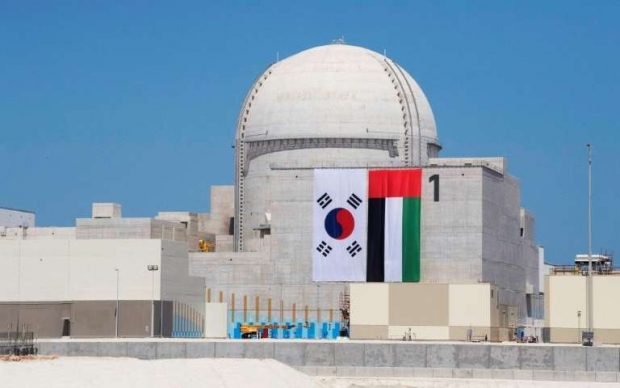
Part of Abu Dhabi’s clean energy push, the $32 billion nuclear power station risks destabilising a volatile region with detrimental consequences for the environment.
The UAE’s Barakah nuclear power plant will begin supplying electricity to the national grid at the end of this month………..
Jointly developed by ENEC and Korea Electric Power Corporation (KEPCO), construction of the $32 billion project began in July 2012 and was completed in May 2018.
Financed through a $16.2 billion direct loan from the Abu Dhabi government and a $2.5 billion loan from the Export-Import Bank of Korea, the plant’s reactors are licensed by the Korea Institute of Nuclear Safety and projected to have a lifespan of 60 years.
The first reactor at the plant started operations last year after being connected to the national grid. Fuel is being loaded into a second reactor, which is planned to begin operating later this year. In total, four reactors will eventually operate at the site.
…………. Is Barakah worth the risk?
While the UAE inaugurates the development of civilian nuclear energy, several concerns have been being raised.
The plant, which lies on the western coast of the country, is in close proximity to Qatar. Doha has called Barakah a “flagrant threat” to regional peace and the environment, warning that a radioactive plume from an accidental discharge at the station could reach the country in five to thirteen hours.
Some have questioned the logic of introducing nuclear power in the UAE, where solar power is clearly abundant. Furthermore, in a region where tensions run high, Barakah could provoke the possibility of nuclear proliferation.
“The tense Gulf strategic geopolitical situation makes new civil nuclear construction in the region even more controversial than elsewhere, as it can mean moves towards nuclear weapon capability, as experience with Iran has shown,” argued Paul Dorfman, founder and chair of the International Nuclear Consulting Group.
Saudi Arabia has already pushed ahead with plans to complete its first nuclear reactor under the auspices of the Saudi National Atomic Energy Project. But as Yemen’s Houthi drone strikes against the kingdom’s oil refineries in 2019 indicate, nuclear energy safety will have to be linked to regional security.
Similarly, the spillover effect from the UAE’s foreign policy could make nuclear plants like Barakah a target for politically motivated actors. That Houthi rebels alleged to have fired a missile at the site in 2017, which the UAE denied, could become instantly catastrophic for the Gulf were a future attack to be successful.
There are also detrimental environmental costs. The Gulf region is among the world’s most water-scarce in the world and heavily dependent on desalination, and any accidental nuclear waste spill would have disastrous maritime consequences.
Not to mention climate change itself could impact Barakah, seeing as coastal nuclear sites will be increasingly vulnerable to rising sea levels………. https://www.trtworld.com/magazine/does-the-uae-s-barakah-nuclear-plant-create-more-problems-than-it-solves-45121
United Nations nuclear watchdog says it’s possible to return to the Iran nuclear deal
 UN atomic watchdog: Return to Iran nuclear deal possible https://abcnews.go.com/International/wireStory/atomic-watchdog-return-iran-nuclear-deal-76486424The head of the United Nations’ nuclear watchdog says a U.S. return to the 2015 nuclear deal with Iran remains possible, but suggested to European Parliamentarians both sides need to be prepared to negotiate, By DAVID RISING Associated Press, 17 March 2021,
BERLIN — A U.S. return to the 2015 nuclear deal with Iran remains possible, but both sides need to be prepared to negotiate, the head of the U.N. nuclear watchdog suggested to European lawmakers on Tuesday.
Washington pulled out of the deal unilaterally in 2018 under then President Donald Trump, but President Joe Biden has indicated that the U.S. would be willing to rejoin.
But there are complications. Iran has been steadily violating the restrictions of the deal, like the amount of enriched uranium it can stockpile and the purity to which it can enrich it. Tehran’s moves have been calculated to put pressure on the other nations in the deal — Russia, China, France, Germany and Britain — to do more to offset crippling sanctions reimposed under Trump.
Iran has said that before it resumes compliance with the deal, the U.S. needs to return to its own obligations under the deal by dropping the sanctions.
Asked about Iran’s insistence that the U.S. take the first step, International Atomic Energy Agency Director General Rafael Grossi said in a video appearance before three European Parliament committees that “it takes two to tango.”
He noted that over the past two years Iran has accumulated a lot of nuclear material and new capacities, and used the time for “honing their skills in these areas.”
“Even if you had a magic wand or the hand of God and said we go back tomorrow, there will be a lot of housekeeping,” he said.
Grossi said he had been talking to both sides in his agency’s “impartial neutral role” and did think that a U.S. return to the deal, known as the Joint Comprehensive Plan of Action, or JCPOA, was possible.
“They want to come back,” he said. “But of course … there are a number of issues that still need to be clarified. So it’s not impossible. It is difficult, but not impossible.”
The ultimate goal of the deal is to prevent Iran from developing a nuclear bomb, something it insists it doesn’t want to do. Iran now has enough enriched uranium to make a bomb, but nowhere near the amount it had before the nuclear deal was signed.
As part of its ongoing violations of the JCPOA, Iran last month began restricting IAEA inspections of its nuclear facilities.
Under a last-minute deal worked out in a trip to Tehran by Grossi, however, some access was preserved.
Under that temporary agreement, Iran will no longer share surveillance footage of its nuclear facilities with the IAEA, but it has promised to preserve the tapes for three months. It will then hand them over to the IAEA if it is granted sanctions relief. Otherwise, Iran has vowed to erase the tapes, narrowing the window for a diplomatic breakthrough.
Admittedly it is limited, but it allows to maintain a record of the basic activities that are taking place,” Grossi said. “Granted it is not the same as the whole access that we used to have.”
Grossi said it was important for the JCPOA powers to use this three-month “diplomatic window of opportunity” that Iran has granted.
“In this time period, the parties involved will hopefully be able to achieve, or at least start to move back to the JCPOA,” he said.
Turkey’s nuclear power plant could prove irresistible to terrorists

Turkey’s nuclear power plant could prove irresistible to terrorists
A tempting target — Beyond Nuclear International
A Tempting target https://wordpress.com/read/feeds/72759838/posts/3231822640 Beyond Nuclear International
Accurate missiles and drones could knock down critical electrical supply lines to Turkey’s nuclear reactor and destroy its emergency generators, nuclear control rooms, reactor containment buildings, and spent reactor fuel buildings.By Henry Sokolski and John Spacapan
Although it got little attention from the U.S. media, an explosion late last month at a Turkish nuclear power plant construction site raised eyebrows in Turkey. It should raise eyebrows in America, too. Donald Trump pushed nuclear exports to the region when he was president. His replacement, Joe Biden, should not. The recent Turkish explosion clarifies why: nuclear plants in unstable regions are tempting targets that could explode, and not by accident.
The blast injured at least two people and caused serious damage to homes in the area. The Russian-Turkish nuclear construction firm, Akkuyu Nuclear Inc., claims the explosion took place when a subcontractor carried out “planned drilling and blasting.” So far, Ankara has kept mum on the story.
Angry local officials and opposition party leaders, though, aren’t buying the construction firm’s account. A member of the leading political opposition, the Republican People’s Party, said locals are losing sleep “thinking about the possibility of more blasts that might happen in the future when the nuclear power plant starts to function.” Meanwhile, the local governor has ordered a special police team to investigate the incident and to “hold those responsible to account.”
Whether or not the explosion was planned, the Republican People’s Party leaders, Turkish citizens, and local Akkuyu politicians worry about reactor accidents. The Akkuyu plant sits on a major plate tectonic fault line. Besides natural accidents, they should worry about another threat—terrorist and proxy missile and drone attacks. Certainly, if government officials ignore local opposition to the nuclear project, then they will have to worry that the PKK (a Kurdish terrorist group that seeks an autonomous state in southeastern Turkey) might hold the Turkish government hostage by threatening to strike the plant.
Nearby, last July, the Azerbaijani defense ministry’s spokesman did precisely that, publicly threatening to use precise Azeri missiles to strike Armenia’s Metsamor nuclear power plant. It was shortly after this threat was made that Russian president Vladimir Putin called Turkish president Recep Erdogan to restrain Azerbaijan’s military. The Iranians and their proxies also have toyed with attacking reactors. Hezbollah, armed with Iranian-made rockets, has threatened to strike Israel’s Dimona nuclear reactor.
Another Iranian proxy, the al-Houthi group in Yemen, claimed that they fired a missileat the UAE’s Barakah nuclear power plant, which it failed to hit. They claim they intend to try again.
Finally, if Iran chose to give similar missiles to militias such as the Syrian National Defense Forces, who are supportive of the Assad regime in Syria (a bitter enemy of Turkey), similar threats might be made against Akkuyu.
Then, there is the PKK, which has attacked Turkish soldiers and military bases with sophisticated explosive drones. In one attack, the PKK blew up a Turkish ammunition dump, killing seven Turkish soldiers and wounding dozens more. Security analysts contend the PKK’s newer drones can travel sixty miles at fast enough speeds to outwit Turkish military jamming technology. They are now reportedly designing a new generation. Such drones have to be considered a future threat against Turkey’s nuclear plant.
They already are in the United States. The Federal Aviation Administration is now studying how drones might harm power plants including nuclear reactors. Why? Between 2015 and 2019, at least fifty-seven drones flew illegally over United States nuclear power plants, including swarms that flew over plants in Arizona and Pennsylvania.
The Turks should pay attention. Accurate missiles and drones could knock down critical electrical supply lines to a reactor and could destroy its emergency generators, nuclear control rooms, reactor containment buildings, and spent reactor fuel buildings. The effect of such strikes range (in the case of calculated near misses) from inducing public panic (and the consequential shutdown of reactors throughout the country) to inducing spent fuel fires that could release massive amounts of radiation, mimicking Chernobyl or worse.
All of this suggests Akkuyu is a nuclear target in the making. Turkish critics of the Akkuyu project, including the Republican People’s Party, argue it would be far cheaper and safer to kill the reactor and invest instead in renewables and natural gas. The Biden administration should be on their side and quietly encourage Turkey to drop the project. Helping it with nonnuclear alternatives would make sense.
Henry Sokolski is the executive director of the Nonproliferation Policy Education Center and the author of Underestimated: Our Not So Peaceful Nuclear Future. He served as deputy for nonproliferation policy in the office of the U.S. secretary of defense from 1989 to 1993.
John Spacapan is the Wohlstetter Public Affairs Fellow at the Nonproliferation Policy Education Center and is researching the future of security arrangements in the Middle East.
Turkey’s nuclear ambitions bring fears of a ”new Chernobyl” in the region
|
Are Turkey’s nuclear power ambitions a threat to regional safety? Ekathimerini.com, 12 Mar, 21,Foreign Minister Nikos Dendias expresses fears of a new ‘Chernobyl’ in the Eastern Mediterranean in call with his US counterpart, Vassilis Nedos , Yiannis Souliotis, Approximately three weeks ago, during a 45-minute call with his American counterpart, Greek Foreign Minister Nikos Dendias broached a subject that often flies under the radar of international diplomacy. Dendias brought up the many problematic issues of constructing a nuclear power station in Akkuyu, southern Turkey, with Tony Blinken. These range from the fact that it constitutes a security threat to other states in close proximity to Turkey, to that it is the largest foreign investment by Russia, and Ankara’s unwillingness to share information on the plant. According to the same source, Dendias also highlighted the danger that Akkuyu could become a new “Chernobyl” in the Eastern Mediterranean.
For many years, Athens has attentively observed Turkey’s suspicious endeavor. Reports circulating within the responsible Greek services, which Kathimerini has been made aware of, make it clear that there is another danger regarding Turkey’s nuclear program. Through its creation of nuclear reactors for energy production, Turkey is acquiring both the necessary technological know-how and access to materials that could be used for the development of nuclear arms. Greek officials, speaking on the condition of anonymity, reported that Turkey is implementing a plan for the construction of three nuclear power plants. At the same time, it is training nuclear engineers and seeking access to dual-purpose resources – fissile material and equipment intended for both civilian and military use. Out of the three planned nuclear power stations, the one furthest along is that in Akkuyu, on Turkey’s southeastern coast near the city of Mersin. Two other plants are being constructed or planned, in Sinop on the Black Sea and Igneada in Eastern Thrace, also on Black Sea, near the border with Bulgaria. Turkish President Recep Tayyip Erdogan has publicly voiced his ambition to establish Turkey as a nuclear-weapon state. “Some states possess missiles armed with nuclear warheads and they tell us that we cannot also acquire such weapons. This is something I cannot accept,” he said to members of his Justice and Development Party (AKP) in September 2019. The deal to construct the Akkuyu plant was signed by the Turkish state and Rosatom, Russia’s state corporation for nuclear energy, in 2010. The cost of the project is approximately 22 billion dollars and the deal stipulates the construction of four 1,200 MW nuclear reactors. Two of these are already under construction and the first is scheduled to come online in 2023, the Turkish Republic’s centenary. However, the power plant is not expected to be fully operational before 2025. It is estimated that the Akkuyu nuclear power station will cover 8%-10% of Turkey’s energy needs and have an expected lifespan of at least 60 years. Rosatom is funding the project through its Turkey-based subsidiary company Akkuyu Nukleer JSC (Rosatom has held 99% of the company’s shares since 2010). It is the largest private investment in nuclear energy in the last 17 years. As for the Akkuyu site, it must be noted that it has not yet undergone the required stress tests, the evaluation of various technical issues including any dangers posed by the region’s seismic activity. ………….. Finally, it should be noted that Turkey is not a party to the International Atomic Energy Agency’s Joint Convention on the Safety of Spent Fuel Management and on the Safety of Radioactive Waste Management. https://www.ekathimerini.com/in-depth/analysis/1156931/are-turkey-s-nuclear-power-ambitions-a-threat-to-regional-safety/
|
|
|
Anxieties over Turkey’s new Russian-backed nuclear plants
Turkey’s nuclear power dilemma, Turkey’s first Russia-backed nuclear plant has raised issues around its safety and potential for use in building nuclear weapons. Al Jazeera, By Sinem Koseoglu. 10 Mar 2021
Istanbul, Turkey – Turkish and Russian officials laid the foundation for the third reactor of Turkey’s first nuclear power plant Akkuyu in the southern coastal city of Mersin on Wednesday.
The plant’s first reactor unit is expected to be operational in 2023, the centenary of the Turkish Republic, and the remaining units in 2026.
The co-construction of the Akkuyu plant started in April 2018, eight years after the two countries signed an intergovernmental agreement.
The project is owned by the Russian energy company Rosatom while the Turkish Akkuyu is the license owner and the local operator.
Once completed, the plant is expected to produce 35 billion kilowatt-hours (kWh) of electricity annually, about 10 percent of Turkey’s total electricity supply. The service life will last 50 years.
The facility will launch Turkey into the ”league of nuclear energy countries”, President Recep Tayyip Erdogan said, hailing it as a “symbol of Turkish-Russian cooperation”.
Russian President Vladimir Putin, who spoke at the event via video-conference from Moscow, called it a “truly flagship project”.
Akkuyu is the only nuclear power facility under construction in Turkey but a second project in the Black Sea province of Sinop is expected to kick off this year, reports suggest, if Ankara can find a new partner after Japan’s Mitsubishi pulled out last year.
The project was agreed on by the Japanese and Turkish governments in 2013. A consortium led by Mitsubishi Heavy Industries conducted a feasibility study until March for the construction of a 4,500-megawatt plant in Sinop.
A senior energy official, speaking on condition of anonymity, told Al Jazeera the Turkish government is also considering a third nuclear plant with four reactors in the country’s northwest. Turkey’s ultimate goal is not building a nuclear weapon but diversity in energy resources, he said.
Russian dependency?
Since the Akkuyu project was signed, proponents of nuclear energy in Turkey have argued it would limit Turkey’s dependency on foreign energy suppliers. They also underline it is clean energy. [clean???]
However, some international experts think differently. Henry D Sokolski, executive director of the Nonproliferation Policy Education Center in Washington, DC, said Akkuyu’s financing model could further Ankara’s dependency on Russia, a major energy provider to Turkey. The project is fully financed by Moscow.
Sokolski said it is an intensive capital investment and questioned why Turkey frontloads such debt while alternative and cheaper energy resources are coming down the pipeline.
Could Akkutu be a target?
Turkey is not the only country seeking nuclear energy in the Middle East. Saudi Arabia and Jordan are still considering establishing nuclear power plants. Egypt and the United Arab Emirates (UAE) are in on it, while Israel is long believed to have a stockpile of nuclear weapons and Iran has the capacity to develop them.
Sokolski warned Turkey about the regional challenges of entering the fray. “Your neighbourhood is dangerous. People are fighting. Nuclear reactors in a shooting war can be targets.”
He said missiles and drones could knock out critical electrical supply lines to a reactor and destroy emergency generators, nuclear control rooms, reactor containment buildings, and spent reactor fuel buildings.
“These kinds of strikes can make people more anxious and result in radiological releases, like Chernobyl or worse,” said Sokolski.
Turkey has waged a war against the PKK, the outlawed Kurdistan Workers’ Party listed as a “terrorist” organisation by the United States, the European Union, and Turkey, for decades in a conflict that has killed an estimated 40,000 people.
News reports have suggested the armed group has camps in northern Iraq where armed drones are being developed.
Turkey is also embroiled in conflicts in Syria and the eastern Mediterranean, while the Iran-aligned Houthi rebels in Yemen have targetted Saudi and Emirati targets with its missiles and drones. Armed groups such as the Syrian National Defence Forces, which is supportive of President Bashar al-Assad’s government, could mimic such attacks, said Sokolski.
Turkey has waged a war against the PKK, the outlawed Kurdistan Workers’ Party listed as a “terrorist” organisation by the United States, the European Union, and Turkey, for decades in a conflict that has killed an estimated 40,000 people.
News reports have suggested the armed group has camps in northern Iraq where armed drones are being developed.
Turkey is also embroiled in conflicts in Syria and the eastern Mediterranean, while the Iran-aligned Houthi rebels in Yemen have targetted Saudi and Emirati targets with its missiles and drones. Armed groups such as the Syrian National Defence Forces, which is supportive of President Bashar al-Assad’s government, could mimic such attacks, said Sokolski.
Atomic weapon suspicions
Despite Turkey’s claims the plant will only be used to diversify energy resources, some have suggested Ankara may have plans to enrich uranium.
Turkey and nuclear-armed Pakistan have long had military cooperation agreements that were recently intensified, with some news reports suggesting Islamabad may be covertly supporting a nuclear weapons programme.
Military cooperation deals have been signed earlier this year with Kazakhstan, a country providing at least 35 percent of the world’s uranium…….https://www.aljazeera.com/news/2021/3/10/turkeys-nuclear-dilemma
Difficult time for Biden to sort out Iranian nuclear deal
Biden as a candidate promised to take the U.S. back to the deal and was confident of achieving it; however, his time in office has proved that this won’t be an easy task
Since the inauguration of U.S. President Joe Biden, one of the most frequently asked questions are about his position on the Iranian nuclear deal. The candidate Biden had called the U.S. withdrawal from the Joint Comprehensive Plan of Action (JCPOA) a significant mistake and promised to take the U.S. back to the deal.
However, his few weeks in office demonstrated that this process will not be as easy as many may have thought.
The negotiation process, the content of the potential deal and its possible impacts on the countries’ domestic policies started to be discussed even before the beginning of negotiations.
Now, after the appointment of a special envoy to Iran, everybody is expecting to hear about the process and its details. However, there will be five different challenges that the Biden administration and its negotiators need to pay attention to while reaching a new deal with regards to the Iranian nuclear program.
Deadlock at home
First of all, it will be critical for the Biden administration to gain majority support in the U.S. Congress for a new nuclear deal with Iran……….
Regional outcry
Secondly, some U.S. partners in the region have reacted negatively to the JCPOA. They felt like they were left in the dark about critical foreign policy issues in regard to their region……….
Alliance skepticism
Thirdly, the U.S. administration also needs to pay attention to the concerns of its allies and partners in the P5+1 – the U.S., the U.K., France, China, Russia and Germany……….
Iran’s internal concerns
Fourthly, there will also be domestic dynamics at play with Iran. In June of this year, presidential elections will be held in Iran. Quite possibly, the Iranian nuclear deal and the relations with the U.S. will be part of this election campaign………. https://www.dailysabah.com/opinion/columns/biden-on-horns-of-a-dilemma-for-iranian-nuclear-deal
President Rouhani says that Iran is prepared to fulfil nuclear deal commitments
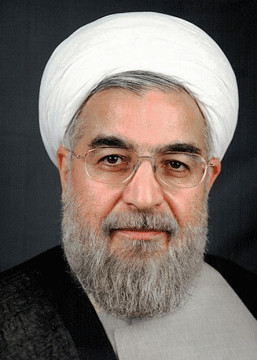 Iran prepared to fulfill nuclear deal commitments, president tells Coveney
Hassan Rouhani says United States must lift ‘illegal sanctions’ during Tehran meeting with Minister. Irish Times,7 Mar 21,
In a meeting with Minister for Foreign Affairs Simon Coveney, Mr Rouhani said: “Iran is ready to immediately take compensatory measures based on the nuclear deal and fulfil its commitments just after the US illegal sanctions are lifted and it abandons its policy of threats and pressure.”
The Iranian leader criticised the European signatories of the historic nuclear deal for what he said was their inaction on their commitments to the agreement. He said Iran was the only country that kept its side of the bargain………. https://www.irishtimes.com/news/politics/iran-prepared-to-fulfill-nuclear-deal-commitments-president-tells-coveney-1.4503539
1 This Month
26 September – International Day for the Total Elimination of Nuclear Weapons





PLEASE OPPOSE HR 8255 AND S.3639 – bills would accelerate satellite deployment, with no environmental review or safeguards – https://ncstd5li.quorum.us/campaign/169331/
To see nuclear-related stories in greater depth and intensity – go to https://nuclearinformation.wordpress.com
-
Archives
- September 2026 (305)
- August 2026 (330)
- July 2026 (355)
- June 2026 (287)
- May 2026 (306)
- April 2026 (356)
- March 2026 (251)
- February 2026 (267)
- January 2026 (308)
- December 2025 (358)
- November 2025 (359)
- October 2025 (375)
-
Categories
- 1
- 1 NUCLEAR ISSUES
- business and costs
- climate change
- culture and arts
- ENERGY
- environment
- health
- history
- indigenous issues
- Legal
- marketing of nuclear
- media
- opposition to nuclear
- PERSONAL STORIES
- politics
- politics international
- Religion and ethics
- safety
- secrets,lies and civil liberties
- spinbuster
- technology
- Uranium
- wastes
- weapons and war
- Women
- 2 WORLD
- ACTION
- AFRICA
- Atrocities
- AUSTRALIA
- Christina's notes
- Christina's themes
- culture and arts
- Events
- Fuk 2022
- Fuk 2023
- Fukushima 2017
- Fukushima 2018
- fukushima 2019
- Fukushima 2020
- Fukushima 2021
- general
- global warming
- Humour (God we need it)
- Nuclear
- RARE EARTHS
- Reference
- resources – print
- Resources -audiovicual
- Weekly Newsletter
- World
- World Nuclear
- YouTube
-
RSS
Entries RSS
Comments RSS

