Russian company with powerful connections withdraws from Turkish nuclear plant operation
|
Russian company with powerful connections withdraw from Turkish nuclear plant operation, Greek City Times,
by PAUL ANTONOPOULOS, 2 Nov 20, A Russian company withdrew from plans to build Turkey’s first nuclear power plant following tensions between Moscow and Ankara over issues including the conflicts in Libya, Syria, and Artsakh, a columnist for Turkish newspaper Dünya, and translated by Ahval, said on Saturday.The construction of the Akkuyu Nuclear Power Plant to the north of Cyprus is a joint project between Turkey and Russia.Although Turkish President Recep Tayyip Erdoğan and his Russian counterpart Vladimir Putin signed the deal in 2010, major construction only started in March 2018 and the first unit of the four to be constructed will not become operational until at least 2023. According to Dünya columnist Kerim Ülker, Inter RAO, one of Russia’s largest public energy companies, withdrew from the project following a board meeting on October 26 partly because of the Turkish-sponsored invasion attempt of Artsakh by the Azerbaijani military and Syrian mercenaries. ……..https://greekcitytimes.com/2020/11/02/russian-turkish-nuclear-plant/ |
|
Iran building underground nuclear facility, replacing the damaged one.
Iran building underground nuclear facility: UN watchdog, SMH, By David Rising, October 28, 2020, Berlin: Inspectors from the UN’s atomic watchdog have confirmed Iran has started building an underground centrifuge assembly plant after its previous one exploded in what Tehran called a sabotage attack over the summer, the agency’s head said.
Iran also continues to stockpile greater amounts of low-enriched uranium, but does not appear to possess enough to produce a weapon, Rafael Grossi, director-general of the International Atomic Energy Agency, told the AP in an interview in Berlin.
Following the July explosion at the Natanz nuclear site, Tehran said it would build a new, more secure, structure in the mountains around the area. Satellite pictures of Natanz analysed by experts have yet to show any obvious signs of excavation at the site in Iran’s central Isfahan province……
Natanz had been targeted by the Stuxnet computer virus previously, which was believed to be a creation of the US and Israel. Iran has yet to say whom it suspects of carrying out the sabotage in the July incident. Suspicion has fallen on Israel as well, despite a claim of responsibility by a previously unheard-of group at the time.
Under the provisions of the landmark 2015 nuclear deal with world powers known as the Joint Comprehensive Plan of Action, Iran is allowed to produce a certain amount of enriched uranium for non-military purposes.
In return, Iran was offered economic incentives by the countries involved.
Since President Donald Trump pulled the US unilaterally out of the deal in 2018 and re-imposed sanctions, however, the other signatories — Germany, France, Britain, Russia and China — have been struggling to keep the deal alive.
Meanwhile, Iran has been steadily exceeding the deal’s limits on how much uranium it can stockpile, the purity to which it can enrich uranium and other restrictions to pressure those countries to come up with a plan to offset US sanctions.
Still though, Iran has continued to allow IAEA inspectors full access to its nuclear facilities, including Natanz, Grossi said………
Grossi personally visited Tehran in late August for meetings with top officials, and managed to break a months-long impasse over two locations thought to be from the early 2000s where Iran was suspected of having stored or used undeclared nuclear material and possibly conducted nuclear-related activities.
Inspectors have now taken samples from both of those sites, and Grossi said they are still undergoing lab analysis.
“It was a constructive solution to a problem what we were having,” he said. “And I would say since then we have kept the good level of cooperation in the sense that our inspectors are regularly present and visiting the sites.” https://www.smh.com.au/world/middle-east/iran-building-underground-nuclear-facility-un-watchdog-20201028-p569ht.html
European Commission commits to retainng Iran nuclear deal
 European Commission reassures Iran of commitment to nuclear deal https://www.world-nuclear-news.org/Articles/European-Commission-reassures-Iran-of-commitment-t23 October 2020 The lifting of economic sanctions against Iran remains an essential part of the Joint Comprehensive Plan of Action (JCPoA) and its signatories are committed to expanding the special purpose vehicle that enables European businesses to maintain trade with the country, according to the European Commission’s foreign affairs spokesperson Peter Stano.
In an interview with the Tehran Times published on 20 October, Stano referred to remarks Josep Borrell, the EU’s high representative for foreign affairs and security policy, had made to the European Parliament on 7 October. Borrell said Iran had “legitimate expectations that the nuclear deal would result in more concrete economic benefits”.
The E3 – France, Germany and the UK – triggered the JCPoA’s dispute resolution mechanism in January, following Iran’s further steps away from its commitments. In June, the International Atomic Energy Agency (IAEA) adopted a resolution calling on Iran to cooperate fully in implementing its NPT Safeguards Agreement and Additional Protocol.
In August, IAEA Director General Rafael Mariano Grossi held talks with Iranian officials on access for IAEA inspectors to the country’s nuclear sites. His visit to Tehran followed the US Administration’s request to the UN Security Council to initiate the ‘snapback’ mechanism of the Iran nuclear deal. This mechanism allows a party to the agreement to seek the re-imposition against Iran of the multilateral sanctions lifted in 2015 in accordance with resolution 2231. The USA withdrew from the JCPoA in May 2018.
Stano told the Tehran Times that the EU considers the extraterritorial application of unilateral restrictive measures to be contrary to international law.
“The lifting of sanctions is an essential part of the JCPoA agreement,” he said. “In this regard, the EU fulfilled its commitments and lifted all its economic and financial sanctions in connection with the Iranian nuclear programme. Furthermore, the EU member states sitting in the UN Security Council prevented the US efforts to use the so-called ‘snapback’ and re-introduce UN sanctions that were lifted as a result of the JCPoA.”
The EU had taken “a series of concrete actions”, he said, including updating its Blocking Statute in August 2018 and, the following year, setting up INSTEX (Instrument in Support of Trade Exchanges). In addition, the European Commission recently launched two online platforms to support European economic operators “to engage in legitimate trade with Iran”.
“This underscores the continued EU commitment to the full and effective implementation of the JCPoA,” Stano said, adding that the first transactions under INSTEX are being processed. “The number of participants of INSTEX is not shrinking; quite to the contrary, there are more European countries joining, with more to follow.”
Hard to save the Iran nuclear deal, even if Biden wins the U.S. election.
 Even if Biden wins US election, time is running out to save Iran nuclear deal
Events in the US are being watched closely as Iran’s presidential election looms in early 2021, Guardian, Patrick Wintour Diplomatic editor, Wed 21 Oct 2020 Even if Joe Biden triumphs at the polls, Iran’s weakened government may only have a few months to negotiate a revived nuclear deal before facing its own electoral challenge by hardliners who oppose any engagement with the west.
The narrow window has prompted calls for Biden to offer a phased approach to rejoining the Iran nuclear deal abandoned by Donald Trump in 2018, in order to show progress before the Iranian presidential election.
Iran’s reformists and centrists remain severely damaged by the failure of the original agreement to deliver economic benefits to ordinary Iranians.
Once Trump left the deal, he imposed maximum economic pressure on Tehran, blocking Iran’s oil exports, and leaving advocates of engagement with the US struggling to defend their strategy. In a recent interview in Kar Va Kargar the foreign minister Javad Zarif insisted the foreign ministry had not been naive to negotiate with the Americans, but said Trump had “blown up the entire negotiating room”.
Iran’s current president, Hassan Rouhani, was also an advocate of the deal, known as the Joint Comprehensive Plan of Action, but is standing down after two four-year terms. A range of conservatives, including members of the powerful Iranian Revolutionary Guards Corps, are preparing to stand, advocating either closer ties with China or a stronger self-reliant economic policy.
The reformist movement has not yet decided whether to put up a candidate or instead back a technocratic figure such as Ali Larijani, the former Speaker who is currently assisting Rouhani in framing a 25-year strategic partnership with China.
Reformists were trounced in spring parliamentary elections marked by a record low turn-out. The chances of persuading the disillusioned middle class to vote in the presidential election may in part depend on finding a credible candidate who can raise hopes of a resumption of talks with the west.
Biden has so far promised that “if Iran returns to strict compliance with the nuclear deal, the US would rejoin the agreement as a starting point for follow-on negotiations”.
But even if he does win, Biden would not take office until 20 January, leaving only a short time for reformists to convince Iranians that the path of engagement is worth trying again.
Some analysts say a Biden victory could be enough to change the mood in Iran – and certainly the elections are being watched with fascination in Tehran……. https://www.theguardian.com/us-news/2020/oct/21/even-if-biden-wins-us-election-time-is-running-out-to-save-iran-nuclear-deal
Considering the future of the Iran nuclear deal
 deal alive.
The deal, which imposes limitations on Iran’s civilian nuclear enrichment program, was agreed in July 2015 between the Iranians and the P5+1 group — China, Britain, France, Germany, Russia and the United States — and implemented six months later. The deal was struck when the Obama administration was in the White House following years of negotiations. The JCPOA gave Iran relief from international economic sanctions in return for dismantling major parts of its nuclear program and giving access to its facilities for inspection.
Yet ever since Donald Trump was elected president of the United States in November 2016, the future of the JCPOA has hung in the balance. Trump made it a campaign promise to pull out of the Iran deal. He kept his word and officially withdrew the United States from the JCPOA in May 2018, saying the deal is “defective” and did not address Iran’s ballistic missile program or its interference in the affairs of other countries in the Middle East.
Washington has since reinstated US sanctions on Iran and sought to penalize any nation doing trade with the Iranians, which has led to widespread criticism. In response, Iran has resumed its uranium enrichment at the Fordow nuclear plant, which is banned under the JCPOA.
The events surrounding the Iran deal have seen their ups and downs, but one thing is for sure: The collapse of the JCPOA is in no one’s best interest………….
Considering that US–Iran diplomatic relations are a nonstarter under the Trump administration, the result of the US presidential election on November 3 will be critical. President Trump has promised to reach a new deal with Iran “within four weeks” if he is reelected. If he wins, his administration would have to reshape its approach toward Iran in a constructive way to meet the timeline he has set. On the other hand, if Democratic nominee Joe Biden wins, his administration would likely rejoin the JCPOA, as well as seek additional concessions from Tehran. In a recent op-ed for CNN, Biden stated, “If Iran returns to strict compliance with the nuclear deal, the United States would rejoin the agreement as a starting point for follow-on negotiations.”
Biden served as the vice president under the previous Obama administration, which, together with the P5+1 group, negotiated the JCPOA back in 2015. Therefore, it is safe to say that the future of the nuclear deal might just rest on the outcome of the US election.
A Regional Arms Race
For now, however, the US withdrawal from the JCPOA has weakened the impact of the accord. More importantly, the near-collapse of the deal could have a direct impact on the next Non-Proliferation of Nuclear Weapons Review Conference in 2021, potentially drawing criticism from non-nuclear-weapon states that may wish to pursue civilian programs of their own.
The JCPOA is not only important for global nonproliferation efforts, but also for stability in the Middle East. The complete failure of the deal would have severe implications. ………
Sanctions on Iran
On August 20, France, Germany and the UK issued a joint statement saying they do not support the US request for the UN Security Council to initiate the “snapback mechanism” of the JCPOA, which would reimpose the international sanctions against Iran that were lifted in 2015. As the US is no longer a party to the JCPOA, it has limited influence over its enforcement. Therefore, the Security Council rejected the US move.
The Iranian economy was already fragile before President Trump withdrew from the JCPOA, and US-enforced sanctions are further complicating the situation. High living costs, a deep recession and plummeting oil exports are just the tip of the iceberg………..
Nuclear Nonproliferation
With all of this in mind, it is vital that the remaining parties to the JCPOA continue with constructive dialogue to try to uphold the agreement. Everyone benefits from the deal, and its success depends on each side’s fulfillment of their responsibilities and commitments, particularly Iran’s full compliance.
Most importantly, the Joint Comprehensive Plan of Action is necessary for the future of nuclear nonproliferation. If the deal collapses, then the world enters uncharted territory. https://www.fairobserver.com/region/middle_east_north_africa/elif-beyza-karaalioglu-jcpoa-iran-nuclear-deal-us-sanctions-iranian-news-middle-east-world-news-78178/
Policy of no uranium enrichment, no reprocessing, essential for Middle East to prevent nuclear arms proliferation
 To Prevent Proliferation, Stop Enrichment and Reprocessing in the Middle EastThere is a risk of a nuclear cascade across the region. The United States can stop it by enforcing the gold standard of nonproliferation. Foreign Policy, BY VICTOR GILINSKY, HENRY SOKOLSKI, OCTOBER 15, 2020,
If Washington is serious about blocking the further spread of nuclear weapons in the Middle East, it must apply a firm rule: no spent reactor fuel reprocessing or uranium enrichment—by anyone in the region. Uranium enrichment allows production of bomb-grade uranium, and spent fuel reprocessing extracts plutonium, the other important nuclear explosive.
Washington insiders, including nuclear lobbyists and nuclear enthusiasts within the Trump administration, oppose such a restriction. The nuclear power industry is still dangling deals before receptive Middle Eastern rulers, notably the Saudi crown prince, Mohammed bin Salman, and pressing Congress to allow accommodative “agreements for cooperation” with Middle Eastern countries to make the deals more attractive. Although the United Arab Emirates accepted the gold standard—obligating it to forgo enriching or reprocessing—Saudi Arabia, with more on its mind than the generation of electricity, detests this condition. Middle East experts claim it is offensive to Riyadh’s pride, and Washington should therefore take a softer approach.
Washington will soon face other decisions: U.S. agreements for civilian nuclear cooperation are coming up for renewal with Egypt and Morocco in 2021, and with Turkey in 2023. The nuclear industry will try to keep Congress from imposing strict rules—industry seldom has to worry about the executive branch, as both Democratic and Republican administrations traditionally support U.S. nuclear exports—but it is vital to maintain the of the gold standard for all three.
Ideally, it should be U.S. policy to eliminate fuel facilities that can produce nuclear explosives from Morocco to Iran. This would have to include Israel. It would not affect Israel’s existing nuclear arsenal but would cap it and point the way for its security to depend less on nuclear weapons.
Enforcing the gold standard for the region would signal a serious effort to end the spread of nuclear weapons there as opposed to the standing policy of minimizing proliferation—in effect, acquiescing to it so long as it proceeds at a slow pace. In past Middle East agreements (with the exception of the one with the UAE), the United States controlled reprocessing and enrichment, but only of U.S.-origin nuclear materials. That’s not good enough. Washington must insist on a ban covering nuclear materials from any source……
Westinghouse, which is often put in this category, hasn’t been U.S.-owned for 20 years. Its last two nuclear construction projects drove it into bankruptcy and almost bankrupted its Japanese owners. A Canadian firm, Brookfield Asset Management, bought what remained of it.
In fact, nuclear power is no longer a pathbreaking technology that defines a country’s scientific status, nor is it commercially competitive. For example, large light-water reactors will never be built again in the United States—they’re simply too expensive. Small reactors have some advantages, but they will likely be even more expensive per unit of energy. The Middle East’s energy future lies in investments in renewables, natural gas, and the integration of pipelines and electric grids. That should be part of Washington’s message.
The main U.S. objective, however, should be to make the Middle East’s security consistent with the Nuclear Non-Proliferation Treaty. Earlier this month, Egypt’s Foreign Minister Sameh Shoukry called for a nuclear weapon-free zone in the Middle East to help bolster the treaty.
Our proposal for a no-enrichment and no-reprocessing zone for all countries in the area may be more feasible, and if achieved, have more lasting significance—it would preclude the possibility of non-nuclear states making nuclear weapons and would thereby undercut the argument for any state in the region to possess such weapons to defend itself. https://foreignpolicy.com/2020/10/15/to-prevent-proliferation-stop-enrichment-and-reprocessing-in-the-middle-east/
China backs Iran nuclear deal, calls for new MidEast forum
China backs Iran nuclear deal, calls for new MidEast forum Bangkok Post, : 11 OCT 2020 BEIJING: China’s foreign minister Wang Yi has called for a new forum to defuse tensions in the Middle East after a meeting with his Iranian counterpart where he reiterated Beijing’s support for Tehran.
Wang and Javid Zarif also reaffirmed their commitment to Iran’s 2015 nuclear deal with world powers, according to the Chinese foreign ministry, an implicit rebuke of the United States for abandoning the accord during their Saturday meeting in China’s southwestern Tengchong city.
Iran has been locked in an acrimonious relationship with Saudi Arabia, the other major Middle Eastern power, over the war in Yemen, Iranian influence in Iraq and Saudi support for Washington’s sanctions on Tehran.
“China proposes to build a regional multilateral dialogue platform with equal participation of all stakeholders,” said the Chinese foreign ministry statement. …… https://www.bangkokpost.com/world/2000307/china-backs-iran-nuclear-deal-calls-for-new-mideast-forum
China-Saudi nuclear pact can trigger an arms race in West Asia
|
China-Saudi nuclear pact can trigger an arms race in West Asia. Saudi Arabia’s acquisition of nuclear capability would draw Turkey and Egypt to join the regional nuclear race, which might turn conflict-torn West Asia even more volatile. The Print ADIL RASHEED 5 October, 2020 At a time when the world was expecting Saudi Arabia to join the UAE and Bahrain in normalising relations with Israel, a noted British daily published a news story that has since raised Israeli concerns over the kingdom’s nascent nuclear programme. On 17 September 2020, an article in The Guardian reported that Chinese geologists have prepared a report for Saudi Arabia — as part of their nuclear energy cooperation agreement — which names locations having large reserves of uranium ore in the kingdom that could be sufficient for its domestic production of nuclear fuel. This news comes on the heels of an earlier Wall Street Journal report that the kingdom has also already constructed a facility with Chinese assistance for extracting uranium yellowcake from uranium ore, a major development in Riyadh’s avowedly peaceful nuclear programme. The report states that the facility is being built far away from the eastern borders close to Iran, with the help of two Chinese companies near the Saudi city of Ula, midway between Medina and Tabuk. …….. By supporting Iran when it has restarted uranium enrichment and by helping Saudi Arabia extract and process its indigenous fissile raw material, Beijing seems to be setting up and weaponising the two arch-rivals of the Gulf, thereby catalysing a nuclear arms race in West Asia, so that US military is never able to pivot effectively to China’s backyard in the Indo-Pacific. https://theprint.in/opinion/china-saudi-nuclear-pact-can-trigger-an-arms-race-in-west-asia/516781/ |
|
Congenital abnormalities. Thorium and uranium, in infants and children living near an active U.S. military base in Iraq
|
“Our study has established the presence of uranium and of thorium, a direct depleted-uranium decay-product, in Nasiriyah children.” Environmental Pollution, 30 Sept 20 Living near an active U.S. military base in Iraq is associated with significantly higher hair thorium and increased likelihood of congenital abnormalities https://www.rnanews.eu/our-study-has-established-the-presence-of-uranium-and-of-thorium-a-direct-depleted-uranium-decay-pr-45757.html?fbclid=IwAR3whvvnZqhwLVq30Rme1Vo6SnRIhpGdpfzs0e99Y4qYSb2ZCWgYaGcGizU M.Savabieasfahani F.Basher Ahamadani A.Mahdavi Damghani Highlights
• We also report on an association between residential proximity to a US army base,Tallil Air Base, and the risk of congenital anomaly. • We show that such proximity is associated with higher levels of uranium and thorium in the biological samples of the study participants. At the same time, we found an increased risk of congenital anomalies associated with higher hair levels of these metals. In Iraq, war contamination is the result of dispensed bombs, bullets, detonation of chemical and conventional weapons, and burn-pit emissions by US bases. Increases in congenital anomalies were reported from Iraqi cities post-2003. These cities were heavily bombed and encircled by US bases with burn-pits. Thorium is a radioactive compound and a direct depleted-uranium decay-product. Radioactive materials, including depleted uranium, are routinely stored in US bases and they have been shown to leak into the environment. We conducted a case-control study to investigate associations of residential proximity to Tallil Air Base, a US military base near Nasiriyah, as well as levels of uranium and thorium in hair and deciduous teeth with congenital anomalies. The study was based on a sample of 19 cases and 10 controls who were recruited during late Summer and early Fall of 2016. We developed mixed effects logistic regression models with village as the random effect, congenital anomaly as the outcome and distance to the US base and hair metal levels (one at a time) as the predictor variable, controlling for child’s age, sex and paternal education. We also explored the mediation of the association between proximity to the base and congenital anomalies by hair metal levels. We found an inverse association between distance to Tallil Air Base and risk of congenital anomalies and hair levels of thorium and uranium. The results of our mediation analyses were less conclusive. Larger studies are necessary to understand the scope of war contamination and its impact on congenital anomalies in Iraq. |
UN nuclear watchdog inspects second Iran site
|
UN nuclear watchdog inspects second Iran site, Aljazeera, 30 Sept 20,
IAEA says it gained access to the second site in Iran where nuclear activity may have taken place in the early 2000s. The United Nations nuclear watchdog inspected the second of two suspected former secret atomic sites in Iran as agreed with Tehran last month in a deal that ended a standoff over access, the agency said on Wednesday.The International Atomic Energy Agency (IAEA) has not named either of the two undeclared sites, but it has described activities it suspects took place there in 2003, the year it and US intelligence services believe Iran halted a secret and coordinated nuclear weapons programme. ………The spokesman of Iran’s Atomic Energy Agency, Behrouz Kamalvandi, confirmed the news of the inspection, saying he hopes it will stop the United States from taking advantage of the issue. ……..The Kamalvandi said he hopes the move will prevent the US and other countries that wish to politicise Iran’s case and “drag it to the UN Security Council” from further pressuring the IAEA…….https://www.aljazeera.com/news/2020/9/30/un-nuclear-watchdog-inspects-second-iran-site |
|
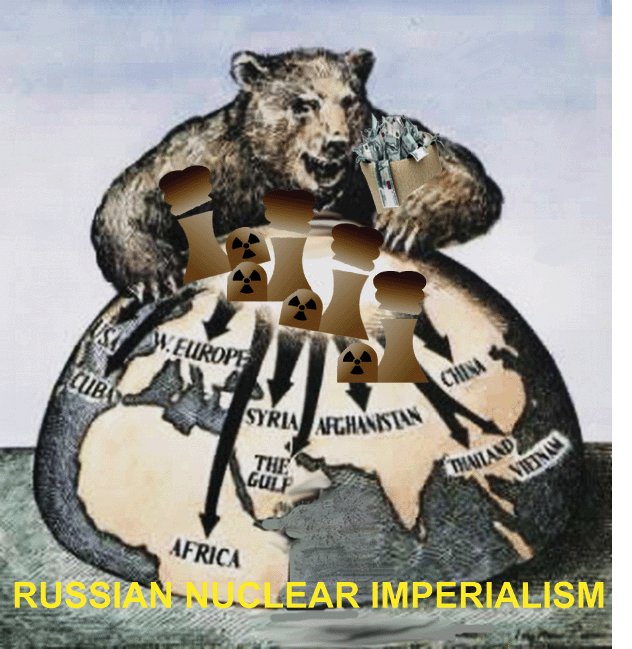
Power hungry Russia foisting nuclear power on Egypt – Africa – where it is not needed
|
Why Russia Is Pushing Unneeded Nuclear Power Plants On Egypt, Oil Price, By Haley Zaremba – Sep 22, 2020, In recent years, Russia and China have been facing off to spread their nuclear power dominion to a new, huge, and vastly untapped market: Africa. The two nuclear power giants have been in competition to corner the market, with Russia aiming to grow its position in a sector that China has historically dominated. Earlier this summer, German media company DW News reported on a new Russian-funded and -controlled nuclear center being developed in Kigali: “The Center of Nuclear Science and Technologies, planned for completion by 2024, will include nuclear research labs as well as a small research reactor with up to 10 MW capacity.” And the Rwandan plant is just the beginning. “Ethiopia, Nigeria and Zambia have signed similar deals with Rosatom, while countries such as Ghana, Uganda, Sudan, and DRC have less expansive cooperation agreements.”Now, there is a new forum for nuclear takeover in Africa: Egypt. As reported by AllAfrica this week, “Egypt’s venture into nuclear power has been planned from the top-down, with environmental groups and rights organizations expressing reservations, energy analysts questioning the need for the country’s first nuclear plant, and many details of agreements with Russia remaining murky.” ……….. The main issue at play here is water. In Egypt, most areas receive less than eighty millimeters of precipitation per year. Water, therefore, is an especially precious commodity. The top complaint, therefore, is about the massive quantities of water needed to keep nuclear reactors cool to avoid meltdown. Any concerns about public health due to radiation and high costs of construction are secondary to the issue of water usage.
Another common complaint is that nuclear is not really needed in Egypt, where considerable deposits of natural gas have been discovered off the coast – enough to account for an energy surplus. This raises questions about the purpose of the project – is it really to create more and greener energy, or is it ultimately about power relations and geopolitical attachments between the infamously opaque Egyptian Nuclear and Radiological Regulatory Authority and the infamously power-hungry Russian government? https://oilprice.com/Energy/Energy-General/Why-Russia-Is-Pushing-Unneeded-Nuclear-Power-Plants-On-Egypt.html |
|
Iran will not renegotiate nuclear deal if Biden wins US presidency, Zarif says
|
Iran will not renegotiate nuclear deal if Biden wins US presidency, Zarif says
Iranian foreign minister said returning to the terms of the accord should happen ‘without conditions’ Middle East Eye, By MEE staff, Washington: 21 September 2020
Iranian Foreign Minister Mohammad Javad Zarif said on Monday that Tehran has no plans of renegotiating the 2015 nuclear deal, stressing that Washington must return to the accord “without condition”.
Speaking to the Council on Foreign Relations in a virtual interview, Zarif discussed a broad range of topics including the prospect of reviving the nucler agreement that Donald Trump nixed in 2008. Asked how Iran would react if Joe Biden wins the US presidency in the upcoming November election, Zarif said Tehran is concerned with Washington’s policies, not internal US politics. ……. https://www.middleeasteye.net/news/iran-zarif-nuclear-deal-biden-us-presidency |
|
Iran a most transparent country for IAEA inspections
Tehran’s Nuclear Program Most Transparent Among IAEA Members, https://financialtribune.com/articles/national/105333/tehran-s-nuclear-program-most-transparent-among-iaea-members , 18 Sept 20, Iran’s permanent representative to Vienna-based international organizations said the Islamic Republic has the most transparent nuclear program among member states of the International Atomic Energy Agency, as proven through numerous inspections of the country’s nuclear sites by the UN agency.
“The fact that 22% of all global inspections done by the IAEA have been carried out in Iran proves that Iran enjoys the most transparent peaceful nuclear program among the member states of the agency,” Kazem Gharibabadi said in an address to the IAEA Board of Governors on Thursday, IRNA reported.
The envoy reminded that the high level of cooperation between Tehran and the agency had not come by easily to be “easily weakened as a result of a few parties’ myopic political interests”.
He was referring to the United States and the Israeli regime’s immense pressure on the agency to try and find fault with Tehran’s nuclear work.
Under pressure from Israel, the US’ most prominent regional ally, Washington quit a historic 2015 nuclear accord with Tehran and world powers two years ago. The US then returned sanctions that the deal, formally known as the Joint Comprehensive Plan of Action, had lifted, not even bothering to exempt food items and medicines from the illegal bans.
Still under Israeli pressure, the agency cited “concerns” earlier this year about two Iran-based sites. Iran first refused access to the sites, arguing that the alleged information provided to the IAEA had been cooked up by Israel’s spy agencies.
Tehran, however, later allowed access to the sites on a purely voluntary basis and only to honor its cooperation with the IAEA.
“In order for the agency’s integrity to be preserved, its members should seriously avoid exerting any pressure on it,” Gharibabadi said.
JCPOA’s “handful of enemies” came up with “baseless and unfounded” allegations about the Iranian sites after falling short of all pretexts to destroy the international agreement, he said, urging the agency and its board to avoid falling for their plots.
Double StandardsThe Iranian official also criticized the double standards applied by the agency’s members toward the Israeli regime and its nuclear activities. He pointed out two instances of singularity concerning Israel, the regime’s being the only Middle Eastern party that has refused to sign up to the nuclear Non-Proliferation Treaty and is the exclusive owner of nuclear weapons in the region. “Still thanks to the double-standard approaches adopted by some IAEA members, the regime has snubbed the entire international community and IAEA’s requests to fall in line with the agency’s safeguards and allow inspections by its experts,” the Iranian diplomat said. “Israel remains the biggest source of concern for regional security,” Iran’s ambassador stressed, noting that the regime possesses various types of weapons of mass destruction, evaded similar treaties addressing these weapons and has recurrently threatened and attacked neighboring countries. |
|
While other nations seek conciliation, agreement, the U.S. will declare that all international sanctions are back in force
 US to declare nuclear sanctions on Iran are restored, Rome Sentinel, September 17, 2020 US to declare nuclear sanctions on Iran are restored, Rome Sentinel, September 17, 2020WASHINGTON — In defiance of overwhelming opposition, the United States is preparing to declare that all international sanctions against Iran have been restored. Few countries believe the move is legal, and such action could provoke conflict at the United Nations. Despite an agreement brokered during the Obama administration, Iran still pursues nuclear enrichment necessary to produce nuclear weapons. The Associated Press story did not mention that an explosion two months ago at Natanz, Iran, destroyed a key facility likely used to manufacture high quality centrifuges essential for refining uranium for such weapons. President Donald Trump’s administration will announce on Saturday that U.N. sanctions on Iran eased under the 2015 nuclear deal are back in force. Other members of the U.N. Security Council, including U.S. allies, disagree and have vowed to ignore the step. The Trump administration already has slapped extensive sanctions on Iran, but could impose penalties on countries that don’t enforce the U.N. sanctions it claims to have reimposed. Trump plans to address Iran in a speech to the General Assembly on Tuesday. ……. https://romesentinel.com/stories/us-to-declare-nuclear-sanctions-on-iran-are-restored,103958 |
|
IAEA and China helping Saudi Arabia with its nuclear ambitions
China and IAEA are helping Saudi Arabia achieve its nuclear ambitionsAlthough Saudi Arabia has pledged that its nuclear program is strictly peaceful, Crown Prince Mohammed Bin Salman said the kingdom would develop a bomb if Iran did so. The Print JONATHAN TIRONE 16 September, 2020 Vienna: The United Nations nuclear watchdog has been working in parallel with Chinese officials to help Saudi Arabia exploit uranium — the key ingredient for nuclear power and weapons — despite its inspectors being frozen out of the kingdom.
The International Atomic Energy Agency published a document ahead of its annual conference next week showing the Vienna-based organization assisting Saudi efforts to make nuclear fuel. An institute in Beijing affiliated with the IAEA has been prospecting for uranium in Saudi Arabia……..
The Saudis have stepped up their pursuit of nuclear technologies in recent years, piquing the interest of companies from South Korea to Russia and the U.S. The kingdom is nearing completion of its first reactor, a low-powered research unit being built with Argentina’s state-owned INVAP SE. It has repeatedly pledged that its nuclear program is strictly for peaceful purposes, but Crown Prince Mohammed Bin Salman said the kingdom would develop a bomb if its regional rival Iran did so.
Nuclear non-proliferation experts have long warned that without adequate safeguards, IAEA technical cooperation can unwittingly help countries develop weapons capabilities………
While Saudi Arabia has been open about its ambitions to generate nuclear power, less is known about the kinds of monitoring the kingdom intends to put in place. President Donald Trump’s administration sent a letter to Saudi Arabia a year ago setting requirements to access U.S. atomic technology. The baseline for any agreement is tougher IAEA inspections that include a so-called Additional Protocol — the same monitoring standard applied in Iran and more than 130 other nations, which allows inspectors wider access to sites including uranium mines.
The kingdom is among only 31 countries worldwide that still applies an old set of IAEA regulations that don’t allow inspections. On Monday, the agency said it was beginning a new initiative to roll back those rules because they can’t provide adequate assurance that all activity is for exclusively peaceful purposes.
“I’m approaching them, telling them that in 2020 this is no longer adequate,” Grossi said. “We have to be up to a minimum standard.”
The IAEA provided financial and technical aid to develop Pakistan’s uranium mines and improve plutonium-producing reactors even after the country tested a nuclear weapon in 1998 in defiance of a non-proliferation treaty. While that aid was intended for civilian nuclear power, scientists involved in those projects said Pakistan used uranium mined with agency help for weapons.
The IAEA similarly helped North Korea develop its uranium mines before it kicked inspectors out in 2003. Syria, under investigation since 2007 for allegedly building a secret atomic-weapons reactor, used an IAEA-built lab to produce uranium ……..https://theprint.in/world/china-and-iaea-are-helping-saudi-arabia-achieve-its-nuclear-ambitions/503674/#:~:text=The%20International%20Atomic%20Energy%20Agency,for%20uranium%20in%20Saudi%20Arabia.
1 This Month
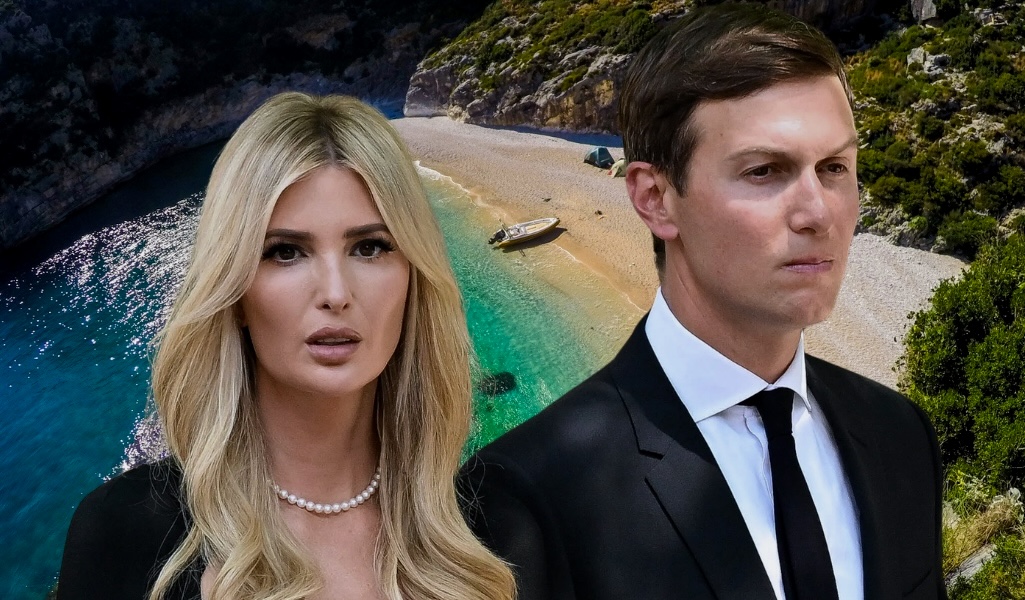
Protect Sazan Island from the Trump family! https://secure.avaaz.org/campaign/en/protect_sazan_island_from_the_trump_family_loc/?bqFCVab&v=174511&cl=22707147157&_checksum=5e9dde668860e8231c33699735e16a1fbf22ab2cb01da50c999fe8732b9775ef&utm_source=email&utm_medium=blast_email&utm_campaign=174511
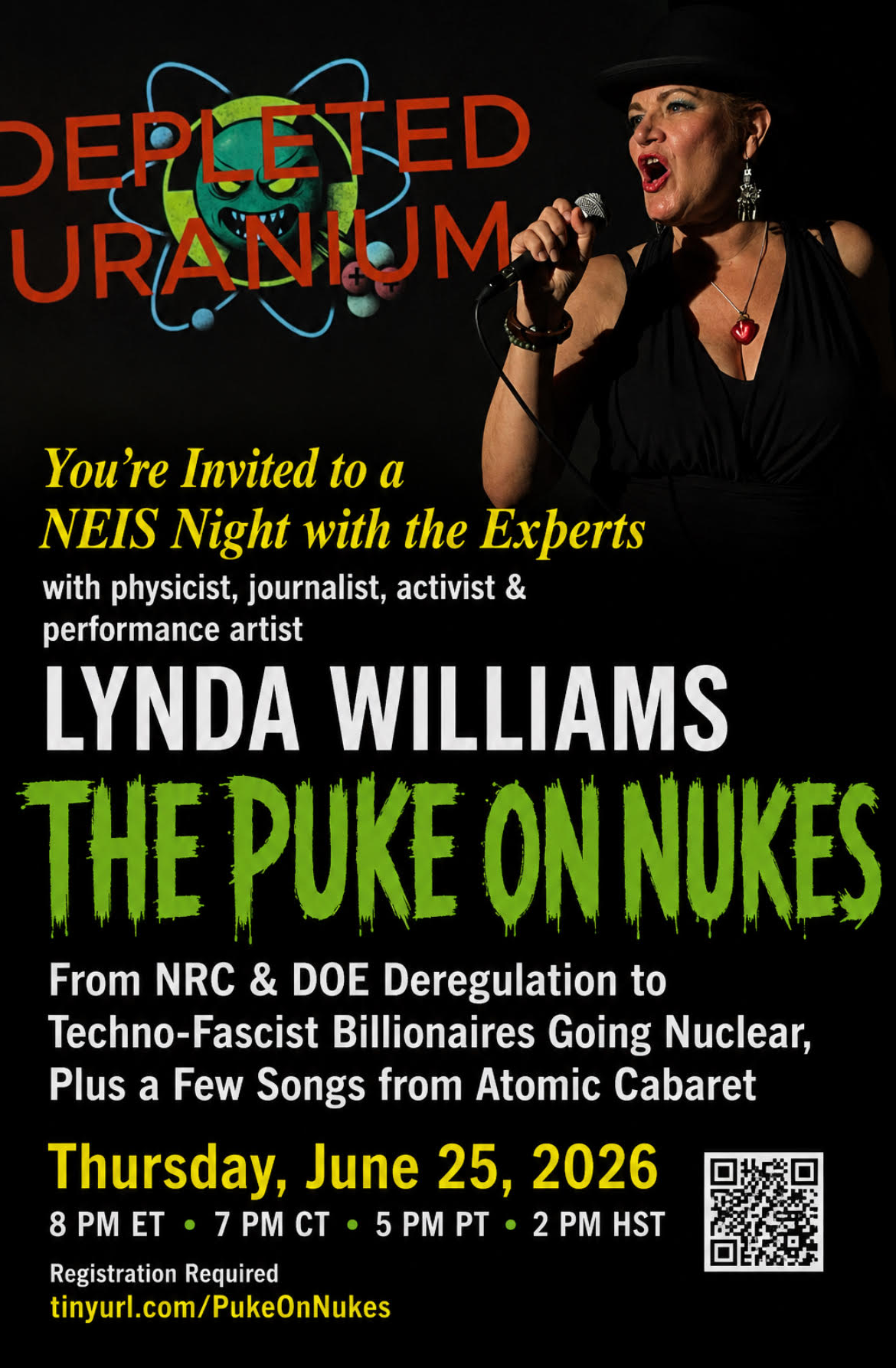
25 June- THE PUKE ON NUKES
Thursday, June 25, 2026
7pm Central Time (8pm ET, 6pm MT, 5pm PT) UTC – 5
From NRC & DOE Deregulation to Techno-Fascist Billionaires Going Nuclear, Plus a Few Songs from Atomic Cabaret REGISTER
26 June – Radiation Trainwreck at the NRC / Join the Protect Better Campaign – https://us02web.zoom.us/meeting/register/4ZlZ5_qLSHGiLSCg8FF6Bg#/registration


Cuba Is Not a Failed State – It Is a Besieged State
PETITION: “Global Appeal to Endorse Palestinian Right of Return of Refugees”
To see nuclear-related stories in greater depth and intensity – go to https://nuclearinformation.wordpress.com
-
Archives
- June 2026 (152)
- May 2026 (306)
- April 2026 (356)
- March 2026 (251)
- February 2026 (268)
- January 2026 (308)
- December 2025 (358)
- November 2025 (359)
- October 2025 (376)
- September 2025 (257)
- August 2025 (319)
- July 2025 (230)
-
Categories
- 1
- 1 NUCLEAR ISSUES
- business and costs
- climate change
- culture and arts
- ENERGY
- environment
- health
- history
- indigenous issues
- Legal
- marketing of nuclear
- media
- opposition to nuclear
- PERSONAL STORIES
- politics
- politics international
- Religion and ethics
- safety
- secrets,lies and civil liberties
- spinbuster
- technology
- Uranium
- wastes
- weapons and war
- Women
- 2 WORLD
- ACTION
- AFRICA
- Atrocities
- AUSTRALIA
- Christina's notes
- Christina's themes
- culture and arts
- Events
- Fuk 2022
- Fuk 2023
- Fukushima 2017
- Fukushima 2018
- fukushima 2019
- Fukushima 2020
- Fukushima 2021
- general
- global warming
- Humour (God we need it)
- Nuclear
- RARE EARTHS
- Reference
- resources – print
- Resources -audiovicual
- Weekly Newsletter
- World
- World Nuclear
- YouTube
-
RSS
Entries RSS
Comments RSS
 nuclear-news