Iran Foreign Ministry defends latest nuclear measures
Foreign Ministry Defends Latest Nuclear Measures, Financial Tribune, 21 Aug 21,
Iran reiterated that its nuclear program is peaceful and said it had informed the International Atomic Energy Agency about its latest nuclear enrichment activities.
It added that its moves away from the 2015 nuclear deal would be reversed if the United States returned to the accord and lifted sanctions.
“If the other parties return to their obligations under the nuclear accord and Washington fully and verifiably lifts its unilateral and illegal sanctions … all of Iran’s mitigation and countermeasures will be reversible,” Foreign Ministry Spokesman Saeed Khatibzadeh said, ISNA reported.
The remarks by the senior diplomat came after the UN atomic watchdog said in a report on Tuesday that Iran has accelerated its enrichment of uranium to the 60% purity level……………………….
The talks have been at a standstill since the inauguration of Iran’s new President Ebrahim Raeisi, although he says he supports efforts to lift US sanctions. https://financialtribune.com/articles/national/109860/foreign-ministry-defends-latest-nuclear-measures
Russia, Germany, hope efforts to save Iran nuclear deal will be continued — Putin
Russia, Germany hope efforts to save Iran nuclear deal will be continued — Putin, Tass, 20 Aug 21, The Russian leader also said he had informed Merkel about his telephone conversation with Iranian President Ebrahim Raisi on August 18 MOSCOW, August 20. /TASS/. Russia and Germany hope that efforts towards saving the Iran nuclear deal will be continued after a new government is formed in Iran, Russian President Vladimir Putin said after talks with visiting German Chancellor Angela Merkel.
“When discussing the situation around the Iran nuclear deal, we with Mrs Chancellor expressed the hope that after a new government is formed in Iran, strenuous efforts will be continued to preserve the Joint Comprehensive Plan of Action,” he said.
Putin also said he had informed Merkel about his telephone conversation with Iranian President Ebrahim Raisi on August 18.
The JCPOA Joint Commission has had several offline meetings in Vienna since April to discuss prospects for the United States’ possible return to the deal and steps needed to ensure full and efficient compliance with the deal’s terms by all its signatories. The commission members continue to discuss ways of restoring the nuclear deal at informal meetings in various formats, including at an expert level. JCPOA participants also hold separate consultations with the US delegation without Iran’s participation. It was originally planned to finish consultations in late May and then – in early June………… https://tass.com/politics/1328453
Biden’s Iran envoy calls nuclear deal’s fate ‘one big question mark
Biden’s Iran envoy calls nuclear deal’s fate ‘one big question mark’, Politico, By ALEXANDER WARD and QUINT FORGEY 08/19/2021 ROBERT MALLEY, the man President JOE BIDEN has tasked with putting the United States back into the Iran nuclear deal, isn’t supremely confident he’ll succeed in his mission.
“It’s just one big question mark,” he told NatSec Daily during an exclusive interview in his State Department office. Rejoining the multinational accord “is not something that we can fully control,” he said, citing a lack of engagement from the Iranians.
Negotiations between the United States, Iran and five world powers have proceeded fruitlessly since April. Tehran’s side won’t even speak directly with Washington’s and instead prefers working through intermediaries while in Vienna. That dance was complicated by the arrival of new Iranian President EBRAHIM RAISI, a hardliner who experts suspect is more skeptical of the diplomatic effort than his pact-signing predecessor. No open bargaining has taken place since Raisi came to power in mid-July.
………….. Should the United States and Iran fail to agree on terms in the coming months, the envoy says his team is preparing some contingencies. One is that Washington and Tehran sign a wholly separate deal, complete with different parameters than the current accord. Another is a suite of punitive responses in coordination with European allies, though Malley didn’t specifically detail what those would be………… https://www.politico.com/newsletters/national-security-daily/2021/08/19/exclusive-bidens-iran-envoy-calls-nuclear-deals-fate-one-big-question-mark-494049
Iraq needs energy, but nuclear power is not the answer
Nuclear power won’t fix Iraq’s energy crisis, Bulletin of the Atomic Scientists, By Nils Holst | August 18, 2021 On June 29, Iran halted gas and electricity exports to Iraq over nonpayment of fees. The move left millions of Iraqis without power as temperatures soared to more than 120 degrees, turning cities into ovens and throwing the embattled government of Prime Minister Mustafa al-Kadhimi into yet another political firestorm. While the Iranian move was clearly designed to increase Tehran’s influence over its neighbor, it also raises questions about Iraq’s proposal last month to restart the country’s civilian nuclear program, once the subject of proliferation concern……………….
On June 29, Iran halted gas and electricity exports to Iraq over nonpayment of fees. The move left millions of Iraqis without power as temperatures soared to more than 120 degrees, turning cities into ovens and throwing the embattled government of Prime Minister Mustafa al-Kadhimi into yet another political firestorm. While the Iranian move was clearly designed to increase Tehran’s influence over its neighbor, it also raises questions about Iraq’s proposal last month to restart the country’s civilian nuclear program, once the subject of proliferation concern.
Iraq’s nuclear legacy. Iraq received its first research reactor from the Soviet Union in 1962, and acquired several more over the next two decades. Although these reactors were purportedly developed for peaceful purposes, Iraq launched a covert nuclear weapons program in the early 1970s in violation of the Nuclear Non-Proliferation Treaty, which it signed in 1968. Concerned with Iraq’s likely nuclear weapons development, Israel bombed the Osiraq reactor complex in 1981, driving Iraq’s nuclear weapons program underground. Iraq spent the next decade experimenting with different methods to enrich uranium covertly to weapons-grade levels (typically 90 percent uranium 235), along with additional research on nuclear weapons designs.
After the 1991 Gulf War, the United Nations Security Council instructed the International Atomic Energy Agency (IAEA) to dismantle Iraq’s nuclear weapons program. The IAEA removed all weapons-grade nuclear material from Iraq and destroyed or disabled the country’s nuclear facilities. Iraq was reluctant to cooperate with international inspectors, however, which, coupled with then-President Saddam Hussein’s tendency to exaggerate his country’s weapons-of-mass-destruction capabilities, led US intelligence agencies to incorrectly assess that Iraq was hiding a nuclear weapons program. This assessment led to the 2003 US invasion, after which it was discovered that Hussein had not, in fact, restarted the program.
The Iraqi government made efforts to conform to international nonproliferation norms in the post-Hussein era. Iraq ratified the IAEA Additional Protocol in 2012, giving the IAEA greater insight into the country’s nuclear activities, and the Comprehensive Nuclear Test Ban Treaty in 2013. The UN Security Council lifted restrictions on Iraq’s nuclear industry in 2010. Current and former government officials have routinely floated the idea of using nuclear power to solve the country’s crippling energy shortages,
which leave large parts of the country without power during the hot summer months, a major cause of political unrest in recent years.
In June, Kamal Hussein Latif, chairman of the Iraqi Radioactive Sources Regulatory Authority, said the Iraqi government is currently in talks with Russia’s Rosatom about a $40 billion plan to build eight nuclear reactors. Latif also said Iraq discussed the plan with French, American and South Korean officials. Rosatom has secured contracts to construct nuclear reactors with several of Iraq’s neighbors, including Turkey, Iran, Jordan, and Egypt, although the contract with Jordan later fell through.
The $40 billion question. Part of Iraq’s nation-building strategy is ensuring greater access to electricity, and Baghdad sees nuclear power as an attractive way to address this challenge. The proposed eight-reactor plan would provide the country with a steady 11 gigawatts of power, bridging the gap between supply and demand even during the hottest part of the year. Iraq would reduce its reliance on Iranian gas, free up more of its hydrocarbons for export, and limit its dependence on carbon-based fuel generally. Nuclear power could also boost the legitimacy of al-Kadhimi’s government, and potentially rehabilitate Iraq’s image as an upstanding member of the civilian nuclear community.
There are some problems with this plan, though. Establishing and maintaining nuclear facilities would impose a large financial burden on a government already struggling to provide basic services to its citizens. Declining oil prices in 2020 forced Iraq to dip into its foreign reserves to pay public-sector salaries, and to shelve a much smaller plan to repair and upgrade the country’s dilapidated transmission and distribution network. And don’t forget the $4 billion Iraq owes Iran in unpaid utility bills, the cause of the most recent blackouts sweeping the country.
Even with favorable terms, a $40 billion project would be hard to justify given the government’s difficulty meeting its current financial obligations.
Compounding the affordability problem is the fact that about two thirds of generated power isn’t paid for, due to theft or unmetered connections. The government already heavily subsidizes electricity costs, with customers only paying for about 10 percent of the actual cost of the electricity they use. As a result, the Ministry of Electricity needs $12 billion per year to balance the books. Adding nuclear energy to the mix would push the ministry even deeper into the red, depending on how much financing Iraq could get for the project.
Proliferation is another major concern. The Iraqi power grid has weathered 35 terror attacks so far this year. Introducing nuclear technology would increase the risk of nuclear material falling into terrorist hands, either through a direct attack on a nuclear facility or via a corrupt government official. Given the country’s existing abundant energy resources, Iraq’s neighbors may suspect a civilian nuclear program is once again a cover story for weapons development. With other regional states like Turkey and Saudi Arabia toying with the idea of nuclear weapons, the appearance of seemingly unaffordable reactors in Iraq could be the straw that breaks the back of the already overburdened camel that is nonproliferation in the Middle East. Uncertainty over what happens if the Iran nuclear deal is not renewed, or renewed but expires in a few years, adds to this danger.
Iraq needs energy, but nuclear power is not the answer. In the short term, Iraq must rebuild its broken transmission and distribution system, overhaul the Ministry of Electricity’s fee collection system, and remove bottlenecks in the gas pipeline network to improve generation capacity. In the medium term, the country can encourage renewable energy use and diversify its energy mix by expanding solar power projects and refurbishing existing hydroelectric facilities. These infrastructure projects will ensure Iraq has reliable and consistent power generation in the long term, and be a better use of resources than an unnecessary, budget-busting prestige project. https://thebulletin.org/2021/08/nuclear-power-wont-fix-iraqs-energy-crisis/
Turkey’s Akkuyu nuclear station a cause for anxiety in the Eastern Mediterranean
Turkey’s Akkuyu nuclear power plant is a cause of concern https://cyprus-mail.com/2021/08/15/turkeys-akkuyu-nuclear-power-plant-is-a-cause-of-concern/ August 15, 2021 Dr Yiorghos Leventis
Turkey is an energy hungry economy. According to the International Atomic Energy Agency (IAEA) assessment of Turkey’s energy needs in 2020, the country currently imports approximately 72 per cent of its energy demand.
To address the problem of increasing domestic energy demand, Ankara has been actively pursuing nuclear energy to lessen its high dependency on energy imports. Consequently, in May 2010, Russia and Turkey signed a cooperation agreement, under which Rosatom State Cooperation has since been constructing the Akkuyu nuclear power plant (NPP). This NPP will eventually contain four reactors with a combined capacity of 4800 MW. Other nuclear power projects in Sinop, Black Sea region and the Eastern Thrace region remain in the planning stages.
Construction of the Akkuyu NPP begun in December 2017. Its final cost is expected to rise to over 20 billion USD – roughly equivalent to the size of Cyprus’ economic output in 2020. The first reactor is expected to become operational in 2023, the year that marks the centenary anniversary of the Republic of Turkey. No doubt, Erdogan’s government is planning festivities for this significant event, to boost its plunging popularity.
Despite serious concerns about the safety of the Akkuyu NPP, located as it is, in the high seismic activity region of Mersin, construction continues. Every consecutive year in the following three years (2024-26) will see a new reactor coming into operation.
The first controversy over the impact of this huge nuclear power project on the environment appeared already six years ago: on January 12, 2015, it was reported that the signatures of specialists on a Turkish government-sanctioned environmental impact report had been forged. The appointed specialists had resigned six months prior to its submission, and the contracting company had then made unilateral changes to the report. Naturally so, this revelation sparked protest within the Turkish Cypriot community. The proximity of the prospective Akkuyu nuclear power plant to our island could not be lightheartedly ignored. This powerful NPP will operate at about 110 kms from Nicosia. In the context of an unexpected nuclear accident caused by an earthquake or otherwise, north or south Cyprus becomes immaterial. A fatal nuclear accident carries the danger of overwhelming both parts of the island.
In this respect, it is vital that the leaderships of both Greek and Turkish Cypriots stand in unison: the Eastern Mediterranean environment and its protection is a common cause. More so as Ankara exhibits a mixed approach, to say the least, towards international legal instruments on nuclear safety: Whereas Turkey signed up to the Convention on Nuclear Safety which entered into force October 24, 1996, it has not done the same with the Joint Convention on the Safety of Spent Fuel Management and on the Safety of Radioactive Waste Management which entered into force June 18, 2001.
Dr Yiorghos Leventis is director of the International Security Forum: www.inter-security-forum.org
Hopes rise that Iran hardliner will rejuvenate nuclear deal
Hopes rise that Iran hardliner will rejuvenate nuclear deal. New foreign minister likely to wield more influence in Tehran than his predecessor, Ft.com 13 Aug 21, ”……………………………………..Amirabdollahian, a hardliner close to Iran’s elite Revolutionary Guards, is set to become the main interlocutor with the west after he was nominated this week as the Islamic Republic’s foreign minister. He takes over from Mohammad Javad Zarif, a veteran US-educated diplomat who used a mix of charm and skills honed over a decade as the face of Iranian diplomacy in his dealings with western powers. Zarif was one of the main supporters of the nuclear deal, which he helped seal and then battled to keep alive as tensions with the west soared after Donald Trump, the then US president, abandoned the accord three years ago.
But Iranian analysts are optimistic that Amirabdollahian — a 57-year-old graduate of Iran’s universities who comes from a humble background — may be able to revive the deal and achieve more lasting diplomatic results. They say his connections to the powerful hardline factions at the heart of the regime will give him greater domestic influence than Zarif, who by his own admission was often undermined by the Revolutionary Guards. “Under Amirabdollahian, we will not see more radicalism, rather more co-ordination between the diplomatic and military fields,” said a regime insider. ……………..
Amirabdollahian is no stranger to nuclear talks. In 2013 he was involved in secret discussions with Omani officials. These led to confidential meetings with Americans and Europeans that were the forebear to the 2015 accord. ……
Mohammad Mohajeri, a conservative analyst, said choosing Amirabdollahian over more radical figures who opposed the nuclear deal signalled that Raisi wanted to avoid escalating tensions with its foes…….. https://www.ft.com/content/03c031f7-9194-4cb4-b3c7-91c176d4b770
Iran’s research reactors prove the nuclear deal is still working
How Iran’s research reactors prove the nuclear deal is still working, Bulletin of the Atomic Scientists By Samuel M. Hickey | August 11, 2021 An underexamined success story from the 2015 Iran nuclear deal negotiations is the effective blocking of Tehran’s ability to collect plutonium for a nuclear bomb. Not only has the nuclear deal, known officially as the Joint Comprehensive Plan of Action (JCPOA), been effective in constraining Iran’s program, but it could, suitably adapted, provide a standard of guidance for research reactor construction that would lower proliferation risks worldwide.
There are two pathways to get the fissile material to fuel a nuclear bomb. The first is to enrich uranium, and the second is to recover plutonium from the spent fuel of a reactor. The JCPOA blocked both pathways. Now, Iran’s advancing enrichment program is the key obstacle for diplomats trying to revive the deal, and those talks have dragged on for months as the program marches forward.
Many nuclear weapons, including that used on Hiroshima, are uranium-based. However, every country that has a nuclear weapon has produced and separated plutonium for weapons. Iran has not reopened this path despite efforts by its conservative-dominated parliament to pressure the United States to lift sanctions in return for nuclear deal compliance. In December 2020, Iran passed a nuclear law requiring a return to a threatening research reactor design. So far, Iran has not adhered to that law because the modifications made to the original design under the JCPOA made the reactor even more efficient. This suggests that even in its weakened state, the JCPOA continues to provide permanent solutions to potential proliferation concerns. Its revival can further cement these gains as a “longer and stronger” deal is sought.
The inherent problem with nuclear reactors. Here’s the conundrum for nuclear negotiators both with Iran now and potentially with other countries in the future: Given enough time, all civilian research reactors will produce enough plutonium for a nuclear weapon that could be reprocessed—or separated from irradiated uranium—in their spent fuel. Some, like Iran’s Arak heavy water research reactor, as originally designed, are particularly well suited for plutonium production but also have civilian purposes such as medical radioisotope production and the testing of nuclear fuel and materials. Argentina, Brazil, South Korea, Sweden, and Taiwan have considered acquiring reprocessing plants but eventually demurred, given international reaction to the potential for proliferation. There is no public evidence that Iran has a reprocessing facility.
Since the Trump administration pulled out of the JCPOA, Iran has introduced advanced centrifuges and stockpiled uranium. This means that the amount of time for Iran to pursue a nuclear weapon via the enriched uranium path has been significantly decreased. However, the spent fuel pathway has not been reactivated as Iran has not done any work to reconstruct the Arak heavy water research reactor to its original design nor has it engaged in any reprocessing activities. Iran’s hedging strategy, ostensibly to accumulate leverage in negotiations to revive the JCPOA, suggests that nuclear brinksmanship with uranium enrichment grants a certain flexibility that plutonium does not……………………….. https://thebulletin.org/2021/08/how-irans-research-reactors-prove-the-nuclear-deal-is-still-working/
EU optimistic on nuclear deal despite Iran leadership change
EU optimistic on nuclear deal despite Iran leadership change
Agreement is “most likely scenario” says senior official Politico BY JACOPO BARIGAZZI, August 7, 2021 European Union negotiators are optimistic on the chances of reviving the nuclear deal with Iran, despite the election of hardliner Ebrahim Raisi as the country’s new president, a senior EU official said Saturday.
“We still think that the most likely scenario is an agreement. What I cannot tell you is when and [under] what conditions” said the senior official.
International negotiators have held six rounds of talks in Vienna to restore full compliance with the 2015 nuclear deal which has been on life support since the Trump administration’s decision to pull out in 2018. The deal curbed Tehran’s nuclear ambitions in exchange for sanctions relief.
Negotiations were paused following the election of Raisi in June. He was sworn in this week to replace the more moderate Hassan Rouhani.
Contacts this week with Iranian officials on the sidelines of Raisi’s inauguration have not clarified when talks on the nuclear deal will resume or who will be in Tehran’s negotiating team, said the EU official, who spoke on condition of anonymity due to the sensitivity of the talks……………….. https://www.politico.eu/article/eu-iran-nuclear-deal-leadership-vienna/
Problems continue for Iran nuclear talks as new Iran President takes office
Hopes of revived Iran nuclear talks dim amid delays as new hardline president takes office, By Natasha Bertrand and Nicole Gaouette, CNN, August 6, 2021 Washington (CNN)Biden administration officials are becoming increasingly pessimistic about reviving the Iran nuclear deal as the country’s new hardline president takes office and its nuclear program continues to accelerate, national security and intelligence officials familiar with the negotiations told CNN.
The deal’s original signatories known as the P5+1 — the US, UK, France, China, Russia and Germany — had hoped to begin their seventh round of negotiations by now. Some officials have expressed disappointment that the talks have been so delayed since the last round ended on June 20, especially as Iran’s nuclear advances risk making the current deal irrelevant.Now that President Ebrahim Raisi is officially in power after his inauguration Thursday, officials are hoping meetings will begin again in the next few weeks, but it’s still not clear if and when that will happen.
While Raisi is considered a hardliner, he has said that in principle he does not oppose the nuclear deal, known as the Joint Comprehensive Plan of Action or JCPOA, and American officials have said they don’t expect him to walk away from the talks………
Failure to return to the deal would be a blow to President Joe Biden’s foreign policy agenda.His officials, meanwhile, have fumed privately that they inherited major roadblocks to re-entering the deal from the previous administration and are now thinking through contingency plans.After President Donald Trump pulled out of the deal in 2018 and imposed a maximum pressure campaign on Iran with stiff new sanctions, Iran began developing and testing centrifuges that have shortened the time it would take to produce enough material for a bomb……..There is speculation among the P5 + 1 partners that the delay could be a tactical move by Iran. Increasingly, however, they also believe there is a real debate going on within the Iranian system on how to proceed with negotiations. https://edition.cnn.com/2021/08/06/politics/iran-nuclear-talks-pessimism-delay-raisi/index.html
Mainstream media ignores how Israel continues sabotaging the Iran nuclear deal
Mainstream media ignores how Israel continues sabotaging the Iran nuclear deal https://mondoweiss.net/2021/08/mainstream-media-ignores-how-israel-continues-sabotaging-the-iran-nuclear-deal/Once again, the danger of conflict between Israel and Iran is rising. Once again, the mainstream U.S. media is either ignoring or distorting the news.BY JAMES NORTHAUGUST 4, 2021 Once again, the danger of conflict between Israel and Iran is rising. Once again, the mainstream U.S. media is either ignoring or distorting the news.
A drone attacked an Israeli-linked oil tanker in the Arabian Sea last week, and after a few days the U.S., Britain and Israel all accused Iran. The Washington Post report briefly noted that the drone strike is the latest in “tit-for-tat attacks” by both Israel and Iran, but stopped there. The Post nowhere mentioned that Israel is credibly charged with sponsoring attacks inside Iran, including assassinating Iranian scientists. At least the Post carried a report: the New York Times so far has ignored the latest escalation.
U.S. Secretary of State Antony Blinken promised a “collective response” to the allegedly Iranian drone attack, but the new Israeli prime minister Naftali Bennett warned that Israel could act against Iran on its own.
You have to turn to Fred Kaplan in Slate to find out what’s really going on here. Kaplan, who is not known as a foreign policy dove, accurately points out that the escalation must be considered against the backdrop of the negotiations to restore the Iran nuclear deal, which have reportedly stalled. He starts by noting that in the past two years “Israel has launched at least 10 attacks on Iranian vessels,” a statistic missing in the Post and Times. Even more vitally, Kaplan explains that Israel stokes the tension to try and sabotage the deal. He says that once Biden took office, then-prime minister Benjamin Netanyahu “stepped up attacks on Iran — knowing that Iran would strike back, which would make a new nuclear deal still more unpalatable politically.”
Kaplan connects the dots:
On April 6, hours before U.S., Iranian and European diplomats assembled in Vienna to reopen talks on the nuclear deal, an elite commando unit of the Israeli Navy attacked an Iranian military vessel.
Netanyahu is gone, for now, but Kaplan argues that Bennett must maintain the same hardline, anti-nuclear deal policy: “Israel’s fragile new government is in no position to take daring moves toward engaging with Iran.”
Contrast Kaplan’s insights about the Iran deal with a July 31 New York Times report on the same subject. The Times article does warn that the negotiations have stalled. But somehow the paper does not mention Israel one single solitary time.
Israel Says Iran Should ‘Never Become a Nuclear Power.’ But What if It Already Is One?
Analysis | Israel Says Iran Should ‘Never Become a Nuclear Power.’ But What if It Already Is One? When politicians talk of a ‘nuclear Iran,’ what exactly do they mean? It is important to understand the terminology, and also for Israel to be on the same page as the Americans before nuclear talks resume The epicenter of the core of Israeli policy on Iran’s nuclear ambitions and program can be reduced to one sentence: “Israel will never allow Iran to become a nuclear power.” A sentence that says it all despite the inherent vagueness, and accurately reflects Israeli interests and its mode of thought….. https://www.haaretz.com/israel-news/.premium.HIGHLIGHT-iran-is-already-a-nuclear-threshold-state-can-israel-live-with-it-1.10072666
U.S. Weighing New Sanctions on Iran as Nuclear Deal Hangs in Balance
U.S. Weighing New Sanctions on Iran as Nuclear Deal Hangs in Balance https://www.democracynow.org/2021/7/30/headlines/us_weighing_new_sanctions_on_iran_as_nuclear_deal_hangs_in_balance HEADLINEJUL 30, 2021 The U.S. is reportedly planning to impose sanctions on Iran’s drone and guided missile programs. This comes following reports the Biden administration is weighing tightening oil sanctions on Iran if talks to relaunch the nuclear deal — which the U.S. unilaterally withdrew from — fail. Iran has repeatedly said it will not recommit to the agreement until the U.S. lifts its devastating sanctions.
Egypt postpones nuclear power plant amid tensions with Russia.
Egypt postpones nuclear power plant amid tensions with Russia over Nile dam,
Egypt pauses El-Dabaa nuclear power plant project for two years amid tensions hanging over the relationship with Russia due to its recent position on the Grand Ethiopian Renaissance Dam crisis and its rapprochement with Ethiopia. George Mikhailuly 28, 2021
Egypt announced the postponement of the completion of the El-Dabaa nuclear plant project to 2030 instead of 2028. Egyptian Nuclear and Radiological Regulatory Authority spokesman Karim al-Adham confirmed in statements to the Egyptian economic newspaper Enterprise July 14 that El-Dabaa nuclear plant will not be completed before 2030 due to the disruption caused by the coronavirus pandemic…………. https://www.al-monitor.com/originals/2021/07/egypt-postpones-nuclear-power-plant-amid-tensions-russia-over-nile-dam
Israel determined to“maintain military superiority”, in preparation for a nuclear Iran
Gantz: We must ‘adapt our plans’ to prepare for a nuclear Iran
Prime minister says Israel carefully monitoring situation in Lebanon and that IDF currently in better place than it was in 2006 war against Hezbollah, Tims of Israel, By JUDAH ARI GROSS15 July 2021, Defense Minister Benny Gantz on Wednesday called for Israel to step up its preparations for the possibility of Iran obtaining a nuclear weapon……… Israel has maintained that as it is not part of the nuclear deal, it is free to act as it sees fit to prevent Iran from obtaining an atomic bomb.
In his speech, Gantz called for the government to allow the country’s security services to “maintain military superiority, which ensures our secure existence and advances peace.”
The remark appeared to refer to a report by the Kan broadcaster earlier in the evening that the IDF was asking the government for a major budget increase, in large part to prepare itself to conduct strikes aimed at thwarting Iran’s nuclear pursuit………https://www.timesofisrael.com/gantz-we-must-adapt-our-plans-to-prepare-for-a-nuclear-iran/
Iran trying to enrich uranium metal that could help develop nuclear weapon, UN watchdog says,
Iran trying to enrich uranium metal that could help develop nuclear weapon, UN watchdog says, ABC, 7 jul 21, Iran has begun the process of producing enriched uranium metal in a move that could help it develop a nuclear weapon, the UN atomic watchdog says.
Key points:
- Tehran says it is trying to develop fuel for a research reactor
- Donald Trump abandoned the US-Iran nuclear deal while US president
- The move could torpedo talks seeking to bring both nations back into the deal
Britain, France and Germany have threatened talks to revive the 2015 Iran nuclear deal in light of the news, while the United States has described it as an “unfortunate step backwards”.
Tehran said the steps, which were disclosed by the International Atomic Energy Agency (IAEA) on Tuesday, were aimed at developing fuel for a research reactor.
US and European officials made clear that Iran’s decision would complicate, and potentially torpedo, indirect US-Iranian talks seeking to bring both nations back into compliance with the 2015 deal, which was abandoned by former US president Donald Trump.
The Joint Comprehensive Plan of Action (JCPOA) imposed curbs on Iran’s nuclear program to make it harder for Tehran to develop fissile material for nuclear weapons in return for the lifting of economic sanctions………………https://www.abc.net.au/news/2021-07-07/iran-nuclear-move-threatens-to-torpedo-deal-talks-with-us/100275388
1 This Month
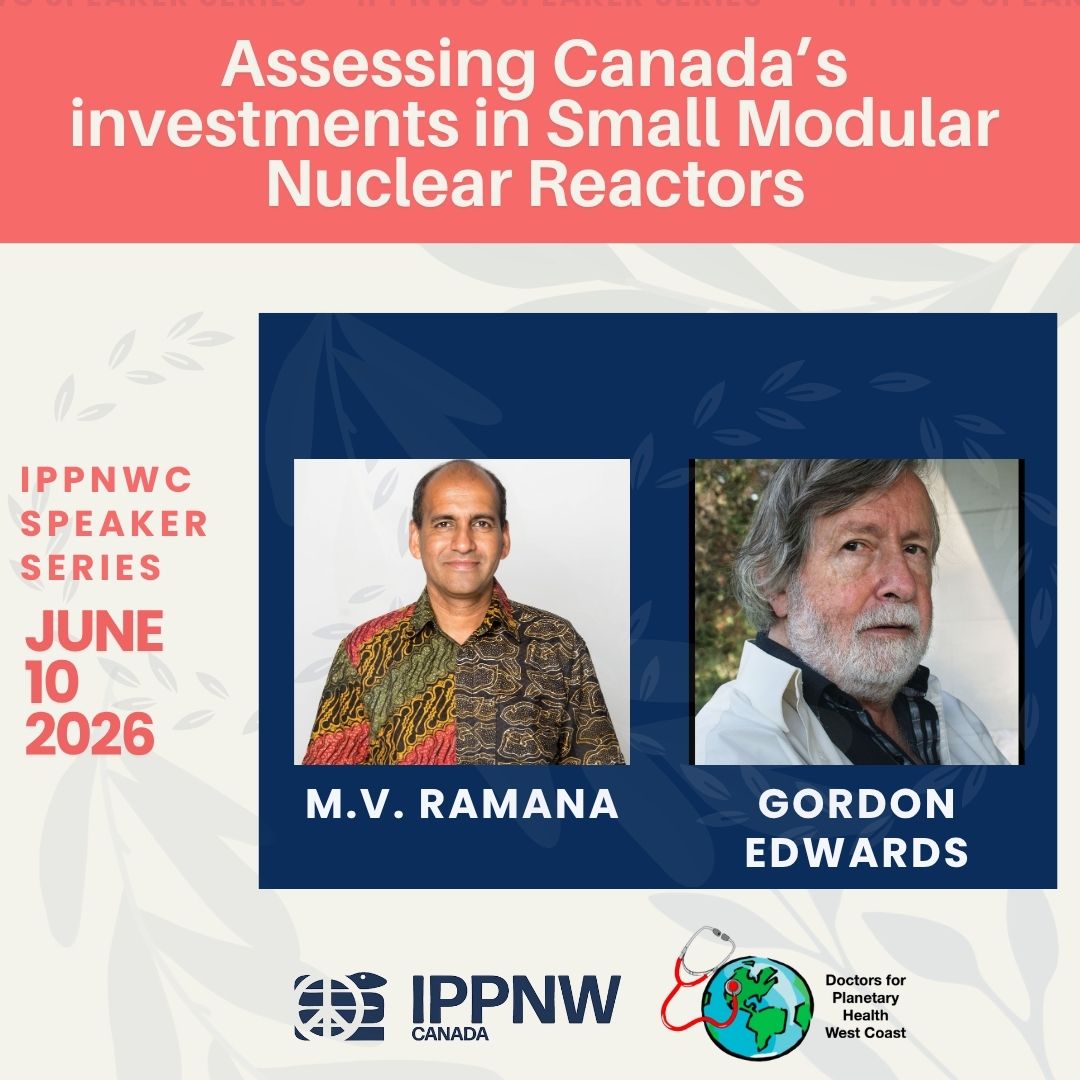
10 June – Assessing Canada’s Investments in Small Modular Nuclear Reactors – https://zoom.us/meeting/register/IiqHA5feRhaEBycOLNTJlA#/registration


Cuba Is Not a Failed State – It Is a Besieged State
PETITION: “Global Appeal to Endorse Palestinian Right of Return of Refugees”
To see nuclear-related stories in greater depth and intensity – go to https://nuclearinformation.wordpress.com
-
Archives
- June 2026 (89)
- May 2026 (306)
- April 2026 (356)
- March 2026 (251)
- February 2026 (268)
- January 2026 (308)
- December 2025 (358)
- November 2025 (359)
- October 2025 (376)
- September 2025 (257)
- August 2025 (319)
- July 2025 (230)
-
Categories
- 1
- 1 NUCLEAR ISSUES
- business and costs
- climate change
- culture and arts
- ENERGY
- environment
- health
- history
- indigenous issues
- Legal
- marketing of nuclear
- media
- opposition to nuclear
- PERSONAL STORIES
- politics
- politics international
- Religion and ethics
- safety
- secrets,lies and civil liberties
- spinbuster
- technology
- Uranium
- wastes
- weapons and war
- Women
- 2 WORLD
- ACTION
- AFRICA
- Atrocities
- AUSTRALIA
- Christina's notes
- Christina's themes
- culture and arts
- Events
- Fuk 2022
- Fuk 2023
- Fukushima 2017
- Fukushima 2018
- fukushima 2019
- Fukushima 2020
- Fukushima 2021
- general
- global warming
- Humour (God we need it)
- Nuclear
- RARE EARTHS
- Reference
- resources – print
- Resources -audiovicual
- Weekly Newsletter
- World
- World Nuclear
- YouTube
-
RSS
Entries RSS
Comments RSS
 nuclear-news