Israeli Cabinet Approves 19 New Apartheid Colonies in Occupied West Bank
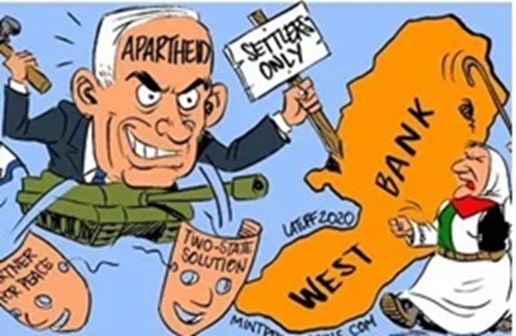
“The ONLY reason Israel gets away with this naked thievery is US military and political support,” said one observer.
Brett Wilkins, Dec 21, 2025, https://www.commondreams.org/news/israel-19-new-settlements
Israel’s Cabinet on Sunday finalized approval of 19 new Jewish-only settler colonies in the illegally occupied West Bank, a move the apartheid state’s far-right finance minister said was aimed at thwarting Palestinian statehood.
Cabinet ministers approved the legalization of the previously unauthorized settler outposts throughout the occupied Palestinian territory, bringing the total number of new settlements in recent years to 69.
The move will bring the overall total number of exclusively or overwhelmingly Jewish settlements—which are illegal under international law—to more than 200, up from around 140 just three years ago.
Included in the new approval are two former settlements—Kadim and Ganim—that were evacuated in compliance with the now effectively repealed 2005 Disengagement Law, under which Israel dismantled all of its colonies in the Gaza Strip and four in the West Bank.
“This is righting a historic injustice of expulsion from 20 years ago,” Israeli Finance Minister Bezalel Smotrich—who is a settler—said on Sunday. “We are putting the brakes on the rise of a Palestinian terror state.”
“We will continue to develop, build, and settle the inherited land of our ancestors, with faith in the righteousness of our path,” Smotrich added.
Following an earlier round of approval for the new settlements last week, Palestinian presidential spokesperson Nabil Abu Rudeineh said, “All Israeli settlement activity is illegal and constitutes a violation of international law and international legitimacy resolutions.”
United Nations Secretary-General António Guterres earlier this month denounced Israel’s “relentless” settlement expansion.
Such colonization, said Guterres, “continues to fuel tensions, impede access by Palestinians to their land, and threaten the viability of a fully independent, democratic, contiguous, and sovereign Palestinian state.”
Israeli Prime Minister Benjamin Netanyahu and other Israeli officials—some of whom, including Smotrich, deny the very existence of the Palestinian people—have vowed that such a state will not be established.
While Netanyahu—who is wanted by the International Criminal Court for alleged war crimes and crimes against humanity in Gaza—is under pressure from right-wing and far-right government officials, settlers, and others to annex all of the West Bank, US President Donald Trump recently said that “Israel would lose all of its support from the United States if that happened.”
Some doubted Trump’s threat, with Democracy for the Arab World Now (DAWN) executive director Sarah Leah Whitson reacting to the new settlements’ approval by posting on X that “the ONLY reason Israel gets away with this naked thievery is US military and political support.”
Israel seized and occupied the West Bank including East Jerusalem along with Gaza in 1967, ethnically cleansing around 300,000 Palestinians. Many of these forcibly displaced people were survivors of the Nakba, the Jewish terror and ethnic cleansing campaign that saw more than 750,000 Palestinians flee or be forced from Palestine during the foundation of the modern state of Israel.
Since 1967, Israel has steadily seized more and more Palestinian land in the West Bank while building and expanding colonies there. Settlement population has increased exponentially from around 1,500 colonists in 1970 to roughly 140,000 at the time of the Oslo Accords in 1993—under which Israel agreed to halt new settlement activity—to around 770,000 today.
Settlers often attack Palestinians and their property, including in deadly pogroms, in order to terrorize them into leaving so their land can be stolen. Israeli colonists have also attacked Israel Defense Forces soldiers they view as standing in the way of their expansion.
In July 2024, the International Court of Justice—where Israel is currently facing a genocide case related to the Gaza war—found the occupation of Palestine to be an illegal form of apartheid that must be ended as soon as possible. The ICJ also ruled that Israeli settler colonization of the West Bank amounts to annexation, also a crime under international law. Article 49 of the Fourth Geneva Convention states that an “occupying power shall not deport or transfer parts of its own civilian population into the territory it occupies.”
As the world’s attention focused on Gaza during the past two years, Israeli soldiers and settlers have killed at least 1,039 Palestinians—at least 225 of them children—in the West Bank. This year, at least 233 Palestinians, including at least 52 children, have been killed so far, according to the United Nations Relief and Works Agency for Palestinian Refugees in the Near East.
On Saturday, Israeli occupation forces shot and killed two Palestinians in the northern West Bank, including a 16-year-old boy, Rayan Abu Muallah, who the Israel Defense Forces said was shot after he threw an object at its troops.
One excavator, 10,000 bodies, a sea of rubble: inside Gaza’s effort to retrieve and bury its dead
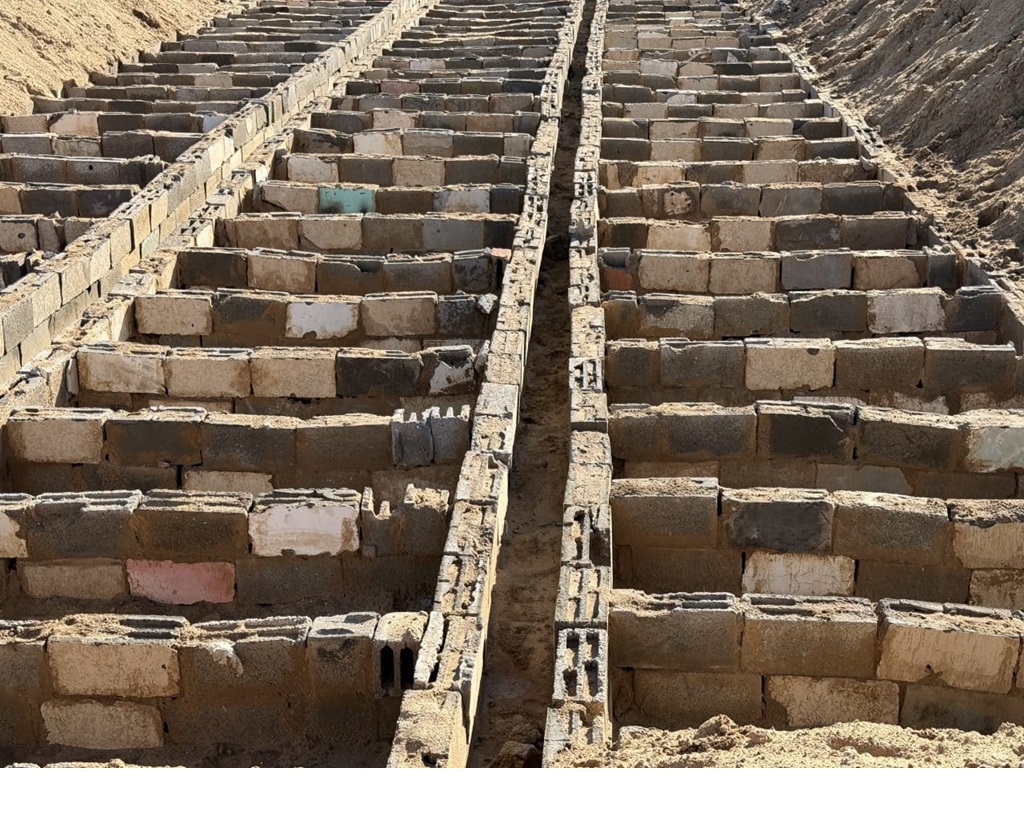
Under the relative calm of a ceasefire, Civil Defense crews in Gaza are undertaking the monumental feat of recovering thousands of bodies still trapped under the rubble.
By Tareq S. Hajjaj December 25, 2025 https://mondoweiss.net/2025/12/one-excavator-10000-bodies-a-sea-of-rubble-inside-gazas-effort-to-retrieve-and-bury-its-dead/
Fatima Salem waits outside anxiously, as rescue crews dig through the rubble of her family’s home in Gaza City on December 15th. With bated breath, she clings to the hope that all 60 of her family members – brothers, sisters, nieces, nephews, and grandchildren – who were buried under the rubble after an Israeli airstrike targeted their building, will be rescued.
But this was not a typical rescue operation, and Fatima was not waiting for signs of life. She knew everyone was dead. That’s because the airstrike on her family’s home happened almost exactly two years ago, on December 19, 2023, just two months into the genocide.
The 60 members of the Salem family are some of an estimated 10,000 Palestinians whose bodies remain trapped under the extensive rubble across the Gaza Strip. Due to two years of active Israeli bombardment, the targeting and killing of civil defense crews, and the lack of heavy duty machinery required to excavate the tons of concrete rubble, rescue missions in Gaza have been largely stalled.
But on December 15, the Civil Defense in the Gaza Strip announced the start of a long recovery process of bodies that have remained under the rubble for two years. The operations are focused only on the areas in the Gaza Strip not actively being occupied by the Israeli military, which accounts for roughly half of the territory.
The first rescue mission was for the Salem family in Gaza City.
“Here I lost every person dear to me; they are the closest people to me—my brothers and sisters and their families. I lost everyone in this place,” Fatima Salem cried. When she heard about the rescue mission, she rushed to the scene of the destroyed building, where the souls of her relatives had remained trapped for two years.
She said that her family was targeted on December 19, 2023, after they fled from northern Gaza to Gaza City due to the intensification of shelling and fighting in their residential area. They found refuge in a building whose residents had evacuated, and gathered there with their children and families. No one who was in the building at the time of the bombing survived.
“I want to see them, to embrace them, to bid them farewell,” she said as she stood before rows of bones and skulls wrapped in white plastic shrouds, laid out on the ground in front of her. Some have been identified by their present surviving relatives, while others have not yet been identified.
Omar Suleiman, a member of the forensic department at the Civil Defense, was working at the scene of the Salem family. He described a painstaking process of trying to identify and record the identities of the deceased, saying that crews are documenting descriptions of the condition of the bodies in terms of form, height, and the level of decomposition they have reached, along with preserving a DNA sample when possible.
According to videos published by the Civil Defense on its Telegram channel, what is recovered from the remains of the martyrs is sometimes only bones, not always complete skulls, but rather bones from the chest and the feet, making identification a difficult matter.
According to Suleiman, the level of decomposition in the bodies was very high, which made it difficult for families to identify them. The lack of tools and technology for advanced DNA testing has also made the identification process more difficult. He said that crews were working “with very limited tools and under difficult and exhausting conditions.”
Civil Defense crews say they recovered all the bodies from the building, all belonging to the martyrs of the Salem family, in addition to 17 more bodies buried in the vicinity around the building. After two years, Fatima Salem was finally able to bid farewell.
Thousands of bodies, limited resources
In Khan Younis in southern Gaza, on December 20, recovery operations began in areas of the city, starting with the martyrs of the Abu Hilal family. They were killed on August 13, 2025.
Huda Abu Hilal, in her 20s, was the sole survivor of a strike that targeted her family’s home on August 13, 2025. Though she was inside the building at the time, just before the airstrike, Huda’s mom had asked her to go downstairs for something. At that moment, the home was bombed, and everyone except Huda was killed.
“All my family was killed except me—my mother and father, my sisters, and their children—all of them were martyred,” she told Mondoweiss, adding that because her neighborhood remained under an evacuation order after the bombing, crews were not able to access her home to rescue her family.
At the site, Samah Hamad, head of the forensic department of the Civil Defense, described the challenge ahead for crews.
He said that in Khan Younis alone, there are 75 destroyed buildings with hundreds of bodies buried under the rubble that need to be recovered. Many of the buildings, he said, are located in the area behind the ‘yellow line’ that are inaccessible to Palestinian crews. But even in the areas that they can access, the rescue mission is slow moving.
Hamad notes that the slowdown in these operations is due to the fact that all crews in the Gaza Strip are working with very limited equipment, as only one large excavator is being used in multiple cities and areas in the Strip.
For the past two months since the ceasefire was announced, Huda said she would pass by the rubble of the home often, even if just to recite a prayer for her family still trapped beneath the rubble, hoping that they would be rescued soon.
“Now I can honor my martyred family by burying them, and we can move them to graves and make visiting them a habit,” Huda said.
Out of a superhero movie: Companies are coming up with plans to block out the sun.

Private companies are jumping into the race to deploy particles to the atmosphere to reduce global warming, prompting enthusiasm from investors and concerns from some scientists, Josh Marcus reports
Independent, 25 December 2025
A secretive team of scientists is working on an unprecedented plan to fill the atmosphere with tiny particles that imitate a volcanic eruption and block out the sun. It might save humanity, or it could spiral out of control. Thousands stand opposed to such a scheme, but these plans may move forward anyway.
This is not the plot of the next Marvel movie, but solar geoengineering, one of the very non-fictional frontiers of climate research.
In October, a start-up called Stardust Solutions announced it had raised $60 million to pursue technology that will bounce the sun’s light back into space using reflective, airborne particles.
It is the largest investment ever for a company pursuing such a strategy to cool our rapidly overheating planet, according to Politico, and builds off the firm’s previous $15 million funding series.
Stardust Solutions is one of a small but closely-watched group of companies and researchers pursuing such ideas in the hopes of making rapid gains on the climate crisis as international action remains perilously insufficient.
The basic idea is to limit how much of the sun’s energy reaches the Earth’s surface. While this won’t tackle the root cause of the climate crisis — still-rising greenhouse gas emissions from fossil fuels — “solar radiation modification” could reduce the global temperature and slow the melting of the polar ice caps, buying us all some much-needed time.
While the idea has been around since the mid-Sixties, small-scale outdoor experiments have only begun in the last two decades, including cloud seeding in Switzerland and testing salt spray’s impacts on the clouds above the Great Barrier Reef.
For every fledgling experiment, another project has been canceled in the face of public opposition. A 2024 effort spraying sea salt aerosols from a decommissioned air craft carrier in Alameda, California, was quickly shut down because of outrage from community members who said they were not consulted, while the Indigenous Saami people of Scandinavia were among those who opposed the aborted 2021 SCoPEx project in Sweden, arguing the plan to spray calcium carbonate dust into the atmosphere violated both their philosophy towards the Earth and would not be an impactful scientific strategy to stop the root causes of the climate crisis’
Despite these concerns, the daily glut of increasingly dire climate updates – including the recent news of the likely irreversible decline of ocean corals – has given new momentum to this once fringe idea.
A ‘human-safe’ particle spray
Stardust Solutions was founded in 2023 by Yanai Yedvab and Amyad Spector, nuclear physicists who met at an Israeli national laboratory, and particle physicist Eli Waxman, former chief scientist at the Israeli Atomic Energy Commission……………………………………………………………………………………………………………………………………………………………………………………… https://www.independent.co.uk/climate-change/dim-sun-climate-change-b2877722.html
Netanyahu plans to brief Trump on possible new Iran strikes

Israeli officials believe Iran is expanding its ballistic missile program. They are preparing to make the case during an upcoming meeting with Trump that it poses a new threat.
Dec. 21, 2025, By Gordon Lubold, Courtney Kube, Dan De Luce and Carol E. Lee
WASHINGTON — Israeli officials have grown increasingly concerned that Iran is expanding production of its ballistic missile program, which was damaged by Israeli military strikes earlier this year, and are preparing to brief President Donald Trump about options for attacking it again, according to a person with direct knowledge of the plans and four former U.S. officials briefed on the plans.
Israeli officials also are concerned that Iran is reconstituting nuclear enrichment sites the U.S. bombed in June, the sources said. But, they added, the officials view Iran’s efforts to rebuild facilities where they produce the ballistic missiles and to repair its crippled air defense systems as more immediate concerns.
Trump and Israeli Prime Minister Benjamin Netanyahu are expected to meet later this month in Florida at the president’s Mar-a-Lago estate. At that meeting, the sources said, Netanyahu is expected to make the case to Trump that Iran’s expansion of its ballistic missile program poses a threat that could necessitate swift action.
They said part of his argument is expected to be that Iran’s actions present perils not only to Israel but also to the broader region, including U.S. interests. The Israeli leader is expected to present Trump with options for the U.S. to join or assist in any new military operations, the sources said.
Asked Thursday about a Dec. 29 meeting with Netanyahu, Trump told reporters, “We haven’t set it up formally, but he’d like to see me.” Israeli officials have announced a Dec. 29 meeting.
The Israeli government declined to comment. The Iranian Mission at the United Nations did not respond to a request for comment…………………..
Israel’s plans to brief Trump on — and give him the option to join — possible additional military strikes in Iran come as the president is considering military strikes in Venezuela, which would open a new warfront for the U.S., and as he is touting his administration’s bombing campaign against Iran’s nuclear program and success negotiating a ceasefire between Israel and Hamas.
In an address to the nation on Wednesday, Trump said told Americans he’s “destroyed the Iran nuclear threat and ended the war in Gaza, bringing for the first time in 3,000 years, peace to the Middle East.”
The Israeli concerns about Iran come as Tehran has expressed interest in resuming diplomatic talks with the U.S. aimed at curtailing its nuclear deal, which could potentially complicate Israel’s approaching Trump about new strikes………………….
The strikes the U.S. conducted in June against Iran, known as Operation Midnight Hammer, included more than 100 aircraft, a submarine and seven B-2 bombers. Trump has said they “obliterated” Iran’s nuclear enrichment sites, though some early assessments indicated the damage may not have been as extensive as the president has said.
Israeli forces at the same time struck several of Iran’s ballistic missile sites.
Israeli military strikes in April and October 2024 also damaged all of Iran’s S-300 air defense systems, the most advanced system the country operates, clearing the way for manned flights into Iranian airspace months later by dramatically reducing the threat to pilots………………………………………………….. https://www.nbcnews.com/politics/white-house/netanyahu-plans-brief-trump-possible-new-iran-strikes-rcna250112
Israel’s growing role in Taiwan’s air defense alarms Beijing.
Israel’s expanding ties with Taiwan, particularly in missile defense, are quietly reshaping regional geopolitics and alarming Beijing. In this context, even small defense transfers could undermine years of careful diplomatic calibration.
Uriel Araujo, BRICS, Monday, December 22, 2025
Uriel Araujo, Anthropology PhD, is a social scientist specializing in ethnic and religious conflicts, with extensive research on geopolitical dynamics and cultural interactions.
Israeli-Taiwanese cooperation, long discreet and underreported, is now moving into far more sensitive terrain. Recent reports indicate that Israeli know-how has been quietly feeding into Taiwan’s emerging missile-defense architecture, the so-called “T-DOME,” a system explicitly inspired by Israel’s Iron Dome. As a matter of fact, this development has already triggered a blunt diplomatic rebuke from Beijing, raising uncomfortable questions about Israel’s long-standing balancing act between rival global powers.
A detailed account of this growing cooperation comes from Nadia Helmy, Visiting Senior Researcher at the Centre for Middle Eastern Studies (CMES), who notes that Chinese intelligence agencies have detected expanding Israeli assistance to Taiwan’s missile shield, particularly in radar integration, command-and-control architecture, and layered interception concepts. According to Helmy, Beijing views this cooperation not as an isolated commercial exchange but as a strategic signal, thereby crossing a political red line.
Taiwan’s T-DOME project is ambitious enough. Taipei plans to spend over USD 40 billion on a multi-layered air and missile defense system combining indigenous technology with foreign expertise, drawing lessons from Israel’s battlefield experience.
What makes the situation more delicate is not simply the technology itself but the political choreography surrounding it. Taiwan’s deputy foreign minister reportedly made a secret trip to Israel in December 2025 to discuss defense cooperation, a visit confirmed by multiple outlets. Israeli lawmakers have also traveled to Taiwan, prompting a formal condemnation from China’s embassy in Israel.
There is a context to such moves. Taiwan’s political discourse has increasingly framed Israel as both a security model and a civilizational reference point. One may recall that Taiwanese officials have even invoked biblical imagery when criticizing authoritarianism, explicitly citing Israel as an example. Meanwhile, pro-Israel lobbying networks linked to AIPAC have been expanding their presence in Taiwan, a fact documented but rarely discussed in mainstream Western media.
Israel, for its part, has historically prided itself on its ability to balance competing global relationships. Thus far, it has managed to maintain workable ties with Russia and Ukraine simultaneously, for instance, while also navigating relations with both the US and China.
Be as it may, Taiwan represents a different category of sensitivity altogether. Unlike commercial technology transfers or infrastructure investments, missile defense cooperation touches the core of China’s security concerns. Suffice to say, Beijing’s reaction has been measured rather than escalatory, but unmistakably firm nonetheless. In any case, from China’s perspective, Israeli involvement in Taiwan’s air defense is not neutral, regardless of how it is framed in Tel Aviv.
Some analysts, such as geopolitical expert Sergio Restelli, have already warned that this (and other developments) could mark the end of Israel’s careful balancing with China.
Others argue that Israel is simply responding to pressure from Washington, especially under the Trump administration, which has doubled down on strategic competition with China while encouraging allies to “choose sides.” I’ve written before about how the Trump administration has been pressuring, “sidelining” and “leveraging” the Jewish State in a number ways, including through its Gaza Plan, apparently as part of an effort to rebalance the complex US-Israeli relationship………………………………….. https://infobrics.org/en/post/74234
Budour Hassan Sounds Alarm as Israeli Settlements Expand, Deepening Apartheid and Threatening Palestinian Statehood
December 23, 2025 , Joshua Scheer, https://www.youtube.com/watch?v=e1CvbfpeSVg
srael’s far-right government has recently approved the construction of 19 new settlements in the occupied West Bank. These settlements are considered illegal under international law, as the West Bank is recognized as occupied territory and the expansion of settlements undermines Palestinian rights.
Amnesty International researcher Budour Hassan describes this policy as reinforcing an “apartheid system” in the West Bank, meaning a system of segregation and discrimination that favors Israeli settlers over the Palestinian population.
Experts warn that continuing to build settlements makes it increasingly difficult to establish a viable Palestinian state, further entrenching the Israeli occupation and threatening any future peace agreements.
In short, the move intensifies the occupation, worsens inequality, and complicates prospects for Palestinian self-determination.
For more on Budour Hassan’s work: Budour Hassan, a Palestinian feminist, international lawyer, and human rights researcher at Amnesty International, played a central role in the landmark December 2024 report that concluded Israel is committing genocide against Palestinians in Gaza—the first such finding by an international human rights organization.
Hassan’s journey is deeply personal. Once a blind 19-year-old law student navigating the streets of Jerusalem, she defied her family’s expectations to become a leading voice for justice. Today, she delivers a powerful call to action: “Solidarity is naming the perpetrator, rejecting silence, refusing the passive voice… Solidarity is not just a word; it’s an action repeated over and over.”
Here Hassan offers a powerful reflection in her essay, “’A Fear of Negation’: Reading Edward Said in the Time of Genocide,” examining Said’s ability to remain critically engaged—with Arab and Palestinian leadership, societal challenges, and his own role as narrator—while honoring the full complexity of Palestinian life.
Hassan writes, “Even though it was under a blockade, Gaza was a living reenactment of what Edward Said would describe as the drama of Palestinian existence.” Drawing on Said’s insight, she highlights how grief can be transformed into a political tool, allowing us to honor not only Gaza’s martyrs but the city itself, with all its beauty and contradictions.
“This is the strength of Edward Said’s writing: that he was able to see the full spectrum of Palestinian humanity.”
Budour Hassan is a vital voice for the world—an indispensable voice on the global stage whose insights and advocacy resonate far beyond her community. She is a critical voice the world needs to hear, calling attention to human rights, justice, and the urgent struggles facing Palestinians today.
Iran, UK foreign ministers discuss nuclear issue in phone call
Dec 20, 2025, https://www.iranintl.com/en/202512192167
ranian Foreign Minister Abbas Araghchi spoke by phone with UK Foreign Secretary Yvette Cooper on Friday, saying Tehran is open to diplomacy based on respect.
“Iran has never rejected negotiations and dialogue based on respect for the Iranian nation’s legal rights and legitimate interests, but considers talks based on one-sided imposition unacceptable,” official media cited Araghchi as saying.
Araghchi criticized the “irresponsible” stance of the three European powers on Iran’s nuclear program, saying that Tehran is open to talks respecting its legal rights and legitimate interests but rejects unilateral imposition.
Cooper underlined Britain’s commitment to diplomacy on the nuclear dossier. No UK readout of the call has been issued.
The three European countries—France, Germany, and the United Kingdom—triggered the Iran nuclear deal snapback mechanism in August, leading to the reimposition of UN sanctions in September.
Iran and the International Atomic Energy Agency (IAEA) reached a technical understanding in Cairo in September, mediated by Egypt, aimed at gradually restoring inspectors’ access to nuclear sites.
Following the return of UN sanctions on Iran, Foreign Minister Abbas Araghchi said that the United States and three European powers had “killed” the Cairo nuclear agreement through what he called a sequence of hostile actions.
Araghchi said last month that Washington’s approach amounted to “dictation, not negotiation,” accusing the US of trying to achieve through diplomacy what it failed to gain by force.
“They want us to accept zero enrichment and limits on our defense capabilities,” he said. “This is not negotiation.”
Trump said Iran could avoid past and by reaching a nuclear deal, adding that any attempt to revive its program without an agreement would prompt further US action. He has repeatedly said Iran missed an earlier chance to avert the strikes by accepting a deal.
Israeli Cabinet Approves 19 New Apartheid Colonies in Occupied West Bank.
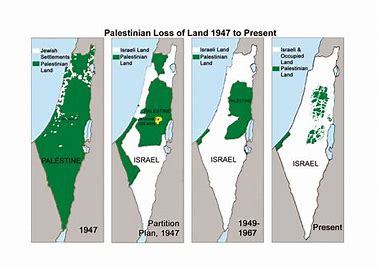
“The ONLY reason Israel gets away with this naked thievery is US military and political support,” said one observer.
Brett Wilkins, Dec 21, 2025, https://www.commondreams.org/news/israel-19-new-settlements
Israel’s Cabinet on Sunday finalized approval of 19 new Jewish-only settler colonies in the illegally occupied West Bank, a move the apartheid state’s far-right finance minister said was aimed at thwarting Palestinian statehood.
Cabinet ministers approved the legalization of the previously unauthorized settler outposts throughout the occupied Palestinian territory, bringing the total number of new settlements in recent years to 69.
The move will bring the overall total number of exclusively or overwhelmingly Jewish settlements—which are illegal under international law—to more than 200, up from around 140 just three years ago.
Included in the new approval are two former settlements—Kadim and Ganim—that were evacuated in compliance with the now effectively repealed 2005 Disengagement Law, under which Israel dismantled all of its colonies in the Gaza Strip and four in the West Bank.
“This is righting a historic injustice of expulsion from 20 years ago,” Israeli Finance Minister Bezalel Smotrich—who is a settler—said on Sunday. “We are putting the brakes on the rise of a Palestinian terror state.”
Israel’s Cabinet on Sunday finalized approval of 19 new Jewish-only settler colonies in the illegally occupied West Bank, a move the apartheid state’s far-right finance minister said was aimed at thwarting Palestinian statehood.
Cabinet ministers approved the legalization of the previously unauthorized settler outposts throughout the occupied Palestinian territory, bringing the total number of new settlements in recent years to 69.
RECOMMENDED…
‘No More Military Aid for Netanyahu,’ Says Sanders as Israel Ramps Up West Bank Takeover
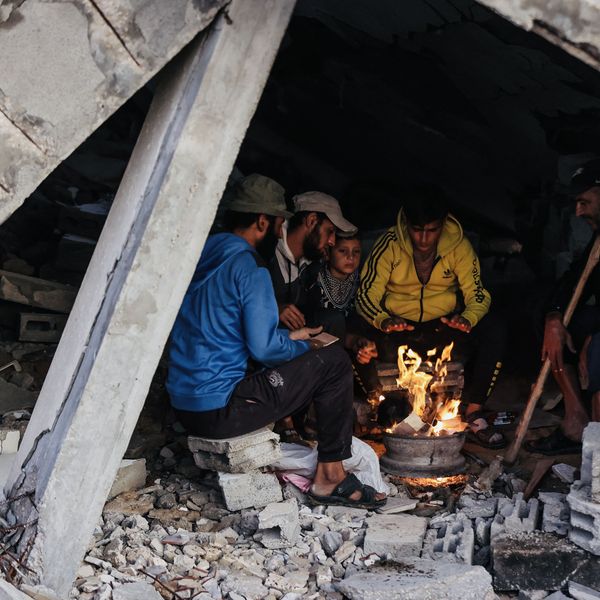
Trump Gaza Plan Condemned as ‘Concentration Camps Within a Mass Concentration Camp’
The move will bring the overall total number of exclusively or overwhelmingly Jewish settlements—which are illegal under international law—to more than 200, up from around 140 just three years ago.
Included in the new approval are two former settlements—Kadim and Ganim—that were evacuated in compliance with the now effectively repealed 2005 Disengagement Law, under which Israel dismantled all of its colonies in the Gaza Strip and four in the West Bank.
“This is righting a historic injustice of expulsion from 20 years ago,” Israeli Finance Minister Bezalel Smotrich—who is a settler—said on Sunday. “We are putting the brakes on the rise of a Palestinian terror state.”
Our people-powered journalism cannot survive without you
Your support allows Common Dreams to continue covering the stories and amplifying the voices that the corporate media never will. Make a tax-deductible year-end gift to ensure we can sustain the reporting needed to meet the challenges of 2026.
“We will continue to develop, build, and settle the inherited land of our ancestors, with faith in the righteousness of our path,” Smotrich added.
Following an earlier round of approval for the new settlements last week, Palestinian presidential spokesperson Nabil Abu Rudeineh said, “All Israeli settlement activity is illegal and constitutes a violation of international law and international legitimacy resolutions.”
United Nations Secretary-General António Guterres earlier this month denounced Israel’s “relentless” settlement expansion.
Such colonization, said Guterres, “continues to fuel tensions, impede access by Palestinians to their land, and threaten the viability of a fully independent, democratic, contiguous, and sovereign Palestinian state.”
Israeli Prime Minister Benjamin Netanyahu and other Israeli officials—some of whom, including Smotrich, deny the very existence of the Palestinian people—have vowed that such a state will not be established.
While Netanyahu—who is wanted by the International Criminal Court for alleged war crimes and crimes against humanity in Gaza—is under pressure from right-wing and far-right government officials, settlers, and others to annex all of the West Bank, US President Donald Trump recently said that “Israel would lose all of its support from the United States if that happened.”
Some doubted Trump’s threat, with Democracy for the Arab World Now (DAWN) executive director Sarah Leah Whitson reacting to the new settlements’ approval by posting on X that “the ONLY reason Israel gets away with this naked thievery is US military and political support.”
Israel seized and occupied the West Bank including East Jerusalem along with Gaza in 1967, ethnically cleansing around 300,000 Palestinians. Many of these forcibly displaced people were survivors of the Nakba, the Jewish terror and ethnic cleansing campaign that saw more than 750,000 Palestinians flee or be forced from Palestine during the foundation of the modern state of Israel.
Since 1967, Israel has steadily seized more and more Palestinian land in the West Bank while building and expanding colonies there. Settlement population has increased exponentially from around 1,500 colonists in 1970 to roughly 140,000 at the time of the Oslo Accords in 1993—under which Israel agreed to halt new settlement activity—to around 770,000 today.
Settlers often attack Palestinians and their property, including in deadly pogroms, in order to terrorize them into leaving so their land can be stolen. Israeli colonists have also attacked Israel Defense Forces soldiers they view as standing in the way of their expansion.
In July 2024, the International Court of Justice—where Israel is currently facing a genocide case related to the Gaza war—found the occupation of Palestine to be an illegal form of apartheid that must be ended as soon as possible. The ICJ also ruled that Israeli settler colonization of the West Bank amounts to annexation, also a crime under international law. Article 49 of the Fourth Geneva Convention states that an “occupying power shall not deport or transfer parts of its own civilian population into the territory it occupies.”
As the world’s attention focused on Gaza during the past two years, Israeli soldiers and settlers have killed at least 1,039 Palestinians—at least 225 of them children—in the West Bank. This year, at least 233 Palestinians, including at least 52 children, have been killed so far, according to the United Nations Relief and Works Agency for Palestinian Refugees in the Near East.
On Saturday, Israeli occupation forces shot and killed two Palestinians in the northern West Bank, including a 16-year-old boy, Rayan Abu Muallah, who the Israel Defense Forces said was shot after he threw an object at its troops.
Report: Netanyahu To Ask Trump To Support Another Attack on Iran
The Israeli PM is expected to make the case during a December 29 meeting at Mar-a-Lago
by Dave DeCamp | December 21, 2025 , https://news.antiwar.com/2025/12/21/report-netanyahu-to-ask-trump-to-support-another-attack-on-iran/
Israeli Prime Minister Benjamin Netanyahu is expected to ask President Trump to support another US-Israeli war on Iran, according to an NBC News report from Saturday.
The report said that Netanyahu will stress Israel’s concern over Iran’s production of ballistic missiles and will present Trump with options for the US to join or assist Israel with an attack on Iran. Israeli officials are also warning that Iran is reconstituting its nuclear sites that were bombed by the US during the war in June, but that was not their immediate concern.
According to a report from Israel Hayom, Israeli officials are preparing an “intelligence dossier” on Iran to present to Trump. Netanyahu’s office has said the meeting will take place at Mar-a-Lago on December 29, though President Trump suggested last week that it wasn’t finalized, saying, “We haven’t set it up formally, but he’d like to see me.”
Trita Parsi, Executive Vice President of the Quincy Institute for Responsible Statecraft, has been warning that another war with Iran was likely since Israel didn’t achieve all of its goals during its previous attack on the country, pointing to the fact that Iran’s missile strikes forced Israel to agree to a ceasefire quickly.
“The June war resulted in mutual deterrence, a situation Iran can accept, but one that is intolerable for Netanyahu and his legacy. Ultimately, the conflict was neither a victory for Israel nor for Iran,” Parsi wrote in Responsible Statecraft on Sunday, responding to the NBC report.
“It is precisely this balance of terror that prompts Israel to seek a new round – Israel’s military doctrine does not allow for any of its regional foes to deter it or challenge its military dominance. Iran’s missile program currently does exactly that,” Parsi added. “And this is precisely why Trump must say no to Netanyahu. Because Israel’s objective is not security in the conventional sense, but rather absolute dominance.”
Earlier this month, Trump suggested the US could destroy Iran’s ballistic missiles when a reporter said Iran was “reconstituting” its missile program. “Well, they can try, but it’s going to take them a long time to come back,” Trump said.
“But if they do want to come back and they want to come back without a deal, then we’re going to obliterate that one too. We can knock out their missiles very quickly. We have great power. And we helped Israel a lot. We were shooting down the drones. We were doing a lot of things for Israel. We did a good job for Israel. But Israel did a good job, they fought, they all fought bravely,” the president added.
Ethics matter more than ever – even in Israel

19 December 25, https://theaimn.net/ethics-matter-more-than-ever-even-in-israel/
Who’d have thought, in this time of crisis, lies and propaganda, that it might be the Jerusalem Post that showed us an ethical direction?
And, on another matter of ethics – the Jerusalem Post, again.
I’m pretty used to the pro-Zionist propaganda that spills out from the Israeli media, the American media, and the Australian media.
I don’t know if it’s Hannukah, Christmas, or what, but in the usual cacophony of news and opinion, – that normally unfashionable subject of ethics is now standing out.

The Jerusalem Post spelt out its horror at the new, and murderous symbolism, of the lapel image now worn by ultranationalist Israeli politicians. Closely resembling the previous symbol, which called for the return of the Israeli hostages, their new symbol calls for continued killing of Palestinians, as the lapel image morphs from a ribbon into a noose.
A golden noose around Israel’s soul – says the paper – “The golden noose goes far beyond poor taste. It represents a theology of death, a reverence for vengeance that distorts the face of Judaism and deals a severe blow to Israeli society.”
“Jews around the world would be hard-pressed to defend and embrace the Jewish state.“
And indeed, this noose-wearing thing might backfire – as Jews in Israel and beyond reflect on the ethics of the Netanyahu government’s war on Palestinians.
Almost simultaneously, came the news of the massacre of Jews at Bondi Beach. The mainstream corporate news outlets have, predictably, latched on to this, to engender more vengefulness and hatred, and to blame Australia’s Prime Minister for his support of Palestinian state rights.
There is much coverage and genuine concern for the victims of this cruel outrage and their families. In amongst this, some sentimental coverage of the brave man who tackled an armed killer. As the ABC pointed out, media coverage treated this man as an oddity – as being a Muslim, one would not expect such decency. – a media attitude that is subtly Islamophobic.
” Ahmed al-Ahmed a 43-year-old Sydney fruit shop owner and father of two, moved toward the attacker, wrapped him from behind, wrestled away the long gun, and forced the shooter to retreat. He was shot and hospitalized, but his split-second decision is widely credited with preventing even greater carnage.”
And commented – “There is something profoundly Hanukkah about that moment.”
The Post goes on to reflect on those non-Jews of history, who risked everything to save Jews, – Raoul Wallenberg. Oskar Schindler. Chiune Sugihara and more
“These stories are not only about the Holocaust, but they are also about moral clarity under pressure, the choice to see a fellow human being and refuse to look away.”
This man’s courage and generosity of spirit has impressed people world-wide, and his actions have been praised in the media, cutting through the general tone of anger and hatred
The author, ZVIKA KLEIN, reminds that Hannukah means “a demand that human beings choose decency over cruelty“
Which is pretty much what Christmas is supposed to mean, too.
While the merchants of hate, revenge, and political opportunism hold sway in the corporate media, voices for compassion and decency are being heard too. These are hopes to cling to for the coming year, and bring some positive meaning to Hannukah and Christmas,
Hi-tech holocaust: How Microsoft aids the Gaza genocide
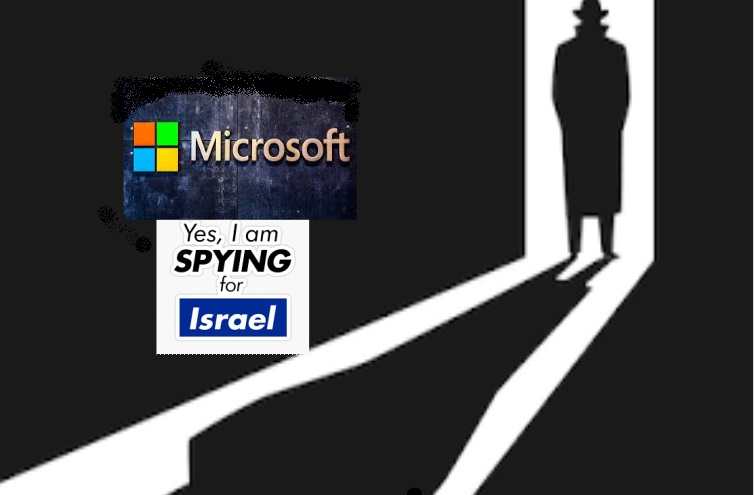
| Alan Macleod, MintPress News, 2025-10-27 |
Israel’s genocide is being powered by Microsoft.
From creating a massive digital dragnet, aiding in the production of A.I.-generated kill lists, hiring hundreds of Israeli spies to run its internal affairs, and suppressing figures opposing the slaughter, the Seattle-based tech corporation has played a key role in the violence.
MintPress has detailed the deep collaboration between the Israeli Defense Forces (IDF) and Amazon, Google, TikTok, Apple, Palantir, and Oracle, but Microsoft’s relationship with the government and armed forces of Israel is potentially the closest,leading then-CEO Steve Ballmer tostatethat “Microsoft is as much an Israeli company as an American company.” MintPress explores the decades-long partnership between Microsoft and Israel, and the employees trying to break that marriage from the inside.
Turning Code Into Carnage
“Among U.S. tech firms,” the Associated Press wrote, “Microsoft has had an especially close relationship with the Israeli military.” That relationship, it notes, massively expanded after the October 7, 2023, attacks.
In the months following October 7, the IDF’s usage of Microsoft’s Azure cloud service surged more than 200-fold. The amount of data from surveillance cameras, drones, checkpoints, biometric scanners, phone calls, and intercepted Palestinian personal data stored by the IDF on Microsoft servers doubledin the next nine months,reaching13.6 petabytes by July 2024 – equivalent to 23,000 years of audio, or seven trillion pages of text.
The point of all this was to create an enormous digital dragnet, where Palestinians’ every move, word, and keystroke was recorded in monitored in the greatest and most dystopian digital dragnet ever created. In the words of Yossi Sariel, the head of Unit 8200, the IDF’s surveillance division, the plan was to “track everyone, all of the time.”
Sariel argued that big data was the solution to Israel’s problems, envisaging a future where Israel intercepted and stored “a million calls an hour” from Palestine, and used A.I. to search for keywords and identify threats.
There was no way, however, that Israel could do this alone, as it did not possess the expertise or anything like the storage capacity needed for such a project. To this end, Sarieltravelledto Seattle in 2021 to meet with Microsoft CEO Satya Nadella, to pitch him on the surveillance partnership whereby Microsoft would build Unit 8200 a customized and segregated area within its Azure platform.
The Israeli military uses Microsoft Azure to transcribe, translate, and otherwise process intelligence garnered via mass surveillance, which is then linked to Israel’s A.I.-based weapons systems.
The largest and most controversial organization within the Israeli military, Unit 8200 has long been the centerpiece of Israel’s hi-tech spying operation. The unit is dedicated to surveillance, cyberwarfare, and online manipulation operations. Last year, it carried out the Lebanese Pager Attack, an act that wounded thousands of civilians. Unit 8200 agents were also behind many of the most infamous international spyware and hacking cases, including the Pegasus software, that was used to surveil tens of thousands of the world’s most prominent political leaders, journalists, and human rights campaigners.
Sariel’s policy of mass surveillance changed the internal attitude at Unit 8200. “Suddenly the entire public was our enemy,”said one officer. The gargantuan trove of information compiled in Microsoft Azure amounted to a vast repository on the entire Palestinian population – a giant database of kompromat that is used to extort and blackmail the region’s indigenous people. If a person was secretly gay, or cheating on their spouse, for example, that information was readily available to Unit 8200 agents, who would then use it to turn their targets into informants. One former Unit 8200 member revealed that, as part of their training, they were made to memorize different Arabic slang words for “gay”, so that they could identify them in conversations.
Palestinian man passes through a biometric gate at the Qalandia crossing near JerusalemThe cloud database is also used to provide after-the-fact justification for arrests of innocent peoples. Off-hand, out-of-context comments made years agocan be used to portray anyone as a member of Hamas, Palestinian Islamic Jihad, or another armed resistance force.
…………………………………………………………………………………………….Of course, the vast majority of the deaths have been civilians – around 70% were women and children. But Israeli officials can also go back after the fact and scour their digital dragnet to justify any killing, finding connections or any other incriminating evidence. A senior Israeli military officer described the cloud technology as “a weapon in every sense of the word.” Other officials, however, have gone so far as to raise concerns that Israel’s overreliance on Microsoft as a service is a strategic vulnerability that should be corrected.
Microsoft Sees No Evil, Only Profits
Throughout all this, Microsoft has protested its innocence – and ignorance – of Israeli crimes. A spokesperson for the company stated:
“At no time during this engagement or since that time has Microsoft been aware of the surveillance of civilians or collection of their cell phone conversations using Microsoft’s services, including through the external review it commissioned.
“Any allegations about Microsoft leadership involvement and support of this project … are false.”
But leaked documents suggest Microsoft engineers understood exactly what sort of data was being stored in Azure, and what their clients hoped to achieve……………………………………………………………………………………………………………………………………………
Corporate Zionism: Roots in Israel’s War Economy
The Azure/IDF partnership is the result of a decades-long relationship between Microsoft and the State of Israel, one which has helped both entities. Microsoft established its first branch in Israel in 1989, and two years later, opened a research and development center in the city of Herzliya near Tel Aviv. The first of its kind outside the United States, the center has continued to expand, and now directly employs an estimated 2,700 workers.
Throughout the 1990s and 2000s, Microsoft began signing deals with Israeli firms and government agencies, and, by the 2010s, was an integral part of the Israeli security state. In 2017, it inked a lucrative contract with the Israeli Prison Service, providing cloud services to the entity responsible for jailing tens of thousands of Palestinians without trial. Today, it maintains over 600 active subscriptions with the Israeli military.
The company has also moved to acquire at least 21 Israeli tech firms. Among these include cybersecurity group, Hexadite, purchased for $100 million in 2017, and Oribi, a web analytics business founded by a former Israeli intelligence agent.
sectorEvery CEO in Microsoft’s history has flown to Israel to meet with Prime Minister Benjamin Netanyahu, including Bill Gates, who, in 2016, stated that hi-tech Israeli security was “improving the world.”
In short, Microsoft is a cornerstone of Israel’s burgeoning hi-tech sector, which accounts for 20% of the country’s GDP and more than half of its total exports. Netanyahu himself has showered praise on the corporation, describing the Microsoft/Israel partnership as “a marriage made in heaven.”
Others have been less enthused by this union.In June, Iran deliberately targeted a Microsoft center in Be’ersheva, carrying out a missile strike against it. Iran’s Revolutionary Guard justified their actions, citing Microsoft’s “close cooperation with the Israeli army and its being part of the system supporting aggression, and not just a civilian entity.” “The cyber area that was attacked also includes the residences of people from the espionage and artificial intelligence fields, who operate in direct cooperation with the enemy army and its security apparatus,” it concluded.
Cracking Down on Internal Resistance
A greater threat than Iran to Microsoft, however, is its own employees, hundreds of whom have organized to oppose its role in the genocide. Under the banner of No Azure for Apartheid, workers demand that:
Microsoft terminates all Azure contracts with Israel; disclose all ties to the Israeli national security state; publicly call for a ceasefire, and stop persecuting employees who speak out about the genocide.
This fourth demand is particularly salient, as the corporation has shown little to no tolerance for dissent. In October 2024, it fired two workers for organizing a vigil for Palestinian refugees at its corporate headquarters near Seattle………………………………………………………………………
Targeting Enemies
Company employees are far from the only target of Microsoft’s wrath, however. In May, Karim Khan, chief prosecutor of the International Criminal Court,announcedthat Microsoft had locked him out of his official ICC email account, just as he was formalizing charges against Netanyahu and other top Israeli leaders. For many, the timing was not a coincidence, but rather a message.
The British lawyer joined a vast plethora of Palestinians who have complained that Microsoft has terminated their accounts without warning. A BBC investigationfounddozens of Palestinians who, after attempting to use Microsoft services to contact relatives in Gaza, were banned for life. “I’ve had this Hotmail account for 15 years. They banned me for no reason, saying I violated their terms — what terms? Tell me,” one Palestinian-American user said.
IBM’s brand has forever been tarnished by its collaboration with Nazi Germany, aiding Hitler’s slaughter of millions of people. In much the same way, No Azure for Apartheid believe that Microsoft’s name will forever be linked with the destruction in Gaza. Microsoft has enjoyed a decades-long partnership with Israel, which has seen them slowly integrate themselves into the state, becoming a fundamental part of the system of oppression. From servicing the Israeli war machine, to hiring hundreds of Israeli spies to run its affairs, to cracking down on internal and external dissent against it, Israel’s mass killing of Palestinians is aided by Microsoft, whose technological prowess has helped Israel carry out the world’s first A.I.-powered genocide. https://www.mintpressnews.com/microsoft-israel-surveillance-azure-idf-gaza-genocide/290534/
In 2025, The Israeli Army Was The ‘Worst Enemy Of Journalists’

Kevin Gosztola, The Dissenter, 19 Dec 25
“The Israeli army is the worst enemy of journalists,” according to a year-end analysis of attacks on global press freedom from Reporters Without Borders (RSF).
RSF stated in their 2025 report [PDF], “Over the last 12 months, the Israeli army has been responsible for nearly half (43%) of all journalists killed worldwide.” Military forces specifically targeted 29 media professionals.
To emphasize this staggering statistic, RSF highlighted a double-tap strike on Gaza’s Nasser Hospital that occurred on August 25, 2025. Israeli forces targeted the part of the hospital that was known to “house a workspace for journalists.”
Reuters photojournalist Hossam al-Masri was killed. Mariam Abu Daqqa, a freelance journalist who was contracted by the Associated Press, arrived at the scene to “report on rescue operations.” Eight minutes after the first strike, Abu Daqqa and Al Jazeera photojournalist Mohamed Salama were killed.
The double-tap strike, a war crime, also killed Moaz Abu Taha a journalist contracted by NBC, and Abu Aziz, a freelance journalist who contributed reporting to Middle East Eye.
As of December 19, 2025, at least 260 journalists have been killed by Israeli military forces carrying out an ethnic cleansing campaign against the people of Gaza. Military operations began in October 2023 following an attack by Hamas operatives, which the Israeli government knew about a year before it occurred but did not prevent.
In RSF’s report on 2025, Claudia Sheinbaum’s “failure to protect journalists” in Mexico and Russian drone attacks on reporters in Ukraine were described as the next biggest cause of deaths.
Nine media professionals were killed in Mexico, and three journalists in Ukraine were killed by Russia. Yet compared to Mexico and Russia’s war in Ukraine, the Israeli army killed more than twice as many journalists.
Sixty-seven journalists in 22 countries were specifically targeted due to their work as media professionals……………………………………………………………………………………………………………..https://thedissenter.org/in-2025-the-israeli-army-was-the-worst-enemy-of-journalists/
Netanyahu is exploiting the Bondi Beach massacre to build support for the Gaza genocide and is fueling antisemitism in the process

Benjamin Netanyahu is blaming the attack at Bondi Beach on Australia’s support for Palestinian statehood. He conflates Jewish safety with Zionism to garner support for Israel, but in doing so, he enlists all Jews as agents of Palestinian oppression.
By Jonathan Ofir December 18, 2025, https://mondoweiss.net/2025/12/netanyahu-is-exploiting-the-bondi-beach-massacre-to-build-support-for-the-gaza-genocide-and-is-fueling-antisemitism-in-the-process/
On September 21, Australia officially recognized the State of Palestine. This recognition coincided with that of several other Western countries, including France, Canada, and the United Kingdom. This is, of course, a problem for an Israeli government that “flatly rejects the establishment of a Palestinian Arab state west of the Jordan River.”
So what better than a massacre of Jews on Hanukkah to undermine this effort?
At an Israeli government meeting following the Bondi Beach massacre, Netanyahu admonished the Australian government and its Prime Minister, Anthony Albanese, for its supposed role. This rhetorical attack aimed not only to delegitimize support for Palestinian statehood but also to garner support for the continuing genocide in Gaza. It does not seem to matter that the shooters, a father and a son of Pakistani Muslim background, are reported to have been inspired by ISIS and not a Palestinian cause as such. Israel never misses an opportunity to incite against Palestinians.
This is what Netanyahu said during the three and half minute long rant, in English. He started like this:
“On August 17th, about four months ago, I sent Prime Minister Albanese of Australia a letter, in which I gave him warning, that the Australian government’s policy was promoting and encouraging antisemitism in Australia. I wrote: ‘Your call for a Palestinian state pours fuel on the antisemitic fire. It rewards Hamas terrorists. It emboldens those who menace Australian Jews, and encourages the Jew hatred now stalking your streets. Antisemitism is a cancer. It spreads when leaders stay silent. It retreats when leaders act. I call upon you to replace weakness with action, appeasement with resolve’.
Instead, Prime Minister, you replaced weakness with weakness, and appeasement with more appeasement. Your government did nothing to stop the spread of antisemitism in Australia, you did nothing to curb the cancer cells that were growing inside your country, you took no action, you let the disease spread, and the result is the horrific attacks on Jews we saw today.”
So, following the Bondi Beach attack, Netanyahu is basically saying, “I told you so.”
The “appeasement” narrative is one that Netanyahu likes a lot, because it alludes to the appeasement policy of Britain towards Nazi Germany under PM Neville Chamberlain, who sought at the time to play soft with Hitler. The analogy turns Palestinians into Nazis, and those who seek to ‘appease’ them, weaklings and antisemites. For Netanyahu, antisemitism is a cancer, and who embodies it? Palestinians.
Netanyahu continued to apply pressure on Albanese, and in turn, any other leaders in the West who are considering supporting the Palestinians:
“We saw an action of a brave man, turns out a Muslim brave man [Netanyahu first claimed he was Jewish], that stopped one of these terrorists from killing innocent Jews. But it requires the action of your government, which you’re not taking, and you have to, because history will not forgive hesitation and weakness – it will honor action and strength. That’s what Israel expects of each of your governments in the West, and elsewhere. Because the disease spreads, and it will consume you as well. But we are worrying right now about our people, our safety, and we do not remain silent”.
And he then expanded his analogy to lump the Bondi Beach attack in with recent news from Syria, Gaza, and Lebanon:
“We fight those who try to annihilate us. They’re not only trying to annihilate us, they attack us because they attack the West. In Syria, we saw yesterday two American soldiers killed, and one American interpreter killed as well, killed because they represent our common culture. Now as a result of this, Secretary of War Pete Hegseth said the following. He said ‘let it be known, that if you target Americans anywhere in the world, you will spend the rest of your brief, anxious life, knowing the United States will hunt you, find you, and ruthlessly kill you’. We send our condolences to the people of America, and I want to say that our policy is exactly that policy. That’s why those who target Israelis, target our soldiers, try to kill them, or try to hurt them and wound them, as happened in Gaza yesterday – we take action. They will spend the rest of their brief, anxious lives knowing that Israel will hunt them, find them, and ruthlessly dispose of them. That is American policy, this is Israel’s policy. It’s our policy in Gaza, Lebanon, anywhere around us. We do not sit by and let these killers kill us.”
This is thus also a message to the U.S., we are one in our imperialist alliance. Netanyahu is signaling to Albanese, Australia, and anyone else who is thinking about aligning with the Palestinians in any form or shape, that they will be aligning with those who seek to annihilate Jews.
Netanyahu is playing an all-or-nothing game, and it’s forcing governments that seek to be liberal to choose a side – with Israel, or with the Palestinians, since Israel is so clearly bent on their destruction. Albanese was asked about Netanyahu’s accusations on ABC. Sarah Ferguson asked:
“Let me just talk to you about antisemitism. I want to bring up what Prime Minister Netanyahu said today. He singled you out personally, he said, for ‘pouring fuel on the antisemitism fire by recognising a Palestinian State’. Do you accept any link between that recognition and the massacre in Bondi?”
Albanese: “No, I don’t. And overwhelmingly, most of the world recognises a two-state solution as being the way forward in the Middle East.”
Albanese is clearly trying not to respond with fury to Netanyahu’s demeaning provocations, but Netanyahu is seeking to divide the world, are you with us or against us – and with us is against the Palestinians.
And it is exactly this rhetoric from Israel that arguably fuels antisemitism, or at least anti-Jewish animus.
This is because it seems impossible to protect Palestinians or even offer symbolic support for their national aspirations without being labeled a coward, an appeaser, or an antisemite seeking the destruction of the Jewish people. When these accusations set the terms, many feel that proving their worth against Israel’s claims is pointless. This dynamic also sustains hostility toward the Jewish community.
In 2015, after an attack in France on a Jewish supermarket, Netanyahu said to French Jews: “Israel is your home”. It caused considerable discontent among the Jewish community at the time, which is probably why he didn’t repeat it now. But he’s still posing as the strong leader of all Jews, whom the “weak” leaders should take example from, as it were. When such self-appointed ‘Jewish leaders’ conflate Judaism with Zionism and insist on unquestioning support for Palestinian destruction as proof of solidarity, people will often side with humanity—supporting those facing genocide, not those perpetrating it—and grow resentful of anyone demanding support for such actions.
We are already seeing the Zionist exploitation of the massacre to target Palestine solidarity in Australia, as well as internationally. We will likely also see a further crackdown on Palestinians from the river to the sea.
Following the massacre, mourners descended upon Bondi Beach to remember the victims. Jews waving Israeli flags were permitted, while anti-Zionist Jews wearing a kuffiyeh were distanced by the police. It was a message to all that the lessons drawn from this will likely be the Zionist ones.
Many are now once again listening to Netanyahu’s violent incitement, as if he weren’t wanted by the ICC for crimes against humanity. He has been granted moral authority once again, even if for a fleeting moment, as head of the self-proclaimed Jewish state. He is using it to berate the world about how to be on the right side of history, while actively commanding a genocide.
Gaza is being carved up. Palestinians are being written out.
As governments and billionaires design a “new Gaza,” most corporate media treat it as a technical project, not a colonial mandate that denies Palestinians the right to govern themselves. The basic fact of Palestinian self-determination is pushed to the margins or erased
The first Zionist targeted assassination – 1924
Eli Ku, Aug 25, 2025, https://lenabloch.medium.com/the-first-zionist-targeted-assassination-was-of-the-orthodox-jewish-peace-negotiator-jaacob-israel-de5b0eb7844b
The first Zionist targeted assassination was of the Orthodox Jewish peace negotiator, Jaacob Israel De Haan, in 1924. Jewish terrorists unleashed a brutal terror campaign on Palestinians and the British, with bombings, assassinations, pogroms of Arab businesses and villages, destruction of civilian places of commonality, sabotaging railroads.
“By the time the Balfour Declaration was finalised, thirty-plus years of Zionist settlement had made clear that the Zionists intended to ethnically cleanse the land for a settler state based on racial superiority; and it was the behind-the-scenes demands of the principal Zionist leaders, notably Chaim Weizmann and Baron Rothschild.
First-hand accounts of Zionist settlement in Palestine had already painted a picture of violent racial displacement. I will cite one of the lesser known reports, by Dr. Paul Nathan, a prominent Jewish leader in Berlin, who went to Palestine on behalf of the German Jewish National Relief Association. He was so horrified by what he found that he published a pamphlet in January, 1914, in which he described the Zionist settlers as carrying on
“a campaign of terror modelled almost on Russian pogrom models [against settlers refusing to adopt Hebrew].”
A few years later, the Balfour Declaration’s deliberately ambiguous wording was being finalized. Sceptics—and the British Cabinet—were assured that it did not mean a Zionist state. Yet simultaneously, Weizmann was pushing to create that very state immediately. He demanded that his state extend all the way to the Jordan River within three or four years of the Declaration—that is, by 1921—and then expand beyond it.
In their behind-the-scenes meetings, Weizmann and Rothschild treated the ethnic cleansing of non-Jewish Palestinians as indispensable to their plans, and they repeatedly complained to the British that the settlers were not being treated preferentially enough over the Palestinians. And they insisted that the British must lie about the scheme until it is too late for anyone to do anything about it.
In correspondence with Balfour, Weizmann justified his lies by slandering the Palestinians and Jews—that is, the Middle East’s indigenous Jews, who were overwhelmingly opposed to Zionism and whom Weizmann smeared with classic anti-Semitic stereotypes. The Palestinians he dismissed as, in so many words, a lower type of human, and this was among the reasons he and other Zionist leaders used for refusing democracy in Palestine—if the “Arabs” had the vote, he said, it would lower the Jew down to the level of a “native”.
With the establishment of the British Mandate, four decades of peaceful Palestinian resistance had proved futile, and armed Palestinian resistance—which included terrorism—began. Zionist terror became the domain of formal organizations that attacked anyone in the way of its messianic goals—Palestinian, Jew, or British. These terror organizations operated from within the Zionist settlements and were actively empowered and shielded by the settlements and the Jewish Agency, the recognized semi-autonomous government of the Zionist settlements, what would become the Israeli government.
There was no substantive difference between the acknowledged terror organizations—most famously, the Irgun, and Lehi, the so-called Stern Gang—and the Jewish Agency, and its terror gang, the Hagana. The Agency cooperated, collaborated, and even helped finance the Irgun.
The relationship between the Jewish Agency, and the Irgun and Lehi, was symbiotic. The Irgun in particular would act on behalf of the Hagana so that the Jewish Agency could feign innocence. The Agency would then tell the British that they condemn the terror, while steadfastly refusing any cooperation against it, indeed doing what they could to shield it.
The fascist nature of the Zionist enterprise was apparent both to US and British intelligence. The Jewish Agency tolerated no dissent and sought to dictate the fates of all Jews. Children were radicalised as part of the methodology of all three major organizations, and by extension, the Jewish Agency.”
Thomas Suarez, London House of Lords, December 2016.
Chris Hedges: Rebranding Genocide
The newest form of genocidal celebration in Israel — where social media and news channels routinely chortle over the suffering of Palestinians — is the sprouting of golden nooses on the lapels of members of the far-right political party Otzma Yehudit, Israel’s version of the Ku Klux Klan, including one worn by National Security Minister Itamar Ben-Gvir.
December 16, 2025 By Chris Hedges , https://scheerpost.com/2025/12/16/chris-hedges-rebranding-genocide/
First, it was Israel’s right to defend itself. Then it was a war, even though, by Israel’s own military intelligence database, 83 percent of the casualties were civilians. The 2.3 million Palestinians in Gaza, living under an Israeli air, land and sea blockade, have no army, air force, no mechanized units, no tanks, no navy, no missiles, no heavy artillery, no fleets of killer drones, no sophisticated tracking systems to map all movements, or an ally like the United States, which has given Israel at least $21.7 billion in military aid since Oct. 7, 2023.
Now, it is a “ceasefire.” Except of course, as usual, Israel only abided by the first of the 20 stipulations. It freed around 2,000 Palestinian captives held in Israeli prisons — 1700 of whom were detained after Oct. 7 — as well as around 300 bodies of Palestinians, in exchange for the return of the 20 remaining Israeli captives.
Israel has violated every other condition. It has tossed the agreement — brokered by the Trump administration without Palestinian participation — into the bonfire with all the other agreements and peace accords concerning Palestinians. Israel’s extensive and blatant flouting of international agreements and international law — Israel and its allies refuse to abide by three sets of legally binding orders by the International Cout of Justice (ICJ) and two ICJ advisory opinions, as well as the Genocide Convention and international humanitarian law — presage a world where the law is whatever the most militarily advanced countries say it is.
The sham peace plan — “President Donald J. Trump’s Comprehensive Plan to End the Gaza Conflict” — in an act of stunning betrayal of the Palestinian people, was endorsed by most of the U.N. Security Council in November, with China and Russia abstaining. Member states washed their hands of Gaza and turned their backs on the genocide.
The adoption of resolution 2803 (2025), as the Middle East scholar Norman Finkelstein writes, “was simultaneously a revelation of moral insolvency and a declaration of war against Gaza. By proclaiming international law null and void, the Security Council proclaimed itself null and void. Vis-à-vis Gaza, the Council transmuted into a criminal conspiracy.”
The next phase is supposed to see Hamas surrender its weapons and Israel withdraw from Gaza. But these two steps will never happen. Hamas — along with other Palestinian factions — reject the Security Council resolution. They say they will disarm only when the occupation ends and a Palestinian state is created. Prime Minister Benjamin Netanyahu has vowed that if Hamas does not disarm, it will be done “the hard way.”
The “Board of Peace,” headed by Trump, will ostensibly govern Gaza along with armed mercenaries from the Israel-allied International Stabilization Force, although no country seems anxious to commit their troops. Trump promises a Gaza Riviera that will function as a “special economic zone” — a territory operating outside of state law governed entirely by private investors, such as the Peter Thiel-backed charter city in Honduras. This will be achieved through the “voluntary” relocation of Palestinians — with those fortunate enough to own land offered digital tokens in exchange. Trump declares that the U.S. “will take over the Gaza Strip” and “own it.” It is a return to the rule of viceroys — though apparently not the odious Tony Blair. Palestinians, in one of the most laughable points in the plan, will be “deradicalized” by their new colonial masters.
But these fantasies will never come to fruition. Israel knows what it wants to do in Gaza and it knows no nation will intercede. Palestinians will struggle to survive in primitive and dehumanizing conditions. They will, as they have so many times in the past, be betrayed.
Israel has committed 738 violations of the ceasefire agreement between Oct. 10 and Dec. 12, including 358 land and air bombardments, the killing of at least 383 Palestinians and the injuring of 1,002 others, according to the Government Media Office in Gaza and the Palestinian Health Ministry. That’s an average of six Palestinians killed daily in Gaza — down from an average of 250 a day before the “ceasefire.” Israel said it killed a senior Hamas commander, Raed Saad, on Saturday, in a missile strike on a car on Gaza’s coastal road. Three others were also apparently killed in the strike.
The genocide is not over. Yes, the pace has slowed. But the intent remains unchanged. It is slow motion killing. The daily numbers of dead and wounded — with increasing numbers falling sick and dying from the cold and rain — are not in the hundreds but the dozens.
December saw an average of 140 aid trucks allowed into Gaza each day — instead of the promised 600 — to keep Palestinians on the edge of famine and ensure widespread malnutrition. In October, some 9,300 children in Gaza under five were diagnosed with severe acute malnutrition, according to UNICEF. Israel has opened the border crossing into Egypt at Rafah, but only for Palestinians leaving Gaza. It is not open for those who want to return to Gaza, as stipulated in the agreement. Israel has seized some 58 percent of Gaza and is steadily moving its demarcation line — known as “the yellow line” — to expand its occupation. Palestinians who cross this arbitrary line — which constantly shifts and is poorly marked when it is marked at all — are shot dead or blown up — even if they are children.
Palestinians are being crammed into a shrinking, fetid, overcrowded concentration camp until they can be deported. Ninety-two percent of Gaza’s residential buildings have been damaged or destroyed and around 81 percent of all structures are damaged, according to UN estimates. The Strip, only 25 miles long and seven-and-a-half miles wide, has been reduced to 61 million tons of rubble, including nine million tons of hazardous waste that includes asbestos, industrial waste, and heavy metals, in addition to unexploded ordnance and an estimated 10,000 decaying corpses. There is almost no clean water, electricity or sewage treatment. Israel blocks shipments of construction supplies, including cement and steel, shelter materials, water infrastructure and fuel, so nothing can be rebuilt.
Eighty-two percent of Israeli Jews support the ethnic cleansing of the entire population of Gaza and 47 percent support killing all civilians in cities captured by the Israeli military. Fifty-nine percent support doing the same to Palestinian citizens of Israel. Seventy-nine percent of Israeli Jews say they are “not so troubled” or “not troubled at all” by reports of famine and suffering among the population in Gaza, according to a survey conducted in July. The words “Erase Gaza” appeared more than 18,000 times in Hebrew-language Facebook posts in 2024 alone, according to a new report on hate speech and incitement against Palestinians.
The newest form of genocidal celebration in Israel — where social media and news channels routinely chortle over the suffering of Palestinians — is the sprouting of golden nooses on the lapels of members of the far-right political party Otzma Yehudit, Israel’s version of the Ku Klux Klan, including one worn by National Security Minister Itamar Ben-Gvir.
They are pushing a bill through the Knesset which seeks to mandate the death penalty for Palestinians who “intentionally or indifferently causes the death of an Israeli citizen,” if they are said to be motivated by “racism or hostility toward a public,” and with the purpose of harming the Israeli state or “the rebirth of the Jewish people in its land,” the Israeli human rights group Adalah explains. More than 100 Palestinians have been killed in Israeli jails since Oct. 7. If the new bill becomes law — it has been cleared through its first reading — it will join the wave of more than 30 anti-Palestinian laws enacted since October 7.
The message the genocide sends to the rest of the world, more than a billion of whom live on less than a dollar a day, is unequivocable: We have everything and if you try and take it away from us, we will kill you.
This is the new world order. It will look like Gaza. Concentration camps. Starvation. Obliteration of infrastructure and civil society. Mass killing. Wholesale surveillance. Executions. Torture, including the beatings, electrocutions, waterboarding, rape, public humiliation, deprivation of food and denial of medical care routinely used on Palestinians in Israeli prisons. Epidemics. Disease. Mass graves where corpses are bulldozed into unmarked pits and where bodies, as in Gaza, are dug up and torn apart by packs of ravenous wild dogs.
We are not destined for the Shangri-La sold to a gullible public by fatuous academics such as Stephen Pinker. We are destined for extinction. Not only individual extinction — which our consumer society furiously attempts to hide by peddling the fantasy of eternal youth — but wholesale extinction as temperatures rise to make the globe uninhabitable. If you think the human species will respond rationally to the ecocide, you are woefully out of touch with human nature. You need to study Gaza. And history.
If you live in the Global North, you will get to peer out at the horror, but slowly this horror, as the climate breaks down, will migrate home, turning most of us into Palestinians. Given our complicity in the genocide, it is what we deserve.
Empires, when they feel threatened, always embrace the instrument of genocide. Ask the victims of the Spanish conquistadors. Ask Native Americans. Ask the Herero and Nama. Ask the Armenians. Ask the survivors of Hiroshima or Nagasaki. Ask the Indians who survived the Bengal famine or the Kikuyu who rose against their British colonizers in Kenya. Climate refugees will get their turn.
This is not the end of the nightmare. It is the beginning.
1 This Month

of the week – Shut Down Drone Warfare!


Tell the Ukrainian Government to Drop Prosecution of Peace Activist Yurii Sheliazhenko

Petition to revoke the licensing of the Near Surface Nuclear Disposal Facility (NSDF) at Chalk River. https://www.ourcommons.ca/petitions/en/Petition/Details?Petition=e-7247
To see nuclear-related stories in greater depth and intensity – go to https://nuclearinformation.wordpress.com
-
Archives
- April 2026 (7)
- March 2026 (251)
- February 2026 (268)
- January 2026 (308)
- December 2025 (358)
- November 2025 (359)
- October 2025 (376)
- September 2025 (257)
- August 2025 (319)
- July 2025 (230)
- June 2025 (348)
- May 2025 (261)
-
Categories
- 1
- 1 NUCLEAR ISSUES
- business and costs
- climate change
- culture and arts
- ENERGY
- environment
- health
- history
- indigenous issues
- Legal
- marketing of nuclear
- media
- opposition to nuclear
- PERSONAL STORIES
- politics
- politics international
- Religion and ethics
- safety
- secrets,lies and civil liberties
- spinbuster
- technology
- Uranium
- wastes
- weapons and war
- Women
- 2 WORLD
- ACTION
- AFRICA
- Atrocities
- AUSTRALIA
- Christina's notes
- Christina's themes
- culture and arts
- Events
- Fuk 2022
- Fuk 2023
- Fukushima 2017
- Fukushima 2018
- fukushima 2019
- Fukushima 2020
- Fukushima 2021
- general
- global warming
- Humour (God we need it)
- Nuclear
- RARE EARTHS
- Reference
- resources – print
- Resources -audiovicual
- Weekly Newsletter
- World
- World Nuclear
- YouTube
-
RSS
Entries RSS
Comments RSS
 nuclear-news