United Nations nuclear watchdog says it’s possible to return to the Iran nuclear deal
 UN atomic watchdog: Return to Iran nuclear deal possible https://abcnews.go.com/International/wireStory/atomic-watchdog-return-iran-nuclear-deal-76486424The head of the United Nations’ nuclear watchdog says a U.S. return to the 2015 nuclear deal with Iran remains possible, but suggested to European Parliamentarians both sides need to be prepared to negotiate, By DAVID RISING Associated Press, 17 March 2021,
BERLIN — A U.S. return to the 2015 nuclear deal with Iran remains possible, but both sides need to be prepared to negotiate, the head of the U.N. nuclear watchdog suggested to European lawmakers on Tuesday.
Washington pulled out of the deal unilaterally in 2018 under then President Donald Trump, but President Joe Biden has indicated that the U.S. would be willing to rejoin.
But there are complications. Iran has been steadily violating the restrictions of the deal, like the amount of enriched uranium it can stockpile and the purity to which it can enrich it. Tehran’s moves have been calculated to put pressure on the other nations in the deal — Russia, China, France, Germany and Britain — to do more to offset crippling sanctions reimposed under Trump.
Iran has said that before it resumes compliance with the deal, the U.S. needs to return to its own obligations under the deal by dropping the sanctions.
Asked about Iran’s insistence that the U.S. take the first step, International Atomic Energy Agency Director General Rafael Grossi said in a video appearance before three European Parliament committees that “it takes two to tango.”
He noted that over the past two years Iran has accumulated a lot of nuclear material and new capacities, and used the time for “honing their skills in these areas.”
“Even if you had a magic wand or the hand of God and said we go back tomorrow, there will be a lot of housekeeping,” he said.
Grossi said he had been talking to both sides in his agency’s “impartial neutral role” and did think that a U.S. return to the deal, known as the Joint Comprehensive Plan of Action, or JCPOA, was possible.
“They want to come back,” he said. “But of course … there are a number of issues that still need to be clarified. So it’s not impossible. It is difficult, but not impossible.”
The ultimate goal of the deal is to prevent Iran from developing a nuclear bomb, something it insists it doesn’t want to do. Iran now has enough enriched uranium to make a bomb, but nowhere near the amount it had before the nuclear deal was signed.
As part of its ongoing violations of the JCPOA, Iran last month began restricting IAEA inspections of its nuclear facilities.
Under a last-minute deal worked out in a trip to Tehran by Grossi, however, some access was preserved.
Under that temporary agreement, Iran will no longer share surveillance footage of its nuclear facilities with the IAEA, but it has promised to preserve the tapes for three months. It will then hand them over to the IAEA if it is granted sanctions relief. Otherwise, Iran has vowed to erase the tapes, narrowing the window for a diplomatic breakthrough.
Admittedly it is limited, but it allows to maintain a record of the basic activities that are taking place,” Grossi said. “Granted it is not the same as the whole access that we used to have.”
Grossi said it was important for the JCPOA powers to use this three-month “diplomatic window of opportunity” that Iran has granted.
“In this time period, the parties involved will hopefully be able to achieve, or at least start to move back to the JCPOA,” he said.
Turkey’s nuclear power plant could prove irresistible to terrorists

Turkey’s nuclear power plant could prove irresistible to terrorists
A tempting target — Beyond Nuclear International
A Tempting target https://wordpress.com/read/feeds/72759838/posts/3231822640 Beyond Nuclear International
Accurate missiles and drones could knock down critical electrical supply lines to Turkey’s nuclear reactor and destroy its emergency generators, nuclear control rooms, reactor containment buildings, and spent reactor fuel buildings.By Henry Sokolski and John Spacapan
Although it got little attention from the U.S. media, an explosion late last month at a Turkish nuclear power plant construction site raised eyebrows in Turkey. It should raise eyebrows in America, too. Donald Trump pushed nuclear exports to the region when he was president. His replacement, Joe Biden, should not. The recent Turkish explosion clarifies why: nuclear plants in unstable regions are tempting targets that could explode, and not by accident.
The blast injured at least two people and caused serious damage to homes in the area. The Russian-Turkish nuclear construction firm, Akkuyu Nuclear Inc., claims the explosion took place when a subcontractor carried out “planned drilling and blasting.” So far, Ankara has kept mum on the story.
Angry local officials and opposition party leaders, though, aren’t buying the construction firm’s account. A member of the leading political opposition, the Republican People’s Party, said locals are losing sleep “thinking about the possibility of more blasts that might happen in the future when the nuclear power plant starts to function.” Meanwhile, the local governor has ordered a special police team to investigate the incident and to “hold those responsible to account.”
Whether or not the explosion was planned, the Republican People’s Party leaders, Turkish citizens, and local Akkuyu politicians worry about reactor accidents. The Akkuyu plant sits on a major plate tectonic fault line. Besides natural accidents, they should worry about another threat—terrorist and proxy missile and drone attacks. Certainly, if government officials ignore local opposition to the nuclear project, then they will have to worry that the PKK (a Kurdish terrorist group that seeks an autonomous state in southeastern Turkey) might hold the Turkish government hostage by threatening to strike the plant.
Nearby, last July, the Azerbaijani defense ministry’s spokesman did precisely that, publicly threatening to use precise Azeri missiles to strike Armenia’s Metsamor nuclear power plant. It was shortly after this threat was made that Russian president Vladimir Putin called Turkish president Recep Erdogan to restrain Azerbaijan’s military. The Iranians and their proxies also have toyed with attacking reactors. Hezbollah, armed with Iranian-made rockets, has threatened to strike Israel’s Dimona nuclear reactor.
Another Iranian proxy, the al-Houthi group in Yemen, claimed that they fired a missileat the UAE’s Barakah nuclear power plant, which it failed to hit. They claim they intend to try again.
Finally, if Iran chose to give similar missiles to militias such as the Syrian National Defense Forces, who are supportive of the Assad regime in Syria (a bitter enemy of Turkey), similar threats might be made against Akkuyu.
Then, there is the PKK, which has attacked Turkish soldiers and military bases with sophisticated explosive drones. In one attack, the PKK blew up a Turkish ammunition dump, killing seven Turkish soldiers and wounding dozens more. Security analysts contend the PKK’s newer drones can travel sixty miles at fast enough speeds to outwit Turkish military jamming technology. They are now reportedly designing a new generation. Such drones have to be considered a future threat against Turkey’s nuclear plant.
They already are in the United States. The Federal Aviation Administration is now studying how drones might harm power plants including nuclear reactors. Why? Between 2015 and 2019, at least fifty-seven drones flew illegally over United States nuclear power plants, including swarms that flew over plants in Arizona and Pennsylvania.
The Turks should pay attention. Accurate missiles and drones could knock down critical electrical supply lines to a reactor and could destroy its emergency generators, nuclear control rooms, reactor containment buildings, and spent reactor fuel buildings. The effect of such strikes range (in the case of calculated near misses) from inducing public panic (and the consequential shutdown of reactors throughout the country) to inducing spent fuel fires that could release massive amounts of radiation, mimicking Chernobyl or worse.
All of this suggests Akkuyu is a nuclear target in the making. Turkish critics of the Akkuyu project, including the Republican People’s Party, argue it would be far cheaper and safer to kill the reactor and invest instead in renewables and natural gas. The Biden administration should be on their side and quietly encourage Turkey to drop the project. Helping it with nonnuclear alternatives would make sense.
Henry Sokolski is the executive director of the Nonproliferation Policy Education Center and the author of Underestimated: Our Not So Peaceful Nuclear Future. He served as deputy for nonproliferation policy in the office of the U.S. secretary of defense from 1989 to 1993.
John Spacapan is the Wohlstetter Public Affairs Fellow at the Nonproliferation Policy Education Center and is researching the future of security arrangements in the Middle East.
Turkey’s nuclear ambitions bring fears of a ”new Chernobyl” in the region
|
Are Turkey’s nuclear power ambitions a threat to regional safety? Ekathimerini.com, 12 Mar, 21,Foreign Minister Nikos Dendias expresses fears of a new ‘Chernobyl’ in the Eastern Mediterranean in call with his US counterpart, Vassilis Nedos , Yiannis Souliotis, Approximately three weeks ago, during a 45-minute call with his American counterpart, Greek Foreign Minister Nikos Dendias broached a subject that often flies under the radar of international diplomacy. Dendias brought up the many problematic issues of constructing a nuclear power station in Akkuyu, southern Turkey, with Tony Blinken. These range from the fact that it constitutes a security threat to other states in close proximity to Turkey, to that it is the largest foreign investment by Russia, and Ankara’s unwillingness to share information on the plant. According to the same source, Dendias also highlighted the danger that Akkuyu could become a new “Chernobyl” in the Eastern Mediterranean.
For many years, Athens has attentively observed Turkey’s suspicious endeavor. Reports circulating within the responsible Greek services, which Kathimerini has been made aware of, make it clear that there is another danger regarding Turkey’s nuclear program. Through its creation of nuclear reactors for energy production, Turkey is acquiring both the necessary technological know-how and access to materials that could be used for the development of nuclear arms. Greek officials, speaking on the condition of anonymity, reported that Turkey is implementing a plan for the construction of three nuclear power plants. At the same time, it is training nuclear engineers and seeking access to dual-purpose resources – fissile material and equipment intended for both civilian and military use. Out of the three planned nuclear power stations, the one furthest along is that in Akkuyu, on Turkey’s southeastern coast near the city of Mersin. Two other plants are being constructed or planned, in Sinop on the Black Sea and Igneada in Eastern Thrace, also on Black Sea, near the border with Bulgaria. Turkish President Recep Tayyip Erdogan has publicly voiced his ambition to establish Turkey as a nuclear-weapon state. “Some states possess missiles armed with nuclear warheads and they tell us that we cannot also acquire such weapons. This is something I cannot accept,” he said to members of his Justice and Development Party (AKP) in September 2019. The deal to construct the Akkuyu plant was signed by the Turkish state and Rosatom, Russia’s state corporation for nuclear energy, in 2010. The cost of the project is approximately 22 billion dollars and the deal stipulates the construction of four 1,200 MW nuclear reactors. Two of these are already under construction and the first is scheduled to come online in 2023, the Turkish Republic’s centenary. However, the power plant is not expected to be fully operational before 2025. It is estimated that the Akkuyu nuclear power station will cover 8%-10% of Turkey’s energy needs and have an expected lifespan of at least 60 years. Rosatom is funding the project through its Turkey-based subsidiary company Akkuyu Nukleer JSC (Rosatom has held 99% of the company’s shares since 2010). It is the largest private investment in nuclear energy in the last 17 years. As for the Akkuyu site, it must be noted that it has not yet undergone the required stress tests, the evaluation of various technical issues including any dangers posed by the region’s seismic activity. ………….. Finally, it should be noted that Turkey is not a party to the International Atomic Energy Agency’s Joint Convention on the Safety of Spent Fuel Management and on the Safety of Radioactive Waste Management. https://www.ekathimerini.com/in-depth/analysis/1156931/are-turkey-s-nuclear-power-ambitions-a-threat-to-regional-safety/
|
|
|
Anxieties over Turkey’s new Russian-backed nuclear plants
Turkey’s nuclear power dilemma, Turkey’s first Russia-backed nuclear plant has raised issues around its safety and potential for use in building nuclear weapons. Al Jazeera, By Sinem Koseoglu. 10 Mar 2021
Istanbul, Turkey – Turkish and Russian officials laid the foundation for the third reactor of Turkey’s first nuclear power plant Akkuyu in the southern coastal city of Mersin on Wednesday.
The plant’s first reactor unit is expected to be operational in 2023, the centenary of the Turkish Republic, and the remaining units in 2026.
The co-construction of the Akkuyu plant started in April 2018, eight years after the two countries signed an intergovernmental agreement.
The project is owned by the Russian energy company Rosatom while the Turkish Akkuyu is the license owner and the local operator.
Once completed, the plant is expected to produce 35 billion kilowatt-hours (kWh) of electricity annually, about 10 percent of Turkey’s total electricity supply. The service life will last 50 years.
The facility will launch Turkey into the ”league of nuclear energy countries”, President Recep Tayyip Erdogan said, hailing it as a “symbol of Turkish-Russian cooperation”.
Russian President Vladimir Putin, who spoke at the event via video-conference from Moscow, called it a “truly flagship project”.
Akkuyu is the only nuclear power facility under construction in Turkey but a second project in the Black Sea province of Sinop is expected to kick off this year, reports suggest, if Ankara can find a new partner after Japan’s Mitsubishi pulled out last year.
The project was agreed on by the Japanese and Turkish governments in 2013. A consortium led by Mitsubishi Heavy Industries conducted a feasibility study until March for the construction of a 4,500-megawatt plant in Sinop.
A senior energy official, speaking on condition of anonymity, told Al Jazeera the Turkish government is also considering a third nuclear plant with four reactors in the country’s northwest. Turkey’s ultimate goal is not building a nuclear weapon but diversity in energy resources, he said.
Russian dependency?
Since the Akkuyu project was signed, proponents of nuclear energy in Turkey have argued it would limit Turkey’s dependency on foreign energy suppliers. They also underline it is clean energy. [clean???]
However, some international experts think differently. Henry D Sokolski, executive director of the Nonproliferation Policy Education Center in Washington, DC, said Akkuyu’s financing model could further Ankara’s dependency on Russia, a major energy provider to Turkey. The project is fully financed by Moscow.
Sokolski said it is an intensive capital investment and questioned why Turkey frontloads such debt while alternative and cheaper energy resources are coming down the pipeline.
Could Akkutu be a target?
Turkey is not the only country seeking nuclear energy in the Middle East. Saudi Arabia and Jordan are still considering establishing nuclear power plants. Egypt and the United Arab Emirates (UAE) are in on it, while Israel is long believed to have a stockpile of nuclear weapons and Iran has the capacity to develop them.
Sokolski warned Turkey about the regional challenges of entering the fray. “Your neighbourhood is dangerous. People are fighting. Nuclear reactors in a shooting war can be targets.”
He said missiles and drones could knock out critical electrical supply lines to a reactor and destroy emergency generators, nuclear control rooms, reactor containment buildings, and spent reactor fuel buildings.
“These kinds of strikes can make people more anxious and result in radiological releases, like Chernobyl or worse,” said Sokolski.
Turkey has waged a war against the PKK, the outlawed Kurdistan Workers’ Party listed as a “terrorist” organisation by the United States, the European Union, and Turkey, for decades in a conflict that has killed an estimated 40,000 people.
News reports have suggested the armed group has camps in northern Iraq where armed drones are being developed.
Turkey is also embroiled in conflicts in Syria and the eastern Mediterranean, while the Iran-aligned Houthi rebels in Yemen have targetted Saudi and Emirati targets with its missiles and drones. Armed groups such as the Syrian National Defence Forces, which is supportive of President Bashar al-Assad’s government, could mimic such attacks, said Sokolski.
Turkey has waged a war against the PKK, the outlawed Kurdistan Workers’ Party listed as a “terrorist” organisation by the United States, the European Union, and Turkey, for decades in a conflict that has killed an estimated 40,000 people.
News reports have suggested the armed group has camps in northern Iraq where armed drones are being developed.
Turkey is also embroiled in conflicts in Syria and the eastern Mediterranean, while the Iran-aligned Houthi rebels in Yemen have targetted Saudi and Emirati targets with its missiles and drones. Armed groups such as the Syrian National Defence Forces, which is supportive of President Bashar al-Assad’s government, could mimic such attacks, said Sokolski.
Atomic weapon suspicions
Despite Turkey’s claims the plant will only be used to diversify energy resources, some have suggested Ankara may have plans to enrich uranium.
Turkey and nuclear-armed Pakistan have long had military cooperation agreements that were recently intensified, with some news reports suggesting Islamabad may be covertly supporting a nuclear weapons programme.
Military cooperation deals have been signed earlier this year with Kazakhstan, a country providing at least 35 percent of the world’s uranium…….https://www.aljazeera.com/news/2021/3/10/turkeys-nuclear-dilemma
Difficult time for Biden to sort out Iranian nuclear deal
Biden as a candidate promised to take the U.S. back to the deal and was confident of achieving it; however, his time in office has proved that this won’t be an easy task
Since the inauguration of U.S. President Joe Biden, one of the most frequently asked questions are about his position on the Iranian nuclear deal. The candidate Biden had called the U.S. withdrawal from the Joint Comprehensive Plan of Action (JCPOA) a significant mistake and promised to take the U.S. back to the deal.
However, his few weeks in office demonstrated that this process will not be as easy as many may have thought.
The negotiation process, the content of the potential deal and its possible impacts on the countries’ domestic policies started to be discussed even before the beginning of negotiations.
Now, after the appointment of a special envoy to Iran, everybody is expecting to hear about the process and its details. However, there will be five different challenges that the Biden administration and its negotiators need to pay attention to while reaching a new deal with regards to the Iranian nuclear program.
Deadlock at home
First of all, it will be critical for the Biden administration to gain majority support in the U.S. Congress for a new nuclear deal with Iran……….
Regional outcry
Secondly, some U.S. partners in the region have reacted negatively to the JCPOA. They felt like they were left in the dark about critical foreign policy issues in regard to their region……….
Alliance skepticism
Thirdly, the U.S. administration also needs to pay attention to the concerns of its allies and partners in the P5+1 – the U.S., the U.K., France, China, Russia and Germany……….
Iran’s internal concerns
Fourthly, there will also be domestic dynamics at play with Iran. In June of this year, presidential elections will be held in Iran. Quite possibly, the Iranian nuclear deal and the relations with the U.S. will be part of this election campaign………. https://www.dailysabah.com/opinion/columns/biden-on-horns-of-a-dilemma-for-iranian-nuclear-deal
President Rouhani says that Iran is prepared to fulfil nuclear deal commitments
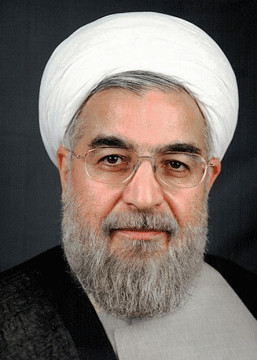 Iran prepared to fulfill nuclear deal commitments, president tells Coveney
Hassan Rouhani says United States must lift ‘illegal sanctions’ during Tehran meeting with Minister. Irish Times,7 Mar 21,
In a meeting with Minister for Foreign Affairs Simon Coveney, Mr Rouhani said: “Iran is ready to immediately take compensatory measures based on the nuclear deal and fulfil its commitments just after the US illegal sanctions are lifted and it abandons its policy of threats and pressure.”
The Iranian leader criticised the European signatories of the historic nuclear deal for what he said was their inaction on their commitments to the agreement. He said Iran was the only country that kept its side of the bargain………. https://www.irishtimes.com/news/politics/iran-prepared-to-fulfill-nuclear-deal-commitments-president-tells-coveney-1.4503539
UN’s nuclear watchdog agency will not be ‘bargaining chip’ in Iran nuclear deal,
UN’s nuclear watchdog agency will not be ‘bargaining chip’ in Iran nuclear deal, https://news.un.org/en/story/2021/03/1086092 The head of the UN’s nuclear watchdog agency told journalists on Monday that inspections in Iran should not be used as a “bargaining chip” to revive a troubled nuclear deal.
After speaking to the International Atomic Energy Agency’s (IAEA) Board of Governors, Director General Rafael Grossi told a press conference that while the agency had opened a window of opportunity for diplomacy in Iran, it should not be put in the middle of negotiations between Iran, the United States and other nations over the deal.
On 15 February, Iran announced that it would stop implementing “voluntary transparency measures” in the Joint Comprehensive Plan of Action (JCPOA), known commonly as the Iran nuclear deal, along with other arrangements in Iran’s Safeguards Agreement.
The IAEA chief said to the 35-nation board that a “temporary bilateral technical understanding” had been agreed upon during his visit to the country last month that would enable the UN agency to “resume its full verification and monitoring of Iran’s nuclear-related commitments under the JCPOA if and when Iran resumes its implementation of those commitments”.
Serious concern
The IAEA chief also raised the alarm that nuclear activities in the Democratic People’s Republic of Korea (DPRK), commonly known as North Korea, remains “a cause for serious concern”.
“The continuation of the DPRK’s nuclear programme is a clear violation of relevant UN Security Council resolutions and is deeply regrettable”, Mr. Grossi said, adding that the Vienna-based agency was intensifying its readiness “to play its essential role in verifying North Korea’s nuclear programme”.
Reviewing nuclear safety
The IAEA chief also drew attention to the agency’s Nuclear Safety Review 2021, which provides an overview of the agency’s activities and global trends in nuclear, radiation, transport and nuclear waste safety protcols, as well as in emergency preparedness and response.
“This year, it also identifies the priorities in these areas, and provides an analytical overview of overall trends”, he said.
Moreover, the UN official flagged IAEA’s work in strengthening global preparedness for future pandemics through its Zoonotic Disease Integrated Action (ZODIAC) initiative on diseases, that jump from animals to humans – the common path for viruses such as COVID-19.
He said the initiative will help to reduce the chance that the next outbreak will wreak “the deadly destruction we are suffering today”.
And Mr. Grossi informed the members that last week, IAEA signed revised arrangements with the Food and Agriculture Organization (FAO) to “help Member States respond to emerging challenges from climate change to outbreaks of zoonotic diseases”.
Climate on the table
As the Agency prepares for the 2021 UN Climate Change Conference, known as COP26, scheduled for November in Glasgow, Scotland, Mr. Grossi said that he would personally deliver the message that “nuclear energy has a seat at the tables when the world’s future energy and climate policies are being discussed”.
“Almost five years after the signing of the Paris Agreement, governments are becoming increasingly aware that they must shift from fossil fuels to nuclear and other low-carbon technologies, if they are to reach their net zero objectives”, Mr. Grossi said.
The Director-General concluded by assuring that the agency was continuing its work on advancing gender equality, and invited Member States to join a panel discussion with some of the IAEA’s early women pioneers on 8 March, International Women’s Day.
Iran nuclear deal: a summary
-
- What is the Iran nuclear deal? The 2015 “Joint Comprehensive Plan of Action” (JCPOA), sets out rules for monitoring Iran’s nuclear programme, and paves the way for the lifting of UN sanctions.
- Which countries are involved? Iran, the five members of the Security Council (China, France, Russia, UK, US), plus Germany, together with the European Union.
- What is the UN’s involvement? A UN Security Council resolution to ensure the enforcement of the JCPOA, and guarantee that the UN’s atomic energy agency, the IAEA, continues to have regular access to and more information on Iran’s nuclear programme, was adopted in 2015.
- Why is the deal at risk? The current US Administration pulled out of the deal in 2018 and re-imposed sanctions. In July 2019, Iran reportedly breached its uranium stockpile limit, and announced its intention to continue enriching uranium, posing a more serious proliferation risk.
Iran’s foreign minister says Tehran will offer a constructive plan for nuclear talks
Iran’s Zarif to offer ‘constructive’ plan for nuclear talks https://www.aljazeera.com/news/2021/3/5/irans-zarif-to-offer-constructive-plan-amid-hopes-of-informal
Announcement comes after European diplomatic sources said Tehran recently gave encouraging signs about opening informal talks over the nuclear deal. Iran will soon present a “constructive” plan of action, Foreign Minister Mohammad Javad Zarif said on Friday, after European sources said Tehran gave positive signs about opening informal talks about its nuclear programme.
“As Iran’s FM [foreign minister] & chief nuclear negotiator, I will shortly present our constructive concrete plan of action – through proper diplomatic channels,” Zarif said on Twitter.
A French diplomatic source and another European official said on Thursday that Iran had given encouraging signs in recent days about opening informal talks after European powers scrapped plans to criticise Tehran at the UN nuclear watchdog.
Iran has so far refused to take part in a meeting brokered by the European Union between world powers and the United States on reviving its 2015 nuclear deal.
Iran’s nuclear policy is decided by the country’s top authority, Supreme Leader Ayatollah Ali Khamenei, and not the president or the government.
Tehran and Washington have emerged from former US President Donald Trump’s attempts to wreck Iran’s nuclear deal but are locked in a standoff over who should move first to save it. Trump pulled out of the landmark accord in 2018.
Britain, France, and Germany decided to pause the submission of a resolution critical of Iran at the International Atomic Energy Agency (IAEA) on Thursday to not harm the prospects for diplomacy, after what they said were concessions gained from Iran to deal with outstanding nuclear issues.
Dust with French nuclear test residue threatens Turkey
|
Dust with French nuclear test residue threatens Turkey https://www.dailysabah.com/turkey/dust-with-french-nuclear-test-residue-threatens-turkey/news
BY DAILY SABAH WITH AGENCIES, ISTANBUL TURKEY , MAR 03, 2021 France is not the only country to be affected by sandstorms carrying the residues of cesium 137, used in nuclear tests by the country in the 1960s in the Sahara desert. Experts warn the dust, expected to move eastward and make a landing in Turkey soon, may be harmful for the population. Bekir Taşdemir, a nuclear medicine expert from Dicle University, says though it is unclear how much cesium residue there is in the dust sandstorms brought, people need to be cautious. “Possible high rate (of cesium) will necessitate people to stay indoors. They should not breathe the air outside and not open their windows,” Taşdemir warned. French experts had revealed that cesium was found in dust hailing from the Sahara Desert after a sandstorm on Feb. 6 traveled to the Jura Mountains. The same pattern of sandstorms is forecast for Turkey in the coming days. Taşdemir told Demirören News Agency (DHA) on Wednesday that the movement of dust particles, when combined with rainfall, will be more dangerous. “You should take an umbrella or have protective clothing if it is necessary to go out. If it rains, you should rapidly remove your clothes and wash them and take a shower when you return home. If radioactive residues are accumulated on your body or clothes, it poses a risk. There is also the possibility that those residues will settle on fruits and vegetables and you should be careful washing them thoroughly before consumption, in case of such a sandstorm,” he added. Cesium 137, a lethal chemical element, is used in the nuclear industry. When touched with bare hands, it can kill the person within seconds. It was emitted into the atmosphere after the 2011 nuclear plant accident in Fukushima, according to researchers. France had conducted its first nuclear test in the Sahara desert on Feb. 13, 1960. It carried out 17 nuclear explosions in the Algerian part of the Sahara Desert between 1960 and 1966. Eleven of the tests came after the 1962 Evian Accords ended the six-year war of independence and 132 years of French colonial rule. The issue of nuclear tests remains a major bone of contention between France and Algeria which claims the nuclear tests claimed the lives of a large number of people among the local population and damaged the environment. The Sahara dust that has blanketed parts of southern and central Europe last month has caused a short, sharp spike in air pollution across the region according to researchers. |
|
The JCPOA nuclear deal from the point of view of Iran
|
Fool me once: How Tehran views the Iran nuclear deal https://ecfr.eu/article/fool-me-once-how-tehran-views-the-iran-nuclear-deal/Europe and the US should focus their efforts on swiftly returning to the original nuclear agreement with Iran rather than holding out for the unlikely prospect of better terms
Ali Reza Eshraghi 25 February 2021 In Tehran, the initial hopes for what the Biden administration could offer Iran – particularly in terms of a revived economy – are fading. Iranian leaders recognise that, although the new president in the White House says he wants to rejoin the 2015 nuclear deal, there has been little tangible shift away from the Trump-era maximum pressure campaign against Iran. While there is still a possibility that the agreement will be revived, it increasingly appears to Tehran that the process will be a marathon and not a sprint.
It is often difficult to find a consensus between Iranian leaders on the benefits of diplomacy with the West, but there is one point on which they agree: Tehran must end its “strategic patience” in the implementation of the nuclear deal. The rhetoric for public consumption varies between different camps in Iran, who differ on the extent and method of the response. However, political elites now generally agree that Iran should not allow itself to be ‘duped’ by the United States again – and that Tehran should not reverse any steps to accelerate its nuclear programme until Washington is certain to ease sanctions in return. THE MOOD IN TEHRANSince the November 2020 US presidential election, Tehran has left the door open for the US to return to its commitments under the Joint Comprehensive Plan of Action (JCPOA). And it has offered several pathways for achieving this. Iran’s foreign minister, Javad Zarif, suggested that the European Union, as the coordinator of the Joint Commission established under the agreement, could choreograph a return to compliance – indicating a shift away from Tehran’s original position that Washington should lift all sanctions first before Iran reversed any elements of its nuclear programme. For now, the response on the US side seems less flexible – with Biden administration officials continuing to insist that Iran must return to full compliance with the deal before it receives any economic relief. Last week, the Iranian authorities announced that, as of 23 February, they would implement a law requiring the government to further reduce compliance with the JCPOA. This would involve, most importantly, the suspension of voluntary implementation of some international inspections. It was only after this announcement that the US made a series of symbolic gestures to soften its attitude towards Tehran. For instance, President Joe Biden stated that the US is “prepared to reengage in negotiations” with parties to the JCPOA. The hardline-leaning Kayhan Daily and a government-affiliated newspaper credited Iran’s ultimatum with prompting these last-minute US moves. Rather than worrying about their domestic rivals, power players in Iran are currently more concerned about how splits within Biden’s team are slowing down decision-making on the JCPOA in the US. Even the Rouhani administration has become more cautious than it once was about Biden’s willingness to return to the original nuclear agreement, fearing that his recent offer of talks is designed to force Iran to accept a broader set of terms. It is true that Iran’s latest decision to reduce inspections by the International Atomic Energy Agency (IAEA) was engineered by a parliament controlled by the so-called “Principlists” – a group comprising roughly equal numbers of hardliners and radical hardliners. But, even if the parliament did not have such a composition, the Rouhani administration would have felt that it had no choice but to send a strong signal against the United States’ indecision over how and when to return to the JCPOA. So far, Iran has been waiting for moves from the Biden administration that indicate it is serious about rejoining the JCPOA. The measures the US has taken in recent days – such as easing travel restrictions on Iranians diplomats in New York and rescinding the Trump administration’s failed attempt to snap back UN sanctions – are largely viewed in Tehran as symbolic rather than substantive. In recent days, Iran has reportedly made progress in its talks with Asian countries over gaining access to its frozen offshore accounts. If these discussions do indeed move forward, it could suggest that the Biden administration is showing some flexibility, by providing Iran with access to these funds for humanitarian trade. Iran may regard such moves by Biden as a reasonable way to start a technical dialogue on how to implement the nuclear deal – one facilitated by the EU. DIPLOMACY AND DOMESTIC POLITICSEven as Iran sets deadlines for its JCPOA compliance, the clock is ticking in its domestic politics – with a presidential election scheduled for June. The Principlists hope for an easy win in the contest, counting on the kind of relatively low voter turnout seen in the 2020 parliamentary election. Disillusioned with the futility of choosing the best bad option, the average Iranians needs a strong incentive to turn up at the polling station. But the hardliners’ optimism may be premature. In 2013 they were as confident that they would win as they are now. Yet, less than two months before that election, the tide turned. Iranians often do not decide who to vote for until the last few weeks before an election. In an undisclosed national poll conducted by ISPA in December 2020, more than 38 per cent of respondents said that they might consider voting “if economic conditions improve”. As such, there is some concern among hardliners that a swift US return to the JCPOA, and sanctions relief, would improve the chances of Rouhani-affiliated candidates. This is why some commentators speculate that Principlists feel it is necessary to obstruct Rouhani’s efforts to persuade the US to ease sanctions before the election. In theory, this is a sound Machiavellian move. However, it does not necessarily correspond with Iran’s current political dynamics. Most Iranian elites of all political leanings want to reduce the pressure on the economy, and recognise that US sanctions have a role to play in this. In their opinion, it is better for it to happen today than tomorrow, as highlighted in a recent string of interviews published on the supreme leader’s website. Media outlets affiliated with the Islamic Revolutionary Guard Corps (IRGC) are not cheering for Zarif and his team, but they are not lambasting him either. The editor-in-chief of Javan, the flagship IRGC daily, has even called Rouhani’s recent technical arrangement with IAEA a “smart” move. And the Kayhan Daily has also cautiously supported the arrangement. At present, only a radical minority in the Iranian political system are against the revival of the JCPOA. Saeed Jalili, the former chief Iranian nuclear negotiator (and a possible contender in the upcoming election), represents this minority. Yet, more broadly, Rouhani’s rivals prefer not to bet too heavily against the JCPOA. For one thing, they do not want the blame for Iran’s economic troubles to shift onto them. For another, they believe that public disapproval of Rouhani and his allies is so intense that even the revival of the JCPOA will not reverse it – and, as such, there may be little point in campaigning against the agreement. Finally, they have other tools at their disposal to weaken the pro-Rouhani coalition – which is extremely fragile – before the election. One such tool is parliamentary manipulation of the government’s proposed budget bill for next year – which, if implemented, would increase the dollar exchange rate and, accordingly, the price of staple goods in the months leading up to the election. This could make voters resent the Rouhani camp even more. Iran’s electoral cycle could have an influence on the political space in Tehran for engaging with the US and Europe, but it is unlikely to be the most significant factor in whether diplomacy on the JCPOA succeeds. There is now a general consensus in Iran that the country should stabilise the nuclear deal with the Biden administration, thereby rebooting the economy through benefits granted under the deal. A more pressing issue for Iran’s leaders is whether the US will rejoin the agreement without seeking to change its terms. It is highly unlikely that the US and Europe will be able to strike a broader agreement with Iran unless they first rejoin the original JCPOA – under either the current or next government in Tehran. The longer the US takes to rejoin the JCPOA, the greater the support in Tehran for accelerating the Iranian nuclear programme. In the coming weeks, European and US efforts should focus on a swift return to the JCPOA rather than holding out for the unlikely prospect of a new nuclear formula with Iran. Ali Reza Eshraghi is the projects director of the Institute for War and Peace Reporting’s MENA division and a visiting scholar at the UNC Center for Middle East and Islamic Studies. |
|
Israel should come clean about the expansion at its secret nuclear weapons plant
IAEA and Iran strike three-month deal over nuclear inspections
IAEA and Iran strike three-month deal over nuclear inspections https://www.theguardian.com/world/2021/feb/21/iran-pushes-ahead-plan-cut-un-nuclear-inspections
Agreement paves way for diplomatic talks between Tehran and the US over sanctions, Patrick Wintour Diplomatic editor, Mon 22 Feb 2021
The UN’s nuclear inspectorate has struck a three-month deal with Iran giving it sufficient continued access to verify nuclear activity in the country, opening the space for wider political and diplomatic talks between Tehran and the US.
Iran will go ahead with its threat to withdraw this week from the additional protocol, the agreement that gives inspectors from the International Atomic Energy Agency (IAEA) intrusive powers.
However, following a weekend of talks with officials in Tehran, the IAEA’s director general, Rafael Grossi, announced that he had struck what he described as “a temporary bilateral technical understanding” that will mitigate the impact of Iran’s withdrawal from the protocol, and give the IAEA confidence that it can continue to verify Iran’s nuclear activity.
Grossi added that the move “salvages the situation” and avoids the position of the inspectors “flying blind”. He said the agreement, from which either side can withdraw, gave space for wider diplomatic discussions between the US and Iran to go ahead.
He said the law suspending Iran from the additional protocol had been passed by its parliament and now “exists and is going to be applied. There is less access, let’s face it.”
However, Grossi made clear he felt the new bilateral agreement sufficiently mitigated the impact of the reduced inspections regime, so it was therefore worthwhile for his team’s verification work continuing, at least on a temporary basis. “This is a temporary solution that allows us to continue to give to the world the assurances of what is going on there in the hope that we can return to a fuller picture.”
The IAEA director general added that there would be no reduction in the number of inspectors, and that not all snap inspections would be banned.
Iranian officials have said the agreement will mean that the inspectors will only have 70% of the access they now enjoy, but Grossi declined to put a percentage on the loss of access.
The deal, released late on Sunday night, was met with an immediate backlash in Iran, where furious hardliners convened an emergency session of parliament to demand more details. Some claimed it effectively overrode the law passed by parliament two months ago cutting back on inspections.
Iran’s atomic energy association said it would continue to use cameras to record and maintain information at its nuclear sites for three months, but would retain the information exclusively. If the US sanctions are lifted completely within that period, Iran will provide this information to the IAEA, otherwise it will be deleted forever.
Grossi will have to report the details of his understanding to the other signatories of the nuclear deal, including France, Germany and the UK. All three had warned Iran of the serious consequences of withdrawing from the protocol, and they will need to be satisfied by the IAEA director on the value of the technical understanding.
All sides are involved in brinkmanship designed to bring about direct talks between the US and Iran leading to the US, on the one hand, lifting economic sanctions and returning to the deal, and Iran coming back into compliance with the agreement. Iran has not left the deal, but over the past year lessened its commitments on critical issues such as levels of uranium enrichment and the use of advanced centrifuges.
Iran’s foreign minister, Javad Zarif, said in an interview with the state-owned Press TV that Iran was waiting for action from the US, not promises, and said the cutback in inspections had been mandated by Iran’s parliament and could not be overridden until sanctions were lifted. “We need concrete actions, not words,” he said.
The US has offered to attend an informal diplomatic meeting hosted by the EU, also attended by Russia and China, the other signatories to the deal. The US state department has hinted that at this meeting the US would map out an offer on how sanctions and other economic restrictions could be lifted or suspended if Iran returned to compliance with the nuclear deal, including over uranium enrichment stocks and use of advanced centrifuges.
Zarif said Iran would need to know how, if the US returned to the deal, it would not simply walk out again. He said the issue of compensation for the $1tn (£710bn) damage inflicted on the Iranian economy would also have to be discussed.
Hardliners are demanding that any sanctions suspension would need to be verified, something that would prolong a complex process.
The Iranian parliament’s speaker, Mohammad Baqer Qalibaf, a likely candidate for president, suspended its normal business on Monday to examine the new agreement and MPs 221 to 6 to refer it to the judiciary. He said any side agreement with the IAEA had to be approved by parliament.
The foreign ministry spokesman, Saeed Khatibzadeh, insisted parliament had been sidestepped in the weekend agreement. The power struggle is not just critical to the prospect of talks with the US, but also how the Iranians may view the presidential elections.
The chairman of parliament’s national security committee, Mojtaba Zolnour, said “the government has no right to decide and act arbitrarily. This arrangement is an insult to parliament.”
Iran lawmakers call for president’s prosecution over IAEA deal

 Iran lawmakers call for president’s prosecution over IAEA deal
Motion passed on Monday signals the biggest rift in years between Iran’s moderate government and its hardline parliament. Aljazeera, By Maziar Motamedi, 22 Feb 2021
In a public vote on Monday, an overwhelming majority of lawmakers voted to send a report by the National Security and Foreign Policy Commission on the agreement reached with the International Atomic Energy Agency (IAEA) to the judiciary for review.
The report asserts that the deal struck on Sunday between the IAEA and the Atomic Energy Organisation of Iran (AEOI) constitutes a “clear violation” of a law passed by Parliament in December.
As per the law, the government of President Hassan Rouhani must stop the voluntary implementation of the Additional Protocol, which gives broad authorities to IAEA inspectors, from Tuesday.
In a statement, the AEOI said the implementation of the Additional Protocol will be completely halted from Tuesday, in accordance with the law, and no access will be given to the UN’s nuclear watchdog beyond those laid out in a principal safeguards agreement aimed at ensuring nuclear non-proliferation.
However, detractors have said the agreement reached after IAEA Director General Rafael Grossi visited Tehran violates the December law, in that Iran would unilaterally record the monitoring data the nuclear watchdog’s inspectors would normally be able to access under the Additional Protocol, but would not share the data.
The arrangement will remain in place for three months, at the end of which the data will be destroyed if all United States sanctions, imposed on Iran since 2018 after former President Donald Trump unilaterally withdrew from Iran’s 2015 nuclear deal with world powers, are not lifted.
Iran’s foreign ministry spokesman Saeed Khatibzadeh said the talks “resulted in a very significant diplomatic achievement and a very significant technical achievement … within the framework of the parliament’s binding law”.
Iran’s Supreme National Security Council also said in a statement on Monday the IAEA agreement falls in compliance with the parliament’s law.
‘President on the way to court!’
Instead of their scheduled work on the annual budget bill that had been delayed for months amid a spat with the government, they held a meeting behind closed doors to review the IAEA deal and drafted a motion to involve the judiciary.
Several lawmakers delivered fiery speeches in condemnation of the deal in a public session held afterwards.
But angry parliamentarians held a different view………………
Members of the assembly will meet Supreme Leader Ayatollah Ali Khamenei later on Monday, https://www.aljazeera.com/news/2021/2/22/iran-parliament-call-for-president-be-punished-for-iaea-agreement
Some Iranians and Israelis in full agreement on wanting to stop Iran nuclear deal
or sworn enemies, Iran and Israel have much in common. Both are regional powers, projecting their interests beyond their borders. Both are beholden, in different ways, to shifting US policy. Both have secretive nuclear programmes. And both are heading towards national elections – in Israel next month, in Iran in June – that could decide whether cold-hearted enmity turns into hot-blooded war.
The stand-off over Iran’s alleged attempts, which are always denied, to acquire atomic bomb-making capacity has gone on for so long that its dangers are often underestimated. Yet the coming days are crucial. Iran has set 21 February as a deadline for an easing of unilateral US sanctions. If it is ignored, Tehran is threatening to ban snap UN inspections of its nuclear facilities and further ramp up proscribed atomic activities……….
The escalating crisis has brought a flurry of diplomatic activity in recent days, involving Germany and Qatar who are acting as go-betweens. Crucially, the US accepted an EU invitation to join talks with Iran on returning to mutual compliance with the deal. In its response on Friday, Iran’s foreign ministry stuck to its previous position that all sanctions must be lifted before talks can begin
This will not be the last word. But it is a reminder of the sobering – and alarming – reality that powerful individuals and factions on both sides are doing all they can to ensure the 2015 deal definitively collapses. In Iran, hardline candidates and members of the Majlis (parliament), focused on June’s presidential poll, oppose any kind of rapprochement with America.
They include leading presidential hopeful Hossein Dehghan. He reportedly has the backing of Iran’s ultra-conservative supreme leader, Ayatollah Ali Khamenei, who has sworn never to talk to America. Dehghan accuses Biden of bad faith. “We still see the same policies … as we did from the Trump team: not lifting the oppressive sanctions against the Iranian people,” he told the Guardian
Such scepticism reflects genuine distrust, and fear of another Trump-style stab in the back. But it is also the result of calculation, suggested analyst Saeid Jafari . “Biden’s victory [over Trump] came as a big disappointment to hardliners seeking to undermine Rouhani’s last-ditch effort to save the nuclear accord,” he wrote. They may try to scupper any talks……..
Strong opposition to the deal, however Biden plays it, is evident in Israel, where the hard-right prime minister and close Trump ally, Benjamin Netanyahu, is fighting for his political life. Netanyahu encouraged Trump to ditch the pact, even as Israel has expanded its own nuclear facilities. He vehemently warns against resurrecting it as he woos Jewish supremacist parties in Israel’s fourth election in two years……..
Against all this must be set common sense. Trump’s maximum pressure policy failed miserably. It did not mitigate regional tensions or reduce proxy attacks. Rather, illegal US and Israeli assassinations of high-profile figures increased them. Sanctions have hurt Iranians, but did not topple the regime or change its behaviour. Iran is closer now to a nuclear weapon than in 2016.
Biden’s instinct to try to break this impasse and find a diplomatic way through – supported by the UK, Germany and France – is the right one. But words are not enough. As a sign of good faith, he should swiftly relax some sanctions and unfreeze Iran’s Covid-related $5bn IMF loan request.
Time is short. Proving peace works may be the only way to halt the fatal advance of warmongers in Israel and Iran. https://www.theguardian.com/commentisfree/2021/feb/21/hawks-in-iran-and-israel-agree-bidens-bid-to-salvage-nuclear-deal-must-not-succeed
U.N. nuclear watchdog found uranium particles at two Iranian sites
Reuters 19th Feb 2021, The U.N. nuclear watchdog found uranium particles at two Iranian sites it inspected after months of stonewalling, diplomats say, and it is preparing to rebuke Tehran for failing to explain, possibly complicating U.S. efforts to revive nuclear diplomacy.
https://www.reuters.com/article/us-iran-nuclear-iaea-idUSKBN2AJ269
1 This Month
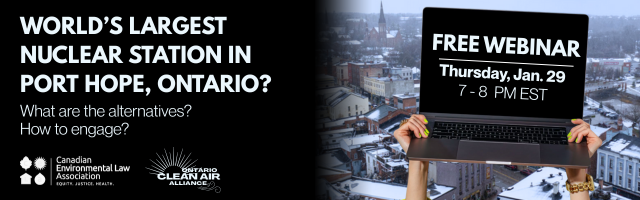
29 Jan. Thursday 7-8 p.m. Webinar – World’s Largest Nuclear Station in Port Hope, ON?
To see nuclear-related stories in greater depth and intensity – go to https://nuclearinformation.wordpress.com/
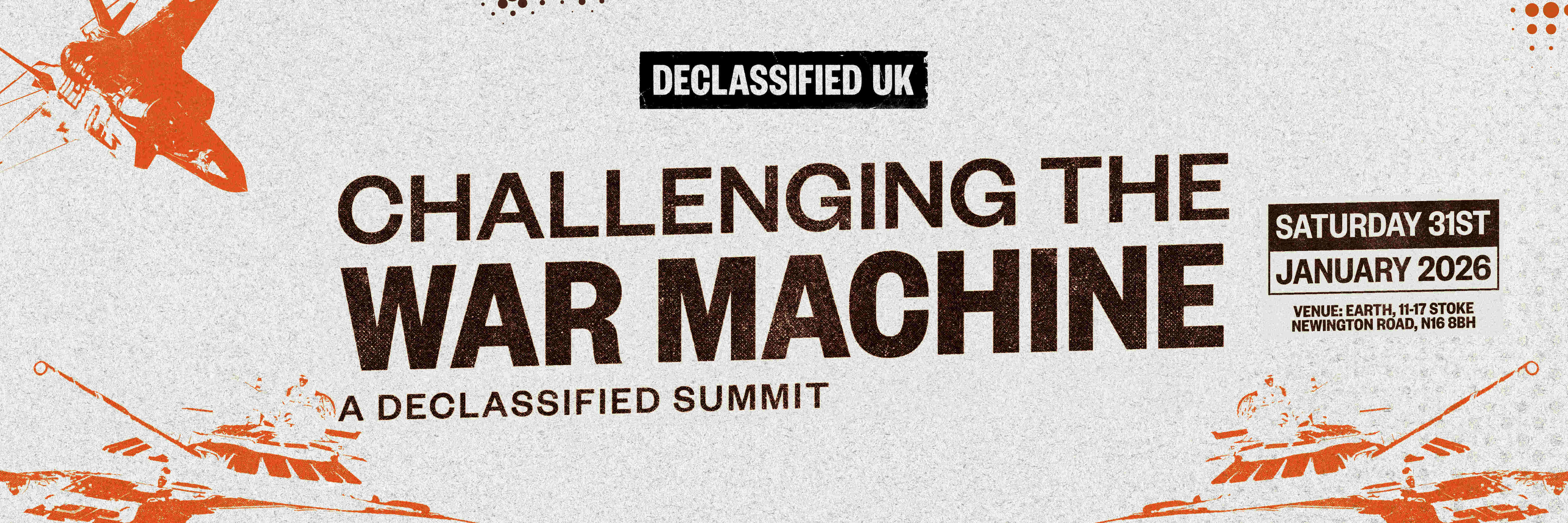
31st January – Challenging the War Machine – a DECLASSIFIED UK SUMMIT


Website of the Week
Now until to February 10, 2026 Radioactive waste storage in France: the debate is finally open! How to participate?
-
Archives
- January 2026 (288)
- December 2025 (358)
- November 2025 (359)
- October 2025 (376)
- September 2025 (258)
- August 2025 (319)
- July 2025 (230)
- June 2025 (348)
- May 2025 (261)
- April 2025 (305)
- March 2025 (319)
- February 2025 (234)
-
Categories
- 1
- 1 NUCLEAR ISSUES
- business and costs
- climate change
- culture and arts
- ENERGY
- environment
- health
- history
- indigenous issues
- Legal
- marketing of nuclear
- media
- opposition to nuclear
- PERSONAL STORIES
- politics
- politics international
- Religion and ethics
- safety
- secrets,lies and civil liberties
- spinbuster
- technology
- Uranium
- wastes
- weapons and war
- Women
- 2 WORLD
- ACTION
- AFRICA
- Atrocities
- AUSTRALIA
- Christina's notes
- Christina's themes
- culture and arts
- Events
- Fuk 2022
- Fuk 2023
- Fukushima 2017
- Fukushima 2018
- fukushima 2019
- Fukushima 2020
- Fukushima 2021
- general
- global warming
- Humour (God we need it)
- Nuclear
- RARE EARTHS
- Reference
- resources – print
- Resources -audiovicual
- Weekly Newsletter
- World
- World Nuclear
- YouTube
-
RSS
Entries RSS
Comments RSS
 nuclear-news