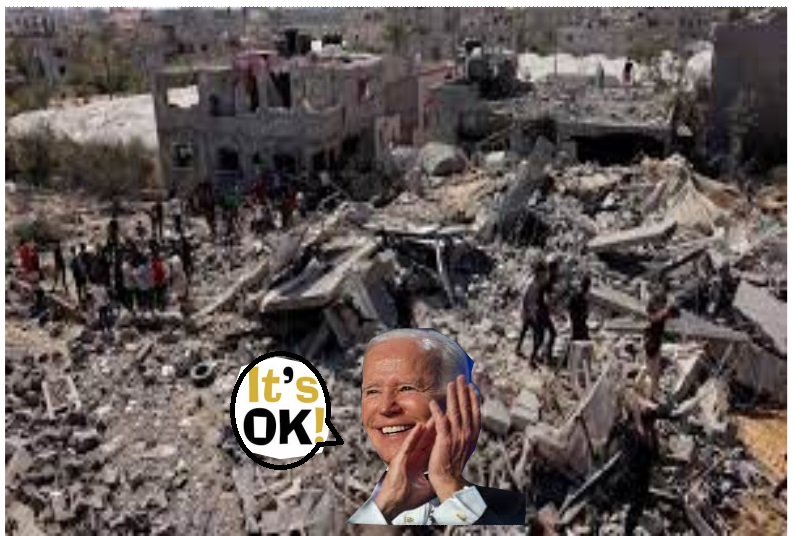
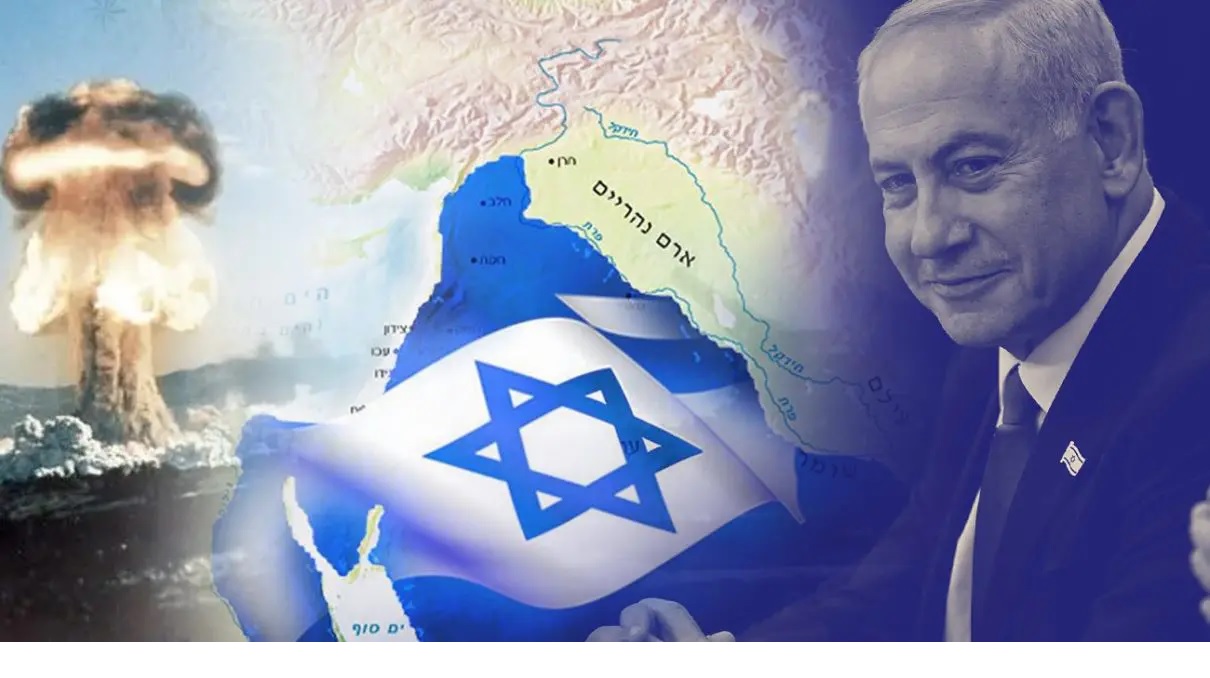
Citing “the urgency of Israel’s defensive needs,” the Biden administration on Friday said it would bypass Congress for the second time this month to approve an immediate arms sale to the key Middle East ally as it continues to wage a genocidal war against Gaza.
The Associated Pressreported that U.S. Secretary of State Antony Blinken notified lawmakers of the new emergency determination involving the sale of $147.5 million in equipment including fuses, charges, and primers for 155mm artillery shells that Israel has already purchased from the United States.
The unguided explosive rounds—which Israel is using in heavily populated urban areas—have a “kill radius” of about 50 meters, with shrapnel able to inflict lethal wounds on people hundreds of meters away.
“The United States is committed to the security of Israel, and it is vital to U.S. national interests to ensure Israel is able to defend itself against the threats it faces,” the State Department explained.
The move follows a similar State Department determination on December 9, which expedited 13,000 rounds of tank ammunition to the Israel Defense Forces (IDF), whose troops have killed and maimed more than 80,000 Palestinians—mostly women, children, and elders—during 84 days of near-relentless attacks on Gaza.
Some of the deadliest Israeli attacks of the war have been carried out with U.S. weapons, including an October 31 airstrike with 2,000-pound bombs on the densely populated Jabalia refugee camp. More than 120 civilians were killed.
The State Department also said that “we continue to strongly emphasize to the government of Israel that they must not only comply with international humanitarian law, but also take every feasible step to prevent harm to civilians.”
Critics pushed back against that language, with Ibrahim Zabad, a professor of international relations at St. Bonaventure University in upstate New York, asserting on social media that the State Department’s move to bypass Congress “shows the U.S. administration wholeheartedly supports the mass slaughter of Palestinians, their ethnic cleansing, and the demolition of Gaza.”
British journalist Andy Worthington, known for his work chronicling the cases of Guantánamo Bay detainees, asked: “Do they think not enough Palestinian children are being orphaned or killed in Gaza?”
Eli Clifton, a senior researcher at the Quincy Institute for Responsible Statecraft, noted Blinken’s lamentation Thursday that 2023 “has been an extraordinarily dangerous year for press around the world.” Blinken’s statement did not mention the scores of journalists killed—sometimes allegedly on purpose—by Israeli troops during the war.
The U.S. already gives Israel almost $4 billion in nearly unconditional military aid each year. Since the October 7 Hamas-led attacks and Israel’s retaliatory onslaught, U.S. President Joe Biden has repeatedly affirmed his “unwavering” support for Israel. His administration has blockedmultiple global cease-fire efforts at the United Nations while seeking an additional $14.3 billion in armed assistance for Israel.
While Biden recently decried Israel’s “indiscriminate bombing” of Gaza, he has refused to acknowledge what many international experts have called Israel’s genocide against the people of the besieged strip. Some activists have dubbed him “Genocide Joe.”
On Friday, South Africa filed a genocide case against Israel at the International Court of Justice.
Hundreds of rights groups and a handful of progressives in the U.S. Congress have implored the Biden administration to suspend military aid to Israel, while others including Democratic lawmakers have called for conditions to be placed on such assistance.
Earlier this month, Sen. Elizabeth Warren (D-Mass.) led a letter urging Biden to boost oversight of how American arms are used against Palestinian civilians. The letter specifically mentions 155mm artillery shells.
“The IDF has previously used these shells to hit populated areas including neighborhoods, hospitals, schools, shelters, and safe zones, causing a staggering number of civilian deaths,” the senators noted.
According to a Quinnipiac University poll published on December 20, less than half of registered U.S. voters support sending military aid to Israel—an approximately 10-point decrease from the previous month.
All eyes are currently riveted on Israel’s ground war in Gaza, but it’s not too soon to consider what is all too likely once the dust settles — a U.S.-brokered deal to normalize Israeli-Saudi relations. Before Hamas attacked Israel on Oct. 7, President Joe Biden had already offered Riyadh a formal defense commitment and civil nuclear energy cooperation including enriching uranium — a process that can bring a state within weeks of acquiring a bomb. American, Israeli, and Saudi officials are still interested in sealing a deal.
This should cause pause. As Eric Gomez and I note in a piece for The Hill, “Improving Saudi-Israeli ties shouldn’t breed nuclear bombs,” Saudi Crown Prince Mohammed bin Salman (MBS) has repeatedly threatened to build nuclear bombs to counter Iran. If Tehran and Riyadh build the bomb, the United Arab Emirates (UAE), Turkey and Egypt — all of which have nuclear technology thanks to cooperation agreements with the U.S. — will want nuclear weapons of their own.
At a minimum, this recommends weighing any U.S.-Saudi nuclear deal more seriously than current U.S. law allows — i.e., with little more than a presidential announcement. Instead, Congress should treat it as deliberately as it would any bilateral trade agreement — i.e., with majority approvals in both houses. This, in turn, would entail hiving off a U.S.-Saudi nuclear deal from whatever Israeli-Saudi normalization package the White House might recommend and considering it separately.
If there’s one thing Blinken and his cohorts understand, it’s that you’re not supposed to describe the evil things you want to do in evil-sounding language. You’ve got to tapdance gracefully around the actual depravity you intend to inflict, uttering flowery prose about humanitarian concerns and compassion for both sides to keep everyone dazzled and hypnotized while the killing machines are quietly rolled out in the background. You’ve got to be eloquent and elusive about your murderousness.
“The United States rejects recent statements from Israeli Ministers Bezalel Smotrich and Itamar Ben Gvir advocating for the resettlement of Palestinians outside of Gaza. This rhetoric is inflammatory and irresponsible. We have been told repeatedly and consistently by the Government of Israel, including by the Prime Minister, that such statements do not reflect the policy of the Israeli government. They should stop immediately.
“We have been clear, consistent, and unequivocal that Gaza is Palestinian land and will remain Palestinian land, with Hamas no longer in control of its future and with no terror groups able to threaten Israel. That is the future we seek, in the interests of Israelis and Palestinians, the surrounding region, and the world.”
The offending statements by Ben Gvir and Smotrich promoted the idea of “encouraging” Palestinians to flee Gaza en masse, absurdly referring to this hypothetical outcome as “voluntary migration” despite the fact that Israel has been doing everything in its power to make living in Gaza impossible.
You will note, probably without surprise, that the statement contains nothing but empty scolding. No mention is made of the faintest possibility of any consequence of any kind being brought to bear should Israeli officials continue to openly advocate for eliminating the Palestinian population of Gaza and replacing it with Jewish settlements. This is because the US has no intention of actually doing anything to hinder Israel’s ethnic cleansing agendas.
And make no mistake, that absolutely is Israel’s agenda. The State Department can claim all it wants that “such statements do not reflect the policy of the Israeli government” and that Israeli Prime Minister Benjamin Netanyahu has assured Washington that there are no plans to resettle Palestinians outside of Gaza, but Netanyahu himself has been publicly contradicting this claim with increasing brazenness.
Just last week at a Likud party meeting Netanyahu explicitly said that his government is working on finding countries who would be willing to “absorb” Palestinian refugees from Gaza, claiming that the world is “already discussing the possibilities of voluntary immigration.”
Indeed, it’s fair to say that the extreme-right ministers Ben Gvir and Smotrich are not actually saying anything on this front that is significantly different from what Netanyahu himself has been saying. Bibi’s just a bit more polite about it, with Ben Gvir openly thumbing his nose at the State Department’s remarks saying “we aren’t another star on the American flag” and “facilitating the relocation of hundreds of thousands from Gaza will allow those in the Israeli Gaza border communities to return home and live securely while safeguarding the IDF soldiers.”
In fact, one could easily argue that Netanyahu as well as Ben Gvir and Smotrich have been entirely in alignment with the State Department’s own language on this subject. The idea of “voluntary immigration” does not contradict the position asserted by Secretary of State Antony Blinken that the US vision for Gaza involves “no forcible displacement of Palestinians from Gaza — not now, not after the war.”
Notice Blinken’s careful insertion of the word “forcible” there. His wording makes it clear that the US would only object if Palestinians were actually forced onto ships or marched across the Egyptian border at gunpoint, as middle east analyst Mouin Rabbani recently observed on Twitter:
“Alarm bells should have started ringing in early November when US Secretary of State Antony Blinken and other Western politicians began insisting there could be ‘no forcible displacement of Palestinians from Gaza’. Rather than rejecting any mass removal of Palestinians, Blinken and colleagues objected only to optically challenging expulsions at gunpoint. The option of ‘voluntary’ displacement by leaving residents of the Gaza Strip with no choice but departure was pointedly left open.”
So contrary to its self-righteous moral posturing, the State Department is not actually upset with Ben Gvir and Smotrich for advocating the ethnic cleansing of Gaza. They’re just upset they said the quiet part out loud.
If there’s one thing Blinken and his cohorts understand, it’s that you’re not supposed to describe the evil things you want to do in evil-sounding language. You’ve got to tapdance gracefully around the actual depravity you intend to inflict, uttering flowery prose about humanitarian concerns and compassion for both sides to keep everyone dazzled and hypnotized while the killing machines are quietly rolled out in the background. You’ve got to be eloquent and elusive about your murderousness. Like Obama.
The US war machine is every bit as depraved as the state of Israel, and the Biden administration is just as culpable for the horrors being unleashed in Gaza as Netanyahu and his goons. Ignore their words and watch their actions. Don’t let them dazzle you with their feigned concern for human rights.
We all know now that Israel can do no wrong, for it is blessed with immunity for being the eternal victim. For Israel, Hitler is the gift that keeps on giving.
We all know that the USA is complicit in the crimes, rushing more and more PMGs to Israel so it will never run short in its precise bombing of important military targets, such as churches, hospitals, schools, mosques, universities, and ordinary homes and residential high-rises.
We all know that no matter how many UN “emergency” meetings are held to rein in Israel’s bloodlust, no matter how many resolutions voted on, the bombs will continue to fall, because Israel can kill as many Palestinians as it wants. There is no one to stop them.
No one seems to know, let alone care, that all the people of Gaza (2.2 million)—not just some—cannot get enough to eat each and every day, and mass starvation is happening right now.
The usual response among most people in the West is—both sides are the same (meaning, Israelis and Palestinians); they both lie and cheat and murder, it’s hard to know where the truth lies. We should worry about our own countries.
If that were true, then why is it that as of now there is only side that has had over 8,000 bombed to pieces? That has had killed nearly 30,000, and left 55,000 people injured? That has had the only place given them to live turned into a wasteland? Why is it that ordinary citizens of one side have been heavily armed with the latest weapons, while those of the other side buy what they can on the black market?
Why is it that one side is well-fed and will not be worrying about food and water, while the other side must starve it out?
How exactly are both sides the same? How is it that both sides lie, cheat and kill?
Then the argument is made that Palestine and Israel are so far away. Let them fight it out. I have other things to worry about.
If that were true, then what about February 2022, when the entire West went into a paroxysm of Russphobia (which still shows little signs of abating), and you couldn’t go to get some milk without being told to to help the poor Ukrainians who were bring “brutally invaded” by the “dictator” Putin, etc.
Why was Ukraine not so far away, then—but Palestine is now so far away? Why was it so easy to care for one side and hate the other in 2022, but now we must be neutral?
Where is the International Criminal Court, which could not issue an arrest warrant for President Putin fast enough, but which now can see no crimes being committed in Gaza by Netanyahu and his ilk?…………………………………………………………………………………………………………………………………………………………………………………….
why does Israel slaughter Palestinians with impunity? Because Western powerbrokers and their ruling class have chosen Israel to play the role both of victim and “hero” of civilization. To that end, Palestinians (and Muslims generally) have been assigned the role of “villain,” who can only move from one outrage to the next atrocity. Just imagine the negative press if Zionism were a Muslim invention. In this way, “our values,” the “international rules-based order,” Western “civilization” are stood up against “barbarism.” When Israel kills babies, it kills for our good, for our “civilization,” for “our values.” We, in the West, are the beneficiaries of the “heroic” slaughter by the gallant IDF. Just as all those dead Ukrainians have let us keep our “democracy” and our “freedom.”
By obscuring and falsifying the lessons of the Holocaust we perpetuate the evil that defined it.
By Chris Hedges ScheerPost, December 31, 2023
Israel’s lebensraum master plan for Gaza, borrowed from the Nazi’s depopulation of Jewish ghettos, is clear. Destroy infrastrutrue, medical facilities and sanitation, including access to clean water. Block shipments of food and fuel. Unleash indiscriminate industrial violence to kill and wound hundreds a day. Let starvation — the U.N. estimates that more than half a million people are already starving — and epidemics of infectious diseases, along with the daily massacres and the displacement of Palestinians from their homes, turn Gaza into a mortuary. The Palestinians are being forced to choose between death from bombs, disease, exposure or starvation or being driven from their homeland.
There will soon reach a point where death will be so ubiquitous that deportation – for those who want to live – will be the only option.
Danny Danon, Israel’s former Ambassador to the U.N. and a close ally of Prime Minister Benjamin Netanyahu, told Israel’s Kan Bet radio that he has been contacted by “countries in Latin America and Africa that are willing to absorb refugees from the Gaza Strip.” “We have to make it easier for Gazans to leave for other countries,” he said. “I’m talking about voluntary migration by Palestinians who want to leave.”
The problem for now “is countries that are willing to absorb them, and we’re working on this,” Netanyahu told Likud Knesset members.
In the Warsaw Ghetto, the Germans handed out three kilograms of bread and one kilogram of marmalade to anyone who “voluntarily” registered for deportation. “There were times when hundreds of people had to wait in line for several hours to be ‘deported,’” Marek Edelman, one of the commanders of the Warsaw Ghetto uprising, writes in “The Ghetto Fights.” “The number of people anxious to obtain three kilograms of bread was such that the transports, now leaving twice daily with 12,000 people, could not accommodate them all.”
The Nazis shipped their victims to death camps. The Israelis will ship their victims to squalid refugee camps in countries outside of Israel. Israeli leaders are also cynically advertising the proposed ethnic cleansing as voluntary and a humanitarian gesture to solve the catastrophe they created.
This is the plan. No one, especially the Biden administration, intends to stop it.
The most disturbing lesson I learned while covering armed conflicts for two decades is that we all have the capacity, with little prodding, to become willing executioners. The line between the victim and the victimizer is razor thin. The dark lusts of racial and ethnic supremacy, of vengeance and hate, of the eradication of those we condemn as embodying evil, are poisons that are not circumscribed by race, nationality, ethnicity or religion. We can all become Nazis. It takes very little. And if we do not stand in eternal vigilance over evil — our evil — we become, like those carrying out the mass killing in Gaza, monsters. …………………………………………………………………………………………………….
It is hard not to be cynical about the plethora of university courses about the Holocaust given the censorship and banning of groups such as Students for Justice in Palestine and Jewish Voices for Peace, imposed by university administrations. What is the point of studying the Holocaust if not to understand its fundamental lesson — when you have the capacity to stop genocide and you do not, you are culpable? ……………………………………………………….
The moral universe has been turned upside down. Those who oppose genocide are accused of advocating it. Those who carry out genocide are said to have the right to “defend” themselves……………………………………………………………………………..
The Holocaust was weaponized from almost the moment Israel was founded. It was bastardized to serve the apartheid state. If we forget the lessons of the Holocaust, we forget who we are and what we are capable of becoming. We seek our moral worth in the past, rather than the present. We condemn others, including the Palestinians, to an endless cycle of slaughter. We become the evil we abhor. We consecrate the horror. https://scheerpost.com/2023/12/31/israels-genocide-betrays-the-holocaust/
1 International aid workers describe a growing humanitarian nightmare in the Strip.
International aid workers visiting the Gaza Strip are relaying the horrific situation Israel is inflicting on the Palestinians. UNICEF reports over 1,000 children have lost legs. Israel is forcing the 2.3 million residents of Gaza into increasingly small areas that lack the ability to accommodate basic needs for survival.
UNICEF spokesperson James Elder said, “Around 1,000 children in Gaza have lost one or both their legs.” He told journalists in Geneva that “every single child is enduring these ten weeks of hell and not one of them can escape.”
Due to the conditions in Gaza, as well as the lack of aid, doctors are often forced to conduct surgeries in unsanitary facilities and without painkillers. “Not only were they amputated without anesthesia, but many of them were amputated in a very quick fashion,” he said.
Dr. Ghassan Abu Sitta, a London-based surgeon who traveled to Gaza to treat patients, told Middle East Eye that having to perform these operations without anesthetic was “one of the most difficult things I’ve had to do in my career.” At a November press conference, he said, “One night, at Al-Ahli Hospital, I performed amputations on six children.”
The UNICEF official said that even if children recover from the amputation, they do not escape the hell of the threat of death. “As a parent of a critically sick child told me, ‘Our situation is pure misery…I don’t know if we will make it through this.’”
Spokesperson Dr. Margaret Harris added that WHO staff in Gaza spoke of not being able to walk in the emergency wards “for fear of stepping on people” lying on the floor “in severe pain” and asking for food and water. She called the situation “unconscionable” and said that it is “beyond belief that the world is allowing this to continue.”
Tension has risen between Washington and Tehran amid the Israel-Gaza war.
The United States has expressed deep concern over reports that Iran has accelerated its production of weapons-grade uranium.
The comments from a White House National Security Council spokesperson came late on Tuesday in response to a report issued by the International Atomic Energy Agency (IAEA) that warned that Tehran has accelerated production of the high-grade material……………………………
The United Nations atomic watchdog’s report to member states said that Iran has increased the rate at which it is producing near weapons-grade uranium in recent weeks, reversing a previous slowdown that started in in mid-2023.
Iran had previously slowed the rate at which it was enriching uranium – the process of raising the level of uranium-235, the isotope used in nuclear fission – to 60 percent purity. Uranium enriched at 60 percent is just a step away from weapons-grade levels of 90 percent. Nuclear power stations require 3.67 percent.
The IAEA said its inspectors had verified the increased rate of production since the end of November at facilities in Natanz and Fordow to about 9kg (20lb) per month, the same level of production that Iran was maintaining in the first half of 2023 before a drop to 3kg (6.6lb) per month in June.
Ethnic cleansing or “transfer” is an intrinsic part of Zionism’s early history, and has remained an essential feature of Israeli political life. More recently, “transfer” has been mainstreamed by billing it as encouraging “voluntary emigration.”
SCHEERPOST, By Mouin Rabbani / Mondoweiss, December 29, 2023
Senior Israeli leaders, including Prime Minister Binyamin Netanyahu, are again publicly advocating the ethnic cleansing of the Gaza Strip. Their proposals are being presented as voluntary emigration schemes, in which Israel is merely playing the role of Good Samaritan, selflessly mediating with foreign governments to find new homes for destitute and desperate Palestinians. But it is ethnic cleansing all the same.
Alarm bells should have started ringing in early November when U.S. Secretary of State Antony Blinken and other Western politicians began insisting there could be “no forcible displacement of Palestinians from Gaza.” Rather than rejecting any mass removal of Palestinians, Blinken and colleagues objected only to optically challenging expulsions at gunpoint. The option of “voluntary” displacement by leaving residents of the Gaza Strip with no choice but departure was pointedly left open.
Ethnic cleansing, or “transfer” as it is known in Israeli parlance, has a long pedigree that goes back to the late-nineteenth-century beginnings of the Zionist movement. While the early Zionists adopted the slogan, “A Land Without a People for a People Without a Land,” the evidence demonstrates that, from the very outset, their leaders knew better. More to the point, they clearly understood that the Palestinians formed the main obstacle to the establishment of a Jewish state in Palestine. This is for the simple reason that, to them, a “Jewish state” denotes one in which its Jewish population acquires and maintains unchallenged demographic, territorial, and political supremacy.
Enter “transfer.” As early as 1895, Theodor Herzl, the founder of the contemporary Zionist movement, identified the necessity of removing the inhabitants of Palestine in the following terms: “We shall try to spirit the penniless population across the border by procuring employment for it in the transit countries, while denying it any employment in our own country … expropriation and the removal of the poor must be carried out discreetly and circumspectly.” David Ben-Gurion (née Grün), Chairman of the Executive Committee of the Jewish Agency for Palestine, and later Israel’s first prime minister, was more blunt. In a 1937 letter to his son, he wrote: “We must expel the Arabs and take their place.”
Writing in his diary in 1940, Yosef Weitz, a senior Jewish National Fund official who chaired the influential Transfer Committee before and during the Nakba (“Catastrophe”), and became known as the Architect of Transfer, put it thus: “The only solution is a Land of Israel devoid of Arabs. There is no room here for compromise. They must all be moved. Not one village, not one tribe, can remain. Only through this transfer of the Arabs living in the Land of Israel will redemption come.” His diaries are littered with similar sentiments.
The point of the above is not to demonstrate that individual Zionist leaders held such views, but that the senior leadership of the Zionist movement consistently considered the ethnic cleansing of Palestine an objective and priority. Initiatives such as the Transfer Committee, and Plan Dalet, initially formulated in 1944 and described by the pre-eminent Palestinian historian Walid Khalidi as the “Master Plan for the Conquest of Palestine,” additionally demonstrate that the Zionist movement actively planned for it.
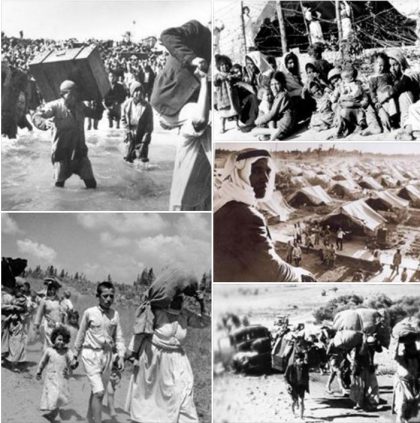
The 1948 Nakba, during which more than four-fifths of Palestinians residing in territory that came under Israeli rule were ethnically cleansed, should, therefore, be seen as the fulfillment of a longstanding ambition and implementation of a key policy. A product of design, not of war (historical Christmas footnote: the Palestinian town of Nazareth was spared a similar fate only because the commander of Israeli forces that seized the city, a Canadian Jew named Ben Dunkelman, disobeyed orders to expel the population, and was relieved of his command the following day).
That the Nakba was a product of design is further substantiated by the Transfer Committee’s terms of reference. These comprised not only proposals for the expulsion of the Palestinians but, just as importantly, active measures to prevent their return, destroy their homes and villages, expropriate their property, and resettle those territories with Jewish immigrants. Weitz, together with fellow Committee members Eliahu Sassoon and Ezra Danin, on June 5, 1948, presented a three-page blueprint, entitled “Scheme for the Solution of the Arab Problem in the State of Israel,” to Prime Minister Ben-Gurion to achieve these goals. According to leading Israeli historian Benny Morris, “there is no doubt Ben-Gurion agreed to Weitz’s scheme,” which included “what amounted to an enormous project of destruction” that saw more than 450 Palestinian villages razed to the ground.
The understandable focus on the expulsions of 1948 often overlooks the fact that ethnic cleansing remains incomplete unless its victims are barred from returning to their homes by a combination of armed force and legislation, and thereafter replaced by others. It is Israel’s determination to make Palestinian dispossession permanent that distinguishes Palestinian refugees from many other war refugees.
After 1948, Israel put out a whole series of fabrications to shift responsibility for the transformation of the Palestinians into dispossessed and stateless refugees onto the Arab states and the refugees themselves. These included claims that the refugees voluntarily left (they were either expelled or fled in justified terror); that Arab radio broadcasts ordered the Palestinians to flee (in fact, they were encouraged to stay put); that Israel conducted a population exchange with Arab states (there was nothing of the sort); and the bizarre argument that because they’re Arabs, Palestinians had numerous other states while Jews have only Israel (by the same logic, Sikhs would be entitled to seize British Columbia and deport its population to either the rest of Canada or the United States). More importantly, even if uniformly substantiated, none of these pretexts entitles Israel to prohibit the right of Palestinian refugees to return to their homes at the conclusion of hostilities. It is, furthermore, a right that was consecrated in United Nations General Assembly resolution 194 of December 11, 1948, which has been reaffirmed repeatedly since.
Ethnic cleansing after 1967
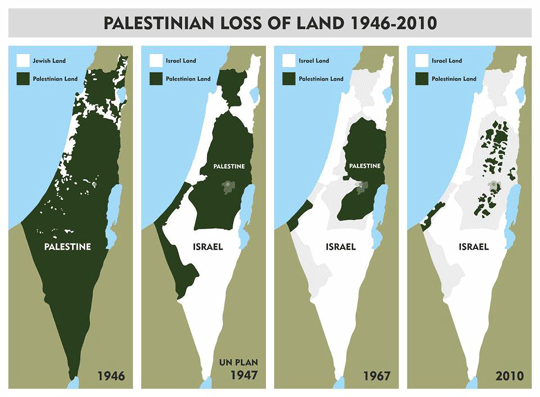
In 1967, Israel seized the remaining 22 percent of Mandatory Palestine — the West Bank (including East Jerusalem) and the Gaza Strip. Depopulation in these territories operated differently than in 1948. Most importantly, Israel, in addition to prohibiting the return of Palestinians who fled hostilities during the 1967 June War, and encouraging others to leave (by, for example, providing a daily bus service from Gaza City to the Allenby Bridge connecting the West Bank to Jordan), conducted a census during the summer of 1967 . Any resident who was not present during the census was ineligible for an Israeli identity document and automatically lost their right of residency.
As a result, the population of these territories declined by more than twenty percent overnight. Many of those thus displaced were already refugees from 1948. Aqbat Jabr Refugee Camp near Jericho, for example — until 1967, the West Bank’s largest — became a virtual ghost town after almost all its inhabitants became refugees once again in Jordan. So many Palestinians from the Gaza Strip ended up in Jordan that a new refugee camp, Gaza Camp, was established on the outskirts of Jerash. The occupied Palestinian territories would not recover their 1967 population levels until the early 1980s.
Within the West Bank, there were also cases of mass expulsion………………………………………………….
Depopulation through administrative rule
In subsequent years, Israel employed all kinds of administrative shenanigans to further reduce the Palestinian population of the West Bank and Gaza Strip. Until the 1993 Oslo Accords, for example, an exit permit from Israel’s military government was required to leave the occupied territory. It was valid for only three years and thereafter renewable annually for a maximum of three additional years (for a fee) at an Israeli consulate. If a Palestinian lost an exit permit or failed to renew an exit permit prior to its expiration for any reason (including bureaucratic foot-dragging), or couldn’t pay the renewal fee, or failed to return to Palestine prior to its expiration, that Palestinian automatically lost residency rights………………………………………………..
………………………………………. the mass expulsion was, as always in such matters, approved by Israel’s High Court of Justice after minor modifications. It ruled, among other things, that this was not a collective deportation but rather a collection of individual deportations……………………………………………….
Israel’s strategies to ‘thin’ Gaza’s population
With the focus in recent years on the intensified campaigns of ethnic cleansing in the West Bank, it is often forgotten that, for decades, the primary target for depopulation was the Gaza Strip, particularly its refugee population, which accounts for approximately three-quarters of the territory’s residents. Even before it occupied Gaza in 1967, Israel regularly promoted initiatives to achieve the “thinning” of its refugee population, with destinations as far afield as Libya and Iraq………………………………………………………………………………….
‘Transfer’ and Gaza today
In the decades since, “transfer,” often presented as the encouragement of voluntary emigration either by providing material incentives or making the conditions of life impossible, has become increasingly mainstreamed in Israeli political life. In 2019, for example, a “senior government official,” quoted in the Israeli newspaper Ha’aretz, expressed a willingness to help Palestinians emigrate from the Gaza Strip.
Mass expulsion has been gaining its share of adherents as well, and it is a position that is today represented within Israel’s coalition government. As has the idea that “transfer” should include Palestinian citizens of Israel — Avigdor Lieberman, for example, who was Israel’s Minister of Defense several years ago, is an advocate of not only emptying the West Bank and Gaza Strip of Palestinians but of getting rid of Palestinian citizens of Israel as well. As one might expect from a minister who was in charge of the Israeli military, he is also an advocate of “beheading” disloyal Palestinian citizens of Israel with “an axe.”
Against this background, Israel saw the attacks of October 7 as not only a threat but also as an opportunity. Fortified with unconditional U.S. and European support, Israeli political and military leaders immediately began promoting the transfer of Gaza’s Palestinian population to the Sinai desert.
The proposal was enthusiastically embraced by the United States and by Secretary of State Antony Blinken in particular. As ever hopelessly out of his depth when it comes to the Middle East, he appears to have genuinely believed he could recruit or pressure Washington’s Arab client regimes to make Israel’s wish a reality. Given Egyptian strongman Abdel-Fatah al-Sisi’s economic troubles, the fallout of the Menendez scandal, and the looming Egyptian presidential elections, it was suggested to him by the Washington echo chamber that it would take only an IMF loan, debt relief, and a promise to file away Menendez to bring Cairo on board. As so often when it comes to the Middle East, Blinken, armed only with Israel’s latest wish list, didn’t have a clue his indecent proposal would be categorically rejected, first and foremost by Egypt.
‘Transfer’ as ‘voluntary immigration’
The fallback position is opposition to “forcible displacement” at the point of a gun, while anything else is fair game. This includes reducing the Gaza Strip to rubble in what may well be the most intensive bombing campaign in history; a genocidal assault on an entire society that has killed civilians at an unprecedentedly rapid pace; the deliberate destruction of an entire civilian infrastructure, including the targeted obliteration of its health and education sectors; the highest proportion of households in hunger crisis ever recorded globally and the real prospect of pre-meditated famine; severance of the water and electricity supply leading to acute thirst, widespread consumption of non-potable water, and termination of sewage treatment; and promotion of a sharp rise in infectious disease. …………………………………………………..
In other words, if desperate Palestinians seek to flee this seventh circle of hell to save their skins, that’s considered voluntary emigration — their choice……………………………………………………………….
As an editorial in the Israeli newspaper Ha’aretz put it on December 27: “Israeli lawmakers keep pushing for transfer under the guise of humanitarian aid.”………………………………………………
Not individual Gazans, but “the people of Gaza.” Notably, such proposals consistently take it as a given that those departing will never return. ………………………………………….
While ethnic cleansing has been intrinsic to Zionist/Israeli ideology and practice from the very outset, it also has a flip side: the 1948 expulsion of the Palestinians expanded what had been a conflict between the Zionist movement and the Palestinians into a regional, Arab-Israeli one. The second Nakba Israel is currently inflicting on the Gaza Strip similarly appears well on its way to instigating the renewal of hostilities across the Middle East.
Walt Zlotow, West Suburban Peace Coalition, Glen Ellyn IL 27 Dec 23
During 80 days of mass destruction and human slaughter in Gaza, the US has done its part. President Biden has shipped 10,000 tons of US weapons to help Israel utterly destroy Gaza. Took 244 cargo planes and 20 ships to deliver all those weapons of mass civilian destruction with endless more on the way.
In WWII the US was the Arsenal of Democracy in defeating fascism. In the current Israeli war on the entirety of Gaza, the US has morphed into the Arsenal of Genocide in destroying the Palestinians in Gaza.
The United States has sent 230 cargo planes and 20 ships loaded with weapons and military equipment to Israel since the outbreak of the Gaza conflict on Oct. 7, according to Israeli media on Monday.
The US military assistance includes artillery shells, armored vehicles and basic combat tools for soldiers, Yediot Ahronoth newspaper reported.
Israel’s Defense Ministry estimates the cost of the current war on the Gaza Strip at around 65 billion shekels ($17 billion).
The newspaper, citing a Defense Ministry official, said the army had used most of the ammunition in its warehouses at the beginning of the war.
“But Israel managed to re-fill its warehouses in preparation for a possible large-scale war with the Lebanese Hezbollah group,” it added.
At least 489 Israeli soldiers have been killed in clashes with Palestinian fighters in the Gaza Strip since Oct. 7, according to Israeli military figures.
Israel has pounded the Gaza Strip since a cross-border attack by the Palestinian group Hamas on Oct. 7, killing at least 20,674 Palestinians, mostly women and children, and injuring 54,536 others, according to local health authorities.
Around 1,200 Israelis are believed to have been killed in the Hamas attack. The Israeli onslaught has left Gaza in ruins, with half of the coastal territory’s housing damaged or destroyed and nearly 2 million people displaced within the densely populated enclave amid shortages of food and clean water.
Russia has completed its delivery of nuclear weapons to Belarus, according to its president, Alexander Lukashenko. Lukashenko was in St. Petersburg, Russia, for the Supreme Eurasian Economic Council on Monday when he told reporters that the last delivery of tactical nuclear weapons from the Kremlin occurred in early October.
Larry Gross offers his experience and thoughts on the growing calls of anti-Semitism against critique of Israel’s ongoing bombing of Gaza.
Apart from the death, destruction and suffering bestowed upon the Palestinian people in Gaza by the hands of the Israeli government, an ideological battle is taking place around the world, especially in the United States, where Jewish people face discrimination, prejudice and attacks on their identity by the hands of other Jews.
Former University of Pennsylvania—where former president Elizabeth Magill has just resigned because of this very issue—deputy dean Larry Gross and host Robert Scheer, “two old Jews,” as Scheer puts it, discuss the troubling, McCarthyite times that are transpiring now in the wake of the October 7th attacks and the subsequent daily bombardment of Gaza.
“It’s an attempt to silence opposition through a kind of rhetorical intimidation, and nobody should accept it. It is shameful and wrong and I would say it’s embarrassingly ignorant when the U.S. Congress votes for a resolution that defines criticism of Zionism as anti-Semitic,” Gross said.
The simple and objective realities that Jews like Gross and Scheer discuss could now be construed as anti-Semitic, despite them being Jewish. This “card,” Gross and Scheer argue, along with the “Holocaust card,” is illogical and stifles crucial dialogue.
Gross says “it is intellectually bankrupt, morally reprehensible and politically opportunistic,” while Scheer pleads “this idea that the U.S. Congress could tell even Jewish people that if you dare criticize this political movement of Zionism that you’re anti-Semitic, this is one of the greatest distortions of thought.”
“They pull out their victim card and accuse anybody who criticizes them of anti-Semitism. And as you know, if you’re Jewish, then you’re a, what do they call it, self-hating Jew? That’s the kind of trick psychoanalysts play, which is you can’t win no matter what you say,” Gross said.
Despite their vast experience with both Judaism as a religion and Israel as a state, with Gross spending eight years growing up in Israel and Scheer reporting on the Six-Day War when it happened, their contributions to the discussion of the war on Gaza can now be labeled and disregarded, thanks to the efforts of people like Elise Stefanik against university presidents in Congress and the rest of the establishment figures who uncritically take Israeli government officials’ words as fact.
Robert Scheer …………………………………………… If you are not Jewish, they’ll tell you you’re anti-Semitic. But even if you’re Jewish, they’ll tell you you are self-hating or anti-Semitic……………………………
Larry Gross ……………………………. (Jews are) famous for debate, dispute and argument. In fact, it’s sort of built into the centuries long tradition of Judaism………………………………… there is no uniform Jewish orthodoxy that everybody is expected to adhere to…………………………………….
…………………………….. there has been a consistent use of what might be called and has been called playing the Holocaust card that whenever the subject of Israel’s behavior externally or internally, particularly internally, comes up, the sort of importance of Israel: because Holocaust, because we need this because of the Holocaust, etc. is is played.
…………………………………And there are a number of problems with that. One of which is that at least half of the citizens of Israel come from communities and/or countries of origin that had nothing to do with the Holocaust, that were never in Europe, that were basically Middle Eastern Muslim countries…………………………………………………………………. . So Israel is not a collection of Holocaust survivors, as sometimes is implied.
……………………………..the key point today is that, to put it bluntly and crudely, the Holocaust card doesn’t work anymore, particularly for young people.
………………………………………….. So, I think the the Israeli effort to portray itself as needing to be militant and aggressive in the way that it has been, has run out of, you know, sort of moral authority and in fact, ceded the the role of victim, no longer held by the Jews, but held by the Palestinians whose lives they are constraining and controlling in ways that very much resemble the apartheid system in South Africa.
……………………………………… if you operate on a rhetoric of victimhood, the victims that we can see today are not Jews.
…………………………………….. But yes, so 1,200, let’s say Israelis were slaughtered in an obscene war crime by Hamas fighters on October 7th. But by now, the Israelis have killed, I don’t know, upward of 15, maybe by now, 20,000. ………………………………………………
Gross You know, using the kind of carpet bombing that just a year or so ago, we were decrying, condemning Russia for using in the Ukraine, except worse.
…………………………………………………………..just incidentally, one of the best examples, one of the biggest successes of the Israeli efforts to undermine political opposition through bogus claims of anti-Semitism is their collusion with politicians in Britain to get rid of Jeremy Corbyn. To undermine an actual leftist who was the head of the Labor Party and who was undermined by the centrist members of the Labor Party with the active support and participation and help of the Israelis in mounting bogus claims that Corbyn was anti-Semitic despite his entire record of support for causes.
………………………………………………. And incidentally, as long as we’re on the subject of, you know, sort of Israeli backstage political maneuvering, it is by now documented that Israel was supporting Hamas for years. Israel was allowing Qatar to funnel billions of dollars to Hamas. And Netanyahu is recorded on tape talking about how we support Hamas to to counter the Palestinian Authority……………………………………………………………………………
Scheer……………………………………………. the irony here, the deep irony is that we never really came to grips with the actual Holocaust, meaning the elimination, the death, the destruction of 6 million Jews. And that was at the hands of primarily a Christian Europe. As you point out, this was not a Muslim crime and it did not happen in the Mideast.
……………………………………………… But the terrible thing here is for those of us who come out of a secular or liberal or reformed Jewish tradition, this is a denial of the universalist human rights values. And that’s why young people are rebelling against this, because they accept that human rights are universal, whether it applies to Ukrainians or applies to anybody in the world,
Gross ………………………………. the religious parties have always succeeded in controlling important aspects of Israeli life, public and private, in terms dictated by religion, not by secular law.
……………………………………………….I mean, the extreme religious orthodoxies in Israel have become much more militant in a non-democratic fashion. And this is one of the reasons that the Israeli public has been protesting long before October 7th and since then but for more than a year or so since there have been demonstrations against this anti-democratic, religious parties.
……………………………………………………………. And what we suddenly had from ’67 on and with accelerating force was ultra orthodox Zionism, ethno-nationalist Orthodox Zionism. And they’re the ones who were pushing the eradication of the Palestinian communities on the West Bank. They care much more at the West Bank than they do about Gaza…………………… they’re engaged there in apartheid chopping up of the land and various forms of what I think could appropriately be called ethnic cleansing, trying to kick people out, to appropriate their land, to push them out on religious grounds. And incidentally, this is again, important because Israel and its allies in their P.R. are very dishonest about this…………………………………………………………………….
Scheer. ………………………………………………………….You get to blame the Palestinians. And I want to ask you, as a professor, as somebody who comes out of the university, you look at what’s going on now, people are afraid to speak up. That’s my experience……………………………………………………………………………………………………………………………………………………………………………………………………………….
Gross. ………………………………………………. the incredible failures of Netanyahu’s government has been this unleashed calamity in Gaza. They are making Gaza unlivable on purpose. In the delusion, illusory notion that somehow all of those Palestinians will leave and go somewhere else…………………………………….
Israel intends to fight until total victory, its prime minister has announced…
Israeli Prime Minister Benjamin Netanyahu has vowed to continue the war against Hamas until the Palestinian group is eliminated entirely and Gaza poses no threat.
His comments come after Hamas reportedly rejected West Jerusalem’s offer for another week-long “humanitarian pause” in exchange for freeing 40 Israeli captives.
In a video message posted on X (formerly Twitter) by his spokesman Ofir Gendelman on Thursday, Netanyahu said:
“We are fighting until victory. We will not stop the war until we achieve all of its goals: Completing the elimination of Hamas and releasing all of our hostages.
“The choice I propose to Hamas is very simple: Surrender or die. All Hamas terrorists, from the first to the last, are dead men walking.”
He added that after eliminating Hamas, Israel will ensure that Gaza will no longer pose a threat and that “whoever thinks we will stop is detached from reality.”
The message, in Hebrew with English subtitles, appears to have been recorded on Wednesday evening after the talks on a possible ceasefire reportedly collapsed. Citing anonymous sources, the Wall Street Journal said that Israel had offered to halt its military operations for a week in exchange for the release of hostages and allow more humanitarian aid into the Palestinian enclave.
Hamas, however, rejected the offer and insisted that any talks would require halting the offensive against Gaza first, according to the Journal.
The Palestinian group seized an estimated 240 Israeli captives during its October 7 incursion into the country, which claimed the lives of an estimated 1,200 people. Several of the hostages have since been killed by the Israel Defense Forces (IDF) during their offensive against the enclave. Around 120 are estimated to still be in Hamas captivity after some were exchanged during a week-long truce at the end of November.
Israeli forces have so far taken the northern part of Gaza and thoroughly devastated the enclave’s infrastructure. Local health authorities have estimated that more than 19,500 Palestinians have been killed over the course of the fighting.
The US has called on Netanyahu to limit civilian casualties but continued to provide Israel with military and other support. West Jerusalem has faced backlash from abroad, with the Houthis of Yemen openly siding with the Palestinians and attacking Israeli-linked shipping in the Red Sea.
“The scale of destruction and war crimes in Gaza would not be possible without massive weapon transfers from the U.S.,” . “As global resistance to war and apartheid grows, it is important that the public know exactly who is making this violence possible”
“As global resistance to war and apartheid grows, it is important that the public know exactly who is making this violence possible.”
SCHEERPOST, By Jessica Corbett / Common Dreams December 21, 2023
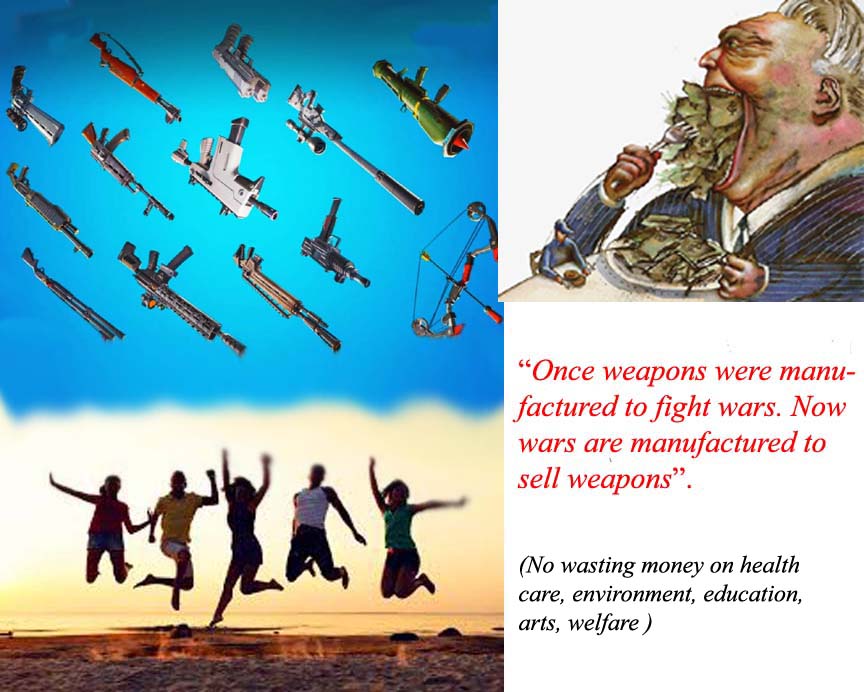
As of Wednesday, a U.S.-based Quaker group’s online database listed over two dozen companies profiting from the bloodshed in the Gaza Strip, where Israeli forces have spent the last 10 weeks waging what experts call a “genocidal” war that sent defense stocks soaring.
Backed by $3.8 billion in annual military aid from the United States, Israel declared war on October 7 in retaliation for a Hamas-led attack that killed over 1,100 people. Since then, Israeli forces have killed over 20,000 Palestinians in Gaza—sparking massive protests demanding a cease-fire around the world, including many led by Jewish people.
“War and attacks on civilians will never bring safety or peace to Israelis or Palestinians.”
The growing death toll, displacement, destruction of civilian infrastructure, and difficulties in delivering humanitarian aid to the besieged enclave have also increased scrutiny of a $14.3 billion package for the war that the Biden administration requested from Congress as well as criticism of the U.S. weapon-makers and billionaire donors who are arming and enabling the Israel Defense Forces (IDF).
“The scale of destruction and war crimes in Gaza would not be possible without massive weapon transfers from the U.S.,” said Noam Perry of the American Friends Service Committee (AFSC), the group behind the tool, in a statement Wednesday. “As global resistance to war and apartheid grows, it is important that the public know exactly who is making this violence possible.”
As the AFSC webpage details:
Shortly after October 7, the U.S. government started transferring to Israel massive amounts of weapons. Among these weapons, Israel received more than 15,000 bombs and 50,000 artillery shells within just the first month-and-a-half. These transfers have been deliberately shrouded in secrecy to avoid public scrutiny and prevent Congress from exercising any meaningful oversight.
Some of these weapons were purchased using U.S. taxpayers’ money through the Foreign Military Sales program; some were direct commercial sales purchased through Israel’s own budget; and some were replenished U.S. military stockpiles in Israel, which the Israeli military may also use. A list of known U.S. arms transfers is maintained by the Forum on the Arms Trade.
The webpage notes that the list is based on reporting, social media, and other open sources, and “focuses on weapons used by Israel because all Palestinian militant groups are already sanctioned and receive no support from Western governments or corporations.”
For example, Boeing, the world’s fifth-largest weapon manufacturer, makes F-15 fighter jets and Apache AH-64 attack helicopters used by the Israeli forces, as well as “multiple types of unguided small diameter bombs (SDBs) and Joint Direct Attack Munition (JDAM) kits” that have been used “extensively” during the war, including in a bombing of Gaza’s Jabalia refugee camp…………………………………………………………………………..
Other companies on the list include weapons giants such as General Dynamics, General Electric, L3Harris Technologies, Leonardo, Lockheed Martin, Northrop Grumman, and RTX—formerly Raytheon—as well as vehicle companies AM General, Ford, Oshkosh, Toyota, and drone manufacturers AeroVironment, Skydio, and XTEND…………………………………………………..
The other foreign firms on the list are ThyssenKrupp, the German company that built four warships for Israel, and Nordic Ammunition Company, which makes the M141 Bunker Defeat Munition, a shoulder-fired “bunker-buster” rocket……………………………………..
In 1996, a nest of American-born imperialists revolving around Paul Wolfowitz, Dick Cheney, Donald Rumsfeld, and Richard Perle created a new think tank called “The Project for a New American Century.”
While the principled aim of the think tank ultimately hinged on a new “Pearl Harbor moment” that would justify a new era of regime-change wars in the Middle East, a secondary but equally important part of the formula involved the dominance of “Greater Israel” Likud fanatics then taking power over the murdered body of Yitzhak Rabin.
It was toward the start of the new regime of Prime Minister Benjamin Netanyahu that Richard Perle wrote the report “Clean Break: A Strategy for Securing the Realm,” which outlined a series of goals that would govern the strategic vision of Washington and Tel Aviv for the next two decades. It called for:
Canceling the foundations for the Oslo Accords that threatened to bring about a climate of peace through economic cooperation in the Middle East under a two-state solution
Launching a new doctrine of “right of hot pursuit” justifying armed incursions into Palestinian territories
Inducing the United States to overthrow Saddam Hussein’s regime in Iraq
Armed incursions into Lebanon and possible strikes against Syria and Iran
In 2007, General Wesley Clark added even more detail to this neocon program when he revealed the content of a discussion he had with Wolfowitz and Rumsfeld 10 days after 9/11. General Clark stated that he was told of planned invasions of seven countries scheduled to take place within five years… namely: “Iraq, Syria, Lebanon, Libya, Somalia, Sudan, and Iran.”
This program was, in short, a recipe for establishing the long-awaited “Greater Israel” promoted by the likes of Theodor Herzl, Vladimir Jabotinsky, and Rabbi Abraham Isaac Kook over a century ago.
With the coming breakdown of the over-inflated Western financial system on one side and the emergence of a viable new multipolar security and economic architecture on the other side, it appears the ghouls that orchestrated 9/11, assassinated Rabin (1995) and Arafat (2004), and revived the Crusades have decided to kick over the chess board.
Conducting a rational analysis of the motives for this type of dynamic poses a major difficulty for any geopolitical commentator used to thinking in academically acceptable terms, which presume that rational self-interest animates the players within a game. In this case, rational self-interest is infected by heavy doses of self-delusional Hegemonism, fanatical imperial zealotry, and end-times eschatology with a Messianic twist (taking both Christian and Jewish forms).
If Israel wishes to have full control over Gaza’s maritime oil/gas reserves, it can only achieve its goal if the legal owners and beneficiaries living in Gaza disappear.
The paper laid out three possible scenarios for the people of Gaza. The first involves the replacement of Hamas with the Palestinian Authority in Gaza. The second involves the emergence of a new local Gaza authority (not Hamas or PA), and the third includes the expulsion of all civilians into Egypt. The report clearly identifies the third scenario as the most preferable option. The report’s authors write that this third option “will yield positive, long-term strategic outcomes for Israel, and is an executable option. It requires determination from the political echelon in the face of international pressure, with an emphasis on harnessing the support of the United States and additional pro-Israeli countries for the endeavor.”
Of course, US support for moving Gazans into the Sinai Peninsula began literally minutes after October 7. This would create a serious problem for future retaliation by extremely radicalized and traumatized people whose families have been killed by Israel’s crimes for decades. Hamas’ Qatar-based Muslim Brotherhood leadership of multi-billionaires would then easily be able to coordinate with Egypt’s Muslim Brotherhood to act as agent provocateurs attacking Israel.
Perhaps if this was still 1996, and no powerful coalition of Russia, China, and Iran existed to defend Egypt against the threatened Anglo-Zionist war, then perhaps the PNAC Clean Break Strategy for Securing the Realm might be possible. The decision to ignore reality by rehashing this obsolete program implies the height of incompetence, which threatens to grow far beyond a regional war and into a global thermonuclear conflagration more quickly than many imagine.
This foreshadowing of a prophetic global war to usher in the Messiah (as many Christian rapturists dream of), was outlined in depth by Greater Israel advocate and Jabotinsky collaborator Rabbi Abraham Isaac Kook 100 years ago.
Kook was Britain’s selection for the Chief Ashkenaz Rabbi for Jerusalem and Palestine from 1919 to 1935, and his influence in shaping several generations of radical Zionist zealots that took over control of much of Israel’s government after the inside job that was the Six Day War is immense. His prophetic remarks should not be easily dismissed. In his book Orot, Kook said:
“In wars, national characters crystalize. Israel, as the universal reflection of mankind, benefits thereby. The heels of Messiah follow upon World Conflagration… At the hour of the downfall of Western civilization, Israel is called upon to fulfill its divine mission by providing the spiritual basis for a New World Order.” [emphasis added]
The only hope to avoid this calamity and disrupt this flight toward an Armageddon scenario steered by End Times Messianic cultists is to force a ceasefire, as Russia, China, and the vast majority of world citizens (even Americans) demand.