Britain, France and Germany said they remained committed to the deal despite Tuesday’s decision by President Trump to withdraw.
But Brig. Gen. Hossein Salami said Europe “cannot act independently over the nuclear deal,” the semi-official Fars news agency quoted him as saying.
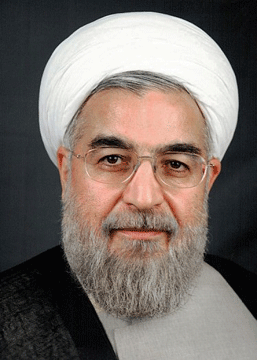
Iranian President Hassan Rouhani said Tuesday that Tehran would remain in the 2015 agreement, though Europe had only a “limited opportunity” to preserve it.
On Wednesday, Supreme Leader Ayatollah Ali Khamenei cast doubt on the ability of the European signatories to guarantee Tehran’s interests, adding: “I do not trust these countries either.”
Khamenei has the final say on all state matters and commands the loyalty of the IRGC, which has huge political and economic influence domestically.
Salami said Iran’s enemies were not seeking military confrontation. “They want to pressure our country by economic isolation … Resistance is the only way to confront these enemies, not diplomacy,” Fars quoted him as saying.
Trump also said Tuesday he would revive US economic sanctions against Iran, penalizing foreign firms doing business with Tehran and further undermining what he called “a horrible, one-sided deal that should have never, ever been made.”
Europeans fear a collapse of the deal could raise the risk of deepening conflicts in the Middle East.
Early on Thursday, Iranian forces launched their first attack on Israel from inside Syria, firing rockets at army bases in the Golan Heights, Israel said.
That prompted one of the heaviest Israeli barrages against Syria since the conflict there began in 2011.
The pact, the signature foreign policy achievement of Trump’s predecessor, President Barack Obama, was designed to prevent Iran from developing a nuclear bomb in exchange for lifting most sanctions that had crippled its economy. Sanctions were removed in 2016.
Trump complained that the agreement failed to address Iran’s ballistic missile program, its nuclear activities beyond 2025 or its role in conflicts in the Middle East, where Tehran has been involved in a proxy war from Lebanon to Yemen for decades.
In defiance of Western pressure to curb the missile program, Tehran says it is an essential precautionary defense against the United States and other adversaries, primarily Gulf Arab states and Israel.
“Exiting the deal and their concerns over Iran’s missile work are excuses to bring our nation to its knees,” Salami said.
The IRGC’s overseas arm, the Quds force, operates in Iraq, Syria and Yemen, among other places.
How America Jump-Started Iran’s Nuclear Program, History, BY BECKY LITTLE//MAY 9, 2018
For several decades now, the U.S. has sought to deter Iran from developing nuclear weapons. But ironically, the reason Iran has the technology to build these weapons in the first place is because the U.S. gave it to Iran between 1957 and 1979. This nuclear assistance was part of a Cold War strategy known as “Atoms for Peace.”
The strategy’s name comes from Dwight Eisenhower’s “Atoms for Peace” speech, given before the United Nations General Assembly in 1953. In it, he suggested that promoting the non-military use of nuclear technology could discourage countries from using it to create nuclear weapons, or “Atoms for War.”
The speech came only eight years after the invention of the atomic bomb, at a time when the U.S. was anxious to keep these new and frightening weapons from proliferating around the world. Strange as it sounds, President Eisenhower viewed his “Atoms for Peace” strategy partly as a form of arms control.
the U.S. provided nuclear assistance to countries it wanted to influence, such as Israel, India, Pakistan, and Iran.
At the time, the U.S. was closely allied with Iran’s Shah, Mohammad Reza Pahlavi. So closely, in fact, that when Iran toppled the Shah’s monarchy and democratically elected a prime minister, the CIA staged a 1953 coup d’état that put the Shah back in power. Part of the reason the U.S. valued Iran as an ally was because of its strategic location bordering the Soviet Union. During the early part of the Cold War, the U.S. set up a base in Iran to monitor Soviet activity.
In this context, the United States’ nuclear cooperation with Iran “was, in part, a means to shore up the relationship between those countries,” Fuhrmann says. The cooperation lasted until 1979, when the the Iranian Revolution ousted the Shah and the U.S. lost the country as an ally.
All of the nuclear technology the U.S. provided Iran during those years was supposed to be for peaceful nuclear development. But the “Atoms for Peace” strategy ended up having some unintended consequences.
“A lot of that infrastructure could also be used to produce plutonium or weapons-grade, highly-enriched uranium, which are the two critical materials you need to make nuclear bombs,” Fuhrmann says. In effect, the U.S. laid the foundations for the Iranian nuclear weapons program.
Iran first became seriously interested in creating nuclear weapons during the 1980s Iran-Iraq War. It tried unsuccessfully to develop them in the late ‘90s and early 2000s. Still, Iranian nuclear development remains an international concern, especially now that Trump has withdrawn the U.S. from the 2015 Iranian nuclear deal, known as the Joint Comprehensive Plan of Action.
In the weeks leading up to Trump’s decision, Israeli Prime Minister Benjamin Netanyahu tried to convince him to exit the deal by arguing that Iran was still pursuing nuclear weapons. Other policy experts and world leaders have rejected this claim, and Fuhrmann says he’s seen no evidence that “Iran has violated the deal, or that Iran has done anything since 2003 … to build nuclear bombs.”
THE IRAN NUCLEAR DEAL’S UNRAVELING RAISES FEARS OF CYBERATTACKS Wired Andy Greenberg, 18 May 18
WHEN THE US last tightened its sanctions against Iran in 2012, then-president Barack Obama boasted that they were “virtually grinding the Iranian economy to a halt.” Iran fired back with one of the broadest series of cyberattacks ever to target the US, bombarding practically every major American bank with months of intermittent distributed denial of service attacks that pummeled their websites with junk traffic, knocking them offline. Three years later, the Obama administration lifted many of those sanctions in exchange for Iran’s promise to halt its nuclear development; Tehran has since mostly restrained its state-sponsored online attacks against Western targets.
Now, with little more than a word from President Trump, that détente appears to have ended. And with it, the lull in Iranian cyberattacks on the West may be coming to an end, too.
Cutting Swords
President Trump announced Tuesday that he would unilaterally withdraw the US from the Iran nuclear deal negotiated by the Obama administration in 2015, and impose new sanctions against the country within 90 days. Since then, foreign policy watchers have warned that the move would isolate the US, risk further destabilizing the Middle East, and invite another nuclear rogue nation into the world. But for those who have followed the last decade of digital conflicts around the globe, the unraveling of the Iran deal reignites not only the country’s nuclear threat, but also the threat of its highly aggressive hackers—now with years more development and training that have only honed their offensive tactics.
“They’ve developed this ability over the last years and there’s no reason for them not to use it now,” says Levi Gundert, an Iran-focused analyst at private intelligence firm Recorded Future. “They want to try to induce other countries to think about repercussions before levying sanctions, and they have a real capability in the cyber domain.”
……… since the 2015 nuclear deal, Iran has largely restricted its hacking to its own neighborhood, repeatedly hitting its longtime rival Saudi Arabia and other Gulf nations with cyberattacks but limiting its attacks on Western targets to mere cyberespionage, not actual disruptive operations.
……… Iran’s abrupt entrance into the digital arms race came in 2012, when state-sponsored Iranian hackers calling themselves the Cutting Sword of Justice used a piece of malware called Shamoon to overwrite the files of 30,000 machines on the network of energy company Saudi Aramco with a file that displayed the image of a burning American flag. A similar malware infection struck Qatari gas firm RasGas soon after. The attacks, which temporarily paralyzed the IT operations of one of the world’s largest oil companies, is widely seen as retaliation for Stuxnet, the NSA- and Israeli-created malware that was unleashed against the Natanz Iranian nuclear facility in 2010 to destroy its enrichment centrifuges. ………
Iran may have quietly grown into a serious threat to any enemy nation that it can reach via the internet. And now that the last three years of tense peace appears to be ending, its list of fair-game targets may once again include the United States, too.
The U.S. Treasury imposed sanctions against six individuals and three companies it said had funneled millions of dollars to the Iranian Revolutionary Guard’s elite Qods Force.
The sanctions were imposed just days after President Donald Trump withdrew from the Iran nuclear deal.
President Hassan Rouhani said on Tuesday that Iran would remain committed to a multinational nuclear deal despite U.S. President Donald Trump’s decision to withdraw from the 2015 agreement designed to deny Tehran the ability to build nuclear weapons, Reuters reported.
“If we achieve the deal’s goals in cooperation with other members of the deal, it will remain in place… By exiting the deal, America has officially undermined its commitment to an international treaty,” Rouhani said in a televised speech.
“I have ordered the foreign ministry to negotiate with the European countries, China and Russia in coming weeks. If at the end of this short period we conclude that we can fully benefit from the JCPOA with the cooperation of all countries, the deal would remain,” he added.
The Joint Comprehensive Plan of Action (JCPOA) is the full name for the nuclear deal, struck in 2015 between Iran, the five permanent members of the U.N. Security Council – the United States, Russia, China, Britain and France – and Germany.
Rouhani added that Iran was ready to resume its nuclear activities after consultations with the other world powers which are part of the agreement.
Budapest: European leaders have hinted at financial incentives or compensation for Iran to persuade it to stay it in the nuclear deal that the US has rejected.
And they are likely to act to protect European companies trading with Iran despite the US re-imposing sanctions.
In a joint statement UK prime minister Theresa May, German Chancellor Angela Merkel and French president Emmanuel Macron greeted with “regret and concern” Donald Trump’s announcement that he would re-impose sanctions against Iran and withdraw from the Iran nuclear deal.
“Together, we emphasise our continuing commitment to the (agreement),” they said. “This agreement remains important for our shared security.”
They said Iran “continues to abide by the restrictions” in the deal preventing its development of nuclear weapons, and “the world is a safer place as a result”.
“Our governments remain committed to ensuring the agreement is upheld, and will work with all the remaining parties to the deal to ensure this remains the case including through ensuring the continuing economic benefits to the Iranian people that are linked to the agreement.”
They encouraged Iran to “show restraint in response to the decision by the US” and to continue to meet all its obligations including atomic agency inspections and monitoring.
“In turn, Iran should continue to receive the sanctions relief it is entitled to whilst it remains in compliance with the terms of the deal,” the leaders said.
The European Commission’s foreign affairs representative and vice president Federica Mogherini said the nuclear deal “is not a bilateral agreement and it is not in the hands of any single country to terminate it”.
“It is a key element of the global nuclear non-proliferation architecture,” Mogherini said, adding that it was “even more” relevant in the context of negotiations with North Korea.
“The nuclear deal with Iran is crucial for the security of the region, of Europe and of the entire world,” she said.
She said Europe “fully trusted” the work of the nuclear watchdog which had certified Iran had fully complied with it s commitments under the deal.
And she too suggested Europe would look to compensate Iran for the impact of renewed US sanctions.
“The EU has repeatedly stressed that the lifting of nuclear related sanctions has a positive impact on trade and economic relations with Iran, including crucial benefits for the Iranian people,” she said
“The EU is fully committed to ensuring that this continues to be delivered on. I am particularly worried by the announcement of new sanctions. I will consult with all our partners in the coming hours and days to assess their implications. The EU is determined to act in accordance with its security interests and to protect its economic investments.”
And she appealed to Iran to “stay true to your commitments, as we will stay true to ours. And together, with the rest of the international community, we will preserve the nuclear deal.”
May, Macron and Merkel said they wanted to build on the nuclear deal to address other issues including Iran’s ballistic missile programme and “its destabilising regional activities, especially in Syria, Iraq and Yemen”.
Macron Tweeted that the three countries would “work collectively on a broader framework” covering nuclear activity after the deal ends in 2025, ballistic activity and “stability in the Middle East”.
On Monday UK Foreign Secretary Boris Johnson travelled to the US to make a last-ditch appeal to save the deal, but didn’t get an audience with the president.
Instead he appeared on the cable news program Fox & Friends – which Trump regularly watches – and remarked that “Plan B does not seem, to me, to be particularly well developed at this stage”.
JORDAN’S FOREIGN MINISTER SEES ARMS RACE IF IRAN NUCLEAR DEAL ENDS
Jordanian Foreign Minister Ayman al-Safadi says an end of the Iran deal could have grave consequences across the Middle East, BY REUTERS JERUSALEM POST MAY 8, 2018 MURNAU– Jordanian Foreign Minister Ayman al-Safadi on Tuesday warned of “dangerous repercussions” and a possible arms race in the Middle East unless a political solution was found to free the region of nuclear weapons and other weapons of mass destruction.
Al-Safadi spoke in Germany before an expected announcement by US President Donald Trump on whether he will pull out of the Iran nuclear deal or work with European allies who say it has successfully halted Iran’s nuclear ambitions.
Al-Sadadi said he did not know what the US president would do, but urged continued conversation and dialog with Iran, despite what he called widespread concerns among Arab countries about Iran’s “interventionism” in the region.
“We all need to work together in making sure that we solve the conflicts of the region … and strive for a Middle East that is free of all weapons of mass destruction,” he told reporters after a meeting with leaders of Chancellor Angela Merkel’s right-left “grand coalition” government.
“If we do not look at the political picture and … find a way to ensure that the whole region is free of (these weapons), we’ll be looking at a lot of dangerous repercussions that will affect the region in terms of an arms race,” he said.
In March, Saudi Arabian Crown Prince Mohammed bin Salman told CBS news that his kingdom would “without a doubt” develop nuclear weapons if Iran, Riyadh’s arch foe, did so.
Nuclear deal a challenge for Rouhani as Iran hardliners close in, Parisa Hafezi, ANKARA (Reuters) 4 May 18 – Iran’s hardliners are preparing to bring President Hassan Rouhani to heel if U.S. President Donald Trump scraps Tehran’s nuclear deal with major powers, officials and analysts believe.
Trump has threatened to abrogate the 2015 agreement by not extending sanctions waivers when they expire on May 12, if Britain, France and Germany do not “fix” its “terrible flaws”.
This sets the stage for a resurgence of political infighting within Iran’s complex power structure, Iranian officials said.
Annulment of the accord could tip the balance of power in favor of hardliners looking to constrain the relatively moderate Rouhani’s ability to open up to the West.
While the spotlight is on Trump’s eventual decision there will be a display of unity in Tehran, a senior Iranian official told Reuters, on condition of anonymity.
“But when the crisis is over, hardliners will try to weaken and sideline the president,” the official said.
Nor can the president expect any weakening of Iran’s system of clerical rule as a result of the uncertainty surrounding the nuclear deal, meaning “Rouhani will be in a no-win situation”, said a relative of Khamenei.
For Rouhani the stakes are high. If the deal falls apart, he could become politically vulnerable for promoting the 2015 accord, under which non-nuclear sanctions were lifted in return for Tehran curbing its nuclear program.
“It will also lead to a backlash against the moderates and pro-reformers who backed Rouhani’s detente policy with the West … and any hope for moderation at home in the near future will fizzle out,” said political analyst Hamid Farahvashian.
It is a delicate balance. Supreme leader Ayatollah Ali Khamenei knows that Iranians, many of whom took to the streets earlier this year to protest against high food prices, can only take so much economic pressure.
Iran will not ‘renegotiate or add onto’ nuclear deal – Daily Mail
Iran says will not renegotiate nuclear deal, warns against changesANKARA (Reuters) 3 May 18– Iran’s foreign minister said on Thursday U.S. demands to change its 2015 nuclear agreement with world powers were unacceptable as a deadline set by President Donald Trump for Europeans to “fix” the deal loomed.
Trump has warned that unless European allies rectify the “terrible flaws” in the international accord by May 12, he will refuse to extend U.S. sanctions relief for the oil-producing Islamic Republic.
“Iran will not renegotiate what was agreed years ago and has been implemented,” Foreign Minister Mohammad Javad Zarif said in a video message posted on YouTube.
Britain, France and Germany remain committed to the accord as is, but now, in efforts to keep Washington in it, want to open talks on Iran’s ballistic missile program, its nuclear activities beyond 2025 – when key provisions of the deal expire – and its role in Middle East crises such as Syria and Yemen.
A senior adviser to Iranian Supreme Leader Ayatollah Ali Khamenei also warned Europeans on Thursday over “revising” the nuclear deal, under which Iran strictly limited its enrichment of uranium to help allay fears this could be put to producing atomic bomb material, and won major sanctions relief in return.
“Even if U.S. allies, especially the Europeans, try to revise the deal…, one of our options will be withdrawing from it,” state television quoted Ali Akbar Velayati as saying.
The European signatories to the deal have been trying to persuade Trump to save the pact, reached under his predecessor Barack Obama. They argue it is crucial to forestalling a destabilizing Middle East arms race and that Iran has been abiding by its terms, a position also taken by U.S. intelligence assessments and the U.N. nuclear watchdog agency.
Zarif said: “Let me make it absolutely clear and once and for all: we will neither outsource our security nor will we renegotiate or add onto a deal we have already implemented in good faith.”
Encouraged by Netanyahu, the US could soon withdraw from the agreement – which would spell the end of hopes for reform
Benjamin Netanyahu’s amateurish PowerPoint presentation in Tel Aviv this week – “Iran lied” flashed up behind him in huge letters – was in fairness a great improvement on the cartoonish diagram of an atomic bomb the Israeli prime minister held up at the UN general assembly in September 2012. But it served much the same purpose: to show that Iran can’t be trusted, and is poised to unleash nuclear havoc across the region. The “half-ton cache” of documents he presented as evidence that Iran hid a weapons programme predates the 2015 nuclear deal. John Kerry, one of its architects, tweeted that it represented “every reason the world came together to apply years of sanctions and negotiate the Iran nuclear agreement – because the threat was real and had to be stopped. It’s working!”
This is why, together with Kerry, European powers led by France, Germany and Britain made substantial efforts to push back against Netanyahu’s performance. In contrast, Mike Pompeo, Trump’s secretary of state, lauded it. In the words of Stephen Walt, a professor of international affairs at Harvard, “the Bush administration was better at inventing a phoney case for war with Iraq than the Trump team is at conjuring up a phoney case for war with Iran. But doesn’t mean they won’t eventually succeed.”
Others find it hard to take Netanyahu seriously: he has been warning that Iran is close to acquiring nuclear weapons for more than 20 years. In 1992, he said the country would have a nuclear bomb in three to five years. In 1993, he predicted it would happen by 1999. He made similar remarks in 1996, 2002, and many times since, as the Israeli newspaper Haaretz has pointed out. Not only are his warnings repetitive, they are hypocritical. Ordinary people I talk to are shocked when they realise Iran does not have a single bomb and has been a party to the treaty on the nonproliferation of nuclear weapons since 1970. Israel, in contrast, has never signed it (meaning that the International Atomic Energy Agency has no inspection authority there) and is estimated to have more than 200 nuclear warheads. Let’s be clear: Netanyahu’s files did not show that Iran has violated the agreement. The IAEA has verified 10 times, most recently in February, that Tehran has fully complied with its terms.
Arguably, if anyone has the right to complain, it is Iran. It has unplugged two-thirds of its centrifuges and shipped out 98% of its enriched uranium, but has not seen the economic benefits it was promised. Nearly three years on, not a single tier-one European bank is prepared to do business with Iran. The country’s currency crisis last month showed the extent of its economic vulnerability. Trump’s controversial Muslim travel ban has targeted Iranians and hampered the growth of tourism.
Perhaps more importantly, the collapse of the deal would be seen by the Iranian people as a huge betrayal. In 2013, Iranians brought the era of Holocaust-denier Mahmoud Ahmadinejad (despised at home after a fraudulent re-election in 2009), to a close. They put their trust in the reform-minded Hassan Rouhani, who subsequently fulfilled his promise to them of resolving the nuclear dispute with the west. Iran’s tech-savvy young people are by and large more progressive than previous generations. Last year, 24 million Iranians re-elected Rouhani by a landslide in an endorsement of his work on the deal. Yet just as the agreement is beginning to deliver, and with Iran fully complying, a new US administration seems set on scuppering it.
Of course, the fact that Iran is fulfilling its nuclear obligations does not mean it has been a good actor elsewhere. But the agreement was not supposed to address Iran’s regional behaviour or its missile programme, and should not be junked on this basis. In Syria, Iran is arguably making its biggest foreign policy mistake since the revolution. It has long defined its foreign policy as defending the oppressed, but for the first time it is clearly supporting the oppressor.
Even with Syria, however, the situation isn’t entirely straighforward. Vali Nasr, dean of the Johns Hopkins School of Advanced International Studies in Washington DC, argued in an essay in the latest issue of the Foreign Affairs that Tehran’s role in Syria could be understood as a form of “forward defence”, a way to survive the collapse of the old order in the Arab world following the US invasion of Iraq and widespread civil unrest. Washington’s efforts to roll back Iranian influence, he says, have failed to restore that order and may inadvertently have made Iran – worried that it has been outgunned by its traditional rivals – bolder: “The more menacing the Arab world looks, the more determined Iran is to stay involved there.”
The chances of a military conflict with Iran are not high for the moment, so long as Tehran has Russia’s backing. But the collapse of the deal would, even so, have terrible consequences. It would destroy the moderates and reformists in Iran for the foreseeable future. This is particularly important since the supreme leader, Ayatollah Ali Khamenei, is 78, and there has been speculation over his health. The time may soon come when a successor takes his place – the biggest political change in decades. Rouhani has already been under intense pressure from his opponents. The failure of the deal will only embolden hardliners, who are resposible for outrageous human rights abuses, such as the ongoing detention of dual nationals like Nazanin Zaghari-Ratcliffe.
While the reformist president Mohammad Khatami was in office, George W Bush undermined him and shattered Iranians’ hopes of rapprochement by labelling the country part of the “axis of evil”. Trump could be about to make exactly the same mistake with Rouhani.
Israeli claims on Iran divide US, allies WP, By Associated PressMay 1 JERUSALEM— The Latest on the Israel’s allegations that Iran concealed a nuclear weapons program before signing a deal with world powers in 2015 (all times local):
Israeli Prime Minister Benjamin Netanyahu’s latest accusations about Iran’s past nuclear activities have received a warm welcome in Washington but a far cooler reception in Europe.
The claims appear to have deepened divisions among Western allies ahead of President Donald Trump’s decision on whether to withdraw from the international nuclear deal later this month.
6:45 p.m.
German Foreign Minister Heiko Maas says the International Atomic Energy Agency should quickly follow up on allegations by Israeli Prime Minister Benjamin Netanyahu, who claims that Iranian leaders covered up a nuclear weapons program before signing a deal with world powers in 2015.
Maas told the Bild daily on Tuesday that “the IAEA must as quickly as possible get access to Israeli information and clarify if there are indeed indications of a violation of the deal.”
…….. Netanyahu provided no direct evidence that Iran has violated the 2015 deal, which it signed with the U.S., Germany, Britain, France, China and Russia.3:55 p.m.
Britain’s foreign minister says the alleged new evidence presented by Israel about Iranian nuclear intentions shows why the international nuclear deal with Iran must remain in place.
…… British Foreign Minister Boris Johnson, however, said the presentation “underlines the importance” of keeping the deal’s constraints on Iran in place. He says the deal is not based on trust about Iran’s intentions, but instead is based on verification and inspections.3:30 p.m.
The U.N. nuclear agency says it believes that Iran had a “coordinated” nuclear weapons program in place before 2003, but found “no credible indications” of such work after 2009.
The agency issued its assessment on Tuesday, a day after Israeli Prime Minister Benjamin Netanyahu released what he said was a “half ton” of seized documents proving that Iran has lied about its nuclear intentions.
The documents focused on Iranian activities before 2003 and did not provide any explicit evidence that Iran has violated its 2015 nuclear deal with the international community.
Tuesday’s IAEA assessment, which repeated an earlier 2015 report, did not directly mention Netanyahu’s claims.
But it noted that in its 2015 report, its board of governors “declared that its consideration of this issue was closed.”
Trump should strengthen the Iran nuclear deal, not blow it up https://www.washingtonpost.com/news/global-opinions/wp/2018/05/01/trump-should-strengthen-the-iran-nuclear-deal-not-blow-it-up/?utm_term=.cbcfee8d797eBy Max BootMay 1 Credit Israeli intelligence for another coup: Its agents smuggled 100,000 pages of documents out of Iran about that country’s nuclear program. The mullahs will now have to patch a major security leak. But the revelations contained in those papers are not quite as newsworthy as Prime Minister Benjamin Netanyahu claimed in a made-for-American-TV presentation on Monday. “I’m here to tell you one thing: Iran lied. Big time,” Netanyahu said. So what did Iranian leaders lie about? That they had a secret nuclear-development program called Project Amad … that was shelved in 2003.
No kidding. Iran’s nuclear-weapons development program was widely known — and it was, in fact, the justification for the United States, Russia, China, the European Union, Germany, Britain and France to conclude the Joint Comprehensive Plan of Action (JCPOA) with Iran in 2015, imposing strict limitations on Iran’s ability to enrich and reprocess fissile material.
Netanyahu claims that Iran has violated the JCPOA, a.k.a. the “Iran nuclear deal.” But on that score his evidence is thin. “In 2017,” he said, “Iran moved its nuclear weapons files to a highly secret location in Tehran.” It’s possible that Iran did not come clean about its past nuclear activities, as it was supposed to do under the deal, but no one ever expected that the agreement would eradicate Iran’s nuclear know-how. It was only supposed to stop the actual development of nuclear weapons. Netanyahu is clearly eager to torpedo the nuclear deal, and if he had compelling evidence of Iranian violations he would have presented it — but he doesn’t and didn’t.
There is nothing in Israel’s revelations that contradicts that assessment of the U.S. intelligence community that Iran is complying with the terms of the nuclear deal. In February, Dan Coats, director of national intelligence, stated that “the JCPOA has extended the amount of time Iran would need to produce enough fissile material for a nuclear weapon from a few months to about one year” and that it “has also enhanced the transparency of Iran’s nuclear activities.” Just last week, Defense Secretary Jim Mattis told Congress that, after reading the entire text of the nuclear agreement three times, he was impressed that “the verification, what is in there, is actually pretty robust.”
These sober assessments hardly justify President Trump’s hyperbolic claims that the Iran nuclear agreement is the “worst deal ever.” It is, in fact, a successful deal that appears to be constricting Iran’s nuclear development — just as intended.
There were, of course, real limitations on the scope of the nuclear deal, which is why I and other critics argued that President Barack Obama should have held out for tougher terms. It doesn’t allow unfettered inspection of all Iranian military bases. It doesn’t ban Iranian nuclear development in perpetuity; the caps on centrifuges will begin expiring in 2026. It doesn’t ban ballistic missile testing. And it doesn’t prevent Iran from destabilizing its neighbors.
But that’s not an argument for blowing up the JCPOA, as Trump seems intent on doing as early as May 12 (the next deadline for reimposing sanctions lifted under the deal). That’s an argument for strengthening it. French President Emmanuel Macron and German Chancellor Angela Merkel, in their visits to Washington last week, offered Trump a way to accomplish this goal by negotiating a side agreement with the Europeans. The United States and European Union could state their intent to apply sanctions on Iran if it tests ballistic missiles, continues destabilizing its neighbors, dramatically expands the number of working centrifuges, or attempts to weaponize its nuclear program at any point in the future. The United States could also declare that it will keep troops in eastern Syria to contain Iranian power — something Trump is loath to do.
The beauty of a side agreement is that it would not require the assent of Iran, Russia and China — which is unlikely — and it would give Trump the ability to boast, truthfully, that he had increased the pressure on Iran. But it would require him to cease his incessant denigration of the nuclear deal, which he seems to hate mainly because he wasn’t the one who negotiated it, and force him to admit that he failed to rewrite it.
That would be the grown-up thing to do, which is why our juvenile president is unlikely to do it. As Macron said, he is likely to “get rid of this deal on his own, for domestic reasons.” Netanyahu’s performance on Monday night, clearly coordinated with the Trump administration, is intended to give the president the excuse he needs to act on his impulse.
But has Trump thought about what comes next? Silly question, I know. If the United States reimposes nuclear sanctions on Iran, even though there is no evidence that Iran is cheating on the nuclear deal, Iran may continue abiding by its limitations — or it may not. The Europeans may go along under threat of secondary sanctions — or they may not. No one knows what will happen next, but the likelihood is that nuking the JCPOA will undermine, rather than strengthen, attempts to limit the Iranian threat.
Trump is already dealing with one nuclear crisis in North Korea. It is hard to know why he wants to start another one in the Middle East.
France’s Macron and Iran’s Rouhani agree to work on saving the 2015 Iran nuclear deal, CNBC, 29 Apr 18
French President Emmanuel Macron and Iranian President Hassan Rouhani spoke by telephone on Sunday and agreed to work save the 2015 Iran nuclear agreement.
Macron and German Chancellor Angela Merkel were in Washington last week, tyring to persuade President Trump not to pull out of the Iran deal.
https://www.rferl.org/a/iran-nuclear-deal-us-pompeo-israel/29199116.htmlSpeaking to journalists alongside Israeli Prime Minister Benjamin Netanyahu while visiting Tel Aviv on April 29, U.S. Secretary of State Mike Pompeo said President Donald Trump had “directed the administration to try and fix” the Joint Comprehensive Plan of Action (JCPoA) — a multilateral agreement reached in 2015 to curb Iran’s nuclear program. Should that prove impossible, Pompeo said Trump was “going to withdraw from the deal.” (Reuters)
What’s at Stake If Trump Kills the Iran Nuclear Deal? Bloomberg. By Lin Noueihed and David Wainer, April 28, 2018,
From oil to business to politics, the impact could be global
Trump has May 12 deadline for decision on sanctions waiver
U.S. President Donald Trump has until May 12 to decide whether to perhaps fatally undermine a years-in-the-making nuclear deal with Iran, with the consequences likely to be felt from Middle East war zones to oil markets. If the U.S. refuses to continue to waive sanctions under the six-nation agreement reached in 2015, there’s a real threat Iran will also walk away. European powers are scrambling to persuade Trump to preserve the agreement, with German Chancellor Angela Merkel in Washington on Friday on the heels of French President Emmanuel Macron. So what’s at stake if the U.S. withdraws?
· Oil Markets A “snap-back” in Iran sanctions by the U.S. would almost certainly reduce Iran’s oil exports, further stretching an oil market that’s seen prices rise 11 percent this year. What’s more uncertain is exactly how far shipments would fall.
……….Doing Business A resumption in U.S. sanctions could derail tens of billions of dollars in business deals. While a U.S. exit may not render signed deals illegal, new sanctions would make it risky for international companies to continue working in Iran due to potential ramifications for their U.S. business or banking transactions.
It’s not just companies involved in Iran that are worried. Privately, business leaders increasingly fret about the growing risk of conflict in the region if Iran resumes uranium enrichment in response to a U.S. withdrawal — and what that could mean for world trade…….
………Global Power Balance On the international stage, the biggest winners from a resumption of American sanctions could be two other signatories to the deal — China and Russia, whose influence has gradually spread in the Middle East as the U.S. has scaled back its engagement…….
Nuclear Risks The collapse of the accord could hamper denuclearization efforts, and not just in the Middle East. Iranian Foreign Minister Mohammad Javad Zarif warned this week that if the U.S. exits, his country might resume its nuclear program. Iranian officials have also threatened to leave the Non-Proliferation Treaty if the deal crumbles. Iran denies its enrichment was ever intended to build weapons as the U.S., Israel and others had charged.
North Korea, which does have a nuclear arsenal, will be watching developments closely. Ditching a deal the U.S. helped shape could undermine American credibility at the negotiating table as it seeks denuclearization in the Korean peninsula. Some analysts say the upcoming talks with North Korean leader Kim Jong Un might be weighing on Trump — and leave him more inclined to preserve Iran’s agreement.
Iranian Political Dynamics A collapse of the nuclear deal would be a blow for Iranian President Hassan Rouhani and the reformists who championed a diplomatic settlement to the nuclear standoff that had left Iran increasingly isolated. The nuclear deal is a rare concrete achievement for Rouhani, who was re-elected last year but has been weakened by demonstrations, a currency crisis and problems in the banking sector.
Hardliners, who warned through years of talks that the U.S. was not a trustworthy partner, would emerge strengthened………
Risk of Conflict If the deal collapses and Iran restarts its nuclear program, the risk of confrontation could increase. Washington’s leading Middle East allies — Israel and Saudi Arabia — are both determined to roll back Iranian influence in their neighborhood. Israel in the past has threatened to bomb Iranian nuclear sites to prevent it obtaining a weapons capability.
The potential for a broader conflict is compounded by the war in Syria, which has already drawn in Iran, Lebanon’s Hezbollah, Russia, the U.S., Turkey and Israel.
Defying the U.S. The amount of turbulence, especially for businesses, will depend on how Iran, and other powers, respond to any U.S. exit. “If the Americans wind up walking away from the deal but the rest of the world is able to say ‘we are sticking to our approach,’ then this might not be so catastrophic for investments in Iran,” said Alex Vatanka, a senior fellow at the Middle East Institute in Washington. https://www.bloomberg.com/news/articles/2018-04-27/what-s-at-stake-if-trump-kills-the-nuclear-deal-with-iran
Tell Congress: Prevent Nuclear Catastrophe in Iran
Read the Public Inquiry Report, the Commissioners’ report, Surrendering Australia: The AUKUS Deception is available to download for free at aukuspublicinquiry.com. Or just watch the replay of the National Press Club Luncheon.