Iran has removed the core of its Arak heavy water nuclear reactor

 Iran nuclear deal: heavy water nuclear reactor core filled with cement, SMH, January 12, 2016 Dubai: Iran has removed the core of its Arak heavy water nuclear reactor and filled it with cement as required under a nuclear deal signed with world powers last year, the semi-official Fars news agency has revealed, citing an informed Iranian source.
Any such move, reducing the plant’s ability to produce plutonium, might signal imminent implementation of the nuclear deal and clear the way for Tehran to receive relief from economic sanctions.
Separately, the European Union’s foreign policy chief said that EU nuclear-related sanctions on Iran could be lifted soon.
The fate of the reactor in central Iran was one of the toughest sticking points in the long nuclear negotiations that led to an agreement in July between Iran and six world powers, known as the Joint Comprehensive Plan of Action (JCPOA).
Under the deal’s terms, Iran accepted that the Arak reactor would be reconfigured so it could not yield fissile plutonium usable in a nuclear bomb.
China, the United States, France, Britain, Russia and Germany have agreed to participate in the redesign and the construction of the modernised reactor…….http://www.smh.com.au/world/iran-nuclear-deal-heavy-water-nuclear-reactor-core-filled-with-cement-20160112-gm3zkz.html
Iran has complied with its obligations to get rid of enriched uranium – John Kerry
Iran nuclear deal: Tehran on track, says John Kerry http://www.bbc.com/news/world-middle-east-35191146 28 December 2015
The US says Iran has taken a “significant step” towards meeting its nuclear commitments, by sending a large quantity of uranium abroad. Secretary of State John Kerry spoke after Iran dispatched a shipment of more than 11 tonnes of low-enriched uranium to Russia.
Iran signed a deal in July with six international powers. It is designed to demonstrate that Iran is not on the threshold of being able to make an atomic bomb.
Under the deal, Iran agreed to reduce its holdings of low-enriched uranium; sharply reduce its quantity of centrifuges – used to enrich uranium – and cut its output of plutonium by re-engineering a power plant.
Mr Kerry said Monday’s shipment of low-enriched uranium to Russia had tripled the amount of time it would take to produce enough fuel for a bomb – from two or three months to nine months. “I am pleased to report that we have seen important indications of significant progress towards Iran completing its key nuclear commitments under the deal,” Mr Kerry said.
Under July’s agreement, the International Atomic Energy Agency will decide when Tehran has complied with its obligations.
After this, the US and other world powers will begin to dismantle their programme of economic sanctions against Iran.

Key areas of the nuclear deal:
Uranium enrichment: Iran can operate 5,060 first generation centrifuges, configured to enrich uranium to 3.67%, a level well below that needed to make an atomic weapon. It can also operate up to 1,000 centrifuges at its mountain facility at Fordow – but these cannot be used to enrich uranium.
Plutonium production: Iran has agreed to reconfigure its heavy water reactor at Arak, so that it will only produce a tiny amount of plutonium as a by-product of power generation, and will not build any more heavy water reactors for 15 years.
Inspections: International monitors will be able to carry out a comprehensive programme of inspection of Iran’s nuclear facilities.
Sanctions: All EU and US energy, economic and financial sanctions, and most UN sanctions, will be lifted on the day Iran shows it has complied with the main parts of the deal.
All of Iran’s enriched uranium removed with Russian assistance
That’s It: All Enriched Uranium Removed From Iran Under Russian Assistance http://sputniknews.com/politics/20151229/1032438231/iran-uranium-russia.html MOSCOW (Sputnik) – All of the enriched uranium in Iran under the Joint Comprehensive Plan of Action, accepted on July 14 in Vienna on Iran’s nuclear energy program, has been removed under Russia’s assistance, the Russian Foreign Ministry said Tuesday.
“Under Russia’s assistance, all of the enriched uranium falling into the Joint Comprehensive Plan of Action has been removed from Iran,” the ministry said in a statement.
On July 14, Iran and the P5+1 group of mediators — Russia, the United States, China, France and the United Kingdom plus Germany — reached an agreement on maintaining a peaceful nature of Tehran’s nuclear program in exchange for sanctions relief.
On Monday, US Secretary of State John Kerry said that Russia played a vital role in arranging for Tehran’s low-enriched uranium being shipped out of Iran under the P5+1 nuclear deal
IAEA concludes its probe in Iran’s history of nuclear weapons research
The IAEA concluded that Iran conducted nuclear weapons-related research until 2003 and to a lesser extent until 2009, but found no evidence of this since.
The lifting of sanctions, agreed in a July deal with world powers, hinged on the IAEA’s findings on the issue.
Iran has strongly denied pursuing a clandestine nuclear weapons programme.
Iranian Foreign Minister Javad Zarif welcomed Tuesday’s announcement by the Vienna-based IAEA (International Atomic Energy Agency), saying it showed the peaceful nature of Iran’s nuclear programme.
“This resolution goes far beyond closing the issue of so-called PMD (Possible Military Dimension) and cancels the 12 previous resolutions of the council of governors of the IAEA which seriously restricted our country’s nuclear programme,” Mr Zarif was quoted as saying by Iranian media.
The BBC’s Bethany Bell in Vienna says sanctions against Iran could be lifted as early as the middle of January……………..
Key areas of the nuclear deal:
Uranium enrichment: Iran can operate 5,060 first generation centrifuges, configured to enrich uranium to 3.67%, a level well below that needed to make an atomic weapon. It can also operate up to 1,000 centrifuges at its mountain facility at Fordow – but these cannot be used to enrich uranium.
Plutonium production: Iran has agreed to reconfigure its heavy water reactor at Arak, so that it will only produce a tiny amount of plutonium as a by-product of power generation, and will not build any more heavy water reactors for 15 years.
Inspections: International monitors will be able to carry out a comprehensive programme of inspection of Iran’s nuclear facilities.
Sanctions: All EU and US energy, economic and financial sanctions, and most UN sanctions, will be lifted on the day Iran shows it has complied with the main parts of the deal. http://www.bbc.com/news/world-middle-east-35104715
Iran helped by world powers to redesign reactor as part of nuclear deal
World powers to help Iran redesign reactor as part of nuclear deal, REUTERS, 21 Nov 15 DUBAI | BY BOZORGMEHR SHARAFEDIN Six world powers will help Iran redesign its Arak heavy water reactor so that it cannot produce weapons-grade plutonium, according to a document released by the state news agency IRNA on Saturday.
The document was signed separately on Nov. 13, 17 and 18 by the foreign ministers of Iran and the P5+1 (the United States, Britain, France, China and Russia plus Germany) as well as EU foreign policy chief Federica Mogherini. It became effective on the date it was signed by all states.
The fate of the Arak reactor in central Iran was one of the toughest sticking points in the long nuclear negotiations that led to an agreement in July. Removing the core of the heavy water reactor to produce less plutonium is a crucial step before the relief from sanctions starts…….http://www.reuters.com/article/2015/11/21/us-iran-nuclear-arak-idUSKCN0TA0IK20151121#REED39oPKDuwmqS4.97
Iran hastening process of dismantling uranium-enriching centrifuges
 Iran starts dismantling nuclear equipment, SMH November 19, 2015 – Vienna: Iran has disconnected almost a quarter of its uranium-enriching centrifuges in less than a month, the UN nuclear watchdog said on Wednesday, suggesting the nation is racing to implement an agreement restricting its nuclear activities.
- Under the July deal, sanctions against Iran will be lifted in exchange for measures including slashing the number of centrifuges in operation and reducing its stockpile of uranium.
- Officials have been speculating about the speed at which Iran can dismantle the centrifuges, sensitive machines that spin at supersonic speeds to purify uranium to levels at which it can be used as fuel in power stations or, potentially, weapons.
- Disconnecting and moving the machines is a time-consuming process if it is to be done without damaging the equipment, making it one of the steps most likely to delay implementation of the deal, and therefore the lifting of sanctions.
- “They have been dismantling centrifuges that did not contain hexafluoride,” the senior diplomat said, referring to uranium hexafluoride, the feedstock for centrifuges. “Dismantling centrifuges that have or have had hexafluoride is a much more complicated thing than the clean ones.”
- A confidential report by the International Atomic Energy Agency to its Board of Governors said Iran had moved around 4500 centrifuges from their positions at the Fordow and Natanz enrichment sites between October 18 and November 15.
- The speed at which Iran dismantles the centrifuges is central to the question of whether Tehran can implement the deal reached in July with the US, Russia, France, Britain, Germany and China before parliamentary elections in February…….
http://www.smh.com.au/world/iran-starts-dismantling-nuclear-equipment-20151118-gl2jjw.html
Iran c ontinues to comply with nuclear deal commitments, removing uranium enrichment centrifuges
 Iran continues removing centrifuges within nuclear deal commitments 15 NOVEMBER 2015, By Umid Niayesh– Trend: Head of the Atomic Energy Organization of Iran (AEOI) Ali Akbar Salehi once again emphasized that the Islamic Republic continues removing , in compliance with its commitments, as stated in the recently signed nuclear agreement.
Iran began removing inactive centrifuges at the Nataz nuclear site two weeks ago, Salehi said in statements to IRIB 3 state TV Nov. 14.
Iran has 20,000 centrifuges in Natanz, half of them inactive, Salehi noted, adding that Tehran has not yet begun removing centrifuges from Fordow.
“In line with our commitments under the Joint Comprehensive Plan of Action (JCPOA), we have started removing centrifuges in Natanz,” Salehi said, criticizing some hardline politicians who questioned his earlier statements on the removal of centrifuges.
On Nov. 2, Salehi announced that Iran, for the first time, has begun shutting down centrifuges under the terms of the nuclear agreement which triggered disputes in the country.
According to the JCPOA, signed between Iran and the P5+1 group of countries made up of the UK, US, France, Germany, Russia, and China, Tehran is committed to reducing its number of centrifuges……..http://en.trend.az/iran/nuclearp/2456707.html
Iran going for renewable energy
Iran signs landmark $6 billion power deal, Press TV, 4 Nov 15 The Iranian government says it has signed an agreement worth $6 billion with a European company to build 4,250 megawatts of power capacity in the country.
The agreement between Iran’s Ministry of Energy and the foreign firm envisages developing gas-powered plants for 3,250 MW and wind farms for 1,000 MW of electricity, Government spokesman Mohammad Baqer Nobakht said.
“This big investment will be made in the current year (ending on March 20, 2016) under the existing political conditions where the Joint Comprehensive Plan of Action and the lifting of sanctions has not started yet,” he said……..
Renewable projects
The government is eyeing renewables as the new alternative to fossil fuels which constitute about 90% of Iran’s energy mix.
The existing renewable capacity is focused on hydro power plants which produce about 8,500 MW. Just 150 megawatts of green power plants are currently operating in the country.
The government plans to install 5,000 MW of renewable capacity, putting Iran among the likes of the UK and France in this category. The Ministry of Energy is already implementing 500 MW wind converters and further 100 MW biomass projects.
The Middle East’s first geothermal power plant, a 50-megawatt pilot project, is being built at the foot of an inactive volcanic peak in northwest Meshguin Shahr.
However, Iran’s renewable energy potential is huge where only the wind capacity is estimated at 30,000 megawatts.
Foreign projects
German companies are reportedly about to begin next year building wind farms in Iran at a cost of $331 million. In August, they signed a document for generation of 100 MW of wind power plus 400 MW of solar in the southern Khuzestan province.
Italy’s Fata, the engineering unit of leading industrial group Finmeccanica, also signed then a 500 million euro ($543 million) contract with Ghadir Investment Company to build a power plant in Iran.
A consortium of Iranian, Indian and South Korean companies further seeks to set up an energy park in the Khuzestan province in a project worth $10 billion, including generation of 1,000 megawatts of solar power. http://www.presstv.com/Detail/2015/11/04/436250/Iran-electricity-investment-Europe-renewables
Iran nuclear deal endorsed by Israel’s Nuclear Advisory Panel
 Israel’s Nuclear Advisory Panel Endorses Iran Deal, http://www.haaretz.com/israel-news/.premium-1.681918 Haaretz, Chaim Levinson Haaretz Correspondent, 23 Oct 15
 The meaning of the Iran Nuclear Deal
Adopting The Iran Nuclear Deal: What Does It Mean?, NPR, OCTOBER 18, 2015 Today marks 90 days since the United Nations Security Council endorsed the landmark nuclear accord agreed between Iran and six world powers (the U.S., Britain, France, Germany China and Russia.)
The Joint Comprehensive Plan of Action (JCPOA)will unfold in a series of steps that include nuclear cutbacks made by Iran and sanctions relief offered by the other countries. The phase that begins now is of special interest to nuclear non-proliferation experts.
Those wanting to keep Iran, or any nation, from newly acquiring nuclear weapons will be very happy to see the steps Tehran has pledged to begin taking now. They will greatly shrink the capacity and scope of the Iranian nuclear program, in ways that sharply limit its ability to produce the kind of nuclear fuel that could be used in a weapon.
Less Enrichment, Tinier Fuel Stockpile, No Plutonium
Under the JCPOA, Iran will now:
Reduce its stockpile of low enriched uranium b y some 98 percent, either shipping it out of the country or diluting it down to its natural state. (Low enriched uranium, usually less than 5 percent purity, is suitable for generating electricity. At about 20 percent, enriched uranium has uses in medical research; Iran has agreed not to enrich uranium to that level for 15 years. Weapons grade uranium is enriched to around 90 percent.)
- Explaining The Past, And Inviting Tougher Inspections This phase of the agreement should also see Iran answering long-held questions by the International Atomic Energy Agency (IAEA) about Iran’s past nuclear activities. Last week, the IAEA announced that Iran had completed responding to IAEA queries on 12 such activities that could have possible military dimensions. The agency is due to report its finding on these issues on December 15th………..
- What About Sanctions Relief?When Iran marks the nuclear deal with events on Monday, it will be focusing on the lifting of international economic sanctions that have depressed its economy, along with falling oil prices. But sanctions relief won’t come until the IAEA certifies that Iran has met all its nuclear obligations. Once that happens, there will be another milestone, known as “implementation day.”…… http://www.npr.org/sections/thetwo-way/2015/10/18/449652662/adopting-the-iran-nuclear-deal-what-does-it-mean
IAEA has completed its investigation of Iran’s nuclear past
IAEA completes investigation into Iran’s nuclear past, Guardian, Julian Borger, 16 Oct 15
The UN watchdog agency will now take two months to write up its report on alleged past work on a warhead, which will be crucial if the comprehensive nuclear deal agreed in July is to take effect The International Atomic Energy Agency (IAEA) has put out a statementconfirming completion of its inquiries into evidence that Iran may have experimented on nuclear weapons design in the past. Now under a road mapagreed with Iran, the agency has until December 15 to analyse and write up its findings.
Completion of the IAEA enquiry is a precondition for the comprehensive nuclear deal – between Iran, the US and five other major powers in Vienna in July – to go ahead, limiting Iran’s nuclear programme in return for sanctions relief. But according to a report today in the Wall Street Journal, the Iranians had been dragging their heels until just before today’s deadline………
President Hassan Rouhani wants to get all this done before Iranian parliamentary elections on February 26, so he can persuade voters that better times are on the way as they go to the polls. It is a tall order, but not impossible – perhaps not as hard as the IAEA’s task over the next two months to craft a report that preserves the hard-won JCPOA deal while not sacrificing its own integrity and legitimacy.http://www.theguardian.com/world/julian-borger-global-security-blog/2015/oct/15/iaea-completes-investigation-into-irans-nuclear-past
Nuclear deal approved by Iran Parliament
Iran parliament approves nuclear deal with world powers http://www.abc.net.au/news/2015-10-13/iran-parliament-approves-nuclear-deal-with-world-powers/6851478 Iran’s parliament has approved a historic nuclear deal with world powers, effectively ending debate among politicians over the agreement and paving the way for its formal implementation.
The motion to approve the Joint Comprehensive Plan of Action was passed with 161 votes in favour, 59 against and with 13 abstentions, the official IRNA news agency and other media said.An early tally of the vote said 250 of Iran’s 290 MPs were present, with the numbers suggesting 17 members who attended did not vote at all.
The nuclear agreement between Iran and six world powers was struck on July 14 after almost two years of diplomacy but lawmakers in the United States, and Tehran insisted on voting on it. The deal, which will lift nuclear-related sanctions on Iran in return for curbs on its atomic activities — the Islamic republic denies seeking a bomb — received a rocky ride in the US and Iran.
Members of the US Congress failed in September to torpedo the deal. In Tehran ultraconservative lawmakers repeatedly warned of holes in the text of the agreement and criticised president Hassan Rouhani for suggesting MPs were deliberately delaying the deal.
In selling the agreement to sceptics, Mr Rouhani’s government said its negotiators protected the future of Iran’s nuclear programme while ensuring sanctions, that have ravaged its economy, would end. However, as late as Sunday, parliament was the scene of fiery clashes over the deal. Ali Akbar Salehi, head of Iran’s Atomic Energy Agency, went on the attack for the government after he and other officials were accused by lawmakers of having capitulated to the West.
So-called red lines for the talks were laid down by Iran’s supreme leader, Ayatollah Ali Khamenei, and the Supreme National Security Council that he oversees. Tuesday’s motion, titled Iran’s Plan for Reciprocal and Proper Action in Implementing JCPOA, allows the government to proceed, IRNA reported. Iranian officials have said sanctions should be lifted by the end of the year or January 2016 at the latest.
However Iran also has to satisfy the International Atomic Energy Agency, the UN nuclear watchdog, of the exclusively peaceful nature of its atomic program.
The IAEA faces a December 15 reporting deadline to resolve what it had termed “ambiguities” over Iran’s past nuclear activities.
Outline of nuclear deal approved by Iran’s parliament
Iran’s parliament approves outline of bill on nuclear deal http://timesofindia.indiatimes.com/world/middle-east/Irans-parliament-approves-outline-of-bill-on-nuclear-deal/articleshow/49314661.cms AP | Oct 11, 2015, TEHRAN, Iran: Iran’s parliament on Sunday approved an outline of a bill that would allow the government to implement a historic nuclear deal reached with world powers, the official IRNA news agency said.
State TV meanwhile announced that Iran had successfully test-fired a new long-range ballistic missile, the first such test since the nuclear deal was reached in July.
The bill allows the government to withdraw from implementing the agreement if world powers do not lift sanctions, IRNA said. Final approval of the bill is expected later this week after further discussions. The landmark deal would curb Iran’s nuclear program in return for the lifting of international sanctions. Western nations have long suspected Iran of secretly pursuing nuclear arms, allegations denied by Tehran, which says its nuclear program is for purely peaceful purposes.
“The government should stop its voluntary cooperation in implementation of the deal if the other side fails to remain committed to lifting sanctions,” the bill says. It says the response should be the same if new sanctions are imposed or previous ones restored.
IRNA said 139 lawmakers out of 253 present voted for the bill. The chamber has 290 seats.
The session was unusually tense, with hard-liners repeatedly trying to prevent a vote on the deal. Iran’s supreme leader, Ayatollah Ali Khamenei, who makes all final decisions on key policies, has said it is up to parliament to approve or reject the deal.
Lawmaker Ruhollah Hosseinian, an opponent of the deal, said parliament needs to discuss it in detail. Until now, it has only been reviewed by a special parliamentary committee.
“Every (international) agreement must be approved and passed by the parliament. Otherwise, it won’t be legal,” Hosseinian said.
Hard-liners hope to stall approval of the deal in order to weaken President Hassan Rouhani’s moderate administration ahead of February’s parliamentary elections.
Iran’s defense minister general Hossein Dehghan meanwhile hailed the new surface-to-surface missile, saying it “will obviously boost the strategic deterrence capability of our armed forces.” He said the missile, named Emad or pillar in Farsi, was a technological achievement for Iran. He said it can be guided until the moment of impact and hit targets “with high precision.”
State TV showed footage of the huge missile being launched in a desert area, but did not elaborate on its range or the specifics of the test.
The UN resolution endorsing the nuclear deal called on Iran not to undertake any activity related to ballistic missiles capable of delivering nuclear weapons. Iran says none of its missiles are designed for that purpose.
Since 1992, Iran has boasted an indigenous military industry, producing missiles, tanks and light submarines. The government frequently announces military advances which cannot be independently verified.
The Islamic Republic already claims to have surface-to-surface missiles with a range of 2,000 kilometers (1,250 miles) that can hit Israel and US military bases in the region.
Long range missile tested by Iran
Iran Tests Long-Range Missile, Possibly Violating Nuclear Accord http://www.nytimes.com/2015/10/12/world/middleeast/iran-tests-long-range-missile-possibly-violating-nuclear-accord.html?_r=0 By THOMAS ERDBRINK OCT. 11, 2015 TEHRAN — Iran tested a new guided long-range ballistic missile on Sunday, hours before Parliament, in a rowdy session, approved the generalities of the nuclear agreement reached in July between Iran and world powers, the state news agency IRNA reported.
The missile launch may have violated the terms of the agreement, reached in Vienna with six world powers. According to some readings of the deal, it placed restrictions on Iran’s ambitious missile program.
Experts have been debating the interpretation of a United Nations Security Council resolution, adopted a few days after the accord was agreed upon, that bars Iran from developing missiles “designed to carry nuclear warheads.”
Hard-line Iranian officials had for months been demanding new missile tests, a common practice before the negotiations over the country’s nuclear program began in 2013.
The missile — named Emad, or pillar — is a step up from Iran’s Shahab-3 missiles because it can be guided toward its target, the Iranian defense minister, Hossein Dehghan, told the semiofficial Fars news agency. In recent decades, with Iran’s air force plagued by economic sanctions and other restrictions, the country has invested heavily in its nuclear program and has produced missiles that can reach as far as Europe.
“We don’t seek permission from anyone to strengthen our defense and missile capabilities,” Mr. Dehghan said.
Also on Sunday, members of Parliament voted in favor of a bill approving the generalities of the nuclear agreement, but they had been denied information on its details. State television broadcast the session using only audio and archived images of Parliament.
The head of the Atomic Energy Organization of Iran, Ali Akbar Salehi, who had gone to Parliament to defend the deal, said in a speech that a member had threatened to kill him and bury his body “in the cement of the Arak heavy-water reactor.”
Under the nuclear agreement, a heavy-water plant in Arak will be redesigned and turned into a relatively less dangerous light-water reactor. The threat, which sounded like something from an American gangster film, was made in front of witnesses by a hard-line representative, Ruhollah Hosseinian, according to reports.
At least four Russian cruise missiles have crash-landed in Iran
 Russian missiles crash in Iran: what we know, Vox World, by Max Fisher on October 8, 2015
- At least four Russian cruise missiles, headed for Syria, have reportedly crash-landed in Iran, Pentagon sources tell CNN and other outlets.
- So far neither Russian nor Iranian sources have confirmed the incident, though Iran’s semi-official Fars News Agency is carrying the story (but crediting CNN).
- It is not known whether the missiles detonated or whether there are any casualties. Iran has enough empty space that it’s possible the missiles crashed harmlessly…….http://www.vox.com/2015/10/8/9482023/russia-missiles-iran-crash
1 This Month
To see nuclear-related stories in greater depth and intensity – go to https://nuclearinformation.wordpress.com/
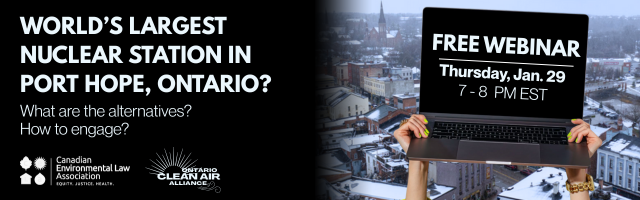
29 Jan. Thursday 7-8 p.m. Webinar – World’s Largest Nuclear Station in Port Hope, ON?
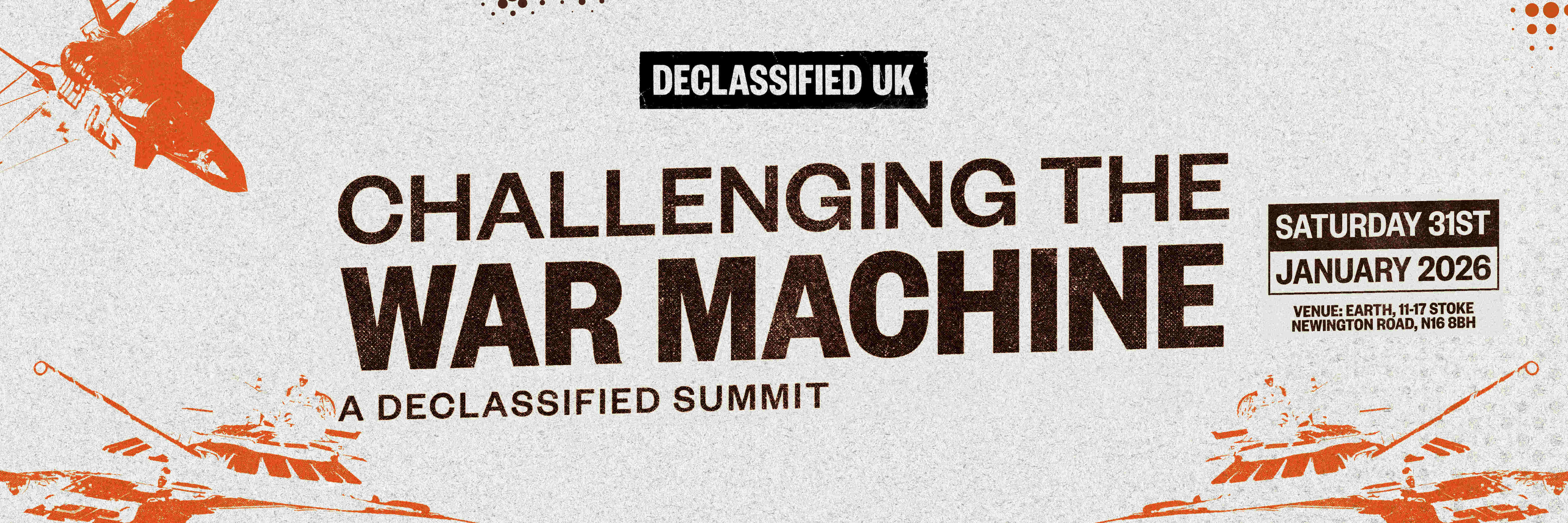
31st January – Challenging the War Machine – a DECLASSIFIED UK SUMMIT


Website of the Week
Now until to February 10, 2026 Radioactive waste storage in France: the debate is finally open! How to participate?
-
Archives
- January 2026 (271)
- December 2025 (358)
- November 2025 (359)
- October 2025 (376)
- September 2025 (258)
- August 2025 (319)
- July 2025 (230)
- June 2025 (348)
- May 2025 (261)
- April 2025 (305)
- March 2025 (319)
- February 2025 (234)
-
Categories
- 1
- 1 NUCLEAR ISSUES
- business and costs
- climate change
- culture and arts
- ENERGY
- environment
- health
- history
- indigenous issues
- Legal
- marketing of nuclear
- media
- opposition to nuclear
- PERSONAL STORIES
- politics
- politics international
- Religion and ethics
- safety
- secrets,lies and civil liberties
- spinbuster
- technology
- Uranium
- wastes
- weapons and war
- Women
- 2 WORLD
- ACTION
- AFRICA
- Atrocities
- AUSTRALIA
- Christina's notes
- Christina's themes
- culture and arts
- Events
- Fuk 2022
- Fuk 2023
- Fukushima 2017
- Fukushima 2018
- fukushima 2019
- Fukushima 2020
- Fukushima 2021
- general
- global warming
- Humour (God we need it)
- Nuclear
- RARE EARTHS
- Reference
- resources – print
- Resources -audiovicual
- Weekly Newsletter
- World
- World Nuclear
- YouTube
-
RSS
Entries RSS
Comments RSS
 nuclear-news