Iran’s ambassador to the UN blames ‘U.S. bullying’ for decision on nuclear treaty, PBS NewsHour Iran said it plans

to cease complying with portions of the nuclear deal it signed with Western powers in 2015, though it didn’t withdraw from the agreement altogether. But the announcement increases already escalating tensions with the U.S. Nick Schifrin talks to Takht Ravanchi, Iran’s ambassador to the UN, about why Iran made the decision now and whether it can trust President Trump.
May 8, 2019
-
Judy Woodruff:
Today, Iran announced it plans to stop complying with portions of the nuclear deal it signed with Western powers in 2015. Iran stopped short of withdrawing from the deal altogether.
But, as Nick Schifrin reports, the announcement increases already escalating tensions with the United States.
-
Nick Schifrin:
The Iran deal made a fundamental trade: Iran restricted its nuclear program in exchange for sanctions relief.
One year ago today, the Trump administration withdrew from the deal, and has since reimposed sanctions. For the last year, Iran complied with the deal, but, today, Iran said it would not abide by all the deal’s restrictions….. https://www.pbs.org/newshour/show/irans-ambassador-to-the-un-blames-u-s-bullying-for-decision-on-nuclear-treaty
May 11, 2019
Posted by Christina Macpherson |
Iran, politics international |
Leave a comment
U.S. Issues New Sanctions as Iran Warns It Will Step Back From Nuclear Deal, NYT, By David E. Sanger, Edward Wong, Steven Erlanger and Eric Schmitt, May 8, 2019
WASHINGTON — Iran’s president declared on Wednesday that he would begin to walk away from the restrictions of a 2015 nuclear deal, and the Trump administration responded with a new round of sanctions against Tehran, reviving a crisis that had been contained for the past four years.
The escalation of threats caught the United States’ allies in Europe in the crossfire between Washington and Tehran. And while the announcement by President Hassan Rouhani of Iran did not terminate the landmark nuclear accord that was negotiated by world powers, it put it on life support.
Britain, France and Germany all opposed President Trump’s move a year ago to withdraw the United States from the accord that limited Iran’s capacity to produce nuclear fuel for 15 years. Ever since, the Trump administration has ramped up a pressure campaign against Iran’s military and clerical leaders, including blocking global oil exports and expediting warships and B-52 bombers to the Persian Gulf this week to face down what officials described, without evidence, as a new threat by Tehran against American troops in the Middle East.
European officials had promised to set up a bartering system to evade American sanctions imposed against Iranian oil. But that effort has largely failed, even as Iran complied with its obligations under the agreement, from production limits to inspections.
On Wednesday morning in Tehran, Mr. Rouhani declared he had run out of patience.
“The path we have chosen today is not the path of war, it is the path of diplomacy,” he said in a nationally broadcast speech. “But diplomacy with a new language and a new logic.”
Rather than exit the deal entirely, Mr. Rouhani announced a series of small steps to resume the production of nuclear centrifuges and to begin accumulating nuclear material.
-
Mr. Rouhani also set a series of carefully calibrated deadlines for European leaders — essentially forcing them to either join the United States in isolating Iran or uphold the nuclear deal that world powers spent years negotiating with Tehran.
He said the Europeans had 60 days to assure that Iran could “reap our benefits” under the nuclear accord, by making up for lost oil revenues and allowing the country back into the international financial system.
If the Europeans agree, they will be subject to sanctions by the United States. If they dismiss Mr. Rouhani’s claims, he says Iran will take more dramatic steps.
Hours later, the White House announced that it was taking additional measures to squeeze Iran’s economy by imposing sanctions on its steel, aluminum, iron and copper sectors. Iran’s industrial metals industries account for about 10 percent of its exports, according to a Trump administration estimate.
Mr. Trump said in a statement that the move “puts other nations on notice that allowing Iranian steel and other metals into your ports will no longer be tolerated.”
Under John R. Bolton, the national security adviser who has long advocated pressing for regime change in Iran, the White House has been urging ever-escalating sanctions…….Hours later, the White House announced that it was taking additional measures to squeeze Iran’s economy by imposing sanctions on its steel, aluminum, iron and copper sectors. Iran’s industrial metals industries account for about 10 percent of its exports, according to a Trump administration estimate.
Mr. Trump said in a statement that the move “puts other nations on notice that allowing Iranian steel and other metals into your ports will no longer be tolerated.”
Under John R. Bolton, the national security adviser who has long advocated pressing for regime change in Iran, the White House has been urging ever-escalating santions……Hours later, the White House announced that it was taking additional measures to squeeze Iran’s economy by imposing sanctions on its steel, aluminum, iron and copper sectors. Iran’s industrial metals industries account for about 10 percent of its exports, according to a Trump administration estimate.
Mr. Trump said in a statement that the move “puts other nations on notice that allowing Iranian steel and other metals into your ports will no longer be tolerated.”
Under John R. Bolton, the national security adviser who has long advocated pressing for regime change in Iran, the White House has been urging ever-escalating sanctions…….https://www.nytimes.com/2019/05/08/us/politics/iran-nuclear-deal.html
May 9, 2019
Posted by Christina Macpherson |
Iran, politics international, USA |
Leave a comment
Official: US renews Iran sanctions waivers for civilian nuclear work, The Times of Israel, May 2019
Move allows Russia and European nations to continue work at nuclear sites without incurring US penalties; 2 waivers relating to heavy water and uranium enrichment not extended.
By MATTHEW LEE3 May 2019, WASHINGTON (AP) — The Trump administration on Friday renewed five of seven sanctions waivers that allow Russia and European nations to conduct civilian nuclear cooperation with Iran, even as the US steps up the pressure on Tehran, a senior US official said.
The waivers, which were due to expire Saturday, are being extended for between 45 days and 90 days, shorter periods than had been granted in the past. But they will permit work at several Iranian nuclear sites to continue without US penalties. Under the terms of the 2015 Iran nuclear deal, Russia and several European nations help to maintain the facilities and are engaged in converting equipment there for exclusively civilian use.
Facilities included in the waiver extensions include the Bushehr nuclear power plant, the foenrichment facility, the Arak nuclear complex and the Tehran Research Reactor, the official said.
The official, who was not authorized to discuss the matter publicly and spoke on condition of anonymity, said the other two waivers — one that allowed Iran to store heavy water in Oman and the other that allowed Russia to process Iranian uranium — are not being renewed…..https://www.timesofisrael.com/official-us-renews-iran-sanctions-waivers-for-civilian-nuclear-work/
|
|
|
May 4, 2019
Posted by Christina Macpherson |
Iran, politics international, USA |
Leave a comment
US national security adviser John Bolton and a group of hawkish lawmakers in Congress are agitating for the Trump administration to cancel three key waivers issued in November 2018, when the United States reimposed secondary sanctions on Iran. These waivers pertain to technical work on Iran’s civil nuclear program required under the terms of the Joint Comprehensive Plan of Action (JCPOA) and cover activities at three sites: Fordow, Arak and Bushehr. The aim of this cooperation is to jointly work toward significantly reducing proliferation risks.
In Arak, a waiver is necessary to enable Iran to redesign its heavy water research reactor in order to “support peaceful nuclear research and radioisotope production for medical and industrial purposes.” The proposed redesigned Arak reactor would vastly cut the potential for a plutonium path to the bomb. The underground uranium enrichment facility of Fordow is being converted into a “nuclear, physics and technology center.” The aim here is to keep uranium enrichment literally closer to the surface and thus more vulnerable in case of an Iranian dash for the bomb. At Bushehr, the site of a Russian-built nuclear power plant that became operational in 2011, the waiver is necessary to allow Iran to continue to purchase the fuel it needs to run the reactor and produce electricity.
A decision to revoke the waivers for civil nuclear cooperation would constitute perhaps the most direct US assault on the JCPOA to date. For this reason, Secretary of State Mike Pompeo and other figures in the Trump administration, worried about political blowback, have been arguing for their continuation, with European governments lobbying the United States aggressively on the issue. Note, however, that even with the present waivers in place, it is apparent that implementation of the nuclear cooperation has been faltering. Revocation of the waivers would have further and grave consequences for the future of the JCPOA.
|
|
|
April 25, 2019
Posted by Christina Macpherson |
EUROPE, Iran, politics international, USA |
Leave a comment
|
Pompeo Won’t Commit to Shutting Down Iran’s Contested Nuclear Work
Pompeo avoids questions on ending waivers permitting Iran’s ongoing nuclear work Washington Free Beacon, BY: Adam Kredo April 10, 2019 Secretary of State Mike Pompeo would not commit to ending a series of waivers issued by the Trump administration that have permitted Iran to engage in some its most contested nuclear work, including at a secretive military site that once housed the Islamic Republic’s nuclear weapons program.
In an exchange with Sen. Ted Cruz (R., Texas), Pompeo declined to commit to canceling the disputed waivers, which have sparked an inter-administration battle, as first reported by the Washington Free Beacon.
The issue of these waivers—which have been granted to Iran so that it can continue its lucrative oil trade, as well as nuclear research work—has generated a growing rift between Iran hawks on Capitol Hill and within the administration and Pompeo’s State Department. Sources have identified those in the State Department as the reason several policies that have kept the landmark Iran nuclear deal on life support have continued, despite President Donald Trump’s decision to walk away from the pact.
Cruz and other Iran policy hawks have gone on record in recent weeks, including in interviews with the Free Beacon, to demand that Pompeo stop issuing both the oil and nuclear waivers. Multiple sources inside and outside the administration have described to the Free Beacon a widening fight between those U.S. officials who aim to keep the nuclear deal alive and those who see an opportunity to tighten the noose on Tehran and potentially collapse its hardline ruling regime……. The issue of these waivers—which have been granted to Iran so that it can continue its lucrative oil trade, as well as nuclear research work—has generated a growing rift between Iran hawks on Capitol Hill and within the administration and Pompeo’s State Department. Sources have identified those in the State Department as the reason several policies that have kept the landmark Iran nuclear deal on life support have continued, despite President Donald Trump’s decision to walk away from the pact…….. https://freebeacon.com/national-security/pompeo-wont-commit-to-shutting-down-irans-contested-nuclear-work/
|
|
April 11, 2019
Posted by Christina Macpherson |
Iran, politics international, USA |
Leave a comment
https://www.politico.com/story/2019/03/22/sanctions-iran-weapons-program-1232221, By KATIE GALIOTO, 03/22/2019
U.S. officials on Friday accused Iran of plotting to restart work on its nuclear weapons program, despite Tehran agreeing in a 2015 accord to not pursue such weapons.The charges were made as the Treasury and State Departments announced a new round of sanctions against 14 individuals and 17 entities linked to the Iranian Ministry of Defense unit responsible for nuclear weapons development, senior administration officials said Friday.
Iran’s Organization of Defensive Innovation and Research, also referred to by the acronym SPND, maintains technical experts and critical ties to Iran’s previous nuclear efforts — notably to Mohsen Fakhrizadeh, head of Iran’s pre-2004 nuclear weapons program, officials said.
They added that Tehran-based SPND may not currently be working to develop nuclear weapons, but that the connections to Iran’s previous nuclear programs increase the threat of the country developing weapons of mass destruction. Iran has long claimed to have no interest in developing nuclear weapons, but the United Nations in 2015 uncovered a secret program that lasted until at least 2009.
The sanctions are the latest step the U.S. has taken to ramp up economic pressure on Iran after President Donald Trump pulled out of the 2015 nuclear pact, in which the country’s Islamist regime agreed to abandon any nuclear ambitions in exchange for economic sanctions relief. The other parties in the agreement — including several European countries, China and Russia — have all remained in the deal, and international organizations say Tehran
has complied with the agreement.
Trump has bashed the the international pact for not doing enough to stop Iranian efforts to build nuclear bombs. Since leaving the accord, his administration has leaned on other countries to cut off their interactions with Iran.
“Anyone considering dealing with the Iranian defense industry in general, and SPND in particular, risks professional, personal, and financial isolation,” Treasury Secretary Steven Mnuchin said in a statement Friday.
March 23, 2019
Posted by Christina Macpherson |
Iran, politics international, USA |
1 Comment
Before Saudi Arabia Goes Nuclear, It May Have to Follow Iran’s Lead, Bloomberg, By Jonathan Tirone March 7, 2019,
- Kingdom has yet to clinch enhanced atomic monitoring deal
- World powers are meeting with Iran on Wednesday in Vienna.
“………Focus on Saudi Arabia’s nuclear program has risen in the last month after the U.S. Congress opened an investigation into the potentially illegal transfer of sensitive technologies to the kingdom. This week the International Atomic Energy Agency, responsible for verifying that countries don’t divert material for weapons, weighed in on what its inspectors need before the kingdom can start generating nuclear power.
Focus on Saudi Arabia’s nuclear program has risen in the last month after the U.S. Congress opened an investigation into the potentially illegal transfer of sensitive technologies to the kingdom. This week the International Atomic Energy Agency, responsible for verifying that countries don’t divert material for weapons, weighed in on what its inspectors need before the kingdom can start generating nuclear power.
Riyadh’s nuclear program is developing “based on an old text” of safeguard rules, even as it expects to complete its first research reactor this year and plans to tap uraniumreserves, according to IAEA Director General Yukiya Amano, who told journalists this week in Vienna that he’s “appealing to all countries to rescind” those old ways of doing business.
“We’re encouraging all countries to conclude and implement an additional protocol and that includes Saudi Arabia,” said Amano, who’s also in charge of enforcing the 2015 nuclear deal struck between Iran and world powers. The Japanese career diplomat has called the set of rules established by that accord, which U.S. President Donald Trump withdrew from in May, as “the most rigorous monitoring mechanism ever negotiated.”……
the IAEA comments could strike a precautionary note among vendors lining up to service the kingdom’s nuclear ambitions. Receiving the imprimatur of IAEA inspectors, who account for gram-level quantities of nuclear material worldwide, is a precondition for receiving technologies and fuel. Without reaching a new understanding with monitors, Saudi plans for 3.2 gigawatts of atomic power by the end next decade could flounder. …….
Maintaining that level of IAEA access to Iran’s nuclear program is the reason that China, France, Germany, Russia and the U.K. continue to defy U.S. calls to abandon the 2015 deal and reimpose sanctions. Diplomats from those countries convened Wednesday in Vienna in their first meeting since the European Union established a trade channel to skirt U.S. threats.
Snap Inspections in Iran
IAEA complementary access to sites rose under agreement with world powers……https://www.bloomberg.com/news/articles/2019-03-06/before-saudi-goes-nuclear-it-may-have-to-follow-iran-s-lead
March 7, 2019
Posted by Christina Macpherson |
Iran, politics international, Saudi Arabia, weapons and war |
Leave a comment

 Head of UN nuclear agency: Iran keeping to nuclear deal, https://www.foxnews.com/world/head-of-un-nuclear-agency-iran-keeping-to-nuclear-deal4 Mar 19, BERLIN –
The head of the U.N. nuclear watchdog says Iran is complying with the 2015 deal with major world powers aimed at preventing the country from building nuclear weapons.
Yukiya Amano made his assessment in a regular update to the International Atomic Energy Agency’s board of governors, confirming a confidential report distributed to member states last month.
He said Monday that “Iran is implementing its nuclear-related commitments under the Joint Comprehensive Plan of Action,” referencing the official name of the 2015 deal.
Amano added that “it is essential that Iran continues to fully implement those commitments.”
The U.S. unilaterally withdrew from the deal last year and re-imposed sanctions.
The other signatories — Germany, France, Britain, Russia and China — are trying to keep alive the deal, which offered Iran economic incentives.
March 5, 2019
Posted by Christina Macpherson |
Iran, politics international |
Leave a comment
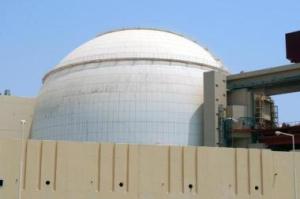 Financial Future Of Iranian Nuclear Power Plant In Question, February 24, 2019, Radio Farda
While the parliament weighs President Hassan Rouhani’s budget for the new Iranian year (beginning March 21), senior officials at the Atomic Energy Organization of Iran (AEOI) have complained of the “minimal” budget allocated to the Bushehr nuclear power plant.The head, deputy head, and spokesman for AEOI have all criticized the government, saying the budget allocated to the plant in southern Iran is so low that it endangers the future of the nuclear reactor.
The Energy Ministry “pays peanuts” for electricity produced at Bushehr, AEOI and former Foreign Minister Ali Akbar Salehi said on February 23. “For each kilowatt per hour of electricity produced at Bushehr, ME pays half a cent but exports electricity for nine cents,” he said.
Speaking at an industrial seminar, Salehi said, “The electricity produced at Bushehr reactor is bought for $40 million, while the annual budget needed for running the plant is $120 million. There’s a deficit of $80 million for which we don’t know how to compensate.”
Iran is currently suffering from an acute economic crisis and has been unable to issue a budget for the upcoming Iranian fiscal year. U.S. economic sanctions have halved Iran’s oil exports, which provide the hard currency needed for government operations.
AEOI spokesman Behrooz Kamalvandi says that given the budget allocated to Bushehr, the fate of Iran’s only nuclear power plant now hangs in the balance.
Bushehr’s construction started during the reign of Shah Mohammad Reza Pahlavi in 1975 by Kraftwerk Union, a Siemens company, along with several other German firms.
Following the downfall of the monarchy, work on the nuclear reactor ground to a halt.
A veteran Iranian diplomat and former foreign minister, Abbas Khalatbari, was executed by firing squad in April 1979 for charges that included signing a contract with Germany for the power plant’s construction.
However, in 1988, Russia signed a contract with Iran to complete the project……..
Based on a parliamentary motion endorsed by the parliament 14 years ago, the Iranian government is obliged to construct 13 more plants with output similar to Bushehr’s.
Opponents have long insisted that since Iran is rich in oil and natural gas resources and poor in uranium ore deposits, the viability of its nuclear program is questionable. …….. https://en.radiofarda.com/a/financial-future-of-irn-nuclear-power-plant-uncertain-salehi/29787790.html
February 25, 2019
Posted by Christina Macpherson |
business and costs, Iran, politics |
Leave a comment
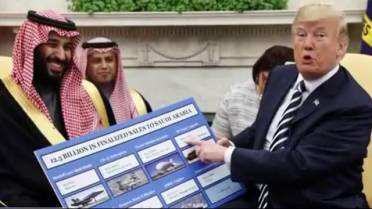
Zarif decries ‘US hypocrisy’ over planned nuclear sale to Saudis
Neither human rights or a burgeoning nuclear programme are a real concern for the US, Iran’s foreign minister  says. Aljazeera, 21 Feb 19, Iranian Foreign Minister Mohammad Javad Zarif accused the US of hypocrisy for allegedly attempting to sell nuclear technology to Saudi Arabia while Washington tries to wreck Iran’s nuclear programme.
Zarif’s comment on Twitter on Wednesday came after reports the administration of President Donald Trump is trying to bypass US Congress to advance the sale of nuclear power plants to Saudi Arabia.
“Day by day it becomes clearer to the world what was always clear to us: neither human rights nor a nuclear program have been the real concern of the US,” Zarif wrote.
“First a dismembered journalist; now illicit sale of nuclear technology to Saudi Arabia fully expose #USHypocrisy,” Zarif added, referring to the killing of Saudi writer Jamal Khashoggi at the hands of Saudi agents, and the new report by a US congressional committee on the planned technology sale. …….
Mohammad Ali Shabani, Iran Pulse Editor at Al-Monitor, said he doubted the US would sell uranium-enrichment technology to Saudi Arabia and, therefore, Riyadh would not have the capability to develop a nuclear weapon.
“However, the sidestepping of America’s own laws to facilitate sales of nuclear power plants puts the Trump administration’s broader credibility under question,” Shabani told Al Jazeera.
‘Terrorist attack’
Tensions between Washington and Tehran – bitter foes since Iran’s 1979 revolution – have intensified since Trump withdrew the US from the Joint Comprehensive Plan of Action (JCPOA), better known as the Iran nuclear deal, under which it scaled back its uranium enrichment programme and promised not to pursue nuclear weapons.
In exchange for the deal signed in 2015 in Vienna with six world powers – the US, UK, France, Germany, Russia, China and the European Union – international sanctions were lifted allowing Iran to sell its oil and gas worldwide.
Trump reimposed sanctions with the aim of slashing Iranian oil sales and choking its economy in order to curb its ballistic missile programme and activities in the Middle East, especially in the conflicts in Syria and Yemen.
Iranian President Hassan Rouhani said on Wednesday Iran-US relations are at a new low and sanctions imposed by the Trump administration targeting Tehran’s oil and banking sectors amounted to “a terrorist attack”.
“The struggle between Iran and America is currently at a maximum. America has employed all its power against us,” Rouhani was quoted as saying in a cabinet meeting by the state broadcaster IRIB.
“The US pressures on firms and banks to halt business with Iran is 100 percent a terrorist act,” he said.
The International Atomic Energy Agency (IAEA) has repeatedly confirmed Tehran has been meeting its nuclear commitments fully.
‘Khashoggi cover-up’
The Trump administration has faced additional congressional opposition due to concerns about the role of Saudi Crown Prince Mohammed bin Salman (MBS) in the murder of Jamal Khashoggi……. https://www.aljazeera.com/news/2019/02/zarif-decries-hypocrisy-planned-nuclear-sale-saudis-190220100506949.html
February 21, 2019
Posted by Christina Macpherson |
Iran, politics international, Saudi Arabia, USA |
Leave a comment
UN Nuclear Watchdog Warns Against Meddling Over Iran, Bloomberg By Jonathan Tirone, February 2, 2019,
………Late Wednesday, at a private reception for diplomats, IAEA Director General Yukiya Amano lashed out at efforts to hamstring an organization that’s been at the forefront of nuclear security for decades, according to two foreign officials who were there. Without naming Israel and the U.S., the career Japanese diplomat made it clear those countries were the source of his ire, they said.
“The agency’s independence must not be undermined,” Amano said, according to the IAEA’s website. “If attempts are made to micro-manage or put pressure on the agency in nuclear verification, that is counterproductive and extremely harmful.”
An IAEA official said on Saturday that the U.S. wasn’t Amano’s intended target. He declined to specify which countries prompted the rebuke.
Three years into an agreement that was meant to be a hallmark of the Obama administration, in which Iran agreed to curb its nuclear activities in return for sanctions relief, IAEA inspectors say Tehran is in full compliance.
That hasn’t stopped the Trump administration from backing out of the agreement, piling on new penalties and trying to use the agency to turn the screws with help from Israeli Prime Minister Benjamin Netanyahu.
Iran Abides Nuclear Limits
Enriched uranium has remained below thresholds agreed under deal
President Donald Trump’s hardline stance on Iran has heightened tensions with the other signatories to the agreement: China, France, Germany, Russia and the U.K. It’s also sowed divisions between the White House and America’s spy agencies, with Trump castigating his own intelligence officials this week for being “passive and naive when it comes to the dangers of Iran.”
Netanyahu went to the U.S. Congress to lobby against the agreement before it was signed and has continued to criticize the deal since, arguing that it won’t prevent Iran from attaining nuclear weapons……..
fake newscast in Israel came as Iran’s deputy foreign minister was in Vienna for talks with the IAEA, which is trying to keep the accord from unraveling.
Iran’s leadership has said the country’s ready to re-start its enrichment program using more advanced technology if the agreement fails. The country is considering making the kind of nuclear fuel used in naval propulsion, implying it could enrich uranium closer to the levels needed for weapons.
Meanwhile, the European Union is moving to help countries evade the sanctions that the Trump administration imposed to stop countries from trading with Iran.
On Thursday, the 28-member bloc finalized a new financial mechanism for bypassing the U.S. restrictions. The special purpose vehicle, called the Instrument in Support of Trade Exchanges, will be headquartered in Paris and staffed with German leadership.
The vehicle will have a positive “impact on trade and economic relations with Iran, but most importantly on the lives of Iranian people,” a draft of the joint communique seen by Bloomberg says.
The U.S. mission to the IAEA in Vienna said in an emailed response to questions that the watchdog “can continue to count on the full support of the United States” as it carries out its “important mandate in Iran.” https://www.bloomberg.com/news/articles/2019-02-01/fake-news-goes-nuclear-as-iaea-sees-u-s-israel-meddling-on-iran
February 4, 2019
Posted by Christina Macpherson |
Iran, politics international, USA |
Leave a comment
s Tehran-backed group called ‘Charming Kitten’ increased cyber attacks following Trump sanctions, The National ,Associated Press
December 16, 2018 Government-backed Iranian hackers scrambled to break into the personal emails of US Treasury officials after harsh economic sanctions were reimposed on Tehran last month, a cybersecurity group said.
The hacking group, nicknamed Charming Kitten, also took aim at foreign nuclear experts in data tracked by Certfa analysts in the UK.
In another sign of how deeply cyber espionage is woven into the fabric of US-Iranian relations, nuclear deal defenders and detractors, Arab atomic scientists, Iranian civil society figures and Washington think-tank employees were on the hackers’ hit list.
US President Donald Trump placed sanctions on Iran’s energy, shipping, shipbuilding and financial sectors on November 4.
“Presumably, some of this is about figuring out what is going on with sanctions,” Frederick Kagan, a scholar at the American Enterprise Institute, said………https://www.thenational.ae/world/mena/iranian-hackers-take-aim-at-foreign-nuclear-experts-and-us-officials-1.803259
December 16, 2018
Posted by Christina Macpherson |
Iran, secrets,lies and civil liberties |
Leave a comment
IAEA calls on North Korea to re-admit nuclear inspectors, Money control , 23 Nov 18
IAEA inspectors were expelled from North Korea in 2009 but Director General Yukiya Amano said the agency continues to prepare for their possible re-admittance. The head of the UN’s atomic watchdog has called on North Korea to allow inspectors back into the country to monitor its nuclear program………
On the other hand, Amano told board members that Iran continues to abide by the deal reached in 2015 with major world powers that aimed at preventing Tehran from building atomic weapons in exchange for economic incentives.
He reiterated the agency’s findings in a report distributed to member states earlier this month that “Iran is implementing its nuclear-related commitments under the Joint Comprehensive Plan of Action.”
The issue has grown more complicated since the US withdrew unilaterally in May from the deal and then re-imposed sanctions. Iran’s economy has been struggling ever since and its currency has plummeted in value.
The other signatories to the deal — Germany, Britain, France, Russia and China — are continuing to try to make it work. Amano stressed that “it is essential that Iran continues to fully implement” its commitments.
In its full report, the IAEA said its inspectors continue to have access to all sites in Iran that it needs to visit and that inspectors confirmed Iran has kept within limits of heavy water and low-enriched uranium stockpiles.
“The agency continues to verify the non-diversion of nuclear material declared by Iran under its safeguards agreement,” Amano said. “Evaluations regarding the absence of undeclared nuclear material and activities in Iran continue.https://www.moneycontrol.com/news/world/iaea-calls-on-north-korea-to-re-admit-nuclear-inspectors-2-3213921.html
November 24, 2018
Posted by Christina Macpherson |
Iran, politics international |
Leave a comment
Channel News Asia, 19 Nov 18 Iran is still hopeful that its 2015 nuclear deal with major powers can be saved despite the withdrawal of the United States, a foreign ministry spokesman said on Monday. DUBAI: Iran is still hopeful that its 2015 nuclear deal with major powers can be saved despite the withdrawal of the United States, a foreign ministry spokesman said on Monday.
“There are some ambiguities on implementation of the EU’s mechanism to protect trade with Iran from America’s sanctions … But we remain hopeful that the Europeans can save the deal,” Bahram Qasemi told a news conference broadcast live on state TV.
Other signatories trying to salvage the deal since May, when U.S. President Donald Trump abandoned it. Washington restored sanctions targeting Iran’s oil, banking and transportation sectors this month.
The European Union has been trying to establish a Special Purpose Vehicle (SPV) for non-dollar trade with Iran to save the deal, under which most sanctions were lifted in 2016 in exchange for Tehran curbing its nuclear programme……… (Writing by Parisa Hafezi; editing by Darren Schuettler and John Stonestreet)
Read more at https://www.channelnewsasia.com/news/world/iran-hopeful-that-europe-can-salvage-nuclear-deal—foreign-ministry-10946216
November 19, 2018
Posted by Christina Macpherson |
EUROPE, Iran, politics international |
Leave a comment
 The Latest: Nuclear watchdog: Iran stays within deal limits https://www.kansas.com/news/business/article221528430.html, The Associated Press, November 12, 2018 VIENNA The Latest on U.N. nuclear watchdog’s new report on Iran :
The U.N. atomic watchdog says Iran continues to stay within the limitations set by the nuclear deal reached in 2015 with major powers, aimed at keeping Tehran from building nuclear weapons in exchange for incentives.
In a confidential quarterly report distributed to member states Monday and seen by The Associated Press, the International Atomic Energy Agency said Iran has stayed with key limitations set in the so-called Joint Comprehensive Plan of Action, or JCPOA.
The issue has grown more complicated since the U.S. withdrew unilaterally in May from the deal and then re-imposed sanctions. Iran’s economy has been struggling ever since and its currency has plummeted in value.
The other signatories to the deal — Germany, Britain, France, Russia and China — are continuing to try and make it work.
The IAEA says the agency had access to all sites in Iran that it needed to visit and that inspectors confirmed Iran has kept within limits of heavy water and low-enriched uranium stockpiles.
November 13, 2018
Posted by Christina Macpherson |
Iran, politics international |
Leave a comment